A PRESENTATION ON

BIHAR AGRICULTURE UNIVERSITY,
SABAUR
SUBMITTED BY:
NIDHI SARRAF
M.Sc. 1st SEM
EXTENSION EDUCATION
o

Act of reducing the role of Governmet.

CONCEPT:
• Involves extension personnnel from private
agency.
• Clients share the responsibility for services.
• Act as alternative to public extension
services.
TYPES OF PRIVATE EXTENSION
SERVICES:
Entirely private type.

Consists of farmer’s organisations, NGOs etc.
OBJECTIVES:
•Maximum possible profit to the clients
through advisory services because their
main objective is to increase the income of
the farmers.
•To become more efficient and effective in
providing services because their survival
depends upon nature of their
performance
REASON BEHIND PRIVATISATION:
• Financial burden on Government.
• Disappointing performance of public
extension services.
• Commercialisation of agriculture.
ASSUMPTIONS BEHIND PRIVATE EXTENSION:
 Extension

generates new income.
 Provides Demand-Driven Service
 Increases the voice of farmers in the extension
service
 Become more cost effective with efficient and
quality service.
 Private extension increases staff
professionalism
APPROACHES TO PRIVATIZATION
• Fee for each visit of an extension agent or
for each service.
• A levy can be charged on certain agricultural
products.
• Costs can be met from membership fees
paid to farmers’ association.
• Receive a specific portion of the extra
income a farmer earns.
PRIVATE SECTER EXTENSION PROVIDER
Input

dealers
Agribusiness organisations.
Producers cooperatives.
Agricultural consultants.
Krishi vigyan kendra
Media organisations
Private sector banks
Unemployed agriculture graduate
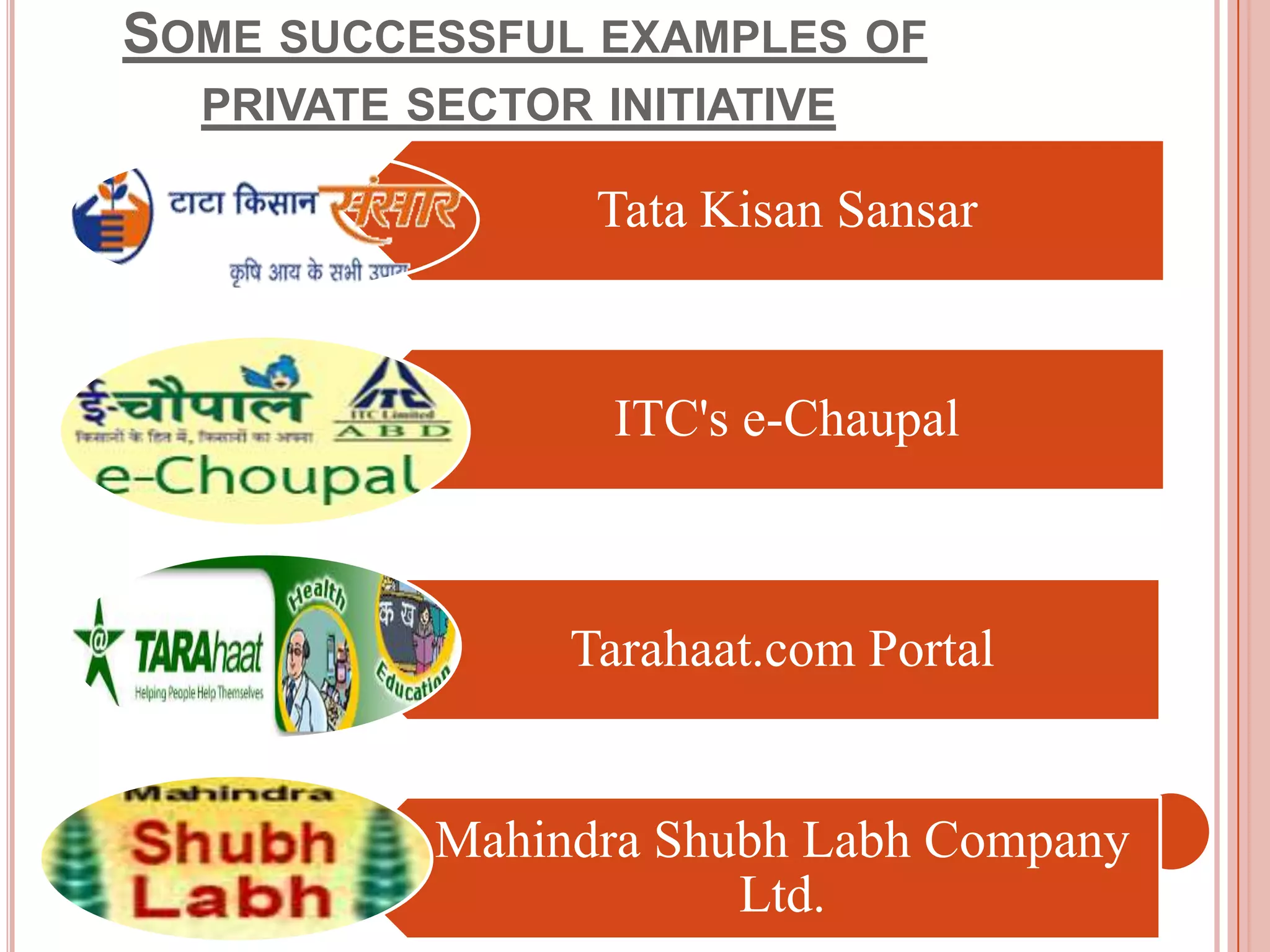
SOME SUCCESSFUL EXAMPLES OF
PRIVATE SECTOR INITIATIVE

Tata Kisan Sansar

ITC's e-Chaupal

Tarahaat.com Portal

Mahindra Shubh Labh Company
Ltd.
MERITS OF PRIVATISATION
• Farm advisory services for profit maximization of
clients
• Timely inputs supply for better production
• Providing market information and market
intelligence
• Processing the clients produce
• Marketing the clients produce
• Providing credit facilities for farmers.
• Providing infrastructure facilities e.g.: transport,
storage.
DEMERITS OF PRIVATISATION
 Information

becomes excludable in the short term.
 More face-to-face contacts and less emphasis on
mass media usage.
 Increased dependence of farmers.
 Payments cannot be deferred nor based on impact.
 Contradictory message flows from competing
sources.
 Human resource and organizational development
are sidelined.
A presentation on privatisation

A presentation on privatisation

  • 1.
    A PRESENTATION ON BIHARAGRICULTURE UNIVERSITY, SABAUR SUBMITTED BY: NIDHI SARRAF M.Sc. 1st SEM EXTENSION EDUCATION
  • 2.
    o Act of reducingthe role of Governmet. CONCEPT: • Involves extension personnnel from private agency. • Clients share the responsibility for services. • Act as alternative to public extension services.
  • 3.
    TYPES OF PRIVATEEXTENSION SERVICES: Entirely private type. Consists of farmer’s organisations, NGOs etc.
  • 4.
    OBJECTIVES: •Maximum possible profitto the clients through advisory services because their main objective is to increase the income of the farmers. •To become more efficient and effective in providing services because their survival depends upon nature of their performance
  • 5.
    REASON BEHIND PRIVATISATION: •Financial burden on Government. • Disappointing performance of public extension services. • Commercialisation of agriculture.
  • 6.
    ASSUMPTIONS BEHIND PRIVATEEXTENSION:  Extension generates new income.  Provides Demand-Driven Service  Increases the voice of farmers in the extension service  Become more cost effective with efficient and quality service.  Private extension increases staff professionalism
  • 7.
    APPROACHES TO PRIVATIZATION •Fee for each visit of an extension agent or for each service. • A levy can be charged on certain agricultural products. • Costs can be met from membership fees paid to farmers’ association. • Receive a specific portion of the extra income a farmer earns.
  • 8.
    PRIVATE SECTER EXTENSIONPROVIDER Input dealers Agribusiness organisations. Producers cooperatives. Agricultural consultants. Krishi vigyan kendra Media organisations Private sector banks Unemployed agriculture graduate
  • 9.
    SOME SUCCESSFUL EXAMPLESOF PRIVATE SECTOR INITIATIVE Tata Kisan Sansar ITC's e-Chaupal Tarahaat.com Portal Mahindra Shubh Labh Company Ltd.
  • 10.
    MERITS OF PRIVATISATION •Farm advisory services for profit maximization of clients • Timely inputs supply for better production • Providing market information and market intelligence • Processing the clients produce • Marketing the clients produce • Providing credit facilities for farmers. • Providing infrastructure facilities e.g.: transport, storage.
  • 11.
    DEMERITS OF PRIVATISATION Information becomes excludable in the short term.  More face-to-face contacts and less emphasis on mass media usage.  Increased dependence of farmers.  Payments cannot be deferred nor based on impact.  Contradictory message flows from competing sources.  Human resource and organizational development are sidelined.