A model for the role of integrins in flow induced
mechanotransduction in osteocytes
Yilin Wang*, Laoise M. McNamara†, Mitchell B. Schaffler†, and Sheldon Weinbaum*‡
*Department of Biomedical Engineering, The City College of New York and the Graduate Center, City University of New York, New York, NY 10031;
and †Leni and Peter W. May Department of Orthopedics, Mount Sinai School of Medicine, New York, NY 10029

Contributed by Sheldon Weinbaum, August 3, 2007 (sent for review May 14, 2007)

A fundamental paradox in bone mechanobiology is that tissue-                initiating intracellular signaling was hard to identify because
level strains caused by human locomotion are too small to initi-            none of the likely molecules in the tethering complex [i.e.,
ate intracellular signaling in osteocytes. A cellular-level strain-         proteoglycans, hyaluronic acid, or CD44 (8, 10–12)] are known
amplification model previously has been proposed to explain this             mediators of mechanically induced cell signaling. In this paper,
paradox. However, the molecular mechanism for initiating signal-            we propose a paradigm for cellular-level strain amplification by
ing has eluded detection because none of the molecules in this              integrin-based focal attachment complexes along osteocyte cell
previously proposed model are known mediators of intracellular              processes.
signaling. In this paper, we explore a paradigm and quantitative               Using an acrolein-paraformaldehyde-based fixation approach
model for the initiation of intracellular signaling, namely that the        for electron microscopy,§ we observed that discrete conical
processes are attached directly at discrete locations along the             structures protrude periodically from the bony canalicular wall,
canalicular wall by ␤3 integrins at the apex of infrequent, previ-          where they directly contact the cell membrane of the osteocyte
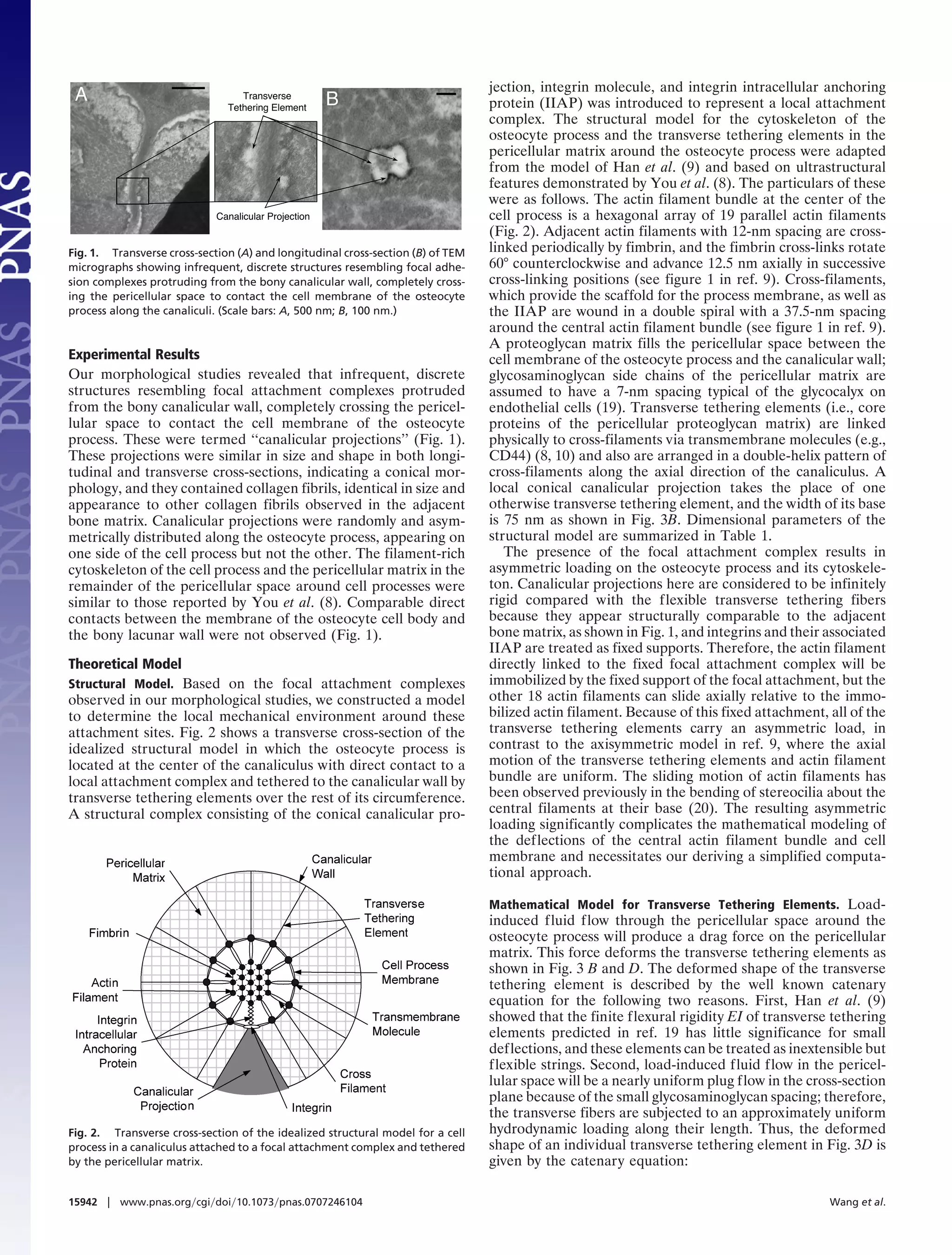
ously unrecognized canalicular projections. Unique rapid fixation            process and, thus, resemble focal adhesion complexes (Fig. 1).
techniques have identified these projections and have shown them
                                                                            Other studies pointed to ␣v␤3 integrins as the likely adhesion
to be consistent with other studies suggesting that the adhesion
                                                                            molecules for these canalicular-cell process focal attachment
molecules are ␣v␤3 integrins. Our theoretical model predicts that
                                                                            sites.§
the tensile forces acting on the integrins are <15 pN and thus
                                                                               Integrins are transmembrane heterodimeric molecules com-
provide stable attachment for the range of physiological loadings.
                                                                            posed of an ␣-subunit and a ␤-subunit, and they anchor the cell’s
The model also predicts that axial strains caused by the sliding of
actin microfilaments about the fixed integrin attachments are an
                                                                            cytoskeleton to the extracellular matrix molecules. More impor-
order of magnitude larger than the radial strains in the previously
                                                                            tantly for understanding osteocyte mechanotransduction, inte-
proposed strain-amplification theory and two orders of magnitude             grin focal adhesion complexes have been implicated as major
greater than whole-tissue strains. In vitro experiments indicated           mechanical transducer sites in various other cells, initiating a
that membrane strains of this order are large enough to open                host of intracellular signaling pathways, including focal adhesion
stretch-activated cation channels.                                          kinase and small GTPases of the Ras family (13, 14). Further-
                                                                            more, a growing body of evidence suggests that focal integrin
bone mechanotransduction ͉ integrin attachments ͉ osteocyte cell            attachments are functionally and even structurally integrated
process ͉ strain amplification ͉ bone fluid flow                               with other putative membrane mechanotransducers, including
                                                                            stress-activated ion channels in a range of cell types including
                                                                            osteocytes (15–18).
A      fundamental paradox in bone biology is that tissue-level
      strains, which rarely exceed 0.1% in vivo (1, 2), are too small
to initiate intracellular signaling in bone cells in vitro (3, 4), where
                                                                               Based on our in situ morphological studies, we herein con-
                                                                            struct a model to quantitatively determine the mechanical
the necessary strains (typically 1.0%) would cause bone fracture.           effects of focal attachment complexes on osteocyte cell pro-
Osteocytes, the most abundant cells in adult bone, are widely               cesses. Specifically, we test the hypothesis that focal attachment
believed to be the primary sensory cells for mechanical loading             complexes produce locally high strains along the cell membrane
because of their ubiquitous distribution throughout the bone                of osteocyte processes. Our theoretical model provides the direct
tissue and their dendritic interconnections with both neighboring           prediction of the piconewton-level forces on the focal attach-
osteocytes and osteoblasts (5, 6), but osteocytes also require high         ments and the radial and axial membrane strains around these
local strains for mechanical stimulation. You et al. (7) developed          attachment complexes as a function of loading magnitude and
an intuitive strain-amplification model to explain this paradox             frequency. Axial membrane strains in the vicinity of the focal
wherein osteocyte processes are attached to the canalicular wall            attachment sites can be an order of magnitude larger than the
by transverse tethering elements in the pericellular matrix.                previously predicted radial strains generated by the transverse
According to this model, the drag generated by load-induced                 tethering elements (7, 9).
fluid flow through the pericellular matrix would create tensile
                                                                                                                                                                           ENGINEERING


forces along the transverse elements supporting the pericellular
matrix. These resulting tensions then were transmitted by trans-            Author contributions: M.B.S. and S.W. designed research; Y.W. and L.M.M. performed
                                                                            research; M.B.S. and S.W. contributed new reagents/analytic tools; Y.W., M.B.S., and S.W.
membrane proteins to the central actin filament bundle in the               analyzed data; and Y.W., M.B.S., and S.W. wrote the paper.
osteocyte cell process leading to circumferential expansion of              The authors declare no conflict of interest.
the cell process. The basic structural features in this model, the
                                                                            Abbreviation: IIAP, integrin intracellular anchoring protein.
transverse tethering elements, and the organization of the actin            ‡To whom correspondence should be addressed at: Department of Biomedical Engineer-
filament bundle in the dendritic cell process were shown exper-              ing, City College of New York, 138th Street at Convent Avenue, New York, NY 10031.
imentally by You et al. (8). The latter study also provided key              E-mail: weinbaum@ccny.cuny.edu.
                                                                                                                                                                           PHYSIOLOGY


input data for a greatly refined three-dimensional theoretical              §McNamara, L. M., Majeska, R. J., Weinbaum, S., Friedrich, V., Schaffler, M. B. (2006) Trans.

model by Han et al. (9). Although both models elegantly showed               Orthop. Res. Soc. 31:393 (abstr.).
that very small whole-tissue strains would be amplified 10-fold or          This article contains supporting information online at www.pnas.org/cgi/content/full/
more at the cellular level because of the tensile forces in the             0707246104/DC1.
transverse tethering elements, the molecular mechanism for                  © 2007 by The National Academy of Sciences of the USA


www.pnas.org͞cgi͞doi͞10.1073͞pnas.0707246104                                                PNAS ͉ October 2, 2007 ͉ vol. 104 ͉ no. 40 ͉ 15941–15946
jection, integrin molecule, and integrin intracellular anchoring
 A                                Transverse
                                                      B                          protein (IIAP) was introduced to represent a local attachment
                               Tethering Element
                                                                                 complex. The structural model for the cytoskeleton of the
                                                                                 osteocyte process and the transverse tethering elements in the
                                                                                 pericellular matrix around the osteocyte process were adapted
                                                                                 from the model of Han et al. (9) and based on ultrastructural
                                                                                 features demonstrated by You et al. (8). The particulars of these
                                                                                 were as follows. The actin filament bundle at the center of the
                             Canalicular Projection                              cell process is a hexagonal array of 19 parallel actin filaments
                                                                                 (Fig. 2). Adjacent actin filaments with 12-nm spacing are cross-
Fig. 1. Transverse cross-section (A) and longitudinal cross-section (B) of TEM   linked periodically by fimbrin, and the fimbrin cross-links rotate
micrographs showing infrequent, discrete structures resembling focal adhe-       60° counterclockwise and advance 12.5 nm axially in successive
sion complexes protruding from the bony canalicular wall, completely cross-      cross-linking positions (see figure 1 in ref. 9). Cross-filaments,
ing the pericellular space to contact the cell membrane of the osteocyte         which provide the scaffold for the process membrane, as well as
process along the canaliculi. (Scale bars: A, 500 nm; B, 100 nm.)                the IIAP are wound in a double spiral with a 37.5-nm spacing
                                                                                 around the central actin filament bundle (see figure 1 in ref. 9).
                                                                                 A proteoglycan matrix fills the pericellular space between the
Experimental Results                                                             cell membrane of the osteocyte process and the canalicular wall;
Our morphological studies revealed that infrequent, discrete                     glycosaminoglycan side chains of the pericellular matrix are
structures resembling focal attachment complexes protruded                       assumed to have a 7-nm spacing typical of the glycocalyx on
from the bony canalicular wall, completely crossing the pericel-                 endothelial cells (19). Transverse tethering elements (i.e., core
lular space to contact the cell membrane of the osteocyte                        proteins of the pericellular proteoglycan matrix) are linked
process. These were termed ‘‘canalicular projections’’ (Fig. 1).                 physically to cross-filaments via transmembrane molecules (e.g.,
These projections were similar in size and shape in both longi-                  CD44) (8, 10) and also are arranged in a double-helix pattern of
tudinal and transverse cross-sections, indicating a conical mor-                 cross-filaments along the axial direction of the canaliculus. A
phology, and they contained collagen fibrils, identical in size and              local conical canalicular projection takes the place of one
appearance to other collagen fibrils observed in the adjacent                    otherwise transverse tethering element, and the width of its base
bone matrix. Canalicular projections were randomly and asym-                     is 75 nm as shown in Fig. 3B. Dimensional parameters of the
metrically distributed along the osteocyte process, appearing on                 structural model are summarized in Table 1.
one side of the cell process but not the other. The filament-rich                   The presence of the focal attachment complex results in
cytoskeleton of the cell process and the pericellular matrix in the              asymmetric loading on the osteocyte process and its cytoskele-
remainder of the pericellular space around cell processes were                   ton. Canalicular projections here are considered to be infinitely
similar to those reported by You et al. (8). Comparable direct                   rigid compared with the flexible transverse tethering fibers
contacts between the membrane of the osteocyte cell body and                     because they appear structurally comparable to the adjacent
the bony lacunar wall were not observed (Fig. 1).                                bone matrix, as shown in Fig. 1, and integrins and their associated
                                                                                 IIAP are treated as fixed supports. Therefore, the actin filament
Theoretical Model                                                                directly linked to the fixed focal attachment complex will be
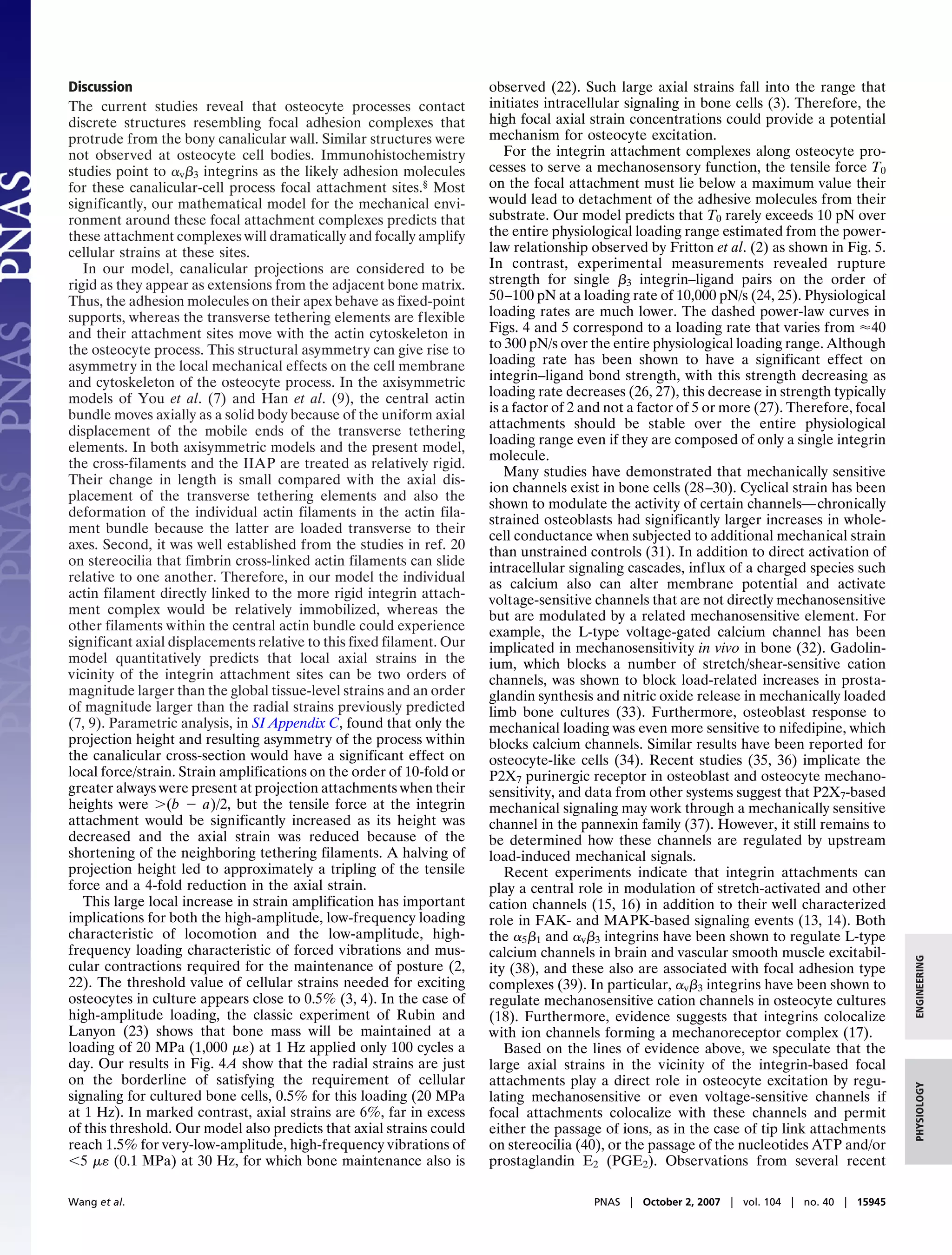
Structural Model. Based on the focal attachment complexes                        immobilized by the fixed support of the focal attachment, but the
observed in our morphological studies, we constructed a model                    other 18 actin filaments can slide axially relative to the immo-
to determine the local mechanical environment around these                       bilized actin filament. Because of this fixed attachment, all of the
attachment sites. Fig. 2 shows a transverse cross-section of the                 transverse tethering elements carry an asymmetric load, in
idealized structural model in which the osteocyte process is                     contrast to the axisymmetric model in ref. 9, where the axial
located at the center of the canaliculus with direct contact to a                motion of the transverse tethering elements and actin filament
local attachment complex and tethered to the canalicular wall by                 bundle are uniform. The sliding motion of actin filaments has
transverse tethering elements over the rest of its circumference.                been observed previously in the bending of stereocilia about the
A structural complex consisting of the conical canalicular pro-                  central filaments at their base (20). The resulting asymmetric
                                                                                 loading significantly complicates the mathematical modeling of
                                                                                 the deflections of the central actin filament bundle and cell
                                                                                 membrane and necessitates our deriving a simplified computa-
                                                                                 tional approach.

                                                                                 Mathematical Model for Transverse Tethering Elements. Load-
                                                                                 induced fluid flow through the pericellular space around the
                                                                                 osteocyte process will produce a drag force on the pericellular
                                                                                 matrix. This force deforms the transverse tethering elements as
                                                                                 shown in Fig. 3 B and D. The deformed shape of the transverse
                                                                                 tethering element is described by the well known catenary
                                                                                 equation for the following two reasons. First, Han et al. (9)
                                                                                 showed that the finite flexural rigidity EI of transverse tethering
                                                                                 elements predicted in ref. 19 has little significance for small
                                                                                 deflections, and these elements can be treated as inextensible but
                                                                                 flexible strings. Second, load-induced fluid flow in the pericel-
                                                                                 lular space will be a nearly uniform plug flow in the cross-section
                                                                                 plane because of the small glycosaminoglycan spacing; therefore,
                                                                                 the transverse fibers are subjected to an approximately uniform
Fig. 2. Transverse cross-section of the idealized structural model for a cell    hydrodynamic loading along their length. Thus, the deformed
process in a canaliculus attached to a focal attachment complex and tethered     shape of an individual transverse tethering element in Fig. 3D is
by the pericellular matrix.                                                      given by the catenary equation:

15942 ͉ www.pnas.org͞cgi͞doi͞10.1073͞pnas.0707246104                                                                                       Wang et al.
bundle with its fimbrin cross-links in the core of the osteocyte
                                                                              process is replaced by a homogenous cylindrical elastic structure
                                                                              that has the same size and overall radial elastic modulus as the
                                                                              original cross-linked structure. Han et al. (9) show that corner
                                                                              and central actin filaments in the outer ring of the actin filament
                                                                              bundle shown in Fig. 2 undergo different radial displacements
                                                                              ␦m1 and ␦m2, respectively, but that ␦m1 is Ϸ91% of ␦m2, and,
                                                                              therefore, the difference is small enough to use an average value.
                                                                              Second, the eleven transverse tethering elements and the focal
                                                                              attachment shown in Fig. 2 are mathematically assumed to act in
                                                                              the same cross-sectional plane when dealing with the overall
                                                                              radial force balance as shown in Fig. 3A. As in ref. 9, it is
                                                                              reasonable to assume that the deformations of these cross-
                                                                              filaments and IIAP are substantially smaller than the bending
                                                                              deformation of the actin filaments, which are loaded transverse
                                                                              to their axes. Thus, the cross-filaments and IIAP are assumed not
                                                                              to deform in the radial direction.
                                                                                 With these idealizations, one can reduce the complex struc-
                                                                              tural geometry in Fig. 2 and its loading to a much simpler planar
                                                                              loading configuration in which the osteocyte process is asym-
                                                                              metrically located and loaded with a fixed focal attachment site
                                                                              at point I at the apex of the canalicular projection, as sketched
                                                                              in Fig. 3 A and B. Thus, the deformation induced by the tension,
                                                                              Ti, is given by
                                                                                                    ␦i ϭ fTi ͑i ϭ 0,1,2, . . . , 6͒,                 [3]
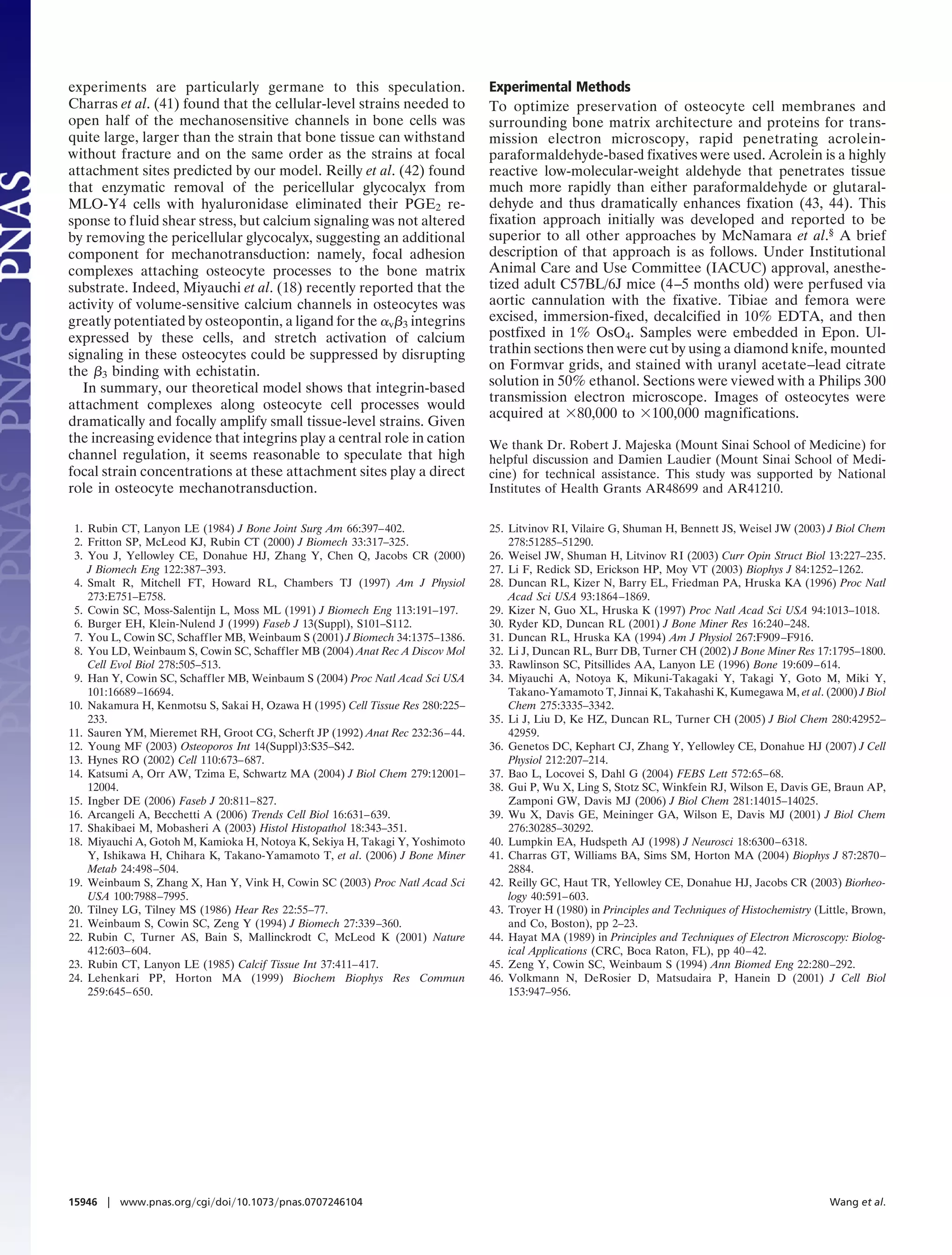
Fig. 3. Deformation diagrams for the idealized mathematical model. (A)
Transverse cross-section of the idealized homogeneous elastic cylinder and    where
the idealized plane for all of the transverse tethering elements and focal
attachment. (B) Longitudinal cross-section of the deformed transverse teth-                                           3
                                                                                                                     Lf
ering elements and sliding actin filaments. (C) Top view of the undeformed                                     fϭ
and deformed cell process membrane around the focal attachment site (not to                                        340EIa
scale). (D) Force balance on a deformed transverse tethering element. The
dashed lines indicate the deformed structural elements.                       is the radial elastic modulus of the of the homogeneous cylin-
                                                                              drical core [derived in supporting information (SI) Appendix A],
                                                                              T0 is the tension associated with the focal attachment, T1–T6 are
                          wL
                          Tx
                             ϭ sinh
                                    wd
                                    Tx
                                       ͩ ͪ
                                       ,                               [1]
                                                                              the tensions on the transverse tethering elements, and the local
                                                                              ␦i are the deflections of the homogenous cylindrical core induced
                                                                              by the Ti. Here, Lf is the length of one periodic unit shown in Fig.
where d is the radial distance between the canalicular wall and               3B, and EIa is the bending rigidity of a single actin filament in the
the cell process membrane, Tx is the constant radial component                actin filament bundle of the osteocyte process.
of the tension on the transverse tethering element, and w is the                 The deformations ␦i (i ϭ 1, 2, . . . , 6) of the transverse
uniform hydrodynamic drag force per unit length of transverse                 tethering elements are derived in SI Appendix B. These defor-
tethering element. Because the canalicular projections are in-                mations are related to the radial distances, di (i ϭ 1, 2, . . . , 6),
frequent and located at discrete locations along the canaliculi,              between the canalicular wall and the deformed cell process
the majority of the pericellular space in the canaliculi can be               membrane associated with individual transverse tethering
assumed to be of the same geometry as the model in ref. 9.                    elements:
Therefore, the pressure gradient along the cell process and the
drag force FD on the transverse tethering elements per unit                                    ͱ3
                                                                               d1 ϭ L Ϫ ␦1 ϩ        ␦ 0;     d2 ϭ L Ϫ ␦2 ϩ ␦0/2;          d 3 ϭ L Ϫ ␦ 3;
length of cell process will be nearly the same as in ref. 9. w is                               2
evaluated by dividing the total drag force on an axial periodic
unit of length Lf ϭ 37.5 nm in Fig. 3B by the total length of the                                                                               [4A–C]
12 transverse tethering elements associated with the periodic                                                               ͱ3
unit and is given by                                                          d4 ϭ L Ϫ ␦4 Ϫ ␦0/2;          d5 ϭ L Ϫ ␦5 Ϫ        ␦0;    d6 ϭ L Ϫ ␦6 Ϫ ␦0,
                                                                                                                            2
                                    F DL f
                               wϭ
                                                                                                                                                           ENGINEERING


                                           .                           [2]                                                                       [4D–F]
                                    12L
                                                                              where L is the length of the transverse tethering element.
Here L is the length of each individual transverse tethering                    Because the tensions T0–T6 are assumed to act in the same
element, FD is the drag force on the transverse tethering                     plane, the overall force balance for T0–T6 sketched in Fig. 3A can
elements per unit length of cell process and is evaluated by the              be expressed as
same expression as equation 8 in appendix A of ref. 9. The model
for the fluid flow through the pericellular matrix is based on the                           T0 ϩ ͱ3T1 ϩ T2 ϭ T4 ϩ ͱ3T5 ϩ T6.                        [5]
theoretical model in ref. 21.
                                                                                                                                                           PHYSIOLOGY


                                                                              Eqs. 4A–F and 5 provide seven equations for the seven unknown
Mathematical Model for Osteocyte Cell Processes. Two mathemat-                T0–T6, which are related to the displacements ␦0–␦6 through Eqs.
ical idealizations are introduced to simplify the analysis but                1 and 3.
retain the essential physics of the deformation for the central                 Because the free ends of the transverse tethering elements are
actin filaments shown in Fig. 2. First, the central actin filament            displaced both radially and axially (i.e., in directions perpendic-

Wang et al.                                                                                     PNAS ͉ October 2, 2007 ͉ vol. 104 ͉ no. 40 ͉ 15943
Table 1. Values of the parameters used in the model
                                                                               A                            1.5
Parameter                                               Value                                                                               20 MPa, 1000 με
Osteonal hydrodynamic model (21, 45)


                                                                               R adial Str ain ( % )
  B, dimensionless relative compressibility              0.53                                               1.0
                                                                                                                                           10 MPa, 500 με
     of bone matrix to water
  c, pore fluid pressure diffusion constant               0.13                                                                              5 MPa, 250 με
     of the Biot theory, mm2/s                                                                              0.5
  ro, radius of the osteon, ␮m                           100
                                                                                                                                           1 MPa, 50 με
  r1, radius of the osteonal lumen, ␮m                    27
Canaliculus and cell process (7, 8, 19)
                                                                                                            0.0
  b, radius of the canaliculus, nm                       130
  a, radius of the osteocyte process, nm                  52                                                         0   10      20         30            40
                                                                                                                              Frequency (Hz)
  c, radius of the homogenous elastic                     25
     cylinder, nm
  ⌬, the spacing neighboring two                              7
                                                                              B                                 15
                                                                                                                                            20 MPa, 1000 με
     glycosaminoglycan chains, nm
  Kp, Darcy’s permeability of matrix                     10.3                                                                               10 MPa, 500 με


                                                                                 Ax ial Str a in ( % )
     between cell process and canalicular                                                                       10
     wall, nm2                                                                                                                              5 MPa, 250 με
                                                           Ϫ2
  ␮, fluid viscosity, dyne*⅐s/cm2                         10
Central actin bundle (7, 46)                                                                                     5                          1 MPa, 50 με
  Lf, length of periodic fimbrin cross-over               37.5
     along actin filament, nm                                                                                                                0.1 MPa, 5 με
  Ela, bending rigidity of actin filaments,             1.5 ϫ 104
            2                                                                                                    0
     pN⅐nm
                                                                                                                     0   10      20         30            40
*1 dyne ϭ 10 ␮N.                                                                                                              Frequency (Hz)

                                                                         Fig. 4. Membrane strains in the vicinity of focal attachment complex. (A) The
ular and parallel to the central line of the cell process), both the     radial strain ␧r (open arrow points to the radial strain on the cell process mem-
                                                                         brane for an axisymmetric loading for a tissue loading of 10 MPa, from ref. 9). (B)
resulting radial and axial strain components on cell processes will
                                                                         The axial strain ␧a as a function of loading frequency with tissue-loading ampli-
be evaluated as a function of tissue loading. The radial strain ␧r       tude as a parameter. The dashed lines in both A and B show the physiological
in the plane through the focal attachment is defined as the ratio        loadings of bone tissue based on the power-law relationship between strain
of the summation of deformations ␦0 and ␦6 to the undeformed             amplitudes and loading frequencies observed by Fritton et al. (2).
diameter of the cell process membrane 2a in Fig. 3A, and is
given by
                                                                         strains of 5 ␮␧ (0.1 MPa) at 30 Hz produce an axial strain around
                          ␧r ϭ ͑␦0 ϩ ␦6͒/2a.                       [6]   the focal attachment site of 1.5%.
                                                                            In Fig. 5, we show the tensile force on the focal attachment,
The axial strain ␧a in the vicinity of focal attachment site is          T0, as a function of loading frequency up to 40 Hz with
defined as the relative change of the nonradial component of the         tissue-loading amplitude as a parameter. T0 exhibits a monotonic
deformation of In (i.e., the deformation of the cell membrane of         increase as loading frequency increases for a given tissue-loading
osteocyte process generated by the deformed transverse tether-           amplitude. One observes that T0 is Ϸ10 pN at a physiological
ing element adjacent to the focal attachment) to its undeformed          loading of 1,000 ␮␧ at 1 Hz.
length as shown in Fig. 3C and given by                                     The dashed lines in Figs. 4 and 5 show the power-law
                                                                         relationship between tissue-level strain amplitude and loading
                      ␧a ϭ ͑InЈ r Ϫ Innr͒ ր Innr .
                              n                                    [7]   frequency derived from the whole-bone strain measurement by
Here InЈnr is the nonradial component of InЈ, the deformed state         Fritton et al. (2).
of In, and Innr is the nonradial component of In.
                                                                                                                40
Parameter Values. The values of the parameters used in the model,
which are grouped as parameters for the hydrodynamic model,
                                                                                                                30                        20 MPa, 1000 με
parameters for the canaliculus and cell process, and parameters
                                                                                              T ens ion ( pN)


for the central actin filament bundle, are shown in Table 1.                                                                              10 MPa, 500 με

                                                                                                                20
Theoretical Results                                                                                                                       5 MPa, 250 με
The radial strain ␧r given by Eq. 6 and the axial strain ␧a given
                                                                                                                10                        1 MPa, 50 με
by Eq. 7 are shown in Fig. 4 A and B, respectively, as a function
of loading frequency using tissue-loading amplitude as a param-
eter. For comparison, radial strain in the cell process membrane                                                0
for axisymmetric loading from ref. 9 for a tissue loading of 10                                                      0   10      20         30           40
MPa is shown in Fig. 4A, open arrow. Radial strains predicted                                                                 Frequency (Hz)
by the current model are Ϸ70% of those in Han et al. (9).
                                                                         Fig. 5. The tension on the focal attachment T0 as a function of loading
Strikingly, ␧a is approximately one order of magnitude larger            frequency with tissue-loading amplitude as a parameter. [The dashed line
than ␧r for the same tissue loading. ␧a is predicted to be Ϸ6% at        shows the physiological loadings of bone tissue based on the power-law
a physiological loading of 20 MPa at 1 Hz and can exceed 1% for          relationship between strain amplitudes and loading frequencies observed by
low-amplitude, high-frequency tissue loadings, e.g., small tissue        Fritton et al. (2).]


15944 ͉ www.pnas.org͞cgi͞doi͞10.1073͞pnas.0707246104                                                                                                           Wang et al.
Discussion                                                             observed (22). Such large axial strains fall into the range that
The current studies reveal that osteocyte processes contact            initiates intracellular signaling in bone cells (3). Therefore, the
discrete structures resembling focal adhesion complexes that           high focal axial strain concentrations could provide a potential
protrude from the bony canalicular wall. Similar structures were       mechanism for osteocyte excitation.
not observed at osteocyte cell bodies. Immunohistochemistry               For the integrin attachment complexes along osteocyte pro-
studies point to ␣v␤3 integrins as the likely adhesion molecules       cesses to serve a mechanosensory function, the tensile force T0
for these canalicular-cell process focal attachment sites.§ Most       on the focal attachment must lie below a maximum value their
significantly, our mathematical model for the mechanical envi-         would lead to detachment of the adhesive molecules from their
ronment around these focal attachment complexes predicts that          substrate. Our model predicts that T0 rarely exceeds 10 pN over
these attachment complexes will dramatically and focally amplify       the entire physiological loading range estimated from the power-
cellular strains at these sites.                                       law relationship observed by Fritton et al. (2) as shown in Fig. 5.
   In our model, canalicular projections are considered to be          In contrast, experimental measurements revealed rupture
rigid as they appear as extensions from the adjacent bone matrix.      strength for single ␤3 integrin–ligand pairs on the order of
Thus, the adhesion molecules on their apex behave as fixed-point       50–100 pN at a loading rate of 10,000 pN/s (24, 25). Physiological
supports, whereas the transverse tethering elements are flexible       loading rates are much lower. The dashed power-law curves in
and their attachment sites move with the actin cytoskeleton in         Figs. 4 and 5 correspond to a loading rate that varies from Ϸ40
the osteocyte process. This structural asymmetry can give rise to      to 300 pN/s over the entire physiological loading range. Although
asymmetry in the local mechanical effects on the cell membrane         loading rate has been shown to have a significant effect on
and cytoskeleton of the osteocyte process. In the axisymmetric         integrin–ligand bond strength, with this strength decreasing as
models of You et al. (7) and Han et al. (9), the central actin         loading rate decreases (26, 27), this decrease in strength typically
                                                                       is a factor of 2 and not a factor of 5 or more (27). Therefore, focal
bundle moves axially as a solid body because of the uniform axial
                                                                       attachments should be stable over the entire physiological
displacement of the mobile ends of the transverse tethering
                                                                       loading range even if they are composed of only a single integrin
elements. In both axisymmetric models and the present model,
                                                                       molecule.
the cross-filaments and the IIAP are treated as relatively rigid.
                                                                          Many studies have demonstrated that mechanically sensitive
Their change in length is small compared with the axial dis-
                                                                       ion channels exist in bone cells (28–30). Cyclical strain has been
placement of the transverse tethering elements and also the
                                                                       shown to modulate the activity of certain channels—chronically
deformation of the individual actin filaments in the actin fila-
                                                                       strained osteoblasts had significantly larger increases in whole-
ment bundle because the latter are loaded transverse to their
                                                                       cell conductance when subjected to additional mechanical strain
axes. Second, it was well established from the studies in ref. 20      than unstrained controls (31). In addition to direct activation of
on stereocilia that fimbrin cross-linked actin filaments can slide     intracellular signaling cascades, influx of a charged species such
relative to one another. Therefore, in our model the individual        as calcium also can alter membrane potential and activate
actin filament directly linked to the more rigid integrin attach-      voltage-sensitive channels that are not directly mechanosensitive
ment complex would be relatively immobilized, whereas the              but are modulated by a related mechanosensitive element. For
other filaments within the central actin bundle could experience       example, the L-type voltage-gated calcium channel has been
significant axial displacements relative to this fixed filament. Our   implicated in mechanosensitivity in vivo in bone (32). Gadolin-
model quantitatively predicts that local axial strains in the          ium, which blocks a number of stretch/shear-sensitive cation
vicinity of the integrin attachment sites can be two orders of         channels, was shown to block load-related increases in prosta-
magnitude larger than the global tissue-level strains and an order     glandin synthesis and nitric oxide release in mechanically loaded
of magnitude larger than the radial strains previously predicted       limb bone cultures (33). Furthermore, osteoblast response to
(7, 9). Parametric analysis, in SI Appendix C, found that only the     mechanical loading was even more sensitive to nifedipine, which
projection height and resulting asymmetry of the process within        blocks calcium channels. Similar results have been reported for
the canalicular cross-section would have a significant effect on       osteocyte-like cells (34). Recent studies (35, 36) implicate the
local force/strain. Strain amplifications on the order of 10-fold or   P2X7 purinergic receptor in osteoblast and osteocyte mechano-
greater always were present at projection attachments when their       sensitivity, and data from other systems suggest that P2X7-based
heights were Ͼ(b Ϫ a)/2, but the tensile force at the integrin         mechanical signaling may work through a mechanically sensitive
attachment would be significantly increased as its height was          channel in the pannexin family (37). However, it still remains to
decreased and the axial strain was reduced because of the              be determined how these channels are regulated by upstream
shortening of the neighboring tethering filaments. A halving of        load-induced mechanical signals.
projection height led to approximately a tripling of the tensile          Recent experiments indicate that integrin attachments can
force and a 4-fold reduction in the axial strain.                      play a central role in modulation of stretch-activated and other
   This large local increase in strain amplification has important     cation channels (15, 16) in addition to their well characterized
implications for both the high-amplitude, low-frequency loading        role in FAK- and MAPK-based signaling events (13, 14). Both
characteristic of locomotion and the low-amplitude, high-              the ␣5␤1 and ␣v␤3 integrins have been shown to regulate L-type
frequency loading characteristic of forced vibrations and mus-         calcium channels in brain and vascular smooth muscle excitabil-
                                                                                                                                               ENGINEERING


cular contractions required for the maintenance of posture (2,         ity (38), and these also are associated with focal adhesion type
22). The threshold value of cellular strains needed for exciting       complexes (39). In particular, ␣v␤3 integrins have been shown to
osteocytes in culture appears close to 0.5% (3, 4). In the case of     regulate mechanosensitive cation channels in osteocyte cultures
high-amplitude loading, the classic experiment of Rubin and            (18). Furthermore, evidence suggests that integrins colocalize
Lanyon (23) shows that bone mass will be maintained at a               with ion channels forming a mechanoreceptor complex (17).
loading of 20 MPa (1,000 ␮␧) at 1 Hz applied only 100 cycles a            Based on the lines of evidence above, we speculate that the
day. Our results in Fig. 4A show that the radial strains are just      large axial strains in the vicinity of the integrin-based focal
on the borderline of satisfying the requirement of cellular            attachments play a direct role in osteocyte excitation by regu-
                                                                                                                                               PHYSIOLOGY


signaling for cultured bone cells, 0.5% for this loading (20 MPa       lating mechanosensitive or even voltage-sensitive channels if
at 1 Hz). In marked contrast, axial strains are 6%, far in excess      focal attachments colocalize with these channels and permit
of this threshold. Our model also predicts that axial strains could    either the passage of ions, as in the case of tip link attachments
reach 1.5% for very-low-amplitude, high-frequency vibrations of        on stereocilia (40), or the passage of the nucleotides ATP and/or
Ͻ5 ␮␧ (0.1 ⌴Pa) at 30 Hz, for which bone maintenance also is           prostaglandin E2 (PGE2). Observations from several recent

Wang et al.                                                                              PNAS ͉ October 2, 2007 ͉ vol. 104 ͉ no. 40 ͉ 15945
experiments are particularly germane to this speculation.                      Experimental Methods
Charras et al. (41) found that the cellular-level strains needed to            To optimize preservation of osteocyte cell membranes and
open half of the mechanosensitive channels in bone cells was                   surrounding bone matrix architecture and proteins for trans-
quite large, larger than the strain that bone tissue can withstand             mission electron microscopy, rapid penetrating acrolein-
without fracture and on the same order as the strains at focal                 paraformaldehyde-based fixatives were used. Acrolein is a highly
attachment sites predicted by our model. Reilly et al. (42) found              reactive low-molecular-weight aldehyde that penetrates tissue
that enzymatic removal of the pericellular glycocalyx from                     much more rapidly than either paraformaldehyde or glutaral-
MLO-Y4 cells with hyaluronidase eliminated their PGE2 re-                      dehyde and thus dramatically enhances fixation (43, 44). This
sponse to fluid shear stress, but calcium signaling was not altered            fixation approach initially was developed and reported to be
by removing the pericellular glycocalyx, suggesting an additional              superior to all other approaches by McNamara et al.§ A brief
component for mechanotransduction: namely, focal adhesion                      description of that approach is as follows. Under Institutional
complexes attaching osteocyte processes to the bone matrix                     Animal Care and Use Committee (IACUC) approval, anesthe-
substrate. Indeed, Miyauchi et al. (18) recently reported that the             tized adult C57BL/6J mice (4–5 months old) were perfused via
activity of volume-sensitive calcium channels in osteocytes was                aortic cannulation with the fixative. Tibiae and femora were
greatly potentiated by osteopontin, a ligand for the ␣v␤3 integrins            excised, immersion-fixed, decalcified in 10% EDTA, and then
expressed by these cells, and stretch activation of calcium                    postfixed in 1% OsO4. Samples were embedded in Epon. Ul-
signaling in these osteocytes could be suppressed by disrupting                trathin sections then were cut by using a diamond knife, mounted
the ␤3 binding with echistatin.                                                on Formvar grids, and stained with uranyl acetate–lead citrate
   In summary, our theoretical model shows that integrin-based                 solution in 50% ethanol. Sections were viewed with a Philips 300
                                                                               transmission electron microscope. Images of osteocytes were
attachment complexes along osteocyte cell processes would
                                                                               acquired at ϫ80,000 to ϫ100,000 magnifications.
dramatically and focally amplify small tissue-level strains. Given
the increasing evidence that integrins play a central role in cation           We thank Dr. Robert J. Majeska (Mount Sinai School of Medicine) for
channel regulation, it seems reasonable to speculate that high                 helpful discussion and Damien Laudier (Mount Sinai School of Medi-
focal strain concentrations at these attachment sites play a direct            cine) for technical assistance. This study was supported by National
role in osteocyte mechanotransduction.                                         Institutes of Health Grants AR48699 and AR41210.


 1. Rubin CT, Lanyon LE (1984) J Bone Joint Surg Am 66:397–402.                25. Litvinov RI, Vilaire G, Shuman H, Bennett JS, Weisel JW (2003) J Biol Chem
 2. Fritton SP, McLeod KJ, Rubin CT (2000) J Biomech 33:317–325.                   278:51285–51290.
 3. You J, Yellowley CE, Donahue HJ, Zhang Y, Chen Q, Jacobs CR (2000)         26. Weisel JW, Shuman H, Litvinov RI (2003) Curr Opin Struct Biol 13:227–235.
    J Biomech Eng 122:387–393.                                                 27. Li F, Redick SD, Erickson HP, Moy VT (2003) Biophys J 84:1252–1262.
 4. Smalt R, Mitchell FT, Howard RL, Chambers TJ (1997) Am J Physiol           28. Duncan RL, Kizer N, Barry EL, Friedman PA, Hruska KA (1996) Proc Natl
    273:E751–E758.                                                                 Acad Sci USA 93:1864–1869.
 5. Cowin SC, Moss-Salentijn L, Moss ML (1991) J Biomech Eng 113:191–197.      29. Kizer N, Guo XL, Hruska K (1997) Proc Natl Acad Sci USA 94:1013–1018.
 6. Burger EH, Klein-Nulend J (1999) Faseb J 13(Suppl), S101–S112.             30. Ryder KD, Duncan RL (2001) J Bone Miner Res 16:240–248.
 7. You L, Cowin SC, Schaffler MB, Weinbaum S (2001) J Biomech 34:1375–1386.   31. Duncan RL, Hruska KA (1994) Am J Physiol 267:F909–F916.
 8. You LD, Weinbaum S, Cowin SC, Schaffler MB (2004) Anat Rec A Discov Mol    32. Li J, Duncan RL, Burr DB, Turner CH (2002) J Bone Miner Res 17:1795–1800.
    Cell Evol Biol 278:505–513.                                                33. Rawlinson SC, Pitsillides AA, Lanyon LE (1996) Bone 19:609–614.
 9. Han Y, Cowin SC, Schaffler MB, Weinbaum S (2004) Proc Natl Acad Sci USA    34. Miyauchi A, Notoya K, Mikuni-Takagaki Y, Takagi Y, Goto M, Miki Y,
    101:16689–16694.                                                               Takano-Yamamoto T, Jinnai K, Takahashi K, Kumegawa M, et al. (2000) J Biol
10. Nakamura H, Kenmotsu S, Sakai H, Ozawa H (1995) Cell Tissue Res 280:225–       Chem 275:3335–3342.
    233.                                                                       35. Li J, Liu D, Ke HZ, Duncan RL, Turner CH (2005) J Biol Chem 280:42952–
11. Sauren YM, Mieremet RH, Groot CG, Scherft JP (1992) Anat Rec 232:36–44.        42959.
12. Young MF (2003) Osteoporos Int 14(Suppl)3:S35–S42.                         36. Genetos DC, Kephart CJ, Zhang Y, Yellowley CE, Donahue HJ (2007) J Cell
13. Hynes RO (2002) Cell 110:673–687.                                              Physiol 212:207–214.
14. Katsumi A, Orr AW, Tzima E, Schwartz MA (2004) J Biol Chem 279:12001–      37. Bao L, Locovei S, Dahl G (2004) FEBS Lett 572:65–68.
    12004.                                                                     38. Gui P, Wu X, Ling S, Stotz SC, Winkfein RJ, Wilson E, Davis GE, Braun AP,
15. Ingber DE (2006) Faseb J 20:811–827.                                           Zamponi GW, Davis MJ (2006) J Biol Chem 281:14015–14025.
16. Arcangeli A, Becchetti A (2006) Trends Cell Biol 16:631–639.               39. Wu X, Davis GE, Meininger GA, Wilson E, Davis MJ (2001) J Biol Chem
17. Shakibaei M, Mobasheri A (2003) Histol Histopathol 18:343–351.                 276:30285–30292.
18. Miyauchi A, Gotoh M, Kamioka H, Notoya K, Sekiya H, Takagi Y, Yoshimoto    40. Lumpkin EA, Hudspeth AJ (1998) J Neurosci 18:6300–6318.
    Y, Ishikawa H, Chihara K, Takano-Yamamoto T, et al. (2006) J Bone Miner    41. Charras GT, Williams BA, Sims SM, Horton MA (2004) Biophys J 87:2870–
    Metab 24:498–504.                                                              2884.
19. Weinbaum S, Zhang X, Han Y, Vink H, Cowin SC (2003) Proc Natl Acad Sci     42. Reilly GC, Haut TR, Yellowley CE, Donahue HJ, Jacobs CR (2003) Biorheo-
    USA 100:7988–7995.                                                             logy 40:591–603.
20. Tilney LG, Tilney MS (1986) Hear Res 22:55–77.                             43. Troyer H (1980) in Principles and Techniques of Histochemistry (Little, Brown,
21. Weinbaum S, Cowin SC, Zeng Y (1994) J Biomech 27:339–360.                      and Co, Boston), pp 2–23.
22. Rubin C, Turner AS, Bain S, Mallinckrodt C, McLeod K (2001) Nature         44. Hayat MA (1989) in Principles and Techniques of Electron Microscopy: Biolog-
    412:603–604.                                                                   ical Applications (CRC, Boca Raton, FL), pp 40–42.
23. Rubin CT, Lanyon LE (1985) Calcif Tissue Int 37:411–417.                   45. Zeng Y, Cowin SC, Weinbaum S (1994) Ann Biomed Eng 22:280–292.
24. Lehenkari PP, Horton MA (1999) Biochem Biophys Res Commun                  46. Volkmann N, DeRosier D, Matsudaira P, Hanein D (2001) J Cell Biol
    259:645– 650.                                                                  153:947–956.


15946 ͉ www.pnas.org͞cgi͞doi͞10.1073͞pnas.0707246104                                                                                                 Wang et al.

A model for flow induced mechanotransduction

  • 1.
    A model forthe role of integrins in flow induced mechanotransduction in osteocytes Yilin Wang*, Laoise M. McNamara†, Mitchell B. Schaffler†, and Sheldon Weinbaum*‡ *Department of Biomedical Engineering, The City College of New York and the Graduate Center, City University of New York, New York, NY 10031; and †Leni and Peter W. May Department of Orthopedics, Mount Sinai School of Medicine, New York, NY 10029 Contributed by Sheldon Weinbaum, August 3, 2007 (sent for review May 14, 2007) A fundamental paradox in bone mechanobiology is that tissue- initiating intracellular signaling was hard to identify because level strains caused by human locomotion are too small to initi- none of the likely molecules in the tethering complex [i.e., ate intracellular signaling in osteocytes. A cellular-level strain- proteoglycans, hyaluronic acid, or CD44 (8, 10–12)] are known amplification model previously has been proposed to explain this mediators of mechanically induced cell signaling. In this paper, paradox. However, the molecular mechanism for initiating signal- we propose a paradigm for cellular-level strain amplification by ing has eluded detection because none of the molecules in this integrin-based focal attachment complexes along osteocyte cell previously proposed model are known mediators of intracellular processes. signaling. In this paper, we explore a paradigm and quantitative Using an acrolein-paraformaldehyde-based fixation approach model for the initiation of intracellular signaling, namely that the for electron microscopy,§ we observed that discrete conical processes are attached directly at discrete locations along the structures protrude periodically from the bony canalicular wall, canalicular wall by ␤3 integrins at the apex of infrequent, previ- where they directly contact the cell membrane of the osteocyte ously unrecognized canalicular projections. Unique rapid fixation process and, thus, resemble focal adhesion complexes (Fig. 1). techniques have identified these projections and have shown them Other studies pointed to ␣v␤3 integrins as the likely adhesion to be consistent with other studies suggesting that the adhesion molecules for these canalicular-cell process focal attachment molecules are ␣v␤3 integrins. Our theoretical model predicts that sites.§ the tensile forces acting on the integrins are <15 pN and thus Integrins are transmembrane heterodimeric molecules com- provide stable attachment for the range of physiological loadings. posed of an ␣-subunit and a ␤-subunit, and they anchor the cell’s The model also predicts that axial strains caused by the sliding of actin microfilaments about the fixed integrin attachments are an cytoskeleton to the extracellular matrix molecules. More impor- order of magnitude larger than the radial strains in the previously tantly for understanding osteocyte mechanotransduction, inte- proposed strain-amplification theory and two orders of magnitude grin focal adhesion complexes have been implicated as major greater than whole-tissue strains. In vitro experiments indicated mechanical transducer sites in various other cells, initiating a that membrane strains of this order are large enough to open host of intracellular signaling pathways, including focal adhesion stretch-activated cation channels. kinase and small GTPases of the Ras family (13, 14). Further- more, a growing body of evidence suggests that focal integrin bone mechanotransduction ͉ integrin attachments ͉ osteocyte cell attachments are functionally and even structurally integrated process ͉ strain amplification ͉ bone fluid flow with other putative membrane mechanotransducers, including stress-activated ion channels in a range of cell types including osteocytes (15–18). A fundamental paradox in bone biology is that tissue-level strains, which rarely exceed 0.1% in vivo (1, 2), are too small to initiate intracellular signaling in bone cells in vitro (3, 4), where Based on our in situ morphological studies, we herein con- struct a model to quantitatively determine the mechanical the necessary strains (typically 1.0%) would cause bone fracture. effects of focal attachment complexes on osteocyte cell pro- Osteocytes, the most abundant cells in adult bone, are widely cesses. Specifically, we test the hypothesis that focal attachment believed to be the primary sensory cells for mechanical loading complexes produce locally high strains along the cell membrane because of their ubiquitous distribution throughout the bone of osteocyte processes. Our theoretical model provides the direct tissue and their dendritic interconnections with both neighboring prediction of the piconewton-level forces on the focal attach- osteocytes and osteoblasts (5, 6), but osteocytes also require high ments and the radial and axial membrane strains around these local strains for mechanical stimulation. You et al. (7) developed attachment complexes as a function of loading magnitude and an intuitive strain-amplification model to explain this paradox frequency. Axial membrane strains in the vicinity of the focal wherein osteocyte processes are attached to the canalicular wall attachment sites can be an order of magnitude larger than the by transverse tethering elements in the pericellular matrix. previously predicted radial strains generated by the transverse According to this model, the drag generated by load-induced tethering elements (7, 9). fluid flow through the pericellular matrix would create tensile ENGINEERING forces along the transverse elements supporting the pericellular matrix. These resulting tensions then were transmitted by trans- Author contributions: M.B.S. and S.W. designed research; Y.W. and L.M.M. performed research; M.B.S. and S.W. contributed new reagents/analytic tools; Y.W., M.B.S., and S.W. membrane proteins to the central actin filament bundle in the analyzed data; and Y.W., M.B.S., and S.W. wrote the paper. osteocyte cell process leading to circumferential expansion of The authors declare no conflict of interest. the cell process. The basic structural features in this model, the Abbreviation: IIAP, integrin intracellular anchoring protein. transverse tethering elements, and the organization of the actin ‡To whom correspondence should be addressed at: Department of Biomedical Engineer- filament bundle in the dendritic cell process were shown exper- ing, City College of New York, 138th Street at Convent Avenue, New York, NY 10031. imentally by You et al. (8). The latter study also provided key E-mail: weinbaum@ccny.cuny.edu. PHYSIOLOGY input data for a greatly refined three-dimensional theoretical §McNamara, L. M., Majeska, R. J., Weinbaum, S., Friedrich, V., Schaffler, M. B. (2006) Trans. model by Han et al. (9). Although both models elegantly showed Orthop. Res. Soc. 31:393 (abstr.). that very small whole-tissue strains would be amplified 10-fold or This article contains supporting information online at www.pnas.org/cgi/content/full/ more at the cellular level because of the tensile forces in the 0707246104/DC1. transverse tethering elements, the molecular mechanism for © 2007 by The National Academy of Sciences of the USA www.pnas.org͞cgi͞doi͞10.1073͞pnas.0707246104 PNAS ͉ October 2, 2007 ͉ vol. 104 ͉ no. 40 ͉ 15941–15946
  • 2.
    jection, integrin molecule,and integrin intracellular anchoring A Transverse B protein (IIAP) was introduced to represent a local attachment Tethering Element complex. The structural model for the cytoskeleton of the osteocyte process and the transverse tethering elements in the pericellular matrix around the osteocyte process were adapted from the model of Han et al. (9) and based on ultrastructural features demonstrated by You et al. (8). The particulars of these were as follows. The actin filament bundle at the center of the Canalicular Projection cell process is a hexagonal array of 19 parallel actin filaments (Fig. 2). Adjacent actin filaments with 12-nm spacing are cross- Fig. 1. Transverse cross-section (A) and longitudinal cross-section (B) of TEM linked periodically by fimbrin, and the fimbrin cross-links rotate micrographs showing infrequent, discrete structures resembling focal adhe- 60° counterclockwise and advance 12.5 nm axially in successive sion complexes protruding from the bony canalicular wall, completely cross- cross-linking positions (see figure 1 in ref. 9). Cross-filaments, ing the pericellular space to contact the cell membrane of the osteocyte which provide the scaffold for the process membrane, as well as process along the canaliculi. (Scale bars: A, 500 nm; B, 100 nm.) the IIAP are wound in a double spiral with a 37.5-nm spacing around the central actin filament bundle (see figure 1 in ref. 9). A proteoglycan matrix fills the pericellular space between the Experimental Results cell membrane of the osteocyte process and the canalicular wall; Our morphological studies revealed that infrequent, discrete glycosaminoglycan side chains of the pericellular matrix are structures resembling focal attachment complexes protruded assumed to have a 7-nm spacing typical of the glycocalyx on from the bony canalicular wall, completely crossing the pericel- endothelial cells (19). Transverse tethering elements (i.e., core lular space to contact the cell membrane of the osteocyte proteins of the pericellular proteoglycan matrix) are linked process. These were termed ‘‘canalicular projections’’ (Fig. 1). physically to cross-filaments via transmembrane molecules (e.g., These projections were similar in size and shape in both longi- CD44) (8, 10) and also are arranged in a double-helix pattern of tudinal and transverse cross-sections, indicating a conical mor- cross-filaments along the axial direction of the canaliculus. A phology, and they contained collagen fibrils, identical in size and local conical canalicular projection takes the place of one appearance to other collagen fibrils observed in the adjacent otherwise transverse tethering element, and the width of its base bone matrix. Canalicular projections were randomly and asym- is 75 nm as shown in Fig. 3B. Dimensional parameters of the metrically distributed along the osteocyte process, appearing on structural model are summarized in Table 1. one side of the cell process but not the other. The filament-rich The presence of the focal attachment complex results in cytoskeleton of the cell process and the pericellular matrix in the asymmetric loading on the osteocyte process and its cytoskele- remainder of the pericellular space around cell processes were ton. Canalicular projections here are considered to be infinitely similar to those reported by You et al. (8). Comparable direct rigid compared with the flexible transverse tethering fibers contacts between the membrane of the osteocyte cell body and because they appear structurally comparable to the adjacent the bony lacunar wall were not observed (Fig. 1). bone matrix, as shown in Fig. 1, and integrins and their associated IIAP are treated as fixed supports. Therefore, the actin filament Theoretical Model directly linked to the fixed focal attachment complex will be Structural Model. Based on the focal attachment complexes immobilized by the fixed support of the focal attachment, but the observed in our morphological studies, we constructed a model other 18 actin filaments can slide axially relative to the immo- to determine the local mechanical environment around these bilized actin filament. Because of this fixed attachment, all of the attachment sites. Fig. 2 shows a transverse cross-section of the transverse tethering elements carry an asymmetric load, in idealized structural model in which the osteocyte process is contrast to the axisymmetric model in ref. 9, where the axial located at the center of the canaliculus with direct contact to a motion of the transverse tethering elements and actin filament local attachment complex and tethered to the canalicular wall by bundle are uniform. The sliding motion of actin filaments has transverse tethering elements over the rest of its circumference. been observed previously in the bending of stereocilia about the A structural complex consisting of the conical canalicular pro- central filaments at their base (20). The resulting asymmetric loading significantly complicates the mathematical modeling of the deflections of the central actin filament bundle and cell membrane and necessitates our deriving a simplified computa- tional approach. Mathematical Model for Transverse Tethering Elements. Load- induced fluid flow through the pericellular space around the osteocyte process will produce a drag force on the pericellular matrix. This force deforms the transverse tethering elements as shown in Fig. 3 B and D. The deformed shape of the transverse tethering element is described by the well known catenary equation for the following two reasons. First, Han et al. (9) showed that the finite flexural rigidity EI of transverse tethering elements predicted in ref. 19 has little significance for small deflections, and these elements can be treated as inextensible but flexible strings. Second, load-induced fluid flow in the pericel- lular space will be a nearly uniform plug flow in the cross-section plane because of the small glycosaminoglycan spacing; therefore, the transverse fibers are subjected to an approximately uniform Fig. 2. Transverse cross-section of the idealized structural model for a cell hydrodynamic loading along their length. Thus, the deformed process in a canaliculus attached to a focal attachment complex and tethered shape of an individual transverse tethering element in Fig. 3D is by the pericellular matrix. given by the catenary equation: 15942 ͉ www.pnas.org͞cgi͞doi͞10.1073͞pnas.0707246104 Wang et al.
  • 3.
    bundle with itsfimbrin cross-links in the core of the osteocyte process is replaced by a homogenous cylindrical elastic structure that has the same size and overall radial elastic modulus as the original cross-linked structure. Han et al. (9) show that corner and central actin filaments in the outer ring of the actin filament bundle shown in Fig. 2 undergo different radial displacements ␦m1 and ␦m2, respectively, but that ␦m1 is Ϸ91% of ␦m2, and, therefore, the difference is small enough to use an average value. Second, the eleven transverse tethering elements and the focal attachment shown in Fig. 2 are mathematically assumed to act in the same cross-sectional plane when dealing with the overall radial force balance as shown in Fig. 3A. As in ref. 9, it is reasonable to assume that the deformations of these cross- filaments and IIAP are substantially smaller than the bending deformation of the actin filaments, which are loaded transverse to their axes. Thus, the cross-filaments and IIAP are assumed not to deform in the radial direction. With these idealizations, one can reduce the complex struc- tural geometry in Fig. 2 and its loading to a much simpler planar loading configuration in which the osteocyte process is asym- metrically located and loaded with a fixed focal attachment site at point I at the apex of the canalicular projection, as sketched in Fig. 3 A and B. Thus, the deformation induced by the tension, Ti, is given by ␦i ϭ fTi ͑i ϭ 0,1,2, . . . , 6͒, [3] Fig. 3. Deformation diagrams for the idealized mathematical model. (A) Transverse cross-section of the idealized homogeneous elastic cylinder and where the idealized plane for all of the transverse tethering elements and focal attachment. (B) Longitudinal cross-section of the deformed transverse teth- 3 Lf ering elements and sliding actin filaments. (C) Top view of the undeformed fϭ and deformed cell process membrane around the focal attachment site (not to 340EIa scale). (D) Force balance on a deformed transverse tethering element. The dashed lines indicate the deformed structural elements. is the radial elastic modulus of the of the homogeneous cylin- drical core [derived in supporting information (SI) Appendix A], T0 is the tension associated with the focal attachment, T1–T6 are wL Tx ϭ sinh wd Tx ͩ ͪ , [1] the tensions on the transverse tethering elements, and the local ␦i are the deflections of the homogenous cylindrical core induced by the Ti. Here, Lf is the length of one periodic unit shown in Fig. where d is the radial distance between the canalicular wall and 3B, and EIa is the bending rigidity of a single actin filament in the the cell process membrane, Tx is the constant radial component actin filament bundle of the osteocyte process. of the tension on the transverse tethering element, and w is the The deformations ␦i (i ϭ 1, 2, . . . , 6) of the transverse uniform hydrodynamic drag force per unit length of transverse tethering elements are derived in SI Appendix B. These defor- tethering element. Because the canalicular projections are in- mations are related to the radial distances, di (i ϭ 1, 2, . . . , 6), frequent and located at discrete locations along the canaliculi, between the canalicular wall and the deformed cell process the majority of the pericellular space in the canaliculi can be membrane associated with individual transverse tethering assumed to be of the same geometry as the model in ref. 9. elements: Therefore, the pressure gradient along the cell process and the drag force FD on the transverse tethering elements per unit ͱ3 d1 ϭ L Ϫ ␦1 ϩ ␦ 0; d2 ϭ L Ϫ ␦2 ϩ ␦0/2; d 3 ϭ L Ϫ ␦ 3; length of cell process will be nearly the same as in ref. 9. w is 2 evaluated by dividing the total drag force on an axial periodic unit of length Lf ϭ 37.5 nm in Fig. 3B by the total length of the [4A–C] 12 transverse tethering elements associated with the periodic ͱ3 unit and is given by d4 ϭ L Ϫ ␦4 Ϫ ␦0/2; d5 ϭ L Ϫ ␦5 Ϫ ␦0; d6 ϭ L Ϫ ␦6 Ϫ ␦0, 2 F DL f wϭ ENGINEERING . [2] [4D–F] 12L where L is the length of the transverse tethering element. Here L is the length of each individual transverse tethering Because the tensions T0–T6 are assumed to act in the same element, FD is the drag force on the transverse tethering plane, the overall force balance for T0–T6 sketched in Fig. 3A can elements per unit length of cell process and is evaluated by the be expressed as same expression as equation 8 in appendix A of ref. 9. The model for the fluid flow through the pericellular matrix is based on the T0 ϩ ͱ3T1 ϩ T2 ϭ T4 ϩ ͱ3T5 ϩ T6. [5] theoretical model in ref. 21. PHYSIOLOGY Eqs. 4A–F and 5 provide seven equations for the seven unknown Mathematical Model for Osteocyte Cell Processes. Two mathemat- T0–T6, which are related to the displacements ␦0–␦6 through Eqs. ical idealizations are introduced to simplify the analysis but 1 and 3. retain the essential physics of the deformation for the central Because the free ends of the transverse tethering elements are actin filaments shown in Fig. 2. First, the central actin filament displaced both radially and axially (i.e., in directions perpendic- Wang et al. PNAS ͉ October 2, 2007 ͉ vol. 104 ͉ no. 40 ͉ 15943
  • 4.
    Table 1. Valuesof the parameters used in the model A 1.5 Parameter Value 20 MPa, 1000 με Osteonal hydrodynamic model (21, 45) R adial Str ain ( % ) B, dimensionless relative compressibility 0.53 1.0 10 MPa, 500 με of bone matrix to water c, pore fluid pressure diffusion constant 0.13 5 MPa, 250 με of the Biot theory, mm2/s 0.5 ro, radius of the osteon, ␮m 100 1 MPa, 50 με r1, radius of the osteonal lumen, ␮m 27 Canaliculus and cell process (7, 8, 19) 0.0 b, radius of the canaliculus, nm 130 a, radius of the osteocyte process, nm 52 0 10 20 30 40 Frequency (Hz) c, radius of the homogenous elastic 25 cylinder, nm ⌬, the spacing neighboring two 7 B 15 20 MPa, 1000 με glycosaminoglycan chains, nm Kp, Darcy’s permeability of matrix 10.3 10 MPa, 500 με Ax ial Str a in ( % ) between cell process and canalicular 10 wall, nm2 5 MPa, 250 με Ϫ2 ␮, fluid viscosity, dyne*⅐s/cm2 10 Central actin bundle (7, 46) 5 1 MPa, 50 με Lf, length of periodic fimbrin cross-over 37.5 along actin filament, nm 0.1 MPa, 5 με Ela, bending rigidity of actin filaments, 1.5 ϫ 104 2 0 pN⅐nm 0 10 20 30 40 *1 dyne ϭ 10 ␮N. Frequency (Hz) Fig. 4. Membrane strains in the vicinity of focal attachment complex. (A) The ular and parallel to the central line of the cell process), both the radial strain ␧r (open arrow points to the radial strain on the cell process mem- brane for an axisymmetric loading for a tissue loading of 10 MPa, from ref. 9). (B) resulting radial and axial strain components on cell processes will The axial strain ␧a as a function of loading frequency with tissue-loading ampli- be evaluated as a function of tissue loading. The radial strain ␧r tude as a parameter. The dashed lines in both A and B show the physiological in the plane through the focal attachment is defined as the ratio loadings of bone tissue based on the power-law relationship between strain of the summation of deformations ␦0 and ␦6 to the undeformed amplitudes and loading frequencies observed by Fritton et al. (2). diameter of the cell process membrane 2a in Fig. 3A, and is given by strains of 5 ␮␧ (0.1 MPa) at 30 Hz produce an axial strain around ␧r ϭ ͑␦0 ϩ ␦6͒/2a. [6] the focal attachment site of 1.5%. In Fig. 5, we show the tensile force on the focal attachment, The axial strain ␧a in the vicinity of focal attachment site is T0, as a function of loading frequency up to 40 Hz with defined as the relative change of the nonradial component of the tissue-loading amplitude as a parameter. T0 exhibits a monotonic deformation of In (i.e., the deformation of the cell membrane of increase as loading frequency increases for a given tissue-loading osteocyte process generated by the deformed transverse tether- amplitude. One observes that T0 is Ϸ10 pN at a physiological ing element adjacent to the focal attachment) to its undeformed loading of 1,000 ␮␧ at 1 Hz. length as shown in Fig. 3C and given by The dashed lines in Figs. 4 and 5 show the power-law relationship between tissue-level strain amplitude and loading ␧a ϭ ͑InЈ r Ϫ Innr͒ ր Innr . n [7] frequency derived from the whole-bone strain measurement by Here InЈnr is the nonradial component of InЈ, the deformed state Fritton et al. (2). of In, and Innr is the nonradial component of In. 40 Parameter Values. The values of the parameters used in the model, which are grouped as parameters for the hydrodynamic model, 30 20 MPa, 1000 με parameters for the canaliculus and cell process, and parameters T ens ion ( pN) for the central actin filament bundle, are shown in Table 1. 10 MPa, 500 με 20 Theoretical Results 5 MPa, 250 με The radial strain ␧r given by Eq. 6 and the axial strain ␧a given 10 1 MPa, 50 με by Eq. 7 are shown in Fig. 4 A and B, respectively, as a function of loading frequency using tissue-loading amplitude as a param- eter. For comparison, radial strain in the cell process membrane 0 for axisymmetric loading from ref. 9 for a tissue loading of 10 0 10 20 30 40 MPa is shown in Fig. 4A, open arrow. Radial strains predicted Frequency (Hz) by the current model are Ϸ70% of those in Han et al. (9). Fig. 5. The tension on the focal attachment T0 as a function of loading Strikingly, ␧a is approximately one order of magnitude larger frequency with tissue-loading amplitude as a parameter. [The dashed line than ␧r for the same tissue loading. ␧a is predicted to be Ϸ6% at shows the physiological loadings of bone tissue based on the power-law a physiological loading of 20 MPa at 1 Hz and can exceed 1% for relationship between strain amplitudes and loading frequencies observed by low-amplitude, high-frequency tissue loadings, e.g., small tissue Fritton et al. (2).] 15944 ͉ www.pnas.org͞cgi͞doi͞10.1073͞pnas.0707246104 Wang et al.
  • 5.
    Discussion observed (22). Such large axial strains fall into the range that The current studies reveal that osteocyte processes contact initiates intracellular signaling in bone cells (3). Therefore, the discrete structures resembling focal adhesion complexes that high focal axial strain concentrations could provide a potential protrude from the bony canalicular wall. Similar structures were mechanism for osteocyte excitation. not observed at osteocyte cell bodies. Immunohistochemistry For the integrin attachment complexes along osteocyte pro- studies point to ␣v␤3 integrins as the likely adhesion molecules cesses to serve a mechanosensory function, the tensile force T0 for these canalicular-cell process focal attachment sites.§ Most on the focal attachment must lie below a maximum value their significantly, our mathematical model for the mechanical envi- would lead to detachment of the adhesive molecules from their ronment around these focal attachment complexes predicts that substrate. Our model predicts that T0 rarely exceeds 10 pN over these attachment complexes will dramatically and focally amplify the entire physiological loading range estimated from the power- cellular strains at these sites. law relationship observed by Fritton et al. (2) as shown in Fig. 5. In our model, canalicular projections are considered to be In contrast, experimental measurements revealed rupture rigid as they appear as extensions from the adjacent bone matrix. strength for single ␤3 integrin–ligand pairs on the order of Thus, the adhesion molecules on their apex behave as fixed-point 50–100 pN at a loading rate of 10,000 pN/s (24, 25). Physiological supports, whereas the transverse tethering elements are flexible loading rates are much lower. The dashed power-law curves in and their attachment sites move with the actin cytoskeleton in Figs. 4 and 5 correspond to a loading rate that varies from Ϸ40 the osteocyte process. This structural asymmetry can give rise to to 300 pN/s over the entire physiological loading range. Although asymmetry in the local mechanical effects on the cell membrane loading rate has been shown to have a significant effect on and cytoskeleton of the osteocyte process. In the axisymmetric integrin–ligand bond strength, with this strength decreasing as models of You et al. (7) and Han et al. (9), the central actin loading rate decreases (26, 27), this decrease in strength typically is a factor of 2 and not a factor of 5 or more (27). Therefore, focal bundle moves axially as a solid body because of the uniform axial attachments should be stable over the entire physiological displacement of the mobile ends of the transverse tethering loading range even if they are composed of only a single integrin elements. In both axisymmetric models and the present model, molecule. the cross-filaments and the IIAP are treated as relatively rigid. Many studies have demonstrated that mechanically sensitive Their change in length is small compared with the axial dis- ion channels exist in bone cells (28–30). Cyclical strain has been placement of the transverse tethering elements and also the shown to modulate the activity of certain channels—chronically deformation of the individual actin filaments in the actin fila- strained osteoblasts had significantly larger increases in whole- ment bundle because the latter are loaded transverse to their cell conductance when subjected to additional mechanical strain axes. Second, it was well established from the studies in ref. 20 than unstrained controls (31). In addition to direct activation of on stereocilia that fimbrin cross-linked actin filaments can slide intracellular signaling cascades, influx of a charged species such relative to one another. Therefore, in our model the individual as calcium also can alter membrane potential and activate actin filament directly linked to the more rigid integrin attach- voltage-sensitive channels that are not directly mechanosensitive ment complex would be relatively immobilized, whereas the but are modulated by a related mechanosensitive element. For other filaments within the central actin bundle could experience example, the L-type voltage-gated calcium channel has been significant axial displacements relative to this fixed filament. Our implicated in mechanosensitivity in vivo in bone (32). Gadolin- model quantitatively predicts that local axial strains in the ium, which blocks a number of stretch/shear-sensitive cation vicinity of the integrin attachment sites can be two orders of channels, was shown to block load-related increases in prosta- magnitude larger than the global tissue-level strains and an order glandin synthesis and nitric oxide release in mechanically loaded of magnitude larger than the radial strains previously predicted limb bone cultures (33). Furthermore, osteoblast response to (7, 9). Parametric analysis, in SI Appendix C, found that only the mechanical loading was even more sensitive to nifedipine, which projection height and resulting asymmetry of the process within blocks calcium channels. Similar results have been reported for the canalicular cross-section would have a significant effect on osteocyte-like cells (34). Recent studies (35, 36) implicate the local force/strain. Strain amplifications on the order of 10-fold or P2X7 purinergic receptor in osteoblast and osteocyte mechano- greater always were present at projection attachments when their sensitivity, and data from other systems suggest that P2X7-based heights were Ͼ(b Ϫ a)/2, but the tensile force at the integrin mechanical signaling may work through a mechanically sensitive attachment would be significantly increased as its height was channel in the pannexin family (37). However, it still remains to decreased and the axial strain was reduced because of the be determined how these channels are regulated by upstream shortening of the neighboring tethering filaments. A halving of load-induced mechanical signals. projection height led to approximately a tripling of the tensile Recent experiments indicate that integrin attachments can force and a 4-fold reduction in the axial strain. play a central role in modulation of stretch-activated and other This large local increase in strain amplification has important cation channels (15, 16) in addition to their well characterized implications for both the high-amplitude, low-frequency loading role in FAK- and MAPK-based signaling events (13, 14). Both characteristic of locomotion and the low-amplitude, high- the ␣5␤1 and ␣v␤3 integrins have been shown to regulate L-type frequency loading characteristic of forced vibrations and mus- calcium channels in brain and vascular smooth muscle excitabil- ENGINEERING cular contractions required for the maintenance of posture (2, ity (38), and these also are associated with focal adhesion type 22). The threshold value of cellular strains needed for exciting complexes (39). In particular, ␣v␤3 integrins have been shown to osteocytes in culture appears close to 0.5% (3, 4). In the case of regulate mechanosensitive cation channels in osteocyte cultures high-amplitude loading, the classic experiment of Rubin and (18). Furthermore, evidence suggests that integrins colocalize Lanyon (23) shows that bone mass will be maintained at a with ion channels forming a mechanoreceptor complex (17). loading of 20 MPa (1,000 ␮␧) at 1 Hz applied only 100 cycles a Based on the lines of evidence above, we speculate that the day. Our results in Fig. 4A show that the radial strains are just large axial strains in the vicinity of the integrin-based focal on the borderline of satisfying the requirement of cellular attachments play a direct role in osteocyte excitation by regu- PHYSIOLOGY signaling for cultured bone cells, 0.5% for this loading (20 MPa lating mechanosensitive or even voltage-sensitive channels if at 1 Hz). In marked contrast, axial strains are 6%, far in excess focal attachments colocalize with these channels and permit of this threshold. Our model also predicts that axial strains could either the passage of ions, as in the case of tip link attachments reach 1.5% for very-low-amplitude, high-frequency vibrations of on stereocilia (40), or the passage of the nucleotides ATP and/or Ͻ5 ␮␧ (0.1 ⌴Pa) at 30 Hz, for which bone maintenance also is prostaglandin E2 (PGE2). Observations from several recent Wang et al. PNAS ͉ October 2, 2007 ͉ vol. 104 ͉ no. 40 ͉ 15945
  • 6.
    experiments are particularlygermane to this speculation. Experimental Methods Charras et al. (41) found that the cellular-level strains needed to To optimize preservation of osteocyte cell membranes and open half of the mechanosensitive channels in bone cells was surrounding bone matrix architecture and proteins for trans- quite large, larger than the strain that bone tissue can withstand mission electron microscopy, rapid penetrating acrolein- without fracture and on the same order as the strains at focal paraformaldehyde-based fixatives were used. Acrolein is a highly attachment sites predicted by our model. Reilly et al. (42) found reactive low-molecular-weight aldehyde that penetrates tissue that enzymatic removal of the pericellular glycocalyx from much more rapidly than either paraformaldehyde or glutaral- MLO-Y4 cells with hyaluronidase eliminated their PGE2 re- dehyde and thus dramatically enhances fixation (43, 44). This sponse to fluid shear stress, but calcium signaling was not altered fixation approach initially was developed and reported to be by removing the pericellular glycocalyx, suggesting an additional superior to all other approaches by McNamara et al.§ A brief component for mechanotransduction: namely, focal adhesion description of that approach is as follows. Under Institutional complexes attaching osteocyte processes to the bone matrix Animal Care and Use Committee (IACUC) approval, anesthe- substrate. Indeed, Miyauchi et al. (18) recently reported that the tized adult C57BL/6J mice (4–5 months old) were perfused via activity of volume-sensitive calcium channels in osteocytes was aortic cannulation with the fixative. Tibiae and femora were greatly potentiated by osteopontin, a ligand for the ␣v␤3 integrins excised, immersion-fixed, decalcified in 10% EDTA, and then expressed by these cells, and stretch activation of calcium postfixed in 1% OsO4. Samples were embedded in Epon. Ul- signaling in these osteocytes could be suppressed by disrupting trathin sections then were cut by using a diamond knife, mounted the ␤3 binding with echistatin. on Formvar grids, and stained with uranyl acetate–lead citrate In summary, our theoretical model shows that integrin-based solution in 50% ethanol. Sections were viewed with a Philips 300 transmission electron microscope. Images of osteocytes were attachment complexes along osteocyte cell processes would acquired at ϫ80,000 to ϫ100,000 magnifications. dramatically and focally amplify small tissue-level strains. Given the increasing evidence that integrins play a central role in cation We thank Dr. Robert J. Majeska (Mount Sinai School of Medicine) for channel regulation, it seems reasonable to speculate that high helpful discussion and Damien Laudier (Mount Sinai School of Medi- focal strain concentrations at these attachment sites play a direct cine) for technical assistance. This study was supported by National role in osteocyte mechanotransduction. Institutes of Health Grants AR48699 and AR41210. 1. Rubin CT, Lanyon LE (1984) J Bone Joint Surg Am 66:397–402. 25. Litvinov RI, Vilaire G, Shuman H, Bennett JS, Weisel JW (2003) J Biol Chem 2. Fritton SP, McLeod KJ, Rubin CT (2000) J Biomech 33:317–325. 278:51285–51290. 3. You J, Yellowley CE, Donahue HJ, Zhang Y, Chen Q, Jacobs CR (2000) 26. Weisel JW, Shuman H, Litvinov RI (2003) Curr Opin Struct Biol 13:227–235. J Biomech Eng 122:387–393. 27. Li F, Redick SD, Erickson HP, Moy VT (2003) Biophys J 84:1252–1262. 4. Smalt R, Mitchell FT, Howard RL, Chambers TJ (1997) Am J Physiol 28. Duncan RL, Kizer N, Barry EL, Friedman PA, Hruska KA (1996) Proc Natl 273:E751–E758. Acad Sci USA 93:1864–1869. 5. Cowin SC, Moss-Salentijn L, Moss ML (1991) J Biomech Eng 113:191–197. 29. Kizer N, Guo XL, Hruska K (1997) Proc Natl Acad Sci USA 94:1013–1018. 6. Burger EH, Klein-Nulend J (1999) Faseb J 13(Suppl), S101–S112. 30. Ryder KD, Duncan RL (2001) J Bone Miner Res 16:240–248. 7. You L, Cowin SC, Schaffler MB, Weinbaum S (2001) J Biomech 34:1375–1386. 31. Duncan RL, Hruska KA (1994) Am J Physiol 267:F909–F916. 8. You LD, Weinbaum S, Cowin SC, Schaffler MB (2004) Anat Rec A Discov Mol 32. Li J, Duncan RL, Burr DB, Turner CH (2002) J Bone Miner Res 17:1795–1800. Cell Evol Biol 278:505–513. 33. Rawlinson SC, Pitsillides AA, Lanyon LE (1996) Bone 19:609–614. 9. Han Y, Cowin SC, Schaffler MB, Weinbaum S (2004) Proc Natl Acad Sci USA 34. Miyauchi A, Notoya K, Mikuni-Takagaki Y, Takagi Y, Goto M, Miki Y, 101:16689–16694. Takano-Yamamoto T, Jinnai K, Takahashi K, Kumegawa M, et al. (2000) J Biol 10. Nakamura H, Kenmotsu S, Sakai H, Ozawa H (1995) Cell Tissue Res 280:225– Chem 275:3335–3342. 233. 35. Li J, Liu D, Ke HZ, Duncan RL, Turner CH (2005) J Biol Chem 280:42952– 11. Sauren YM, Mieremet RH, Groot CG, Scherft JP (1992) Anat Rec 232:36–44. 42959. 12. Young MF (2003) Osteoporos Int 14(Suppl)3:S35–S42. 36. Genetos DC, Kephart CJ, Zhang Y, Yellowley CE, Donahue HJ (2007) J Cell 13. Hynes RO (2002) Cell 110:673–687. Physiol 212:207–214. 14. Katsumi A, Orr AW, Tzima E, Schwartz MA (2004) J Biol Chem 279:12001– 37. Bao L, Locovei S, Dahl G (2004) FEBS Lett 572:65–68. 12004. 38. Gui P, Wu X, Ling S, Stotz SC, Winkfein RJ, Wilson E, Davis GE, Braun AP, 15. Ingber DE (2006) Faseb J 20:811–827. Zamponi GW, Davis MJ (2006) J Biol Chem 281:14015–14025. 16. Arcangeli A, Becchetti A (2006) Trends Cell Biol 16:631–639. 39. Wu X, Davis GE, Meininger GA, Wilson E, Davis MJ (2001) J Biol Chem 17. Shakibaei M, Mobasheri A (2003) Histol Histopathol 18:343–351. 276:30285–30292. 18. Miyauchi A, Gotoh M, Kamioka H, Notoya K, Sekiya H, Takagi Y, Yoshimoto 40. Lumpkin EA, Hudspeth AJ (1998) J Neurosci 18:6300–6318. Y, Ishikawa H, Chihara K, Takano-Yamamoto T, et al. (2006) J Bone Miner 41. Charras GT, Williams BA, Sims SM, Horton MA (2004) Biophys J 87:2870– Metab 24:498–504. 2884. 19. Weinbaum S, Zhang X, Han Y, Vink H, Cowin SC (2003) Proc Natl Acad Sci 42. Reilly GC, Haut TR, Yellowley CE, Donahue HJ, Jacobs CR (2003) Biorheo- USA 100:7988–7995. logy 40:591–603. 20. Tilney LG, Tilney MS (1986) Hear Res 22:55–77. 43. Troyer H (1980) in Principles and Techniques of Histochemistry (Little, Brown, 21. Weinbaum S, Cowin SC, Zeng Y (1994) J Biomech 27:339–360. and Co, Boston), pp 2–23. 22. Rubin C, Turner AS, Bain S, Mallinckrodt C, McLeod K (2001) Nature 44. Hayat MA (1989) in Principles and Techniques of Electron Microscopy: Biolog- 412:603–604. ical Applications (CRC, Boca Raton, FL), pp 40–42. 23. Rubin CT, Lanyon LE (1985) Calcif Tissue Int 37:411–417. 45. Zeng Y, Cowin SC, Weinbaum S (1994) Ann Biomed Eng 22:280–292. 24. Lehenkari PP, Horton MA (1999) Biochem Biophys Res Commun 46. Volkmann N, DeRosier D, Matsudaira P, Hanein D (2001) J Cell Biol 259:645– 650. 153:947–956. 15946 ͉ www.pnas.org͞cgi͞doi͞10.1073͞pnas.0707246104 Wang et al.