

khushifairy
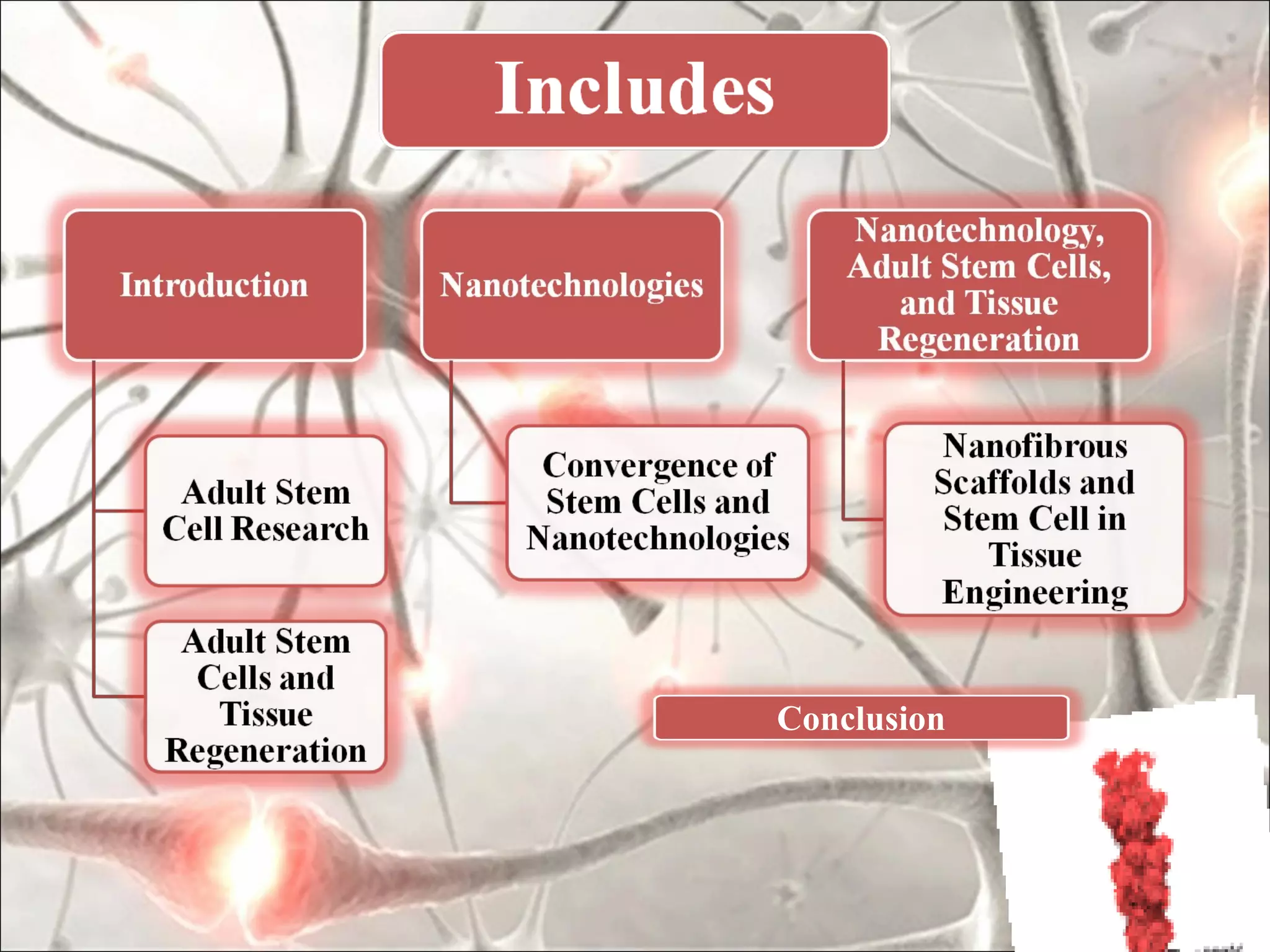
Conclusion
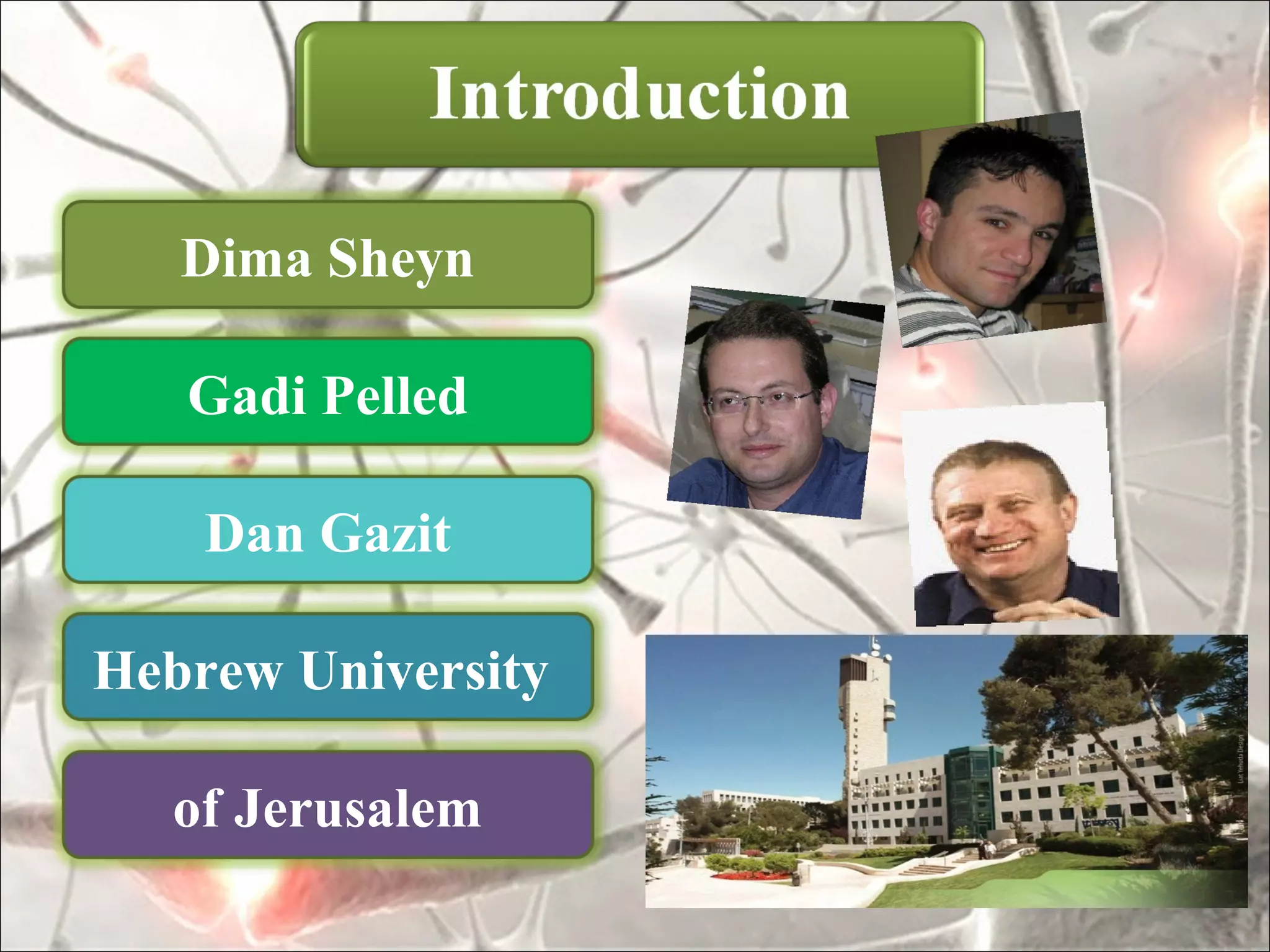
Dima Sheyn

   Gadi Pelled

    Dan Gazit

Hebrew University

  of Jerusalem
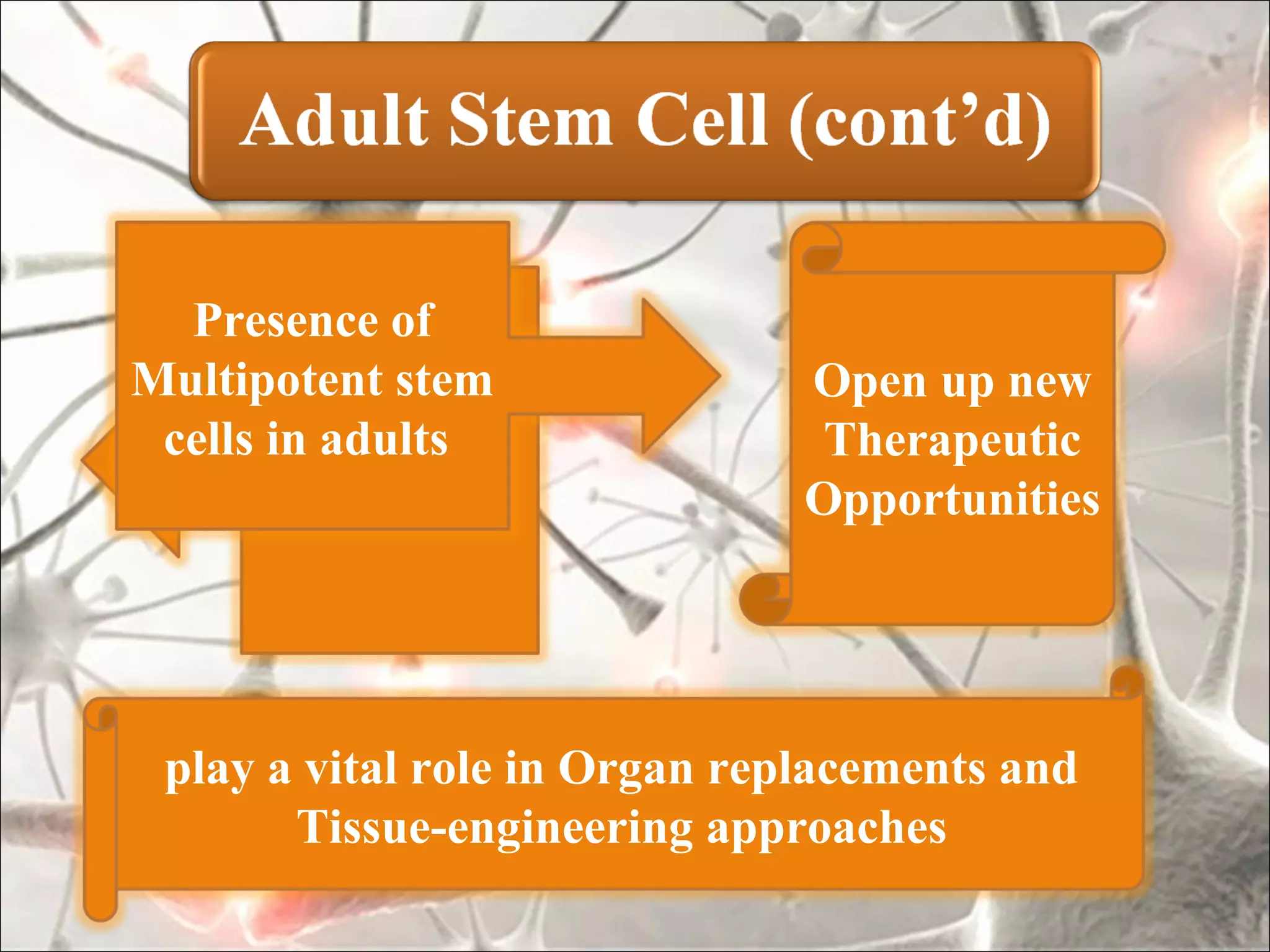
Presence of
Multipotent stem               Open up new
 cells in adults                Therapeutic
                               Opportunities


 play a vital role in Organ replacements and
       Tissue-engineering approaches
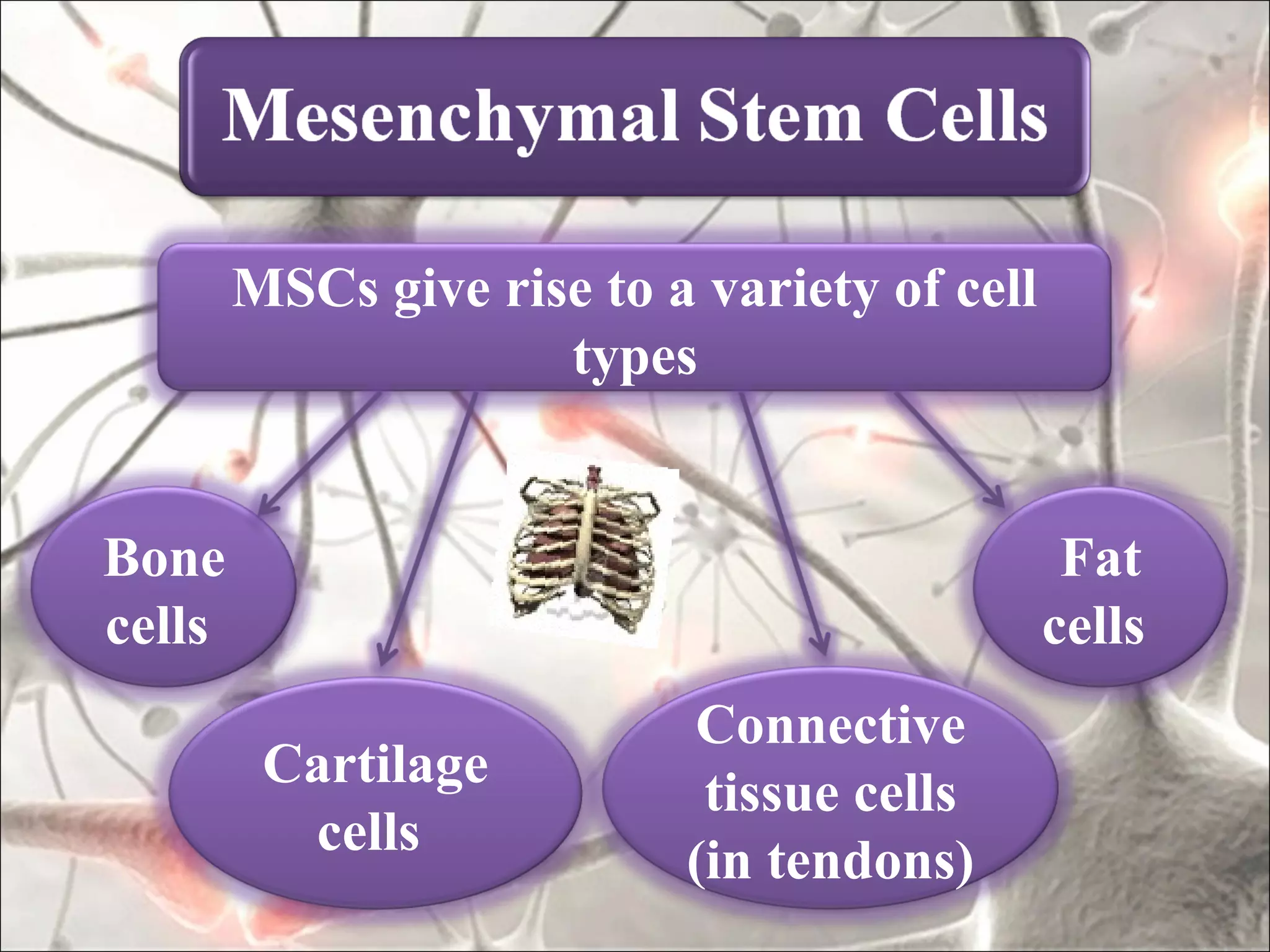
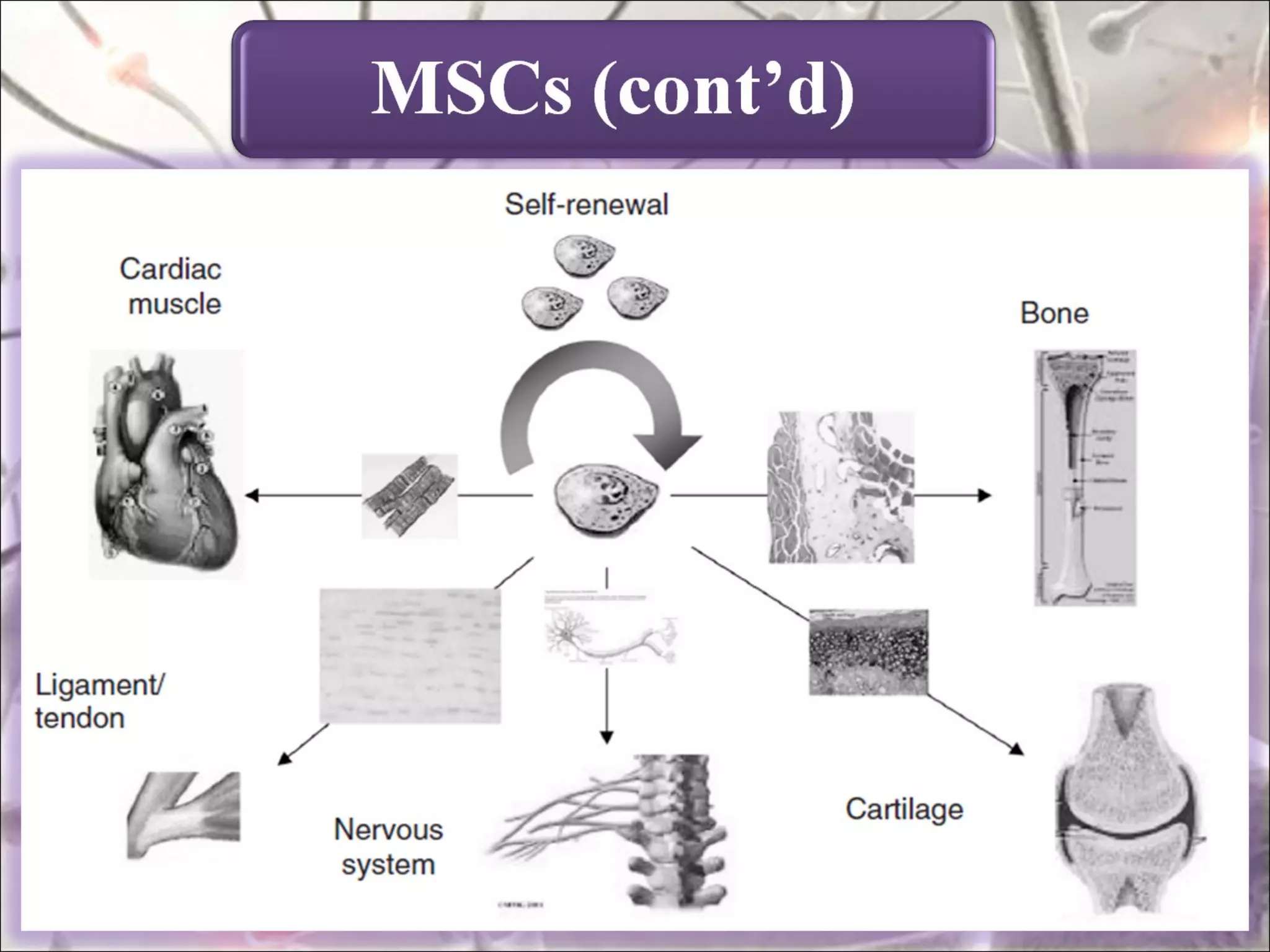
MSCs give rise to a variety of cell
                     types


Bone                                           Fat
cells                                         cells
                           Connective
         Cartilage
                            tissue cells
          cells
                           (in tendons)
Provides
   the Stromal
Support System for
hematopoietic stem
 cells in the Bone
      marrow
It is possible that cells that play a part
in the connective tissue differentiation
 may be good candidates to serve as a
              platform for


          Therapeutic Tissue
            Regeneration
Transplanted
Host’s MSCs (a        engineered
paracrine effect)      MSCs (an
                    autocrine effect)
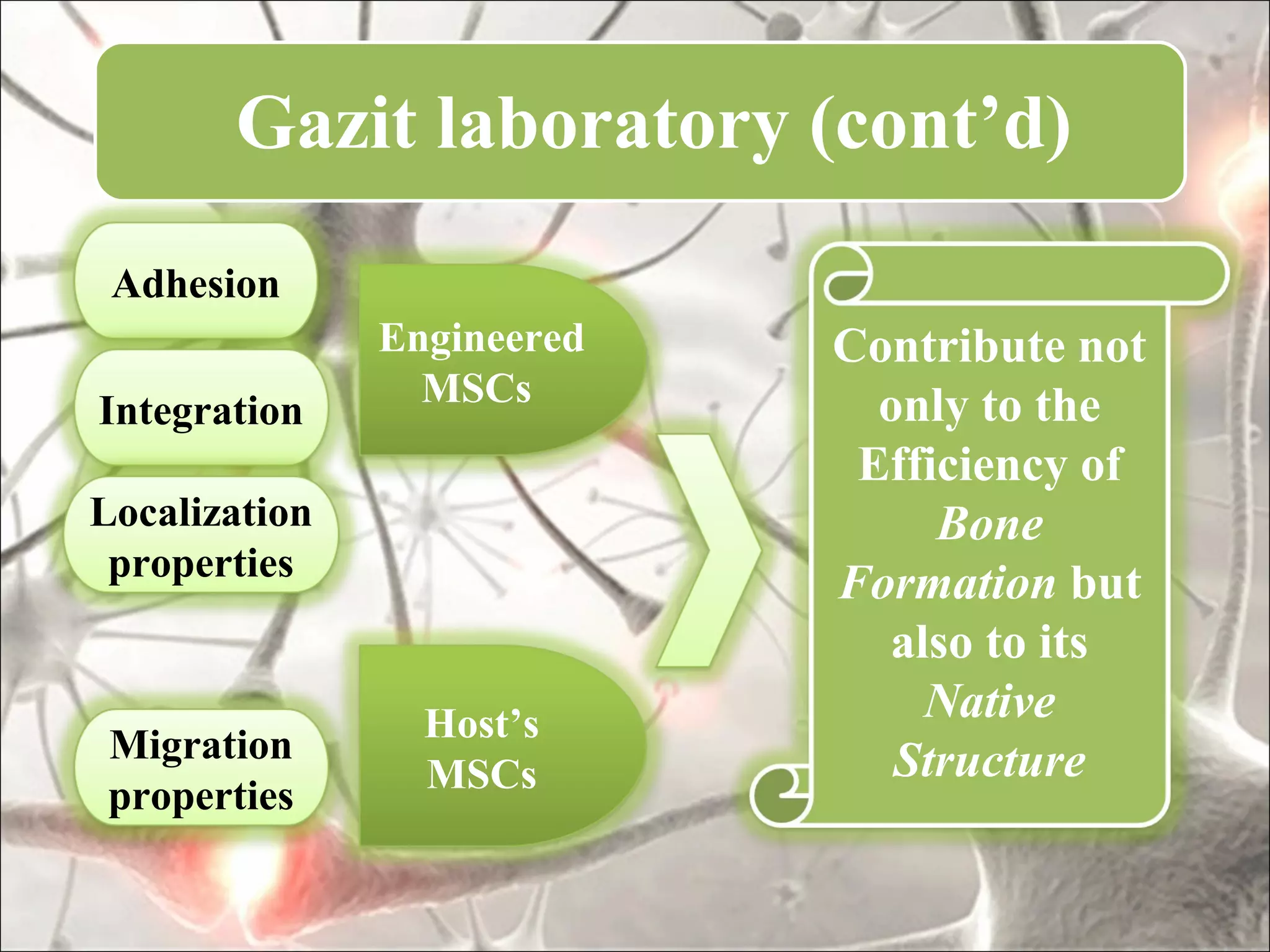
Gazit laboratory (cont’d)
 Adhesion
               Engineered   Contribute not
                 MSCs         only to the
Integration
                             Efficiency of
Localization                     Bone
 properties
                            Formation but
                              also to its
                 Host’s         Native
 Migration                     Structure
                 MSCs
 properties
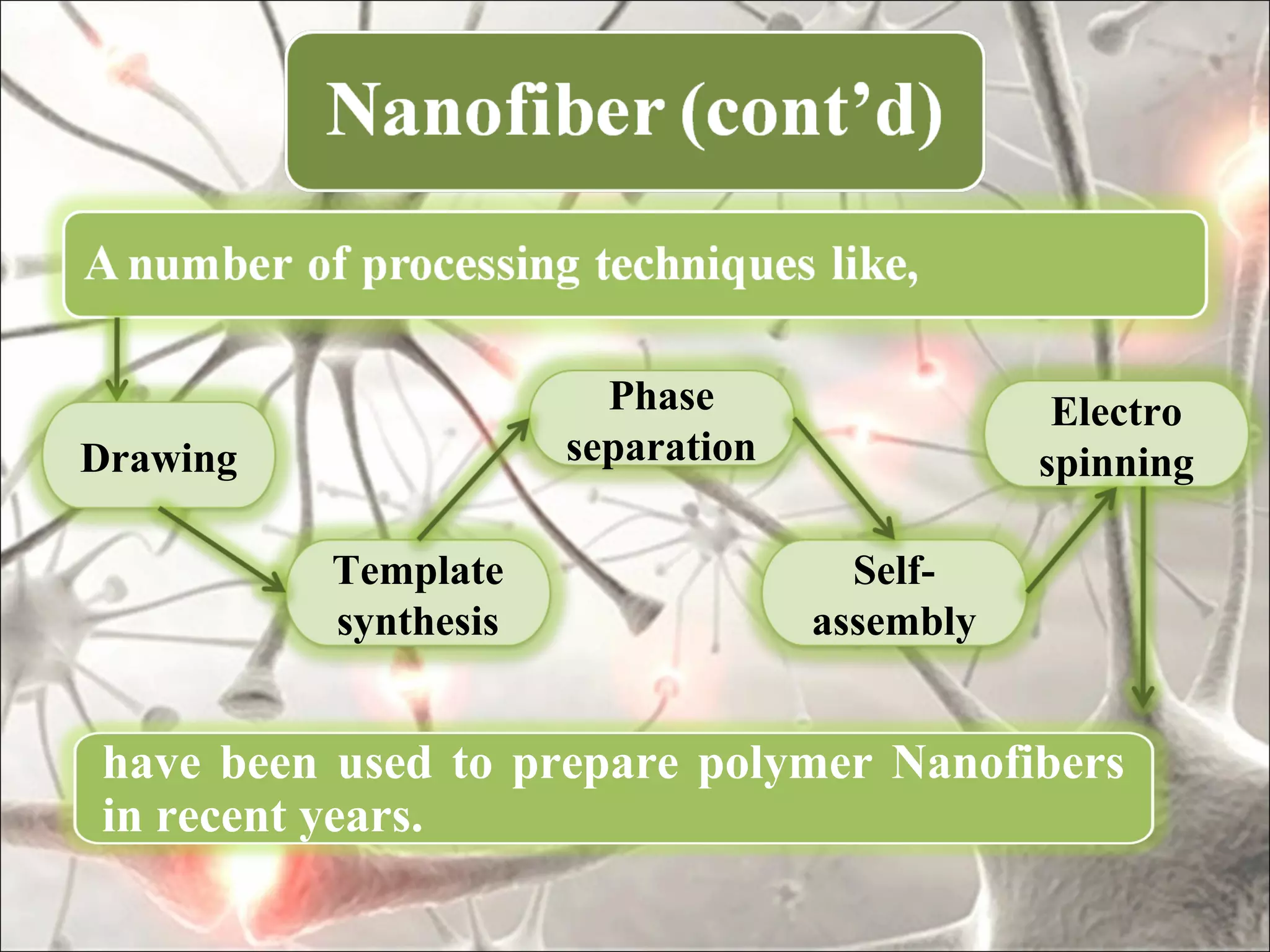
Nanotechnologies (cont’d)
Nanofibrous Scaffolds (cont’d)
Phase                  Electro
Drawing               separation              spinning

          Template                   Self-
          synthesis                assembly


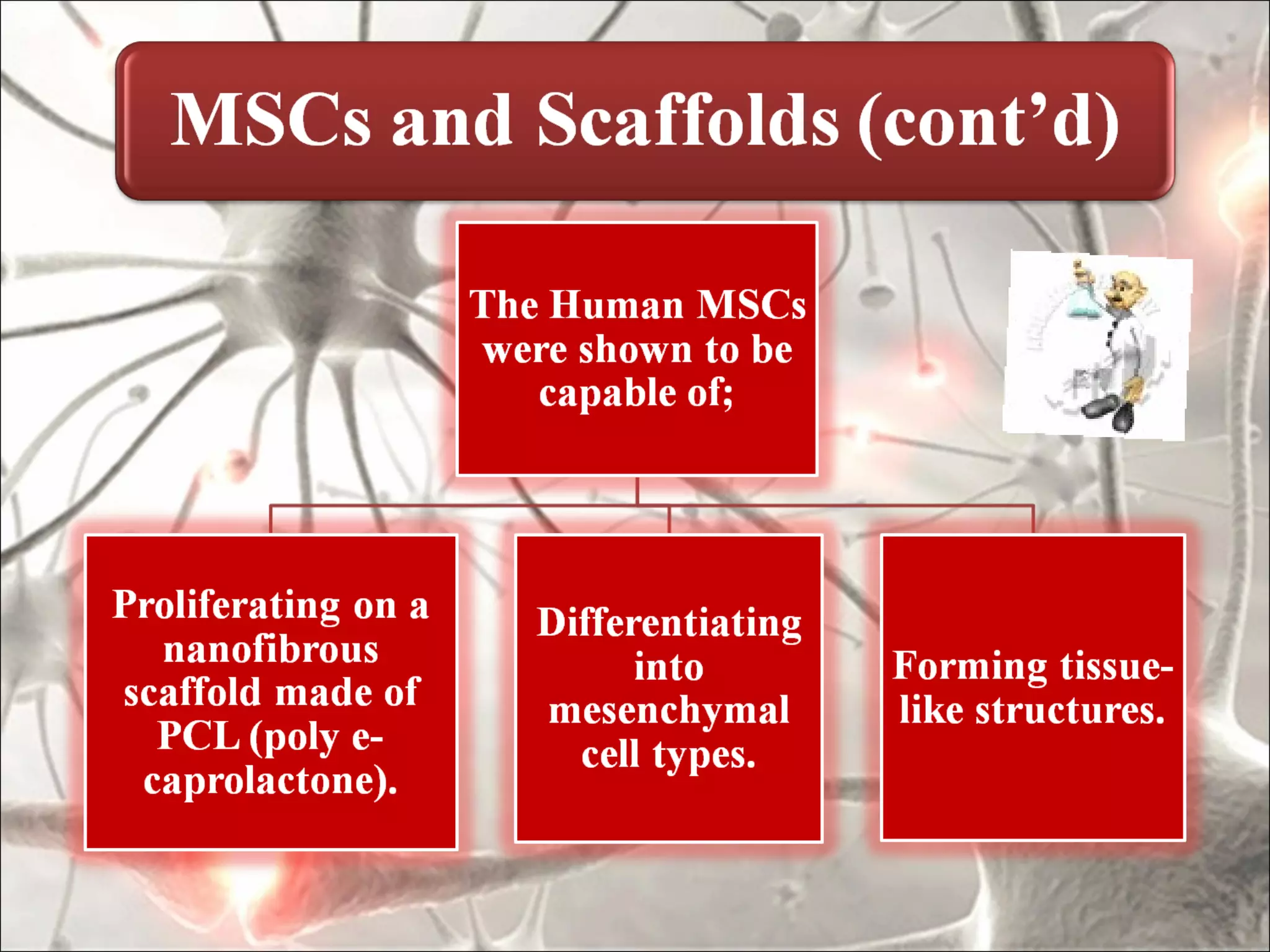
have been used to prepare polymer Nanofibers
in recent years.
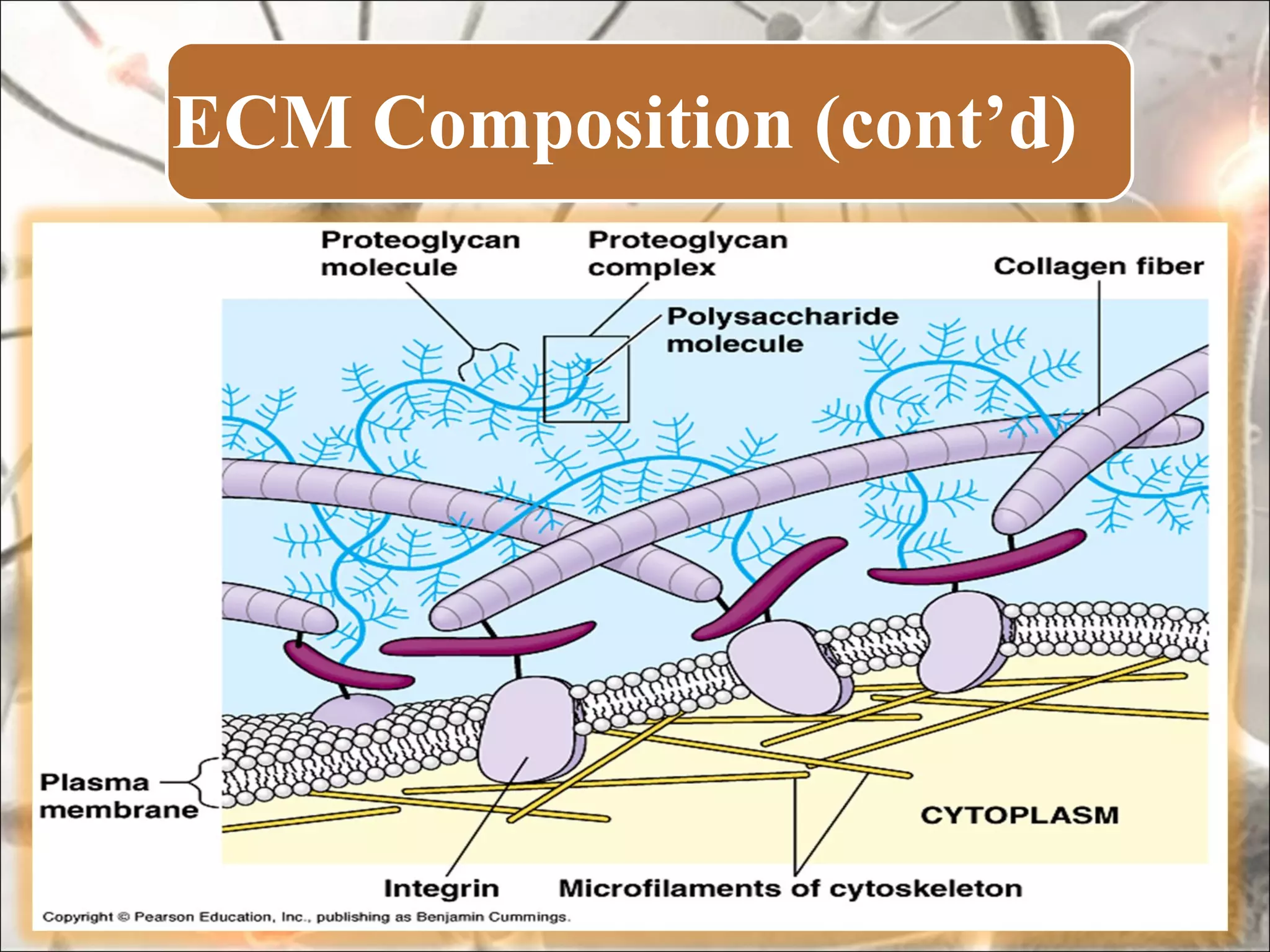
ECM is the main component of all types of
connective tissues (bone, cartilage, tendon and
                 blood vessels)


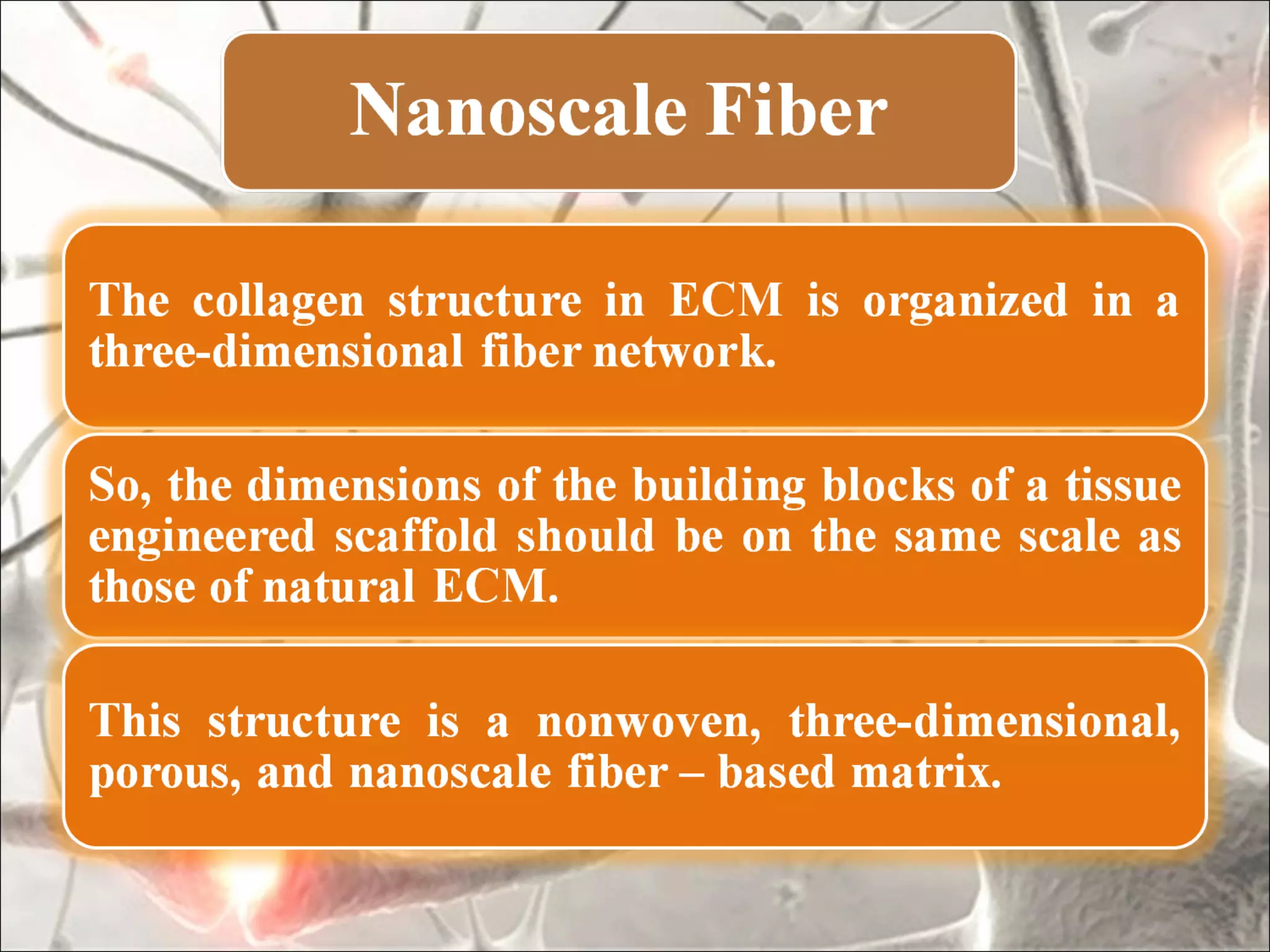
  So, most Nanoscaffolds and related stem-
   cell applications will be associated with
    the engineering of connective tissues.
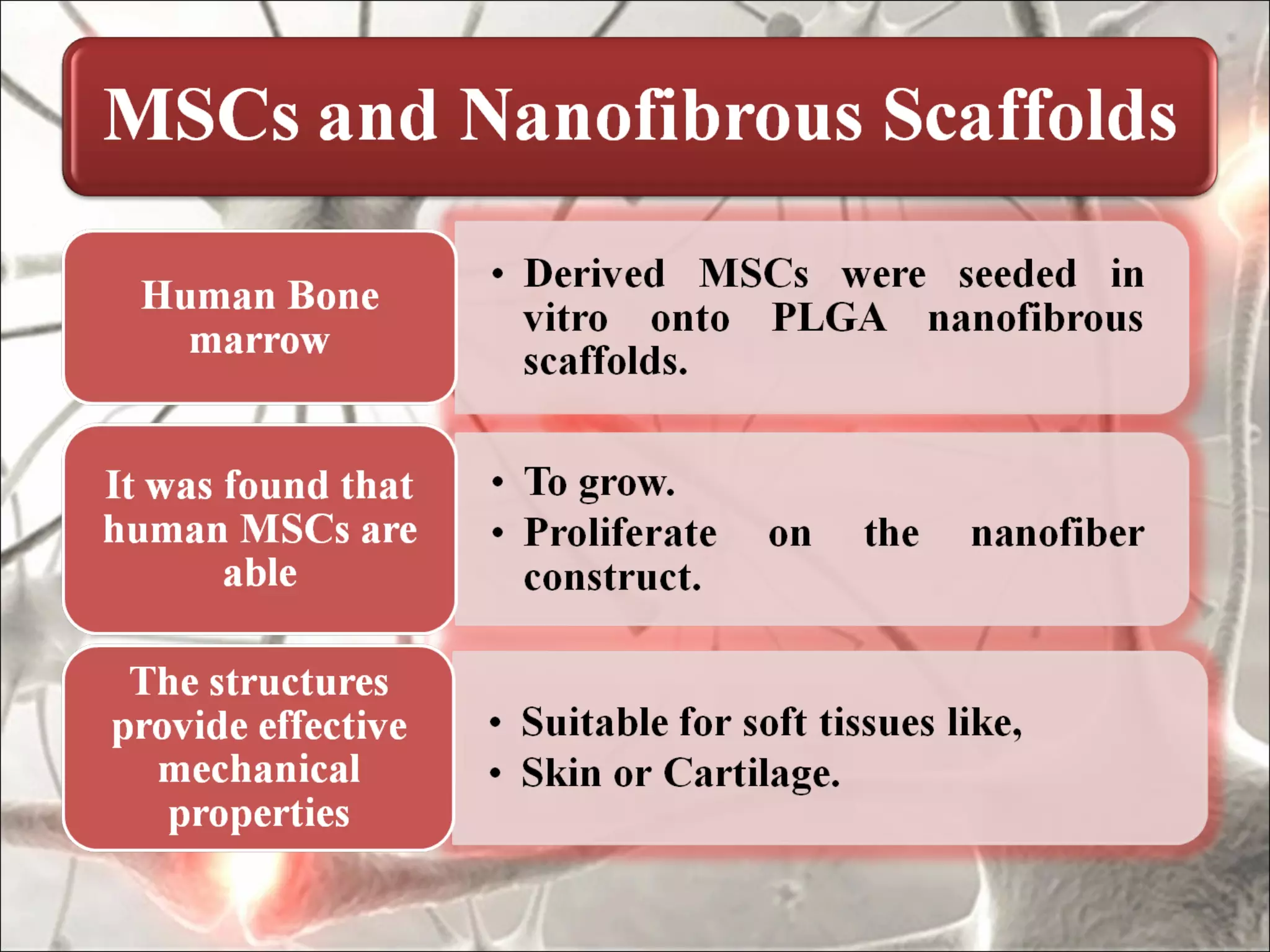
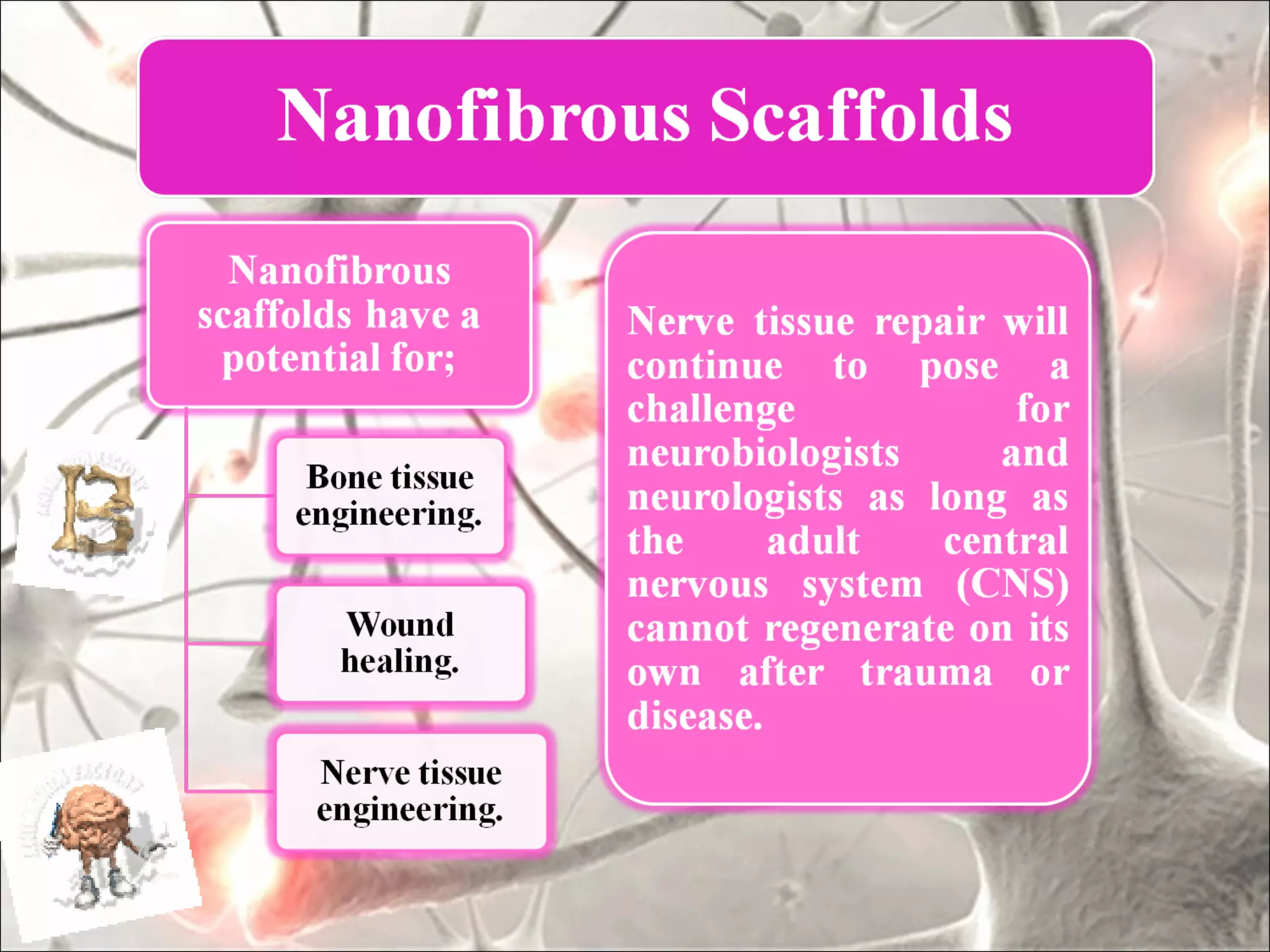
As Stem cells are able to proliferate and
differentiate into required tissue, but they
 need a 3-dimensional structure for their
           growth and support.


    So, the Nanofibrous scaffolds are
    combined with stem cells in tissue
              engineering.
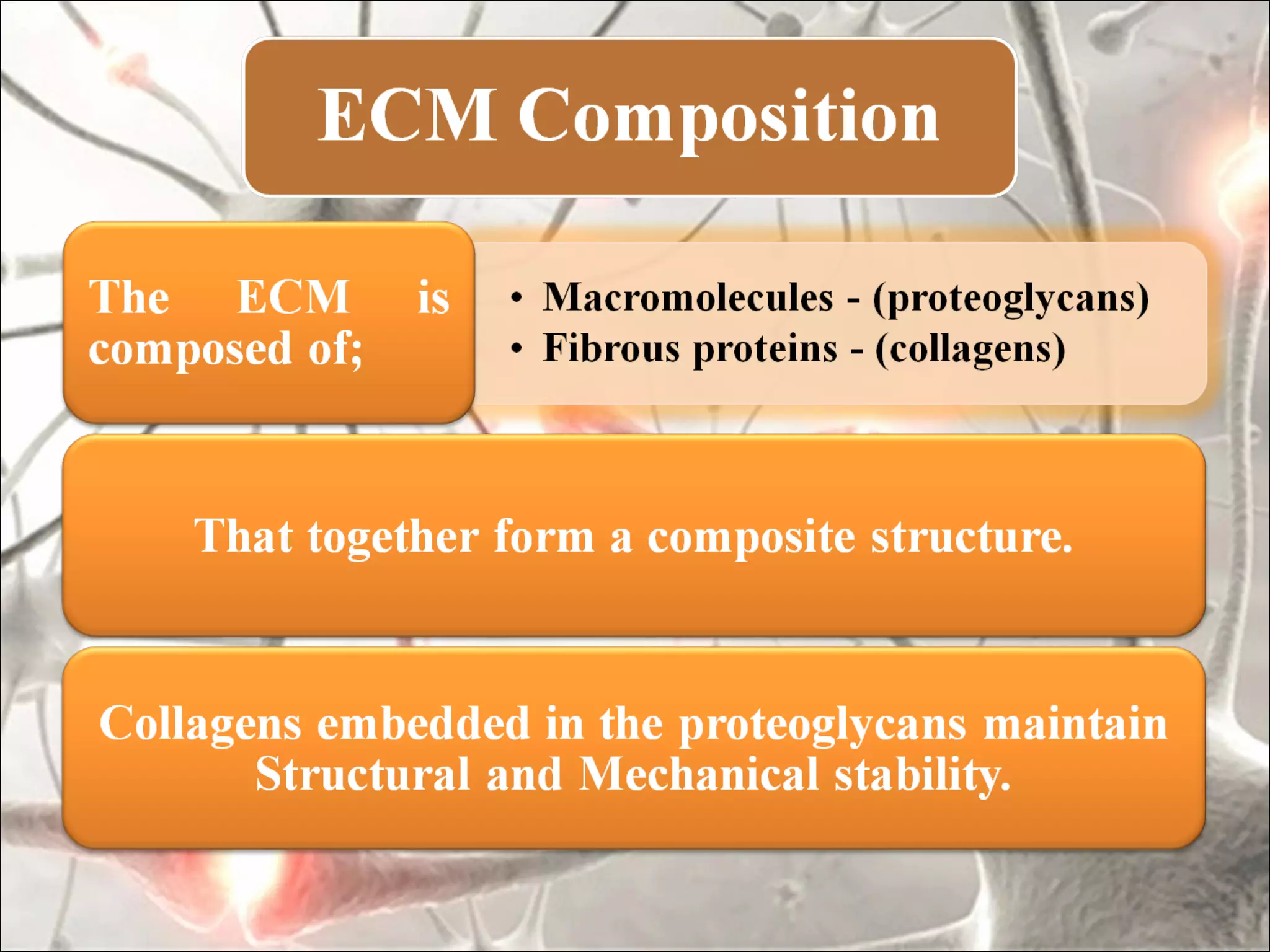
ECM Composition (cont’d)
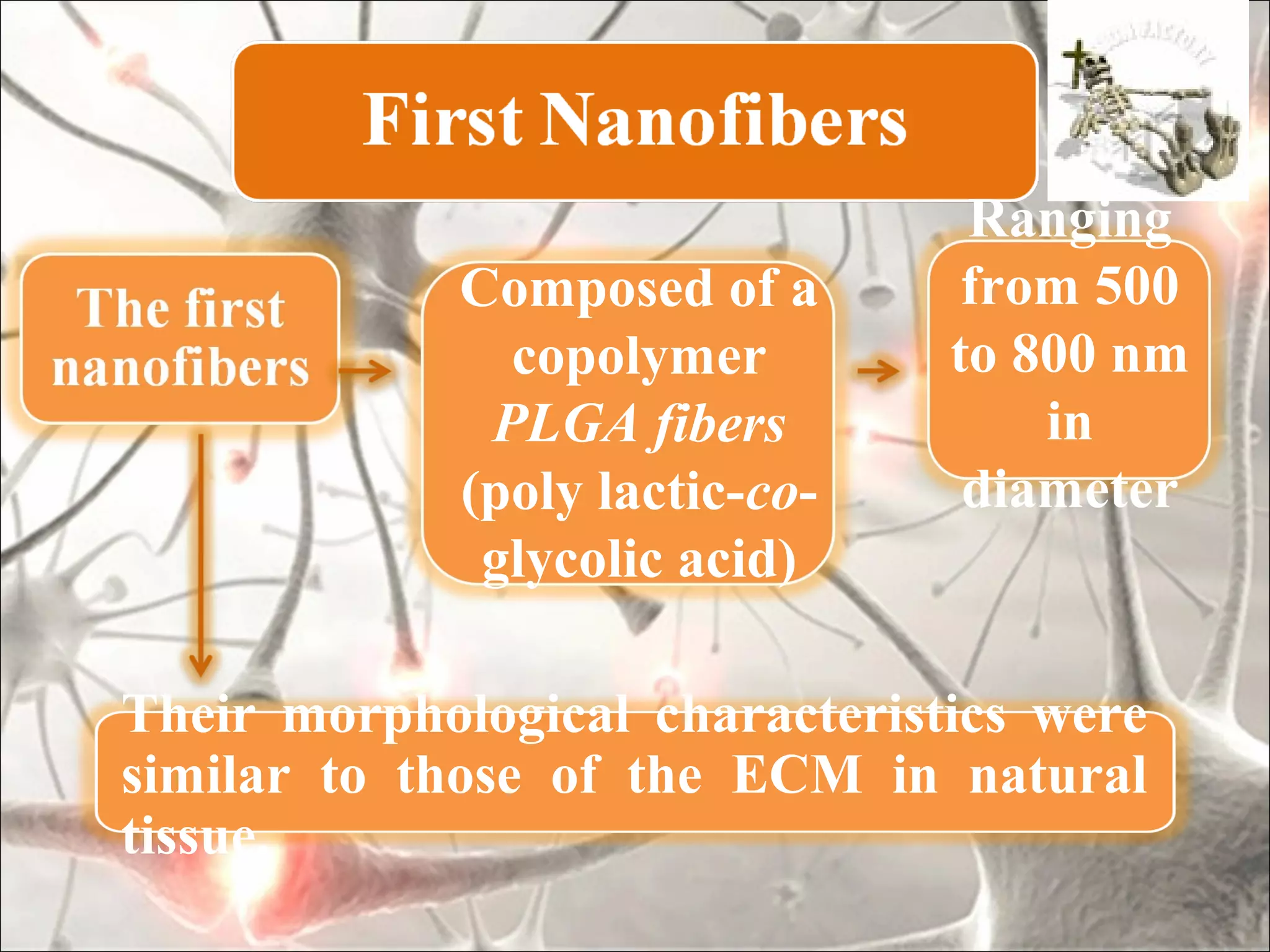
Ranging
             Composed of a       from 500
               copolymer        to 800 nm
              PLGA fibers           in
             (poly lactic-co-    diameter
              glycolic acid)

Their morphological characteristics were
similar to those of the ECM in natural
tissue.
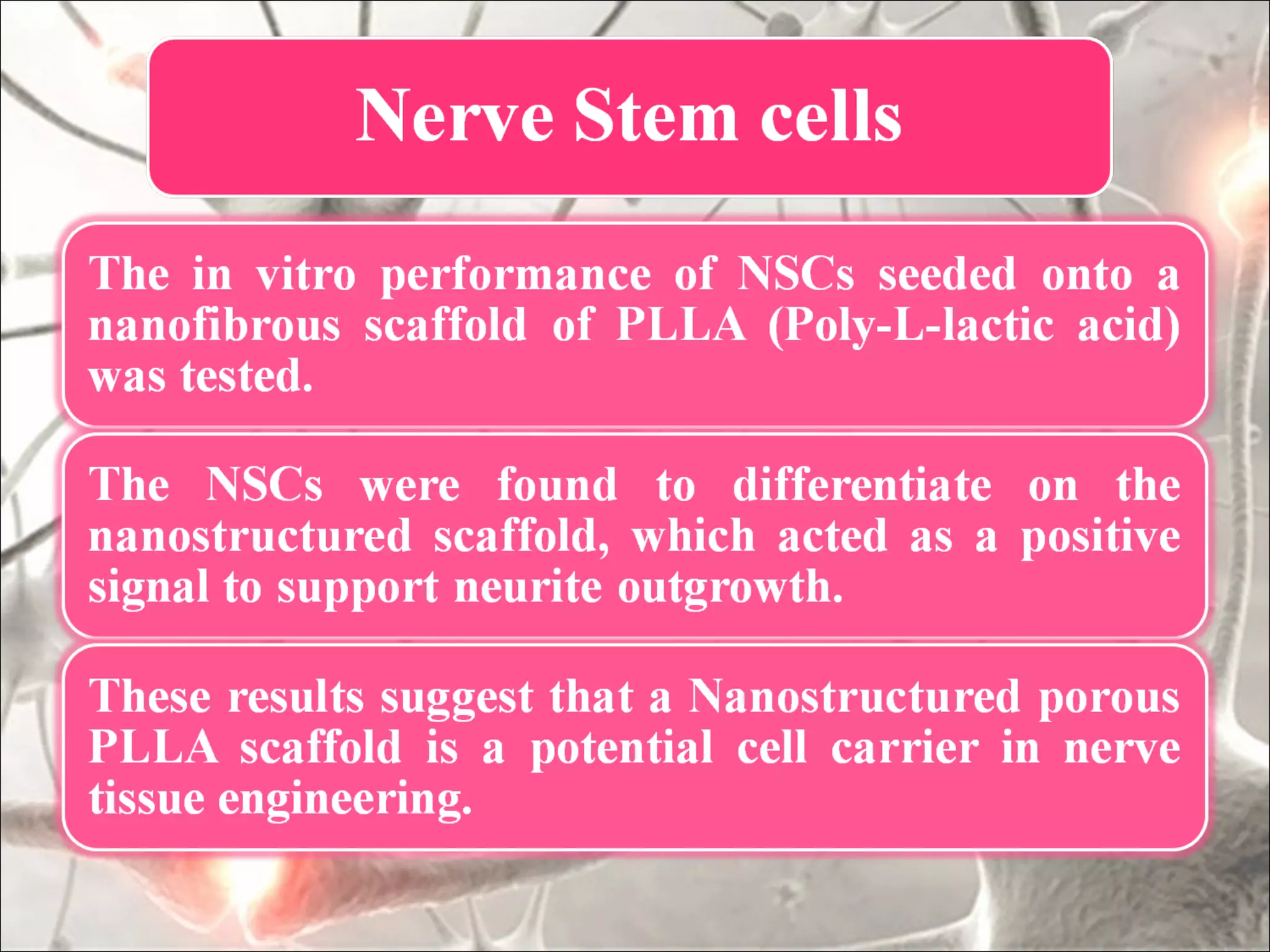
Nerve Stem cells (cont’d)
Conclusion
Conclusion


Nanotechnologies are beginning to be implemented as
analytical and production tools in stem cell–based
therapeutic approaches.

Only a few tools available in the field of nanoscience have
been made available to advance the use of stem cells in
medicine
L'avenir


The gap between scientists
traditionally     involved      in
nanoscience     and     scientists
dealing with biotechnology will
be bridged during the coming
years, leading to an increased
use of nanotools in biomedicine.
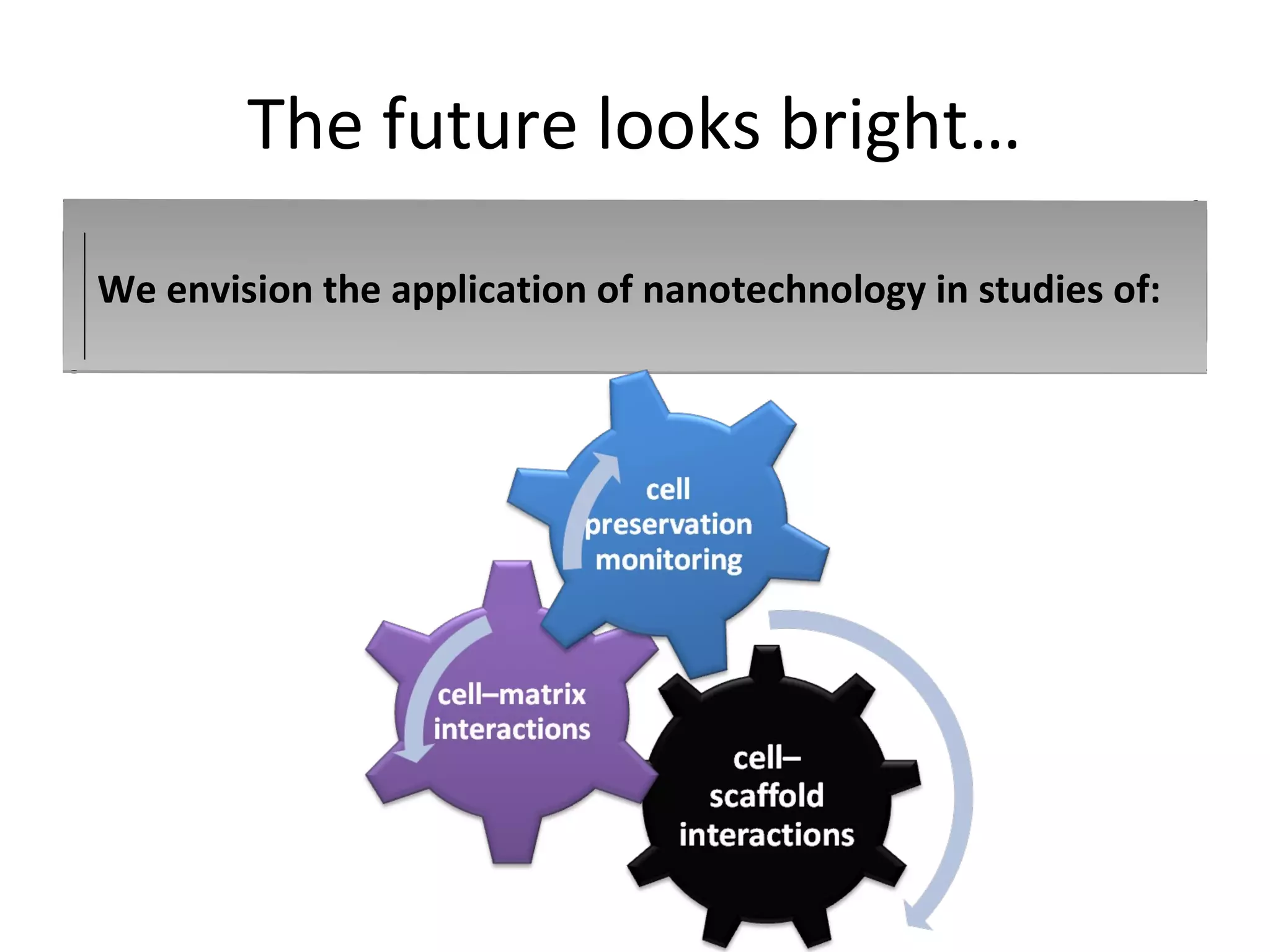
The future looks bright…
We envision the application of nanotechnology in studies of:
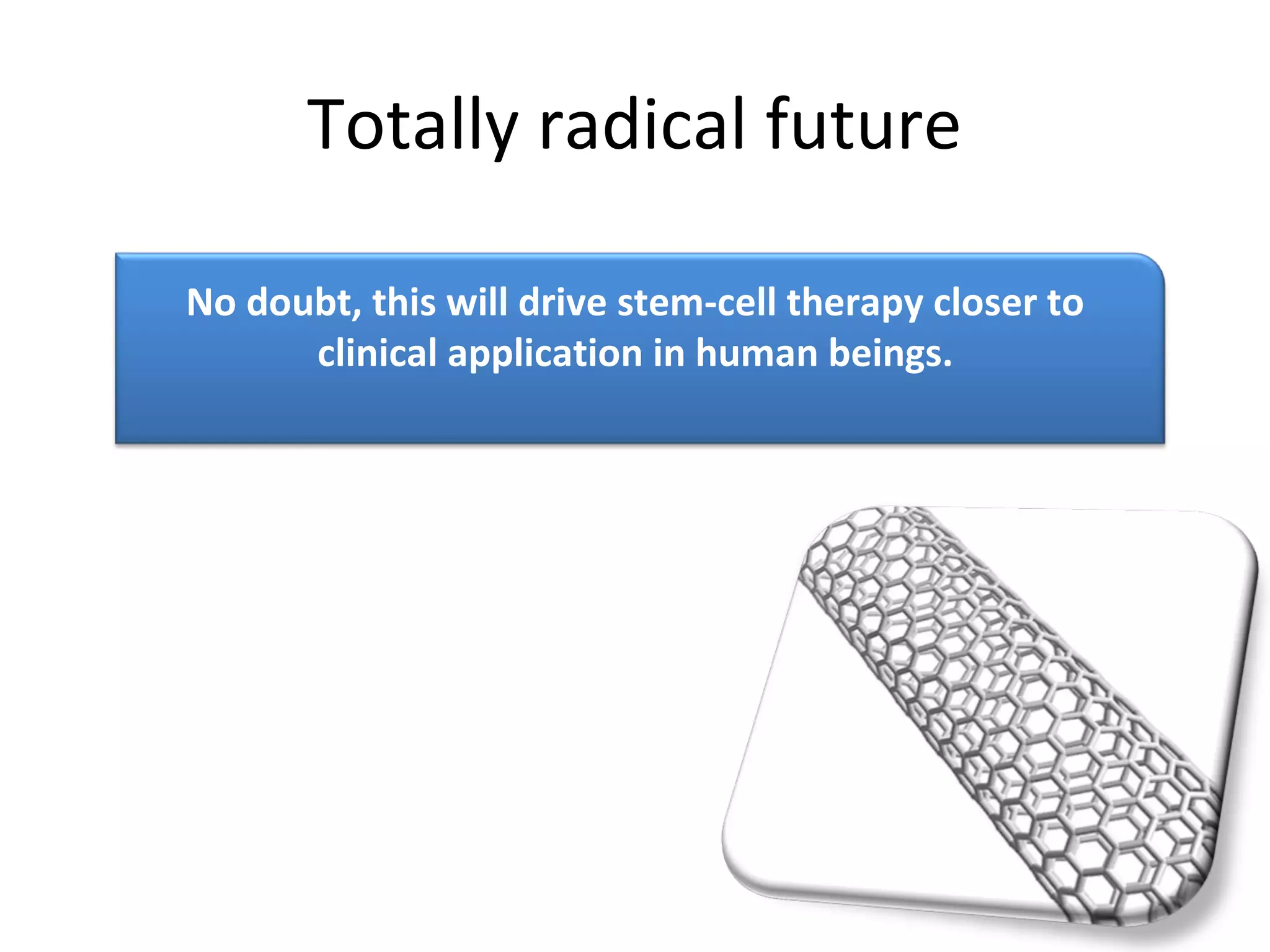
Totally radical future

No doubt, this will drive stem-cell therapy closer to
      clinical application in human beings.
Nanotechnology presentation

Nanotechnology presentation

  • 1.
  • 2.
  • 4.
    Dima Sheyn Gadi Pelled Dan Gazit Hebrew University of Jerusalem
  • 6.
    Presence of Multipotent stem Open up new cells in adults Therapeutic Opportunities play a vital role in Organ replacements and Tissue-engineering approaches
  • 7.
    MSCs give riseto a variety of cell types Bone Fat cells cells Connective Cartilage tissue cells cells (in tendons)
  • 9.
    Provides the Stromal Support System for hematopoietic stem cells in the Bone marrow
  • 11.
    It is possiblethat cells that play a part in the connective tissue differentiation may be good candidates to serve as a platform for Therapeutic Tissue Regeneration
  • 12.
    Transplanted Host’s MSCs (a engineered paracrine effect) MSCs (an autocrine effect)
  • 13.
  • 14.
    Gazit laboratory (cont’d) Adhesion Engineered Contribute not MSCs only to the Integration Efficiency of Localization Bone properties Formation but also to its Host’s Native Migration Structure MSCs properties
  • 16.
  • 22.
  • 23.
  • 25.
    Phase Electro Drawing separation spinning Template Self- synthesis assembly have been used to prepare polymer Nanofibers in recent years.
  • 26.
    ECM is themain component of all types of connective tissues (bone, cartilage, tendon and blood vessels) So, most Nanoscaffolds and related stem- cell applications will be associated with the engineering of connective tissues.
  • 27.
    As Stem cellsare able to proliferate and differentiate into required tissue, but they need a 3-dimensional structure for their growth and support. So, the Nanofibrous scaffolds are combined with stem cells in tissue engineering.
  • 29.
  • 31.
    Ranging Composed of a from 500 copolymer to 800 nm PLGA fibers in (poly lactic-co- diameter glycolic acid) Their morphological characteristics were similar to those of the ECM in natural tissue.
  • 37.
    Nerve Stem cells(cont’d)
  • 38.
  • 39.
    Conclusion Nanotechnologies are beginningto be implemented as analytical and production tools in stem cell–based therapeutic approaches. Only a few tools available in the field of nanoscience have been made available to advance the use of stem cells in medicine
  • 40.
    L'avenir The gap betweenscientists traditionally involved in nanoscience and scientists dealing with biotechnology will be bridged during the coming years, leading to an increased use of nanotools in biomedicine.
  • 41.
    The future looksbright… We envision the application of nanotechnology in studies of:
  • 42.
    Totally radical future Nodoubt, this will drive stem-cell therapy closer to clinical application in human beings.