25th Annual Technical Conference - 2018
Author:
Asoka Korale, Ph.D., C.Eng., MIET
A Framework for Dynamic Pricing Electricity
Consumption Patterns via Time Series
Clustering of Consumer Demand
Introduction
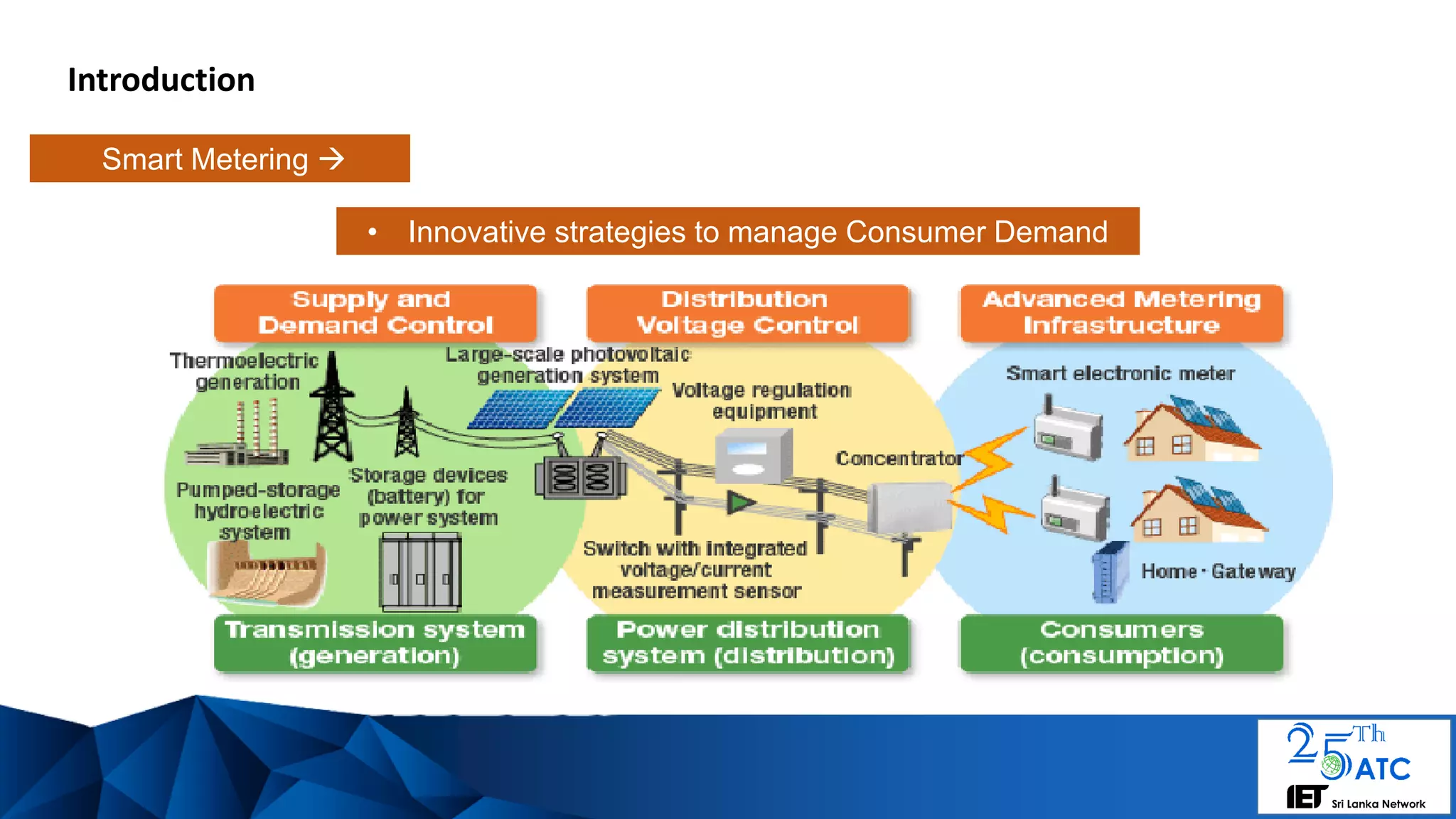
• Innovative strategies to manage Consumer Demand
Smart Metering 
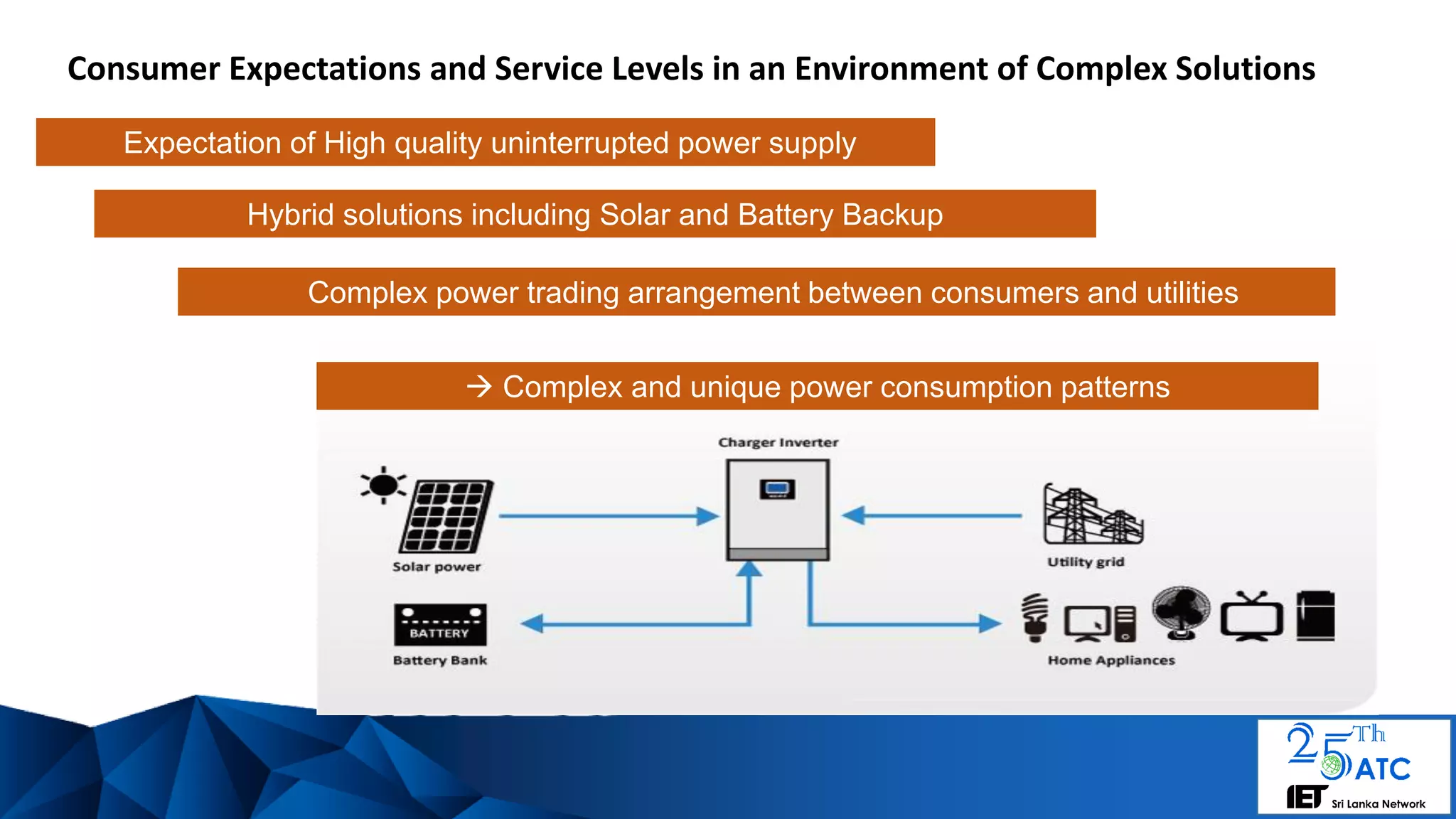
Consumer Expectations and Service Levels in an Environment of Complex Solutions
Expectation of High quality uninterrupted power supply
Complex power trading arrangement between consumers and utilities
Hybrid solutions including Solar and Battery Backup
 Complex and unique power consumption patterns
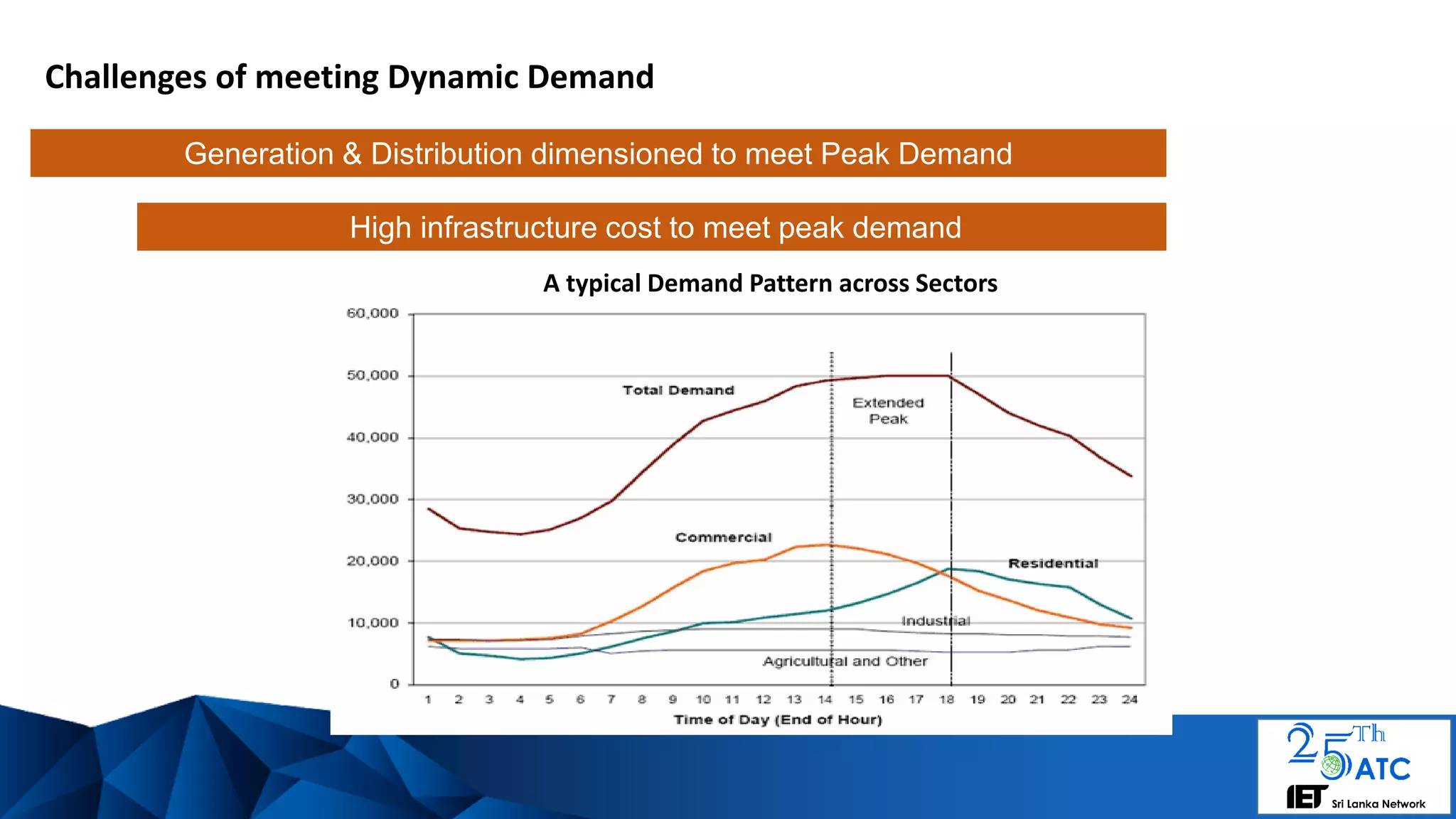
Challenges of meeting Dynamic Demand
Generation & Distribution dimensioned to meet Peak Demand
A typical Demand Pattern across Sectors
High infrastructure cost to meet peak demand
Imperatives for Managing Consumer Demand
Peak demand in a segment considerably higher than average
Different segments have different patterns
Managing Consumer Demand a key Strategy of the Utility
Lower operating costs Lower infrastructure costs
Lower / manage the risks of outages
Ensure better quality of supply
More predictable
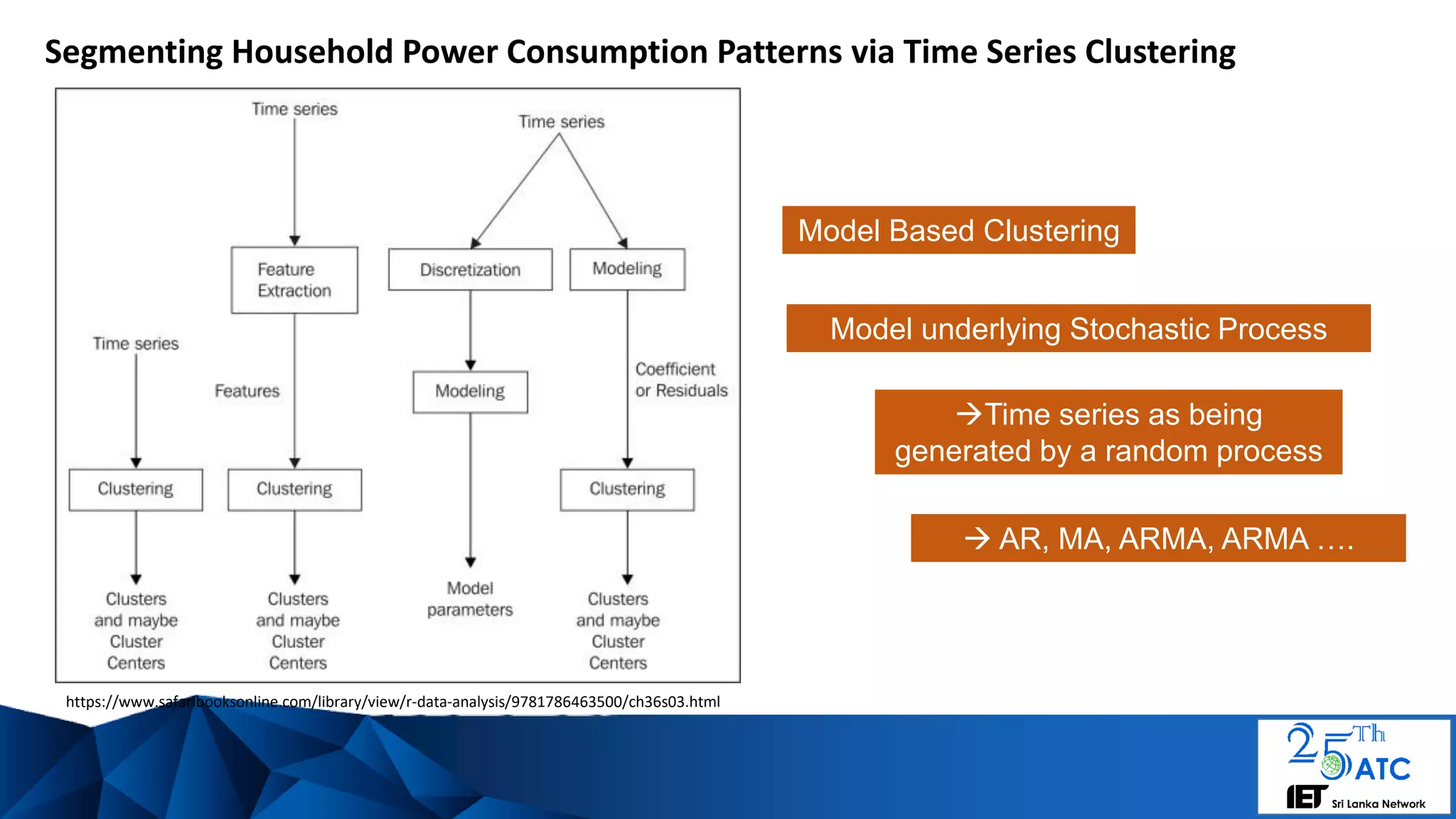
Segmenting Household Power Consumption Patterns via Time Series Clustering
Model underlying Stochastic Process
 AR, MA, ARMA, ARMA ….
Model Based Clustering
https://www.safaribooksonline.com/library/view/r-data-analysis/9781786463500/ch36s03.html
Time series as being
generated by a random process
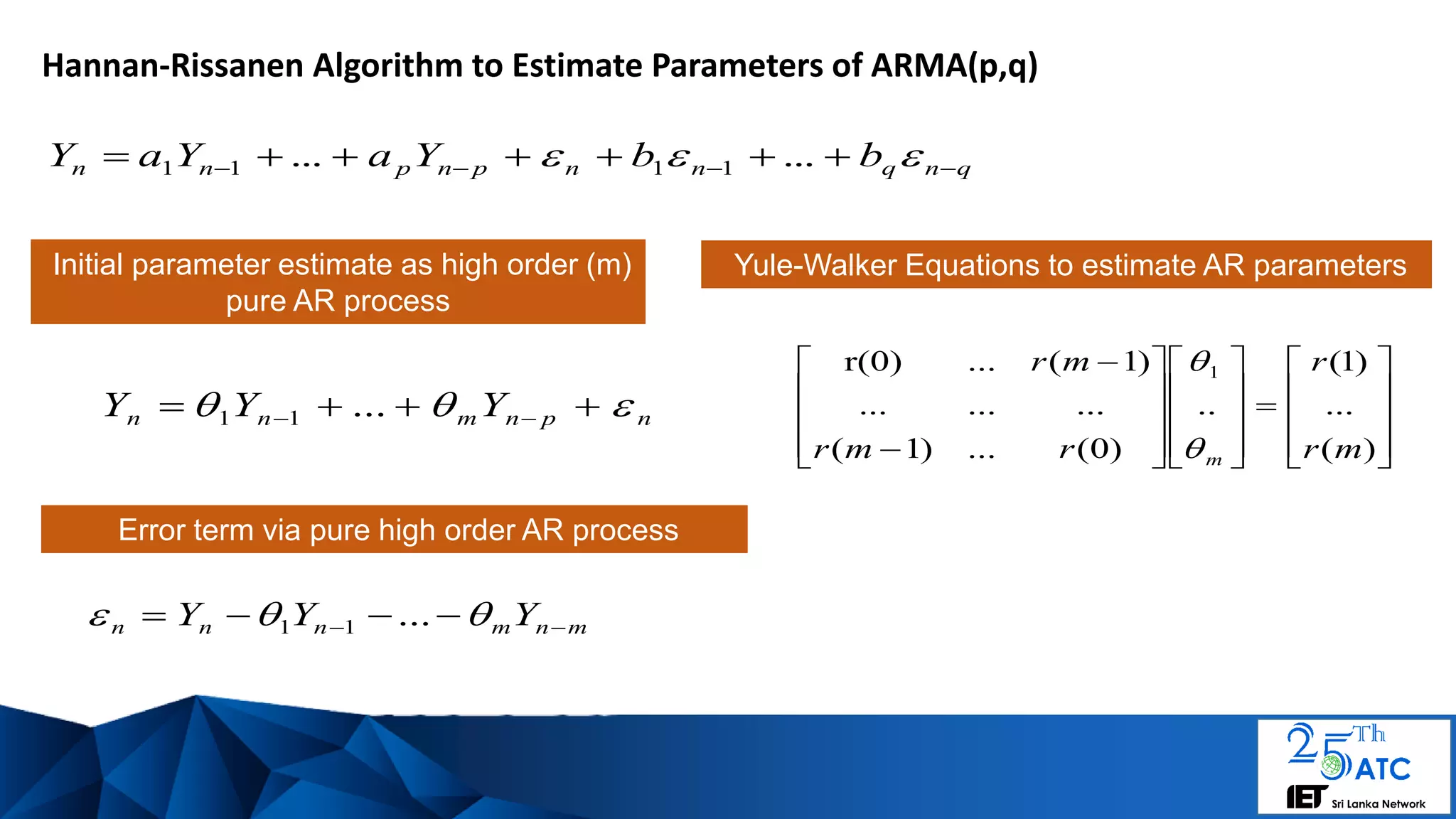
Hannan-Rissanen Algorithm to Estimate Parameters of ARMA(p,q)
qnqnnpnpnn bbYaYaY    ...... 1111
Initial parameter estimate as high order (m)
pure AR process

































)(
...
)1(
..
)0(...)1(
.........
)1(...r(0) 1
mr
r
rmr
mr
m

npnmnn YYY    ...11
Yule-Walker Equations to estimate AR parameters
mnmnnn YYY    ...11
Error term via pure high order AR process
Hannan-Rissanen Algorithm to Estimate parameters of ARMA(p,q)
Least squares to estimate ARMA parameters
mM 
mMMM TT 1
)( 

Populate matrix with lagged error terms estimated via pure AR process
nnn YY ˆ
which with some
modifications can
be put in the form
forming a least squares estimate for the ARMA parameters
qnqnpnpnn bbYaYaY    ......ˆ
1111where




































































qpn
pn
pn
n
q
p
qpnqpnqpn
qnnpnn
y
y
y
y
b
b
a
a
y
yy
...
...
...
...
1
...
......
1
1
1
21
1


]...[ 11 qp bbaa
Frequency Response from Pole Zero Map
)(
]...a[1
]...b[1
Y(z) 1
1
1
1
zE
zaz
zbz
p
p
q
q





B(z)
A(z)
n nY
Digital Signal Processing by Proakis and Manolakis
H = Y(z)/E(z) as product of complex roots
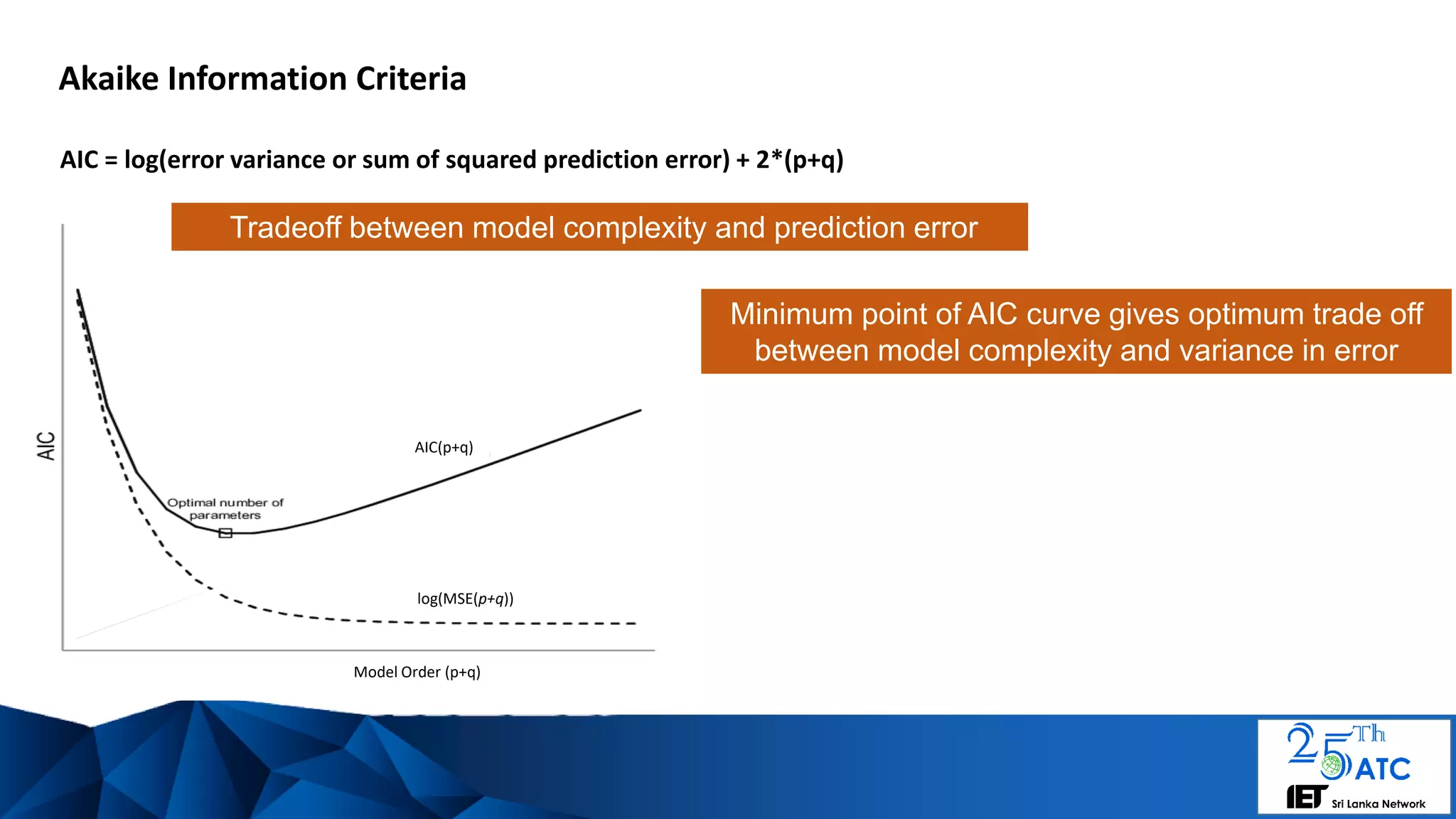
log(MSE(p+q))
AIC(p+q)
Model Order (p+q)
Akaike Information Criteria
Tradeoff between model complexity and prediction error
AIC = log(error variance or sum of squared prediction error) + 2*(p+q)
Minimum point of AIC curve gives optimum trade off
between model complexity and variance in error
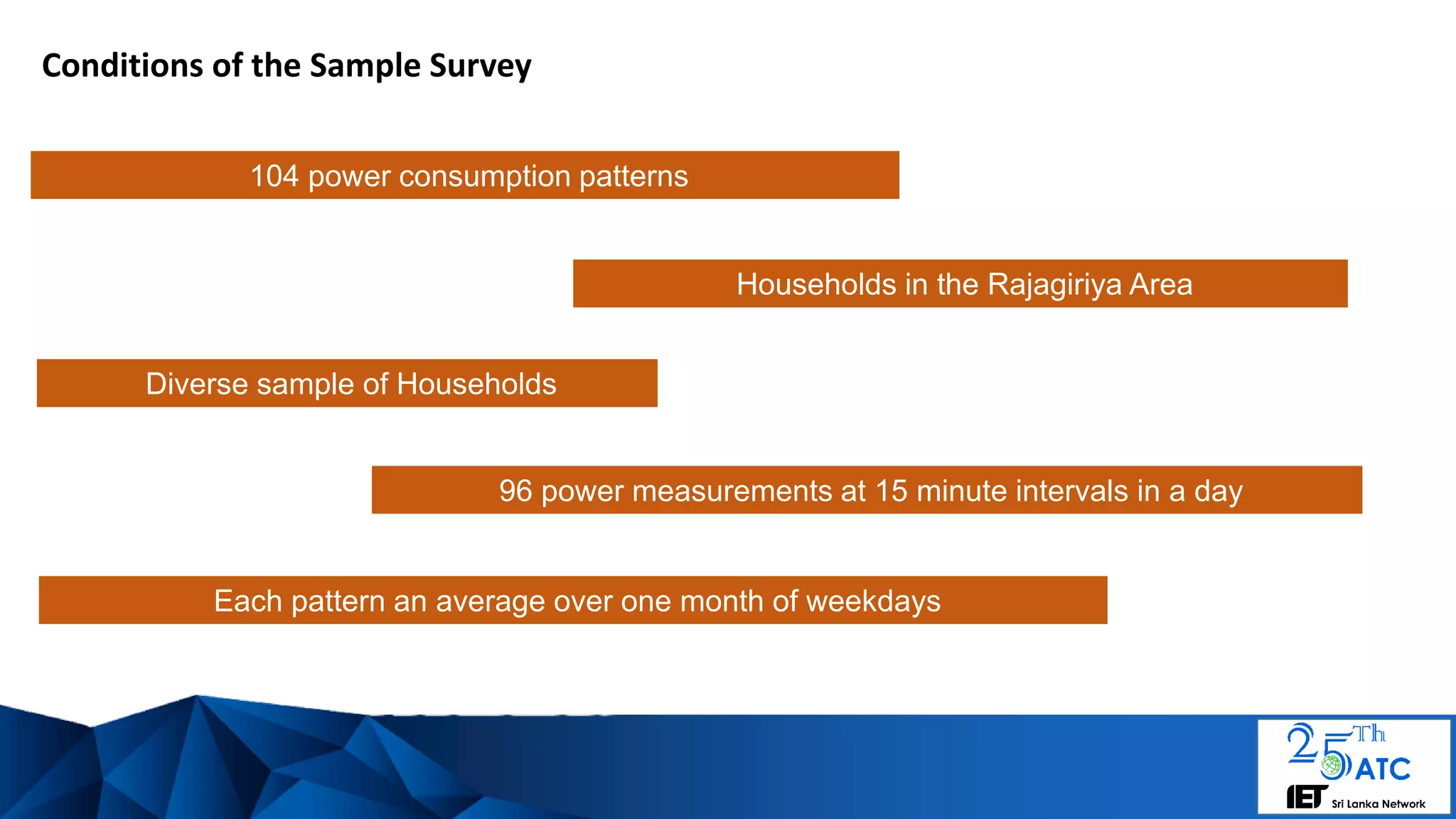
Conditions of the Sample Survey
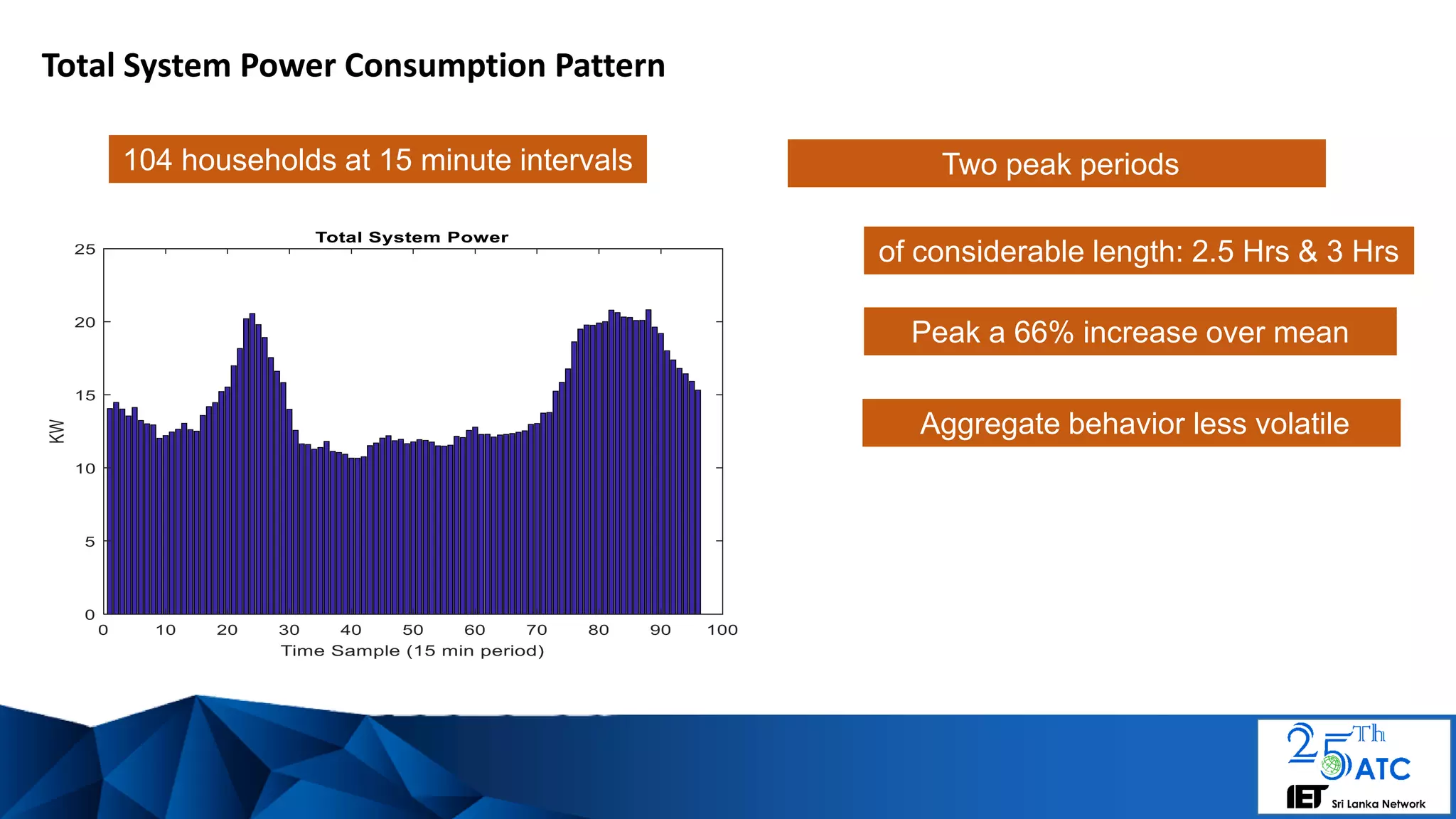
104 power consumption patterns
Each pattern an average over one month of weekdays
96 power measurements at 15 minute intervals in a day
Households in the Rajagiriya Area
Diverse sample of Households
Total System Power Consumption Pattern
Two peak periods
Peak a 66% increase over mean
of considerable length: 2.5 Hrs & 3 Hrs
Aggregate behavior less volatile
104 households at 15 minute intervals
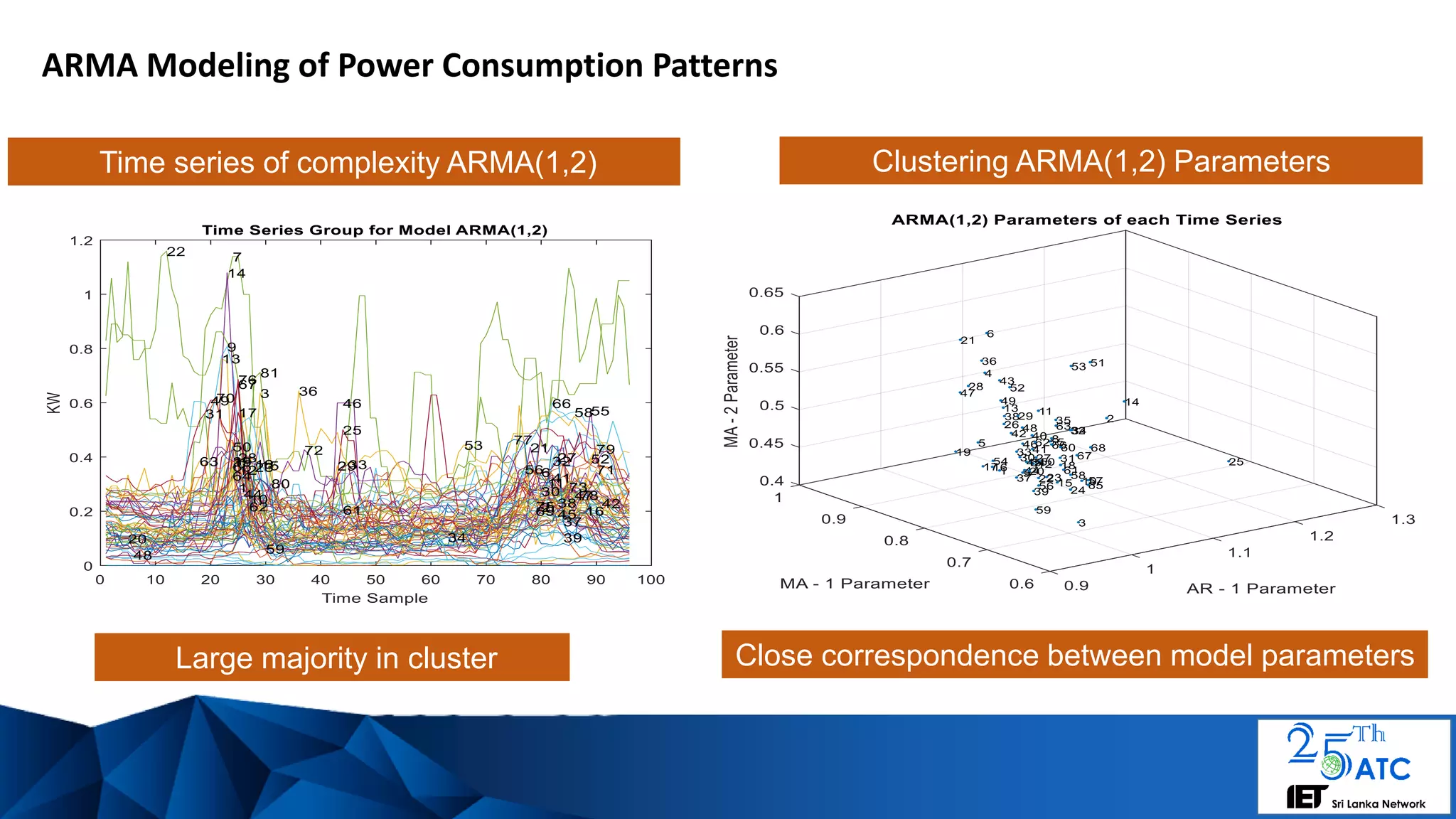
ARMA Modeling of Power Consumption Patterns
Time series of complexity ARMA(1,2) Clustering ARMA(1,2) Parameters
Large majority in cluster Close correspondence between model parameters
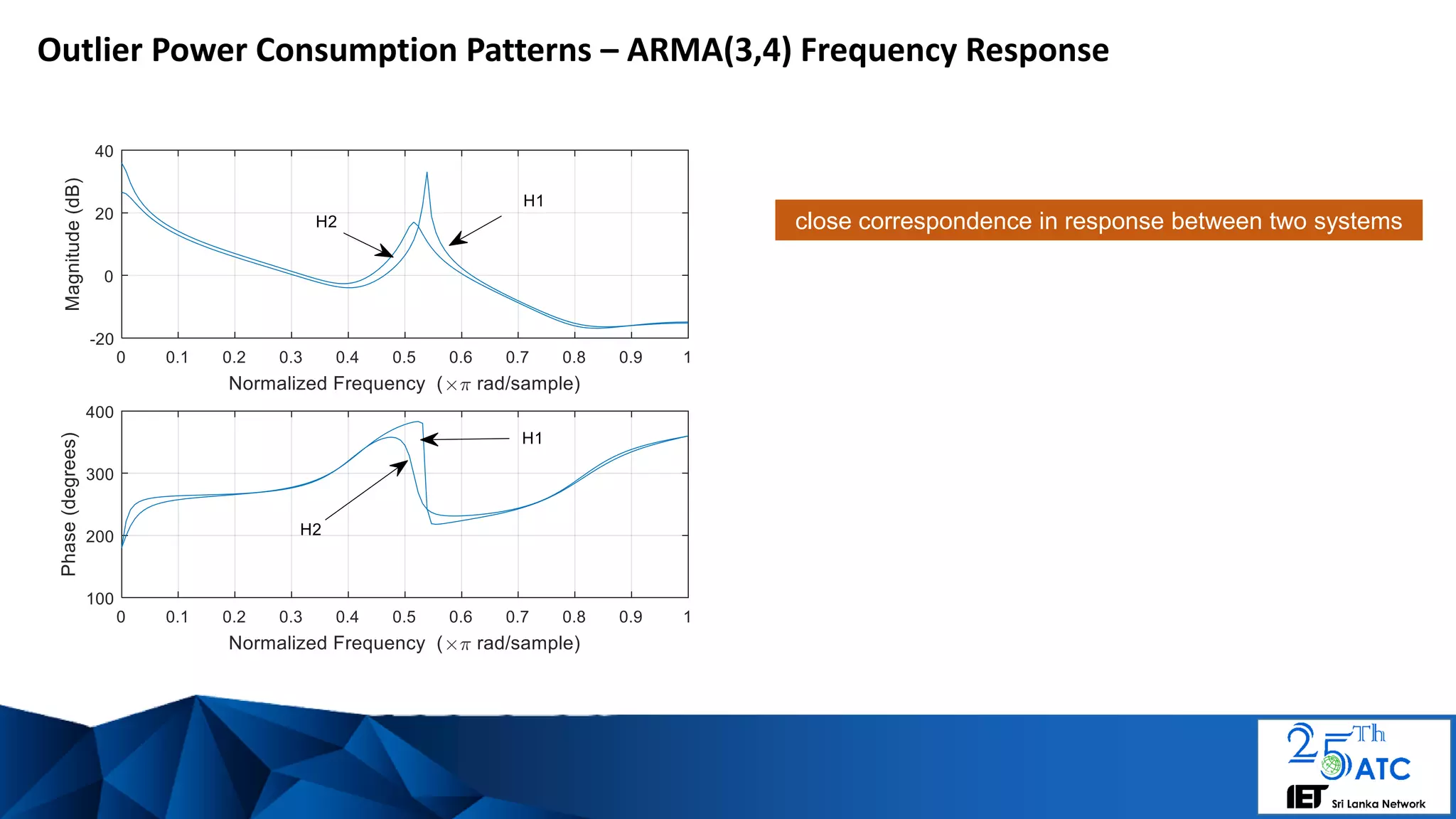
Outlier Power Consumption Patterns of Complexity ARMA(3,4)
Params: a1 a2 a3 1 b1 b2 b3 b4 ]
[H1 #26: 0.8369 -0.7429 1.0646 1 0.8309 0.6752 0.5491 0.3363]
[H2 #60: 0.9325 -0.8261 0.9477 1 0.8137 0.6589 0.5539 0.3765]
Close match between
ARMA parameters sets
Outlier Power Consumption Patterns – ARMA(3,4) Frequency Response
close correspondence in response between two systems
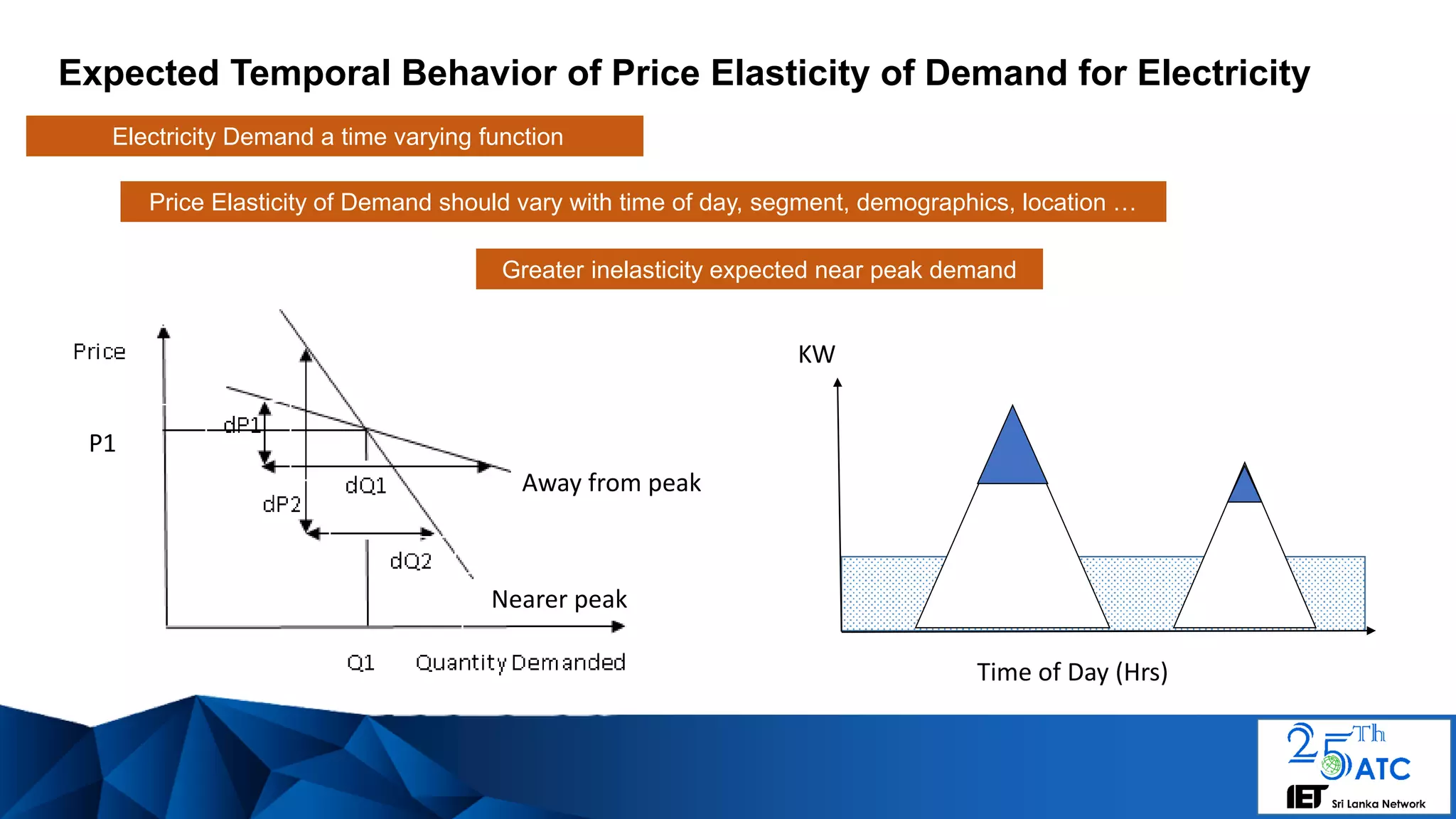
Expected Temporal Behavior of Price Elasticity of Demand for Electricity
Electricity Demand a time varying function
Time of Day (Hrs)
KW
Greater inelasticity expected near peak demand
Away from peak
Nearer peak
P1
Price Elasticity of Demand should vary with time of day, segment, demographics, location …
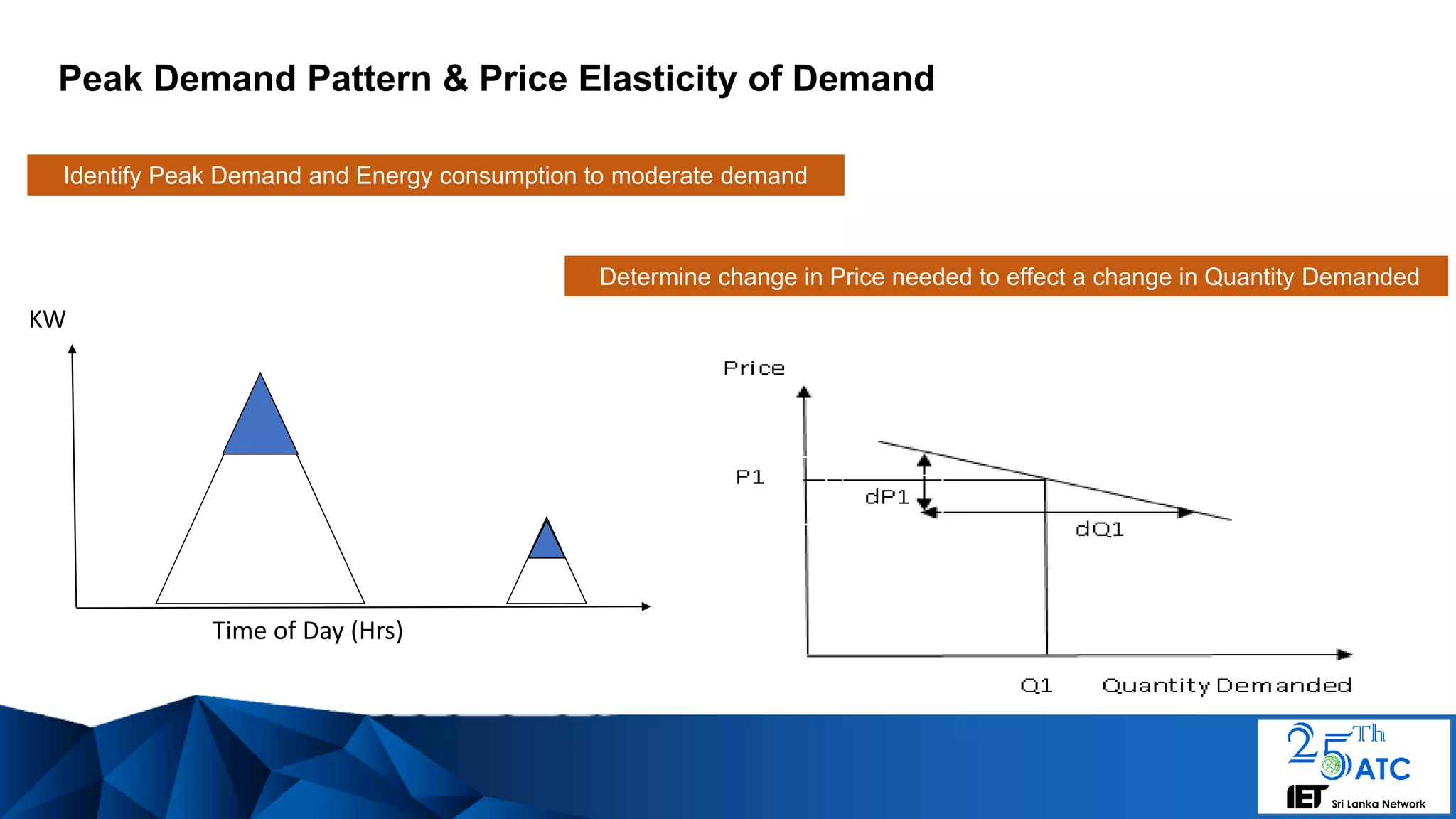
Peak Demand Pattern & Price Elasticity of Demand
Determine change in Price needed to effect a change in Quantity Demanded
Identify Peak Demand and Energy consumption to moderate demand
Time of Day (Hrs)
KW
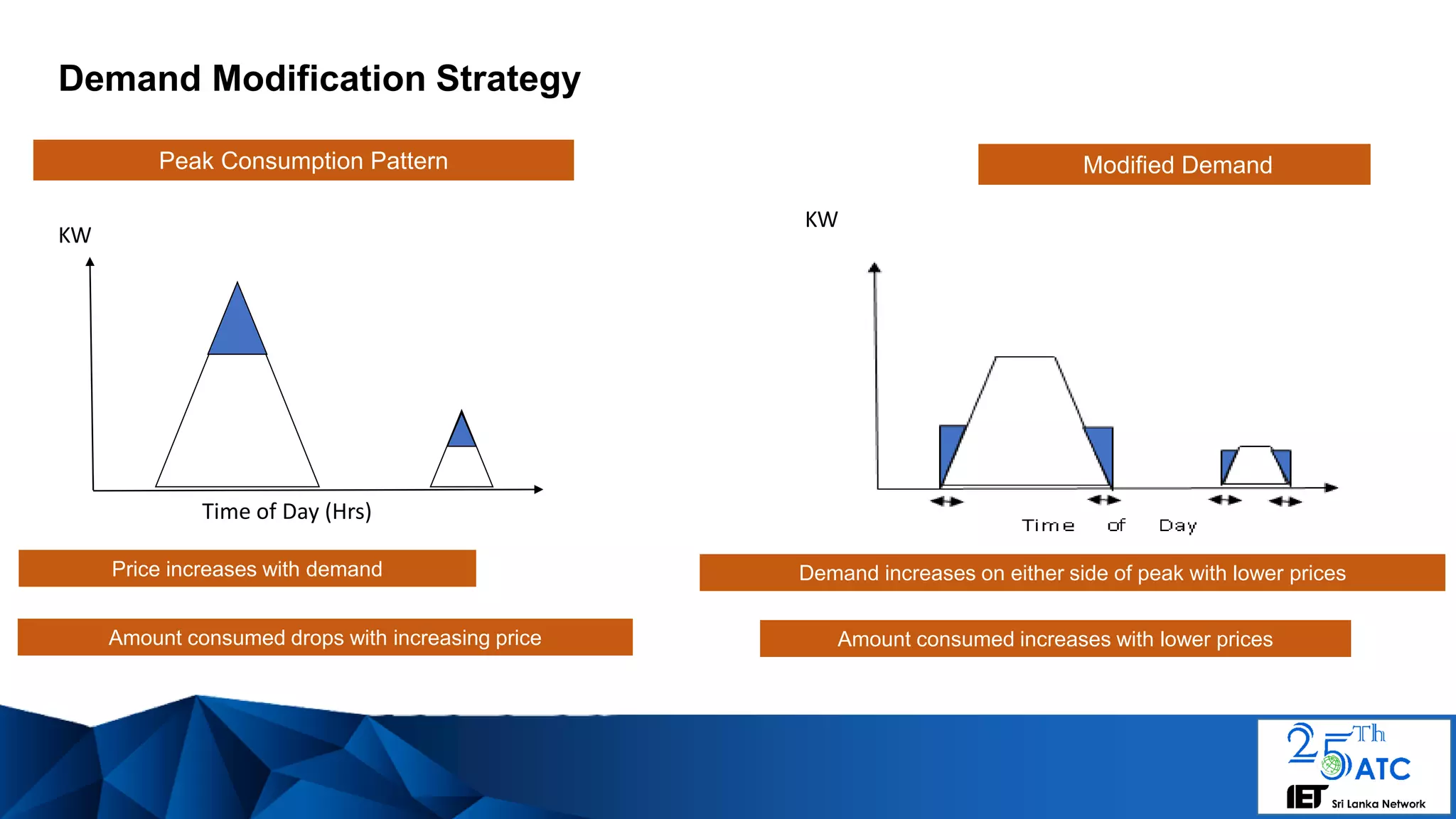
Demand Modification Strategy
Modified DemandPeak Consumption Pattern
Time of Day (Hrs)
KW
Demand increases on either side of peak with lower pricesPrice increases with demand
Amount consumed drops with increasing price Amount consumed increases with lower prices
KW
Conclusion
• Power patterns can be grouped by modeling as the result of an ARMA random process
• Such groups exhibit fairly close correspondence in both time and frequency behavior
• Strategies that take advantage of the group consumption pattern can be devised
• Dynamic pricing strategies can be implemented to moderate the peak and even the load
• Unique strategies can be devised catering to specific patterns (groups) of usage
• Outlier power patterns can be detected providing insights to anomalous consumption behavior
THANK YOU

A framework for dynamic pricing electricity consumption patterns via time series clustering of consumer demand

  • 1.
    25th Annual TechnicalConference - 2018 Author: Asoka Korale, Ph.D., C.Eng., MIET A Framework for Dynamic Pricing Electricity Consumption Patterns via Time Series Clustering of Consumer Demand
  • 2.
    Introduction • Innovative strategiesto manage Consumer Demand Smart Metering 
  • 3.
    Consumer Expectations andService Levels in an Environment of Complex Solutions Expectation of High quality uninterrupted power supply Complex power trading arrangement between consumers and utilities Hybrid solutions including Solar and Battery Backup  Complex and unique power consumption patterns
  • 4.
    Challenges of meetingDynamic Demand Generation & Distribution dimensioned to meet Peak Demand A typical Demand Pattern across Sectors High infrastructure cost to meet peak demand
  • 5.
    Imperatives for ManagingConsumer Demand Peak demand in a segment considerably higher than average Different segments have different patterns Managing Consumer Demand a key Strategy of the Utility Lower operating costs Lower infrastructure costs Lower / manage the risks of outages Ensure better quality of supply More predictable
  • 6.
    Segmenting Household PowerConsumption Patterns via Time Series Clustering Model underlying Stochastic Process  AR, MA, ARMA, ARMA …. Model Based Clustering https://www.safaribooksonline.com/library/view/r-data-analysis/9781786463500/ch36s03.html Time series as being generated by a random process
  • 7.
    Hannan-Rissanen Algorithm toEstimate Parameters of ARMA(p,q) qnqnnpnpnn bbYaYaY    ...... 1111 Initial parameter estimate as high order (m) pure AR process                                  )( ... )1( .. )0(...)1( ......... )1(...r(0) 1 mr r rmr mr m  npnmnn YYY    ...11 Yule-Walker Equations to estimate AR parameters mnmnnn YYY    ...11 Error term via pure high order AR process
  • 8.
    Hannan-Rissanen Algorithm toEstimate parameters of ARMA(p,q) Least squares to estimate ARMA parameters mM  mMMM TT 1 )(   Populate matrix with lagged error terms estimated via pure AR process nnn YY ˆ which with some modifications can be put in the form forming a least squares estimate for the ARMA parameters qnqnpnpnn bbYaYaY    ......ˆ 1111where                                                                     qpn pn pn n q p qpnqpnqpn qnnpnn y y y y b b a a y yy ... ... ... ... 1 ... ...... 1 1 1 21 1   ]...[ 11 qp bbaa
  • 9.
    Frequency Response fromPole Zero Map )( ]...a[1 ]...b[1 Y(z) 1 1 1 1 zE zaz zbz p p q q      B(z) A(z) n nY Digital Signal Processing by Proakis and Manolakis H = Y(z)/E(z) as product of complex roots
  • 10.
    log(MSE(p+q)) AIC(p+q) Model Order (p+q) AkaikeInformation Criteria Tradeoff between model complexity and prediction error AIC = log(error variance or sum of squared prediction error) + 2*(p+q) Minimum point of AIC curve gives optimum trade off between model complexity and variance in error
  • 11.
    Conditions of theSample Survey 104 power consumption patterns Each pattern an average over one month of weekdays 96 power measurements at 15 minute intervals in a day Households in the Rajagiriya Area Diverse sample of Households
  • 12.
    Total System PowerConsumption Pattern Two peak periods Peak a 66% increase over mean of considerable length: 2.5 Hrs & 3 Hrs Aggregate behavior less volatile 104 households at 15 minute intervals
  • 13.
    ARMA Modeling ofPower Consumption Patterns Time series of complexity ARMA(1,2) Clustering ARMA(1,2) Parameters Large majority in cluster Close correspondence between model parameters
  • 14.
    Outlier Power ConsumptionPatterns of Complexity ARMA(3,4) Params: a1 a2 a3 1 b1 b2 b3 b4 ] [H1 #26: 0.8369 -0.7429 1.0646 1 0.8309 0.6752 0.5491 0.3363] [H2 #60: 0.9325 -0.8261 0.9477 1 0.8137 0.6589 0.5539 0.3765] Close match between ARMA parameters sets
  • 15.
    Outlier Power ConsumptionPatterns – ARMA(3,4) Frequency Response close correspondence in response between two systems
  • 16.
    Expected Temporal Behaviorof Price Elasticity of Demand for Electricity Electricity Demand a time varying function Time of Day (Hrs) KW Greater inelasticity expected near peak demand Away from peak Nearer peak P1 Price Elasticity of Demand should vary with time of day, segment, demographics, location …
  • 17.
    Peak Demand Pattern& Price Elasticity of Demand Determine change in Price needed to effect a change in Quantity Demanded Identify Peak Demand and Energy consumption to moderate demand Time of Day (Hrs) KW
  • 18.
    Demand Modification Strategy ModifiedDemandPeak Consumption Pattern Time of Day (Hrs) KW Demand increases on either side of peak with lower pricesPrice increases with demand Amount consumed drops with increasing price Amount consumed increases with lower prices KW
  • 19.
    Conclusion • Power patternscan be grouped by modeling as the result of an ARMA random process • Such groups exhibit fairly close correspondence in both time and frequency behavior • Strategies that take advantage of the group consumption pattern can be devised • Dynamic pricing strategies can be implemented to moderate the peak and even the load • Unique strategies can be devised catering to specific patterns (groups) of usage • Outlier power patterns can be detected providing insights to anomalous consumption behavior
  • 20.