Ratio analysis
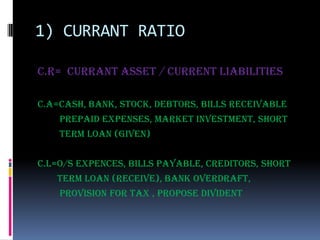
1) CURRANT RATIO

C.R= CURRANT ASSET / CURReNT LIABILITIES

C.A=CASH, BANK, STOCK, DEBTORS, BILLS RECEIVABLE
    PREPAID EXPENSES, MARKET INVESTMENT, SHORT
    TERM LOAN (GIVEN)


C.L=O/S EXPENCES, BILLS PAYABLE, CREDITORS, SHORT
   TERM LOAN (RECEIVE), BANK OVERDRAFT,
    PROVISION FOR TAX , PROPOSE DIVIDENT
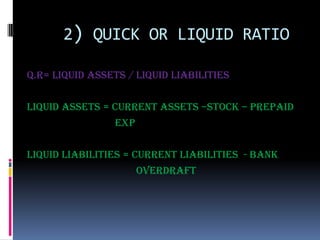
2) QUICK OR LIQUID RATIO

Q.R= LIQUID ASSETS / LIQUID LIABILITIES

Liquid assets = current assets –stock – prepaid
                exp

Liquid LIABILITIES = current LIABILITIES - bank
                      overdraft
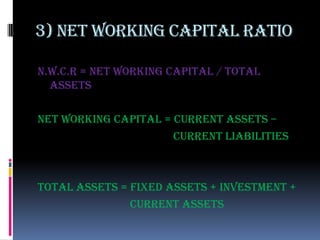
3) Net working capital ratio

n.w.c.r = net working capital / total
  assets

Net working capital = current assets –
                      current liabilities


Total assets = fixed assets + investment +
               current assets
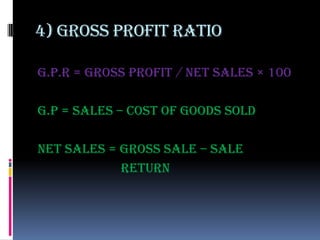
4) Gross profit ratio

g.p.r = gross profit / net sales × 100

g.P = sales – cost of goods sold

Net sales = gross sale – sale
            return
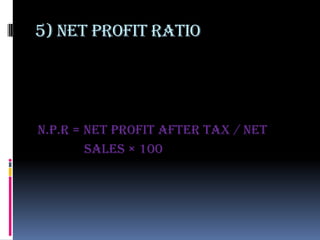
5) Net profit ratio


n.p.r = net profit after tax / net
        sales × 100
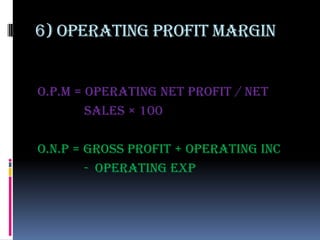
6) Operating profit margin


o.p.m = operating net profit / net
        sales × 100

o.n.p = gross profit + operating inc
        - operating exp
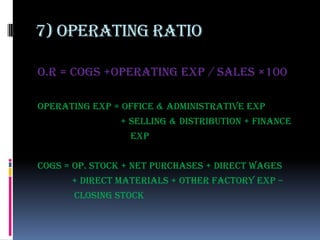
7) Operating ratio

o.R = cogs +operating exp / sales ×100

Operating exp = office & administrative exp
               + selling & distribution + finance
                 exp


Cogs = op. stock + net purchases + direct wages
      + direct materials + other factory exp –
       closing stock
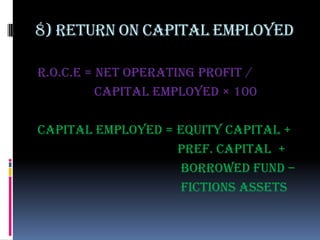
8) Return on capital employed

r.o.c.e = net operating profit /
          capital employed × 100

Capital employed = equity capital +
                   pref. capital +
                    borrowed fund –
                    fictions assets
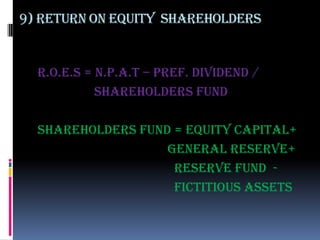
9) Return on equity shareholders


  r.o.e.s = n.p.a.t – pref. dividend /
            shareholders fund

  Shareholders fund = equity capital+
                   general reserve+
                    reserve fund -
                    fictitious assets
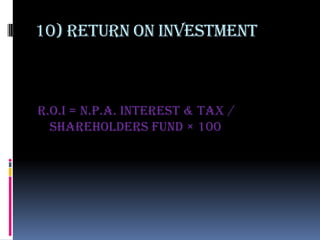
10) Return on investment


r.o.i = n.p.a. interest & tax /
  shareholders fund × 100
11) Earning per share


e.p.s = n.p.a.t – pref. dividend / no. of
       equity share

A) balance sheet ratio

  • 1.
  • 2.
    1) CURRANT RATIO C.R=CURRANT ASSET / CURReNT LIABILITIES C.A=CASH, BANK, STOCK, DEBTORS, BILLS RECEIVABLE PREPAID EXPENSES, MARKET INVESTMENT, SHORT TERM LOAN (GIVEN) C.L=O/S EXPENCES, BILLS PAYABLE, CREDITORS, SHORT TERM LOAN (RECEIVE), BANK OVERDRAFT, PROVISION FOR TAX , PROPOSE DIVIDENT
  • 3.
    2) QUICK ORLIQUID RATIO Q.R= LIQUID ASSETS / LIQUID LIABILITIES Liquid assets = current assets –stock – prepaid exp Liquid LIABILITIES = current LIABILITIES - bank overdraft
  • 4.
    3) Net workingcapital ratio n.w.c.r = net working capital / total assets Net working capital = current assets – current liabilities Total assets = fixed assets + investment + current assets
  • 5.
    4) Gross profitratio g.p.r = gross profit / net sales × 100 g.P = sales – cost of goods sold Net sales = gross sale – sale return
  • 6.
    5) Net profitratio n.p.r = net profit after tax / net sales × 100
  • 7.
    6) Operating profitmargin o.p.m = operating net profit / net sales × 100 o.n.p = gross profit + operating inc - operating exp
  • 8.
    7) Operating ratio o.R= cogs +operating exp / sales ×100 Operating exp = office & administrative exp + selling & distribution + finance exp Cogs = op. stock + net purchases + direct wages + direct materials + other factory exp – closing stock
  • 9.
    8) Return oncapital employed r.o.c.e = net operating profit / capital employed × 100 Capital employed = equity capital + pref. capital + borrowed fund – fictions assets
  • 10.
    9) Return onequity shareholders r.o.e.s = n.p.a.t – pref. dividend / shareholders fund Shareholders fund = equity capital+ general reserve+ reserve fund - fictitious assets
  • 11.
    10) Return oninvestment r.o.i = n.p.a. interest & tax / shareholders fund × 100
  • 12.
    11) Earning pershare e.p.s = n.p.a.t – pref. dividend / no. of equity share