Download to read offline






![My First Window private void InitializeComponent() { this.Size = new System.Drawing.Size(300,300); this.Text = "MyFirstWindow"; } public static void Main(string[] args) { Application.Run(new MyFirstWindow()); } }using System; using System.Drawing; using System.Collections; using System.ComponentModel; using System.Windows.Forms; using System.Data; public class MyFirstWindow : System.Windows.Forms.Form { public MyFirstWindow() { InitializeComponent(); }](https://image.slidesharecdn.com/9thjune-100615085543-phpapp01/85/9th-june-14-320.jpg)

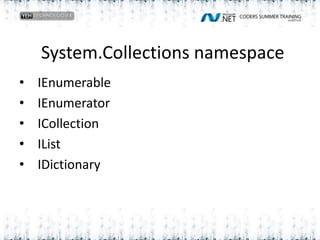
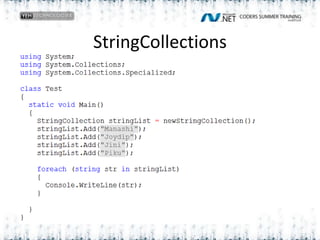
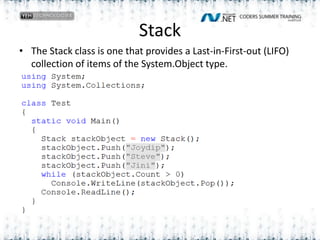
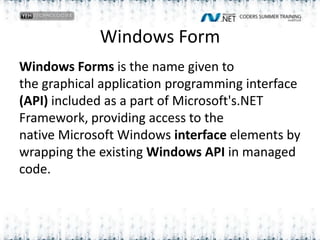
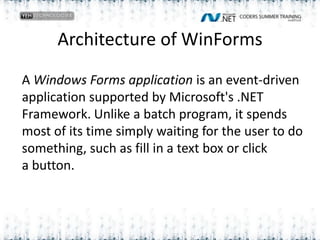
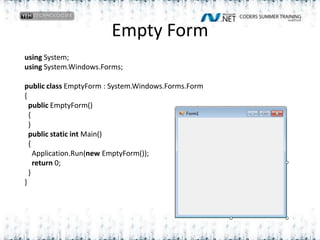
The document discusses collections in .NET and Windows Forms. Collections in .NET include classes that implement interfaces like IEnumerable, IEnumerator, and ICollection. Common collection classes include ArrayList, Stack, Queue, and Hashtable. Windows Forms provides a graphical API for building Windows applications using .NET. It uses an event-driven model where the application waits for user input like button clicks. Code examples show how to create an empty Windows form and a basic "My First Window" form.


