Food
Plating
Group
Food
Plating
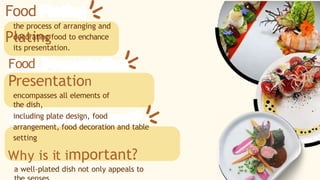
the process of arranging and
decorating food to enchance
its presentation.
Food
Presentation
encompasses all elements of
the dish,
including plate design, food
arrangement, food decoration and table
setting
Why is it important?
a well-plated dish not only appeals to
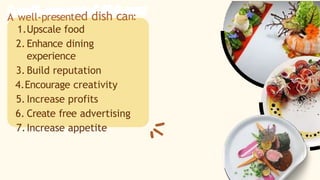
1.Upscale food
2.Enhance dining
experience
3. Build reputation
4.Encourage creativity
5.Increase profits
6. Create free advertising
7.Increase appetite
A well-presented dish can:
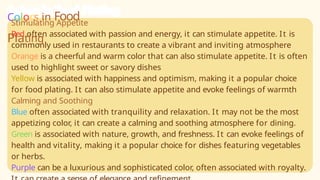
Stimulating Appetite
Red often associated with passion and energy, it can stimulate appetite. It is
commonly used in restaurants to create a vibrant and inviting atmosphere
Orange is a cheerful and warm color that can also stimulate appetite. It is often
used to highlight sweet or savory dishes
Yellow is associated with happiness and optimism, making it a popular choice
for food plating. It can also stimulate appetite and evoke feelings of warmth
Calming and Soothing
Blue often associated with tranquility and relaxation. It may not be the most
appetizing color, it can create a calming and soothing atmosphere for dining.
Green is associated with nature, growth, and freshness. It can evoke feelings of
health and vitality, making it a popular choice for dishes featuring vegetables
or herbs.
Purple can be a luxurious and sophisticated color, often associated with royalty.
Colors in Food
Plating
Balancing and Harmonizing
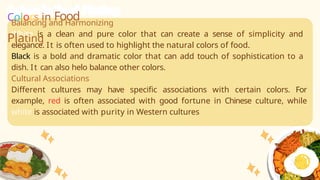
White is a clean and pure color that can create a sense of simplicity and
elegance. It is often used to highlight the natural colors of food.
Black is a bold and dramatic color that can add touch of sophistication to a
dish. It can also helo balance other colors.
Cultural Associations
Different cultures may have specific associations with certain colors. For
example, red is often associated with good fortune in Chinese culture, while
white is associated with purity in Western cultures
Colors in Food
Plating
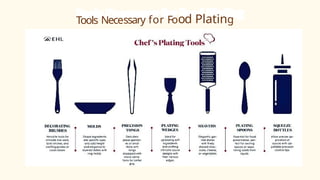
Tools Necessary for Food Plating
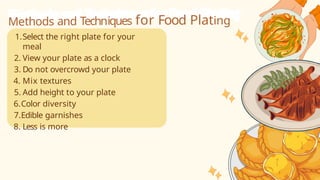
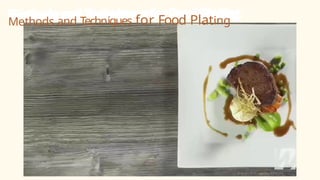
Methods and Techniques for Food Plating
1.Select the right plate for your
meal
2. View your plate as a clock
3. Do not overcrowd your plate
4. Mix textures
5. Add height to your plate
6.Color diversity
7.Edible garnishes
8. Less is more
Methods and Techniques for Food Plating
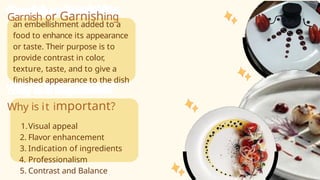
Garnish or Garnishing
an embellishment added to a
food to enhance its appearance
or taste. Their purpose is to
provide contrast in color,
texture, taste, and to give a
finished appearance to the dish
Why is it important?
1.Visual appeal
2. Flavor enhancement
3. Indication of ingredients
4. Professionalism
5. Contrast and Balance
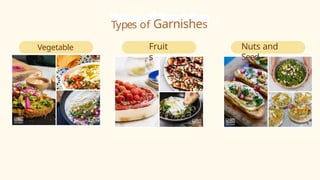
Vegetable
s
Types of Garnishes
Fruit
s
Nuts and
Seed
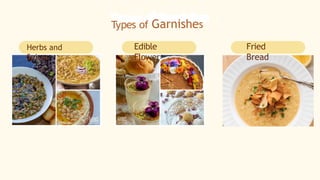
Herbs and
Spices
Types of Garnishes
Edible
Flower
Fried
Bread
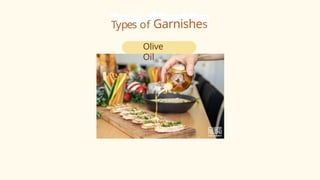
Types of Garnishes
Olive
Oil
keeping fruits and vegetables fresh when plating
refers to the techniques and procedures used to
maintain their vissual appeal, texture, and flavor
for an extended period after they are prepared for
presentation.
Why is keeping fruits and vegetables
Keeping Fruits and Vegetables Fresh
When Plating
fresh important when plating?
1.Visual appeal
2. Flavor preservation
3. Texture integrity
4. Food safety
Pre-Preparation
choose firm, vibrant produce free form
blemishes thoroughly wash to remove dirt and
contaminants cut or shape as needed, but avoid
excess handling
Storage Techniques
store at appropriate temperatures (34°F to 40
°F) store fruits and vegetables separately
line drawers with paper towels to absorb
moisture store leafy greens in airtight
containers
store certain vegetables in water to
maintain crispiness
Methods/Procedures in keeping
vegetables and fruits fresh for plating
Plating Techniques
plate close to serving time for maximum
freshness arrange produce artfully for visual
appeal
use garnishes like fresh herbs and edible flowers
for decoration
pair with sauces, dressings, or seasonings
serve cold dishes on chilled plates and warm
dishes on heated plates to maintain freshness
consider using humidity dome to help retain
moisture and prevent drying
a splash of lemon juice or vinegar can help
brighten the colors of fruits and vegetables and
Methods/Procedures in keeping
vegetables and fruits fresh for plating
Additional Tips
allow proper airflow in the
refrigerator inspect produce for signs
of spoilage consume fresh promptly
Methods/Procedures in keeping
vegetables and fruits fresh for plating
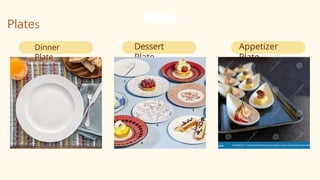
Dinner
Plate
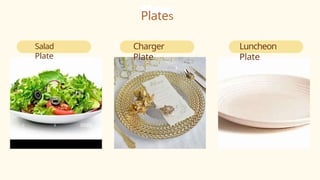
Plates
Dessert
Plate
Appetizer
Plate
Plates
Salad
Plate
Charger
Plate
Luncheon
Plate
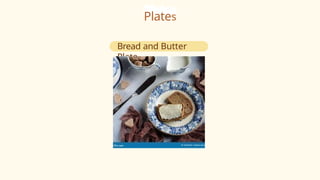
Plates
Bread and Butter
Plate
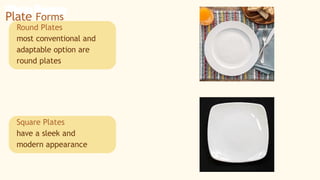
Round Plates
most conventional and
adaptable option are
round plates
Plate Forms
Square Plates
have a sleek and
modern appearance
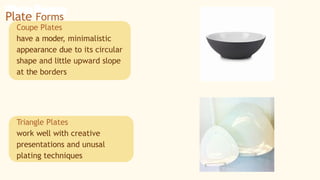
Coupe Plates
have a moder, minimalistic
appearance due to its circular
shape and little upward slope
at the borders
Plate Forms
Triangle Plates
work well with creative
presentations and unusal
plating techniques
Thank You!

Lecture presentation on Food Plating.pptx

  • 1.
  • 2.
    Food Plating the process ofarranging and decorating food to enchance its presentation. Food Presentation encompasses all elements of the dish, including plate design, food arrangement, food decoration and table setting Why is it important? a well-plated dish not only appeals to
  • 3.
    1.Upscale food 2.Enhance dining experience 3.Build reputation 4.Encourage creativity 5.Increase profits 6. Create free advertising 7.Increase appetite A well-presented dish can:
  • 4.
    Stimulating Appetite Red oftenassociated with passion and energy, it can stimulate appetite. It is commonly used in restaurants to create a vibrant and inviting atmosphere Orange is a cheerful and warm color that can also stimulate appetite. It is often used to highlight sweet or savory dishes Yellow is associated with happiness and optimism, making it a popular choice for food plating. It can also stimulate appetite and evoke feelings of warmth Calming and Soothing Blue often associated with tranquility and relaxation. It may not be the most appetizing color, it can create a calming and soothing atmosphere for dining. Green is associated with nature, growth, and freshness. It can evoke feelings of health and vitality, making it a popular choice for dishes featuring vegetables or herbs. Purple can be a luxurious and sophisticated color, often associated with royalty. Colors in Food Plating
  • 5.
    Balancing and Harmonizing Whiteis a clean and pure color that can create a sense of simplicity and elegance. It is often used to highlight the natural colors of food. Black is a bold and dramatic color that can add touch of sophistication to a dish. It can also helo balance other colors. Cultural Associations Different cultures may have specific associations with certain colors. For example, red is often associated with good fortune in Chinese culture, while white is associated with purity in Western cultures Colors in Food Plating
  • 6.
    Tools Necessary forFood Plating
  • 7.
    Methods and Techniquesfor Food Plating 1.Select the right plate for your meal 2. View your plate as a clock 3. Do not overcrowd your plate 4. Mix textures 5. Add height to your plate 6.Color diversity 7.Edible garnishes 8. Less is more
  • 8.
    Methods and Techniquesfor Food Plating
  • 9.
    Garnish or Garnishing anembellishment added to a food to enhance its appearance or taste. Their purpose is to provide contrast in color, texture, taste, and to give a finished appearance to the dish Why is it important? 1.Visual appeal 2. Flavor enhancement 3. Indication of ingredients 4. Professionalism 5. Contrast and Balance
  • 10.
  • 11.
    Herbs and Spices Types ofGarnishes Edible Flower Fried Bread
  • 12.
  • 13.
    keeping fruits andvegetables fresh when plating refers to the techniques and procedures used to maintain their vissual appeal, texture, and flavor for an extended period after they are prepared for presentation. Why is keeping fruits and vegetables Keeping Fruits and Vegetables Fresh When Plating fresh important when plating? 1.Visual appeal 2. Flavor preservation 3. Texture integrity 4. Food safety
  • 14.
    Pre-Preparation choose firm, vibrantproduce free form blemishes thoroughly wash to remove dirt and contaminants cut or shape as needed, but avoid excess handling Storage Techniques store at appropriate temperatures (34°F to 40 °F) store fruits and vegetables separately line drawers with paper towels to absorb moisture store leafy greens in airtight containers store certain vegetables in water to maintain crispiness Methods/Procedures in keeping vegetables and fruits fresh for plating
  • 15.
    Plating Techniques plate closeto serving time for maximum freshness arrange produce artfully for visual appeal use garnishes like fresh herbs and edible flowers for decoration pair with sauces, dressings, or seasonings serve cold dishes on chilled plates and warm dishes on heated plates to maintain freshness consider using humidity dome to help retain moisture and prevent drying a splash of lemon juice or vinegar can help brighten the colors of fruits and vegetables and Methods/Procedures in keeping vegetables and fruits fresh for plating
  • 16.
    Additional Tips allow properairflow in the refrigerator inspect produce for signs of spoilage consume fresh promptly Methods/Procedures in keeping vegetables and fruits fresh for plating
  • 17.
  • 18.
  • 19.
  • 20.
    Round Plates most conventionaland adaptable option are round plates Plate Forms Square Plates have a sleek and modern appearance
  • 21.
    Coupe Plates have amoder, minimalistic appearance due to its circular shape and little upward slope at the borders Plate Forms Triangle Plates work well with creative presentations and unusal plating techniques
  • 22.