Catalyst: August 28th , 2014
You need your ActivExpression!
Prepare for our Carrying Capacity
quiz!
Have your DBA #2 on your desk!
Agenda
 Catalyst (10 minutes)
 Biodiversity and Change PowerPoint (10
minutes)
 Biodiversity Whiteboards(15 minutes)
 Homework: HP 9/26
Announcements
 Biodiversity quiz on Monday
Objectives
 SWBAT define biodiversity
 SWBAT predict the impact of various environmental changes based on the amount
of biodiversity in an ecosystem
 SWBAT establish a relationship between the amount of biodiversity in an ecosystem
and the likelihood of extinction of a species in that ecosystem
SWBAT describe invasive species and their impact on an ecosystem’s biodiversity.
SWBAT define and describe extinction.
SWBAT predict the effects of certain environmental factors on an ecosystem’s
biodiversity.
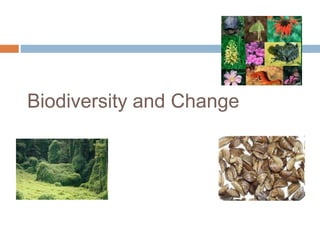
Biodiversity and Change
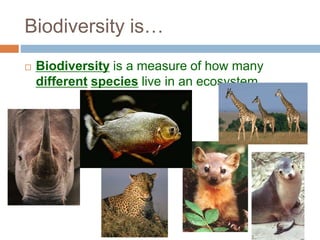
Biodiversity is…
 Biodiversity is a measure of how many
different species live in an ecosystem.
High vs. Low Biodiversity
 Ecosystems with high biodiversity have many
different species of organisms.
 Ecosystems with low biodiversity do not have
many different species of organisms.
High Biodiversity
Low Biodiversity
Low or High
Low or High
Low or High
Low or High
Low or High
Ecosystem Stability
 The higher the biodiversity, the more
stable the ecosystem (stable= stays
the same)
An ecosystem with high biodiversity does
not change easily; it is stable
An ecosystem with low biodiversity is
unstable
One small change could cause many species
to die
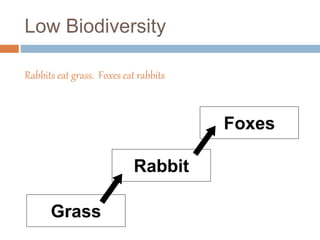
Low Biodiversity
Rabbits eat grass. Foxes eat rabbits
Grass
Rabbit
Foxes
Low Biodiversity
 A disturbance hits…
A drought happens and kills all the grass.
Grass
Rabbit
Foxes
Low Biodiversity
 What happens to the foxes?
Grass
Rabbit
Foxes
How many species do we have left?
0!
BIG change?
Higher Biodiversity
Let’s add a few more species to our original ecosystem
Grass
Rabbit
Foxes
Chickens
Lettuce
Higher Biodiversity
 A disturbance hits…
A drought happens and kills all the grass.
Grass
Rabbit
Foxes
Chickens
Lettuce
Higher Biodiversity
 What happens to the foxes?
Population size decreases… a little
BIG change?
Grass
Rabbit
Foxes
Chickens
Lettuce
 The food web started with high biodiversity
 High biodiversity = stable ecosystem
 One change didn’t have a major impact!
Example: Low vs. High
CFU 1: Which ecosystem has
higher biodiversity?
Ecosystem 1
Ecosystem 2
CFU 2: Which ecosystem would be
more affected by a disease that
killed all the rats?
Ecosystem 1
Ecosystem 2
CFU 3: Which ecosystem is more
stable? Why?
Ecosystem 1
Ecosystem 2
Ecosystem 1
Ecosystem 2
CFU 4: What might happen to the snakes in Ecosystem
2 if there are not any of that species of snakes anywhere
else in the world and most of the rats in the ecosystem
die from disease?
Biodiversity and Extinction
 Environmental change in an ecosystem with
low biodiversity can even cause extinction of
a species
 Can occur if there are no organisms of that
species in other ecosystems throughout the world
 Species with specialized diets (low
surrounding biodiversity) and specific
habitats are more likely to become extinct
than species with diverse diets and a wide
range of habitats
Invasive Species
 Invasive species are non-native species of
organisms in an ecosystem that reproduce quickly
and have few natural predators
 Native= originally from that ecosystem
 Non-native= originally from somewhere else
 Invasive species decrease biodiversity in an
ecosystem by taking over food and space from native
species
 Decrease the number of native species
 Invasive species are very harmful to ecosystems that
already have low biodiversity
Invasive Species
 Examples:
 Zebra mussels
 Kudzu plant
 Brown tree snake
 Wild hogs
CFU 5

 Brown tree snakes are a species of snakes
that were imported to the island of Guam from
South America. Brown tree snakes eat many
different types of birds and lizards. They
reproduce rapidly and have few natural
predators. What will most likely happen to the
number of native bird and lizard species on
Guam over time?
CFU 6
 Does an invasive species
normally increase or decrease
biodiversity in an ecosystem?
Zebra Mussel Reading and
Questions
 Options for reading:
 Whole class
 Small groups
 Partners
 Individually
Catalyst: August 29th, 2014
 Introduction to ALA ACT
method.
Agenda
 Catalyst: 10 minutes
 Biome Jigsaws: 15 minutes
 Biome Presentation: 10 minutes
Announcements
 DABA #3 due 9/8
 LABOR DAY WEEKEND!!!
Objectives
 SWBAT analyze the features of major global
biomes.
Biomes Jigsaws
 7 groups
 Each group will be assigned a biome reading.
 You must identify the following factors for your
biomes:
 Presentation: After 15 minutes, each group will
present major features of their assigned
biome. The rest of the class will fill in their
graphic organizers accordingly.

8.28.29-biodiversity_biomes_.ppt

  • 1.
    Catalyst: August 28th, 2014 You need your ActivExpression! Prepare for our Carrying Capacity quiz! Have your DBA #2 on your desk!
  • 2.
    Agenda  Catalyst (10minutes)  Biodiversity and Change PowerPoint (10 minutes)  Biodiversity Whiteboards(15 minutes)  Homework: HP 9/26
  • 3.
  • 4.
    Objectives  SWBAT definebiodiversity  SWBAT predict the impact of various environmental changes based on the amount of biodiversity in an ecosystem  SWBAT establish a relationship between the amount of biodiversity in an ecosystem and the likelihood of extinction of a species in that ecosystem SWBAT describe invasive species and their impact on an ecosystem’s biodiversity. SWBAT define and describe extinction. SWBAT predict the effects of certain environmental factors on an ecosystem’s biodiversity.
  • 5.
  • 6.
    Biodiversity is…  Biodiversityis a measure of how many different species live in an ecosystem.
  • 7.
    High vs. LowBiodiversity  Ecosystems with high biodiversity have many different species of organisms.  Ecosystems with low biodiversity do not have many different species of organisms.
  • 8.
  • 9.
  • 10.
  • 11.
  • 12.
  • 13.
  • 14.
  • 15.
    Ecosystem Stability  Thehigher the biodiversity, the more stable the ecosystem (stable= stays the same) An ecosystem with high biodiversity does not change easily; it is stable An ecosystem with low biodiversity is unstable One small change could cause many species to die
  • 16.
    Low Biodiversity Rabbits eatgrass. Foxes eat rabbits Grass Rabbit Foxes
  • 17.
    Low Biodiversity  Adisturbance hits… A drought happens and kills all the grass. Grass Rabbit Foxes
  • 18.
    Low Biodiversity  Whathappens to the foxes? Grass Rabbit Foxes How many species do we have left? 0! BIG change?
  • 19.
    Higher Biodiversity Let’s adda few more species to our original ecosystem Grass Rabbit Foxes Chickens Lettuce
  • 20.
    Higher Biodiversity  Adisturbance hits… A drought happens and kills all the grass. Grass Rabbit Foxes Chickens Lettuce
  • 21.
    Higher Biodiversity  Whathappens to the foxes? Population size decreases… a little BIG change? Grass Rabbit Foxes Chickens Lettuce  The food web started with high biodiversity  High biodiversity = stable ecosystem  One change didn’t have a major impact!
  • 22.
  • 23.
    CFU 1: Whichecosystem has higher biodiversity? Ecosystem 1 Ecosystem 2
  • 24.
    CFU 2: Whichecosystem would be more affected by a disease that killed all the rats? Ecosystem 1 Ecosystem 2
  • 25.
    CFU 3: Whichecosystem is more stable? Why? Ecosystem 1 Ecosystem 2
  • 26.
    Ecosystem 1 Ecosystem 2 CFU4: What might happen to the snakes in Ecosystem 2 if there are not any of that species of snakes anywhere else in the world and most of the rats in the ecosystem die from disease?
  • 27.
    Biodiversity and Extinction Environmental change in an ecosystem with low biodiversity can even cause extinction of a species  Can occur if there are no organisms of that species in other ecosystems throughout the world  Species with specialized diets (low surrounding biodiversity) and specific habitats are more likely to become extinct than species with diverse diets and a wide range of habitats
  • 28.
    Invasive Species  Invasivespecies are non-native species of organisms in an ecosystem that reproduce quickly and have few natural predators  Native= originally from that ecosystem  Non-native= originally from somewhere else  Invasive species decrease biodiversity in an ecosystem by taking over food and space from native species  Decrease the number of native species  Invasive species are very harmful to ecosystems that already have low biodiversity
  • 29.
    Invasive Species  Examples: Zebra mussels  Kudzu plant  Brown tree snake  Wild hogs
  • 30.
    CFU 5   Browntree snakes are a species of snakes that were imported to the island of Guam from South America. Brown tree snakes eat many different types of birds and lizards. They reproduce rapidly and have few natural predators. What will most likely happen to the number of native bird and lizard species on Guam over time?
  • 31.
    CFU 6  Doesan invasive species normally increase or decrease biodiversity in an ecosystem?
  • 32.
    Zebra Mussel Readingand Questions  Options for reading:  Whole class  Small groups  Partners  Individually
  • 33.
    Catalyst: August 29th,2014  Introduction to ALA ACT method.
  • 34.
    Agenda  Catalyst: 10minutes  Biome Jigsaws: 15 minutes  Biome Presentation: 10 minutes
  • 35.
    Announcements  DABA #3due 9/8  LABOR DAY WEEKEND!!!
  • 36.
    Objectives  SWBAT analyzethe features of major global biomes.
  • 37.
    Biomes Jigsaws  7groups  Each group will be assigned a biome reading.  You must identify the following factors for your biomes:  Presentation: After 15 minutes, each group will present major features of their assigned biome. The rest of the class will fill in their graphic organizers accordingly.