Dependence on Technology
1
2
Inequitable Access
Disparities in access to
computers, internet
connectivity, and AI-driven
educational resources can
exacerbate existing inequalities
in education, widening the
digital divide.
Privacy Concerns
3
Bias and Discrimination
If AI systems incorporate
biased data or algorithms, they
may perpetuate or even
exacerbate existing biases and
discrimination, leading to unfair
treatment or outcomes for
certain student groups.
5
Algorithmic Errors &
Misinterpretation
In educational contexts, relying
solely on AI-driven assessments
or decision-making processes
could result in inaccurate
evaluations or misguided
interventions.
7
4
Loss of Human Connection
Over-reliance on AI tutors or
chatbots could diminish the
interpersonal interactions and
emotional connections that are
crucial for effective learning
and development.
6
Job Displacement
While AI can enhance
efficiency, it may also lead to
job losses and shifts in the
labor market, requiring
educators to adapt to new
roles and skill requirements.
8
Ethical Dilemmas
The use of AI in education raises
complex ethical dilemmas, such
as the appropriate use of
student data, the implications of
algorithmic decision-making, and
the ethical responsibility of
developers and educators.
8 Disadvantages of Artificial
Intelligence in Education
www.tutorialandexample.com
This raises concerns about
privacy and data security, as
sensitive information could be
compromised or misused,
potentially violating student
privacy rights.
Students may become
dependent on AI-driven tools
for learning, which could hinder
their ability to think critically
and solve problems
independently.

8 Disadvantages of Artificial Intelligence in Education

  • 1.
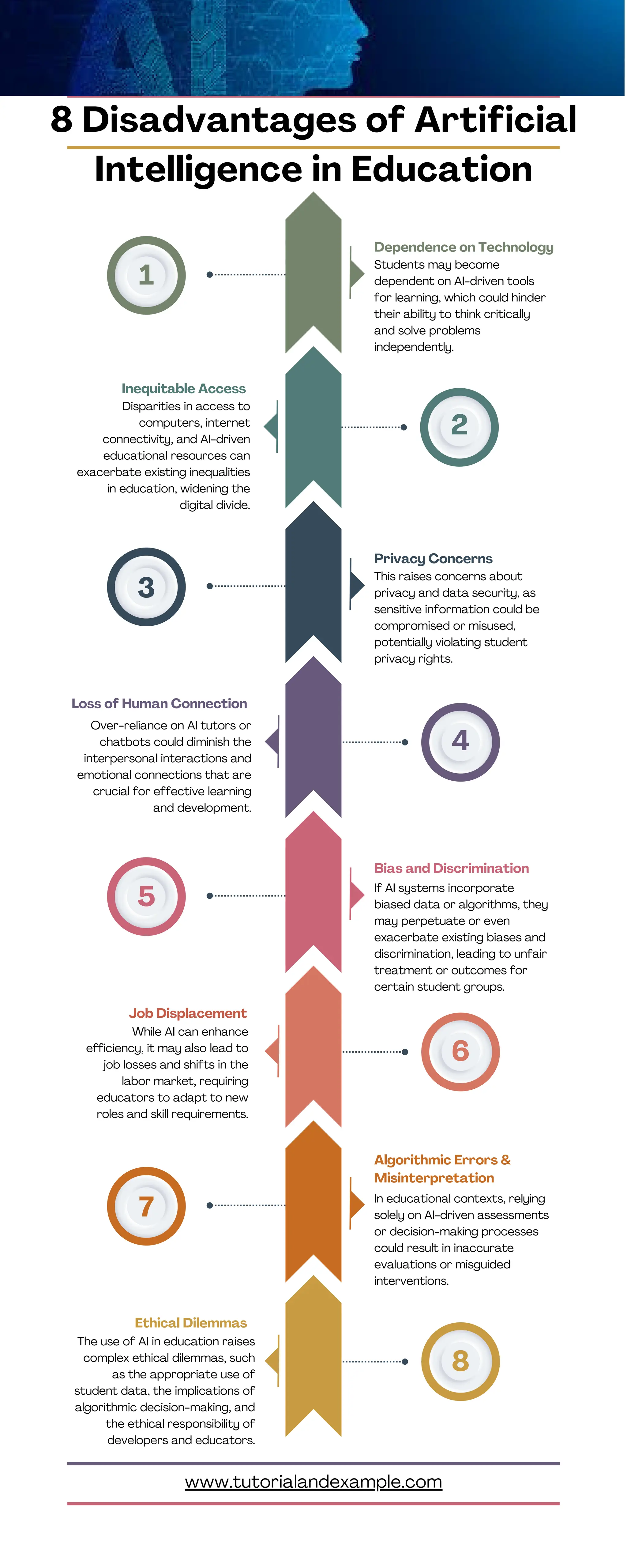
    Dependence on Technology 1 2 InequitableAccess Disparities in access to computers, internet connectivity, and AI-driven educational resources can exacerbate existing inequalities in education, widening the digital divide. Privacy Concerns 3 Bias and Discrimination If AI systems incorporate biased data or algorithms, they may perpetuate or even exacerbate existing biases and discrimination, leading to unfair treatment or outcomes for certain student groups. 5 Algorithmic Errors & Misinterpretation In educational contexts, relying solely on AI-driven assessments or decision-making processes could result in inaccurate evaluations or misguided interventions. 7 4 Loss of Human Connection Over-reliance on AI tutors or chatbots could diminish the interpersonal interactions and emotional connections that are crucial for effective learning and development. 6 Job Displacement While AI can enhance efficiency, it may also lead to job losses and shifts in the labor market, requiring educators to adapt to new roles and skill requirements. 8 Ethical Dilemmas The use of AI in education raises complex ethical dilemmas, such as the appropriate use of student data, the implications of algorithmic decision-making, and the ethical responsibility of developers and educators. 8 Disadvantages of Artificial Intelligence in Education www.tutorialandexample.com This raises concerns about privacy and data security, as sensitive information could be compromised or misused, potentially violating student privacy rights. Students may become dependent on AI-driven tools for learning, which could hinder their ability to think critically and solve problems independently.