Where to getthe money?
• Reallocate fossil fuel subsidies
– They greatly exceed climate finance goals
• Money from:
– Carbon taxes
– Emissions permits
– International carbon pricing
– Private, bilateral and multilateral sources
4.
How to spendthe money?
• To finance mitigation & adaptation
• Mitigation example:
– subsidize clean energy technology
– large-scale, multilateral financing
– structure per WTO TRIMS, GATT, SCM & IIAs
• Adaptation example:
– subsidize subsistence farmers to adopt GMO crops
– small scale, national financing
– another way to address IPR problem
– structure per WTO SCM and Agriculture
Multilateral Financing Mechanisms
WorldBank
• UNFCCC process and World Bank energy
projects have been working at cross purposes
• Fossil fuel subsidies:
– are expensive
– inflate GHG emissions
– mainly benefit middle and upper classes
• Their reduction:
– encourages energy efficiency
– increases relative attractiveness of renewable energy
– frees up resources for poverty alleviation, including
clean energy for those without electricity
7.
GHG Emission UnderDifferent Scenarios
28
29
30
31
32
33
34
35
36
2010 2012 2014 2016 2018 2020
Year
Gigatons
of
CO2e
BAU
Subsidy Removed
450 ppm
Developing Country FossilFuel
Consumption Subsidies
• 2007: USD 342.15 billion
• 2008: USD 554.44 billion
• 2009: USD 300.14 billion
• 2010: USD 408.8 billion
• 8% of 2010 total reached poorest income
group (the bottom 20%)
• Goal of Green Climate Fund: USD 100
billion per year for developing countries
10.
Percentage of subsidyreceived by the bottom 20% population
0% 2% 4% 6% 8% 10%
Pakistan
China
Vietnam
Bangladesh
India
Philippines
Sri Lanka
South Africa
11.
Multilateral Financing Mechanisms
UNFCCCGreen Climate Fund
• Goal: USD 100 billion per year by 2020
• Proposed sources:
– 30% emission allowance auctions, domestic carbon taxes
– 10% carbon pricing international transportation
– 10% redeployment of fossil fuel subsidies in developed countries
or a financial transaction tax
– 10% private investment flows
– 11% multilateral development banks
• Suggested carbon price USD 20-25 per ton of CO2e
• Prioritize funding adaptation for most vulnerable
developing countries & preserving rainforests
• World Bank interim trustee, Secretariat South Korea
12.
Multilateral Financing Mechanisms
KyotoProtocol (Australia, Europe)
• Clean Development Mechanism (certified
emission reduction (CER) credits)
• Adaptation Fund (2% of CERs)
• Official Development Assistance
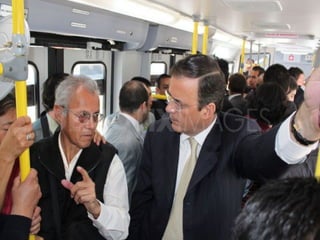
• Mexico City examples:
– metrobus, new metro line
– European money, European buses & trains
– Reduced my carbon footprint
Climate Finance andWTO
Subsidies Law
• Bilateral foreign aid conditional on the use of
suppliers from the donor country
• CDM projects that include bilateral official
development assistence similar
• % of CDM projects for which CER recipient was
technology supplier
– Denmark 91%
– Spain 50%
– Germany 40%
– Japan 37%
20.
SCM Agreement Article1.1(a)(1)
‘subsidy’ definition
• ‘a financial contribution by a government or any public
body within the territory of a Member’ (emphasis added).
• Does ‘within the territory of a Member’ apply to ‘a
government’, ‘public body’ or ‘financial contribution’?
• If the financial contribution must take place within the
territory of a Member,
– ‘a Member’ could mean the Member that makes the financial
contribution
– or could mean any Member.
• Former interpretation might exclude foreign aid from
application of SCM Agreement.
21.
Article 1.1(a)(1)
financial contribution
•Bilateral climate financing: could be a
direct transfer of funds or some other form
of income or price support, depending on
the terms of the aid package.
• Multilateral climate financing: might take
form of payments to a funding mechanism.
22.
Article 1.1(b) ‘benefit’
•Foreign aid & CDM logic is investment would not
occur without funding.
• The funding creates financing necessary for
participation of the donor country’s suppliers.
• Creates opportunity that would not have existed
otherwise in the market.
• That could qualify as a benefit.
• BUT, if no market benchmark without aid
program, can’t prove benefit is conferred.
23.
Export subsidies
• Deemedto be specific
• Prohibited
• Test of contingency in fact is met when the
granting of a subsidy, without having been made
legally contingent upon export performance, is in
fact tied to actual or anticipated exportation.
• Climate financing subsidy is tied to the
exportation to the recipient country.
• Could be a prohibited export subsidy.
24.
Backward WTO subsidieslaw
• Fossil fuel subsidies are not generally
specific to a domestic industry.
• Clean energy subsidies usually are
specific, but might be saved by benefit
analysis.
• Specific subsidies can be subject to
unilateral or multilateral action.
• Prohibited subsidies are deemed specific.
Financing Adaptation by
SubsistenceFarmers
• Climate change will have greater impact on
viability of traditional plant varieties in tropical
developing countries than in temperate
developed countries.
• In developing countries:
– greater need for GM seeds to raise yields & adapt to
climate change
– larger percentage of population depends on
agriculture (e.g. 50% in India)
– poorest depend on subsistence agriculture
– rely on collecting seeds to sow future crops
29.
Subsistence farmers need
•Microfinancing for GMO seeds, fertilizer
and herbicides:
– to afford adaptation
– to raise incomes with increased output
• Microinsurance for crop failure from
drought, floods or other natural calamities
• WTO Agreement on Agriculture
exemptions should allow.
Financing Clean EnergyProjects
• Debate regarding access to clean energy
technologies should not be on IPRs
• Real issues: creating incentives for and
removing obstacles to clean energy
development and dissemination
• Need to reallocate fossil fuel subsidies
• May need to reform WTO subsidies law
• Need to remove barriers to trade in clean energy
technologies & services, investment
34.
Cost Comparison ofElectricity at Distance from Grid
0
5
10
15
20
25
30
0 5 10 15 20 25 30
Distance in Kilometers
Rupees
per
kW
h
Coal
Wind
Wind/Solar
Biomass
35.
Conclusion
• Where toget the money?
– Fossil fuel subsidies
– Permit auctions, carbon taxes
– Both raise money and reduce emissions
• How to spend the money?
– Clean energy subsidies
– Adaptation for the poor