Picture this…
You’re psyched about your first
conference session.
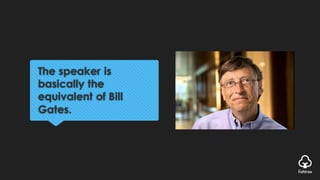
The speaker is
basically the
equivalent of Bill
Gates.
You’re sitting in the back row
with at least 10 open seats and
then...
Someone else walks in and sits
right beside you.
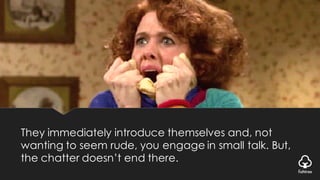
They immediately introduce themselves and, not
wanting to seem rude, you engage in small talk. But,
the chatter doesn’t end there.
They have a single
goal. The dreaded
sales pitch.
Don’t be “that guy or gal.”
Do this instead:
šOffer meaningful conversation
šEstablish deeper connections
šGet results that benefit both sides
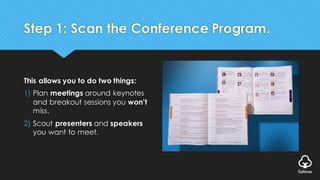
Step 1: Scan the Conference Program.
This allows you to do two things:
1) Plan meetings around keynotes
and breakout sessions you won’t
miss.
2) Scout presenters and speakers
you want to meet.
Step 2: Know the host
city.
Knowing things to do in the
host city doesn’t mean you’re
a walking encyclopedia. It
enriches conversation.
Most folks devote a few
hours exploring life outside
of their hotels. Provide value
through recommendations.
• Points of Interest
• Local Events
• Good Eats
Trip Advisor, Yelp and Groupon can get you up
to speed on the local area.
Step 3: Reach out to conference goers early.
Whatever you do, make it easy by suggesting
meeting locations and dates/ times.
*Not sure who’s going? Download the conference app.
Conferences often provide a list of attendees who have
agreed to share contact info like their Twitter handles,
LinkedIn profiles, etc.
Hi Alyssa,
Trust all is well. Noticed a tweet you posted yesterday that
said you were heading to ISTE. I’m attending too with a
couple of folks from the district and wanted to check-in to
see if you’d like to join us for dinner.
We have reservations 7pm Monday night if you’re free.
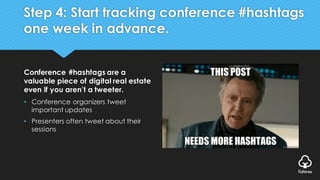
Step 4: Start tracking conference #hashtags
one week in advance.
Conference #hashtags are a
valuable piece of digital real estate
even if you aren’t a tweeter.
• Conference organizers tweet
important updates
• Presenters often tweet about their
sessions
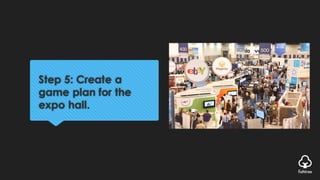
Step 5: Create a
game plan for the
expo hall.
Make the most out your experience in advance:
šReview conference sponsors
šMap out vendors you want to speak with
šSchedule time and demos between keynotes/sessions
*Hint: A list of sponsors is usually on the conference website or printed
program. Also, be sure to connect with your vendors early. Time to chat
with them tends to go quickly.
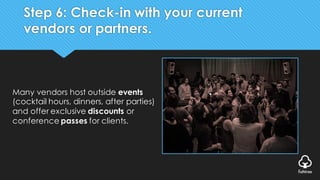
Step 6: Check-in with your current
vendors or partners.
Many vendors host outside events
(cocktail hours, dinners, after parties)
and offer exclusive discounts or
conference passes for clients.
Step 7: Spread the love.
Merriam-Webster defines:
Relationship: (noun re·la·tion·ship) the way in which two or more
people or things are connected.
Don’t go to a conference with the
mindset of being “connected,” go to a
conference with the mindset of being a
“connector.”
Have an acquaintance who can
help someone you meet? Make
an introduction. Share ideas.
Not only could this lead to a returned
favor but, more importantly, it provides
value to the world outside of you.
“FISHTREE is the world’s easiest way to build and deliver courses,
curate digital resources and scale personalized learning. With FISHTREE,
you can instantly source the best digital materials, align content to any
learning objectives and measure outcomes to get every student to the
finish line.
Learn more at www.fishtree.com or @fishtree_edu.
”

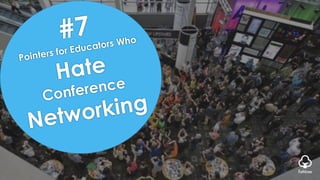
7 pointers for educators who hate conference networking

  • 2.
    Picture this… You’re psychedabout your first conference session.
  • 3.
    The speaker is basicallythe equivalent of Bill Gates.
  • 4.
    You’re sitting inthe back row with at least 10 open seats and then...
  • 5.
    Someone else walksin and sits right beside you.
  • 6.
    They immediately introducethemselves and, not wanting to seem rude, you engage in small talk. But, the chatter doesn’t end there.
  • 7.
    They have asingle goal. The dreaded sales pitch.
  • 8.
    Don’t be “thatguy or gal.” Do this instead: šOffer meaningful conversation šEstablish deeper connections šGet results that benefit both sides
  • 9.
    Step 1: Scanthe Conference Program. This allows you to do two things: 1) Plan meetings around keynotes and breakout sessions you won’t miss. 2) Scout presenters and speakers you want to meet.
  • 10.
    Step 2: Knowthe host city. Knowing things to do in the host city doesn’t mean you’re a walking encyclopedia. It enriches conversation. Most folks devote a few hours exploring life outside of their hotels. Provide value through recommendations. • Points of Interest • Local Events • Good Eats
  • 11.
    Trip Advisor, Yelpand Groupon can get you up to speed on the local area.
  • 12.
    Step 3: Reachout to conference goers early.
  • 13.
    Whatever you do,make it easy by suggesting meeting locations and dates/ times. *Not sure who’s going? Download the conference app. Conferences often provide a list of attendees who have agreed to share contact info like their Twitter handles, LinkedIn profiles, etc. Hi Alyssa, Trust all is well. Noticed a tweet you posted yesterday that said you were heading to ISTE. I’m attending too with a couple of folks from the district and wanted to check-in to see if you’d like to join us for dinner. We have reservations 7pm Monday night if you’re free.
  • 14.
    Step 4: Starttracking conference #hashtags one week in advance. Conference #hashtags are a valuable piece of digital real estate even if you aren’t a tweeter. • Conference organizers tweet important updates • Presenters often tweet about their sessions
  • 15.
    Step 5: Createa game plan for the expo hall.
  • 16.
    Make the mostout your experience in advance: šReview conference sponsors šMap out vendors you want to speak with šSchedule time and demos between keynotes/sessions *Hint: A list of sponsors is usually on the conference website or printed program. Also, be sure to connect with your vendors early. Time to chat with them tends to go quickly.
  • 17.
    Step 6: Check-inwith your current vendors or partners. Many vendors host outside events (cocktail hours, dinners, after parties) and offer exclusive discounts or conference passes for clients.
  • 18.
    Step 7: Spreadthe love. Merriam-Webster defines: Relationship: (noun re·la·tion·ship) the way in which two or more people or things are connected.
  • 19.
    Don’t go toa conference with the mindset of being “connected,” go to a conference with the mindset of being a “connector.”
  • 20.
    Have an acquaintancewho can help someone you meet? Make an introduction. Share ideas. Not only could this lead to a returned favor but, more importantly, it provides value to the world outside of you.
  • 21.
    “FISHTREE is theworld’s easiest way to build and deliver courses, curate digital resources and scale personalized learning. With FISHTREE, you can instantly source the best digital materials, align content to any learning objectives and measure outcomes to get every student to the finish line. Learn more at www.fishtree.com or @fishtree_edu. ”