Medication Error & Near Miss
Reporting
Basic Medication Safety (BMS) Certification Course
King Saud bin Abdulaziz University for Health Sciences, Ministry
of National Guard – Health Affairs
Learning Objectives
 Explain the reasons for reporting medication safety incidents
 State the types of reportable medication safety incidents
 Submit relevant information when reporting medication
safety incidents
 Recall the local medication errors / near misses data
 Explain the mistake lesson learning cycle
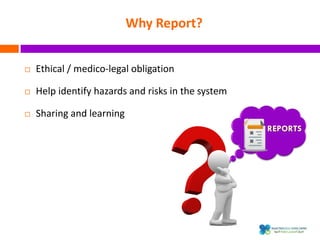
Why Report?
 Ethical / medico-legal obligation
 Help identify hazards and risks in the system
 Sharing and learning
REPORTS
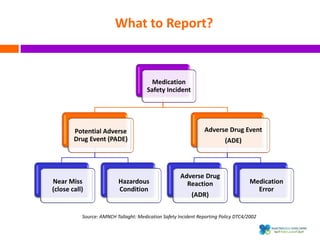
What to Report?
Medication
Safety Incident
Potential Adverse
Drug Event (PADE)
Near Miss
(close call)
Hazardous
Condition
Adverse Drug Event
(ADE)
Adverse Drug
Reaction
(ADR)
Medication
Error
Source: AMNCH Tallaght: Medication Safety Incident Reporting Policy DTC4/2002
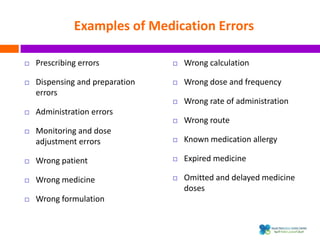
Examples of Medication Errors
 Prescribing errors
 Dispensing and preparation
errors
 Administration errors
 Monitoring and dose
adjustment errors
 Wrong patient
 Wrong medicine
 Wrong formulation
 Wrong calculation
 Wrong dose and frequency
 Wrong rate of administration
 Wrong route
 Known medication allergy
 Expired medicine
 Omitted and delayed medicine
doses
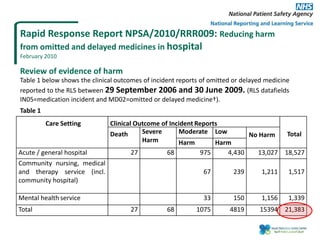
Rapid Response Report NPSA/2010/RRR009: Reducing harm
from omitted and delayed medicines in hospital
February 2010
Review of evidence of harm
Care Setting Clinical Outcome of Incident Reports
Total
Death Severe
Harm
Moderate Low No Harm
Harm Harm
Acute / general hospital 27 68 975 4,430 13,027 18,527
Community nursing, medical
and therapy service (incl.
community hospital)
67 239 1,211 1,517
Mental health service 33 150 1,156 1,339
Total 27 68 1075 4819 15394 21,383
Table 1 below shows the clinical outcomes of incident reports of omitted or delayed medicine
reported to the RLS between 29 September 2006 and 30 June 2009. (RLS datafields
IN05=medication incident and MD02=omitted or delayed medicine†).
Table 1
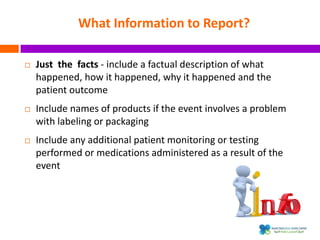
What Information to Report?
 Just the facts - include a factual description of what
happened, how it happened, why it happened and the
patient outcome
 Include names of products if the event involves a problem
with labeling or packaging
 Include any additional patient monitoring or testing
performed or medications administered as a result of the
event
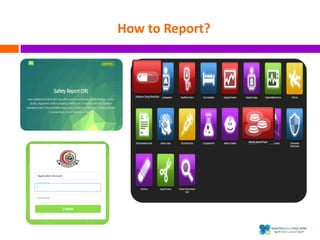
How to Report?
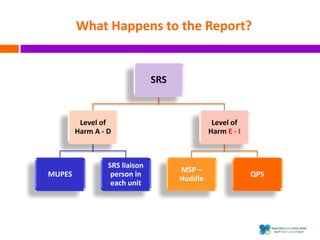
What Happens to the Report?
SRS
Level of
Harm A - D
MUPES
SRS liaison
person in
each unit
Level of
Harm E - I
MSP –
Huddle
QPS
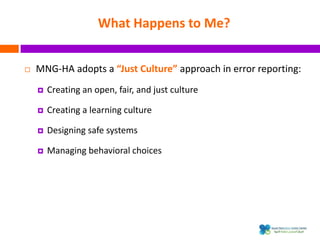
What Happens to Me?
 MNG-HA adopts a “Just Culture” approach in error reporting:
 Creating an open, fair, and just culture
 Creating a learning culture
 Designing safe systems
 Managing behavioral choices
APP 1434-07: Adverse Drug Events, March 2015- Appendix C
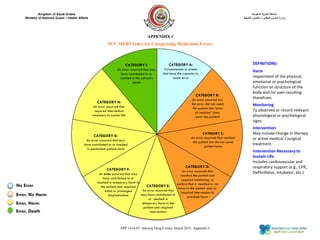
NCC MERP Index for Categorizing Medication Errors
CATEGORY I:
An error occurred that may
have contributed to or
resulted in the patient’s
death
CATEGORY A:
Circumstances or events
that have the capacity to
cause error
CATEGORY B:
An error occurred but
the error did not reach
the patient (An “error
of omission” does
reach the patient)
CATEGORY C:
An error occurred that reached
the patient but did not cause
patient harm
CATEGORY D:
An error occurred that
reached the patient and
required monitoring to
confirm that it resulted in no
harm to the patient and/or
required intervention to
preclude harm
CATEGORY E:
An error occurred that
may have contributed to
or resulted in
temporary harm to the
patient and required
intervention
CATEGORY F:
An error occurred that may
have contributed to or
resulted in temporary harm to
the patient and required
initial or prolonged
hospitalization
CATEGORY G:
An error occurred that may
have contributed to or resulted
in permanent patient harm
CATEGORY H:
An error occurred that
required intervention
necessary to sustain life
DEFINITIONS:
Harm
Impairment of the physical,
emotional or psychological
function on structure of the
body and /or pain resulting
therefrom.
Monitoring
To observed or record relevant
physiological or psychological
signs.
Intervention
May include change in therapy
or active medical / surgical
treatment.
Intervention Necessary to
Sustain Life
Includes cardiovascular and
respiratory support (e.g., CPR,
Defibrillator, Intubator, etc.)
No Error
Error, No Harm
Error, Harm
Error, Death
Kingdom of Saudi Arabia
Ministry of National Guard – Health Affairs
‫السعودية‬ ‫العربية‬ ‫المملكة‬
‫الوطني‬ ‫الحرس‬ ‫وزارة‬
–
‫الصحية‬ ‫الشؤون‬
APPENDIX C
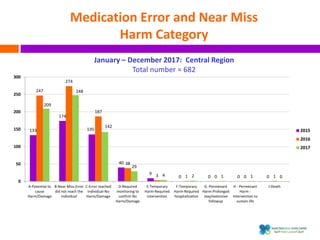
Medication Error and Near Miss
Harm Category
January – December 2017: Central Region
Total number = 682
133
174
135
40
9
0 0 0 0
247
274
187
38
3 1 0 0 1
209
248
142
29
4 2 1 1 0
0
50
100
150
200
250
300
A-Potential to
cause
Harm/Damage
B-Near Miss-Error
did not reach the
individual
C-Error reached
individual-No
Harm/Damage
D-Required
monitoring to
confirm No
Harm/Damage
E-Temporary
Harm-Required
intervention
F-Temporary
Harm-Required
hospitalization
G -Permenant
Harm-Prolonged
stay/extensive
followup
H - Permenant
Harm -
Intervention to
sustain life
I-Death
2015
2016
2017
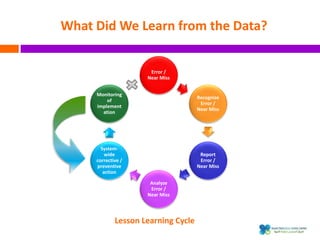
Error /
Near Miss
Recognize
Error /
Near Miss
Report
Error /
Near Miss
Analyze
Error /
Near Miss
System-
wide
corrective /
preventive
action
Monitoring
of
implement
ation
Lesson Learning Cycle
What Did We Learn from the Data?
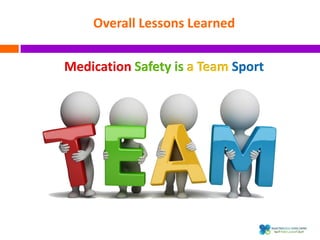
Overall Lessons Learned
Medication Safety is a Team Sport
7.-Medication-Error-Near-Miss-Reporting-2018.pdf

7.-Medication-Error-Near-Miss-Reporting-2018.pdf

  • 1.
    Medication Error &Near Miss Reporting Basic Medication Safety (BMS) Certification Course King Saud bin Abdulaziz University for Health Sciences, Ministry of National Guard – Health Affairs
  • 2.
    Learning Objectives  Explainthe reasons for reporting medication safety incidents  State the types of reportable medication safety incidents  Submit relevant information when reporting medication safety incidents  Recall the local medication errors / near misses data  Explain the mistake lesson learning cycle
  • 3.
    Why Report?  Ethical/ medico-legal obligation  Help identify hazards and risks in the system  Sharing and learning REPORTS
  • 4.
    What to Report? Medication SafetyIncident Potential Adverse Drug Event (PADE) Near Miss (close call) Hazardous Condition Adverse Drug Event (ADE) Adverse Drug Reaction (ADR) Medication Error Source: AMNCH Tallaght: Medication Safety Incident Reporting Policy DTC4/2002
  • 5.
    Examples of MedicationErrors  Prescribing errors  Dispensing and preparation errors  Administration errors  Monitoring and dose adjustment errors  Wrong patient  Wrong medicine  Wrong formulation  Wrong calculation  Wrong dose and frequency  Wrong rate of administration  Wrong route  Known medication allergy  Expired medicine  Omitted and delayed medicine doses
  • 6.
    Rapid Response ReportNPSA/2010/RRR009: Reducing harm from omitted and delayed medicines in hospital February 2010 Review of evidence of harm Care Setting Clinical Outcome of Incident Reports Total Death Severe Harm Moderate Low No Harm Harm Harm Acute / general hospital 27 68 975 4,430 13,027 18,527 Community nursing, medical and therapy service (incl. community hospital) 67 239 1,211 1,517 Mental health service 33 150 1,156 1,339 Total 27 68 1075 4819 15394 21,383 Table 1 below shows the clinical outcomes of incident reports of omitted or delayed medicine reported to the RLS between 29 September 2006 and 30 June 2009. (RLS datafields IN05=medication incident and MD02=omitted or delayed medicine†). Table 1
  • 7.
    What Information toReport?  Just the facts - include a factual description of what happened, how it happened, why it happened and the patient outcome  Include names of products if the event involves a problem with labeling or packaging  Include any additional patient monitoring or testing performed or medications administered as a result of the event
  • 8.
  • 9.
    What Happens tothe Report? SRS Level of Harm A - D MUPES SRS liaison person in each unit Level of Harm E - I MSP – Huddle QPS
  • 10.
    What Happens toMe?  MNG-HA adopts a “Just Culture” approach in error reporting:  Creating an open, fair, and just culture  Creating a learning culture  Designing safe systems  Managing behavioral choices
  • 11.
    APP 1434-07: AdverseDrug Events, March 2015- Appendix C NCC MERP Index for Categorizing Medication Errors CATEGORY I: An error occurred that may have contributed to or resulted in the patient’s death CATEGORY A: Circumstances or events that have the capacity to cause error CATEGORY B: An error occurred but the error did not reach the patient (An “error of omission” does reach the patient) CATEGORY C: An error occurred that reached the patient but did not cause patient harm CATEGORY D: An error occurred that reached the patient and required monitoring to confirm that it resulted in no harm to the patient and/or required intervention to preclude harm CATEGORY E: An error occurred that may have contributed to or resulted in temporary harm to the patient and required intervention CATEGORY F: An error occurred that may have contributed to or resulted in temporary harm to the patient and required initial or prolonged hospitalization CATEGORY G: An error occurred that may have contributed to or resulted in permanent patient harm CATEGORY H: An error occurred that required intervention necessary to sustain life DEFINITIONS: Harm Impairment of the physical, emotional or psychological function on structure of the body and /or pain resulting therefrom. Monitoring To observed or record relevant physiological or psychological signs. Intervention May include change in therapy or active medical / surgical treatment. Intervention Necessary to Sustain Life Includes cardiovascular and respiratory support (e.g., CPR, Defibrillator, Intubator, etc.) No Error Error, No Harm Error, Harm Error, Death Kingdom of Saudi Arabia Ministry of National Guard – Health Affairs ‫السعودية‬ ‫العربية‬ ‫المملكة‬ ‫الوطني‬ ‫الحرس‬ ‫وزارة‬ – ‫الصحية‬ ‫الشؤون‬ APPENDIX C
  • 12.
    Medication Error andNear Miss Harm Category January – December 2017: Central Region Total number = 682 133 174 135 40 9 0 0 0 0 247 274 187 38 3 1 0 0 1 209 248 142 29 4 2 1 1 0 0 50 100 150 200 250 300 A-Potential to cause Harm/Damage B-Near Miss-Error did not reach the individual C-Error reached individual-No Harm/Damage D-Required monitoring to confirm No Harm/Damage E-Temporary Harm-Required intervention F-Temporary Harm-Required hospitalization G -Permenant Harm-Prolonged stay/extensive followup H - Permenant Harm - Intervention to sustain life I-Death 2015 2016 2017
  • 13.
    Error / Near Miss Recognize Error/ Near Miss Report Error / Near Miss Analyze Error / Near Miss System- wide corrective / preventive action Monitoring of implement ation Lesson Learning Cycle What Did We Learn from the Data?
  • 14.
    Overall Lessons Learned MedicationSafety is a Team Sport