Queue
DATA STRUCTURES
Queues
 A Queue is a special kind of list, where items are inserted at one
end (the rear) And deleted at the other end (the front).
 Accessing the elements of queues follows a First In,First Out (FIFO)
order.
 Example
Like customers standing in a check-out line in a store, the first
customer in is the first customer served
Queue – Analogy
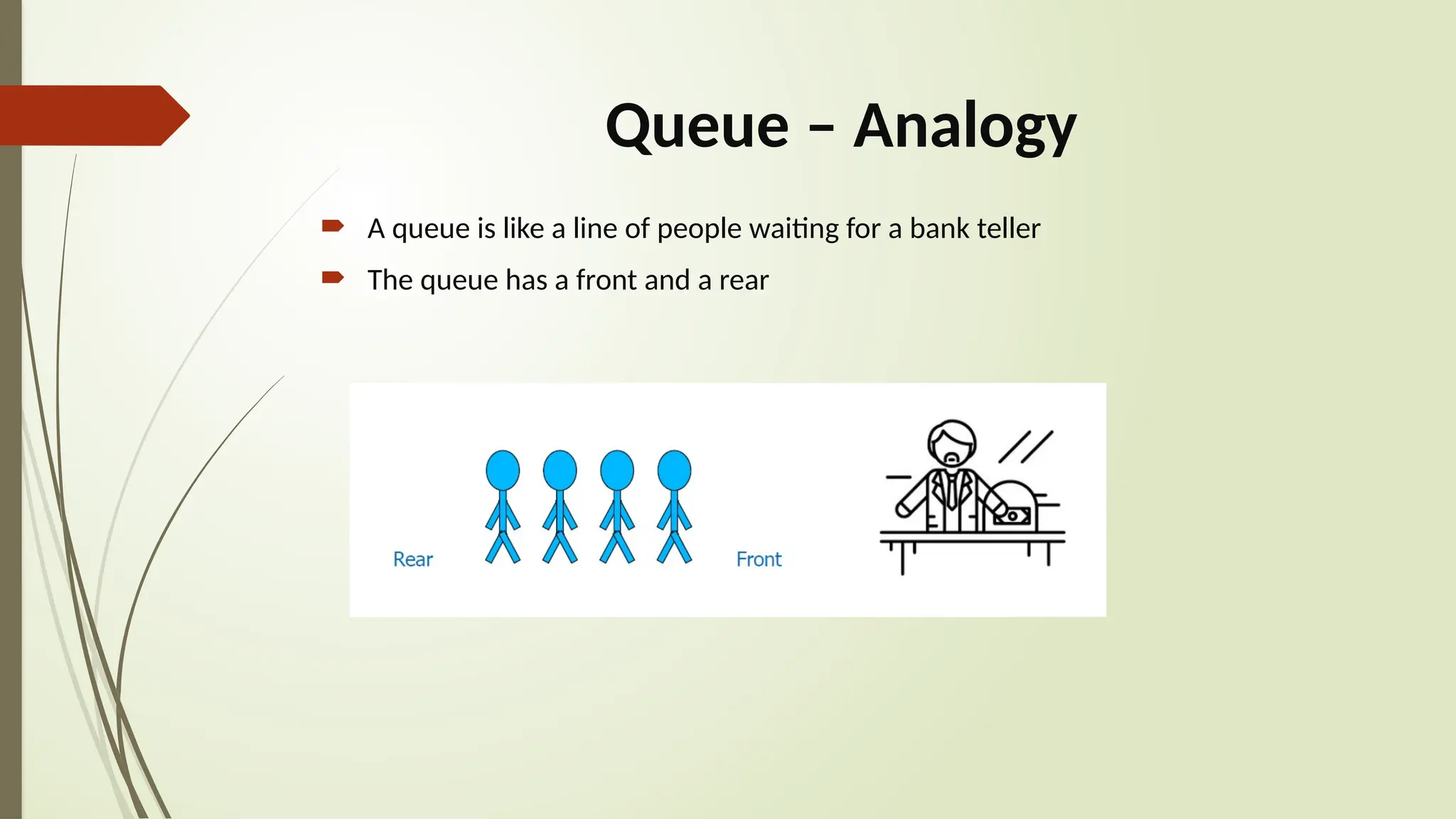
 A queue is like a line of people waiting for a bank teller
 The queue has a front and a rear
Queue – Analogy
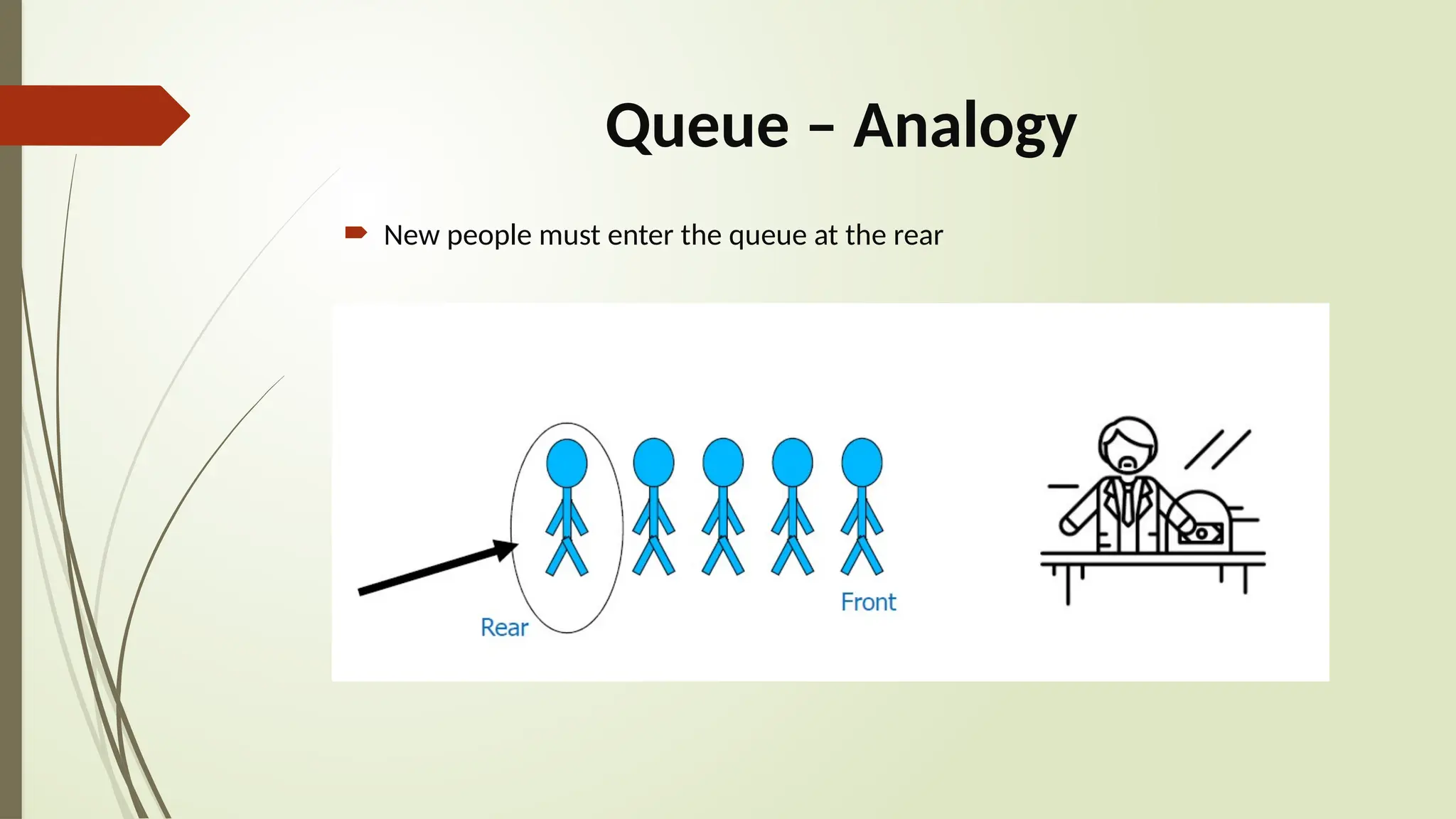
 New people must enter the queue at the rear
Queue – Analogy
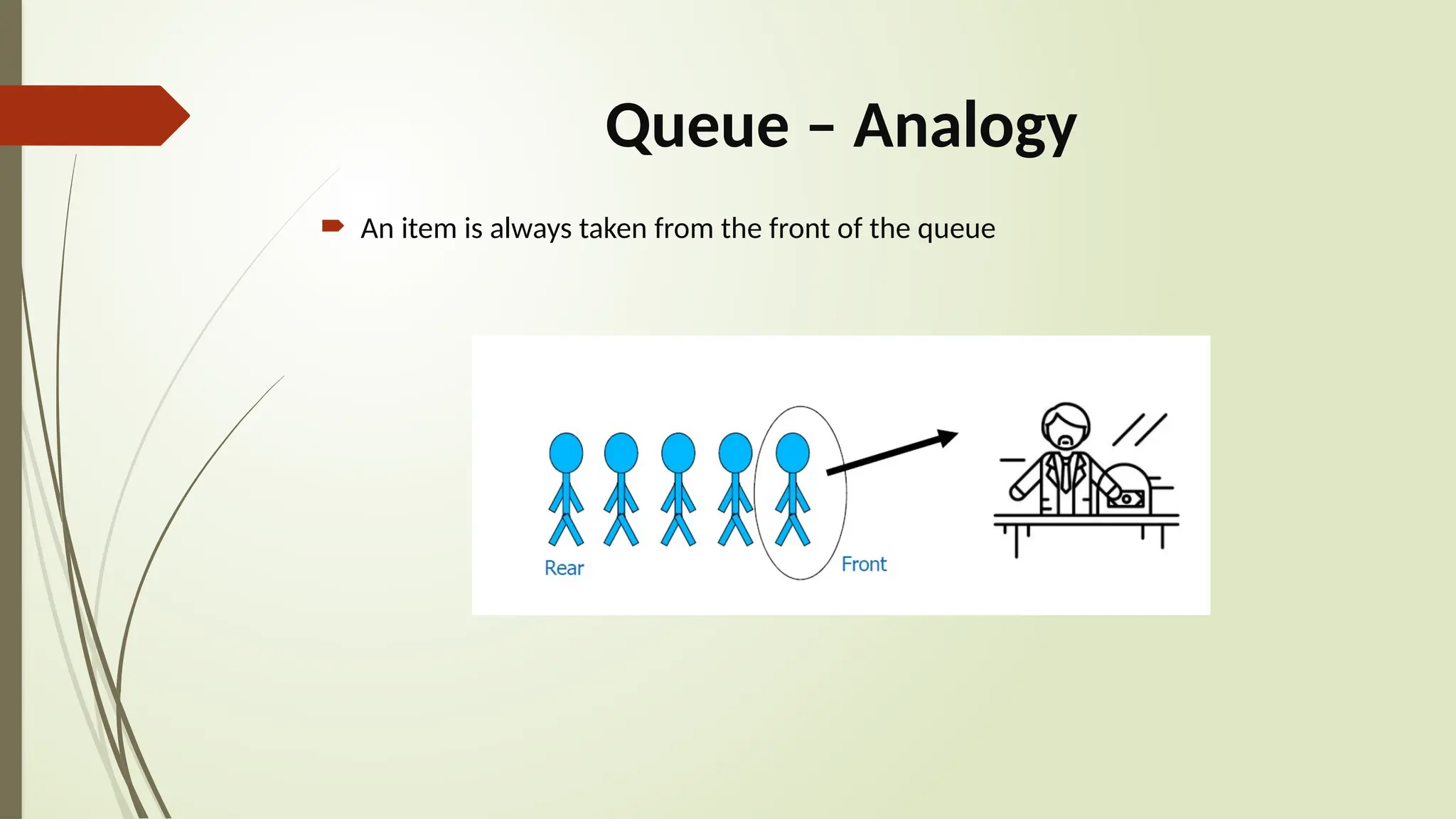
 An item is always taken from the front of the queue
Queues – Examples
 Billing counter
 Booking movie tickets
 Queue for paying bills
 A print queue
 Vehicles on toll-tax bridge
 Luggage checking machine
Queues – Applications
 Operating systems
 Process scheduling in multiprogramming environment
 Controlling provisioning of resources to multiple users (or processing)
 Middleware/Communication software
 Hold messages/packets in order of their arrival
 Messages are usually transmitted faster than the time to process them
 The most common application is in client-server models
 Multiple clients may be requesting services from one or more servers
 Some clients may have to wait while the servers are busy
 Those clients are placed in a queue and serviced in the order of arrival
Basic Operations
 MAKENULL(Q)
 Makes Queue Q be an empty list
 FRONT(Q)
 Returns the first element on Queue Q
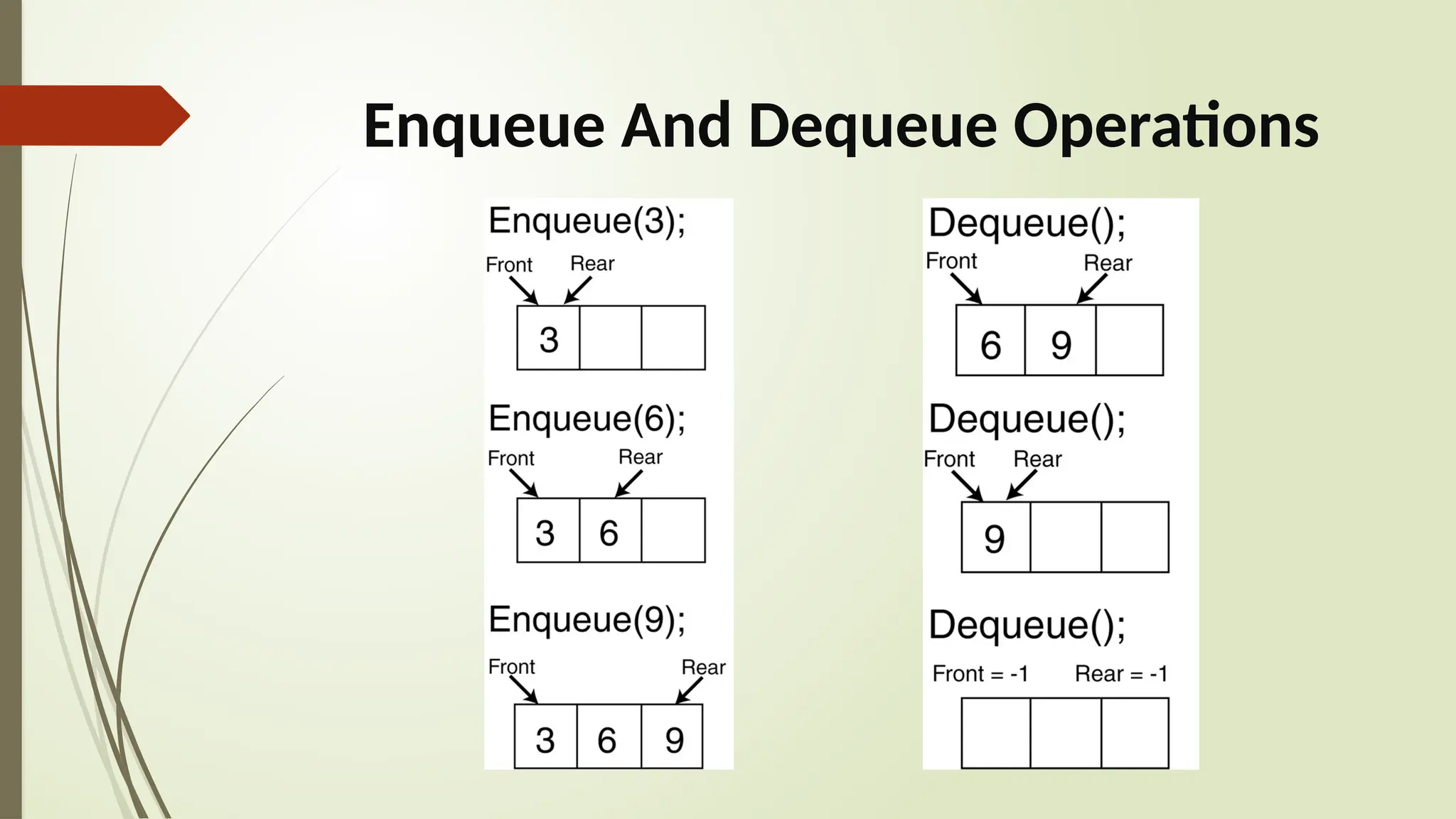
 ENQUEUE(x ,Q)
 Inserts element x at the end of Queue Q
 DEQUEUE(Q)
 Deletes the first element of Q
 EMPTY(Q)
 Returns true if and only if Q is an empty queue
Enqueue And Dequeue Operations
Implementation
 Static
 Queue is implemented by an array
 Size of queue remains fix
 Dynamic
 A queue can be implemented as a linked list
 Expand or shrink with each enqueue or dequeue operation
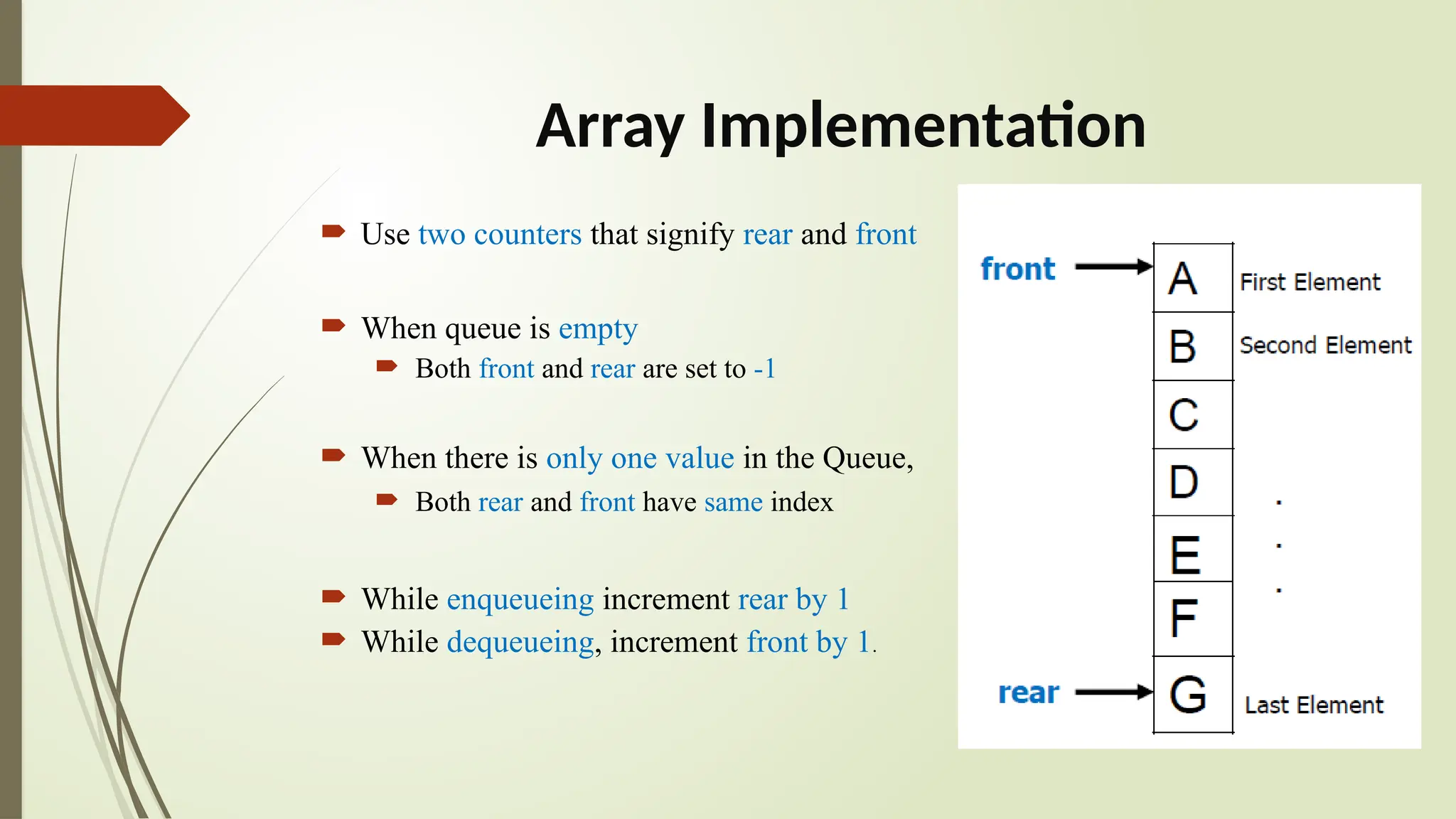
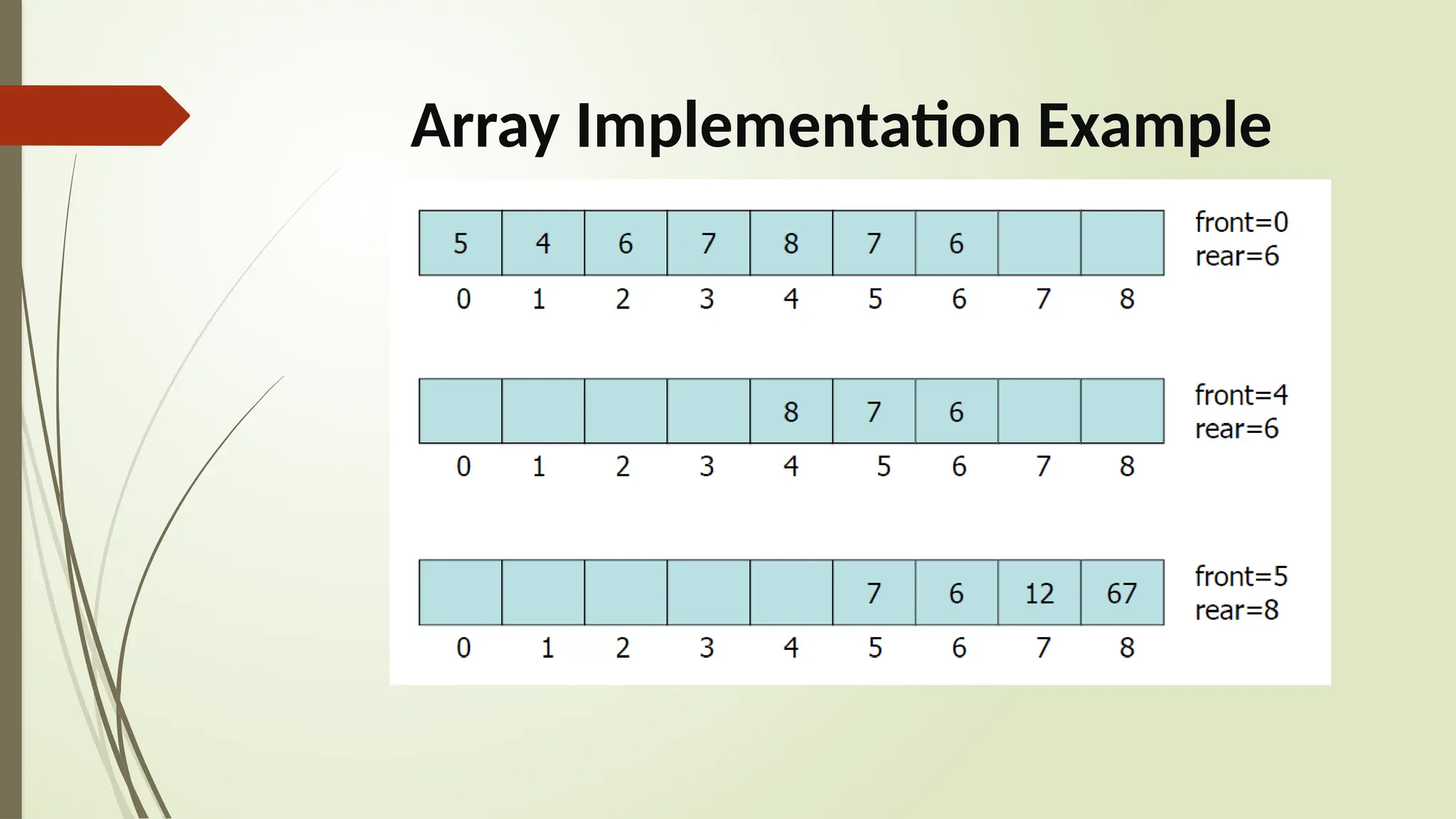
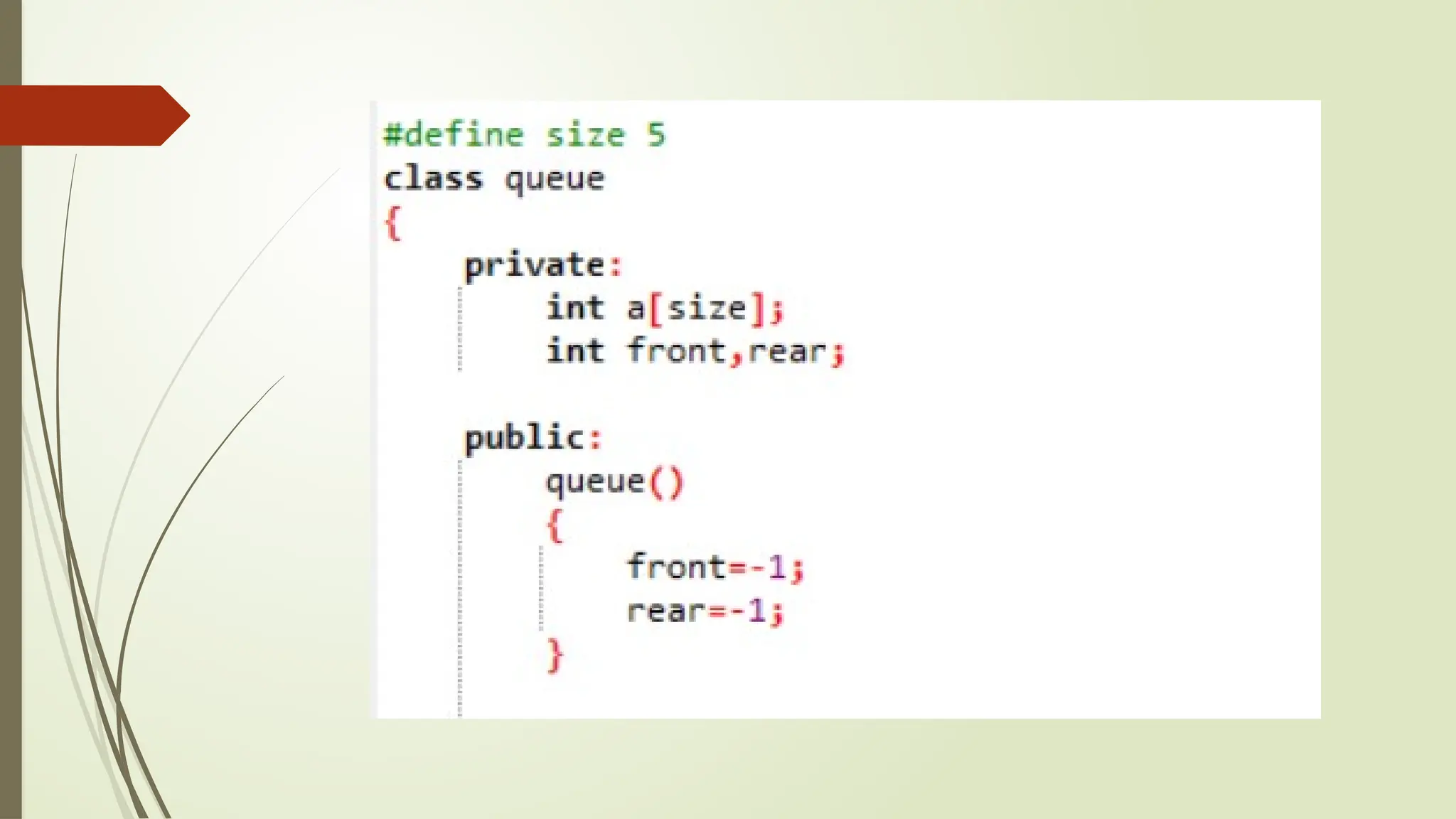
Array Implementation
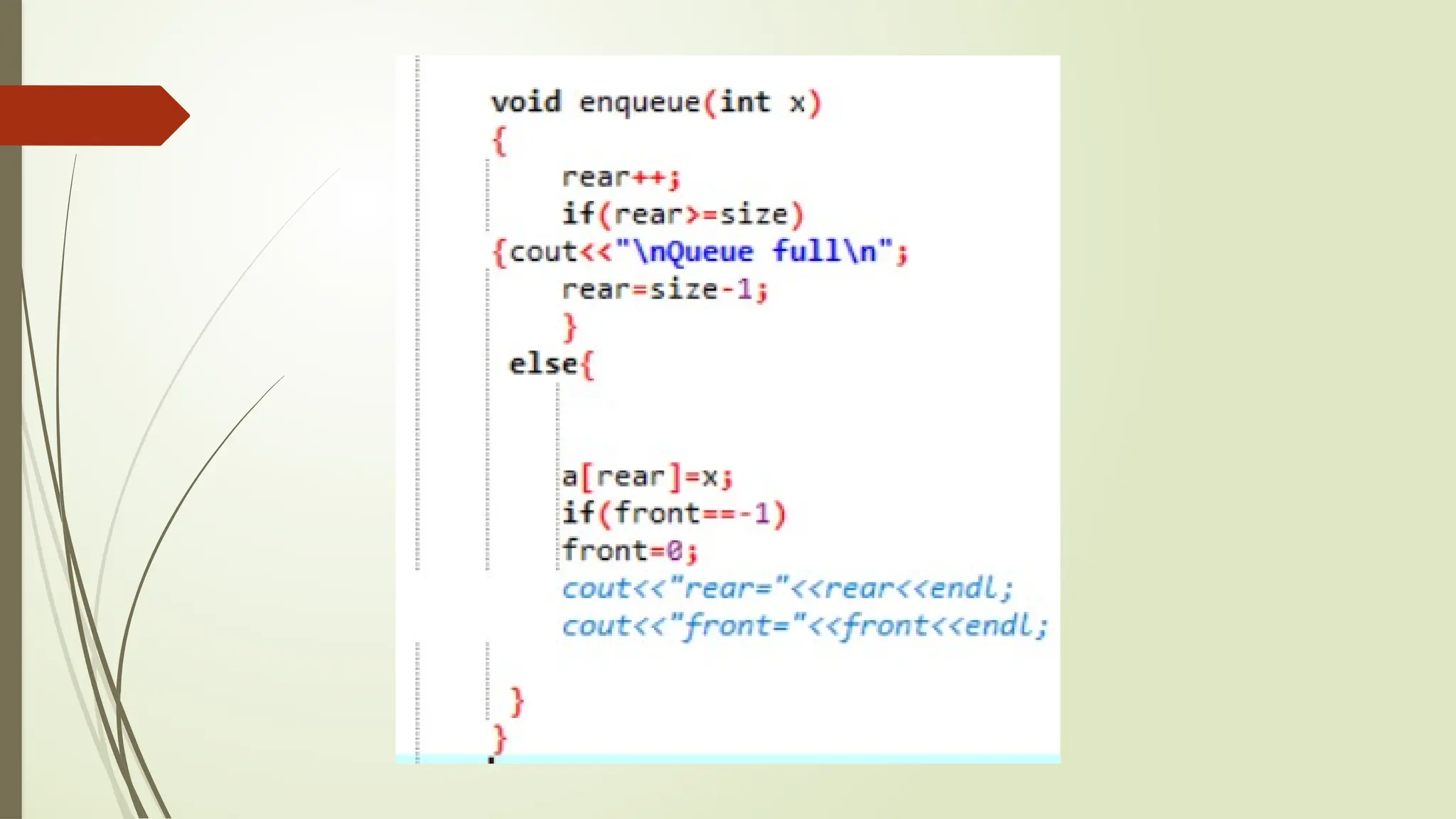
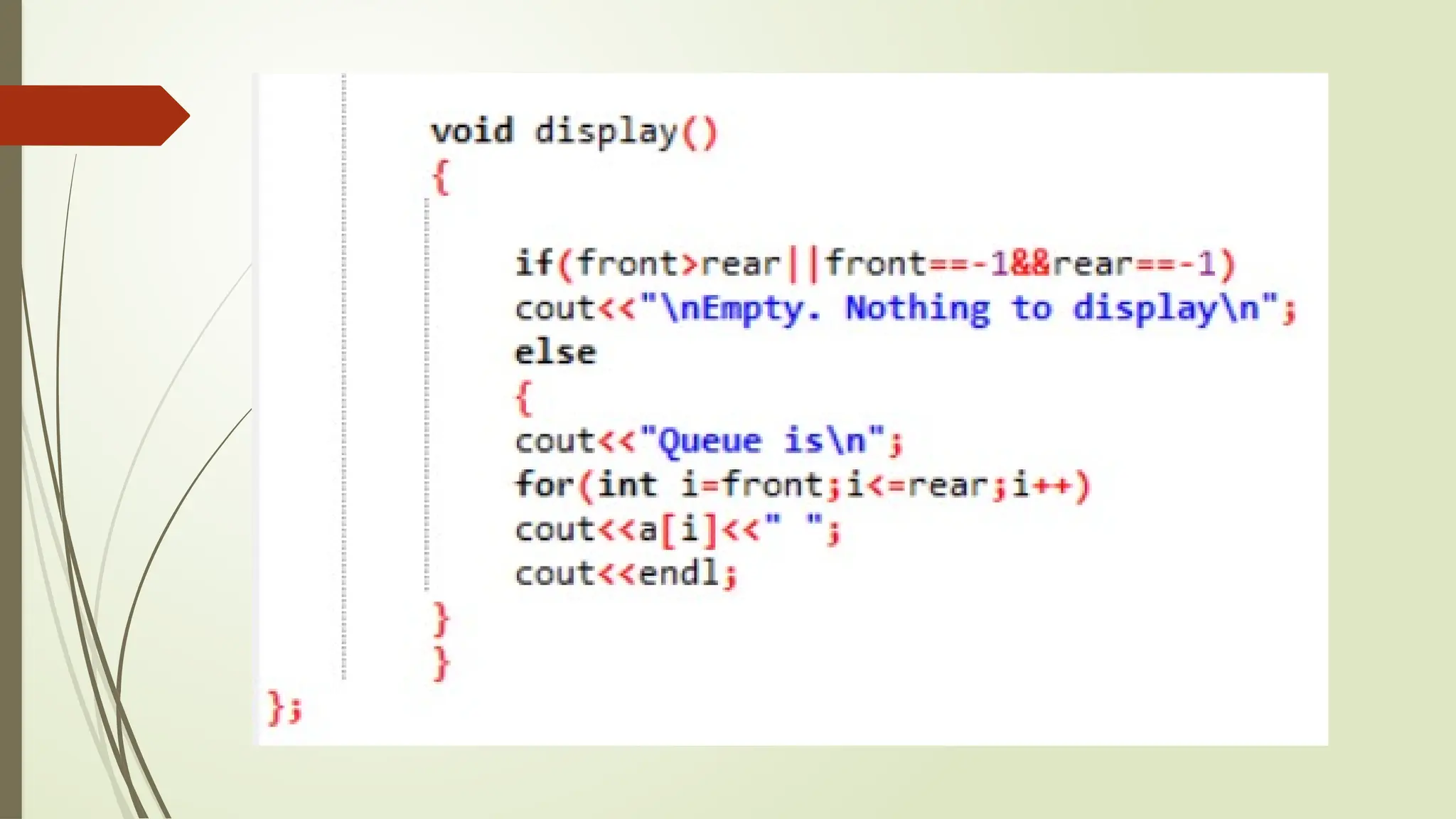
 Use two counters that signify rear and front
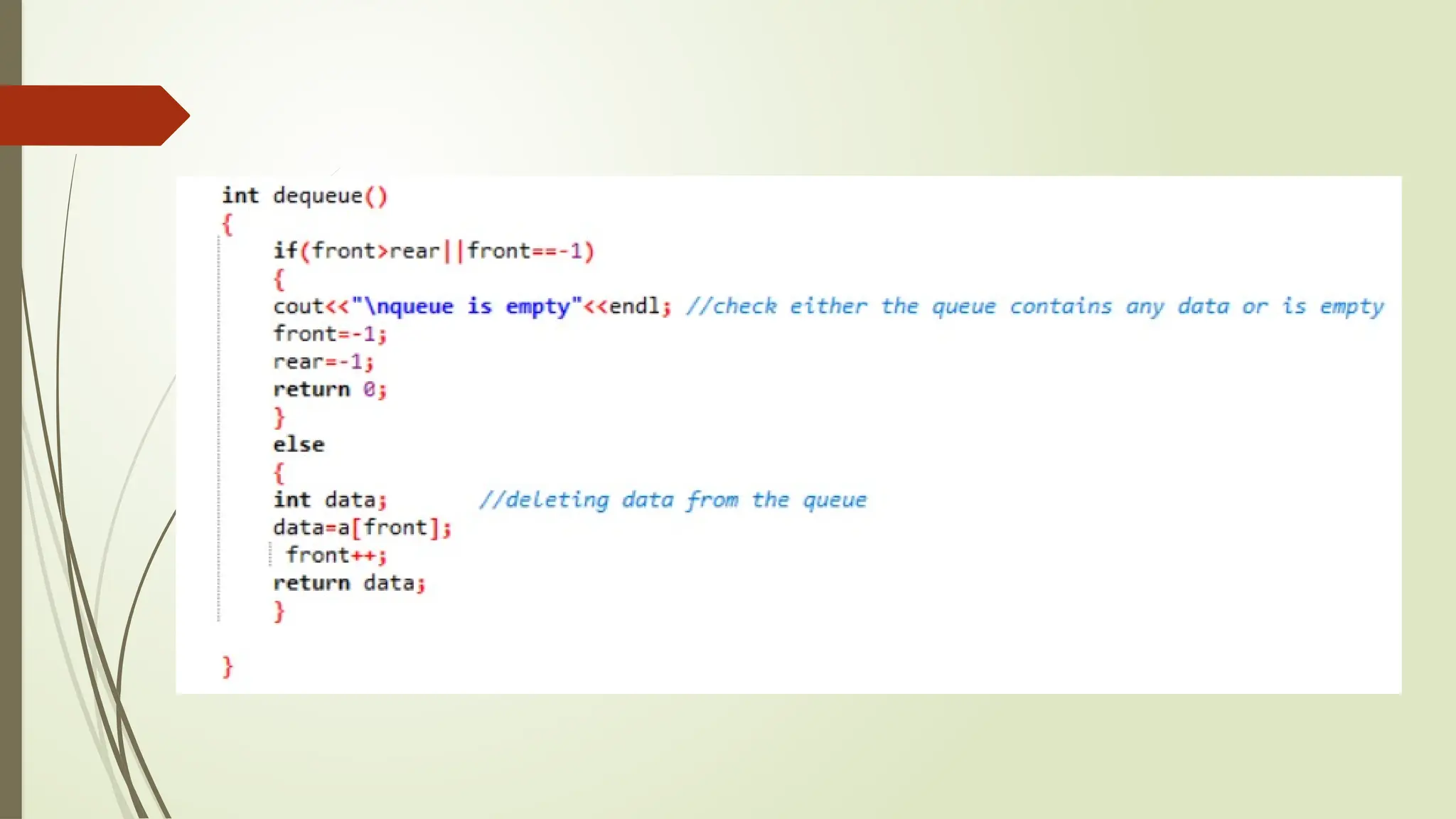
 When queue is empty
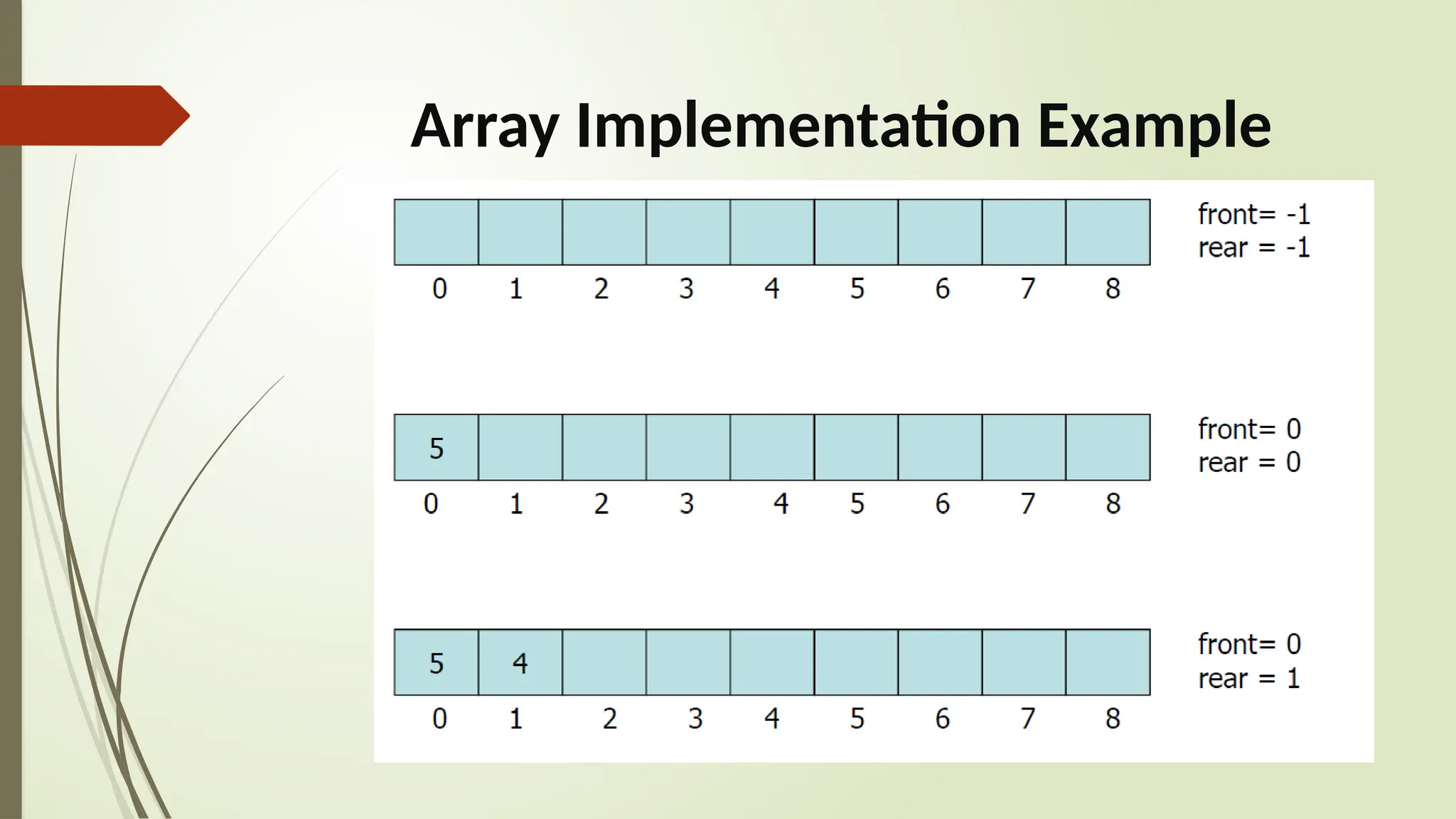
 Both front and rear are set to -1
 When there is only one value in the Queue,
 Both rear and front have same index
 While enqueueing increment rear by 1
 While dequeueing, increment front by 1.
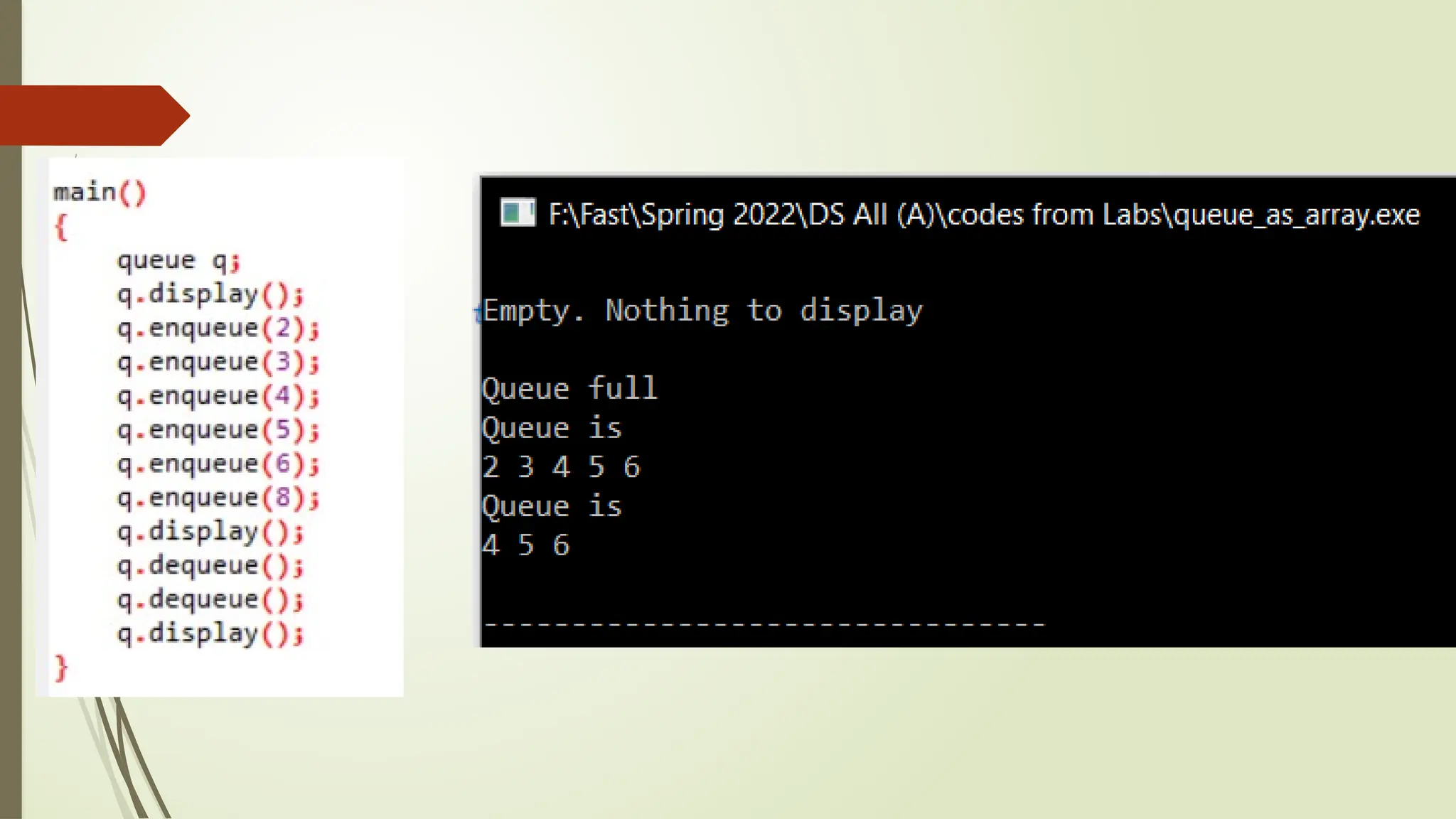
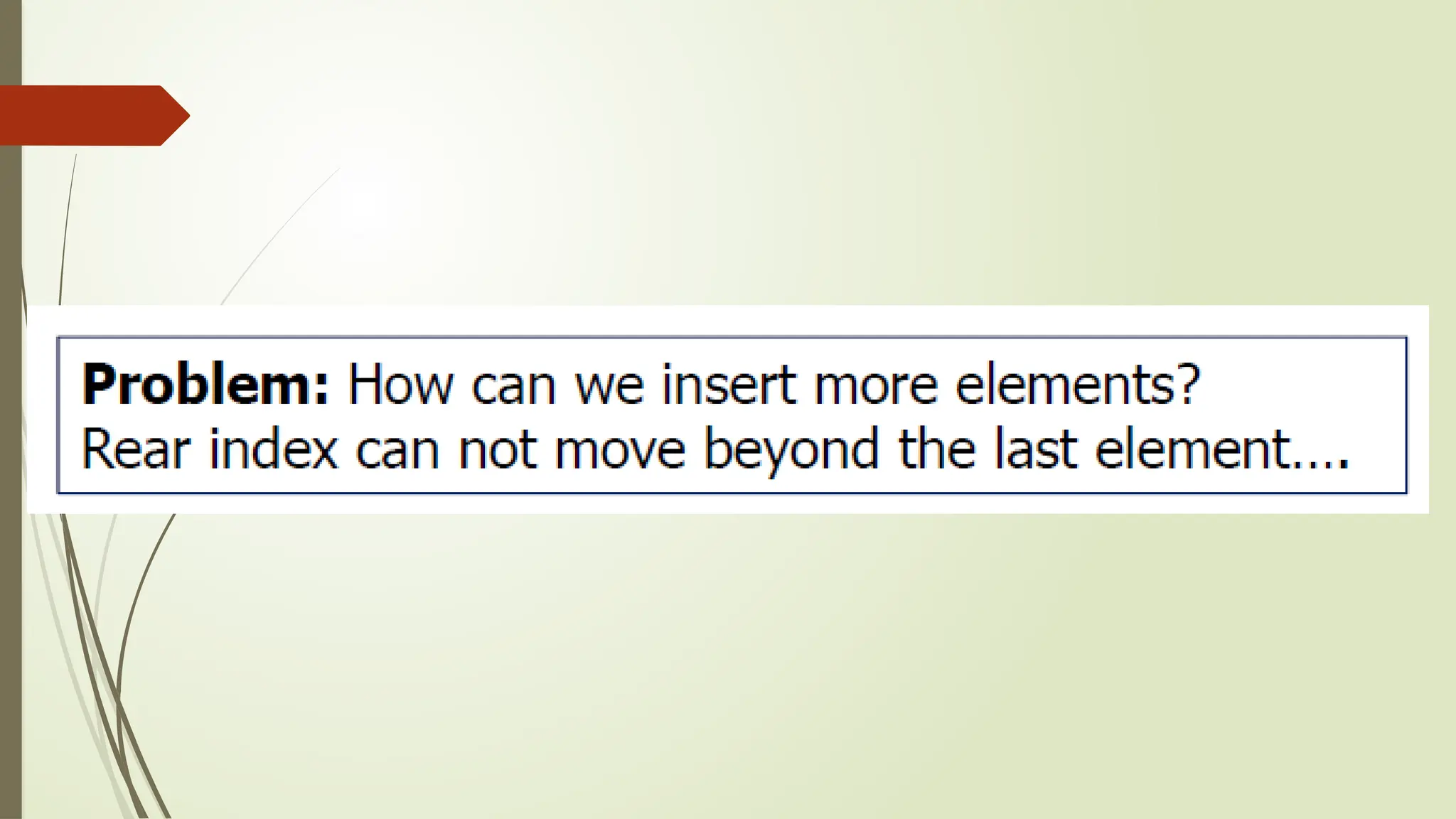
Array Implementation Example
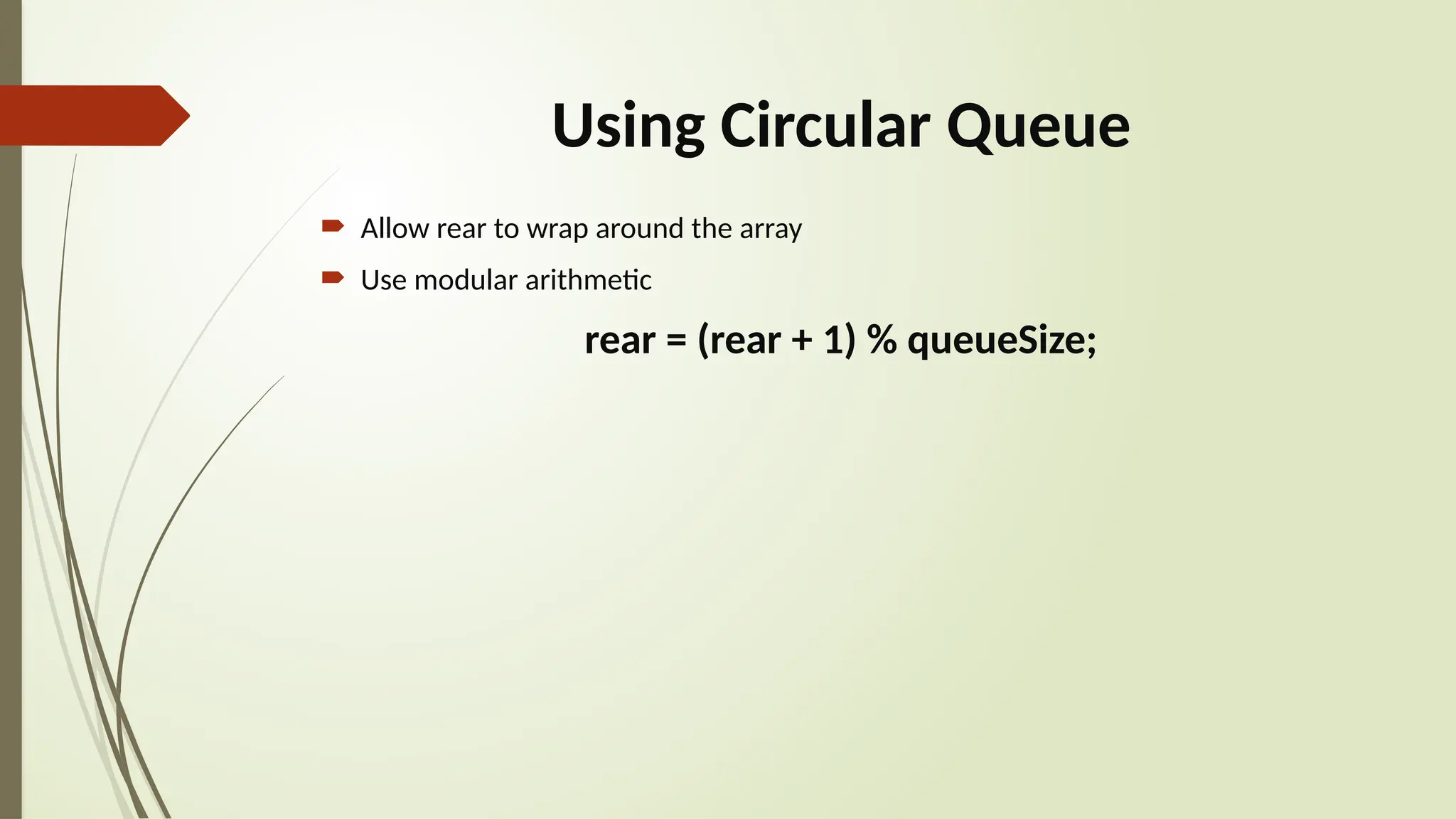
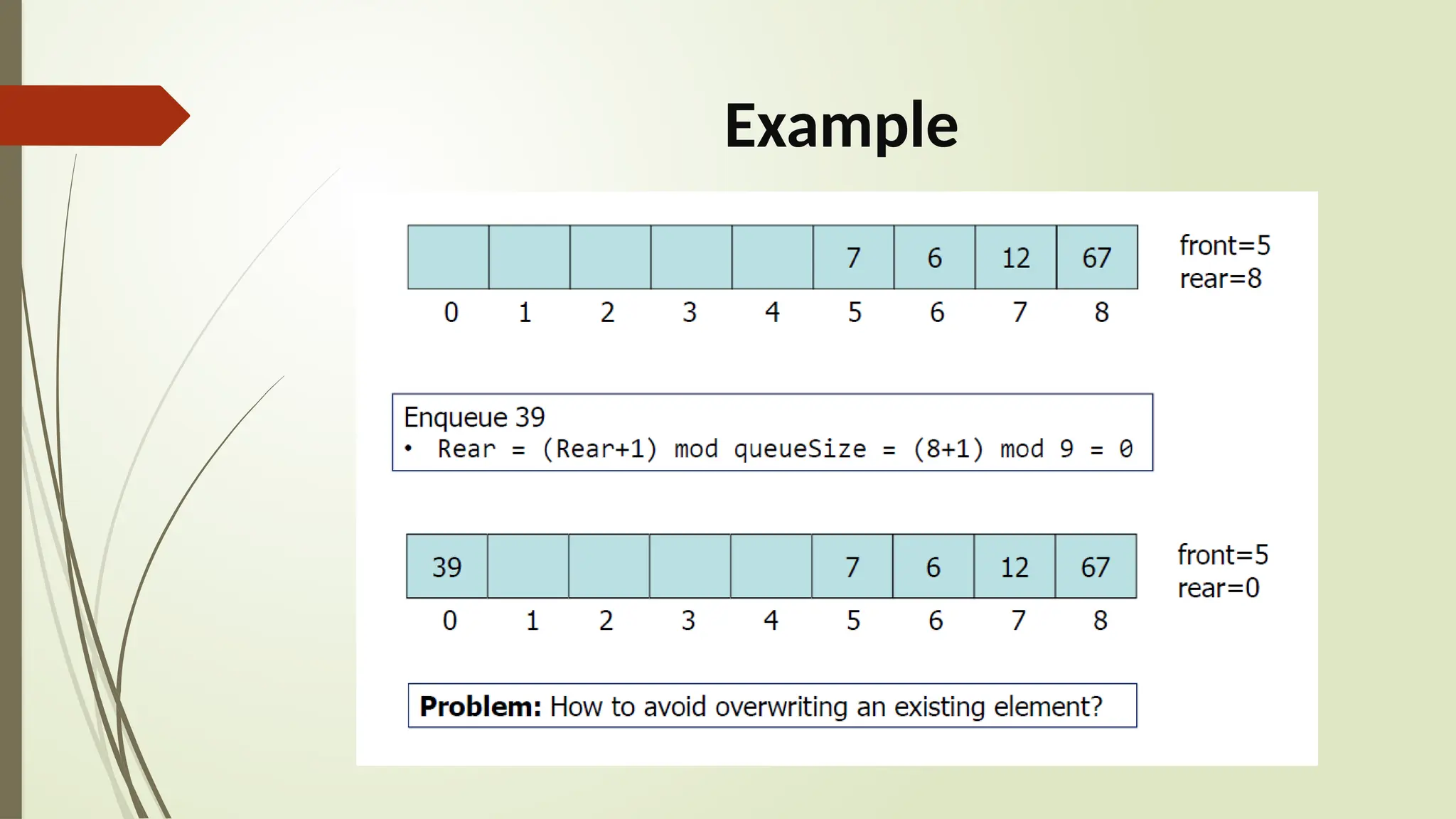
Using Circular Queue
 Allow rear to wrap around the array
 Use modular arithmetic
rear = (rear + 1) % queueSize;
Example
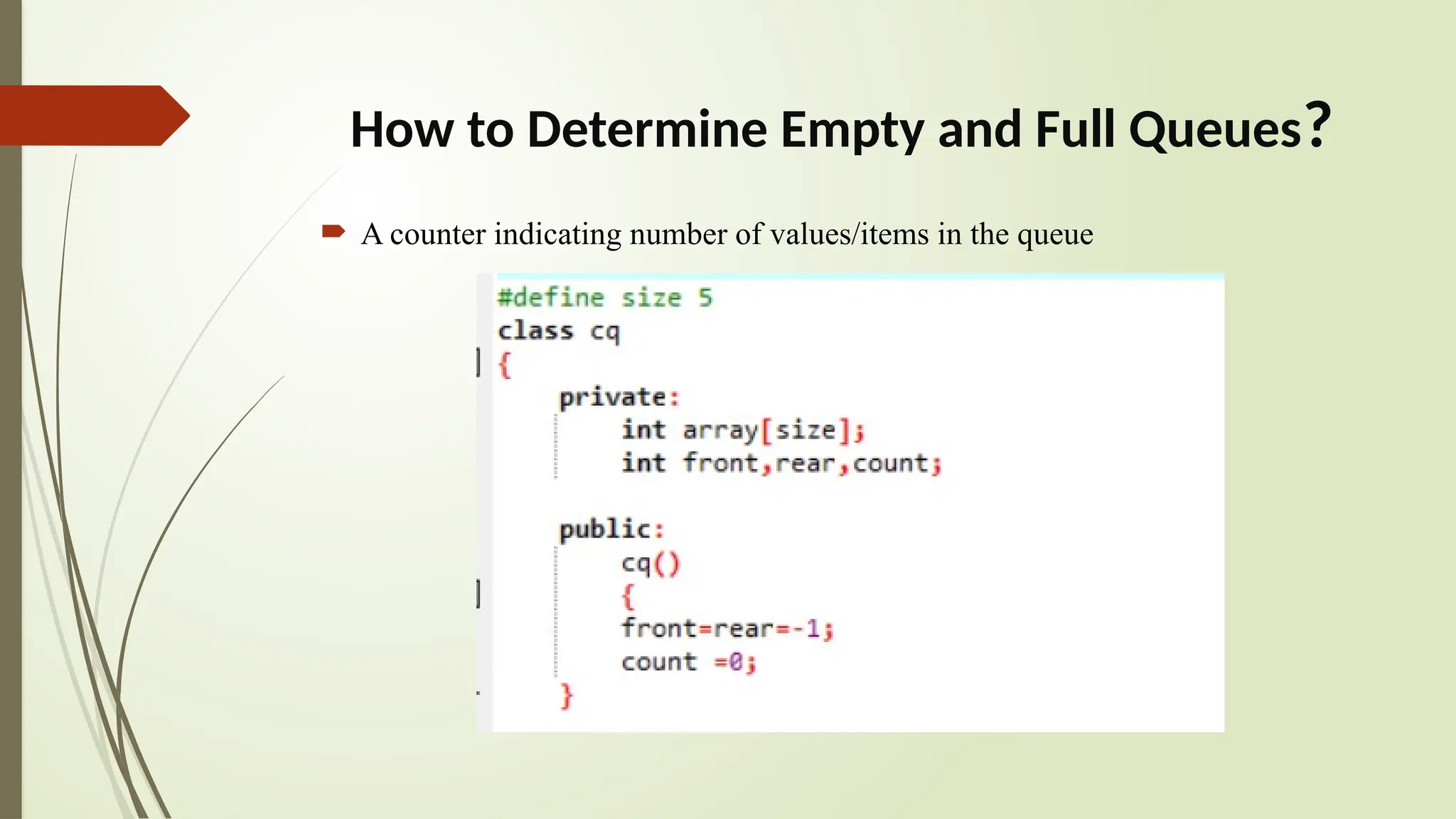
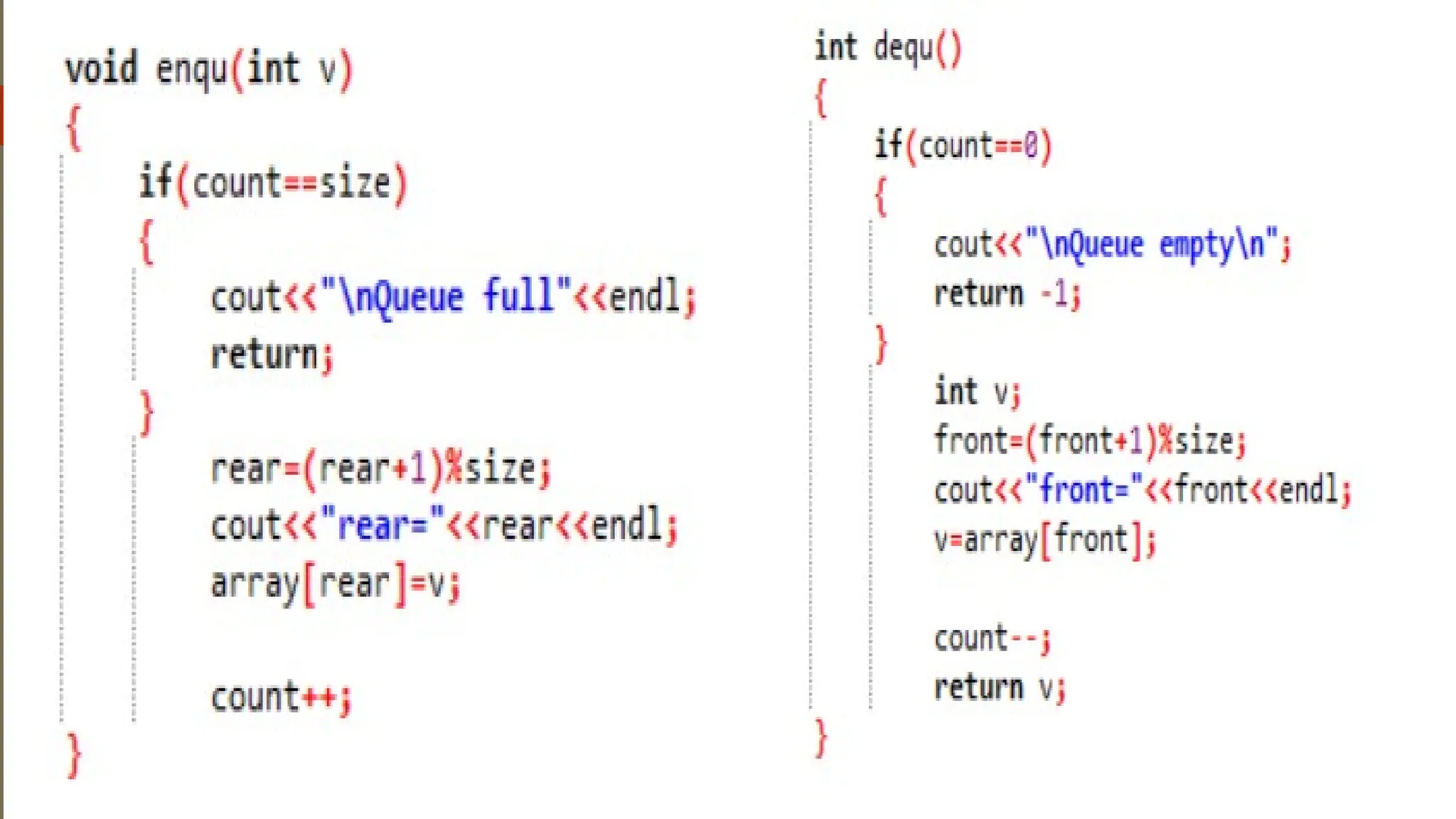
How to Determine Empty and Full Queues?
 A counter indicating number of values/items in the queue
Dynamic Implementation
 Refer to Functions of Singly Linked List
 Enqueue??  Add to end
 Dequeue??  Remove from head

7-DSA- Queue.pptx in detail for students

  • 1.
  • 2.
    Queues  A Queueis a special kind of list, where items are inserted at one end (the rear) And deleted at the other end (the front).  Accessing the elements of queues follows a First In,First Out (FIFO) order.  Example Like customers standing in a check-out line in a store, the first customer in is the first customer served
  • 3.
    Queue – Analogy A queue is like a line of people waiting for a bank teller  The queue has a front and a rear
  • 4.
    Queue – Analogy New people must enter the queue at the rear
  • 5.
    Queue – Analogy An item is always taken from the front of the queue
  • 6.
    Queues – Examples Billing counter  Booking movie tickets  Queue for paying bills  A print queue  Vehicles on toll-tax bridge  Luggage checking machine
  • 7.
    Queues – Applications Operating systems  Process scheduling in multiprogramming environment  Controlling provisioning of resources to multiple users (or processing)  Middleware/Communication software  Hold messages/packets in order of their arrival  Messages are usually transmitted faster than the time to process them  The most common application is in client-server models  Multiple clients may be requesting services from one or more servers  Some clients may have to wait while the servers are busy  Those clients are placed in a queue and serviced in the order of arrival
  • 8.
    Basic Operations  MAKENULL(Q) Makes Queue Q be an empty list  FRONT(Q)  Returns the first element on Queue Q  ENQUEUE(x ,Q)  Inserts element x at the end of Queue Q  DEQUEUE(Q)  Deletes the first element of Q  EMPTY(Q)  Returns true if and only if Q is an empty queue
  • 9.
  • 10.
    Implementation  Static  Queueis implemented by an array  Size of queue remains fix  Dynamic  A queue can be implemented as a linked list  Expand or shrink with each enqueue or dequeue operation
  • 11.
    Array Implementation  Usetwo counters that signify rear and front  When queue is empty  Both front and rear are set to -1  When there is only one value in the Queue,  Both rear and front have same index  While enqueueing increment rear by 1  While dequeueing, increment front by 1.
  • 12.
  • 13.
  • 20.
    Using Circular Queue Allow rear to wrap around the array  Use modular arithmetic rear = (rear + 1) % queueSize;
  • 21.
  • 22.
    How to DetermineEmpty and Full Queues?  A counter indicating number of values/items in the queue
  • 25.
    Dynamic Implementation  Referto Functions of Singly Linked List  Enqueue??  Add to end  Dequeue??  Remove from head