7 C’s Of Communication
1. 7 C’s- Completeness
The communication must be complete.
It should convey all facts required by the audience
 Cost saving as no crucial information is missing
 A complete communication gives additional information wherever
required.
 Complete communication helps in better decision-making by the
audience/readers/receivers of message
 It persuades the audience.
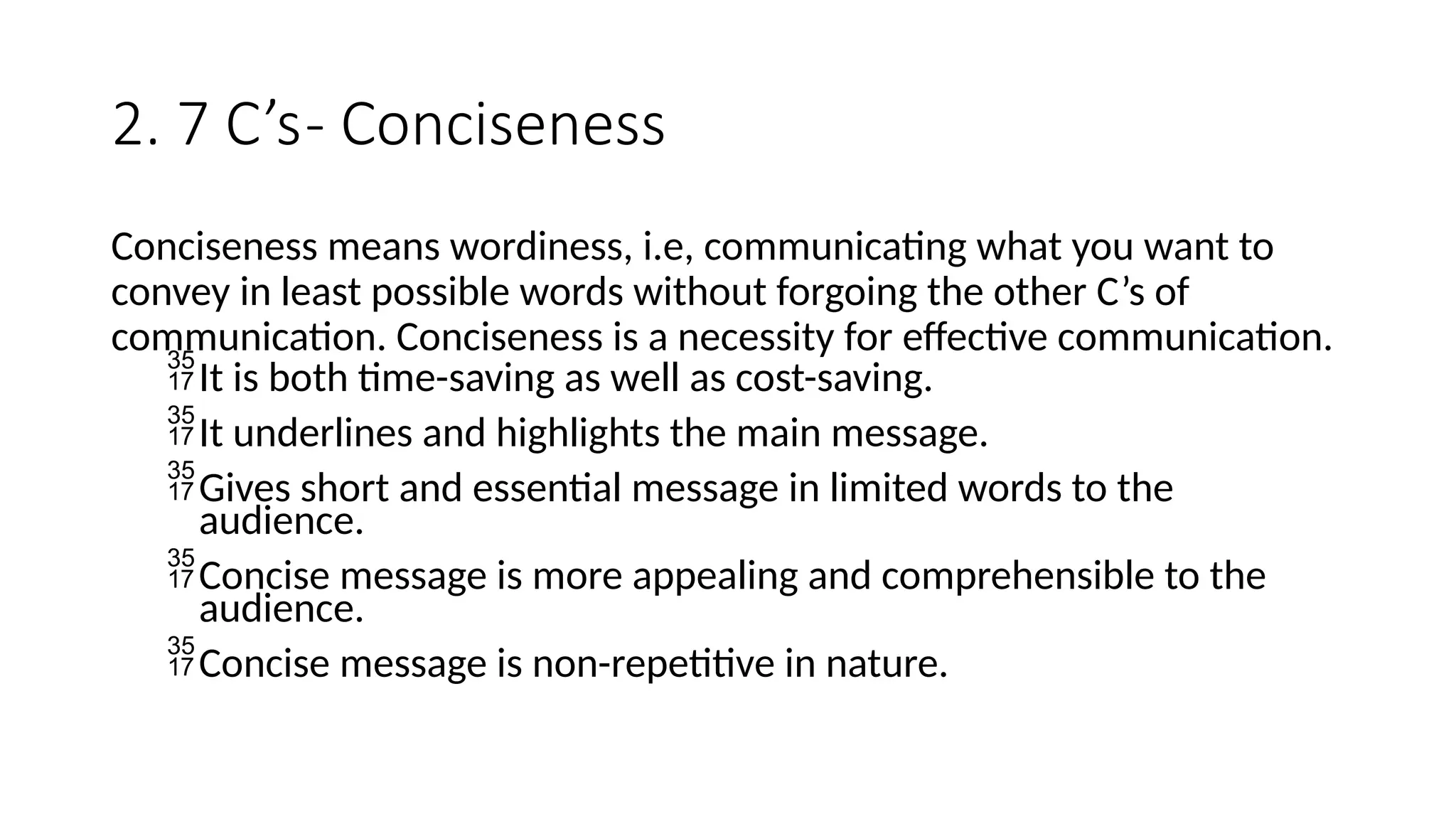
2. 7 C’s- Conciseness
Conciseness means wordiness, i.e, communicating what you want to
convey in least possible words without forgoing the other C’s of
communication. Conciseness is a necessity for effective communication.
It is both time-saving as well as cost-saving.
It underlines and highlights the main message.
Gives short and essential message in limited words to the
audience.
Concise message is more appealing and comprehensible to the
audience.
Concise message is non-repetitive in nature.
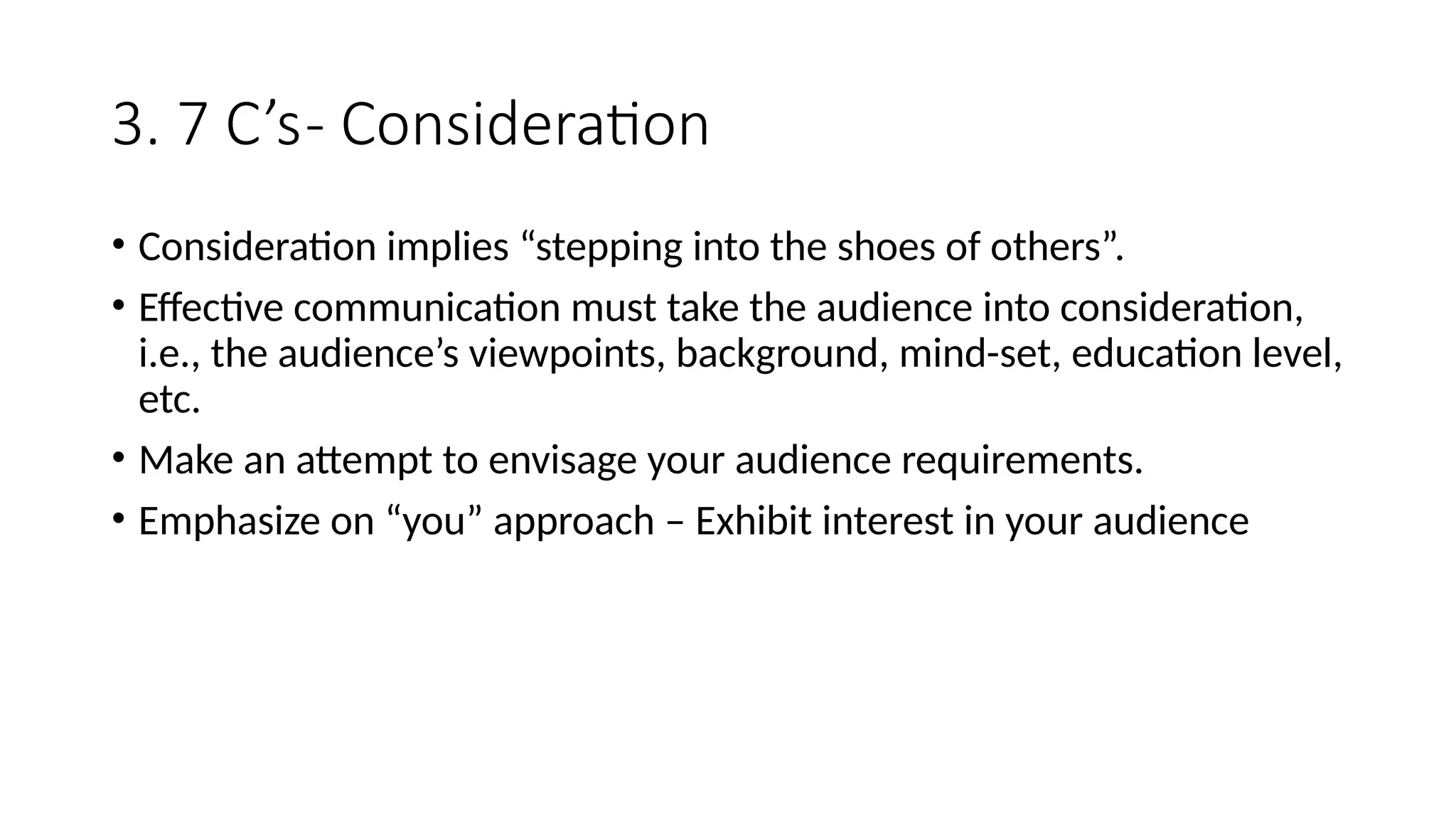
3. 7 C’s- Consideration
• Consideration implies “stepping into the shoes of others”.
• Effective communication must take the audience into consideration,
i.e., the audience’s viewpoints, background, mind-set, education level,
etc.
• Make an attempt to envisage your audience requirements.
• Emphasize on “you” approach – Exhibit interest in your audience
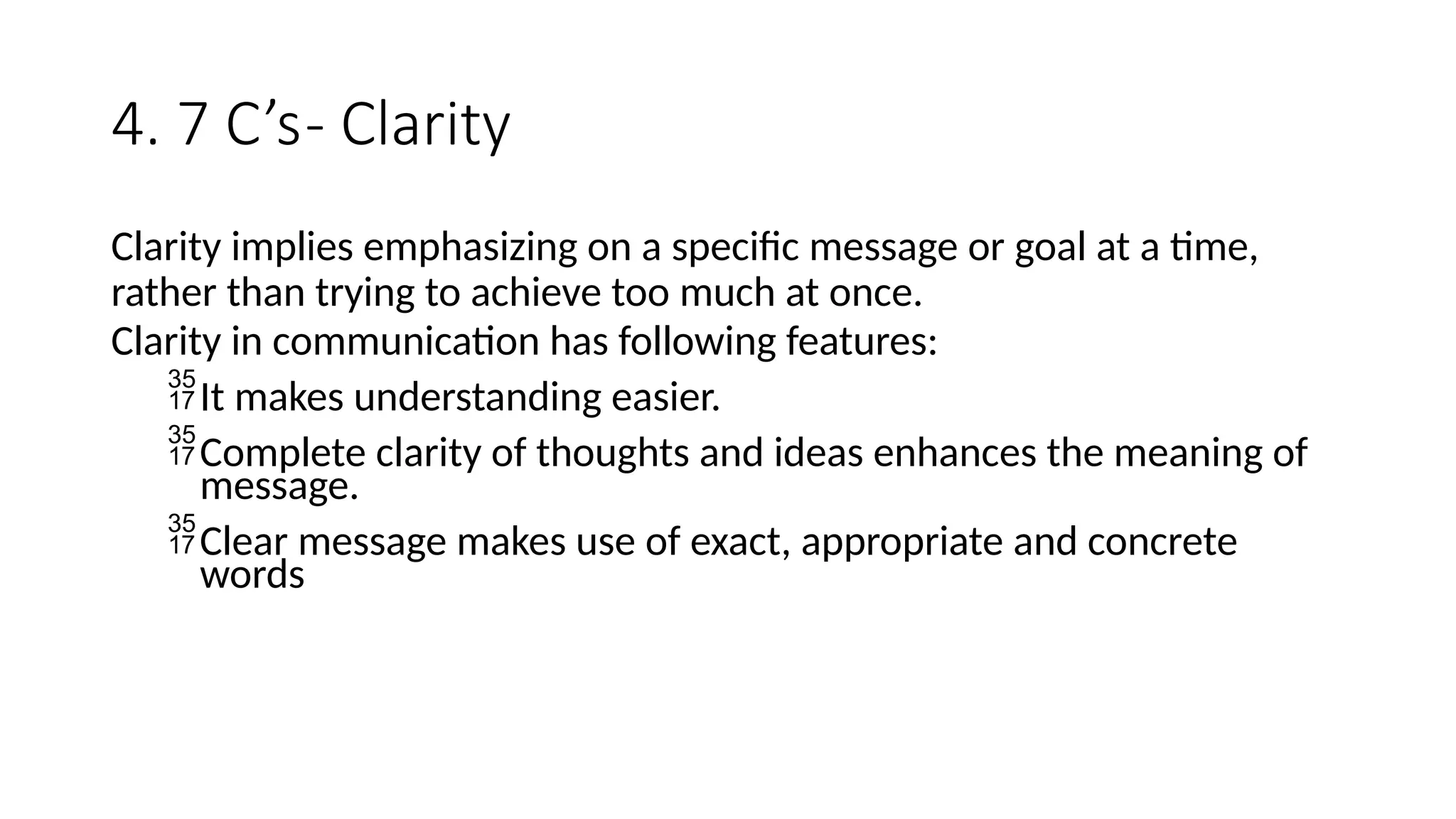
4. 7 C’s- Clarity
Clarity implies emphasizing on a specific message or goal at a time,
rather than trying to achieve too much at once.
Clarity in communication has following features:
It makes understanding easier.
Complete clarity of thoughts and ideas enhances the meaning of
message.
Clear message makes use of exact, appropriate and concrete
words
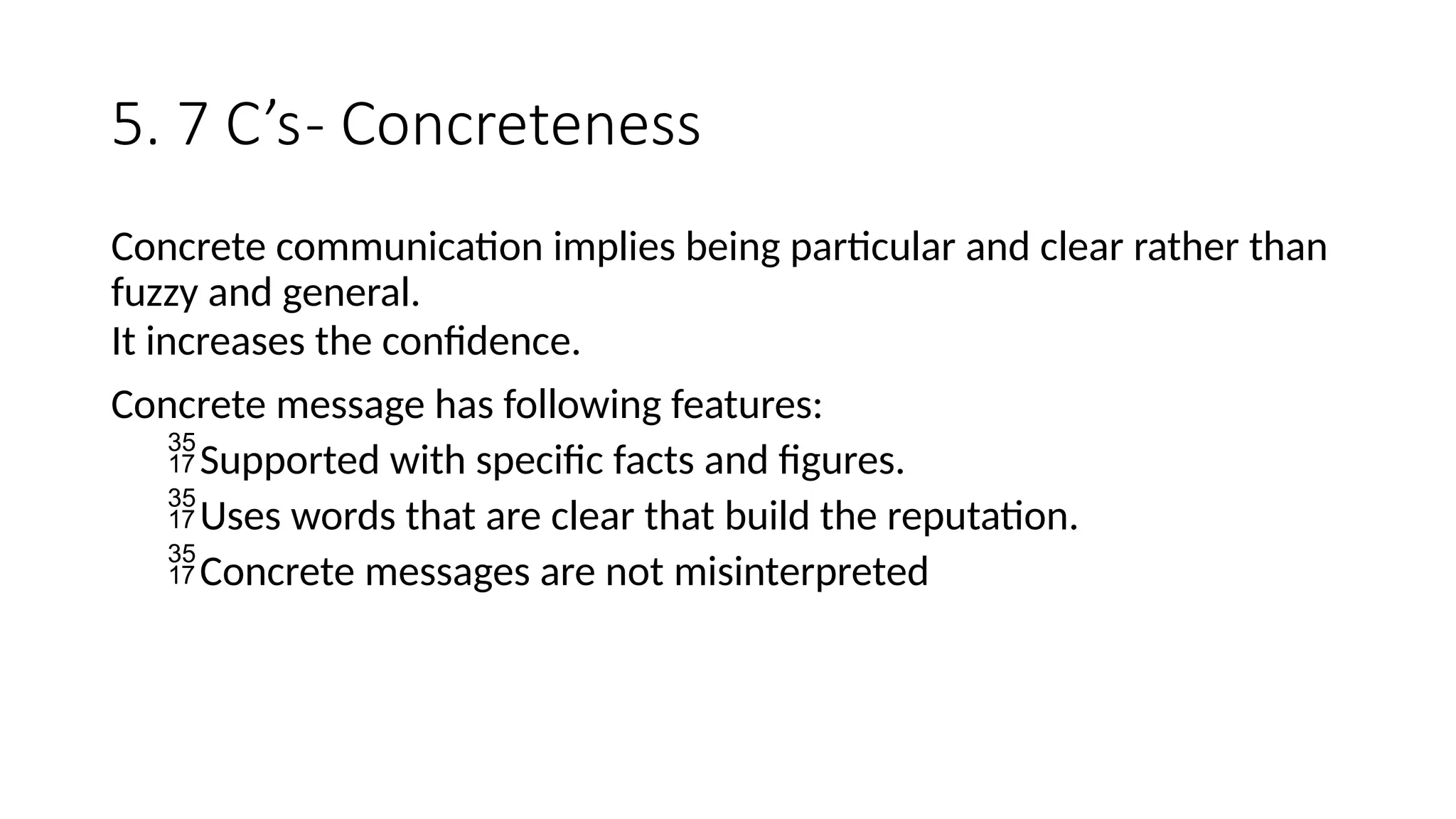
5. 7 C’s- Concreteness
Concrete communication implies being particular and clear rather than
fuzzy and general.
It increases the confidence.
Concrete message has following features:
Supported with specific facts and figures.
Uses words that are clear that build the reputation.
Concrete messages are not misinterpreted
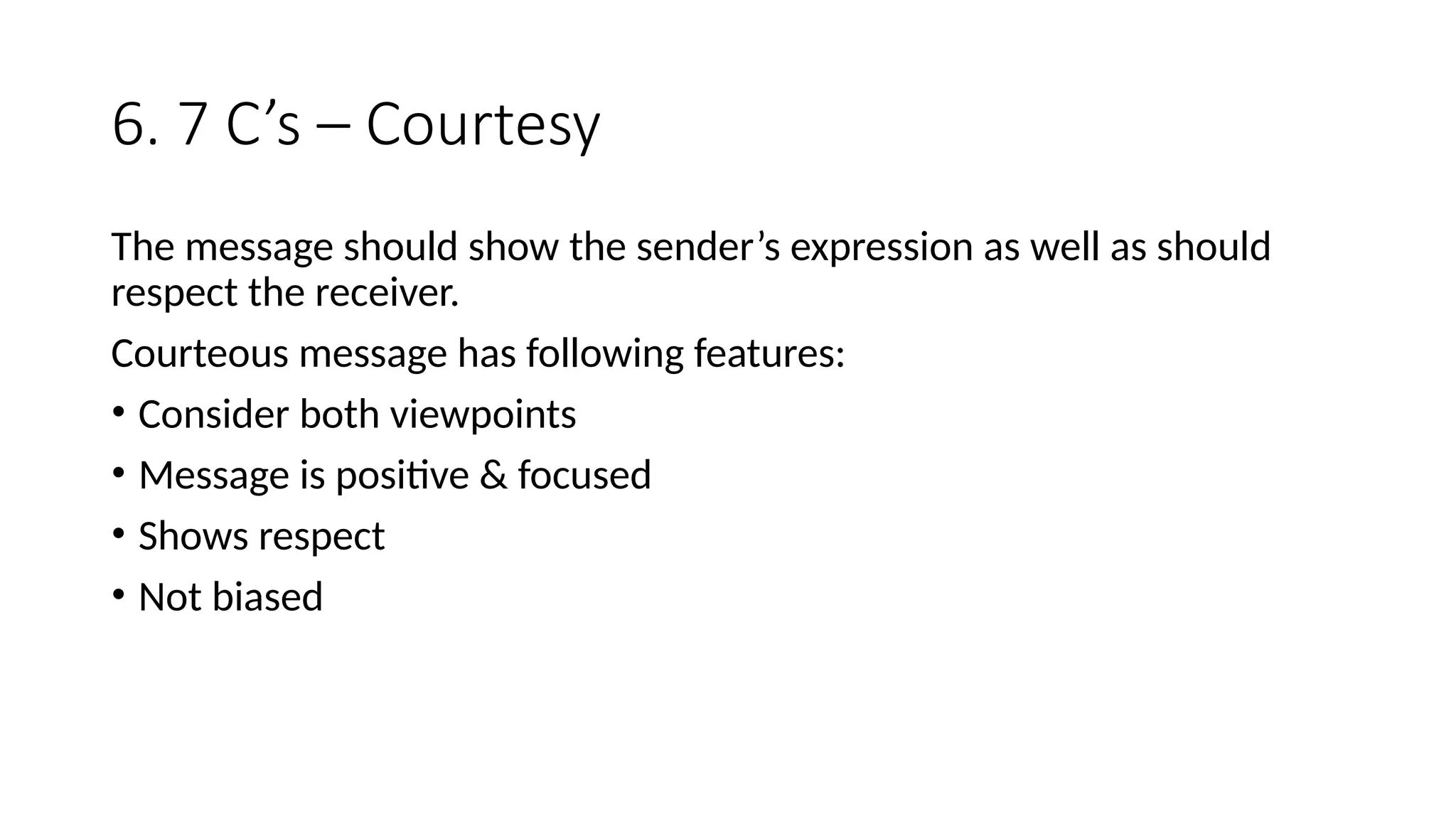
6. 7 C’s – Courtesy
The message should show the sender’s expression as well as should
respect the receiver.
Courteous message has following features:
• Consider both viewpoints
• Message is positive & focused
• Shows respect
• Not biased
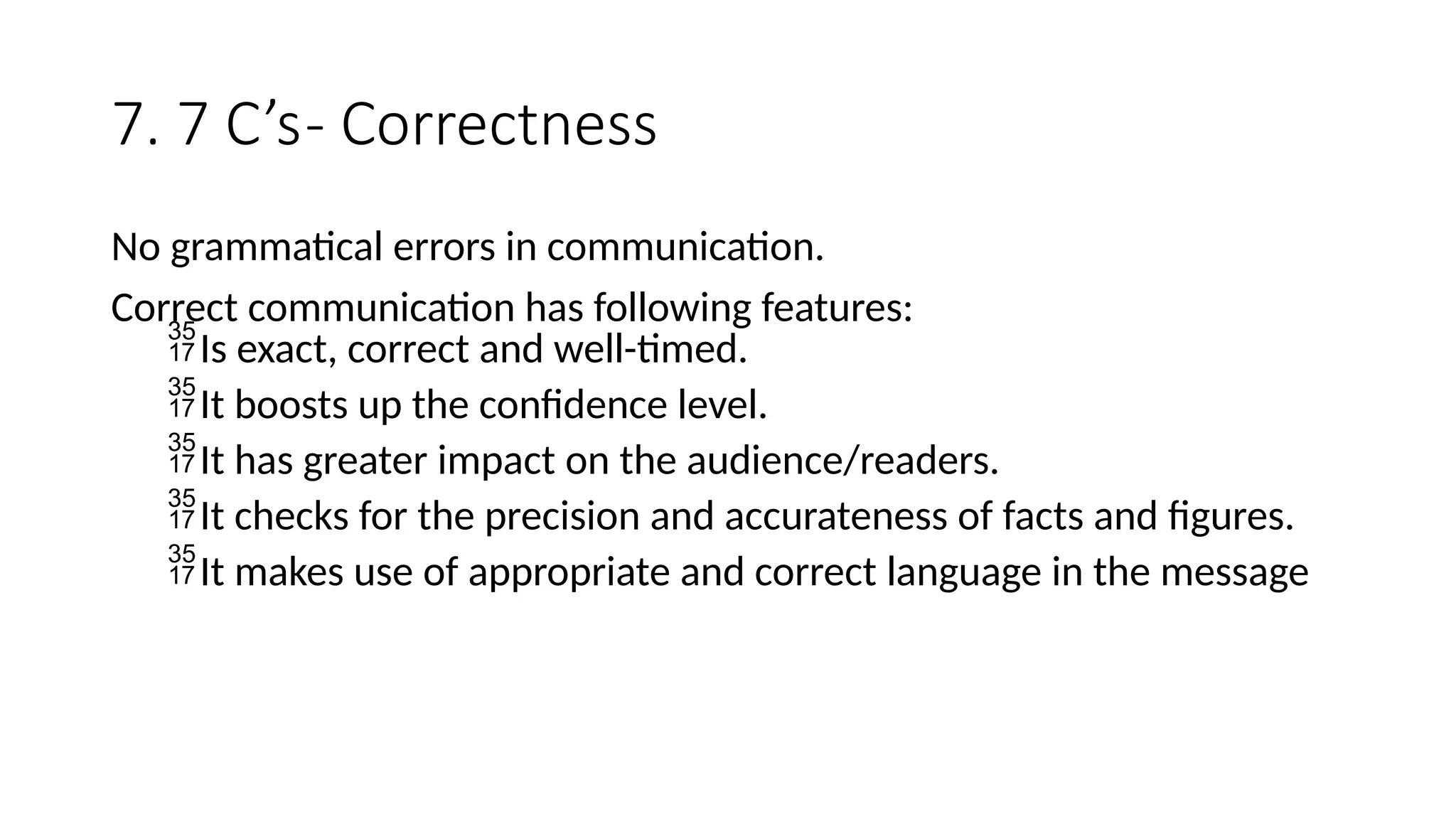
7. 7 C’s- Correctness
No grammatical errors in communication.
Correct communication has following features:
Is exact, correct and well-timed.
It boosts up the confidence level.
It has greater impact on the audience/readers.
It checks for the precision and accurateness of facts and figures.
It makes use of appropriate and correct language in the message
7. 7 C’s- Correctness
No grammatical errors in communication.
Correct communication has following features:
Is exact, correct and well-timed.
It boosts up the confidence level.
It has greater impact on the audience/readers.
It checks for the precision and accurateness of facts and figures.
It makes use of appropriate and correct language in the message
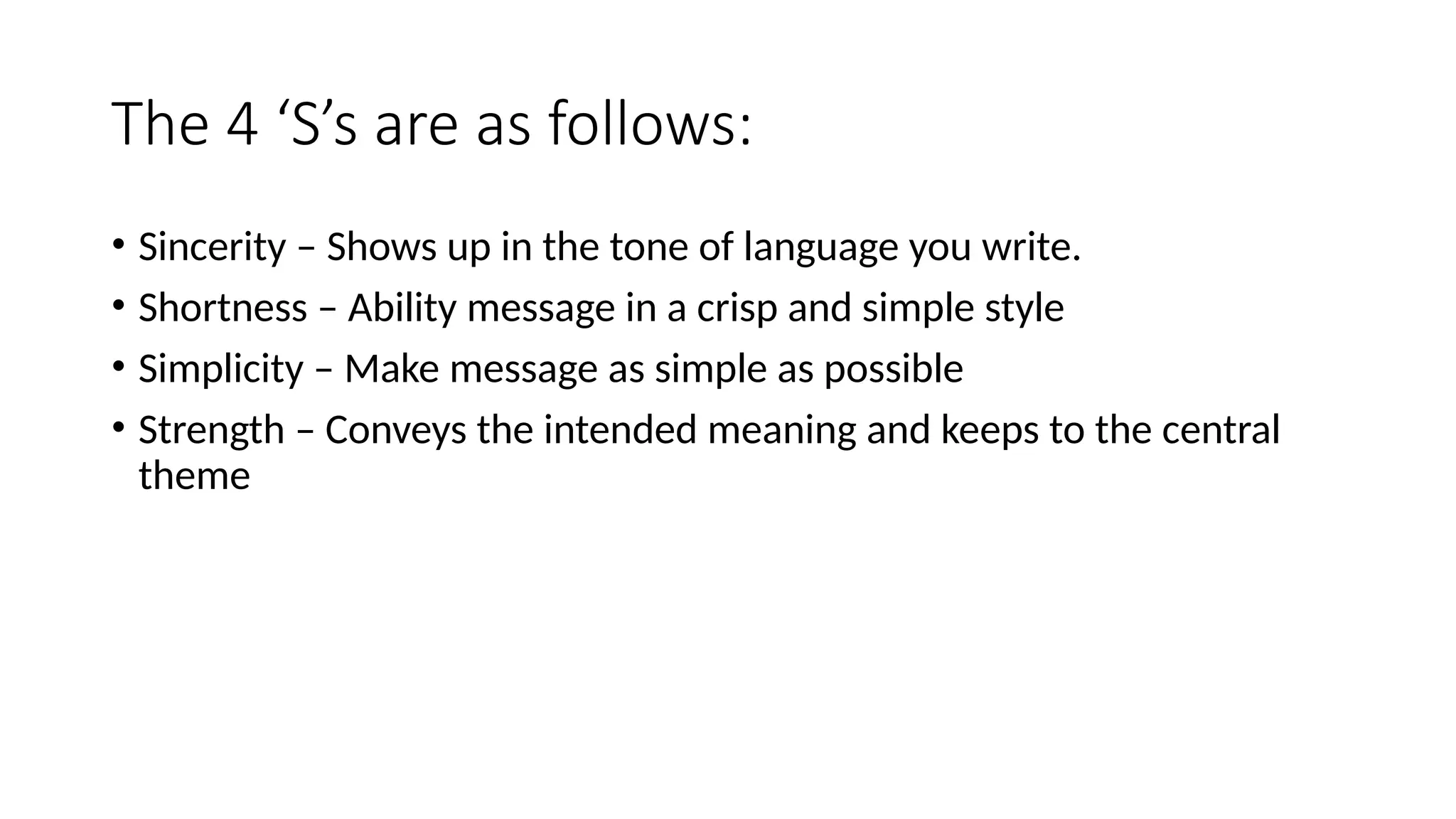
The 4 ‘S’s are as follows:
• Sincerity – Shows up in the tone of language you write.
• Shortness – Ability message in a crisp and simple style
• Simplicity – Make message as simple as possible
• Strength – Conveys the intended meaning and keeps to the central
theme
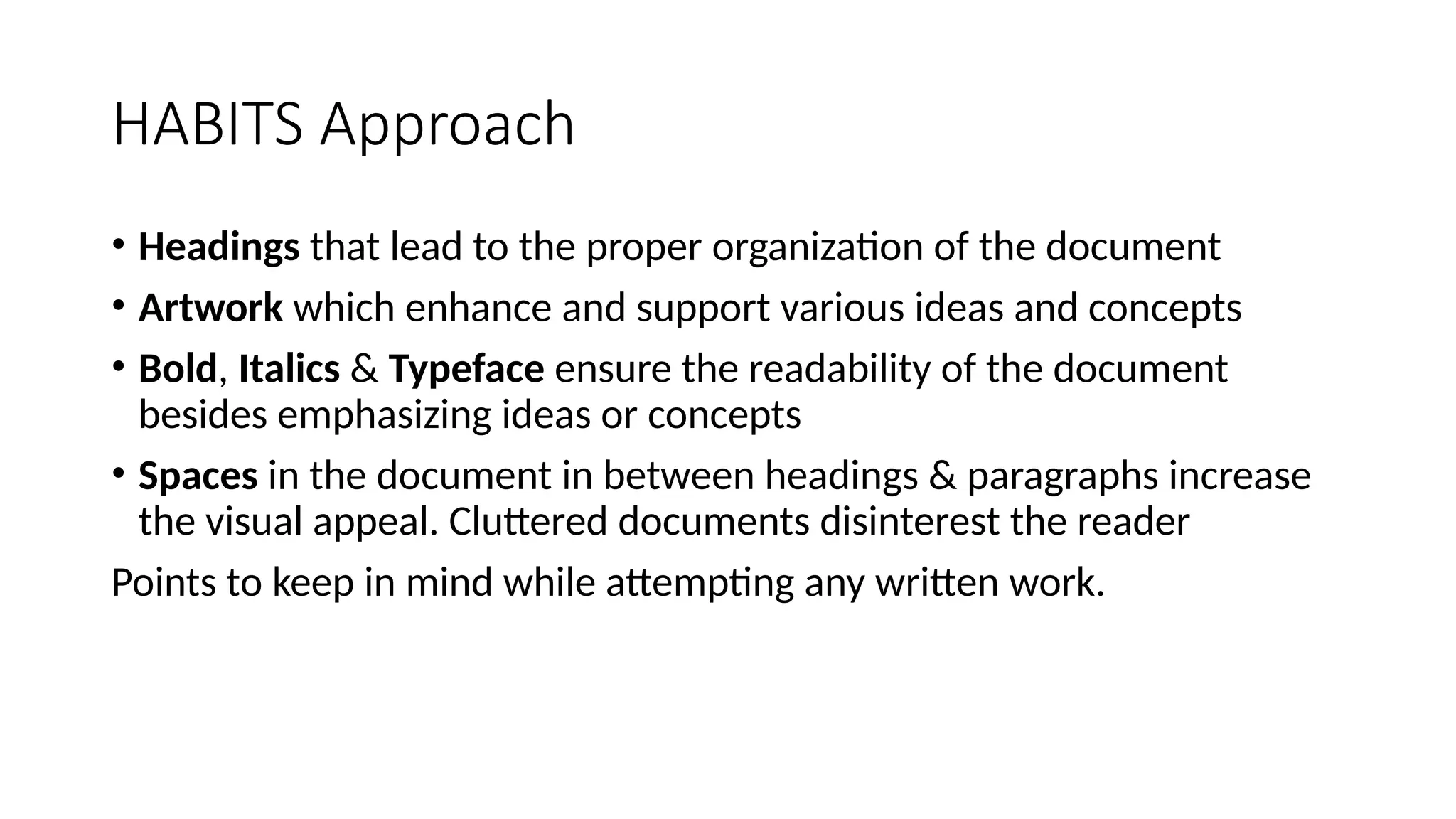
HABITS Approach
• Headings that lead to the proper organization of the document
• Artwork which enhance and support various ideas and concepts
• Bold, Italics & Typeface ensure the readability of the document
besides emphasizing ideas or concepts
• Spaces in the document in between headings & paragraphs increase
the visual appeal. Cluttered documents disinterest the reader
Points to keep in mind while attempting any written work.
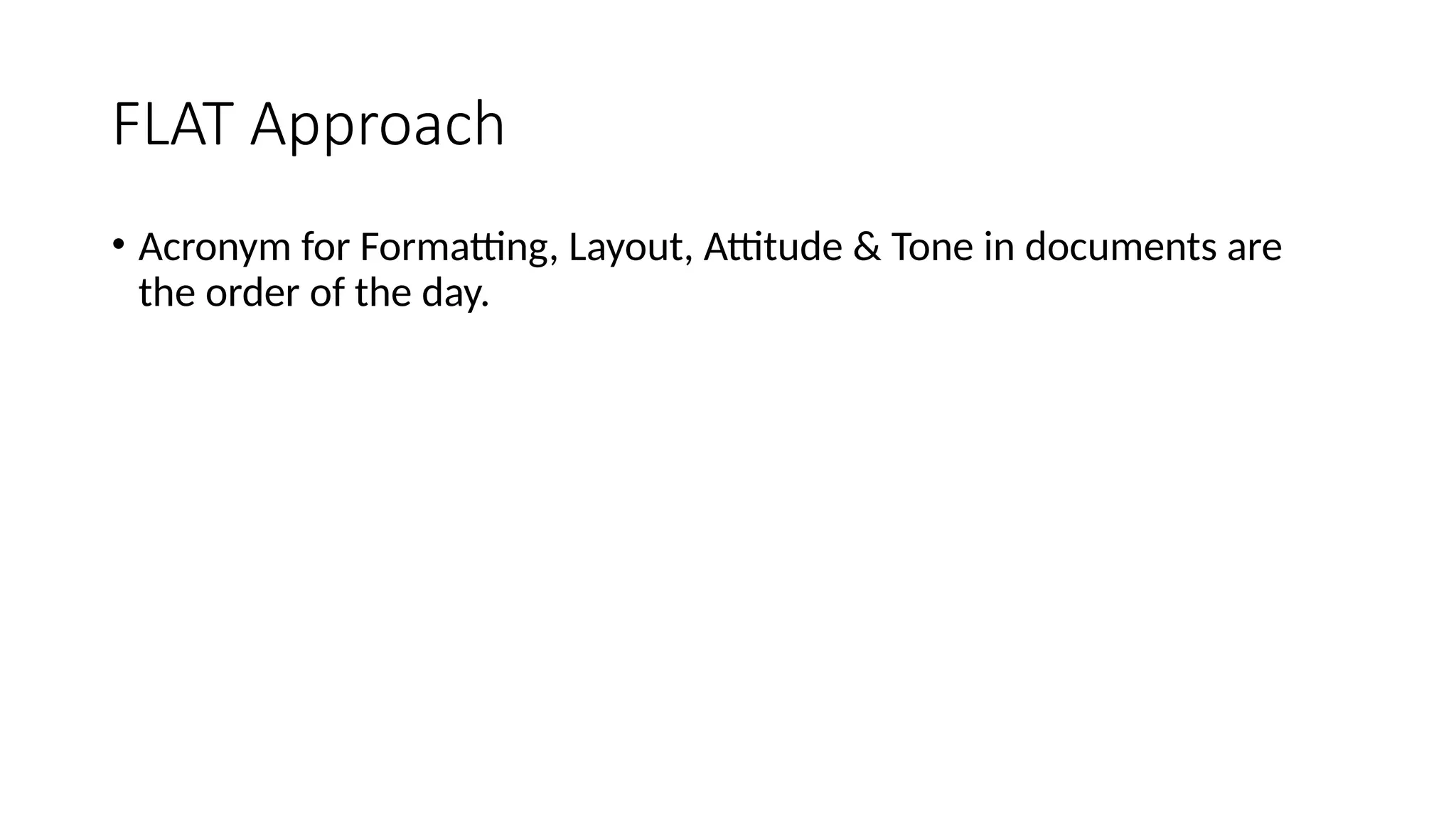
FLAT Approach
• Acronym for Formatting, Layout, Attitude & Tone in documents are
the order of the day.
Note Making & Mind Mapping
• Go online and read up material on both
• Make a small write up and give up a hard copy (handwritten)
7 C’s Of Communication , Business Communication

  • 1.
    7 C’s OfCommunication
  • 2.
    1. 7 C’s-Completeness The communication must be complete. It should convey all facts required by the audience  Cost saving as no crucial information is missing  A complete communication gives additional information wherever required.  Complete communication helps in better decision-making by the audience/readers/receivers of message  It persuades the audience.
  • 3.
    2. 7 C’s-Conciseness Conciseness means wordiness, i.e, communicating what you want to convey in least possible words without forgoing the other C’s of communication. Conciseness is a necessity for effective communication. It is both time-saving as well as cost-saving. It underlines and highlights the main message. Gives short and essential message in limited words to the audience. Concise message is more appealing and comprehensible to the audience. Concise message is non-repetitive in nature.
  • 4.
    3. 7 C’s-Consideration • Consideration implies “stepping into the shoes of others”. • Effective communication must take the audience into consideration, i.e., the audience’s viewpoints, background, mind-set, education level, etc. • Make an attempt to envisage your audience requirements. • Emphasize on “you” approach – Exhibit interest in your audience
  • 5.
    4. 7 C’s-Clarity Clarity implies emphasizing on a specific message or goal at a time, rather than trying to achieve too much at once. Clarity in communication has following features: It makes understanding easier. Complete clarity of thoughts and ideas enhances the meaning of message. Clear message makes use of exact, appropriate and concrete words
  • 6.
    5. 7 C’s-Concreteness Concrete communication implies being particular and clear rather than fuzzy and general. It increases the confidence. Concrete message has following features: Supported with specific facts and figures. Uses words that are clear that build the reputation. Concrete messages are not misinterpreted
  • 7.
    6. 7 C’s– Courtesy The message should show the sender’s expression as well as should respect the receiver. Courteous message has following features: • Consider both viewpoints • Message is positive & focused • Shows respect • Not biased
  • 8.
    7. 7 C’s-Correctness No grammatical errors in communication. Correct communication has following features: Is exact, correct and well-timed. It boosts up the confidence level. It has greater impact on the audience/readers. It checks for the precision and accurateness of facts and figures. It makes use of appropriate and correct language in the message
  • 9.
    7. 7 C’s-Correctness No grammatical errors in communication. Correct communication has following features: Is exact, correct and well-timed. It boosts up the confidence level. It has greater impact on the audience/readers. It checks for the precision and accurateness of facts and figures. It makes use of appropriate and correct language in the message
  • 10.
    The 4 ‘S’sare as follows: • Sincerity – Shows up in the tone of language you write. • Shortness – Ability message in a crisp and simple style • Simplicity – Make message as simple as possible • Strength – Conveys the intended meaning and keeps to the central theme
  • 11.
    HABITS Approach • Headingsthat lead to the proper organization of the document • Artwork which enhance and support various ideas and concepts • Bold, Italics & Typeface ensure the readability of the document besides emphasizing ideas or concepts • Spaces in the document in between headings & paragraphs increase the visual appeal. Cluttered documents disinterest the reader Points to keep in mind while attempting any written work.
  • 12.
    FLAT Approach • Acronymfor Formatting, Layout, Attitude & Tone in documents are the order of the day.
  • 13.
    Note Making &Mind Mapping • Go online and read up material on both • Make a small write up and give up a hard copy (handwritten)