Culture in Decline?
 Technology and the transition to
         clean energy
           12-12-12
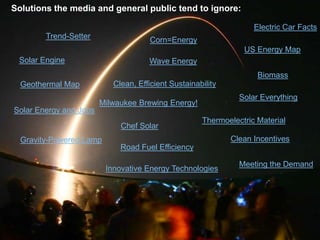
Solutions the media and general public tend to ignore:

                                                                   Electric Car Facts
        Trend-Setter                  Corn=Energy
                                                                US Energy Map
 Solar Engine                        Wave Energy
                                                                    Biomass
  Geothermal Map           Clean, Efficient Sustainability
                                                               Solar Everything
                        Milwaukee Brewing Energy!
Solar Energy and Jobs
                                                     Thermoelectric Material
                             Chef Solar
  Gravity-Powered Lamp                                       Clean Incentives
                             Road Fuel Efficiency

                                                               Meeting the Demand
                         Innovative Energy Technologies
How Solar Energy Benefits us and our
                              planet; The Energy Department’s Office of
                              Energy Efficiency and Renewable Energy
                              Pros:
Triple Return on Investment: From 1975 to 2008, the Energy Department
spent about $2.3 billion on R&D to advance PV technology, with net
economic benefits totaling more than $15 billion with a conservatively-
estimated 17 percent internal rate of return.
50 Percent Cost Reduction: Since the Energy Department began investing
in solar research development and deployment, production costs per watt of
photovoltaic (PV) modules fell from more than $100 in the mid-1970s to
between $1 and $2 per watt by 2008 with system reliability increasing from 2
to 25 years during this same period.
Significant Emission Reduction: About 6.8 million tons of CO2 emissions
were avoided, with approximately 1.1 million tons of those emissions directly
attributable to EERE‟s investments.
Knowledge and Technology Transfer: Energy Department support of early
solar PV research led to foundational knowledge that drives today‟s private
sector innovation, including an estimated 274 patent families.
Innovation Spillover: Over time, the influence of Energy Department-funded
thin film PV research has spread extensively to the broader semiconductor
device industry.
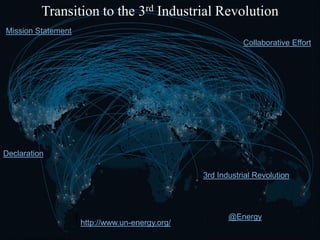
Transition to the 3rd Industrial Revolution
Mission Statement
                                                           Collaborative Effort


Declaration

                                                3rd Industrial Revolution


                                                       @Energy
                    http://www.un-energy.org/
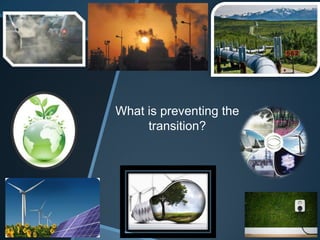
What is preventing the
     transition?
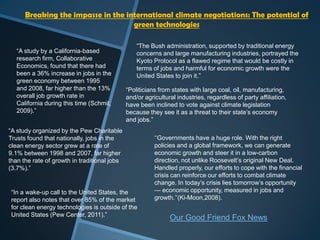
Breaking the impasse in the international climate negotiations: The potential of
                                    green technologies

                                                  “The Bush administration, supported by traditional energy
   “A study by a California-based                 concerns and large manufacturing industries, portrayed the
   research firm, Collaborative                   Kyoto Protocol as a flawed regime that would be costly in
   Economics, found that there had                terms of jobs and harmful for economic growth were the
   been a 36% increase in jobs in the             United States to join it.”
   green economy between 1995
   and 2008, far higher than the 13%          “Politicians from states with large coal, oil, manufacturing,
   overall job growth rate in                 and/or agricultural industries, regardless of party affiliation,
   California during this time (Schmit,       have been inclined to vote against climate legislation
   2009).”                                    because they see it as a threat to their state‟s economy
                                              and jobs.”
“A study organized by the Pew Charitable
Trusts found that nationally, jobs in the                „„Governments have a huge role. With the right
clean energy sector grew at a rate of                    policies and a global framework, we can generate
9.1% between 1998 and 2007, far higher                   economic growth and steer it in a low-carbon
than the rate of growth in traditional jobs              direction, not unlike Roosevelt‟s original New Deal.
(3.7%).”                                                 Handled properly, our efforts to cope with the financial
                                                         crisis can reinforce our efforts to combat climate
                                                         change. In today‟s crisis lies tomorrow‟s opportunity
 “In a wake-up call to the United States, the            — economic opportunity, measured in jobs and
 report also notes that over 85% of the market           growth.‟‟(Ki-Moon,2008).
 for clean energy technologies is outside of the
 United States (Pew Center, 2011).”
                                                               Our Good Friend Fox News
UNFCC


                   Kyoto Treaty

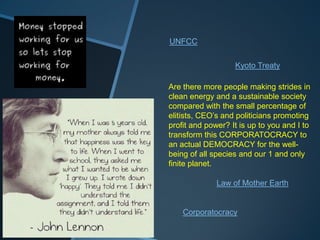
Are there more people making strides in
clean energy and a sustainable society
compared with the small percentage of
elitists, CEO‟s and politicians promoting
profit and power? It is up to you and I to
transform this CORPORATOCRACY to
an actual DEMOCRACY for the well-
being of all species and our 1 and only
finite planet.

              Law of Mother Earth


    Corporatocracy
Surviving Progress
       Prophets of Doom Episode   (The Futurists)

                 The Zeitgeist Movement

660 presentation final

  • 1.
    Culture in Decline? Technology and the transition to clean energy 12-12-12
  • 2.
    Solutions the mediaand general public tend to ignore: Electric Car Facts Trend-Setter Corn=Energy US Energy Map Solar Engine Wave Energy Biomass Geothermal Map Clean, Efficient Sustainability Solar Everything Milwaukee Brewing Energy! Solar Energy and Jobs Thermoelectric Material Chef Solar Gravity-Powered Lamp Clean Incentives Road Fuel Efficiency Meeting the Demand Innovative Energy Technologies
  • 3.
    How Solar EnergyBenefits us and our planet; The Energy Department’s Office of Energy Efficiency and Renewable Energy Pros: Triple Return on Investment: From 1975 to 2008, the Energy Department spent about $2.3 billion on R&D to advance PV technology, with net economic benefits totaling more than $15 billion with a conservatively- estimated 17 percent internal rate of return. 50 Percent Cost Reduction: Since the Energy Department began investing in solar research development and deployment, production costs per watt of photovoltaic (PV) modules fell from more than $100 in the mid-1970s to between $1 and $2 per watt by 2008 with system reliability increasing from 2 to 25 years during this same period. Significant Emission Reduction: About 6.8 million tons of CO2 emissions were avoided, with approximately 1.1 million tons of those emissions directly attributable to EERE‟s investments. Knowledge and Technology Transfer: Energy Department support of early solar PV research led to foundational knowledge that drives today‟s private sector innovation, including an estimated 274 patent families. Innovation Spillover: Over time, the influence of Energy Department-funded thin film PV research has spread extensively to the broader semiconductor device industry.
  • 4.
    Transition to the3rd Industrial Revolution Mission Statement Collaborative Effort Declaration 3rd Industrial Revolution @Energy http://www.un-energy.org/
  • 5.
    What is preventingthe transition?
  • 6.
    Breaking the impassein the international climate negotiations: The potential of green technologies “The Bush administration, supported by traditional energy “A study by a California-based concerns and large manufacturing industries, portrayed the research firm, Collaborative Kyoto Protocol as a flawed regime that would be costly in Economics, found that there had terms of jobs and harmful for economic growth were the been a 36% increase in jobs in the United States to join it.” green economy between 1995 and 2008, far higher than the 13% “Politicians from states with large coal, oil, manufacturing, overall job growth rate in and/or agricultural industries, regardless of party affiliation, California during this time (Schmit, have been inclined to vote against climate legislation 2009).” because they see it as a threat to their state‟s economy and jobs.” “A study organized by the Pew Charitable Trusts found that nationally, jobs in the „„Governments have a huge role. With the right clean energy sector grew at a rate of policies and a global framework, we can generate 9.1% between 1998 and 2007, far higher economic growth and steer it in a low-carbon than the rate of growth in traditional jobs direction, not unlike Roosevelt‟s original New Deal. (3.7%).” Handled properly, our efforts to cope with the financial crisis can reinforce our efforts to combat climate change. In today‟s crisis lies tomorrow‟s opportunity “In a wake-up call to the United States, the — economic opportunity, measured in jobs and report also notes that over 85% of the market growth.‟‟(Ki-Moon,2008). for clean energy technologies is outside of the United States (Pew Center, 2011).” Our Good Friend Fox News
  • 7.
    UNFCC Kyoto Treaty Are there more people making strides in clean energy and a sustainable society compared with the small percentage of elitists, CEO‟s and politicians promoting profit and power? It is up to you and I to transform this CORPORATOCRACY to an actual DEMOCRACY for the well- being of all species and our 1 and only finite planet. Law of Mother Earth Corporatocracy
  • 8.
    Surviving Progress Prophets of Doom Episode (The Futurists) The Zeitgeist Movement