th
65

Annual Human Rights Day

2013 Annual Human Rights Day
December 10, 2013
Human Rights Commission & Des Moines Public Library
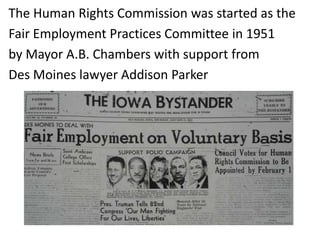
The Human Rights Commission was started as the
Fair Employment Practices Committee in 1951
by Mayor A.B. Chambers with support from
Des Moines lawyer Addison Parker
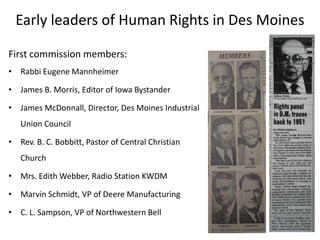
Early leaders of Human Rights in Des Moines
First commission members:
• Rabbi Eugene Mannheimer

• James B. Morris, Editor of Iowa Bystander
• James McDonnall, Director, Des Moines Industrial
Union Council

• Rev. B. C. Bobbitt, Pastor of Central Christian
Church
• Mrs. Edith Webber, Radio Station KWDM

• Marvin Schmidt, VP of Deere Manufacturing
• C. L. Sampson, VP of Northwestern Bell
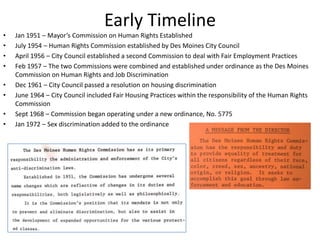
Early Timeline
•
•
•
•

•
•
•
•

Jan 1951 – Mayor’s Commission on Human Rights Established
July 1954 – Human Rights Commission established by Des Moines City Council
April 1956 – City Council established a second Commission to deal with Fair Employment Practices
Feb 1957 – The two Commissions were combined and established under ordinance as the Des Moines
Commission on Human Rights and Job Discrimination
Dec 1961 – City Council passed a resolution on housing discrimination
June 1964 – City Council included Fair Housing Practices within the responsibility of the Human Rights
Commission
Sept 1968 – Commission began operating under a new ordinance, No. 5775
Jan 1972 – Sex discrimination added to the ordinance
The Commission

-1952
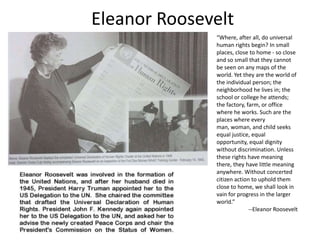
Eleanor Roosevelt
“Where, after all, do universal
human rights begin? In small
places, close to home - so close
and so small that they cannot
be seen on any maps of the
world. Yet they are the world of
the individual person; the
neighborhood he lives in; the
school or college he attends;
the factory, farm, or office
where he works. Such are the
places where every
man, woman, and child seeks
equal justice, equal
opportunity, equal dignity
without discrimination. Unless
these rights have meaning
there, they have little meaning
anywhere. Without concerted
citizen action to uphold them
close to home, we shall look in
vain for progress in the larger
world.”
--Eleanor Roosevelt
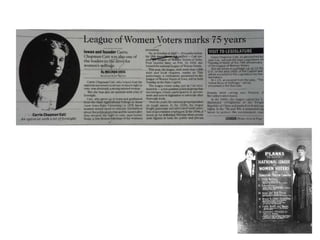
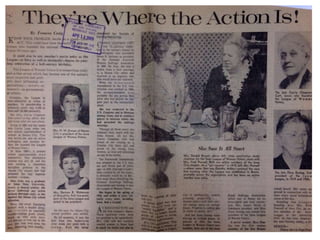
League of Women Voters
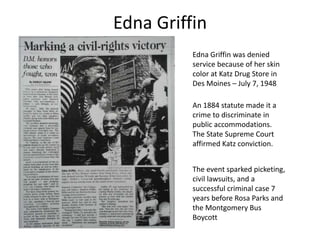
Edna Griffin
Edna Griffin was denied
service because of her skin
color at Katz Drug Store in
Des Moines – July 7, 1948
An 1884 statute made it a
crime to discriminate in
public accommodations.
The State Supreme Court
affirmed Katz conviction.
The event sparked picketing,
civil lawsuits, and a
successful criminal case 7
years before Rosa Parks and
the Montgomery Bus
Boycott
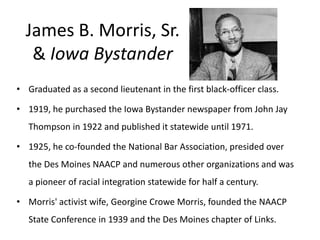
James B. Morris, Sr.
& Iowa Bystander
• Graduated as a second lieutenant in the first black-officer class.
• 1919, he purchased the Iowa Bystander newspaper from John Jay
Thompson in 1922 and published it statewide until 1971.

• 1925, he co-founded the National Bar Association, presided over
the Des Moines NAACP and numerous other organizations and was
a pioneer of racial integration statewide for half a century.
• Morris' activist wife, Georgine Crowe Morris, founded the NAACP
State Conference in 1939 and the Des Moines chapter of Links.
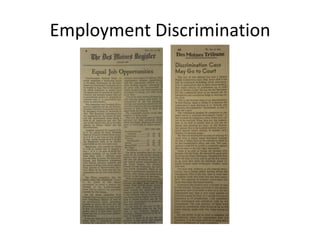
Employment Discrimination
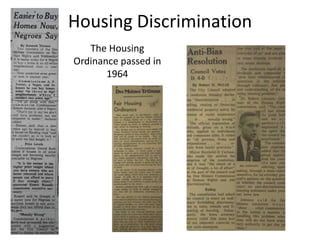
Housing Discrimination
The Housing
Ordinance passed in
1964
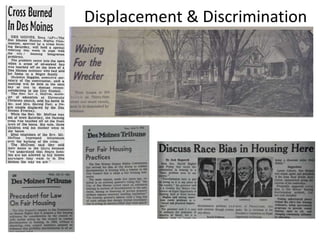
Freeway Displacement
Displacement & Discrimination
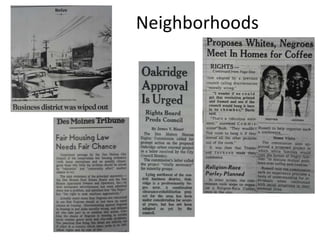
Neighborhoods
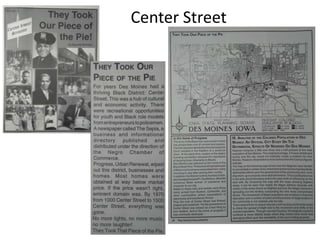
Center Street
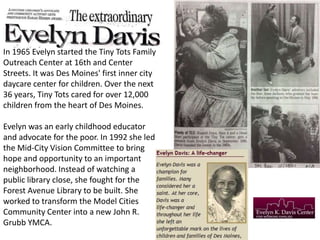
In 1965 Evelyn started the Tiny Tots Family
Outreach Center at 16th and Center
Streets. It was Des Moines' first inner city
daycare center for children. Over the next
36 years, Tiny Tots cared for over 12,000
children from the heart of Des Moines.

Evelyn was an early childhood educator
and advocate for the poor. In 1992 she led
the Mid-City Vision Committee to bring
hope and opportunity to an important
neighborhood. Instead of watching a
public library close, she fought for the
Forest Avenue Library to be built. She
worked to transform the Model Cities
Community Center into a new John R.
Grubb YMCA.
Tinker v. Des Moines Independent
Community School District, 393 U.S. 503
(1969)
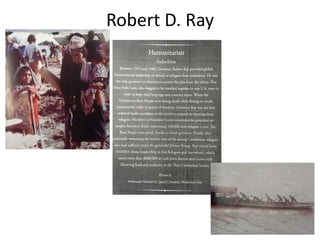
Robert D. Ray
Tai Dam
• Tai Dam leaders dedicated their new U.S. welcome center and
museum to Ray at the opening of the 7th annual festival at their Tai
Village in east Des Moines.
• “I didn’t wonder if I was doing the right thing when I helped the Tai
Dam, I accepted that as fact and I’ve never been sorry,” said Ray,
who served as Iowa’s governor from 1969 to 1983. “I thought ‘how
can we sit here with as much good as we have and let people die?’ I
just didn’t think we could do that as Iowans.”
• Refugees in the camps were split up to facilitate their resettlement
in distant lands. One group wrote a letter to every governor in the
U.S. asking to be kept together as a community. Only Ray
responded and his efforts contributed to the relocation of 8,000 Tai
Dam to the U.S. from 1975 to 1979.
• Governor Ray gave 1500 refugees a home in Iowa. There are now
about 8,000 Tai Dam living in Iowa.
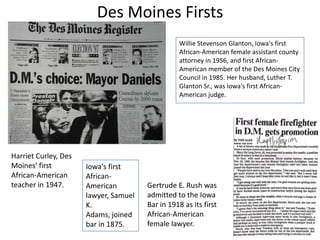
Des Moines Firsts
Willie Stevenson Glanton, Iowa's first
African-American female assistant county
attorney in 1956, and first AfricanAmerican member of the Des Moines City
Council in 1985. Her husband, Luther T.
Glanton Sr., was Iowa's first AfricanAmerican judge.

Harriet Curley, Des
Moines' first
African-American
teacher in 1947.

Iowa's first
AfricanAmerican
lawyer, Samuel
K.
Adams, joined
bar in 1875.

Gertrude E. Rush was
admitted to the Iowa
Bar in 1918 as its first
African-American
female lawyer.
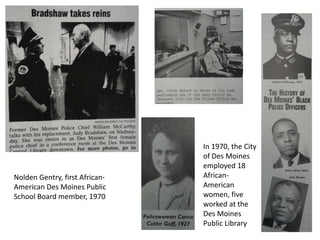
Nolden Gentry, first AfricanAmerican Des Moines Public
School Board member, 1970

In 1970, the City
of Des Moines
employed 18
AfricanAmerican
women, five
worked at the
Des Moines
Public Library
Latinos
• In 1910 there were only 590 Latino immigrants in the
entire state of Iowa.

• By 1920 this number had increased to more than
2,500. Mostly from Mexico, these immigrants worked
as farm laborers and others worked in railroad yards

• In the 1990s the Latino population grew by 153
percent to 83,000
• By 2000 Latinos became the state’s largest minority

group, representing nearly two percent of the Iowa
population.
Rob Barron
• The numbers of Latinos in elected office in Iowa are
still minuscule, but they’re starting to make their
presence felt at the precinct, city council, school board
and county levels.

• At least 11 serve already, including Rob Barron, who
won a seat on the Des Moines school board in
September 2013. He’s the first Latino elected citywide
in Des Moines history, according to LULAC.
Immigrants in Iowa
•

In the 1990 census, 42.8 percent of foreign-born Iowans came from Asia, such as
Tai Dam and Vietnamese refugees, and only 13.9 percent came from Latin
America.

•

In the 2000 census, 36 percent of foreign-born Iowans were from Latin America. In
Iowa’s Hispanic/Latino population (which includes Hispanics born in Iowa and the
United States) the largest group (61,154 or 74 percent) came from Mexico. Others

came from Cuba, Guatemala, El Salvador, Panama and other Latin American
nations.
•

According to the Iowa Bureau of Refugee Services, refugees settled in Iowa came
from Sudan, Ivory Coast, Somalia and other African nations, Russia and other parts
of the former Soviet Union, Vietnam, Cambodia and other parts of Southeast Asia,
Iraq, Haiti, Cuba and Bosnia and other places in the Balkans.
-IPTV.org
Americans with Disabilities Act
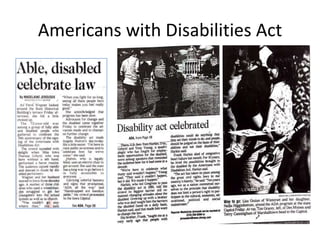
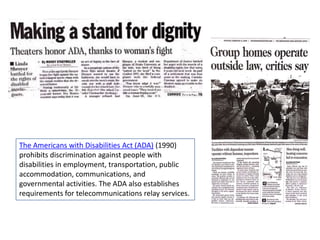
The Americans with Disabilities Act (ADA) (1990)
prohibits discrimination against people with
disabilities in employment, transportation, public
accommodation, communications, and
governmental activities. The ADA also establishes
requirements for telecommunications relay services.
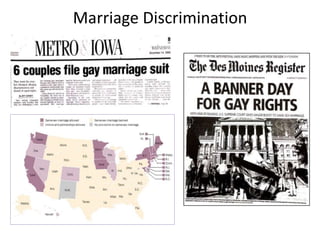
Marriage Discrimination
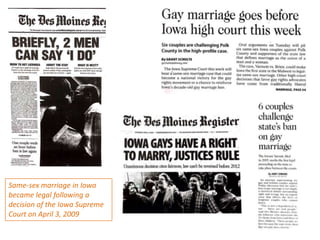
Same-sex marriage in Iowa
became legal following a
decision of the Iowa Supreme
Court on April 3, 2009
65th annual human rights day1

65th annual human rights day1

  • 1.
    th 65 Annual Human RightsDay 2013 Annual Human Rights Day December 10, 2013 Human Rights Commission & Des Moines Public Library
  • 2.
    The Human RightsCommission was started as the Fair Employment Practices Committee in 1951 by Mayor A.B. Chambers with support from Des Moines lawyer Addison Parker
  • 3.
    Early leaders ofHuman Rights in Des Moines First commission members: • Rabbi Eugene Mannheimer • James B. Morris, Editor of Iowa Bystander • James McDonnall, Director, Des Moines Industrial Union Council • Rev. B. C. Bobbitt, Pastor of Central Christian Church • Mrs. Edith Webber, Radio Station KWDM • Marvin Schmidt, VP of Deere Manufacturing • C. L. Sampson, VP of Northwestern Bell
  • 4.
    Early Timeline • • • • • • • • Jan 1951– Mayor’s Commission on Human Rights Established July 1954 – Human Rights Commission established by Des Moines City Council April 1956 – City Council established a second Commission to deal with Fair Employment Practices Feb 1957 – The two Commissions were combined and established under ordinance as the Des Moines Commission on Human Rights and Job Discrimination Dec 1961 – City Council passed a resolution on housing discrimination June 1964 – City Council included Fair Housing Practices within the responsibility of the Human Rights Commission Sept 1968 – Commission began operating under a new ordinance, No. 5775 Jan 1972 – Sex discrimination added to the ordinance
  • 5.
  • 7.
    Eleanor Roosevelt “Where, afterall, do universal human rights begin? In small places, close to home - so close and so small that they cannot be seen on any maps of the world. Yet they are the world of the individual person; the neighborhood he lives in; the school or college he attends; the factory, farm, or office where he works. Such are the places where every man, woman, and child seeks equal justice, equal opportunity, equal dignity without discrimination. Unless these rights have meaning there, they have little meaning anywhere. Without concerted citizen action to uphold them close to home, we shall look in vain for progress in the larger world.” --Eleanor Roosevelt
  • 8.
  • 11.
    Edna Griffin Edna Griffinwas denied service because of her skin color at Katz Drug Store in Des Moines – July 7, 1948 An 1884 statute made it a crime to discriminate in public accommodations. The State Supreme Court affirmed Katz conviction. The event sparked picketing, civil lawsuits, and a successful criminal case 7 years before Rosa Parks and the Montgomery Bus Boycott
  • 12.
    James B. Morris,Sr. & Iowa Bystander • Graduated as a second lieutenant in the first black-officer class. • 1919, he purchased the Iowa Bystander newspaper from John Jay Thompson in 1922 and published it statewide until 1971. • 1925, he co-founded the National Bar Association, presided over the Des Moines NAACP and numerous other organizations and was a pioneer of racial integration statewide for half a century. • Morris' activist wife, Georgine Crowe Morris, founded the NAACP State Conference in 1939 and the Des Moines chapter of Links.
  • 13.
  • 14.
  • 15.
  • 16.
  • 17.
  • 18.
  • 19.
    In 1965 Evelynstarted the Tiny Tots Family Outreach Center at 16th and Center Streets. It was Des Moines' first inner city daycare center for children. Over the next 36 years, Tiny Tots cared for over 12,000 children from the heart of Des Moines. Evelyn was an early childhood educator and advocate for the poor. In 1992 she led the Mid-City Vision Committee to bring hope and opportunity to an important neighborhood. Instead of watching a public library close, she fought for the Forest Avenue Library to be built. She worked to transform the Model Cities Community Center into a new John R. Grubb YMCA.
  • 20.
    Tinker v. DesMoines Independent Community School District, 393 U.S. 503 (1969)
  • 21.
  • 22.
    Tai Dam • TaiDam leaders dedicated their new U.S. welcome center and museum to Ray at the opening of the 7th annual festival at their Tai Village in east Des Moines. • “I didn’t wonder if I was doing the right thing when I helped the Tai Dam, I accepted that as fact and I’ve never been sorry,” said Ray, who served as Iowa’s governor from 1969 to 1983. “I thought ‘how can we sit here with as much good as we have and let people die?’ I just didn’t think we could do that as Iowans.” • Refugees in the camps were split up to facilitate their resettlement in distant lands. One group wrote a letter to every governor in the U.S. asking to be kept together as a community. Only Ray responded and his efforts contributed to the relocation of 8,000 Tai Dam to the U.S. from 1975 to 1979. • Governor Ray gave 1500 refugees a home in Iowa. There are now about 8,000 Tai Dam living in Iowa.
  • 23.
    Des Moines Firsts WillieStevenson Glanton, Iowa's first African-American female assistant county attorney in 1956, and first AfricanAmerican member of the Des Moines City Council in 1985. Her husband, Luther T. Glanton Sr., was Iowa's first AfricanAmerican judge. Harriet Curley, Des Moines' first African-American teacher in 1947. Iowa's first AfricanAmerican lawyer, Samuel K. Adams, joined bar in 1875. Gertrude E. Rush was admitted to the Iowa Bar in 1918 as its first African-American female lawyer.
  • 24.
    Nolden Gentry, firstAfricanAmerican Des Moines Public School Board member, 1970 In 1970, the City of Des Moines employed 18 AfricanAmerican women, five worked at the Des Moines Public Library
  • 25.
    Latinos • In 1910there were only 590 Latino immigrants in the entire state of Iowa. • By 1920 this number had increased to more than 2,500. Mostly from Mexico, these immigrants worked as farm laborers and others worked in railroad yards • In the 1990s the Latino population grew by 153 percent to 83,000 • By 2000 Latinos became the state’s largest minority group, representing nearly two percent of the Iowa population.
  • 26.
    Rob Barron • Thenumbers of Latinos in elected office in Iowa are still minuscule, but they’re starting to make their presence felt at the precinct, city council, school board and county levels. • At least 11 serve already, including Rob Barron, who won a seat on the Des Moines school board in September 2013. He’s the first Latino elected citywide in Des Moines history, according to LULAC.
  • 27.
    Immigrants in Iowa • Inthe 1990 census, 42.8 percent of foreign-born Iowans came from Asia, such as Tai Dam and Vietnamese refugees, and only 13.9 percent came from Latin America. • In the 2000 census, 36 percent of foreign-born Iowans were from Latin America. In Iowa’s Hispanic/Latino population (which includes Hispanics born in Iowa and the United States) the largest group (61,154 or 74 percent) came from Mexico. Others came from Cuba, Guatemala, El Salvador, Panama and other Latin American nations. • According to the Iowa Bureau of Refugee Services, refugees settled in Iowa came from Sudan, Ivory Coast, Somalia and other African nations, Russia and other parts of the former Soviet Union, Vietnam, Cambodia and other parts of Southeast Asia, Iraq, Haiti, Cuba and Bosnia and other places in the Balkans. -IPTV.org
  • 28.
  • 30.
    The Americans withDisabilities Act (ADA) (1990) prohibits discrimination against people with disabilities in employment, transportation, public accommodation, communications, and governmental activities. The ADA also establishes requirements for telecommunications relay services.
  • 31.
  • 32.
    Same-sex marriage inIowa became legal following a decision of the Iowa Supreme Court on April 3, 2009