Expository Writing
What is Expository Writing?
• Expository writing is defined as presenting
reasons, explanations, or steps in a process
• Informational writing
• An expository essay should follow a logical
sequence and have three different main
points
• Logic and coherence is the main focus of an
expository essay
How is it Different?
• Expository writing does not tell a story
• Expository writing does not persuade a reader
but only gives facts and reasons
• Expository writing can also give the steps of a
process
Parts of the Essay
1. The Introduction
2. The Body Paragraphs
3. The Conclusion
Introduction
The first paragraph of an essay should introduce
the reader to the essay topic. It should create
interest in the essay, outline the writer’s main
ideas, and suggest how these ideas will be
presented within the body of the essay. The
introduction consists of three main elements: a
hook, building sentences, and a thesis
statement.
Introduction
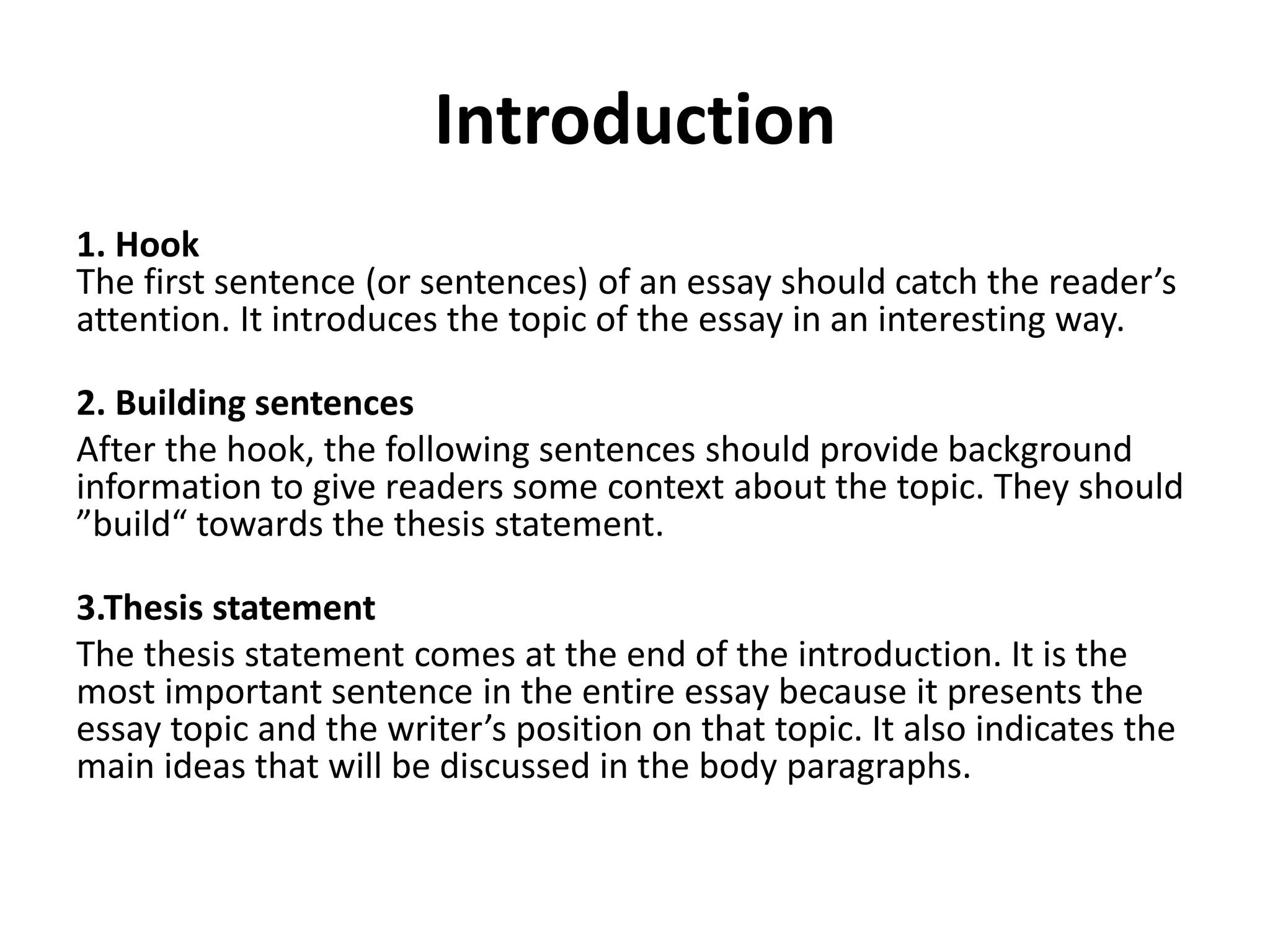
1. Hook
The first sentence (or sentences) of an essay should catch the reader’s
attention. It introduces the topic of the essay in an interesting way.
2. Building sentences
After the hook, the following sentences should provide background
information to give readers some context about the topic. They should
”build“ towards the thesis statement.
3.Thesis statement
The thesis statement comes at the end of the introduction. It is the
most important sentence in the entire essay because it presents the
essay topic and the writer’s position on that topic. It also indicates the
main ideas that will be discussed in the body paragraphs.
The Body
The body of an essay consists of three
paragraphs. Each body paragraph explains in
detail one of the main ideas expressed in the
thesis statement. There are three parts to a
body paragraph: a topic sentence, supporting
sentences, and a concluding sentence.
The Body
1. Topic sentence The first sentence of a body paragraph
expresses the topic of the paragraph and provides a
controlling idea about the topic. All information in the
paragraph supports the controlling idea.
2. Supporting sentences Supporting sentences explain and
develop the topic sentence. They present logical thoughts,
evidence, and explanations in support of the controlling
idea.
3. Concluding sentence The paragraph may end with a
concluding thought on the paragraph topic. It may also
show a transition to the next paragraph.
The Conclusion
The concluding paragraph ends the essay by
reviewing the main ideas from each body
paragraph and leaving the reader with a final
thought. The conclusion consists of three
elements: a restated thesis, a summary of main
ideas, and a final thought.
The Conclusion
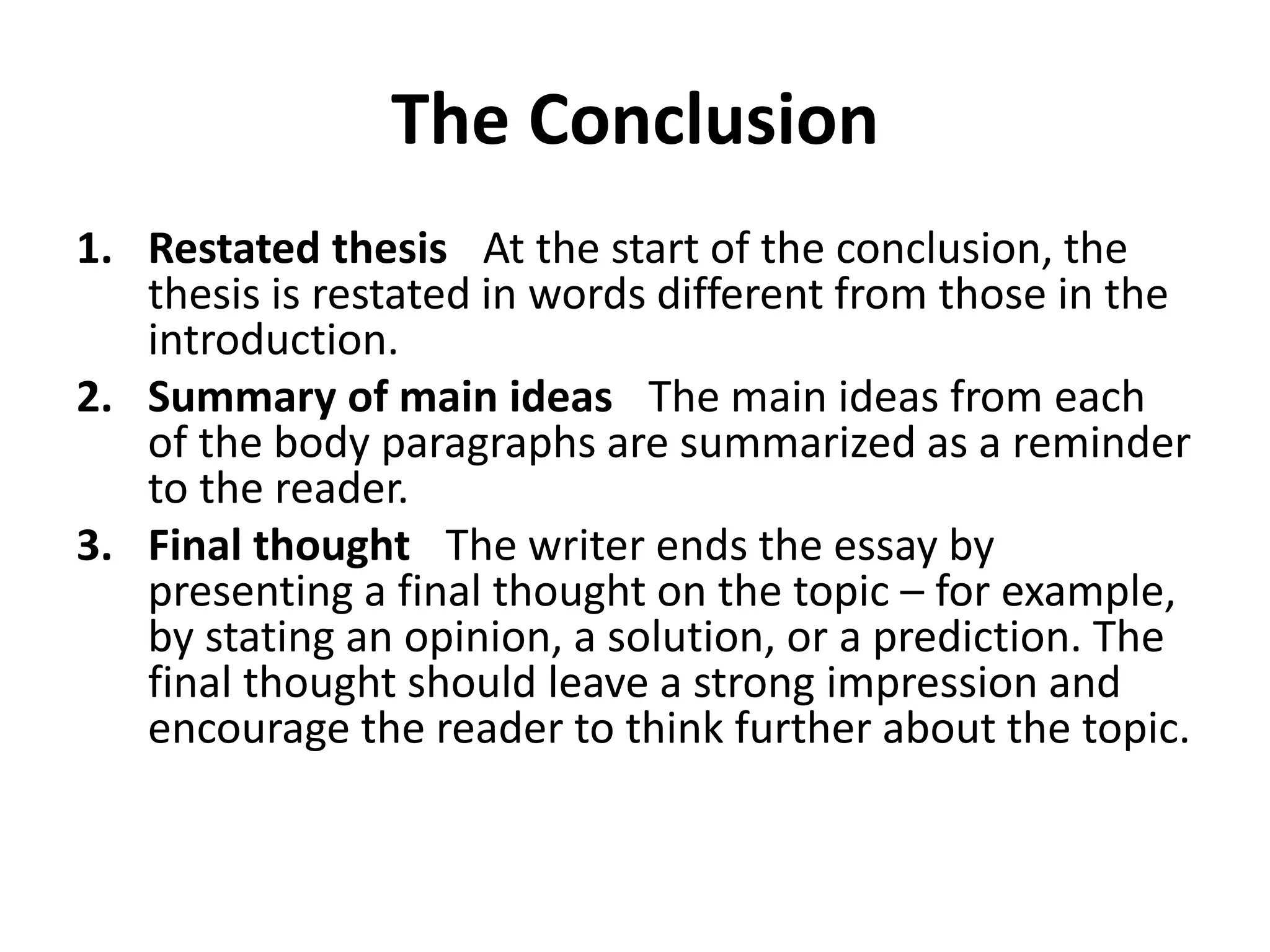
1. Restated thesis At the start of the conclusion, the
thesis is restated in words different from those in the
introduction.
2. Summary of main ideas The main ideas from each
of the body paragraphs are summarized as a reminder
to the reader.
3. Final thought The writer ends the essay by
presenting a final thought on the topic – for example,
by stating an opinion, a solution, or a prediction. The
final thought should leave a strong impression and
encourage the reader to think further about the topic.

5693341.ppt

  • 1.
  • 2.
    What is ExpositoryWriting? • Expository writing is defined as presenting reasons, explanations, or steps in a process • Informational writing • An expository essay should follow a logical sequence and have three different main points • Logic and coherence is the main focus of an expository essay
  • 3.
    How is itDifferent? • Expository writing does not tell a story • Expository writing does not persuade a reader but only gives facts and reasons • Expository writing can also give the steps of a process
  • 4.
    Parts of theEssay 1. The Introduction 2. The Body Paragraphs 3. The Conclusion
  • 5.
    Introduction The first paragraphof an essay should introduce the reader to the essay topic. It should create interest in the essay, outline the writer’s main ideas, and suggest how these ideas will be presented within the body of the essay. The introduction consists of three main elements: a hook, building sentences, and a thesis statement.
  • 6.
    Introduction 1. Hook The firstsentence (or sentences) of an essay should catch the reader’s attention. It introduces the topic of the essay in an interesting way. 2. Building sentences After the hook, the following sentences should provide background information to give readers some context about the topic. They should ”build“ towards the thesis statement. 3.Thesis statement The thesis statement comes at the end of the introduction. It is the most important sentence in the entire essay because it presents the essay topic and the writer’s position on that topic. It also indicates the main ideas that will be discussed in the body paragraphs.
  • 7.
    The Body The bodyof an essay consists of three paragraphs. Each body paragraph explains in detail one of the main ideas expressed in the thesis statement. There are three parts to a body paragraph: a topic sentence, supporting sentences, and a concluding sentence.
  • 8.
    The Body 1. Topicsentence The first sentence of a body paragraph expresses the topic of the paragraph and provides a controlling idea about the topic. All information in the paragraph supports the controlling idea. 2. Supporting sentences Supporting sentences explain and develop the topic sentence. They present logical thoughts, evidence, and explanations in support of the controlling idea. 3. Concluding sentence The paragraph may end with a concluding thought on the paragraph topic. It may also show a transition to the next paragraph.
  • 9.
    The Conclusion The concludingparagraph ends the essay by reviewing the main ideas from each body paragraph and leaving the reader with a final thought. The conclusion consists of three elements: a restated thesis, a summary of main ideas, and a final thought.
  • 10.
    The Conclusion 1. Restatedthesis At the start of the conclusion, the thesis is restated in words different from those in the introduction. 2. Summary of main ideas The main ideas from each of the body paragraphs are summarized as a reminder to the reader. 3. Final thought The writer ends the essay by presenting a final thought on the topic – for example, by stating an opinion, a solution, or a prediction. The final thought should leave a strong impression and encourage the reader to think further about the topic.