Chapter 18. Writing Formal Reports © 2007 by Bedford/St. Martin's 1
• informational report: presents results
• analytical report: presents results and draws
conclusions
• recommendation report: presents results, draws
conclusions, and makes recommendations
Understanding Types of Formal Reports
Chapter 18. Writing Formal Reports © 2007 by Bedford/St. Martin's 2
Analytical Reports Address Questions
• What is the best way to do Function X?
• What causes Situation X?
• What are the results of Situation X?
• Could we do Function X?
Chapter 18. Writing Formal Reports © 2007 by Bedford/St. Martin's 3
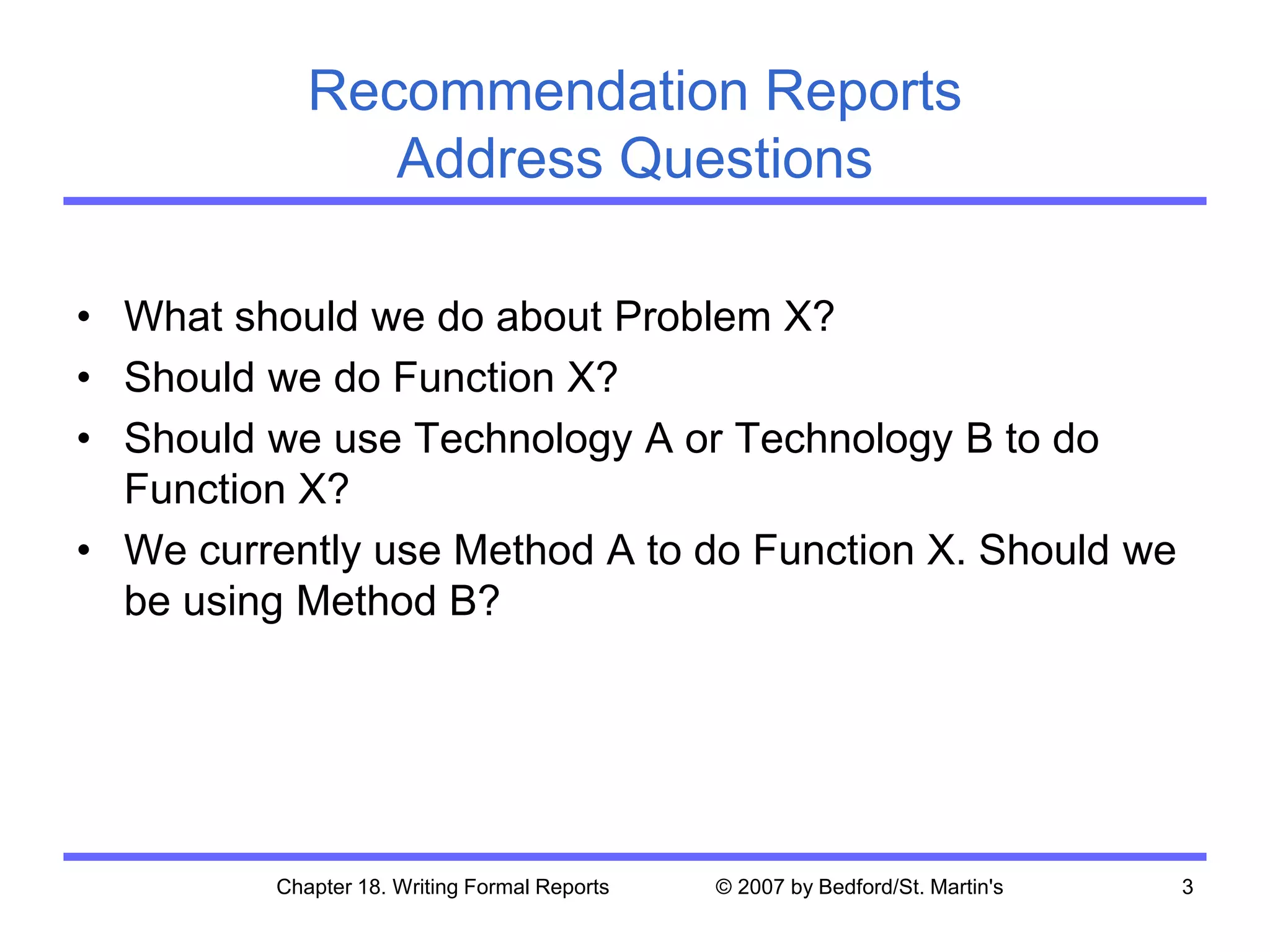
Recommendation Reports
Address Questions
• What should we do about Problem X?
• Should we do Function X?
• Should we use Technology A or Technology B to do
Function X?
• We currently use Method A to do Function X. Should we
be using Method B?
Chapter 18. Writing Formal Reports © 2007 by Bedford/St. Martin's 4
Using a Problem-Solving Model for
Preparing Formal Reports
• Analyze your audience.
• Analyze your purpose.
• Identify questions that need to be answered.
• Carry out appropriate research.
• Draw conclusions from the research.
• Formulate recommendations based on conclusions.
Chapter 18. Writing Formal Reports © 2007 by Bedford/St. Martin's 5
Feasibility Reports Answer
Three Kinds of Questions
• questions of possibility
• questions of economic wisdom
• questions of perception
Chapter 18. Writing Formal Reports © 2007 by Bedford/St. Martin's 6
• Identify the problem or opportunity.
• Establish criteria for responding to the problem or
opportunity.
• Determine the options.
• Study each option according to the criteria.
• Draw conclusions about each option.
• Formulate recommendations based on the
conclusions.
Steps in Preparing a Feasibility Report
Chapter 18. Writing Formal Reports © 2007 by Bedford/St. Martin's 7
Bias Can Creep In at Three Stages
• determining which criteria to examine
• deciding the range of values for each criterion
• assigning values to criteria
Chapter 18. Writing Formal Reports © 2007 by Bedford/St. Martin's 8
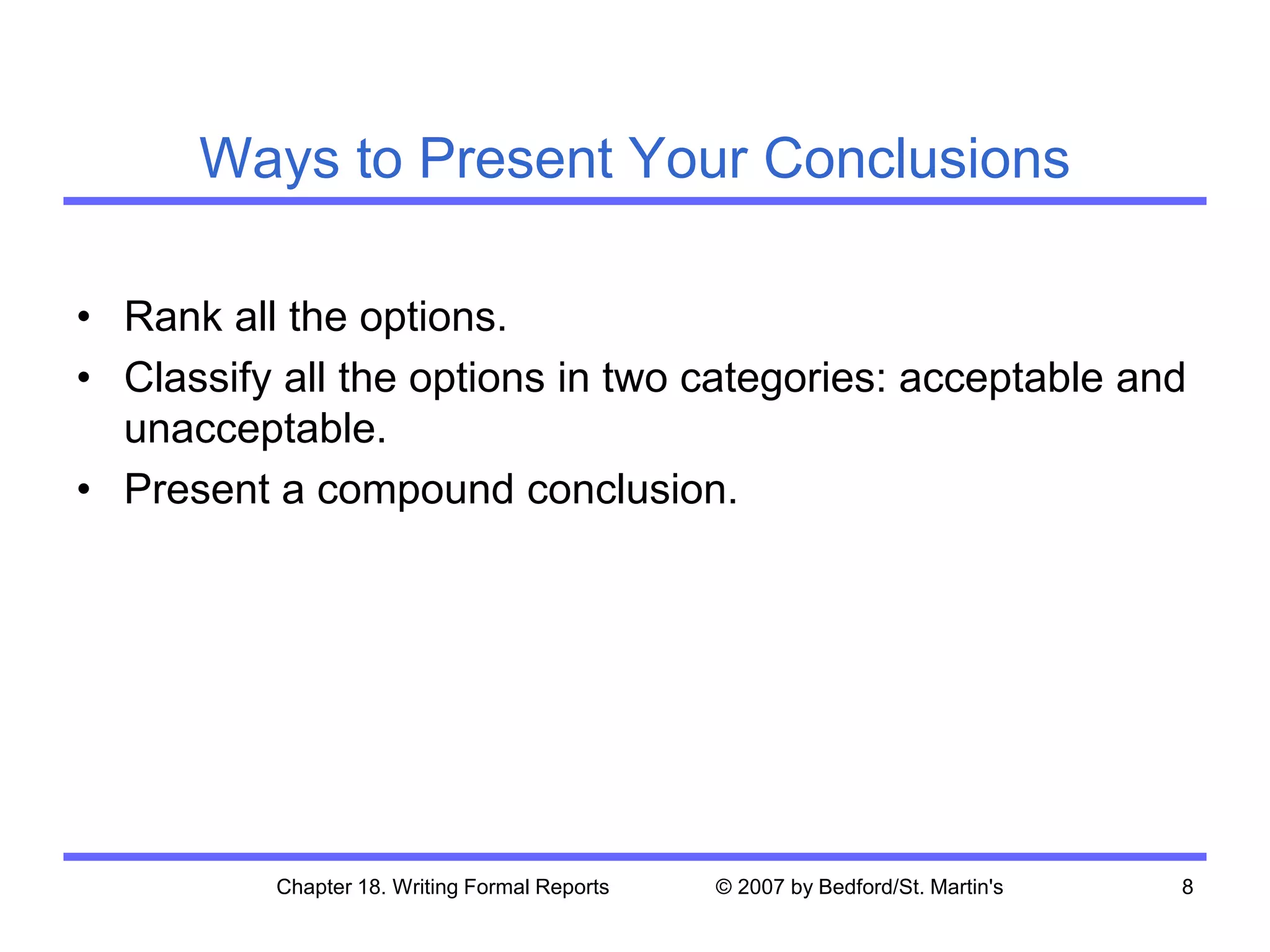
Ways to Present Your Conclusions
• Rank all the options.
• Classify all the options in two categories: acceptable and
unacceptable.
• Present a compound conclusion.
Chapter 18. Writing Formal Reports © 2007 by Bedford/St. Martin's 9
Steps in Writing Formal Reports
• writing the body of the report
• writing the front matter
• writing the back matter
Chapter 18. Writing Formal Reports © 2007 by Bedford/St. Martin's 10
Typical Body Elements
• introduction
• methods
• results
• conclusions
• recommendations
Chapter 18. Writing Formal Reports © 2007 by Bedford/St. Martin's 11
Questions to Consider in Writing Your
Introduction
• What is the subject of the report?
• What is the purpose of the report?
• What is the background of the report?
• What are your sources of information?
• What is the scope of the report?
Chapter 18. Writing Formal Reports © 2007 by Bedford/St. Martin's 12
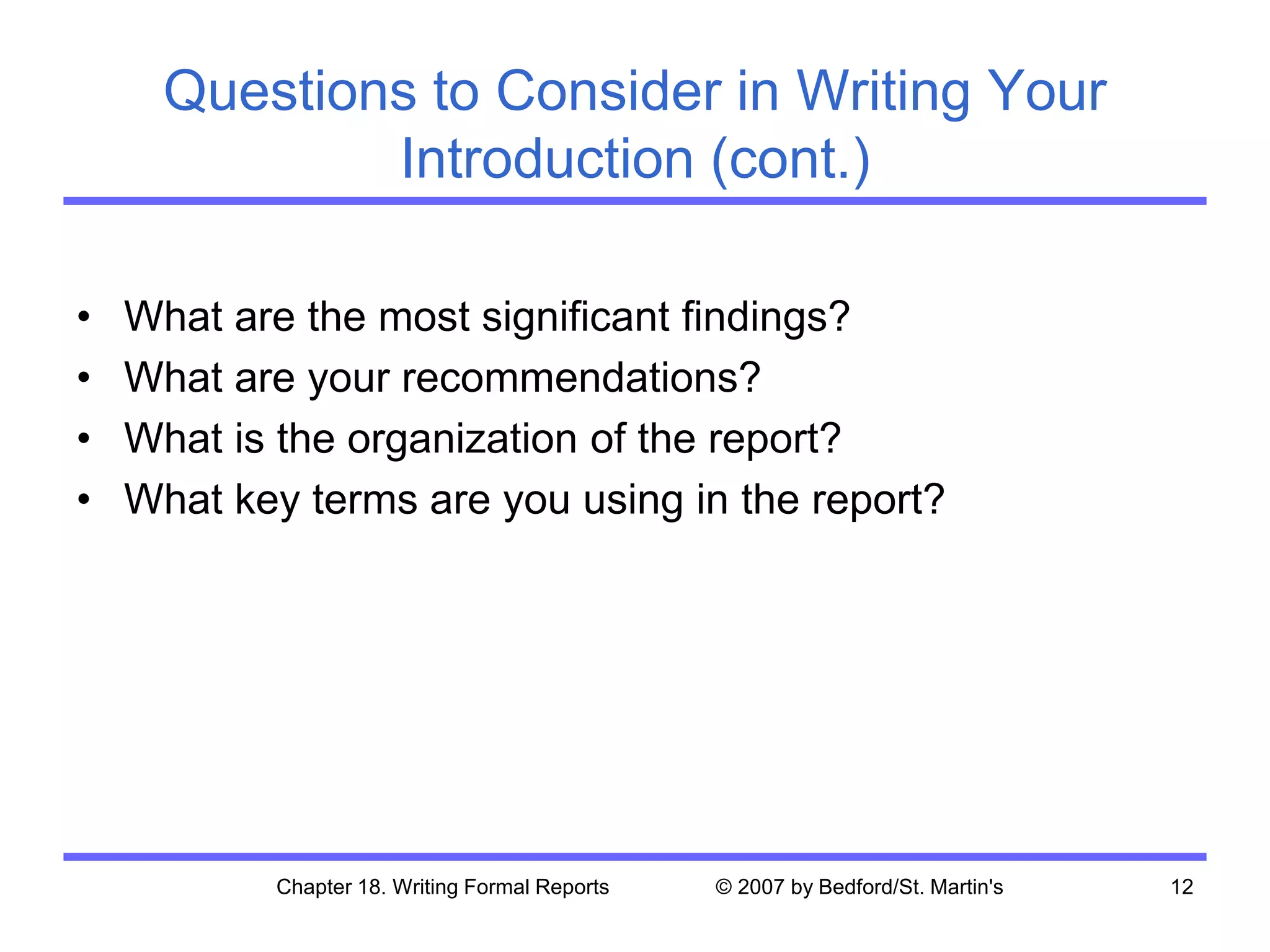
Questions to Consider in Writing Your
Introduction (cont.)
• What are the most significant findings?
• What are your recommendations?
• What is the organization of the report?
• What key terms are you using in the report?
Chapter 18. Writing Formal Reports © 2007 by Bedford/St. Martin's 13
Questions to Consider in Writing
the Body of Your Report
• Methods. What did you do?
• Results. What did you see?
• Conclusions. What does it mean?
• Recommendations. What should we do?
Chapter 18. Writing Formal Reports © 2007 by Bedford/St. Martin's 14
Factors to Consider in Writing
Recommendations
• content
• tone
• form
• location
Chapter 18. Writing Formal Reports © 2007 by Bedford/St. Martin's 15
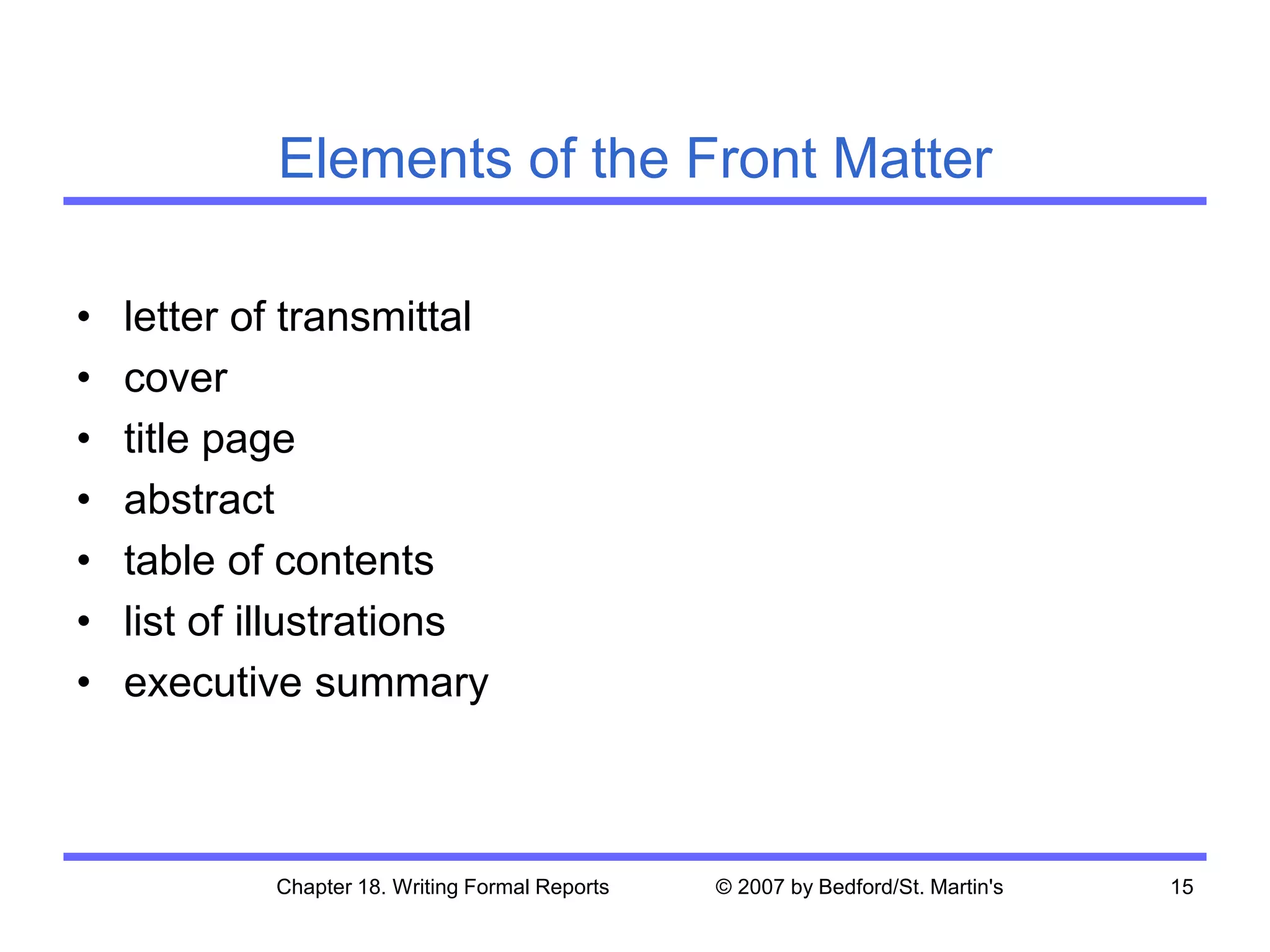
Elements of the Front Matter
• letter of transmittal
• cover
• title page
• abstract
• table of contents
• list of illustrations
• executive summary
Chapter 18. Writing Formal Reports © 2007 by Bedford/St. Martin's 16
Types of Abstracts
• A descriptive abstract describes the kinds of information
contained in the document.
• An informative abstract presents the major findings.
Chapter 18. Writing Formal Reports © 2007 by Bedford/St. Martin's 17
Guidelines for Writing an
Executive Summary
• Use specific evidence in describing the background.
• Be specific in describing the research.
• Describe the methods briefly.
• Describe the findings according to your readers’ needs.
• Ask an outside reader to review your draft.
Chapter 18. Writing Formal Reports © 2007 by Bedford/St. Martin's 18
Elements of the Back Matter
• glossary and list of symbols
• references
• appendices

15983531.ppt

  • 1.
    Chapter 18. WritingFormal Reports © 2007 by Bedford/St. Martin's 1 • informational report: presents results • analytical report: presents results and draws conclusions • recommendation report: presents results, draws conclusions, and makes recommendations Understanding Types of Formal Reports
  • 2.
    Chapter 18. WritingFormal Reports © 2007 by Bedford/St. Martin's 2 Analytical Reports Address Questions • What is the best way to do Function X? • What causes Situation X? • What are the results of Situation X? • Could we do Function X?
  • 3.
    Chapter 18. WritingFormal Reports © 2007 by Bedford/St. Martin's 3 Recommendation Reports Address Questions • What should we do about Problem X? • Should we do Function X? • Should we use Technology A or Technology B to do Function X? • We currently use Method A to do Function X. Should we be using Method B?
  • 4.
    Chapter 18. WritingFormal Reports © 2007 by Bedford/St. Martin's 4 Using a Problem-Solving Model for Preparing Formal Reports • Analyze your audience. • Analyze your purpose. • Identify questions that need to be answered. • Carry out appropriate research. • Draw conclusions from the research. • Formulate recommendations based on conclusions.
  • 5.
    Chapter 18. WritingFormal Reports © 2007 by Bedford/St. Martin's 5 Feasibility Reports Answer Three Kinds of Questions • questions of possibility • questions of economic wisdom • questions of perception
  • 6.
    Chapter 18. WritingFormal Reports © 2007 by Bedford/St. Martin's 6 • Identify the problem or opportunity. • Establish criteria for responding to the problem or opportunity. • Determine the options. • Study each option according to the criteria. • Draw conclusions about each option. • Formulate recommendations based on the conclusions. Steps in Preparing a Feasibility Report
  • 7.
    Chapter 18. WritingFormal Reports © 2007 by Bedford/St. Martin's 7 Bias Can Creep In at Three Stages • determining which criteria to examine • deciding the range of values for each criterion • assigning values to criteria
  • 8.
    Chapter 18. WritingFormal Reports © 2007 by Bedford/St. Martin's 8 Ways to Present Your Conclusions • Rank all the options. • Classify all the options in two categories: acceptable and unacceptable. • Present a compound conclusion.
  • 9.
    Chapter 18. WritingFormal Reports © 2007 by Bedford/St. Martin's 9 Steps in Writing Formal Reports • writing the body of the report • writing the front matter • writing the back matter
  • 10.
    Chapter 18. WritingFormal Reports © 2007 by Bedford/St. Martin's 10 Typical Body Elements • introduction • methods • results • conclusions • recommendations
  • 11.
    Chapter 18. WritingFormal Reports © 2007 by Bedford/St. Martin's 11 Questions to Consider in Writing Your Introduction • What is the subject of the report? • What is the purpose of the report? • What is the background of the report? • What are your sources of information? • What is the scope of the report?
  • 12.
    Chapter 18. WritingFormal Reports © 2007 by Bedford/St. Martin's 12 Questions to Consider in Writing Your Introduction (cont.) • What are the most significant findings? • What are your recommendations? • What is the organization of the report? • What key terms are you using in the report?
  • 13.
    Chapter 18. WritingFormal Reports © 2007 by Bedford/St. Martin's 13 Questions to Consider in Writing the Body of Your Report • Methods. What did you do? • Results. What did you see? • Conclusions. What does it mean? • Recommendations. What should we do?
  • 14.
    Chapter 18. WritingFormal Reports © 2007 by Bedford/St. Martin's 14 Factors to Consider in Writing Recommendations • content • tone • form • location
  • 15.
    Chapter 18. WritingFormal Reports © 2007 by Bedford/St. Martin's 15 Elements of the Front Matter • letter of transmittal • cover • title page • abstract • table of contents • list of illustrations • executive summary
  • 16.
    Chapter 18. WritingFormal Reports © 2007 by Bedford/St. Martin's 16 Types of Abstracts • A descriptive abstract describes the kinds of information contained in the document. • An informative abstract presents the major findings.
  • 17.
    Chapter 18. WritingFormal Reports © 2007 by Bedford/St. Martin's 17 Guidelines for Writing an Executive Summary • Use specific evidence in describing the background. • Be specific in describing the research. • Describe the methods briefly. • Describe the findings according to your readers’ needs. • Ask an outside reader to review your draft.
  • 18.
    Chapter 18. WritingFormal Reports © 2007 by Bedford/St. Martin's 18 Elements of the Back Matter • glossary and list of symbols • references • appendices