


Christy
Samira
Leon
Kareena
Philicia
Ayanna
Lilah
Remy
Donovan
Michael
Yamilee
Jessica
Leslie
Carlos
Bryan
Ricardo
Alexis
David
Jordan
Alejandra
Kathy
Diana
Ixza
Emily
Jaileen
Jeffrey
Wednesday
May 29, 2013
May is National Hamburger Month. What is your favorite
food? Which month would you like to designate to
honor this food? Explain.
Edward
Adrianette
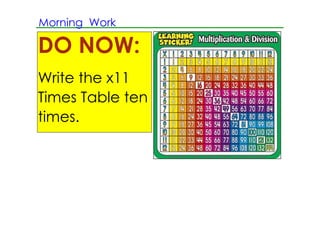
DO NOW:
Write the x11
Times Table ten
times.
Morning Work
Reading
Aim: Balloon
Flight (p. 710)
Talk About It
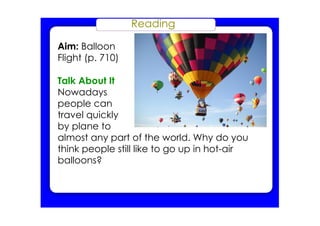
Nowadays
people can
travel quickly
by plane to
almost any part of the world. Why do you
think people still like to go up in hot­air
balloons?
Something that is launched is started in
motion or sent off.
Particles are small bits or pieces of an
element.
Things that are dense are thick or packed
closely together.
Inflate means to cause to swell by filling
with air or gas.
Anchored means held firmly in place.
Hydrogen is a light gas that burns easily.
Scientific means having to do with or used
in science.
A companion is a person or animal who
keeps somebody company.
Reading
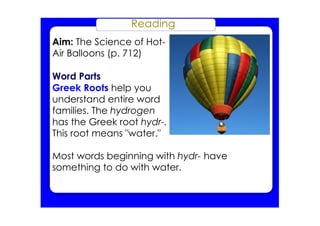
Aim: The Science of Hot­
Air Balloons (p. 712)
Word Parts
Greek Roots help you
understand entire word
families. The hydrogen
has the Greek root hydr­.
This root means "water."
Most words beginning with hydr­ have
something to do with water.
Reading
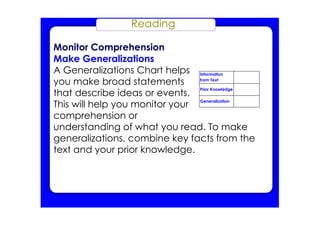
Monitor Comprehension
Make Generalizations
A Generalizations Chart helps
you make broad statements
that describe ideas or events.
This will help you monitor your
comprehension or
understanding of what you read. To make
generalizations, combine key facts from the
text and your prior knowledge.
Information
from Text
Prior Knowledge
Generalization
Reading
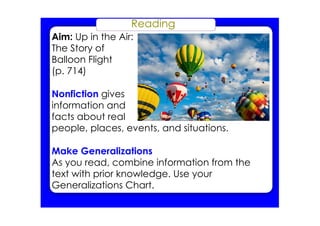
Aim: Up in the Air:
The Story of
Balloon Flight
(p. 714)
Nonfiction gives
information and
facts about real
people, places, events, and situations.
Make Generalizations
As you read, combine information from the
text with prior knowledge. Use your
Generalizations Chart.
altitude: the measurements of the distance
above Earth's surface.
chemist: an expert in chemistry, the science
that deals with the characteristics of
elements.
helium: a very light, colorless, odorless gas
that does not burn.
Reading
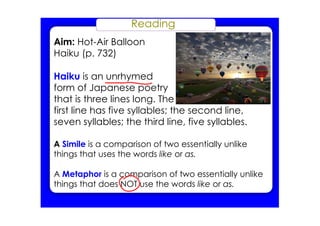
Aim: Hot­Air Balloon
Haiku (p. 732)
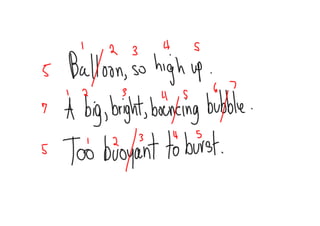
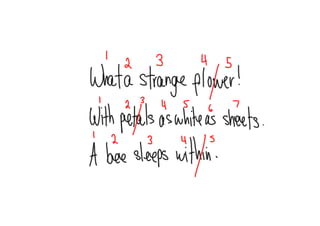
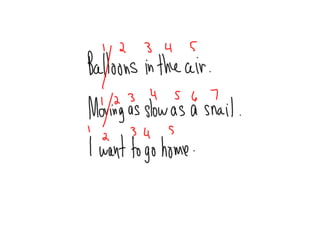
Haiku is an unrhymed
form of Japanese poetry
that is three lines long. The
first line has five syllables; the second line,
seven syllables; the third line, five syllables.
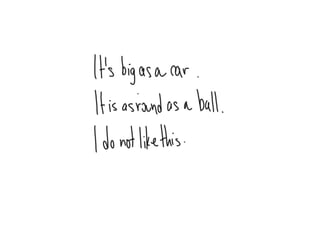
A Simile is a comparison of two essentially unlike
things that uses the words like or as.
A Metaphor is a comparison of two essentially unlike
things that does NOT use the words like or as.
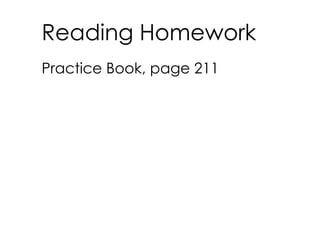
Reading Homework
Practice Book, page 211
Math
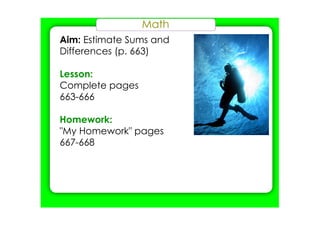
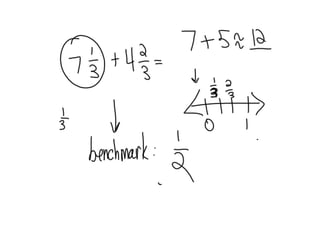
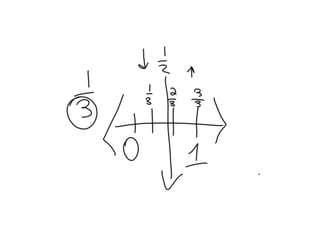
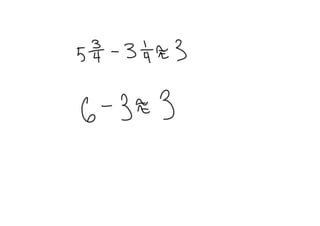
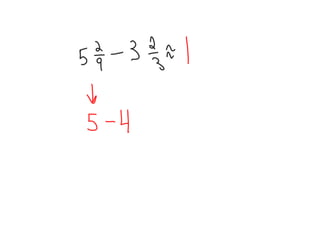
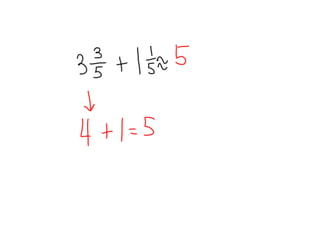
Aim: Estimate Sums and
Differences (p. 663)
Lesson:
Complete pages
663­666
Homework:
"My Homework" pages
667­668
Spelling
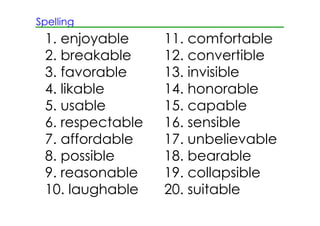
1. enjoyable 11. comfortable
2. breakable 12. convertible
3. favorable 13. invisible
4. likable 14. honorable
5. usable 15. capable
6. respectable 16. sensible
7. affordable 17. unbelievable
8. possible 18. bearable
9. reasonable 19. collapsible
10. laughable 20. suitable
Spelling
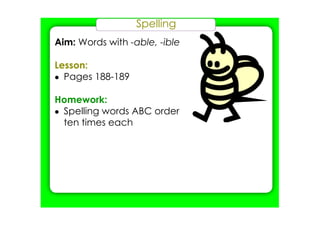
Aim: Words with ­able, ­ible
Lesson:
• Pages 188­189
Homework:
• Spelling words ABC order
ten times each
Language Arts
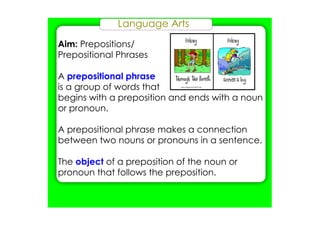
Aim: Prepositions/
Prepositional Phrases
A prepositional phrase
is a group of words that
begins with a preposition and ends with a noun
or pronoun.
A prepositional phrase makes a connection
between two nouns or pronouns in a sentence.
The object of a preposition of the noun or
pronoun that follows the preposition.
Language Arts
Class work
• Grammar Practice Book, page 180
Religion
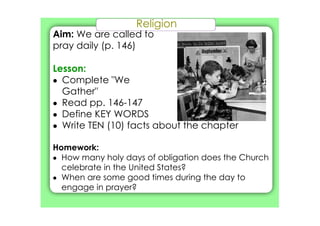
Aim: We are called to
pray daily (p. 146)
Lesson:
• Complete "We
Gather"
• Read pp. 146­147
• Define KEY WORDS
• Write TEN (10) facts about the chapter
Homework:
• How many holy days of obligation does the Church
celebrate in the United States?
• When are some good times during the day to
engage in prayer?
Social Studies
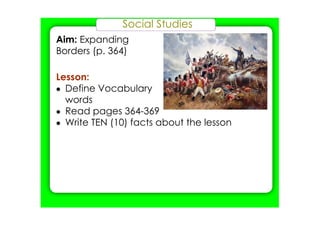
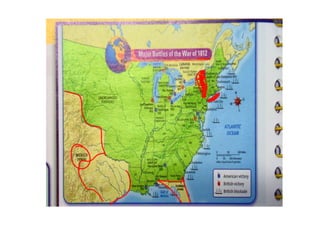
Aim: Expanding
Borders (p. 364)
Lesson:
• Define Vocabulary
words
• Read pages 364­369
• Write TEN (10) facts about the lesson
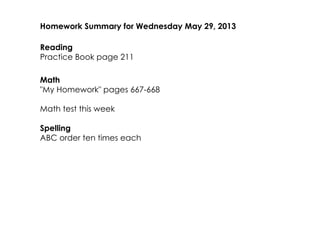
Homework Summary for Wednesday May 29, 2013
Reading
Practice Book page 211
Math
"My Homework" pages 667­668
Math test this week
Spelling
ABC order ten times each
Attachments
1314158
Analogies TTT.notebook

5.29.13 classwork wednesday

  • 1.
    Christy Samira Leon Kareena Philicia Ayanna Lilah Remy Donovan Michael Yamilee Jessica Leslie Carlos Bryan Ricardo Alexis David Jordan Alejandra Kathy Diana Ixza Emily Jaileen Jeffrey Wednesday May 29, 2013 Mayis National Hamburger Month. What is your favorite food? Which month would you like to designate to honor this food? Explain. Edward Adrianette
  • 2.
    DO NOW: Write thex11 Times Table ten times. Morning Work
  • 3.
    Reading Aim: Balloon Flight (p.710) Talk About It Nowadays people can travel quickly by plane to almost any part of the world. Why do you think people still like to go up in hot­air balloons?
  • 4.
    Something that islaunched is started in motion or sent off. Particles are small bits or pieces of an element. Things that are dense are thick or packed closely together. Inflate means to cause to swell by filling with air or gas.
  • 5.
    Anchored means heldfirmly in place. Hydrogen is a light gas that burns easily. Scientific means having to do with or used in science. A companion is a person or animal who keeps somebody company.
  • 6.
    Reading Aim: The Scienceof Hot­ Air Balloons (p. 712) Word Parts Greek Roots help you understand entire word families. The hydrogen has the Greek root hydr­. This root means "water." Most words beginning with hydr­ have something to do with water.
  • 7.
    Reading Monitor Comprehension Make Generalizations AGeneralizations Chart helps you make broad statements that describe ideas or events. This will help you monitor your comprehension or understanding of what you read. To make generalizations, combine key facts from the text and your prior knowledge. Information from Text Prior Knowledge Generalization
  • 8.
    Reading Aim: Up inthe Air: The Story of Balloon Flight (p. 714) Nonfiction gives information and facts about real people, places, events, and situations. Make Generalizations As you read, combine information from the text with prior knowledge. Use your Generalizations Chart.
  • 9.
    altitude: the measurementsof the distance above Earth's surface. chemist: an expert in chemistry, the science that deals with the characteristics of elements. helium: a very light, colorless, odorless gas that does not burn.
  • 10.
    Reading Aim: Hot­Air Balloon Haiku(p. 732) Haiku is an unrhymed form of Japanese poetry that is three lines long. The first line has five syllables; the second line, seven syllables; the third line, five syllables. A Simile is a comparison of two essentially unlike things that uses the words like or as. A Metaphor is a comparison of two essentially unlike things that does NOT use the words like or as.
  • 17.
  • 18.
    Math Aim: Estimate Sumsand Differences (p. 663) Lesson: Complete pages 663­666 Homework: "My Homework" pages 667­668
  • 24.
    Spelling 1. enjoyable 11.comfortable 2. breakable 12. convertible 3. favorable 13. invisible 4. likable 14. honorable 5. usable 15. capable 6. respectable 16. sensible 7. affordable 17. unbelievable 8. possible 18. bearable 9. reasonable 19. collapsible 10. laughable 20. suitable
  • 25.
    Spelling Aim: Words with­able, ­ible Lesson: • Pages 188­189 Homework: • Spelling words ABC order ten times each
  • 26.
    Language Arts Aim: Prepositions/ PrepositionalPhrases A prepositional phrase is a group of words that begins with a preposition and ends with a noun or pronoun. A prepositional phrase makes a connection between two nouns or pronouns in a sentence. The object of a preposition of the noun or pronoun that follows the preposition.
  • 27.
    Language Arts Class work •Grammar Practice Book, page 180
  • 28.
    Religion Aim: We arecalled to pray daily (p. 146) Lesson: • Complete "We Gather" • Read pp. 146­147 • Define KEY WORDS • Write TEN (10) facts about the chapter Homework: • How many holy days of obligation does the Church celebrate in the United States? • When are some good times during the day to engage in prayer?
  • 29.
    Social Studies Aim: Expanding Borders(p. 364) Lesson: • Define Vocabulary words • Read pages 364­369 • Write TEN (10) facts about the lesson
  • 31.
    Homework Summary forWednesday May 29, 2013 Reading Practice Book page 211 Math "My Homework" pages 667­668 Math test this week Spelling ABC order ten times each
  • 32.