Power Tools
Safety
Aims
and
Objectives
• At the end of today you will be able to:
• Describe the checks to make on a power tool
before use
• Explain some ways we protect ourselves and
others when using power tools.
• Recognise the maximum voltage of power tool
we should use on a building site.
• Identify the safest category of power tools
to use.
Power Tools
• Before working with any power tools
you should be sure that you are trained
and competent to do so.
• There are many risks, including cuts
and abrasions, ear damage,
electrocution and Hand Arm Vibration
Syndrome (also known as vibration
white finger) from incorrect use, or
overuse of power tools.
• Always make sure you have received
appropriate training, have inspected
the tool and cable, and have the
correct PPE before using any power
tools.
• Firstly, check it is the correct
tool for the task you are going to
carry out. If you are confident it
is the correct tool, read the user
instructions, and ask for training
from your employer if you are
unsure of anything.
• Acquire any PPE you are likely to
need. This will be suggested in
the user manual, and we will look
at some commonly used pieces of
PPE at the end of this
PowerPoint.
• Before using any power tools
make sure you visually inspect
them before use. The key
check you should make are
discussed over the next few
slides:
• The cable to the tool is in
good condition, and has no
cuts or splits (Look especially
near the plug and near the
appliance as this is where
there will be the most strain).
• There is no damage to the
body of the tool
• Check the tool is;
• Double insulated - the symbol for
this would be on the tool (this is
shown left)
• No more than 110v (would connect
to a yellow cable)
• And be fitted with an RCD
(residual Current Device)
• You should also check
that the portable
appliance test (PAT) test
is in date
• Power tools should be PAT
tested by a competent
person at least every 3
months on a construction
site.
• Tools requiring PAT tests
should be inspected
yearly (every 12 months)
if used in a domestic
setting.
• If using a power tool with a
blade, ensure the blade is
in good condition and the
blade guard is in place
• Top tip: only change the
blade on a power tools if
you have been trained
and are competent to do
so!!! Ask for help if you
are unsure!
Running the cable safely
• Plan the cable route so it’s not a
trip hazard
• Where possible, run the cable
above head height, or around the
edges of rooms, so it minimises the
risk of tripping other workers.
• If it has to cross a doorway or a
road on the site, use appropriate
means to protect the cable, and
prevent people tripping
• Handle the cord safely. Never
pick up the drill by the cord.
• Make sure you unplug the tool
by grasping the plug and pulling.
Do not pull or jerk the cord to
unplug the equipment.
• Do not drape power cords over
hot pipes, radiators or sharp
objects.
• Do not plug equipment into
defective receptacles.
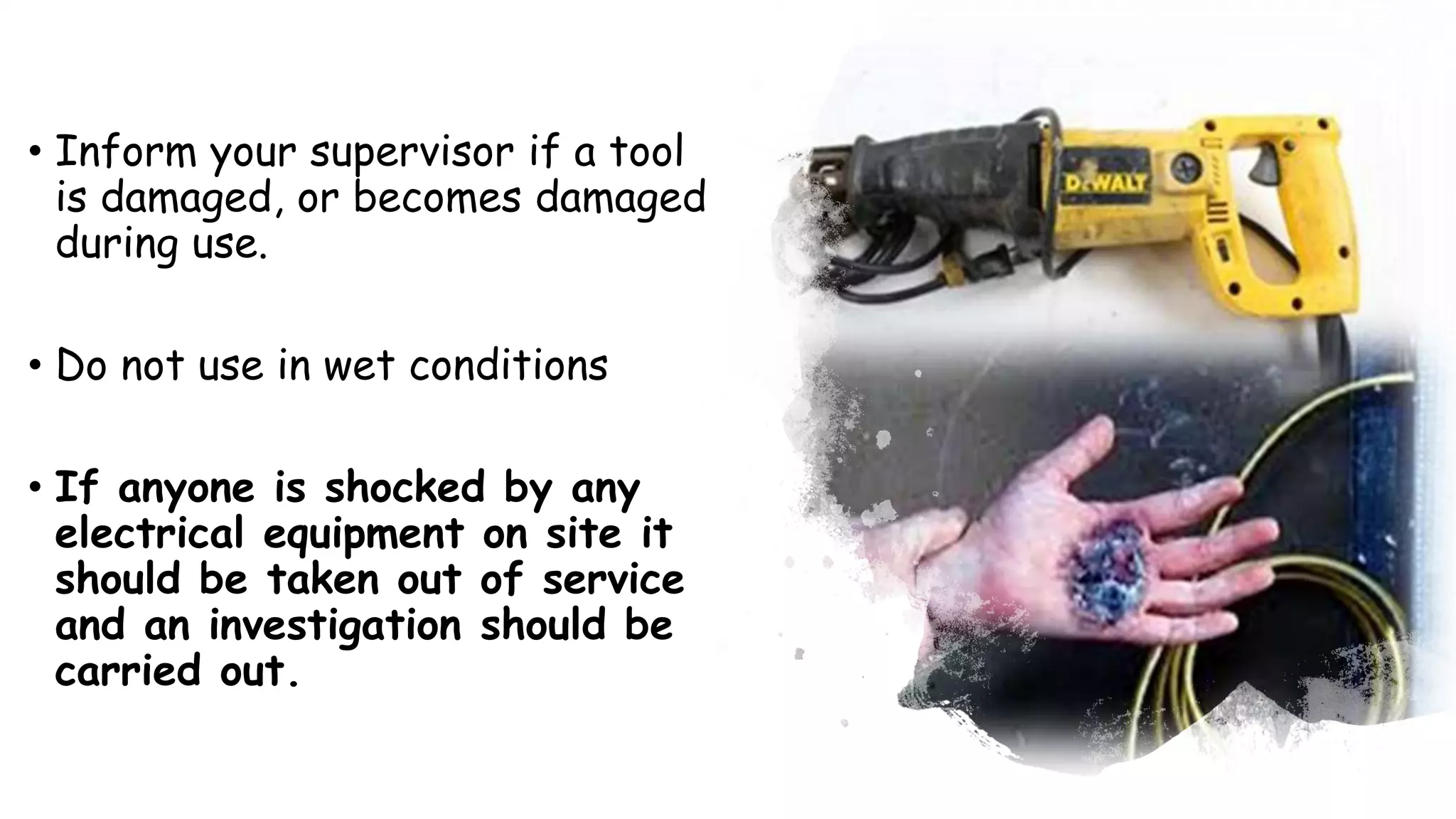
• Inform your supervisor if a tool
is damaged, or becomes damaged
during use.
• Do not use in wet conditions
• If anyone is shocked by any
electrical equipment on site it
should be taken out of service
and an investigation should be
carried out.
• Cordless tools are the
safest tools to use as
there is no cord removing
a potential trip hazard,
and working with lower
voltages reduces the risk
to you.
• Another plus of cordless
tools is they do not need
to be PAT tested (though
because their chargers
have cables, the chargers
would need to be tested
yearly)
Main hazards from
using power tools,
and how to protect
yourself
Electrocution
• If you take the
precautions
discussed in this
presentation, the
risk of electrocution
is minimised.
Vibration
• Most tools vibrate, and in
doing so, damage the nerves
and blood vessels in your
fingers. This is called Hand
Arm Vibration Syndrome.
• To prevent this, you should
take regular breaks, and let
your supervisor know straight
away if you start to get a
‘tingle’ in your fingers.
• Vibration reducing gloves could help
reduce the risk for Hand Arm Vibration
Syndrome, but should alongside, NOT
instead of other more appropriate
control measures.
• The best methods of reducing the risk
from HAVS are:
• Using tools with reduced vibration
• Taking regular breaks
• Limiting length of time using the tools
• Keeping the body warm if working in cold
conditions to improve blood circulation
and reduce damage
Noise
• Power tools are often very loud.
• If you are required to work with them (or
near people using them!), you should
request ear defenders.
• If you are exposed to noise levels above
80db your employer should give them to
you if you request them, and if the noise
levels exceed 85db, then your employer
should identify this in their risk
assessment, tell you you need them, and
supply them to you.
Dust and Debris
• Eye protection (safety goggles of
glasses), are often required because
eyes are especially prone to injury
from small shards of wood, metal,
plastic or other materials that are
dislodged when using drills, sanders,
routers, saws, etc.
• Eye protection should also be worn by
those working near the power tool
operator. In some circumstances, a
face shield may also be required.
Dust
• A dust mask helps protect against
inhalation of dangerous materials
released into the atmosphere when
using power tools.
• When drilling or cutting into the
building fabric, it would be sensible
to remember that wood dust, silica
dust (found in cement) and
Asbestos can all be carcinogenic if
inhaled.
Task

5. powertool safety

  • 1.
  • 2.
    Aims and Objectives • At theend of today you will be able to: • Describe the checks to make on a power tool before use • Explain some ways we protect ourselves and others when using power tools. • Recognise the maximum voltage of power tool we should use on a building site. • Identify the safest category of power tools to use.
  • 3.
    Power Tools • Beforeworking with any power tools you should be sure that you are trained and competent to do so. • There are many risks, including cuts and abrasions, ear damage, electrocution and Hand Arm Vibration Syndrome (also known as vibration white finger) from incorrect use, or overuse of power tools. • Always make sure you have received appropriate training, have inspected the tool and cable, and have the correct PPE before using any power tools.
  • 4.
    • Firstly, checkit is the correct tool for the task you are going to carry out. If you are confident it is the correct tool, read the user instructions, and ask for training from your employer if you are unsure of anything. • Acquire any PPE you are likely to need. This will be suggested in the user manual, and we will look at some commonly used pieces of PPE at the end of this PowerPoint.
  • 5.
    • Before usingany power tools make sure you visually inspect them before use. The key check you should make are discussed over the next few slides: • The cable to the tool is in good condition, and has no cuts or splits (Look especially near the plug and near the appliance as this is where there will be the most strain). • There is no damage to the body of the tool
  • 6.
    • Check thetool is; • Double insulated - the symbol for this would be on the tool (this is shown left) • No more than 110v (would connect to a yellow cable) • And be fitted with an RCD (residual Current Device)
  • 7.
    • You shouldalso check that the portable appliance test (PAT) test is in date • Power tools should be PAT tested by a competent person at least every 3 months on a construction site. • Tools requiring PAT tests should be inspected yearly (every 12 months) if used in a domestic setting.
  • 8.
    • If usinga power tool with a blade, ensure the blade is in good condition and the blade guard is in place • Top tip: only change the blade on a power tools if you have been trained and are competent to do so!!! Ask for help if you are unsure!
  • 9.
    Running the cablesafely • Plan the cable route so it’s not a trip hazard • Where possible, run the cable above head height, or around the edges of rooms, so it minimises the risk of tripping other workers. • If it has to cross a doorway or a road on the site, use appropriate means to protect the cable, and prevent people tripping
  • 10.
    • Handle thecord safely. Never pick up the drill by the cord. • Make sure you unplug the tool by grasping the plug and pulling. Do not pull or jerk the cord to unplug the equipment. • Do not drape power cords over hot pipes, radiators or sharp objects. • Do not plug equipment into defective receptacles.
  • 11.
    • Inform yoursupervisor if a tool is damaged, or becomes damaged during use. • Do not use in wet conditions • If anyone is shocked by any electrical equipment on site it should be taken out of service and an investigation should be carried out.
  • 12.
    • Cordless toolsare the safest tools to use as there is no cord removing a potential trip hazard, and working with lower voltages reduces the risk to you. • Another plus of cordless tools is they do not need to be PAT tested (though because their chargers have cables, the chargers would need to be tested yearly)
  • 13.
    Main hazards from usingpower tools, and how to protect yourself
  • 14.
    Electrocution • If youtake the precautions discussed in this presentation, the risk of electrocution is minimised.
  • 15.
    Vibration • Most toolsvibrate, and in doing so, damage the nerves and blood vessels in your fingers. This is called Hand Arm Vibration Syndrome. • To prevent this, you should take regular breaks, and let your supervisor know straight away if you start to get a ‘tingle’ in your fingers.
  • 16.
    • Vibration reducinggloves could help reduce the risk for Hand Arm Vibration Syndrome, but should alongside, NOT instead of other more appropriate control measures. • The best methods of reducing the risk from HAVS are: • Using tools with reduced vibration • Taking regular breaks • Limiting length of time using the tools • Keeping the body warm if working in cold conditions to improve blood circulation and reduce damage
  • 17.
    Noise • Power toolsare often very loud. • If you are required to work with them (or near people using them!), you should request ear defenders. • If you are exposed to noise levels above 80db your employer should give them to you if you request them, and if the noise levels exceed 85db, then your employer should identify this in their risk assessment, tell you you need them, and supply them to you.
  • 18.
    Dust and Debris •Eye protection (safety goggles of glasses), are often required because eyes are especially prone to injury from small shards of wood, metal, plastic or other materials that are dislodged when using drills, sanders, routers, saws, etc. • Eye protection should also be worn by those working near the power tool operator. In some circumstances, a face shield may also be required.
  • 19.
    Dust • A dustmask helps protect against inhalation of dangerous materials released into the atmosphere when using power tools. • When drilling or cutting into the building fabric, it would be sensible to remember that wood dust, silica dust (found in cement) and Asbestos can all be carcinogenic if inhaled.
  • 20.