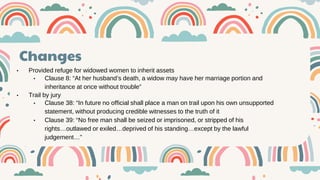
The Magna Carta, granted by King John on June 15, 1215, established fundamental English liberties and limited the power of the monarchy to protect the rights of 'free men'. It served as a foundation for individual rights and became a symbol against oppression, influencing future democratic principles and legal frameworks, including the U.S. Constitution and the Universal Declaration of Human Rights. Key provisions included protections for widows, the right to a jury trial, and safeguards against unlawful imprisonment.