This document summarizes a study on using wavelet transforms to detect and separate artifacts in EEG signals. The study aimed to minimize artifacts and noise in EEG signals without affecting the original signal. Wavelet transforms were found to be effective for analyzing non-stationary EEG signals. The results showed that wavelet transforms significantly reduced input size without compromising performance. Decomposing EEG signals using wavelet transforms extracted different frequency bands and resolved signals at different resolutions. This allowed artifacts and noise to be detected and the original signal to be recovered. Simulation results demonstrated the wavelet transform's ability to denoise EEG signals and extract key frequency components.
![International Journal of Informatics and Communication Technology (IJ-ICT)
Vol.7, No.3, December 2018, pp. 127~134
ISSN: 2252-8776, DOI: 10.11591/ijict.v7i3.pp127-134 127
Journal homepage: http://iaescore.com/journals/index.php/IJICT
Detection and Separation of Eeg Artifacts
Using Wavelet Transform
R. Suresh Kumar*1
, P.Manimegalai2
1
Research Scholar/Department of ECE, Karpagam Academy of Higher Education, Coimbatore, India.
2
Professor/Department of ECE, Karpagam Academy of Higher Education, Coimbatore, India.
Article Info ABSTRACT
Article history:
Received Jun 3, 2018
Revised Jul 28, 2018
Accepted Aug 13, 2018
Bio-medical signal processing is one of the most important techniques of
multichannel sensor network and it has a substantial concentration in medical
application. However, the real-time and recorded signals in multisensory
instruments contains different and huge amount of noise, and great work has
been completed in developing most favorable structures for estimating the
signal source from the noisy signal in multichannel observations. Methods
have been developed to obtain the optimal linear estimation of the output
signal through the Wide-Sense-Stationary (WSS) process with the help of
time-invariant filters. In this process, the input signal and the noise signal are
assumed to achieve the linear output signal. During the process, the non-
stationary signals arise in the bio-medical signal processing in addition to it
there is no effective structure to deal with them. Wavelets transform has been
proved to be the efficient tool for handling the non-stationary signals, but
wavelet provide any possible way to approach multichannel signal
processing. Based on the basic structure of linear estimation of non-
stationary multichannel data and statistical models of spatial signal coherence
acquire through the wavelet transform in multichannel estimation. The above
methods can be used for Electroencephalography (EEG) signal denoising
through the original signal and then implement the noise reduction technique
to evaluate their performance such as SNR, MSE and computation time.
Keywords:
Electroencephalography,
Mean Square Error,
Signal to Noise Ratio,
Wavelet Transform.
Copyright © 2018 Institute of Advanced Engineering and Science.
All rights reserved.
Corresponding Author:
R. Suresh Kumar
Research Scholar/Department of ECE,
Karpagam Academy of Higher Education,
Coimbatore – 641 021
Email: arsksuresh@gmail.com
1. INTRODUCTION
Brain is the most important organ in human beings, for controlling the coordination of human
muscles and nerves. Human brain is made up of millions of neurons and it is a connected nervous system.
The electrical activity of the brain and the language of communication with the nervous system are called as
Electroencephalography (EEG) signals. The neurons move in human brain while processing information, by
changing the flow of electrical currents across their membranes. The neurons movement is observed through
electrodes placed on the scalp and the signal is analyzed with respect to change in the electrical properties.
Activity of the brain writing process is amplified and recorded from the potentials between different
electrodes in Electroencephalogram (EEG) [1]. The recording is used to investigate the neuron movement of
human brain commonly through one EEG. It can be used to evaluate the people having brain disorders and
also EEG is used to determine brain death. The continuous signal analysis is more complex. The EEG signal
are categorized in different wave length namely Alpha (α) waves (7.5-14 Hz), Beta (β) waves (14-40 Hz),
Gamma (γ) waves (above 40 Hz), Theta (Ѳ) waves (4-7.5 Hz), Delta (Δ) waves (0.5-4 Hz)[2]. All the waves
represent different movement of neurons in human brain.](https://image.slidesharecdn.com/5-201019043737/75/5-detection-and-separation-of-eeg-artifacts-using-wavelet-transform-nov-11-2017-edit-i-1-2048.jpg)
![ ISSN: 2252-8776
IJ-ICT Vol. 7, No. 3, December 2018 : 127– 134
128
The EEG signals have very small amplitude (mV) so the noise occurs easily or the original signal
gets contaminated. During the recording or observation of the EEG signal, various types of noises occur such
as noise from baseline movement, EMG disturbance, and human body and from other external sources. In
EEG signal these types of noise signals are called artifacts and this noise need to be removed from the
original EEG signal during the analysis of brain related diseases.
Moreover, during the EEG recording the original signal is also affected by other unknown random
signals which can be modeled as additive random noise. These occurrences complicate the analysis and
interpretation of the EEGs, and the first important processing step would be the elimination of the artifacts
and noise. Our goal is to contribute to EEG artifact rejection by proposing an original and more complete
automatic methodology consisting if optimized combination of several signal processing and data analysis
techniques. There are so many denoising techniques employed to remove the artifacts from the EEG original
signal. Some of the denoising techniques used to remove the noises are ICA denoising, PCA denoising,
Wavelet based denoising. The above said techniques employed for denoising the EEG signal and their
performance can be evaluated by measuring the parameters like SNR, MSE and computation time etc.
This paper is organized as follows: The second section presents a brief history about the EEG signal
artifacts and noises rejection presented in the literature. The third section contains the proposed approach for
denoising. In this part the wavelet denoising is briefly explained and the methodological steps involved to
acquire the noise rejected output signal in a proposed wavelet transform. The fourth section shows the
simulation result of the proposed technique in Matlab and VLSI.
2. RELATED WORK
In bio-medical signal process, artifacts are unwanted noise caused by the original physiological
affair based on the interest. Thus, the aim of analysis depending on the decision should be made as
identifying the original and artifact signal. For reliable analysis artifacts classification should be considered,
which if ignored, might considerably influence the results and therefore the resulting conclusions. EEGs are
typically recorded in conjunction with different physiological signals which can interfere with the exact
EEGs. Such artifact like ocular, muscle, electrical field changes, transmission line interference, movements
of head and electrodes.
Figure.1 illustrates sections of graphical record contaminated by typical samples of artifacts. Once
some of knowledge corrupted by an artifact has been with successfully known then there are different ways
which may be adopted, betting on the shape of that artifact. In extreme cases the whole epoch that contains
the artifact might have to be discarded, various normal artifact detector is used and therefore the signals that
is contaminated by the artifact is known and discarded. As an alternative, in some instances, there is a
potential to estimate the original EEG signal using appropriate signal process techniques by suppressing the
artifact.
The effortless way to eliminate artifacts is to find at the period of occurrence and recorded data is
eliminated. One technique that is used to take artifact as any important deviation from the traditional is to
permit detection by seeking variations (non- stationaries) within the measured signal. This technique should
be applied with care, since the Original EEG is itself non stationary, therefore major parameters have to be
designated, so the entire connected non-stationaries are detected. Energy operators may be helpful markers of
sudden changes (e.g. spikes) as they are sensitive to instant fluctuations [8] however will require more
sensitivity to record accurate changes within the signal spectrum.
A set of mathematical functions that transforms number of correlated variables into a smaller
number of unrelated variables is known as Principal Component. The Principal Component Analysis (PCA)
is a primary element that accounts for the maximum amount of the variability within the data as possible, and
every succeeding element accounts for the maximum amount of the remaining variability as potential.
Principal components are absolute and independent to provide the recording dataset that is normally
circulated. PCA is more accurate to the relative level of the initial variables. Depending on the application, it
is additionally named as distinct Karhunen–Loève transform, the Hotelling transform or Proper orthogonal
decomposition.
The mathematical method utilized in PCA is termed as Eigen analysis. It tends to solve the Eigen
values and eigenvector of a square symmetric matrix with sum of square and cross product. The eigenvector
is related to the biggest Eigen values and has constant direction because it is the first principal element. The
eigenvector related to the second largest Eigen values determine the direction of the second principal
component. The addition of the Eigen values equals the trace of the matrix and therefore the most numbers of
eigenvectors equals the quantity of rows (or columns) of this matrix.[6]. An alternative approach is obtained
using ICA (Independent Component Analysis) that makes the multichannel character of most EEG record
signals to decompose the information into a collection of random variables that are maximally](https://image.slidesharecdn.com/5-201019043737/75/5-detection-and-separation-of-eeg-artifacts-using-wavelet-transform-nov-11-2017-edit-i-2-2048.jpg)
![IJ-ICT ISSN: 2252-8776
Detection and Separation of Eeg Artifacts Using Wavelet Transform (R. Suresh Kumar)
129
independent[17]. This decomposition is thought to be representing the supply signals that underlie in the
measured data set. The magnetism nature of EEG signals implies that these signals fulfill the assumptions of
the ICA algorithmic rule, i.e. ones supported by a right away mixture model. Consequently EEG analysis
normally has been a fruitful application space for ICA [18].
Figure 1. EEG artifacts (A) 50Hz mains interference waves on the EEGs. (B) Neuron movement causes from
the EEG (C) Movement that can clip the EEG. (D) ECG interference appears as a pulsed EEG (E) baseline
EEG.
The ways rely on the assumption that the artifact and EEG may arise from completely different
(statistically independent) sources. Therefore by estimating those supply parts one can, determine that parts
relate to the artifact and it relates to the EEG Signal. This permits the reconstruction of the sensing element
signals mistreatment, solely the EEG signal connected sources and thus eliminating the artifact. A key
drawback with ICA is that the study and automatic identification/separation of parts with reference to
graphical record and artifact. Further, if the signal is temporally metameric then the ICA decomposition lacks
consistency between sections and care must be exercised once recombining the information across segment
boundaries [16].
3. WAVELET DENOISING
In this section, it is explained the results of research and at the same time is given the
comprehensive discussion. Results can be presented in Figures, graphs, Tables and others that make the
reader understand easily [2], [5]. The discussion can be made in several sub-chapters.
The implementation of Wavelet Transform (WT) time–frequency representation helps to present the
frequency and time in sequence with respect to time. In time-frequency representation the time domain signal
is passed through two different filters namely low pass and high pass filters, here both portion are considered.
The filters are used to eliminate the artifacts and noise signals from original signal and the process is called
as decomposition. The operation is continuously repeated until the signal is decomposed to a cutoff level or
to a certain level. A group of different frequency bands obtained from the EEG recording signals representing
in the same. The high frequency components are enhanced to improve with respect to time and the low
frequency components are enhanced to determine the frequency. The wavelet transform is defined as
equation 1.
dt
a
bt
a
txbaW
1
)(),(
(1)
The above equation is said to be a mother wavelet transform. The equation contains two different
variables (a, b) used to transform the signals. Both variables are representing translation and scaling
parameters and the denoising function is obtained through the mother wavelet transform. The low frequency
components are matched with detailed view and the high frequency components are matched with non-](https://image.slidesharecdn.com/5-201019043737/75/5-detection-and-separation-of-eeg-artifacts-using-wavelet-transform-nov-11-2017-edit-i-3-2048.jpg)
![ ISSN: 2252-8776
IJ-ICT Vol. 7, No. 3, December 2018 : 127– 134
130
detailed view. In scaling process either the input signal is to be compressed or expanded. The high frequency
components (large signals) are always stretched out and low frequency components are compressed.
During the denoising process the synthesis and analysis of original signal and sufficient information
is obtained through the Discrete Wavelet Transform (DWT) and it provides the maximum reduction with
minimum computation time. The different frequency bands of input signals are analyzed with different
resolution that is used to decompose the signals to get detailed information. The DWT functions are same in
the mother wavelet transform associated with low pass and high pass filters in time domain signals. The
original input signal x[n] is first processed through a half-band high-pass filter g[n] and a low-pass filter h[n].
The signal can be sub-sampled by dividing it by 2, simply by discarding every other sample. This constitutes
one level of decomposition and can be expressed as follows equation 2 & 3:
nkgnxkY nhigh 2. (2)
nkhnxkY nhigh 2.
(3)
Where, yhigh[k] and ylow[k] are the output of the high pass and low pass filters after the sub-
sampling divided by 2. These decomposition techniques have time resolution and only half the number of
samples describes the entire signal.
Figure 2. Block diagram of proposed system EEG Data Decomposition Level Shift Noise Detected
NoiseOriginal Signal
However, this procedure doubles the frequency resolution, because the half of the frequency is
spanned effectively by reducing the uncertainty in the frequency band and repeats the second half of the
frequency band to reduce the noise. The above procedure is also called as sub-band coding and it can be
frequently used for additional decomposition. At each level sub-sampling filtering results is obtained with
half the frequency band span. The following statistical features were utilized to represent the time–frequency
distribution of the EMG signals: Standard Deviation, Mean, Average power, and ratio of absolute mean of
the coefficients in each sub-band samples.
4. RESULTS
The research study was to find out the possibility of minimizing the artifacts and noises in EEG
signal using wavelet denoising technique. The main objective of the study was to minimize the artifacts and
noise level without affecting the original EEG signal. Since the EEG recording requires clinical information
from many channels (standard channels 32 - 44), the input sources high so a critical design is used during the
analysis using real time multichannel artifacts and noise detection system. The result of the study currently
shows that the utilization of the WT significantly decreases the input size, lacking in performance while not
maximum compromise on the performance. The foremost vital consideration of performance was the correct
choice of the scale in the input signal. Wavelets were found appropriate for analysis as a result of the
EEG Data
Actual Signal
Decomposition
Level Shift Noise
Detected Noise
Original Signal](https://image.slidesharecdn.com/5-201019043737/75/5-detection-and-separation-of-eeg-artifacts-using-wavelet-transform-nov-11-2017-edit-i-4-2048.jpg)
![IJ-ICT ISSN: 2252-8776
Detection and Separation of Eeg Artifacts Using Wavelet Transform (R. Suresh Kumar)
133
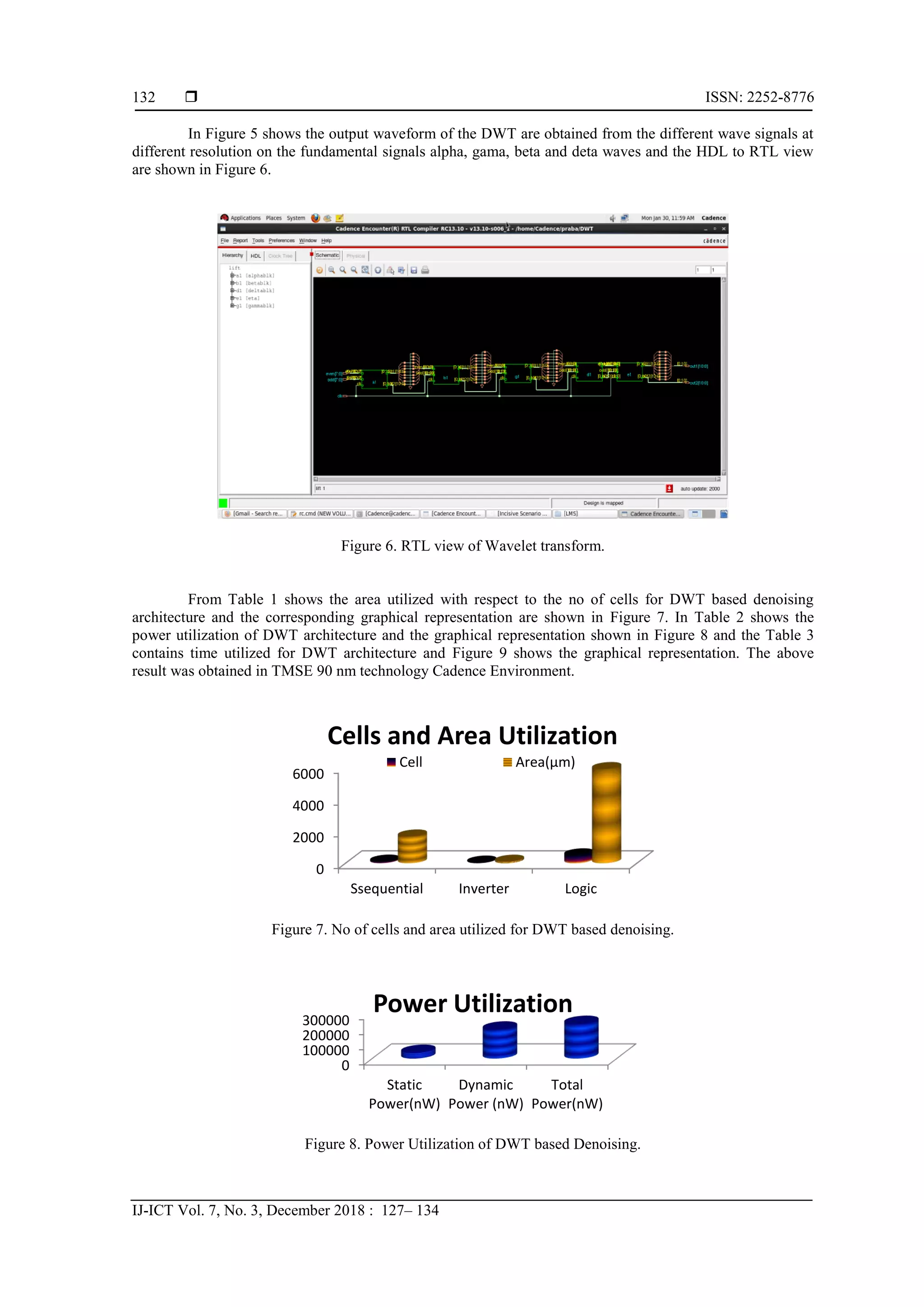
Figure 9. Time Utilization of DWT based Denoising.
Table 1. Cell and Area Utilization of DWT based Denoising architecture
Cell and Area Utilization
ANC Cell Area(μm)
Ssequential 104 1685
Inverter 43 98
Logic 498 5911
Total 645 7694
Table 2. Power Utilization of DWT based Denoising architecture
Power Utilization
Cells Static Power (nW) Dynamic Power (nW) Total Power (nW)
645 37397 191928 229325
Table 3. Time Utilization of DWT based Denoising architecture
Time Utilization
Fall Time (pS) Rise Time (pS) Total Time (pS)
5276 1772 7048
5. CONCLUSION
Wavelets function is a robust tool used for the task of signal denoising. The ability to decompose a
signal into a totally different scale is extremely vital for denoising, and it improves the analysis of the signal
considerably. A real-time denoising VLSI based wavelet transform technique is employed in this paper to
remove the artifacts and power-line interferences from EEG signal. Wavelet functions square measure is used
for denoising. The results of denoising is evaluated using SNR, RMSE and computation time From the Table
1 it is clear that the initial signal and db5 denoised signal square measure additional correlative and shows
higher results compared to alternative wavelets employed in denoising the EEG signal. So it will be used for
analyzing EEG signal. Careful analysis of the graphical record signals will provide data associated to patients
affected with brain disorders. In future, additional advanced ways will be explored for denoising of the EEG
signal corrupted by alternative sources of interference. Additionally these method are going to be
implemented and tested on real EEG signals. The implementation and prototyping of the proposed technique
used Verilog HDL in Cadence 45nm environment.
REFERENCES
[1]. S.Y. Tseng, R.C. Chen, F.C. Chong, T.S. Kuo, Evaluation of parametric methods in EEG signal analysis, Medical
Engineering & Physics 17 (1995) 71–78.
[2]. GiuseppinaInuso ,Wavelet-ICA methodology for efficient artifact removal from Electroencephalographic
recordings, Proceedings of International Joint Conference on Neural Networks, Orlando, Florida, USA, August 12-
17, 2007.
[3]. Mrs V Baby Deepa ,Dr P Thangaraj, Dr S Chitra, Investigating the performance improvement by sampling
techniques in EEG data, International Journal on Computer Science and Engineering , Vol. 2,Jun.2010,pp:2025-
2028.
[4]. Dong Kang; LuoZhizeng ,A Method of Denoising Multi-channel EEG Signals Fast Based on PCA and DEBSS
Algorithm, Computer Science and Electronics Engineering (ICCSEE), 2012 International Conference on , vol.3,
no., pp.322-326, 23-25 March 2012.
0
2000
4000
6000
8000
Fall Time (pS) Rise Time (pS) Total Time (pS)
Time Utilization](https://image.slidesharecdn.com/5-201019043737/75/5-detection-and-separation-of-eeg-artifacts-using-wavelet-transform-nov-11-2017-edit-i-7-2048.jpg)
![ ISSN: 2252-8776
IJ-ICT Vol. 7, No. 3, December 2018 : 127– 134
134
[5]. LanlanYu, EEG De-Noising Based on Wavelet Transformation, Bioinformatics and Biomedical Engineering, 2009.
ICBBE 2009. 3rd International Conference, vol., no., pp.1-4, 11-13 June 2009.
[6]. P. Ashok Babu1, Removal of ocular artifacts from EEG signals using adaptive threshold PCA and Wavelet
Transforms, International Journal of Electronic Signals and Systems,vol 1,2012.
[7]. Janett Walters-Williams & Yan Li, A New Approach to Denoising EEG Signals - Merger of Translation Invariant
Wavelet and ICA, International Journal of Biometrics and Bioinformatics, Volume (5) : Issue (2) : 2011.
[8]. Arvaneh M, Guan C, Ang K, Quek H (2011) Optimizing the channel selection and classification accuracy in eeg-
based bci. IEEE Transactions on Biomedical Engi-neering, 58:1865–1873
[9]. Balli T, Palaniappan R (2010) Classification of biological signals using linear and nonlinear features. Physiological
measurement 31(7):903
[10]. Bashashati A, Fatourechi M, Ward RK, Birch GE (2007) A survey of signal pro-cessing algorithms in brain-
computer interfaces based on electrical brain signals. Journal of Neural engineering, 4(2):R35–57
[11]. P. Hae-Jeong, J. Do-Un, P. Kwang-Suk, Automated detection and elimination of periodic ECG artifacts in EEG
using the energy interval histogram method,IEEE Trans. Biomed. Eng. 49 (2002) 1526–1533
[12]. J.S. Barlow, Methods of analysis of non-stationary EEGs, with emphasis on segmentation techniques – a
comparative review, J. Clin. Neurophysiol. 2 (1985) 267–304.
[13]. Lotte F, Congedo M, L´ ecuyer A, Lamarche F, Arnaldi B (2007) A review of classi-fication algorithms for EEG-
based brain-computer interfaces. Journal of Neural Engineering, 4:R1–R13
[14]. Juha Karhunen, JyrkiJoutsens, Generalization of principal component analysis optimization problems and Neural
Network, Vol. 8,pp:549-562,March.1995.
[15]. Kachenoura A, Albera L, Senhadji L, Comon P (2008) ICA: A potential tool for BCI systems. IEEE Signal
Processing Magazine, 25(1):57–68
[16]. Vigario R., Jousmaki V., Hamalainen M., Hari R., and Oja E,Independent component analysis for identification of
artifacts in magnetoencephalographicrecordings, In Jordan MI, Kearns MJ, and Solla SA, editors, Advances in
neural information processing systems,(10),22935. Cambridge, MA: MIT Press, 1997.
[17]. GiuseppinaInuso, Wavelet-ICA methodology for efficient artifact removal from Electroencephalographic
recordings, Proceedings of International Joint Conference on Neural Networks, Orlando, Florida, USA, August 12-
17, 2007.
[18]. M. E. Davies, C. J. James, Source separation using single channel ICA Signal Processing. 2007; 87: 1819-1832.
[19]. C.K. Chui, An Introduction to Wavelets, Academic Press, New York, 1992, Chapter 5, pp. 158-160.
[20]. O. Rioul, M. Vetterli, Wavelets and Signal Processing, IEEE Signal Process. Mag. 8 (4) (1991) 14-38.
[21]. Unser M, Aldroubi A, A Review of Wavelets In Biomedical Applications, Proceedigs of the IEEE 84(4): 626-638,
1999
[22]. S. Mallat, A theory for multiresolution signal decomposition: the wavelet representation, IEEE Trans. Pattern Anal.
Machine Intell. 11 (7) (1989) 674-693.
[23]. M. S. Crouse, R. D. Nowak, and R. G. Baraniuk, Wavelet-based statistical signal processing using hidden Markov
models,IEEE Trans. Signal Process, vol. 46, no. 4, pp. 886–902, 1998.
BIOGRAPHIES OF AUTHORS
R.Suresh Kumar has completed his B.E. Electronics and Communication Engineering in the
year 2004 from Thanthai Periyar Government Institute of Technology, Vellore. He received
his M.E. degree (Applied Electronics) in the year 2007 from PSG College of Technology,
Coimbatore. Currently he is doing his research at Karpagam University, Coimbatore. His
areas of interest are VLSI and signal processing.
P.Manimegalai has completed her B.E. Biomedical Instrumentation Engineering in the year
2000 from Avinashilingam University. She obtained her M.E Applied Electronics from
Govt. College of Technology by 2008. She obtained her Ph.D. from Anna University,
Chennai from 2013. Currently she is working as Professor in ECE Department at Karpagam
University, Coimbatore. Her areas of interest are biosignal processing and image processing.
She has published more than 20 national and international journals.](https://image.slidesharecdn.com/5-201019043737/75/5-detection-and-separation-of-eeg-artifacts-using-wavelet-transform-nov-11-2017-edit-i-8-2048.jpg)


