BODY FLUIDS AND
ELECTROLYTE BALANCE
SHOCK AND CLASSIFICATION
Dr Aliya Shair Muhammad
Lecturer Bolan University Of Medical And Health
Sciences, Quetta
Contents
 Body fluid
 Electrolytes balance
 Classification of fluid changes and
Electrolytes imbalance
 Shock and classification of shock
 Pre, intra and post operative fluid
therapy.
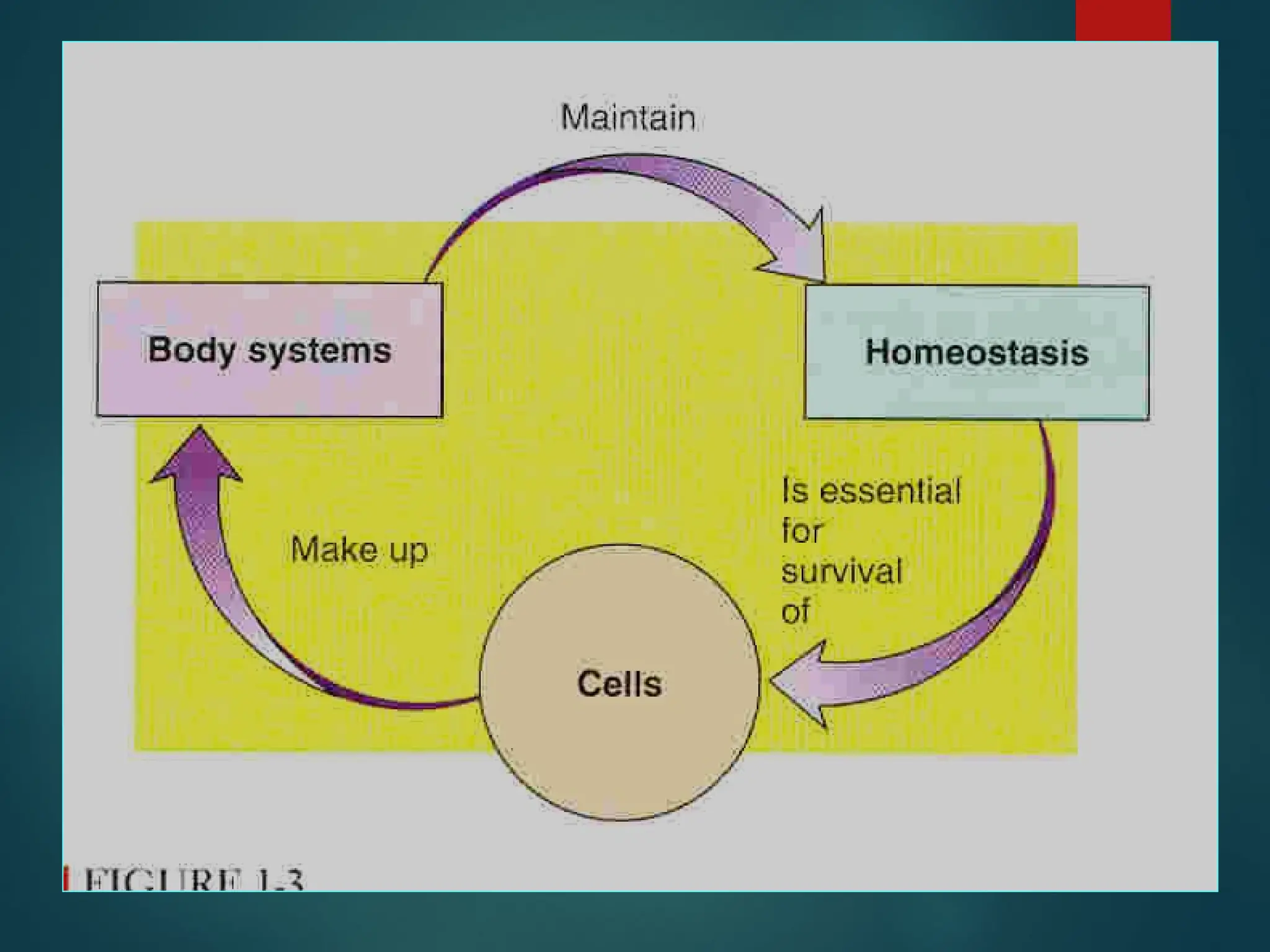
Homeostasis
Maintenance of relatively stable
internal environment.
Roles of Water
FACTORS AFFECTING
Total Body Water
 varies depending on body fat:
 infant: 73%
 male adult: 60%
 female adult: 40-50%
 effects of obesity
 Old age 45%
COMPOSITION OF BODY FLUIDS
CATIONS (mmol/l) Plasma Interstitial Intracellular
Na 142 139 14
K 4.2 4.0 140
Ca 1.3 1.2 0
Mg 0.8 0.7 20
ANIONS (mmol/l)
Cl 108 108 4.0
HCO3 24.0 28.3 10
Protein 1.2 0.2 4.0
HPO4 2.0 2.0 11
IMPORTANCE
 Maintaining ECF volume is critical to
maintaining blood pressure
 ECF osmolarity is of primary
importance in long-term regulation
of ECF volume
 ECF osmolarity maintained mainly by
NaCl balance:
 intake: 10.5g/d output: 10g/d in urine
FLUID COMPARTMENTS
EXTRA CELLUAR
FLUID
INTRA CELLULAR
FLUID
INTERSTITIAL
FLUID
PLASMA
TRANSCELLULAR
FLUID
CSF
Intra ocular
Pleural
Peritoneal
Synovial
Digestive Secretions
Barriers separate ICF, interstitial
fluid and plasma
 Plasma membrane
Separates ICF from surrounding
interstitial fluid
 Blood vessel wall
Separate interstitial fluid from
plasma
VOLUME OF BODY FLUIDS IN 70 kg MAN
TOTAL VOLUME
42 L
INTRA CELLUAR FLUID
28 L(ROUGHLY 2/3 OF TBW)
EXTRA CELLULAR FLUID
14 L(ROUGHLY 1/3 OF TBW)
PLASMA
4 L (ROUGHLY ¼ OF ECF)
Total Body Water
BLOOD
ECF
ECF
ICF ICF ICF
Blood
Interstitial
Interstitial
Difference
 ECF
 Most abundant cation -
Na+,
 muscle contraction
 Impulse transmission
 fluid and electrolyte balance
 Most abundant anion - Cl-
 Regulates osmotic pressure
 Forms HCl in gastric acid
 ICF
 Most abundant cation - K+
 Resting membrane potential
 Action potentials
 Maintains intracellular
volume
 Regulation of pH
 Anion are proteins and
phosphates (HPO4
2-
)
Na+ /K+ pumps play major role in keeping K+ high inside
cells and Na+ high outside cell
TOTAL BODY WATER(TBW)
 60% OF THE BODY WEIGHT IN ADULT MALE
 50% OF THE BODY WEITH IN ADULT FEMALE
VOLUME MEASUREMENT OF VARIOUS
FLUIDS COMPARTMETNS
INTERSTITIAL FLUID
ECF – Plasma Volume
INTRACELLULAR FLUID
TBW – ECF
FACTORS AFFECTING
 Physiological
 Adipose Tissue
 Sex
 Age
 Pathological
 Dehydration
 Overhydration
Specialized Fluids of the
Body
 Lymph
 Milk
 Cerebrospinal fluid
 Amniotic fluid
 Aqueous humor
 Sweat
 Tears
Lymph
 Clear and colorless fluid
 96% water and 4% solids
 Solids –
 Proteins
 2-6% of solids
 albumin, globulin, fibrinogen, prothrombin, clotting factors, antibodies,
enzymes
 Lipids
 5-15%
 Chylomicrons
 Lipoproteins
 Carbohydrates
 Glucose mainly
 NPN
 Urea and creatinine
 Electrolytes
 Sodium, calcium, potassium, chloride, bicarbonates
Functions of Lymph
 Return protein from tissue spaces into
blood
 Redistribution of fluid
 Removal of bacteria, toxins and other
foreign bodies from tissues
 Maintain structural and functional
integrity of tissue
 Route for intestinal fat absorption
 Transport lymphocytes
Milk
 Secreted by mammary glands
 Complete natural food
 83-87% water and 13-17% solids
 Solids
 Carbohydrates
 Lactose
 Lipids
 Triacylglyerols
 Palmitic acid, myristic acid, stearic acid, lauric acid, butyric acid,oleic acid
 Proteins
 Caesin (80%), Lactalbumin
 Enzymes (proteases, xanthine oxidase,lysozyme), immunoglobulins
 Minerals
 Ca, Mg, P, Na, K, Cl
 Vitamins
 Fat and water soluble vitamins except Vit - C
Functions of Milk
 Milk sugar provides galactose, a structural unit for
growing infant.
 In intestine, it gets metabolized to lactic acid
which eliminates harmful bacteria.
 Source of protein, mineral and vitamins
Cerebrospinal fluid (CSF)
 Clear, colorless liquid formed within the cavities of
brain and around spinal cord
 %500ml CSF is formed everyday
 At any given time, there is 120-150ml CSF in the
system
 CSF is completely replaced about three times a
day.
Functions of CSF
 Hydrolic shock absorber
 Regulation of intracranial pressure
 Influences the hunger sensation and eating
behaviours
Amniotic Fluid
 Liquid produced by membranes and fetus
 Volume of fluid increases with gestational age
 Clear with some desquamated fetal cell and a
little lipid.
Functions of AF
 Physical protection to the fetus
 Medium for exchange of various chemical
Aqueous Humor
 Fluid that fills the interior chamber of eye
 Secreted by ciliary body, enters anterior
chamber
 Blockade in the flow of aqueous humor
causes glaucoma due to increased
intraocular pressure.
 Posterior chamber of eye is filled with
vitrous humor which contains a gel
(vitrous body of hyaluronic acid secreted
by retina)
Sweat
 Secretion of sweat gland
 Regulates body temperature by cooling and
evaporation
 Sweat glands controlled by ANS, Adrenal cortical
steroid - which affect the quantity of electrolyte
present
Sweat
 Insensible perspiration amounts to 800-
1200ml/day
 Volume of sweat produced/day during
muscular exercise at elevated temperature
may range from 10-14ml, which may lead to
water and electrolyte imbalance
 Water content of sweat varies from 99.2-
99.7%
 pH – 4.7 to 7.5
 Total non protein nitrogen (urea) varies from
0.07-1% per hour during copius sweating
Sweat
 Electrolyte in sweat varies
 Na+ 12.6-127 meq/l
 K+ 5-32 meq/l
 Cl- 8.5-85 meq/l
Tears
 Produced by lachrymal glands
 Isotonic but becomes hypertonic due to
evaporation as fluid passes over the cornea
 When the tear flow is copius, fluid is isotonic
 Under stimulus with a slow rate of tear flow, the
fluid is about 25m osm hypertonic
Copius – Rapid tear flow induction
Tears
 pH – 7 to 7.6 due to loss of CO2
 Protein content is 0.6 to 0.18g/dl with an
albumin/globulin ratio of 1:5 or 2:1
 Small amount of mucin is also present
 Lysozyme – lyses the cells of a number of micro-
organisms by breaking down the polysaccharides
of their outer layer
Functions of Tears
 Lysozyme protects eye from infectious agents
 Lubricate the surface of the cornea
 Fill the irregularities of the corneal surface to
improve optical properties
 Protects eyes from injury
FLUID AND ELECTROLYTE
IMBALANCE:
 Any abnormality in the concentration of fluid and
electrolytes in the body leads to fluid-electrolyte
imbalances.
 FLUID IMBALANCE: Deficient volume leads to-
Hypovolemia & Dehydration Conditions: fever,
sweating, burns, tachypnea, surgical drains,
polyuria, or ongoing significant gastrointestinal
loses.
 Excess fluid volume leads to -
Hypervolemia & Intoxication
Conditions: heart failure,
specifically of the right ventricle,
cirrhosis, often caused by excess
alcohol consumption or hepatitis.
kidney failure, often caused by
diabetes and other
metabolic disorders.
ELECTROLYTE IMBALANCES:.
 Electrolytes are salts, acids, and bases, but
electrolyte balance usually refers only to salt
balance Salts are important for: - Essential
minerals Controls osmosis between fluid
compartments
- Help maintain acid-base balance
- Carry electrical (ionic) current for action potentials.
ELECTROLYTES :
 The electrolytes in human bodies include: sodium,
potassium, calcium, bicarbonate, magnesium,
chloride, phosphate.
 The level of an electrolyte in the blood can become
too high or too low, leading to an imbalance.
 Electrolyte levels can change in relation to water
levels in the body as well as other factors. Important
electrolytes are lost in sweat during exercise,
including sodium and potassium.
 The concentration can also be affected by rapid
loss of fluids, such as after a bout of diarrhea or
vomiting. Some other causes include kidney
diseases, congestive heart failure, Chemotherapy,
poor diet, sever dehydration, some drugs
such as diuretics.
NORMAL RANGE OF
ELECTROLYTES :
 The normal range for :
1. Sodium 135 to 145 mmol/L
2. . Potassium 3.7 to 5.2 mmol/L
3. . Calcium 8.5 to 10.6 mg/dl
4. . Magnesium 1.7 to 2.2 mg/dl
5. . Phosphate 0.81 to 1.45 mmol/L
6. . Chloride 97 to 107 mmol/L
1. SODIUM: -
 Sodium holds a central position in fluid and electrolyte balance.
Sodium is the single most abundant +cation in the ECF Accounts
for 90-95% of all solutes in the ECF. Contribute 280 mOsm of the
total 300 mOsm ECF solute concentration.
- The role of sodium in controlling ECF volume and water distribution
in the body is a result of:
 Sodium being the only cation to exert significant osmotic pressure.
 Sodium ions leaking into cells and being pumped out against their
electrochemical gradient.
 Sodium concentration in the ECF normally remains stable Rate of
sodium uptake across digestive tract directly proportional to
dietary intake.
 Sodium losses occur through urine and perspiration. Changes in
plasma sodium levels affect: Plasma volume, blood pressure ICF
and interstitial fluid volume
 Large variations in sodium are corrected by
homeostatic mechanisms.
- If sodium levels are too low, it is termed as
HYPONATREMIA.
In this, antidiuretic hormone (ADH) and aldosterone
are secreted.
- Regulation of Sodium Balance by ADH :-
Regulation of Sodium Balance:
Aldosterone: A decrease in Na+ levels in the plasma stimulates
aldosterone release.
 The kidneys detect the decrease in Na+ levels and cause a
series of reactions referred to as the renin-angiotensin-
aldosterone mechanisms.
This is mediated by the juxtaglomerular apparatus, which
releases renin in response to:
- Sympathetic nervous system stimulation. Decreased filtrate
osmolality.
-Decreased stretch (due to decreased blood pressure) Sodium
reabsorption 65% of sodium in filtrate is reabsorbed in the
proximal tubules
--25% is reclaimed in the loops of Henle When aldosterone levels
are high, all remaining Na+ is actively reabsorbed. Water follows
sodium if tubule permeability has been increased with ADH.
Regulation of Sodium
Balance:
 Aldosterone
 If sodium levels are too high, it is termed as
HYPERNATREMIA.
In this, atrial natriuretic peptide (ANP) is secreted.
ATRIAL NATRIURETIC PEPTIDE (ANP):
Is released in the
heart atria as a response to stretch (elevated blood
pressure), It has potent diuretic and natriuretic
effects It promotes excretion of sodium and water,
inhibits angiotensin II production.
2. POTASSIUM :
Conti…
•Hypokalemia (low K )
⁺
•↓ Extracellular K → ↑ gradient →
⁺ hyperpolarization (becomes even
more negative than normal)→ cells are
less responsive
•Reduced Na /K -ATPase activity → delayed repolarization ((K ) ions
⁺ ⁺ ⁺
flow out of the cell) →
disturbed cardiac conduction, risk of arrhythmias & sudden death
•Hyperkalemia (high K )
⁺
•↑ Extracellular K → ↓ gradient →
⁺ depolarization (more positive)
because sodium (Na ) ions go in) → initial excitability
⁺
Followed by Na channel inactivation → conduction slows or
⁺‑
blocks Leads to ECG changes
(peaked T waves → widened QRS → sine-wave) → fatal arrhythmias,
‑
possible sudden death
•Acid–Base & K Shifts
⁺
•↑ H (acidosis) → H enters cells → K exits → extracellular
⁺ ⁺ ⁺
hyperkalemia
•↓ H (alkalosis) → opposite effect
⁺
•These shifts disrupt excitable cell function
3. CALCIUM :
Ca. continue…
Conti…
 Calcium reabsorption and phosphate excretion
go simultaneously:
 Filtered phosphate is actively reabsorbed in the
proximal tubules. In the absence of PTH,
phosphate reabsorption is regulated by its
transport maximum and excesses are excreted in
urine. High or normal ECF calcium levels inhibit PTH
secretion. - Release of calcium from bone is
inhibited. - Larger amounts of calcium are lost in
feces and urine. - More phosphate is retained.
4. PHOSPHATE :
•Phosphate is an electrolyte containing the mineral
phosphorus essential for:
 strengthens bones and Teeth
supports cell membranes
vital for energy production (ATP)
• In excess, phosphate can cause bone and muscle
issues and raise the risk of heart attack and stroke
•High phosphate levels often indicate kidney damage,
especially in chronic kidney disease (CKD) It is common
in individuals with CKD, particularly those with end-
stage kidney disease
5. MAGNESIUM :
Conti…
Conti….
ACID - BASE BALANCE :
Sources of Hydrogen lons:
Chemical Buffer Systems:
Buffer system:
The three main buffer systems in our bodies are the:
1. Bicarbonate buffer system
2. Phosphate buffer system
3. Protein buffer system
1. Bicarbonate Buffer System:
2. Phosphate Buffer
System:
.3. Protein Buffer System:
Shock
Fluid Therapy
Introduction
Importance of fluid therapy in surgical patients
Goals:
Maintain perfusion, prevent organ
dysfunction, support recovery
Preoperative Fluid Therapy:
Goals
Correct fluid/electrolyte imbalances
Restore volume in hypovolemia
Prevent dehydration from fasting
Management
Clinical assessment (vitals, labs)
Use of isotonic crystalloids (0.9% NaCl, Ringer's Lactate)
Calculate and replace estimated deficits
Intraoperative Fluid
Therapy
– Goals
Maintain hemodynamic stability
Replace fluid losses (insensible, third-space, blood
loss)
Ensure adequate urine output
Intraoperative Fluids &
Replacement
Fluids:
 Crystalloids (Ringer’s Lactate, NS)
 Colloids (Albumin, Hydroxyethyl starch)
 Blood products (if significant loss)
Replacement guide:
 Maintenance: 1–1.5 mL/kg/hr
 Third-space: 2–4 mL/kg/hr
 Blood loss: 3:1 rule for crystalloids, 1:1 for colloids/blood
Intraoperative Monitoring
 Vital signs (BP, HR)
 Urine output (>0.5 mL/kg/hr)
 CVP / Arterial line (for high-risk patients)
Postoperative Fluid
Therapy
– Goals
Maintain fluid/electrolyte balance
Replace ongoing losses (e.g., drains, vomiting)
Prevent overload/dehydration
Management
Continue IV fluids if NPO
Transition to oral as tolerated
Monitor: weight, I/O, serum electrolytes, clinical
status
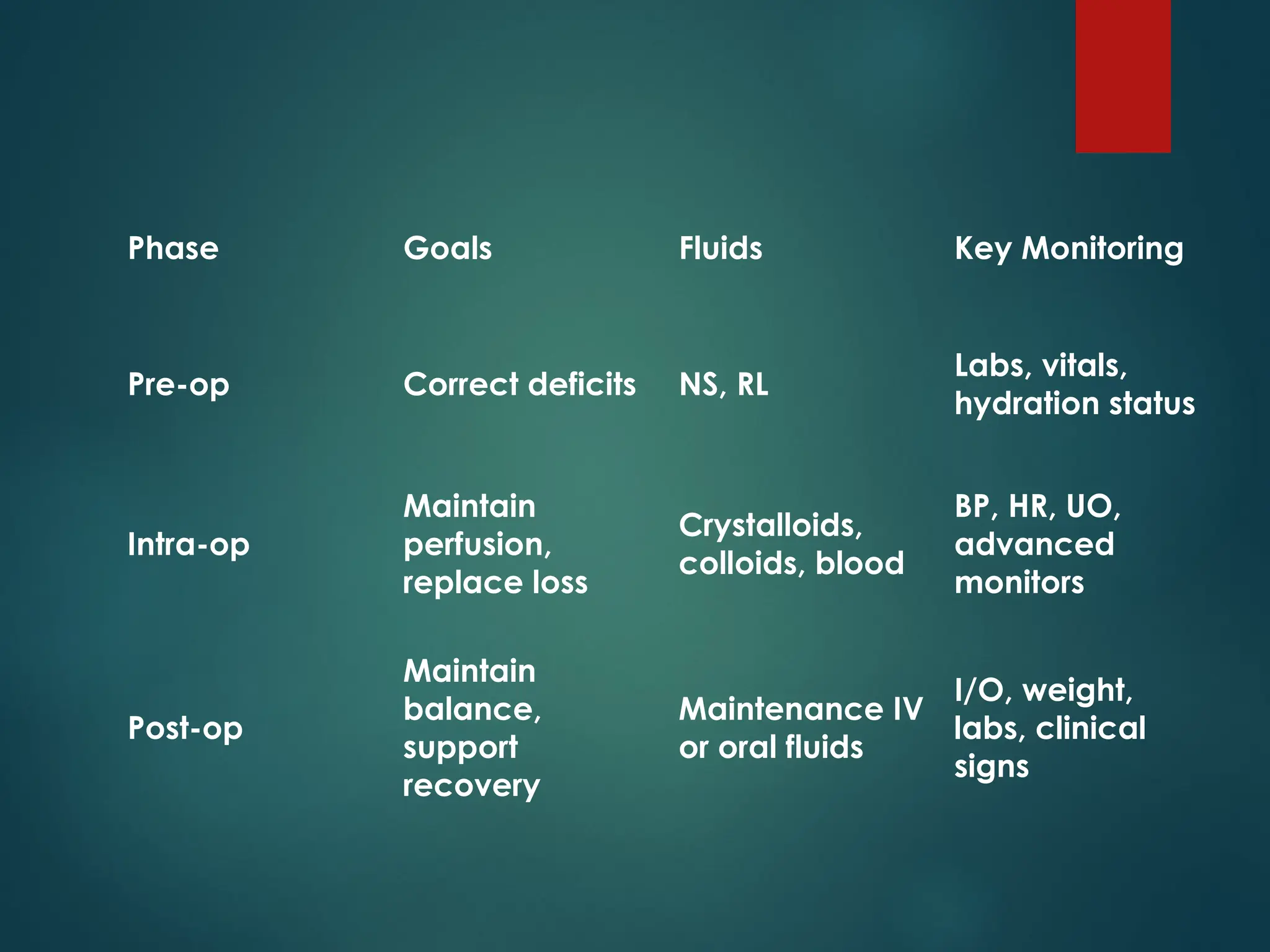
Phase Goals Fluids Key Monitoring
Pre-op Correct deficits NS, RL
Labs, vitals,
hydration status
Intra-op
Maintain
perfusion,
replace loss
Crystalloids,
colloids, blood
BP, HR, UO,
advanced
monitors
Post-op
Maintain
balance,
support
recovery
Maintenance IV
or oral fluids
I/O, weight,
labs, clinical
signs
5. Body Fluids electrolytes imbalance shock .ppt ·.ppt

5. Body Fluids electrolytes imbalance shock .ppt ·.ppt

  • 1.
    BODY FLUIDS AND ELECTROLYTEBALANCE SHOCK AND CLASSIFICATION Dr Aliya Shair Muhammad Lecturer Bolan University Of Medical And Health Sciences, Quetta
  • 2.
    Contents  Body fluid Electrolytes balance  Classification of fluid changes and Electrolytes imbalance  Shock and classification of shock  Pre, intra and post operative fluid therapy.
  • 3.
    Homeostasis Maintenance of relativelystable internal environment.
  • 8.
  • 10.
    FACTORS AFFECTING Total BodyWater  varies depending on body fat:  infant: 73%  male adult: 60%  female adult: 40-50%  effects of obesity  Old age 45%
  • 11.
  • 13.
    COMPOSITION OF BODYFLUIDS CATIONS (mmol/l) Plasma Interstitial Intracellular Na 142 139 14 K 4.2 4.0 140 Ca 1.3 1.2 0 Mg 0.8 0.7 20 ANIONS (mmol/l) Cl 108 108 4.0 HCO3 24.0 28.3 10 Protein 1.2 0.2 4.0 HPO4 2.0 2.0 11
  • 14.
    IMPORTANCE  Maintaining ECFvolume is critical to maintaining blood pressure  ECF osmolarity is of primary importance in long-term regulation of ECF volume  ECF osmolarity maintained mainly by NaCl balance:  intake: 10.5g/d output: 10g/d in urine
  • 15.
    FLUID COMPARTMENTS EXTRA CELLUAR FLUID INTRACELLULAR FLUID INTERSTITIAL FLUID PLASMA TRANSCELLULAR FLUID CSF Intra ocular Pleural Peritoneal Synovial Digestive Secretions
  • 16.
    Barriers separate ICF,interstitial fluid and plasma  Plasma membrane Separates ICF from surrounding interstitial fluid  Blood vessel wall Separate interstitial fluid from plasma
  • 19.
    VOLUME OF BODYFLUIDS IN 70 kg MAN TOTAL VOLUME 42 L INTRA CELLUAR FLUID 28 L(ROUGHLY 2/3 OF TBW) EXTRA CELLULAR FLUID 14 L(ROUGHLY 1/3 OF TBW) PLASMA 4 L (ROUGHLY ¼ OF ECF)
  • 20.
    Total Body Water BLOOD ECF ECF ICFICF ICF Blood Interstitial Interstitial
  • 21.
    Difference  ECF  Mostabundant cation - Na+,  muscle contraction  Impulse transmission  fluid and electrolyte balance  Most abundant anion - Cl-  Regulates osmotic pressure  Forms HCl in gastric acid  ICF  Most abundant cation - K+  Resting membrane potential  Action potentials  Maintains intracellular volume  Regulation of pH  Anion are proteins and phosphates (HPO4 2- ) Na+ /K+ pumps play major role in keeping K+ high inside cells and Na+ high outside cell
  • 22.
    TOTAL BODY WATER(TBW) 60% OF THE BODY WEIGHT IN ADULT MALE  50% OF THE BODY WEITH IN ADULT FEMALE
  • 23.
    VOLUME MEASUREMENT OFVARIOUS FLUIDS COMPARTMETNS INTERSTITIAL FLUID ECF – Plasma Volume INTRACELLULAR FLUID TBW – ECF
  • 24.
    FACTORS AFFECTING  Physiological Adipose Tissue  Sex  Age  Pathological  Dehydration  Overhydration
  • 25.
    Specialized Fluids ofthe Body  Lymph  Milk  Cerebrospinal fluid  Amniotic fluid  Aqueous humor  Sweat  Tears
  • 26.
    Lymph  Clear andcolorless fluid  96% water and 4% solids  Solids –  Proteins  2-6% of solids  albumin, globulin, fibrinogen, prothrombin, clotting factors, antibodies, enzymes  Lipids  5-15%  Chylomicrons  Lipoproteins  Carbohydrates  Glucose mainly  NPN  Urea and creatinine  Electrolytes  Sodium, calcium, potassium, chloride, bicarbonates
  • 27.
    Functions of Lymph Return protein from tissue spaces into blood  Redistribution of fluid  Removal of bacteria, toxins and other foreign bodies from tissues  Maintain structural and functional integrity of tissue  Route for intestinal fat absorption  Transport lymphocytes
  • 28.
    Milk  Secreted bymammary glands  Complete natural food  83-87% water and 13-17% solids  Solids  Carbohydrates  Lactose  Lipids  Triacylglyerols  Palmitic acid, myristic acid, stearic acid, lauric acid, butyric acid,oleic acid  Proteins  Caesin (80%), Lactalbumin  Enzymes (proteases, xanthine oxidase,lysozyme), immunoglobulins  Minerals  Ca, Mg, P, Na, K, Cl  Vitamins  Fat and water soluble vitamins except Vit - C
  • 29.
    Functions of Milk Milk sugar provides galactose, a structural unit for growing infant.  In intestine, it gets metabolized to lactic acid which eliminates harmful bacteria.  Source of protein, mineral and vitamins
  • 30.
    Cerebrospinal fluid (CSF) Clear, colorless liquid formed within the cavities of brain and around spinal cord  %500ml CSF is formed everyday  At any given time, there is 120-150ml CSF in the system  CSF is completely replaced about three times a day.
  • 31.
    Functions of CSF Hydrolic shock absorber  Regulation of intracranial pressure  Influences the hunger sensation and eating behaviours
  • 32.
    Amniotic Fluid  Liquidproduced by membranes and fetus  Volume of fluid increases with gestational age  Clear with some desquamated fetal cell and a little lipid.
  • 33.
    Functions of AF Physical protection to the fetus  Medium for exchange of various chemical
  • 34.
    Aqueous Humor  Fluidthat fills the interior chamber of eye  Secreted by ciliary body, enters anterior chamber  Blockade in the flow of aqueous humor causes glaucoma due to increased intraocular pressure.  Posterior chamber of eye is filled with vitrous humor which contains a gel (vitrous body of hyaluronic acid secreted by retina)
  • 35.
    Sweat  Secretion ofsweat gland  Regulates body temperature by cooling and evaporation  Sweat glands controlled by ANS, Adrenal cortical steroid - which affect the quantity of electrolyte present
  • 36.
    Sweat  Insensible perspirationamounts to 800- 1200ml/day  Volume of sweat produced/day during muscular exercise at elevated temperature may range from 10-14ml, which may lead to water and electrolyte imbalance  Water content of sweat varies from 99.2- 99.7%  pH – 4.7 to 7.5  Total non protein nitrogen (urea) varies from 0.07-1% per hour during copius sweating
  • 37.
    Sweat  Electrolyte insweat varies  Na+ 12.6-127 meq/l  K+ 5-32 meq/l  Cl- 8.5-85 meq/l
  • 38.
    Tears  Produced bylachrymal glands  Isotonic but becomes hypertonic due to evaporation as fluid passes over the cornea  When the tear flow is copius, fluid is isotonic  Under stimulus with a slow rate of tear flow, the fluid is about 25m osm hypertonic Copius – Rapid tear flow induction
  • 39.
    Tears  pH –7 to 7.6 due to loss of CO2  Protein content is 0.6 to 0.18g/dl with an albumin/globulin ratio of 1:5 or 2:1  Small amount of mucin is also present  Lysozyme – lyses the cells of a number of micro- organisms by breaking down the polysaccharides of their outer layer
  • 40.
    Functions of Tears Lysozyme protects eye from infectious agents  Lubricate the surface of the cornea  Fill the irregularities of the corneal surface to improve optical properties  Protects eyes from injury
  • 41.
    FLUID AND ELECTROLYTE IMBALANCE: Any abnormality in the concentration of fluid and electrolytes in the body leads to fluid-electrolyte imbalances.  FLUID IMBALANCE: Deficient volume leads to- Hypovolemia & Dehydration Conditions: fever, sweating, burns, tachypnea, surgical drains, polyuria, or ongoing significant gastrointestinal loses.
  • 42.
     Excess fluidvolume leads to - Hypervolemia & Intoxication Conditions: heart failure, specifically of the right ventricle, cirrhosis, often caused by excess alcohol consumption or hepatitis. kidney failure, often caused by diabetes and other metabolic disorders.
  • 43.
    ELECTROLYTE IMBALANCES:.  Electrolytesare salts, acids, and bases, but electrolyte balance usually refers only to salt balance Salts are important for: - Essential minerals Controls osmosis between fluid compartments - Help maintain acid-base balance - Carry electrical (ionic) current for action potentials.
  • 44.
    ELECTROLYTES :  Theelectrolytes in human bodies include: sodium, potassium, calcium, bicarbonate, magnesium, chloride, phosphate.  The level of an electrolyte in the blood can become too high or too low, leading to an imbalance.  Electrolyte levels can change in relation to water levels in the body as well as other factors. Important electrolytes are lost in sweat during exercise, including sodium and potassium.  The concentration can also be affected by rapid loss of fluids, such as after a bout of diarrhea or vomiting. Some other causes include kidney diseases, congestive heart failure, Chemotherapy, poor diet, sever dehydration, some drugs such as diuretics.
  • 45.
    NORMAL RANGE OF ELECTROLYTES:  The normal range for : 1. Sodium 135 to 145 mmol/L 2. . Potassium 3.7 to 5.2 mmol/L 3. . Calcium 8.5 to 10.6 mg/dl 4. . Magnesium 1.7 to 2.2 mg/dl 5. . Phosphate 0.81 to 1.45 mmol/L 6. . Chloride 97 to 107 mmol/L
  • 46.
    1. SODIUM: - Sodium holds a central position in fluid and electrolyte balance. Sodium is the single most abundant +cation in the ECF Accounts for 90-95% of all solutes in the ECF. Contribute 280 mOsm of the total 300 mOsm ECF solute concentration. - The role of sodium in controlling ECF volume and water distribution in the body is a result of:  Sodium being the only cation to exert significant osmotic pressure.  Sodium ions leaking into cells and being pumped out against their electrochemical gradient.  Sodium concentration in the ECF normally remains stable Rate of sodium uptake across digestive tract directly proportional to dietary intake.  Sodium losses occur through urine and perspiration. Changes in plasma sodium levels affect: Plasma volume, blood pressure ICF and interstitial fluid volume
  • 47.
     Large variationsin sodium are corrected by homeostatic mechanisms. - If sodium levels are too low, it is termed as HYPONATREMIA. In this, antidiuretic hormone (ADH) and aldosterone are secreted. - Regulation of Sodium Balance by ADH :-
  • 48.
    Regulation of SodiumBalance: Aldosterone: A decrease in Na+ levels in the plasma stimulates aldosterone release.  The kidneys detect the decrease in Na+ levels and cause a series of reactions referred to as the renin-angiotensin- aldosterone mechanisms. This is mediated by the juxtaglomerular apparatus, which releases renin in response to: - Sympathetic nervous system stimulation. Decreased filtrate osmolality. -Decreased stretch (due to decreased blood pressure) Sodium reabsorption 65% of sodium in filtrate is reabsorbed in the proximal tubules --25% is reclaimed in the loops of Henle When aldosterone levels are high, all remaining Na+ is actively reabsorbed. Water follows sodium if tubule permeability has been increased with ADH.
  • 49.
  • 50.
     If sodiumlevels are too high, it is termed as HYPERNATREMIA. In this, atrial natriuretic peptide (ANP) is secreted. ATRIAL NATRIURETIC PEPTIDE (ANP): Is released in the heart atria as a response to stretch (elevated blood pressure), It has potent diuretic and natriuretic effects It promotes excretion of sodium and water, inhibits angiotensin II production.
  • 51.
  • 52.
    Conti… •Hypokalemia (low K) ⁺ •↓ Extracellular K → ↑ gradient → ⁺ hyperpolarization (becomes even more negative than normal)→ cells are less responsive •Reduced Na /K -ATPase activity → delayed repolarization ((K ) ions ⁺ ⁺ ⁺ flow out of the cell) → disturbed cardiac conduction, risk of arrhythmias & sudden death •Hyperkalemia (high K ) ⁺ •↑ Extracellular K → ↓ gradient → ⁺ depolarization (more positive) because sodium (Na ) ions go in) → initial excitability ⁺ Followed by Na channel inactivation → conduction slows or ⁺‑ blocks Leads to ECG changes (peaked T waves → widened QRS → sine-wave) → fatal arrhythmias, ‑ possible sudden death •Acid–Base & K Shifts ⁺ •↑ H (acidosis) → H enters cells → K exits → extracellular ⁺ ⁺ ⁺ hyperkalemia •↓ H (alkalosis) → opposite effect ⁺ •These shifts disrupt excitable cell function
  • 53.
  • 54.
  • 55.
    Conti…  Calcium reabsorptionand phosphate excretion go simultaneously:  Filtered phosphate is actively reabsorbed in the proximal tubules. In the absence of PTH, phosphate reabsorption is regulated by its transport maximum and excesses are excreted in urine. High or normal ECF calcium levels inhibit PTH secretion. - Release of calcium from bone is inhibited. - Larger amounts of calcium are lost in feces and urine. - More phosphate is retained.
  • 56.
    4. PHOSPHATE : •Phosphateis an electrolyte containing the mineral phosphorus essential for:  strengthens bones and Teeth supports cell membranes vital for energy production (ATP) • In excess, phosphate can cause bone and muscle issues and raise the risk of heart attack and stroke •High phosphate levels often indicate kidney damage, especially in chronic kidney disease (CKD) It is common in individuals with CKD, particularly those with end- stage kidney disease
  • 58.
  • 59.
  • 60.
  • 61.
    ACID - BASEBALANCE :
  • 62.
  • 63.
  • 64.
    Buffer system: The threemain buffer systems in our bodies are the: 1. Bicarbonate buffer system 2. Phosphate buffer system 3. Protein buffer system
  • 65.
  • 66.
  • 67.
  • 68.
  • 71.
  • 72.
    Introduction Importance of fluidtherapy in surgical patients Goals: Maintain perfusion, prevent organ dysfunction, support recovery
  • 73.
    Preoperative Fluid Therapy: Goals Correctfluid/electrolyte imbalances Restore volume in hypovolemia Prevent dehydration from fasting Management Clinical assessment (vitals, labs) Use of isotonic crystalloids (0.9% NaCl, Ringer's Lactate) Calculate and replace estimated deficits
  • 74.
    Intraoperative Fluid Therapy – Goals Maintainhemodynamic stability Replace fluid losses (insensible, third-space, blood loss) Ensure adequate urine output
  • 75.
    Intraoperative Fluids & Replacement Fluids: Crystalloids (Ringer’s Lactate, NS)  Colloids (Albumin, Hydroxyethyl starch)  Blood products (if significant loss) Replacement guide:  Maintenance: 1–1.5 mL/kg/hr  Third-space: 2–4 mL/kg/hr  Blood loss: 3:1 rule for crystalloids, 1:1 for colloids/blood
  • 76.
    Intraoperative Monitoring  Vitalsigns (BP, HR)  Urine output (>0.5 mL/kg/hr)  CVP / Arterial line (for high-risk patients)
  • 77.
    Postoperative Fluid Therapy – Goals Maintainfluid/electrolyte balance Replace ongoing losses (e.g., drains, vomiting) Prevent overload/dehydration Management Continue IV fluids if NPO Transition to oral as tolerated Monitor: weight, I/O, serum electrolytes, clinical status
  • 78.
    Phase Goals FluidsKey Monitoring Pre-op Correct deficits NS, RL Labs, vitals, hydration status Intra-op Maintain perfusion, replace loss Crystalloids, colloids, blood BP, HR, UO, advanced monitors Post-op Maintain balance, support recovery Maintenance IV or oral fluids I/O, weight, labs, clinical signs

Editor's Notes

  • #50 Inhibition of angiotensin II production:help blood pressure by reducing vasoconstriction and aldosterone release.
  • #52 Depolarization is the first part of the action potential. It happens when the inside of the cell becomes less negative (more positive) because sodium (Na⁺) ions rush in. Repolarization is the process of the cell returning to its normal negative state after depolarization. This happens when potassium (K⁺) ions flow out of the cell.