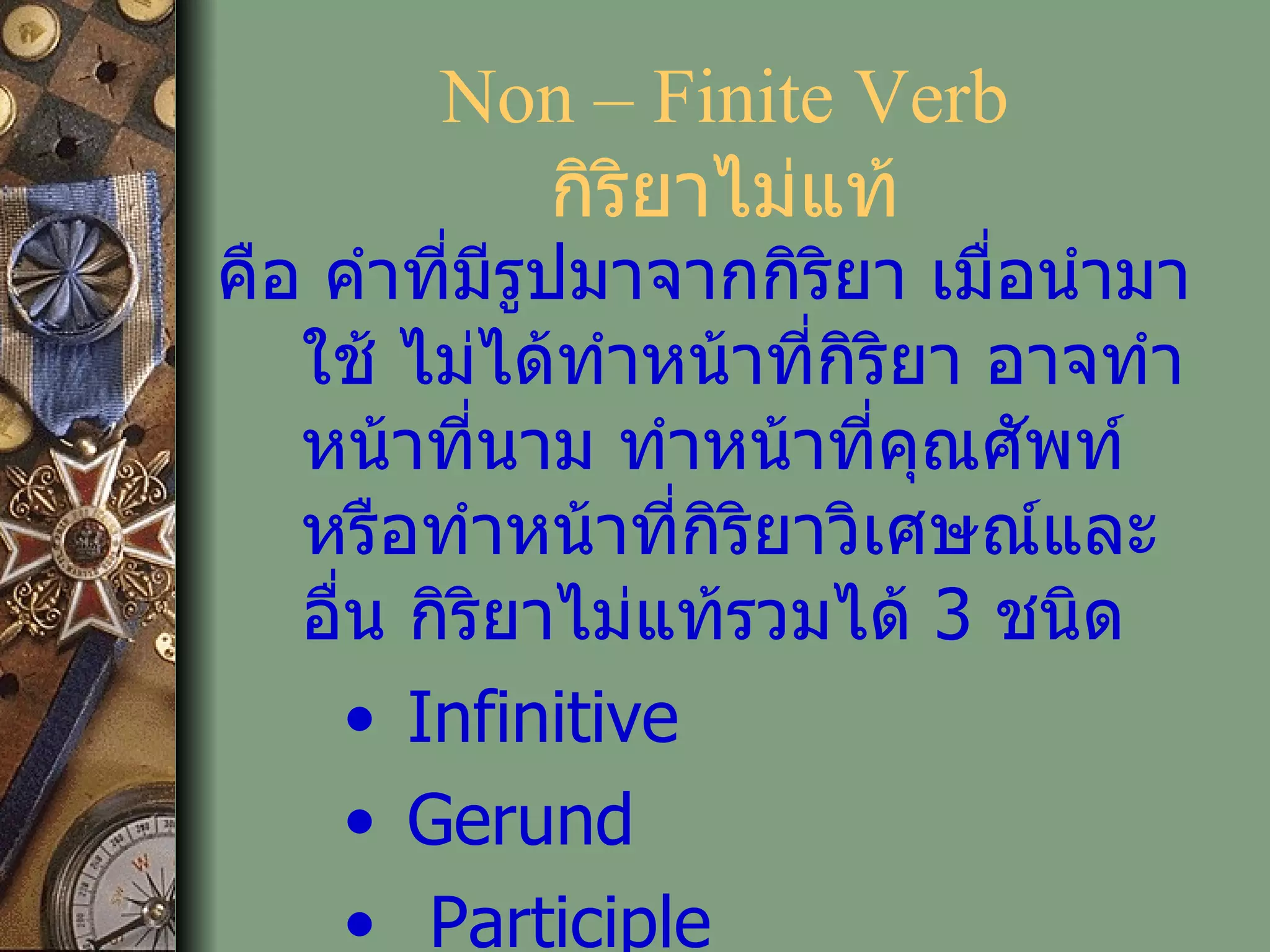
คือ คำที่มีรูปมาจากกิริยา เมื่อนำมาใช้ ไม่ได้ทำหน้าที่กิริยา อาจทำหน้าที่นาม ทำหน้าที่คุณศัพท์ หรือทำหน้าที่กิริยาวิเศษณ์และอื่น กิริยาไม่แท้รวมได้  3  ชนิด Infinitive Gerund Participle Non – Finite Verb กิริยาไม่แท้
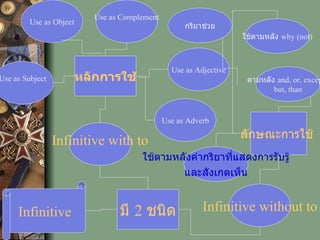
Infinitive without to มี  2  ชนิด Infinitive   Use as Adjective หลักการใช้ Use as Complement Infinitive with to Use as Object Use as Adverb Use as Subject ลักษณะการใช้  กริยาช่วย ใช้ตามหลัง  why (not) ตามหลัง  and, or, except,  but, than ใช้ตามหลังคำกริยาที่แสดงการรับรู้ และสังเกตเห็น
Infinitive คือ กิริยาช่องที่  1  แต่ถูกนำมาใช้ทำหน้าที่อื่นในประโยค มี  2  ชนิด คือ Infinitive with to กิริยาช่องที่  1  มี  to  นำหน้า Infinitive without to กิริยาช่องที่  1  ไม่มี  to  นำหน้า
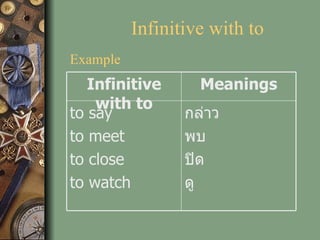
Infinitive with to Example กล่าว พบ ปิด ดู to say to meet to close to watch Meanings Infinitive with to
หลักการใช้  Infinitive ใช้เป็นประธานของกิริยา  (Use as Subject) ใช้เป็นประธานของกิริยา   (Use as Subject ) To swim  is a good sport. การว่ายน้ำเป็นกีฬาที่ดี To build  a house is not easy. การสร้างบ้านนั้นไม่อยาก
2.  ใช้เป็นกรรมของกิริยา  (Use as Object)  ( Subject + V. +  to verb )  สังเกตการใช้กิริยาเหล่านี้   promise, ask, beg, desire, hate, prefer, prepare, expect, like, trouble, want, wish She likes  to   maintain  her age as twenty five only. เธอชอบที่จะสงวนอายุของเธอไว้ที่ยี่สิบห้าเท่านั้น I asked  to   meet  the Finance Minister, Somkid Jatusripitak.
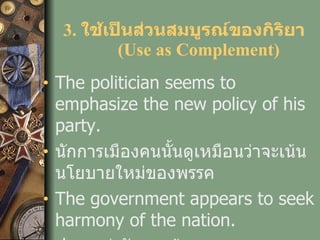
3.  ใช้เป็นส่วนสมบูรณ์ของกิริยา  (Use as Complement) The politician seems to   emphasize the new policy of his party. นักการเมืองคนนั้นดูเหมือนว่าจะเน้นนโยบายใหม่ของพรรค The government appears to   seek harmony of the nation. ปรากฏว่ารัฐบาลต้องการความสมานฉันท์ของคนในชาติ
4.  ใช้เป็นคุณศัพท์  (Use as Adjective)  ขยายคำนามที่อยู่ข้างหน้า This is his thought  to attend  in the class. นี่คือความคิดของเขาที่จะเข้าเรียนในชั้น I like your idea  to   announce  the reality. ฉันชอบความคิดของคุณที่จะประกาศความจริง
5.  ใช้เป็นกิริยาวิเศษณ์  (Use as Adverb)   ขยายอกรรมกิริยา และคำอื่น ๆ   เรียงตามหลังอกรรมกิริยา  ( Intransitive Verb )  ทำหน้าที่ขยายอกรรมกิริยาตัวนั้น He likes to   ask what I have taught him. เขาต้องการถามสิ่งที่ฉันสอนเขา An authority comes to   clarify the bad news to you. เจ้าหน้าที่มาแจ้งข่าวร้ายแก่คุณ
6. adjective + enough + ( for someone ) + to v.  It isn’t large enough ( for her ) to take seven people. มันไม่ใหญ่พอที่จะให้อยู่ได้เจ็ดคน The room is not wide enough to sleep two persons. ห้องนั้นไม่กว้างพอที่จะนอนได้สองคน
7. adverb + enough + ( for someone ) + to v. Our team didn’t play well enough ( for us ) to win the price. ทีมของเราเล่นไม่ดีพอที่จะได้รับรางวัล An announcer speaks clearly enough to understand. ผู้ประกาศพูดชัดเจนพ่อที่จะเข้าใจ
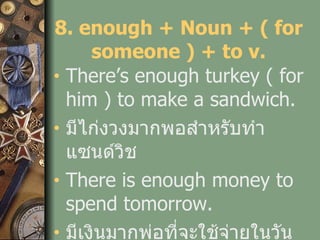
8. enough + Noun + ( for someone ) + to v. There’s enough turkey ( for him ) to make a sandwich. มีไก่งวงมากพอสำหรับทำแซนด์วิช There is enough money to spend tomorrow. มีเงินมากพ่อที่จะใช้จ่ายในวันพรุ่งนี้
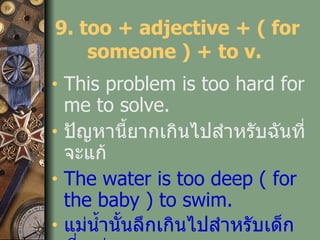
9. too + adjective + ( for someone ) + to v.  This problem is too hard for me to solve. ปัญหานี้ยากเกินไปสำหรับฉันที่จะแก้ The water is too deep ( for the baby ) to swim. แม่น้ำนั้นลึกเกินไปสำหรับเด็กที่จะว่าย
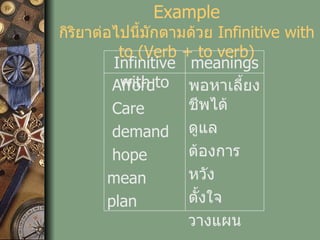
Example กิริยาต่อไปนี้มักตามด้วย  Infinitive with to  ( Verb + to verb) พอหาเลี้ยงชีพได้ ดูแล ต้องการ หวัง ตั้งใจ วางแผน Afford Care demand hope mean plan meanings Infinitive with to
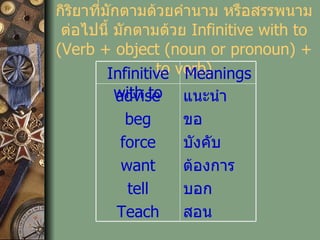
Example กิริยาที่มักตามด้วยคำนาม หรือสรรพนามต่อไปนี้ มักตามด้วย  Infinitive with to (Verb + object (noun or pronoun) + to verb) แนะนำ ขอ บังคับ ต้องการ บอก สอน advise beg force want tell Teach Meanings Infinitive with to
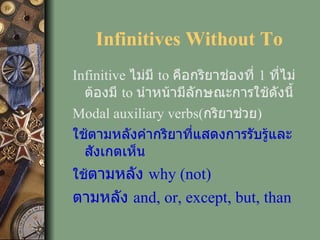
Infinitives Without To Infinitive  ไม่มี  to  คือกริยาช่องที่  1  ที่ไม่ต้องมี  to  นำหน้ามีลักษณะการใช้ดังนี้ Modal auxiliary verbs( กริยาช่วย )   ใช้ตามหลังคำกริยาที่แสดงการรับรู้และสังเกตเห็น ใช้ ตามหลัง  why (not)  ตามหลัง  and, or, except, but, than
ลักษณะการใช้ 1. Modal auxiliary verbs( กริยาช่วย ) เราใช้  infinitive  ไม่มี  to  ตามหลังกริยาช่วย  will, shall, would, should, can, could  may, might, had better We must clean the room.
2. ใช้  infinitive  ไม่มี  to  ตามหลังคำกริยาที่แสดงการรับรู้และสังเกตเห็นได้แก่คำว่า let = อนุญาต make = ทำ see =  เห็น hear =  ได้ยิน feel =  รู้สึก watch =  ดู เฝ้าดู notice =  สังเกต I saw a boy steal a car.
ลักษณะการใช้ 3. ใช้  infinitive  ไม่มี  to  ตามหลัง  why (not)  ที่หมายถึงสิ่งที่ไม่จำเป็นหรือการ ทำในสิ่งโง่ๆ เช่น Why did you do that? It's the stupidest thing I've ever seen. 4. ใช้  infinitive  ไม่มี  to  ตามหลัง  and, or, except, but, than เราสามารถนำคำ  infinitive  มาใช้ร่วมกันด้วย  and, or, except, but, than  แต่ว่า infinitive  ตัวที่สองไม่ต้องมี  to Do you want to go out or stay home?
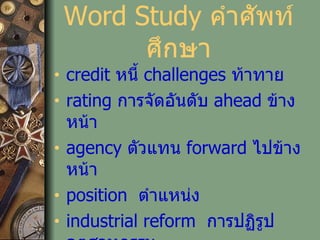
Word Study  คำศัพท์ศึกษา credit  หนี้   challenges   ท้าทาย   rating  การจัดอันดับ   ahead   ข้างหน้า   agency  ตัวแทน   forward  ไปข้างหน้า position   ตำแหน่ง   industrial reform   การปฏิรูปอุตสาหกรรม light  แสง   measures  มาตรการ
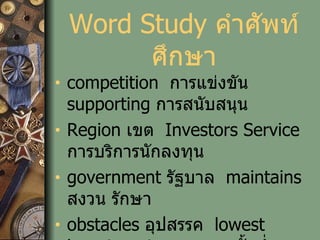
Word Study  คำศัพท์ศึกษา competition  การแข่งขัน   supporting  การสนับสนุน   Region  เขต   Investors Service   การบริการนักลงทุน   government  รัฐบาล   maintains  สงวน รักษา obstacles  อุปสรรค   lowest investment   การลงทุนขั้นต่ำ
Word Study  คำศัพท์ศึกษา Entrepreneurship   การประกอบการ   ratings review การทบทวนลำดับที่   grade  ลำดับ   new debt  หนี้ใหม่ team   กลุ่ม   approach  วิธี   Moody’s officials  เจ้าหน้าที่ของบริษัทมูดี้   productive  เพิ่มผลผลิต   Thai authorities   เจ้าหน้าที่ไทย   take   รับ
Word Study  คำศัพท์ศึกษา Preparation   การเตรียมการ   risk  เสี่ยง   international สากล นานาชาติ   external shocks   ความแตกตื่นภายนอก   financial markets   ตลาดการเงิน   preliminary data   ข้อมูลเบื้องต้น   determine   กำหนด political uncertainties   ความไม่แน่นอนทางการเมือง borrowing  การยืม   ease  ทำให้ง่าย ทำให้สะดวก
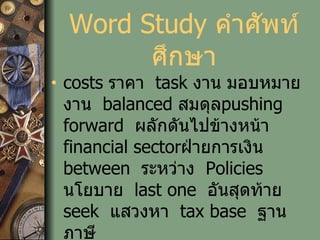
Word Study  คำศัพท์ศึกษา costs  ราคา   task  งาน มอบหมายงาน   balanced  สมดุล pushing forward   ผลักดันไปข้างหน้า   financial sector ฝ่ายการเงิน   between   ระหว่าง   Policies  นโยบาย   last one   อันสุดท้าย   seek   แสวงหา   tax base   ฐานภาษี
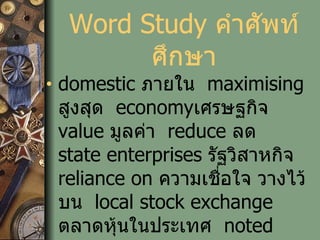
Word Study  คำศัพท์ศึกษา domestic  ภายใน   maximising  สูงสุด   economy เศรษฐกิจ   value  มูลค่า   reduce  ลด   state enterprises  รัฐวิสาหกิจ   reliance on  ความเชื่อใจ วางไว้บน   local stock exchange   ตลาดหุ้นในประเทศ   noted  สังเกต จดไว้   Announced ประกาศ
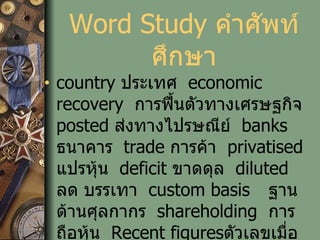
Word Study  คำศัพท์ศึกษา country  ประเทศ   economic recovery   การฟื้นตัวทางเศรษฐกิจ   posted  ส่งทางไปรษณีย์   banks  ธนาคาร   trade  การค้า   privatised  แปรหุ้น   deficit  ขาดดุล   diluted   ลด บรรเทา   custom basis ฐานด้านศุลกากร   shareholding   การถือหุ้น   Recent figures ตัวเลขเมื่อเร็วๆนี้   new loans  การกู้ยืมใหม่
Word Study  คำศัพท์ศึกษา trade account  บัญชีทางการค้า   corporate sector   ด้านบริษัท   surplus   ส่วนเกิน กำไร   extending   การขยาย preliminary data   ข้อมูลเบื้องต้น   state-owned  เป็นของรัฐบาล   exports   การส่งออก   financial institutions   สถาบันทางการเงิน   billion  พันล้าน clarified   ทำให้ชัดเจน   against  เปรียบเทียบกับ leading role  บทบาทนำ
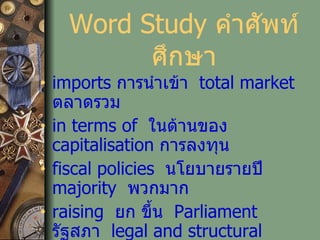
Word Study  คำศัพท์ศึกษา imports   การนำเข้า   total market   ตลาดรวม   in terms of  ในด้านของ   capitalisation  การลงทุน   fiscal policies   นโยบายรายปี   majority   พวกมาก   raising  ยก ขึ้น   Parliament   รัฐสภา   legal and structural   โครงสร้างและกฏหมาย   qualitative basis   ฐานด้านคุณภาพ
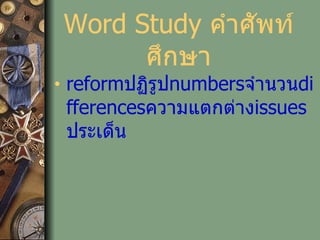
Word Study  คำศัพท์ศึกษา reform ปฏิรูป numbers จำนวน differences ความแตกต่าง issues  ประเด็น
จบการนำเสนอ

4.infinitive

  • 1.
    คือ คำที่มีรูปมาจากกิริยา เมื่อนำมาใช้ไม่ได้ทำหน้าที่กิริยา อาจทำหน้าที่นาม ทำหน้าที่คุณศัพท์ หรือทำหน้าที่กิริยาวิเศษณ์และอื่น กิริยาไม่แท้รวมได้ 3 ชนิด Infinitive Gerund Participle Non – Finite Verb กิริยาไม่แท้
  • 2.
    Infinitive without toมี 2 ชนิด Infinitive Use as Adjective หลักการใช้ Use as Complement Infinitive with to Use as Object Use as Adverb Use as Subject ลักษณะการใช้ กริยาช่วย ใช้ตามหลัง why (not) ตามหลัง and, or, except, but, than ใช้ตามหลังคำกริยาที่แสดงการรับรู้ และสังเกตเห็น
  • 3.
    Infinitive คือ กิริยาช่องที่ 1 แต่ถูกนำมาใช้ทำหน้าที่อื่นในประโยค มี 2 ชนิด คือ Infinitive with to กิริยาช่องที่ 1 มี to นำหน้า Infinitive without to กิริยาช่องที่ 1 ไม่มี to นำหน้า
  • 4.
    Infinitive with toExample กล่าว พบ ปิด ดู to say to meet to close to watch Meanings Infinitive with to
  • 5.
    หลักการใช้ Infinitiveใช้เป็นประธานของกิริยา (Use as Subject) ใช้เป็นประธานของกิริยา (Use as Subject ) To swim is a good sport. การว่ายน้ำเป็นกีฬาที่ดี To build a house is not easy. การสร้างบ้านนั้นไม่อยาก
  • 6.
    2. ใช้เป็นกรรมของกิริยา (Use as Object) ( Subject + V. + to verb ) สังเกตการใช้กิริยาเหล่านี้ promise, ask, beg, desire, hate, prefer, prepare, expect, like, trouble, want, wish She likes to maintain her age as twenty five only. เธอชอบที่จะสงวนอายุของเธอไว้ที่ยี่สิบห้าเท่านั้น I asked to meet the Finance Minister, Somkid Jatusripitak.
  • 7.
    3. ใช้เป็นส่วนสมบูรณ์ของกิริยา (Use as Complement) The politician seems to emphasize the new policy of his party. นักการเมืองคนนั้นดูเหมือนว่าจะเน้นนโยบายใหม่ของพรรค The government appears to seek harmony of the nation. ปรากฏว่ารัฐบาลต้องการความสมานฉันท์ของคนในชาติ
  • 8.
    4. ใช้เป็นคุณศัพท์ (Use as Adjective) ขยายคำนามที่อยู่ข้างหน้า This is his thought to attend in the class. นี่คือความคิดของเขาที่จะเข้าเรียนในชั้น I like your idea to announce the reality. ฉันชอบความคิดของคุณที่จะประกาศความจริง
  • 9.
    5. ใช้เป็นกิริยาวิเศษณ์ (Use as Adverb) ขยายอกรรมกิริยา และคำอื่น ๆ เรียงตามหลังอกรรมกิริยา ( Intransitive Verb ) ทำหน้าที่ขยายอกรรมกิริยาตัวนั้น He likes to ask what I have taught him. เขาต้องการถามสิ่งที่ฉันสอนเขา An authority comes to clarify the bad news to you. เจ้าหน้าที่มาแจ้งข่าวร้ายแก่คุณ
  • 10.
    6. adjective +enough + ( for someone ) + to v. It isn’t large enough ( for her ) to take seven people. มันไม่ใหญ่พอที่จะให้อยู่ได้เจ็ดคน The room is not wide enough to sleep two persons. ห้องนั้นไม่กว้างพอที่จะนอนได้สองคน
  • 11.
    7. adverb +enough + ( for someone ) + to v. Our team didn’t play well enough ( for us ) to win the price. ทีมของเราเล่นไม่ดีพอที่จะได้รับรางวัล An announcer speaks clearly enough to understand. ผู้ประกาศพูดชัดเจนพ่อที่จะเข้าใจ
  • 12.
    8. enough +Noun + ( for someone ) + to v. There’s enough turkey ( for him ) to make a sandwich. มีไก่งวงมากพอสำหรับทำแซนด์วิช There is enough money to spend tomorrow. มีเงินมากพ่อที่จะใช้จ่ายในวันพรุ่งนี้
  • 13.
    9. too +adjective + ( for someone ) + to v. This problem is too hard for me to solve. ปัญหานี้ยากเกินไปสำหรับฉันที่จะแก้ The water is too deep ( for the baby ) to swim. แม่น้ำนั้นลึกเกินไปสำหรับเด็กที่จะว่าย
  • 14.
    Example กิริยาต่อไปนี้มักตามด้วย Infinitive with to ( Verb + to verb) พอหาเลี้ยงชีพได้ ดูแล ต้องการ หวัง ตั้งใจ วางแผน Afford Care demand hope mean plan meanings Infinitive with to
  • 15.
    Example กิริยาที่มักตามด้วยคำนาม หรือสรรพนามต่อไปนี้มักตามด้วย Infinitive with to (Verb + object (noun or pronoun) + to verb) แนะนำ ขอ บังคับ ต้องการ บอก สอน advise beg force want tell Teach Meanings Infinitive with to
  • 16.
    Infinitives Without ToInfinitive ไม่มี to คือกริยาช่องที่ 1 ที่ไม่ต้องมี to นำหน้ามีลักษณะการใช้ดังนี้ Modal auxiliary verbs( กริยาช่วย ) ใช้ตามหลังคำกริยาที่แสดงการรับรู้และสังเกตเห็น ใช้ ตามหลัง why (not) ตามหลัง and, or, except, but, than
  • 17.
    ลักษณะการใช้ 1. Modalauxiliary verbs( กริยาช่วย ) เราใช้ infinitive ไม่มี to ตามหลังกริยาช่วย will, shall, would, should, can, could may, might, had better We must clean the room.
  • 18.
    2. ใช้ infinitive ไม่มี to ตามหลังคำกริยาที่แสดงการรับรู้และสังเกตเห็นได้แก่คำว่า let = อนุญาต make = ทำ see = เห็น hear = ได้ยิน feel = รู้สึก watch = ดู เฝ้าดู notice = สังเกต I saw a boy steal a car.
  • 19.
    ลักษณะการใช้ 3. ใช้ infinitive ไม่มี to ตามหลัง why (not) ที่หมายถึงสิ่งที่ไม่จำเป็นหรือการ ทำในสิ่งโง่ๆ เช่น Why did you do that? It's the stupidest thing I've ever seen. 4. ใช้ infinitive ไม่มี to ตามหลัง and, or, except, but, than เราสามารถนำคำ infinitive มาใช้ร่วมกันด้วย and, or, except, but, than แต่ว่า infinitive ตัวที่สองไม่ต้องมี to Do you want to go out or stay home?
  • 20.
    Word Study คำศัพท์ศึกษา credit หนี้ challenges ท้าทาย rating การจัดอันดับ ahead ข้างหน้า agency ตัวแทน forward ไปข้างหน้า position ตำแหน่ง industrial reform การปฏิรูปอุตสาหกรรม light แสง measures มาตรการ
  • 21.
    Word Study คำศัพท์ศึกษา competition การแข่งขัน supporting การสนับสนุน Region เขต Investors Service การบริการนักลงทุน government รัฐบาล maintains สงวน รักษา obstacles อุปสรรค lowest investment การลงทุนขั้นต่ำ
  • 22.
    Word Study คำศัพท์ศึกษา Entrepreneurship การประกอบการ ratings review การทบทวนลำดับที่ grade ลำดับ new debt หนี้ใหม่ team กลุ่ม approach วิธี Moody’s officials เจ้าหน้าที่ของบริษัทมูดี้ productive เพิ่มผลผลิต Thai authorities เจ้าหน้าที่ไทย take รับ
  • 23.
    Word Study คำศัพท์ศึกษา Preparation การเตรียมการ risk เสี่ยง international สากล นานาชาติ external shocks ความแตกตื่นภายนอก financial markets ตลาดการเงิน preliminary data ข้อมูลเบื้องต้น determine กำหนด political uncertainties ความไม่แน่นอนทางการเมือง borrowing การยืม ease ทำให้ง่าย ทำให้สะดวก
  • 24.
    Word Study คำศัพท์ศึกษา costs ราคา task งาน มอบหมายงาน balanced สมดุล pushing forward ผลักดันไปข้างหน้า financial sector ฝ่ายการเงิน between ระหว่าง Policies นโยบาย last one อันสุดท้าย seek แสวงหา tax base ฐานภาษี
  • 25.
    Word Study คำศัพท์ศึกษา domestic ภายใน maximising สูงสุด economy เศรษฐกิจ value มูลค่า reduce ลด state enterprises รัฐวิสาหกิจ reliance on ความเชื่อใจ วางไว้บน local stock exchange ตลาดหุ้นในประเทศ noted สังเกต จดไว้ Announced ประกาศ
  • 26.
    Word Study คำศัพท์ศึกษา country ประเทศ economic recovery การฟื้นตัวทางเศรษฐกิจ posted ส่งทางไปรษณีย์ banks ธนาคาร trade การค้า privatised แปรหุ้น deficit ขาดดุล diluted ลด บรรเทา custom basis ฐานด้านศุลกากร shareholding การถือหุ้น Recent figures ตัวเลขเมื่อเร็วๆนี้ new loans การกู้ยืมใหม่
  • 27.
    Word Study คำศัพท์ศึกษา trade account บัญชีทางการค้า corporate sector ด้านบริษัท surplus ส่วนเกิน กำไร extending การขยาย preliminary data ข้อมูลเบื้องต้น state-owned เป็นของรัฐบาล exports การส่งออก financial institutions สถาบันทางการเงิน billion พันล้าน clarified ทำให้ชัดเจน against เปรียบเทียบกับ leading role บทบาทนำ
  • 28.
    Word Study คำศัพท์ศึกษา imports การนำเข้า total market ตลาดรวม in terms of ในด้านของ capitalisation การลงทุน fiscal policies นโยบายรายปี majority พวกมาก raising ยก ขึ้น Parliament รัฐสภา legal and structural โครงสร้างและกฏหมาย qualitative basis ฐานด้านคุณภาพ
  • 29.
    Word Study คำศัพท์ศึกษา reform ปฏิรูป numbers จำนวน differences ความแตกต่าง issues ประเด็น
  • 30.