Assessment and Management of
Patients with Hematologic Disorders
July 8 2014
Objectives
On completion of this chapter, the learner will be able to:
1. Describe the process of hematopoiesis.
2. Describe the processes involved in maintaining hemostasis.
3. Differentiate between the hypoproliferative and the hemolytic anemias and
compare and contrast the physiologic mechanisms, clinical manifestations, medical
management, and nursing interventions for each.
4. Use the nursing process as a framework for care of patients with anemia.
5. Compare the leukemias in terms of their incidence, physiologic alterations, clinical
manifestations, management, and prognosis.
6. Use the nursing process as a framework for care of patients with acute leukemia.
7. Use the nursing process as a framework for care of patients with lymphoma or
multiple myeloma.
8. Use the nursing process as a framework for care of patients with bleeding or
thrombotic disorders.
9. Identify therapies for blood disorders, including the nursing implications for the
administration of blood components.
BLOOD
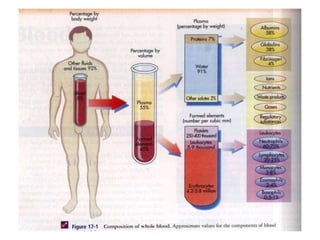
• The cellular component of blood consists of
three primary cell types:
– erythrocytes(red blood cells[RBCs], red cells),
– leukocytes(white blood cells [WBCs]),
– thrombocytes (platelets).T
Blood Cells
• WBC (Leukocyte)
– Fights infection
• Neutrophil
– Essential in preventing or limiting
bacterialinfection via phagocytosis
• Monocyte
– Enters tissue as macrophage; highly phagocytic,
especially against fungus; immune surveillance
Blood Cells
• Eosinophil
– Involved in allergic reactions (neutralizes
histamine); digests foreign proteins
• Basophil
– Contains histamine; integral part of
hypersensitivity reactions
• Lymphocyte
– Integral component of immune system
Blood Cells
• T lymphocyte
– Responsible for cell-mediated immunity; recognizes
material as “foreign”(surveillance system)
• B lymphocyte
– Responsible for humoral immunity; many mature into
plasma cells to form antibodies
• Plasma cell
– Secretes immunoglobulin (Ig, antibody);most mature
form of B lymphocyte
– Plasma proteins consist primarily of albumin and
theglobulins.
Blood cells
• RBC (Erythrocyte)
– Carries hemoglobin to provide oxygen to tissues;
average lifespan is 120 days
• Platelet (Thrombocyte)
– Fragment of megakaryocyte; provides basis for
coagulation to occur; maintains hemostasis;
average lifespan is 10 days
Question
Is the following statement True or False?
Hematopoiesis is the complex process of the
formation and maturation of blood cells.
Answer
True
Hematopoiesis is the complex process of the
formation and maturation of blood cells.
Hematologic System
• The blood and the blood forming sites,
including the bone marrow and the
reticuloendothelial system
• Blood
– Plasma
– Blood cells
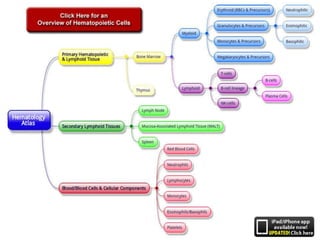
• Hematopoiesis
Blood Cells
• Erythrocyte—RBC
• Leukocyte—WBC
– Neutrophil
– Monocyte
– Eosinophil
– Basophil
– Lymphocyte—T lymphocyte and B lymphocyte
• Thrombocyte—platelet
Hematopoiesis
Hematopoiesis
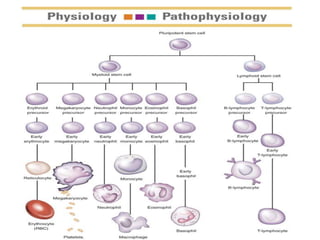
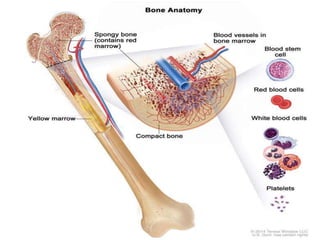
• Uncommitted (pluripotent) stem cells can differentiate into
myeloid or lymphoid stem cells.
• These stem cells then undergo a complex process of
differentiation and maturation into normal cells that are
released into the circulation.
• The myeloid stem cell is responsible not only for all
nonlymphoid white blood cells but also for the production
of red blood cells (RBCs) and platelets.
• Each step of the differentiation process depends in part on
the presence of specific growth factors for each cell type.
When the stem cells are dysfunctional, they may respond
inadequately to the need for more cells, or they may
respond excessively, sometimes uncontrollably
Hemostasis
• Hemostasis is the process of preventing blood
loss from in-tact vessels and of stopping
bleeding from a severed vessel,which requires
adequate numbers of functional platelets.
Assessment and Diagnostic Evaluation
• Most hematologic diseases reflect a defect in the hematopoietic,
hemostatic, or reticuloendothelial system.
• Defect can be
– quantitative (eg, increased or decreased production of cells),
– qualitative (eg, the cells that are produced are defective in their
normal functional capacity), or both.
• Initially, many hematologic conditions cause few symptoms.
• Extensive laboratory tests are often required to diagnose a
hematologic disorder.
• For most hematologic conditions, continued monitoring via specific
blood tests is required because it is very important to assess for
changes in test results over time. In general, it is important to
assess trends in test results because these trends help the clinician
decide whether the patient is responding appropriately to
treatment
Assessment and Diagnostic Evaluation
Hematologic Studies
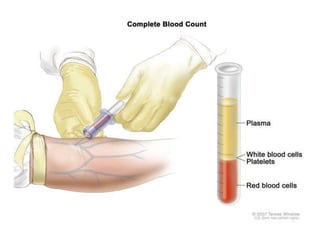
• The full hemogram identifies the total number
of blood cells (leukocytes, erythrocytes, and
platelets) as well as the hemoglobin,
hematocrit (percentage of blood volume
consisting of erythrocytes), and RBC indices.
Assessment and Diagnostic Evaluation
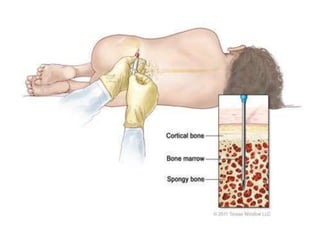
Bone Marrow Aspiration and Biopsy
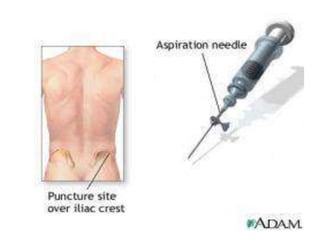
• Bone marrow is usually aspirated from the iliac
crest and occasionally from the sternum.
• The aspirate provides only a sample of cells.
• Aspirate alone may be adequate for evaluating
certain conditions, such as anemia.
• Biopsy samples are taken from the posterior iliac
crest
• A marrow biopsy shows the architecture of the
bone marrow as well as its degree of cellularity.
Question
What type of anemia results from red blood cell
destruction?
A. Bleeding
B. Hemolytic
C. Hypoproliferative
D. None of the above
Answer
B
Bleeding results from red blood loss. Hemolytic
anemia results from red blood cell
destruction. Hypoproliferative anemia results
from defective red blood cell production.
Anemias
To determine whether the presence of anemia in a
given patient is caused by destruction or by inadequate
production of erythrocytes:
• The marrow’s ability to respond to decreased
erythrocytes (as evidenced by an increased reticulocyte
count in the circulating blood)
• The degree to which young erythrocytes proliferate in
the bone marrow and the manner in which they
mature (as observed on bone marrow biopsy)
• The presence or absence of end products of
erythrocyte destruction within the circulation (eg,
increased bilirubin level, decreased haptoglobin level)
Anemias
• Lower than normal hemoglobin and fewer than
normal circulating erythrocytes. A sign of an
underlying disorder
• Hypoproliferative: defect in production of RBCs
– Due to iron, vitamin B12, or folate deficiency,
decreased erythropoietin production, cancer
• Hemolytic: excess destruction of RBCs
– Due to altered erythropoiesis, or other causes such as
hypersplenism, drug-induced or autoimmune
processes, mechanical heart valves
• May also be due to blood loss
Anemias
• Hypoproliferative (Resulting From Defective
RBC Production)
– Iron deficiency
– Vit B12 Deficiency – Megaloblastic
– Folate Deficiency (megaloblastic)
– Decreased erythropoetic production e.g in renal
dysfunction
– Cancer/Inflammation
Anemias
• Bleeding (Resulting From RBC Loss)
– Bleeding from gastrointestinal tract, epistaxis
(nosebleed), trauma, bleeding from genitourinary
tract (eg, menorrhagia)
Anemias
Hemolytic (Resulting From RBC Destruction)
– Altered erythropoiesis (sickle cell anemia,
thalassemia, hemoglobinopathies)
– Hypersplenism (hemolysis)
– Drug-induced anemia
– Autoimmune anemia
– Mechanical heart valve–related anemia
Causes of Hemolytic Anemias
Inherited Hemolytic Anemia
• Abnormal hemoglobin
– Sickle cell anemia
– Thalassemia
• Red blood cell membrane abnormality
– Hereditary spherocytosis
– Hereditary elliptocytosis
– Acanthocytosis
– Stomatocytosis
• Enzyme deficiencies
– Glucose-6-phosphate dehydrogenase (G-6-PD) deficiency
Causes of Hemolytic Anemias
Acquired Hemolytic Anemia
• Antibody related
– Iso-antibody/transfusion reaction
– Autoimmune hemolytic anemia (AIHA)
– Cold agglutinin disease
• Not antibody related
– Red blood cell membrane defects
– Paroxysmal nocturnal hemoglobinuria (PNH)
– Liver disease
– Uremia
– Trauma
– Mechanical heart valve
– Microangiopathic hemolytic anemia
– Infection
– Bacterial
– Parasitic
– Disseminated intravascular coagulation (DIC)
– Toxins
– Hypersplenism
Assessment and Diagnostic Findings
• hemoglobin, hematocrit, reticulocyte count,
and RBC indices, particularly the mean
corpuscular volume(MCV) and red cell
distribution width (RDW)
• Iron studies (serum iron level, total iron-
binding capacity [TIBC], percent saturation,
and ferritin), as well as serum vitamin B12and
folate levels
Manifestations
• Depend upon the rapidity of the development of the
anemia, duration of the anemia, metabolic
requirements of the patient, concurrent problems, and
concomitant features
• Fatigue, weakness, malaise
• Pallor or jaundice
• Cardiac and respiratory symptoms
• Tongue changes
• Nail changes
• Angular cheilosis
• Pica
Medical Management
• Correct or control the cause
• Transfusion of packed RBCs
• Treatment specific to the type of anemia
– Dietary therapy
– Iron or vitamin supplementation—iron, folate, B12
– Transfusions
– Immunosuppressive therapy
– Other
Complications
• General complications of severe anemia
include
– heart failure
– Paresthesias
– delirium.
• Patients with underlying heart disease are far
more likely to have angina or symptoms of
heart failure than those without heart disease.
Nursing Process: The Care of the
Patient with Anemia—Assessment
• Health history and physical exam
• Laboratory data
• Presence of symptoms and impact of those
symptoms on patient’s life; fatigue, weakness,
malaise, pain
• Nutritional assessment
• Medications
• Cardiac and GI assessment
• Blood loss—menses, potential GI loss
• Neurologic assessment
Nursing Process: The Care of the
Patient with Anemia—Diagnoses
• Fatigue
• Altered nutrition
• Altered tissue perfusion
• Noncompliance with prescribed therapy
Collaborative Problems/Potential
Complications
• Heart failure
• Angina
• Paresthesias
• Confusion
Nursing Process: The Care of the
Patient with Anemia—Planning
• Major goals include decreased fatigue,
attainment or maintenance of adequate
nutrition, maintenance of adequate tissue
perfusion, compliance with prescribed
therapy, and absence of complications.
Interventions
• Balance physical activity, exercise, and rest.
• Maintain adequate nutrition.
• Patient education to promote compliance with
medications and nutrition.
• Monitor VS and pulse oximetry, provide
supplemental oxygen as needed.
• Monitor for potential complications.
Myelodysplastic Syndrome
• Myelodysplastic syndrome (MDS) is a group of
disorders of the myeloid stem cell that causes
dysplasia (abnormal development) in one or
more types of cell lines.
• The most common feature of MDS—dysplasia of
the erythrocytes—is manifested as a macrocytic
anemia; however, the leukocytes(myeloid cells,
particularly neutrophils) and platelets can also be
affected.
Myelodysplastic Syndrome
• Patients have an increased risk of infection and
bleeding
• Primary MDS tends to be a disease of people older
than60 years of age.
• Secondary MDS can occur at any age and result from
prior toxic exposure to chemicals, including
chemotherapeutic medications (particularly alkylating
agents).
• Secondary MDS tends to have a poorer prognosis than
does primary MDS. Thirty percent of MDS cases evolve
into acute myeloid leukemia (AML); this type of
leukemia tends to be resistant to standard therapy
Myelodysplastic Syndrome
• Manifestations of MDS can vary widely.
• Many patients are asymptomatic, with the illness being
discovered incidentally when a CBC is performed for
other purposes.
• Other patients have profound symptoms and
complications from the illness.
• Fatigue is often present, at varying levels.
• Neutrophil dysfunction puts the person at risk for
recurrent pneumonias and other infections.
• Because platelet function can also be altered, bleeding
can occur.
Myelodysplastic Syndrome
• Assessment and Diagnostic Findings
• The CBC typically reveals a macrocytic anemia; leukocyte
and platelet counts may be diminished as well.
• Serum erythropoietin levels and the reticulocyte count may
be inappropriately low.
• If the disease evolves into AML, more immature blast cells
are noted on the CBC.
• The official diagnosis of MDS is based on the results of a
bone marrow aspiration and biopsy.
• Cytogenetic analysis of the bone marrow is important in
determining the over-all prognosis, risk of evolution into
AML, and method of treatment.
Myelodysplastic Syndrome
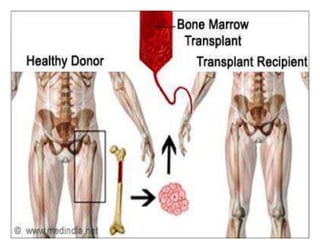
• Allogeneic BMT is the only cure for MDS.
• Chemotherapy
• Transfusions of RBCs maybe required to control the anemia
and its symptoms.
• These patients can develop iron overload from the
repeated transfusions; this risk can be diminished with
prompt initiation of chelation therapy
– Chelation therapy is a process that is used to remove excess iron
acquired from chronic transfusions. Iron is bound to a
substance, the chelating agent, and then excreted in the urine.
• Erythropoetin injections
• Platelet transfusions to prevent significant bleeding
Nursing Management
• Challenging – illness is unpredicatable
• Patients with MDS need extensive instruction
about infection risk, measures to avoid it, signs
and symptoms of developing infection, and
appropriate actions to take should such
symptoms occur.
• Instruction should also be given regarding the risk
of bleeding.
• Patients with MDS who are hospitalized may
require neutropenic precautions.
Nursing Management
• Laboratory values need to be monitored
closely to anticipate the need for transfusion
Hemolytic Anemias
• the erythrocytes have a shortened lifespan; thus, their
number in the circulation is reduced.
• Fewer erythrocytes result in decreased available oxygen,
causing hypoxia, which in turn stimulates an increase in
erythropoietin release from the kidney.
• The erythropoietin stimulates the bone marrow to
compensate by producing new erythrocytes and releasing
some of them into the circulation somewhat prematurely
as reticulocytes.
• If the red cell destruction persists, the hemoglobin is
broken down excessively; about 80% of the heme is
converted to bilirubin, conjugated in the liver, and excreted
in the bile.
Hemolytic Anemias
• The reticulocyte count is elevated,
• The fraction of indirect(unconjugated) bilirubin is
increased
• Supply of haptoglobin (a binding protein for free
hemoglobin) is depleted as more hemoglobin is
released. As a result, the plasma haptoglobin
level is low.
• If the marrow cannot compensate to replace the
erythrocytes (indicated by a de-creased
reticulocyte count), the anemia will progress.
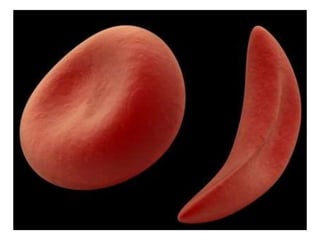
Sickle Cell Anemia
• Sickle cell anemia is a severe hemolytic anemia
that results from inheritance of the sickle
hemoglobin gene.
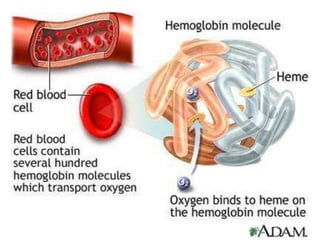
• This gene causes the hemoglobin molecule to be
defective.
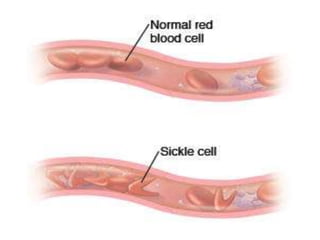
• The sickle hemoglobin (HbS) acquires a crystal-
like formation when exposed to low oxygen
tension.
• Erythrocyte containing HbS loses its round,
pliable, biconcave disk shape and becomes
deformed, rigid, and sickle shaped
Sickle Cell Anemia
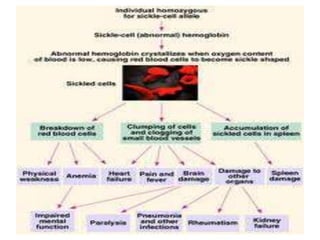
• These long, rigid erythrocytes can adhere to the
endothelium of small vessels; when they adhere
to each other, blood flow to a region or an organ
maybe reduced. If ischemia or infarction results,
the patient may have pain, swelling, and fever.
• The HbS gene is inherited in people of African
descent and to a lesser extent in people from the
Middle East, the Mediterranean area, and
aboriginal tribes in India.
• Sickle cell anemia is the most severe form of
sickle cell disease.
Sickle Cell Anemia
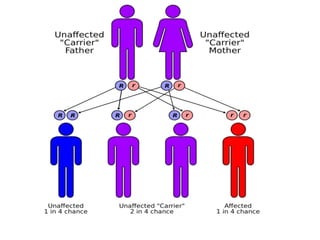
• The term sickle cell trait refers to the carrier
state for SC diseases; it is the most benign
type of SC disease, in that less than 50% of the
hemoglobin within an erythrocyte is HbS.
However, if two people with sickle cell trait
have children, the children may inherit two
abnormal genes and will have sickle cell
anemia
Clinical Manifestations
• Symptoms and complications result from chronic hemolysis
or thrombosis.
• Anemia is always present; usually hemoglobin values are 7
to 10 g/dL.
• Jaundice is characteristic and is usually obvious in the
sclerae.
• The bone marrow expands in childhood in a compensatory
effort to offset the anemia, sometimes leading to
enlargement of the bones of the face and skull.
• The chronic anemia is associated with tachycardia, cardiac
murmurs, and often an enlarged heart (cardiomegaly).
Dysrhythmias and heart failure may occur in adults.
Clinical Manifestations
• All the tissues and organs are vulnerable to
microcirculatory interruptions by the sickling
process and therefore are susceptible to hypoxic
damage or ischemic necrosis.
• Patients with sickle cell anemia are unusually
susceptible to infection, particularly pneumonia
and osteomyelitis.
• Complications of sickle cell anemia include
infection, stroke, renal failure, impotence, heart
failure, and pulmonary hypertension
Sickle Cell Crisis
Three types
• The most common is the very painful sickle crisis, which results
from tissue hypoxia and necrosis due to inadequate blood flow to a
specific region of tissue or organ.
• Aplastic crisis results from infection with the human parvovirus. The
hemoglobin level falls rapidly and the marrow cannot compensate,
as evidenced by an absence of reticulocytes.
• Sequestration crisis results when other organs pool the sickled cells.
Although the spleen is the most common organ responsible for
sequestration in children, most children with sickle cell anemia have
had a splenic infarction by 10 years of age, and the spleen is then
no longer functional (autosplenectomy).
• In adults, the common organs involved in sequestration are the liver
and, more seriously, the lungs.
Acute Chest Syndrome
• manifested by fever, cough, tachycardia, and
new infiltrates seen on the chest x-ray.
• These signs often mimic infection, which is
often the cause.
• Infectious etiology appears to be atypical
bacteria such as Chlamydia pneumoniae and
Mycoplasma pneumoniae as well as viruses
such as respiratory syncytial virus (RSV)and
parvovirus
Acute Chest Syndrome
• Other causes include pulmonary fat embolism,
pulmonary infarction, and pulmonary
thromboembolism.
Pulmonary Hypertension
• Pulmonary hypertension is a common sequela
of sickle cell disease, and often the cause of
death
• Diagnosing is difficult because clinical
symptoms rarely occur until damage is
irreversible.
• Pulse oximetry measurements are typically
normal, and breath sounds are clear to
auscultation.
Pulmonary Hypertension
• CT of the chest often demonstrates
microvascular pulmonary occlusion and
diminished perfusion of the lung.
• Screening patients with sickle cell disease with
Doppler echocardiography is useful in
identifying patients with elevated pulmonary
artery pressures
Assessment and Diagnostic Findings
• The patient with sickle cell trait usually has a
normal hemoglobin level, a normal
hematocrit, and a normal bloodsmear.
• Patient with sickle cell anemia has a low
hematocrit and sickled cells on the smear.
• Diagnosis confirmed by hemoglobin
electrophoresis.
Medical Management
• Treatment for sickle cell anemia is the focus of
continued research.
• Aggressive management of symptoms and
complications.
Medical Management
• Peripheral Blood Stem Cell Transplant
• Pharmacologic therapy
– Hydrourea
– Arginine
• Transfusion therapy
• Supportive therapy
– Pain management
– Fluid intake
Nursing Process
• Acute pain related to tissue hypoxia due to
agglutination of sickled cells within blood
vessels
• Risk for infection
• Risk for powerlessness related to illness-
induced helplessness
• Deficient knowledge regarding sickle crisis
prevention
Collaborative Problems/Potential
Complications
• Hypoxia, ischemia, infection, and poor wound healing
leading to skin breakdown and ulcers
• Dehydration
• Cerebrovascular accident (CVA, brain attack, stroke)
• Anemia
• Acute and chronic renal failure
• Heart failure, pulmonary hypertension, and acute chest
syndrome
• Impotence
• Poor compliance
• Substance abuse related to poorly managed chronic pain
Patient goals
• The major goals for the patient are relief of
pain, decreased incidence of crisis, enhanced
sense of self-esteem and power, and absence
of complications.
Further Reading
Hypoproliferative Anemias
• Iron deficiency anemia
• Anemia in renal disease
• Anemia of chronic disease
• Aplastic anemia
• Megaloblastic anemias
– Folic acid deficiency
– Vitamin B12 deficiency
Further Reading
Hemolytic Anemias
• Thalassemia
• Glucose-6-phosphate dehydrogenase
deficiency
• Immune Hemolytic anemia
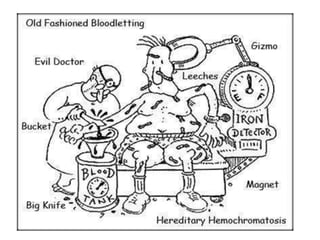
Hereditary Hemochromatosis
• Hemochromatosis is a genetic condition in
which excess iron is absorbed from the GI
tract.
• The excess iron is deposited in various organs,
particularly the liver, myocardium, testes,
thyroid, and pancreas. Eventually, the affected
organs become dysfunctional.
• Women are less often affected than men
because women lose iron through menses.
Hereditary Hemochromatosis
Clinical Manifestations
• Often there is no evidence of tissue damage until middle age,
because the accumulation of iron in body organs occurs gradually.
• Symptoms of weakness, lethargy, arthralgia, weight loss, and loss of
libido are common and occur earlier in the illness trajectory.
• The skin may appear hyperpigmented from melanin deposits (and
occasionally hemosiderin, an iron-containing pigment) or appear
bronze in color.
• Cardiac dysrhythmias and cardiomyopathy
• Endocrine dysfunction - hypothyroidism, diabetes mellitus, and hy-
pogonadism (testicular atrophy, diminished libido, and impotence).
• Cirrhosis is common in later stages of the disease,s hortens life
expectancy, and is a risk factor for hepatocellular carcinoma
Hereditary Hemochromatosis
Assessment and Diagnostic Findings
• Elevated serum iron level
• FHG normal
• Liver biopsy (for definitive diagnosis)
Hereditary Hemochromatosis
• Medical Management
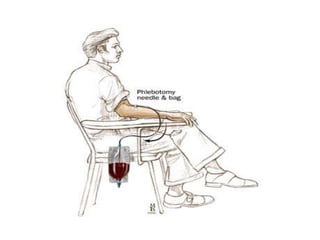
– Removal of excess iron via therapeutic
phlebotomy (1-2 x/weekly)
• Nursing management
– Limit dietary iron intake
– Avoid additional insults to the liver – etoh abuse
– Monitor for organ disfunction
SCD
• In countries such as Cameroon, Republic of Congo,
Gabon, Ghana and Nigeria, the prevalence is between
20% and 30% while in some parts of Uganda it is as
high as 45%.
• In countries where the trait prevalence is above 20%
the disease affects about 2% of the population.
• The geographic distribution of the sickle-cell trait is
very similar to that of malaria.
• The sickle cell trait has a partial protective effect
against malaria, and this may explain why it has been
maintained at such high prevalence levels in tropical
Africa.
Lab tests
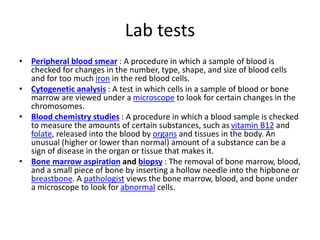
• Peripheral blood smear : A procedure in which a sample of blood is
checked for changes in the number, type, shape, and size of blood cells
and for too much iron in the red blood cells.
• Cytogenetic analysis : A test in which cells in a sample of blood or bone
marrow are viewed under a microscope to look for certain changes in the
chromosomes.
• Blood chemistry studies : A procedure in which a blood sample is checked
to measure the amounts of certain substances, such as vitamin B12 and
folate, released into the blood by organs and tissues in the body. An
unusual (higher or lower than normal) amount of a substance can be a
sign of disease in the organ or tissue that makes it.
• Bone marrow aspiration and biopsy : The removal of bone marrow, blood,
and a small piece of bone by inserting a hollow needle into the hipbone or
breastbone. A pathologist views the bone marrow, blood, and bone under
a microscope to look for abnormal cells.
Leukopenia
• Leukopenia, a condition in which there are
fewer leukocytes than normal, results from
neutropenia (diminished neutrophils) or
lymphopenia (diminished lymphocytes).
• A count lower than 4,000 white blood cells per
microliter of blood is generally considered a
low white blood cell count.
Neutropenia
• Neutropenia (a neutrophil count of less than
2000/mm3) results from decreased production of
neutrophils or increased destruction of these
cells
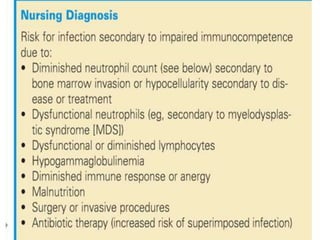
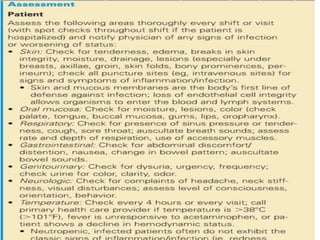
• A patient with neutropenia is at increased risk for
infection from both exogenous and endogenous
sources. (The GI tract and skin are common
endogenous sources.)
• The risk of infection is based not only on the
severity of the neutropenia but also on its
duration.
Neutropenia
• The actual number of neutrophils, known as the
absolute neutrophil count (ANC), is determined
using data obtained from the CBC and
differential/full hemogram
• The risk for infection increases proportionately
with the decrease in neutrophil count. The risk is
significant when the ANC is less than 1000/mm3,
is high when it is less than 500/mm3, and is
almost certain when it is less than 100/mm
Causes
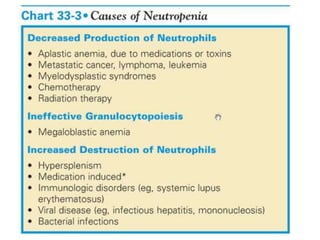
Decreased Production of Neutrophils
• Aplastic anemia, due to medications or toxins
• Metastatic cancer, lymphoma, leukemia
• Myelodysplastic syndromes
• Chemotherapy
• Radiation therapy
Causes
• Ineffective Granulocytopoiesis
– Megaloblastic anemia
• Increased Destruction of Neutrophils
– Hypersplenism
– Medication induced
– Immunologic disorders (eg, systemic lupus
erythematosus)
– Viral disease (eg, infectious hepatitis, mononucleosis)
– Bacterial infections
Neutropenia
Clinical Manifestations
• There are no definite symptoms of
neutropenia until the patient becomes
infected.
• A routine CBC with differential, as obtained
after chemotherapy treatment, can reveal
neutropenia before the onset of infection.
Neutropenia
Medical Management
• Depends on cause
• If medication induced, discontinue the med
• Antibiotics
• If on chemotheraphy, may need to hold the
chemo
Neutropenia
Nursing Management
• Prevention of complications
• Monitor labs
• Assess severity of neutropenia
Neutropenia
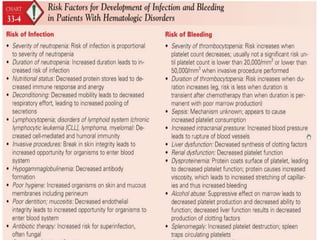
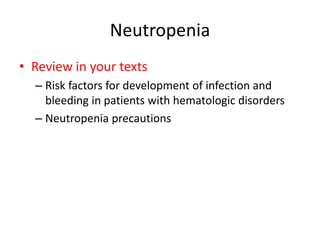
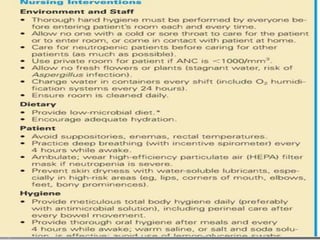
• Review in your texts
– Risk factors for development of infection and
bleeding in patients with hematologic disorders
– Neutropenia precautions
Further reading
• Polycythemia
• Lymphopenia
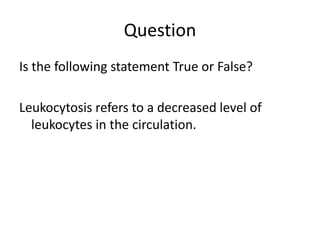
Question
Is the following statement True or False?
Leukocytosis refers to a decreased level of
leukocytes in the circulation.
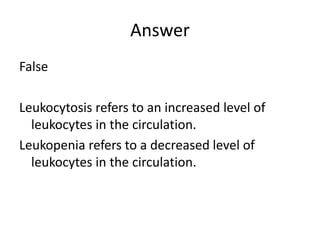
Answer
False
Leukocytosis refers to an increased level of
leukocytes in the circulation.
Leukopenia refers to a decreased level of
leukocytes in the circulation.
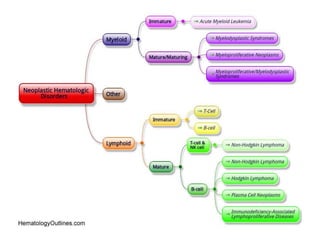
Leukemia
• Hematopoietic malignancy with unregulated
proliferation of leukocytes
• Types:
– Acute myeloid leukemia
– Chronic myeloid leukemia
– Acute lymphocytic leukemia
– Chronic lymphocytic leukemia
Acute Myeloid Leukemia (AML)
• Defect in stem cell that differentiate into all
myeloid cells: monocytes, granulocytes,
erythrocytes, and platelets
• Most common nonlymphocytic leukemia
• Affects all ages with peak incidence at age 60
• Prognosis is variable
• Manifestations: fever and infection, weakness
and fatigue, bleeding tendencies, pain from
enlarged liver or spleen, hyperplasia of gums,
bone pain
• Treatment aggressive chemotherapy—induction
therapy, BMT or PBSCT
Chronic Myeloid Leukemia (CML)
• Mutation in myeloid stem cell with uncontrolled
proliferation of cells—Philadelphia chromosome
• Stages: chronic phase, transformational phase,
blast crisis
• Uncommon in people under 20, with increased
incidence with age. Mean age: 55–60
• Life expectancy of 3–5 years
• Manifestations: initially may be asymptomatic,
malaise, anorexia, weight loss, confusion or
shortness of breath due to leukostasis, enlarged
tender spleen, or enlarged liver
• Treatment: imatinib mestylate (Gleevec) blocks
signals in leukemic cells that express BCR-ABL
protein; chemotherapy, BMT or PBSCT
Acute Lymphocytic Leukemia
• Uncontrolled proliferation of immature cells from
lymphoid stem cell
• Most common in young children, boys more
often than girls
• Prognosis is good for children; 80% 5-year event-
free survival, but drops with increased age
• Manifestations: leukemic cell infiltration is more
common with this leukemia, with symptoms of
meningeal involvement and liver, spleen, and
bone marrow pain
• Treatment: chemotherapy, imatinib mestylate (if
Philadelphia chromosome positive), BMT or
PBSCT, monoclonal antibody therapy
• Expected outcome is complete remission
Chronic Lymphocytic Leukemia
• Malignant B lymphocytes, most of which are mature,
may escape apoptosis, resulting in excessive
accumulation of cells
• Most common form of leukemia
• More common in older adults, effects men more often
• Survival varies from 2 to 14 years depending upon
stage
• Manifestations: lymphadenopathy, hepatomegaly,
splenomegaly; in later stages anemias and
thrombocytopenia; autoimmune complications with
RES destroying RBCs and platelets may occur, B
symptoms include fever, sweats, weight loss
• Treatment: early stage may require no treatment,
chemotherapy, monoclonal antibody therapy
Nursing Process: The Care of the
Patient with Leukemia—Assessment
• Health history
• Assess symptoms of leukemia, and for
complications of anemia, infection, and
bleeding
– Weakness and fatigue
• Laboratory tests
– Leukocyte count, ANC, hematocrit, platelets,
electrolytes, culture reports
Nursing Process: The Care of the
Patient with Leukemia—Diagnoses
• Risk for bleeding
• Risk for impaired skin integrity
• Impaired gas exchange
• Impaired mucous membrane
• Imbalanced nutrition
• Acute pain
• Hyperthermia
• Fatigue and activity intolerance
• Impaired physical mobility
Nursing Process: The Care of the
Patient with Leukemia—Diagnoses
• Risk for excess fluid volume
• Diarrhea
• Risk for deficient fluid volume
• Self-care deficit
• Anxiety
• Disturbed body image
• Potential for spiritual distress
• Grieving diagnoses
• Deficient knowledge
Collaborative Problems/Potential
Complications
• Infection
• Bleeding
• Renal dysfunction
• Tumor lysis syndrome
• Nutritional depletion
• Mucositis
• Depression
Nursing Process: The Care of the
Patient with Leukemia- Planning
• Major goals may include absence of
complications, attainment and maintenance
of adequate nutrition, activity tolerance,
ability for self-care and to cope with the
diagnosis and prognosis, positive body image,
and an understanding of the disease process
and its treatment.
Interventions
• Interventions related to risk of infection and
bleeding
• Mucositis
– Frequent, gentle oral hygiene
– Soft toothbrush, or if counts are low, sponge-
tipped applicators
– Rinse only with NS, NS and baking soda, or
prescribed solutions
– Perineal and rectal care
Improving Nutrition
• Oral care before and after meals
• Administer analgesics before meals
• Appropriate treatment of nausea
• Small, frequent feedings
• Soft foods that are moderate in temperature
• Low-microbial diet
• Nutritional supplements
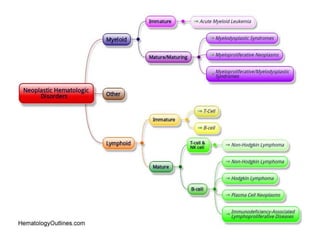
Lymphoma
• Neoplasm of lymph origin
• Hodgkin’s lymphoma
• Non-Hodgkin’s lymphoma
Hodgkin’s Disease
• Unicentric origin – initiates from a single node
• The malignant cell of HL is the Reed–Sternberg cells
– A gigantic tumor cell that is morphologically unique;
immature lymphocyte origin
– Pathologic hallmark; dx criterion
• Suspected viral etiology, familial pattern, incidence
early 20s and again after age 50
• Excellent cure rate with treatment
• Manifestations: painless lymph node enlargement,
pruritis; B symptoms: fever, sweats, weight loss
• Treatment is determined by stage of the disease and
may include chemotherapy and/or radiation therapy
Hodgkin’s Disease
• Cause unknown – thought to have a viral
etiology
• Mild anemia
• Leukocyte count may be elevated or
decreased
• Dx through lymph node bx
Non-Hodgkin's Lymphoma (NHL)
• Lymphoid tissues become infiltrated with
malignant cells, spread is unpredictable and
localized disease is rare.
• Incidence increases with age, with average age
being 50 to 60.
• Prognosis varies with type of NHL.
• Treatment is determined by type and stage of
disease, and may include interferon,
chemotherapy, and/or radiation therapy.
Question
What should any elderly patient be evaluated
for whose chief complaint is back pain and has
an elevated total protein level?
A. Anemia
B. Leukemia
C. Multiple myeloma
D. Non-Hodgkin’s lymphoma
Answer
C
Any elderly patient whose chief complaint is
back pain and has an elevated total protein
level should be evaluated for possible
myeloma.
Multiple Myeloma
• Malignant disease of plasma cells in the bone marrow with
destruction of bone
– Mature B lymphocytes
• Immunoglobulin secreted by myeloma cells Monoclonal
protein (dx – urine and serum protein levels)
• Median survival 3 to 5 years, no cure
• Manifestations: bone pain, osteoporosis, fractures,
elevated serum protein hypocalcaemia, renal damage renal
failure, symptoms of anemia, fatigue, weakness, increased
serum viscosity, and increased risk for bleeding and
infection
• Treatment may include chemotherapy, corticosteroids,
radiation therapy, biphosphonates
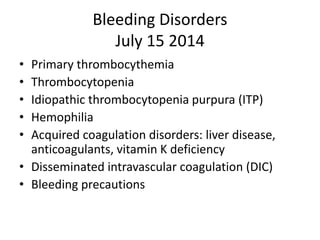
Bleeding Disorders
July 15 2014
• Primary thrombocythemia
• Thrombocytopenia
• Idiopathic thrombocytopenia purpura (ITP)
• Hemophilia
• Acquired coagulation disorders: liver disease,
anticoagulants, vitamin K deficiency
• Disseminated intravascular coagulation (DIC)
• Bleeding precautions
Thrombocytopenia
• Low platelet count
Thrombocytopenia is often divided into three
major causes of low platelets:
• Not enough platelets are made in the bone
marrow
• Increased breakdown of platelets in the
bloodstream
• Increased breakdown of platelets in the spleen or
liver
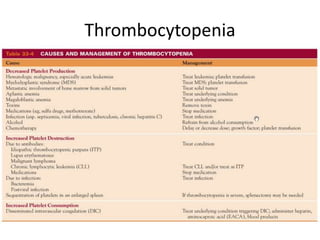
Thrombocytopenia
Hemophilia
• Two inherited bleeding disorders—hemophilia
A and hemophilia B—are clinically
indistinguishable.
• Hemophilia A is caused by a genetic defect
that results in deficient or defective factor VIII.
Hemophilia B (also called Christmas disease)
stems from a genetic defect that causes
deficient or defective factor IX.
Von Willenbrand’s Dz
• Von Willebrand disease (vWD), a common
bleeding disorder affecting males and females
equally, is usually inherited as a dominant trait.
• There are three types of vWD.
– Type 1, the most common, is characterized by
decreases in structurally normal vWF.
– Type 2 shows variable qualitative defects based on the
specific vWF subtype involved.
– Type 3 is very rare (less than5% of cases) and is
characterized by a severe vWF deficiency as well as
significant deficiency of factor VIII
Further Reading
Thrombocytopenia
Idiopathic thrombocytopenia purpura (ITP)
Hemophilia
Von Willenbrand’s dz
• Pathophysiology
• Clinical manifestations
• Assessment and diagnostic findings
• Medical and nursing management
Further Reading
Acquired coagulation disorders
– Vitamin K deficiency
– Complications of anticoagulant therapy
Question
Is the following statement True or False?
Disseminated intravascular coagulation is not a
disease but a sign of an underlying condition.
Answer
True
Disseminated intravascular coagulation is not a
disease but a sign of an underlying condition.
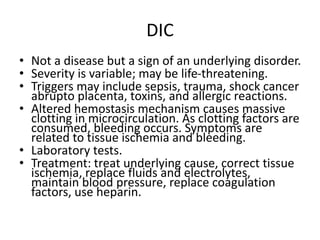
DIC
• Not a disease but a sign of an underlying disorder.
• Severity is variable; may be life-threatening.
• Triggers may include sepsis, trauma, shock cancer
abrupto placenta, toxins, and allergic reactions.
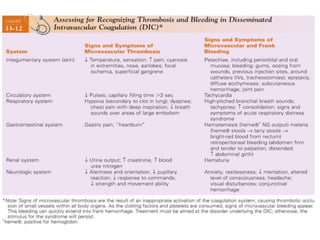
• Altered hemostasis mechanism causes massive
clotting in microcirculation. As clotting factors are
consumed, bleeding occurs. Symptoms are
related to tissue ischemia and bleeding.
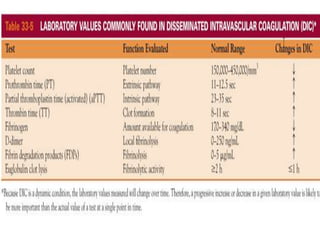
• Laboratory tests.
• Treatment: treat underlying cause, correct tissue
ischemia, replace fluids and electrolytes,
maintain blood pressure, replace coagulation
factors, use heparin.
Nursing Process: The Care of the
Patient with DIC—Assessment
• Be aware of patient who are at risk for DIC and
assess for signs and symptoms of the
condition.
• Assess for signs and symptoms and
progression of thrombi and bleeding.
Nursing Process: The Care of the
Patient with DIC—Diagnoses
• Risk for fluid volume deficit
• Risk for impaired skin integrity
• Risk for imbalanced fluid volume
• Ineffective tissue perfusion
• Death anxiety
Collaborative Problems/Potential
Complications
• Renal failure
• Gangrene
• Pulmonary embolism or hemorrhage
• Acute respiratory distress syndrome
• Stroke
Nursing Process: The Care of the
Patient with DIC—Planning
• Major goals may include maintenance of
hemodynamic status, maintenance of intact
skin and oral mucosa, maintenance of fluid
balance, maintenance of tissue perfusion,
enhanced coping, and absence of
complications.
Interventions
• Assessment and interventions should target
potential sites of organ damage.
• Monitor and assess carefully
• Avoid trauma and procedures which increase
risk of bleeding, including activities which
would increase intracranial pressure.
Therapies for Blood Disorders
• Anticoagulant therapy
• Splenectomy
• Therapeutic apheresis
• Therapeutic phlebotomy
• Blood component therapy
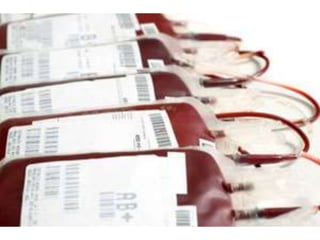
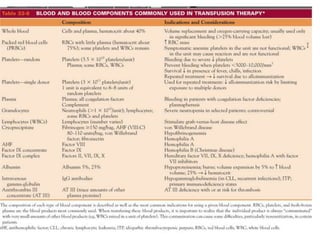
Blood Transfusion Administration
• Review patient history including history of
transfusions and transfusion reactions; note
concurrent health problems and obtain baseline
assessment and VS
• Perform patient teaching and obtain consent
• Equipment: IV (20-gauge or greater for PRBCs)
and appropriate tubing, normal saline solution
• Procedure to identify patient and blood product
• Monitoring of patient and VS
• Post procedure care
• Nursing management of adverse reactions
Complications
• Febrile nonhemolytic reaction
• Acute hemolytic reaction
• Allergic reaction
• Circulatory overload
• Bacterial contamination
• Transfusion related acute lung injury
• Delayed hemolytic reaction
• Disease acquisition
• Complications of long-term transfusion
therapy
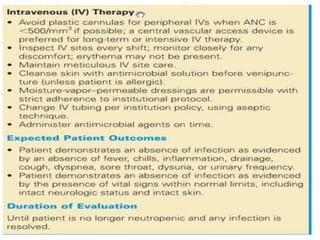
Further Reading
Read and make notes
• Primary thrombocythemia
• Secondary thrombocytosis
• Diagnostic and therapeutic procedures
– Bone marrow aspiration, puncture and transplant
– Blood transfusion
– Splenectomy
– Therapeutic apharesis
– Therapeutic phlebotomy
– Peripheral blood stem cell transplantation

4.0 HEMATOLO DISORDER 2.pptx

  • 1.
    Assessment and Managementof Patients with Hematologic Disorders July 8 2014
  • 2.
    Objectives On completion ofthis chapter, the learner will be able to: 1. Describe the process of hematopoiesis. 2. Describe the processes involved in maintaining hemostasis. 3. Differentiate between the hypoproliferative and the hemolytic anemias and compare and contrast the physiologic mechanisms, clinical manifestations, medical management, and nursing interventions for each. 4. Use the nursing process as a framework for care of patients with anemia. 5. Compare the leukemias in terms of their incidence, physiologic alterations, clinical manifestations, management, and prognosis. 6. Use the nursing process as a framework for care of patients with acute leukemia. 7. Use the nursing process as a framework for care of patients with lymphoma or multiple myeloma. 8. Use the nursing process as a framework for care of patients with bleeding or thrombotic disorders. 9. Identify therapies for blood disorders, including the nursing implications for the administration of blood components.
  • 3.
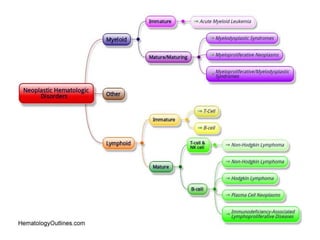
    BLOOD • The cellularcomponent of blood consists of three primary cell types: – erythrocytes(red blood cells[RBCs], red cells), – leukocytes(white blood cells [WBCs]), – thrombocytes (platelets).T
  • 7.
    Blood Cells • WBC(Leukocyte) – Fights infection • Neutrophil – Essential in preventing or limiting bacterialinfection via phagocytosis • Monocyte – Enters tissue as macrophage; highly phagocytic, especially against fungus; immune surveillance
  • 8.
    Blood Cells • Eosinophil –Involved in allergic reactions (neutralizes histamine); digests foreign proteins • Basophil – Contains histamine; integral part of hypersensitivity reactions • Lymphocyte – Integral component of immune system
  • 9.
    Blood Cells • Tlymphocyte – Responsible for cell-mediated immunity; recognizes material as “foreign”(surveillance system) • B lymphocyte – Responsible for humoral immunity; many mature into plasma cells to form antibodies • Plasma cell – Secretes immunoglobulin (Ig, antibody);most mature form of B lymphocyte – Plasma proteins consist primarily of albumin and theglobulins.
  • 10.
    Blood cells • RBC(Erythrocyte) – Carries hemoglobin to provide oxygen to tissues; average lifespan is 120 days • Platelet (Thrombocyte) – Fragment of megakaryocyte; provides basis for coagulation to occur; maintains hemostasis; average lifespan is 10 days
  • 11.
    Question Is the followingstatement True or False? Hematopoiesis is the complex process of the formation and maturation of blood cells.
  • 12.
    Answer True Hematopoiesis is thecomplex process of the formation and maturation of blood cells.
  • 13.
    Hematologic System • Theblood and the blood forming sites, including the bone marrow and the reticuloendothelial system • Blood – Plasma – Blood cells • Hematopoiesis
  • 14.
    Blood Cells • Erythrocyte—RBC •Leukocyte—WBC – Neutrophil – Monocyte – Eosinophil – Basophil – Lymphocyte—T lymphocyte and B lymphocyte • Thrombocyte—platelet
  • 15.
  • 16.
    Hematopoiesis • Uncommitted (pluripotent)stem cells can differentiate into myeloid or lymphoid stem cells. • These stem cells then undergo a complex process of differentiation and maturation into normal cells that are released into the circulation. • The myeloid stem cell is responsible not only for all nonlymphoid white blood cells but also for the production of red blood cells (RBCs) and platelets. • Each step of the differentiation process depends in part on the presence of specific growth factors for each cell type. When the stem cells are dysfunctional, they may respond inadequately to the need for more cells, or they may respond excessively, sometimes uncontrollably
  • 17.
    Hemostasis • Hemostasis isthe process of preventing blood loss from in-tact vessels and of stopping bleeding from a severed vessel,which requires adequate numbers of functional platelets.
  • 18.
    Assessment and DiagnosticEvaluation • Most hematologic diseases reflect a defect in the hematopoietic, hemostatic, or reticuloendothelial system. • Defect can be – quantitative (eg, increased or decreased production of cells), – qualitative (eg, the cells that are produced are defective in their normal functional capacity), or both. • Initially, many hematologic conditions cause few symptoms. • Extensive laboratory tests are often required to diagnose a hematologic disorder. • For most hematologic conditions, continued monitoring via specific blood tests is required because it is very important to assess for changes in test results over time. In general, it is important to assess trends in test results because these trends help the clinician decide whether the patient is responding appropriately to treatment
  • 19.
    Assessment and DiagnosticEvaluation Hematologic Studies • The full hemogram identifies the total number of blood cells (leukocytes, erythrocytes, and platelets) as well as the hemoglobin, hematocrit (percentage of blood volume consisting of erythrocytes), and RBC indices.
  • 20.
    Assessment and DiagnosticEvaluation Bone Marrow Aspiration and Biopsy • Bone marrow is usually aspirated from the iliac crest and occasionally from the sternum. • The aspirate provides only a sample of cells. • Aspirate alone may be adequate for evaluating certain conditions, such as anemia. • Biopsy samples are taken from the posterior iliac crest • A marrow biopsy shows the architecture of the bone marrow as well as its degree of cellularity.
  • 23.
    Question What type ofanemia results from red blood cell destruction? A. Bleeding B. Hemolytic C. Hypoproliferative D. None of the above
  • 24.
    Answer B Bleeding results fromred blood loss. Hemolytic anemia results from red blood cell destruction. Hypoproliferative anemia results from defective red blood cell production.
  • 25.
    Anemias To determine whetherthe presence of anemia in a given patient is caused by destruction or by inadequate production of erythrocytes: • The marrow’s ability to respond to decreased erythrocytes (as evidenced by an increased reticulocyte count in the circulating blood) • The degree to which young erythrocytes proliferate in the bone marrow and the manner in which they mature (as observed on bone marrow biopsy) • The presence or absence of end products of erythrocyte destruction within the circulation (eg, increased bilirubin level, decreased haptoglobin level)
  • 26.
    Anemias • Lower thannormal hemoglobin and fewer than normal circulating erythrocytes. A sign of an underlying disorder • Hypoproliferative: defect in production of RBCs – Due to iron, vitamin B12, or folate deficiency, decreased erythropoietin production, cancer • Hemolytic: excess destruction of RBCs – Due to altered erythropoiesis, or other causes such as hypersplenism, drug-induced or autoimmune processes, mechanical heart valves • May also be due to blood loss
  • 27.
    Anemias • Hypoproliferative (ResultingFrom Defective RBC Production) – Iron deficiency – Vit B12 Deficiency – Megaloblastic – Folate Deficiency (megaloblastic) – Decreased erythropoetic production e.g in renal dysfunction – Cancer/Inflammation
  • 28.
    Anemias • Bleeding (ResultingFrom RBC Loss) – Bleeding from gastrointestinal tract, epistaxis (nosebleed), trauma, bleeding from genitourinary tract (eg, menorrhagia)
  • 29.
    Anemias Hemolytic (Resulting FromRBC Destruction) – Altered erythropoiesis (sickle cell anemia, thalassemia, hemoglobinopathies) – Hypersplenism (hemolysis) – Drug-induced anemia – Autoimmune anemia – Mechanical heart valve–related anemia
  • 30.
    Causes of HemolyticAnemias Inherited Hemolytic Anemia • Abnormal hemoglobin – Sickle cell anemia – Thalassemia • Red blood cell membrane abnormality – Hereditary spherocytosis – Hereditary elliptocytosis – Acanthocytosis – Stomatocytosis • Enzyme deficiencies – Glucose-6-phosphate dehydrogenase (G-6-PD) deficiency
  • 31.
    Causes of HemolyticAnemias Acquired Hemolytic Anemia • Antibody related – Iso-antibody/transfusion reaction – Autoimmune hemolytic anemia (AIHA) – Cold agglutinin disease • Not antibody related – Red blood cell membrane defects – Paroxysmal nocturnal hemoglobinuria (PNH) – Liver disease – Uremia – Trauma – Mechanical heart valve – Microangiopathic hemolytic anemia – Infection – Bacterial – Parasitic – Disseminated intravascular coagulation (DIC) – Toxins – Hypersplenism
  • 32.
    Assessment and DiagnosticFindings • hemoglobin, hematocrit, reticulocyte count, and RBC indices, particularly the mean corpuscular volume(MCV) and red cell distribution width (RDW) • Iron studies (serum iron level, total iron- binding capacity [TIBC], percent saturation, and ferritin), as well as serum vitamin B12and folate levels
  • 33.
    Manifestations • Depend uponthe rapidity of the development of the anemia, duration of the anemia, metabolic requirements of the patient, concurrent problems, and concomitant features • Fatigue, weakness, malaise • Pallor or jaundice • Cardiac and respiratory symptoms • Tongue changes • Nail changes • Angular cheilosis • Pica
  • 34.
    Medical Management • Corrector control the cause • Transfusion of packed RBCs • Treatment specific to the type of anemia – Dietary therapy – Iron or vitamin supplementation—iron, folate, B12 – Transfusions – Immunosuppressive therapy – Other
  • 35.
    Complications • General complicationsof severe anemia include – heart failure – Paresthesias – delirium. • Patients with underlying heart disease are far more likely to have angina or symptoms of heart failure than those without heart disease.
  • 36.
    Nursing Process: TheCare of the Patient with Anemia—Assessment • Health history and physical exam • Laboratory data • Presence of symptoms and impact of those symptoms on patient’s life; fatigue, weakness, malaise, pain • Nutritional assessment • Medications • Cardiac and GI assessment • Blood loss—menses, potential GI loss • Neurologic assessment
  • 37.
    Nursing Process: TheCare of the Patient with Anemia—Diagnoses • Fatigue • Altered nutrition • Altered tissue perfusion • Noncompliance with prescribed therapy
  • 38.
    Collaborative Problems/Potential Complications • Heartfailure • Angina • Paresthesias • Confusion
  • 39.
    Nursing Process: TheCare of the Patient with Anemia—Planning • Major goals include decreased fatigue, attainment or maintenance of adequate nutrition, maintenance of adequate tissue perfusion, compliance with prescribed therapy, and absence of complications.
  • 40.
    Interventions • Balance physicalactivity, exercise, and rest. • Maintain adequate nutrition. • Patient education to promote compliance with medications and nutrition. • Monitor VS and pulse oximetry, provide supplemental oxygen as needed. • Monitor for potential complications.
  • 41.
    Myelodysplastic Syndrome • Myelodysplasticsyndrome (MDS) is a group of disorders of the myeloid stem cell that causes dysplasia (abnormal development) in one or more types of cell lines. • The most common feature of MDS—dysplasia of the erythrocytes—is manifested as a macrocytic anemia; however, the leukocytes(myeloid cells, particularly neutrophils) and platelets can also be affected.
  • 42.
    Myelodysplastic Syndrome • Patientshave an increased risk of infection and bleeding • Primary MDS tends to be a disease of people older than60 years of age. • Secondary MDS can occur at any age and result from prior toxic exposure to chemicals, including chemotherapeutic medications (particularly alkylating agents). • Secondary MDS tends to have a poorer prognosis than does primary MDS. Thirty percent of MDS cases evolve into acute myeloid leukemia (AML); this type of leukemia tends to be resistant to standard therapy
  • 43.
    Myelodysplastic Syndrome • Manifestationsof MDS can vary widely. • Many patients are asymptomatic, with the illness being discovered incidentally when a CBC is performed for other purposes. • Other patients have profound symptoms and complications from the illness. • Fatigue is often present, at varying levels. • Neutrophil dysfunction puts the person at risk for recurrent pneumonias and other infections. • Because platelet function can also be altered, bleeding can occur.
  • 44.
    Myelodysplastic Syndrome • Assessmentand Diagnostic Findings • The CBC typically reveals a macrocytic anemia; leukocyte and platelet counts may be diminished as well. • Serum erythropoietin levels and the reticulocyte count may be inappropriately low. • If the disease evolves into AML, more immature blast cells are noted on the CBC. • The official diagnosis of MDS is based on the results of a bone marrow aspiration and biopsy. • Cytogenetic analysis of the bone marrow is important in determining the over-all prognosis, risk of evolution into AML, and method of treatment.
  • 45.
    Myelodysplastic Syndrome • AllogeneicBMT is the only cure for MDS. • Chemotherapy • Transfusions of RBCs maybe required to control the anemia and its symptoms. • These patients can develop iron overload from the repeated transfusions; this risk can be diminished with prompt initiation of chelation therapy – Chelation therapy is a process that is used to remove excess iron acquired from chronic transfusions. Iron is bound to a substance, the chelating agent, and then excreted in the urine. • Erythropoetin injections • Platelet transfusions to prevent significant bleeding
  • 47.
    Nursing Management • Challenging– illness is unpredicatable • Patients with MDS need extensive instruction about infection risk, measures to avoid it, signs and symptoms of developing infection, and appropriate actions to take should such symptoms occur. • Instruction should also be given regarding the risk of bleeding. • Patients with MDS who are hospitalized may require neutropenic precautions.
  • 48.
    Nursing Management • Laboratoryvalues need to be monitored closely to anticipate the need for transfusion
  • 49.
    Hemolytic Anemias • theerythrocytes have a shortened lifespan; thus, their number in the circulation is reduced. • Fewer erythrocytes result in decreased available oxygen, causing hypoxia, which in turn stimulates an increase in erythropoietin release from the kidney. • The erythropoietin stimulates the bone marrow to compensate by producing new erythrocytes and releasing some of them into the circulation somewhat prematurely as reticulocytes. • If the red cell destruction persists, the hemoglobin is broken down excessively; about 80% of the heme is converted to bilirubin, conjugated in the liver, and excreted in the bile.
  • 50.
    Hemolytic Anemias • Thereticulocyte count is elevated, • The fraction of indirect(unconjugated) bilirubin is increased • Supply of haptoglobin (a binding protein for free hemoglobin) is depleted as more hemoglobin is released. As a result, the plasma haptoglobin level is low. • If the marrow cannot compensate to replace the erythrocytes (indicated by a de-creased reticulocyte count), the anemia will progress.
  • 51.
    Sickle Cell Anemia •Sickle cell anemia is a severe hemolytic anemia that results from inheritance of the sickle hemoglobin gene. • This gene causes the hemoglobin molecule to be defective. • The sickle hemoglobin (HbS) acquires a crystal- like formation when exposed to low oxygen tension. • Erythrocyte containing HbS loses its round, pliable, biconcave disk shape and becomes deformed, rigid, and sickle shaped
  • 52.
    Sickle Cell Anemia •These long, rigid erythrocytes can adhere to the endothelium of small vessels; when they adhere to each other, blood flow to a region or an organ maybe reduced. If ischemia or infarction results, the patient may have pain, swelling, and fever. • The HbS gene is inherited in people of African descent and to a lesser extent in people from the Middle East, the Mediterranean area, and aboriginal tribes in India. • Sickle cell anemia is the most severe form of sickle cell disease.
  • 54.
    Sickle Cell Anemia •The term sickle cell trait refers to the carrier state for SC diseases; it is the most benign type of SC disease, in that less than 50% of the hemoglobin within an erythrocyte is HbS. However, if two people with sickle cell trait have children, the children may inherit two abnormal genes and will have sickle cell anemia
  • 56.
    Clinical Manifestations • Symptomsand complications result from chronic hemolysis or thrombosis. • Anemia is always present; usually hemoglobin values are 7 to 10 g/dL. • Jaundice is characteristic and is usually obvious in the sclerae. • The bone marrow expands in childhood in a compensatory effort to offset the anemia, sometimes leading to enlargement of the bones of the face and skull. • The chronic anemia is associated with tachycardia, cardiac murmurs, and often an enlarged heart (cardiomegaly). Dysrhythmias and heart failure may occur in adults.
  • 57.
    Clinical Manifestations • Allthe tissues and organs are vulnerable to microcirculatory interruptions by the sickling process and therefore are susceptible to hypoxic damage or ischemic necrosis. • Patients with sickle cell anemia are unusually susceptible to infection, particularly pneumonia and osteomyelitis. • Complications of sickle cell anemia include infection, stroke, renal failure, impotence, heart failure, and pulmonary hypertension
  • 58.
    Sickle Cell Crisis Threetypes • The most common is the very painful sickle crisis, which results from tissue hypoxia and necrosis due to inadequate blood flow to a specific region of tissue or organ. • Aplastic crisis results from infection with the human parvovirus. The hemoglobin level falls rapidly and the marrow cannot compensate, as evidenced by an absence of reticulocytes. • Sequestration crisis results when other organs pool the sickled cells. Although the spleen is the most common organ responsible for sequestration in children, most children with sickle cell anemia have had a splenic infarction by 10 years of age, and the spleen is then no longer functional (autosplenectomy). • In adults, the common organs involved in sequestration are the liver and, more seriously, the lungs.
  • 59.
    Acute Chest Syndrome •manifested by fever, cough, tachycardia, and new infiltrates seen on the chest x-ray. • These signs often mimic infection, which is often the cause. • Infectious etiology appears to be atypical bacteria such as Chlamydia pneumoniae and Mycoplasma pneumoniae as well as viruses such as respiratory syncytial virus (RSV)and parvovirus
  • 60.
    Acute Chest Syndrome •Other causes include pulmonary fat embolism, pulmonary infarction, and pulmonary thromboembolism.
  • 61.
    Pulmonary Hypertension • Pulmonaryhypertension is a common sequela of sickle cell disease, and often the cause of death • Diagnosing is difficult because clinical symptoms rarely occur until damage is irreversible. • Pulse oximetry measurements are typically normal, and breath sounds are clear to auscultation.
  • 62.
    Pulmonary Hypertension • CTof the chest often demonstrates microvascular pulmonary occlusion and diminished perfusion of the lung. • Screening patients with sickle cell disease with Doppler echocardiography is useful in identifying patients with elevated pulmonary artery pressures
  • 63.
    Assessment and DiagnosticFindings • The patient with sickle cell trait usually has a normal hemoglobin level, a normal hematocrit, and a normal bloodsmear. • Patient with sickle cell anemia has a low hematocrit and sickled cells on the smear. • Diagnosis confirmed by hemoglobin electrophoresis.
  • 64.
    Medical Management • Treatmentfor sickle cell anemia is the focus of continued research. • Aggressive management of symptoms and complications.
  • 65.
    Medical Management • PeripheralBlood Stem Cell Transplant • Pharmacologic therapy – Hydrourea – Arginine • Transfusion therapy • Supportive therapy – Pain management – Fluid intake
  • 66.
    Nursing Process • Acutepain related to tissue hypoxia due to agglutination of sickled cells within blood vessels • Risk for infection • Risk for powerlessness related to illness- induced helplessness • Deficient knowledge regarding sickle crisis prevention
  • 67.
    Collaborative Problems/Potential Complications • Hypoxia,ischemia, infection, and poor wound healing leading to skin breakdown and ulcers • Dehydration • Cerebrovascular accident (CVA, brain attack, stroke) • Anemia • Acute and chronic renal failure • Heart failure, pulmonary hypertension, and acute chest syndrome • Impotence • Poor compliance • Substance abuse related to poorly managed chronic pain
  • 68.
    Patient goals • Themajor goals for the patient are relief of pain, decreased incidence of crisis, enhanced sense of self-esteem and power, and absence of complications.
  • 69.
    Further Reading Hypoproliferative Anemias •Iron deficiency anemia • Anemia in renal disease • Anemia of chronic disease • Aplastic anemia • Megaloblastic anemias – Folic acid deficiency – Vitamin B12 deficiency
  • 70.
    Further Reading Hemolytic Anemias •Thalassemia • Glucose-6-phosphate dehydrogenase deficiency • Immune Hemolytic anemia
  • 71.
    Hereditary Hemochromatosis • Hemochromatosisis a genetic condition in which excess iron is absorbed from the GI tract. • The excess iron is deposited in various organs, particularly the liver, myocardium, testes, thyroid, and pancreas. Eventually, the affected organs become dysfunctional. • Women are less often affected than men because women lose iron through menses.
  • 72.
    Hereditary Hemochromatosis Clinical Manifestations •Often there is no evidence of tissue damage until middle age, because the accumulation of iron in body organs occurs gradually. • Symptoms of weakness, lethargy, arthralgia, weight loss, and loss of libido are common and occur earlier in the illness trajectory. • The skin may appear hyperpigmented from melanin deposits (and occasionally hemosiderin, an iron-containing pigment) or appear bronze in color. • Cardiac dysrhythmias and cardiomyopathy • Endocrine dysfunction - hypothyroidism, diabetes mellitus, and hy- pogonadism (testicular atrophy, diminished libido, and impotence). • Cirrhosis is common in later stages of the disease,s hortens life expectancy, and is a risk factor for hepatocellular carcinoma
  • 73.
    Hereditary Hemochromatosis Assessment andDiagnostic Findings • Elevated serum iron level • FHG normal • Liver biopsy (for definitive diagnosis)
  • 74.
    Hereditary Hemochromatosis • MedicalManagement – Removal of excess iron via therapeutic phlebotomy (1-2 x/weekly) • Nursing management – Limit dietary iron intake – Avoid additional insults to the liver – etoh abuse – Monitor for organ disfunction
  • 78.
    SCD • In countriessuch as Cameroon, Republic of Congo, Gabon, Ghana and Nigeria, the prevalence is between 20% and 30% while in some parts of Uganda it is as high as 45%. • In countries where the trait prevalence is above 20% the disease affects about 2% of the population. • The geographic distribution of the sickle-cell trait is very similar to that of malaria. • The sickle cell trait has a partial protective effect against malaria, and this may explain why it has been maintained at such high prevalence levels in tropical Africa.
  • 87.
    Lab tests • Peripheralblood smear : A procedure in which a sample of blood is checked for changes in the number, type, shape, and size of blood cells and for too much iron in the red blood cells. • Cytogenetic analysis : A test in which cells in a sample of blood or bone marrow are viewed under a microscope to look for certain changes in the chromosomes. • Blood chemistry studies : A procedure in which a blood sample is checked to measure the amounts of certain substances, such as vitamin B12 and folate, released into the blood by organs and tissues in the body. An unusual (higher or lower than normal) amount of a substance can be a sign of disease in the organ or tissue that makes it. • Bone marrow aspiration and biopsy : The removal of bone marrow, blood, and a small piece of bone by inserting a hollow needle into the hipbone or breastbone. A pathologist views the bone marrow, blood, and bone under a microscope to look for abnormal cells.
  • 95.
    Leukopenia • Leukopenia, acondition in which there are fewer leukocytes than normal, results from neutropenia (diminished neutrophils) or lymphopenia (diminished lymphocytes). • A count lower than 4,000 white blood cells per microliter of blood is generally considered a low white blood cell count.
  • 96.
    Neutropenia • Neutropenia (aneutrophil count of less than 2000/mm3) results from decreased production of neutrophils or increased destruction of these cells • A patient with neutropenia is at increased risk for infection from both exogenous and endogenous sources. (The GI tract and skin are common endogenous sources.) • The risk of infection is based not only on the severity of the neutropenia but also on its duration.
  • 97.
    Neutropenia • The actualnumber of neutrophils, known as the absolute neutrophil count (ANC), is determined using data obtained from the CBC and differential/full hemogram • The risk for infection increases proportionately with the decrease in neutrophil count. The risk is significant when the ANC is less than 1000/mm3, is high when it is less than 500/mm3, and is almost certain when it is less than 100/mm
  • 99.
    Causes Decreased Production ofNeutrophils • Aplastic anemia, due to medications or toxins • Metastatic cancer, lymphoma, leukemia • Myelodysplastic syndromes • Chemotherapy • Radiation therapy
  • 100.
    Causes • Ineffective Granulocytopoiesis –Megaloblastic anemia • Increased Destruction of Neutrophils – Hypersplenism – Medication induced – Immunologic disorders (eg, systemic lupus erythematosus) – Viral disease (eg, infectious hepatitis, mononucleosis) – Bacterial infections
  • 102.
    Neutropenia Clinical Manifestations • Thereare no definite symptoms of neutropenia until the patient becomes infected. • A routine CBC with differential, as obtained after chemotherapy treatment, can reveal neutropenia before the onset of infection.
  • 103.
    Neutropenia Medical Management • Dependson cause • If medication induced, discontinue the med • Antibiotics • If on chemotheraphy, may need to hold the chemo
  • 104.
    Neutropenia Nursing Management • Preventionof complications • Monitor labs • Assess severity of neutropenia
  • 105.
    Neutropenia • Review inyour texts – Risk factors for development of infection and bleeding in patients with hematologic disorders – Neutropenia precautions
  • 110.
  • 111.
    Question Is the followingstatement True or False? Leukocytosis refers to a decreased level of leukocytes in the circulation.
  • 112.
    Answer False Leukocytosis refers toan increased level of leukocytes in the circulation. Leukopenia refers to a decreased level of leukocytes in the circulation.
  • 113.
    Leukemia • Hematopoietic malignancywith unregulated proliferation of leukocytes • Types: – Acute myeloid leukemia – Chronic myeloid leukemia – Acute lymphocytic leukemia – Chronic lymphocytic leukemia
  • 115.
    Acute Myeloid Leukemia(AML) • Defect in stem cell that differentiate into all myeloid cells: monocytes, granulocytes, erythrocytes, and platelets • Most common nonlymphocytic leukemia • Affects all ages with peak incidence at age 60 • Prognosis is variable • Manifestations: fever and infection, weakness and fatigue, bleeding tendencies, pain from enlarged liver or spleen, hyperplasia of gums, bone pain • Treatment aggressive chemotherapy—induction therapy, BMT or PBSCT
  • 116.
    Chronic Myeloid Leukemia(CML) • Mutation in myeloid stem cell with uncontrolled proliferation of cells—Philadelphia chromosome • Stages: chronic phase, transformational phase, blast crisis • Uncommon in people under 20, with increased incidence with age. Mean age: 55–60 • Life expectancy of 3–5 years • Manifestations: initially may be asymptomatic, malaise, anorexia, weight loss, confusion or shortness of breath due to leukostasis, enlarged tender spleen, or enlarged liver • Treatment: imatinib mestylate (Gleevec) blocks signals in leukemic cells that express BCR-ABL protein; chemotherapy, BMT or PBSCT
  • 117.
    Acute Lymphocytic Leukemia •Uncontrolled proliferation of immature cells from lymphoid stem cell • Most common in young children, boys more often than girls • Prognosis is good for children; 80% 5-year event- free survival, but drops with increased age • Manifestations: leukemic cell infiltration is more common with this leukemia, with symptoms of meningeal involvement and liver, spleen, and bone marrow pain • Treatment: chemotherapy, imatinib mestylate (if Philadelphia chromosome positive), BMT or PBSCT, monoclonal antibody therapy • Expected outcome is complete remission
  • 118.
    Chronic Lymphocytic Leukemia •Malignant B lymphocytes, most of which are mature, may escape apoptosis, resulting in excessive accumulation of cells • Most common form of leukemia • More common in older adults, effects men more often • Survival varies from 2 to 14 years depending upon stage • Manifestations: lymphadenopathy, hepatomegaly, splenomegaly; in later stages anemias and thrombocytopenia; autoimmune complications with RES destroying RBCs and platelets may occur, B symptoms include fever, sweats, weight loss • Treatment: early stage may require no treatment, chemotherapy, monoclonal antibody therapy
  • 119.
    Nursing Process: TheCare of the Patient with Leukemia—Assessment • Health history • Assess symptoms of leukemia, and for complications of anemia, infection, and bleeding – Weakness and fatigue • Laboratory tests – Leukocyte count, ANC, hematocrit, platelets, electrolytes, culture reports
  • 120.
    Nursing Process: TheCare of the Patient with Leukemia—Diagnoses • Risk for bleeding • Risk for impaired skin integrity • Impaired gas exchange • Impaired mucous membrane • Imbalanced nutrition • Acute pain • Hyperthermia • Fatigue and activity intolerance • Impaired physical mobility
  • 121.
    Nursing Process: TheCare of the Patient with Leukemia—Diagnoses • Risk for excess fluid volume • Diarrhea • Risk for deficient fluid volume • Self-care deficit • Anxiety • Disturbed body image • Potential for spiritual distress • Grieving diagnoses • Deficient knowledge
  • 122.
    Collaborative Problems/Potential Complications • Infection •Bleeding • Renal dysfunction • Tumor lysis syndrome • Nutritional depletion • Mucositis • Depression
  • 123.
    Nursing Process: TheCare of the Patient with Leukemia- Planning • Major goals may include absence of complications, attainment and maintenance of adequate nutrition, activity tolerance, ability for self-care and to cope with the diagnosis and prognosis, positive body image, and an understanding of the disease process and its treatment.
  • 124.
    Interventions • Interventions relatedto risk of infection and bleeding • Mucositis – Frequent, gentle oral hygiene – Soft toothbrush, or if counts are low, sponge- tipped applicators – Rinse only with NS, NS and baking soda, or prescribed solutions – Perineal and rectal care
  • 125.
    Improving Nutrition • Oralcare before and after meals • Administer analgesics before meals • Appropriate treatment of nausea • Small, frequent feedings • Soft foods that are moderate in temperature • Low-microbial diet • Nutritional supplements
  • 126.
    Lymphoma • Neoplasm oflymph origin • Hodgkin’s lymphoma • Non-Hodgkin’s lymphoma
  • 128.
    Hodgkin’s Disease • Unicentricorigin – initiates from a single node • The malignant cell of HL is the Reed–Sternberg cells – A gigantic tumor cell that is morphologically unique; immature lymphocyte origin – Pathologic hallmark; dx criterion • Suspected viral etiology, familial pattern, incidence early 20s and again after age 50 • Excellent cure rate with treatment • Manifestations: painless lymph node enlargement, pruritis; B symptoms: fever, sweats, weight loss • Treatment is determined by stage of the disease and may include chemotherapy and/or radiation therapy
  • 129.
    Hodgkin’s Disease • Causeunknown – thought to have a viral etiology • Mild anemia • Leukocyte count may be elevated or decreased • Dx through lymph node bx
  • 130.
    Non-Hodgkin's Lymphoma (NHL) •Lymphoid tissues become infiltrated with malignant cells, spread is unpredictable and localized disease is rare. • Incidence increases with age, with average age being 50 to 60. • Prognosis varies with type of NHL. • Treatment is determined by type and stage of disease, and may include interferon, chemotherapy, and/or radiation therapy.
  • 131.
    Question What should anyelderly patient be evaluated for whose chief complaint is back pain and has an elevated total protein level? A. Anemia B. Leukemia C. Multiple myeloma D. Non-Hodgkin’s lymphoma
  • 132.
    Answer C Any elderly patientwhose chief complaint is back pain and has an elevated total protein level should be evaluated for possible myeloma.
  • 133.
    Multiple Myeloma • Malignantdisease of plasma cells in the bone marrow with destruction of bone – Mature B lymphocytes • Immunoglobulin secreted by myeloma cells Monoclonal protein (dx – urine and serum protein levels) • Median survival 3 to 5 years, no cure • Manifestations: bone pain, osteoporosis, fractures, elevated serum protein hypocalcaemia, renal damage renal failure, symptoms of anemia, fatigue, weakness, increased serum viscosity, and increased risk for bleeding and infection • Treatment may include chemotherapy, corticosteroids, radiation therapy, biphosphonates
  • 134.
    Bleeding Disorders July 152014 • Primary thrombocythemia • Thrombocytopenia • Idiopathic thrombocytopenia purpura (ITP) • Hemophilia • Acquired coagulation disorders: liver disease, anticoagulants, vitamin K deficiency • Disseminated intravascular coagulation (DIC) • Bleeding precautions
  • 138.
    Thrombocytopenia • Low plateletcount Thrombocytopenia is often divided into three major causes of low platelets: • Not enough platelets are made in the bone marrow • Increased breakdown of platelets in the bloodstream • Increased breakdown of platelets in the spleen or liver
  • 139.
  • 140.
    Hemophilia • Two inheritedbleeding disorders—hemophilia A and hemophilia B—are clinically indistinguishable. • Hemophilia A is caused by a genetic defect that results in deficient or defective factor VIII. Hemophilia B (also called Christmas disease) stems from a genetic defect that causes deficient or defective factor IX.
  • 141.
    Von Willenbrand’s Dz •Von Willebrand disease (vWD), a common bleeding disorder affecting males and females equally, is usually inherited as a dominant trait. • There are three types of vWD. – Type 1, the most common, is characterized by decreases in structurally normal vWF. – Type 2 shows variable qualitative defects based on the specific vWF subtype involved. – Type 3 is very rare (less than5% of cases) and is characterized by a severe vWF deficiency as well as significant deficiency of factor VIII
  • 143.
    Further Reading Thrombocytopenia Idiopathic thrombocytopeniapurpura (ITP) Hemophilia Von Willenbrand’s dz • Pathophysiology • Clinical manifestations • Assessment and diagnostic findings • Medical and nursing management
  • 144.
    Further Reading Acquired coagulationdisorders – Vitamin K deficiency – Complications of anticoagulant therapy
  • 145.
    Question Is the followingstatement True or False? Disseminated intravascular coagulation is not a disease but a sign of an underlying condition.
  • 146.
    Answer True Disseminated intravascular coagulationis not a disease but a sign of an underlying condition.
  • 147.
    DIC • Not adisease but a sign of an underlying disorder. • Severity is variable; may be life-threatening. • Triggers may include sepsis, trauma, shock cancer abrupto placenta, toxins, and allergic reactions. • Altered hemostasis mechanism causes massive clotting in microcirculation. As clotting factors are consumed, bleeding occurs. Symptoms are related to tissue ischemia and bleeding. • Laboratory tests. • Treatment: treat underlying cause, correct tissue ischemia, replace fluids and electrolytes, maintain blood pressure, replace coagulation factors, use heparin.
  • 150.
    Nursing Process: TheCare of the Patient with DIC—Assessment • Be aware of patient who are at risk for DIC and assess for signs and symptoms of the condition. • Assess for signs and symptoms and progression of thrombi and bleeding.
  • 151.
    Nursing Process: TheCare of the Patient with DIC—Diagnoses • Risk for fluid volume deficit • Risk for impaired skin integrity • Risk for imbalanced fluid volume • Ineffective tissue perfusion • Death anxiety
  • 152.
    Collaborative Problems/Potential Complications • Renalfailure • Gangrene • Pulmonary embolism or hemorrhage • Acute respiratory distress syndrome • Stroke
  • 153.
    Nursing Process: TheCare of the Patient with DIC—Planning • Major goals may include maintenance of hemodynamic status, maintenance of intact skin and oral mucosa, maintenance of fluid balance, maintenance of tissue perfusion, enhanced coping, and absence of complications.
  • 154.
    Interventions • Assessment andinterventions should target potential sites of organ damage. • Monitor and assess carefully • Avoid trauma and procedures which increase risk of bleeding, including activities which would increase intracranial pressure.
  • 155.
    Therapies for BloodDisorders • Anticoagulant therapy • Splenectomy • Therapeutic apheresis • Therapeutic phlebotomy • Blood component therapy
  • 156.
    Blood Transfusion Administration •Review patient history including history of transfusions and transfusion reactions; note concurrent health problems and obtain baseline assessment and VS • Perform patient teaching and obtain consent • Equipment: IV (20-gauge or greater for PRBCs) and appropriate tubing, normal saline solution • Procedure to identify patient and blood product • Monitoring of patient and VS • Post procedure care • Nursing management of adverse reactions
  • 158.
    Complications • Febrile nonhemolyticreaction • Acute hemolytic reaction • Allergic reaction • Circulatory overload • Bacterial contamination • Transfusion related acute lung injury • Delayed hemolytic reaction • Disease acquisition • Complications of long-term transfusion therapy
  • 159.
    Further Reading Read andmake notes • Primary thrombocythemia • Secondary thrombocytosis • Diagnostic and therapeutic procedures – Bone marrow aspiration, puncture and transplant – Blood transfusion – Splenectomy – Therapeutic apharesis – Therapeutic phlebotomy – Peripheral blood stem cell transplantation