Editorial Advisory Board
Mr. Apurva Shah

August - September 2013

Group Managing Director
Veeda Clinical Research

Mr. Arun Sawhney
Chairman, CII National Committee on Drugs
& Pharamaceuticals and CEO & Managing
Director
Ranbaxy Laboratories Ltd

Dr. Arvind Lal
Chairman and Managing Director
Dr Lal PathLabs

Dr. Devi Shetty
Chairman
Narayana Hrudayalaya

Prof. N.K. Ganguly
President, JIPMER,
Distinguished Biotechnology Research
Professor, DBT & Former DG, ICMR

Managing Editor: Vipin Balakrishnan
Editor: Hareeni Mageswaran
Consulting Editor: Shikha Dhawan
Consulting Editor: Dr Saji Salam
Copy Editor: Gouri Athale, Shekhar B
CII-Life Sciences Division
Dr. Sengupta
(d.sengupta@cii.in)
+91 99531 30050

Mr. Hari Bhartia
Co-Chairman and Managing Director
Jubilant Life Sciences Ltd

Design & Creative: A P Madhu

Dr. Kiran Mazumdar-Shaw
Chairman and Managing Director
Biocon Limited

Dr. R.A Mashelkar

Printed and Published by
Anjan Das on behalf of Confederation of Indian Industry

National Research Professor and Former DG,
CSIR

Dr. Mrutyunjay Suar
Director, School of Biotechnology &
CEO, KIIT-Technology Business Incubator

Publishers:
Confederation of Indian Industry
India Habitat Centre, Core 4A, 4th Floor, Lodi Road,
New Delhi-110003

Dr. Naresh Trehan
Chairman
Medanta-The Medicity

Dr. Nitya Anand
Former Director, CDRI

Dr. Rajesh Jain
Joint Managing Director
Panacea Biotec Ltd

Namaste Publication Pvt Ltd
102, Srinidhi Signature, 8th Cross, LBS Nagar, Bangalore-17
EDITOR'S NOTE
PPP’s– The Three C’s Collaboration,
Creativity and Consistency
In an era of PPP’s, we must be prepared to innovate, collaborate and be consistent in dealing with our Public Health issues. This issue has insights into the near mirage called NCD
management, we have to understand that the only way to tackle our public health issues is by
meaningful collaboration, as multi stakeholder relationship management and disease management is a challenge in a diverse country like ours . With the rise in non communicable
diseases, lifestyle related diseases we have to innovate ways of creating awareness, while
also fi nding innovating ways of creating pools of money consistently and efficient management of the resource pools. As a solution to this interesting yet mammoth task, we should
infuse communication, marketing and social media professionals in this Endeavour. Professionals with experience in Brands, Marketing, Advocacy, Public Relations, Events and Social
media professionals will make a huge difference.
These band wagon of professionals will catalyze collaboration infuse creativity and add a
flavor of consistency. Constancy of purpose is the fi rst principle to success on such large scale
mandates like NCD, and uniting all efforts. In our country one of the greatest setbacks has
been the meeting eye to eye of policy makers and other stakeholders, and rigorous interactions between them are the road to engagement, involvement and fi nally success. The large
scale benefits can be reaped by creating credible data pools and creating a cohesive working
environment. Corporate must be endowed with this responsibility by the Government, and
set as a premise for working.
Currently, our Country’s Public Health campaigns are more for the campaign sake not for
the Health sake. This attitude shift will call for a lot more participation of Corporate. Corporate with deep pockets and business interests must become eligible partners, as it takes the
corporate to make the partnership more engaging. The Ministry of Corporate Affairs must
device a Communication framework which actually captures the demographic challenges
of such campaigns, and thus stopping PPP’s parties from reinventing the wheel. The newly
passed CSR bill will help us see more responsible Corporate divas.

Hareeni Mageswaran
hareeni.lifescienceindia@gmail.com
!

"
&

#$#%

#$#

' ()#*

&#(%

&#

+

+

,$ &-

!

.
/

+

#$#

0

+ #*
#*

#*

,

+
"

1

+

#$#

&#

*2

+

+
+
#$#

*2
&#

#

+

3

4

+

#

)

4
4

+

)

+

+

)
#

+
#$#

#*

+

&#

51 %

#$#

&#

+

6

7

#*
*2 +

5
7

+

+

#*

8

%
#

4

#*
8

3

&

&

?

9:;;)9;<)=>=>
&

'

7

#*

@

%
$

!

&#
!

& '
& ' (

# !
!

%(%
$

+

"#
&#

$
CONTENTS
LSI |

August - September 2013

Cover stories on NCD
Cover Story Interviews

17 Dr Jain DC
20 Dr W.D. Bhutia
21 Prof N.K. Ganguly
33 Dr Kamlesh Jain
26 CII White paper NCD
The researchers and this white paper
clearly demonstrate the fact that each
state has its own strengths, weaknesses
and priorities which differ from other
states in many ways. Over the last
two years, Diabetes management
interventions under NPCDCS have
reached more than 17.6 million patients,
but with the incidence still going up,
it is essential to scale up the effective
interventions. The Government plans to
scale up the response to the Diabetes
epidemic by expanding the NPCDCS
from 100 districts at present to cover all
districts in the country during the 12th
National Five Year Plan is appropriate and
timely

35 HERBAL NEEM
FORMULATION

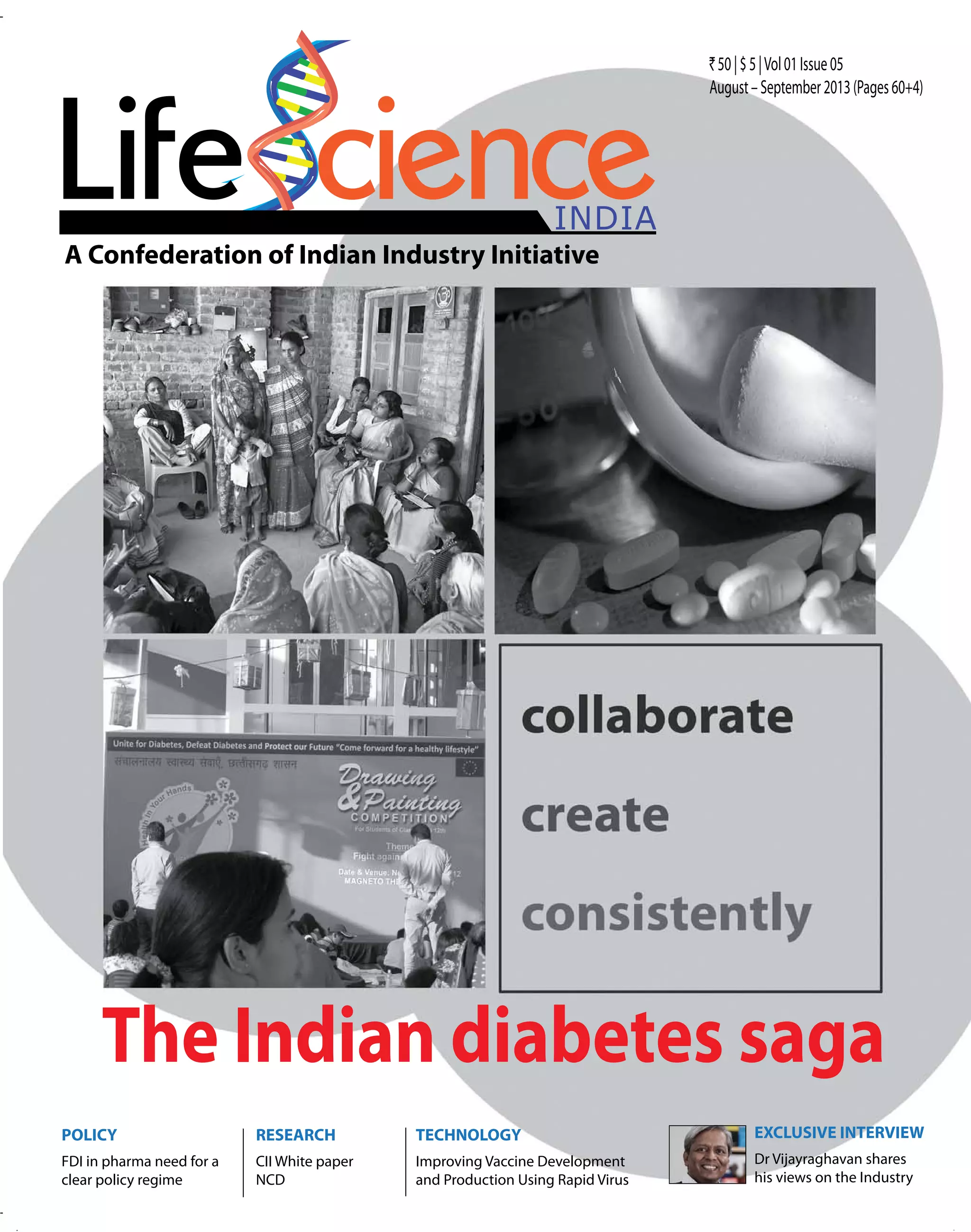
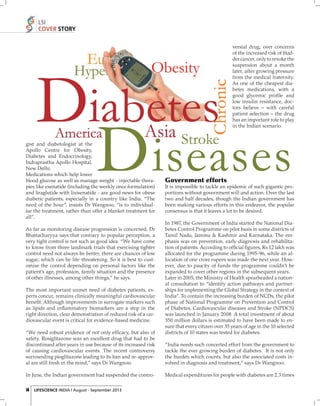
10 NOT SO SWEET - The Indian diabetes saga:
By 2030, India's diabetes burden is expected to cross the 100 million mark.
Considering the rising burden of non-communicable diseases and existing
risk factors, Government of India initiated the integrated National Program
for Prevention and Control of Cancers, Diabetes, Cardiovascular Diseases and
Stroke (NPCDCS). It is essential to have the key public health facilities well
staffed with appropriately skilled and equipped manpower to provide access
to treatment services. It is also vital to have and follow standard treatment
protocols for disease management.

Herbal formulations
which have reached
widespread
acceptability
as therapeutic
agents in India
include nootropics,
antidiabetics, hepatoprotective agents and
lipid lowering agents.
CONTENTS
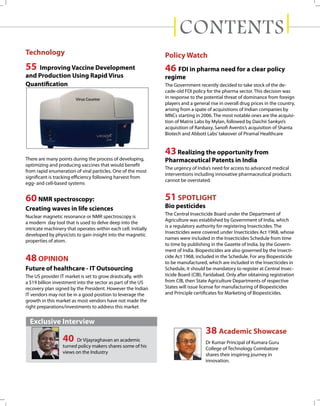
Technology

Policy Watch

55

46 FDI in pharma need for a clear policy

Improving Vaccine Development
and Production Using Rapid Virus
Quantification

regime
The Government recently decided to take stock of the decade-old FDI policy for the pharma sector. This decision was
in response to the potential threat of dominance from foreign
players and a general rise in overall drug prices in the country,
arising from a spate of acquisitions of Indian companies by
MNCs starting in 2006. The most notable ones are the acquisition of Matrix Labs by Mylan, followed by Daichii Sankyo’s
acquisition of Ranbaxy, Sanofi Aventis’s acquisition of Shanta
Biotech and Abbott Labs’ takeover of Piramal Healthcare

43 Realizing the opportunity from
There are many points during the process of developing,
optimizing and producing vaccines that would benefit
from rapid enumeration of viral particles. One of the most
significant is tracking efficiency following harvest from
egg- and cell-based systems

Pharmaceutical Patents in India

60 NMR spectroscopy:

51 SPOTLIGHT

Creating waves in life sciences
Nuclear magnetic resonance or NMR spectroscopy is
a modern day tool that is used to delve deep into the
intricate machinery that operates within each cell. Initially
developed by physicists to gain insight into the magnetic
properties of atom.

48 OPINION
Future of healthcare - IT Outsourcing
The US provider IT market is set to grow drastically, with
a $19 billion investment into the sector as part of the US
recovery plan signed by the President. However the Indian
IT vendors may not be in a good position to leverage the
growth in this market as most vendors have not made the
right preparations/investments to address this market

The urgency of India’s need for access to advanced medical
interventions including innovative pharmaceutical products
cannot be overstated.

Bio pesticides
The Central Insecticide Board under the Department of
Agriculture was established by Government of India, which
is a regulatory authority for registering Insecticides. The
Insecticides were covered under Insecticides Act 1968, whose
names were included in the Insecticides Schedule from time
to time by publishing in the Gazette of India, by the Government of India. Biopesticides are also governed by the Insecticide Act 1968, included in the Schedule. For any Biopesticide
to be manufactured, which are included in the Insecticides in
Schedule, it should be mandatory to register at Central Insecticide Board (CIB), Faridabad. Only after obtaining registration
from CIB, then State Agriculture Departments of respective
States will issue license for manufacturing of Biopesticides
and Principle certificates for Marketing of Biopesticides.

Exclusive Interview

40

Dr Vijayraghavan an academic
turned policy makers shares some of his
views on the Industry

38 Academic Showcase
Dr Kumar Principal of Kumara Guru
College of Technology Coimbatore
shares their inspiring journey in
innovation.
LSI
COVER STORY

NOT SO
SWEET

The Indian diabetes saga

-Jisha Krishnan

India will be home to more than 100 million diabetics,
approximately, one-fifth of the global diabetes
population, by 2030. We need to do everything we can
and more to curb the exploding epidemic
10

LIFESCIENCE INDIA | August - September 2013
LSI
COVER STORY
“I don’t have a sweet tooth,” was the prompt response of a
30-something software engineer to the doctor’s suggestion
of getting his blood sugar levels tested.
Ask any practicing physician and he is sure to share similar experiences of patient ignorance and/indifference. And
this is the educated, urban population in India we are talking about. As we venture into the hinterlands, a majority
of medical practitioners, too, fall into this category. For a
country that is home to over 63 million diabetes patients second only to China - the ground realities are more than
shocking. According to International Diabetes Federation,
50 percent of Indians are unaware if they suffer from diabetes. And among the other half, 50 percent do not take
any treatment.
The silver lining, if any, is the latest buzz in the pharmaceutical industry: Over 15 new anti-diabetic drugs are ready to
hit the market over the next couple of years. Also, an Indian pharmaceutical company beat its global competitors
to develop the fi rst of its kind anti-diabetic medication that
holds immense promise for diabetics across the globe.
Whether these drugs will succeed in meeting the hitherto
unmet needs of diabetic patients, reduce the huge economic burden, help improve the quality and quantity of life…
these are questions only time will answer. For now, the
saga continues.

Ground zero
Estimates suggest that 9.2 percent of adults in India have
diabetes, making its prevalence second only to that in China. The country is home to over 63 million diabetes patients, an increase from 50.8 million in 2010, says the International Diabetes Federation’s ‘Diabetes Atlas 2012’.
The population with pre-diabetes (those with glucose levels higher than normal, and at increased risk to develop
diabetes) is estimated to be approximately three times the
size of the diabetic population. By 2030, India's diabetes
burden is expected to cross the 100 million mark.
“In clinical practice, a lot of patients we see today are in
their late 20s and early 30s. The patient profi le has defi nitely got younger,” says Dr Arpandev Bhattacharyya, HOD,
Department of Diabetes and Endocrinology at Manipal
Hospital, Bangalore.
Diabetes mellitus – diabetes in common parlance – is
caused either because the pancreas can’t produce insulin
(type 1 diabetes) or the insulin that is produced isn't effectively shuttling sugar into the organs (type 2 diabetes). The
latter is more common and preventable, courtesy sedentary
lifestyles and unhealthy food habits, making it the focus of
most diabetes research across the globe.
As far as the Indian scenario is concerned, we face a dual
challenge. On the one hand, we are still struggling to come
LIFESCIENCE INDIA | August - September 2013 11
LSI
COVER STORY
to terms with long-standing challenges posed by communicable diseases such as tuberculosis, malaria, cholera, diarrhea, measles and leptospirosis; add to that, the current
onslaught of non-communicable diseases (NCDs). As per
disability-adjusted life year (DALY) which is a measure of
years lost due to ill-health, disability or early death, for India the topmost NCDs are cardiovascular diseases, diabetes, cancer and chronic obstructive pulmonary disease.

Ratlam (Madhya Pradesh) and Bhilwara (Rajasthan), 1,351
(1.467%) were suspected to be diabetic.

According to the Annual Report to the People on Health
published by the Ministry of Health and Family Welfare,
Government of India in September 2010, NCDs caused
40 percent of total deaths in rural India and 42 percent in
urban India. The corresponding figures for communicable
diseases were 40 percent and 38 percent respectively.

About 70 to 75 percent of diabetes patients are treated with a
combination of two or more oral anti-diabetics (OADs) and
20 to 25 percent are treated with a single OAD, notes Dipak
Mahajan, industry analyst, pharma & biotech, healthcare
practice, Frost & Sullivan. However, due to the progressive
nature of type 2 diabetes, most diabetics require insulin for
glycemic control, making it unlikely to have a decrease in
patient numbers.

The World Health Report 2001 had indicated that NCDs
accounted for nearly 60 percent of deaths worldwide and 75
percent of these occur in developing countries. Further, a
person with NCDs is vulnerable to common infectious diseases like tuberculosis, community-acquired pneumonias
and vaccine preventable diseases leading to poorer outcome
for these diseases. “In the case of diabetes, most patients
invariably also have to cope with cardiovascular disease,
kidney disease, nerve damage and/or loss of limbs,” adds
Dr Bhattacharyya.

Clinical quest
What can’t be cured must be endured. For researchers and
clinical practitioners across the globe, the biggest challenge
is to come up with effective, affordable ways to manage the
disease.

According to Frost & Sullivan’s Competitive Intelligence research, Analysis of the Global Type 2 Diabetes Therapeutics
Market, 15 new drugs for type 2 diabetes are in late-stage
development (Phase 3 and preregistration). Metformin is
expected to remain the fi rst-line therapy, in combination

with Sulfonylureas; along with changes in diet and exercise.

Therapies with the ability to preserve or restore beta cell function,
postpone or prevent disease progression, and allow patients to remain on
a single therapy will be the game-changers in the years to come
Says Dr Subhash Kumar Wangnoo, senior consultant endocrinologist and diabetologist at the Apollo Centre for Obesity, Diabetes and Endocrinology, Indraprastha Apollo Hospital, New Delhi

As per the fi ndings of phase I of the Indian Council of
Medical Research Diabetes Study, which recently covered
the rural and urban settings in four states, the prevalence
of diabetes in Tamil Nadu was 10.4 percent, 5.3 percent in
Jharkhand, 13.6 percent in Chandigarh and 8.4 percent in
Maharashtra. The prevalence of pre-diabetes was 8.3 percent, 8.1 percent, 14.6 percent and 12.8 percent respectively.
The numbers are not small to be ignored.
Blame it on sedentary lifestyles, unhealthy dietary habits,
genetic predisposition, the increasing cases of childhood
obesity don’t make the picture any rosier. During the course
of screening school children under the national programme
for prevention and control of cancer, diabetes, cardiovascular diseases and stroke (NPCDCS), it was found that of
the 92,047 children screened in Nainital (Uttarakhand),
12

LIFESCIENCE INDIA | August - September 2013

The most significant impact on the Indian diabetes therapeutics market, according to Mahajan, is expected to be the
launch of new Incretin Mimetics, Glucagon-like Peptide-1
(GLP-1) Agonists, and Dipeptidyl Peptidase-IV (DPP-IV)
inhibitors, as well as increased use of new fi xed combinations and formulations of drug therapies in both insulin
and non-insulin segments. “These new drug classes have
better efficacy and compliance,” he says.
New therapies are starting to address different possible
roots of the condition, identifying new target areas with
the potential to reverse disease progression alongside glucose regulation. “Therapies with the ability to preserve or
restore beta cell function, postpone or prevent disease progression, and allow patients to remain on a single therapy
will be the game-changers in the years to come,” says Dr
Subhash Kumar Wangnoo, senior consultant endocrinolo-
LSI
COVER STORY
versial drug, over concerns
of the increased risk of bladder cancer, only to revoke the
suspension about a month
later, after growing pressure
from the medical fraternity.
As one of the cheapest diabetes medications, with a
good glycemic profi le and
low insulin resistance, doctors believe – with careful
patient selection – the drug
has an important role to play
in the Indian scenario.

gist and diabetologist at the
Apollo Centre for Obesity,
Diabetes and Endocrinology,
Indraprastha Apollo Hospital,
New Delhi.
Medications which help lower
blood glucose as well as manage weight - injectable therapies like exenatide (including the weekly once formulation)
and liraglutide with lixisenatide - are good news for obese
diabetic patients, especially in a country like India. “The
need of the hour”, insists Dr Wangnoo, “is to individualise the treatment, rather than offer a blanket treatment for
all”.
As far as monitoring disease progression is concerned, Dr
Bhattacharyya says that contrary to popular perception, a
very tight control is not such as good idea. “We have come
to know from three landmark trials that exercising tighter
control need not always be better; there are chances of low
sugar, which can be life-threatening. So it is best to customise the control depending on personal factors like the
patient’s age, profession, family situation and the presence
of other illnesses, among other things,” he says.
The most important unmet need of diabetes patients, experts concur, remains clinically meaningful cardiovascular
benefit. Although improvements in surrogate markers such
as lipids and inflammatory biomarkers are a step in the
right direction, clear demonstration of reduced risk of a cardiovascular event is critical for evidence-based medicine.
“We need robust evidence of not only efficacy, but also of
safety. Rosiglitazone was an excellent drug that had to be
discontinued after years in use because of its increased risk
of causing cardiovascular events. The recent controversy
surrounding pioglitazone leading to its ban and re-approval are still fresh in the mind,” says Dr Wangnoo.
In June, the Indian government had suspended the contro14 LIFESCIENCE INDIA | August - September 2013

Government efforts
It is impossible to tackle an epidemic of such gigantic proportions without government will and action. Over the last
two and half decades, though the Indian government has
been making various efforts in this endeavor, the popular
consensus is that it leaves a lot to be desired.
In 1987, the Government of India started the National Diabetes Control Programme on pilot basis in some districts of
Tamil Nadu, Jammu & Kashmir and Karnataka. The emphasis was on prevention, early diagnosis and rehabilitation of patients. According to official figures, Rs 12 lakh was
allocated for the programme during 1995-96, while an allocation of one crore rupees was made the next year. However, due to paucity of funds the programme couldn’t be
expanded to cover other regions in the subsequent years.
Later in 2005, the Ministry of Health spearheaded a national consultation to “identify action pathways and partnerships for implementing the Global Strategy in the context of
India”. To contain the increasing burden of NCDs, the pilot
phase of National Programme on Prevention and Control
of Diabetes, Cardiovascular diseases and Stroke (NPDCS)
was launched in January 2008. A total investment of about
350 million dollars is estimated to have been made to ensure that every citizen over 35 years of age in the 10 selected
districts of 10 states was tested for diabetes.
“India needs such concerted effort from the government to
tackle the ever growing burden of diabetes. It is not only
the burden which counts, but also the associated costs involved in diagnosis and treatment,” says Dr Wangnoo.
Medical expenditures for people with diabetes are 2.3 times
LSI
COVER STORY
higher than for those without diabetes, observes Kiran Mazumdar Shaw, CMD, Biocon Ltd. In the U.S, direct medical
costs are estimated to the tune of 176 billion dollars - which
includes hospital and emergency care, doctor visits and
medications – while indirect or non-medical costs come up
to about 69 billion dollars. This includes costs for absenteeism, reduced productivity and unemployment caused by
diabetes-related disability.
“In India, the poorest persons with diabetes spend an average of 25 percent of their family income on healthcare.
Though cost of diabetes treatment in India is a tenth of that
worldwide, the disease leads to severe fi nancial distress as
most patients are uneducated or incapable of managing
their disease by themselves because of diabetic complications,” she says.
The government has been making efforts to step in. “In
November 2012, the National Pharmaceutical Pricing Authority cut down the price of Glipizide from the erstwhile
Rs 26,114 to Rs 15,946 per kg”, says Mahajan, “in a measure that would ease burden on chronic patients taking the
oral rapid and short acting anti-diabetic drug”. A number
of multinational and generic companies currently manu-

peting in the fragmented market for treatment of diabetes,”
says Mahajan. Many multinational companies, such as Novartis, Eli Lilly, are engaged in setting up strategic marketing and distribution agreements with domestic players to
improve their patient base and market share.
Differential pricing, low-cost manufacturing, introduction
of innovative products, and rapid penetration into vast rural markets are some of the strategies adopted by the pharmaceutical industry in India. Mahajan gives the example of
Sanofi SA, which launched a low-cost, reusable insulin pen
called AllStar, priced at Rs 650 in October 2012.
“Used by patients to inject insulin, this device is manufactured at a facility in Gujarat, one of two such plants Sanofi
has worldwide. Similarly, Biocon’s IN105 is innovative oral
insulin, which is expected to help overcome the challenge
of invasive delivery of insulin and boost usage among both
physicians and patients,” he adds.
Typically, newer class of drugs and innovative, patented
products are relatively expensive, but companies are using
differential pricing strategies to lower the price, making it
affordable for the Indian market. In 2008, MSD launched its

India needs such concerted effort from the government to tackle
the ever growing burden of diabetes. It is not only the burden which
counts, but also the associated costs involved in diagnosis and treatment
says Dr Wangnoo.

facture and market this drug in India. Also, the National
Pharmaceutical Pricing Authority (NPPA) has imposed a
blanket ceiling on insulin prices, irrespective of the brand.
“While the move is set to bring down insulin prices, it has
left the industry upset, as it expects to lose significant margins due to the cap,” maintains Mahajan.

Industry initiatives
Touted as one of the most attractive opportunities in the
pharmaceutical segment, the global market for diabetes
drugs and devices is expected to reach nearly 100 billion
dollars within the next five years. According to GBI Research’ study titled Diabetes Therapeutics Market in India
to 2018 - Rapid Uptake of DPP-IV Inhibitors, GLP-1 Agonists and Expanding Insulin Segment to Drive Growth, the
overall anti-diabetes market in India was worth 680.3 million dollars in 2011 and is projected to grow at a CAGR of
11.3 percent between 2011 and 2018 to reach 1,446 million
dollars in 2018. “India has about 126 large and small companies, including MNCs and Indian generics players, com-

patented Januvia (Sitagliptin) in India at a fi fth of its price in
US. Further, patent expiries for drugs such as Glucotrol XL,
Glyset, and Starlix (2009), Prandin/NovoNorm (2010), Actos (2011), Lantus and Humalog (2014), and Avandia (2015)
are expected to result in launch of their low-cost generic
versions. In 2009, Biocon released Basalog, the generic version of Lantus in India, increasing affordability as well as
usage of insulin. In 2010, Sanofi Aventis lowered the price
of Lantus (patent expiry 2014) by half, making it affordable
for low-income groups in Thailand and Indonesia. Reports
suggest that further price reductions in other Southeast
Asian countries are on the anvil.
Later this year, all eyes will be on Ahmedabad-based Zydus Cadila’s launch of the unique dual-action drug that is
expected to help lower blood sugar as well as cholesterol
levels (most diabetes patients tend to fight the cholesterol
battle, too). As the fi rst indigenously-developed drug, Saroglitazar, branded as Lipalyn, is the fi rst in its class of drugs
called glitazars. “These drugs may also have the potential
LIFESCIENCE INDIA | August - September 2013 15
LSI
COVER STORY
remains that not enough is being done. According to a recent study (National programme on prevention and control
of diabetes in India: Need to focus) published in the Australasian Medical Journal in June 2012, most ideas for an
integrated approach to diabetes prevention and control are
not fully implemented, partly because of insufficient funding.
“Even though India accounts for about 15 percent of the
world's diabetes burden, its spending on healthcare related
to diabetes is only 6.4 percent of worldwide spending…
Public-private partnerships are necessary at all levels of
policy,” states the study. “The Public Health Foundation of
India (PHFI), a partnership to address the limited institutional capacity for strengthening public health training, research, and policy development in India, is a good example.
Funding comes primarily from the private sector, and the
government is encouraged to match it,” it elaborates.

to modify the natural history of diabetes, thus portending
their use in pre-diabetes,” says Dr Wangnoo.

Better aware
As far as public awareness campaigns are concerned, the
industry has been proactive in partnering with government
agencies. The Sanofi Diabetes Blue Fortnight 2012, for instance, is estimated to have reached out to over 10 million
diabetics in the country.
As part of a collaborative effort by Sanofi, HEAL foundation, the Ministry of Health & Family Welfare India, International Diabetes Federation and Archaeological Survey of
India, the campaign brought together various stakeholders
in diabetes management - physicians, corporate, NGOs,
media and patients - in an effort to enhance diabetes prevention, education and management. In June this year,
Lilly India, in partnership with the Confederation of Indian
Industry (CII) and Ministry of Health, hosted the inaugural National Non-Communicable Disease Summit in New
Delhi.
It has now become common practice for pharmaceutical
companies to collaborate with hospitals to conduct diabetes
awareness camps and offer free consultations. And, as Dr
Bhattacharyya puts it, even if there is a ‘marketing agenda’,
there’s no denying the public good that comes out of such
initiatives.
Also, there are NGOs such as the Bill Gates Foundation,
Wellcome Trust, as well as local organisations that have
been playing a crucial role in advocating policy changes,
funding constant research, spreading public awareness
about prevention, early diagnosis and efficient management of the disease. Despite all these efforts, the sad truth
16

LIFESCIENCE INDIA | August - September 2013

A laudable initiative mentioned in the study is the website
www.healthy-india.org, launched in 2007, as a collaborative effort between PHFI and the Ministry of Health and
Family Welfare, Government of India. Catering to today’s
young professionals and net-savvy citizens, the online venture advocates healthy living as well as prevention of diabetes and other NCDs.
The prognosis
Studies suggest that Indians aged over 30 – comprising
about 40 percent of the population - are at risk of getting
diabetes. Further, the population aged over 50 is expected
to increase from 16 percent to 23 percent of the total population by 2030, adding significantly to the number of diabetes cases. And then, for every diagnosed case of diabetes,
there is at least one undiagnosed case of glucose intolerance, believe experts. In other words, the actual population
at risk is much greater than our current estimate.
The need of the hour is a comprehensive policy on disease
management, synergy among all healthcare stakeholders,
effective public-private partnerships and increased government spending on prevention, screening, early intervention
and new medical treatments to reduce the economic burden
of the disease, essentially by cutting down on the associated risk, morbidity and mortality. Ensuring that all doctors
in rural India are qualified to diagnose and treat diabetes,
starting diabetes clinics at all primary health centres, encouraging indigenous research and drug development,
promoting an all-encompassing insurance coverage…the
to-do list is rather exhaustive.
This is a race against time. We cannot afford ignorance. Indifference is not an option. One in five diabetes patients
across the globe will be an Indian. Whether or not one has
a sweet tooth.
LSI
COVER STORY

NCDs in India: the current status,
strategy and role of corporate sector
in their Prevention and Control
Dr. Jain, D.C.
(Former Deputy Director General (NCD), Ministry of Health & Family Welfare, Govt. of India)

Non-communicable diseases (NCDs) are becoming a major public health problem
with leading cause of adult mortality and morbidity worldwide. NCDs are rapidly
increasing globally and reached epidemic proportions in many countries, largely
due to industrialization, socio-economic development, rapid urbanization,
demographic and lifestyle changes. These diseases are posing a major challenge to
the social and economic development, and place a tremendous demand on health
systems and social welfare throughout the world especially in low/ and middle/
income countries.
NCDs are surpassing communicable
diseases as the most common causes
of morbidity and premature mortality
worldwide.
The major NCDs are cardiovascular
diseases including heart diseases and
stroke, diabetes, cancer and chronic
respiratory diseases including chronic
obstructive pulmonary disease and
asthma, mental health, and injuries.

Global Situation
An estimated 36 million deaths, or
63% of the 57 million deaths that occurred globally in 2008, were due non
communicable diseases, comprising
mainly cardiovascular diseases (48%),
cancer (21%), chronic respiratory diseases (12 %) and diabetes (3.5%) 1.
In 2008, 80% of all deaths (29 million) from NCDs occurred in low- and
middle- income countries, and with
a higher proportion (48%) of deaths
in the latter countries are premature

(under the age of 70) compared to
high-income countries (26%). As per
the projections of World Health Organization (WHO), the total number of
deaths from NCDs will increase to 55
million by 20301, if timely and appropriate interventions are not taken.

Magnitude of NCDs India

proportion of Disability Adjusted Life
Years (DALYs) than that from communicable, maternal and child health
issues, and nutrition-related causes
combined.
At present, there is no systematic reporting system of non-communicable
diseases in India; therefore it is difficult to have genuine data. However,
it is estimated that NCDs account for

India is facing a great challenge of
rising burden of Non Communicable
Diseases resulting from
rapid demographic and
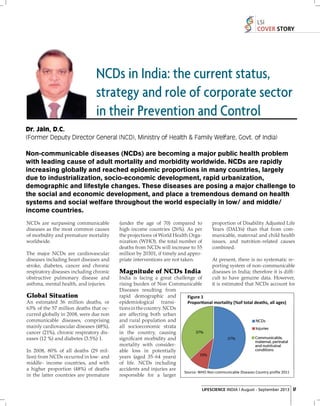
Figure 1
epidemiological transiPropor•onal mortality (%of total deaths, all ages)
tions in the country. NCDs
are affecting both urban
and rural population and
all socioeconomic strata
in the country, causing
significant morbidity and
mortality with considerable loss in potentially
years (aged 35-64 years)
of life. NCDs including
accidents and injuries are
Source: WHO Non-communicable Diseases Country profile 2011
responsible for a larger

LIFESCIENCE INDIA | August - September 2013 17
LSI
COVER STORY

Priorities & Future Plans:

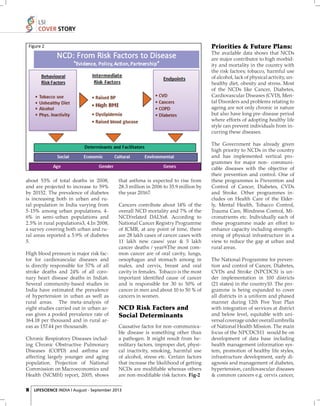
Figure 2

The available data shows that NCDs
are major contributor to high morbidity and mortality in the country with
the risk factors; tobacco, harmful use
of alcohol, lack of physical activity, unhealthy diet, obesity and stress. Most
of the NCDs like Cancer, Diabetes,
Cardiovascular Diseases (CVD), Mental Disorders and problems relating to
ageing are not only chronic in nature
but also have long pre-disease period
where efforts of adopting healthy life
style can prevent individuals from incurring these diseases.

about 53% of total deaths in 2008,
and are projected to increase to 59%
by 20152. The prevalence of diabetes
is increasing both in urban and rural population in India varying from
5-15% among urban populations, 46% in semi-urban populations and
2.5% in rural populations3, 4.In 2008,
a survey covering both urban and rural areas reported a 5.9% of diabetes
5.
High blood pressure is major risk factor for cardiovascular diseases and
is directly responsible for 57% of all
stroke deaths and 24% of all coronary heart disease deaths in India6.
Several community-based studies in
India have estimated the prevalence
of hypertension in urban as well as
rural areas. The meta-analysis of
eight studies carried out in urban areas gives a pooled prevalence rate of
164.18 per thousand and in rural areas as 157.44 per thousand6.
Chronic Respiratory Diseases including Chronic Obstructive Pulmonary
Diseases (COPD) and asthma are
affecting largely younger and aging
population. Projection of National
Commission on Macroeconomics and
Health (NCMH) report, 2005, shows
18

that asthma is expected to rise from
28.3 million in 2006 to 35.9 million by
the year 20167.
Cancers contribute about 14% of the
overall NCD mortality and 7% of the
NCD/related DALYs8. According to
National Cancer Registry Programme
of ICMR, at any point of time, there
are 28 lakh cases of cancer cases with
11 lakh new cases/ year & 5 lakh
cancer deaths / year9.The most common cancer are of oral cavity, lungs,
oesophagus and stomach among in
males, and cervix, breast and oral
cavity in females. Tobacco is the most
important identified cause of cancer
and is responsible for 30 to 50% of
cancer in men and about 10 to 50 % of
cancers in women.

NCD Risk Factors and
Social Determinants
Causative factor for non-communicable disease is something other than
a pathogen. It might result from hereditary factors, improper diet, physical inactivity, smoking, harmful use
of alcohol, stress etc. Certain factors
that increase the likelihood of getting
NCDs are modifiable whereas others
are non-modifiable risk factors. Fig-2

LIFESCIENCE INDIA | August - September 2013

The Government has already given
high priority to NCDs in the country
and has implemented vertical programmes for major non- communicable diseases with the objective of
their prevention and control. One of
these programmes is Prevention and
Control of Cancer, Diabetes, CVDs
and Stroke. Other programmes includes on Health Care of the Elderly, Mental Health, Tobacco Control,
Trauma Care, Blindness Control, Micronutrients etc. Individually each of
these programme made an effort to
enhance capacity including strengthening of physical infrastructure in a
view to reduce the gap at urban and
rural areas.
The National Programme for prevention and control of Cancer, Diabetes,
CVDs and Stroke (NPCDCS) is under implementation in 100 districts
(21 states) in the country10. The programme is being expanded to cover
all districts in a uniform and phased
manner during 12th Five Year Plan
with integration of services at district
and below level, equitable with universal coverage under overall umbrella
of National Health Mission. The main
focus of the NPCDCS11 would be on
development of data base including
health management information system, promotion of healthy life styles,
infrastructure development, early diagnosis and management of diabetes,
hypertension, cardiovascular diseases
& common cancers e.g. cervix cancer,
LSI
COVER STORY
breast cancer & oral cancer, and establishment of linkages with tertiary
care health facilities. To ensure long
term sustainability of interventions,
the programmes would be built within existing public health sector and
wherever feasible introduce public
private partnership models.
During 12 Five Year Pan, It is proposed
to continue on- going efforts and to
introduce following key strategies:
• Generating Awareness on behavioural and physiological risk factors for reducing exposure to life
style diseases.
• Early Diagnosis through periodic/
opportunistic screening of population and better diagnostic facilities
• Infrastructure Development and
Human Resources with capacity
for comprehensive management
of NCDs
• Population based interventions
through multi-sectoral approach
• Building evidence for action
through surveillance, monitoring
and research

Issues and challenges
The magnitude of Non Communicable Diseases demands urgent attention. Common preventable risk
factors underlie most NCDs. These
include behavioural and metabolic
risk factors. The prevalence of these
varies between income groups and
differs with gender. Till date there has
been limited focus on these issues.
With increasing burden of NCDs, the
Health Sector will face many challenges, which needs to be addressed
urgently with an integrated comprehensive framework of prevention and
control of NCDs. The major issues
and challenges related to prevention
and control of NCDs are as under.
i. Raised the priority accorded to the
prevention and control of Non
Communicable Diseases in the
national development agenda and
the National Health Policy
ii. Develop, maintain and strengthen
database and reporting system of

The Government has already given high priority to NCDs
in the country and has implemented vertical programmes
for major non- communicable diseases with the objective
of their prevention and control. One of these programmes
is Prevention and Control of Cancer, Diabetes, CVDs and
Stroke
NCDs and their risk factors.
iii. To strengthen national capacity,
leadership, governance, multisectoral action and partnerships with
stakeholders (including corporate
sector, pharma ondustries and
civil society) to accelerate country
response for the prevention and
control of NCDs
iv. Availability of cost-effective interventions including essential
primary health care packages,
and improves access to prevention
programmes, essential medicines
and affordable medical technology.
v. Budgetary allocations for high
quality research, surveillance and
monitoring systems for the prevention and control of NCDs.
vi. Development and availability of
specialized human resource for
prevention and treatment of
NCDs, and establishing referral
linkages and follow-up systems
linkages across different levels of
the health care system (primary,
secondary and tertiary) to ensure
timely treatment and follow-up
interventions for patients suffering with NCDs.
Role of Corporate Sector in Prevention and Control of NCDs
At the UN high-level meeting on
non-communicable diseases (NCDs)
in 2011, the member countries agreed
that no one factor could fully address
the burden of NCDs and called for
collaboration with “non-health actors
and key stakeholders, where appropriate, including the corporate sector and civil society, in collaborative
partnerships to promote health and
to reduce non-communicable dis-

ease risk factors — mainly tobacco,
alcohol, and ultra-processed food and
drink products
To achieve the goal of reducing the
burden of NCDs both in urban as
well as rural areas and all socioeconomic strata in the country, the corporate sector, pharma industries and
civil society can play a crucial role by
supplanting the efforts of central and
state governments through public private partnership and under corporate
sector responsibilities for the welfare
of our citizens. The central and state
governments should also involve different stakeholders including corporate sector in health promotion, early
diagnosis and treatment of common
NCD and availability of low cost diagnostics, surgical procedures and
medicines through suitable guidelines and regulations. The planning
commission also advocated for the
partnership of government with different stakeholders in the health sector in 12th Plan Document.
After consultations and discussions
at various platforms including World
Health Organization’s global ministerial conference on healthy lifestyles
(April 2011) and the Global Health
Council annual conference (June
2011), four areas where the private
sector can have a positive impact: promoting workplace wellness, improving access to diagnosis and treatment,
creating healthy community environments and strengthening education,
training and research capacity. Many
successful programs run by corporate
sector and civil society through strategic partnerships with governments
and multilateral organizations.
LIFESCIENCE INDIA | August - September 2013 19
LSI
COVER STORY

nanagar, Darjeeling, Jalpaiguri and
Dakshin Dinajpur. Cancer screening
guidelines have been prepared and
sent to the states.
National Institute of Health and Family Welfare (NIHFW) has trained 95
master trainers under ‘training of
trainers” in 3 programme sessions.
Additionally, 693 medical officers have
been trained by states in 32 training
sessions.
ANMs and other health workers have
been trained about diabetes, hypertension and life style related issues
that lead to such disorders.
A draft proposal for development of
Text books on Health Education for
schools from class IIIrd to Xth has
been submitted to the ministry for approval in collaboration with NCERT
amd NIHFW.

Dr. W.D. Bhutia, Deputy Director General, NCD, Government
of India in conversation with Shikha Dhawan
What all activities have the government initiated under national
program on prevention and control
of cancers, diabetes, cardiovascular
diseases and stroke (NPCDCS)?
NPCDCS is being implemented in 100
districts spread over 21 states since
2010-11 and in 2011-2012 Assam and
Sikkim were also included in the program. The districts have been selected
keeping into account their backwardness, inaccessibility and poor health
indicators.
As on 12th August 2013, State NCD
cells/ Clinics are functional at 16
sites. District NCD cell is functional
in 70 districts, district NCD clinics
are functional in 71 districts while 53
CHC clinics are functional in 8 districts. Cardiac Care Units are functional in 52 districts.
With support from private partners

(Roche and Abbott), 29,000 Glucometers, 5.8 crore Glucosestrips and
6.67 crore lancets have been supplied
to 21 states for Diabetes screening
under NPCDCS, urban health checkup and pilot phase of school health
programmes.
Total 3,53,73,528 persons have been
screened for diabetes and hypertension. Screening of all population
above 30 years of age including pregnant women and tuberculosis patients is in itself a big achievement of
the program. Out of the total population screened, 6.57% were found to be
suspects for Diabetes and 6.37% were
suspects for hypertension. The diabetes suspects need to be confi rmed
in diagnostic laboratories.
Chemotherapy services for cancer
has started in 8 districts at Jorhat,
dibrugarh, Rajkot, Jamnagar, Yamu-

20 LIFESCIENCE INDIA | August - September 2013

What challenges have the government faced in implementation
of NPCDCS?
The biggest challenge in implementation of the NPCDCS is the availability of trained skilled manpower. As it
was difficult to get cardiac specialists,
we have appointed medical specialists as in-charge of cardiac care units.
Involvement of private partners in
public health programs is also a challenge as there is lack of clarity on their
involvement.
Not much progress has been made in
public private partnership as there are
ongoing discussions on involvement
of private partners in public health issues like mental health, tobacco control and screening for diabetes.
NPCDCS was a stand-alone program
so far. From 12th plan it has come
under NRHM. With the availability
of flexipool under NRHM it will be
much easier to get things done.
We are looking forward to the advantage that NRHM umbrella will offer.
LSI
COVER STORY

What are the challenges to the
early detection and management of
diabetes, hypertension and stroke
and how can these challenges be
overcome?
Unlike cancer, metabolic disorders
like cardiovascular, stroke and diabetes have linked with metagenomics signature so these can be handled
together. Majority of people suffering
from these diseases which have genetic predisposition are also affected
by environment and are vulnerable from the time they are in their
mother’s womb. Major environmental
conditions being mother’s nutritional
status as well as her exposure to noxious substances like tobacco, passive
smoking and indoor pollution.
Children born with low birth weight
grow normally for few weeks but
then become obese with abnormal
growth chart. They have high insulin
and large proportion of them develop
latent autoimmune diabetes which
knocks down β cells of langerhans
(insulin producing cells in pancreas).
Recent advances in the understanding of the autoimmune process leading to diabetes have generated interest in the potential use of vaccines to
prevent type 1 diabetes.
A major challenge in diabetes is that
90% people do not know that they
have diabetes. The solution is to have
a surveillance system in place that
can detect moderate hypertension,
diabetes and cardiovascular disease.
Biomarkers are also available to identify these conditions. Use of a point
of care device for diabetes that is reliable and cost effective is very important. If random blood sugar levels are
more than 130, further investigation
is required as these may be probable
prediabetics people who should be
advised lifestyle management. Metformin or Gliptins can be prescribed
to people at risk for type 2 diabetes
while those who cannot be managed
by these drugs should be given insulin. It is also essential to get a baseline
liver function test (LFT) for diabetes

Prof. N.K. Ganguly, Advisor, Translational Health Science and
Technology Institute and President, Jawaharlal Institute of Post
Graduate Medical Education and Research in India and former
Director General of the Indian Council of Medical Research in
conversation with Shikha Dhawan
patients. For diabetic retinopathy,
proteomic signatures are used to detect retinopathy. At least 90% of these
new cases could be reduced if there
was proper and vigilant treatment
and monitoring of the eyes.
Myocardial signatures like homocysteine, high sensitive C-reactive
protein, ApoE, ApoB and triglycerides/HDL ratios can be monitored
regularly in high risk patients. In-fact
homocysteine is a common marker for
diabetes, cardiovascular disease and
stroke. If monitoring is done regularly,
appropriate interventions can be done
to control these diseases. Some major
preventative measures can be maintenance of appropriate Vitamin-D and
folate ratios in children. Cardiovascular disease can be prevented by use
of PolycapTM developed by Cadila
Pharmaceuticals Ltd. Trials conduct-

ed under the leadership of Dr. Salim
Yusuf and funded by Welcome Trust
have shown that PolycapTM reduces
the risk of coronary heart disease by
62% and stroke by 48%. The drug has
also shown to bring down the multiple risk factors for cardiovascular disease such as lowering of blood pressure, heart rate, lipids and decreasing
stickiness of platelets.
Another major breakthrough has
been the use of endoscopic procedures to avoid obese bariatric surgery
and stomach surgery. The procedures
cause significant long-term loss of
weight, recovery from diabetes, improvement in cardiovascular risk factors, and a reduction in mortality from
40% to 23%. It is also very important
to manage nutrition uptake appropriately in diabetes patients. In diabetes,
higher amounts of glycosylated heLIFESCIENCE INDIA | August - September 2013 21
LSI
COVER STORY
moglobin, indicates poorer control of
blood glucose levels and has been associated with cardiovascular disease,
nephropathy, and retinopathy. Monitoring HbA1c in diabetic patients may
improve their outcomes.
Another important program in the
control of diabetes is tobacco cessation. Tuberculosis prevalence is also
high in diabetes patients. Tolerance to
TB drugs can be difficult to manage in
diabetics as side effects such as nausea and loss of appetite are very challenging when trying to closely manage blood sugar. In a broader sense
due to the exacerbating effect many
non-communicable diseases are
likely to have on the existing disease
burden, an integrated public health
systems approach for management,
better screening, diagnosis, treatment
and care of communicable and noncommunicable diseases is important.
Effective health care fi nancing and
well-trained providers are essential
in our endeavors against all kinds of
infection and diseases.
Is academic research in India
aligned to the needs of our industries?
Academic research is undertaken for
publication and sometimes to fi le patents as well. Publications are the end
point for most scientists as publications are linked to their promotion.
University systems have very less interactions with industries, except in
Indian Institute of Science (IISc) in
Bangalore where industry has incubation sites. IISc has introduced many
innovative and flexible operational
modes for collaboration with industries. The aim is to provide a research
oriented environment coupled with
hi-tech facilities and the availability
of technical expertise present within
the IISc community.
Industry and academic interactions
can be seen as a mandate in many
prestigious CSIR and DBT funded research institutes. Translational Health
Science and Technology Institute
(THSTI) is part of an emerging health

biotech science cluster and has been
created for the conduct of multidisciplinary research that translates scientific and technological advancements
into medical innovations that can
fi nally be taken up by industries to
improve public health. In addition to
IISc and THSTI, many CSIR labs have
good industrial orientation. CSIR is
closely working with various indigenous industries, private and public
sector undertakings to develop and
commercialize its R&D results and
technologies.
The government initiated New Millennium Indian Technology leadership Initiative (NMITLI) operates in
public-private partnership. NMITLI
has crafted many technology projects
involving industry partners and R&D
institutions setting new global technological paradigms in the areas such
as nano material catalysts, industrial
chemicals, gene based new targets for
advanced drug delivery systems, biotechnology, bio-informatics, improved
liquid crystal devices etc. The scheme
is being implemented by CSIR.
Biotechnology Industry Research Assistance Council (BIRAC) set up as
Department of Biotechnology’s interface agency has many initiatives that
promote industrial collaborations. Its
vision is to facilitate and mentor the
generation and translation of innovative ideas into biotech products and
services by the industry, promote academia and industry collaboration and
enable creation and sustainability of
viable bio enterprises.
In your view how successful is
government’s ambitious program
on management of non-communicable diseases?
Government’s national program on
prevention and control of cancers,
diabetes, cardiovascular diseases
and stroke (NPCDCS) is focused on
health promotion and prevention,
strengthening of infrastructure including human resources, early diagnosis and management of these noncommunicable diseases. NPCDCS is
a hugely expensive program. Budget

22 LIFESCIENCE INDIA | August - September 2013

is a challenge in its implementation
so public-private partnerships (PPP)
mode can play a very important role
in all possible health care interventions at primary and tertiary health
care centers.
Integrated surveillance systems can
be set up through PPP. Diagnostic
reagents and devices are generally
costly and are in the hands of private
sector. Inclusion of private sectors as
care providers can provide cost effective interventions and also provide many health care options to care
seekers. An insurance system that is
standardized can help the marginalized population.
Community driven initiative by Abbott India Ltd with the Puducherry government has implemented a
healthcare programme for people suffering with diabetes, dyslipidaemia,
hypertension and thyroid disorders.
Abbott provided subsidized diagnostics, educational support to healthcare
providers, patient awareness material
and conducted diet guidance camps.
Random and fasting sugar levels, glycosylated hemoglobin, blood pressure
and thyroid levels were monitored
and at least 700,000 people in the
union territory after screening were
stratified as per their need and put on
interventions. Government has also
taken up these initiatives in 100 districts at different health care levels in
different states.
However, there are many grey areas in
public-private partnerships. The government can help by bringing in more
transparency and more clarity in such
collaborations. Appropriate matrixes
are required so that PPP becomes the
most preferred collaboration in the
public health arena. The government
has to make policies, processes and
modalities to streamline things. PPP
gains and spin-offs should be handled well and profit sharing between
partners should be spelled out clearly
with accountability well established
and audited routinely by impartial
parties
LSI
COVER STORY

www.enoveo.co.in
Enoveo Biosolutions Private Limited is a start up company, established in 2012, incubated at
KIIT Technology Business Incubator, KIIT University, Odisha. We are a team of environmental
scientists, engineers and business professionals who provide environmental bioengineering
solutions for various environmental concerns with regards to contaminated soil, waste
water bodies and effluent treatment measures.
We foster collaboration with various organizations for applied research and innovation
towards technology development for a sustainable and equitable environment.
Expertise:
v In-situ assessment and treatment : for Waste water,
Ground water and Contaminated soil
v Eco Sanitation : Implementation of key sanitary
measures for community health and hygiene
v Eco Toxicity: Toxic analysis and e- mapping for
contamination load
v Environmental Forensics: Data mining and analyses for
biological and chemical pollutants aided with structural modeling
v Green Engineering: Recycling of municipal and
industrial waste into commercial products
v Online Microbial Biosensor: Onsite detection of
chemical contamination
v Capacity Building: Training and skill development
of human resources for social awareness programmes
and sustainable livelihood generation

We provide consultancy for metagenomic analyses, technology development projects and
alternative energy. Our technical expertise comprises of professionals from France, Brazil,
USA and India.
ENOVEO Bio Solutions Private Limited
203, Second Floor, KIIT TBI, KIIT University, Bhubaneswar, Odisha, India. 751024
E-Mail: connect@enoveo.co.in * M: +91 876 333 39 54
LIFESCIENCE INDIA | August - September 2013 23
LSI
COVER STORY

Financial Burden from Non-Communicable
Diseases and the Road Ahead

-Shikha Dhawan

Non-communicable
diseases (NCDs) like
diabetes, cancers,
cardiovascular
diseases are no
longer a lifestyle
related disease of
rich countries. With
the emerging lifestyle
trends and sedentary
way of life, NCDs now
account for a very
large burden in terms
of both mortality
and morbidity in low
and middle income
countries (LMICs)

ommunicable and noncommunicable
diseases
(NCD) account for 60% of
all deaths worldwide, with
80% of those taking place in developing countries and in the age groups of
prime productivity. As per disabilityadjusted life year (DALY) which is a
measure of years lost due to ill-health,
disability or early death, for India the
topmost NCDs are: Cardiovascular
Diseases (CVDs), Diabetes, Cancer
and Chronic Obstructive Pulmonary
Disease (COPD) and Communicable
Diseases are: Pneumonia, HIV/AIDS,
Tuberculosis and Vaccine preventable
diseases.

C

diseases leading to poorer outcome for
these diseases. Direct cost for patients
with co-morbidities is generally 45%
higher than the direct cost for patients
without co-morbidities.
Burden of disease associated with
NCDs and injuries is higher than that
associated with the health conditions
included in the Millennium Development Goals (HIV/AIDS, tuberculosis,
malaria, and maternal, child and reproductive health), even in developing countries. The menace of NCDs
are expected to exceed communicable,
prenatal and food borne diseases as
the leading causes of death in all countries by 2020.

The major risk factors for non-communicable diseases are smoking, alcohol
abuse, a sedentary lifestyle and an unhealthy diet. The dilemma for health
care system is that a person with a
non-communicable disease is also vulnerable to common infectious diseases
like tuberculosis, community-acquired
pneumonias and vaccine preventable

NCDs pose a heavy fi nancial burden
on poor households as cost of medicines is expensive. When it is difficult
to meet day-to-day mundane expenses, the treatment of NCDs has fi nancial implications on affected households. Cost can be a major deterrent to
seek medical care. For diabetes, cost of
insulin represents an important source

24 LIFESCIENCE INDIA | August - September 2013
LSI
COVER STORY
of spending for patients and their
families. NCDs management is not
well covered under our health insurance systems.
There are indirect costs which also
have to be borne by individuals affected by NCDs. These costs mainly
include time and productivity loss by
patients and caregivers because of
the illness as well as income lost by
patients and family members. Complications and co-morbidities related
to the severity of illness increase the
household fi nancial burden.
Health-fi nancing systems that improve fi nancial risk protection and
help achieve universal health coverage holds great potential to manage
the fi nancial burden of NCDs.

man resources, early diagnosis and
management and integration with the
primary health care system through
NCD cells at different levels for optimal operational synergies. Under the
12th Plan, the program has come under NRHM and the country is looking
forward to the advantage the NRHM
umbrella will offer.

ment of ‘NCD clinic’ at CHCs and
District Hospitals.
Efforts are being taken to increase
awareness for promotion of healthy
lifestyle through involvement of mass
media.
Training of master trainers have been
done by National Institute of Health
and Family Welfare (NIHFW) and
Indian Nursing Counsel. Pilot project on school based diabetes screening programme have been initiated in
many districts. The health ministry,
along with Confederation of Indian
Industry (CII) and pharmaceutical
company Eli Lilly and Co., is working on policy interventions to control
diabetes.

All said and done, health promotion
and prevention of chronic NCDs are
yet to be adequately addressed in
the country’s health system. Though
many commendable targets have been
achieved since the implementation of
the NPCDCS program, a lot needs to
be done still. The achievements of the
program till date include development
of Operational Guidelines and training modules for Health Workers and
Medical Officers.

The health ministry is also exploring
the possibilities of public private partnership (PPP) initiatives and the involvement of industry to complement
the government’s programme. Health
Ministry has envisaged including curriculum on health education as part of
2014’s academic curriculum in Central
Board of Secondary Education (CBSE)
affi liated schools across India.

The need of the hour is a comprehensive policy on disease management,
Human resource has been hired for
synergy among all healthcare stakeNational NCD Cell while setting up
holders, effective public-private partof State and District NCD cells are in
nerships and increased government
process. Funds for implementation
spending on prevention, screening,
of NPCDCS in 27 districts across 19
early intervention and new medical
states were released in March 2011 for
treatments to reduce the economic
opportunistic screening, establishburden of non-communicaFramework for the analysis of economic impacts of NCDs on households.
ble diseases by reducing risk,
Ref: McIntyre D. et al (2006), Soc Sci Med
morbidity and mortality related to these diseases. Health
Loss of working time of
Intra-& inter
promotion, prevention and
person who is ill &
household labour
caregivers
substitution
early treatment would reduce
No
Indirect
some of the direct costs by
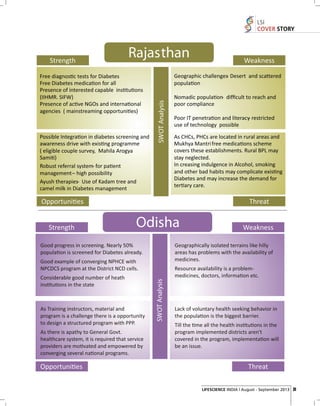
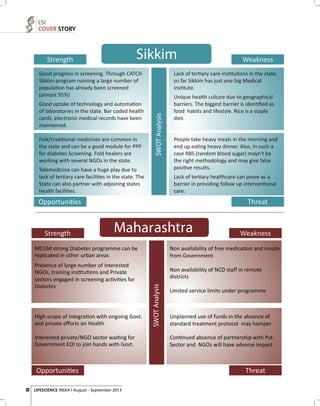
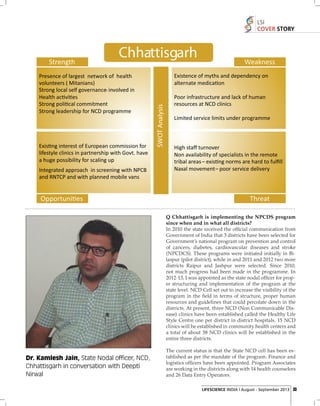
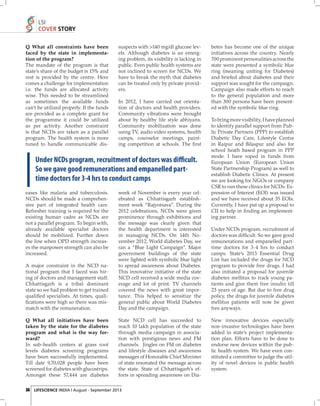
costs
Hiring other
Loss of income of
appropriate mix of prevenlabour & other
person who is ill &
strategies
tion and treatment according
caregivers
(due to absenteeism,
to their relative costs and imNon
missing business
Seek
communicable
appointments, etc.)
care
pact.
disease
Costs can be further reduced
by rational use of medications
for NCDs. Government of
India has launched the ambitious integrated National
Programme for Prevention
and Control of Cancers, Diabetes, Cardiovascular Diseases and Stroke (NPCDCS)
since 2010 with focus on
health promotion and prevention, strengthening of
infrastructure including hu-

Financial costs of health
care (consultation,
medicines, laboratory,
hospitalization, etc)

Yes

Directs
costs
Other financial costs
related to seeking care
(transportation, special
dietary regimes, etc.)

Reducing/delaying
consumption of
non-health goods &
services (food,
education, electricity,
leisure, etc)
Use of savings

Reduced well being
and increased
financial
vulnerability for
individuals &
households

Sale of assets
Borrowing
Delaying
investments
Other strategies to
cope with financial
costs (assistance
from other, etc)

LIFESCIENCE INDIA | August - September 2013 25
LSI
COVER STORY

CII Recommendations' based action plan
(linked to NPCDCS Strategic Framework)
Research clearly indicates that countries,
states, regions with greater means of health
education and awareness have better health
outcomes, giving the healthcare providers and
policy makers the option to choose the best
interventions leads to overall improvement in
the healthcare outcomes of the community. In
practice, however, finding the mechanism to
make this happen is difficult. Ultimately, as in
any system, the real value of choice comes from
people having the right information to select
the option that is superior. This framework
endeavors to systematically present the available
information and options for the policy makers
and program managers. The framework has been
designed to be in synchrony with the NPCDCS
strategy that aims to strengthen prevention,
diagnosis, treatment and capacity aspects of the
health system.
Issue

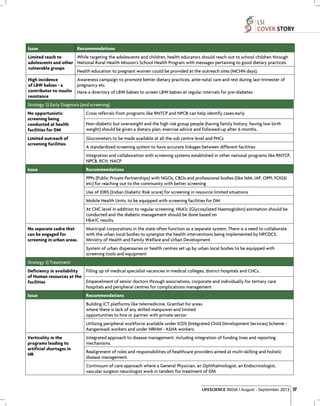
Recommendations

Strategy 1) Prevention through behaviour change
Very little focus
on "root cause" of
disease

Put emphasis of health education with focus on prevention activities like exercise, dietary control and stress
management in children and young adults.
Promote workplace interventions like use of stairs, no-smokingpolicies, standing desks etc should be
promoted
Deploy mass media campaigns (through print, electronic and social media) for increasing community
awareness regarding healthy dietary practices
Revisit media policies to discourage advertisements related to junk/fast food, tobacco and other harmful
commodities while promoting messages related to exercise, healthy lifestyle etc is important.
The private partners, development agencies and Government to synergize CSR and development activities to
streamline them with the NPCDCS program.
"Diabetes Education Kiosks" should be set up jointly by the government and non-governmental partners to
enable community in getting key health education messages closer to their homes.

Limited involvement
of community based
groups

PRI (Panchayati Raj Institutions), NGOs, CBOs and community forums like Ramayan Mandalis, Saas Bahu
sammelans should be involved for providing health education regarding prevention, screening, early diagnosis
and timely & appropriate treatment

26 LIFESCIENCE INDIA | August - September 2013
LSI
COVER STORY

Issue

Recommendations

While targeting the adolescents and children, health educators should reach out to school children through
Limited reach to
adolescents and other National Rural Health Mission's School Health Program with messages pertaining to good dietary practices.
vulnerable groups
Health education to pregnant women could be provided at the outreach sites (MCHN days).
High incidence
of LBW babies - a
contributor to insulin
resistance

Awareness campaign to promote better dietary practices, ante-natal care and rest during last-trimester of
pregnancy etc.
Have a directory of LBW babies to screen LBW babies at regular intervals for pre-diabetes

Strategy 2) Early Diagnosis (and screening)
No opportunistic
screening being
conducted at health
facilities for DM

Cross referrals from programs like RNTCP and NPCB can help identify cases early

Limited outreach of
screening facilities

Glucometers to be made available at all the sub centre level and PHCs

Non-diabetic but overweight and the high risk group people (having family history, having low birth
weight) should be given a dietary plan, exercise advice and followed-up after 6 months.

A standardized screening system to have accurate linkages between different facilities
Integration and collaboration with screening systems established in other national programs like RNTCP,
NPCB, RCH, NACP.

Issue

Recommendations
PPPs (Public Private Partnerships) with NGOs, CBOs and professional bodies (like IMA, IAP, OPPI, FOGSI
etc) for reaching out to the community with better screening
Use of IDRS (Indian Diabetic Risk score) for screening in resource limited situations
Mobile Health Units, to be equipped with screening facilities for DM
At CHC level in addition to regular screening, HbA1c (Glycosylated Haemoglobin) estimation should be
conducted and the diabetic management should be done based on
HbA1C results.

No separate cadre that
can be engaged for
screening in urban areas.

Municipal corporations in the state often function as a separate system. There is a need to collaborate
with the urban local bodies to synergize the health interventions being implemented by NPCDCS,
Ministry of Health and Family Welfare and Urban Development.
System of urban dispensaries or health centres set up by urban local bodies to be equipped with
screening tools and equipment

Strategy 3) Treatment
Filling up of medical specialist vacancies in medical colleges, district hospitals and CHCs..
Deficiency in availability
of Human resources at the
Empanelment of senior doctors through associations, corporate and individually for tertiary care
facilities
hospitals and peripheral centres for complications management
Issue

Recommendations
Building ICT platforms like telemedicine, GramSat for areas
where there is lack of any skilled manpower and limited
opportunities to hire or partner with private sector
Utilizing peripheral workforce available under ICDS (Integrated Child Development Services) Scheme Aanganwadi workers and under NRHM - ASHA workers.

Verticality in the
programs leading to
artificial shortages in
HR

Integrated approach to disease management, including integration of funding lines and reporting
mechanisms.
Realignment of roles and responsibilities of healthcare providers aimed at multi-skilling and holistic
disease management.
Continuum of care approach where a General Physician, an Ophthalmologist, an Endocrinologist,
vascular surgeon neurologist work in tandem for treatment of DM

LIFESCIENCE INDIA | August - September 2013 27
LSI
COVER STORY

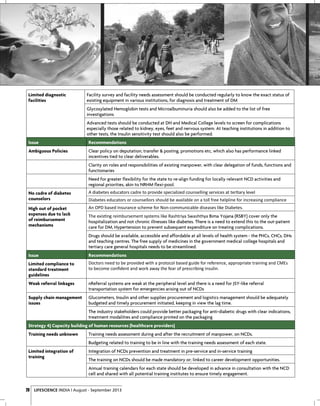
Limited diagnostic
facilities

Facility survey and facility needs assessment should be conducted regularly to know the exact status of
existing equipment in various institutions, for diagnosis and treatment of DM
Glycosylated Hemoglobin tests and Microalbuminuria should also be added to the list of free
investigations
Advanced tests should be conducted at DH and Medical College levels to screen for complications
especially those related to kidney, eyes, feet and nervous system. At teaching institutions in addition to
other tests, the Insulin sensitivity test should also be performed.

Issue

Recommendations

Ambiguous Policies

Clear policy on deputation, transfer & posting, promotions etc, which also has performance linked
incentives tied to clear deliverables.
Clarity on roles and responsibilities of existing manpower, with clear delegation of funds, functions and
functionaries
Need for greater flexibility for the state to re-align funding for locally relevant NCD activities and
regional priorities, akin to NRHM flexi-pool.

No cadre of diabetes
counselors

A diabetes educators cadre to provide specialized counselling services at ter•ary level

High out of pocket
expenses due to lack
of reimbursement
mechanisms

An OPD based Insurance scheme for Non-communicable diseases like Diabetes.

Diabetes educators or counsellors should be available on a toll free helpline for increasing compliance
The exis•ng reimbursement systems like Rashtriya Swashthya Bima Yojana (RSBY) cover only the
hospitalization and not chronic illnesses like diabetes. There is a need to extend this to the out-patient
care for DM, Hypertension to prevent subsequent expenditure on treating complications.
Drugs should be available, accessible and affordable at all levels of health system - the PHCs, CHCs, DHs
and teaching centres. The free supply of medicines in the government medical college hospitals and
tertiary care general hospitals needs to be streamlined.

Issue

Recommendations

Limited compliance to
standard treatment
guidelines

Doctors need to be provided with a protocol based guide for reference, appropriate training and CMEs
to become confident and work away the fear of prescribing insulin.

Weak referral linkages

nReferral systems are weak at the peripheral level and there is a need for JSY-like referral
transportation system for emergencies arising out of NCDs

Supply chain management
issues

Glucometers, Insulin and other supplies procurement and logistics management should be adequately
budgeted and timely procurement initiated, keeping in view the lag time.
The industry stakeholders could provide better packaging for anti-diabetic drugs with clear indications,
treatment modalities and compliance printed on the packaging

Strategy 4) Capacity building of human resources (healthcare providers)
Training needs unknown

Training needs assessment during and after the recruitment of manpower, on NCDs.
Budgeting related to training to be in line with the training needs assessment of each state.

Limited integration of
training

Integration of NCDs prevention and treatment in pre-service and in-service training
The training on NCDs should be made mandatory or; linked to career development opportunities.
Annual training calendars for each state should be developed in advance in consultation with the NCD
cell and shared with all potential training institutes to ensure timely engagement.

28 LIFESCIENCE INDIA | August - September 2013
LSI
COVER STORY

Issue

Recommendations

Limited orientation
regarding NCDs

Standardized orientation programs for NCD program management team, including Simple operational
guidelines on fund utilization.
Orientation training of policymakers on various prevention, treatment and complications management
strategies for DM.
Training of nursing staff as Diabetic educators and in using innovative tools like Diabetes Conversation
Maps
Chemists and pharmacists should be trained and sensitized about the need for providing literature,
explaining the effects, side effects, importance of compliance and complications related to DM.

Few opportunities of
continuing medical
education around DM

DM should be included regularly in the CME programs for doctors and nurses
CMEs should focus on special indications like juvenile diabetes, gestational diabetes and complications
management, with involvement of both public and private healthcare providers at primary, secondary
and tertiary levels.
To avoid treatment related complications and enhance patient outcomes, have uniformity in the
treatment modalities throughout the country. This could be achieved through standard treatment
guidelines for DM.

nLimited capacity of
State/ National training
institutes

Government could source-in or source-out trainings on NCD through partnerships with multitude of
leading training institutes (public and private) like SIHFW, NIHFW, Medical Colleges, Regional institutes
and other autonomous public health bodies.

Issue

Recommendations
nVirtual (online) lectures for medical and paramedical staff for training on DM updating and enhancing
technical expertise and confidence in managing a case of DM.

nMultiple training
institutes working in
isolation – no uniformity
or accreditation of
curriculum

A nodal agency at the national level capacitated to provide accreditation to training courses for
healthcare providers to be followed uniformly by all states
Standard training modules or manuals on NCDs to be used uniformly by all training institutes
Regular up-gradation (maybe once a year) of training course curriculum across all training institutes

Strategy 5) Surveillance, Monitoring & Evaluation Recommendations
Multiple MIS formats

There are several stand-alone MIS in the health system which need to be standardized and integrated.
The MIS for NPCDCS should be mainstreamed with other cross-sectoral initiatives being carried out by
Government and other development partners (like World Bank, USAID, FAO, WFP, UNICEF, WHO etc)
Engaging PRI (Panchayati Raj Institutions) members in community-based monitoring. The Village Health
Committee (VHC) should form the link between the Healthcare providers and the community.

Limited disease
surveillance systems

A clinical registry of the people suffering from DM should be prepared. All the individuals seeking
services from NPCDCS should be given health card with unique identity number to track treatment.
Duplication of diagnostic tests leads to wastage. To avoid this medical history of the patient can be
linked to the Aadhaar card (UID) on a medical record system.

Issue

Recommendations
A program surveillance unit to conduct performance audit and allocation of funds
Ensuring quality control by conducting frequent prescription audits to help in standardizing treatment
practices and ensuring quality control towards ensuring patient satisfaction.
LIFESCIENCE INDIA | August - September 2013 29
LSI
COVER STORY

LEARNING FROM CII NCD STATE ROUNDTABLES

30 LIFESCIENCE INDIA | August - September 2013
LSI
COVER STORY

LIFESCIENCE INDIA | August - September 2013 31
LSI
COVER STORY

32 LIFESCIENCE INDIA | August - September 2013
LSI
COVER STORY

Q Chhattisgarh is implementing the NPCDS program
since when and in what all districts?
In 2010 the state received the official communication from
Government of India that 3 districts have been selected for
Government’s national program on prevention and control
of cancers, diabetes, cardiovascular diseases and stroke
(NPCDCS). These programs were initiated initially in Bilaspur (pilot district), while in and 2011 and 2012 two more
districts Raipur and Jashpur were selected. Since 2010,
not much progress had been made in the programme. In
2012-13, I was appointed as the state nodal officer for proper structuring and implementation of the program at the
state level. NCD Cell set out to increase the visibility of the
program in the field in terms of structure, proper human
resources and guidelines that could percolate down in the
districts. At present, three NCD (Non Communicable Disease) clinics have been established called the Healthy Life
Style Centre one per district in district hospitals. 15 NCD
clinics will be established in community health centers and
a total of about 38 NCD clinics will be established in the
entire three districts.

Dr. Kamlesh Jain, State Nodal officer, NCD,
Chhattisgarh in conversation with Deepti
Nirwal

The current status is that the State NCD cell has been established as per the mandate of the program. Finance and
logistics officers have been appointed. Program Associates
are working in the districts along with 14 health counselors
and 26 Data Entry Operators.
LIFESCIENCE INDIA | August - September 2013 33
LSI
COVER STORY
Q What all constraints have been
faced by the state in implementation of the program?
The mandate of the program is that
state’s share of the budget is 15% and
rest is provided by the centre. Here
comes a challenge for implementation
i.e. the funds are allocated activity
wise. This needed to be streamlined
as sometimes the available funds
can’t be utilized properly. If the funds
are provided as a complete grant for
the programme it could be utilized
as per activity. Another constraint
is that NCDs are taken as a parallel
program. The health system is more
tuned to handle communicable dis-

suspects with >140 mg/dl glucose levels. Although diabetes is an emerging problem, its visibility is lacking in
public. Even public health systems are
not inclined to screen for NCDs. We
have to break the myth that diabetes
can be treated only by private providers.
In 2012, I have carried out orientation of doctors and health providers.
Community vibrations were brought
about by healthy life style abhiyans.
Community mobilization was done
using TV, audio video systems, health
camps, counselor meetings, painting competition at schools. The fi rst

Under NCDs program, recruitment of doctors was difficult.
So we gave good remunerations and empanelled parttime doctors for 3-4 hrs to conduct camps
eases like malaria and tuberculosis.
NCDs should be made a comprehensive part of integrated health care.
Refresher training is required for the
existing human cadre as NCDs are
not a parallel program. To begin with,
already available specialist doctors
should be mobilized. Further down
the line when OPD strength increases the manpower strength can also be
increased.
A major constraint in the NCD national program that I faced was hiring of doctors and management staff.
Chhattisgarh is a tribal dominant
state so we had problem to get trained
qualified specialists. At times, qualifications were high so there was mismatch with the remuneration.

week of November is every year celebrated as Chhattisgarh establishment week “Rajyotsava”. During the
2012 celebrations, NCDs were given
prominence through exhibitions and
the message was clearly given that
the health department is interested
in managing NCDs. On 14th November 2012, World diabetes Day, we
ran a “Blue Light Campaign”. Major
government buildings of the state
were lighted with symbolic blue light
to spread awareness about Diabetes.
This innovative initiative of the state
NCD cell received a wide media coverage and lot of print. TV channels
covered the news with great importance. This helped to sensitize the
general public about World Diabetes
Day and the campaign.

Q What all initiatives have been
taken by the state for the diabetes
program and what is the way forward?
In sub-health centers at grass root
levels diabetes screening programs
have been successfully implemented.
Till date 9,70,028 people have been
screened for diabetes with glucostrips.
Amongst these 57,444 are diabetes

State NCD cell has succeeded to
reach 10 lakh population of the state
through media campaign in association with prestigious news and FM
channels. Jingles on FM on diabetes
and lifestyle diseases and awareness
messages of Honorable Chief Minister
of state resonated the message across
the state. State of Chhattisgarh’s efforts in spreading awareness on Dia-

34 LIFESCIENCE INDIA | August - September 2013

betes has become one of the unique
initiatives across the country. Nearly
700 prominent personalities across the
state were presented a symbolic blue
ring (meaning uniting for Diabetes)
and briefed about diabetes and their
support was sought for the campaign.
Campaign also made efforts to reach
to the general population and more
than 300 persons have been presented with the symbolic blue ring.
To bring more visibility, I have planned
to identify parallel support from Public Private Partners (PPP) to establish
Diabetic Day Care, Lifestyle Centre
in Raipur and Bilaspur and also for
school heath based program in PPP
mode. I have roped in funds from
European Union (European Union
State Partnership Program) as well to
establish Diabetic Clinics. At present
we are looking for NGOs or company
CSR to run these clinics for NCDs. Expression of Interest (EOI) was issued
and we have received about 35 EOIs.
Currently, I have put up a proposal to
CII to help in fi nding an implementing partner.
Under NCDs program, recruitment of
doctors was difficult. So we gave good
remunerations and empanelled parttime doctors for 3-4 hrs to conduct
camps. State’s 2013 Essential Drug
List has included the drugs for NCD
program to provide free drugs. I had
also initiated a proposal for juvenile
diabetes mellitus to track young patients and give them free insulin till
23 years of age. But due to free drug
policy, the drugs for juvenile diabetes
mellitus patients will now be given
free anyways.
New innovative devices especially
non-invasive technologies have been
added in state’s project implementation plan. Efforts have to be done to
endorse new devices within the public health system. We have even constituted a committee to judge the utility of novel devices in public health
system.
LSI
SPOTLIGHT

HERBAL NEEM FORMULATION:
Miracle cure for wound healing

-Poorva Shrivastava

Since time immemorial, herbal medicines
have been popular as remedies for diseases
worldwide. These are safe since they are
natural products. Herbal formulations which
have reached widespread acceptability
as therapeutic agents in India include
nootropics, antidiabetics, hepatoprotective
agents and lipid lowering agents. The
use of herbs is often more affordable
than purchasing expensive modern
pharmaceuticals.

I

nfected wounds in legs, foot and other parts
of the body are very common clinical problems that require intensive care in a wound
clinic. These wounds are caused by trauma
or complicated surgical operations on infected organs. Patients suffering from diabetes, arterial or
venous disease of lower limbs have a high risk of
developing infected wounds. Any wound or ulcer
that does not heal in 6 weeks is said to be a chronic
wound.
There is more than one reason why a wound does
not heal, infection being just one. Lack of blood
supply, venous or arterial insufficiency, radiation,
foreign bodies, nutritional deficiency, diabetes,
jaundice, alcoholism, toxins, cancer, steroids and
chemotherapeutic agents, hereditary healing disLIFESCIENCE INDIA | August - September 2013 35
LSI
SPOTLIGHT
NEEM SPA
Applications and benefit of making Novel Oil

Soak Neem in
water for 12 hrs

Drink Neem
decoction to
enhance immunity,
activate metabolism,
purify blood

Steam is
generated

Neem
Decoction

Boil the water

Mix in 4 oils and 17 herbs
to get Novel Oil which
would cure any kind of
wound, any kind of skin
disease and Allopecia

Take neem bath
and in-hale steam

Neem Decoction

Wash your body

order, old age etc., can be cited as other reasons. Among
these the most common reason being diabetes, where the
only solution at times is amputation. These wounds are
treated with various antiseptics and dressing materials.
Most of these are provided by multinational companies at a
very high cost. Moreover the antiseptics used are harmful
to the healing process and are expensive too.
The high cost makes these unaffordable to the common
man. These antiseptics have been actually shown to be
cytotoxic and damage the delicate granulation tissue and
epithelial cell.
By efforts of Mr. Manish Saxena, a neem based herbal formulation has shown tremendous improvements in diabetic
foot ulcers and healing in other wounds. A
staunch devotee of Lord Krishan, he calls
his oil as “Hare Krishna Oil.” The oil formulation can easily heal diabetic ulcers, bed
sores, venous ulcers, arterial ulcers, varicose
ulcers, knee replacement wounds etc.
In 1998 Mr. Manish Saxena was a research
associate in Department of Surgery, AIIMS and was associated with a clinical trial
for wound care. He saw that there is rising
number of amputations in non healing ulcer cases among diabetic wounds (one lakh
amputations per year). While trying to fi nd
out a solution to this problem he met Dr. T.
V Rao of Maharishi Ayurved Ltd who intro36 LIFESCIENCE INDIA | August - September 2013

duced the benefits of neem based formulations to him. One of the major formulation created was a novel neem oil that
was a miracle cure for healing wounds.
In 1999 his innovation was recognized
by Department of Science and Technology (DST) and they provided him with a
grant under TePP (Techno-Entrepreneur
Promotion Programme). With the available funds from DST, a multi-centric
randomised trail was conducted at the
wound care clinic, Department of Surgery, AIIMS and Central Council for Research in Ayurveda & Siddha (CCRAS)
with Principal Investigators Dr. Anurag
Shrivastava and Dr. K.D Sharma respectively. All the laboratory experiments for
pre-clinical toxicity studies were carried
out at SGS India based in New Delhi.
The oil formulation was completely safe
and had no side-effects: obviously as the
ingredients are all natural products and
we have used them in one form or another.

The standardization of the innovation was done at National Institute for Pharmaceutical Education and Research
(NIPER) with Dr. Parikshit Bansal as the principal investigator. The formulation was also tested on eye wounds in
rabbits at Rajendra Prasad eye centre at AIIMS under Professor S.C. Ghosh. The formulation has been commercialized by M/s Venus Remedies Ltd.
Among several neem based formulations that were researched and tested at various clinics and hospitals, another neem based formulation with more capabilities to heal
wounds such as venous/arterial wounds, diabetic wounds,
wounds due to MRSA (Methicillin-resistant Staphylococcus aureus causing several difficult-to-treat infections in
LSI
SPOTLIGHT
humans), traumatic wounds, gunshot
wounds, burns, wounds caused by
chemotherapy/radiotherapy and all
types of chronic skin infections like
psoriasis, alopecia (stops hair fall),
any pain or inflammation, ear /nose
infections, crack heels and aids skin
rejuvenation have been developed
by Mr. Manish Saxena. For complete
healing, he recommends a holistic approach as outlined in his neem spa.

Miracles of neem based oil
formulation
A man driver by passion, Mr. Manish
Saxena has been himself making the
neem based formulation for the last
15 years utilizing herbs and oils of the
highest quality to maintain quality
and purity of the product. As a wound
care expert, he is working with Dr.
Amar Pal Singh Suri at Diabetes FootCare and Wound-Care Clinic, New
betic wounds patients could get benefitted and the amputation rate can be decreased which is now two limbs per 30
seconds according to a WHO survey”. An NGO, Sri Ram
Seva Trust, New Delhi helps Mr. Manish Saxena to distribute the neem based oil formulation to poor and needy
patients. Extensive research on this formulation has been
taken up by Prof. Ameena Gurib Fakim at CEPHYR (Centre de Phytothérapie et de Recherche, www.cephyr-recherche.com) a limited company incorporated under Mauritian
Law to promote the formulation worldwide.
Many miraculous healings have been observed with the
oil. Orthopedic wounds caused due to knee replacement
surgery where foreign body is inserted and likewise any
surgical wound where some foreign body is put in the body
like proline mesh have healed in record time with application of this oil. Three MRSA wounds have been healed till
date while the oil has benefitted leprosy patients as well.
Several bomb blast cases of BSF, CRPF and army with
splinters wounds and even bedsores have been successfully treated and cured by Mr. Manish Saxena. His vision is
to open neem clinics in every country and every city.

Delhi where more than 1000 patients have been successfully treated for the last 15 years. According to Dr. Amar
Pal Singh Suri, “We have not observed any side effect till
date. Our success rate has been more than 95%. We wish to
spread awareness about this center so that maximum dia-

Manish Saxena can be contacted at
saxmanish@gmail.com

LIFESCIENCE INDIA | August - September 2013 37
LSI
ACADEMIC SHOWCASE

Inspiring Innovation
LSI Academic Showcase
Principal Kumaraguru College of Technology shares some of the unique Industry Academia
initiatives of the college. KCT is one of the premier institutions in the country .
Which are the institutions that
have recruited from KCT?
The Kumaraguru College of Technology has over 200 students who have
successfully passed out and pursuing
their higher studies in various countries including USA, UK, Canada,
Australia, New Zealand, Germany,
Sweden, Denmark, Belgium, Finland,
Austria, Malaysia etc. Many of our
graduates have completed their higher studies in premier Indian institutes
like IITs, IIMs, NITs, BITS, IISER and
the list is growing.
It is our privilege to share that our
graduates are working in many
MNCs- Genentech Inc., Baylor College of Medicine, and Novartis, USA,
Anglo Arabian Healthcare, Dubai,
United Arab Emirates, Indian Immunological Limited, Hyderabad, Biocon,
Bangalore, Ramky Group, India, Novartis, OTC, India, GLR Laboratories
Pte. Ltd., Chennai, Orchid Pharmaceuticals Pte, Ltd., Chennai and many
more..

What are the unique subjects
and methodologies our course offers to the Biotechnology students?
The Students of B.Tech biotechnology
at KCT study a blend of courses from
various related disciplines. These
courses are relatively unique compared to most syllabi across India. For
examples, courses related to Chemical
engineering, Biopharma,Food technology, IPR, biosafety and bioethics.
These courses are in addition to the
core biotech curriculum comprising

of fundamental biosciences, genetic
engineering, bioprocess, downstream
processing, Bioinformatics, Immunology In addition a unique blend of inhouse and inter-departmental electives is also offered to the students
interested in other related topics like
Immunotechnology, Biomedical engineering, Programming for bioinformatics, Environmental biotechnology, Nanotechnology
Medical
textiles, Bioenergy, Clinical research
and Management .

38 LIFESCIENCE INDIA | August - September 2013

Please enlist the Innovation-initiative of the Institution
The Kumaraguru College of Biotechnology Department has fi led a provisional patent registration for the selective extraction of dyes from textile
dyeing unit wastewater.
We are pursuing research on nanotechnology for the synthesis of nanoparticles for antimicrobial activity. We
are Investigating the plant resources
for valuable biomolecules as pharmaceutical for diseases such as cancer,
diabetes, arthritis etc. We are developing medical textiles with plant
based enzymes for warts.
The Confederation of Indian Industry (CII) works to create and sustain an environment conducive
to the development of India, partnering industry, Government, and civil society, through advisory
and consultative processes.
CII is a non-government, not-for-profit, industry-led and industry-managed organization, playing
a proactive role in India's development process. Founded over 118 years ago, India's premier
business association has over 7100 members, from the private as well as public sectors, including
SMEs and MNCs, and an indirect membership of over 90,000 enterprises from around 257 national
and regional sectoral industry bodies.
CII charts change by working closely with Government on policy issues, interfacing with thought
leaders, and enhancing efficiency, competitiveness and business opportunities for industry
through a range of specialized services and strategic global linkages. It also provides a platform
for consensus building and networking on key issues.
Extending its agenda beyond business, CII assists industry to identify and execute corporate
citizenship programmes. Partnerships with civil society organizations carry forward corporate
initiatives for integrated and inclusive development across diverse domains including affirmative
action, healthcare, education, livelihood, diversity management, skill development, empowerment
of women, and water, to name a few.
The CII Theme for 2013-14 is Accelerating Economic Growth through Innovation, Transformation,
Inclusion and Governance. Towards this, CII advocacy will accord top priority to stepping up the
growth trajectory of the nation, while retaining a strong focus on accountability, transparency
and measurement in the corporate and social eco-system, building a knowledge economy, and
broadbasing development to help deliver the fruits of progress to all.
With 63 offices, including 10 Centres of Excellence, in India, and 7 overseas offices in Australia,
China, France, Singapore, South Africa, UK, and USA, as well as institutional partnerships with 224
counterpart organizations in 90 countries, CII serves as a reference point for Indian industry and
the international business community.

For more detail please contact:
Confederation of Indian Industry
The Mantosh Sondhi Centre
23, Institutional Area, Lodi Road, New Delhi - 110 003 (India)
T: 91 11 45771000 / 24629994-7 F: 91 11 24626149
E: public.health@cii.in W: www.cii.in
Reach us via our Membership Helpline: 00-91-11-435 46244 / 00-91-99104 46244
CII Helpline Toll free No: 1800-103-1244
LSI
INTERVIEW

Prof Vijayaraghavan in an exclusive interview with LifeScience India shares his views
on the Industry's key issues

Dr Vijaraghavan,
Secretary, Deparment
of Biotechnology (DBT),
government of India,
shares his insights on
the policy regulatory
issues of the industry in
conversation with
Hareeni Mageswaran

As a policy maker, what is hindering the LifeScience Industry?
In one word: Connectivity. All of us need to connect as partners for a shared
purpose. This shared purpose helps bring a meaningful transformation . Science is but one component here but it is an important one. For this connectivity
to happen we in the government must constantly keep in mind that the purpose of policy is to enable transformation through the responsible and correct
use of public resources. If we worry only about using public resources in a procedurally correct manner while forgetting our purpose, policy will be hollow.
Connectivity ensures creativity with responsibility on all sides.
What are your views on the Clinical Trials industry? What is the
fate of this industry in India?
First, the term ‘Clinical trials industry’ sends a mixed message. This is not an
industry in the sense the term is usually used. We are working with people
here, we are working in a country of nearly a billion and half people. If we are
to address our problems and fi nd solutions, clinical trials are a must. A country
our size cannot rely on altruistic Scandinavians as participants who will test
out the efficacy of the drugs we use. A country of our size cannot expect the
best research and consequent new drugs and vaccines to come from California
or Switzerland.
India has a unique opportunity not only to take the lead in world-class research
in biomedical sciences but also to lead in addressing the problems of the South.

40 LIFESCIENCE INDIA | August - September 2013
LSI
INTERVIEW
The present clinical trials imbroglio is
an opportunity. It is an opportunity to
set our house in order. It is an opportunity to communicate to our people
that we will do so in a manner that
is exemplary from which others can
learn. It is an opportunity to communicate that we must research, discover
and innovate solutions, take them
through well-formulated and ethical
trials and when our products pass,
take them to our people and around
the world.
To absolve ourselves of this responsibility is to be a vassal state where the
rich can buy their expensive medicines and vaccines tested abroad while
the poor are denied access to these
medicines because we are gridlocked
in our processes. Such a situation is
simply immoral and unethical. Ethical, well-laid out and correct clinical
trials must be put in place and India
will have to be a major site for such
trials: our size, diversity and problems
leave us no choice.
What do you think is the future of the clinical trials industry in our country with the current policy landscape? What is
the outlook for this sector?
The future is bright. Simply because
we have to do this correctly and do
it well. The Health Ministry is going
through an extraordinarily diligent
process in putting processes in place.
This will happen soon and we must
work together to ensure that we all
participate in this process, keeping
our higher-goals of being correct and
rigorous in all what we do to further
research and application of biomedical sciences in the service of humanity. There is a great future for the sector as long as ‘industry’ and all of us
keep in mind that our shared purpose
is the service of humanity.
What are the plans of the Department to promote awareness
on the various potential sub-sectors and their prospects? Also,
could you outline the academic,

research and industry initiatives?
The applications of today come from
investigator inspired basic- research of
yesterday. If India is to be a knowledge
power, we must either defi ne worldclass basic research problems from
our contexts or excel in problems that
the West has defi ned. Being an excellent training ground for high-quality
science is necessary but not sufficient.
So, we must and will expand and
deepen our foundations. From this,
we will move to team-driven research
to solve complex problems.
We are doing both of these as well
as speeding up the collaborative environment between institutions and
industry. Check out the BIRAC website for details on the latter.
As a policy maker which country inspires you?
Strangely, right now it is India. We
have problems, we have a mess and
we are searching for solutions. Yet, we
have debates and a crisis brings out
the best in us. We have every problem
in the world and we have all the solutions within. Our solutions in affordable health, energy, and sustainable
development will have lessons for the
world. Every impediment is a challenge to us, a challenge to admit and
correct errors, a challenge to convince
detractors that we will change where
wrong but we will be fi rm where we
are right, particularly when we are
saving lives by being active and being
callous by waffl ing.
What is your vision for the industry? Where do you want India
to be ten years from now?
Ten years is too long. Here is my challenge for this industry. Many regard
the rupee as falling or fallen. Can
we make this into an opportunity to
transform India, in five years, into a
manufacturing hub for biotech by
partnering within and abroad? Our
generics and vaccine industry is world
famous. My vision is to make India a
world-class hub for innovative biotech

in the coming years.
The government is yet to take a fi nal
call on FDI in pharmaceutical companies with divergent views among
various departments. While there is
a concern of very high priced acquisition of Indian government companies
in the past, some in the government
are not sure if FDI will lead to higher
production of affordable drugs in the
country.
In the last 20 years or so, India excelled
in generics because of our strength in
reverse chemistry and favourable policies such as for `Process Patent’ rather
than a `Product Patent’. Currently, the
Indian pharmaceutical industry is one
of the world’s largest and most developed, ranking 4th in volume terms
and 13th in value terms. The country
accounts for 8% of global production and 2% of the world’s market in
pharmaceuticals. Most of the domestic pharmaceutical drug requirements
are met by the domestic industry. India has the largest number of US FDA
inspected plants (119 plants) outside
the USA. Many of these drug companies supply medicines to around
200 developing countries all over the
world at affordable price.
The policy on 100% FDI on pharma
via the automatic route was encouraged based on the premise that foreign companies would bring in newer
technologies, invest in infrastructure
and promote R & D. This would mean
they would re-orient the Indian companies from doing mainly brownfield
projects to greenfield projects.
Most M&As have taken place with
companies which were best in generics with a market share close to 40%..
Companies that were acquired have
large manufacturing capacity and
contributed tremendously in making
the country self-reliant in lower cost
and affordable public health drugs
and vaccines. Their mergers through
the automatic route those with a large
premium has led to thinking about
how to stimulate investment in green-

LIFESCIENCE INDIA | August - September 2013 41
LSI
INTERVIEW
semination of technological invention and protection of public health
and nutrition. Internationally, the
United States of America, Canada,
UK, Italy have issued CL in many
sectors including the pharmaceutical. About 52 Developing and
Least Developed Countries issued
CL after the Doha Declaration on
the TRIPS agreement and Public
Health, in Brazil in 2007 for an
anti-AIDS drug; Thailand in 2006
and 2007 for anti-AIDS drugs;
Malaysia in 2003 for Anti-AIDS

My vision is to make India a world-class hub for
innovative biotech in the coming years
field projects over brownfield ones.
Being a signatory of the WTO, India
will be driven to develop new molecules which means spending on appropriate infrastructure for R&D and
skilled manpower. How FDI can help
here is a very important ongoing debate.
Many drug companies are
asking for Compulsory Licensing
to manufacture patented drugs.
What should be the policy?
The government’s policy as initiated
by the Commerce Ministry is clear
and I would refer you to it for details.
Compulsory licensing is an important system to produce and market a
patented product or process without
the consent of the patent owner. This
mechanism enables timely intervention by the government to achieve
equilibrium between two objectives--rewarding inventions and in an
emergency, making them available to
the public during the term of the patent.
Through such an intervention mechanism, governments balance the
rights of the patent holder with its
obligations to ensure working of patents, availability of the products at a
reasonable price, promotion and dis-

drugs; South Africa for Anti-AIDS
Drug; Kenya issued voluntary licenses
in 2004 and Ecuador in April 2010 for
an anti- AIDS drug.
Recently, some have called in favour of
Compulsory Licensing even going beyond it to obtain Obligatory License,
or OL, which is a system where royalty is paid to the patent holder. This
view refers to a system which allows
country to copy any drug as long as it
pays 4% royalty to the patent holder.
The debate continues.
Our National Pharmaceutical Policy recognizes the need to ensure an
abundant availability of good quality essential pharmaceuticals of mass
consumption at reasonable prices.
However, there are diseases where
due to high cost, the demand is low, as
people cannot afford the costs. Take
the case of cancer drugs: if we accept that there are about 20 to 25 lakh
people suffering from various cancers
in the country at any time, a conservative estimate of the average cost of
anti-cancer medicines at Rs 25,000 per
annum/patient would require drugs
worth Rs 5,000 crore. However, the
present turnover of cancer medicines
in India is only about Rs 150 crore
which reflects non-accessibility of the
medicines to a vast majority of the af-

42 LIFESCIENCE INDIA | August - September 2013

fected population due to high cost.
No matter what our views on CL, accessibility cannot be ignored. This is
a public health access issue that we
must address while keeping our treaty
obligations.
Though the government has
announced a pricing policy for
essential drugs, it is yet to announce a pricing policy for patented drugs, which always enjoy
freedom due to the high cost of
drug development. Which factors
should the government consider
for a pricing policy for patented
drugs?
Under the WTO, India respects product patents. It is a fact that each new
drug development takes tremendous
effort, time, skill and money. The
argument is that a company which
spends on all these requirements
would like to recover costs and earn
a profit. While the greening of patents
by minor changes is not supported,
pricing for newer drugs is a complex
issue which need to address the dual
issues of affordable access and a legitimate recovery of development costs
and consequent profits.
Some recent changes made in the
clinical trials rules by the DCGI were
governed mainly by the fact that
while India has been a participant in
the global trials of most new drugs,
such drugs are either not released in
India initially or released at unaffordably high prices. In times of emergencies, governments can take recourse
to CL or OL to bring down the costs
automatically or develop technologies indigenously in a short time as
in the case of the H1N1 vaccine. Public health needs and the demand in
socially-driven health projects such
as childhood immunisation, tuberculosis-RNTCP, NACO-HIV-AIDS etc
are areas where issues are likely to be
addressed in a manner which serves
public interest and is compliant to our
treaty obligations. Pricing is not the
only way of addressing this tangled
issue!
LSI
POLICY

Realizing the opportunity from
Pharmaceutical Patents in India –
an empathetic approach is the key
pocket. Even though coverage of
government-sponsored and private
insurance is growing and is expected to cover 500 to 600mn (50% of
the population) by 2015, much of it
will be state sponsored health insurance with very limited fi nancial
resources given the volume of population that needs sponsoring.
The urgency of India’s need for access to advanced medical interventions including innovative pharmaceutical products cannot be
overstated. Given this pressing need
and the enshrined vision statements
of MNC pharma that place patients’
need at the core, addressing India’s
health needs should invariably be
high on the agenda of most MNC
pharma companies. However in reality, India has not benefitted much
from latest innovations of the pharmaceutical MNCs despite adopting
product patent regime in 2005 after signing the TRIPS agreement.
There are three major reasons cited
for this viz.

T

he skew between India’s disease burden and access to healthcare is remarkably stark. India constitutes 17% of the world’s population, but bears a
disproportionately high share (21%) of the world’s
disease burden and accounts for a grossly insufficient 1%
of the world’s healthcare expenditure. Less than 8% of India’s population have an annual household income above
$30,000 contrasting to 70% of US population (on a purchasing power parity basis). To further aggravate the affordability issue, 61% of India’s healthcare expenditure is out-of-

1. Pricing- Readiness of the market to afford the expected pricing
of patented products as defi ned by
global floor price
2. Patentability- Perceived inconsistency in the administration of patent laws according to the TRIPS agreement
leading to anxiety regarding grant of patent
3. Patent protection- Employing the provision of Compulsory Licensing in the event of emergency or market
failure.

Pricing
We believe pricing of patented products for emerging markets like India has to be very different and should not follow the philosophy and methodology followed in developed markets.
LIFESCIENCE INDIA | August - September 2013 43
LSI
POLICY

(It is also important to note that there is an increasing scrutiny on the fairness of patented products pricing even in
developed economies driven by a belief that the current
pricing is exorbitant and untenable and is a result of inefficient R&D management and over provisioning for the cost
of risk).
A comparative analysis of prices in India vis-à-vis prices in
US, calibrated for income levels in India (per capita GNI at
PPP) demonstrates that current prices in India are higher
by 3 to 10 times for a few patented drugs.
India

ented medicine pricing
balances the multiple
and contrarian objectives of ensuring patient
access, economic sustainability for the payor
(private and public) and
the commercial interest
of innovation driven
companies. Given India’s dual challenge of
a
disproportionately
high disease burden
and scarce fi nancial resources, coupled with
the stated objective of
MNC pharma of putting “patient fi rst”, an innate sense of social solidarity and
compassionate pricing is expected from MNC pharma companies. However, their participation in the Indian market
must be value-accretive and not loss-making for MNC interest to sustain. Given this context, we suggest the following principles for defi ning a robust framework for patented
drug pricing for India –

Notes
1. GNI (Gross National Income) PPP methodology can
be followed by adjusting the international reference
US

Per capita GNI, PPP ($)

% by which price in India is higher

3,840
1

Per capita GNI PPP factor
Brand A (Cancer therapy)

50,610
13

Price in Rs.

38,781

123,567

Adjusted for per capita GNI PPP

38,781

9,376

Price in Rs.

41,039

56,705

Adjusted for per capita GNI PPP

41,039

4,302

Price in Rs.

1,638

6,518

Brand B (Immuno suppressant)
Brand C (Smoking cessa•on)

Adjusted for per capita GNI PPP

1,638

495

Price in Rs.

20,274
20,274

4,044

954%

53,295

Adjusted for per capita GNI PPP

414%

Brand D (An•-rheuma•c)

331%
501%

Source – World Bank, CIMS, RxUSA pharmacy

An interesting example is that of the most successful patented product in India which is a leader in its category and
has achieved sales in excess of Rs.200 crore in a fi fth of the
time taken by some other brands to reach similar scale, on
the back of “India friendly pricing” (i.e. India price is nearly
equivalent to the per capita GNI PPP adjusted US retail
price).
Determination of patented product pricing is complex and a
crucial aspect with far reaching implications. It is thus imperative that the framework for a robust and effective pat44 LIFESCIENCE INDIA | August - September 2013

prices of patented medicines by the ratio of per capita
income of reference countries to India and considering
the lowest of these GNI (PPP) adjusted prices as the
floor price.
2. Marginal cost to consider cost of production, variable
costs of distribution and sales/marketing. It is assumed
that expenses on R&D and overheads are a fi xed sunk
cost incurred without considering India as a market and
thus should not be reimbursed.
LSI
POLICY
‘Intensity’ of need i.e. alignment to India’s epidemiological context
‘Improvement’ i.e. effec•ve
compared to therapeu•c
equivalence

Mass market

Niche

No therapeu•c equivalent
in India i.e. substan•al
improvement

Lowest interna•onal reference price adjusted for per
capita GNI (at PPP)1 or Marginal cost2 whichever is
higher, given volume advantage offered by the high
disease burden

Lowest interna•onal reference price adjusted
for per capita GNI (at PPP)1 or Marginal cost2
+ reasonable margin whichever is higher

Therapeu•c equivalent
exists in India i.e. marginal
improvement

Cost of treatment using therapeu•c equivalent drug
in India should be used as reference with addon premium based on Compara•ve Effec•veness
Research (add-on compensa•on per addi•onal unit of
health outcome e.g. per addi•onal Quality Adjusted
Life Year or QALY saved)

‘Indigeniza•on’ of business
model (i.e. level of localiza•on
of produc•on)

Addi•onal incen•ves over and above the base price
for encouraging localized produc•on (especially for
mass market drugs)

While this framework can be used for patented drug price
fi xation for the pharmaceutical retail market, in case of public procurement of patented drugs, the Government could
use these prices as reference for further negotiations.

Patentability and Protection
In the recent past, MNC global leadership have expressed
their concerns around India's commitment for establishing
a robust and effective patent regime. Much of it is based on
the judgement where the highest judicial authority of India,
the Supreme Court, has taken a position denying patent to
a product on the basis of insufficient innovation or invoking of compulsory license on the basis of market failure by
patent appellate authority.
While we are not experts in patent laws, our discussions
with legal experts have revealed that the judgements have
been robust and well-rounded in their assessment and
completely within the limits of provisions entitled under
the TRIPS agreement.
It is pertinent to note that WTO has not been supportive
of this criticism by MNC pharma companies. WTO Director-General Pascal Lamy said the following on this subject
"Recent decisions by the courts in India have led to a lot
of protest by pharmaceutical companies. Decisions made
by an independent judiciary have to be respected as such.”
He also mentioned “TRIPs provides flexibilities that allow
countries to issue compulsory licences for patented medicines to address health urgencies.”
We do not subscribe to the view that denying a patent for
something that has been awarded patent in developed
economies is any indication of India's capability or commitment towards building a robust IP regime in India. There
are several studies that have analysed and concluded that

much of the innovations that have won patents in pharmaceutical ingredient may not stand a stringent test of significant incremental therapeutic effectiveness. Given that
we have the highest burden of diseases and substantially
less fi nancial resources both privately and at Government
level, India needs to be very judicious in matters of patentability to ensure that only true innovation is respected and
rewarded.
A robust and effective patentability and patented drug
pricing can also mitigate the apprehensions caused among
MNC pharma companies by the provision of Compulsory
Licensing. A pricing mechanism aligned to the paying propensity of India’s population would reduce the need and
frequency of invoking this provision thus promoting its judicious use. However, the provision of Compulsory Licensing must be retained so that the same can be invoked by the
Government in case of national emergency or for a specific
list of essential medicines aligned to India’s epidemiological requirements.
In conclusion, we believe there is a need to have an empathetic approach between the Government and MNC
pharma to arrive at a workable model for realising the intended benefits of TRIPS agreement. Government cannot
expect Companies to make loss in serving India market at
the same time pharmaceutical companies have to realise
that their pricing cannot be seen from the lens of global
floor price. Policy of any country should always focus on
larger interest of its population and Companies must fi nd
a way to develop business models that are relevant for the
population at large rather than expect policy that suits their
global business model.
The writers are Ajit Mahadevan and Murali Nair
Partners- Performance Improvement Ernst & Young LLP
LIFESCIENCE INDIA | August - September 2013 45
LSI
POLICY

FDI in pharma in India
the need for a clear policy regime

continued to buy big domestic companies. Stringent conditions were introduced into the policy along with a mandatory FIPB nod. With complications in this policy decision
the Indian pharmaceuticals sector has attracted $11.3 billion in FDI, but the buyout of some big Indian companies
by MNC drug makers raised public healthcare concerns,
which led to one round of policy tightening.
The government had earlier this year put FDI in pharma
companies on the approval route, but had not lowered the
100% limit. Stringent conditions, such as mandatory manufacturing, and research and development, were imposed.
Over the past five years, foreigners have acquired Ranbaxy
Laboratories, Dabur Pharma, Matrix Lab, Shanta Biotech,
Orchid Chemicals and Piramal Health Care.
The government recently decided to take stock of the decade-old FDI policy for the pharma sector. This decision
was in response to the potential threat of dominance from
foreign players and a general rise in overall drug prices in
the country, arising from a spate of acquisitions of Indian
companies by MNCs starting in 2006. The most notable
ones are the acquisition of Matrix Labs by Mylan, followed
by Daichii Sankyo’s acquisition of Ranbaxy, Sanofi Aventis’s acquisition of Shanta Biotech and Abbott Labs’ acquisition of Piramal Healthcare.

-Hareeni Mageswaran

F

DI in pharmaceutical sector had only begun to see
activity after Prime Minister Manmohan Singh
himself endorsed policy changes to ensure that big
acquisitions of domestic drug companies by multinationals did not deny cheap drugs to Indians. Pharma
is one of the select sector that has managed to attract FDI
flows even as over all FDI into the country declined. The
DIPP's move for a review of the policy comes when the government has liberalised the FDI regime to attract dollars
into the country and Singh himself has promised a more
liberal regime to foreign investors. India had opened pharmaceutical sector to 100% FDI via the automatic approval
route in 2002, but last year was when it made a distinction
between greenfield projects and brownfield ones following
fears that Indians will be denied cheap medicines if MNCs
46 LIFESCIENCE INDIA | August - September 2013

As a direct reaction to the takeovers, the government
through the Ministry of Commerce and Industry (Department of Industrial Policy and Promotion) amended the FDI
policy in November 2011 by permitting FDI up to 100% for
investments in existing companies in the pharma sector
through the Foreign Investment Promotion Board (FIPB)
approval route. At the same time, FDI up to 100% under the
automatic route was continued for greenfield investments
in the pharma sector.
The FIPB has laid out conditions for approving future proposals. MNC fi rm looking at buying a stake higher than
49% in an Indian pharma company will have to maintain
the same level of investment in research activities and production of NLEM drugs for next five years.

Facts to ponder
•

The government had kept decision on Mylan's takeover
of Agila Specialties, the injectables division of Banga-
LSI
POLICY

•

lore-headquartered Strides Arcolab, in abeyance till the
department of industrial policy and promotion (DIPP)
fi nalises its policy on FDI in brownfield pharma. Mylan's proposal, which would be the largest FDI induction so far this fiscal, has already received Competition
Commission of India's endorsement.
FIPB's decision on Symbiotec Pharmalab Limited's proposal has also been put on hold following DIPP's reservations.

Key Stakeholder’s Speak
Sujay Shetty –Director Leader Pharma LifeSciences
PWC
“Worldwide economies are bending backwards to attract
FDI in pharma sector, the Indian environment leaves the
investor in a no certainty climate that has set a gloomy tone.
As a result of the added regulatory oversight FIPB and CCI,
it is expected that these developments will add significant
time to the process of Mergers and acquisitions in India and
as a result will create further uncertainty in M&A ‘s. The
increasing number of stakeholders in this case like the Department of Pharma, Ministry of Health and all stakeholders further casts the gloom web. The Indian market is a very
price-sensitive market. For companies active in the area of
branded generics, this is defi nitely one particularity that
needs to be taken into account. The second aspect worth
mentioning is the labour attrition. With attrition rates as
high as the IT sector, it is very difficult for pharmaceutical
companies to keep hold of their people. A third aspect some
MNC clients have been concerned about in the past has
been the discussion of a cap on FDI. For some of the MNCs,
counterfeiting has also been a concern, although the government has recently run a study that minimized this problem. Overall, it is a highly competitive market.” He says
“having summed the industry my plea to the policy makers
is carve a unilateral pattern of working ,and work closely
with the Industry and clear the muddled negative signalled
landscape for the Investor .
Dr Vijay Raghavan – Secretary DBT
In the last 20 years or so, India had excelled in generics because of our strength in reverse chemistry and very
favourable Government policies such as for "Process Patent" rather than "Product Patent”. Currently, the Indian
pharmaceutical industry is one of the world’s largest and
most developed, ranking 4th in volume terms and 13th in
value terms. The country accounts for 8% of global production and 2% of world markets in pharmaceuticals. Most of
the domestic pharmaceutical drug requirements are met by
the domestic industry. India has the largest number of US
FDA inspected plants (119 plants), outside the USA. Many
of these drug companies supply medicines to around 200
developing countries all over the world at affordable price.
The policy on 100% FDI on pharma through automatic

route by the GOI was encouraged with the premise that
foreign companies would bring-in newer technologies, invest on infrastructure and promote R & D which means,
they would re-orient the Indian companies from doing
mainly brownfield projects to greenfield projects. Most
M & A have taken place with the companies which were
best in generics and holding close to 40 % of the market.
Companies that have been acquired have large manufacturing capacity and contributed tremendously making the
country self-reliant in public-health drugs, cheaper costs
and affordable vaccines. Their mergers through the automatic route that too with large premium has led to thinking
about how to stimulate investment in greenfield projects
over brownfield ones.
Foreign Investment Promotion Board – “The Government allows 100 per cent FDI in pharmaceuticals, but
while investments in new projects are allowed automatically, investments in brownfield or existing pharmaceutical

FDI in pharmaceutical sector had only
begun to see activity after Prime Minister
Manmohan Singh himself endorsed policy
changes to ensure that big acquisitions of
domestic drug companies by multinationals
did not deny cheap drugs to Indians
companies are required to be routed through the Foreign
Investment Promotion Board (FIPB) since late last year.
Investment up to 49% will be on the automatic route but
investment above that will be permitted only with prior
FIPB approval. Moreover, investors will have to ensure that
if foreign direct investment exceeds 49%, one-fourth of the
total investment will go towards enhancing production of
the existing facility or to set up greenfield operations. No
change is proposed in the policy with regard to foreign direct investment in greenfield facilities, where 100% investment will be allowed under the automatic route.”
DIPP- The DIPP, which is the nodal body for FDI policy,
has circulated a draft Cabinet note that seeks to bring down
the FDI limit in such companies to 49% and calls for putting foreign investment in drug facilities defi ned "critical"
on the approval route. The current policy allows up to 100%
FDI in Indian drug makers following government nod. The
DIPP spokesperson shared “The DIPP is keen on placing a
check on the acquisition of existing pharmaceutical projects,
as it is concerned that it could seriously affect the country’s
capacity to produce low-cost generic drugs. It wants to impose restrictions on at least three categories of pharmaceuticals —vaccines, injectibles and oncology medicines — in
addition to bulk drugs.”
LIFESCIENCE INDIA | August - September 2013 47
LSI
OPINION

Future of healthcare

IT outsourcing
Dr. Saji Salam MD, MBA

G

artner forecasts that spending by global healthcare
providers for IT services
will grow by 6% to reach
$30.4 billion in 2013. Consulting, with
9% growth in 2013, will be the fastest-growing sub segment within the
global healthcare provider market for
IT services.
U.S. healthcare delivery systems face
unprecedented transformational decisions driven by the combination of
healthcare reform and regulation.
As the future of outsourcing changes,
the healthcare industry in the developing world is bound to adapt to those
changes. There are fundamental forces at work that go beyond the tradi-

tional spin on outsourcing we hear
from the IT trade bodies. Some of the
key factors that drive outsourcing in
the future would center around demographics, education, labor mobility,
and healthcare and immigration reform in developed economies. One of
the challenges that US, Europe Japan
and China face today is the changing
demographics, especially the increase
in the graying population. To maintain
an aging population these economies
need a critical mass of young educated
work force. The critical question then
becomes, where is this educated talent pool?

IT demand and supply: a
hard look at the numbers
In 1999, with the rise of e-commerce,
enrollments in computer science in
the US hit new highs; the average
computer science department had an
enrollment of about 400 students. But
with the dot-com crash, enrollments
started to fall and hit bottom around
2007, at 200 per department.The average enrollment per department today
is just over 300 students at PhD granting institutions. Estimates today range
from 100,000 - 125,000 computer science enrollments per year in the US.

48 LIFESCIENCE INDIA | August - September 2013

Per NASSCOM (National Association
of Software and Services Companies)
India produces about 550,000 engineers annually. Despite debates on
quality of the education in India, and
the percentage of these engineers that
are really employable, the sheer numbers do point to the magnitude of the
talent gap.
The professional services sector in US
is expected to create 5 million jobs by
2016 a growth of 16.7 percenatge.Computer and mathematical science occupations are projected to add 822,000
jobs by 2016 —at 24.8 percent growth,
the fastest growing segment among
professional subgroups. Though IT
services in US have been hit by the recession, the impact has been lesser (so
far) compared to other sectors.

Talent war: create vs import talent?
To keep the US/European economies
afloat, it is imperative to fi nd employees in the productive age group
to work and contribute towards taxes
and social programs such as Social
Security and Medicare. Of course the
economy has to create jobs; however a
critical mass of educated workforce is
LSI
OPINION

One of the challenges that US, Europe
Japan and China face today is the changing
demographics, especially the increase in
the graying population
also required to take on those jobs. In the US alone, there
is a shortage of 40,000 healthcare IT professionals and a
projected shortage of 75,000 physicians and 500,000 nurses
by 2020. Making college education affordable is a basic fi rst
step towards creating this talent pool. If generating homegrown talent is not working well, then the immigration
policy has to be streamlined to facilitate smoother flow of
labor to the US.

Immigration and Healthcare reform:
To address labor shortages in the future, a comprehensive
immigration reform that addresses the talent shortage in
the country is needed. Studies by National Foundation for
American Policy state that each H1B visa provided actually
creates 5 additional jobs in the US economy. There could be
counter arguments as well in the immigration debate, especially in the wake of unemployment numbers in the US.
Europe, UK and Australia and the Middle East are attempting to attract Indian talent with various immigration programs to fast track growth in their economies. The shape
and form of immigration system in the US/Europe will
have to change dramatically to attract talent. Though the
US continues to be the destination of choice for most immigrants, several fi rst and second generation immigrants
from emerging economies are making a beeline to return
to their home countries to be part of the exciting growth
stories there.

Healthcare provider IT pie: MNCs vs
Indian Vendors
The US provider IT market is set to grow drastically, with
a $ 19 billion investment into the sector as part of the US
recovery plan signed by the President. However the Indian IT vendors may not be a good position to leverage the
growth in this market as most vendors have not made the
right preparations/investments to address this market. The
global healthcare provider IT market is cornered by IBM,
CSC, Accenture and Deloitte. In the last few years these
MNC fi rms have made very good progress in ramping up
their offshore capabilities in India.
On the other hand Indian vendors have made very little
progress moving up the value chain or cutting into the integrated service offerings that their global peers are able to
provide. Indian vendors may lose out if they do not make
the investments necessary to move to the next level. The
50 LIFESCIENCE INDIA | August - September 2013

major challenge that Indian vendors face is the lack of investment to acquire domain knowledge. Indian vendors
have to move beyond downloading and rehashing content
of the Net and throwing in a few key phrases from the industries they service to really building deep industry knowledge. Some of the outsourcing companies present revenue
generated by business analysts as consulting revenue, and
the Indian media gobbles up the numbers. While one can
manage to impress the media with such stories, the clients
in the markets they service have more stringent criteria to
evaluate industry knowledge. Though a handful of Indian
outsourcing companies have a mild to medium presence in
the health insurance sector, it is a different story all together in the provider (hospital) market. While growth in the
health insurance sector has slowed, Indian vendors have
not been able to make a dent in the provider market, which
is growing rapidly. The established players make $ 50- 60
million from each large EMR implementations in the provider segment.

Challenges
Though the IT industry grew in India despite the political
system, India Inc has come to an inflection point, where
the political will to address a host of infrastructure, security
and social challenges is critical for the industry’s move to
the next level.Adding to the challenges is the fact that the
cost arbitrage may be impacted by the vagaries of foreign
exchange fluctuations. The risk of a falling dollar, in the
context of high inflation in the US that may follow the injection of trillions of dollars into the US economy via quantitative easing needs to be considered. Corporate governance
will continue to play a role in the future of outsourcing as
the recent scam at a top five Indian outsourcer reminds us.
The emergence of several large and small players across the
world that are able to provide cheaper labor needs to be
watched as well. Though these players may not be able to
build scale, they could develop niche skills that eat into the
total outsourcing pie.

India Inc vs the Indian professional
Irrespective of the fate of Indian IT vendors, or India as an
offshore IT destination, Indian professionals will continue
to be in demand as they continue to fi ll up the jobs vacated
by graying population across the world. Indian professionals may travel to where the jobs are, or the jobs may travel
to where the Indian professional is located. In the future
of outsourcing, demographic stars seem to be aligned in
favor of the ubiquitous Indian professional, a sort of microoutsourcing shall we say?
Dr. Saji Salam is a healthcare management consultant based out
of Minneapolis and serves as Director of Clinical Informa•cs at
a mul•na•onal informa•on services firm. He can be reached at
salamsaji@gmail.com
LSI
SPOTLIGHT

Biopesticides-

Ecofriendly Pesticides
V.VIJAYA KUMAR, Manager(Biotech),
Core Green Sugar & Fuels Pvt. Ltd., Karnataka

Biopesticides or Biological Pesticides
have been defined as a form of pesticides
based on microorganisms or natural
products. They include naturally occurring
substances that control pests (biochemical
pesticides), microorganisms that control
pests (microbial pesticides), and pesticidal
substances produced by plants containing
added genetic material (plant-incorporated
protectants) or PIPs.
LIFESCIENCE INDIA | August - September 2013 51
LSI
SPOTLIGHT

Advantages of Biopesticides
1. They are less harmful than chemical pesticides.
2. They are often effective in small quantities.
3. Biopesticides give protection throughout the crop period.
4. They multiply easily in soil and leave no residual problem, eliminate the pathogens/pests from the site of infection.
5. Highly effective against specific diseases/ pests, can be
used in combination with Biofertilizers.
6. They do not cause toxicity to plants and are eco friendly.
They are safe to the environment and the person who
applies them.
7. Along with controlling the plant diseases and pests,
they can be used as a component in IPM (Integrated
pest Management) and greatly reduce the use of conventional pesticides, while the crop yields remain high.
They are easy to handle.
Mode of action of Biopesticides is not similar for all the Biopesticides. It differs based on the organism used as a Biopesticide and pest that is to be controlled.
The following are the categories of Biopesticides that are being
widely used:
1) Microbial Biopesticides
a) Bioinsecticides: Bacillus thuringiensis is the classical
example of microbial pesticide, which controls the Lepidopteron insects in cotton by secreting a crystal protein.
After ingestion of the crystal protein by the insect, it
stops feeding and dies. The genes from Bacillus thuringiensis are introduced through genetic engineering
technique into the cotton genome and the protection
against insects through out the life cycle of the crop
period, became a reality. Beauveria bassiana, Metarrhizium anisopliae, Verticillium lecanii are the other
commonly used bioinsecticides for controlling various
insects.

pests are called as Botanical Biopesticides. Azadirachtin
extracted from the neem seeds is a classical example of
Botanical pesticide. It acts as anti feedant and kills the
various insects. Sqamocin, extracted from the seeds of
Annona squamosa is another useful biopesticide for
control of insects.
3) Viral Biopesticides: Granulosis virus and Nuclear Polyhedrosis Virus (NPV) controls many caterpillar pests.
NPV affects alfalfa looper, corn earworm, imported
cabbageworm, cabbage looper, cotton bollworm, cotton
leafworm, tobacco budworm, armyworms, European
corn borer, almond moth, spruce budworm, Douglas
fi r tussock moth, pine sawfly and gypsy moth. The vial
biopesticides invade an insect's body via the gut. They
replicate in many tissues and can disrupt components
of an insect's physiology, interfering with feeding, egg
laying and movement.
4) Plant Incorporated Protectants: The genes from Bacillus
thuringiensis (Bt) are introduced through Genetic Engineering into the cotton genome and protects against insects throughout the life cycle of the crop. The Bt genes
are introduced successfully in potato, maize, soya bean
to kill insects pests. Research is underway to introduce
Bt genes in egg plant, okra, cabbage, cauliflower, tomato, wheat and rice in India.

b) Biofungicides: Trichoderma viride and Pseudomonas
species are the commonly used fungal & bacterial Biofungicides that controls various soil borne fungi that
causes wilt, rots, damping off etc. diseases in various
crops. They control fungal pathogens by various mechanisms such as competition, mycoparasitism, antibiosis & lysis and induced systemic resistance. When the
spores of the fungus come into contact with the body
of an insect host, they germinate, penetrate the cuticle,
and grow inside, killing the insect within a matter of
days. Afterwards, a white mold emerges from the cadaver and produces new spores.
2) Botanical Biopesticides: The natural extracts from different parts of the plant that are used to control insect

LIFESCIENCE INDIA | August - September 2013 52
LSI
SPOTLIGHT
Pheromones are secreted
to indicate the location
of food sources, to warn
others around about potential dangers, or locate
a potential mate for reproduction.
Female moths release a
sex pheromone into the
air to attract male moths.
Male moths detect the
pheromone "scent" and
then follow it to locate
and mate with the female.

Other Biopesticides:
1) Predators: Chrysopa carnea and Chrysopa rufi labris are
found abundantly in the fields. They lay eggs on foliage.
After hatching in a day or two they feed on aphids, larvae,
eggs, small worms, mites, thrips and immature whitefly.
2) Parasitoids: Trichogramma is an exclusive egg parasitoid. It lays eggs in the eggs of various Lepidopteron
pests (Moths, Butter fl ies etc.). After hatching the larvae
feed on the host egg and destroy it. Being an egg parasitoid, it destroys the pest population before it causes
any damage to the crops. It is used against sugarcane,
paddy, fruits and vegetable pests.
3) Entamopathogenic nematodes: Heterorhabditis is an
entomopathogenic nematode used for control of different beetle larvae in soil. It searches the host in the
soil and after active penetration into the larval body
through the cuticle, the nematode releases a symbiont
pathogenic bacterium (Photorhabdus), that multiplies
rapidly and kills the host, within 24 to 72 hours. Heterorhabditis and Photorhabdus then feed upon the insect. Spawned juvenile nematodes then search for new
hosts.
4) Pheromones: These are the Biochemical Biopesticides.
Pheromones are chemical signals that trigger a natural response in another member of the same species.
Insects release pheromones to serve many functions.

Synthetic
pheromones
can be used to disrupt
pest ecology and reduce
crop damage. Small
amounts of synthetic female pheromone is used
to attract males into
traps, by measuring trap
counts, the data can be
used to predict the insect
population and a decision on appropriate pest control measures can be initiated.

Status of Biopesticides in India
The consumption of Biopesticides in the year 2011-12
is 5170.69 Mts. Bt accounts for around 15 % of total consumption of biopesticides in India and its consumption is
increasing at a rate of about 10% per year. Neem based
pesticides, NPV and Trichoderma are the other major biopesticides produced and used in India. Central Insecticide
Board Registration Committee (CIBRC) has registered 21
Biopesiticides (18 Microbial Biopesticides and 3 Botanical
Biopesticides) for use in the country under section 9(3) and
9(3B) of Insecticide Act, 1968.
For quality control of bio-pesticides, Government of India
has notified, vide Gazette notification G.S.R. 756 (E) dated
15th December 2006, the 7 Laboratories in different States
(New Delhi, Uttaranchal, Jammu, Assam, Maharashtra,
Karnataka, Tamil Nadu) to function as Central Insecticides
Laboratory in respect of bio-pesticides. A total 834 pesticides have been included in the Schedule to the Insecticides
Act, as on 15-01-2013 by the Government of India by issuing the Gazette Notifications from time to time and listed
on the website (www.cibrc.nic.in).
Some success stories about successful utilization of biopesticides and bio-control agents in Indian agriculture include
LIFESCIENCE INDIA | August - September 2013 53
LSI
SPOTLIGHT
control of diamondback moths by Bacillus thuringiensis, control of mango hoppers and mealy bugs and coffee
pod borer by Beauveria, control of Helicoverpa on cotton,
pigeon-pea, and tomato by Bacillus thuringiensis, control
of white fly on cotton by neem products, control of Helicoverpa on gram by N.P.V., control of sugarcane borers by
Trichogramma, control of rots and wilts in various crops by
Trichoderma-based products and control of wilts in different crops by Pseudomonas fluorescens.

Constraints in Biopesticides production
The major constraint in Biopesticides production is their
slow activity, target specificity and limited availability.
Other constraints include limited shelf life and requirement
of skilled man power to produce good quality Biopesticides
without contamination.

Availability of Biopesticide Cultures
Good quality Biopesticides cultures (Fungal and Bacterial)
are available at
• Indian Type Culture Collection (ITCC) at IARI, New
Delhi
• Tamil Nadu Agriculture University, Coimbatore
• Microbial Type Culture collection (MTCC) at IMTECH,
Chandigarh
• National Collection of Industcial Microorganisms
(NCIM) at NCL, Pune

Regulations Governing Biopesticides
The Central Insecticide Board under Department of Agriculture was established by Government of India, which is
a regulatory authority for registering Insecticides. The Insecticides were covered under Insecticides Act 1968, whose
names were included in the Insecticides Schedule from
time to time by publishing in the Gazette of India, by the
Government of India.
Biopesticides are also governed by the Insecticide Act 1968,
included in the Schedule. For any Biopesticide to be manufactured, which are included in the Insecticides in Sched-

ule, it should be mandatory to register at Central Insecticide
Board (CIB), Faridabad. After obtaining the registration
from CIB, then only the State Agriculture Departments of
respective states will issue the license for manufacturing
of Biopesticides and Principle certificates for Marketing of
Biopesticides.

Registration of Biopesticides at CIB:
The Biopesticides are to be registered with Central Insecticide Board, (Department of Agriculture, Govt. of India),
Faridabad, provisionally under section 9(3)b of Insecticides
Act 1968. The provisional Registration will be given for 2
years and extendable further, on yearly basis depending on
the progress of data generation and submission of the same
to CIB. During the period of provisional registration, the
products can be manufactured and marketed in accordance
with the specifications and the shelf life given in the provisional registrations.
After obtaining the provisional registration, the data pertaining to Toxicology, Bioefficacy, shelf life and container
content compatibility of product is to be submitted. After
all the conditions of provisional registration are fulfi lled,
then only the Biopesticide is allowed for permanent registration.

Role of Biopesticides in Economic Development
The Biopesticides can be used very effectively in Integrated
Pest Management Programme (IPM). By using Biopesticides reduction in chemical pesticides consumption can be
achieved. Pesticides residue problems can also be avoided,
which is a boon for Agricultural exports, where pesticidal
residues are the major problem. Biopesticides in combination with Biofertilizers play a key role in Organic farming
where the food crops, vegetables, fruits crops are grown
organically without using synthetic fertilizers/ pesticides.
The produce from these crops fetch higher income to the
farmers.

S.No

Names of Biopes•cides

Category

1

Bacillus species, Gliocladium Species, Pseudomonas spp, Agrobacterium radiobacter strain 84, Agrobactarium
tumefaciens Alcaligenes spp., Serra•a marcescens GPS 5

Bacterial

2

Trichoderma Species , Beauveria bassiana, Metarrhizium anisopliae, Ver•cillium lecanii, Nomuraea
rileyi,Hirsutella species, Streptomyces griseoviridis, Streptomyces lydicus, Candida oleophila, Fusarium
oxysporum (non pathogenic), Pythium oligandrum, Erwinia amylovora (Hairpin protein), Ampelomyces
quisqualis, Phlebia gigantean, Plaecilomyces lilacinus, Penicillium islanidicum (for groundnut), Aspergillus nigerstrain AN27, VAM , Chaetomium globosum, Piriformospora indica

Fungal

3

Grannulosis Viruses (GV), Nuclear Polyhedrosis Viruses (NPV)

Viral

4

Neem products (Neem leaves, Neem oil, Neem seed kernel, Neem cake), Squamocin

Botanical

Biopes•cides included in the Insec•cides schedule (Source: www.cibrc.nic.in)
54 LIFESCIENCE INDIA | August - September 2013
LSI
TECHNOLOGY

Improving Vaccine Development
and Production Using Rapid
Virus Quantification

V

irus quantification represents a rate-limiting step
at many stages of vaccine development and production, for both egg and cell culture. Currently,
one of the most widely used tools for the determination of virus concentration is the viral plaque assay,
or variations such as tissue/egg culture infectious dose
(TCID50/EID50). The viral plaque assay is a cumbersome,
subjective and traditional biological technique that was
originally applied to the quantification of animal viruses
in 1952. This assay requires significant hands-on time by a
trained technician, and has a time to result of several days
or weeks depending on the virus. Other methods for virus quantification exist, including a variety of ELISA-type
protein assays, transmission electron microscopy (TEM),
and quantitative PCR (qPCR). However, each of these approaches has its own drawbacks, perhaps the most important being that they require well-trained technicians and
have a significant time to result. The table below summarizes the primary methods of quantifying virus.

The ViroCyt Virus Counter 2100 was developed in response
to needed improvements in virus quantification. The instrument is a personal flow cytometer optimized for rapid virus
enumeration (less than 5 min analysis time) at a per sample
cost below $5. As illustrated in Figure 1, the Virus Counter
assay utilizes a dual fluorescence staining approach. Viral
genomes (and nucleic acids in general) are stained with a
dye that emits in the yellow region of the visible spectrum
and proteins in viral capsids (and other background pro-

teins) are stained with a dye that emits in the red region of
the spectrum. This “universal” approach to staining allows
for the detection of a wide variety of viruses using a simple
assay.In the instrument, stained viral particles are hydrodynamically focused through a laser probe region and subsequently detected via fluorescence on two separate optical
channels. Fluorescence bursts on each channel are counted
as a function of time. However, when fluorescence bursts
are simultaneously observed on both the nucleic acid and
protein emission channels the “simultaneous event” is
counted as an intact virus particle. The dual stain approach
provides some degree of discrimination from free protein
aggregates (counted only on the protein channel) or free
nucleic acids (counted only on the nucleic acid channel) in
solution. The number of simultaneous events counted during the analysis time is used in combination with sample

TECHNIQUE

ASSESSMENT

REPRODUCIBILITY

TIME

LABOR

COST/SAMPLE

Plaque assay

Infec!ve units

Poor

Days

High

Inexpensive

FFA

Infec!ve units

Poor

Days

High

High

TCID50

Infec!ve units

Poor

Days

High

Inexpensive

HPLC

Viral an!gen

Excellent

Days

High, experienced

High

HA

Viral an!gen

Good

Hours

Low

Inexpensive

SRID

Viral an!gen

Good

Days

Moderate

High

ELISA

Viral an!gen

Good

Hours

Moderate

Moderate-High

qPCR

Viral gene expression

Excellent

Hours

High, experienced

High

TEM

Viral par!cles

Good

Days-weeks

High, very experienced

Very High

Virus Counter

Viral par!cles

Excellent

10 minutes

Low

Inexpensive
LIFESCIENCE INDIA | August - September 2013 55
LSI
TECHNOLOGY
flow rate to calculate the volumetric
concentration of virus particles (Figure 2). Because the sample flow rate
is accurately and precisely measured
in real-time, there is no need for an
internal calibrant bead such as those
used in typical flow cytometric cell
counting assays.

Why Infectivity Assays
Are Increasingly Irrelevant
There are a variety of approaches for
determining viral titer, many of which
rely on measuring infectivity or the
amount of antigen, but do not enumerate viral particles. There is grow-

Comparing Infectious and Total Particle
Counts
To compare infectious titers with
total particle count, samples of influenza H1N1, Cytomegalovirus
(CMV), Respiratory Syncytial Virus
(RSV) and Rubella were measured
by TCID50 assay or plaque titer, Virus Counter 2100 instrument and
quantitative TEM. As shown in Figure 3, total particle counts determined by either TEM or the Virus
Counter were statistically identical,
while titer by TCID50 measured a
fraction of the total particles, with
counts ranging from 2-3.5 orders
of magnitude lower than TEM or
Virus Counter 2100 values. These
results highlight the relative abundance of non-infective particles as
a percentage of the total population
across multiple virus types.

56 LIFESCIENCE INDIA | August - September 2013

ing evidence, however, that the number of non-infectious viral particles is
of significant biological importance
and can impact both in vitro and in
vivo studies. This mounting data suggests a need for rapid quantification
of the total number of viral particles
in a virus containing sample, which is
only possible using the Virus Counter
2100.

Background: The Biology and Biological Consequences of Non-Infective
Viral Particles
Although viral particles may be noninfective for a number of biological
reasons, defective viral replication
is often the cause. For example, viral capsids which lack genomes may
be produced during the packaging
phase, leading to empty particles.
Mutations or defects in viral genomes also result in the production
of viral particles which are incapable
of supporting full replicative cycles.
These include relatively minor mutations in key genes controlling the
viral life cycle or much larger-scale
defects.
In the case of so-called “defective
interfering particles” (DIPs) discov-
LSI
TECHNOLOGY

ered in influenza, very large portions
of the viral genome are often missing.
A full replicative cycle is possible only
if the DIP particles are in the presence
of replication-competent, co-infecting
viral particles. In such a case, DIPs
may “piggyback” competent particle
replication offsetting their defects,
and as a result, DIPs compete for resources against replicative-competent
particles and have even been shown
to protect against lethal infections. In
addition to providing potential competition for critical resources, it has
been more recently documented that
DIPs affect the severity of infection
through modulation of host immune
response.
As a result of increasing amount of
research into non-infectious influenza particles, other classes of these
particles have been discovered.
Noninfectious cell-killing particles
(niCKP) found in influenza cultures,
interferon-inducing particles (IFPs),
and interferon induction-suppressing
particles (ISPs) all play significant
biological roles without causing viral
infection. The observation that these
non-infectious particle types actually make up the majority of particles
in active influenza infections, raises
the question of whether these particles should be ignored. DIPS have
also been documented in other virus
types. In Dengue viral infections, they
appear to play a role in natural biological attenuation. In HIV, genome replication errors due to the reverse tran-

scription process cause the formation
of DIPs which actively contribute to
infection through “priming” of CD4+
T lymphocytes.
In addition to their effect on biological
systems, monitoring non-infectious
particle numbers can be important
for other applications as well. During
production of the seasonal flu vaccine,
influenza is grown then purified from
chicken eggs. Following purification,
the virus particles are split apart using
a specialized reagent and the immunogenic HA proteins are harvested
from this solution. Non-infectious
particles that are known to have a protein capsid and a partial genome will
also contribute the immunogenic HA
protein after being split. It is therefore
essential during this process to have a
rapid method for accurately measuring total particle concentrations.
Other types of vaccine production
can also benefit from total particle
quantification. Attenuated vaccines
use a replication deficient version of a

virus to cause an immune response,
but with little to no viral infection.
Since these attenuated viruses do
not replicate, they will not cause the
cytopathic effect that most infectivity assays base their detection on. In
a sense, all attenuated vaccines consist of non-infectious virus particles,
and thus, the only methods to reliably
quantify them are total particle quantification methods. Virus-Like Particles or VLPs are an emerging vaccine
platform, and because of the requirement that they be devoid of genetic
material, are also non-infective. The
primary means of quantification are
currently antigen-based or depend on
analysis using electron microscopy.
Given the extensive biological role of
these non-infective particles, as well
as their impact on the development
and manufacture of viral vaccines, viral particle quantification is essential.

APPLICATION EXAMPLES
Rapid Quantification of Egg-Grown
Influenza
Embryonated chicken eggs have been
the primary means of producing influenza vaccines for many decades.
Although there has been significant
effort to move away from this system,
it will continue to provide the bulk of
the global vaccine supply during the
current decade and possibly well into
the next. Until newer cell-based approaches are validated and scaled-up,
there remains ample opportunity to
LIFESCIENCE INDIA | August - September 2013 57
LSI
TECHNOLOGY
improve egg-based methods. A notable bottleneck is the quantification of
virus along the entire vaccine development and manufacturing process.
Current approaches often require
days or weeks to obtain a result, limiting their utility or potentially delaying the time-critical process of getting
vaccines for seasonal and emerging
pandemic strains to the public. Consequently, there is an urgent need for
faster, more accurate methods of determining the amount of virus present during the creation of these lifesaving products.
An Overview of Influenza Virus
Growth in Eggs
Vaccination against harmful infec-

tious diseases has been one of the
most important global public health
advances of the past 100 years. Due
to surging demand for a wider range
of vaccines, the industry is facing the
challenge to updating from traditional, time-consuming methods to
new, more efficient technology. An
example of anticipated changes in the
vaccine industry is the drive to transition away from egg-based production of influenza vaccine toward more
nimble methods such as cell-culture,
recombinant protein expression and
virus-like particles. While there has
been significant progress, top global
producers of flu vaccine still rely heavily on eggs to grow the virus.

concentration within minutes, it can
have a significant impact at multiple
stages during vaccine research, development and production, such as those
indicated by a star in Figure 4 below.
These include:
• The selection of high-growth reassortants that have the appropriate antigenic properties for each
type and strain to be used in the
multivalent vaccine would significantly reduce the time to seed
stock selection.
• Faster elucidation of virus yield as
a function of various parameters
during culture would speed time
to scale up for production.
• Tracking virus concentration during subsequent purification steps

ety of viruses (Figure 5), which are
then inactivated and injected into
the individual to provide protective
immunity. Although the bulk of the
seasonal flu vaccine is still produced
in this manner, there are a number
of issues associated with egg-based
systems. Chief of these are the variability in growth characteristics of
each viral strain and batch to batch
differences between eggs. In addition,
even seemingly minor inconsistences
in incubation times can have a significant impact. Consequently, providing
as close to “real time” quantification
of total viral particle count during the
growth cycle is a primary unmet need
in the vaccine industry. Of utmost importance is the ability to take samples

is also essential in that identifying points where virus is lost will
enable process improvements and
lead to greater efficiencies in calculated in both time and money.
• The ability to track virus levels in
real-time, which is not possible
with traditional methods, will
ensure optimal harvest time with
maximal yields.
Using Eggs to Produce Flu Vaccine:
Primary Unmet Needs
Chicken eggs have been utilized since
the mid-20th century to grow a vari-

from a large representative number of
eggs, and rapidly prepare and analyze
the samples to allow for adjustments
in incubation conditions or immediately harvest.

Egg-based production has a long
timeline and requires close coordination between government agencies and vaccine producers to deliver
safe and effective vaccines before
the onset of flu season.Since the Virus Counter provides a direct, physical measurement of total intact virus
58 LIFESCIENCE INDIA | August - September 2013

Same Day Determination of Virus
Concentration in Allantoic Fluid Now
that we’ve defi ned the unmet need for
a method that provides rapid, quantifiable and reproducible results, what
is the proof that the Virus Counter is
the solution, specifically with regards
to egg-grown influenza? The follow-
LSI
TECHNOLOGY
ing are just a small sample of
results obtained by the Virus
Counter in this setting.

use of a given stock. It is worth
noting that the TCID50 assay
typically takes between 3-8 days
to perform, and is often subject
to significant variability.

Serial dilution curve. An essential fi rst step in validating
any quantification method is
to perform a serial dilution
analysis, whereby a concentrated sample is diluted by
known fractions and analyzed. In this example, samples of three different influenza strains were obtained
from allantoic fluid and diluted. The expected result is
to see a linear relationship
between the logarithm of the
dilution and the logarithm of
the result.

Comparison of Virus Counter
with qPCR. Quantitative PCR
(qPCR, also known as real time
PCR) utilizes primers specific to
the viral genome to amplify and
simultaneously quantify a targeted DNA molecule. The quantity
can be either an absolute number of copies or a relative amount
when normalized to DNA input
or additional normalizing genes.
Figure 8 illustrates a close correlation between the two quantification techniques. Notice the
much larger error bars for the
qPCR results relative to those for
the Virus Counter.

The results in Figure 6 show
good linearity across the
dilution series, with slopes
near 1. Data from the negative control do not show this
same pattern, as they are at
or below the stated limit of
detection of the Virus Counter of 1x10⁶ vp/ml.

CONCLUSION
There are many points during
the process of developing, optimizing and producing vaccines
that would benefit from rapid
enumeration of viral particles.
One of the most significant is
tracking efficiency following
harvest from egg- and cell-based
systems. More often than not,
the long and complex steps of
taking crude material and transforming it into a product ready
for patients results in substantial
loss of material.

Comparison of Virus Counter with TCID50. Traditional
approaches to virus quantification fall into two categories: Those that determine
infectivity, and those that do
not. Examples of the former
include plaque titer assay
and tissue culture infectious
dose 50 (TCID50), and transmission electron microscopy (TEM) and quantitative
polymerase chain reaction
(qPCR) for the later.
Four different influenza
strains were quantified using
both the Virus Counter and
TCID50. As is typically the
case for influenza (and many other viruses), the number of intact virus particles per unit volume (vp/ml) is 1-2.5
logs higher than the number of infectious particles (Figure 7), due primar-

The ability to track essentially in
real time the quantity of virus at
beginning and end of each distinct stage will identify where
losses are occurring, and allow
improvements to be made. Even
small gains in efficiency at each
step would lead to considerable
fi nancial benefits.
ily to the abundance of the previously
discussed Defective Interfering Particles. Since DIPs are known to play
a role in immunity, these results can
provide information about subsequent

Michael Ar•nger, Michael Moeller
and Kevin Kohlmeier
The writers work at ViroCyt LLC,
Denver, CO, USA
mar•nger@virocyt.com
LIFESCIENCE INDIA | August - September 2013 59
LSI
TECHNOLOGY

NMR spectroscopy:
Creating waves in life sciences
-Neel Sarovar Bhavesh
ICGEB, New Delhi
http://www.neelsb.com

W

orld is visible to us through a fi ne interplay
between the matter, it is composed of, and
the light, that shines on it. Our limitations as
human beings allow us to see only a small
part of light, the visible part, which along with some of its
well-known cousins - X-rays, microwaves and radiowaves,
is part of a large family called the electromagnetic spectrum. This spectrum, similar to a rainbow, is made up of a
nearly infi nite number of ‘colors’ that cannot be perceived
directly by us. The way that matter interacts with the electromagnetic spectrum forms the underlying principle of
spectroscopy. Many of our scientific advances of the modern era, right from determining how fast the universe is
expanding to looking at the incredibly tiny atoms and molecules that make up our body, owe their success directly or
indirectly to spectroscopy. To put this in perspective, we
now know that a piece of our skin as small as the point of
a needle contains more than a thousand skin cells, each

60 LIFESCIENCE INDIA | August - September 2013

of which contains thousands of proteins, carbohydrates,
fats, nucleic acids, and small compounds. These ‘biological
macromolecules’ and ‘metabolites’ in turn, are composed
of six basic elements – carbon, nitrogen, hydrogen, oxygen,
phosphorus and sulphur which, when arranged in an extremely ordered fashion, ultimately make us what we are.
Nuclear magnetic resonance or NMR spectroscopy is a
modern day tool that is used to delve deep into the intricate
machinery that operates within each cell. Initially developed by physicists to gain insight into the magnetic properties of atom, NMR spectroscopy has evolved very rapidly
and become an essential tool for physicists, chemists, geologists, biologists, and clinicians. Technical advances in
NMR spectroscopy and its applications have earned twelve
Nobel prizes in the field of physics, chemistry and physiology/medicine confi rming its importance and ubiquitous
nature. In recent years, NMR has provided many significant breakthroughs, which were earlier thought to be near
impossible, like atomic-resolution structure of protein inside a living cell, functional imaging of brain, biomarker
identification using bio-fluids (urine, serum, saliva etc), oil
exploration, detection of explosives, quality control of wine
to name a few.
LSI
TECHNOLOGY
NMR spectroscopy makes use of the fact that atomic nuclei, which usually spin randomly, sometimes tend to behave themselves in the presence of a powerful magnetic
field (about million times as powerful as that of the Earth!)
and get aligned in the same direction as this field. These
magnetized atoms can then be irradiated with a concentrated blast of radio waves (similar to those used in mobile communication) to see how they react. Their reaction
(called free induction decay) gives us vital knowledge about
how these atomic nuclei are affected by their environment
and vice. For instance, a carbon nucleus bound to hydrogen
will react differently as compared to one bound to oxygen.
Changes in atomic environments as a result of interactions
with other entities also result in unique NMR signals. Just
as each FM radio station has its own frequency band (98.3
megahertz (MHz), 93.5 MHz, to quote a few); every type
of atomic nuclei has its own unique radio frequency called
resonance frequency. In a magnetic field around 200,000
times that of the Earth, hydrogen atoms have a resonance
frequency of 500 MHz, carbon-13 (an isotope of carbon) atoms resonates the most at 125 MHz and nitrogen-15 (an
isotope of Nitrogen) resonates at 50 MHz. However, in the
presence of external influences, resonance frequencies undergo very minute changes. While the frequencies are in
the order of MHz (106 hertz), these minute changes are in
hertz (Hz) – very small, but detectable. These tiny changes
in frequency are called ‘chemical shifts’ (The phenomenon
of chemical shift was fi rst observed by Prof. S. S. Dharmatti who later initiated NMR research at TIFR, Bombay).
As long as the environment of an atom remains constant,
its chemical shift value also stays unchanged. A slight perturbation however, is sufficient to cause a perturbation in
chemical shift. Atomic nuclei give different reactions to a
radiofrequency pulse when placed in different environments and they start cross-talking with neighboring atomic
nuclei. This cross-talk with other atoms closer in space is
crucial for determining what any organic molecule, be it a

protein, nucleic acid or a small carbohydrate, looks like in
3D (The NMR technique to calculate 3D structure is called
nuclear Overhausser enhanced spectroscopy (NOESY) was
fi rst performed by Prof. Anil Kumar who currently works
at IISc, Bangalore). This development helped scientists not
only to visualize the atomic-resolution three-dimensional
structure of macromolecules in solution mimicking their
natural environment inside the cell but also study the dynamics and interactions. Though almost half a century
younger to X-ray crystallography, NMR spectroscopy has
contributed to about 40% of nucleic acid and 12% of protein
structures deposited in the protein data bank (PDB, http://
www.rcsb.org).
One might wonder what use might these have at a tangible level. NMR spectroscopy can tell you for instance, if a
particular protein can be a potential therapeutic target for
an anti-malarial or anti-tuberculosis drug, if the abnormal
level of a carbohydrate in blood marks the presence of a
potentially life-threatening tumor, or if an unexplainable
illness is caused just because one protein out of thousands
decided not to perform its intended role. NMR spectroscopy has proven to be indispensable in the design and
screening of such compounds. Moreover, the modes of action of many drugs have also been discovered using NMR
and other forms of spectroscopy. For instance, in 2010, a
group of scientists in Singapore found that a drug called
Tacrolimus or FK506, usually given to people who have had
organ transplants, also kills the malaria parasite by binding
specifically to a receptor called PfFKBP35 on its cell surface.
This discovery was possible largely by determining the molecular structure of PfFKBP35 before and after it bound to
Tacrolimus, using NMR spectroscopy.
The use of NMR in drug discovery is best highlighted in
case of the human survivin protein. This protein is an attractive target for anti-cancer therapy because survivin in
its inactive form makes immortal cancer cells to die in a
natural manner. Abbott laboratories have recently screened
a large number of peptides (small fragments of proteins) to
determine which would best fit onto the surface of the survivin protein to render it completely inactive. This was done
by fi rst determining the 3D structure of survivin protein by
NMR spectroscopy. The structure of the protein provided
clues to where possible drugs (peptide fragments) could
bind. The binding site would contain amino acids whose
atoms would undergo a large change in chemical shift
when bound tightly to a peptide and remain unperturbed if
no binding occurred, thus helping in selecting those fragments, which could potentially act as anti-cancer drugs.
This approach has been used for designing several drugs
in the recent past and comes under the banner of Fragment
Based Drug Discovery (FBDD).
The survivin case is also an interesting example of how the
LIFESCIENCE INDIA | August - September 2013 61
LSI
TECHNOLOGY
study of biological interactions provides insight into possible modes of drug binding. The NMR derived 3D structure
of survivin protein showed that in its functional form, it
exists as a pair of two survivin molecules, together forming the shape of a bow and a tie. Under normal conditions
inside a cell, survivin binds to a peptide called Smac. The
exact amino acids of survivin that are engaged in this binding could be accurately determined using NMR, by checking the changes in chemical shifts of atoms inside survivin
after the addition of Smac. It could then be concluded that
these amino acids constituted the binding site on the survivin protein.
Just as NMR has proven to be a crucial implement for drug
discovery, it has also recently proven its mettle in the field
of metabolomics. Metabolomics involves the fast and accurate detection of small molecules that float around in bodily
fluids such as urine, blood (serum or plasma), cell or tissue
extracts. Such small molecules are usually not more than
1500 times the weight of a single hydrogen atom, the smallest atom in the universe. In contrast, the average protein is

The use of NMR in drug discovery is best
highlighted in case of the human survivin
protein. This protein is an attractive target
for anti-cancer therapy because survivin
in its inactive form makes immortal cancer
cells to die in a natural manner
more than 30,000-100,000 times heavier than hydrogen! It
can be used to quantitatively measure dynamic biochemical responses of living organisms to physiological or pathological stimuli. Metabolomics has diverse range of application areas including investigation of disease mechanisms,
diagnosis/prognosis of pathologies, nutritional interventions and drug toxicity. Profi ling of metabolites has become
increasingly important in identifying biomarkers of disease
progression and drug intervention, and can provide additional information to support or aid the interpretation of
genomic and proteomic data.
Among the techniques used for study of metabolites highresolution NMR spectroscopy has advantages over others,
as it is a quantitative nondestructive, noninvasive, nonequilibrium perturbing technique that provides detailed
information on solution-state molecular structures, based
on atom-centered nuclear interactions and properties. It
can also used to explore metabolite molecular dynamics
and mobility (such as ligand–protein binding). It is a robust and reliable technique for metabolomics applications
in which high reproducibility is paramount. It allows the
detection of a wide range of structurally diverse metabo62 LIFESCIENCE INDIA | August - September 2013

lites simultaneously, providing a metabolic ‘snapshot’ at a
particular time point. Metabolite concentrations down to
the few micromolar range are readily detectable.
A study carried out in 2006, for example, used NMR to
show that in patients with cancer of the pancreas (the organ
that makes insulin), a type of fat called phosphatidyl inositol was much lower than normal in blood. This was discovered using blood sample of patients for metabolomics.
When compared to the blood of a normal, healthy person, it
was found that the hydrogen signals that belonged to phosphatidyl inositol were of a far lower strength, though their
chemical shift values were unchanged. The significance
of this fi nding is that doctors can monitor the level of this
compound in the blood of those who have a family history
of pancreatic cancer or those who work with cancer causing
chemicals. A rapid treatment is thus, now possible before
the cancer progresses to a more dangerous state. Thanks
to NMR, phosphatidyl inositol is now an important ‘biomarker’ for pancreatic cancer.
Besides the usual biofluids, cerebrospinal fluid or CSF is
also being tested for biomarkers nowadays. CSF is the nutritious liquid in which our brain and spinal cord float. In
some cases of tuberculosis, the outer covering of the brain
(called meninges) gets swollen in a condition called meningitis. This condition is potentially fatal unless detected
early. NMR based biomarker discovery showed that a molecule called cyclopropane (consists of three carbon atoms
forming a triangle) is present in CSF when this disease
strikes. Similarly, other biomarkers have been discovered
for other diseases affecting the nervous system. These include Alzheimer’s disease, Huntington disease, bacterial
and viral meningitis. Given that 89% of known drugs are
small molecules, one can appreciate the therapeutic potential of discovering such biomarkers. These biomarkers hold
tremendous promise as weapons against many of the unbeatable diseases that exist today. Even if a small percentage of these pass through clinical trials and fi nally come
into the market as prescription drugs, it will still be a big
leap forward for medicine.
NMR spectroscopy, along with other methods, has shed
light in the last few decades on the way macromolecules
behave inside a cell and outside. The fi nely tuned harmony
that exists between the parts of a cell has been made visible to us thanks to these techniques. Advances in basic
sciences have provided a clearer picture of the role of every cellular component, be it a lowly amino acid or a huge
ribosome. This knowledge is a stepping-stone to the next
era of medicine, giving us the capability to make extremely
targeted approaches to combating illnesses. Be it miracle
drugs, diagnostic kits, vaccines or therapies, we now have
the formidable arsenal that we lacked a decade or more ago,
thus paving the way for a more secure future.
Accuracy* meets Simplicity
for better management of diabetes

Insert test strip

Apply sample to strip

Get accurate* results
te*
lt
in 5 seconds

Testing blood sugar at home needs to be simple and accurate*. Johnson &
Johnson’s OneTouch SelectSimple ® blood glucose monitor combines
simplicity of usage with proven accuracy* to make blood sugar testing at
home as simple as

. It also comes with audio alerts that interpret the

readings and help your patients take appropriate action when required.

Meets ISO accuracy standard*
Lifetime replacement

To know more sms ‘SIMPLE’ to 57333 Available at a pharmacy near you
National Toll Free no. 1800-225544 or 022 30845522 www.onetouch.in
*J Diabetes Sci Technol 2011;5(6):1602-1609, ISO 15197:200316
© 2013, Johnson & Johnson Ltd.; Johnson & Johnson Medical, A Division of Johnson & Johnson
Limited, 30, Forjett Street, Mumbai 400036. Disclaimer: Please refer to the individual IFUs of Meter, Test
Strips & Control Solutions for complete product information including warnings, precautions &
limitations of procedure.

JJMI-MA-LS/1303109

Simple to use

4 web lsi_aug_sep_2013

  • 4.
    Editorial Advisory Board Mr.Apurva Shah August - September 2013 Group Managing Director Veeda Clinical Research Mr. Arun Sawhney Chairman, CII National Committee on Drugs & Pharamaceuticals and CEO & Managing Director Ranbaxy Laboratories Ltd Dr. Arvind Lal Chairman and Managing Director Dr Lal PathLabs Dr. Devi Shetty Chairman Narayana Hrudayalaya Prof. N.K. Ganguly President, JIPMER, Distinguished Biotechnology Research Professor, DBT & Former DG, ICMR Managing Editor: Vipin Balakrishnan Editor: Hareeni Mageswaran Consulting Editor: Shikha Dhawan Consulting Editor: Dr Saji Salam Copy Editor: Gouri Athale, Shekhar B CII-Life Sciences Division Dr. Sengupta (d.sengupta@cii.in) +91 99531 30050 Mr. Hari Bhartia Co-Chairman and Managing Director Jubilant Life Sciences Ltd Design & Creative: A P Madhu Dr. Kiran Mazumdar-Shaw Chairman and Managing Director Biocon Limited Dr. R.A Mashelkar Printed and Published by Anjan Das on behalf of Confederation of Indian Industry National Research Professor and Former DG, CSIR Dr. Mrutyunjay Suar Director, School of Biotechnology & CEO, KIIT-Technology Business Incubator Publishers: Confederation of Indian Industry India Habitat Centre, Core 4A, 4th Floor, Lodi Road, New Delhi-110003 Dr. Naresh Trehan Chairman Medanta-The Medicity Dr. Nitya Anand Former Director, CDRI Dr. Rajesh Jain Joint Managing Director Panacea Biotec Ltd Namaste Publication Pvt Ltd 102, Srinidhi Signature, 8th Cross, LBS Nagar, Bangalore-17
  • 6.
    EDITOR'S NOTE PPP’s– TheThree C’s Collaboration, Creativity and Consistency In an era of PPP’s, we must be prepared to innovate, collaborate and be consistent in dealing with our Public Health issues. This issue has insights into the near mirage called NCD management, we have to understand that the only way to tackle our public health issues is by meaningful collaboration, as multi stakeholder relationship management and disease management is a challenge in a diverse country like ours . With the rise in non communicable diseases, lifestyle related diseases we have to innovate ways of creating awareness, while also fi nding innovating ways of creating pools of money consistently and efficient management of the resource pools. As a solution to this interesting yet mammoth task, we should infuse communication, marketing and social media professionals in this Endeavour. Professionals with experience in Brands, Marketing, Advocacy, Public Relations, Events and Social media professionals will make a huge difference. These band wagon of professionals will catalyze collaboration infuse creativity and add a flavor of consistency. Constancy of purpose is the fi rst principle to success on such large scale mandates like NCD, and uniting all efforts. In our country one of the greatest setbacks has been the meeting eye to eye of policy makers and other stakeholders, and rigorous interactions between them are the road to engagement, involvement and fi nally success. The large scale benefits can be reaped by creating credible data pools and creating a cohesive working environment. Corporate must be endowed with this responsibility by the Government, and set as a premise for working. Currently, our Country’s Public Health campaigns are more for the campaign sake not for the Health sake. This attitude shift will call for a lot more participation of Corporate. Corporate with deep pockets and business interests must become eligible partners, as it takes the corporate to make the partnership more engaging. The Ministry of Corporate Affairs must device a Communication framework which actually captures the demographic challenges of such campaigns, and thus stopping PPP’s parties from reinventing the wheel. The newly passed CSR bill will help us see more responsible Corporate divas. Hareeni Mageswaran hareeni.lifescienceindia@gmail.com
  • 7.
    ! " & #$#% #$# ' ()#* &#(% &# + + ,$ &- ! . / + #$# 0 +#* #* #* , + " 1 + #$# &# *2 + + + #$# *2 &# # + 3 4 + # ) 4 4 + ) + + ) # + #$# #* + &# 51 % #$# &# + 6 7 #* *2 + 5 7 + + #* 8 % # 4 #* 8 3 & & ? 9:;;)9;<)=>=> & ' 7 #* @ % $ ! &# ! & ' & ' ( # ! ! %(% $ + "# &# $
  • 8.
    CONTENTS LSI | August -September 2013 Cover stories on NCD Cover Story Interviews 17 Dr Jain DC 20 Dr W.D. Bhutia 21 Prof N.K. Ganguly 33 Dr Kamlesh Jain 26 CII White paper NCD The researchers and this white paper clearly demonstrate the fact that each state has its own strengths, weaknesses and priorities which differ from other states in many ways. Over the last two years, Diabetes management interventions under NPCDCS have reached more than 17.6 million patients, but with the incidence still going up, it is essential to scale up the effective interventions. The Government plans to scale up the response to the Diabetes epidemic by expanding the NPCDCS from 100 districts at present to cover all districts in the country during the 12th National Five Year Plan is appropriate and timely 35 HERBAL NEEM FORMULATION 10 NOT SO SWEET - The Indian diabetes saga: By 2030, India's diabetes burden is expected to cross the 100 million mark. Considering the rising burden of non-communicable diseases and existing risk factors, Government of India initiated the integrated National Program for Prevention and Control of Cancers, Diabetes, Cardiovascular Diseases and Stroke (NPCDCS). It is essential to have the key public health facilities well staffed with appropriately skilled and equipped manpower to provide access to treatment services. It is also vital to have and follow standard treatment protocols for disease management. Herbal formulations which have reached widespread acceptability as therapeutic agents in India include nootropics, antidiabetics, hepatoprotective agents and lipid lowering agents.
  • 9.
    CONTENTS Technology Policy Watch 55 46 FDIin pharma need for a clear policy Improving Vaccine Development and Production Using Rapid Virus Quantification regime The Government recently decided to take stock of the decade-old FDI policy for the pharma sector. This decision was in response to the potential threat of dominance from foreign players and a general rise in overall drug prices in the country, arising from a spate of acquisitions of Indian companies by MNCs starting in 2006. The most notable ones are the acquisition of Matrix Labs by Mylan, followed by Daichii Sankyo’s acquisition of Ranbaxy, Sanofi Aventis’s acquisition of Shanta Biotech and Abbott Labs’ takeover of Piramal Healthcare 43 Realizing the opportunity from There are many points during the process of developing, optimizing and producing vaccines that would benefit from rapid enumeration of viral particles. One of the most significant is tracking efficiency following harvest from egg- and cell-based systems Pharmaceutical Patents in India 60 NMR spectroscopy: 51 SPOTLIGHT Creating waves in life sciences Nuclear magnetic resonance or NMR spectroscopy is a modern day tool that is used to delve deep into the intricate machinery that operates within each cell. Initially developed by physicists to gain insight into the magnetic properties of atom. 48 OPINION Future of healthcare - IT Outsourcing The US provider IT market is set to grow drastically, with a $19 billion investment into the sector as part of the US recovery plan signed by the President. However the Indian IT vendors may not be in a good position to leverage the growth in this market as most vendors have not made the right preparations/investments to address this market The urgency of India’s need for access to advanced medical interventions including innovative pharmaceutical products cannot be overstated. Bio pesticides The Central Insecticide Board under the Department of Agriculture was established by Government of India, which is a regulatory authority for registering Insecticides. The Insecticides were covered under Insecticides Act 1968, whose names were included in the Insecticides Schedule from time to time by publishing in the Gazette of India, by the Government of India. Biopesticides are also governed by the Insecticide Act 1968, included in the Schedule. For any Biopesticide to be manufactured, which are included in the Insecticides in Schedule, it should be mandatory to register at Central Insecticide Board (CIB), Faridabad. Only after obtaining registration from CIB, then State Agriculture Departments of respective States will issue license for manufacturing of Biopesticides and Principle certificates for Marketing of Biopesticides. Exclusive Interview 40 Dr Vijayraghavan an academic turned policy makers shares some of his views on the Industry 38 Academic Showcase Dr Kumar Principal of Kumara Guru College of Technology Coimbatore shares their inspiring journey in innovation.
  • 10.
    LSI COVER STORY NOT SO SWEET TheIndian diabetes saga -Jisha Krishnan India will be home to more than 100 million diabetics, approximately, one-fifth of the global diabetes population, by 2030. We need to do everything we can and more to curb the exploding epidemic 10 LIFESCIENCE INDIA | August - September 2013
  • 11.
    LSI COVER STORY “I don’thave a sweet tooth,” was the prompt response of a 30-something software engineer to the doctor’s suggestion of getting his blood sugar levels tested. Ask any practicing physician and he is sure to share similar experiences of patient ignorance and/indifference. And this is the educated, urban population in India we are talking about. As we venture into the hinterlands, a majority of medical practitioners, too, fall into this category. For a country that is home to over 63 million diabetes patients second only to China - the ground realities are more than shocking. According to International Diabetes Federation, 50 percent of Indians are unaware if they suffer from diabetes. And among the other half, 50 percent do not take any treatment. The silver lining, if any, is the latest buzz in the pharmaceutical industry: Over 15 new anti-diabetic drugs are ready to hit the market over the next couple of years. Also, an Indian pharmaceutical company beat its global competitors to develop the fi rst of its kind anti-diabetic medication that holds immense promise for diabetics across the globe. Whether these drugs will succeed in meeting the hitherto unmet needs of diabetic patients, reduce the huge economic burden, help improve the quality and quantity of life… these are questions only time will answer. For now, the saga continues. Ground zero Estimates suggest that 9.2 percent of adults in India have diabetes, making its prevalence second only to that in China. The country is home to over 63 million diabetes patients, an increase from 50.8 million in 2010, says the International Diabetes Federation’s ‘Diabetes Atlas 2012’. The population with pre-diabetes (those with glucose levels higher than normal, and at increased risk to develop diabetes) is estimated to be approximately three times the size of the diabetic population. By 2030, India's diabetes burden is expected to cross the 100 million mark. “In clinical practice, a lot of patients we see today are in their late 20s and early 30s. The patient profi le has defi nitely got younger,” says Dr Arpandev Bhattacharyya, HOD, Department of Diabetes and Endocrinology at Manipal Hospital, Bangalore. Diabetes mellitus – diabetes in common parlance – is caused either because the pancreas can’t produce insulin (type 1 diabetes) or the insulin that is produced isn't effectively shuttling sugar into the organs (type 2 diabetes). The latter is more common and preventable, courtesy sedentary lifestyles and unhealthy food habits, making it the focus of most diabetes research across the globe. As far as the Indian scenario is concerned, we face a dual challenge. On the one hand, we are still struggling to come LIFESCIENCE INDIA | August - September 2013 11
  • 12.
    LSI COVER STORY to termswith long-standing challenges posed by communicable diseases such as tuberculosis, malaria, cholera, diarrhea, measles and leptospirosis; add to that, the current onslaught of non-communicable diseases (NCDs). As per disability-adjusted life year (DALY) which is a measure of years lost due to ill-health, disability or early death, for India the topmost NCDs are cardiovascular diseases, diabetes, cancer and chronic obstructive pulmonary disease. Ratlam (Madhya Pradesh) and Bhilwara (Rajasthan), 1,351 (1.467%) were suspected to be diabetic. According to the Annual Report to the People on Health published by the Ministry of Health and Family Welfare, Government of India in September 2010, NCDs caused 40 percent of total deaths in rural India and 42 percent in urban India. The corresponding figures for communicable diseases were 40 percent and 38 percent respectively. About 70 to 75 percent of diabetes patients are treated with a combination of two or more oral anti-diabetics (OADs) and 20 to 25 percent are treated with a single OAD, notes Dipak Mahajan, industry analyst, pharma & biotech, healthcare practice, Frost & Sullivan. However, due to the progressive nature of type 2 diabetes, most diabetics require insulin for glycemic control, making it unlikely to have a decrease in patient numbers. The World Health Report 2001 had indicated that NCDs accounted for nearly 60 percent of deaths worldwide and 75 percent of these occur in developing countries. Further, a person with NCDs is vulnerable to common infectious diseases like tuberculosis, community-acquired pneumonias and vaccine preventable diseases leading to poorer outcome for these diseases. “In the case of diabetes, most patients invariably also have to cope with cardiovascular disease, kidney disease, nerve damage and/or loss of limbs,” adds Dr Bhattacharyya. Clinical quest What can’t be cured must be endured. For researchers and clinical practitioners across the globe, the biggest challenge is to come up with effective, affordable ways to manage the disease. According to Frost & Sullivan’s Competitive Intelligence research, Analysis of the Global Type 2 Diabetes Therapeutics Market, 15 new drugs for type 2 diabetes are in late-stage development (Phase 3 and preregistration). Metformin is expected to remain the fi rst-line therapy, in combination with Sulfonylureas; along with changes in diet and exercise. Therapies with the ability to preserve or restore beta cell function, postpone or prevent disease progression, and allow patients to remain on a single therapy will be the game-changers in the years to come Says Dr Subhash Kumar Wangnoo, senior consultant endocrinologist and diabetologist at the Apollo Centre for Obesity, Diabetes and Endocrinology, Indraprastha Apollo Hospital, New Delhi As per the fi ndings of phase I of the Indian Council of Medical Research Diabetes Study, which recently covered the rural and urban settings in four states, the prevalence of diabetes in Tamil Nadu was 10.4 percent, 5.3 percent in Jharkhand, 13.6 percent in Chandigarh and 8.4 percent in Maharashtra. The prevalence of pre-diabetes was 8.3 percent, 8.1 percent, 14.6 percent and 12.8 percent respectively. The numbers are not small to be ignored. Blame it on sedentary lifestyles, unhealthy dietary habits, genetic predisposition, the increasing cases of childhood obesity don’t make the picture any rosier. During the course of screening school children under the national programme for prevention and control of cancer, diabetes, cardiovascular diseases and stroke (NPCDCS), it was found that of the 92,047 children screened in Nainital (Uttarakhand), 12 LIFESCIENCE INDIA | August - September 2013 The most significant impact on the Indian diabetes therapeutics market, according to Mahajan, is expected to be the launch of new Incretin Mimetics, Glucagon-like Peptide-1 (GLP-1) Agonists, and Dipeptidyl Peptidase-IV (DPP-IV) inhibitors, as well as increased use of new fi xed combinations and formulations of drug therapies in both insulin and non-insulin segments. “These new drug classes have better efficacy and compliance,” he says. New therapies are starting to address different possible roots of the condition, identifying new target areas with the potential to reverse disease progression alongside glucose regulation. “Therapies with the ability to preserve or restore beta cell function, postpone or prevent disease progression, and allow patients to remain on a single therapy will be the game-changers in the years to come,” says Dr Subhash Kumar Wangnoo, senior consultant endocrinolo-
  • 14.
    LSI COVER STORY versial drug,over concerns of the increased risk of bladder cancer, only to revoke the suspension about a month later, after growing pressure from the medical fraternity. As one of the cheapest diabetes medications, with a good glycemic profi le and low insulin resistance, doctors believe – with careful patient selection – the drug has an important role to play in the Indian scenario. gist and diabetologist at the Apollo Centre for Obesity, Diabetes and Endocrinology, Indraprastha Apollo Hospital, New Delhi. Medications which help lower blood glucose as well as manage weight - injectable therapies like exenatide (including the weekly once formulation) and liraglutide with lixisenatide - are good news for obese diabetic patients, especially in a country like India. “The need of the hour”, insists Dr Wangnoo, “is to individualise the treatment, rather than offer a blanket treatment for all”. As far as monitoring disease progression is concerned, Dr Bhattacharyya says that contrary to popular perception, a very tight control is not such as good idea. “We have come to know from three landmark trials that exercising tighter control need not always be better; there are chances of low sugar, which can be life-threatening. So it is best to customise the control depending on personal factors like the patient’s age, profession, family situation and the presence of other illnesses, among other things,” he says. The most important unmet need of diabetes patients, experts concur, remains clinically meaningful cardiovascular benefit. Although improvements in surrogate markers such as lipids and inflammatory biomarkers are a step in the right direction, clear demonstration of reduced risk of a cardiovascular event is critical for evidence-based medicine. “We need robust evidence of not only efficacy, but also of safety. Rosiglitazone was an excellent drug that had to be discontinued after years in use because of its increased risk of causing cardiovascular events. The recent controversy surrounding pioglitazone leading to its ban and re-approval are still fresh in the mind,” says Dr Wangnoo. In June, the Indian government had suspended the contro14 LIFESCIENCE INDIA | August - September 2013 Government efforts It is impossible to tackle an epidemic of such gigantic proportions without government will and action. Over the last two and half decades, though the Indian government has been making various efforts in this endeavor, the popular consensus is that it leaves a lot to be desired. In 1987, the Government of India started the National Diabetes Control Programme on pilot basis in some districts of Tamil Nadu, Jammu & Kashmir and Karnataka. The emphasis was on prevention, early diagnosis and rehabilitation of patients. According to official figures, Rs 12 lakh was allocated for the programme during 1995-96, while an allocation of one crore rupees was made the next year. However, due to paucity of funds the programme couldn’t be expanded to cover other regions in the subsequent years. Later in 2005, the Ministry of Health spearheaded a national consultation to “identify action pathways and partnerships for implementing the Global Strategy in the context of India”. To contain the increasing burden of NCDs, the pilot phase of National Programme on Prevention and Control of Diabetes, Cardiovascular diseases and Stroke (NPDCS) was launched in January 2008. A total investment of about 350 million dollars is estimated to have been made to ensure that every citizen over 35 years of age in the 10 selected districts of 10 states was tested for diabetes. “India needs such concerted effort from the government to tackle the ever growing burden of diabetes. It is not only the burden which counts, but also the associated costs involved in diagnosis and treatment,” says Dr Wangnoo. Medical expenditures for people with diabetes are 2.3 times
  • 15.
    LSI COVER STORY higher thanfor those without diabetes, observes Kiran Mazumdar Shaw, CMD, Biocon Ltd. In the U.S, direct medical costs are estimated to the tune of 176 billion dollars - which includes hospital and emergency care, doctor visits and medications – while indirect or non-medical costs come up to about 69 billion dollars. This includes costs for absenteeism, reduced productivity and unemployment caused by diabetes-related disability. “In India, the poorest persons with diabetes spend an average of 25 percent of their family income on healthcare. Though cost of diabetes treatment in India is a tenth of that worldwide, the disease leads to severe fi nancial distress as most patients are uneducated or incapable of managing their disease by themselves because of diabetic complications,” she says. The government has been making efforts to step in. “In November 2012, the National Pharmaceutical Pricing Authority cut down the price of Glipizide from the erstwhile Rs 26,114 to Rs 15,946 per kg”, says Mahajan, “in a measure that would ease burden on chronic patients taking the oral rapid and short acting anti-diabetic drug”. A number of multinational and generic companies currently manu- peting in the fragmented market for treatment of diabetes,” says Mahajan. Many multinational companies, such as Novartis, Eli Lilly, are engaged in setting up strategic marketing and distribution agreements with domestic players to improve their patient base and market share. Differential pricing, low-cost manufacturing, introduction of innovative products, and rapid penetration into vast rural markets are some of the strategies adopted by the pharmaceutical industry in India. Mahajan gives the example of Sanofi SA, which launched a low-cost, reusable insulin pen called AllStar, priced at Rs 650 in October 2012. “Used by patients to inject insulin, this device is manufactured at a facility in Gujarat, one of two such plants Sanofi has worldwide. Similarly, Biocon’s IN105 is innovative oral insulin, which is expected to help overcome the challenge of invasive delivery of insulin and boost usage among both physicians and patients,” he adds. Typically, newer class of drugs and innovative, patented products are relatively expensive, but companies are using differential pricing strategies to lower the price, making it affordable for the Indian market. In 2008, MSD launched its India needs such concerted effort from the government to tackle the ever growing burden of diabetes. It is not only the burden which counts, but also the associated costs involved in diagnosis and treatment says Dr Wangnoo. facture and market this drug in India. Also, the National Pharmaceutical Pricing Authority (NPPA) has imposed a blanket ceiling on insulin prices, irrespective of the brand. “While the move is set to bring down insulin prices, it has left the industry upset, as it expects to lose significant margins due to the cap,” maintains Mahajan. Industry initiatives Touted as one of the most attractive opportunities in the pharmaceutical segment, the global market for diabetes drugs and devices is expected to reach nearly 100 billion dollars within the next five years. According to GBI Research’ study titled Diabetes Therapeutics Market in India to 2018 - Rapid Uptake of DPP-IV Inhibitors, GLP-1 Agonists and Expanding Insulin Segment to Drive Growth, the overall anti-diabetes market in India was worth 680.3 million dollars in 2011 and is projected to grow at a CAGR of 11.3 percent between 2011 and 2018 to reach 1,446 million dollars in 2018. “India has about 126 large and small companies, including MNCs and Indian generics players, com- patented Januvia (Sitagliptin) in India at a fi fth of its price in US. Further, patent expiries for drugs such as Glucotrol XL, Glyset, and Starlix (2009), Prandin/NovoNorm (2010), Actos (2011), Lantus and Humalog (2014), and Avandia (2015) are expected to result in launch of their low-cost generic versions. In 2009, Biocon released Basalog, the generic version of Lantus in India, increasing affordability as well as usage of insulin. In 2010, Sanofi Aventis lowered the price of Lantus (patent expiry 2014) by half, making it affordable for low-income groups in Thailand and Indonesia. Reports suggest that further price reductions in other Southeast Asian countries are on the anvil. Later this year, all eyes will be on Ahmedabad-based Zydus Cadila’s launch of the unique dual-action drug that is expected to help lower blood sugar as well as cholesterol levels (most diabetes patients tend to fight the cholesterol battle, too). As the fi rst indigenously-developed drug, Saroglitazar, branded as Lipalyn, is the fi rst in its class of drugs called glitazars. “These drugs may also have the potential LIFESCIENCE INDIA | August - September 2013 15
  • 16.
    LSI COVER STORY remains thatnot enough is being done. According to a recent study (National programme on prevention and control of diabetes in India: Need to focus) published in the Australasian Medical Journal in June 2012, most ideas for an integrated approach to diabetes prevention and control are not fully implemented, partly because of insufficient funding. “Even though India accounts for about 15 percent of the world's diabetes burden, its spending on healthcare related to diabetes is only 6.4 percent of worldwide spending… Public-private partnerships are necessary at all levels of policy,” states the study. “The Public Health Foundation of India (PHFI), a partnership to address the limited institutional capacity for strengthening public health training, research, and policy development in India, is a good example. Funding comes primarily from the private sector, and the government is encouraged to match it,” it elaborates. to modify the natural history of diabetes, thus portending their use in pre-diabetes,” says Dr Wangnoo. Better aware As far as public awareness campaigns are concerned, the industry has been proactive in partnering with government agencies. The Sanofi Diabetes Blue Fortnight 2012, for instance, is estimated to have reached out to over 10 million diabetics in the country. As part of a collaborative effort by Sanofi, HEAL foundation, the Ministry of Health & Family Welfare India, International Diabetes Federation and Archaeological Survey of India, the campaign brought together various stakeholders in diabetes management - physicians, corporate, NGOs, media and patients - in an effort to enhance diabetes prevention, education and management. In June this year, Lilly India, in partnership with the Confederation of Indian Industry (CII) and Ministry of Health, hosted the inaugural National Non-Communicable Disease Summit in New Delhi. It has now become common practice for pharmaceutical companies to collaborate with hospitals to conduct diabetes awareness camps and offer free consultations. And, as Dr Bhattacharyya puts it, even if there is a ‘marketing agenda’, there’s no denying the public good that comes out of such initiatives. Also, there are NGOs such as the Bill Gates Foundation, Wellcome Trust, as well as local organisations that have been playing a crucial role in advocating policy changes, funding constant research, spreading public awareness about prevention, early diagnosis and efficient management of the disease. Despite all these efforts, the sad truth 16 LIFESCIENCE INDIA | August - September 2013 A laudable initiative mentioned in the study is the website www.healthy-india.org, launched in 2007, as a collaborative effort between PHFI and the Ministry of Health and Family Welfare, Government of India. Catering to today’s young professionals and net-savvy citizens, the online venture advocates healthy living as well as prevention of diabetes and other NCDs. The prognosis Studies suggest that Indians aged over 30 – comprising about 40 percent of the population - are at risk of getting diabetes. Further, the population aged over 50 is expected to increase from 16 percent to 23 percent of the total population by 2030, adding significantly to the number of diabetes cases. And then, for every diagnosed case of diabetes, there is at least one undiagnosed case of glucose intolerance, believe experts. In other words, the actual population at risk is much greater than our current estimate. The need of the hour is a comprehensive policy on disease management, synergy among all healthcare stakeholders, effective public-private partnerships and increased government spending on prevention, screening, early intervention and new medical treatments to reduce the economic burden of the disease, essentially by cutting down on the associated risk, morbidity and mortality. Ensuring that all doctors in rural India are qualified to diagnose and treat diabetes, starting diabetes clinics at all primary health centres, encouraging indigenous research and drug development, promoting an all-encompassing insurance coverage…the to-do list is rather exhaustive. This is a race against time. We cannot afford ignorance. Indifference is not an option. One in five diabetes patients across the globe will be an Indian. Whether or not one has a sweet tooth.
  • 17.
    LSI COVER STORY NCDs inIndia: the current status, strategy and role of corporate sector in their Prevention and Control Dr. Jain, D.C. (Former Deputy Director General (NCD), Ministry of Health & Family Welfare, Govt. of India) Non-communicable diseases (NCDs) are becoming a major public health problem with leading cause of adult mortality and morbidity worldwide. NCDs are rapidly increasing globally and reached epidemic proportions in many countries, largely due to industrialization, socio-economic development, rapid urbanization, demographic and lifestyle changes. These diseases are posing a major challenge to the social and economic development, and place a tremendous demand on health systems and social welfare throughout the world especially in low/ and middle/ income countries. NCDs are surpassing communicable diseases as the most common causes of morbidity and premature mortality worldwide. The major NCDs are cardiovascular diseases including heart diseases and stroke, diabetes, cancer and chronic respiratory diseases including chronic obstructive pulmonary disease and asthma, mental health, and injuries. Global Situation An estimated 36 million deaths, or 63% of the 57 million deaths that occurred globally in 2008, were due non communicable diseases, comprising mainly cardiovascular diseases (48%), cancer (21%), chronic respiratory diseases (12 %) and diabetes (3.5%) 1. In 2008, 80% of all deaths (29 million) from NCDs occurred in low- and middle- income countries, and with a higher proportion (48%) of deaths in the latter countries are premature (under the age of 70) compared to high-income countries (26%). As per the projections of World Health Organization (WHO), the total number of deaths from NCDs will increase to 55 million by 20301, if timely and appropriate interventions are not taken. Magnitude of NCDs India proportion of Disability Adjusted Life Years (DALYs) than that from communicable, maternal and child health issues, and nutrition-related causes combined. At present, there is no systematic reporting system of non-communicable diseases in India; therefore it is difficult to have genuine data. However, it is estimated that NCDs account for India is facing a great challenge of rising burden of Non Communicable Diseases resulting from rapid demographic and Figure 1 epidemiological transiPropor•onal mortality (%of total deaths, all ages) tions in the country. NCDs are affecting both urban and rural population and all socioeconomic strata in the country, causing significant morbidity and mortality with considerable loss in potentially years (aged 35-64 years) of life. NCDs including accidents and injuries are Source: WHO Non-communicable Diseases Country profile 2011 responsible for a larger LIFESCIENCE INDIA | August - September 2013 17
  • 18.
    LSI COVER STORY Priorities &Future Plans: Figure 2 The available data shows that NCDs are major contributor to high morbidity and mortality in the country with the risk factors; tobacco, harmful use of alcohol, lack of physical activity, unhealthy diet, obesity and stress. Most of the NCDs like Cancer, Diabetes, Cardiovascular Diseases (CVD), Mental Disorders and problems relating to ageing are not only chronic in nature but also have long pre-disease period where efforts of adopting healthy life style can prevent individuals from incurring these diseases. about 53% of total deaths in 2008, and are projected to increase to 59% by 20152. The prevalence of diabetes is increasing both in urban and rural population in India varying from 5-15% among urban populations, 46% in semi-urban populations and 2.5% in rural populations3, 4.In 2008, a survey covering both urban and rural areas reported a 5.9% of diabetes 5. High blood pressure is major risk factor for cardiovascular diseases and is directly responsible for 57% of all stroke deaths and 24% of all coronary heart disease deaths in India6. Several community-based studies in India have estimated the prevalence of hypertension in urban as well as rural areas. The meta-analysis of eight studies carried out in urban areas gives a pooled prevalence rate of 164.18 per thousand and in rural areas as 157.44 per thousand6. Chronic Respiratory Diseases including Chronic Obstructive Pulmonary Diseases (COPD) and asthma are affecting largely younger and aging population. Projection of National Commission on Macroeconomics and Health (NCMH) report, 2005, shows 18 that asthma is expected to rise from 28.3 million in 2006 to 35.9 million by the year 20167. Cancers contribute about 14% of the overall NCD mortality and 7% of the NCD/related DALYs8. According to National Cancer Registry Programme of ICMR, at any point of time, there are 28 lakh cases of cancer cases with 11 lakh new cases/ year & 5 lakh cancer deaths / year9.The most common cancer are of oral cavity, lungs, oesophagus and stomach among in males, and cervix, breast and oral cavity in females. Tobacco is the most important identified cause of cancer and is responsible for 30 to 50% of cancer in men and about 10 to 50 % of cancers in women. NCD Risk Factors and Social Determinants Causative factor for non-communicable disease is something other than a pathogen. It might result from hereditary factors, improper diet, physical inactivity, smoking, harmful use of alcohol, stress etc. Certain factors that increase the likelihood of getting NCDs are modifiable whereas others are non-modifiable risk factors. Fig-2 LIFESCIENCE INDIA | August - September 2013 The Government has already given high priority to NCDs in the country and has implemented vertical programmes for major non- communicable diseases with the objective of their prevention and control. One of these programmes is Prevention and Control of Cancer, Diabetes, CVDs and Stroke. Other programmes includes on Health Care of the Elderly, Mental Health, Tobacco Control, Trauma Care, Blindness Control, Micronutrients etc. Individually each of these programme made an effort to enhance capacity including strengthening of physical infrastructure in a view to reduce the gap at urban and rural areas. The National Programme for prevention and control of Cancer, Diabetes, CVDs and Stroke (NPCDCS) is under implementation in 100 districts (21 states) in the country10. The programme is being expanded to cover all districts in a uniform and phased manner during 12th Five Year Plan with integration of services at district and below level, equitable with universal coverage under overall umbrella of National Health Mission. The main focus of the NPCDCS11 would be on development of data base including health management information system, promotion of healthy life styles, infrastructure development, early diagnosis and management of diabetes, hypertension, cardiovascular diseases & common cancers e.g. cervix cancer,
  • 19.
    LSI COVER STORY breast cancer& oral cancer, and establishment of linkages with tertiary care health facilities. To ensure long term sustainability of interventions, the programmes would be built within existing public health sector and wherever feasible introduce public private partnership models. During 12 Five Year Pan, It is proposed to continue on- going efforts and to introduce following key strategies: • Generating Awareness on behavioural and physiological risk factors for reducing exposure to life style diseases. • Early Diagnosis through periodic/ opportunistic screening of population and better diagnostic facilities • Infrastructure Development and Human Resources with capacity for comprehensive management of NCDs • Population based interventions through multi-sectoral approach • Building evidence for action through surveillance, monitoring and research Issues and challenges The magnitude of Non Communicable Diseases demands urgent attention. Common preventable risk factors underlie most NCDs. These include behavioural and metabolic risk factors. The prevalence of these varies between income groups and differs with gender. Till date there has been limited focus on these issues. With increasing burden of NCDs, the Health Sector will face many challenges, which needs to be addressed urgently with an integrated comprehensive framework of prevention and control of NCDs. The major issues and challenges related to prevention and control of NCDs are as under. i. Raised the priority accorded to the prevention and control of Non Communicable Diseases in the national development agenda and the National Health Policy ii. Develop, maintain and strengthen database and reporting system of The Government has already given high priority to NCDs in the country and has implemented vertical programmes for major non- communicable diseases with the objective of their prevention and control. One of these programmes is Prevention and Control of Cancer, Diabetes, CVDs and Stroke NCDs and their risk factors. iii. To strengthen national capacity, leadership, governance, multisectoral action and partnerships with stakeholders (including corporate sector, pharma ondustries and civil society) to accelerate country response for the prevention and control of NCDs iv. Availability of cost-effective interventions including essential primary health care packages, and improves access to prevention programmes, essential medicines and affordable medical technology. v. Budgetary allocations for high quality research, surveillance and monitoring systems for the prevention and control of NCDs. vi. Development and availability of specialized human resource for prevention and treatment of NCDs, and establishing referral linkages and follow-up systems linkages across different levels of the health care system (primary, secondary and tertiary) to ensure timely treatment and follow-up interventions for patients suffering with NCDs. Role of Corporate Sector in Prevention and Control of NCDs At the UN high-level meeting on non-communicable diseases (NCDs) in 2011, the member countries agreed that no one factor could fully address the burden of NCDs and called for collaboration with “non-health actors and key stakeholders, where appropriate, including the corporate sector and civil society, in collaborative partnerships to promote health and to reduce non-communicable dis- ease risk factors — mainly tobacco, alcohol, and ultra-processed food and drink products To achieve the goal of reducing the burden of NCDs both in urban as well as rural areas and all socioeconomic strata in the country, the corporate sector, pharma industries and civil society can play a crucial role by supplanting the efforts of central and state governments through public private partnership and under corporate sector responsibilities for the welfare of our citizens. The central and state governments should also involve different stakeholders including corporate sector in health promotion, early diagnosis and treatment of common NCD and availability of low cost diagnostics, surgical procedures and medicines through suitable guidelines and regulations. The planning commission also advocated for the partnership of government with different stakeholders in the health sector in 12th Plan Document. After consultations and discussions at various platforms including World Health Organization’s global ministerial conference on healthy lifestyles (April 2011) and the Global Health Council annual conference (June 2011), four areas where the private sector can have a positive impact: promoting workplace wellness, improving access to diagnosis and treatment, creating healthy community environments and strengthening education, training and research capacity. Many successful programs run by corporate sector and civil society through strategic partnerships with governments and multilateral organizations. LIFESCIENCE INDIA | August - September 2013 19
  • 20.
    LSI COVER STORY nanagar, Darjeeling,Jalpaiguri and Dakshin Dinajpur. Cancer screening guidelines have been prepared and sent to the states. National Institute of Health and Family Welfare (NIHFW) has trained 95 master trainers under ‘training of trainers” in 3 programme sessions. Additionally, 693 medical officers have been trained by states in 32 training sessions. ANMs and other health workers have been trained about diabetes, hypertension and life style related issues that lead to such disorders. A draft proposal for development of Text books on Health Education for schools from class IIIrd to Xth has been submitted to the ministry for approval in collaboration with NCERT amd NIHFW. Dr. W.D. Bhutia, Deputy Director General, NCD, Government of India in conversation with Shikha Dhawan What all activities have the government initiated under national program on prevention and control of cancers, diabetes, cardiovascular diseases and stroke (NPCDCS)? NPCDCS is being implemented in 100 districts spread over 21 states since 2010-11 and in 2011-2012 Assam and Sikkim were also included in the program. The districts have been selected keeping into account their backwardness, inaccessibility and poor health indicators. As on 12th August 2013, State NCD cells/ Clinics are functional at 16 sites. District NCD cell is functional in 70 districts, district NCD clinics are functional in 71 districts while 53 CHC clinics are functional in 8 districts. Cardiac Care Units are functional in 52 districts. With support from private partners (Roche and Abbott), 29,000 Glucometers, 5.8 crore Glucosestrips and 6.67 crore lancets have been supplied to 21 states for Diabetes screening under NPCDCS, urban health checkup and pilot phase of school health programmes. Total 3,53,73,528 persons have been screened for diabetes and hypertension. Screening of all population above 30 years of age including pregnant women and tuberculosis patients is in itself a big achievement of the program. Out of the total population screened, 6.57% were found to be suspects for Diabetes and 6.37% were suspects for hypertension. The diabetes suspects need to be confi rmed in diagnostic laboratories. Chemotherapy services for cancer has started in 8 districts at Jorhat, dibrugarh, Rajkot, Jamnagar, Yamu- 20 LIFESCIENCE INDIA | August - September 2013 What challenges have the government faced in implementation of NPCDCS? The biggest challenge in implementation of the NPCDCS is the availability of trained skilled manpower. As it was difficult to get cardiac specialists, we have appointed medical specialists as in-charge of cardiac care units. Involvement of private partners in public health programs is also a challenge as there is lack of clarity on their involvement. Not much progress has been made in public private partnership as there are ongoing discussions on involvement of private partners in public health issues like mental health, tobacco control and screening for diabetes. NPCDCS was a stand-alone program so far. From 12th plan it has come under NRHM. With the availability of flexipool under NRHM it will be much easier to get things done. We are looking forward to the advantage that NRHM umbrella will offer.
  • 21.
    LSI COVER STORY What arethe challenges to the early detection and management of diabetes, hypertension and stroke and how can these challenges be overcome? Unlike cancer, metabolic disorders like cardiovascular, stroke and diabetes have linked with metagenomics signature so these can be handled together. Majority of people suffering from these diseases which have genetic predisposition are also affected by environment and are vulnerable from the time they are in their mother’s womb. Major environmental conditions being mother’s nutritional status as well as her exposure to noxious substances like tobacco, passive smoking and indoor pollution. Children born with low birth weight grow normally for few weeks but then become obese with abnormal growth chart. They have high insulin and large proportion of them develop latent autoimmune diabetes which knocks down β cells of langerhans (insulin producing cells in pancreas). Recent advances in the understanding of the autoimmune process leading to diabetes have generated interest in the potential use of vaccines to prevent type 1 diabetes. A major challenge in diabetes is that 90% people do not know that they have diabetes. The solution is to have a surveillance system in place that can detect moderate hypertension, diabetes and cardiovascular disease. Biomarkers are also available to identify these conditions. Use of a point of care device for diabetes that is reliable and cost effective is very important. If random blood sugar levels are more than 130, further investigation is required as these may be probable prediabetics people who should be advised lifestyle management. Metformin or Gliptins can be prescribed to people at risk for type 2 diabetes while those who cannot be managed by these drugs should be given insulin. It is also essential to get a baseline liver function test (LFT) for diabetes Prof. N.K. Ganguly, Advisor, Translational Health Science and Technology Institute and President, Jawaharlal Institute of Post Graduate Medical Education and Research in India and former Director General of the Indian Council of Medical Research in conversation with Shikha Dhawan patients. For diabetic retinopathy, proteomic signatures are used to detect retinopathy. At least 90% of these new cases could be reduced if there was proper and vigilant treatment and monitoring of the eyes. Myocardial signatures like homocysteine, high sensitive C-reactive protein, ApoE, ApoB and triglycerides/HDL ratios can be monitored regularly in high risk patients. In-fact homocysteine is a common marker for diabetes, cardiovascular disease and stroke. If monitoring is done regularly, appropriate interventions can be done to control these diseases. Some major preventative measures can be maintenance of appropriate Vitamin-D and folate ratios in children. Cardiovascular disease can be prevented by use of PolycapTM developed by Cadila Pharmaceuticals Ltd. Trials conduct- ed under the leadership of Dr. Salim Yusuf and funded by Welcome Trust have shown that PolycapTM reduces the risk of coronary heart disease by 62% and stroke by 48%. The drug has also shown to bring down the multiple risk factors for cardiovascular disease such as lowering of blood pressure, heart rate, lipids and decreasing stickiness of platelets. Another major breakthrough has been the use of endoscopic procedures to avoid obese bariatric surgery and stomach surgery. The procedures cause significant long-term loss of weight, recovery from diabetes, improvement in cardiovascular risk factors, and a reduction in mortality from 40% to 23%. It is also very important to manage nutrition uptake appropriately in diabetes patients. In diabetes, higher amounts of glycosylated heLIFESCIENCE INDIA | August - September 2013 21
  • 22.
    LSI COVER STORY moglobin, indicatespoorer control of blood glucose levels and has been associated with cardiovascular disease, nephropathy, and retinopathy. Monitoring HbA1c in diabetic patients may improve their outcomes. Another important program in the control of diabetes is tobacco cessation. Tuberculosis prevalence is also high in diabetes patients. Tolerance to TB drugs can be difficult to manage in diabetics as side effects such as nausea and loss of appetite are very challenging when trying to closely manage blood sugar. In a broader sense due to the exacerbating effect many non-communicable diseases are likely to have on the existing disease burden, an integrated public health systems approach for management, better screening, diagnosis, treatment and care of communicable and noncommunicable diseases is important. Effective health care fi nancing and well-trained providers are essential in our endeavors against all kinds of infection and diseases. Is academic research in India aligned to the needs of our industries? Academic research is undertaken for publication and sometimes to fi le patents as well. Publications are the end point for most scientists as publications are linked to their promotion. University systems have very less interactions with industries, except in Indian Institute of Science (IISc) in Bangalore where industry has incubation sites. IISc has introduced many innovative and flexible operational modes for collaboration with industries. The aim is to provide a research oriented environment coupled with hi-tech facilities and the availability of technical expertise present within the IISc community. Industry and academic interactions can be seen as a mandate in many prestigious CSIR and DBT funded research institutes. Translational Health Science and Technology Institute (THSTI) is part of an emerging health biotech science cluster and has been created for the conduct of multidisciplinary research that translates scientific and technological advancements into medical innovations that can fi nally be taken up by industries to improve public health. In addition to IISc and THSTI, many CSIR labs have good industrial orientation. CSIR is closely working with various indigenous industries, private and public sector undertakings to develop and commercialize its R&D results and technologies. The government initiated New Millennium Indian Technology leadership Initiative (NMITLI) operates in public-private partnership. NMITLI has crafted many technology projects involving industry partners and R&D institutions setting new global technological paradigms in the areas such as nano material catalysts, industrial chemicals, gene based new targets for advanced drug delivery systems, biotechnology, bio-informatics, improved liquid crystal devices etc. The scheme is being implemented by CSIR. Biotechnology Industry Research Assistance Council (BIRAC) set up as Department of Biotechnology’s interface agency has many initiatives that promote industrial collaborations. Its vision is to facilitate and mentor the generation and translation of innovative ideas into biotech products and services by the industry, promote academia and industry collaboration and enable creation and sustainability of viable bio enterprises. In your view how successful is government’s ambitious program on management of non-communicable diseases? Government’s national program on prevention and control of cancers, diabetes, cardiovascular diseases and stroke (NPCDCS) is focused on health promotion and prevention, strengthening of infrastructure including human resources, early diagnosis and management of these noncommunicable diseases. NPCDCS is a hugely expensive program. Budget 22 LIFESCIENCE INDIA | August - September 2013 is a challenge in its implementation so public-private partnerships (PPP) mode can play a very important role in all possible health care interventions at primary and tertiary health care centers. Integrated surveillance systems can be set up through PPP. Diagnostic reagents and devices are generally costly and are in the hands of private sector. Inclusion of private sectors as care providers can provide cost effective interventions and also provide many health care options to care seekers. An insurance system that is standardized can help the marginalized population. Community driven initiative by Abbott India Ltd with the Puducherry government has implemented a healthcare programme for people suffering with diabetes, dyslipidaemia, hypertension and thyroid disorders. Abbott provided subsidized diagnostics, educational support to healthcare providers, patient awareness material and conducted diet guidance camps. Random and fasting sugar levels, glycosylated hemoglobin, blood pressure and thyroid levels were monitored and at least 700,000 people in the union territory after screening were stratified as per their need and put on interventions. Government has also taken up these initiatives in 100 districts at different health care levels in different states. However, there are many grey areas in public-private partnerships. The government can help by bringing in more transparency and more clarity in such collaborations. Appropriate matrixes are required so that PPP becomes the most preferred collaboration in the public health arena. The government has to make policies, processes and modalities to streamline things. PPP gains and spin-offs should be handled well and profit sharing between partners should be spelled out clearly with accountability well established and audited routinely by impartial parties
  • 23.
    LSI COVER STORY www.enoveo.co.in Enoveo BiosolutionsPrivate Limited is a start up company, established in 2012, incubated at KIIT Technology Business Incubator, KIIT University, Odisha. We are a team of environmental scientists, engineers and business professionals who provide environmental bioengineering solutions for various environmental concerns with regards to contaminated soil, waste water bodies and effluent treatment measures. We foster collaboration with various organizations for applied research and innovation towards technology development for a sustainable and equitable environment. Expertise: v In-situ assessment and treatment : for Waste water, Ground water and Contaminated soil v Eco Sanitation : Implementation of key sanitary measures for community health and hygiene v Eco Toxicity: Toxic analysis and e- mapping for contamination load v Environmental Forensics: Data mining and analyses for biological and chemical pollutants aided with structural modeling v Green Engineering: Recycling of municipal and industrial waste into commercial products v Online Microbial Biosensor: Onsite detection of chemical contamination v Capacity Building: Training and skill development of human resources for social awareness programmes and sustainable livelihood generation We provide consultancy for metagenomic analyses, technology development projects and alternative energy. Our technical expertise comprises of professionals from France, Brazil, USA and India. ENOVEO Bio Solutions Private Limited 203, Second Floor, KIIT TBI, KIIT University, Bhubaneswar, Odisha, India. 751024 E-Mail: connect@enoveo.co.in * M: +91 876 333 39 54 LIFESCIENCE INDIA | August - September 2013 23
  • 24.
    LSI COVER STORY Financial Burdenfrom Non-Communicable Diseases and the Road Ahead -Shikha Dhawan Non-communicable diseases (NCDs) like diabetes, cancers, cardiovascular diseases are no longer a lifestyle related disease of rich countries. With the emerging lifestyle trends and sedentary way of life, NCDs now account for a very large burden in terms of both mortality and morbidity in low and middle income countries (LMICs) ommunicable and noncommunicable diseases (NCD) account for 60% of all deaths worldwide, with 80% of those taking place in developing countries and in the age groups of prime productivity. As per disabilityadjusted life year (DALY) which is a measure of years lost due to ill-health, disability or early death, for India the topmost NCDs are: Cardiovascular Diseases (CVDs), Diabetes, Cancer and Chronic Obstructive Pulmonary Disease (COPD) and Communicable Diseases are: Pneumonia, HIV/AIDS, Tuberculosis and Vaccine preventable diseases. C diseases leading to poorer outcome for these diseases. Direct cost for patients with co-morbidities is generally 45% higher than the direct cost for patients without co-morbidities. Burden of disease associated with NCDs and injuries is higher than that associated with the health conditions included in the Millennium Development Goals (HIV/AIDS, tuberculosis, malaria, and maternal, child and reproductive health), even in developing countries. The menace of NCDs are expected to exceed communicable, prenatal and food borne diseases as the leading causes of death in all countries by 2020. The major risk factors for non-communicable diseases are smoking, alcohol abuse, a sedentary lifestyle and an unhealthy diet. The dilemma for health care system is that a person with a non-communicable disease is also vulnerable to common infectious diseases like tuberculosis, community-acquired pneumonias and vaccine preventable NCDs pose a heavy fi nancial burden on poor households as cost of medicines is expensive. When it is difficult to meet day-to-day mundane expenses, the treatment of NCDs has fi nancial implications on affected households. Cost can be a major deterrent to seek medical care. For diabetes, cost of insulin represents an important source 24 LIFESCIENCE INDIA | August - September 2013
  • 25.
    LSI COVER STORY of spendingfor patients and their families. NCDs management is not well covered under our health insurance systems. There are indirect costs which also have to be borne by individuals affected by NCDs. These costs mainly include time and productivity loss by patients and caregivers because of the illness as well as income lost by patients and family members. Complications and co-morbidities related to the severity of illness increase the household fi nancial burden. Health-fi nancing systems that improve fi nancial risk protection and help achieve universal health coverage holds great potential to manage the fi nancial burden of NCDs. man resources, early diagnosis and management and integration with the primary health care system through NCD cells at different levels for optimal operational synergies. Under the 12th Plan, the program has come under NRHM and the country is looking forward to the advantage the NRHM umbrella will offer. ment of ‘NCD clinic’ at CHCs and District Hospitals. Efforts are being taken to increase awareness for promotion of healthy lifestyle through involvement of mass media. Training of master trainers have been done by National Institute of Health and Family Welfare (NIHFW) and Indian Nursing Counsel. Pilot project on school based diabetes screening programme have been initiated in many districts. The health ministry, along with Confederation of Indian Industry (CII) and pharmaceutical company Eli Lilly and Co., is working on policy interventions to control diabetes. All said and done, health promotion and prevention of chronic NCDs are yet to be adequately addressed in the country’s health system. Though many commendable targets have been achieved since the implementation of the NPCDCS program, a lot needs to be done still. The achievements of the program till date include development of Operational Guidelines and training modules for Health Workers and Medical Officers. The health ministry is also exploring the possibilities of public private partnership (PPP) initiatives and the involvement of industry to complement the government’s programme. Health Ministry has envisaged including curriculum on health education as part of 2014’s academic curriculum in Central Board of Secondary Education (CBSE) affi liated schools across India. The need of the hour is a comprehensive policy on disease management, Human resource has been hired for synergy among all healthcare stakeNational NCD Cell while setting up holders, effective public-private partof State and District NCD cells are in nerships and increased government process. Funds for implementation spending on prevention, screening, of NPCDCS in 27 districts across 19 early intervention and new medical states were released in March 2011 for treatments to reduce the economic opportunistic screening, establishburden of non-communicaFramework for the analysis of economic impacts of NCDs on households. ble diseases by reducing risk, Ref: McIntyre D. et al (2006), Soc Sci Med morbidity and mortality related to these diseases. Health Loss of working time of Intra-& inter promotion, prevention and person who is ill & household labour caregivers substitution early treatment would reduce No Indirect some of the direct costs by costs Hiring other Loss of income of appropriate mix of prevenlabour & other person who is ill & strategies tion and treatment according caregivers (due to absenteeism, to their relative costs and imNon missing business Seek communicable appointments, etc.) care pact. disease Costs can be further reduced by rational use of medications for NCDs. Government of India has launched the ambitious integrated National Programme for Prevention and Control of Cancers, Diabetes, Cardiovascular Diseases and Stroke (NPCDCS) since 2010 with focus on health promotion and prevention, strengthening of infrastructure including hu- Financial costs of health care (consultation, medicines, laboratory, hospitalization, etc) Yes Directs costs Other financial costs related to seeking care (transportation, special dietary regimes, etc.) Reducing/delaying consumption of non-health goods & services (food, education, electricity, leisure, etc) Use of savings Reduced well being and increased financial vulnerability for individuals & households Sale of assets Borrowing Delaying investments Other strategies to cope with financial costs (assistance from other, etc) LIFESCIENCE INDIA | August - September 2013 25
  • 26.
    LSI COVER STORY CII Recommendations'based action plan (linked to NPCDCS Strategic Framework) Research clearly indicates that countries, states, regions with greater means of health education and awareness have better health outcomes, giving the healthcare providers and policy makers the option to choose the best interventions leads to overall improvement in the healthcare outcomes of the community. In practice, however, finding the mechanism to make this happen is difficult. Ultimately, as in any system, the real value of choice comes from people having the right information to select the option that is superior. This framework endeavors to systematically present the available information and options for the policy makers and program managers. The framework has been designed to be in synchrony with the NPCDCS strategy that aims to strengthen prevention, diagnosis, treatment and capacity aspects of the health system. Issue Recommendations Strategy 1) Prevention through behaviour change Very little focus on "root cause" of disease Put emphasis of health education with focus on prevention activities like exercise, dietary control and stress management in children and young adults. Promote workplace interventions like use of stairs, no-smokingpolicies, standing desks etc should be promoted Deploy mass media campaigns (through print, electronic and social media) for increasing community awareness regarding healthy dietary practices Revisit media policies to discourage advertisements related to junk/fast food, tobacco and other harmful commodities while promoting messages related to exercise, healthy lifestyle etc is important. The private partners, development agencies and Government to synergize CSR and development activities to streamline them with the NPCDCS program. "Diabetes Education Kiosks" should be set up jointly by the government and non-governmental partners to enable community in getting key health education messages closer to their homes. Limited involvement of community based groups PRI (Panchayati Raj Institutions), NGOs, CBOs and community forums like Ramayan Mandalis, Saas Bahu sammelans should be involved for providing health education regarding prevention, screening, early diagnosis and timely & appropriate treatment 26 LIFESCIENCE INDIA | August - September 2013
  • 27.
    LSI COVER STORY Issue Recommendations While targetingthe adolescents and children, health educators should reach out to school children through Limited reach to adolescents and other National Rural Health Mission's School Health Program with messages pertaining to good dietary practices. vulnerable groups Health education to pregnant women could be provided at the outreach sites (MCHN days). High incidence of LBW babies - a contributor to insulin resistance Awareness campaign to promote better dietary practices, ante-natal care and rest during last-trimester of pregnancy etc. Have a directory of LBW babies to screen LBW babies at regular intervals for pre-diabetes Strategy 2) Early Diagnosis (and screening) No opportunistic screening being conducted at health facilities for DM Cross referrals from programs like RNTCP and NPCB can help identify cases early Limited outreach of screening facilities Glucometers to be made available at all the sub centre level and PHCs Non-diabetic but overweight and the high risk group people (having family history, having low birth weight) should be given a dietary plan, exercise advice and followed-up after 6 months. A standardized screening system to have accurate linkages between different facilities Integration and collaboration with screening systems established in other national programs like RNTCP, NPCB, RCH, NACP. Issue Recommendations PPPs (Public Private Partnerships) with NGOs, CBOs and professional bodies (like IMA, IAP, OPPI, FOGSI etc) for reaching out to the community with better screening Use of IDRS (Indian Diabetic Risk score) for screening in resource limited situations Mobile Health Units, to be equipped with screening facilities for DM At CHC level in addition to regular screening, HbA1c (Glycosylated Haemoglobin) estimation should be conducted and the diabetic management should be done based on HbA1C results. No separate cadre that can be engaged for screening in urban areas. Municipal corporations in the state often function as a separate system. There is a need to collaborate with the urban local bodies to synergize the health interventions being implemented by NPCDCS, Ministry of Health and Family Welfare and Urban Development. System of urban dispensaries or health centres set up by urban local bodies to be equipped with screening tools and equipment Strategy 3) Treatment Filling up of medical specialist vacancies in medical colleges, district hospitals and CHCs.. Deficiency in availability of Human resources at the Empanelment of senior doctors through associations, corporate and individually for tertiary care facilities hospitals and peripheral centres for complications management Issue Recommendations Building ICT platforms like telemedicine, GramSat for areas where there is lack of any skilled manpower and limited opportunities to hire or partner with private sector Utilizing peripheral workforce available under ICDS (Integrated Child Development Services) Scheme Aanganwadi workers and under NRHM - ASHA workers. Verticality in the programs leading to artificial shortages in HR Integrated approach to disease management, including integration of funding lines and reporting mechanisms. Realignment of roles and responsibilities of healthcare providers aimed at multi-skilling and holistic disease management. Continuum of care approach where a General Physician, an Ophthalmologist, an Endocrinologist, vascular surgeon neurologist work in tandem for treatment of DM LIFESCIENCE INDIA | August - September 2013 27
  • 28.
    LSI COVER STORY Limited diagnostic facilities Facilitysurvey and facility needs assessment should be conducted regularly to know the exact status of existing equipment in various institutions, for diagnosis and treatment of DM Glycosylated Hemoglobin tests and Microalbuminuria should also be added to the list of free investigations Advanced tests should be conducted at DH and Medical College levels to screen for complications especially those related to kidney, eyes, feet and nervous system. At teaching institutions in addition to other tests, the Insulin sensitivity test should also be performed. Issue Recommendations Ambiguous Policies Clear policy on deputation, transfer & posting, promotions etc, which also has performance linked incentives tied to clear deliverables. Clarity on roles and responsibilities of existing manpower, with clear delegation of funds, functions and functionaries Need for greater flexibility for the state to re-align funding for locally relevant NCD activities and regional priorities, akin to NRHM flexi-pool. No cadre of diabetes counselors A diabetes educators cadre to provide specialized counselling services at ter•ary level High out of pocket expenses due to lack of reimbursement mechanisms An OPD based Insurance scheme for Non-communicable diseases like Diabetes. Diabetes educators or counsellors should be available on a toll free helpline for increasing compliance The exis•ng reimbursement systems like Rashtriya Swashthya Bima Yojana (RSBY) cover only the hospitalization and not chronic illnesses like diabetes. There is a need to extend this to the out-patient care for DM, Hypertension to prevent subsequent expenditure on treating complications. Drugs should be available, accessible and affordable at all levels of health system - the PHCs, CHCs, DHs and teaching centres. The free supply of medicines in the government medical college hospitals and tertiary care general hospitals needs to be streamlined. Issue Recommendations Limited compliance to standard treatment guidelines Doctors need to be provided with a protocol based guide for reference, appropriate training and CMEs to become confident and work away the fear of prescribing insulin. Weak referral linkages nReferral systems are weak at the peripheral level and there is a need for JSY-like referral transportation system for emergencies arising out of NCDs Supply chain management issues Glucometers, Insulin and other supplies procurement and logistics management should be adequately budgeted and timely procurement initiated, keeping in view the lag time. The industry stakeholders could provide better packaging for anti-diabetic drugs with clear indications, treatment modalities and compliance printed on the packaging Strategy 4) Capacity building of human resources (healthcare providers) Training needs unknown Training needs assessment during and after the recruitment of manpower, on NCDs. Budgeting related to training to be in line with the training needs assessment of each state. Limited integration of training Integration of NCDs prevention and treatment in pre-service and in-service training The training on NCDs should be made mandatory or; linked to career development opportunities. Annual training calendars for each state should be developed in advance in consultation with the NCD cell and shared with all potential training institutes to ensure timely engagement. 28 LIFESCIENCE INDIA | August - September 2013
  • 29.
    LSI COVER STORY Issue Recommendations Limited orientation regardingNCDs Standardized orientation programs for NCD program management team, including Simple operational guidelines on fund utilization. Orientation training of policymakers on various prevention, treatment and complications management strategies for DM. Training of nursing staff as Diabetic educators and in using innovative tools like Diabetes Conversation Maps Chemists and pharmacists should be trained and sensitized about the need for providing literature, explaining the effects, side effects, importance of compliance and complications related to DM. Few opportunities of continuing medical education around DM DM should be included regularly in the CME programs for doctors and nurses CMEs should focus on special indications like juvenile diabetes, gestational diabetes and complications management, with involvement of both public and private healthcare providers at primary, secondary and tertiary levels. To avoid treatment related complications and enhance patient outcomes, have uniformity in the treatment modalities throughout the country. This could be achieved through standard treatment guidelines for DM. nLimited capacity of State/ National training institutes Government could source-in or source-out trainings on NCD through partnerships with multitude of leading training institutes (public and private) like SIHFW, NIHFW, Medical Colleges, Regional institutes and other autonomous public health bodies. Issue Recommendations nVirtual (online) lectures for medical and paramedical staff for training on DM updating and enhancing technical expertise and confidence in managing a case of DM. nMultiple training institutes working in isolation – no uniformity or accreditation of curriculum A nodal agency at the national level capacitated to provide accreditation to training courses for healthcare providers to be followed uniformly by all states Standard training modules or manuals on NCDs to be used uniformly by all training institutes Regular up-gradation (maybe once a year) of training course curriculum across all training institutes Strategy 5) Surveillance, Monitoring & Evaluation Recommendations Multiple MIS formats There are several stand-alone MIS in the health system which need to be standardized and integrated. The MIS for NPCDCS should be mainstreamed with other cross-sectoral initiatives being carried out by Government and other development partners (like World Bank, USAID, FAO, WFP, UNICEF, WHO etc) Engaging PRI (Panchayati Raj Institutions) members in community-based monitoring. The Village Health Committee (VHC) should form the link between the Healthcare providers and the community. Limited disease surveillance systems A clinical registry of the people suffering from DM should be prepared. All the individuals seeking services from NPCDCS should be given health card with unique identity number to track treatment. Duplication of diagnostic tests leads to wastage. To avoid this medical history of the patient can be linked to the Aadhaar card (UID) on a medical record system. Issue Recommendations A program surveillance unit to conduct performance audit and allocation of funds Ensuring quality control by conducting frequent prescription audits to help in standardizing treatment practices and ensuring quality control towards ensuring patient satisfaction. LIFESCIENCE INDIA | August - September 2013 29
  • 30.
    LSI COVER STORY LEARNING FROMCII NCD STATE ROUNDTABLES 30 LIFESCIENCE INDIA | August - September 2013
  • 31.
    LSI COVER STORY LIFESCIENCE INDIA| August - September 2013 31
  • 32.
    LSI COVER STORY 32 LIFESCIENCEINDIA | August - September 2013
  • 33.
    LSI COVER STORY Q Chhattisgarhis implementing the NPCDS program since when and in what all districts? In 2010 the state received the official communication from Government of India that 3 districts have been selected for Government’s national program on prevention and control of cancers, diabetes, cardiovascular diseases and stroke (NPCDCS). These programs were initiated initially in Bilaspur (pilot district), while in and 2011 and 2012 two more districts Raipur and Jashpur were selected. Since 2010, not much progress had been made in the programme. In 2012-13, I was appointed as the state nodal officer for proper structuring and implementation of the program at the state level. NCD Cell set out to increase the visibility of the program in the field in terms of structure, proper human resources and guidelines that could percolate down in the districts. At present, three NCD (Non Communicable Disease) clinics have been established called the Healthy Life Style Centre one per district in district hospitals. 15 NCD clinics will be established in community health centers and a total of about 38 NCD clinics will be established in the entire three districts. Dr. Kamlesh Jain, State Nodal officer, NCD, Chhattisgarh in conversation with Deepti Nirwal The current status is that the State NCD cell has been established as per the mandate of the program. Finance and logistics officers have been appointed. Program Associates are working in the districts along with 14 health counselors and 26 Data Entry Operators. LIFESCIENCE INDIA | August - September 2013 33
  • 34.
    LSI COVER STORY Q Whatall constraints have been faced by the state in implementation of the program? The mandate of the program is that state’s share of the budget is 15% and rest is provided by the centre. Here comes a challenge for implementation i.e. the funds are allocated activity wise. This needed to be streamlined as sometimes the available funds can’t be utilized properly. If the funds are provided as a complete grant for the programme it could be utilized as per activity. Another constraint is that NCDs are taken as a parallel program. The health system is more tuned to handle communicable dis- suspects with >140 mg/dl glucose levels. Although diabetes is an emerging problem, its visibility is lacking in public. Even public health systems are not inclined to screen for NCDs. We have to break the myth that diabetes can be treated only by private providers. In 2012, I have carried out orientation of doctors and health providers. Community vibrations were brought about by healthy life style abhiyans. Community mobilization was done using TV, audio video systems, health camps, counselor meetings, painting competition at schools. The fi rst Under NCDs program, recruitment of doctors was difficult. So we gave good remunerations and empanelled parttime doctors for 3-4 hrs to conduct camps eases like malaria and tuberculosis. NCDs should be made a comprehensive part of integrated health care. Refresher training is required for the existing human cadre as NCDs are not a parallel program. To begin with, already available specialist doctors should be mobilized. Further down the line when OPD strength increases the manpower strength can also be increased. A major constraint in the NCD national program that I faced was hiring of doctors and management staff. Chhattisgarh is a tribal dominant state so we had problem to get trained qualified specialists. At times, qualifications were high so there was mismatch with the remuneration. week of November is every year celebrated as Chhattisgarh establishment week “Rajyotsava”. During the 2012 celebrations, NCDs were given prominence through exhibitions and the message was clearly given that the health department is interested in managing NCDs. On 14th November 2012, World diabetes Day, we ran a “Blue Light Campaign”. Major government buildings of the state were lighted with symbolic blue light to spread awareness about Diabetes. This innovative initiative of the state NCD cell received a wide media coverage and lot of print. TV channels covered the news with great importance. This helped to sensitize the general public about World Diabetes Day and the campaign. Q What all initiatives have been taken by the state for the diabetes program and what is the way forward? In sub-health centers at grass root levels diabetes screening programs have been successfully implemented. Till date 9,70,028 people have been screened for diabetes with glucostrips. Amongst these 57,444 are diabetes State NCD cell has succeeded to reach 10 lakh population of the state through media campaign in association with prestigious news and FM channels. Jingles on FM on diabetes and lifestyle diseases and awareness messages of Honorable Chief Minister of state resonated the message across the state. State of Chhattisgarh’s efforts in spreading awareness on Dia- 34 LIFESCIENCE INDIA | August - September 2013 betes has become one of the unique initiatives across the country. Nearly 700 prominent personalities across the state were presented a symbolic blue ring (meaning uniting for Diabetes) and briefed about diabetes and their support was sought for the campaign. Campaign also made efforts to reach to the general population and more than 300 persons have been presented with the symbolic blue ring. To bring more visibility, I have planned to identify parallel support from Public Private Partners (PPP) to establish Diabetic Day Care, Lifestyle Centre in Raipur and Bilaspur and also for school heath based program in PPP mode. I have roped in funds from European Union (European Union State Partnership Program) as well to establish Diabetic Clinics. At present we are looking for NGOs or company CSR to run these clinics for NCDs. Expression of Interest (EOI) was issued and we have received about 35 EOIs. Currently, I have put up a proposal to CII to help in fi nding an implementing partner. Under NCDs program, recruitment of doctors was difficult. So we gave good remunerations and empanelled parttime doctors for 3-4 hrs to conduct camps. State’s 2013 Essential Drug List has included the drugs for NCD program to provide free drugs. I had also initiated a proposal for juvenile diabetes mellitus to track young patients and give them free insulin till 23 years of age. But due to free drug policy, the drugs for juvenile diabetes mellitus patients will now be given free anyways. New innovative devices especially non-invasive technologies have been added in state’s project implementation plan. Efforts have to be done to endorse new devices within the public health system. We have even constituted a committee to judge the utility of novel devices in public health system.
  • 35.
    LSI SPOTLIGHT HERBAL NEEM FORMULATION: Miraclecure for wound healing -Poorva Shrivastava Since time immemorial, herbal medicines have been popular as remedies for diseases worldwide. These are safe since they are natural products. Herbal formulations which have reached widespread acceptability as therapeutic agents in India include nootropics, antidiabetics, hepatoprotective agents and lipid lowering agents. The use of herbs is often more affordable than purchasing expensive modern pharmaceuticals. I nfected wounds in legs, foot and other parts of the body are very common clinical problems that require intensive care in a wound clinic. These wounds are caused by trauma or complicated surgical operations on infected organs. Patients suffering from diabetes, arterial or venous disease of lower limbs have a high risk of developing infected wounds. Any wound or ulcer that does not heal in 6 weeks is said to be a chronic wound. There is more than one reason why a wound does not heal, infection being just one. Lack of blood supply, venous or arterial insufficiency, radiation, foreign bodies, nutritional deficiency, diabetes, jaundice, alcoholism, toxins, cancer, steroids and chemotherapeutic agents, hereditary healing disLIFESCIENCE INDIA | August - September 2013 35
  • 36.
    LSI SPOTLIGHT NEEM SPA Applications andbenefit of making Novel Oil Soak Neem in water for 12 hrs Drink Neem decoction to enhance immunity, activate metabolism, purify blood Steam is generated Neem Decoction Boil the water Mix in 4 oils and 17 herbs to get Novel Oil which would cure any kind of wound, any kind of skin disease and Allopecia Take neem bath and in-hale steam Neem Decoction Wash your body order, old age etc., can be cited as other reasons. Among these the most common reason being diabetes, where the only solution at times is amputation. These wounds are treated with various antiseptics and dressing materials. Most of these are provided by multinational companies at a very high cost. Moreover the antiseptics used are harmful to the healing process and are expensive too. The high cost makes these unaffordable to the common man. These antiseptics have been actually shown to be cytotoxic and damage the delicate granulation tissue and epithelial cell. By efforts of Mr. Manish Saxena, a neem based herbal formulation has shown tremendous improvements in diabetic foot ulcers and healing in other wounds. A staunch devotee of Lord Krishan, he calls his oil as “Hare Krishna Oil.” The oil formulation can easily heal diabetic ulcers, bed sores, venous ulcers, arterial ulcers, varicose ulcers, knee replacement wounds etc. In 1998 Mr. Manish Saxena was a research associate in Department of Surgery, AIIMS and was associated with a clinical trial for wound care. He saw that there is rising number of amputations in non healing ulcer cases among diabetic wounds (one lakh amputations per year). While trying to fi nd out a solution to this problem he met Dr. T. V Rao of Maharishi Ayurved Ltd who intro36 LIFESCIENCE INDIA | August - September 2013 duced the benefits of neem based formulations to him. One of the major formulation created was a novel neem oil that was a miracle cure for healing wounds. In 1999 his innovation was recognized by Department of Science and Technology (DST) and they provided him with a grant under TePP (Techno-Entrepreneur Promotion Programme). With the available funds from DST, a multi-centric randomised trail was conducted at the wound care clinic, Department of Surgery, AIIMS and Central Council for Research in Ayurveda & Siddha (CCRAS) with Principal Investigators Dr. Anurag Shrivastava and Dr. K.D Sharma respectively. All the laboratory experiments for pre-clinical toxicity studies were carried out at SGS India based in New Delhi. The oil formulation was completely safe and had no side-effects: obviously as the ingredients are all natural products and we have used them in one form or another. The standardization of the innovation was done at National Institute for Pharmaceutical Education and Research (NIPER) with Dr. Parikshit Bansal as the principal investigator. The formulation was also tested on eye wounds in rabbits at Rajendra Prasad eye centre at AIIMS under Professor S.C. Ghosh. The formulation has been commercialized by M/s Venus Remedies Ltd. Among several neem based formulations that were researched and tested at various clinics and hospitals, another neem based formulation with more capabilities to heal wounds such as venous/arterial wounds, diabetic wounds, wounds due to MRSA (Methicillin-resistant Staphylococcus aureus causing several difficult-to-treat infections in
  • 37.
    LSI SPOTLIGHT humans), traumatic wounds,gunshot wounds, burns, wounds caused by chemotherapy/radiotherapy and all types of chronic skin infections like psoriasis, alopecia (stops hair fall), any pain or inflammation, ear /nose infections, crack heels and aids skin rejuvenation have been developed by Mr. Manish Saxena. For complete healing, he recommends a holistic approach as outlined in his neem spa. Miracles of neem based oil formulation A man driver by passion, Mr. Manish Saxena has been himself making the neem based formulation for the last 15 years utilizing herbs and oils of the highest quality to maintain quality and purity of the product. As a wound care expert, he is working with Dr. Amar Pal Singh Suri at Diabetes FootCare and Wound-Care Clinic, New betic wounds patients could get benefitted and the amputation rate can be decreased which is now two limbs per 30 seconds according to a WHO survey”. An NGO, Sri Ram Seva Trust, New Delhi helps Mr. Manish Saxena to distribute the neem based oil formulation to poor and needy patients. Extensive research on this formulation has been taken up by Prof. Ameena Gurib Fakim at CEPHYR (Centre de Phytothérapie et de Recherche, www.cephyr-recherche.com) a limited company incorporated under Mauritian Law to promote the formulation worldwide. Many miraculous healings have been observed with the oil. Orthopedic wounds caused due to knee replacement surgery where foreign body is inserted and likewise any surgical wound where some foreign body is put in the body like proline mesh have healed in record time with application of this oil. Three MRSA wounds have been healed till date while the oil has benefitted leprosy patients as well. Several bomb blast cases of BSF, CRPF and army with splinters wounds and even bedsores have been successfully treated and cured by Mr. Manish Saxena. His vision is to open neem clinics in every country and every city. Delhi where more than 1000 patients have been successfully treated for the last 15 years. According to Dr. Amar Pal Singh Suri, “We have not observed any side effect till date. Our success rate has been more than 95%. We wish to spread awareness about this center so that maximum dia- Manish Saxena can be contacted at saxmanish@gmail.com LIFESCIENCE INDIA | August - September 2013 37
  • 38.
    LSI ACADEMIC SHOWCASE Inspiring Innovation LSIAcademic Showcase Principal Kumaraguru College of Technology shares some of the unique Industry Academia initiatives of the college. KCT is one of the premier institutions in the country . Which are the institutions that have recruited from KCT? The Kumaraguru College of Technology has over 200 students who have successfully passed out and pursuing their higher studies in various countries including USA, UK, Canada, Australia, New Zealand, Germany, Sweden, Denmark, Belgium, Finland, Austria, Malaysia etc. Many of our graduates have completed their higher studies in premier Indian institutes like IITs, IIMs, NITs, BITS, IISER and the list is growing. It is our privilege to share that our graduates are working in many MNCs- Genentech Inc., Baylor College of Medicine, and Novartis, USA, Anglo Arabian Healthcare, Dubai, United Arab Emirates, Indian Immunological Limited, Hyderabad, Biocon, Bangalore, Ramky Group, India, Novartis, OTC, India, GLR Laboratories Pte. Ltd., Chennai, Orchid Pharmaceuticals Pte, Ltd., Chennai and many more.. What are the unique subjects and methodologies our course offers to the Biotechnology students? The Students of B.Tech biotechnology at KCT study a blend of courses from various related disciplines. These courses are relatively unique compared to most syllabi across India. For examples, courses related to Chemical engineering, Biopharma,Food technology, IPR, biosafety and bioethics. These courses are in addition to the core biotech curriculum comprising of fundamental biosciences, genetic engineering, bioprocess, downstream processing, Bioinformatics, Immunology In addition a unique blend of inhouse and inter-departmental electives is also offered to the students interested in other related topics like Immunotechnology, Biomedical engineering, Programming for bioinformatics, Environmental biotechnology, Nanotechnology Medical textiles, Bioenergy, Clinical research and Management . 38 LIFESCIENCE INDIA | August - September 2013 Please enlist the Innovation-initiative of the Institution The Kumaraguru College of Biotechnology Department has fi led a provisional patent registration for the selective extraction of dyes from textile dyeing unit wastewater. We are pursuing research on nanotechnology for the synthesis of nanoparticles for antimicrobial activity. We are Investigating the plant resources for valuable biomolecules as pharmaceutical for diseases such as cancer, diabetes, arthritis etc. We are developing medical textiles with plant based enzymes for warts.
  • 39.
    The Confederation ofIndian Industry (CII) works to create and sustain an environment conducive to the development of India, partnering industry, Government, and civil society, through advisory and consultative processes. CII is a non-government, not-for-profit, industry-led and industry-managed organization, playing a proactive role in India's development process. Founded over 118 years ago, India's premier business association has over 7100 members, from the private as well as public sectors, including SMEs and MNCs, and an indirect membership of over 90,000 enterprises from around 257 national and regional sectoral industry bodies. CII charts change by working closely with Government on policy issues, interfacing with thought leaders, and enhancing efficiency, competitiveness and business opportunities for industry through a range of specialized services and strategic global linkages. It also provides a platform for consensus building and networking on key issues. Extending its agenda beyond business, CII assists industry to identify and execute corporate citizenship programmes. Partnerships with civil society organizations carry forward corporate initiatives for integrated and inclusive development across diverse domains including affirmative action, healthcare, education, livelihood, diversity management, skill development, empowerment of women, and water, to name a few. The CII Theme for 2013-14 is Accelerating Economic Growth through Innovation, Transformation, Inclusion and Governance. Towards this, CII advocacy will accord top priority to stepping up the growth trajectory of the nation, while retaining a strong focus on accountability, transparency and measurement in the corporate and social eco-system, building a knowledge economy, and broadbasing development to help deliver the fruits of progress to all. With 63 offices, including 10 Centres of Excellence, in India, and 7 overseas offices in Australia, China, France, Singapore, South Africa, UK, and USA, as well as institutional partnerships with 224 counterpart organizations in 90 countries, CII serves as a reference point for Indian industry and the international business community. For more detail please contact: Confederation of Indian Industry The Mantosh Sondhi Centre 23, Institutional Area, Lodi Road, New Delhi - 110 003 (India) T: 91 11 45771000 / 24629994-7 F: 91 11 24626149 E: public.health@cii.in W: www.cii.in Reach us via our Membership Helpline: 00-91-11-435 46244 / 00-91-99104 46244 CII Helpline Toll free No: 1800-103-1244
  • 40.
    LSI INTERVIEW Prof Vijayaraghavan inan exclusive interview with LifeScience India shares his views on the Industry's key issues Dr Vijaraghavan, Secretary, Deparment of Biotechnology (DBT), government of India, shares his insights on the policy regulatory issues of the industry in conversation with Hareeni Mageswaran As a policy maker, what is hindering the LifeScience Industry? In one word: Connectivity. All of us need to connect as partners for a shared purpose. This shared purpose helps bring a meaningful transformation . Science is but one component here but it is an important one. For this connectivity to happen we in the government must constantly keep in mind that the purpose of policy is to enable transformation through the responsible and correct use of public resources. If we worry only about using public resources in a procedurally correct manner while forgetting our purpose, policy will be hollow. Connectivity ensures creativity with responsibility on all sides. What are your views on the Clinical Trials industry? What is the fate of this industry in India? First, the term ‘Clinical trials industry’ sends a mixed message. This is not an industry in the sense the term is usually used. We are working with people here, we are working in a country of nearly a billion and half people. If we are to address our problems and fi nd solutions, clinical trials are a must. A country our size cannot rely on altruistic Scandinavians as participants who will test out the efficacy of the drugs we use. A country of our size cannot expect the best research and consequent new drugs and vaccines to come from California or Switzerland. India has a unique opportunity not only to take the lead in world-class research in biomedical sciences but also to lead in addressing the problems of the South. 40 LIFESCIENCE INDIA | August - September 2013
  • 41.
    LSI INTERVIEW The present clinicaltrials imbroglio is an opportunity. It is an opportunity to set our house in order. It is an opportunity to communicate to our people that we will do so in a manner that is exemplary from which others can learn. It is an opportunity to communicate that we must research, discover and innovate solutions, take them through well-formulated and ethical trials and when our products pass, take them to our people and around the world. To absolve ourselves of this responsibility is to be a vassal state where the rich can buy their expensive medicines and vaccines tested abroad while the poor are denied access to these medicines because we are gridlocked in our processes. Such a situation is simply immoral and unethical. Ethical, well-laid out and correct clinical trials must be put in place and India will have to be a major site for such trials: our size, diversity and problems leave us no choice. What do you think is the future of the clinical trials industry in our country with the current policy landscape? What is the outlook for this sector? The future is bright. Simply because we have to do this correctly and do it well. The Health Ministry is going through an extraordinarily diligent process in putting processes in place. This will happen soon and we must work together to ensure that we all participate in this process, keeping our higher-goals of being correct and rigorous in all what we do to further research and application of biomedical sciences in the service of humanity. There is a great future for the sector as long as ‘industry’ and all of us keep in mind that our shared purpose is the service of humanity. What are the plans of the Department to promote awareness on the various potential sub-sectors and their prospects? Also, could you outline the academic, research and industry initiatives? The applications of today come from investigator inspired basic- research of yesterday. If India is to be a knowledge power, we must either defi ne worldclass basic research problems from our contexts or excel in problems that the West has defi ned. Being an excellent training ground for high-quality science is necessary but not sufficient. So, we must and will expand and deepen our foundations. From this, we will move to team-driven research to solve complex problems. We are doing both of these as well as speeding up the collaborative environment between institutions and industry. Check out the BIRAC website for details on the latter. As a policy maker which country inspires you? Strangely, right now it is India. We have problems, we have a mess and we are searching for solutions. Yet, we have debates and a crisis brings out the best in us. We have every problem in the world and we have all the solutions within. Our solutions in affordable health, energy, and sustainable development will have lessons for the world. Every impediment is a challenge to us, a challenge to admit and correct errors, a challenge to convince detractors that we will change where wrong but we will be fi rm where we are right, particularly when we are saving lives by being active and being callous by waffl ing. What is your vision for the industry? Where do you want India to be ten years from now? Ten years is too long. Here is my challenge for this industry. Many regard the rupee as falling or fallen. Can we make this into an opportunity to transform India, in five years, into a manufacturing hub for biotech by partnering within and abroad? Our generics and vaccine industry is world famous. My vision is to make India a world-class hub for innovative biotech in the coming years. The government is yet to take a fi nal call on FDI in pharmaceutical companies with divergent views among various departments. While there is a concern of very high priced acquisition of Indian government companies in the past, some in the government are not sure if FDI will lead to higher production of affordable drugs in the country. In the last 20 years or so, India excelled in generics because of our strength in reverse chemistry and favourable policies such as for `Process Patent’ rather than a `Product Patent’. Currently, the Indian pharmaceutical industry is one of the world’s largest and most developed, ranking 4th in volume terms and 13th in value terms. The country accounts for 8% of global production and 2% of the world’s market in pharmaceuticals. Most of the domestic pharmaceutical drug requirements are met by the domestic industry. India has the largest number of US FDA inspected plants (119 plants) outside the USA. Many of these drug companies supply medicines to around 200 developing countries all over the world at affordable price. The policy on 100% FDI on pharma via the automatic route was encouraged based on the premise that foreign companies would bring in newer technologies, invest in infrastructure and promote R & D. This would mean they would re-orient the Indian companies from doing mainly brownfield projects to greenfield projects. Most M&As have taken place with companies which were best in generics with a market share close to 40%.. Companies that were acquired have large manufacturing capacity and contributed tremendously in making the country self-reliant in lower cost and affordable public health drugs and vaccines. Their mergers through the automatic route those with a large premium has led to thinking about how to stimulate investment in green- LIFESCIENCE INDIA | August - September 2013 41
  • 42.
    LSI INTERVIEW semination of technologicalinvention and protection of public health and nutrition. Internationally, the United States of America, Canada, UK, Italy have issued CL in many sectors including the pharmaceutical. About 52 Developing and Least Developed Countries issued CL after the Doha Declaration on the TRIPS agreement and Public Health, in Brazil in 2007 for an anti-AIDS drug; Thailand in 2006 and 2007 for anti-AIDS drugs; Malaysia in 2003 for Anti-AIDS My vision is to make India a world-class hub for innovative biotech in the coming years field projects over brownfield ones. Being a signatory of the WTO, India will be driven to develop new molecules which means spending on appropriate infrastructure for R&D and skilled manpower. How FDI can help here is a very important ongoing debate. Many drug companies are asking for Compulsory Licensing to manufacture patented drugs. What should be the policy? The government’s policy as initiated by the Commerce Ministry is clear and I would refer you to it for details. Compulsory licensing is an important system to produce and market a patented product or process without the consent of the patent owner. This mechanism enables timely intervention by the government to achieve equilibrium between two objectives--rewarding inventions and in an emergency, making them available to the public during the term of the patent. Through such an intervention mechanism, governments balance the rights of the patent holder with its obligations to ensure working of patents, availability of the products at a reasonable price, promotion and dis- drugs; South Africa for Anti-AIDS Drug; Kenya issued voluntary licenses in 2004 and Ecuador in April 2010 for an anti- AIDS drug. Recently, some have called in favour of Compulsory Licensing even going beyond it to obtain Obligatory License, or OL, which is a system where royalty is paid to the patent holder. This view refers to a system which allows country to copy any drug as long as it pays 4% royalty to the patent holder. The debate continues. Our National Pharmaceutical Policy recognizes the need to ensure an abundant availability of good quality essential pharmaceuticals of mass consumption at reasonable prices. However, there are diseases where due to high cost, the demand is low, as people cannot afford the costs. Take the case of cancer drugs: if we accept that there are about 20 to 25 lakh people suffering from various cancers in the country at any time, a conservative estimate of the average cost of anti-cancer medicines at Rs 25,000 per annum/patient would require drugs worth Rs 5,000 crore. However, the present turnover of cancer medicines in India is only about Rs 150 crore which reflects non-accessibility of the medicines to a vast majority of the af- 42 LIFESCIENCE INDIA | August - September 2013 fected population due to high cost. No matter what our views on CL, accessibility cannot be ignored. This is a public health access issue that we must address while keeping our treaty obligations. Though the government has announced a pricing policy for essential drugs, it is yet to announce a pricing policy for patented drugs, which always enjoy freedom due to the high cost of drug development. Which factors should the government consider for a pricing policy for patented drugs? Under the WTO, India respects product patents. It is a fact that each new drug development takes tremendous effort, time, skill and money. The argument is that a company which spends on all these requirements would like to recover costs and earn a profit. While the greening of patents by minor changes is not supported, pricing for newer drugs is a complex issue which need to address the dual issues of affordable access and a legitimate recovery of development costs and consequent profits. Some recent changes made in the clinical trials rules by the DCGI were governed mainly by the fact that while India has been a participant in the global trials of most new drugs, such drugs are either not released in India initially or released at unaffordably high prices. In times of emergencies, governments can take recourse to CL or OL to bring down the costs automatically or develop technologies indigenously in a short time as in the case of the H1N1 vaccine. Public health needs and the demand in socially-driven health projects such as childhood immunisation, tuberculosis-RNTCP, NACO-HIV-AIDS etc are areas where issues are likely to be addressed in a manner which serves public interest and is compliant to our treaty obligations. Pricing is not the only way of addressing this tangled issue!
  • 43.
    LSI POLICY Realizing the opportunityfrom Pharmaceutical Patents in India – an empathetic approach is the key pocket. Even though coverage of government-sponsored and private insurance is growing and is expected to cover 500 to 600mn (50% of the population) by 2015, much of it will be state sponsored health insurance with very limited fi nancial resources given the volume of population that needs sponsoring. The urgency of India’s need for access to advanced medical interventions including innovative pharmaceutical products cannot be overstated. Given this pressing need and the enshrined vision statements of MNC pharma that place patients’ need at the core, addressing India’s health needs should invariably be high on the agenda of most MNC pharma companies. However in reality, India has not benefitted much from latest innovations of the pharmaceutical MNCs despite adopting product patent regime in 2005 after signing the TRIPS agreement. There are three major reasons cited for this viz. T he skew between India’s disease burden and access to healthcare is remarkably stark. India constitutes 17% of the world’s population, but bears a disproportionately high share (21%) of the world’s disease burden and accounts for a grossly insufficient 1% of the world’s healthcare expenditure. Less than 8% of India’s population have an annual household income above $30,000 contrasting to 70% of US population (on a purchasing power parity basis). To further aggravate the affordability issue, 61% of India’s healthcare expenditure is out-of- 1. Pricing- Readiness of the market to afford the expected pricing of patented products as defi ned by global floor price 2. Patentability- Perceived inconsistency in the administration of patent laws according to the TRIPS agreement leading to anxiety regarding grant of patent 3. Patent protection- Employing the provision of Compulsory Licensing in the event of emergency or market failure. Pricing We believe pricing of patented products for emerging markets like India has to be very different and should not follow the philosophy and methodology followed in developed markets. LIFESCIENCE INDIA | August - September 2013 43
  • 44.
    LSI POLICY (It is alsoimportant to note that there is an increasing scrutiny on the fairness of patented products pricing even in developed economies driven by a belief that the current pricing is exorbitant and untenable and is a result of inefficient R&D management and over provisioning for the cost of risk). A comparative analysis of prices in India vis-à-vis prices in US, calibrated for income levels in India (per capita GNI at PPP) demonstrates that current prices in India are higher by 3 to 10 times for a few patented drugs. India ented medicine pricing balances the multiple and contrarian objectives of ensuring patient access, economic sustainability for the payor (private and public) and the commercial interest of innovation driven companies. Given India’s dual challenge of a disproportionately high disease burden and scarce fi nancial resources, coupled with the stated objective of MNC pharma of putting “patient fi rst”, an innate sense of social solidarity and compassionate pricing is expected from MNC pharma companies. However, their participation in the Indian market must be value-accretive and not loss-making for MNC interest to sustain. Given this context, we suggest the following principles for defi ning a robust framework for patented drug pricing for India – Notes 1. GNI (Gross National Income) PPP methodology can be followed by adjusting the international reference US Per capita GNI, PPP ($) % by which price in India is higher 3,840 1 Per capita GNI PPP factor Brand A (Cancer therapy) 50,610 13 Price in Rs. 38,781 123,567 Adjusted for per capita GNI PPP 38,781 9,376 Price in Rs. 41,039 56,705 Adjusted for per capita GNI PPP 41,039 4,302 Price in Rs. 1,638 6,518 Brand B (Immuno suppressant) Brand C (Smoking cessa•on) Adjusted for per capita GNI PPP 1,638 495 Price in Rs. 20,274 20,274 4,044 954% 53,295 Adjusted for per capita GNI PPP 414% Brand D (An•-rheuma•c) 331% 501% Source – World Bank, CIMS, RxUSA pharmacy An interesting example is that of the most successful patented product in India which is a leader in its category and has achieved sales in excess of Rs.200 crore in a fi fth of the time taken by some other brands to reach similar scale, on the back of “India friendly pricing” (i.e. India price is nearly equivalent to the per capita GNI PPP adjusted US retail price). Determination of patented product pricing is complex and a crucial aspect with far reaching implications. It is thus imperative that the framework for a robust and effective pat44 LIFESCIENCE INDIA | August - September 2013 prices of patented medicines by the ratio of per capita income of reference countries to India and considering the lowest of these GNI (PPP) adjusted prices as the floor price. 2. Marginal cost to consider cost of production, variable costs of distribution and sales/marketing. It is assumed that expenses on R&D and overheads are a fi xed sunk cost incurred without considering India as a market and thus should not be reimbursed.
  • 45.
    LSI POLICY ‘Intensity’ of needi.e. alignment to India’s epidemiological context ‘Improvement’ i.e. effec•ve compared to therapeu•c equivalence Mass market Niche No therapeu•c equivalent in India i.e. substan•al improvement Lowest interna•onal reference price adjusted for per capita GNI (at PPP)1 or Marginal cost2 whichever is higher, given volume advantage offered by the high disease burden Lowest interna•onal reference price adjusted for per capita GNI (at PPP)1 or Marginal cost2 + reasonable margin whichever is higher Therapeu•c equivalent exists in India i.e. marginal improvement Cost of treatment using therapeu•c equivalent drug in India should be used as reference with addon premium based on Compara•ve Effec•veness Research (add-on compensa•on per addi•onal unit of health outcome e.g. per addi•onal Quality Adjusted Life Year or QALY saved) ‘Indigeniza•on’ of business model (i.e. level of localiza•on of produc•on) Addi•onal incen•ves over and above the base price for encouraging localized produc•on (especially for mass market drugs) While this framework can be used for patented drug price fi xation for the pharmaceutical retail market, in case of public procurement of patented drugs, the Government could use these prices as reference for further negotiations. Patentability and Protection In the recent past, MNC global leadership have expressed their concerns around India's commitment for establishing a robust and effective patent regime. Much of it is based on the judgement where the highest judicial authority of India, the Supreme Court, has taken a position denying patent to a product on the basis of insufficient innovation or invoking of compulsory license on the basis of market failure by patent appellate authority. While we are not experts in patent laws, our discussions with legal experts have revealed that the judgements have been robust and well-rounded in their assessment and completely within the limits of provisions entitled under the TRIPS agreement. It is pertinent to note that WTO has not been supportive of this criticism by MNC pharma companies. WTO Director-General Pascal Lamy said the following on this subject "Recent decisions by the courts in India have led to a lot of protest by pharmaceutical companies. Decisions made by an independent judiciary have to be respected as such.” He also mentioned “TRIPs provides flexibilities that allow countries to issue compulsory licences for patented medicines to address health urgencies.” We do not subscribe to the view that denying a patent for something that has been awarded patent in developed economies is any indication of India's capability or commitment towards building a robust IP regime in India. There are several studies that have analysed and concluded that much of the innovations that have won patents in pharmaceutical ingredient may not stand a stringent test of significant incremental therapeutic effectiveness. Given that we have the highest burden of diseases and substantially less fi nancial resources both privately and at Government level, India needs to be very judicious in matters of patentability to ensure that only true innovation is respected and rewarded. A robust and effective patentability and patented drug pricing can also mitigate the apprehensions caused among MNC pharma companies by the provision of Compulsory Licensing. A pricing mechanism aligned to the paying propensity of India’s population would reduce the need and frequency of invoking this provision thus promoting its judicious use. However, the provision of Compulsory Licensing must be retained so that the same can be invoked by the Government in case of national emergency or for a specific list of essential medicines aligned to India’s epidemiological requirements. In conclusion, we believe there is a need to have an empathetic approach between the Government and MNC pharma to arrive at a workable model for realising the intended benefits of TRIPS agreement. Government cannot expect Companies to make loss in serving India market at the same time pharmaceutical companies have to realise that their pricing cannot be seen from the lens of global floor price. Policy of any country should always focus on larger interest of its population and Companies must fi nd a way to develop business models that are relevant for the population at large rather than expect policy that suits their global business model. The writers are Ajit Mahadevan and Murali Nair Partners- Performance Improvement Ernst & Young LLP LIFESCIENCE INDIA | August - September 2013 45
  • 46.
    LSI POLICY FDI in pharmain India the need for a clear policy regime continued to buy big domestic companies. Stringent conditions were introduced into the policy along with a mandatory FIPB nod. With complications in this policy decision the Indian pharmaceuticals sector has attracted $11.3 billion in FDI, but the buyout of some big Indian companies by MNC drug makers raised public healthcare concerns, which led to one round of policy tightening. The government had earlier this year put FDI in pharma companies on the approval route, but had not lowered the 100% limit. Stringent conditions, such as mandatory manufacturing, and research and development, were imposed. Over the past five years, foreigners have acquired Ranbaxy Laboratories, Dabur Pharma, Matrix Lab, Shanta Biotech, Orchid Chemicals and Piramal Health Care. The government recently decided to take stock of the decade-old FDI policy for the pharma sector. This decision was in response to the potential threat of dominance from foreign players and a general rise in overall drug prices in the country, arising from a spate of acquisitions of Indian companies by MNCs starting in 2006. The most notable ones are the acquisition of Matrix Labs by Mylan, followed by Daichii Sankyo’s acquisition of Ranbaxy, Sanofi Aventis’s acquisition of Shanta Biotech and Abbott Labs’ acquisition of Piramal Healthcare. -Hareeni Mageswaran F DI in pharmaceutical sector had only begun to see activity after Prime Minister Manmohan Singh himself endorsed policy changes to ensure that big acquisitions of domestic drug companies by multinationals did not deny cheap drugs to Indians. Pharma is one of the select sector that has managed to attract FDI flows even as over all FDI into the country declined. The DIPP's move for a review of the policy comes when the government has liberalised the FDI regime to attract dollars into the country and Singh himself has promised a more liberal regime to foreign investors. India had opened pharmaceutical sector to 100% FDI via the automatic approval route in 2002, but last year was when it made a distinction between greenfield projects and brownfield ones following fears that Indians will be denied cheap medicines if MNCs 46 LIFESCIENCE INDIA | August - September 2013 As a direct reaction to the takeovers, the government through the Ministry of Commerce and Industry (Department of Industrial Policy and Promotion) amended the FDI policy in November 2011 by permitting FDI up to 100% for investments in existing companies in the pharma sector through the Foreign Investment Promotion Board (FIPB) approval route. At the same time, FDI up to 100% under the automatic route was continued for greenfield investments in the pharma sector. The FIPB has laid out conditions for approving future proposals. MNC fi rm looking at buying a stake higher than 49% in an Indian pharma company will have to maintain the same level of investment in research activities and production of NLEM drugs for next five years. Facts to ponder • The government had kept decision on Mylan's takeover of Agila Specialties, the injectables division of Banga-
  • 47.
    LSI POLICY • lore-headquartered Strides Arcolab,in abeyance till the department of industrial policy and promotion (DIPP) fi nalises its policy on FDI in brownfield pharma. Mylan's proposal, which would be the largest FDI induction so far this fiscal, has already received Competition Commission of India's endorsement. FIPB's decision on Symbiotec Pharmalab Limited's proposal has also been put on hold following DIPP's reservations. Key Stakeholder’s Speak Sujay Shetty –Director Leader Pharma LifeSciences PWC “Worldwide economies are bending backwards to attract FDI in pharma sector, the Indian environment leaves the investor in a no certainty climate that has set a gloomy tone. As a result of the added regulatory oversight FIPB and CCI, it is expected that these developments will add significant time to the process of Mergers and acquisitions in India and as a result will create further uncertainty in M&A ‘s. The increasing number of stakeholders in this case like the Department of Pharma, Ministry of Health and all stakeholders further casts the gloom web. The Indian market is a very price-sensitive market. For companies active in the area of branded generics, this is defi nitely one particularity that needs to be taken into account. The second aspect worth mentioning is the labour attrition. With attrition rates as high as the IT sector, it is very difficult for pharmaceutical companies to keep hold of their people. A third aspect some MNC clients have been concerned about in the past has been the discussion of a cap on FDI. For some of the MNCs, counterfeiting has also been a concern, although the government has recently run a study that minimized this problem. Overall, it is a highly competitive market.” He says “having summed the industry my plea to the policy makers is carve a unilateral pattern of working ,and work closely with the Industry and clear the muddled negative signalled landscape for the Investor . Dr Vijay Raghavan – Secretary DBT In the last 20 years or so, India had excelled in generics because of our strength in reverse chemistry and very favourable Government policies such as for "Process Patent" rather than "Product Patent”. Currently, the Indian pharmaceutical industry is one of the world’s largest and most developed, ranking 4th in volume terms and 13th in value terms. The country accounts for 8% of global production and 2% of world markets in pharmaceuticals. Most of the domestic pharmaceutical drug requirements are met by the domestic industry. India has the largest number of US FDA inspected plants (119 plants), outside the USA. Many of these drug companies supply medicines to around 200 developing countries all over the world at affordable price. The policy on 100% FDI on pharma through automatic route by the GOI was encouraged with the premise that foreign companies would bring-in newer technologies, invest on infrastructure and promote R & D which means, they would re-orient the Indian companies from doing mainly brownfield projects to greenfield projects. Most M & A have taken place with the companies which were best in generics and holding close to 40 % of the market. Companies that have been acquired have large manufacturing capacity and contributed tremendously making the country self-reliant in public-health drugs, cheaper costs and affordable vaccines. Their mergers through the automatic route that too with large premium has led to thinking about how to stimulate investment in greenfield projects over brownfield ones. Foreign Investment Promotion Board – “The Government allows 100 per cent FDI in pharmaceuticals, but while investments in new projects are allowed automatically, investments in brownfield or existing pharmaceutical FDI in pharmaceutical sector had only begun to see activity after Prime Minister Manmohan Singh himself endorsed policy changes to ensure that big acquisitions of domestic drug companies by multinationals did not deny cheap drugs to Indians companies are required to be routed through the Foreign Investment Promotion Board (FIPB) since late last year. Investment up to 49% will be on the automatic route but investment above that will be permitted only with prior FIPB approval. Moreover, investors will have to ensure that if foreign direct investment exceeds 49%, one-fourth of the total investment will go towards enhancing production of the existing facility or to set up greenfield operations. No change is proposed in the policy with regard to foreign direct investment in greenfield facilities, where 100% investment will be allowed under the automatic route.” DIPP- The DIPP, which is the nodal body for FDI policy, has circulated a draft Cabinet note that seeks to bring down the FDI limit in such companies to 49% and calls for putting foreign investment in drug facilities defi ned "critical" on the approval route. The current policy allows up to 100% FDI in Indian drug makers following government nod. The DIPP spokesperson shared “The DIPP is keen on placing a check on the acquisition of existing pharmaceutical projects, as it is concerned that it could seriously affect the country’s capacity to produce low-cost generic drugs. It wants to impose restrictions on at least three categories of pharmaceuticals —vaccines, injectibles and oncology medicines — in addition to bulk drugs.” LIFESCIENCE INDIA | August - September 2013 47
  • 48.
    LSI OPINION Future of healthcare IToutsourcing Dr. Saji Salam MD, MBA G artner forecasts that spending by global healthcare providers for IT services will grow by 6% to reach $30.4 billion in 2013. Consulting, with 9% growth in 2013, will be the fastest-growing sub segment within the global healthcare provider market for IT services. U.S. healthcare delivery systems face unprecedented transformational decisions driven by the combination of healthcare reform and regulation. As the future of outsourcing changes, the healthcare industry in the developing world is bound to adapt to those changes. There are fundamental forces at work that go beyond the tradi- tional spin on outsourcing we hear from the IT trade bodies. Some of the key factors that drive outsourcing in the future would center around demographics, education, labor mobility, and healthcare and immigration reform in developed economies. One of the challenges that US, Europe Japan and China face today is the changing demographics, especially the increase in the graying population. To maintain an aging population these economies need a critical mass of young educated work force. The critical question then becomes, where is this educated talent pool? IT demand and supply: a hard look at the numbers In 1999, with the rise of e-commerce, enrollments in computer science in the US hit new highs; the average computer science department had an enrollment of about 400 students. But with the dot-com crash, enrollments started to fall and hit bottom around 2007, at 200 per department.The average enrollment per department today is just over 300 students at PhD granting institutions. Estimates today range from 100,000 - 125,000 computer science enrollments per year in the US. 48 LIFESCIENCE INDIA | August - September 2013 Per NASSCOM (National Association of Software and Services Companies) India produces about 550,000 engineers annually. Despite debates on quality of the education in India, and the percentage of these engineers that are really employable, the sheer numbers do point to the magnitude of the talent gap. The professional services sector in US is expected to create 5 million jobs by 2016 a growth of 16.7 percenatge.Computer and mathematical science occupations are projected to add 822,000 jobs by 2016 —at 24.8 percent growth, the fastest growing segment among professional subgroups. Though IT services in US have been hit by the recession, the impact has been lesser (so far) compared to other sectors. Talent war: create vs import talent? To keep the US/European economies afloat, it is imperative to fi nd employees in the productive age group to work and contribute towards taxes and social programs such as Social Security and Medicare. Of course the economy has to create jobs; however a critical mass of educated workforce is
  • 50.
    LSI OPINION One of thechallenges that US, Europe Japan and China face today is the changing demographics, especially the increase in the graying population also required to take on those jobs. In the US alone, there is a shortage of 40,000 healthcare IT professionals and a projected shortage of 75,000 physicians and 500,000 nurses by 2020. Making college education affordable is a basic fi rst step towards creating this talent pool. If generating homegrown talent is not working well, then the immigration policy has to be streamlined to facilitate smoother flow of labor to the US. Immigration and Healthcare reform: To address labor shortages in the future, a comprehensive immigration reform that addresses the talent shortage in the country is needed. Studies by National Foundation for American Policy state that each H1B visa provided actually creates 5 additional jobs in the US economy. There could be counter arguments as well in the immigration debate, especially in the wake of unemployment numbers in the US. Europe, UK and Australia and the Middle East are attempting to attract Indian talent with various immigration programs to fast track growth in their economies. The shape and form of immigration system in the US/Europe will have to change dramatically to attract talent. Though the US continues to be the destination of choice for most immigrants, several fi rst and second generation immigrants from emerging economies are making a beeline to return to their home countries to be part of the exciting growth stories there. Healthcare provider IT pie: MNCs vs Indian Vendors The US provider IT market is set to grow drastically, with a $ 19 billion investment into the sector as part of the US recovery plan signed by the President. However the Indian IT vendors may not be a good position to leverage the growth in this market as most vendors have not made the right preparations/investments to address this market. The global healthcare provider IT market is cornered by IBM, CSC, Accenture and Deloitte. In the last few years these MNC fi rms have made very good progress in ramping up their offshore capabilities in India. On the other hand Indian vendors have made very little progress moving up the value chain or cutting into the integrated service offerings that their global peers are able to provide. Indian vendors may lose out if they do not make the investments necessary to move to the next level. The 50 LIFESCIENCE INDIA | August - September 2013 major challenge that Indian vendors face is the lack of investment to acquire domain knowledge. Indian vendors have to move beyond downloading and rehashing content of the Net and throwing in a few key phrases from the industries they service to really building deep industry knowledge. Some of the outsourcing companies present revenue generated by business analysts as consulting revenue, and the Indian media gobbles up the numbers. While one can manage to impress the media with such stories, the clients in the markets they service have more stringent criteria to evaluate industry knowledge. Though a handful of Indian outsourcing companies have a mild to medium presence in the health insurance sector, it is a different story all together in the provider (hospital) market. While growth in the health insurance sector has slowed, Indian vendors have not been able to make a dent in the provider market, which is growing rapidly. The established players make $ 50- 60 million from each large EMR implementations in the provider segment. Challenges Though the IT industry grew in India despite the political system, India Inc has come to an inflection point, where the political will to address a host of infrastructure, security and social challenges is critical for the industry’s move to the next level.Adding to the challenges is the fact that the cost arbitrage may be impacted by the vagaries of foreign exchange fluctuations. The risk of a falling dollar, in the context of high inflation in the US that may follow the injection of trillions of dollars into the US economy via quantitative easing needs to be considered. Corporate governance will continue to play a role in the future of outsourcing as the recent scam at a top five Indian outsourcer reminds us. The emergence of several large and small players across the world that are able to provide cheaper labor needs to be watched as well. Though these players may not be able to build scale, they could develop niche skills that eat into the total outsourcing pie. India Inc vs the Indian professional Irrespective of the fate of Indian IT vendors, or India as an offshore IT destination, Indian professionals will continue to be in demand as they continue to fi ll up the jobs vacated by graying population across the world. Indian professionals may travel to where the jobs are, or the jobs may travel to where the Indian professional is located. In the future of outsourcing, demographic stars seem to be aligned in favor of the ubiquitous Indian professional, a sort of microoutsourcing shall we say? Dr. Saji Salam is a healthcare management consultant based out of Minneapolis and serves as Director of Clinical Informa•cs at a mul•na•onal informa•on services firm. He can be reached at salamsaji@gmail.com
  • 51.
    LSI SPOTLIGHT Biopesticides- Ecofriendly Pesticides V.VIJAYA KUMAR,Manager(Biotech), Core Green Sugar & Fuels Pvt. Ltd., Karnataka Biopesticides or Biological Pesticides have been defined as a form of pesticides based on microorganisms or natural products. They include naturally occurring substances that control pests (biochemical pesticides), microorganisms that control pests (microbial pesticides), and pesticidal substances produced by plants containing added genetic material (plant-incorporated protectants) or PIPs. LIFESCIENCE INDIA | August - September 2013 51
  • 52.
    LSI SPOTLIGHT Advantages of Biopesticides 1.They are less harmful than chemical pesticides. 2. They are often effective in small quantities. 3. Biopesticides give protection throughout the crop period. 4. They multiply easily in soil and leave no residual problem, eliminate the pathogens/pests from the site of infection. 5. Highly effective against specific diseases/ pests, can be used in combination with Biofertilizers. 6. They do not cause toxicity to plants and are eco friendly. They are safe to the environment and the person who applies them. 7. Along with controlling the plant diseases and pests, they can be used as a component in IPM (Integrated pest Management) and greatly reduce the use of conventional pesticides, while the crop yields remain high. They are easy to handle. Mode of action of Biopesticides is not similar for all the Biopesticides. It differs based on the organism used as a Biopesticide and pest that is to be controlled. The following are the categories of Biopesticides that are being widely used: 1) Microbial Biopesticides a) Bioinsecticides: Bacillus thuringiensis is the classical example of microbial pesticide, which controls the Lepidopteron insects in cotton by secreting a crystal protein. After ingestion of the crystal protein by the insect, it stops feeding and dies. The genes from Bacillus thuringiensis are introduced through genetic engineering technique into the cotton genome and the protection against insects through out the life cycle of the crop period, became a reality. Beauveria bassiana, Metarrhizium anisopliae, Verticillium lecanii are the other commonly used bioinsecticides for controlling various insects. pests are called as Botanical Biopesticides. Azadirachtin extracted from the neem seeds is a classical example of Botanical pesticide. It acts as anti feedant and kills the various insects. Sqamocin, extracted from the seeds of Annona squamosa is another useful biopesticide for control of insects. 3) Viral Biopesticides: Granulosis virus and Nuclear Polyhedrosis Virus (NPV) controls many caterpillar pests. NPV affects alfalfa looper, corn earworm, imported cabbageworm, cabbage looper, cotton bollworm, cotton leafworm, tobacco budworm, armyworms, European corn borer, almond moth, spruce budworm, Douglas fi r tussock moth, pine sawfly and gypsy moth. The vial biopesticides invade an insect's body via the gut. They replicate in many tissues and can disrupt components of an insect's physiology, interfering with feeding, egg laying and movement. 4) Plant Incorporated Protectants: The genes from Bacillus thuringiensis (Bt) are introduced through Genetic Engineering into the cotton genome and protects against insects throughout the life cycle of the crop. The Bt genes are introduced successfully in potato, maize, soya bean to kill insects pests. Research is underway to introduce Bt genes in egg plant, okra, cabbage, cauliflower, tomato, wheat and rice in India. b) Biofungicides: Trichoderma viride and Pseudomonas species are the commonly used fungal & bacterial Biofungicides that controls various soil borne fungi that causes wilt, rots, damping off etc. diseases in various crops. They control fungal pathogens by various mechanisms such as competition, mycoparasitism, antibiosis & lysis and induced systemic resistance. When the spores of the fungus come into contact with the body of an insect host, they germinate, penetrate the cuticle, and grow inside, killing the insect within a matter of days. Afterwards, a white mold emerges from the cadaver and produces new spores. 2) Botanical Biopesticides: The natural extracts from different parts of the plant that are used to control insect LIFESCIENCE INDIA | August - September 2013 52
  • 53.
    LSI SPOTLIGHT Pheromones are secreted toindicate the location of food sources, to warn others around about potential dangers, or locate a potential mate for reproduction. Female moths release a sex pheromone into the air to attract male moths. Male moths detect the pheromone "scent" and then follow it to locate and mate with the female. Other Biopesticides: 1) Predators: Chrysopa carnea and Chrysopa rufi labris are found abundantly in the fields. They lay eggs on foliage. After hatching in a day or two they feed on aphids, larvae, eggs, small worms, mites, thrips and immature whitefly. 2) Parasitoids: Trichogramma is an exclusive egg parasitoid. It lays eggs in the eggs of various Lepidopteron pests (Moths, Butter fl ies etc.). After hatching the larvae feed on the host egg and destroy it. Being an egg parasitoid, it destroys the pest population before it causes any damage to the crops. It is used against sugarcane, paddy, fruits and vegetable pests. 3) Entamopathogenic nematodes: Heterorhabditis is an entomopathogenic nematode used for control of different beetle larvae in soil. It searches the host in the soil and after active penetration into the larval body through the cuticle, the nematode releases a symbiont pathogenic bacterium (Photorhabdus), that multiplies rapidly and kills the host, within 24 to 72 hours. Heterorhabditis and Photorhabdus then feed upon the insect. Spawned juvenile nematodes then search for new hosts. 4) Pheromones: These are the Biochemical Biopesticides. Pheromones are chemical signals that trigger a natural response in another member of the same species. Insects release pheromones to serve many functions. Synthetic pheromones can be used to disrupt pest ecology and reduce crop damage. Small amounts of synthetic female pheromone is used to attract males into traps, by measuring trap counts, the data can be used to predict the insect population and a decision on appropriate pest control measures can be initiated. Status of Biopesticides in India The consumption of Biopesticides in the year 2011-12 is 5170.69 Mts. Bt accounts for around 15 % of total consumption of biopesticides in India and its consumption is increasing at a rate of about 10% per year. Neem based pesticides, NPV and Trichoderma are the other major biopesticides produced and used in India. Central Insecticide Board Registration Committee (CIBRC) has registered 21 Biopesiticides (18 Microbial Biopesticides and 3 Botanical Biopesticides) for use in the country under section 9(3) and 9(3B) of Insecticide Act, 1968. For quality control of bio-pesticides, Government of India has notified, vide Gazette notification G.S.R. 756 (E) dated 15th December 2006, the 7 Laboratories in different States (New Delhi, Uttaranchal, Jammu, Assam, Maharashtra, Karnataka, Tamil Nadu) to function as Central Insecticides Laboratory in respect of bio-pesticides. A total 834 pesticides have been included in the Schedule to the Insecticides Act, as on 15-01-2013 by the Government of India by issuing the Gazette Notifications from time to time and listed on the website (www.cibrc.nic.in). Some success stories about successful utilization of biopesticides and bio-control agents in Indian agriculture include LIFESCIENCE INDIA | August - September 2013 53
  • 54.
    LSI SPOTLIGHT control of diamondbackmoths by Bacillus thuringiensis, control of mango hoppers and mealy bugs and coffee pod borer by Beauveria, control of Helicoverpa on cotton, pigeon-pea, and tomato by Bacillus thuringiensis, control of white fly on cotton by neem products, control of Helicoverpa on gram by N.P.V., control of sugarcane borers by Trichogramma, control of rots and wilts in various crops by Trichoderma-based products and control of wilts in different crops by Pseudomonas fluorescens. Constraints in Biopesticides production The major constraint in Biopesticides production is their slow activity, target specificity and limited availability. Other constraints include limited shelf life and requirement of skilled man power to produce good quality Biopesticides without contamination. Availability of Biopesticide Cultures Good quality Biopesticides cultures (Fungal and Bacterial) are available at • Indian Type Culture Collection (ITCC) at IARI, New Delhi • Tamil Nadu Agriculture University, Coimbatore • Microbial Type Culture collection (MTCC) at IMTECH, Chandigarh • National Collection of Industcial Microorganisms (NCIM) at NCL, Pune Regulations Governing Biopesticides The Central Insecticide Board under Department of Agriculture was established by Government of India, which is a regulatory authority for registering Insecticides. The Insecticides were covered under Insecticides Act 1968, whose names were included in the Insecticides Schedule from time to time by publishing in the Gazette of India, by the Government of India. Biopesticides are also governed by the Insecticide Act 1968, included in the Schedule. For any Biopesticide to be manufactured, which are included in the Insecticides in Sched- ule, it should be mandatory to register at Central Insecticide Board (CIB), Faridabad. After obtaining the registration from CIB, then only the State Agriculture Departments of respective states will issue the license for manufacturing of Biopesticides and Principle certificates for Marketing of Biopesticides. Registration of Biopesticides at CIB: The Biopesticides are to be registered with Central Insecticide Board, (Department of Agriculture, Govt. of India), Faridabad, provisionally under section 9(3)b of Insecticides Act 1968. The provisional Registration will be given for 2 years and extendable further, on yearly basis depending on the progress of data generation and submission of the same to CIB. During the period of provisional registration, the products can be manufactured and marketed in accordance with the specifications and the shelf life given in the provisional registrations. After obtaining the provisional registration, the data pertaining to Toxicology, Bioefficacy, shelf life and container content compatibility of product is to be submitted. After all the conditions of provisional registration are fulfi lled, then only the Biopesticide is allowed for permanent registration. Role of Biopesticides in Economic Development The Biopesticides can be used very effectively in Integrated Pest Management Programme (IPM). By using Biopesticides reduction in chemical pesticides consumption can be achieved. Pesticides residue problems can also be avoided, which is a boon for Agricultural exports, where pesticidal residues are the major problem. Biopesticides in combination with Biofertilizers play a key role in Organic farming where the food crops, vegetables, fruits crops are grown organically without using synthetic fertilizers/ pesticides. The produce from these crops fetch higher income to the farmers. S.No Names of Biopes•cides Category 1 Bacillus species, Gliocladium Species, Pseudomonas spp, Agrobacterium radiobacter strain 84, Agrobactarium tumefaciens Alcaligenes spp., Serra•a marcescens GPS 5 Bacterial 2 Trichoderma Species , Beauveria bassiana, Metarrhizium anisopliae, Ver•cillium lecanii, Nomuraea rileyi,Hirsutella species, Streptomyces griseoviridis, Streptomyces lydicus, Candida oleophila, Fusarium oxysporum (non pathogenic), Pythium oligandrum, Erwinia amylovora (Hairpin protein), Ampelomyces quisqualis, Phlebia gigantean, Plaecilomyces lilacinus, Penicillium islanidicum (for groundnut), Aspergillus nigerstrain AN27, VAM , Chaetomium globosum, Piriformospora indica Fungal 3 Grannulosis Viruses (GV), Nuclear Polyhedrosis Viruses (NPV) Viral 4 Neem products (Neem leaves, Neem oil, Neem seed kernel, Neem cake), Squamocin Botanical Biopes•cides included in the Insec•cides schedule (Source: www.cibrc.nic.in) 54 LIFESCIENCE INDIA | August - September 2013
  • 55.
    LSI TECHNOLOGY Improving Vaccine Development andProduction Using Rapid Virus Quantification V irus quantification represents a rate-limiting step at many stages of vaccine development and production, for both egg and cell culture. Currently, one of the most widely used tools for the determination of virus concentration is the viral plaque assay, or variations such as tissue/egg culture infectious dose (TCID50/EID50). The viral plaque assay is a cumbersome, subjective and traditional biological technique that was originally applied to the quantification of animal viruses in 1952. This assay requires significant hands-on time by a trained technician, and has a time to result of several days or weeks depending on the virus. Other methods for virus quantification exist, including a variety of ELISA-type protein assays, transmission electron microscopy (TEM), and quantitative PCR (qPCR). However, each of these approaches has its own drawbacks, perhaps the most important being that they require well-trained technicians and have a significant time to result. The table below summarizes the primary methods of quantifying virus. The ViroCyt Virus Counter 2100 was developed in response to needed improvements in virus quantification. The instrument is a personal flow cytometer optimized for rapid virus enumeration (less than 5 min analysis time) at a per sample cost below $5. As illustrated in Figure 1, the Virus Counter assay utilizes a dual fluorescence staining approach. Viral genomes (and nucleic acids in general) are stained with a dye that emits in the yellow region of the visible spectrum and proteins in viral capsids (and other background pro- teins) are stained with a dye that emits in the red region of the spectrum. This “universal” approach to staining allows for the detection of a wide variety of viruses using a simple assay.In the instrument, stained viral particles are hydrodynamically focused through a laser probe region and subsequently detected via fluorescence on two separate optical channels. Fluorescence bursts on each channel are counted as a function of time. However, when fluorescence bursts are simultaneously observed on both the nucleic acid and protein emission channels the “simultaneous event” is counted as an intact virus particle. The dual stain approach provides some degree of discrimination from free protein aggregates (counted only on the protein channel) or free nucleic acids (counted only on the nucleic acid channel) in solution. The number of simultaneous events counted during the analysis time is used in combination with sample TECHNIQUE ASSESSMENT REPRODUCIBILITY TIME LABOR COST/SAMPLE Plaque assay Infec!ve units Poor Days High Inexpensive FFA Infec!ve units Poor Days High High TCID50 Infec!ve units Poor Days High Inexpensive HPLC Viral an!gen Excellent Days High, experienced High HA Viral an!gen Good Hours Low Inexpensive SRID Viral an!gen Good Days Moderate High ELISA Viral an!gen Good Hours Moderate Moderate-High qPCR Viral gene expression Excellent Hours High, experienced High TEM Viral par!cles Good Days-weeks High, very experienced Very High Virus Counter Viral par!cles Excellent 10 minutes Low Inexpensive LIFESCIENCE INDIA | August - September 2013 55
  • 56.
    LSI TECHNOLOGY flow rate tocalculate the volumetric concentration of virus particles (Figure 2). Because the sample flow rate is accurately and precisely measured in real-time, there is no need for an internal calibrant bead such as those used in typical flow cytometric cell counting assays. Why Infectivity Assays Are Increasingly Irrelevant There are a variety of approaches for determining viral titer, many of which rely on measuring infectivity or the amount of antigen, but do not enumerate viral particles. There is grow- Comparing Infectious and Total Particle Counts To compare infectious titers with total particle count, samples of influenza H1N1, Cytomegalovirus (CMV), Respiratory Syncytial Virus (RSV) and Rubella were measured by TCID50 assay or plaque titer, Virus Counter 2100 instrument and quantitative TEM. As shown in Figure 3, total particle counts determined by either TEM or the Virus Counter were statistically identical, while titer by TCID50 measured a fraction of the total particles, with counts ranging from 2-3.5 orders of magnitude lower than TEM or Virus Counter 2100 values. These results highlight the relative abundance of non-infective particles as a percentage of the total population across multiple virus types. 56 LIFESCIENCE INDIA | August - September 2013 ing evidence, however, that the number of non-infectious viral particles is of significant biological importance and can impact both in vitro and in vivo studies. This mounting data suggests a need for rapid quantification of the total number of viral particles in a virus containing sample, which is only possible using the Virus Counter 2100. Background: The Biology and Biological Consequences of Non-Infective Viral Particles Although viral particles may be noninfective for a number of biological reasons, defective viral replication is often the cause. For example, viral capsids which lack genomes may be produced during the packaging phase, leading to empty particles. Mutations or defects in viral genomes also result in the production of viral particles which are incapable of supporting full replicative cycles. These include relatively minor mutations in key genes controlling the viral life cycle or much larger-scale defects. In the case of so-called “defective interfering particles” (DIPs) discov-
  • 57.
    LSI TECHNOLOGY ered in influenza,very large portions of the viral genome are often missing. A full replicative cycle is possible only if the DIP particles are in the presence of replication-competent, co-infecting viral particles. In such a case, DIPs may “piggyback” competent particle replication offsetting their defects, and as a result, DIPs compete for resources against replicative-competent particles and have even been shown to protect against lethal infections. In addition to providing potential competition for critical resources, it has been more recently documented that DIPs affect the severity of infection through modulation of host immune response. As a result of increasing amount of research into non-infectious influenza particles, other classes of these particles have been discovered. Noninfectious cell-killing particles (niCKP) found in influenza cultures, interferon-inducing particles (IFPs), and interferon induction-suppressing particles (ISPs) all play significant biological roles without causing viral infection. The observation that these non-infectious particle types actually make up the majority of particles in active influenza infections, raises the question of whether these particles should be ignored. DIPS have also been documented in other virus types. In Dengue viral infections, they appear to play a role in natural biological attenuation. In HIV, genome replication errors due to the reverse tran- scription process cause the formation of DIPs which actively contribute to infection through “priming” of CD4+ T lymphocytes. In addition to their effect on biological systems, monitoring non-infectious particle numbers can be important for other applications as well. During production of the seasonal flu vaccine, influenza is grown then purified from chicken eggs. Following purification, the virus particles are split apart using a specialized reagent and the immunogenic HA proteins are harvested from this solution. Non-infectious particles that are known to have a protein capsid and a partial genome will also contribute the immunogenic HA protein after being split. It is therefore essential during this process to have a rapid method for accurately measuring total particle concentrations. Other types of vaccine production can also benefit from total particle quantification. Attenuated vaccines use a replication deficient version of a virus to cause an immune response, but with little to no viral infection. Since these attenuated viruses do not replicate, they will not cause the cytopathic effect that most infectivity assays base their detection on. In a sense, all attenuated vaccines consist of non-infectious virus particles, and thus, the only methods to reliably quantify them are total particle quantification methods. Virus-Like Particles or VLPs are an emerging vaccine platform, and because of the requirement that they be devoid of genetic material, are also non-infective. The primary means of quantification are currently antigen-based or depend on analysis using electron microscopy. Given the extensive biological role of these non-infective particles, as well as their impact on the development and manufacture of viral vaccines, viral particle quantification is essential. APPLICATION EXAMPLES Rapid Quantification of Egg-Grown Influenza Embryonated chicken eggs have been the primary means of producing influenza vaccines for many decades. Although there has been significant effort to move away from this system, it will continue to provide the bulk of the global vaccine supply during the current decade and possibly well into the next. Until newer cell-based approaches are validated and scaled-up, there remains ample opportunity to LIFESCIENCE INDIA | August - September 2013 57
  • 58.
    LSI TECHNOLOGY improve egg-based methods.A notable bottleneck is the quantification of virus along the entire vaccine development and manufacturing process. Current approaches often require days or weeks to obtain a result, limiting their utility or potentially delaying the time-critical process of getting vaccines for seasonal and emerging pandemic strains to the public. Consequently, there is an urgent need for faster, more accurate methods of determining the amount of virus present during the creation of these lifesaving products. An Overview of Influenza Virus Growth in Eggs Vaccination against harmful infec- tious diseases has been one of the most important global public health advances of the past 100 years. Due to surging demand for a wider range of vaccines, the industry is facing the challenge to updating from traditional, time-consuming methods to new, more efficient technology. An example of anticipated changes in the vaccine industry is the drive to transition away from egg-based production of influenza vaccine toward more nimble methods such as cell-culture, recombinant protein expression and virus-like particles. While there has been significant progress, top global producers of flu vaccine still rely heavily on eggs to grow the virus. concentration within minutes, it can have a significant impact at multiple stages during vaccine research, development and production, such as those indicated by a star in Figure 4 below. These include: • The selection of high-growth reassortants that have the appropriate antigenic properties for each type and strain to be used in the multivalent vaccine would significantly reduce the time to seed stock selection. • Faster elucidation of virus yield as a function of various parameters during culture would speed time to scale up for production. • Tracking virus concentration during subsequent purification steps ety of viruses (Figure 5), which are then inactivated and injected into the individual to provide protective immunity. Although the bulk of the seasonal flu vaccine is still produced in this manner, there are a number of issues associated with egg-based systems. Chief of these are the variability in growth characteristics of each viral strain and batch to batch differences between eggs. In addition, even seemingly minor inconsistences in incubation times can have a significant impact. Consequently, providing as close to “real time” quantification of total viral particle count during the growth cycle is a primary unmet need in the vaccine industry. Of utmost importance is the ability to take samples is also essential in that identifying points where virus is lost will enable process improvements and lead to greater efficiencies in calculated in both time and money. • The ability to track virus levels in real-time, which is not possible with traditional methods, will ensure optimal harvest time with maximal yields. Using Eggs to Produce Flu Vaccine: Primary Unmet Needs Chicken eggs have been utilized since the mid-20th century to grow a vari- from a large representative number of eggs, and rapidly prepare and analyze the samples to allow for adjustments in incubation conditions or immediately harvest. Egg-based production has a long timeline and requires close coordination between government agencies and vaccine producers to deliver safe and effective vaccines before the onset of flu season.Since the Virus Counter provides a direct, physical measurement of total intact virus 58 LIFESCIENCE INDIA | August - September 2013 Same Day Determination of Virus Concentration in Allantoic Fluid Now that we’ve defi ned the unmet need for a method that provides rapid, quantifiable and reproducible results, what is the proof that the Virus Counter is the solution, specifically with regards to egg-grown influenza? The follow-
  • 59.
    LSI TECHNOLOGY ing are justa small sample of results obtained by the Virus Counter in this setting. use of a given stock. It is worth noting that the TCID50 assay typically takes between 3-8 days to perform, and is often subject to significant variability. Serial dilution curve. An essential fi rst step in validating any quantification method is to perform a serial dilution analysis, whereby a concentrated sample is diluted by known fractions and analyzed. In this example, samples of three different influenza strains were obtained from allantoic fluid and diluted. The expected result is to see a linear relationship between the logarithm of the dilution and the logarithm of the result. Comparison of Virus Counter with qPCR. Quantitative PCR (qPCR, also known as real time PCR) utilizes primers specific to the viral genome to amplify and simultaneously quantify a targeted DNA molecule. The quantity can be either an absolute number of copies or a relative amount when normalized to DNA input or additional normalizing genes. Figure 8 illustrates a close correlation between the two quantification techniques. Notice the much larger error bars for the qPCR results relative to those for the Virus Counter. The results in Figure 6 show good linearity across the dilution series, with slopes near 1. Data from the negative control do not show this same pattern, as they are at or below the stated limit of detection of the Virus Counter of 1x10⁶ vp/ml. CONCLUSION There are many points during the process of developing, optimizing and producing vaccines that would benefit from rapid enumeration of viral particles. One of the most significant is tracking efficiency following harvest from egg- and cell-based systems. More often than not, the long and complex steps of taking crude material and transforming it into a product ready for patients results in substantial loss of material. Comparison of Virus Counter with TCID50. Traditional approaches to virus quantification fall into two categories: Those that determine infectivity, and those that do not. Examples of the former include plaque titer assay and tissue culture infectious dose 50 (TCID50), and transmission electron microscopy (TEM) and quantitative polymerase chain reaction (qPCR) for the later. Four different influenza strains were quantified using both the Virus Counter and TCID50. As is typically the case for influenza (and many other viruses), the number of intact virus particles per unit volume (vp/ml) is 1-2.5 logs higher than the number of infectious particles (Figure 7), due primar- The ability to track essentially in real time the quantity of virus at beginning and end of each distinct stage will identify where losses are occurring, and allow improvements to be made. Even small gains in efficiency at each step would lead to considerable fi nancial benefits. ily to the abundance of the previously discussed Defective Interfering Particles. Since DIPs are known to play a role in immunity, these results can provide information about subsequent Michael Ar•nger, Michael Moeller and Kevin Kohlmeier The writers work at ViroCyt LLC, Denver, CO, USA mar•nger@virocyt.com LIFESCIENCE INDIA | August - September 2013 59
  • 60.
    LSI TECHNOLOGY NMR spectroscopy: Creating wavesin life sciences -Neel Sarovar Bhavesh ICGEB, New Delhi http://www.neelsb.com W orld is visible to us through a fi ne interplay between the matter, it is composed of, and the light, that shines on it. Our limitations as human beings allow us to see only a small part of light, the visible part, which along with some of its well-known cousins - X-rays, microwaves and radiowaves, is part of a large family called the electromagnetic spectrum. This spectrum, similar to a rainbow, is made up of a nearly infi nite number of ‘colors’ that cannot be perceived directly by us. The way that matter interacts with the electromagnetic spectrum forms the underlying principle of spectroscopy. Many of our scientific advances of the modern era, right from determining how fast the universe is expanding to looking at the incredibly tiny atoms and molecules that make up our body, owe their success directly or indirectly to spectroscopy. To put this in perspective, we now know that a piece of our skin as small as the point of a needle contains more than a thousand skin cells, each 60 LIFESCIENCE INDIA | August - September 2013 of which contains thousands of proteins, carbohydrates, fats, nucleic acids, and small compounds. These ‘biological macromolecules’ and ‘metabolites’ in turn, are composed of six basic elements – carbon, nitrogen, hydrogen, oxygen, phosphorus and sulphur which, when arranged in an extremely ordered fashion, ultimately make us what we are. Nuclear magnetic resonance or NMR spectroscopy is a modern day tool that is used to delve deep into the intricate machinery that operates within each cell. Initially developed by physicists to gain insight into the magnetic properties of atom, NMR spectroscopy has evolved very rapidly and become an essential tool for physicists, chemists, geologists, biologists, and clinicians. Technical advances in NMR spectroscopy and its applications have earned twelve Nobel prizes in the field of physics, chemistry and physiology/medicine confi rming its importance and ubiquitous nature. In recent years, NMR has provided many significant breakthroughs, which were earlier thought to be near impossible, like atomic-resolution structure of protein inside a living cell, functional imaging of brain, biomarker identification using bio-fluids (urine, serum, saliva etc), oil exploration, detection of explosives, quality control of wine to name a few.
  • 61.
    LSI TECHNOLOGY NMR spectroscopy makesuse of the fact that atomic nuclei, which usually spin randomly, sometimes tend to behave themselves in the presence of a powerful magnetic field (about million times as powerful as that of the Earth!) and get aligned in the same direction as this field. These magnetized atoms can then be irradiated with a concentrated blast of radio waves (similar to those used in mobile communication) to see how they react. Their reaction (called free induction decay) gives us vital knowledge about how these atomic nuclei are affected by their environment and vice. For instance, a carbon nucleus bound to hydrogen will react differently as compared to one bound to oxygen. Changes in atomic environments as a result of interactions with other entities also result in unique NMR signals. Just as each FM radio station has its own frequency band (98.3 megahertz (MHz), 93.5 MHz, to quote a few); every type of atomic nuclei has its own unique radio frequency called resonance frequency. In a magnetic field around 200,000 times that of the Earth, hydrogen atoms have a resonance frequency of 500 MHz, carbon-13 (an isotope of carbon) atoms resonates the most at 125 MHz and nitrogen-15 (an isotope of Nitrogen) resonates at 50 MHz. However, in the presence of external influences, resonance frequencies undergo very minute changes. While the frequencies are in the order of MHz (106 hertz), these minute changes are in hertz (Hz) – very small, but detectable. These tiny changes in frequency are called ‘chemical shifts’ (The phenomenon of chemical shift was fi rst observed by Prof. S. S. Dharmatti who later initiated NMR research at TIFR, Bombay). As long as the environment of an atom remains constant, its chemical shift value also stays unchanged. A slight perturbation however, is sufficient to cause a perturbation in chemical shift. Atomic nuclei give different reactions to a radiofrequency pulse when placed in different environments and they start cross-talking with neighboring atomic nuclei. This cross-talk with other atoms closer in space is crucial for determining what any organic molecule, be it a protein, nucleic acid or a small carbohydrate, looks like in 3D (The NMR technique to calculate 3D structure is called nuclear Overhausser enhanced spectroscopy (NOESY) was fi rst performed by Prof. Anil Kumar who currently works at IISc, Bangalore). This development helped scientists not only to visualize the atomic-resolution three-dimensional structure of macromolecules in solution mimicking their natural environment inside the cell but also study the dynamics and interactions. Though almost half a century younger to X-ray crystallography, NMR spectroscopy has contributed to about 40% of nucleic acid and 12% of protein structures deposited in the protein data bank (PDB, http:// www.rcsb.org). One might wonder what use might these have at a tangible level. NMR spectroscopy can tell you for instance, if a particular protein can be a potential therapeutic target for an anti-malarial or anti-tuberculosis drug, if the abnormal level of a carbohydrate in blood marks the presence of a potentially life-threatening tumor, or if an unexplainable illness is caused just because one protein out of thousands decided not to perform its intended role. NMR spectroscopy has proven to be indispensable in the design and screening of such compounds. Moreover, the modes of action of many drugs have also been discovered using NMR and other forms of spectroscopy. For instance, in 2010, a group of scientists in Singapore found that a drug called Tacrolimus or FK506, usually given to people who have had organ transplants, also kills the malaria parasite by binding specifically to a receptor called PfFKBP35 on its cell surface. This discovery was possible largely by determining the molecular structure of PfFKBP35 before and after it bound to Tacrolimus, using NMR spectroscopy. The use of NMR in drug discovery is best highlighted in case of the human survivin protein. This protein is an attractive target for anti-cancer therapy because survivin in its inactive form makes immortal cancer cells to die in a natural manner. Abbott laboratories have recently screened a large number of peptides (small fragments of proteins) to determine which would best fit onto the surface of the survivin protein to render it completely inactive. This was done by fi rst determining the 3D structure of survivin protein by NMR spectroscopy. The structure of the protein provided clues to where possible drugs (peptide fragments) could bind. The binding site would contain amino acids whose atoms would undergo a large change in chemical shift when bound tightly to a peptide and remain unperturbed if no binding occurred, thus helping in selecting those fragments, which could potentially act as anti-cancer drugs. This approach has been used for designing several drugs in the recent past and comes under the banner of Fragment Based Drug Discovery (FBDD). The survivin case is also an interesting example of how the LIFESCIENCE INDIA | August - September 2013 61
  • 62.
    LSI TECHNOLOGY study of biologicalinteractions provides insight into possible modes of drug binding. The NMR derived 3D structure of survivin protein showed that in its functional form, it exists as a pair of two survivin molecules, together forming the shape of a bow and a tie. Under normal conditions inside a cell, survivin binds to a peptide called Smac. The exact amino acids of survivin that are engaged in this binding could be accurately determined using NMR, by checking the changes in chemical shifts of atoms inside survivin after the addition of Smac. It could then be concluded that these amino acids constituted the binding site on the survivin protein. Just as NMR has proven to be a crucial implement for drug discovery, it has also recently proven its mettle in the field of metabolomics. Metabolomics involves the fast and accurate detection of small molecules that float around in bodily fluids such as urine, blood (serum or plasma), cell or tissue extracts. Such small molecules are usually not more than 1500 times the weight of a single hydrogen atom, the smallest atom in the universe. In contrast, the average protein is The use of NMR in drug discovery is best highlighted in case of the human survivin protein. This protein is an attractive target for anti-cancer therapy because survivin in its inactive form makes immortal cancer cells to die in a natural manner more than 30,000-100,000 times heavier than hydrogen! It can be used to quantitatively measure dynamic biochemical responses of living organisms to physiological or pathological stimuli. Metabolomics has diverse range of application areas including investigation of disease mechanisms, diagnosis/prognosis of pathologies, nutritional interventions and drug toxicity. Profi ling of metabolites has become increasingly important in identifying biomarkers of disease progression and drug intervention, and can provide additional information to support or aid the interpretation of genomic and proteomic data. Among the techniques used for study of metabolites highresolution NMR spectroscopy has advantages over others, as it is a quantitative nondestructive, noninvasive, nonequilibrium perturbing technique that provides detailed information on solution-state molecular structures, based on atom-centered nuclear interactions and properties. It can also used to explore metabolite molecular dynamics and mobility (such as ligand–protein binding). It is a robust and reliable technique for metabolomics applications in which high reproducibility is paramount. It allows the detection of a wide range of structurally diverse metabo62 LIFESCIENCE INDIA | August - September 2013 lites simultaneously, providing a metabolic ‘snapshot’ at a particular time point. Metabolite concentrations down to the few micromolar range are readily detectable. A study carried out in 2006, for example, used NMR to show that in patients with cancer of the pancreas (the organ that makes insulin), a type of fat called phosphatidyl inositol was much lower than normal in blood. This was discovered using blood sample of patients for metabolomics. When compared to the blood of a normal, healthy person, it was found that the hydrogen signals that belonged to phosphatidyl inositol were of a far lower strength, though their chemical shift values were unchanged. The significance of this fi nding is that doctors can monitor the level of this compound in the blood of those who have a family history of pancreatic cancer or those who work with cancer causing chemicals. A rapid treatment is thus, now possible before the cancer progresses to a more dangerous state. Thanks to NMR, phosphatidyl inositol is now an important ‘biomarker’ for pancreatic cancer. Besides the usual biofluids, cerebrospinal fluid or CSF is also being tested for biomarkers nowadays. CSF is the nutritious liquid in which our brain and spinal cord float. In some cases of tuberculosis, the outer covering of the brain (called meninges) gets swollen in a condition called meningitis. This condition is potentially fatal unless detected early. NMR based biomarker discovery showed that a molecule called cyclopropane (consists of three carbon atoms forming a triangle) is present in CSF when this disease strikes. Similarly, other biomarkers have been discovered for other diseases affecting the nervous system. These include Alzheimer’s disease, Huntington disease, bacterial and viral meningitis. Given that 89% of known drugs are small molecules, one can appreciate the therapeutic potential of discovering such biomarkers. These biomarkers hold tremendous promise as weapons against many of the unbeatable diseases that exist today. Even if a small percentage of these pass through clinical trials and fi nally come into the market as prescription drugs, it will still be a big leap forward for medicine. NMR spectroscopy, along with other methods, has shed light in the last few decades on the way macromolecules behave inside a cell and outside. The fi nely tuned harmony that exists between the parts of a cell has been made visible to us thanks to these techniques. Advances in basic sciences have provided a clearer picture of the role of every cellular component, be it a lowly amino acid or a huge ribosome. This knowledge is a stepping-stone to the next era of medicine, giving us the capability to make extremely targeted approaches to combating illnesses. Be it miracle drugs, diagnostic kits, vaccines or therapies, we now have the formidable arsenal that we lacked a decade or more ago, thus paving the way for a more secure future.
  • 64.
    Accuracy* meets Simplicity forbetter management of diabetes Insert test strip Apply sample to strip Get accurate* results te* lt in 5 seconds Testing blood sugar at home needs to be simple and accurate*. Johnson & Johnson’s OneTouch SelectSimple ® blood glucose monitor combines simplicity of usage with proven accuracy* to make blood sugar testing at home as simple as . It also comes with audio alerts that interpret the readings and help your patients take appropriate action when required. Meets ISO accuracy standard* Lifetime replacement To know more sms ‘SIMPLE’ to 57333 Available at a pharmacy near you National Toll Free no. 1800-225544 or 022 30845522 www.onetouch.in *J Diabetes Sci Technol 2011;5(6):1602-1609, ISO 15197:200316 © 2013, Johnson & Johnson Ltd.; Johnson & Johnson Medical, A Division of Johnson & Johnson Limited, 30, Forjett Street, Mumbai 400036. Disclaimer: Please refer to the individual IFUs of Meter, Test Strips & Control Solutions for complete product information including warnings, precautions & limitations of procedure. JJMI-MA-LS/1303109 Simple to use