THE “VILLAGE” MOVEMENT:
ELDERS HELPING ELDERS TO AGE IN PLACE

 Andrew Scharlach, PhD
 Kleiner Professor of Aging
 Center for the Advanced Studies of Aging Services
 School of Social Welfare
 University of California, Berkeley

 May 29, 2012
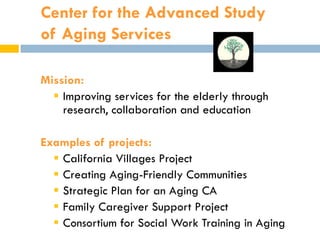
Center for the Advanced Study
of Aging Services

Mission:
   Improving services for the elderly through
    research, collaboration and education

Examples of projects:
   California Villages Project
   Creating Aging-Friendly Communities
   Strategic Plan for an Aging CA
   Family Caregiver Support Project
   Consortium for Social Work Training in Aging
What is a “Village”?


     “Villages are self-governing, grassroots,
      community-based organizations,
      developed with the sole purpose of
      enabling people to remain in their own
      homes and communities as they age.”


  [from Village-to-Village Network website]
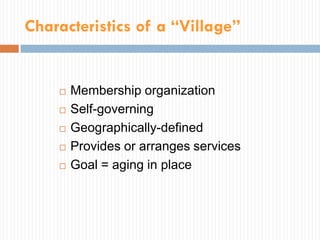
Characteristics of a “Village”


       Membership organization
       Self-governing
       Geographically-defined
       Provides or arranges services
       Goal = aging in place
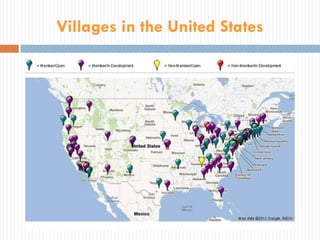
Villages in the United States
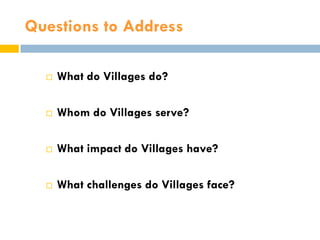
Questions to Address

     What do Villages do?

     Whom do Villages serve?

     What impact do Villages have?

     What challenges do Villages face?
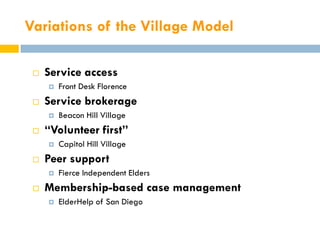
Variations of the Village Model

    Service access
        Front Desk Florence
    Service brokerage
        Beacon Hill Village
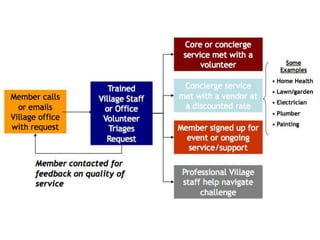
    “Volunteer first”
        Capitol Hill Village
    Peer support
        Fierce Independent Elders
    Membership-based case management
        ElderHelp of San Diego
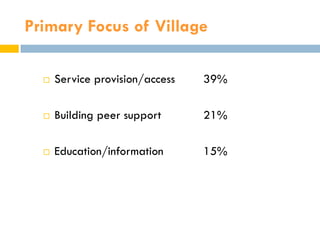
Primary Focus of Village

     Service provision/access   39%

     Building peer support      21%

     Education/information      15%
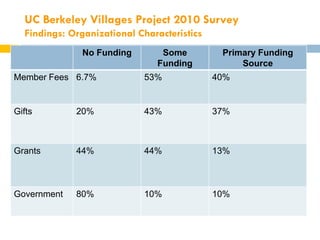
UC Berkeley Villages Project 2010 Survey
  Findings: Organizational Characteristics
               No Funding       Some          Primary Funding
                               Funding            Source
Member Fees 6.7%            53%              40%


Gifts        20%            43%              37%


Grants       44%            44%              13%


Government   80%            10%              10%
Whom do Villages serve?
UC Berkeley Villages Project 2010 Survey
                              Village Members              US population 65 and older

Gender                     66% Female                     59% Female
                           33% Male                       41% Male
Race & Ethnicity           >90% White                     83% White
                           3% Asian                       3% Asian
                           <2% African                    8% African American
                           American                       6% Hispanic
                           1% Hispanic
Living                     50% Alone                      31% Alone
Arrangements               44% with                       54% with spouse/partner
                           spouse/partner                 15% with other individuals
                           3% with other
                           individuals
Home Ownership             87% own home                   80% own home
                           12.5% rent home                20% rent home
(He, Sengupta, Velkoff, & DeBarros, 2005; Callis & Cavanaugh, 2010; U.S. Census Bureau, 2005)
UC Berkeley Villages Project 2010 Survey


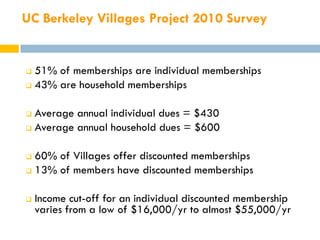
 51% of memberships are individual memberships
 43% are household memberships


 Average annual individual dues = $430
 Average annual household dues = $600


 60% of Villages offer discounted memberships
 13% of members have discounted memberships


   Income cut-off for an individual discounted membership
    varies from a low of $16,000/yr to almost $55,000/yr
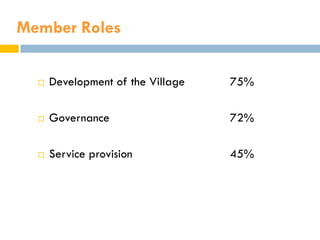
Member Roles

     Development of the Village   75%

     Governance                   72%

     Service provision            45%
What Impact Do Villages Have?
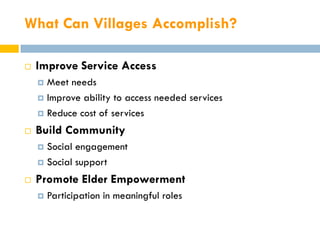
What Can Villages Accomplish?

   Improve Service Access
     Meet needs
     Improve ability to access needed services

     Reduce cost of services

   Build Community
     Social engagement
     Social support

   Promote Elder Empowerment
       Participation in meaningful roles
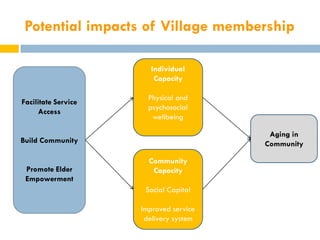
Potential impacts of Village membership

                        Individual
                         Capacity

                       Physical and
Facilitate Service
                       psychosocial
     Access
                        wellbeing

                                         Aging in
Build Community                         Community

                       Community
 Promote Elder          Capacity
 Empowerment
                      Social Capital

                     Improved service
                      delivery system
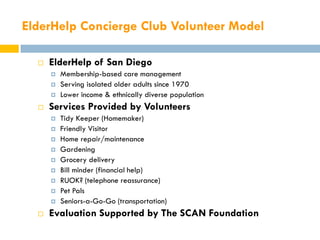
ElderHelp Concierge Club Volunteer Model

     ElderHelp of San Diego
         Membership-based care management
         Serving isolated older adults since 1970
         Lower income & ethnically diverse population
     Services Provided by Volunteers
         Tidy Keeper (Homemaker)
         Friendly Visitor
         Home repair/maintenance
         Gardening
         Grocery delivery
         Bill minder (financial help)
         RUOK? (telephone reassurance)
         Pet Pals
         Seniors-a-Go-Go (transportation)
     Evaluation Supported by The SCAN Foundation
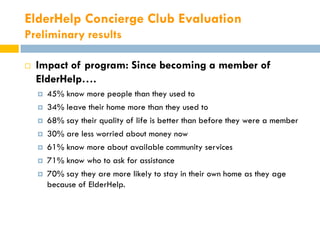
ElderHelp Concierge Club Evaluation
Preliminary results

   Impact of program: Since becoming a member of
    ElderHelp….
       45% know more people than they used to
       34% leave their home more than they used to
       68% say their quality of life is better than before they were a member
       30% are less worried about money now
       61% know more about available community services
       71% know who to ask for assistance
       70% say they are more likely to stay in their own home as they age
        because of ElderHelp.
Challenges for the Future

         Sustainability
         Inclusiveness
         Community integration
         Comprehensiveness
         Effectiveness
UC Berkeley Villages Project

   Evaluation of individual Villages
       Service use
       Member satisfaction
       Member outcomes
       Growth
       Cost-effectiveness

   Cross-site survey of Village organizations
        Factors associated with sustainability and effectiveness

   Longitudinal study of Village members
       Impact of the Village model
Thank You!


              Andrew Scharlach, PhD
Center for the Advanced Study of Aging Services
             scharlach@berkeley.edu

4 scharlach-ifa 2012- village model

  • 1.
    THE “VILLAGE” MOVEMENT: ELDERSHELPING ELDERS TO AGE IN PLACE Andrew Scharlach, PhD Kleiner Professor of Aging Center for the Advanced Studies of Aging Services School of Social Welfare University of California, Berkeley May 29, 2012
  • 3.
    Center for theAdvanced Study of Aging Services Mission:  Improving services for the elderly through research, collaboration and education Examples of projects:  California Villages Project  Creating Aging-Friendly Communities  Strategic Plan for an Aging CA  Family Caregiver Support Project  Consortium for Social Work Training in Aging
  • 4.
    What is a“Village”?  “Villages are self-governing, grassroots, community-based organizations, developed with the sole purpose of enabling people to remain in their own homes and communities as they age.” [from Village-to-Village Network website]
  • 5.
    Characteristics of a“Village”  Membership organization  Self-governing  Geographically-defined  Provides or arranges services  Goal = aging in place
  • 6.
    Villages in theUnited States
  • 7.
    Questions to Address  What do Villages do?  Whom do Villages serve?  What impact do Villages have?  What challenges do Villages face?
  • 9.
    Variations of theVillage Model  Service access  Front Desk Florence  Service brokerage  Beacon Hill Village  “Volunteer first”  Capitol Hill Village  Peer support  Fierce Independent Elders  Membership-based case management  ElderHelp of San Diego
  • 10.
    Primary Focus ofVillage  Service provision/access 39%  Building peer support 21%  Education/information 15%
  • 11.
    UC Berkeley VillagesProject 2010 Survey Findings: Organizational Characteristics No Funding Some Primary Funding Funding Source Member Fees 6.7% 53% 40% Gifts 20% 43% 37% Grants 44% 44% 13% Government 80% 10% 10%
  • 12.
  • 13.
    UC Berkeley VillagesProject 2010 Survey Village Members US population 65 and older Gender 66% Female 59% Female 33% Male 41% Male Race & Ethnicity >90% White 83% White 3% Asian 3% Asian <2% African 8% African American American 6% Hispanic 1% Hispanic Living 50% Alone 31% Alone Arrangements 44% with 54% with spouse/partner spouse/partner 15% with other individuals 3% with other individuals Home Ownership 87% own home 80% own home 12.5% rent home 20% rent home (He, Sengupta, Velkoff, & DeBarros, 2005; Callis & Cavanaugh, 2010; U.S. Census Bureau, 2005)
  • 14.
    UC Berkeley VillagesProject 2010 Survey  51% of memberships are individual memberships  43% are household memberships  Average annual individual dues = $430  Average annual household dues = $600  60% of Villages offer discounted memberships  13% of members have discounted memberships  Income cut-off for an individual discounted membership varies from a low of $16,000/yr to almost $55,000/yr
  • 15.
    Member Roles  Development of the Village 75%  Governance 72%  Service provision 45%
  • 16.
    What Impact DoVillages Have?
  • 17.
    What Can VillagesAccomplish?  Improve Service Access  Meet needs  Improve ability to access needed services  Reduce cost of services  Build Community  Social engagement  Social support  Promote Elder Empowerment  Participation in meaningful roles
  • 18.
    Potential impacts ofVillage membership Individual Capacity Physical and Facilitate Service psychosocial Access wellbeing Aging in Build Community Community Community Promote Elder Capacity Empowerment Social Capital Improved service delivery system
  • 19.
    ElderHelp Concierge ClubVolunteer Model  ElderHelp of San Diego  Membership-based care management  Serving isolated older adults since 1970  Lower income & ethnically diverse population  Services Provided by Volunteers  Tidy Keeper (Homemaker)  Friendly Visitor  Home repair/maintenance  Gardening  Grocery delivery  Bill minder (financial help)  RUOK? (telephone reassurance)  Pet Pals  Seniors-a-Go-Go (transportation)  Evaluation Supported by The SCAN Foundation
  • 20.
    ElderHelp Concierge ClubEvaluation Preliminary results  Impact of program: Since becoming a member of ElderHelp….  45% know more people than they used to  34% leave their home more than they used to  68% say their quality of life is better than before they were a member  30% are less worried about money now  61% know more about available community services  71% know who to ask for assistance  70% say they are more likely to stay in their own home as they age because of ElderHelp.
  • 21.
    Challenges for theFuture  Sustainability  Inclusiveness  Community integration  Comprehensiveness  Effectiveness
  • 22.
    UC Berkeley VillagesProject  Evaluation of individual Villages  Service use  Member satisfaction  Member outcomes  Growth  Cost-effectiveness  Cross-site survey of Village organizations  Factors associated with sustainability and effectiveness  Longitudinal study of Village members  Impact of the Village model
  • 23.
    Thank You! Andrew Scharlach, PhD Center for the Advanced Study of Aging Services scharlach@berkeley.edu