3rd GENERATION
COMPUTERS
SINCE:1964-1971
Designed by Deepak dixit
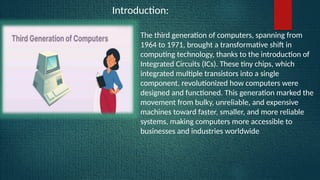
Introduction:
The third generation of computers, spanning from
1964 to 1971, brought a transformative shift in
computing technology, thanks to the introduction of
Integrated Circuits (ICs). These tiny chips, which
integrated multiple transistors into a single
component, revolutionized how computers were
designed and functioned. This generation marked the
movement from bulky, unreliable, and expensive
machines toward faster, smaller, and more reliable
systems, making computers more accessible to
businesses and industries worldwide
Key Features of Third-Generation Computers:
Integrated Circuits (ICs): The primary feature of third-generation computers was the use of ICs, replacing
the use of discrete transistors and allowing for more compact designs.
Increased Speed and Efficiency: With ICs, processing speed improved dramatically, reducing the time
taken to execute instructions and allowing for faster data handling
Smaller Size: Due to ICs' high level of integration, third-generation computers were significantly smaller,
marking the move toward more compact and portable computing devices
Improved Software: The development of more advanced operating systems allowed better resource
management, time-sharing, and multiprocessing, enhancing user interaction
Lower Power Consumption and Heat: Integrated circuits used less power and generated less heat
compared to earlier systems, making computers more energy-efficient.
Technical Advancements:
Use of Integrated Circuits: ICs allowed thousands of electronic
components to be packed into a single silicon chip. This
miniaturization improved overall performance and reliability
Advanced Memory Systems: The use of magnetic core memory
became widespread, improving the capacity, reliability, and
speed of data storage. Disk-based storage systems also saw
significant advancements.
Development of Operating Systems: The introduction of time-sharing systems allowed multiple users to
interact with a single computer, a huge leap forward in efficiency. This era saw the birth of more
sophisticated operating systems such as IBM’s OS/360.
High-Level Programming Languages: High-level languages like COBOL and FORTRAN gained widespread
use, making programming more accessible and efficient for a broader range of tasks.
Multiprocessing and Multitasking: Computers could handle multiple programs simultaneously through
multiprocessing capabilities, allowing for more complex and diverse applications.
Impact on Industries:
Business and Finance: The third-generation computers allowed businesses to automate processes such as
payroll, inventory management, and customer databases. Industries like banking adopted computers for
data processing, account management, and transactions
Science and Engineering: With increased computational power, third-generation computers became
essential in complex simulations, engineering design, and scientific research, accelerating developments
in these fields.
Government and Defense: Governments and military organizations utilized these computers for data
analysis, simulations, and communication, enhancing national security and decision-making processes.
Healthcare: The healthcare industry started utilizing computers for data storage, patient records
management, and medical research, leading to the digitization of healthcare.
Transition to the Fourth Generation:
The transition from the third to the fourth generation of computers began in the early 1970s, when
microprocessors were introduced, marking another leap in miniaturization. A single chip, now
called a microprocessor, could hold the entire processing unit of a computer. This led to the
development of personal computers (PCs) and the mass production of affordable, small, and
powerful computing devices.
Conclusion:
The third generation of computers played a pivotal role in advancing computing
technology. By introducing integrated circuits, it made computers smaller, faster, more
reliable, and accessible to a broader range of industries. This laid the groundwork for the
fourth generation, where microprocessors and personal computers would dominate. The
third generation stands as a bridge between early, bulky machines and the sleek, powerful
computers that have become an integral part of modern life.

3rd GENERATION of computer .............

  • 1.
  • 2.
    Introduction: The third generationof computers, spanning from 1964 to 1971, brought a transformative shift in computing technology, thanks to the introduction of Integrated Circuits (ICs). These tiny chips, which integrated multiple transistors into a single component, revolutionized how computers were designed and functioned. This generation marked the movement from bulky, unreliable, and expensive machines toward faster, smaller, and more reliable systems, making computers more accessible to businesses and industries worldwide
  • 3.
    Key Features ofThird-Generation Computers: Integrated Circuits (ICs): The primary feature of third-generation computers was the use of ICs, replacing the use of discrete transistors and allowing for more compact designs. Increased Speed and Efficiency: With ICs, processing speed improved dramatically, reducing the time taken to execute instructions and allowing for faster data handling Smaller Size: Due to ICs' high level of integration, third-generation computers were significantly smaller, marking the move toward more compact and portable computing devices Improved Software: The development of more advanced operating systems allowed better resource management, time-sharing, and multiprocessing, enhancing user interaction Lower Power Consumption and Heat: Integrated circuits used less power and generated less heat compared to earlier systems, making computers more energy-efficient.
  • 4.
    Technical Advancements: Use ofIntegrated Circuits: ICs allowed thousands of electronic components to be packed into a single silicon chip. This miniaturization improved overall performance and reliability Advanced Memory Systems: The use of magnetic core memory became widespread, improving the capacity, reliability, and speed of data storage. Disk-based storage systems also saw significant advancements. Development of Operating Systems: The introduction of time-sharing systems allowed multiple users to interact with a single computer, a huge leap forward in efficiency. This era saw the birth of more sophisticated operating systems such as IBM’s OS/360. High-Level Programming Languages: High-level languages like COBOL and FORTRAN gained widespread use, making programming more accessible and efficient for a broader range of tasks. Multiprocessing and Multitasking: Computers could handle multiple programs simultaneously through multiprocessing capabilities, allowing for more complex and diverse applications.
  • 5.
    Impact on Industries: Businessand Finance: The third-generation computers allowed businesses to automate processes such as payroll, inventory management, and customer databases. Industries like banking adopted computers for data processing, account management, and transactions Science and Engineering: With increased computational power, third-generation computers became essential in complex simulations, engineering design, and scientific research, accelerating developments in these fields. Government and Defense: Governments and military organizations utilized these computers for data analysis, simulations, and communication, enhancing national security and decision-making processes. Healthcare: The healthcare industry started utilizing computers for data storage, patient records management, and medical research, leading to the digitization of healthcare.
  • 6.
    Transition to theFourth Generation: The transition from the third to the fourth generation of computers began in the early 1970s, when microprocessors were introduced, marking another leap in miniaturization. A single chip, now called a microprocessor, could hold the entire processing unit of a computer. This led to the development of personal computers (PCs) and the mass production of affordable, small, and powerful computing devices. Conclusion: The third generation of computers played a pivotal role in advancing computing technology. By introducing integrated circuits, it made computers smaller, faster, more reliable, and accessible to a broader range of industries. This laid the groundwork for the fourth generation, where microprocessors and personal computers would dominate. The third generation stands as a bridge between early, bulky machines and the sleek, powerful computers that have become an integral part of modern life.