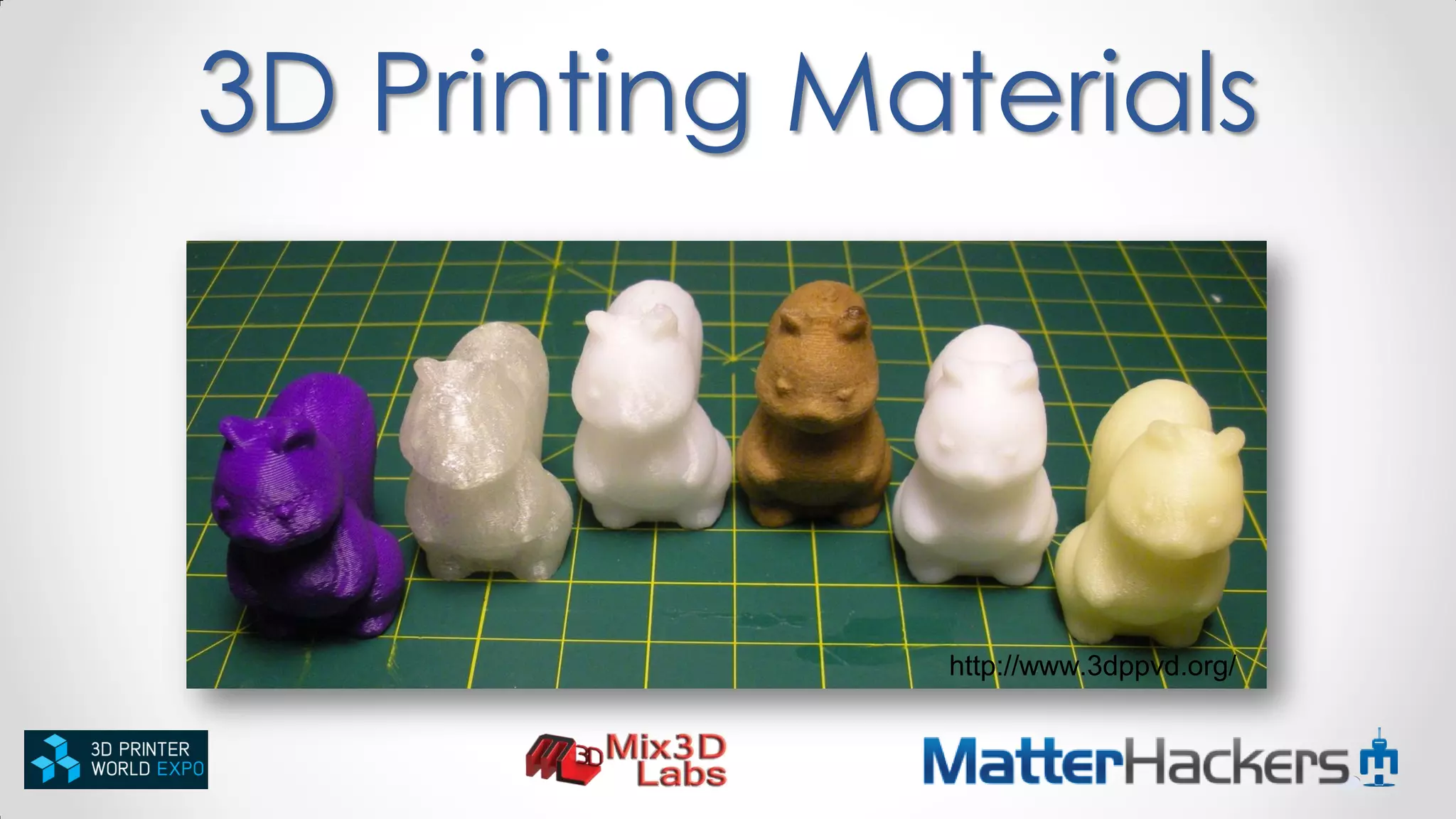
3D Printing Materials

http://www.3dppvd.org/
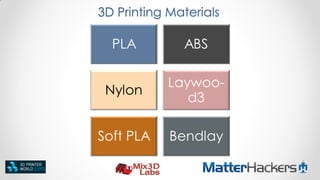
3D Printing Materials
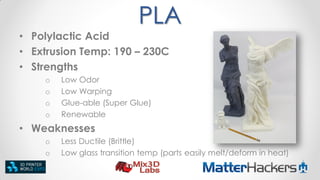
PLA
• Polylactic Acid
• Extrusion Temp: 190 – 230C
• Strengths
o
o
o
o

Low Odor
Low Warping
Glue-able (Super Glue)
Renewable

• Weaknesses
o
o

Less Ductile (Brittle)
Low glass transition temp (parts easily melt/deform in heat)
PLA
• Bed Adhesion
o
o

Blue (or Green) painter’s tape (heated or cold)
Heated glass (40-60C)

• Layer Cooling Fan(s) required
• Resistant to most solvents
• Common uses:
o

Food packaging, disposable tableware, heat shrink film
PLA
• Printing Tips/Tricks
o
o
o

Increase temp when printing at high speeds (230-240C)
When printing small parts, print 2 at a time
To avoid jams, keep retraction to minimum effective length
because of thermal creep
ABS
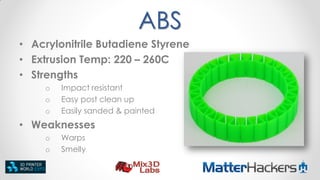
• Acrylonitrile Butadiene Styrene
• Extrusion Temp: 220 – 260C
• Strengths
o
o
o

Impact resistant
Easy post clean up
Easily sanded & painted

• Weaknesses
o
o

Warps
Smelly
ABS
• Bed Adhesion
o
o
o
o

Heated Bed is required with all methods. 80-110C
Kapton/PET film
ABS “Juice” – dissolved ABS in acetone
PVA/ Elmer’s glue stick

• NO layer cooling fans
• Heated chamber if possible
ABS
• Printing Tips/Tricks
o
o
o

Brims/Rafts can greatly improve flatness
Higher infill = more warping forces
Ambient temperature can dramatically affect results (avoid cold,
drafty rooms)

• Common Uses:
o

Legos, 2-Liter bottle caps, automotive trim
Nylon
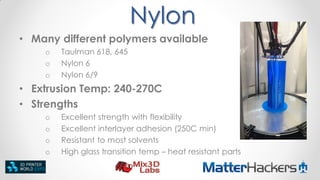
• Many different polymers available
o
o
o

Taulman 618, 645
Nylon 6
Nylon 6/9

• Extrusion Temp: 240-270C
• Strengths
o
o
o
o

Excellent strength with flexibility
Excellent interlayer adhesion (250C min)
Resistant to most solvents
High glass transition temp – heat resistant parts
Nylon
• Weaknesses
o
o
o

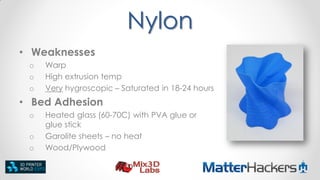
Warp
High extrusion temp
Very hygroscopic – Saturated in 18-24 hours

• Bed Adhesion
o

o
o

Heated glass (60-70C) with PVA glue or
glue stick
Garolite sheets – no heat
Wood/Plywood
Nylon
• Printing tips/tricks
o
o
o
o
o

Dry nylon prints smoothly and has glossy finish. Wet nylon pops
and hisses, has matte finish and weaker interlayer adhesion
Dry filament in 170F oven for 4-6 hours
Layer adhesion directly related to layer height/width.
Use solder knife or heated blade to “glue” parts together.
Flame polish with propane torch to eliminate any strings and give
glossy finish

• Common Uses
o

Trimmer line, toothbrush bristles, guitar strings
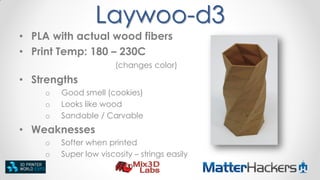
Laywoo-d3
• PLA with actual wood fibers
• Print Temp: 180 – 230C
(changes color)

• Strengths
o
o
o

Good smell (cookies)
Looks like wood
Sandable / Carvable

• Weaknesses
o
o

Softer when printed
Super low viscosity – strings easily
Laywoo-d3
• Bed Adhesion
o
o

Blue painter’s tape
Heated glass (40-60C)

• Layer Cooling Fan(s) required
• Hardens over time (48-72 hours)
Laywoo-d3
• Printing Tips/Tricks
o
o
o

Use lowest possible extrusion temp to prevent stringing
Increase speed to prevent stringing/blobbing
Allow to cool before removing from bed
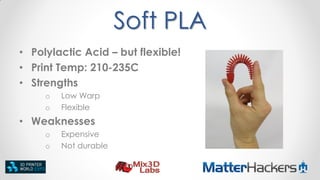
Soft PLA
• Polylactic Acid – but flexible!
• Print Temp: 210-235C
• Strengths
o
o

Low Warp
Flexible

• Weaknesses
o
o

Expensive
Not durable
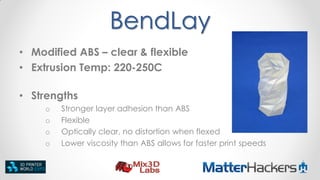
BendLay
• Modified ABS – clear & flexible
• Extrusion Temp: 220-250C
• Strengths
o
o
o
o

Stronger layer adhesion than ABS
Flexible
Optically clear, no distortion when flexed
Lower viscosity than ABS allows for faster print speeds
BendLay
• Weaknesses
o
o

Expensive
Only flexible when thin (single-walled or <1.00mm wall thickness)

• Bed Adhesion
o
o
o
o

Heated bed (80-100C)
Glass with hairspray
PVA glue
Do Not use ABS “Juice”
BendLay
• NO Layer Cooling fans

• Printing Tips/Tricks
o
o
o
o

240C+ gives optimum layer adhesion
Increase speeds 10-20% from ABS settings
Single and double wall thickness with minimal infill gives best clarity
Acetone causes filament to “crumble”. Brakleen (or other similar
automotive brake cleaner) is solvent
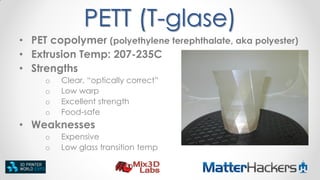
PETT (T-glase)
• PET copolymer (polyethylene terephthalate, aka polyester)
• Extrusion Temp: 207-235C
• Strengths
o
o
o
o

Clear, “optically correct”
Low warp
Excellent strength
Food-safe

• Weaknesses
o
o

Expensive
Low glass transition temp
PETT
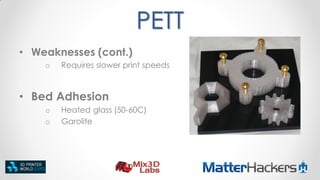
• Weaknesses (cont.)
o

Requires slower print speeds

• Bed Adhesion
o
o

Heated glass (50-60C)
Garolite
PETT
• Printing Tips/Tricks
o Larger nozzles, >.5mm, give greater layer adhesion and
better clarity
o Increase layer height and decrease print speed. Vertical
resolution is still good at .3mm+ layer heights
o Increase retraction to avoid stringing
o Flame (quickly!) polish to remove “hairs”

3D Printing Materials - The Common and Exotic

  • 1.
  • 2.
  • 3.
    PLA • Polylactic Acid •Extrusion Temp: 190 – 230C • Strengths o o o o Low Odor Low Warping Glue-able (Super Glue) Renewable • Weaknesses o o Less Ductile (Brittle) Low glass transition temp (parts easily melt/deform in heat)
  • 4.
    PLA • Bed Adhesion o o Blue(or Green) painter’s tape (heated or cold) Heated glass (40-60C) • Layer Cooling Fan(s) required • Resistant to most solvents • Common uses: o Food packaging, disposable tableware, heat shrink film
  • 5.
    PLA • Printing Tips/Tricks o o o Increasetemp when printing at high speeds (230-240C) When printing small parts, print 2 at a time To avoid jams, keep retraction to minimum effective length because of thermal creep
  • 6.
    ABS • Acrylonitrile ButadieneStyrene • Extrusion Temp: 220 – 260C • Strengths o o o Impact resistant Easy post clean up Easily sanded & painted • Weaknesses o o Warps Smelly
  • 7.
    ABS • Bed Adhesion o o o o HeatedBed is required with all methods. 80-110C Kapton/PET film ABS “Juice” – dissolved ABS in acetone PVA/ Elmer’s glue stick • NO layer cooling fans • Heated chamber if possible
  • 8.
    ABS • Printing Tips/Tricks o o o Brims/Raftscan greatly improve flatness Higher infill = more warping forces Ambient temperature can dramatically affect results (avoid cold, drafty rooms) • Common Uses: o Legos, 2-Liter bottle caps, automotive trim
  • 9.
    Nylon • Many differentpolymers available o o o Taulman 618, 645 Nylon 6 Nylon 6/9 • Extrusion Temp: 240-270C • Strengths o o o o Excellent strength with flexibility Excellent interlayer adhesion (250C min) Resistant to most solvents High glass transition temp – heat resistant parts
  • 10.
    Nylon • Weaknesses o o o Warp High extrusiontemp Very hygroscopic – Saturated in 18-24 hours • Bed Adhesion o o o Heated glass (60-70C) with PVA glue or glue stick Garolite sheets – no heat Wood/Plywood
  • 11.
    Nylon • Printing tips/tricks o o o o o Drynylon prints smoothly and has glossy finish. Wet nylon pops and hisses, has matte finish and weaker interlayer adhesion Dry filament in 170F oven for 4-6 hours Layer adhesion directly related to layer height/width. Use solder knife or heated blade to “glue” parts together. Flame polish with propane torch to eliminate any strings and give glossy finish • Common Uses o Trimmer line, toothbrush bristles, guitar strings
  • 12.
    Laywoo-d3 • PLA withactual wood fibers • Print Temp: 180 – 230C (changes color) • Strengths o o o Good smell (cookies) Looks like wood Sandable / Carvable • Weaknesses o o Softer when printed Super low viscosity – strings easily
  • 13.
    Laywoo-d3 • Bed Adhesion o o Bluepainter’s tape Heated glass (40-60C) • Layer Cooling Fan(s) required • Hardens over time (48-72 hours)
  • 14.
    Laywoo-d3 • Printing Tips/Tricks o o o Uselowest possible extrusion temp to prevent stringing Increase speed to prevent stringing/blobbing Allow to cool before removing from bed
  • 15.
    Soft PLA • PolylacticAcid – but flexible! • Print Temp: 210-235C • Strengths o o Low Warp Flexible • Weaknesses o o Expensive Not durable
  • 16.
    BendLay • Modified ABS– clear & flexible • Extrusion Temp: 220-250C • Strengths o o o o Stronger layer adhesion than ABS Flexible Optically clear, no distortion when flexed Lower viscosity than ABS allows for faster print speeds
  • 17.
    BendLay • Weaknesses o o Expensive Only flexiblewhen thin (single-walled or <1.00mm wall thickness) • Bed Adhesion o o o o Heated bed (80-100C) Glass with hairspray PVA glue Do Not use ABS “Juice”
  • 18.
    BendLay • NO LayerCooling fans • Printing Tips/Tricks o o o o 240C+ gives optimum layer adhesion Increase speeds 10-20% from ABS settings Single and double wall thickness with minimal infill gives best clarity Acetone causes filament to “crumble”. Brakleen (or other similar automotive brake cleaner) is solvent
  • 19.
    PETT (T-glase) • PETcopolymer (polyethylene terephthalate, aka polyester) • Extrusion Temp: 207-235C • Strengths o o o o Clear, “optically correct” Low warp Excellent strength Food-safe • Weaknesses o o Expensive Low glass transition temp
  • 20.
    PETT • Weaknesses (cont.) o Requiresslower print speeds • Bed Adhesion o o Heated glass (50-60C) Garolite
  • 21.
    PETT • Printing Tips/Tricks oLarger nozzles, >.5mm, give greater layer adhesion and better clarity o Increase layer height and decrease print speed. Vertical resolution is still good at .3mm+ layer heights o Increase retraction to avoid stringing o Flame (quickly!) polish to remove “hairs”