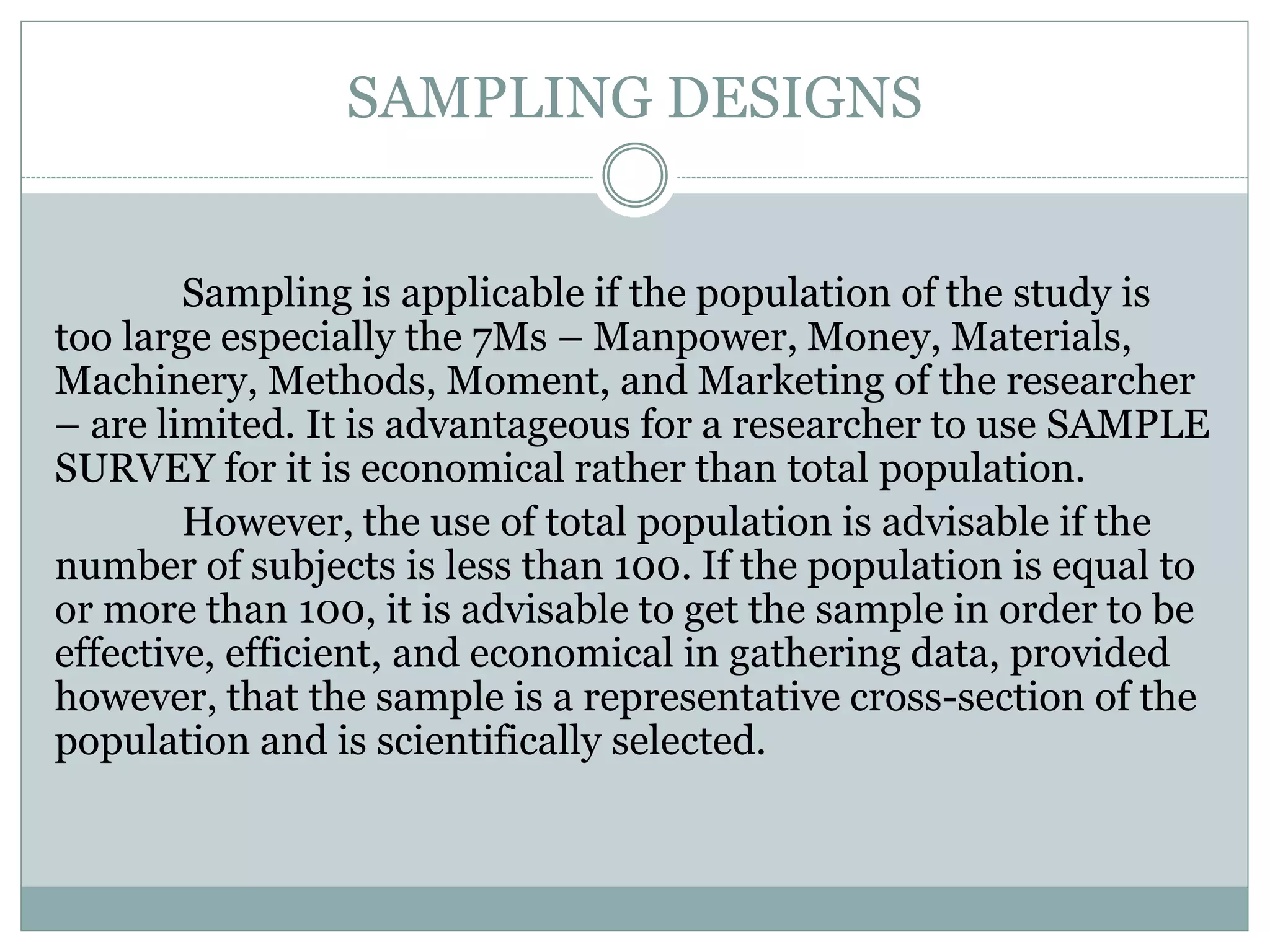
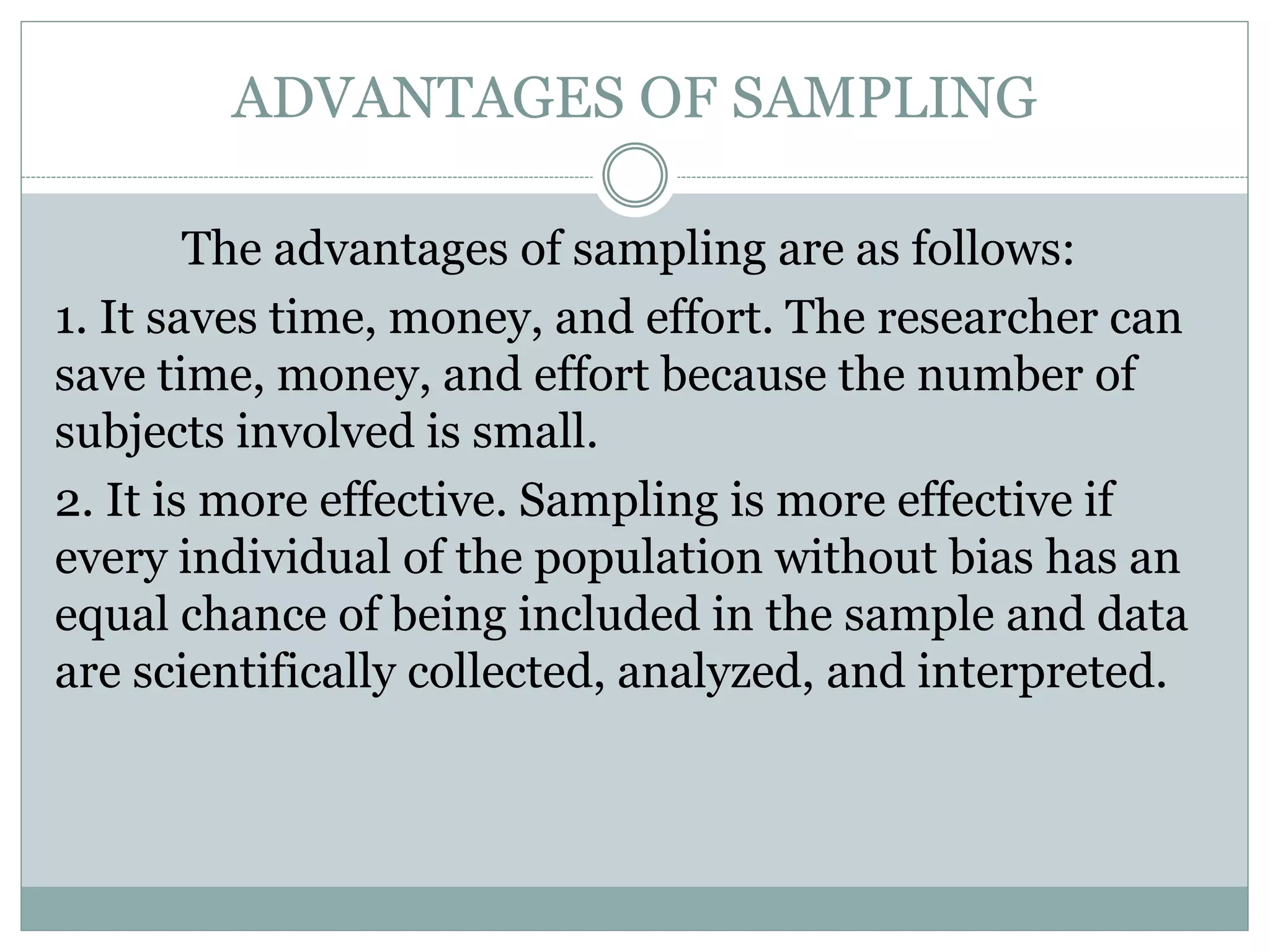
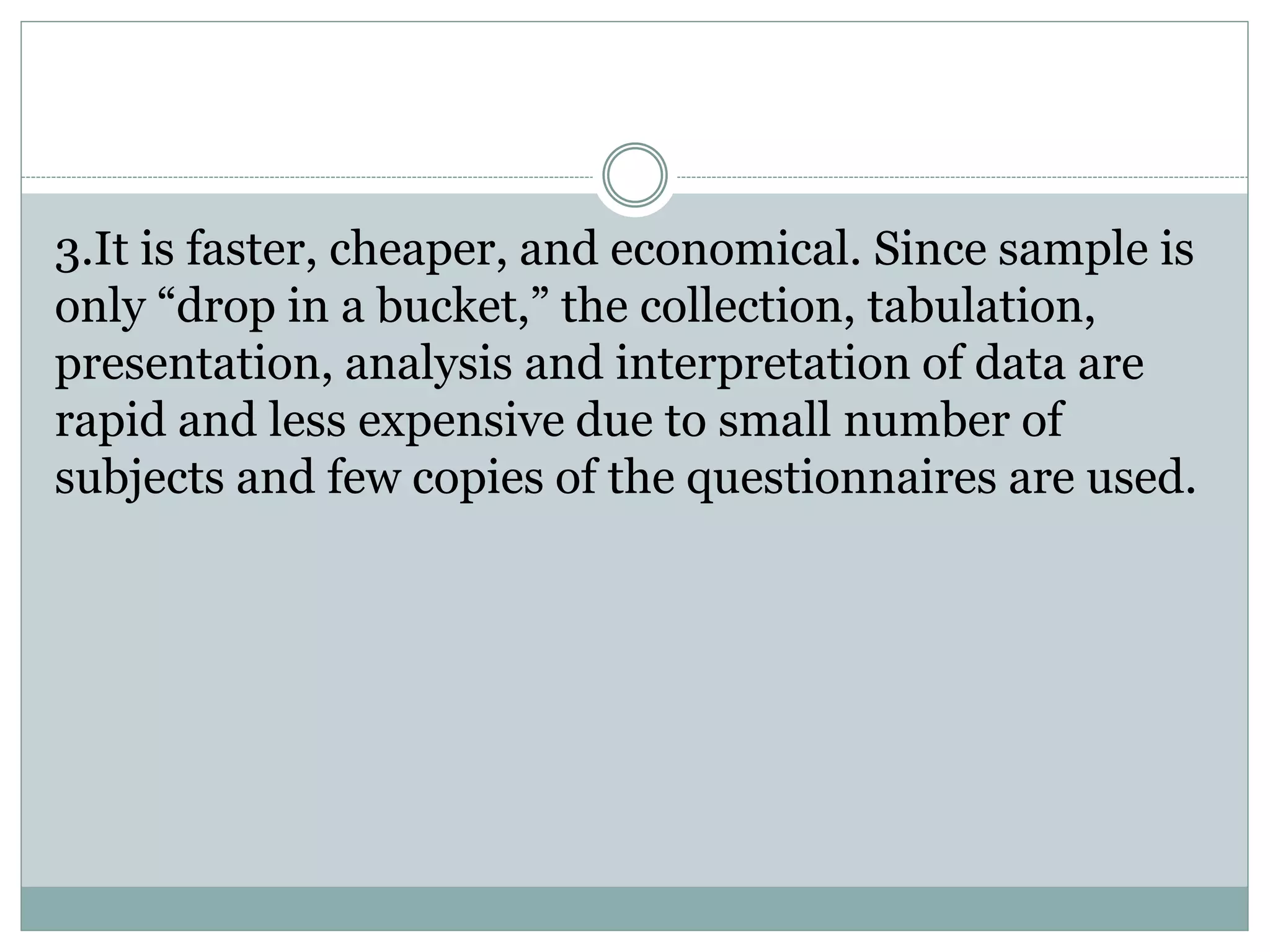
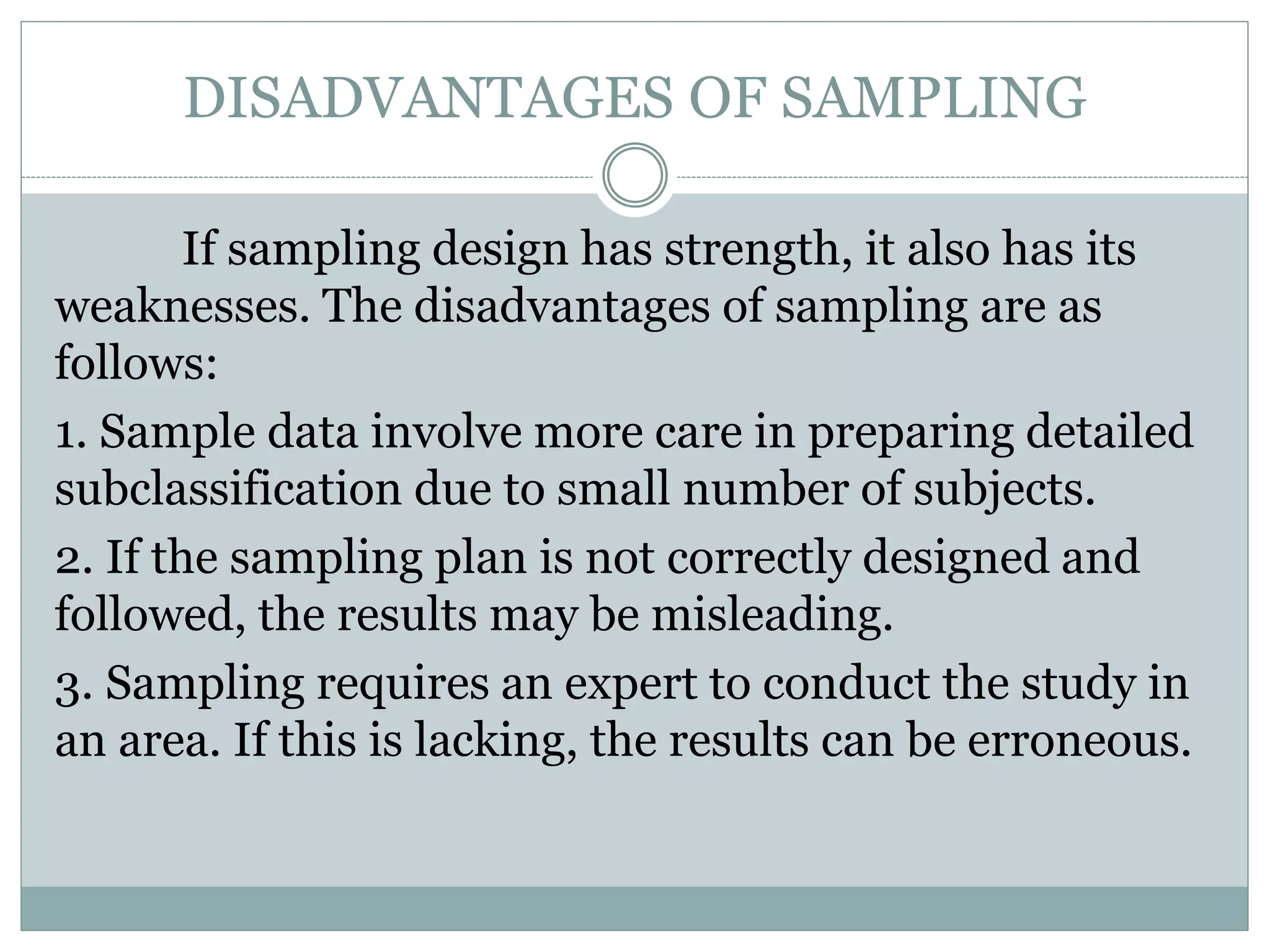
This document discusses sampling methods for research. It defines sampling as selecting a representative portion of a population when the full population is too large to study directly. The key advantages of sampling are that it saves time, money and effort compared to studying the entire population. However, sampling requires careful design to ensure the sample is representative and results are accurate. The document outlines various sampling designs including random, stratified, systematic and cluster sampling. It also provides a formula and steps for determining sample size.