3.6 Legislation and Regulations
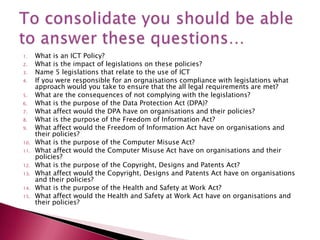
1.    What is an ICT Policy?
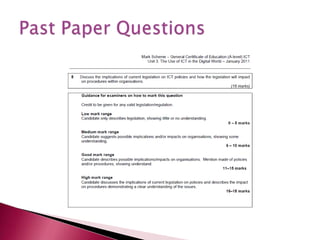
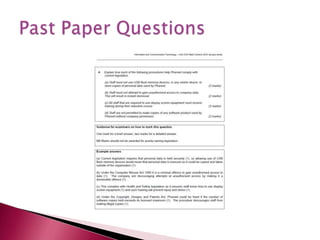
2.    What is the impact of legislations on these policies?
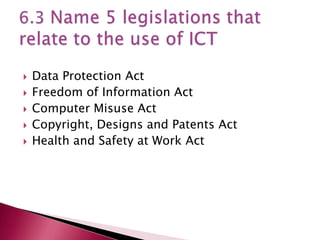
3.    Name 5 legislations that relate to the use of ICT
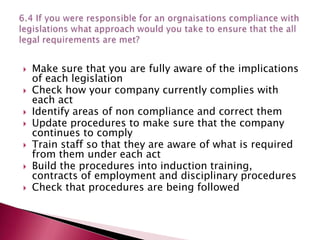
4.    If you were responsible for an orgnaisations compliance with legislations what
      approach would you take to ensure that the all legal requirements are met?
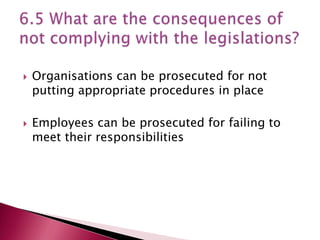
5.    What are the consequences of not complying with the legislations?
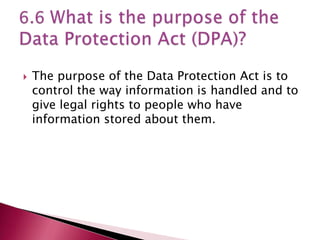
6.    What is the purpose of the Data Protection Act (DPA)?
7.    What affect would the DPA have on organisations and their policies?
8.    What is the purpose of the Freedom of Information Act?
9.    What affect would the Freedom of Information Act have on organisations and
      their policies?
10.   What is the purpose of the Computer Misuse Act?
11.   What affect would the Computer Misuse Act have on organisations and their
      policies?
12.   What is the purpose of the Copyright, Designs and Patents Act?
13.   What affect would the Copyright, Designs and Patents Act have on organisations
      and their policies?
14.   What is the purpose of the Health and Safety at Work Act?
15.   What affect would the Health and Safety at Work Act have on organisations and
      their policies?
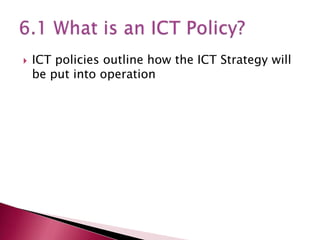
   ICT policies outline how the ICT Strategy will
    be put into operation
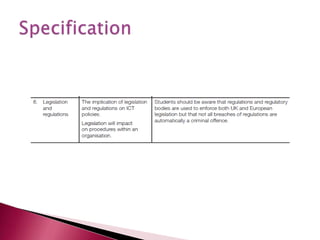
   Legislations will affect the content of ICT
    Policies

   E.g.

    ◦ The writing of the Security Policy will be affected
      by the Computer Misuse Act.
    ◦ The Acceptable Use Policy will be affected by the
      Health and Safety at Work Act
   Data Protection Act
   Freedom of Information Act
   Computer Misuse Act
   Copyright, Designs and Patents Act
   Health and Safety at Work Act
   Make sure that you are fully aware of the implications
    of each legislation
   Check how your company currently complies with
    each act
   Identify areas of non compliance and correct them
   Update procedures to make sure that the company
    continues to comply
   Train staff so that they are aware of what is required
    from them under each act
   Build the procedures into induction training,
    contracts of employment and disciplinary procedures
   Check that procedures are being followed
   Organisations can be prosecuted for not
    putting appropriate procedures in place

   Employees can be prosecuted for failing to
    meet their responsibilities
   The purpose of the Data Protection Act is to
    control the way information is handled and to
    give legal rights to people who have
    information stored about them.
   An organisation would probably hirer a data controller to take
    responsibility for the companies data

   The organisation would have to register with the Information
    Commissioner’s office

   The organisation would have to look at each of the 8 principles
    of the act and put procedures in place that highlight what needs
    to be done and who is responsible for doing it

   E.g.

    ◦ The handling of customer requests to view their data – who handles it,
      how are they logged, who checks response times?
   The Freedom of Information Act gives you the right to
    ask any public body for all the information they have
    on any subject you choose.

   Unless there’s a good reason, the
    organisation must provide the information within 20
    working days.

   You can also ask for all the personal information they
    hold on you.
http://goo.gl/1xgKh
   The organisation must identify what
    information they must release under the act
    and what information is exempt

   Procedures are requires to handle requests
    and collect any necessary payments
   The act makes it illegal to:

    ◦ Gain unauthorised access to computer material

    ◦ Gain unauthorised access to computer material with
      intent to commit further offences

    ◦ Alter computer data without permission
   Largely a matter of staff training and network security

   Staff must be made aware of their rights when accessing
    the network and should understand that any breach of
    those rights would result in disciplinary measures.

   Staff should be trained and informed about what is illegal
    and what is bad practice

   Access rights on the network must be considered

   Security features must be utilised e.g. automatic logout if
    work station not being used
   To ensure people are rewarded for their
    endeavours and to give protection to the
    copyright holder if there is an infringement
   For most organisations the biggest impact of this legislation is with
    regards to software licenses

   Software tools can be used to analyse what software is installed on all
    workstations across a network

   Any unauthorised software must be removed or licenses purchased

   Steps should be put in place to ensure unauthorised software cannot be
    installed
    ◦ E.g. disabling drives, banning internet downloads, restricting permissions to install
      .exe files

   Staff must understand the importance of only using authorised software
    and made aware of consequences

   The network audit should be regularly repeated
   To ensure that employers provide a safe
    working environment for their staff

   To ensure that the employees use
    workstations and equipment correctly in
    accordance with the training provided by the
    employer
Employers must:

   Carry out risk assessments on all workstations

   Supply suitable adjustable furniture

   Train users

   Provide sufficient desk space

   Consider the tasks being carried out and build in adequate breaks

   Provide software that has been designed to good health and safety principles

   Provide a system through which employees can report health and safety issues

   Review workstations regularly
3.6 legislation and regulations

3.6 legislation and regulations

  • 1.
  • 3.
    1. What is an ICT Policy? 2. What is the impact of legislations on these policies? 3. Name 5 legislations that relate to the use of ICT 4. If you were responsible for an orgnaisations compliance with legislations what approach would you take to ensure that the all legal requirements are met? 5. What are the consequences of not complying with the legislations? 6. What is the purpose of the Data Protection Act (DPA)? 7. What affect would the DPA have on organisations and their policies? 8. What is the purpose of the Freedom of Information Act? 9. What affect would the Freedom of Information Act have on organisations and their policies? 10. What is the purpose of the Computer Misuse Act? 11. What affect would the Computer Misuse Act have on organisations and their policies? 12. What is the purpose of the Copyright, Designs and Patents Act? 13. What affect would the Copyright, Designs and Patents Act have on organisations and their policies? 14. What is the purpose of the Health and Safety at Work Act? 15. What affect would the Health and Safety at Work Act have on organisations and their policies?
  • 4.
    ICT policies outline how the ICT Strategy will be put into operation
  • 5.
    Legislations will affect the content of ICT Policies  E.g. ◦ The writing of the Security Policy will be affected by the Computer Misuse Act. ◦ The Acceptable Use Policy will be affected by the Health and Safety at Work Act
  • 6.
    Data Protection Act  Freedom of Information Act  Computer Misuse Act  Copyright, Designs and Patents Act  Health and Safety at Work Act
  • 7.
    Make sure that you are fully aware of the implications of each legislation  Check how your company currently complies with each act  Identify areas of non compliance and correct them  Update procedures to make sure that the company continues to comply  Train staff so that they are aware of what is required from them under each act  Build the procedures into induction training, contracts of employment and disciplinary procedures  Check that procedures are being followed
  • 8.
    Organisations can be prosecuted for not putting appropriate procedures in place  Employees can be prosecuted for failing to meet their responsibilities
  • 9.
    The purpose of the Data Protection Act is to control the way information is handled and to give legal rights to people who have information stored about them.
  • 10.
    An organisation would probably hirer a data controller to take responsibility for the companies data  The organisation would have to register with the Information Commissioner’s office  The organisation would have to look at each of the 8 principles of the act and put procedures in place that highlight what needs to be done and who is responsible for doing it  E.g. ◦ The handling of customer requests to view their data – who handles it, how are they logged, who checks response times?
  • 11.
    The Freedom of Information Act gives you the right to ask any public body for all the information they have on any subject you choose.  Unless there’s a good reason, the organisation must provide the information within 20 working days.  You can also ask for all the personal information they hold on you. http://goo.gl/1xgKh
  • 12.
    The organisation must identify what information they must release under the act and what information is exempt  Procedures are requires to handle requests and collect any necessary payments
  • 13.
    The act makes it illegal to: ◦ Gain unauthorised access to computer material ◦ Gain unauthorised access to computer material with intent to commit further offences ◦ Alter computer data without permission
  • 14.
    Largely a matter of staff training and network security  Staff must be made aware of their rights when accessing the network and should understand that any breach of those rights would result in disciplinary measures.  Staff should be trained and informed about what is illegal and what is bad practice  Access rights on the network must be considered  Security features must be utilised e.g. automatic logout if work station not being used
  • 15.
    To ensure people are rewarded for their endeavours and to give protection to the copyright holder if there is an infringement
  • 16.
    For most organisations the biggest impact of this legislation is with regards to software licenses  Software tools can be used to analyse what software is installed on all workstations across a network  Any unauthorised software must be removed or licenses purchased  Steps should be put in place to ensure unauthorised software cannot be installed ◦ E.g. disabling drives, banning internet downloads, restricting permissions to install .exe files  Staff must understand the importance of only using authorised software and made aware of consequences  The network audit should be regularly repeated
  • 17.
    To ensure that employers provide a safe working environment for their staff  To ensure that the employees use workstations and equipment correctly in accordance with the training provided by the employer
  • 18.
    Employers must:  Carry out risk assessments on all workstations  Supply suitable adjustable furniture  Train users  Provide sufficient desk space  Consider the tasks being carried out and build in adequate breaks  Provide software that has been designed to good health and safety principles  Provide a system through which employees can report health and safety issues  Review workstations regularly