30 Hadith
for
Children
Compiled By: Ali Ateeq Al-Dhaheri
Translated By: Sakinah Mohamed
Published by:
Dakwah Corner Publications Sdn. Bhd.
ALL RIGHTS RESERVED
Copyright © 2013 Dakwah Corner Publications Sdn Bhd
No part of this publication may be produced, stored in a retrieval system, or transmitted, in any form or
by any means, electronic, mechanical, photocopying, recording or otherwise without the prior permission
of the Publisher.
First Published: 2013
30 Hadith for Children
ISBN: 978-967-5699-45-0
Address all correspondence to:
MALAYSIA:
Dakwah Corner Bookstore (M) Sdn Bhd
No. 34-1, Jalan 14/22, Section 14,
26100 Petaling Jaya,
Selangor Darul Ehsan,
Malaysia
Tel: +603-7956 4664
Fax: +603 7954 1653
Website: www.dakwahbookstore.com.my
One Stop Dakwah Store
Lot No. 2-65 E&F, 1st Floor
Ampang Park Shopping Centre
50450 Kuala Lumpur
Tel: +603-2181 2692
Distributed By:
Darussalam Australia
Johor, Malaysia
Tel: +607-2351602
Cover design, illustration and typesetting by:
Elly Tengku
Please send us your reviews or comments of this book to:
dakwahcornerpublications@gmail.com
Printed by
Colour Retail Sdn Bhd
SAUDI ARABIA:
Dawah Corner Bookstore
Hilton Tower, Holy Makkah
Tel: +966 2 5311895
NIGERIA:
Dawah Corner Bookstore
Kaduna
Tel: +08056037779
PHILIPPINES:
Dawah Corner Bookstore
Zamboanga City
Tel: +63 926-5284
Goodword Books
Victoria Street, Singapore
Tel: +63 964121
Contents
Introduction.............................................................................................5
1.. Deeds Depend on Intentions...........................................................6
2.. Pillars of Islaam................................................................................8
3.. Mention the Name of Allaah...........................................................10
4.. A Good Dream ................................................................................12
5.. The Sweetness (Delight) of Faith......................................................14
6.. The Believer Is Not Stung Twice.......................................................16
7.. The Superiority of Greeting (Assalaam)...........................................18
8.. Politeness of Speech & Kindness of Meeting.................................20
9. . Forgiveness and Tolerance..............................................................22
10..Good manners (Akhlaaq)................................................................24
11.. Muslims Must Love Each Other.......................................................26
12..Prohibition of Hatred and Envy........................................................28
13..Keeping Tongue and Hand from Offense.......................................30
14..Endearment of Truthfulness & Caution from Falsehood.................32
15..Cooperation Among Muslims..........................................................34
16. Prohibition of Disobedience of Parents and False Witness.............36
17..The Signs of a Hypocrite..................................................................38
18..Passing in Front of Someone Praying..............................................40
19..Leaving the Things That Don’t Concern You....................................42
20..Forbiddance of Backbiting...............................................................44
21..Rights of A Neighbour......................................................................46
22..Beauty vs Arrogance........................................................................48
23..The Influence of Friends...................................................................50
24..Calling to Right Guidance and Forbidding Evil................................52
25..The Strong Believer...........................................................................54
26..Whoever among you sees something which is
munkar (evil).....................................................................................56
27..Leave What Makes You Doubt.........................................................58
28..Who among people is most deserving of my
fine treatment ?................................................................................60
29..Allaah Does Not Look At Your Bodies Appearance........................62
30..Treat Well Even A Disbelieving Mother............................................64
.References........................................................................................67
Introduction
All praise is due to Allah. We praise Him, seek His
assistance and forgiveness and we seek refuge with Him
from the evil of our souls and our misdeeds. No one can
mislead whosoever Allah guides and none can guide
whosoever Allah causes to go astray.
I testify that there is no deity worthy of worship except
Allah alone. He has no partner. I also testify that Muhammad
(peace be upon him) is His slave and Messenger.
In this work I collected 30 Hadiths for children, with short
biographies of the narrators and the lessons or benefits
derived from the Hadiths. All of the Hadiths have been
carefully chosen and verified for authenticity.
This book was written in an easy and simple way for
children to learn about our Prophet’s Hadiths together with
their teachers or parents. I have also included a Discussion
Corner section where the children can interact with the
book and discuss with their teachers or parents what they
have learned and how they can apply the knowledge to
their lives. I hope this book will be useful and can help the
children to understand and live the sunnah of our prophet
Muhammad (peace be upon him).

6
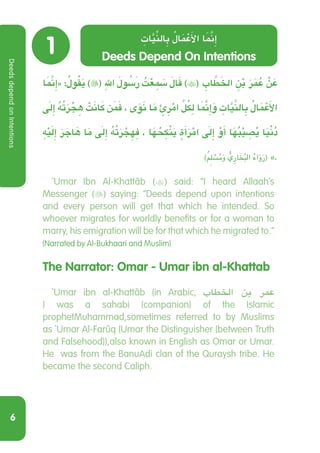
1 Deeds Depend On Intentions
‫ا‬َ َّ‫م‬‫ِن‬‫إ‬« : ُ‫ول‬ُ‫ق‬َ‫ي‬ )( ِ‫هلل‬ َ ُ‫سَلو‬‫ر‬ ُ‫ت‬ْ‫ع‬ ِ َ‫م‬‫س‬ َ‫ال‬َ‫ق‬ )( ِ‫اب‬ َّ‫ط‬َ‫اخل‬ ِ‫ن‬ْ‫ب‬ َ‫ر‬َ ُ‫م‬‫ع‬ ْ‫ن‬ َ‫ع‬
َ‫ى‬‫ِل‬‫إ‬ ُ‫ه‬ُ‫ت‬َ‫ر‬ ْ ِ‫ج‬‫ه‬ ْ‫ت‬َ‫ن‬ َ‫ا‬‫ك‬ ‫ن‬َ َ‫م‬‫ف‬ ، ‫ى‬َ‫و‬َ‫ن‬ ‫ا‬َ‫م‬ ٍ‫ئ‬ ِ‫ر‬ْ‫ام‬ ِّ ُ‫ل‬‫ك‬ِ‫ل‬ ‫ا‬َ َّ‫م‬‫ِن‬‫إ‬َ‫و‬ ِ‫ات‬َّ‫ي‬ِّ‫الن‬ ِ‫ب‬ ُ‫ال‬َ ْ‫م‬‫ع‬َ‫أل‬‫ا‬
ِ‫ه‬ْ‫ي‬َ‫ل‬ِ‫إ‬ َ‫ر‬ َ‫اج‬ َ‫ه‬ ‫ا‬َ‫م‬ َ‫ى‬‫ِل‬‫إ‬ ُ‫ه‬ُ‫ت‬َ‫ر‬ ْ‫ج‬ ِ‫ه‬ ِ‫ف‬ ، ‫ا‬َ‫ه‬ ُ‫ح‬ ِ‫ك‬ْ‫ن‬َ‫ي‬ ٍ‫ة‬َ‫أ‬َ‫ر‬ْ‫ام‬ َ‫ى‬‫ِل‬‫إ‬ ْ‫و‬َ‫أ‬ ‫ا‬َ ُ‫ه‬‫ب‬ْ‫ي‬ ِ‫ص‬ُ‫ي‬ ‫ا‬َ‫ي‬ْ‫ن‬ُ‫د‬
)ٌ ِ‫م‬‫ل‬ ْ‫س‬ُ‫م‬َ‫و‬ ُّ‫ِي‬‫ر‬‫ا‬ َ‫خ‬ُ‫ب‬‫ال‬ ُ‫ه‬‫ا‬َ‫و‬َ‫ر‬( ».
`Umar Ibn Al-Khattâb () said: “I heard Allaah’s
Messenger () saying: “Deeds depend upon intentions
and every person will get that which he intended. So
whoever migrates for worldly benefits or for a woman to
marry, his emigration will be for that which he migrated to.”
(Narrated by Al-Bukhaari and Muslim)
The Narrator: Omar - Umar ibn al-Khattab
`Umar ibn al-Khattâb (in Arabic, ‫اخلطاب‬ ‫بن‬ ‫معر‬
) was a sahabi (companion) of the Islamic
prophetMuhammad,sometimes referred to by Muslims
as `Umar Al-Farûq (Umar the Distinguisher (between Truth
and Falsehood)),also known in English as Omar or Umar.
He was from the BanuAdi clan of the Quraysh tribe. He
became the second Caliph.
ِ‫ات‬َّ‫ي‬ِّ‫الن‬ ِ‫ب‬ ُ‫ال‬َ ْ‫م‬‫ع‬َ‫أل‬‫ا‬ ‫ا‬َ َّ‫م‬‫ِن‬‫إ‬
DeedsdependonIntentions
7
30HadithForChildren
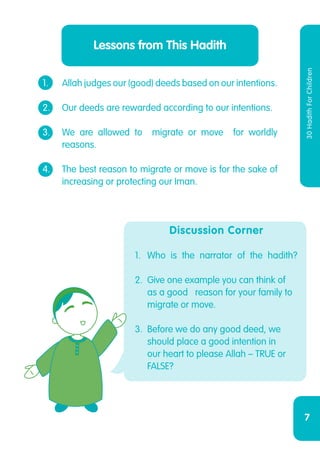
Lessons from This Hadith
1.	 Allah judges our (good) deeds based on our intentions.
2.	 Our deeds are rewarded according to our intentions.
3.	 We are allowed to migrate or move for worldly
	reasons.
4.	 The best reason to migrate or move is for the sake of
	 increasing or protecting our Iman.
Discussion Corner
1.	 Who is the narrator of the hadith?
2.	 Give one example you can think of
as a good reason for your family to
migrate or move.
3.	 Before we do any good deed, we
should place a good intention in
our heart to please Allah – TRUE or
FALSE?
8
2
َ‫ى‬‫ل‬ َ‫ع‬ ُ‫م‬َ‫ال‬ ْ‫س‬ِ‫اإل‬ َ ِ‫ي‬‫ن‬ُ‫ب‬" :)( ِ‫هلل‬ ُ ُ‫سَلو‬‫ر‬ َ‫ال‬َ‫ق‬" :َ‫ال‬َ‫ق‬ )( َ‫ر‬َ ُ‫م‬‫ع‬ ِ‫ن‬ْ‫ب‬‫ا‬ ِ‫ن‬ َ‫ع‬
ِ‫ة‬َ‫ال‬ َّ‫الص‬ ِ‫ام‬َ‫ق‬ِ‫إ‬َ‫و‬ ِ‫هلل‬ ُ ُ‫سَلو‬‫ر‬ ‫ًا‬ َّ‫حُمَد‬‫م‬ َّ‫ن‬َ‫أ‬َ‫و‬ ُ‫هلل‬ َّ‫ِال‬‫إ‬ َ‫ه‬َ‫ل‬ِ‫إ‬َ‫ال‬ ْ‫ن‬َ‫أ‬ ِ‫ة‬َ‫د‬‫ا‬ َ َ‫ه‬‫ش‬ : ٍ‫س‬ ْ َ‫م‬‫خ‬
)ٌ ِ‫م‬‫ل‬ ْ‫س‬ُ‫م‬َ‫و‬ ُّ‫ِي‬‫ر‬‫ا‬ َ‫خ‬ُ‫ب‬‫ال‬ ُ‫ه‬‫ا‬َ‫و‬َ‫ر‬( ". َ‫ان‬ َ‫ض‬َ‫م‬َ‫ر‬ ِ‫م‬ْ‫و‬ َ‫ص‬َ‫و‬ ِّ‫احلج‬َ‫و‬ ِ‫ة‬ َ‫ا‬‫ك‬َّ‫الز‬ ِ‫اء‬َ‫ت‬ْ‫ي‬ِ‫إ‬َ‫و‬
It is reported on the authority of Ibn ‘Umar () that he
said: “Allaah’s Messenger () said: “Islaam is built upon
five (pillars):
1.	 To testify that none is worthy of worship but Allaah and
	 that Muhammad is the Messenger of Allaah.
2.	 To perform prayers.
3.	 To pay zakaah
4.	 (To perform) Hajj
5.	 To fast the month of Ramadhaan.”
(Narrated by Al-Bukhaari and Muslim)
The Narrator: Abdullah ibn Umar
Abdullah ibn Umar (Arabic: ‫اخلطاب‬ ‫بن‬ ‫معر‬ ‫بن‬ ‫عبداهلل‬‎)
was the son of the second Caliph ‘Umar ibn al-Khattab
and he was a prominent authority in hadith and law, who
had strong faith in Allah from a very young age. Abdullah
was also known as one of the most knowledgeable sahabi
amongst all the Companions because he spent a lot of
time close to the Prophet and memorizing the Prophet’s
sayings and actions.
Pillars of Islaam
‫ام‬‫ل‬‫س‬‫اإل‬ ‫ن‬‫ا‬‫ك‬‫ر‬‫أ‬
PillarsofIslam
9
30HadithForChildren
Lessons from This Hadith
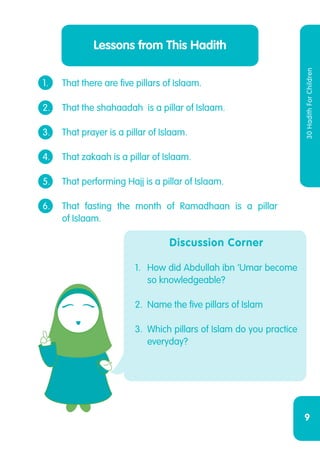
1.	 That there are five pillars of Islaam.
2.	 That the shahaadah is a pillar of Islaam.
3.	 That prayer is a pillar of Islaam.
4.	 That zakaah is a pillar of Islaam.
5.	 That performing Hajj is a pillar of Islaam.
6.	 That fasting the month of Ramadhaan is a pillar
	 of Islaam.
Discussion Corner
1.	 How did Abdullah ibn ‘Umar become
so knowledgeable?
2.	 Name the five pillars of Islam
3.	 Which pillars of Islam do you practice
everyday?
10
3
)( ِ‫هلل‬ ِ ُ‫سَلو‬‫ر‬ ِ‫ر‬ ْ َ‫ج‬‫ح‬ ِ‫ي‬‫ف‬ ‫مًا‬َ‫ال‬ ُ‫غ‬ ُ‫ت‬ْ‫ن‬ُ‫ك‬ :)( َ‫ة‬َ َ‫م‬‫ل‬ َ‫س‬ ِ‫ي‬‫ب‬َ‫أ‬ ِ‫ن‬ْ‫ب‬ َ‫ر‬َ ُ‫م‬‫ع‬ ْ‫ن‬ َ‫ع‬
ْ ُ‫ل‬‫ك‬َ‫و‬ ، َ‫هلل‬ ِّ َ‫م‬‫س‬ ، ُ‫م‬َ‫ال‬ ُ‫غ‬ ‫ا‬َ‫ي‬ :‫ل‬ َ‫ال‬َ‫ق‬َ‫ف‬ ، ِ‫ة‬َ‫ف‬ ْ‫ح‬ َّ‫الص‬ ِ‫ي‬‫ف‬ ُ‫ش‬ْ‫ي‬ ِ‫ط‬َ‫ت‬ ‫ي‬ ِ‫د‬َ‫ي‬ ْ‫ت‬َ‫ن‬ َ‫ا‬‫ك‬َ‫و‬
) ُّ‫ِي‬‫ر‬‫ا‬ َ‫خ‬ُ‫ب‬‫ال‬ ُ‫ه‬‫ا‬َ‫و‬َ‫ر‬( .ُ‫د‬ْ‫ع‬َ‫ب‬ ِ‫ي‬‫ت‬َ‫م‬ْ‫ع‬ ِ‫ط‬ َ‫ك‬ْ‫ل‬ ِ‫ت‬ ْ‫ت‬َ‫ل‬‫ا‬َ‫ز‬ ‫ا‬َ َ‫م‬‫ف‬ . َ‫يك‬ِ‫ل‬َ‫ي‬ ‫ا‬َِّ‫م‬‫م‬ ْ ُ‫ل‬‫ك‬َ‫و‬ ، َ‫ك‬ ِ‫ين‬ ِ َ‫م‬‫ي‬ ِ‫ب‬
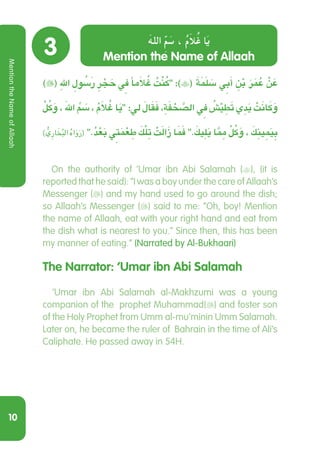
On the authority of ‘Umar ibn Abi Salamah (), (it is
reported that he said): “I was a boy under the care of Allaah’s
Messenger () and my hand used to go around the dish;
so Allaah’s Messenger () said to me: “Oh, boy! Mention
the name of Allaah, eat with your right hand and eat from
the dish what is nearest to you.” Since then, this has been
my manner of eating.” (Narrated by Al-Bukhaari)
The Narrator: ‘Umar ibn Abi Salamah
  ‘Umar ibn Abi Salamah al-Makhzumi was a young
companion of the prophet Muhammad() and foster son
of the Holy Prophet from Umm al-mu'minin Umm Salamah.
Later on, he became the ruler of Bahrain in the time of Ali’s
Caliphate. He passed away in 54H.
Mention the Name of Allaah
َ‫الله‬ ِّ‫م‬ َ‫س‬ ، ُ‫م‬َ‫ُال‬‫غ‬ ‫ا‬َ‫ي‬
MentiontheNameofAllaah
11
30HadithForChildren
Lessons from This Hadith
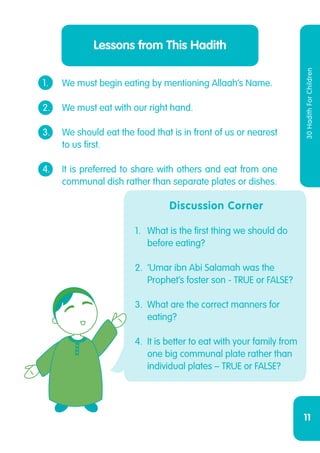
1.	 We must begin eating by mentioning Allaah’s Name.
2.	 We must eat with our right hand.
3.	 We should eat the food that is in front of us or nearest
	 to us first.
4.	 It is preferred to share with others and eat from one
	 communal dish rather than separate plates or dishes.
Discussion Corner
1.	 What is the first thing we should do
before eating?
2.	 ‘Umar ibn Abi Salamah was the
Prophet’s foster son - TRUE or FALSE?
3.	 What are the correct manners for
eating?
4.	 It is better to eat with your family from
one big communal plate rather than
individual plates – TRUE or FALSE?
12
4
ِ‫هلل‬ َ‫ن‬ ِ‫م‬ ُ‫ة‬َِ‫الح‬ ًّ‫الص‬ ‫ا‬َ‫ي‬ْ‫ؤ‬ُّ‫الر‬ :)( ُّ ِ‫ي‬‫ب‬َّ‫الن‬ َ‫ال‬َ‫ق‬ :َ‫ال‬َ‫ق‬ )( َ‫ة‬َ‫د‬‫ا‬َ‫ت‬َ‫ق‬ ِ‫ي‬‫ب‬َ‫أ‬ ْ‫ن‬
ْ‫ن‬ َ‫ع‬ ْ‫ق‬ ُ‫ص‬ْ‫ب‬َ‫ي‬ْ‫ل‬َ‫ف‬ ُ‫ه‬ُ‫ف‬‫ا‬ َ َ‫خ‬‫ي‬ ‫ًا‬ ْ‫م‬‫ل‬ ُ‫ح‬ ْ ُ‫م‬‫ك‬ُ‫د‬ َ‫ح‬َ‫أ‬ َ َ‫م‬‫ل‬ َ‫ح‬ ‫ا‬َ‫ذ‬ِ‫إ‬َ‫ف‬ ، ِ‫ان‬ َ‫ط‬ْ‫ي‬ َّ‫الش‬ َ‫ن‬ ِ‫م‬ ُ ْ‫م‬‫ل‬ ُ‫واحل‬
) ُّ‫ِي‬‫ر‬‫ا‬ َ‫خ‬ُ‫ب‬‫ال‬ ُ‫ه‬‫ا‬َ‫و‬َ‫ر‬( .ُ‫ه‬ ُّ ُ‫ر‬‫ض‬َ‫ت‬ َ‫ال‬ ‫ا‬َ َّ‫ه‬‫ن‬ِ‫إ‬َ‫ف‬ ‫ا‬ َ‫ه‬ ِّ َ‫ر‬‫ش‬ ‫ن‬ ِ‫م‬ ِ‫اهلل‬ ِ‫ب‬ ْ‫ذ‬َّ‫و‬َ‫ع‬َ‫ت‬َ‫ي‬ْ‫ل‬َ‫و‬ ِ‫ه‬ ِ‫ار‬ َ‫س‬َ‫ي‬
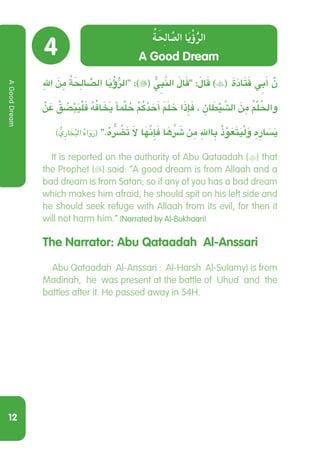
It is reported on the authority of Abu Qataadah () that
the Prophet () said: “A good dream is from Allaah and a
bad dream is from Satan; so if any of you has a bad dream
which makes him afraid, he should spit on his left side and
he should seek refuge with Allaah from its evil, for then it
will not harm him.” (Narrated by Al-Bukhaari)
The Narrator: Abu Qataadah Al-Anssari
  Abu Qataadah Al-Anssari : Al-Harsh Al-Sulamy) is from
Madinah, he was present at the battle of Uhud and the
battles after it. He passed away in 54H.
A Good Dream
ُ‫ة‬َِ‫ح‬‫ال‬ ًّ‫الص‬ ‫ا‬َ‫ي‬ْ‫ؤ‬ُّ‫الر‬
AGoodDream
13
30HadithForChildren
Lessons from This Hadith
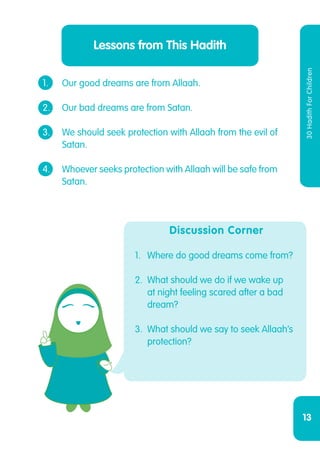
1.	 Our good dreams are from Allaah.
2.	 Our bad dreams are from Satan.
3.	 We should seek protection with Allaah from the evil of
	Satan.
4.	 Whoever seeks protection with Allaah will be safe from
	Satan.
Discussion Corner
1.	 Where do good dreams come from?
2.	 What should we do if we wake up
at night feeling scared after a bad
dream?
3.	 What should we say to seek Allaah’s
protection?
14
5
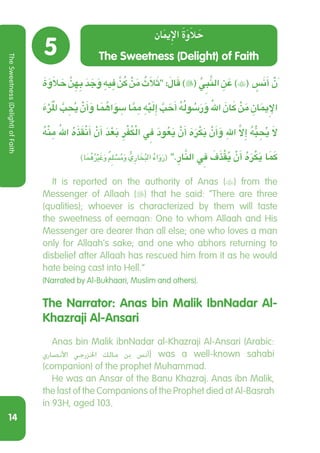
َ‫ة‬َ‫و‬َ‫ال‬ َ‫ح‬ َّ‫ن‬ ِ ِ‫ه‬‫ب‬ َ‫د‬ َ‫ج‬َ‫و‬ ِ‫يه‬ ِ‫ف‬ َّ‫ن‬ُ‫ك‬ ْ‫ن‬َ‫م‬ ٌ‫ث‬َ‫ال‬َ‫ث‬ :َ‫ال‬َ‫ق‬ )( ِّ ِ‫ي‬‫ب‬َّ‫الن‬ ِ‫ن‬ َ‫ع‬ )( ٍ‫س‬َ‫ن‬َ‫أ‬ ْ‫َن‬
َ‫ء‬ْ‫ر‬َ ْ‫م‬‫ال‬ َّ‫ب‬ ِ ُ‫ح‬‫ي‬ ْ‫ن‬َ‫أ‬َ‫و‬ ‫ا‬ َ ُ‫م‬‫اه‬َ‫و‬ ِ‫س‬ ‫ا‬َِّ‫م‬‫م‬ ِ‫ه‬ْ‫ي‬َ‫ل‬ِ‫إ‬ َّ‫ب‬ َ‫ح‬َ‫أ‬ ُ‫ه‬ُ‫ل‬‫و‬ ُ‫س‬َ‫ر‬َ‫و‬ ُ‫هلل‬ َ‫ن‬ َ‫ا‬‫ك‬ ْ‫ن‬َ‫م‬ ِ‫ان‬َ‫مي‬ِ‫اإل‬
ُ‫ه‬ْ‫ن‬ ِ‫م‬ ُ‫هلل‬ ُ‫ه‬َ‫ذ‬َ‫ق‬ْ‫ن‬َ‫أ‬ ْ‫ن‬َ‫أ‬ َ‫د‬ْ‫ع‬َ‫ب‬ ِ‫ر‬ْ‫ف‬ُ‫ك‬ْ‫ل‬‫ا‬ ِ‫ي‬‫ف‬ َ‫د‬‫و‬ ُ‫ع‬َ‫ي‬ ْ‫ن‬َ‫أ‬ َ‫ه‬َ‫ر‬ْ‫ك‬َ‫ي‬ ْ‫ن‬َ‫أ‬َ‫و‬ ِ‫هلل‬ َّ‫ِال‬‫إ‬ ُ‫ه‬ُّ‫ب‬ ِ ُ‫ح‬‫ي‬ َ‫ال‬
)‫ا‬َ ُ‫م‬‫ه‬ُ ْ‫ر‬‫ي‬َ‫غ‬َ‫و‬ ٌ ِ‫م‬‫ل‬ ْ‫س‬ُ‫م‬َ‫و‬ ُّ‫ِي‬‫ر‬‫ا‬ َ‫خ‬ُ‫ب‬‫ال‬ ُ‫ه‬‫ا‬َ‫و‬َ‫ر‬( . ِ‫ار‬َّ‫الن‬ ِ‫ي‬‫ف‬ َ‫ف‬َ‫ذ‬ْ‫ق‬ُ‫ي‬ ْ‫ن‬َ‫أ‬ ُ‫ه‬َ‫ر‬ْ‫ك‬َ‫ي‬ ‫ا‬َ َ‫م‬‫ك‬
  It is reported on the authority of Anas () from the
Messenger of Allaah () that he said: “There are three
(qualities); whoever is characterized by them will taste
the sweetness of eemaan: One to whom Allaah and His
Messenger are dearer than all else; one who loves a man
only for Allaah's sake; and one who abhors returning to
disbelief after Allaah has rescued him from it as he would
hate being cast into Hell.”
(Narrated by Al-Bukhaari, Muslim and others).
The Narrator: Anas bin Malik IbnNadar Al-
Khazraji Al-Ansari
Anas bin Malik ibnNadar al-Khazraji Al-Ansari (Arabic:
‫األنصاري‬ ‫اخلزرجي‬ ‫مالك‬ ‫بن‬ ‫أنس‬‎) was a well-known sahabi
(companion) of the prophet Muhammad.
He was an Ansar of the Banu Khazraj. Anas ibn Malik,
the last of the Companions of the Prophet died at Al-Basrah
in 93H, aged 103.
The Sweetness (Delight) of Faith
‫ان‬َ‫ِمي‬‫إل‬‫ا‬ َ‫ة‬َ‫و‬َ‫َال‬‫ح‬
TheSweetness(Delight)ofFaith
15
30HadithForChildren
Lessons from This Hadith
1.	 The characteristics of a true Believer.
2.	 Our love of Allaah and his Messenger are a part of
	eemaan.
3.	 Loving one’s Muslim brother only for Allaah’s sake is a
	 part of eemaan.
4.	 Hating to return to disbelief is a part of faith.
Discussion Corner
1.	 Who narrated this hadith?
2.	 Who should be dearest to us in our
lives?
3.	 Being kind and loving our parents,
our brothers, our sisters are part of
eemaan – TRUE or FALSE?
16
6
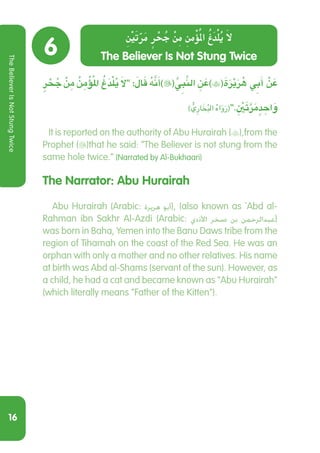
ٍ‫ر‬ ْ ُ‫ح‬‫ج‬ ْ‫ن‬ ِ‫م‬ ُ‫ن‬ ِ‫م‬ْ‫ؤ‬ُ‫مل‬‫ا‬ ُ‫غ‬َ‫د‬ْ‫ل‬ُ‫ي‬ َ‫ال‬ :َ‫ال‬َ‫ق‬ ُ‫ه‬َّ‫ن‬َ‫أ‬)(ِّ ِ‫ي‬‫ب‬َّ‫الن‬ ِ‫ن‬ َ‫)ع‬(َ‫ة‬َ‫ر‬ْ‫ي‬َ‫ر‬ ُ‫ه‬ ِ‫ي‬‫ب‬َ‫أ‬ ْ‫ن‬ َ‫ع‬
) ُّ‫ِي‬‫ر‬‫ا‬ َ‫خ‬ُ‫ب‬‫ال‬ ُ‫ه‬‫ا‬َ‫و‬َ‫ر‬(. ِ ْ‫ن‬‫ي‬َ‫ت‬َّ‫ر‬َ‫م‬ ٍ‫د‬ ِ‫اح‬َ‫و‬
It is reported on the authority of Abu Hurairah (),from the
Prophet ()that he said: “The Believer is not stung from the
same hole twice.” (Narrated by Al-Bukhaari)
The Narrator: Abu Hurairah
  Abu Hurairah (Arabic: ‫هريرة‬ ‫أبو‬‎), (also known as `Abd al-
Rahman ibn Sakhr Al-Azdi (Arabic: ‫األذدي‬ ‫صخر‬ ‫بن‬ ‫عبدالرحمن‬‎)
was born in Baha, Yemen into the Banu Daws tribe from the
region of Tihamah on the coast of the Red Sea. He was an
orphan with only a mother and no other relatives. His name
at birth was Abd al-Shams (servant of the sun). However, as
a child, he had a cat and became known as Abu Hurairah
(which literally means Father of the Kitten).
The Believer Is Not Stung Twice
ِ ْ‫ن‬‫ي‬َ‫ت‬َّ‫ر‬َ‫م‬ ٍ‫ر‬ ْ‫ح‬ ُ‫ج‬ ْ‫ن‬ِ‫م‬ ِ‫من‬ْ‫ؤ‬ُ‫مل‬‫ا‬ ُ‫غ‬َ‫د‬ْ‫ل‬ُ‫ي‬ َ‫ال‬
TheBelieverIsNotStungTwice
17
30HadithForChildren
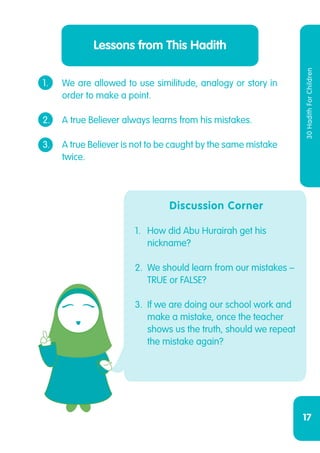
Lessons from This Hadith
1.	 We are allowed to use similitude, analogy or story in
	 order to make a point.
2.	 A true Believer always learns from his mistakes.
3.	 A true Believer is not to be caught by the same mistake
	twice.
Discussion Corner
1.	 How did Abu Hurairah get his
nickname?
2.	 We should learn from our mistakes –
TRUE or FALSE?
3.	 If we are doing our school work and
make a mistake, once the teacher
shows us the truth, should we repeat
the mistake again?
18
7
ُّ‫ى‬َ‫أ‬ )( َِّ‫لله‬ َ ُ‫سَلو‬‫ر‬ َ‫ل‬َ‫أ‬ َ‫س‬ ،‫لًا‬ ُ‫ج‬َ‫ر‬ َّ‫ن‬َ‫أ‬ )( ،‫و‬ ٍ‫ر‬ْ َ‫م‬‫ع‬ ِ‫ن‬ْ‫ب‬ َِّ‫لله‬ ِ‫د‬ْ‫ب‬ َ‫ع‬ ْ‫ن‬ َ‫ع‬
َ‫ت‬ْ‫ف‬َ‫ر‬ َ‫ع‬ ْ‫ن‬َ‫م‬ َ‫ى‬‫ل‬ َ‫ع‬ َ‫م‬َ‫ال‬ َّ‫الس‬ ُ‫أ‬َ‫ر‬ْ‫ق‬َ‫ت‬َ‫و‬ ،َ‫م‬‫ا‬َ‫ع‬ َّ‫الط‬ ُ‫م‬ ِ‫ع‬ ْ‫ط‬ُ‫ت‬ ‫‏‬‫‏‬ َ‫ال‬َ‫ق‬ ٌ ْ‫ر‬‫ي‬ َ‫خ‬ ِ‫م‬َ‫ال‬ ْ‫س‬ِ‫اإل‬
.‫‏‏‬)‫‏‏‏‬‫هيلع‬ ‫‏متفق‬(‫‏‏‬‫‏‬.‫‏‏‬‫‏‬ ْ‫ف‬ ِ‫ر‬ْ‫ع‬َ‫ت‬ ْ َ‫م‬‫ل‬ ْ‫ن‬َ‫م‬َ‫و‬
  Narrated Abdullah bin Amr (): A man asked Allah’s
Messenger () “Which act in Islam is the best?” The Prophet
()replied “Togivefood,andtogreetthosewhomyouknow
and those whom you do not know.” [by Al-BukhariMuslim]
The Narrator: Abdullah ibn Amr ibn Al-Aas
  Abdullah Ibn Amr was the son of the famous Companion
of the Prophet Amr Ibn Al-Aas. He was also a Companion
of the Prophet. He came from the family of Luay Ibn Ghaleb
of the tribe of Quraish. As a matter of fact, Abdullah Ibn Amr
was a great spiritual leader and a leading scholar.
The Superiority of Greeting (Assalaam)
‫الم‬‫س‬‫ال‬ ‫ل‬‫ض‬‫ف‬
TheSuperiorityofGreeting(Assalaam)
19
30HadithForChildren
Lessons from This Hadith
1.	 Delivering Assalaam is sunnah (optional) but its
	 response is obligatory.
2.	 We should greet those we know and those we do not
	know.
3.	 We would say Assalaam when we are leaving.
4.	 We should always share our food or provide food for
	others.
Discussion Corner
1.	 How should we begin all
conversations, whether in person or
on the phone?
2.	 Who was Abdullah ibn Amr?
3.	 What should we do when someone
says Assalaam to us?
20
8
ِ‫وف‬ُ‫ر‬ْ‫ع‬َ ْ‫م‬‫ال‬ َ‫ن‬ ِ‫م‬ َّ‫ن‬َ‫ر‬ ِ‫ق‬ ْ َ‫ح‬‫ت‬ َ‫ال‬ ‫‏‬‫‏‬)( ُّ ِ‫ي‬‫ب‬َّ‫الن‬ َ ِ‫ي‬‫ل‬ َ‫ال‬َ‫ق‬ َ‫ال‬َ‫ق‬ )( ،ٍّ‫ر‬َ‫ذ‬ ِ‫ي‬‫ب‬َ‫أ‬ ْ‫ن‬ َ‫ع‬
.‫‏‏‬)‫مسمل‏‏‏‬ ‫‏رواه‬( .‫‏‬‫‏‬‫‏‬ ٍ‫ق‬ْ‫ل‬ َ‫ط‬ ٍ‫ه‬ ْ‫ج‬َ‫و‬ ِ‫ب‬ َ‫اك‬ َ‫خ‬َ‫أ‬ َ‫ى‬‫ق‬ْ‫ل‬َ‫ت‬ ْ‫ن‬َ‫أ‬ ْ‫و‬َ‫ل‬َ‫و‬ ً‫ا‬‫ئ‬ْ‫ي‬ َ‫ش‬
  Narrated Abu Dharr (): Allah’s Messenger () said:
“Do not disdain a good deed, (no matter how small it may
seem) even if it is your meeting with your (Muslim)brother
with a cheerful face.” [Muslim]
The Narrator: Abu Dharr Al-Ghifari
  Jundub ibn Junadah, nicknamed Abu Dharr, was a
member of this tribe (Ghifar) .He was known for his courage,
his calmness and his far sightedness and also for the hatred
he felt against the idols which his people worshipped. He
rejected the silly religious beliefs and the religious corruption
which the Arabs practiced.
Politeness of Speech  Kindness of Meeting
‫ه‬‫ج‬‫و‬‫ال‬ ‫ة‬‫ق‬‫ال‬‫ط‬‫و‬ ‫ام‬‫ل‬‫ك‬‫ال‬ ‫ب‬‫ي‬‫ط‬
PolitenessofSpeechKindnessofMeeting
21
30HadithForChildren
Lessons from This Hadith
1.	 We should not look down upon any good, even the
	 little things.
2.	 We should always be cheerful with our friends and
	family.
3.	 Cheerfulness in front of your brothers is required
	(good).
Discussion Corner
1.	 What are some ways to show
cheerfulness to our friends and
family?
2.	 Does Allaah value our small good
deeds?
3.	 Do you like it when someone else
smiles and is cheerful to you?
22
9
َّ‫ِال‬‫إ‬ ِ‫ن‬ْ‫ي‬َ‫ر‬ْ‫م‬َ‫أ‬ َ ْ‫ن‬‫ي‬َ‫ب‬ )( َِّ‫لله‬ ُ ُ‫سَلو‬‫ر‬ َ ِّ‫ر‬‫ي‬ ُ‫خ‬ ‫ا‬َ‫م‬ ْ‫ت‬َ‫ل‬‫ا‬َ‫ق‬ ‫ا‬َ َّ‫ه‬‫ن‬َ‫أ‬ )( َ‫ة‬ َ‫ش‬ ِ‫ائ‬ َ‫ع‬ ْ‫ن‬ َ‫ع‬
ِ‫اس‬َّ‫الن‬ َ‫د‬َ‫ع‬ْ‫ب‬َ‫أ‬ َ‫ن‬ َ‫ا‬‫ك‬ ‫ا‬ً ْ‫م‬‫ِث‬‫إ‬ َ‫ن‬ َ‫ا‬‫ك‬ ْ‫ن‬ِ‫إ‬َ‫ف‬ ،‫ا‬ً ْ‫م‬‫ِث‬‫إ‬ ْ‫ن‬ُ‫ك‬َ‫ي‬ ْ َ‫م‬‫ل‬ ‫ا‬َ‫م‬ ،‫ا‬ َ ُ‫م‬‫ه‬ َ َ‫ر‬‫س‬ْ‫ي‬َ‫أ‬ َ‫ذ‬ َ‫خ‬َ‫أ‬
ْ‫ن‬َ‫أ‬ َّ‫ِال‬‫إ‬ ، ِ‫ه‬ ِ‫س‬ْ‫ف‬َ‫ن‬ِ‫ل‬ ‫ملسو‬ ‫هيلع‬ ‫هلل‬ ‫ىلص‬ َِّ‫لله‬ ُ ُ‫سَلو‬‫ر‬ َ‫م‬َ‫ق‬َ‫ت‬ْ‫ن‬‫ا‬ ‫ا‬َ‫م‬َ‫و‬ ،ُ‫ه‬ْ‫ن‬ ِ‫م‬
ّ) ُ‫ِي‬‫ر‬‫ا‬ َ‫خ‬ُ‫ب‬ْ‫ل‬‫ا‬ ُ‫ه‬‫ا‬َ‫و‬َ‫ر‬( ‫‏‬.‫‏‬‫ا‬َ ِ‫ه‬‫ب‬ َِّ‫للِه‬ َ‫م‬ ِ‫ق‬َ‫ت‬ْ‫ن‬َ‫ي‬َ‫ف‬ َِّ‫لله‬ ُ‫ة‬َ‫م‬ْ‫ر‬ ُ‫ح‬ َ‫ك‬َ َ‫ه‬‫ت‬ْ‫ن‬ُ‫ت‬
  Narrated by Aishah () “Whenever Allah’s Messenger
() was given a choice between two matters, He would
choose the easier course as long as it was not sinful to
do so; but if it was sinful, he was most strict in avoiding it.
Allah’s Messenger never took revenge upon anything for his
own sake; but when Allah’s Legal Bindings were violated,
he would take revenge for Allah’s sake. [Al-Bukhari Muslim]
The Narrator: Aisha bint Abu Bakr
  Daughter of Abu Bakr and beloved wife of Prophet
Mohammed. In the fifty years following his death, she
became a great teacher of Islam and preserved and
transmitted over two thousand hadeeth.
Forgiveness and Tolerance
‫ح‬‫م‬‫ا‬‫س‬‫ت‬‫وال‬ ‫و‬‫ف‬‫ع‬‫ال‬
ForgivenessandTolerance
23
30HadithForChildren
Lessons from This Hadith
1.	 Islam as a religion of ease and tolerance in all matters
	 unless it is something against Allah’s laws.
2.	 We should always forgive and tolerate each other to
	 achieve harmony and brotherliness among Muslims.
3.	 A Muslim who is patient and pardons and tolerates
	 others is greatly rewarded by Allah the Almighty.
Discussion Corner
1.	 Who was Aisha?
2.	 What should we do when our brother
or sister takes the toy we are playing
with?
3.	 How can we show patience and
tolerance with our friends at school?
24
10
‫ا‬ ً‫ش‬ ِّ‫ح‬َ‫ف‬َ‫ت‬ُ‫م‬ َ‫ال‬َ‫و‬ ‫ا‬ ً‫ش‬ ِ‫اح‬َ‫ف‬)( ُّ ِ‫ي‬‫ب‬َّ‫الن‬ ِ‫ن‬ُ‫ك‬َ‫ي‬ ْ َ‫م‬‫ل‬ َ‫ال‬َ‫ق‬ )(‫و‬ ٍ‫ر‬ْ َ‫م‬‫ع‬ ِ‫ن‬ْ‫ب‬ َِّ‫لله‬ ِ‫د‬ْ‫ب‬ َ‫ع‬ ْ‫ن‬ َ‫ع‬
ُّ‫ِي‬‫ر‬‫ا‬ َ‫خ‬ُ‫ب‬ْ‫ل‬‫ا‬ ُ‫ه‬‫ا‬َ‫و‬َ‫ر‬‫‏‬.‫‏‏‏‬‫‏‬‫ا‬ً‫ق‬َ‫ال‬ ْ‫خ‬َ‫أ‬ ْ ُ‫م‬‫ك‬َ‫ن‬ َ‫س‬ ْ‫ح‬َ‫أ‬ ْ ُ‫م‬‫ك‬ ِ‫ار‬َ‫ي‬ ِ‫خ‬ ْ‫ن‬ ِ‫م‬ َّ‫ِن‬‫إ‬ ‫‏‬‫‏‬ ُ‫ول‬ُ‫ق‬َ‫ي‬ َ‫ن‬ َ‫ا‬‫ك‬َ‫و‬
  Abdullah bin Amr () reported that the Prophet ()
was neither a fahish (one who speaks bad words) nor a
mutafahish (one who speaks obscene evil words to make
people laugh), He () never used bad language. He ()
used to say “the best amongst you are those who have the
best manners and character”. [by Al-Bukhari  Muslim]
The Narrator: Abdullah ibn Amr ibn Al-Aas
  Abdullah Ibn Amr was the son of the famous Companion
of the Prophet Amr Ibn Al-Aas. He was also a Companion
of the Prophet. He came from the family of Luay Ibn Ghaleb
of the tribe of Quraish. As a matter of fact, Abdullah Ibn Amr
was a great spiritual leader and a leading scholar.
Good manners (Akhlaaq)
‫ق‬‫ل‬‫خل‬‫ا‬ ‫ن‬‫س‬‫ح‬
Goodmanners(Akhlaaq)
25
30HadithForChildren
Lessons from This Hadith
1.	 Islam calls for good manners such as staying away
	 from harm, always smiling and doing good to others.
2.	 Good manners makes you closer to the status of our
	prophet () in the Hereafter (Akhirah).
3.	 We should always respect others and treat them kindly.
4.	 Good manners increases Allah’s love for us.
5.	 Even high ranking people should have the best
	manners.
Discussion Corner
1.	 What is one of the ways to increase
Allah’s love for us?
2.	 Should we tease and make fun of our
friends at school just to make others
laugh?
3.	 Discuss some examples of how we can
show good manners to our teachers or
parents.
26
11
ِ‫يه‬ ِ‫خ‬َ‫أل‬ َّ‫ب‬ ِ ُ‫ح‬‫ي‬ َّ‫ى‬‫ت‬ َ‫ح‬ ْ ُ‫م‬‫ك‬ُ‫د‬ َ‫ح‬َ‫أ‬ ُ‫ن‬ ِ‫م‬ْ‫ؤ‬ُ‫ي‬ َ‫ال‬ ‫‏‬‫‏‬َ‫ال‬َ‫ق‬ )( ِّ ِ‫ي‬‫ب‬َّ‫الن‬ ِ‫ن‬ َ‫ع‬ )( ، ٍ‫س‬َ‫ن‬َ‫أ‬ ْ‫ن‬ َ‫ع‬
) ُّ‫ِي‬‫ر‬‫ا‬ َ‫خ‬ُ‫ب‬ْ‫ل‬‫ا‬ ُ‫ه‬‫ا‬َ‫و‬َ‫ر‬‫‏‬( .‫‏‬‫‏‬‫‏‬ ِ‫ه‬ ِ‫س‬ْ‫ف‬َ‫ن‬ِ‫ل‬ ُّ‫ب‬ ِ ُ‫ح‬‫ي‬ ‫ا‬َ‫م‬
  On the authority of Anas ibn Malik () that the Prophet
() said “ None of you would be a truly believer until he
wishes for his Muslim brother what he wishes for himself”
[Al-BukhariMuslim]
The Narrator: Anas bin Malik
Anas bin Malik ibnNadar al-Khazraji Al-Ansari (Arabic:
‫األنصاري‬ ‫اخلزرجي‬ ‫مالك‬ ‫بن‬ ‫أنس‬‎) was a well-known sahabi
(companion) of the prophet Muhammad.
He was an Ansar of the Banu Khazraj. Anas ibn Malik,
the last of the Companions of the Prophet died at Al-Basrah
in 93H, aged 103.
Muslims Must Love Each Other
‫ه‬‫ي‬‫أخ‬‫ل‬ ‫لم‬‫س‬‫مل‬‫ا‬ ‫ة‬‫ب‬‫ح‬‫م‬ ‫وب‬‫ج‬‫و‬
MuslimsMustLoveEachOther
27
30HadithForChildren
Lessons from This Hadith
1.	 We should always wish for the best and hate for the
	 worst to happen to our Muslim brother, just like we
	 wish it for ourselves because this makes us a true
	believer.
2.	 Envy and hate for others cause the lack of faith.
3.	 We should always guide our Muslim brother to good
	 and help keep him away from injustice, as this is part
	 of our love for the sake of Allah.
Discussion Corner
1.	 What should we wish and feel for our
fellow Muslims?
2.	 How can we show our friends that
we wish for the best for them?
3.	 If we see something bad happening
to our brother/sister, what should we
do?
28
12
‫وا‬ُ‫د‬ َ‫اس‬ َ َ‫ح‬‫ت‬َ‫ال‬َ‫و‬‫وا‬ ُ‫ض‬ َ‫اغ‬َ‫ب‬َ‫ت‬َ‫ال‬‫‏‬‫‏‬َ‫ال‬َ‫ق‬ )( َِّ‫لله‬ َ ُ‫سَلو‬‫ر‬ َّ‫ن‬َ‫أ‬ )( ، ٍ‫ك‬ِ‫ال‬َ‫م‬ ِ‫ن‬ْ‫ب‬ ِ‫س‬َ‫ن‬َ‫أ‬
ُ‫اه‬ َ‫خ‬َ‫أ‬ َ‫ر‬ ُ‫ج‬ْ َ‫ه‬‫ي‬ ْ‫ن‬َ‫أ‬ ٍ ِ‫م‬‫ل‬ ْ‫س‬ُ ِ‫م‬‫ل‬ ُّ‫ل‬ ِ َ‫ح‬‫ي‬ َ‫ال‬َ‫و‬ ‫ا‬ً‫ن‬‫ا‬َ‫و‬ ْ‫ِخ‬‫إ‬ َِّ‫لله‬ َ‫د‬‫ا‬َ‫ب‬ ِ‫ع‬ ‫وا‬ُ‫ن‬‫و‬ُ‫ك‬َ‫و‬ ‫وا‬ُ‫ر‬َ‫ب‬‫ا‬َ‫د‬َ‫ت‬ َ‫ال‬َ‫و‬
‫‏‏‬)‫‏‬‫هيلع‬ ‫‏متفق‬(‫‏‏‬.‫‏‬ ‫‏‬‫‏‬ ٍ‫ث‬َ‫ال‬َ‫ث‬ َ‫ق‬ْ‫و‬َ‫ف‬
  Anas bin Malik () narrated that Allah’s messenger ()
said: “Do not hate one another, and do not be jealous of
one another, and do not desert each other, and O’ Allah’s
worshippers! Be brothers. It is not permissible for any
Muslim to desert (not talk to) his Muslim brother for more
than three days”. [Bukhari  Muslim]
The Narrator: Anas bin Malik
Anas bin Malik ibnNadar al-Khazraji Al-Ansari (Arabic:
‫األنصاري‬ ‫اخلزرجي‬ ‫مالك‬ ‫بن‬ ‫أنس‬‎) was a well-known sahabi
(companion) of the prophet Muhammad.
He was an Ansar of the Banu Khazraj. Anas ibn Malik,
the last of the Companions of the Prophet died at Al-Basrah
in 93H, aged 103.
Prohibition of Hatred and Envy
‫د‬‫س‬‫ا‬‫ح‬‫ت‬‫وال‬ ‫ض‬‫غ‬‫ا‬‫ب‬‫ت‬‫ال‬ ‫ريم‬‫ح‬‫ت‬
ProhibitionofHatredandEnvy
29
30HadithForChildren
Lessons from This Hadith
1.	 We should not hate, be jealous of or abandon one
	another.
2.	 We should not harm any Muslim in any way.
3.	 We are not allowed to break our relationship with any
	 Muslim for more than three days.
Discussion Corner
1.	 Should we be jealous of our friends if
they received a new toy and we did
not?
2.	 If we fight with our brothers / sisters,
are we allowed to stop talking to
them for more than three days?
3.	 Discuss some ways we can show
love and kindness to our friends at
school.
30
13
ُ‫ل‬ َ‫ض‬ْ‫ف‬َ‫أ‬ َ‫ني‬ ِ ِ‫م‬‫ل‬ ْ‫س‬ُ ْ‫م‬‫ال‬ ُّ‫ى‬َ‫أ‬ َ‫ل‬ ِ‫ئ‬ ُ‫س‬ )( َّ ِ‫ي‬‫ب‬َّ‫ن‬‫ال‬ َّ‫ن‬َ‫أ‬ )( ِّ‫ي‬ ِ‫ر‬َ‫ع‬ ْ‫ش‬َ‫أل‬‫ا‬ َ‫ى‬‫وس‬ُ‫م‬ ِ‫ي‬‫ب‬َ‫أ‬
) ‫‏‬‫هيلع‬ ‫متفق‬ ‫‏‬( ‫‏‬.‫‏‬ ‫‏‬‫‏‬ ِ‫ه‬ ِ‫د‬َ‫ي‬َ‫و‬ ِ‫ه‬ ِ‫ان‬ َ‫س‬ِ‫ل‬ ْ‫ن‬ ِ‫م‬ َ‫ون‬ُ ِ‫م‬‫ل‬ ْ‫س‬ُ ْ‫م‬‫ال‬ َ ِ‫م‬‫ل‬ َ‫س‬ ْ‫ن‬َ‫م‬ ‫‏‬‫‏‬َ‫ال‬َ‫ق‬
  Abu Musa () narrated that he asked Allah’s Messenger
() :Whose Islam is the best? (i.e. who is a good Muslim?).
The Prophet () replied, “One who avoids harming Muslims
with his tongue and hands.” [Al-Bukhari]
The Narrator: Abu Musa Al-Ashari
Abu-Musa Abd-Allah ibn Qays al-Ashari, better known
as Abu Musa al-Ashari (Arabic: ‫األشعري‬ ‫موسى‬ ‫أبو‬‎) was a
companion of the Islamic prophet Muhammad and an
important figure in early Islamic history.
Abu Musa originally came from Yemen, where his tribe,
the Ashar, lived in the pre-Islamic period. He accepted
Islam at Mecca prior to the Hijra and returned to his native
Yemen to spreadthe faith.
Keeping Tongue and Hand from Offense
‫دي‬‫ع‬‫ت‬‫ال‬ ‫ن‬‫م‬ ‫د‬‫ي‬‫ال‬‫و‬ ‫ان‬‫س‬‫الل‬ ‫ظ‬‫ف‬‫ح‬
KeepingTongueandHandfromOffense
31
30HadithForChildren
31
30HadithForChildren
Lessons from This Hadith
1.	 The best among Muslims are those who avoid harming
	others.
2.	 We should never curse anybody.
3.	 Saying something that hurts or angers others is
	 harmful and not allowed in Islam.
4.	 We should avoid saying or doing things that cause
	 friends to fight or be divided.
Discussion Corner
1.	 Where is Abu Musa originally from?
2.	 What is the character of the best
Muslim?
3.	 Can we shout and scream angrily at our
family? Why yes/no?
4.	Give one example of harming a friend
with our hands and discuss why we
should not do that.
32
14
، ِ‫ق‬ْ‫د‬ ِّ‫الص‬ ِ‫ب‬ ْ ُ‫م‬‫ك‬ْ‫ي‬َ‫ل‬ َ‫ع‬ ‫‏‬‫‏‬)( َِّ‫َلله‬ ُ ُ‫سَلو‬‫ر‬ َ‫ال‬َ‫ق‬ :َ‫ال‬َ‫ق‬ )( ٍ‫ود‬ ُ‫ع‬ ْ‫س‬َ‫م‬ ِ‫ن‬ْ‫ب‬ِ‫ا‬ ِ‫ن‬ َ‫ع‬
َ‫ل‬ ُ‫ج‬َّ‫الر‬ َّ‫ِن‬‫إ‬َ‫و‬ ، ِ‫ة‬َّ‫ن‬َ ْ‫ج‬‫ال‬ َ‫ى‬‫ِل‬‫إ‬ ‫ي‬ ِ‫د‬ْ َ‫ه‬‫ي‬ َِّ‫ر‬‫ب‬ْ‫ل‬‫ا‬ َّ‫ِن‬‫إ‬َ‫و‬ ،ِّ ِ‫ر‬‫ب‬ْ‫ل‬‫ا‬ َ‫ى‬‫ِل‬‫إ‬ ‫ي‬ ِ‫د‬ْ َ‫ه‬‫ي‬ َ‫ق‬ْ‫د‬ ِّ‫الص‬ َّ‫ن‬ِ‫إ‬َ‫ف‬
َ‫ب‬ ِ‫ذ‬َ‫ك‬ْ‫ل‬‫ا‬ َّ‫ن‬ِ‫إ‬َ‫ف‬ ، َ‫ب‬ ِ‫ذ‬َ‫ك‬ْ‫ل‬‫ا‬َ‫و‬ ْ ُ‫م‬‫اك‬َّ‫ِي‬‫إ‬َ‫و‬ ،‫ا‬ً‫ق‬‫ي‬ِّ‫د‬ ِ‫ص‬ ِ‫هلل‬ َ‫د‬ْ‫ن‬ ِ‫ع‬ َ‫ب‬َ‫ت‬ْ‫ك‬ُ‫ي‬ َّ‫ى‬‫ت‬ َ‫ح‬ ُ‫ق‬ُ‫د‬ ْ‫ص‬َ‫ي‬
ُ‫ب‬ ِ‫ذ‬ْ‫ك‬َ‫ي‬َ‫ل‬ َ‫ل‬ ُ‫ج‬َّ‫الر‬ َّ‫ِن‬‫إ‬َ‫و‬ ، ِ‫ار‬َّ‫الن‬ َ‫ى‬‫ِل‬‫إ‬ ‫ي‬ ِ‫د‬ْ َ‫ه‬‫ي‬ َ‫ر‬‫و‬ ُ‫ج‬ُ‫ف‬ْ‫ل‬‫ا‬َ‫و‬ ، ِ‫ور‬ ُ‫ج‬ُ‫ف‬ْ‫ل‬‫ا‬ َ‫ى‬‫ِل‬‫إ‬ ‫ي‬ ِ‫د‬ْ َ‫ه‬‫ي‬
. ِْ‫علَيَه‬ ٌ‫ق‬َ‫ف‬َّ‫ت‬ُ‫م‬ ‫‏‬‫‏‬.‫‏‬‫ا‬ً‫ب‬‫ا‬َّ‫ذ‬َ‫ك‬ ِ‫هلل‬ َ‫د‬ْ‫ن‬ ِ‫ع‬ َ‫ب‬َ‫ت‬ْ‫ك‬ُ‫ي‬ َّ‫ى‬‫ت‬ َ‫ح‬
  Narrated Ibn Masaud () :Allah’s Messenger () said:
“Truth leads to piety and piety leads to Paradise. A man
persists in speaking the truth till he is recorded with Allah
as a truthful man. Falsehood leads to transgression and
transgression leads to Hell-fire. A man continues to speak
falsehood till he is recorded with Allah as a great liar”.
[Al-Bukhari Muslim]
The Narrator: Abdullah ibn Masaud
  Abd-Allah ibn Mas`ud (Arabic: ‫مسعود‬ ‫بن‬ ‫عبداهلل‬‎) was
the 6th man who converted to Islam after Muhammad
started preaching in Mecca. He was also one of the closest
companions to prophet Muhammad (pbuh).
  He was a child sheepherder working for [[Uqbahibn Abu
Mueeayt].Muhammad was passing by him with Abu Bakr
May Allah be pleased with him when they asked Abd-Allah
to give them some milk from one of the goats. He refused
Endearment of Truthfulness  Caution from Falsehood
‫ب‬‫ذ‬‫الك‬ ‫ن‬‫م‬ ‫ر‬‫ي‬‫ذ‬‫ح‬‫ت‬‫وال‬ ‫ق‬‫د‬‫الص‬ ‫في‬ ‫غيب‬‫ر‬‫ت‬‫ال‬
EndearmentofTruthfulnessCautionfromFalsehood
33
30HadithForChildren
Discussion Corner
1.	What is one path that leads to
Paradise?
2.	What is one path that leads to Hell-
fire?
2.	If our teachers ask us if we have
finished our homework, even if we
have not, what should we tell them?
4.	 Who was Abdullah ibn Mas’ud?
1.	 Being truthful is one of the good conducts that Islam
	 calls for.
2.	 Bring truthful is one way that leads to Paradise.
3.	 A believer who is known by others to be truthful is
	 beloved by Allah and the people.
4.	 Telling lies is a bad habit that Islam forbids.
5.	 Falsehood is one way that leads to the Hell-fire.
Lessons from This Hadith
because they were not his goats to give away their milk. So
Muhammad asked him if there was a goat that never gave
milk and he touched it instantly. The goat produced milk, so
they drank milk and ibnMasud asked Muhammad to teach
him how to do this. Muhammad said to him (Arabic: ‫غالم‬ ‫إنك‬
‫معلم‬‎), which means you: have been taught.
34
15
، ِ‫ان‬َ‫ي‬ْ‫ن‬ُ‫ب‬ْ‫ل‬ َ‫ا‬‫ك‬ ِ‫ن‬ ِ‫م‬ْ‫ؤ‬ُ ْ‫م‬‫ل‬ِ‫ل‬ َ‫ن‬ ِ‫م‬ْ‫ؤ‬ُ ْ‫م‬‫ال‬ َّ‫ِن‬‫إ‬‫‏‬‫‏‬َ‫ال‬َ‫ق‬ )( ِّ ِ‫ي‬‫ب‬َّ‫الن‬ ِ‫ن‬ َ‫ع‬ )( َ‫ى‬‫وس‬ُ‫م‬ ِ‫ي‬‫ب‬َ‫أ‬ ْ‫ن‬ َ‫ع‬
ِْ‫علَيَه‬ ٌ‫ق‬َ‫ف‬َّ‫ت‬ُ‫م‬ ‫‏‬.‫‏‬ُ‫ه‬َ‫ع‬ ِ‫اب‬ َ‫ص‬َ‫أ‬ َ‫ك‬َّ‫ب‬ َ‫ش‬َ‫و‬ ‫‏‬.‫‏‏‬‫‏‬‫ا‬ ً‫ض‬ْ‫ع‬َ‫ب‬ ُ‫ه‬ ُ‫ض‬ْ‫ع‬َ‫ب‬ ُّ‫د‬ ُ‫ش‬َ‫ي‬
  Narrated Abu Musa ():The Prophet () said: “A believer
to another believer is like a building whose different parts
enforce each other”. The Prophet then clasped his hands
with the fingers interlaced. [By Al Bukhari and Muslim].
The Narrator: Abu Musa Al-Ashari
Abu-Musa Abd-Allah ibn Qays al-Ashari, better known
as Abu Musa al-Ashari (Arabic: ‫األشعري‬ ‫موسى‬ ‫أبو‬‎) was a
companion of the Islamic prophet Muhammad and an
important figure in early Islamic history.
Abu Musa originally came from Yemen, where his tribe,
the Ashar, lived in the pre-Islamic period. He accepted
Islam at Mecca prior to the Hijra and returned to his native
Yemen to spreadthe faith.
Cooperation Among Muslims
‫ن‬‫ي‬‫ؤمن‬‫مل‬‫ا‬ ‫ن‬‫ي‬‫ب‬ ‫ن‬‫و‬‫ا‬‫ع‬‫ت‬‫ال‬
CooperationAmongMuslims
35
30HadithForChildren
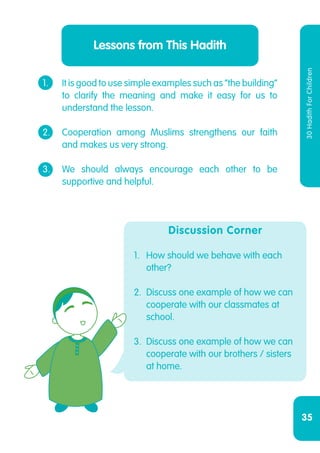
1.	 It is good to use simple examples such as “the building”
	 to clarify the meaning and make it easy for us to
	 understand the lesson.
2.	 Cooperation among Muslims strengthens our faith
	 and makes us very strong.
3.	 We should always encourage each other to be
	 supportive and helpful.
Lessons from This Hadith
Discussion Corner
1.	 How should we behave with each
other?
2.	 Discuss one example of how we can
cooperate with our classmates at
school.
3.	 Discuss one example of how we can
cooperate with our brothers / sisters
at home.
36
16
ِ َ‫ر‬‫ب‬ْ‫ك‬َ‫أ‬ ِ‫ب‬ ْ ُ‫م‬‫ك‬ُ‫ئ‬ِّ‫ب‬َ‫ن‬ُ‫أ‬ َ‫ال‬َ‫أ‬ ‫‏‬‫‏‬)( َِّ‫لله‬ ُ ُ‫سَلو‬‫ر‬ َ‫ال‬َ‫ق‬ : َ‫ال‬َ‫ق‬ )( ‫بكرة‬ ‫أيب‬ ‫عن‬
ُ‫وق‬ُ‫ق‬ ُ‫ع‬َ‫و‬ ،َِّ‫الله‬ ِ‫ب‬ ُ‫اك‬ َ ْ‫ر‬‫ش‬ِ‫اإل‬ ‫‏‬‫‏‬ َ‫ال‬َ‫ق‬ ‫‏‬.‫‏‬َِّ‫لله‬ َ ُ‫سَلو‬‫ر‬ ‫ا‬َ‫ي‬ َ‫ى‬‫ل‬َ‫ب‬ ‫ا‬َ‫ن‬ْ‫ل‬ُ‫ق‬ ‫‏‬.‫‏‏‬‫‏‬ ِ‫ر‬ ِ‫ائ‬َ‫ب‬َ‫ك‬ْ‫ل‬‫ا‬
ُ‫ة‬َ‫د‬‫ا‬ َ َ‫ه‬‫ش‬َ‫و‬ ِ‫ور‬ُّ‫الز‬ ُ‫ل‬ْ‫و‬َ‫ق‬َ‫و‬ َ‫ال‬َ‫أ‬ ‫‏‬‫‏‬ َ‫ال‬َ‫ق‬َ‫ف‬ َ‫س‬َ‫ل‬ َ َ‫ج‬‫ف‬ ً‫ا‬‫ئ‬ ِ‫ك‬َّ‫ت‬ُ‫م‬ َ‫ن‬ َ‫ا‬‫ك‬َ‫و‬ ‫‏‬.‫‏‏‬‫‏‬ ِ‫ن‬ْ‫ي‬َ‫د‬ِ‫ال‬َ‫و‬ْ‫ل‬‫ا‬
ُ‫ت‬ْ‫ل‬ُ‫ق‬ َّ‫ى‬‫ت‬ َ‫ح‬ ‫ا‬َ ُ‫ه‬‫ول‬ُ‫ق‬َ‫ي‬ َ‫ال‬َ‫ز‬ ‫ا‬َ َ‫م‬‫ف‬ ‫‏‬.‫‏‏‬‫‏‬ِ‫ور‬ُّ‫الز‬ ُ‫ة‬َ‫د‬‫ا‬ َ َ‫ه‬‫ش‬َ‫و‬ ِ‫ور‬ُّ‫الز‬ ُ‫ل‬ْ‫و‬َ‫ق‬َ‫و‬ َ‫ال‬َ‫أ‬ ، ِ‫ور‬ُّ‫الز‬
‫‏‬‫‏‏‬)‫‏‬‫هيلع‬ ‫‏متفق‬(‫‏‏‬.‫ُ‏‬‫ت‬ُ‫ك‬ ْ‫س‬َ‫ي‬ َ‫ال‬
  Narrated Abu Bakra () : The Prophet () said thrice ,
“Should I inform you about the greatest of the great sins ?”
They said, Yes, O Allah’ s Messenger ! He said, “(1) To join
others in worship with Allah, (2) To disobey parents.” The
Prophet then sat up after he had been reclining (on a pillow)
and said, “(3) and I warn you against giving a lying speech
(false statement)”, and he kept on saying that warning till
we thought he would not stop. [BukhariMuslim]
The Narrator: Abu Bakra bin Kalada
  Abu Bakra bin Kalada al-Thaqafi at-Thaifi (in Arabic‫بكرة‬ ‫أبو‬
‫الطائفي‬ ‫كلدةالثقفي‬ ‫)بن‬ better known as Nufayibn Al-Harith (in
Arabic‫احلارث‬ ‫بن‬ ‫)نفيع‬ was the half brother of Nafiibn Al-Harith.
He is known for his dispute with another Islamic general
Mugheera ibn Shuba during a military expedition.
Prohibition of Disobedience of Parents and False Witness
‫ر‬‫و‬‫ز‬‫ال‬ ‫ة‬‫د‬‫ا‬‫ه‬‫ش‬‫و‬ ‫ق‬‫و‬‫ق‬‫ع‬‫ال‬ ‫م‬‫ي‬‫ر‬‫ح‬‫ت‬
ProhibitionofDisobedienceofParentsandFalseWitness
37
30HadithForChildren
1.	 Rasulullah would sometimes give direct guidance and
	 advice to his companions.
2.	 We should not associate partners with Allah or disobey
	 our parents.
3.	
3.	 We should always encourage each other to be
	 supportive and helpful.
Lessons from This Hadith
Discussion Corner
1.	 From this hadith, what are the three
things we learned not to do?
2.	 What should we do if our parents ask
us to do something?
3.	 If we saw something bad happening
at the school playground, and the
teacher asks us about it, what should
we tell them?
38
17
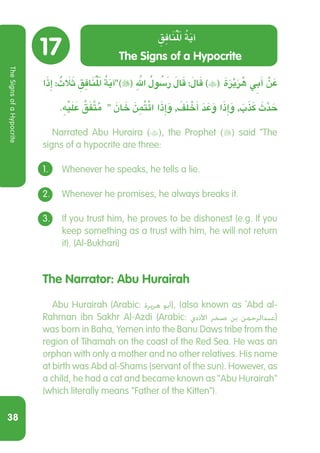
‫ا‬َ‫ذ‬ِ‫إ‬ : ٌ‫لاَث‬َ‫ث‬ ِ‫ق‬ ِ‫اف‬َ‫ن‬ُ ْ‫م‬‫ل‬َ‫ا‬ ُ‫ة‬َ‫ي‬‫)آ‬( َِّ‫لله‬ ُ ُ‫سَلو‬‫ر‬ َ‫ال‬َ‫ق‬ :َ‫ال‬َ‫ق‬ )( َ‫ة‬َ‫ر‬ْ‫ي‬َ‫ر‬ ُ‫ه‬ ِ‫ي‬‫ب‬َ‫أ‬ ْ‫ن‬ َ‫ع‬
. ِْ‫علَيَه‬ ٌ‫ق‬َ‫ف‬َّ‫ت‬ُ‫م‬  َ‫ان‬ َ‫خ‬ َ‫ن‬ ِ ُ‫م‬‫ت‬ْ‫ئ‬‫ا‬ ‫ا‬َ‫ذ‬ِ‫إ‬َ‫و‬ , َ‫ف‬َ‫ل‬ ْ‫خ‬َ‫أ‬ َ‫د‬ َ‫ع‬َ‫و‬ ‫ا‬َ‫ذ‬ِ‫إ‬َ‫و‬ , َ‫ب‬َ‫ذ‬َ‫ك‬ َ‫ث‬َّ‫د‬ َ‫ح‬
  Narrated Abu Huraira (), the Prophet () said “The
signs of a hypocrite are three:
1.	 Whenever he speaks, he tells a lie.
2.	 Whenever he promises, he always breaks it.
3.	 If you trust him, he proves to be dishonest (e.g. If you
	 keep something as a trust with him, he will not return
	 it). (Al-Bukhari)
The Narrator: Abu Hurairah
  Abu Hurairah (Arabic: ‫هريرة‬ ‫أبو‬‎), (also known as `Abd al-
Rahman ibn Sakhr Al-Azdi (Arabic: ‫األذدي‬ ‫صخر‬ ‫بن‬ ‫عبدالرحمن‬‎)
was born in Baha, Yemen into the Banu Daws tribe from the
region of Tihamah on the coast of the Red Sea. He was an
orphan with only a mother and no other relatives. His name
at birth was Abd al-Shams (servant of the sun). However, as
a child, he had a cat and became known as Abu Hurairah
(which literally means Father of the Kitten).
The Signs of a Hypocrite
ِ‫ق‬ ِ‫اف‬َ‫ن‬ُ ْ‫م‬‫ل‬َ‫ا‬ ُ‫ة‬َ‫ي‬‫آ‬
TheSignsofaHypocrite
39
30HadithForChildren
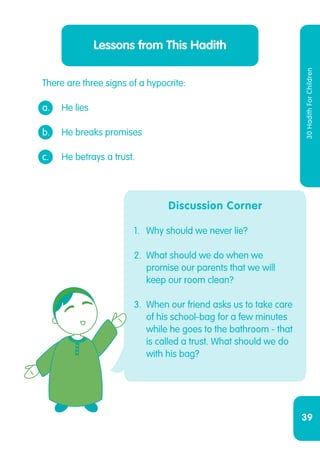
There are three signs of a hypocrite:
a. 	 He lies
b.	 He breaks promises
c.	 He betrays a trust.
Lessons from This Hadith
Discussion Corner
1.	 Why should we never lie?
2.	 What should we do when we
promise our parents that we will
keep our room clean?
3.	 When our friend asks us to take care
of his school-bag for a few minutes
while he goes to the bathroom - that
is called a trust. What should we do
with his bag?
40
18
ِ‫ي‬َ‫د‬‫ي‬ َ ْ‫ن‬‫ي‬َ‫ب‬ ُّ‫ار‬َ‫مل‬‫ا‬ ُ َ‫م‬‫ل‬ْ‫ع‬َ‫ي‬ ْ‫و‬َ‫ل‬ :)( ِ‫هلل‬ ُ ُ‫سَلو‬‫ر‬ َ‫ال‬َ‫ق‬ :)( ٍ ْ‫م‬‫ي‬َ‫ه‬ ُ‫ج‬ ‫و‬ُ‫ب‬َ‫أ‬ ‫ال‬َ‫ق‬
َ ْ‫ن‬‫ي‬َ‫ب‬ َّ‫ر‬َُ‫يم‬ ْ‫ن‬َ‫أ‬ ْ‫ن‬ ِ‫م‬ ُ‫ه‬َ‫ل‬ ‫ًا‬ ْ‫ر‬‫ي‬ َ‫خ‬ َ ْ‫ن‬‫ي‬ ِ‫ع‬َ‫ب‬ْ‫ر‬َ‫أ‬ َ‫ف‬ ِ‫ق‬َ‫ي‬ ْ‫ن‬َ‫أ‬ َ‫ن‬ َ‫ا‬‫ك‬َ‫ل‬ ِْ‫علَيَه‬ ‫ا‬َ‫ذ‬ ‫ا‬َ‫م‬ ِّ‫ي‬‫ل‬ َ‫ص‬ُ‫مل‬‫ا‬
) ُّ‫ِي‬‫ر‬‫ا‬ َ‫خ‬ُ‫ب‬‫ال‬ ُ‫ه‬‫ا‬َ‫و‬َ‫ر‬( . ِ‫ه‬ْ‫ي‬َ‫د‬َ‫ي‬
  Abu Juhaim () said: “Allaah’s Messenger () said:
“If the person passing in front of a worshipper in prayer
knew what a sin he was incurring, he would prefer to
wait for forty (years) rather than passing in front of him.”
(Narrated by Al-Bukhaari)
The Narrator: Abu Juhaim
  Abu Juhaim : Abudalla ibn Juhaim . Well-known
companion of prophet Mohammad (), he is nephew of
Obiy ibn Kaab he lived during the caliphate of Muawiyah .
Passing in Front of Someone Praying
‫ي‬ِّ‫ل‬ َ‫ُص‬‫مل‬‫ا‬ ِ‫ي‬َ‫د‬‫ي‬ َْ‫ن‬‫ي‬َ‫ب‬ ُّ‫َار‬‫مل‬‫ا‬
PassinginFrontofSomeonePraying
41
30HadithForChildren
1.	 It is a great sin to pass between a worshipper and his
	sutrah.
2.	 One who does so faces a severe punishment.
3.	
3.	 The Prophet’s really cared and had compassion for us,
	 because he warns us of this sin.
Lessons from This Hadith
Discussion Corner
1.	 What sin does this hadith discuss?
2.	 Is it all right to walk in front of your
father who is praying as long as it is
in front of his sutrah distance (about
the space of a sajjadah)?
3.	 Can you walk right in your father’s
praying space – where he will rukuk
or sujood?
42
19
ُ‫ه‬ُ‫ك‬ْ‫ر‬َ‫ت‬ , ِ‫ء‬ْ‫ر‬َ ْ‫م‬‫ل‬َ‫ا‬ ِ‫لاَم‬ ْ‫ِس‬‫إ‬ ِ‫ن‬ ْ‫س‬ ُ‫ح‬ ْ‫ن‬ ِ‫م‬ ‫‏‬‫‏‬)( َِّ‫َلله‬ ُ ُ‫سَلو‬‫ر‬ َ‫ال‬َ‫ق‬ :َ‫ال‬َ‫ق‬ )( َ‫ة‬َ‫ر‬ْ‫ي‬َ‫ر‬ ُ‫ه‬ ‫ِي‬
‫‏‬. ٌ‫ن‬ َ‫س‬ َ‫ح‬ َ‫ال‬َ‫ق‬َ‫و‬ , ُّ‫ي‬ ِ‫ذ‬ ِ‫م‬ْ ِّ‫ر‬‫لت‬َ‫ا‬ ُ‫اه‬َ‫و‬َ‫ر‬  ِ‫يه‬ ِ‫ن‬ْ‫ع‬َ‫ي‬ َ‫لا‬ ‫ا‬َ‫م‬
  On the authority of Abu Huraira () who said: the
Messenger of Allah () said, “Part of someone’s being a
good Muslim is leaving away that which does not concern
him” . (Collected by Al-Tirmithi.)
The Narrator: Abu Hurairah
  Abu Hurairah (Arabic: ‫هريرة‬ ‫أبو‬‎), (also known as `Abd al-
Rahman ibn Sakhr Al-Azdi (Arabic: ‫األذدي‬ ‫صخر‬ ‫بن‬ ‫عبدالرحمن‬‎)
was born in Baha, Yemen into the Banu Daws tribe from the
region of Tihamah on the coast of the Red Sea. He was an
orphan with only a mother and no other relatives. His name
at birth was Abd al-Shams (servant of the sun). However, as
a child, he had a cat and became known as Abu Hurairah
(which literally means Father of the Kitten).
Leaving the Things That Don’t Concern You
‫ه‬‫ي‬‫ن‬‫ع‬‫ي‬ ‫ال‬ ‫ا‬‫م‬ ‫لم‬‫س‬‫مل‬‫ا‬ ‫ك‬‫ر‬‫ت‬
LeavingtheThingsThatDon’tConcernYou
43
30HadithForChildren
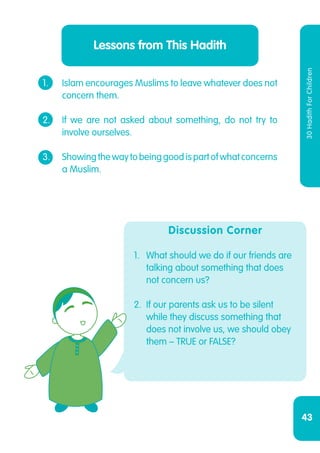
1.	 Islam encourages Muslims to leave whatever does not
	 concern them.
2.	 If we are not asked about something, do not try to
	 involve ourselves.
3.	 Showingthewaytobeinggoodispartofwhatconcerns
	 a Muslim.
Lessons from This Hadith
Discussion Corner
1.	 What should we do if our friends are
talking about something that does
not concern us?
2.	 If our parents ask us to be silent
while they discuss something that
does not involve us, we should obey
them – TRUE or FALSE?
44
20
‫‏‬.‫‏‬‫‏‬‫‏‬ُ‫ة‬َ‫ب‬‫ي‬ ِ‫غ‬ْ‫ل‬‫ا‬ ‫ا‬َ‫م‬ َ‫ون‬ُ‫ر‬ْ‫د‬َ‫ت‬َ‫أ‬ ‫‏‬‫‏‬َ‫ال‬َ‫ق‬ )( َِّ‫لله‬ َ ُ‫سَلو‬‫ر‬ َّ‫ن‬َ‫أ‬ )( َ‫ة‬َ‫ر‬ْ‫ي‬َ‫ر‬ ُ‫ه‬ ِ‫ي‬‫ب‬َ‫أ‬ ْ‫ن‬ َ‫ع‬
َ‫ت‬ْ‫ي‬َ‫أ‬َ‫ر‬َ‫ف‬َ‫أ‬ َ‫يل‬ ِ‫ق‬ ‫‏‬.‫‏‬‫‏‬‫‏‬ُ‫ه‬َ‫ر‬ْ‫ك‬َ‫ي‬ ‫ا‬َ ِ‫م‬‫ب‬ َ‫اك‬ َ‫خ‬َ‫أ‬ َ‫ك‬ُ‫ر‬ْ‫ك‬ ِ‫ذ‬ ‫‏‬‫‏‬َ‫ال‬َ‫ق‬ ‫‏‬.‫‏‬ُ َ‫م‬‫ل‬ْ‫ع‬َ‫أ‬ ُ‫ه‬ُ‫ل‬‫و‬ ُ‫س‬َ‫ر‬َ‫و‬ َُّ‫لله‬ ‫وا‬ُ‫ل‬‫ا‬َ‫ق‬
ُ‫ه‬َ‫ت‬ْ‫ب‬َ‫ت‬ ْ‫اغ‬ ِ‫د‬َ‫ق‬َ‫ف‬ ُ‫ول‬ُ‫ق‬َ‫ت‬ ‫ا‬َ‫م‬ ِ‫يه‬ ِ‫ف‬ َ‫ن‬ َ‫ا‬‫ك‬ ْ‫ِن‬‫إ‬ ‫‏‬‫‏‬ َ‫ال‬َ‫ق‬ ُ‫ول‬ُ‫ق‬َ‫أ‬ ‫ا‬َ‫م‬ ِ‫ي‬‫خ‬َ‫أ‬ ِ‫ي‬‫ف‬ َ‫ن‬ َ‫ا‬‫ك‬ ْ‫ِن‬‫إ‬
.‫‏‏‬)‫مسمل‏‬ ‫‏‏رواه‬(.‫‏‬ ‫‏‬‫‏‬ُ‫ه‬َّ‫ت‬َ َ‫ه‬‫ب‬ ْ‫د‬َ‫ق‬َ‫ف‬ ِ‫يه‬ ِ‫ف‬ ْ‫ن‬ُ‫ك‬َ‫ي‬ ْ َ‫م‬‫ل‬ ْ‫ِن‬‫إ‬َ‫و‬
  Narrated Abu Hurairah (): Allah’s Messenger () said:
“Do you know what backbiting is?” The companions said:
“Allah and His Messenger know better”. Thereupon he
said, “Backbiting is talking about your (Muslim) brother in a
manner which he dislikes”. It was said to him: “What if my
(Muslim) brother is as I say. He () replied: “If he is actually
as you say, then that is backbiting; but if that is not in him,
that is slandering.” [Muslim].
The Narrator: Abu Hurairah
  Abu Hurairah (Arabic: ‫هريرة‬ ‫أبو‬‎), (also known as `Abd al-
Rahman ibn Sakhr Al-Azdi (Arabic: ‫األذدي‬ ‫صخر‬ ‫بن‬ ‫عبدالرحمن‬‎)
was born in Baha, Yemen into the Banu Daws tribe from the
region of Tihamah on the coast of the Red Sea. He was an
orphan with only a mother and no other relatives. His name
at birth was Abd al-Shams (servant of the sun). However, as
a child, he had a cat and became known as Abu Hurairah
(which literally means Father of the Kitten).
Forbiddance of Backbiting
‫ة‬‫ب‬‫ي‬‫الغ‬ ‫م‬‫ي‬‫ر‬‫ح‬‫ت‬
ForbiddanceofBackbiting
45
30HadithForChildren
1.	 We are not allowed to backbite, which means to
	 mention our Muslim brother in a way that he dislikes.
2.	 Backbiting is one cause of hatred among people.
3.	
3.	 We should not say untrue things (slander) about our
	 fellow Muslims, or people in general.
4.	 We should always mention our Muslim brother in a
	 manner which he likes.
Lessons from This Hadith
Discussion Corner
1.	 What is one of the things that Allah
dislikes most?
2.	 Can we tell other people bad things
about our friend, even if it is true?
3.	 How should we always talk about
other people?
46
21
ِ‫م‬ْ‫و‬َ‫ي‬ْ‫ل‬‫ا‬َ‫و‬ َِّ‫الله‬ ِ‫ب‬ ُ‫ن‬ ِ‫م‬ْ‫ؤ‬ُ‫ي‬ َ‫ن‬ َ‫ا‬‫ك‬ ْ‫ن‬َ‫م‬ ‫‏‬‫‏‬َ‫ال‬َ‫ق‬ )(ِّ ِ‫ي‬‫ب‬َّ‫الن‬ ِ‫ن‬ َ‫ع‬ )( ،َ‫ة‬َ‫ر‬ْ‫ي‬َ‫ر‬ ُ‫ه‬ ِ‫ي‬‫ب‬َ‫أ‬ ْ‫ن‬ َ‫ع‬
ْ‫م‬ ِ‫ر‬ْ‫ك‬ُ‫ي‬ْ‫ل‬َ‫ف‬ ِ‫ر‬ ِ‫اآلخ‬ ِ‫م‬ْ‫و‬َ‫ي‬ْ‫ل‬‫ا‬َ‫و‬ َِّ‫الله‬ ِ‫ب‬ ُ‫ن‬ ِ‫م‬ْ‫ؤ‬ُ‫ي‬ َ‫ن‬ َ‫ا‬‫ك‬ ْ‫ن‬َ‫م‬َ‫و‬ ،ُ‫ه‬َ‫ر‬‫ا‬ َ‫ج‬ ِ‫ذ‬ْ‫ؤ‬ُ‫ي‬ َ‫ال‬َ‫ف‬ ِ‫ر‬ ِ‫اآلخ‬
ْ‫ت‬ُ‫م‬ ْ‫ص‬َ‫ي‬ِ‫ل‬ ْ‫و‬َ‫أ‬ ‫ا‬ً ْ‫ر‬‫ي‬ َ‫خ‬ ْ‫ل‬ُ‫ق‬َ‫ي‬ْ‫ل‬َ‫ف‬ ِ‫ر‬ ِ‫اآلخ‬ ِ‫م‬ْ‫و‬َ‫ي‬ْ‫ل‬‫ا‬َ‫و‬ َِّ‫الله‬ ِ‫ب‬ ُ‫ن‬ ِ‫م‬ْ‫ؤ‬ُ‫ي‬ َ‫ن‬ َ‫ا‬‫ك‬ ْ‫ن‬َ‫م‬َ‫و‬ ،ُ‫ه‬َ‫ف‬ْ‫ي‬ َ‫ض‬
‫‏‬)‫‏‬‫هيلع‬ ‫‏متفق‬(‫‏‏‬‫‏‬.‫‏‏‬‫‏‬
  Narrated Abu Hurairah () : Allah’s Messenger () said:
“He who believes in Allah and the Last Day must not harm
his neighbor; and he who believes in Allah and the Last Day
must show hospitality to his guest; and he who believes in
Allah and the Last Day must speak good or remain silent.”
[Al-Bukhari  Muslim]
The Narrator: Abu Hurairah
  Abu Hurairah (Arabic: ‫هريرة‬ ‫أبو‬‎), (also known as `Abd al-
Rahman ibn Sakhr Al-Azdi (Arabic: ‫األذدي‬ ‫صخر‬ ‫بن‬ ‫عبدالرحمن‬‎)
was born in Baha, Yemen into the Banu Daws tribe from the
region of Tihamah on the coast of the Red Sea. He was an
orphan with only a mother and no other relatives. His name
at birth was Abd al-Shams (servant of the sun). However, as
a child, he had a cat and became known as Abu Hurairah
(which literally means Father of the Kitten).
Rights of A Neighbour
‫ار‬‫جل‬‫ا‬ ‫ى‬‫ل‬‫ع‬ ‫ار‬‫جل‬‫ا‬ ‫ق‬‫ح‬
RightsofANeighbour
47
30HadithForChildren
1.	 We should always be kind to our neighbours to
	 strengthen the relationships in our neighbourhood.
2.	 We should only speak good things, and if we don’t
	 have anything good to say, we should remain silent.
3.	 We should always serve our guests in a kind and
	 generous way.
Lessons from This Hadith
Discussion Corner
1.	 How should we treat our neighbours?
2.	 What should we do when someone
visits our home?
3.	 If we are angry and feel like saying
bad things to our brother / sister, what
should we do instead?
48
22
َ‫ة‬َّ‫ن‬َ ْ‫ج‬‫ال‬ ُ‫ل‬ ُ‫خ‬ْ‫د‬َ‫ي‬ َ‫ال‬ ‫‏‬‫‏‬َ‫ال‬َ‫ق‬ )( ِّ ِ‫ي‬‫ب‬َّ‫الن‬ ِ‫ن‬ َ‫ع‬ )( ، ٍ‫ود‬ ُ‫ع‬ ْ‫س‬َ‫م‬ ِ‫ن‬ْ‫ب‬ َِّ‫لله‬ ِ‫د‬ْ‫ب‬ َ‫ع‬ ْ‫ن‬ َ‫ع‬
ْ‫ن‬َ‫أ‬ ُّ‫ب‬ ِ ُ‫ح‬‫ي‬ َ‫ل‬ ُ‫ج‬َّ‫الر‬ َّ‫ِن‬‫إ‬ ٌ‫ل‬ ُ‫ج‬َ‫ر‬ َ‫ال‬َ‫ق‬ ‫‏‬.‫‏‬‫‏‬‫‏‬ ٍ ْ‫ر‬‫ب‬ ِ‫ك‬ ْ‫ن‬ ِ‫م‬ ٍ‫ة‬َّ‫ر‬َ‫ذ‬ ُ‫ال‬َ‫ق‬ْ‫ث‬ ِ‫م‬ ِ‫ه‬ ِ‫ب‬ْ‫ل‬َ‫ق‬ ِ‫ي‬‫ف‬ َ‫ن‬ َ‫ا‬‫ك‬ ْ‫ن‬َ‫م‬
َ‫ال‬َ َ‫جْم‬‫ال‬ ُّ‫ب‬ ِ ُ‫ح‬‫ي‬ ٌ‫يل‬ ِ َ‫م‬‫ج‬ ََّ‫لله‬ َّ‫ِن‬‫إ‬ ‫‏‬‫‏‬َ‫ال‬َ‫ق‬ ‫‏‬.‫‏‬ً‫ة‬َ‫ن‬ َ‫س‬ َ‫ح‬ ُ‫ه‬ُ‫ل‬ْ‫ع‬َ‫ن‬َ‫و‬ ‫ا‬ً‫ن‬ َ‫س‬ َ‫ح‬ ُ‫ه‬ُ‫ب‬ْ‫و‬َ‫ث‬ َ‫ون‬ُ‫ك‬َ‫ي‬
‫‏‏‬)‫مسمل‏‬ ‫‏رواه‬(.‫‏‬ ‫‏‬‫‏‬ ِ‫اس‬َّ‫الن‬ ُ‫ط‬ْ َ‫م‬‫غ‬َ‫و‬ ِّ‫ق‬َْ‫الح‬ ُ‫ر‬ َ‫ط‬َ‫ب‬ ُ ْ‫ر‬‫ب‬ ِ‫ك‬ْ‫ل‬‫ا‬
  Narrated Abdullah ben Masud (): Allah’s Messenger
() said: “He who has,in his heart, a grain of arrogance will
not enter Paradise.” Someone said: How about a person
who likes to wear beautiful clothes and shoes? Allah’s
Messenger () said “All of Allah’s Affairs are Beautiful and
He likes beauty; arrogance means ridiculing and rejecting
the Truth and despising people.” [Muslim]
The Narrator: Abdullah ibn Masaud
  Abd-Allah ibn Mas`ud (Arabic: ‫مسعود‬ ‫بن‬ ‫عبداهلل‬‎) was
the 6th man who converted to Islam after Muhammad
started preaching in Mecca. He was also one of the closest
companions to prophet Muhammad (pbuh).
Beauty vs Arrogance
‫ام‬‫ل‬‫س‬‫اإل‬ ‫ن‬‫م‬ ‫ة‬‫ف‬‫ا‬‫ظ‬‫ن‬‫ال‬
ForbiddanceofBackbiting
49
30HadithForChildren
1.	 We should not be arrogant and have hatred towards
	 other people.
2.	 We should always make sure what we use and wear
	 is clean and beautiful.
3.	 Allah loves it when we keep ourselves, our home, our
	 streets, our schools and our gardens clean and
	beautiful.
4.	 Real arrogance is when we argue against the Truth of
	Allah.
Lessons from This Hadith
Discussion Corner
1.	 Discuss some ways that we can help
our parents to keep our bedroom
and home clean and beautiful.
2.	 Can we show off and be arrogant
towards our friends?
3.	 How can we keep our own bodies
clean every day?
4.	 Are we allowed to dirty the
environment / streets / public areas,
even if it is not in our own home?
50
23
ِ ِ‫ح‬‫ال‬ َّ‫الص‬ ِ‫يس‬ِ‫ل‬َ ْ‫ج‬‫ال‬ ُ‫ل‬َ‫ث‬َ‫م‬ ‫ا‬َ َّ‫م‬‫ِن‬‫إ‬ ‫‏‬‫‏‬َ‫ال‬َ‫ق‬ )( ِّ ِ‫ي‬‫ب‬َّ‫الن‬ ِ‫ن‬ َ‫ع‬ )( َ‫ى‬‫وس‬ُ‫م‬ ِ‫ي‬‫ب‬َ‫أ‬ ْ‫ن‬ َ‫ع‬
ْ‫ن‬َ‫أ‬ ‫ا‬َّ‫ِم‬‫إ‬ ِ‫ك‬ ْ‫س‬ِْ‫م‬‫ال‬ ُ‫ل‬ ِ‫ام‬ َ َ‫ح‬‫ف‬ ِ‫ري‬ ِ‫ك‬ْ‫ل‬‫ا‬ ِ ِ‫خ‬‫اف‬َ‫ن‬َ‫و‬ ِ‫ك‬ ْ‫س‬ِْ‫م‬‫ال‬ ِ‫ل‬ ِ‫ام‬ َ َ‫ح‬‫ك‬ ِ‫ء‬ْ‫و‬ َّ‫الس‬ ِ‫يس‬ِ‫ل‬َ ْ‫ج‬‫ال‬َ‫و‬
ُ ِ‫خ‬‫اف‬َ‫ن‬َ‫و‬ ً‫ة‬َ‫ب‬ِّ‫ي‬ َ‫ط‬ ‫ا‬ ً‫حي‬ ِ‫ر‬ ُ‫ه‬ْ‫ن‬ ِ‫م‬ َ‫د‬ ِ َ‫ج‬‫ت‬ ْ‫ن‬َ‫أ‬ ‫ا‬َّ‫ِم‬‫إ‬َ‫و‬ ُ‫ه‬ْ‫ن‬ ِ‫م‬ َ‫اع‬َ‫ت‬ْ‫ب‬َ‫ت‬ ْ‫ن‬َ‫أ‬ ‫ا‬َّ‫ِم‬‫إ‬َ‫و‬ َ‫ك‬َ‫ي‬ ِ‫ذ‬ ْ ُ‫ح‬‫ي‬
)‫‏‬‫هيلع‬ ‫‏متفق‬(‫‏‬.‫‏‬ ‫‏‬‫‏‬ً‫ة‬َ‫ث‬‫ي‬ ِ‫ب‬ َ‫خ‬ ‫ا‬ ً‫حي‬ ِ‫ر‬ َ‫د‬ ِ َ‫ج‬‫ت‬ ْ‫ن‬َ‫أ‬ ‫ا‬َّ‫ِم‬‫إ‬َ‫و‬ َ‫ك‬َ‫ب‬‫ا‬َ‫ي‬ ِ‫ث‬ َ‫ق‬ ِ‫ر‬ ْ ُ‫ح‬‫ي‬ ْ‫ن‬َ‫أ‬ ‫ا‬َّ‫ِم‬‫إ‬ ِ‫ري‬ ِ‫ك‬ْ‫ل‬‫ا‬
  Narrated Abu Musa Al-Ash’ari (): I heard Allah’s
Messenger () saying, “The similitude of good company
and that of bad company is that of the owner of musk and
of the one blowing the bellows. The owner of musk would
either offer you some free of charge, or you would buy it from
him, or at least you would smell its pleasant odour; and as
for the one who blows the bellows(i.e., the blacksmith), he
would either burn your clothes or at least you shall have to
smell a repugnantsmell.” [Al-Bukhari and Muslim]
The Narrator: Abu Musa Al-Ashari
Abu-Musa Abd-Allah ibn Qays al-Ashari, better known
as Abu Musa al-Ashari (Arabic: ‫األشعري‬ ‫موسى‬ ‫أبو‬‎) was a
companion of the Islamic prophet Muhammad and an
important figure in early Islamic history.
The Influence of Friends
‫ان‬‫س‬‫ن‬‫اإل‬ ‫ى‬‫ل‬‫ع‬ ‫اء‬‫ق‬‫د‬‫ص‬‫األ‬ ‫ر‬‫ي‬‫ث‬‫أ‬‫ت‬
TheInfluenceofFriends
51
30HadithForChildren
1.	 Islam guides us to be closer to pious and good people.
2.	 We are often influenced by our friends, whether good
	 or bad.
3.	 Good people will help us to become good too and to
	 avoid what is bad.
Lessons from This Hadith
Discussion Corner
1.	 What kind of people should we
choose as our friends?
2.	 Why should we choose good people
as our friends?
3.	 What could happen if we spend too
much time with people who may not
be that good?
52
24
َ‫ن‬ َ‫ا‬‫ك‬ ‫ى‬ً‫د‬ ُ‫ه‬ َ‫ى‬‫ِل‬‫إ‬ ‫ا‬ َ‫ع‬َ‫د‬ ْ‫ن‬َ‫م‬ ‫‏‬‫‏‬َ‫ال‬َ‫ق‬ )( َِّ‫لله‬ َ ُ‫سَلو‬‫ر‬ َّ‫ن‬َ‫أ‬ )( ،َ‫ة‬َ‫ر‬ْ‫ي‬َ‫ر‬ ُ‫ه‬ ‫أبي‬ ‫عن‬
‫ئ‬ْ‫ي‬ َ‫ش‬ ْ ِ‫م‬‫ه‬ ِ‫ور‬ ُ‫ج‬ُ‫أ‬ ْ‫ن‬ ِ‫م‬ َ‫ك‬ِ‫ل‬َ‫ذ‬ ُ‫ص‬ُ‫ق‬ْ‫ن‬َ‫ي‬ َ‫ال‬ ُ‫ه‬َ‫ع‬ ِ‫ب‬َ‫ت‬ ْ‫ن‬َ‫م‬ ِ‫ور‬ ُ‫ج‬ُ‫أ‬ ُ‫ل‬ْ‫ث‬ ِ‫م‬ ِ‫ر‬ ْ‫ج‬َ‫أل‬‫ا‬ َ‫ن‬ ِ‫م‬ ُ‫ه‬َ‫ل‬
َ‫ال‬ ُ‫ه‬َ‫ع‬ ِ‫ب‬َ‫ت‬ ْ‫ن‬َ‫م‬ ِ‫ام‬َ‫ث‬‫آ‬ ُ‫ل‬ْ‫ث‬ ِ‫م‬ ِ ْ‫م‬‫ث‬ِ‫اإل‬ َ‫ن‬ ِ‫م‬ ِْ‫علَيَه‬ َ‫ن‬ َ‫ا‬‫ك‬ ٍ‫ة‬َ‫ل‬َ‫ال‬ َ‫ض‬ َ‫ى‬‫ِل‬‫إ‬ ‫ا‬ َ‫ع‬َ‫د‬ ْ‫ن‬َ‫م‬َ‫و‬
‫‏‏‏‏‬)‫مسمل‏‬ ‫‏رواه‬(‫‏‏‬.‫‏‬ ‫‏‬‫‏‬ ً‫ا‬‫ئ‬ْ‫ي‬ َ‫ش‬ ْ‫م‬ ِ‫ه‬ ِ‫ام‬َ‫ث‬‫آ‬ ْ‫ن‬ ِ‫م‬ َ‫ك‬ِ‫ل‬َ‫ذ‬ ُ‫ص‬ُ‫ق‬ْ‫ن‬َ‫ي‬.
  Narrated Abu Hurairah () : Allah’s Messenger () said:
“If anyone calls others to follow right guidance, his reward
will be equivalent to those who follow him (in righteousness)
without their reward being diminished in any respect on
that account; and if anyone invites others to follow error,
the sin, of which he is guilty, will be equivalent to those of
the people who follow him (in sinfulness) without their sins
being diminished in any respect on that account.” [Muslim]
The Narrator: Abu Hurairah
  Abu Hurairah (Arabic: ‫هريرة‬ ‫أبو‬‎), (also known as `Abd al-
Rahman ibn Sakhr Al-Azdi (Arabic: ‫األذدي‬ ‫صخر‬ ‫بن‬ ‫عبدالرحمن‬‎)
was born in Baha, Yemen into the Banu Daws tribe from the
region of Tihamah on the coast of the Red Sea. He was an
orphan with only a mother and no other relatives. His name
at birth was Abd al-Shams (servant of the sun). However, as
a child, he had a cat and became known as Abu Hurairah
(which literally means Father of the Kitten).
Calling to Right Guidance and Forbidding Evil
‫ة‬‫ل‬‫ا‬‫ل‬‫ض‬ ‫و‬‫أ‬ ‫ى‬‫د‬‫ه‬ ‫ى‬‫ل‬‫إ‬ ‫ة‬‫و‬‫ع‬‫د‬‫ال‬‫و‬ ‫ر‬‫ي‬‫خ‬ ‫ى‬‫ل‬‫ع‬ ‫ة‬‫ل‬‫ا‬‫ل‬‫د‬‫ل‬‫ا‬
CallingtoRightGuidanceandForbiddingEvil
53
30HadithForChildren
1.	 We should always guide and urge others to do
	 good and discourage them from doing bad.2.
2.	 If we urge someone to do good, we will get exactly the
	 same reward as them from Allah.
3.	 Allah forbids us to call upon people to do bad, and we
	 will get the same sin as them if we do so.
Lessons from This Hadith
Discussion Corner
1.	 What should we encourage others to
do?
2.	 If we tell our little brother or sister to
kick a cat, even though we do not do
it ourselves, we will still get the sin of
kicking the cat – TRUE or FALSE?
3.	 If we tell our friends to be nice to the
new boy/girl in class, we will also get
the reward of being nice to them –
TRUE or FALSE?
54
25
ٌ ْ‫ر‬‫ي‬ َ‫خ‬ ُّ‫ي‬ ِ‫و‬َ‫ق‬‫ال‬ ُ‫ن‬ ِ‫م‬ْ‫ؤ‬ُ‫مل‬‫ا‬ :)( ِ‫هلل‬ ُ ُ‫سَلو‬‫ر‬ َ‫ال‬َ‫ق‬ :َ‫ال‬َ‫ق‬ )( َ‫ة‬َ‫ر‬ْ‫ي‬َ‫ر‬ ُ‫ه‬ ِ‫ي‬‫ب‬َ‫أ‬ ْ‫ن‬ َ‫ع‬
‫ا‬َ‫م‬ َ‫ى‬‫ل‬ َ‫ع‬ ْ‫ص‬ ِ‫ر‬ ْ‫ح‬ِ‫ا‬ ٌ ْ‫ر‬‫ي‬ َ‫خ‬ ٍّ ُ‫ل‬‫ك‬ ِ‫ي‬‫ف‬َ‫و‬ ِ‫يف‬ ِ‫ع‬ َّ‫الض‬ ِ‫ن‬ ِ‫م‬ْ‫ؤ‬ُ‫مل‬‫ا‬ َ‫ن‬ ِ‫م‬ ِ‫هلل‬ َ‫ى‬‫ِل‬‫إ‬ ُّ‫ب‬ َ‫ح‬َ‫أ‬َ‫و‬
ْ‫و‬َ‫ل‬ :ْ‫ل‬ُ‫ق‬َ‫ت‬ َ‫ال‬َ‫ف‬ ٌ‫ء‬ َ‫ي‬‫ش‬ َ‫ك‬َ‫ب‬‫ا‬ َ‫ص‬َ‫أ‬ ْ‫ن‬ِ‫إ‬َ‫ف‬ ، ْ‫ز‬ َ‫ج‬ْ‫ع‬َ‫ت‬ َ‫ال‬َ‫و‬ ِ‫اهلل‬ ِ‫ب‬ ْ‫ن‬ ِ‫ع‬َ‫ت‬ ْ‫اس‬َ‫و‬ َ‫ك‬ ُ‫ع‬َ‫ف‬ْ‫ن‬َ‫ي‬
ُ‫هلل‬ َ‫ء‬‫ا‬ َ‫ش‬ ‫ا‬َ‫م‬َ‫و‬ ُ‫هلل‬ َ‫ر‬َّ‫د‬َ‫ق‬ :ْ‫ل‬ُ‫ق‬ ْ‫ن‬ ِ‫ك‬َ‫ل‬ ‫و‬ ‫ا‬َ‫ذ‬َ‫ك‬َ‫و‬ ‫ا‬َ‫ذ‬َ‫ك‬ َ‫ن‬ َ‫ا‬‫ك‬َ‫ل‬ ‫ا‬َ‫ذ‬َ‫ك‬َ‫و‬ ‫ا‬َ‫ذ‬َ‫ك‬ ُ‫ت‬ْ‫ل‬َ‫ع‬َ‫ف‬ ِّ‫ي‬‫ن‬َ‫أ‬
)ٌ ِ‫م‬‫ل‬ ْ‫س‬ُ‫م‬ ُ‫ه‬‫ا‬َ‫و‬َ‫ر‬( . ِ‫ان‬ َ‫ط‬ْ‫ي‬ َّ‫الش‬ َ‫ل‬َ َ‫م‬‫ع‬ ُ‫ح‬َ‫ت‬ْ‫ف‬َ‫ت‬ ‫و‬َ‫ل‬ َّ‫ن‬ِ‫إ‬َ‫ف‬ .َ‫ل‬َ‫ع‬َ‫ف‬
  It is reported on the authority of Abu Hurairah () that
Allaah’s Messenger () said: “The strong Believer is better
and more loved by Allaah than the weak Believer, but in
both of them there is good. Work hard for that which benefits
you and seek help from Allaah and do not give up. If you
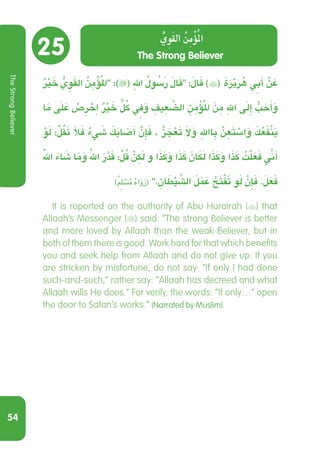
are stricken by misfortune, do not say: “If only I had done
such-and-such,” rather say: “Allaah has decreed and what
Allaah wills He does.” For verily, the words: “If only…” open
the door to Satan’s works.” (Narrated by Muslim).
The Strong Believer
ُّ‫ِي‬‫و‬َ‫ق‬‫ال‬ ُ‫ن‬ِ‫م‬ْ‫ؤ‬ُ‫مل‬‫ا‬
TheStrongBeliever
55
30HadithForChildren
1.	 The strong Believer is more loved by Allaah than the
	 weak Believer.
2.	 The weak Believer is also loved by Allaah.
3.	 That there is good in both of them.
4.	 We should always work hard towards goodness and
	 seek help from Allaah.
5.	 We should always accept Allaah’s Qadr (predestined
	 plan) for us, and not keep wishing for something else.
Lessons from This Hadith
Discussion Corner
1.	 Should we try to be a strong or weak
believer?
2.	 To prepare for our school exams, we
should study hard. What else should we
also do?
3.		 If we accidentally fall and hurt ourselves
during the school’s sports day, we should
not be angry but accept that was Allaah’s
plan for us and just be more careful next
time we are running – TRUE or FALSE?
56
26
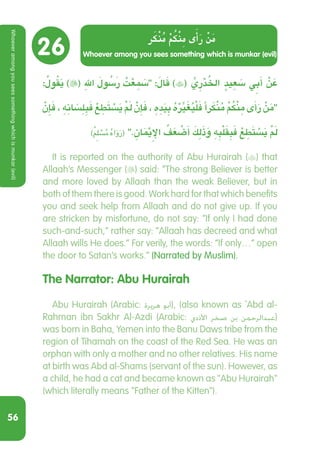
: ُ‫ول‬ُ‫ق‬َ‫ي‬ )( ِ‫هلل‬ َ ُ‫سَلو‬‫ر‬ ُ‫ت‬ْ‫ع‬ ِ َ‫م‬‫س‬ :َ‫ال‬َ‫ق‬ )( ِّ‫ي‬ ِ‫ر‬ْ‫د‬ ُ‫اخل‬ ٍ‫يد‬ ِ‫ع‬ َ‫س‬ ِ‫ي‬‫ب‬َ‫أ‬ ْ‫ن‬ َ‫ع‬
ْ‫ن‬ِ‫إ‬َ‫ف‬ ، ِ‫ه‬ ِ‫ان‬ َ‫س‬ِ‫ل‬ ِ‫ب‬َ‫ف‬ ْ‫ع‬ ِ‫ط‬َ‫ت‬ ْ‫س‬َ‫ي‬ ْ َ‫م‬‫ل‬ ْ‫ن‬ِ‫إ‬َ‫ف‬ ، ِ‫ه‬ ِ‫د‬َ‫ي‬ ِ‫ب‬ ُ‫ه‬ْ ِّ‫ر‬‫ي‬َ‫غ‬ُ‫ي‬ْ‫ل‬َ‫ف‬ ‫رًا‬َ‫ك‬ْ‫ن‬ُ‫م‬ ْ ُ‫م‬‫ك‬ْ‫ن‬ ِ‫م‬ ‫ى‬َ‫أ‬َ‫ر‬ ْ‫ن‬َ‫م‬
)ٌ ِ‫م‬‫ل‬ ْ‫س‬ُ‫م‬ ُ‫ه‬‫ا‬َ‫و‬َ‫ر‬( . ِ‫ان‬َْ‫يم‬ِ‫اإل‬ ُ‫ف‬َ‫ع‬ ْ‫ض‬َ‫أ‬ َ‫ك‬ِ‫ل‬َ‫ذ‬َ‫و‬ ِ‫ه‬ ِ‫ب‬ْ‫ل‬َ‫ق‬ ِ‫ب‬َ‫ف‬ ْ‫ع‬ ِ‫ط‬َ‫ت‬ ْ‫س‬َ‫ي‬ ْ َ‫م‬‫ل‬
  It is reported on the authority of Abu Hurairah () that
Allaah’s Messenger () said: “The strong Believer is better
and more loved by Allaah than the weak Believer, but in
both of them there is good. Work hard for that which benefits
you and seek help from Allaah and do not give up. If you
are stricken by misfortune, do not say: “If only I had done
such-and-such,” rather say: “Allaah has decreed and what
Allaah wills He does.” For verily, the words: “If only…” open
the door to Satan’s works.” (Narrated by Muslim).
The Narrator: Abu Hurairah
  Abu Hurairah (Arabic: ‫هريرة‬ ‫أبو‬‎), (also known as `Abd al-
Rahman ibn Sakhr Al-Azdi (Arabic: ‫األذدي‬ ‫صخر‬ ‫بن‬ ‫عبدالرحمن‬‎)
was born in Baha, Yemen into the Banu Daws tribe from the
region of Tihamah on the coast of the Red Sea. He was an
orphan with only a mother and no other relatives. His name
at birth was Abd al-Shams (servant of the sun). However, as
a child, he had a cat and became known as Abu Hurairah
(which literally means Father of the Kitten).
Whoever among you sees something which is munkar (evil)
‫ر‬َ‫ك‬ْ‫ن‬ُ‫م‬ ْ‫م‬ُ‫ك‬ْ‫ن‬ِ‫م‬ ‫ى‬َ‫أ‬َ‫ر‬ ْ‫ن‬َ‫م‬
Whoeveramongyouseessomethingwhichismunkar(evil)
57
30HadithForChildren
1.	 We should take action against something evil if we
	can.
2.	 We should speak against evil if we can.
3.	 But at the very least, we should detest the evil in our
	hearts.
4.	 It shows the weakness of our faith if we only hate the
	 evil in our heart but we do not do anything to stop it
	 with our words or actions.
Lessons from This Hadith
Discussion Corner
1.	 What should we say or do if we see our
classmate taking something from our
teacher’s handbag while she is gone?
2.	 If we see or hear about something bad
happening to someone in the newspaper,
even though we cannot help that person by
our words or actions, how should we feel or
think about it?
3.	 Discuss a few ways to nicely tell your
brother or sister that they should stop doing
something bad (e.g. hiding their homework,
breaking their toys, messing up the room, etc.)
58
27
ْ‫ن‬ ِ‫م‬ ُ‫ت‬ ْ‫ظ‬ ِ‫ف‬ َ‫ح‬ :َ‫ال‬َ‫ق‬ )( ٍ‫ب‬ِ‫ال‬ َ‫ط‬ ِ‫ي‬‫ب‬َ‫أ‬ ِ‫بن‬ ِّ ِ‫ي‬‫ل‬ َ‫ع‬ ِ‫بن‬ ِ‫ن‬ َ‫س‬َ‫احل‬ ٍ َّ‫حُمَد‬‫م‬ ِ‫ي‬‫ب‬َ‫أ‬ ْ‫ن‬ َ‫ع‬
ٌ‫ة‬َ‫ن‬‫ي‬ ِ‫ن‬ْ‫أ‬ َ ُ‫م‬‫ط‬ َ‫ق‬ْ‫د‬ ِّ‫الص‬ َّ‫ن‬ِ‫إ‬َ‫ف‬ َ‫ك‬ُ‫ب‬‫ي‬ ِ‫ر‬ُ‫ي‬ َ‫ال‬ ‫ا‬َ‫م‬ َ‫ى‬‫ِل‬‫إ‬ َ‫ك‬ُ‫ب‬‫ي‬ ِ‫ر‬ُ‫ي‬ ‫ا‬َ‫م‬ ْ‫ع‬َ‫د‬ :)( ِ‫هلل‬ ِ ُ‫سَلو‬‫ر‬
) ُّ‫ي‬ِ‫ذ‬ِ‫م‬ْ ِّ‫ر‬‫الت‬ ُ‫ه‬‫ا‬َ‫و‬َ‫ر‬( .ٌ‫ة‬َ‫ب‬‫ي‬ ِ‫ر‬ َ‫ب‬ ِ‫ذ‬َ‫الك‬َ‫و‬
  It Ali Ibn Abi Taalib () that he said: “I memorized from
the Messenger of Allaah () (that he said): “Leave what
makes you doubt in favour of what does not make you
doubt, for verily, truth is comforting, while falsehood is
disturbing.” (Narrated by At-Tirmizi) is reported on the authority
of Abu Muhammad Al-Hasan Ibn ‘
The Narrator: Hasan ibn Ali
- Hasan ibn ‘AlīibnAbīTalib (‫طالب‬ ‫أبي‬ ‫بن‬ ‫علي‬ ‫بن‬ ‫)احلسن‬‎ (Fifteenth
of Ramadhān, 3 AH – Seventh or Twenty-eighth of Safar,
50 AH) was the grandson of prophet Muhammad (pbuh),
son of ‘AlīibnAbiTalib (final Rashidun Caliph and Fatimah
(daughter of Muhammad). He is an important figure in
Islam as he is a member of the AhlulBayt (the household of
Muhammad).
Leave What Makes You Doubt
‫ك‬ُ‫يب‬ِ‫ر‬ُ‫ي‬ ‫ا‬َ‫م‬ ْ‫ع‬َ‫د‬
LeaveWhatMakesYouDoubt
59
30HadithForChildren
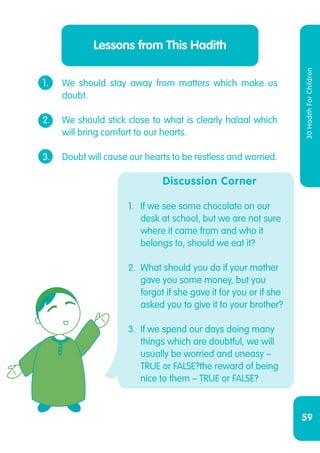
1.	 We should stay away from matters which make us
	doubt.
2.	 We should stick close to what is clearly halaal which
	 will bring comfort to our hearts.
3.	 Doubt will cause our hearts to be restless and worried.
Lessons from This Hadith
Discussion Corner
1.	 If we see some chocolate on our
desk at school, but we are not sure
where it came from and who it
belongs to, should we eat it?
2.	 What should you do if your mother
gave you some money, but you
forgot if she gave it for you or if she
asked you to give it to your brother?
3.	 If we spend our days doing many
things which are doubtful, we will
usually be worried and uneasy –
TRUE or FALSE?the reward of being
nice to them – TRUE or FALSE?
60
28
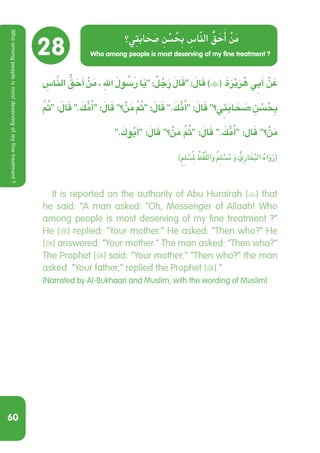
ِ‫اس‬َّ‫الن‬ ُّ‫ق‬ َ‫ح‬َ‫أ‬ ْ‫ن‬َ‫م‬ ، ِ‫هلل‬ َ ُ‫سَلو‬‫ر‬ ‫ا‬َ‫ي‬ : ٌ‫ل‬ ُ‫ج‬َ‫ر‬ َ‫ال‬َ‫ق‬ :َ‫ال‬َ‫ق‬ )( َ‫ة‬َ‫ر‬ْ‫ي‬َ‫ر‬ ُ‫ه‬ ِ‫ي‬‫ب‬َ‫أ‬ ْ‫ن‬ َ‫ع‬
َُّ‫م‬‫ث‬ :َ‫ال‬َ‫ق‬ . َ‫ك‬ ُّ‫م‬ُ‫أ‬ :َ‫ال‬َ‫ق‬ ‫؟‬ ْ‫ن‬َ‫م‬ َُّ‫م‬‫ث‬ :َ‫ال‬َ‫ق‬ . َ‫ك‬ ُّ‫م‬ُ‫أ‬ :َ‫ال‬َ‫ق‬ ‫؟‬ ِ‫ي‬‫ت‬َ‫ب‬‫ا‬ َ َ‫ح‬‫ص‬ ِ‫ن‬ ْ‫س‬ ُ ِ‫ح‬‫ب‬
. َ‫وك‬ُ‫ب‬َ‫أ‬ :َ‫ال‬َ‫ق‬ ‫؟‬ ْ‫ن‬َ‫م‬ َُّ‫م‬‫ث‬ :َ‫ال‬َ‫ق‬ . َ‫ك‬ ُّ‫م‬ُ‫أ‬ :‫ال‬َ‫ق‬ ‫؟‬ ْ‫ن‬َ‫م‬
)ٍ ِ‫م‬‫ل‬ ْ‫س‬ُ ِ‫م‬‫ل‬ ُ‫ظ‬ْ‫ف‬َّ‫الل‬َ‫و‬ ٌ ِ‫م‬‫ل‬ ْ‫س‬ُ‫م‬ َ‫و‬ ُّ‫ِي‬‫ر‬‫ا‬ َ‫خ‬ُ‫ب‬‫ال‬ ُ‫ه‬‫ا‬َ‫و‬َ‫ر‬(
  It is reported on the authority of Abu Hurairah () that
he said: “A man asked: “Oh, Messenger of Allaah! Who
among people is most deserving of my fine treatment ?”
He () replied: “Your mother.” He asked: “Then who?” He
() answered: “Your mother.” The man asked: “Then who?”
The Prophet () said: “Your mother.” “Then who?” the man
asked. “Your father,” replied the Prophet ().”
(Narrated by Al-Bukhaari and Muslim, with the wording of Muslim)
Who among people is most deserving of my fine treatment ?
‫ي؟‬ِ‫ت‬َ‫اب‬ َ‫ح‬ َ‫ص‬ ِ‫ن‬ ْ‫س‬ ُ‫ح‬ِ‫ب‬ ِ‫اس‬َّ‫ن‬‫ال‬ ُّ‫ق‬ َ‫ح‬َ‫أ‬ ْ‫ن‬َ‫م‬
Whoamongpeopleismostdeservingofmyfinetreatment?
61
30HadithForChildren
1.	 We should seek knowledge from those more learned
	 than we are.
2.	 We owe a huge debt to our mothers.
3.	 We also owe a great debt to our fathers.
Lessons from This Hadith
Discussion Corner
1.	 What are some things we can do to
make our mothers happy?
2.	 What are some things we can do to
make our fathers happy?
3.	 If both our parents asked us to do
something, who should we respond
to first?
62
29
َ‫ى‬‫ِل‬‫إ‬ ُ‫ر‬ ُ‫ظ‬ْ‫ن‬َ‫ي‬ َ‫ال‬ َ‫هلل‬ َّ‫ِن‬‫إ‬ :)( ِ‫هلل‬ ُ ُ‫سَلو‬‫ر‬ َ‫ال‬َ‫ق‬ :َ‫ال‬َ‫ق‬ )( َ‫ة‬َ‫ر‬ْ‫ي‬َ‫ر‬ ُ‫ه‬ ِ‫ي‬‫ب‬َ‫أ‬ ْ‫ن‬ َ‫ع‬
.ْ ُ‫م‬‫ك‬ِ‫ال‬َ ْ‫م‬‫ع‬َ‫أ‬َ‫و‬ ْ ُ‫م‬‫ك‬ ِ‫وب‬ُ‫ل‬ُ‫ق‬ َ‫ى‬‫ِل‬‫إ‬ ُ‫ر‬ ُ‫ظ‬ْ‫ن‬َ‫ي‬ ْ‫ن‬ ِ‫ك‬َ‫ل‬َ‫و‬ ْ ُ‫م‬‫ك‬ ِ‫ر‬َ‫و‬ ُ‫ص‬ َ‫ى‬‫ِل‬‫إ‬ َ‫ال‬َ‫و‬ ْ ُ‫م‬‫ك‬ ِ‫اد‬ َ‫س‬ ْ‫ج‬َ‫أ‬
)ٌ ِ‫م‬‫ل‬ ْ‫س‬ُ‫م‬ ُ‫ه‬‫ا‬َ‫و‬َ‫ر‬(
  It is reported on the authority of Abu Hurairah () that
he said: “Allaah’s Messenger () said: “Verily, Allaah does
not look at your bodies nor your appearance, but rather He
looks at your hearts and your deeds.” (Narrated by Muslim)
The Narrator: Abu Hurairah
  Abu Hurairah (Arabic: ‫هريرة‬ ‫أبو‬‎), (also known as `Abd al-
Rahman ibn Sakhr Al-Azdi (Arabic: ‫األذدي‬ ‫صخر‬ ‫بن‬ ‫عبدالرحمن‬‎)
was born in Baha, Yemen into the Banu Daws tribe from the
region of Tihamah on the coast of the Red Sea. He was an
orphan with only a mother and no other relatives. His name
at birth was Abd al-Shams (servant of the sun). However, as
a child, he had a cat and became known as Abu Hurairah
(which literally means Father of the Kitten).
Allaah Does Not Look At Your Bodies Appearance
‫م‬ُ‫ك‬ِ‫ر‬َ‫و‬ ُ‫ص‬ ‫َى‬‫ل‬ِ‫إ‬ َ‫ال‬َ‫و‬ ْ‫م‬ُ‫ك‬ِ‫د‬‫ا‬ َ‫س‬ ْ‫ج‬َ‫أ‬ ‫َى‬‫ل‬ِ‫إ‬ ُ‫ر‬ُ‫ظ‬ْ‫ن‬َ‫ي‬ َ‫ال‬ َ‫الله‬ َّ‫ِن‬‫إ‬
AllaahDoesNotLookAtYourBodiesAppearance
63
30HadithForChildren
1.	 Our physical appearance is not important to Allaah.
2.	 What is important to Allaah is what is in our hearts and
	 what deeds we do.
Lessons from This Hadith
Discussion Corner
1.	 What is important to Allaah?
2.	 If a person is good looking, has a big
house and a rich family but his heart
is full of bad thoughts and he does
not do any good deeds, will Allaah
be happy with him?
3.	 How can we increase Allah’s love for
us?
64
30
َ ِ‫ي‬‫ه‬َ‫و‬ ِّ‫ي‬‫م‬ُ‫أ‬ ََّ‫ي‬‫ل‬ َ‫ع‬ ْ‫ت‬َ‫م‬ ِ‫د‬َ‫ق‬ : ْ‫ت‬َ‫ل‬‫ا‬َ‫ق‬ )( ِ‫يق‬ِّ‫د‬ ِّ‫الص‬ ٍ‫ر‬ْ‫ك‬َ‫ب‬ ِ‫ي‬‫ب‬َ‫أ‬ ِ‫ت‬ْ‫ن‬ ِ‫ب‬ َ‫ء‬‫ا‬ َ ْ‫م‬‫س‬َ‫أ‬ ْ‫ن‬ َ‫ع‬
ْ‫ت‬َ‫م‬ ِ‫د‬َ‫ق‬ : ُ‫ت‬ْ‫ل‬ُ‫ق‬ ِ‫هلل‬ َ ُ‫سَلو‬‫ر‬ ُ‫ت‬ْ‫ي‬َ‫ت‬ْ‫ف‬َ‫ت‬ ْ‫اس‬َ‫ف‬ )( ِ‫هلل‬ ِ ُ‫سَلو‬‫ر‬ ِ‫د‬ْ‫ه‬ َ‫ع‬ ِ‫ي‬‫ف‬ ٌ‫ة‬َ‫ك‬ ِ ْ‫ر‬‫ش‬ُ‫م‬
. ِ‫ك‬َّ‫م‬ُ‫أ‬ ِ‫ي‬‫ل‬ ِ‫ص‬ ، ْ‫م‬َ‫ع‬َ‫ن‬ :َ‫ال‬َ‫ق‬ ‫؟‬ ِّ‫ي‬‫م‬ُ‫أ‬ ُ‫ل‬ ِ‫ص‬َ‫أ‬َ‫ف‬َ‫أ‬ ٌ‫ة‬َ‫ب‬ ِ‫اغ‬َ‫ر‬ َ ِ‫ي‬‫ه‬َ‫و‬ ِّ‫ي‬‫م‬ُ‫أ‬ ََّ‫ي‬‫ل‬ َ‫ع‬
) ِّ‫ِي‬‫ر‬‫ا‬ َ‫خ‬ُ‫ب‬‫ل‬ِ‫ل‬ ُ‫ظ‬ْ‫ف‬َّ‫الل‬َ‫و‬ ُّ‫ِي‬‫ر‬‫ا‬ َ‫خ‬ُ‫ب‬‫ال‬ ُ‫ه‬‫ا‬َ‫و‬َ‫ر‬(
  It is reported on the authority of Asmaa` Bint Abi Bakr ()
that she said: “My mother came to me while she was still a
pagan during the time of the Prophet () and so I asked his
advice, saying: “My mother has come to see me and she
is asking something of me; should I treat her well?” He ()
replied: “Yes, treat your mother well.” (Narrated by Al-Bukhaari
and Muslim, with the wording of Al-Bukhaari)
The Narrator: Asmaa bint Abu Bakr
Asmaa bint Abu Bakr (Arabic: ‫بكر‬ ‫أبي‬ ‫بنت‬ ‫أسماء‬‎) was Abu Bakr
daughter, Her mother was QutaylahbintAbd al-Uzza. She
was the half sister of Aishah and Muhammad ibn Abi Bakr.
Asma was about the 18th person to accept Islam. She was
later given the nickname That an-Nitaqayn (the One with the
Two Waistbands) because of an incident connected with the
departure of Muhammad and her father from Mecca on the
migration to Medina.
Allaah Does Not Look At Your Bodies Appearance
‫ة‬‫ك‬‫ر‬‫ش‬‫مل‬‫ا‬ ‫م‬‫أل‬‫ا‬ ‫ة‬‫ل‬‫ص‬
AllaahDoesNotLookAtYourBodiesAppearance
65
30HadithForChildren
1.	 We should seek advice from the people of knowledge
	 when we are in doubt.
2.	 We must always be kind to our mother, even though
	 she may be a disbeliever.
3.	 The virtue of Asmaa’ Bint Abi Bakr in seeking advice
	 from the Prophet ().
Lessons from This Hadith
Discussion Corner
1.	 What should we do when we do not
know something?
2.	 We must be kind to family members
who are not Muslim– TRUE or FALSE?
3.	 We should also be kind generally to
everyone, not just Muslims – TRUE or
FALSE?
References
 
Hadith Course,by SamehStrauch,IIPH, 2002
Riyad –us- Saliheen compiled by Yahya bin Sharaf Annawawi,
Darussalam,1999
Sahih –Al-Bukhari,translated by Dr.Muhammad Khan,Darussalam,
1st edition, 1996
Sahih Muslim , compiled by Al-hafiz Zakiuddin Abdul –Azim Al-
Mundhiri , Darussalam, 1st edition, 2000
Study course for new Muslims by AlIAteeq,Christchurch – NEW
ZEALAND , 1st edition, 2004
THE 200 Hadith, revised by Abdal Rahim Alfahim, Makkuh Printing,K.
S.A., 1993

30 hadeeth-for-children

  • 1.
    30 Hadith for Children Compiled By:Ali Ateeq Al-Dhaheri Translated By: Sakinah Mohamed
  • 2.
    Published by: Dakwah CornerPublications Sdn. Bhd. ALL RIGHTS RESERVED Copyright © 2013 Dakwah Corner Publications Sdn Bhd No part of this publication may be produced, stored in a retrieval system, or transmitted, in any form or by any means, electronic, mechanical, photocopying, recording or otherwise without the prior permission of the Publisher. First Published: 2013 30 Hadith for Children ISBN: 978-967-5699-45-0 Address all correspondence to: MALAYSIA: Dakwah Corner Bookstore (M) Sdn Bhd No. 34-1, Jalan 14/22, Section 14, 26100 Petaling Jaya, Selangor Darul Ehsan, Malaysia Tel: +603-7956 4664 Fax: +603 7954 1653 Website: www.dakwahbookstore.com.my One Stop Dakwah Store Lot No. 2-65 E&F, 1st Floor Ampang Park Shopping Centre 50450 Kuala Lumpur Tel: +603-2181 2692 Distributed By: Darussalam Australia Johor, Malaysia Tel: +607-2351602 Cover design, illustration and typesetting by: Elly Tengku Please send us your reviews or comments of this book to: dakwahcornerpublications@gmail.com Printed by Colour Retail Sdn Bhd SAUDI ARABIA: Dawah Corner Bookstore Hilton Tower, Holy Makkah Tel: +966 2 5311895 NIGERIA: Dawah Corner Bookstore Kaduna Tel: +08056037779 PHILIPPINES: Dawah Corner Bookstore Zamboanga City Tel: +63 926-5284 Goodword Books Victoria Street, Singapore Tel: +63 964121
  • 3.
    Contents Introduction.............................................................................................5 1.. Deeds Dependon Intentions...........................................................6 2.. Pillars of Islaam................................................................................8 3.. Mention the Name of Allaah...........................................................10 4.. A Good Dream ................................................................................12 5.. The Sweetness (Delight) of Faith......................................................14 6.. The Believer Is Not Stung Twice.......................................................16 7.. The Superiority of Greeting (Assalaam)...........................................18 8.. Politeness of Speech & Kindness of Meeting.................................20 9. . Forgiveness and Tolerance..............................................................22 10..Good manners (Akhlaaq)................................................................24 11.. Muslims Must Love Each Other.......................................................26 12..Prohibition of Hatred and Envy........................................................28 13..Keeping Tongue and Hand from Offense.......................................30 14..Endearment of Truthfulness & Caution from Falsehood.................32 15..Cooperation Among Muslims..........................................................34 16. Prohibition of Disobedience of Parents and False Witness.............36 17..The Signs of a Hypocrite..................................................................38 18..Passing in Front of Someone Praying..............................................40 19..Leaving the Things That Don’t Concern You....................................42 20..Forbiddance of Backbiting...............................................................44 21..Rights of A Neighbour......................................................................46 22..Beauty vs Arrogance........................................................................48 23..The Influence of Friends...................................................................50 24..Calling to Right Guidance and Forbidding Evil................................52
  • 4.
    25..The Strong Believer...........................................................................54 26..Whoeveramong you sees something which is munkar (evil).....................................................................................56 27..Leave What Makes You Doubt.........................................................58 28..Who among people is most deserving of my fine treatment ?................................................................................60 29..Allaah Does Not Look At Your Bodies Appearance........................62 30..Treat Well Even A Disbelieving Mother............................................64 .References........................................................................................67
  • 5.
    Introduction All praise isdue to Allah. We praise Him, seek His assistance and forgiveness and we seek refuge with Him from the evil of our souls and our misdeeds. No one can mislead whosoever Allah guides and none can guide whosoever Allah causes to go astray. I testify that there is no deity worthy of worship except Allah alone. He has no partner. I also testify that Muhammad (peace be upon him) is His slave and Messenger. In this work I collected 30 Hadiths for children, with short biographies of the narrators and the lessons or benefits derived from the Hadiths. All of the Hadiths have been carefully chosen and verified for authenticity. This book was written in an easy and simple way for children to learn about our Prophet’s Hadiths together with their teachers or parents. I have also included a Discussion Corner section where the children can interact with the book and discuss with their teachers or parents what they have learned and how they can apply the knowledge to their lives. I hope this book will be useful and can help the children to understand and live the sunnah of our prophet Muhammad (peace be upon him). 
  • 6.
    6 1 Deeds DependOn Intentions ‫ا‬َ َّ‫م‬‫ِن‬‫إ‬« : ُ‫ول‬ُ‫ق‬َ‫ي‬ )( ِ‫هلل‬ َ ُ‫سَلو‬‫ر‬ ُ‫ت‬ْ‫ع‬ ِ َ‫م‬‫س‬ َ‫ال‬َ‫ق‬ )( ِ‫اب‬ َّ‫ط‬َ‫اخل‬ ِ‫ن‬ْ‫ب‬ َ‫ر‬َ ُ‫م‬‫ع‬ ْ‫ن‬ َ‫ع‬ َ‫ى‬‫ِل‬‫إ‬ ُ‫ه‬ُ‫ت‬َ‫ر‬ ْ ِ‫ج‬‫ه‬ ْ‫ت‬َ‫ن‬ َ‫ا‬‫ك‬ ‫ن‬َ َ‫م‬‫ف‬ ، ‫ى‬َ‫و‬َ‫ن‬ ‫ا‬َ‫م‬ ٍ‫ئ‬ ِ‫ر‬ْ‫ام‬ ِّ ُ‫ل‬‫ك‬ِ‫ل‬ ‫ا‬َ َّ‫م‬‫ِن‬‫إ‬َ‫و‬ ِ‫ات‬َّ‫ي‬ِّ‫الن‬ ِ‫ب‬ ُ‫ال‬َ ْ‫م‬‫ع‬َ‫أل‬‫ا‬ ِ‫ه‬ْ‫ي‬َ‫ل‬ِ‫إ‬ َ‫ر‬ َ‫اج‬ َ‫ه‬ ‫ا‬َ‫م‬ َ‫ى‬‫ِل‬‫إ‬ ُ‫ه‬ُ‫ت‬َ‫ر‬ ْ‫ج‬ ِ‫ه‬ ِ‫ف‬ ، ‫ا‬َ‫ه‬ ُ‫ح‬ ِ‫ك‬ْ‫ن‬َ‫ي‬ ٍ‫ة‬َ‫أ‬َ‫ر‬ْ‫ام‬ َ‫ى‬‫ِل‬‫إ‬ ْ‫و‬َ‫أ‬ ‫ا‬َ ُ‫ه‬‫ب‬ْ‫ي‬ ِ‫ص‬ُ‫ي‬ ‫ا‬َ‫ي‬ْ‫ن‬ُ‫د‬ )ٌ ِ‫م‬‫ل‬ ْ‫س‬ُ‫م‬َ‫و‬ ُّ‫ِي‬‫ر‬‫ا‬ َ‫خ‬ُ‫ب‬‫ال‬ ُ‫ه‬‫ا‬َ‫و‬َ‫ر‬( ». `Umar Ibn Al-Khattâb () said: “I heard Allaah’s Messenger () saying: “Deeds depend upon intentions and every person will get that which he intended. So whoever migrates for worldly benefits or for a woman to marry, his emigration will be for that which he migrated to.” (Narrated by Al-Bukhaari and Muslim) The Narrator: Omar - Umar ibn al-Khattab `Umar ibn al-Khattâb (in Arabic, ‫اخلطاب‬ ‫بن‬ ‫معر‬ ) was a sahabi (companion) of the Islamic prophetMuhammad,sometimes referred to by Muslims as `Umar Al-Farûq (Umar the Distinguisher (between Truth and Falsehood)),also known in English as Omar or Umar. He was from the BanuAdi clan of the Quraysh tribe. He became the second Caliph. ِ‫ات‬َّ‫ي‬ِّ‫الن‬ ِ‫ب‬ ُ‫ال‬َ ْ‫م‬‫ع‬َ‫أل‬‫ا‬ ‫ا‬َ َّ‫م‬‫ِن‬‫إ‬ DeedsdependonIntentions
  • 7.
    7 30HadithForChildren Lessons from ThisHadith 1. Allah judges our (good) deeds based on our intentions. 2. Our deeds are rewarded according to our intentions. 3. We are allowed to migrate or move for worldly reasons. 4. The best reason to migrate or move is for the sake of increasing or protecting our Iman. Discussion Corner 1. Who is the narrator of the hadith? 2. Give one example you can think of as a good reason for your family to migrate or move. 3. Before we do any good deed, we should place a good intention in our heart to please Allah – TRUE or FALSE?
  • 8.
    8 2 َ‫ى‬‫ل‬ َ‫ع‬ ُ‫م‬َ‫ال‬ْ‫س‬ِ‫اإل‬ َ ِ‫ي‬‫ن‬ُ‫ب‬" :)( ِ‫هلل‬ ُ ُ‫سَلو‬‫ر‬ َ‫ال‬َ‫ق‬" :َ‫ال‬َ‫ق‬ )( َ‫ر‬َ ُ‫م‬‫ع‬ ِ‫ن‬ْ‫ب‬‫ا‬ ِ‫ن‬ َ‫ع‬ ِ‫ة‬َ‫ال‬ َّ‫الص‬ ِ‫ام‬َ‫ق‬ِ‫إ‬َ‫و‬ ِ‫هلل‬ ُ ُ‫سَلو‬‫ر‬ ‫ًا‬ َّ‫حُمَد‬‫م‬ َّ‫ن‬َ‫أ‬َ‫و‬ ُ‫هلل‬ َّ‫ِال‬‫إ‬ َ‫ه‬َ‫ل‬ِ‫إ‬َ‫ال‬ ْ‫ن‬َ‫أ‬ ِ‫ة‬َ‫د‬‫ا‬ َ َ‫ه‬‫ش‬ : ٍ‫س‬ ْ َ‫م‬‫خ‬ )ٌ ِ‫م‬‫ل‬ ْ‫س‬ُ‫م‬َ‫و‬ ُّ‫ِي‬‫ر‬‫ا‬ َ‫خ‬ُ‫ب‬‫ال‬ ُ‫ه‬‫ا‬َ‫و‬َ‫ر‬( ". َ‫ان‬ َ‫ض‬َ‫م‬َ‫ر‬ ِ‫م‬ْ‫و‬ َ‫ص‬َ‫و‬ ِّ‫احلج‬َ‫و‬ ِ‫ة‬ َ‫ا‬‫ك‬َّ‫الز‬ ِ‫اء‬َ‫ت‬ْ‫ي‬ِ‫إ‬َ‫و‬ It is reported on the authority of Ibn ‘Umar () that he said: “Allaah’s Messenger () said: “Islaam is built upon five (pillars): 1. To testify that none is worthy of worship but Allaah and that Muhammad is the Messenger of Allaah. 2. To perform prayers. 3. To pay zakaah 4. (To perform) Hajj 5. To fast the month of Ramadhaan.” (Narrated by Al-Bukhaari and Muslim) The Narrator: Abdullah ibn Umar Abdullah ibn Umar (Arabic: ‫اخلطاب‬ ‫بن‬ ‫معر‬ ‫بن‬ ‫عبداهلل‬‎) was the son of the second Caliph ‘Umar ibn al-Khattab and he was a prominent authority in hadith and law, who had strong faith in Allah from a very young age. Abdullah was also known as one of the most knowledgeable sahabi amongst all the Companions because he spent a lot of time close to the Prophet and memorizing the Prophet’s sayings and actions. Pillars of Islaam ‫ام‬‫ل‬‫س‬‫اإل‬ ‫ن‬‫ا‬‫ك‬‫ر‬‫أ‬ PillarsofIslam
  • 9.
    9 30HadithForChildren Lessons from ThisHadith 1. That there are five pillars of Islaam. 2. That the shahaadah is a pillar of Islaam. 3. That prayer is a pillar of Islaam. 4. That zakaah is a pillar of Islaam. 5. That performing Hajj is a pillar of Islaam. 6. That fasting the month of Ramadhaan is a pillar of Islaam. Discussion Corner 1. How did Abdullah ibn ‘Umar become so knowledgeable? 2. Name the five pillars of Islam 3. Which pillars of Islam do you practice everyday?
  • 10.
    10 3 )( ِ‫هلل‬ ُِ‫سَلو‬‫ر‬ ِ‫ر‬ ْ َ‫ج‬‫ح‬ ِ‫ي‬‫ف‬ ‫مًا‬َ‫ال‬ ُ‫غ‬ ُ‫ت‬ْ‫ن‬ُ‫ك‬ :)( َ‫ة‬َ َ‫م‬‫ل‬ َ‫س‬ ِ‫ي‬‫ب‬َ‫أ‬ ِ‫ن‬ْ‫ب‬ َ‫ر‬َ ُ‫م‬‫ع‬ ْ‫ن‬ َ‫ع‬ ْ ُ‫ل‬‫ك‬َ‫و‬ ، َ‫هلل‬ ِّ َ‫م‬‫س‬ ، ُ‫م‬َ‫ال‬ ُ‫غ‬ ‫ا‬َ‫ي‬ :‫ل‬ َ‫ال‬َ‫ق‬َ‫ف‬ ، ِ‫ة‬َ‫ف‬ ْ‫ح‬ َّ‫الص‬ ِ‫ي‬‫ف‬ ُ‫ش‬ْ‫ي‬ ِ‫ط‬َ‫ت‬ ‫ي‬ ِ‫د‬َ‫ي‬ ْ‫ت‬َ‫ن‬ َ‫ا‬‫ك‬َ‫و‬ ) ُّ‫ِي‬‫ر‬‫ا‬ َ‫خ‬ُ‫ب‬‫ال‬ ُ‫ه‬‫ا‬َ‫و‬َ‫ر‬( .ُ‫د‬ْ‫ع‬َ‫ب‬ ِ‫ي‬‫ت‬َ‫م‬ْ‫ع‬ ِ‫ط‬ َ‫ك‬ْ‫ل‬ ِ‫ت‬ ْ‫ت‬َ‫ل‬‫ا‬َ‫ز‬ ‫ا‬َ َ‫م‬‫ف‬ . َ‫يك‬ِ‫ل‬َ‫ي‬ ‫ا‬َِّ‫م‬‫م‬ ْ ُ‫ل‬‫ك‬َ‫و‬ ، َ‫ك‬ ِ‫ين‬ ِ َ‫م‬‫ي‬ ِ‫ب‬ On the authority of ‘Umar ibn Abi Salamah (), (it is reported that he said): “I was a boy under the care of Allaah’s Messenger () and my hand used to go around the dish; so Allaah’s Messenger () said to me: “Oh, boy! Mention the name of Allaah, eat with your right hand and eat from the dish what is nearest to you.” Since then, this has been my manner of eating.” (Narrated by Al-Bukhaari) The Narrator: ‘Umar ibn Abi Salamah   ‘Umar ibn Abi Salamah al-Makhzumi was a young companion of the prophet Muhammad() and foster son of the Holy Prophet from Umm al-mu'minin Umm Salamah. Later on, he became the ruler of Bahrain in the time of Ali’s Caliphate. He passed away in 54H. Mention the Name of Allaah َ‫الله‬ ِّ‫م‬ َ‫س‬ ، ُ‫م‬َ‫ُال‬‫غ‬ ‫ا‬َ‫ي‬ MentiontheNameofAllaah
  • 11.
    11 30HadithForChildren Lessons from ThisHadith 1. We must begin eating by mentioning Allaah’s Name. 2. We must eat with our right hand. 3. We should eat the food that is in front of us or nearest to us first. 4. It is preferred to share with others and eat from one communal dish rather than separate plates or dishes. Discussion Corner 1. What is the first thing we should do before eating? 2. ‘Umar ibn Abi Salamah was the Prophet’s foster son - TRUE or FALSE? 3. What are the correct manners for eating? 4. It is better to eat with your family from one big communal plate rather than individual plates – TRUE or FALSE?
  • 12.
    12 4 ِ‫هلل‬ َ‫ن‬ ِ‫م‬ُ‫ة‬َِ‫الح‬ ًّ‫الص‬ ‫ا‬َ‫ي‬ْ‫ؤ‬ُّ‫الر‬ :)( ُّ ِ‫ي‬‫ب‬َّ‫الن‬ َ‫ال‬َ‫ق‬ :َ‫ال‬َ‫ق‬ )( َ‫ة‬َ‫د‬‫ا‬َ‫ت‬َ‫ق‬ ِ‫ي‬‫ب‬َ‫أ‬ ْ‫ن‬ ْ‫ن‬ َ‫ع‬ ْ‫ق‬ ُ‫ص‬ْ‫ب‬َ‫ي‬ْ‫ل‬َ‫ف‬ ُ‫ه‬ُ‫ف‬‫ا‬ َ َ‫خ‬‫ي‬ ‫ًا‬ ْ‫م‬‫ل‬ ُ‫ح‬ ْ ُ‫م‬‫ك‬ُ‫د‬ َ‫ح‬َ‫أ‬ َ َ‫م‬‫ل‬ َ‫ح‬ ‫ا‬َ‫ذ‬ِ‫إ‬َ‫ف‬ ، ِ‫ان‬ َ‫ط‬ْ‫ي‬ َّ‫الش‬ َ‫ن‬ ِ‫م‬ ُ ْ‫م‬‫ل‬ ُ‫واحل‬ ) ُّ‫ِي‬‫ر‬‫ا‬ َ‫خ‬ُ‫ب‬‫ال‬ ُ‫ه‬‫ا‬َ‫و‬َ‫ر‬( .ُ‫ه‬ ُّ ُ‫ر‬‫ض‬َ‫ت‬ َ‫ال‬ ‫ا‬َ َّ‫ه‬‫ن‬ِ‫إ‬َ‫ف‬ ‫ا‬ َ‫ه‬ ِّ َ‫ر‬‫ش‬ ‫ن‬ ِ‫م‬ ِ‫اهلل‬ ِ‫ب‬ ْ‫ذ‬َّ‫و‬َ‫ع‬َ‫ت‬َ‫ي‬ْ‫ل‬َ‫و‬ ِ‫ه‬ ِ‫ار‬ َ‫س‬َ‫ي‬ It is reported on the authority of Abu Qataadah () that the Prophet () said: “A good dream is from Allaah and a bad dream is from Satan; so if any of you has a bad dream which makes him afraid, he should spit on his left side and he should seek refuge with Allaah from its evil, for then it will not harm him.” (Narrated by Al-Bukhaari) The Narrator: Abu Qataadah Al-Anssari   Abu Qataadah Al-Anssari : Al-Harsh Al-Sulamy) is from Madinah, he was present at the battle of Uhud and the battles after it. He passed away in 54H. A Good Dream ُ‫ة‬َِ‫ح‬‫ال‬ ًّ‫الص‬ ‫ا‬َ‫ي‬ْ‫ؤ‬ُّ‫الر‬ AGoodDream
  • 13.
    13 30HadithForChildren Lessons from ThisHadith 1. Our good dreams are from Allaah. 2. Our bad dreams are from Satan. 3. We should seek protection with Allaah from the evil of Satan. 4. Whoever seeks protection with Allaah will be safe from Satan. Discussion Corner 1. Where do good dreams come from? 2. What should we do if we wake up at night feeling scared after a bad dream? 3. What should we say to seek Allaah’s protection?
  • 14.
    14 5 َ‫ة‬َ‫و‬َ‫ال‬ َ‫ح‬ َّ‫ن‬ِ ِ‫ه‬‫ب‬ َ‫د‬ َ‫ج‬َ‫و‬ ِ‫يه‬ ِ‫ف‬ َّ‫ن‬ُ‫ك‬ ْ‫ن‬َ‫م‬ ٌ‫ث‬َ‫ال‬َ‫ث‬ :َ‫ال‬َ‫ق‬ )( ِّ ِ‫ي‬‫ب‬َّ‫الن‬ ِ‫ن‬ َ‫ع‬ )( ٍ‫س‬َ‫ن‬َ‫أ‬ ْ‫َن‬ َ‫ء‬ْ‫ر‬َ ْ‫م‬‫ال‬ َّ‫ب‬ ِ ُ‫ح‬‫ي‬ ْ‫ن‬َ‫أ‬َ‫و‬ ‫ا‬ َ ُ‫م‬‫اه‬َ‫و‬ ِ‫س‬ ‫ا‬َِّ‫م‬‫م‬ ِ‫ه‬ْ‫ي‬َ‫ل‬ِ‫إ‬ َّ‫ب‬ َ‫ح‬َ‫أ‬ ُ‫ه‬ُ‫ل‬‫و‬ ُ‫س‬َ‫ر‬َ‫و‬ ُ‫هلل‬ َ‫ن‬ َ‫ا‬‫ك‬ ْ‫ن‬َ‫م‬ ِ‫ان‬َ‫مي‬ِ‫اإل‬ ُ‫ه‬ْ‫ن‬ ِ‫م‬ ُ‫هلل‬ ُ‫ه‬َ‫ذ‬َ‫ق‬ْ‫ن‬َ‫أ‬ ْ‫ن‬َ‫أ‬ َ‫د‬ْ‫ع‬َ‫ب‬ ِ‫ر‬ْ‫ف‬ُ‫ك‬ْ‫ل‬‫ا‬ ِ‫ي‬‫ف‬ َ‫د‬‫و‬ ُ‫ع‬َ‫ي‬ ْ‫ن‬َ‫أ‬ َ‫ه‬َ‫ر‬ْ‫ك‬َ‫ي‬ ْ‫ن‬َ‫أ‬َ‫و‬ ِ‫هلل‬ َّ‫ِال‬‫إ‬ ُ‫ه‬ُّ‫ب‬ ِ ُ‫ح‬‫ي‬ َ‫ال‬ )‫ا‬َ ُ‫م‬‫ه‬ُ ْ‫ر‬‫ي‬َ‫غ‬َ‫و‬ ٌ ِ‫م‬‫ل‬ ْ‫س‬ُ‫م‬َ‫و‬ ُّ‫ِي‬‫ر‬‫ا‬ َ‫خ‬ُ‫ب‬‫ال‬ ُ‫ه‬‫ا‬َ‫و‬َ‫ر‬( . ِ‫ار‬َّ‫الن‬ ِ‫ي‬‫ف‬ َ‫ف‬َ‫ذ‬ْ‫ق‬ُ‫ي‬ ْ‫ن‬َ‫أ‬ ُ‫ه‬َ‫ر‬ْ‫ك‬َ‫ي‬ ‫ا‬َ َ‫م‬‫ك‬   It is reported on the authority of Anas () from the Messenger of Allaah () that he said: “There are three (qualities); whoever is characterized by them will taste the sweetness of eemaan: One to whom Allaah and His Messenger are dearer than all else; one who loves a man only for Allaah's sake; and one who abhors returning to disbelief after Allaah has rescued him from it as he would hate being cast into Hell.” (Narrated by Al-Bukhaari, Muslim and others). The Narrator: Anas bin Malik IbnNadar Al- Khazraji Al-Ansari Anas bin Malik ibnNadar al-Khazraji Al-Ansari (Arabic: ‫األنصاري‬ ‫اخلزرجي‬ ‫مالك‬ ‫بن‬ ‫أنس‬‎) was a well-known sahabi (companion) of the prophet Muhammad. He was an Ansar of the Banu Khazraj. Anas ibn Malik, the last of the Companions of the Prophet died at Al-Basrah in 93H, aged 103. The Sweetness (Delight) of Faith ‫ان‬َ‫ِمي‬‫إل‬‫ا‬ َ‫ة‬َ‫و‬َ‫َال‬‫ح‬ TheSweetness(Delight)ofFaith
  • 15.
    15 30HadithForChildren Lessons from ThisHadith 1. The characteristics of a true Believer. 2. Our love of Allaah and his Messenger are a part of eemaan. 3. Loving one’s Muslim brother only for Allaah’s sake is a part of eemaan. 4. Hating to return to disbelief is a part of faith. Discussion Corner 1. Who narrated this hadith? 2. Who should be dearest to us in our lives? 3. Being kind and loving our parents, our brothers, our sisters are part of eemaan – TRUE or FALSE?
  • 16.
    16 6 ٍ‫ر‬ ْ ُ‫ح‬‫ج‬ْ‫ن‬ ِ‫م‬ ُ‫ن‬ ِ‫م‬ْ‫ؤ‬ُ‫مل‬‫ا‬ ُ‫غ‬َ‫د‬ْ‫ل‬ُ‫ي‬ َ‫ال‬ :َ‫ال‬َ‫ق‬ ُ‫ه‬َّ‫ن‬َ‫أ‬)(ِّ ِ‫ي‬‫ب‬َّ‫الن‬ ِ‫ن‬ َ‫)ع‬(َ‫ة‬َ‫ر‬ْ‫ي‬َ‫ر‬ ُ‫ه‬ ِ‫ي‬‫ب‬َ‫أ‬ ْ‫ن‬ َ‫ع‬ ) ُّ‫ِي‬‫ر‬‫ا‬ َ‫خ‬ُ‫ب‬‫ال‬ ُ‫ه‬‫ا‬َ‫و‬َ‫ر‬(. ِ ْ‫ن‬‫ي‬َ‫ت‬َّ‫ر‬َ‫م‬ ٍ‫د‬ ِ‫اح‬َ‫و‬ It is reported on the authority of Abu Hurairah (),from the Prophet ()that he said: “The Believer is not stung from the same hole twice.” (Narrated by Al-Bukhaari) The Narrator: Abu Hurairah   Abu Hurairah (Arabic: ‫هريرة‬ ‫أبو‬‎), (also known as `Abd al- Rahman ibn Sakhr Al-Azdi (Arabic: ‫األذدي‬ ‫صخر‬ ‫بن‬ ‫عبدالرحمن‬‎) was born in Baha, Yemen into the Banu Daws tribe from the region of Tihamah on the coast of the Red Sea. He was an orphan with only a mother and no other relatives. His name at birth was Abd al-Shams (servant of the sun). However, as a child, he had a cat and became known as Abu Hurairah (which literally means Father of the Kitten). The Believer Is Not Stung Twice ِ ْ‫ن‬‫ي‬َ‫ت‬َّ‫ر‬َ‫م‬ ٍ‫ر‬ ْ‫ح‬ ُ‫ج‬ ْ‫ن‬ِ‫م‬ ِ‫من‬ْ‫ؤ‬ُ‫مل‬‫ا‬ ُ‫غ‬َ‫د‬ْ‫ل‬ُ‫ي‬ َ‫ال‬ TheBelieverIsNotStungTwice
  • 17.
    17 30HadithForChildren Lessons from ThisHadith 1. We are allowed to use similitude, analogy or story in order to make a point. 2. A true Believer always learns from his mistakes. 3. A true Believer is not to be caught by the same mistake twice. Discussion Corner 1. How did Abu Hurairah get his nickname? 2. We should learn from our mistakes – TRUE or FALSE? 3. If we are doing our school work and make a mistake, once the teacher shows us the truth, should we repeat the mistake again?
  • 18.
    18 7 ُّ‫ى‬َ‫أ‬ )( َِّ‫لله‬َ ُ‫سَلو‬‫ر‬ َ‫ل‬َ‫أ‬ َ‫س‬ ،‫لًا‬ ُ‫ج‬َ‫ر‬ َّ‫ن‬َ‫أ‬ )( ،‫و‬ ٍ‫ر‬ْ َ‫م‬‫ع‬ ِ‫ن‬ْ‫ب‬ َِّ‫لله‬ ِ‫د‬ْ‫ب‬ َ‫ع‬ ْ‫ن‬ َ‫ع‬ َ‫ت‬ْ‫ف‬َ‫ر‬ َ‫ع‬ ْ‫ن‬َ‫م‬ َ‫ى‬‫ل‬ َ‫ع‬ َ‫م‬َ‫ال‬ َّ‫الس‬ ُ‫أ‬َ‫ر‬ْ‫ق‬َ‫ت‬َ‫و‬ ،َ‫م‬‫ا‬َ‫ع‬ َّ‫الط‬ ُ‫م‬ ِ‫ع‬ ْ‫ط‬ُ‫ت‬ ‫‏‬‫‏‬ َ‫ال‬َ‫ق‬ ٌ ْ‫ر‬‫ي‬ َ‫خ‬ ِ‫م‬َ‫ال‬ ْ‫س‬ِ‫اإل‬ .‫‏‏‬)‫‏‏‏‬‫هيلع‬ ‫‏متفق‬(‫‏‏‬‫‏‬.‫‏‏‬‫‏‬ ْ‫ف‬ ِ‫ر‬ْ‫ع‬َ‫ت‬ ْ َ‫م‬‫ل‬ ْ‫ن‬َ‫م‬َ‫و‬   Narrated Abdullah bin Amr (): A man asked Allah’s Messenger () “Which act in Islam is the best?” The Prophet ()replied “Togivefood,andtogreetthosewhomyouknow and those whom you do not know.” [by Al-BukhariMuslim] The Narrator: Abdullah ibn Amr ibn Al-Aas   Abdullah Ibn Amr was the son of the famous Companion of the Prophet Amr Ibn Al-Aas. He was also a Companion of the Prophet. He came from the family of Luay Ibn Ghaleb of the tribe of Quraish. As a matter of fact, Abdullah Ibn Amr was a great spiritual leader and a leading scholar. The Superiority of Greeting (Assalaam) ‫الم‬‫س‬‫ال‬ ‫ل‬‫ض‬‫ف‬ TheSuperiorityofGreeting(Assalaam)
  • 19.
    19 30HadithForChildren Lessons from ThisHadith 1. Delivering Assalaam is sunnah (optional) but its response is obligatory. 2. We should greet those we know and those we do not know. 3. We would say Assalaam when we are leaving. 4. We should always share our food or provide food for others. Discussion Corner 1. How should we begin all conversations, whether in person or on the phone? 2. Who was Abdullah ibn Amr? 3. What should we do when someone says Assalaam to us?
  • 20.
    20 8 ِ‫وف‬ُ‫ر‬ْ‫ع‬َ ْ‫م‬‫ال‬ َ‫ن‬ِ‫م‬ َّ‫ن‬َ‫ر‬ ِ‫ق‬ ْ َ‫ح‬‫ت‬ َ‫ال‬ ‫‏‬‫‏‬)( ُّ ِ‫ي‬‫ب‬َّ‫الن‬ َ ِ‫ي‬‫ل‬ َ‫ال‬َ‫ق‬ َ‫ال‬َ‫ق‬ )( ،ٍّ‫ر‬َ‫ذ‬ ِ‫ي‬‫ب‬َ‫أ‬ ْ‫ن‬ َ‫ع‬ .‫‏‏‬)‫مسمل‏‏‏‬ ‫‏رواه‬( .‫‏‬‫‏‬‫‏‬ ٍ‫ق‬ْ‫ل‬ َ‫ط‬ ٍ‫ه‬ ْ‫ج‬َ‫و‬ ِ‫ب‬ َ‫اك‬ َ‫خ‬َ‫أ‬ َ‫ى‬‫ق‬ْ‫ل‬َ‫ت‬ ْ‫ن‬َ‫أ‬ ْ‫و‬َ‫ل‬َ‫و‬ ً‫ا‬‫ئ‬ْ‫ي‬ َ‫ش‬   Narrated Abu Dharr (): Allah’s Messenger () said: “Do not disdain a good deed, (no matter how small it may seem) even if it is your meeting with your (Muslim)brother with a cheerful face.” [Muslim] The Narrator: Abu Dharr Al-Ghifari   Jundub ibn Junadah, nicknamed Abu Dharr, was a member of this tribe (Ghifar) .He was known for his courage, his calmness and his far sightedness and also for the hatred he felt against the idols which his people worshipped. He rejected the silly religious beliefs and the religious corruption which the Arabs practiced. Politeness of Speech Kindness of Meeting ‫ه‬‫ج‬‫و‬‫ال‬ ‫ة‬‫ق‬‫ال‬‫ط‬‫و‬ ‫ام‬‫ل‬‫ك‬‫ال‬ ‫ب‬‫ي‬‫ط‬ PolitenessofSpeechKindnessofMeeting
  • 21.
    21 30HadithForChildren Lessons from ThisHadith 1. We should not look down upon any good, even the little things. 2. We should always be cheerful with our friends and family. 3. Cheerfulness in front of your brothers is required (good). Discussion Corner 1. What are some ways to show cheerfulness to our friends and family? 2. Does Allaah value our small good deeds? 3. Do you like it when someone else smiles and is cheerful to you?
  • 22.
    22 9 َّ‫ِال‬‫إ‬ ِ‫ن‬ْ‫ي‬َ‫ر‬ْ‫م‬َ‫أ‬ َْ‫ن‬‫ي‬َ‫ب‬ )( َِّ‫لله‬ ُ ُ‫سَلو‬‫ر‬ َ ِّ‫ر‬‫ي‬ ُ‫خ‬ ‫ا‬َ‫م‬ ْ‫ت‬َ‫ل‬‫ا‬َ‫ق‬ ‫ا‬َ َّ‫ه‬‫ن‬َ‫أ‬ )( َ‫ة‬ َ‫ش‬ ِ‫ائ‬ َ‫ع‬ ْ‫ن‬ َ‫ع‬ ِ‫اس‬َّ‫الن‬ َ‫د‬َ‫ع‬ْ‫ب‬َ‫أ‬ َ‫ن‬ َ‫ا‬‫ك‬ ‫ا‬ً ْ‫م‬‫ِث‬‫إ‬ َ‫ن‬ َ‫ا‬‫ك‬ ْ‫ن‬ِ‫إ‬َ‫ف‬ ،‫ا‬ً ْ‫م‬‫ِث‬‫إ‬ ْ‫ن‬ُ‫ك‬َ‫ي‬ ْ َ‫م‬‫ل‬ ‫ا‬َ‫م‬ ،‫ا‬ َ ُ‫م‬‫ه‬ َ َ‫ر‬‫س‬ْ‫ي‬َ‫أ‬ َ‫ذ‬ َ‫خ‬َ‫أ‬ ْ‫ن‬َ‫أ‬ َّ‫ِال‬‫إ‬ ، ِ‫ه‬ ِ‫س‬ْ‫ف‬َ‫ن‬ِ‫ل‬ ‫ملسو‬ ‫هيلع‬ ‫هلل‬ ‫ىلص‬ َِّ‫لله‬ ُ ُ‫سَلو‬‫ر‬ َ‫م‬َ‫ق‬َ‫ت‬ْ‫ن‬‫ا‬ ‫ا‬َ‫م‬َ‫و‬ ،ُ‫ه‬ْ‫ن‬ ِ‫م‬ ّ) ُ‫ِي‬‫ر‬‫ا‬ َ‫خ‬ُ‫ب‬ْ‫ل‬‫ا‬ ُ‫ه‬‫ا‬َ‫و‬َ‫ر‬( ‫‏‬.‫‏‬‫ا‬َ ِ‫ه‬‫ب‬ َِّ‫للِه‬ َ‫م‬ ِ‫ق‬َ‫ت‬ْ‫ن‬َ‫ي‬َ‫ف‬ َِّ‫لله‬ ُ‫ة‬َ‫م‬ْ‫ر‬ ُ‫ح‬ َ‫ك‬َ َ‫ه‬‫ت‬ْ‫ن‬ُ‫ت‬   Narrated by Aishah () “Whenever Allah’s Messenger () was given a choice between two matters, He would choose the easier course as long as it was not sinful to do so; but if it was sinful, he was most strict in avoiding it. Allah’s Messenger never took revenge upon anything for his own sake; but when Allah’s Legal Bindings were violated, he would take revenge for Allah’s sake. [Al-Bukhari Muslim] The Narrator: Aisha bint Abu Bakr   Daughter of Abu Bakr and beloved wife of Prophet Mohammed. In the fifty years following his death, she became a great teacher of Islam and preserved and transmitted over two thousand hadeeth. Forgiveness and Tolerance ‫ح‬‫م‬‫ا‬‫س‬‫ت‬‫وال‬ ‫و‬‫ف‬‫ع‬‫ال‬ ForgivenessandTolerance
  • 23.
    23 30HadithForChildren Lessons from ThisHadith 1. Islam as a religion of ease and tolerance in all matters unless it is something against Allah’s laws. 2. We should always forgive and tolerate each other to achieve harmony and brotherliness among Muslims. 3. A Muslim who is patient and pardons and tolerates others is greatly rewarded by Allah the Almighty. Discussion Corner 1. Who was Aisha? 2. What should we do when our brother or sister takes the toy we are playing with? 3. How can we show patience and tolerance with our friends at school?
  • 24.
    24 10 ‫ا‬ ً‫ش‬ ِّ‫ح‬َ‫ف‬َ‫ت‬ُ‫م‬َ‫ال‬َ‫و‬ ‫ا‬ ً‫ش‬ ِ‫اح‬َ‫ف‬)( ُّ ِ‫ي‬‫ب‬َّ‫الن‬ ِ‫ن‬ُ‫ك‬َ‫ي‬ ْ َ‫م‬‫ل‬ َ‫ال‬َ‫ق‬ )(‫و‬ ٍ‫ر‬ْ َ‫م‬‫ع‬ ِ‫ن‬ْ‫ب‬ َِّ‫لله‬ ِ‫د‬ْ‫ب‬ َ‫ع‬ ْ‫ن‬ َ‫ع‬ ُّ‫ِي‬‫ر‬‫ا‬ َ‫خ‬ُ‫ب‬ْ‫ل‬‫ا‬ ُ‫ه‬‫ا‬َ‫و‬َ‫ر‬‫‏‬.‫‏‏‏‬‫‏‬‫ا‬ً‫ق‬َ‫ال‬ ْ‫خ‬َ‫أ‬ ْ ُ‫م‬‫ك‬َ‫ن‬ َ‫س‬ ْ‫ح‬َ‫أ‬ ْ ُ‫م‬‫ك‬ ِ‫ار‬َ‫ي‬ ِ‫خ‬ ْ‫ن‬ ِ‫م‬ َّ‫ِن‬‫إ‬ ‫‏‬‫‏‬ ُ‫ول‬ُ‫ق‬َ‫ي‬ َ‫ن‬ َ‫ا‬‫ك‬َ‫و‬   Abdullah bin Amr () reported that the Prophet () was neither a fahish (one who speaks bad words) nor a mutafahish (one who speaks obscene evil words to make people laugh), He () never used bad language. He () used to say “the best amongst you are those who have the best manners and character”. [by Al-Bukhari Muslim] The Narrator: Abdullah ibn Amr ibn Al-Aas   Abdullah Ibn Amr was the son of the famous Companion of the Prophet Amr Ibn Al-Aas. He was also a Companion of the Prophet. He came from the family of Luay Ibn Ghaleb of the tribe of Quraish. As a matter of fact, Abdullah Ibn Amr was a great spiritual leader and a leading scholar. Good manners (Akhlaaq) ‫ق‬‫ل‬‫خل‬‫ا‬ ‫ن‬‫س‬‫ح‬ Goodmanners(Akhlaaq)
  • 25.
    25 30HadithForChildren Lessons from ThisHadith 1. Islam calls for good manners such as staying away from harm, always smiling and doing good to others. 2. Good manners makes you closer to the status of our prophet () in the Hereafter (Akhirah). 3. We should always respect others and treat them kindly. 4. Good manners increases Allah’s love for us. 5. Even high ranking people should have the best manners. Discussion Corner 1. What is one of the ways to increase Allah’s love for us? 2. Should we tease and make fun of our friends at school just to make others laugh? 3. Discuss some examples of how we can show good manners to our teachers or parents.
  • 26.
    26 11 ِ‫يه‬ ِ‫خ‬َ‫أل‬ َّ‫ب‬ِ ُ‫ح‬‫ي‬ َّ‫ى‬‫ت‬ َ‫ح‬ ْ ُ‫م‬‫ك‬ُ‫د‬ َ‫ح‬َ‫أ‬ ُ‫ن‬ ِ‫م‬ْ‫ؤ‬ُ‫ي‬ َ‫ال‬ ‫‏‬‫‏‬َ‫ال‬َ‫ق‬ )( ِّ ِ‫ي‬‫ب‬َّ‫الن‬ ِ‫ن‬ َ‫ع‬ )( ، ٍ‫س‬َ‫ن‬َ‫أ‬ ْ‫ن‬ َ‫ع‬ ) ُّ‫ِي‬‫ر‬‫ا‬ َ‫خ‬ُ‫ب‬ْ‫ل‬‫ا‬ ُ‫ه‬‫ا‬َ‫و‬َ‫ر‬‫‏‬( .‫‏‬‫‏‬‫‏‬ ِ‫ه‬ ِ‫س‬ْ‫ف‬َ‫ن‬ِ‫ل‬ ُّ‫ب‬ ِ ُ‫ح‬‫ي‬ ‫ا‬َ‫م‬   On the authority of Anas ibn Malik () that the Prophet () said “ None of you would be a truly believer until he wishes for his Muslim brother what he wishes for himself” [Al-BukhariMuslim] The Narrator: Anas bin Malik Anas bin Malik ibnNadar al-Khazraji Al-Ansari (Arabic: ‫األنصاري‬ ‫اخلزرجي‬ ‫مالك‬ ‫بن‬ ‫أنس‬‎) was a well-known sahabi (companion) of the prophet Muhammad. He was an Ansar of the Banu Khazraj. Anas ibn Malik, the last of the Companions of the Prophet died at Al-Basrah in 93H, aged 103. Muslims Must Love Each Other ‫ه‬‫ي‬‫أخ‬‫ل‬ ‫لم‬‫س‬‫مل‬‫ا‬ ‫ة‬‫ب‬‫ح‬‫م‬ ‫وب‬‫ج‬‫و‬ MuslimsMustLoveEachOther
  • 27.
    27 30HadithForChildren Lessons from ThisHadith 1. We should always wish for the best and hate for the worst to happen to our Muslim brother, just like we wish it for ourselves because this makes us a true believer. 2. Envy and hate for others cause the lack of faith. 3. We should always guide our Muslim brother to good and help keep him away from injustice, as this is part of our love for the sake of Allah. Discussion Corner 1. What should we wish and feel for our fellow Muslims? 2. How can we show our friends that we wish for the best for them? 3. If we see something bad happening to our brother/sister, what should we do?
  • 28.
    28 12 ‫وا‬ُ‫د‬ َ‫اس‬ ََ‫ح‬‫ت‬َ‫ال‬َ‫و‬‫وا‬ ُ‫ض‬ َ‫اغ‬َ‫ب‬َ‫ت‬َ‫ال‬‫‏‬‫‏‬َ‫ال‬َ‫ق‬ )( َِّ‫لله‬ َ ُ‫سَلو‬‫ر‬ َّ‫ن‬َ‫أ‬ )( ، ٍ‫ك‬ِ‫ال‬َ‫م‬ ِ‫ن‬ْ‫ب‬ ِ‫س‬َ‫ن‬َ‫أ‬ ُ‫اه‬ َ‫خ‬َ‫أ‬ َ‫ر‬ ُ‫ج‬ْ َ‫ه‬‫ي‬ ْ‫ن‬َ‫أ‬ ٍ ِ‫م‬‫ل‬ ْ‫س‬ُ ِ‫م‬‫ل‬ ُّ‫ل‬ ِ َ‫ح‬‫ي‬ َ‫ال‬َ‫و‬ ‫ا‬ً‫ن‬‫ا‬َ‫و‬ ْ‫ِخ‬‫إ‬ َِّ‫لله‬ َ‫د‬‫ا‬َ‫ب‬ ِ‫ع‬ ‫وا‬ُ‫ن‬‫و‬ُ‫ك‬َ‫و‬ ‫وا‬ُ‫ر‬َ‫ب‬‫ا‬َ‫د‬َ‫ت‬ َ‫ال‬َ‫و‬ ‫‏‏‬)‫‏‬‫هيلع‬ ‫‏متفق‬(‫‏‏‬.‫‏‬ ‫‏‬‫‏‬ ٍ‫ث‬َ‫ال‬َ‫ث‬ َ‫ق‬ْ‫و‬َ‫ف‬   Anas bin Malik () narrated that Allah’s messenger () said: “Do not hate one another, and do not be jealous of one another, and do not desert each other, and O’ Allah’s worshippers! Be brothers. It is not permissible for any Muslim to desert (not talk to) his Muslim brother for more than three days”. [Bukhari Muslim] The Narrator: Anas bin Malik Anas bin Malik ibnNadar al-Khazraji Al-Ansari (Arabic: ‫األنصاري‬ ‫اخلزرجي‬ ‫مالك‬ ‫بن‬ ‫أنس‬‎) was a well-known sahabi (companion) of the prophet Muhammad. He was an Ansar of the Banu Khazraj. Anas ibn Malik, the last of the Companions of the Prophet died at Al-Basrah in 93H, aged 103. Prohibition of Hatred and Envy ‫د‬‫س‬‫ا‬‫ح‬‫ت‬‫وال‬ ‫ض‬‫غ‬‫ا‬‫ب‬‫ت‬‫ال‬ ‫ريم‬‫ح‬‫ت‬ ProhibitionofHatredandEnvy
  • 29.
    29 30HadithForChildren Lessons from ThisHadith 1. We should not hate, be jealous of or abandon one another. 2. We should not harm any Muslim in any way. 3. We are not allowed to break our relationship with any Muslim for more than three days. Discussion Corner 1. Should we be jealous of our friends if they received a new toy and we did not? 2. If we fight with our brothers / sisters, are we allowed to stop talking to them for more than three days? 3. Discuss some ways we can show love and kindness to our friends at school.
  • 30.
    30 13 ُ‫ل‬ َ‫ض‬ْ‫ف‬َ‫أ‬ َ‫ني‬ِ ِ‫م‬‫ل‬ ْ‫س‬ُ ْ‫م‬‫ال‬ ُّ‫ى‬َ‫أ‬ َ‫ل‬ ِ‫ئ‬ ُ‫س‬ )( َّ ِ‫ي‬‫ب‬َّ‫ن‬‫ال‬ َّ‫ن‬َ‫أ‬ )( ِّ‫ي‬ ِ‫ر‬َ‫ع‬ ْ‫ش‬َ‫أل‬‫ا‬ َ‫ى‬‫وس‬ُ‫م‬ ِ‫ي‬‫ب‬َ‫أ‬ ) ‫‏‬‫هيلع‬ ‫متفق‬ ‫‏‬( ‫‏‬.‫‏‬ ‫‏‬‫‏‬ ِ‫ه‬ ِ‫د‬َ‫ي‬َ‫و‬ ِ‫ه‬ ِ‫ان‬ َ‫س‬ِ‫ل‬ ْ‫ن‬ ِ‫م‬ َ‫ون‬ُ ِ‫م‬‫ل‬ ْ‫س‬ُ ْ‫م‬‫ال‬ َ ِ‫م‬‫ل‬ َ‫س‬ ْ‫ن‬َ‫م‬ ‫‏‬‫‏‬َ‫ال‬َ‫ق‬   Abu Musa () narrated that he asked Allah’s Messenger () :Whose Islam is the best? (i.e. who is a good Muslim?). The Prophet () replied, “One who avoids harming Muslims with his tongue and hands.” [Al-Bukhari] The Narrator: Abu Musa Al-Ashari Abu-Musa Abd-Allah ibn Qays al-Ashari, better known as Abu Musa al-Ashari (Arabic: ‫األشعري‬ ‫موسى‬ ‫أبو‬‎) was a companion of the Islamic prophet Muhammad and an important figure in early Islamic history. Abu Musa originally came from Yemen, where his tribe, the Ashar, lived in the pre-Islamic period. He accepted Islam at Mecca prior to the Hijra and returned to his native Yemen to spreadthe faith. Keeping Tongue and Hand from Offense ‫دي‬‫ع‬‫ت‬‫ال‬ ‫ن‬‫م‬ ‫د‬‫ي‬‫ال‬‫و‬ ‫ان‬‫س‬‫الل‬ ‫ظ‬‫ف‬‫ح‬ KeepingTongueandHandfromOffense
  • 31.
    31 30HadithForChildren 31 30HadithForChildren Lessons from ThisHadith 1. The best among Muslims are those who avoid harming others. 2. We should never curse anybody. 3. Saying something that hurts or angers others is harmful and not allowed in Islam. 4. We should avoid saying or doing things that cause friends to fight or be divided. Discussion Corner 1. Where is Abu Musa originally from? 2. What is the character of the best Muslim? 3. Can we shout and scream angrily at our family? Why yes/no? 4. Give one example of harming a friend with our hands and discuss why we should not do that.
  • 32.
    32 14 ، ِ‫ق‬ْ‫د‬ ِّ‫الص‬ِ‫ب‬ ْ ُ‫م‬‫ك‬ْ‫ي‬َ‫ل‬ َ‫ع‬ ‫‏‬‫‏‬)( َِّ‫َلله‬ ُ ُ‫سَلو‬‫ر‬ َ‫ال‬َ‫ق‬ :َ‫ال‬َ‫ق‬ )( ٍ‫ود‬ ُ‫ع‬ ْ‫س‬َ‫م‬ ِ‫ن‬ْ‫ب‬ِ‫ا‬ ِ‫ن‬ َ‫ع‬ َ‫ل‬ ُ‫ج‬َّ‫الر‬ َّ‫ِن‬‫إ‬َ‫و‬ ، ِ‫ة‬َّ‫ن‬َ ْ‫ج‬‫ال‬ َ‫ى‬‫ِل‬‫إ‬ ‫ي‬ ِ‫د‬ْ َ‫ه‬‫ي‬ َِّ‫ر‬‫ب‬ْ‫ل‬‫ا‬ َّ‫ِن‬‫إ‬َ‫و‬ ،ِّ ِ‫ر‬‫ب‬ْ‫ل‬‫ا‬ َ‫ى‬‫ِل‬‫إ‬ ‫ي‬ ِ‫د‬ْ َ‫ه‬‫ي‬ َ‫ق‬ْ‫د‬ ِّ‫الص‬ َّ‫ن‬ِ‫إ‬َ‫ف‬ َ‫ب‬ ِ‫ذ‬َ‫ك‬ْ‫ل‬‫ا‬ َّ‫ن‬ِ‫إ‬َ‫ف‬ ، َ‫ب‬ ِ‫ذ‬َ‫ك‬ْ‫ل‬‫ا‬َ‫و‬ ْ ُ‫م‬‫اك‬َّ‫ِي‬‫إ‬َ‫و‬ ،‫ا‬ً‫ق‬‫ي‬ِّ‫د‬ ِ‫ص‬ ِ‫هلل‬ َ‫د‬ْ‫ن‬ ِ‫ع‬ َ‫ب‬َ‫ت‬ْ‫ك‬ُ‫ي‬ َّ‫ى‬‫ت‬ َ‫ح‬ ُ‫ق‬ُ‫د‬ ْ‫ص‬َ‫ي‬ ُ‫ب‬ ِ‫ذ‬ْ‫ك‬َ‫ي‬َ‫ل‬ َ‫ل‬ ُ‫ج‬َّ‫الر‬ َّ‫ِن‬‫إ‬َ‫و‬ ، ِ‫ار‬َّ‫الن‬ َ‫ى‬‫ِل‬‫إ‬ ‫ي‬ ِ‫د‬ْ َ‫ه‬‫ي‬ َ‫ر‬‫و‬ ُ‫ج‬ُ‫ف‬ْ‫ل‬‫ا‬َ‫و‬ ، ِ‫ور‬ ُ‫ج‬ُ‫ف‬ْ‫ل‬‫ا‬ َ‫ى‬‫ِل‬‫إ‬ ‫ي‬ ِ‫د‬ْ َ‫ه‬‫ي‬ . ِْ‫علَيَه‬ ٌ‫ق‬َ‫ف‬َّ‫ت‬ُ‫م‬ ‫‏‬‫‏‬.‫‏‬‫ا‬ً‫ب‬‫ا‬َّ‫ذ‬َ‫ك‬ ِ‫هلل‬ َ‫د‬ْ‫ن‬ ِ‫ع‬ َ‫ب‬َ‫ت‬ْ‫ك‬ُ‫ي‬ َّ‫ى‬‫ت‬ َ‫ح‬   Narrated Ibn Masaud () :Allah’s Messenger () said: “Truth leads to piety and piety leads to Paradise. A man persists in speaking the truth till he is recorded with Allah as a truthful man. Falsehood leads to transgression and transgression leads to Hell-fire. A man continues to speak falsehood till he is recorded with Allah as a great liar”. [Al-Bukhari Muslim] The Narrator: Abdullah ibn Masaud   Abd-Allah ibn Mas`ud (Arabic: ‫مسعود‬ ‫بن‬ ‫عبداهلل‬‎) was the 6th man who converted to Islam after Muhammad started preaching in Mecca. He was also one of the closest companions to prophet Muhammad (pbuh).   He was a child sheepherder working for [[Uqbahibn Abu Mueeayt].Muhammad was passing by him with Abu Bakr May Allah be pleased with him when they asked Abd-Allah to give them some milk from one of the goats. He refused Endearment of Truthfulness Caution from Falsehood ‫ب‬‫ذ‬‫الك‬ ‫ن‬‫م‬ ‫ر‬‫ي‬‫ذ‬‫ح‬‫ت‬‫وال‬ ‫ق‬‫د‬‫الص‬ ‫في‬ ‫غيب‬‫ر‬‫ت‬‫ال‬ EndearmentofTruthfulnessCautionfromFalsehood
  • 33.
    33 30HadithForChildren Discussion Corner 1. What isone path that leads to Paradise? 2. What is one path that leads to Hell- fire? 2. If our teachers ask us if we have finished our homework, even if we have not, what should we tell them? 4. Who was Abdullah ibn Mas’ud? 1. Being truthful is one of the good conducts that Islam calls for. 2. Bring truthful is one way that leads to Paradise. 3. A believer who is known by others to be truthful is beloved by Allah and the people. 4. Telling lies is a bad habit that Islam forbids. 5. Falsehood is one way that leads to the Hell-fire. Lessons from This Hadith because they were not his goats to give away their milk. So Muhammad asked him if there was a goat that never gave milk and he touched it instantly. The goat produced milk, so they drank milk and ibnMasud asked Muhammad to teach him how to do this. Muhammad said to him (Arabic: ‫غالم‬ ‫إنك‬ ‫معلم‬‎), which means you: have been taught.
  • 34.
    34 15 ، ِ‫ان‬َ‫ي‬ْ‫ن‬ُ‫ب‬ْ‫ل‬ َ‫ا‬‫ك‬ِ‫ن‬ ِ‫م‬ْ‫ؤ‬ُ ْ‫م‬‫ل‬ِ‫ل‬ َ‫ن‬ ِ‫م‬ْ‫ؤ‬ُ ْ‫م‬‫ال‬ َّ‫ِن‬‫إ‬‫‏‬‫‏‬َ‫ال‬َ‫ق‬ )( ِّ ِ‫ي‬‫ب‬َّ‫الن‬ ِ‫ن‬ َ‫ع‬ )( َ‫ى‬‫وس‬ُ‫م‬ ِ‫ي‬‫ب‬َ‫أ‬ ْ‫ن‬ َ‫ع‬ ِْ‫علَيَه‬ ٌ‫ق‬َ‫ف‬َّ‫ت‬ُ‫م‬ ‫‏‬.‫‏‬ُ‫ه‬َ‫ع‬ ِ‫اب‬ َ‫ص‬َ‫أ‬ َ‫ك‬َّ‫ب‬ َ‫ش‬َ‫و‬ ‫‏‬.‫‏‏‬‫‏‬‫ا‬ ً‫ض‬ْ‫ع‬َ‫ب‬ ُ‫ه‬ ُ‫ض‬ْ‫ع‬َ‫ب‬ ُّ‫د‬ ُ‫ش‬َ‫ي‬   Narrated Abu Musa ():The Prophet () said: “A believer to another believer is like a building whose different parts enforce each other”. The Prophet then clasped his hands with the fingers interlaced. [By Al Bukhari and Muslim]. The Narrator: Abu Musa Al-Ashari Abu-Musa Abd-Allah ibn Qays al-Ashari, better known as Abu Musa al-Ashari (Arabic: ‫األشعري‬ ‫موسى‬ ‫أبو‬‎) was a companion of the Islamic prophet Muhammad and an important figure in early Islamic history. Abu Musa originally came from Yemen, where his tribe, the Ashar, lived in the pre-Islamic period. He accepted Islam at Mecca prior to the Hijra and returned to his native Yemen to spreadthe faith. Cooperation Among Muslims ‫ن‬‫ي‬‫ؤمن‬‫مل‬‫ا‬ ‫ن‬‫ي‬‫ب‬ ‫ن‬‫و‬‫ا‬‫ع‬‫ت‬‫ال‬ CooperationAmongMuslims
  • 35.
    35 30HadithForChildren 1. It isgood to use simple examples such as “the building” to clarify the meaning and make it easy for us to understand the lesson. 2. Cooperation among Muslims strengthens our faith and makes us very strong. 3. We should always encourage each other to be supportive and helpful. Lessons from This Hadith Discussion Corner 1. How should we behave with each other? 2. Discuss one example of how we can cooperate with our classmates at school. 3. Discuss one example of how we can cooperate with our brothers / sisters at home.
  • 36.
    36 16 ِ َ‫ر‬‫ب‬ْ‫ك‬َ‫أ‬ ِ‫ب‬ْ ُ‫م‬‫ك‬ُ‫ئ‬ِّ‫ب‬َ‫ن‬ُ‫أ‬ َ‫ال‬َ‫أ‬ ‫‏‬‫‏‬)( َِّ‫لله‬ ُ ُ‫سَلو‬‫ر‬ َ‫ال‬َ‫ق‬ : َ‫ال‬َ‫ق‬ )( ‫بكرة‬ ‫أيب‬ ‫عن‬ ُ‫وق‬ُ‫ق‬ ُ‫ع‬َ‫و‬ ،َِّ‫الله‬ ِ‫ب‬ ُ‫اك‬ َ ْ‫ر‬‫ش‬ِ‫اإل‬ ‫‏‬‫‏‬ َ‫ال‬َ‫ق‬ ‫‏‬.‫‏‬َِّ‫لله‬ َ ُ‫سَلو‬‫ر‬ ‫ا‬َ‫ي‬ َ‫ى‬‫ل‬َ‫ب‬ ‫ا‬َ‫ن‬ْ‫ل‬ُ‫ق‬ ‫‏‬.‫‏‏‬‫‏‬ ِ‫ر‬ ِ‫ائ‬َ‫ب‬َ‫ك‬ْ‫ل‬‫ا‬ ُ‫ة‬َ‫د‬‫ا‬ َ َ‫ه‬‫ش‬َ‫و‬ ِ‫ور‬ُّ‫الز‬ ُ‫ل‬ْ‫و‬َ‫ق‬َ‫و‬ َ‫ال‬َ‫أ‬ ‫‏‬‫‏‬ َ‫ال‬َ‫ق‬َ‫ف‬ َ‫س‬َ‫ل‬ َ َ‫ج‬‫ف‬ ً‫ا‬‫ئ‬ ِ‫ك‬َّ‫ت‬ُ‫م‬ َ‫ن‬ َ‫ا‬‫ك‬َ‫و‬ ‫‏‬.‫‏‏‬‫‏‬ ِ‫ن‬ْ‫ي‬َ‫د‬ِ‫ال‬َ‫و‬ْ‫ل‬‫ا‬ ُ‫ت‬ْ‫ل‬ُ‫ق‬ َّ‫ى‬‫ت‬ َ‫ح‬ ‫ا‬َ ُ‫ه‬‫ول‬ُ‫ق‬َ‫ي‬ َ‫ال‬َ‫ز‬ ‫ا‬َ َ‫م‬‫ف‬ ‫‏‬.‫‏‏‬‫‏‬ِ‫ور‬ُّ‫الز‬ ُ‫ة‬َ‫د‬‫ا‬ َ َ‫ه‬‫ش‬َ‫و‬ ِ‫ور‬ُّ‫الز‬ ُ‫ل‬ْ‫و‬َ‫ق‬َ‫و‬ َ‫ال‬َ‫أ‬ ، ِ‫ور‬ُّ‫الز‬ ‫‏‬‫‏‏‬)‫‏‬‫هيلع‬ ‫‏متفق‬(‫‏‏‬.‫ُ‏‬‫ت‬ُ‫ك‬ ْ‫س‬َ‫ي‬ َ‫ال‬   Narrated Abu Bakra () : The Prophet () said thrice , “Should I inform you about the greatest of the great sins ?” They said, Yes, O Allah’ s Messenger ! He said, “(1) To join others in worship with Allah, (2) To disobey parents.” The Prophet then sat up after he had been reclining (on a pillow) and said, “(3) and I warn you against giving a lying speech (false statement)”, and he kept on saying that warning till we thought he would not stop. [BukhariMuslim] The Narrator: Abu Bakra bin Kalada   Abu Bakra bin Kalada al-Thaqafi at-Thaifi (in Arabic‫بكرة‬ ‫أبو‬ ‫الطائفي‬ ‫كلدةالثقفي‬ ‫)بن‬ better known as Nufayibn Al-Harith (in Arabic‫احلارث‬ ‫بن‬ ‫)نفيع‬ was the half brother of Nafiibn Al-Harith. He is known for his dispute with another Islamic general Mugheera ibn Shuba during a military expedition. Prohibition of Disobedience of Parents and False Witness ‫ر‬‫و‬‫ز‬‫ال‬ ‫ة‬‫د‬‫ا‬‫ه‬‫ش‬‫و‬ ‫ق‬‫و‬‫ق‬‫ع‬‫ال‬ ‫م‬‫ي‬‫ر‬‫ح‬‫ت‬ ProhibitionofDisobedienceofParentsandFalseWitness
  • 37.
    37 30HadithForChildren 1. Rasulullah wouldsometimes give direct guidance and advice to his companions. 2. We should not associate partners with Allah or disobey our parents. 3. 3. We should always encourage each other to be supportive and helpful. Lessons from This Hadith Discussion Corner 1. From this hadith, what are the three things we learned not to do? 2. What should we do if our parents ask us to do something? 3. If we saw something bad happening at the school playground, and the teacher asks us about it, what should we tell them?
  • 38.
    38 17 ‫ا‬َ‫ذ‬ِ‫إ‬ : ٌ‫لاَث‬َ‫ث‬ِ‫ق‬ ِ‫اف‬َ‫ن‬ُ ْ‫م‬‫ل‬َ‫ا‬ ُ‫ة‬َ‫ي‬‫)آ‬( َِّ‫لله‬ ُ ُ‫سَلو‬‫ر‬ َ‫ال‬َ‫ق‬ :َ‫ال‬َ‫ق‬ )( َ‫ة‬َ‫ر‬ْ‫ي‬َ‫ر‬ ُ‫ه‬ ِ‫ي‬‫ب‬َ‫أ‬ ْ‫ن‬ َ‫ع‬ . ِْ‫علَيَه‬ ٌ‫ق‬َ‫ف‬َّ‫ت‬ُ‫م‬ َ‫ان‬ َ‫خ‬ َ‫ن‬ ِ ُ‫م‬‫ت‬ْ‫ئ‬‫ا‬ ‫ا‬َ‫ذ‬ِ‫إ‬َ‫و‬ , َ‫ف‬َ‫ل‬ ْ‫خ‬َ‫أ‬ َ‫د‬ َ‫ع‬َ‫و‬ ‫ا‬َ‫ذ‬ِ‫إ‬َ‫و‬ , َ‫ب‬َ‫ذ‬َ‫ك‬ َ‫ث‬َّ‫د‬ َ‫ح‬   Narrated Abu Huraira (), the Prophet () said “The signs of a hypocrite are three: 1. Whenever he speaks, he tells a lie. 2. Whenever he promises, he always breaks it. 3. If you trust him, he proves to be dishonest (e.g. If you keep something as a trust with him, he will not return it). (Al-Bukhari) The Narrator: Abu Hurairah   Abu Hurairah (Arabic: ‫هريرة‬ ‫أبو‬‎), (also known as `Abd al- Rahman ibn Sakhr Al-Azdi (Arabic: ‫األذدي‬ ‫صخر‬ ‫بن‬ ‫عبدالرحمن‬‎) was born in Baha, Yemen into the Banu Daws tribe from the region of Tihamah on the coast of the Red Sea. He was an orphan with only a mother and no other relatives. His name at birth was Abd al-Shams (servant of the sun). However, as a child, he had a cat and became known as Abu Hurairah (which literally means Father of the Kitten). The Signs of a Hypocrite ِ‫ق‬ ِ‫اف‬َ‫ن‬ُ ْ‫م‬‫ل‬َ‫ا‬ ُ‫ة‬َ‫ي‬‫آ‬ TheSignsofaHypocrite
  • 39.
    39 30HadithForChildren There are threesigns of a hypocrite: a. He lies b. He breaks promises c. He betrays a trust. Lessons from This Hadith Discussion Corner 1. Why should we never lie? 2. What should we do when we promise our parents that we will keep our room clean? 3. When our friend asks us to take care of his school-bag for a few minutes while he goes to the bathroom - that is called a trust. What should we do with his bag?
  • 40.
    40 18 ِ‫ي‬َ‫د‬‫ي‬ َ ْ‫ن‬‫ي‬َ‫ب‬ُّ‫ار‬َ‫مل‬‫ا‬ ُ َ‫م‬‫ل‬ْ‫ع‬َ‫ي‬ ْ‫و‬َ‫ل‬ :)( ِ‫هلل‬ ُ ُ‫سَلو‬‫ر‬ َ‫ال‬َ‫ق‬ :)( ٍ ْ‫م‬‫ي‬َ‫ه‬ ُ‫ج‬ ‫و‬ُ‫ب‬َ‫أ‬ ‫ال‬َ‫ق‬ َ ْ‫ن‬‫ي‬َ‫ب‬ َّ‫ر‬َُ‫يم‬ ْ‫ن‬َ‫أ‬ ْ‫ن‬ ِ‫م‬ ُ‫ه‬َ‫ل‬ ‫ًا‬ ْ‫ر‬‫ي‬ َ‫خ‬ َ ْ‫ن‬‫ي‬ ِ‫ع‬َ‫ب‬ْ‫ر‬َ‫أ‬ َ‫ف‬ ِ‫ق‬َ‫ي‬ ْ‫ن‬َ‫أ‬ َ‫ن‬ َ‫ا‬‫ك‬َ‫ل‬ ِْ‫علَيَه‬ ‫ا‬َ‫ذ‬ ‫ا‬َ‫م‬ ِّ‫ي‬‫ل‬ َ‫ص‬ُ‫مل‬‫ا‬ ) ُّ‫ِي‬‫ر‬‫ا‬ َ‫خ‬ُ‫ب‬‫ال‬ ُ‫ه‬‫ا‬َ‫و‬َ‫ر‬( . ِ‫ه‬ْ‫ي‬َ‫د‬َ‫ي‬   Abu Juhaim () said: “Allaah’s Messenger () said: “If the person passing in front of a worshipper in prayer knew what a sin he was incurring, he would prefer to wait for forty (years) rather than passing in front of him.” (Narrated by Al-Bukhaari) The Narrator: Abu Juhaim   Abu Juhaim : Abudalla ibn Juhaim . Well-known companion of prophet Mohammad (), he is nephew of Obiy ibn Kaab he lived during the caliphate of Muawiyah . Passing in Front of Someone Praying ‫ي‬ِّ‫ل‬ َ‫ُص‬‫مل‬‫ا‬ ِ‫ي‬َ‫د‬‫ي‬ َْ‫ن‬‫ي‬َ‫ب‬ ُّ‫َار‬‫مل‬‫ا‬ PassinginFrontofSomeonePraying
  • 41.
    41 30HadithForChildren 1. It isa great sin to pass between a worshipper and his sutrah. 2. One who does so faces a severe punishment. 3. 3. The Prophet’s really cared and had compassion for us, because he warns us of this sin. Lessons from This Hadith Discussion Corner 1. What sin does this hadith discuss? 2. Is it all right to walk in front of your father who is praying as long as it is in front of his sutrah distance (about the space of a sajjadah)? 3. Can you walk right in your father’s praying space – where he will rukuk or sujood?
  • 42.
    42 19 ُ‫ه‬ُ‫ك‬ْ‫ر‬َ‫ت‬ , ِ‫ء‬ْ‫ر‬َْ‫م‬‫ل‬َ‫ا‬ ِ‫لاَم‬ ْ‫ِس‬‫إ‬ ِ‫ن‬ ْ‫س‬ ُ‫ح‬ ْ‫ن‬ ِ‫م‬ ‫‏‬‫‏‬)( َِّ‫َلله‬ ُ ُ‫سَلو‬‫ر‬ َ‫ال‬َ‫ق‬ :َ‫ال‬َ‫ق‬ )( َ‫ة‬َ‫ر‬ْ‫ي‬َ‫ر‬ ُ‫ه‬ ‫ِي‬ ‫‏‬. ٌ‫ن‬ َ‫س‬ َ‫ح‬ َ‫ال‬َ‫ق‬َ‫و‬ , ُّ‫ي‬ ِ‫ذ‬ ِ‫م‬ْ ِّ‫ر‬‫لت‬َ‫ا‬ ُ‫اه‬َ‫و‬َ‫ر‬ ِ‫يه‬ ِ‫ن‬ْ‫ع‬َ‫ي‬ َ‫لا‬ ‫ا‬َ‫م‬   On the authority of Abu Huraira () who said: the Messenger of Allah () said, “Part of someone’s being a good Muslim is leaving away that which does not concern him” . (Collected by Al-Tirmithi.) The Narrator: Abu Hurairah   Abu Hurairah (Arabic: ‫هريرة‬ ‫أبو‬‎), (also known as `Abd al- Rahman ibn Sakhr Al-Azdi (Arabic: ‫األذدي‬ ‫صخر‬ ‫بن‬ ‫عبدالرحمن‬‎) was born in Baha, Yemen into the Banu Daws tribe from the region of Tihamah on the coast of the Red Sea. He was an orphan with only a mother and no other relatives. His name at birth was Abd al-Shams (servant of the sun). However, as a child, he had a cat and became known as Abu Hurairah (which literally means Father of the Kitten). Leaving the Things That Don’t Concern You ‫ه‬‫ي‬‫ن‬‫ع‬‫ي‬ ‫ال‬ ‫ا‬‫م‬ ‫لم‬‫س‬‫مل‬‫ا‬ ‫ك‬‫ر‬‫ت‬ LeavingtheThingsThatDon’tConcernYou
  • 43.
    43 30HadithForChildren 1. Islam encouragesMuslims to leave whatever does not concern them. 2. If we are not asked about something, do not try to involve ourselves. 3. Showingthewaytobeinggoodispartofwhatconcerns a Muslim. Lessons from This Hadith Discussion Corner 1. What should we do if our friends are talking about something that does not concern us? 2. If our parents ask us to be silent while they discuss something that does not involve us, we should obey them – TRUE or FALSE?
  • 44.
    44 20 ‫‏‬.‫‏‬‫‏‬‫‏‬ُ‫ة‬َ‫ب‬‫ي‬ ِ‫غ‬ْ‫ل‬‫ا‬ ‫ا‬َ‫م‬َ‫ون‬ُ‫ر‬ْ‫د‬َ‫ت‬َ‫أ‬ ‫‏‬‫‏‬َ‫ال‬َ‫ق‬ )( َِّ‫لله‬ َ ُ‫سَلو‬‫ر‬ َّ‫ن‬َ‫أ‬ )( َ‫ة‬َ‫ر‬ْ‫ي‬َ‫ر‬ ُ‫ه‬ ِ‫ي‬‫ب‬َ‫أ‬ ْ‫ن‬ َ‫ع‬ َ‫ت‬ْ‫ي‬َ‫أ‬َ‫ر‬َ‫ف‬َ‫أ‬ َ‫يل‬ ِ‫ق‬ ‫‏‬.‫‏‬‫‏‬‫‏‬ُ‫ه‬َ‫ر‬ْ‫ك‬َ‫ي‬ ‫ا‬َ ِ‫م‬‫ب‬ َ‫اك‬ َ‫خ‬َ‫أ‬ َ‫ك‬ُ‫ر‬ْ‫ك‬ ِ‫ذ‬ ‫‏‬‫‏‬َ‫ال‬َ‫ق‬ ‫‏‬.‫‏‬ُ َ‫م‬‫ل‬ْ‫ع‬َ‫أ‬ ُ‫ه‬ُ‫ل‬‫و‬ ُ‫س‬َ‫ر‬َ‫و‬ َُّ‫لله‬ ‫وا‬ُ‫ل‬‫ا‬َ‫ق‬ ُ‫ه‬َ‫ت‬ْ‫ب‬َ‫ت‬ ْ‫اغ‬ ِ‫د‬َ‫ق‬َ‫ف‬ ُ‫ول‬ُ‫ق‬َ‫ت‬ ‫ا‬َ‫م‬ ِ‫يه‬ ِ‫ف‬ َ‫ن‬ َ‫ا‬‫ك‬ ْ‫ِن‬‫إ‬ ‫‏‬‫‏‬ َ‫ال‬َ‫ق‬ ُ‫ول‬ُ‫ق‬َ‫أ‬ ‫ا‬َ‫م‬ ِ‫ي‬‫خ‬َ‫أ‬ ِ‫ي‬‫ف‬ َ‫ن‬ َ‫ا‬‫ك‬ ْ‫ِن‬‫إ‬ .‫‏‏‬)‫مسمل‏‬ ‫‏‏رواه‬(.‫‏‬ ‫‏‬‫‏‬ُ‫ه‬َّ‫ت‬َ َ‫ه‬‫ب‬ ْ‫د‬َ‫ق‬َ‫ف‬ ِ‫يه‬ ِ‫ف‬ ْ‫ن‬ُ‫ك‬َ‫ي‬ ْ َ‫م‬‫ل‬ ْ‫ِن‬‫إ‬َ‫و‬   Narrated Abu Hurairah (): Allah’s Messenger () said: “Do you know what backbiting is?” The companions said: “Allah and His Messenger know better”. Thereupon he said, “Backbiting is talking about your (Muslim) brother in a manner which he dislikes”. It was said to him: “What if my (Muslim) brother is as I say. He () replied: “If he is actually as you say, then that is backbiting; but if that is not in him, that is slandering.” [Muslim]. The Narrator: Abu Hurairah   Abu Hurairah (Arabic: ‫هريرة‬ ‫أبو‬‎), (also known as `Abd al- Rahman ibn Sakhr Al-Azdi (Arabic: ‫األذدي‬ ‫صخر‬ ‫بن‬ ‫عبدالرحمن‬‎) was born in Baha, Yemen into the Banu Daws tribe from the region of Tihamah on the coast of the Red Sea. He was an orphan with only a mother and no other relatives. His name at birth was Abd al-Shams (servant of the sun). However, as a child, he had a cat and became known as Abu Hurairah (which literally means Father of the Kitten). Forbiddance of Backbiting ‫ة‬‫ب‬‫ي‬‫الغ‬ ‫م‬‫ي‬‫ر‬‫ح‬‫ت‬ ForbiddanceofBackbiting
  • 45.
    45 30HadithForChildren 1. We arenot allowed to backbite, which means to mention our Muslim brother in a way that he dislikes. 2. Backbiting is one cause of hatred among people. 3. 3. We should not say untrue things (slander) about our fellow Muslims, or people in general. 4. We should always mention our Muslim brother in a manner which he likes. Lessons from This Hadith Discussion Corner 1. What is one of the things that Allah dislikes most? 2. Can we tell other people bad things about our friend, even if it is true? 3. How should we always talk about other people?
  • 46.
    46 21 ِ‫م‬ْ‫و‬َ‫ي‬ْ‫ل‬‫ا‬َ‫و‬ َِّ‫الله‬ ِ‫ب‬ُ‫ن‬ ِ‫م‬ْ‫ؤ‬ُ‫ي‬ َ‫ن‬ َ‫ا‬‫ك‬ ْ‫ن‬َ‫م‬ ‫‏‬‫‏‬َ‫ال‬َ‫ق‬ )(ِّ ِ‫ي‬‫ب‬َّ‫الن‬ ِ‫ن‬ َ‫ع‬ )( ،َ‫ة‬َ‫ر‬ْ‫ي‬َ‫ر‬ ُ‫ه‬ ِ‫ي‬‫ب‬َ‫أ‬ ْ‫ن‬ َ‫ع‬ ْ‫م‬ ِ‫ر‬ْ‫ك‬ُ‫ي‬ْ‫ل‬َ‫ف‬ ِ‫ر‬ ِ‫اآلخ‬ ِ‫م‬ْ‫و‬َ‫ي‬ْ‫ل‬‫ا‬َ‫و‬ َِّ‫الله‬ ِ‫ب‬ ُ‫ن‬ ِ‫م‬ْ‫ؤ‬ُ‫ي‬ َ‫ن‬ َ‫ا‬‫ك‬ ْ‫ن‬َ‫م‬َ‫و‬ ،ُ‫ه‬َ‫ر‬‫ا‬ َ‫ج‬ ِ‫ذ‬ْ‫ؤ‬ُ‫ي‬ َ‫ال‬َ‫ف‬ ِ‫ر‬ ِ‫اآلخ‬ ْ‫ت‬ُ‫م‬ ْ‫ص‬َ‫ي‬ِ‫ل‬ ْ‫و‬َ‫أ‬ ‫ا‬ً ْ‫ر‬‫ي‬ َ‫خ‬ ْ‫ل‬ُ‫ق‬َ‫ي‬ْ‫ل‬َ‫ف‬ ِ‫ر‬ ِ‫اآلخ‬ ِ‫م‬ْ‫و‬َ‫ي‬ْ‫ل‬‫ا‬َ‫و‬ َِّ‫الله‬ ِ‫ب‬ ُ‫ن‬ ِ‫م‬ْ‫ؤ‬ُ‫ي‬ َ‫ن‬ َ‫ا‬‫ك‬ ْ‫ن‬َ‫م‬َ‫و‬ ،ُ‫ه‬َ‫ف‬ْ‫ي‬ َ‫ض‬ ‫‏‬)‫‏‬‫هيلع‬ ‫‏متفق‬(‫‏‏‬‫‏‬.‫‏‏‬‫‏‬   Narrated Abu Hurairah () : Allah’s Messenger () said: “He who believes in Allah and the Last Day must not harm his neighbor; and he who believes in Allah and the Last Day must show hospitality to his guest; and he who believes in Allah and the Last Day must speak good or remain silent.” [Al-Bukhari Muslim] The Narrator: Abu Hurairah   Abu Hurairah (Arabic: ‫هريرة‬ ‫أبو‬‎), (also known as `Abd al- Rahman ibn Sakhr Al-Azdi (Arabic: ‫األذدي‬ ‫صخر‬ ‫بن‬ ‫عبدالرحمن‬‎) was born in Baha, Yemen into the Banu Daws tribe from the region of Tihamah on the coast of the Red Sea. He was an orphan with only a mother and no other relatives. His name at birth was Abd al-Shams (servant of the sun). However, as a child, he had a cat and became known as Abu Hurairah (which literally means Father of the Kitten). Rights of A Neighbour ‫ار‬‫جل‬‫ا‬ ‫ى‬‫ل‬‫ع‬ ‫ار‬‫جل‬‫ا‬ ‫ق‬‫ح‬ RightsofANeighbour
  • 47.
    47 30HadithForChildren 1. We shouldalways be kind to our neighbours to strengthen the relationships in our neighbourhood. 2. We should only speak good things, and if we don’t have anything good to say, we should remain silent. 3. We should always serve our guests in a kind and generous way. Lessons from This Hadith Discussion Corner 1. How should we treat our neighbours? 2. What should we do when someone visits our home? 3. If we are angry and feel like saying bad things to our brother / sister, what should we do instead?
  • 48.
    48 22 َ‫ة‬َّ‫ن‬َ ْ‫ج‬‫ال‬ ُ‫ل‬ُ‫خ‬ْ‫د‬َ‫ي‬ َ‫ال‬ ‫‏‬‫‏‬َ‫ال‬َ‫ق‬ )( ِّ ِ‫ي‬‫ب‬َّ‫الن‬ ِ‫ن‬ َ‫ع‬ )( ، ٍ‫ود‬ ُ‫ع‬ ْ‫س‬َ‫م‬ ِ‫ن‬ْ‫ب‬ َِّ‫لله‬ ِ‫د‬ْ‫ب‬ َ‫ع‬ ْ‫ن‬ َ‫ع‬ ْ‫ن‬َ‫أ‬ ُّ‫ب‬ ِ ُ‫ح‬‫ي‬ َ‫ل‬ ُ‫ج‬َّ‫الر‬ َّ‫ِن‬‫إ‬ ٌ‫ل‬ ُ‫ج‬َ‫ر‬ َ‫ال‬َ‫ق‬ ‫‏‬.‫‏‬‫‏‬‫‏‬ ٍ ْ‫ر‬‫ب‬ ِ‫ك‬ ْ‫ن‬ ِ‫م‬ ٍ‫ة‬َّ‫ر‬َ‫ذ‬ ُ‫ال‬َ‫ق‬ْ‫ث‬ ِ‫م‬ ِ‫ه‬ ِ‫ب‬ْ‫ل‬َ‫ق‬ ِ‫ي‬‫ف‬ َ‫ن‬ َ‫ا‬‫ك‬ ْ‫ن‬َ‫م‬ َ‫ال‬َ َ‫جْم‬‫ال‬ ُّ‫ب‬ ِ ُ‫ح‬‫ي‬ ٌ‫يل‬ ِ َ‫م‬‫ج‬ ََّ‫لله‬ َّ‫ِن‬‫إ‬ ‫‏‬‫‏‬َ‫ال‬َ‫ق‬ ‫‏‬.‫‏‬ً‫ة‬َ‫ن‬ َ‫س‬ َ‫ح‬ ُ‫ه‬ُ‫ل‬ْ‫ع‬َ‫ن‬َ‫و‬ ‫ا‬ً‫ن‬ َ‫س‬ َ‫ح‬ ُ‫ه‬ُ‫ب‬ْ‫و‬َ‫ث‬ َ‫ون‬ُ‫ك‬َ‫ي‬ ‫‏‏‬)‫مسمل‏‬ ‫‏رواه‬(.‫‏‬ ‫‏‬‫‏‬ ِ‫اس‬َّ‫الن‬ ُ‫ط‬ْ َ‫م‬‫غ‬َ‫و‬ ِّ‫ق‬َْ‫الح‬ ُ‫ر‬ َ‫ط‬َ‫ب‬ ُ ْ‫ر‬‫ب‬ ِ‫ك‬ْ‫ل‬‫ا‬   Narrated Abdullah ben Masud (): Allah’s Messenger () said: “He who has,in his heart, a grain of arrogance will not enter Paradise.” Someone said: How about a person who likes to wear beautiful clothes and shoes? Allah’s Messenger () said “All of Allah’s Affairs are Beautiful and He likes beauty; arrogance means ridiculing and rejecting the Truth and despising people.” [Muslim] The Narrator: Abdullah ibn Masaud   Abd-Allah ibn Mas`ud (Arabic: ‫مسعود‬ ‫بن‬ ‫عبداهلل‬‎) was the 6th man who converted to Islam after Muhammad started preaching in Mecca. He was also one of the closest companions to prophet Muhammad (pbuh). Beauty vs Arrogance ‫ام‬‫ل‬‫س‬‫اإل‬ ‫ن‬‫م‬ ‫ة‬‫ف‬‫ا‬‫ظ‬‫ن‬‫ال‬ ForbiddanceofBackbiting
  • 49.
    49 30HadithForChildren 1. We shouldnot be arrogant and have hatred towards other people. 2. We should always make sure what we use and wear is clean and beautiful. 3. Allah loves it when we keep ourselves, our home, our streets, our schools and our gardens clean and beautiful. 4. Real arrogance is when we argue against the Truth of Allah. Lessons from This Hadith Discussion Corner 1. Discuss some ways that we can help our parents to keep our bedroom and home clean and beautiful. 2. Can we show off and be arrogant towards our friends? 3. How can we keep our own bodies clean every day? 4. Are we allowed to dirty the environment / streets / public areas, even if it is not in our own home?
  • 50.
    50 23 ِ ِ‫ح‬‫ال‬ َّ‫الص‬ِ‫يس‬ِ‫ل‬َ ْ‫ج‬‫ال‬ ُ‫ل‬َ‫ث‬َ‫م‬ ‫ا‬َ َّ‫م‬‫ِن‬‫إ‬ ‫‏‬‫‏‬َ‫ال‬َ‫ق‬ )( ِّ ِ‫ي‬‫ب‬َّ‫الن‬ ِ‫ن‬ َ‫ع‬ )( َ‫ى‬‫وس‬ُ‫م‬ ِ‫ي‬‫ب‬َ‫أ‬ ْ‫ن‬ َ‫ع‬ ْ‫ن‬َ‫أ‬ ‫ا‬َّ‫ِم‬‫إ‬ ِ‫ك‬ ْ‫س‬ِْ‫م‬‫ال‬ ُ‫ل‬ ِ‫ام‬ َ َ‫ح‬‫ف‬ ِ‫ري‬ ِ‫ك‬ْ‫ل‬‫ا‬ ِ ِ‫خ‬‫اف‬َ‫ن‬َ‫و‬ ِ‫ك‬ ْ‫س‬ِْ‫م‬‫ال‬ ِ‫ل‬ ِ‫ام‬ َ َ‫ح‬‫ك‬ ِ‫ء‬ْ‫و‬ َّ‫الس‬ ِ‫يس‬ِ‫ل‬َ ْ‫ج‬‫ال‬َ‫و‬ ُ ِ‫خ‬‫اف‬َ‫ن‬َ‫و‬ ً‫ة‬َ‫ب‬ِّ‫ي‬ َ‫ط‬ ‫ا‬ ً‫حي‬ ِ‫ر‬ ُ‫ه‬ْ‫ن‬ ِ‫م‬ َ‫د‬ ِ َ‫ج‬‫ت‬ ْ‫ن‬َ‫أ‬ ‫ا‬َّ‫ِم‬‫إ‬َ‫و‬ ُ‫ه‬ْ‫ن‬ ِ‫م‬ َ‫اع‬َ‫ت‬ْ‫ب‬َ‫ت‬ ْ‫ن‬َ‫أ‬ ‫ا‬َّ‫ِم‬‫إ‬َ‫و‬ َ‫ك‬َ‫ي‬ ِ‫ذ‬ ْ ُ‫ح‬‫ي‬ )‫‏‬‫هيلع‬ ‫‏متفق‬(‫‏‬.‫‏‬ ‫‏‬‫‏‬ً‫ة‬َ‫ث‬‫ي‬ ِ‫ب‬ َ‫خ‬ ‫ا‬ ً‫حي‬ ِ‫ر‬ َ‫د‬ ِ َ‫ج‬‫ت‬ ْ‫ن‬َ‫أ‬ ‫ا‬َّ‫ِم‬‫إ‬َ‫و‬ َ‫ك‬َ‫ب‬‫ا‬َ‫ي‬ ِ‫ث‬ َ‫ق‬ ِ‫ر‬ ْ ُ‫ح‬‫ي‬ ْ‫ن‬َ‫أ‬ ‫ا‬َّ‫ِم‬‫إ‬ ِ‫ري‬ ِ‫ك‬ْ‫ل‬‫ا‬   Narrated Abu Musa Al-Ash’ari (): I heard Allah’s Messenger () saying, “The similitude of good company and that of bad company is that of the owner of musk and of the one blowing the bellows. The owner of musk would either offer you some free of charge, or you would buy it from him, or at least you would smell its pleasant odour; and as for the one who blows the bellows(i.e., the blacksmith), he would either burn your clothes or at least you shall have to smell a repugnantsmell.” [Al-Bukhari and Muslim] The Narrator: Abu Musa Al-Ashari Abu-Musa Abd-Allah ibn Qays al-Ashari, better known as Abu Musa al-Ashari (Arabic: ‫األشعري‬ ‫موسى‬ ‫أبو‬‎) was a companion of the Islamic prophet Muhammad and an important figure in early Islamic history. The Influence of Friends ‫ان‬‫س‬‫ن‬‫اإل‬ ‫ى‬‫ل‬‫ع‬ ‫اء‬‫ق‬‫د‬‫ص‬‫األ‬ ‫ر‬‫ي‬‫ث‬‫أ‬‫ت‬ TheInfluenceofFriends
  • 51.
    51 30HadithForChildren 1. Islam guidesus to be closer to pious and good people. 2. We are often influenced by our friends, whether good or bad. 3. Good people will help us to become good too and to avoid what is bad. Lessons from This Hadith Discussion Corner 1. What kind of people should we choose as our friends? 2. Why should we choose good people as our friends? 3. What could happen if we spend too much time with people who may not be that good?
  • 52.
    52 24 َ‫ن‬ َ‫ا‬‫ك‬ ‫ى‬ً‫د‬ُ‫ه‬ َ‫ى‬‫ِل‬‫إ‬ ‫ا‬ َ‫ع‬َ‫د‬ ْ‫ن‬َ‫م‬ ‫‏‬‫‏‬َ‫ال‬َ‫ق‬ )( َِّ‫لله‬ َ ُ‫سَلو‬‫ر‬ َّ‫ن‬َ‫أ‬ )( ،َ‫ة‬َ‫ر‬ْ‫ي‬َ‫ر‬ ُ‫ه‬ ‫أبي‬ ‫عن‬ ‫ئ‬ْ‫ي‬ َ‫ش‬ ْ ِ‫م‬‫ه‬ ِ‫ور‬ ُ‫ج‬ُ‫أ‬ ْ‫ن‬ ِ‫م‬ َ‫ك‬ِ‫ل‬َ‫ذ‬ ُ‫ص‬ُ‫ق‬ْ‫ن‬َ‫ي‬ َ‫ال‬ ُ‫ه‬َ‫ع‬ ِ‫ب‬َ‫ت‬ ْ‫ن‬َ‫م‬ ِ‫ور‬ ُ‫ج‬ُ‫أ‬ ُ‫ل‬ْ‫ث‬ ِ‫م‬ ِ‫ر‬ ْ‫ج‬َ‫أل‬‫ا‬ َ‫ن‬ ِ‫م‬ ُ‫ه‬َ‫ل‬ َ‫ال‬ ُ‫ه‬َ‫ع‬ ِ‫ب‬َ‫ت‬ ْ‫ن‬َ‫م‬ ِ‫ام‬َ‫ث‬‫آ‬ ُ‫ل‬ْ‫ث‬ ِ‫م‬ ِ ْ‫م‬‫ث‬ِ‫اإل‬ َ‫ن‬ ِ‫م‬ ِْ‫علَيَه‬ َ‫ن‬ َ‫ا‬‫ك‬ ٍ‫ة‬َ‫ل‬َ‫ال‬ َ‫ض‬ َ‫ى‬‫ِل‬‫إ‬ ‫ا‬ َ‫ع‬َ‫د‬ ْ‫ن‬َ‫م‬َ‫و‬ ‫‏‏‏‏‬)‫مسمل‏‬ ‫‏رواه‬(‫‏‏‬.‫‏‬ ‫‏‬‫‏‬ ً‫ا‬‫ئ‬ْ‫ي‬ َ‫ش‬ ْ‫م‬ ِ‫ه‬ ِ‫ام‬َ‫ث‬‫آ‬ ْ‫ن‬ ِ‫م‬ َ‫ك‬ِ‫ل‬َ‫ذ‬ ُ‫ص‬ُ‫ق‬ْ‫ن‬َ‫ي‬.   Narrated Abu Hurairah () : Allah’s Messenger () said: “If anyone calls others to follow right guidance, his reward will be equivalent to those who follow him (in righteousness) without their reward being diminished in any respect on that account; and if anyone invites others to follow error, the sin, of which he is guilty, will be equivalent to those of the people who follow him (in sinfulness) without their sins being diminished in any respect on that account.” [Muslim] The Narrator: Abu Hurairah   Abu Hurairah (Arabic: ‫هريرة‬ ‫أبو‬‎), (also known as `Abd al- Rahman ibn Sakhr Al-Azdi (Arabic: ‫األذدي‬ ‫صخر‬ ‫بن‬ ‫عبدالرحمن‬‎) was born in Baha, Yemen into the Banu Daws tribe from the region of Tihamah on the coast of the Red Sea. He was an orphan with only a mother and no other relatives. His name at birth was Abd al-Shams (servant of the sun). However, as a child, he had a cat and became known as Abu Hurairah (which literally means Father of the Kitten). Calling to Right Guidance and Forbidding Evil ‫ة‬‫ل‬‫ا‬‫ل‬‫ض‬ ‫و‬‫أ‬ ‫ى‬‫د‬‫ه‬ ‫ى‬‫ل‬‫إ‬ ‫ة‬‫و‬‫ع‬‫د‬‫ال‬‫و‬ ‫ر‬‫ي‬‫خ‬ ‫ى‬‫ل‬‫ع‬ ‫ة‬‫ل‬‫ا‬‫ل‬‫د‬‫ل‬‫ا‬ CallingtoRightGuidanceandForbiddingEvil
  • 53.
    53 30HadithForChildren 1. We shouldalways guide and urge others to do good and discourage them from doing bad.2. 2. If we urge someone to do good, we will get exactly the same reward as them from Allah. 3. Allah forbids us to call upon people to do bad, and we will get the same sin as them if we do so. Lessons from This Hadith Discussion Corner 1. What should we encourage others to do? 2. If we tell our little brother or sister to kick a cat, even though we do not do it ourselves, we will still get the sin of kicking the cat – TRUE or FALSE? 3. If we tell our friends to be nice to the new boy/girl in class, we will also get the reward of being nice to them – TRUE or FALSE?
  • 54.
    54 25 ٌ ْ‫ر‬‫ي‬ َ‫خ‬ُّ‫ي‬ ِ‫و‬َ‫ق‬‫ال‬ ُ‫ن‬ ِ‫م‬ْ‫ؤ‬ُ‫مل‬‫ا‬ :)( ِ‫هلل‬ ُ ُ‫سَلو‬‫ر‬ َ‫ال‬َ‫ق‬ :َ‫ال‬َ‫ق‬ )( َ‫ة‬َ‫ر‬ْ‫ي‬َ‫ر‬ ُ‫ه‬ ِ‫ي‬‫ب‬َ‫أ‬ ْ‫ن‬ َ‫ع‬ ‫ا‬َ‫م‬ َ‫ى‬‫ل‬ َ‫ع‬ ْ‫ص‬ ِ‫ر‬ ْ‫ح‬ِ‫ا‬ ٌ ْ‫ر‬‫ي‬ َ‫خ‬ ٍّ ُ‫ل‬‫ك‬ ِ‫ي‬‫ف‬َ‫و‬ ِ‫يف‬ ِ‫ع‬ َّ‫الض‬ ِ‫ن‬ ِ‫م‬ْ‫ؤ‬ُ‫مل‬‫ا‬ َ‫ن‬ ِ‫م‬ ِ‫هلل‬ َ‫ى‬‫ِل‬‫إ‬ ُّ‫ب‬ َ‫ح‬َ‫أ‬َ‫و‬ ْ‫و‬َ‫ل‬ :ْ‫ل‬ُ‫ق‬َ‫ت‬ َ‫ال‬َ‫ف‬ ٌ‫ء‬ َ‫ي‬‫ش‬ َ‫ك‬َ‫ب‬‫ا‬ َ‫ص‬َ‫أ‬ ْ‫ن‬ِ‫إ‬َ‫ف‬ ، ْ‫ز‬ َ‫ج‬ْ‫ع‬َ‫ت‬ َ‫ال‬َ‫و‬ ِ‫اهلل‬ ِ‫ب‬ ْ‫ن‬ ِ‫ع‬َ‫ت‬ ْ‫اس‬َ‫و‬ َ‫ك‬ ُ‫ع‬َ‫ف‬ْ‫ن‬َ‫ي‬ ُ‫هلل‬ َ‫ء‬‫ا‬ َ‫ش‬ ‫ا‬َ‫م‬َ‫و‬ ُ‫هلل‬ َ‫ر‬َّ‫د‬َ‫ق‬ :ْ‫ل‬ُ‫ق‬ ْ‫ن‬ ِ‫ك‬َ‫ل‬ ‫و‬ ‫ا‬َ‫ذ‬َ‫ك‬َ‫و‬ ‫ا‬َ‫ذ‬َ‫ك‬ َ‫ن‬ َ‫ا‬‫ك‬َ‫ل‬ ‫ا‬َ‫ذ‬َ‫ك‬َ‫و‬ ‫ا‬َ‫ذ‬َ‫ك‬ ُ‫ت‬ْ‫ل‬َ‫ع‬َ‫ف‬ ِّ‫ي‬‫ن‬َ‫أ‬ )ٌ ِ‫م‬‫ل‬ ْ‫س‬ُ‫م‬ ُ‫ه‬‫ا‬َ‫و‬َ‫ر‬( . ِ‫ان‬ َ‫ط‬ْ‫ي‬ َّ‫الش‬ َ‫ل‬َ َ‫م‬‫ع‬ ُ‫ح‬َ‫ت‬ْ‫ف‬َ‫ت‬ ‫و‬َ‫ل‬ َّ‫ن‬ِ‫إ‬َ‫ف‬ .َ‫ل‬َ‫ع‬َ‫ف‬   It is reported on the authority of Abu Hurairah () that Allaah’s Messenger () said: “The strong Believer is better and more loved by Allaah than the weak Believer, but in both of them there is good. Work hard for that which benefits you and seek help from Allaah and do not give up. If you are stricken by misfortune, do not say: “If only I had done such-and-such,” rather say: “Allaah has decreed and what Allaah wills He does.” For verily, the words: “If only…” open the door to Satan’s works.” (Narrated by Muslim). The Strong Believer ُّ‫ِي‬‫و‬َ‫ق‬‫ال‬ ُ‫ن‬ِ‫م‬ْ‫ؤ‬ُ‫مل‬‫ا‬ TheStrongBeliever
  • 55.
    55 30HadithForChildren 1. The strongBeliever is more loved by Allaah than the weak Believer. 2. The weak Believer is also loved by Allaah. 3. That there is good in both of them. 4. We should always work hard towards goodness and seek help from Allaah. 5. We should always accept Allaah’s Qadr (predestined plan) for us, and not keep wishing for something else. Lessons from This Hadith Discussion Corner 1. Should we try to be a strong or weak believer? 2. To prepare for our school exams, we should study hard. What else should we also do? 3. If we accidentally fall and hurt ourselves during the school’s sports day, we should not be angry but accept that was Allaah’s plan for us and just be more careful next time we are running – TRUE or FALSE?
  • 56.
    56 26 : ُ‫ول‬ُ‫ق‬َ‫ي‬ )(ِ‫هلل‬ َ ُ‫سَلو‬‫ر‬ ُ‫ت‬ْ‫ع‬ ِ َ‫م‬‫س‬ :َ‫ال‬َ‫ق‬ )( ِّ‫ي‬ ِ‫ر‬ْ‫د‬ ُ‫اخل‬ ٍ‫يد‬ ِ‫ع‬ َ‫س‬ ِ‫ي‬‫ب‬َ‫أ‬ ْ‫ن‬ َ‫ع‬ ْ‫ن‬ِ‫إ‬َ‫ف‬ ، ِ‫ه‬ ِ‫ان‬ َ‫س‬ِ‫ل‬ ِ‫ب‬َ‫ف‬ ْ‫ع‬ ِ‫ط‬َ‫ت‬ ْ‫س‬َ‫ي‬ ْ َ‫م‬‫ل‬ ْ‫ن‬ِ‫إ‬َ‫ف‬ ، ِ‫ه‬ ِ‫د‬َ‫ي‬ ِ‫ب‬ ُ‫ه‬ْ ِّ‫ر‬‫ي‬َ‫غ‬ُ‫ي‬ْ‫ل‬َ‫ف‬ ‫رًا‬َ‫ك‬ْ‫ن‬ُ‫م‬ ْ ُ‫م‬‫ك‬ْ‫ن‬ ِ‫م‬ ‫ى‬َ‫أ‬َ‫ر‬ ْ‫ن‬َ‫م‬ )ٌ ِ‫م‬‫ل‬ ْ‫س‬ُ‫م‬ ُ‫ه‬‫ا‬َ‫و‬َ‫ر‬( . ِ‫ان‬َْ‫يم‬ِ‫اإل‬ ُ‫ف‬َ‫ع‬ ْ‫ض‬َ‫أ‬ َ‫ك‬ِ‫ل‬َ‫ذ‬َ‫و‬ ِ‫ه‬ ِ‫ب‬ْ‫ل‬َ‫ق‬ ِ‫ب‬َ‫ف‬ ْ‫ع‬ ِ‫ط‬َ‫ت‬ ْ‫س‬َ‫ي‬ ْ َ‫م‬‫ل‬   It is reported on the authority of Abu Hurairah () that Allaah’s Messenger () said: “The strong Believer is better and more loved by Allaah than the weak Believer, but in both of them there is good. Work hard for that which benefits you and seek help from Allaah and do not give up. If you are stricken by misfortune, do not say: “If only I had done such-and-such,” rather say: “Allaah has decreed and what Allaah wills He does.” For verily, the words: “If only…” open the door to Satan’s works.” (Narrated by Muslim). The Narrator: Abu Hurairah   Abu Hurairah (Arabic: ‫هريرة‬ ‫أبو‬‎), (also known as `Abd al- Rahman ibn Sakhr Al-Azdi (Arabic: ‫األذدي‬ ‫صخر‬ ‫بن‬ ‫عبدالرحمن‬‎) was born in Baha, Yemen into the Banu Daws tribe from the region of Tihamah on the coast of the Red Sea. He was an orphan with only a mother and no other relatives. His name at birth was Abd al-Shams (servant of the sun). However, as a child, he had a cat and became known as Abu Hurairah (which literally means Father of the Kitten). Whoever among you sees something which is munkar (evil) ‫ر‬َ‫ك‬ْ‫ن‬ُ‫م‬ ْ‫م‬ُ‫ك‬ْ‫ن‬ِ‫م‬ ‫ى‬َ‫أ‬َ‫ر‬ ْ‫ن‬َ‫م‬ Whoeveramongyouseessomethingwhichismunkar(evil)
  • 57.
    57 30HadithForChildren 1. We shouldtake action against something evil if we can. 2. We should speak against evil if we can. 3. But at the very least, we should detest the evil in our hearts. 4. It shows the weakness of our faith if we only hate the evil in our heart but we do not do anything to stop it with our words or actions. Lessons from This Hadith Discussion Corner 1. What should we say or do if we see our classmate taking something from our teacher’s handbag while she is gone? 2. If we see or hear about something bad happening to someone in the newspaper, even though we cannot help that person by our words or actions, how should we feel or think about it? 3. Discuss a few ways to nicely tell your brother or sister that they should stop doing something bad (e.g. hiding their homework, breaking their toys, messing up the room, etc.)
  • 58.
    58 27 ْ‫ن‬ ِ‫م‬ ُ‫ت‬ْ‫ظ‬ ِ‫ف‬ َ‫ح‬ :َ‫ال‬َ‫ق‬ )( ٍ‫ب‬ِ‫ال‬ َ‫ط‬ ِ‫ي‬‫ب‬َ‫أ‬ ِ‫بن‬ ِّ ِ‫ي‬‫ل‬ َ‫ع‬ ِ‫بن‬ ِ‫ن‬ َ‫س‬َ‫احل‬ ٍ َّ‫حُمَد‬‫م‬ ِ‫ي‬‫ب‬َ‫أ‬ ْ‫ن‬ َ‫ع‬ ٌ‫ة‬َ‫ن‬‫ي‬ ِ‫ن‬ْ‫أ‬ َ ُ‫م‬‫ط‬ َ‫ق‬ْ‫د‬ ِّ‫الص‬ َّ‫ن‬ِ‫إ‬َ‫ف‬ َ‫ك‬ُ‫ب‬‫ي‬ ِ‫ر‬ُ‫ي‬ َ‫ال‬ ‫ا‬َ‫م‬ َ‫ى‬‫ِل‬‫إ‬ َ‫ك‬ُ‫ب‬‫ي‬ ِ‫ر‬ُ‫ي‬ ‫ا‬َ‫م‬ ْ‫ع‬َ‫د‬ :)( ِ‫هلل‬ ِ ُ‫سَلو‬‫ر‬ ) ُّ‫ي‬ِ‫ذ‬ِ‫م‬ْ ِّ‫ر‬‫الت‬ ُ‫ه‬‫ا‬َ‫و‬َ‫ر‬( .ٌ‫ة‬َ‫ب‬‫ي‬ ِ‫ر‬ َ‫ب‬ ِ‫ذ‬َ‫الك‬َ‫و‬   It Ali Ibn Abi Taalib () that he said: “I memorized from the Messenger of Allaah () (that he said): “Leave what makes you doubt in favour of what does not make you doubt, for verily, truth is comforting, while falsehood is disturbing.” (Narrated by At-Tirmizi) is reported on the authority of Abu Muhammad Al-Hasan Ibn ‘ The Narrator: Hasan ibn Ali - Hasan ibn ‘AlīibnAbīTalib (‫طالب‬ ‫أبي‬ ‫بن‬ ‫علي‬ ‫بن‬ ‫)احلسن‬‎ (Fifteenth of Ramadhān, 3 AH – Seventh or Twenty-eighth of Safar, 50 AH) was the grandson of prophet Muhammad (pbuh), son of ‘AlīibnAbiTalib (final Rashidun Caliph and Fatimah (daughter of Muhammad). He is an important figure in Islam as he is a member of the AhlulBayt (the household of Muhammad). Leave What Makes You Doubt ‫ك‬ُ‫يب‬ِ‫ر‬ُ‫ي‬ ‫ا‬َ‫م‬ ْ‫ع‬َ‫د‬ LeaveWhatMakesYouDoubt
  • 59.
    59 30HadithForChildren 1. We shouldstay away from matters which make us doubt. 2. We should stick close to what is clearly halaal which will bring comfort to our hearts. 3. Doubt will cause our hearts to be restless and worried. Lessons from This Hadith Discussion Corner 1. If we see some chocolate on our desk at school, but we are not sure where it came from and who it belongs to, should we eat it? 2. What should you do if your mother gave you some money, but you forgot if she gave it for you or if she asked you to give it to your brother? 3. If we spend our days doing many things which are doubtful, we will usually be worried and uneasy – TRUE or FALSE?the reward of being nice to them – TRUE or FALSE?
  • 60.
    60 28 ِ‫اس‬َّ‫الن‬ ُّ‫ق‬ َ‫ح‬َ‫أ‬ْ‫ن‬َ‫م‬ ، ِ‫هلل‬ َ ُ‫سَلو‬‫ر‬ ‫ا‬َ‫ي‬ : ٌ‫ل‬ ُ‫ج‬َ‫ر‬ َ‫ال‬َ‫ق‬ :َ‫ال‬َ‫ق‬ )( َ‫ة‬َ‫ر‬ْ‫ي‬َ‫ر‬ ُ‫ه‬ ِ‫ي‬‫ب‬َ‫أ‬ ْ‫ن‬ َ‫ع‬ َُّ‫م‬‫ث‬ :َ‫ال‬َ‫ق‬ . َ‫ك‬ ُّ‫م‬ُ‫أ‬ :َ‫ال‬َ‫ق‬ ‫؟‬ ْ‫ن‬َ‫م‬ َُّ‫م‬‫ث‬ :َ‫ال‬َ‫ق‬ . َ‫ك‬ ُّ‫م‬ُ‫أ‬ :َ‫ال‬َ‫ق‬ ‫؟‬ ِ‫ي‬‫ت‬َ‫ب‬‫ا‬ َ َ‫ح‬‫ص‬ ِ‫ن‬ ْ‫س‬ ُ ِ‫ح‬‫ب‬ . َ‫وك‬ُ‫ب‬َ‫أ‬ :َ‫ال‬َ‫ق‬ ‫؟‬ ْ‫ن‬َ‫م‬ َُّ‫م‬‫ث‬ :َ‫ال‬َ‫ق‬ . َ‫ك‬ ُّ‫م‬ُ‫أ‬ :‫ال‬َ‫ق‬ ‫؟‬ ْ‫ن‬َ‫م‬ )ٍ ِ‫م‬‫ل‬ ْ‫س‬ُ ِ‫م‬‫ل‬ ُ‫ظ‬ْ‫ف‬َّ‫الل‬َ‫و‬ ٌ ِ‫م‬‫ل‬ ْ‫س‬ُ‫م‬ َ‫و‬ ُّ‫ِي‬‫ر‬‫ا‬ َ‫خ‬ُ‫ب‬‫ال‬ ُ‫ه‬‫ا‬َ‫و‬َ‫ر‬(   It is reported on the authority of Abu Hurairah () that he said: “A man asked: “Oh, Messenger of Allaah! Who among people is most deserving of my fine treatment ?” He () replied: “Your mother.” He asked: “Then who?” He () answered: “Your mother.” The man asked: “Then who?” The Prophet () said: “Your mother.” “Then who?” the man asked. “Your father,” replied the Prophet ().” (Narrated by Al-Bukhaari and Muslim, with the wording of Muslim) Who among people is most deserving of my fine treatment ? ‫ي؟‬ِ‫ت‬َ‫اب‬ َ‫ح‬ َ‫ص‬ ِ‫ن‬ ْ‫س‬ ُ‫ح‬ِ‫ب‬ ِ‫اس‬َّ‫ن‬‫ال‬ ُّ‫ق‬ َ‫ح‬َ‫أ‬ ْ‫ن‬َ‫م‬ Whoamongpeopleismostdeservingofmyfinetreatment?
  • 61.
    61 30HadithForChildren 1. We shouldseek knowledge from those more learned than we are. 2. We owe a huge debt to our mothers. 3. We also owe a great debt to our fathers. Lessons from This Hadith Discussion Corner 1. What are some things we can do to make our mothers happy? 2. What are some things we can do to make our fathers happy? 3. If both our parents asked us to do something, who should we respond to first?
  • 62.
    62 29 َ‫ى‬‫ِل‬‫إ‬ ُ‫ر‬ ُ‫ظ‬ْ‫ن‬َ‫ي‬َ‫ال‬ َ‫هلل‬ َّ‫ِن‬‫إ‬ :)( ِ‫هلل‬ ُ ُ‫سَلو‬‫ر‬ َ‫ال‬َ‫ق‬ :َ‫ال‬َ‫ق‬ )( َ‫ة‬َ‫ر‬ْ‫ي‬َ‫ر‬ ُ‫ه‬ ِ‫ي‬‫ب‬َ‫أ‬ ْ‫ن‬ َ‫ع‬ .ْ ُ‫م‬‫ك‬ِ‫ال‬َ ْ‫م‬‫ع‬َ‫أ‬َ‫و‬ ْ ُ‫م‬‫ك‬ ِ‫وب‬ُ‫ل‬ُ‫ق‬ َ‫ى‬‫ِل‬‫إ‬ ُ‫ر‬ ُ‫ظ‬ْ‫ن‬َ‫ي‬ ْ‫ن‬ ِ‫ك‬َ‫ل‬َ‫و‬ ْ ُ‫م‬‫ك‬ ِ‫ر‬َ‫و‬ ُ‫ص‬ َ‫ى‬‫ِل‬‫إ‬ َ‫ال‬َ‫و‬ ْ ُ‫م‬‫ك‬ ِ‫اد‬ َ‫س‬ ْ‫ج‬َ‫أ‬ )ٌ ِ‫م‬‫ل‬ ْ‫س‬ُ‫م‬ ُ‫ه‬‫ا‬َ‫و‬َ‫ر‬(   It is reported on the authority of Abu Hurairah () that he said: “Allaah’s Messenger () said: “Verily, Allaah does not look at your bodies nor your appearance, but rather He looks at your hearts and your deeds.” (Narrated by Muslim) The Narrator: Abu Hurairah   Abu Hurairah (Arabic: ‫هريرة‬ ‫أبو‬‎), (also known as `Abd al- Rahman ibn Sakhr Al-Azdi (Arabic: ‫األذدي‬ ‫صخر‬ ‫بن‬ ‫عبدالرحمن‬‎) was born in Baha, Yemen into the Banu Daws tribe from the region of Tihamah on the coast of the Red Sea. He was an orphan with only a mother and no other relatives. His name at birth was Abd al-Shams (servant of the sun). However, as a child, he had a cat and became known as Abu Hurairah (which literally means Father of the Kitten). Allaah Does Not Look At Your Bodies Appearance ‫م‬ُ‫ك‬ِ‫ر‬َ‫و‬ ُ‫ص‬ ‫َى‬‫ل‬ِ‫إ‬ َ‫ال‬َ‫و‬ ْ‫م‬ُ‫ك‬ِ‫د‬‫ا‬ َ‫س‬ ْ‫ج‬َ‫أ‬ ‫َى‬‫ل‬ِ‫إ‬ ُ‫ر‬ُ‫ظ‬ْ‫ن‬َ‫ي‬ َ‫ال‬ َ‫الله‬ َّ‫ِن‬‫إ‬ AllaahDoesNotLookAtYourBodiesAppearance
  • 63.
    63 30HadithForChildren 1. Our physicalappearance is not important to Allaah. 2. What is important to Allaah is what is in our hearts and what deeds we do. Lessons from This Hadith Discussion Corner 1. What is important to Allaah? 2. If a person is good looking, has a big house and a rich family but his heart is full of bad thoughts and he does not do any good deeds, will Allaah be happy with him? 3. How can we increase Allah’s love for us?
  • 64.
    64 30 َ ِ‫ي‬‫ه‬َ‫و‬ ِّ‫ي‬‫م‬ُ‫أ‬ََّ‫ي‬‫ل‬ َ‫ع‬ ْ‫ت‬َ‫م‬ ِ‫د‬َ‫ق‬ : ْ‫ت‬َ‫ل‬‫ا‬َ‫ق‬ )( ِ‫يق‬ِّ‫د‬ ِّ‫الص‬ ٍ‫ر‬ْ‫ك‬َ‫ب‬ ِ‫ي‬‫ب‬َ‫أ‬ ِ‫ت‬ْ‫ن‬ ِ‫ب‬ َ‫ء‬‫ا‬ َ ْ‫م‬‫س‬َ‫أ‬ ْ‫ن‬ َ‫ع‬ ْ‫ت‬َ‫م‬ ِ‫د‬َ‫ق‬ : ُ‫ت‬ْ‫ل‬ُ‫ق‬ ِ‫هلل‬ َ ُ‫سَلو‬‫ر‬ ُ‫ت‬ْ‫ي‬َ‫ت‬ْ‫ف‬َ‫ت‬ ْ‫اس‬َ‫ف‬ )( ِ‫هلل‬ ِ ُ‫سَلو‬‫ر‬ ِ‫د‬ْ‫ه‬ َ‫ع‬ ِ‫ي‬‫ف‬ ٌ‫ة‬َ‫ك‬ ِ ْ‫ر‬‫ش‬ُ‫م‬ . ِ‫ك‬َّ‫م‬ُ‫أ‬ ِ‫ي‬‫ل‬ ِ‫ص‬ ، ْ‫م‬َ‫ع‬َ‫ن‬ :َ‫ال‬َ‫ق‬ ‫؟‬ ِّ‫ي‬‫م‬ُ‫أ‬ ُ‫ل‬ ِ‫ص‬َ‫أ‬َ‫ف‬َ‫أ‬ ٌ‫ة‬َ‫ب‬ ِ‫اغ‬َ‫ر‬ َ ِ‫ي‬‫ه‬َ‫و‬ ِّ‫ي‬‫م‬ُ‫أ‬ ََّ‫ي‬‫ل‬ َ‫ع‬ ) ِّ‫ِي‬‫ر‬‫ا‬ َ‫خ‬ُ‫ب‬‫ل‬ِ‫ل‬ ُ‫ظ‬ْ‫ف‬َّ‫الل‬َ‫و‬ ُّ‫ِي‬‫ر‬‫ا‬ َ‫خ‬ُ‫ب‬‫ال‬ ُ‫ه‬‫ا‬َ‫و‬َ‫ر‬(   It is reported on the authority of Asmaa` Bint Abi Bakr () that she said: “My mother came to me while she was still a pagan during the time of the Prophet () and so I asked his advice, saying: “My mother has come to see me and she is asking something of me; should I treat her well?” He () replied: “Yes, treat your mother well.” (Narrated by Al-Bukhaari and Muslim, with the wording of Al-Bukhaari) The Narrator: Asmaa bint Abu Bakr Asmaa bint Abu Bakr (Arabic: ‫بكر‬ ‫أبي‬ ‫بنت‬ ‫أسماء‬‎) was Abu Bakr daughter, Her mother was QutaylahbintAbd al-Uzza. She was the half sister of Aishah and Muhammad ibn Abi Bakr. Asma was about the 18th person to accept Islam. She was later given the nickname That an-Nitaqayn (the One with the Two Waistbands) because of an incident connected with the departure of Muhammad and her father from Mecca on the migration to Medina. Allaah Does Not Look At Your Bodies Appearance ‫ة‬‫ك‬‫ر‬‫ش‬‫مل‬‫ا‬ ‫م‬‫أل‬‫ا‬ ‫ة‬‫ل‬‫ص‬ AllaahDoesNotLookAtYourBodiesAppearance
  • 65.
    65 30HadithForChildren 1. We shouldseek advice from the people of knowledge when we are in doubt. 2. We must always be kind to our mother, even though she may be a disbeliever. 3. The virtue of Asmaa’ Bint Abi Bakr in seeking advice from the Prophet (). Lessons from This Hadith Discussion Corner 1. What should we do when we do not know something? 2. We must be kind to family members who are not Muslim– TRUE or FALSE? 3. We should also be kind generally to everyone, not just Muslims – TRUE or FALSE?
  • 67.
    References   Hadith Course,by SamehStrauch,IIPH,2002 Riyad –us- Saliheen compiled by Yahya bin Sharaf Annawawi, Darussalam,1999 Sahih –Al-Bukhari,translated by Dr.Muhammad Khan,Darussalam, 1st edition, 1996 Sahih Muslim , compiled by Al-hafiz Zakiuddin Abdul –Azim Al- Mundhiri , Darussalam, 1st edition, 2000 Study course for new Muslims by AlIAteeq,Christchurch – NEW ZEALAND , 1st edition, 2004 THE 200 Hadith, revised by Abdal Rahim Alfahim, Makkuh Printing,K. S.A., 1993