3 READING STRATEGIES TO
MOTIVATE STUDENTS’ READING
IN CLASS
By: Alberto Calvo Chamache - English teacher
Segment of my Master’s degree research
Based on the book: 7 keys to Comprehension –
Susan Zimmermann and Cryse Hutchins
JUST TO BE SURE….
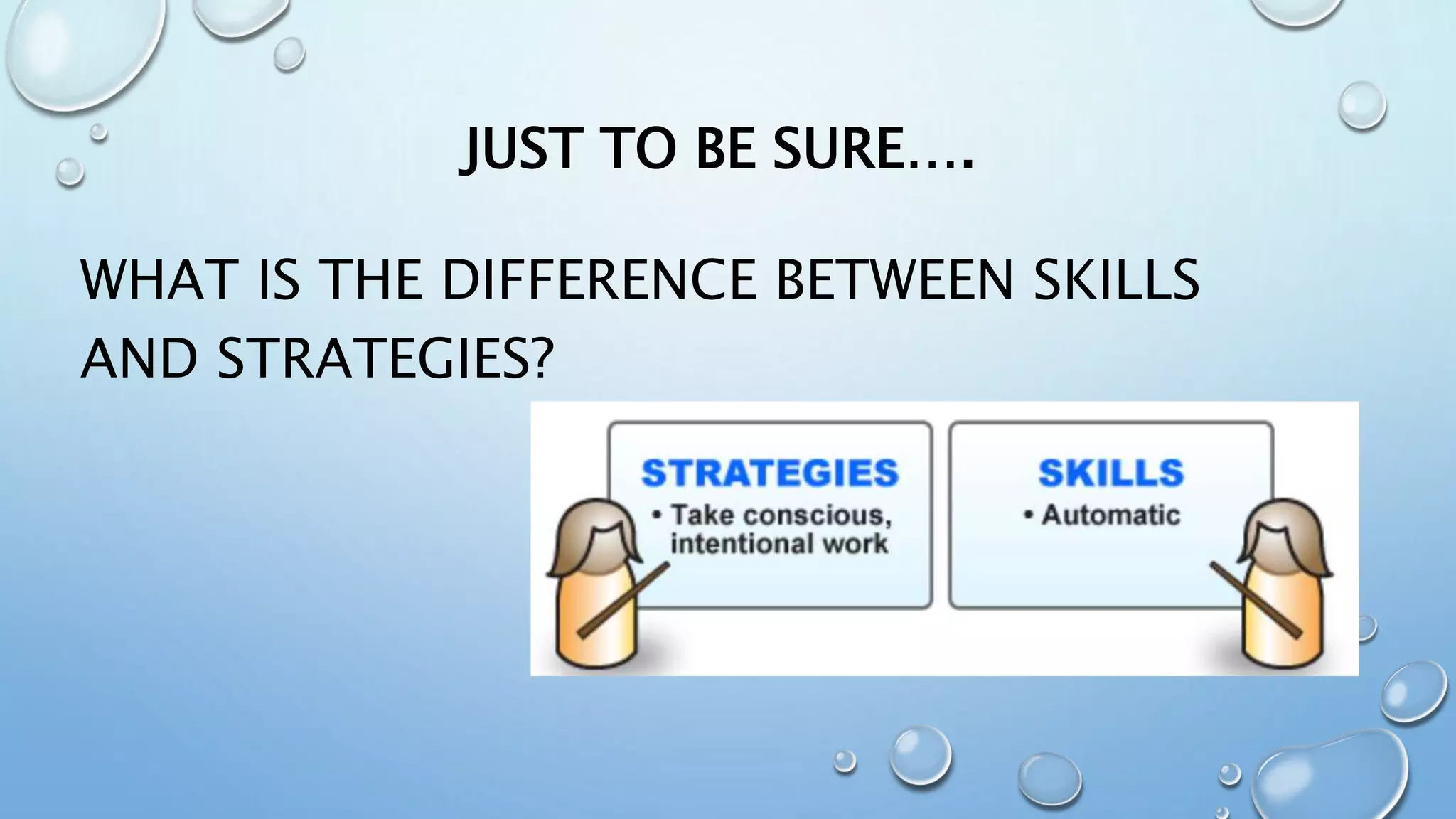
WHAT IS THE DIFFERENCE BETWEEN SKILLS
AND STRATEGIES?
STRATEGY N° 1: USING SENSORY
IMAGES
HTTPS://WWW.YOUTUBE.COM/WATCH?V=QW7OIYPPVEU
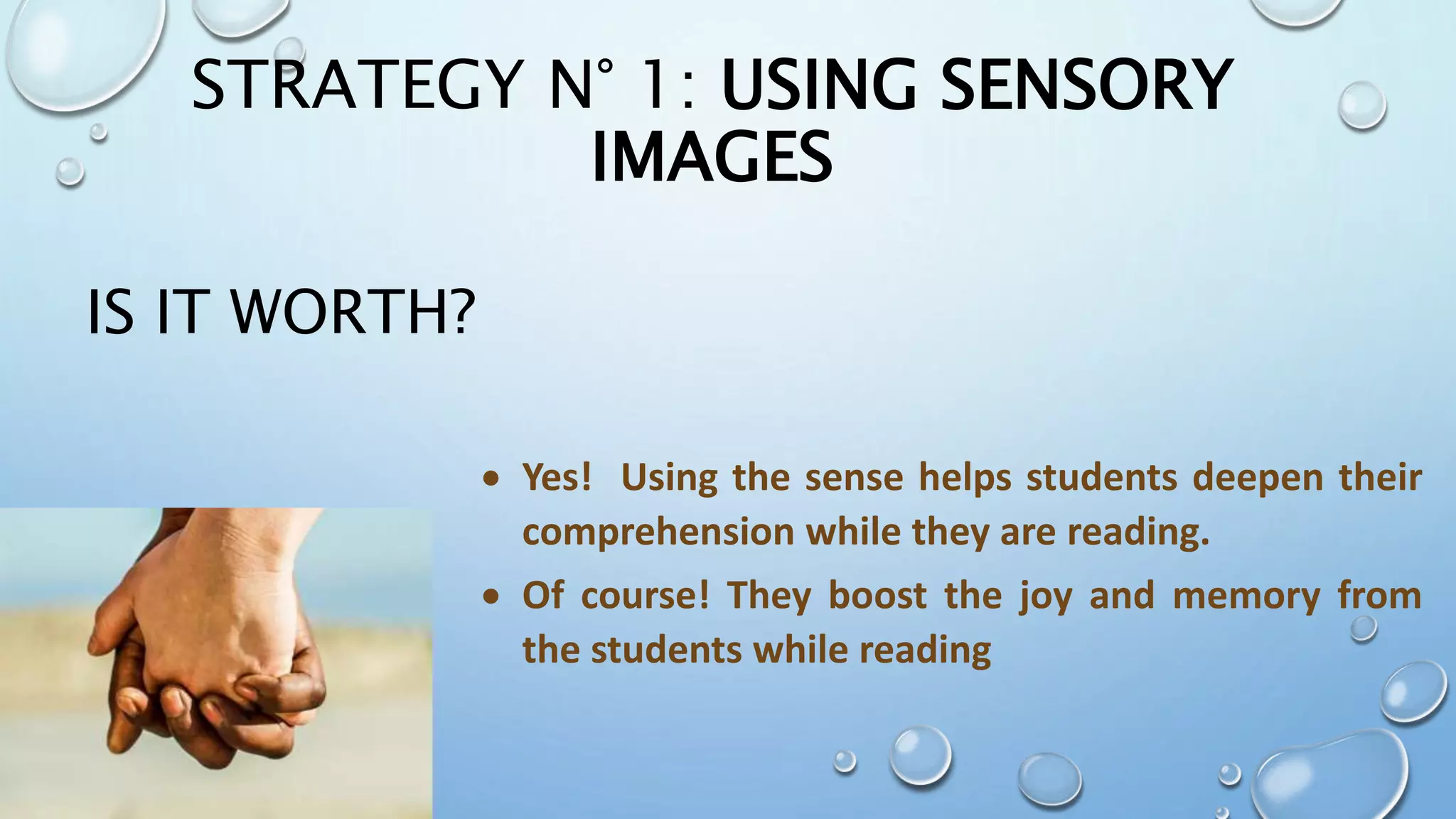
 Understanding a text through our sense: Touch, Smell, Taste,
hearing and Sight.
 The first information comes from our senses
 When we use the senses we help students start playing a film
according to the text
HOW TO TEACH
IT?
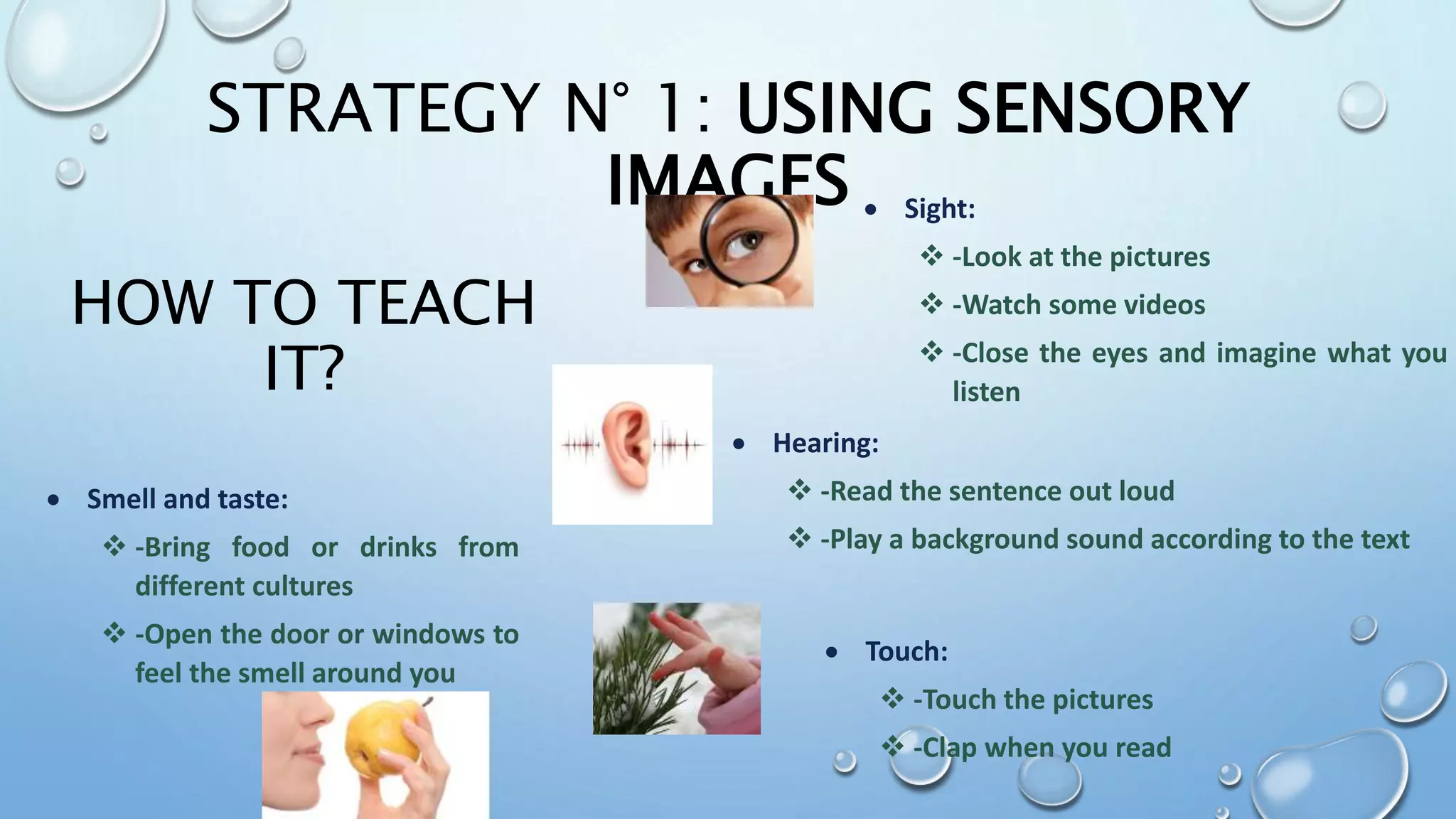
 Sight:
 -Look at the pictures
 -Watch some videos
 -Close the eyes and imagine what you
listen
 Hearing:
 -Read the sentence out loud
 -Play a background sound according to the text
 Touch:
 -Touch the pictures
 -Clap when you read
 Smell and taste:
 -Bring food or drinks from
different cultures
 -Open the door or windows to
feel the smell around you
STRATEGY N° 1: USING SENSORY
IMAGES
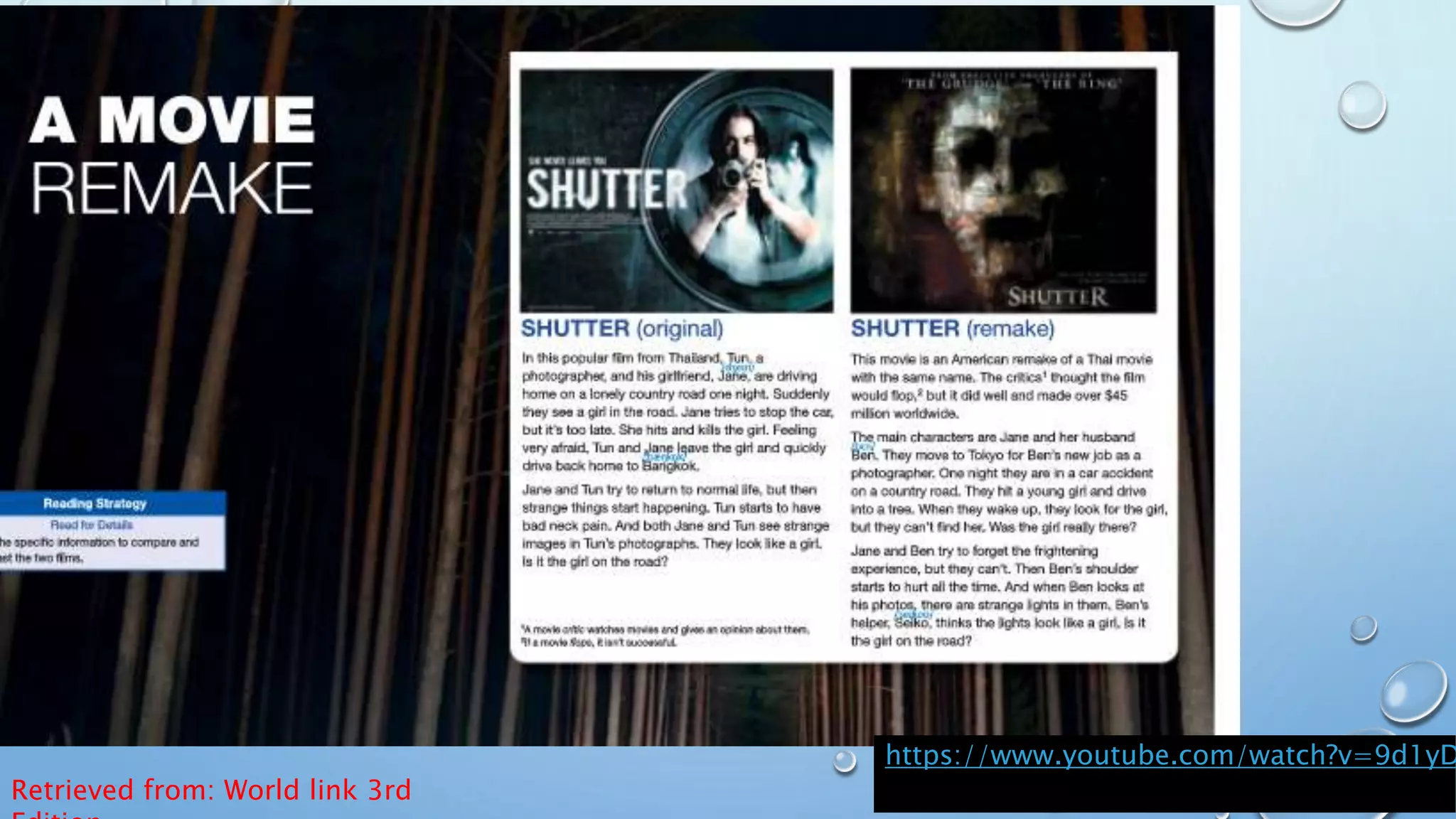
https://www.youtube.com/watch?v=9d1yD
Retrieved from: World link 3rd
STRATEGY N° 1: USING SENSORY
IMAGES
 Yes! Using the sense helps students deepen their
comprehension while they are reading.
 Of course! They boost the joy and memory from
the students while reading
IS IT WORTH?
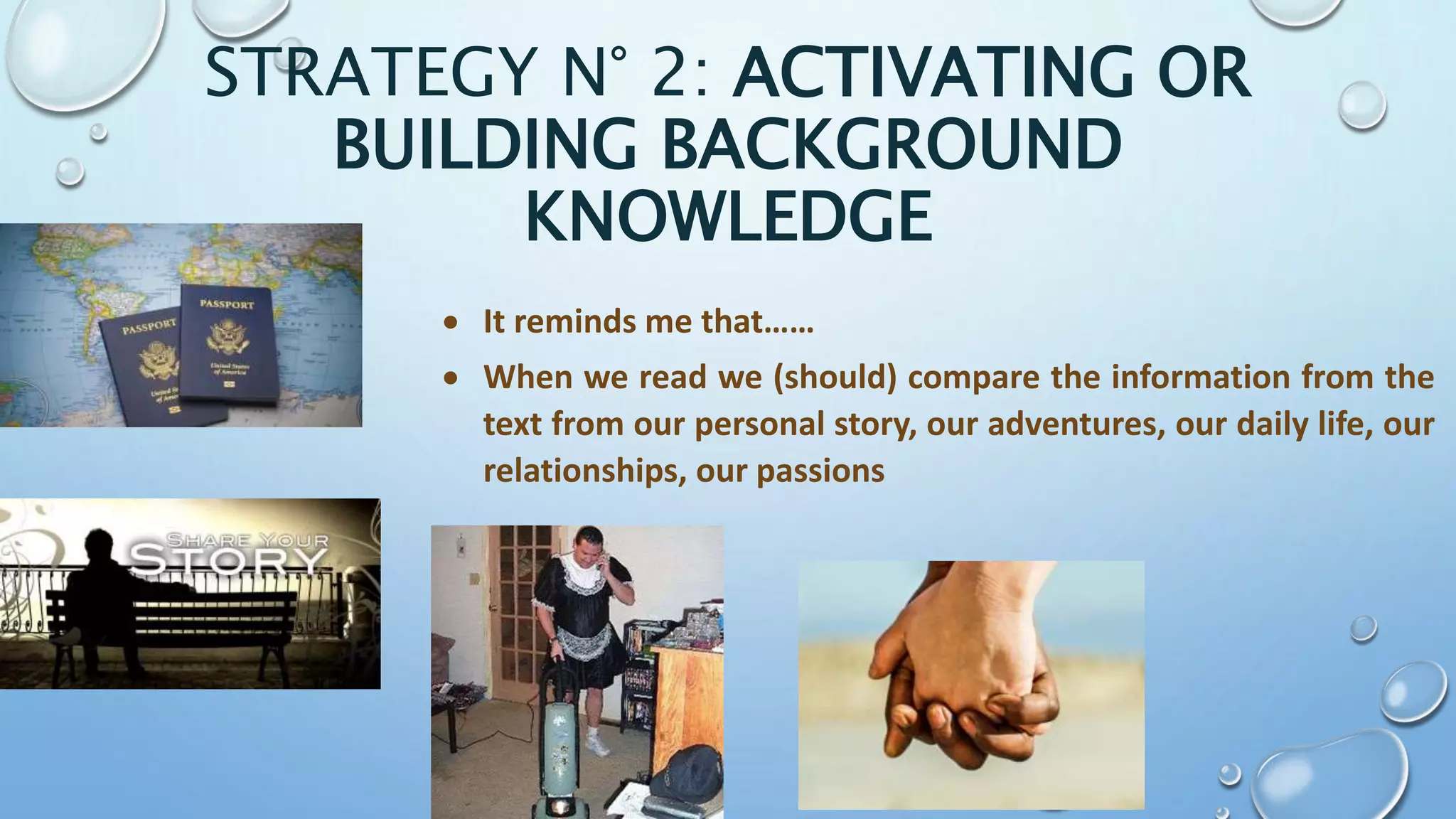
When lovers
touch, their
breathing,
heartbeat syncs,
pain wanes
STRATEGY N° 2: ACTIVATING OR
BUILDING BACKGROUND
KNOWLEDGE
 It reminds me that……
 When we read we (should) compare the information from the
text from our personal story, our adventures, our daily life, our
relationships, our passions
READING IS LIVING WHAT WE
COULDN’T, CAN’T OR WON’T BE ABLE
TO OR REMEMBER WHAT WE DID OR
WE ARE DOING
WHAT IS READING?
WAIT…
HOW TO TEACH
IT?
 Look at the pictures and the tittle form the text
and make sure they understand them
 It reminds me that……
 When you read about a text about a dog or a
cat, talk SS about the pets you had when you
were a child! They like gossips!
 And encourage them to think the same
STRATEGY N° 2: ACTIVATING OR
BUILDING BACKGROUND
KNOWLEDGE
Yes?
Do you remember the last time you read a
medical text, new laws or a new scientist
project?
No?
How was it?. did you
enjoy it?
Because you didn’t
enjoy it
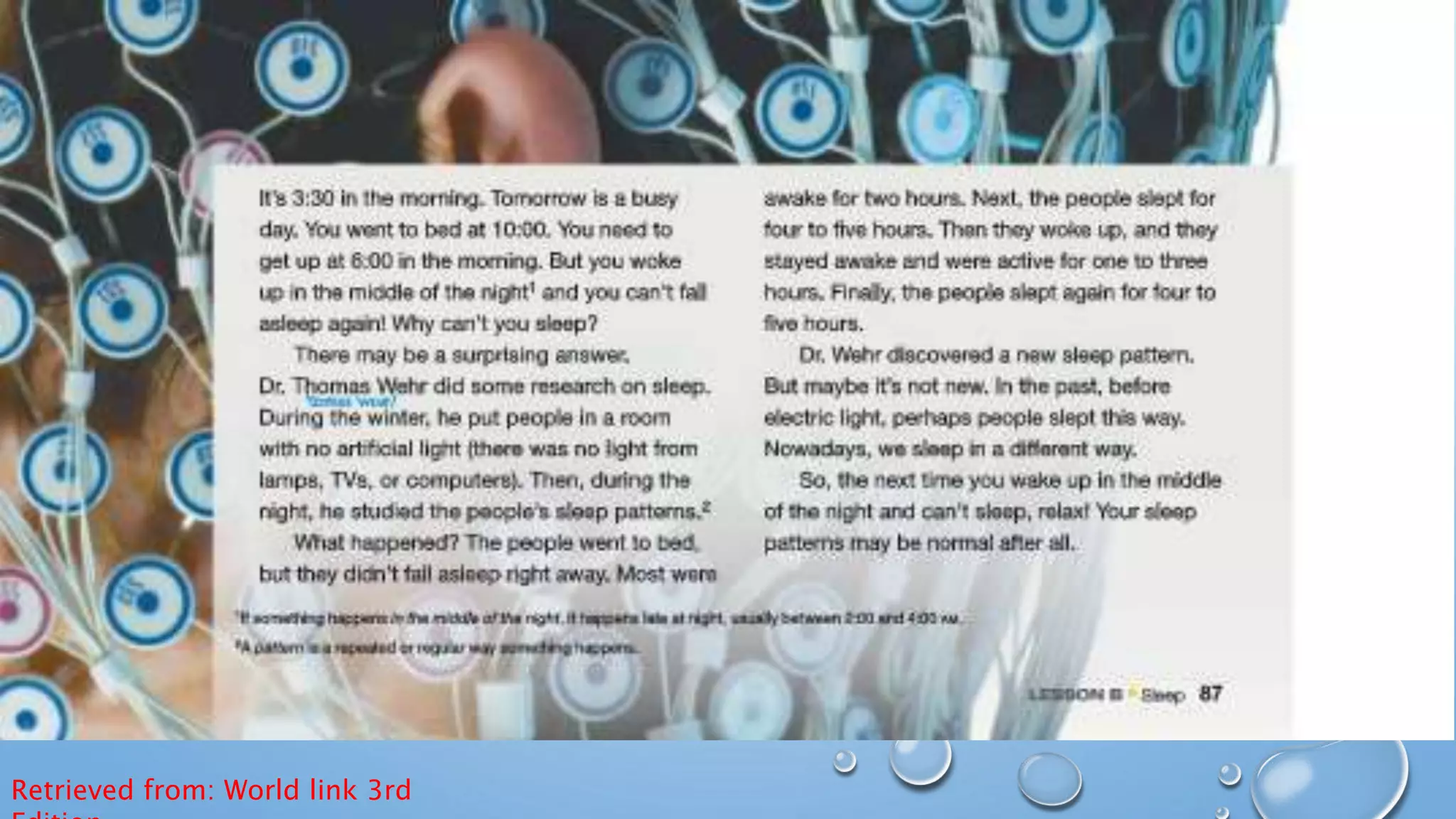
Retrieved from: World link 3rd
 Yeap! When you remember previous experiences
it’s easier to internalize the text
 It helps a faster scaffolding
IS IT WORTH?
STRATEGY N° 2: ACTIVATING OR
BUILDING BACKGROUND
KNOWLEDGE
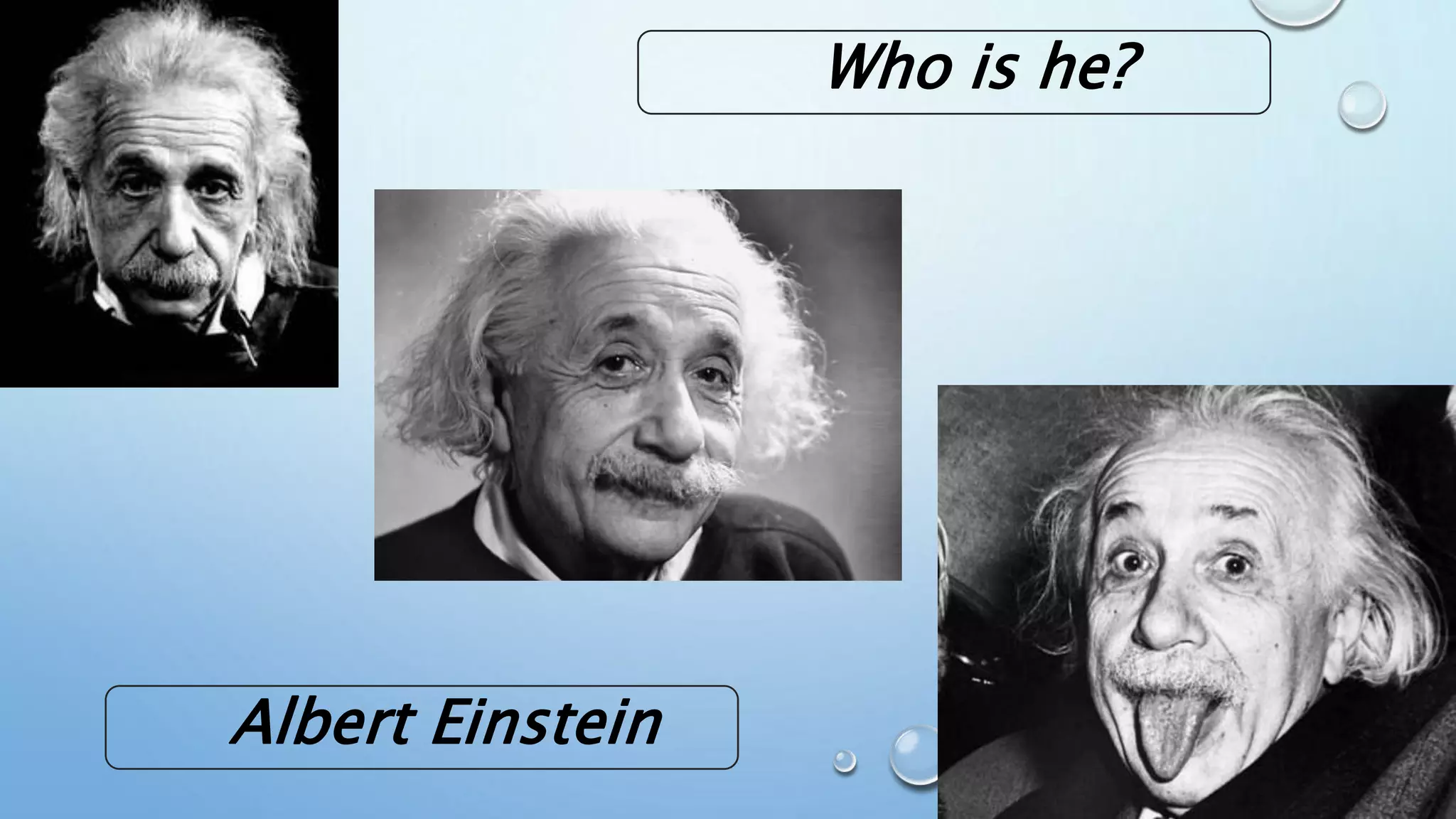
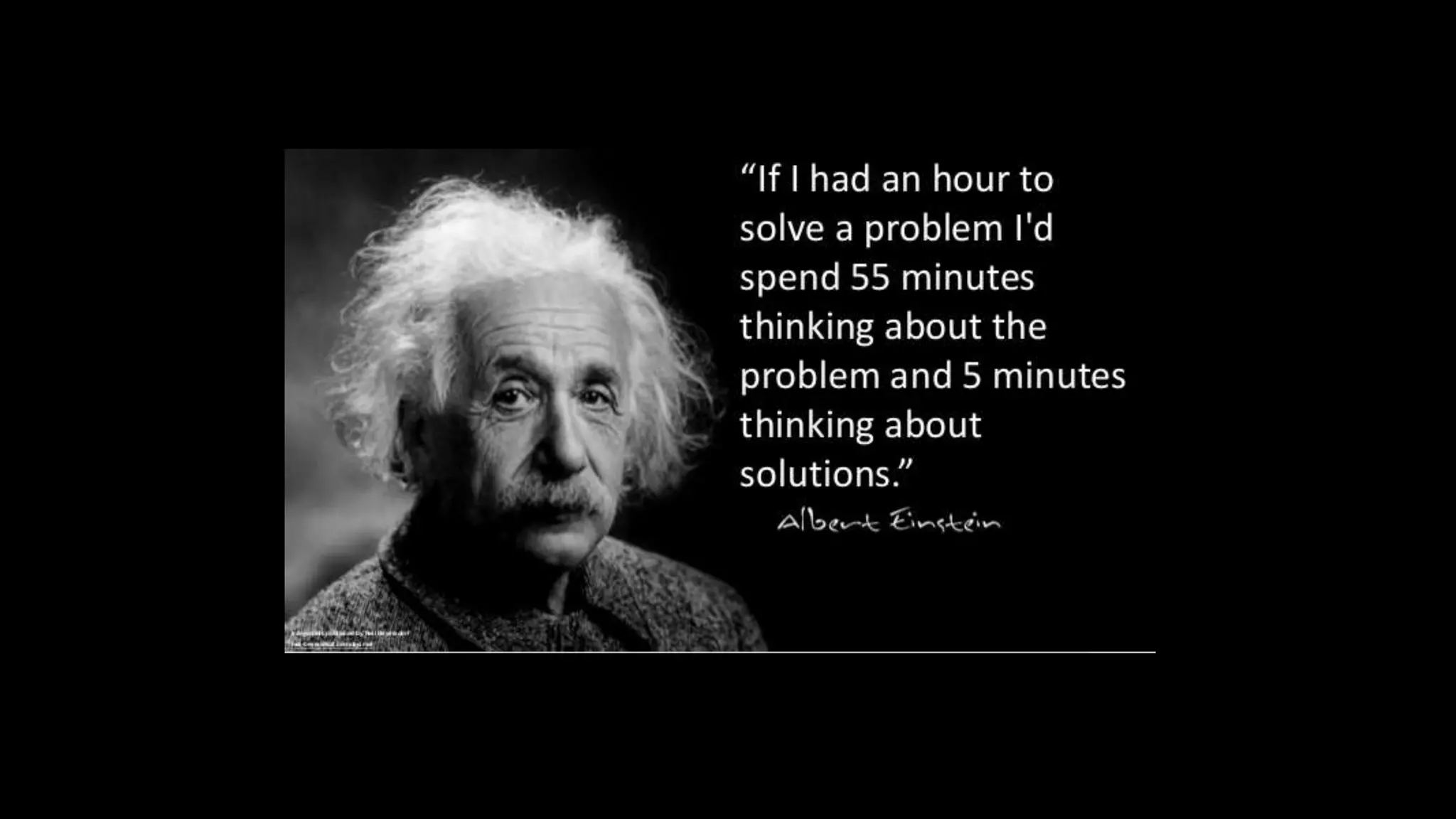
Who is he?
Albert Einstein
STRATEGY N° 3: QUESTIONING
 Questioning leads readers to delve into the topic,
establishing a dialogue with the author. You are interacting
with the author and his/her words
 Kids are great scientists because their natural curiosity to
understand his/her world
 I wonder…
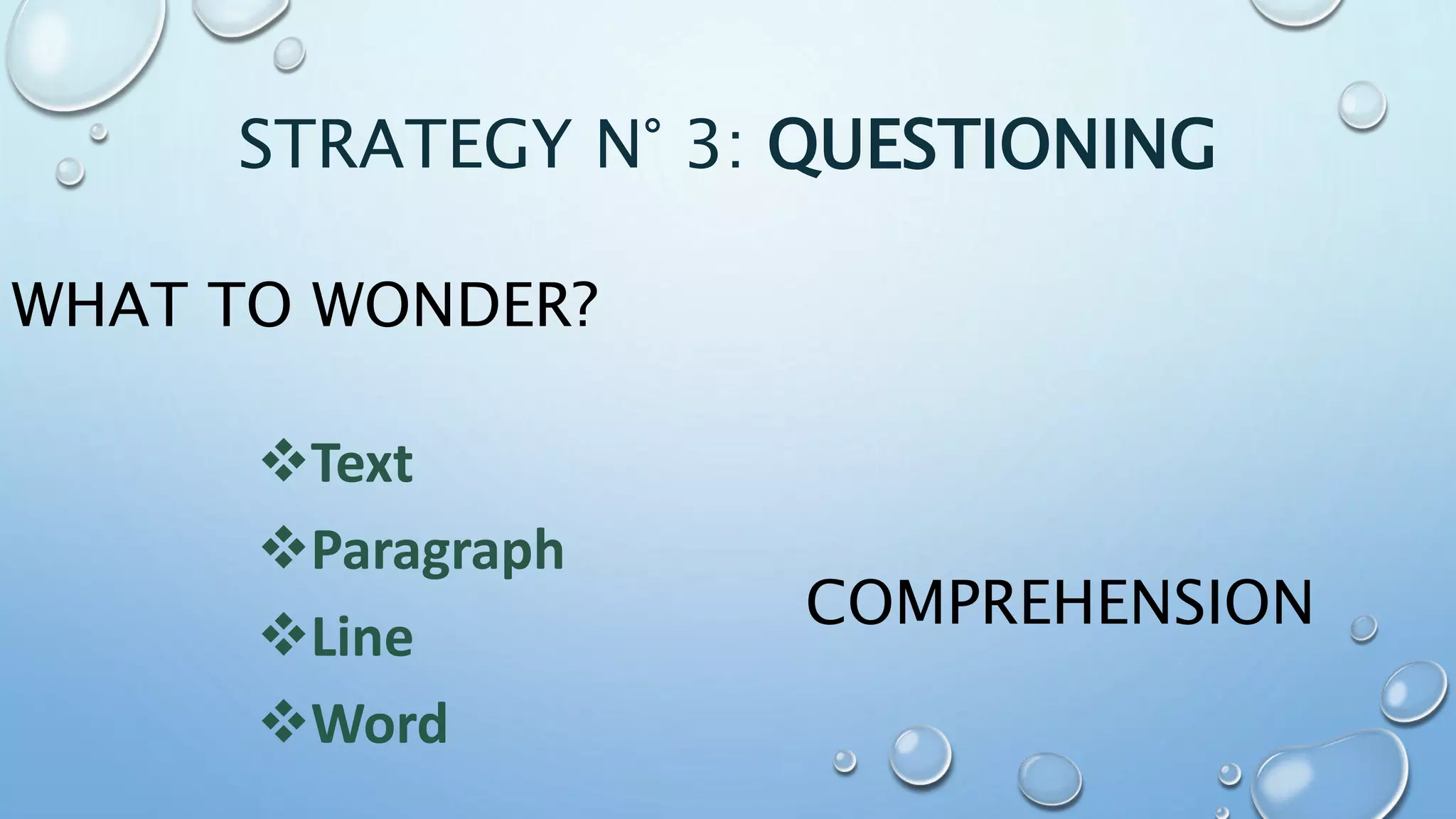
WHAT TO WONDER?
Text
Paragraph
Line
Word
STRATEGY N° 3: QUESTIONING
COMPREHENSION
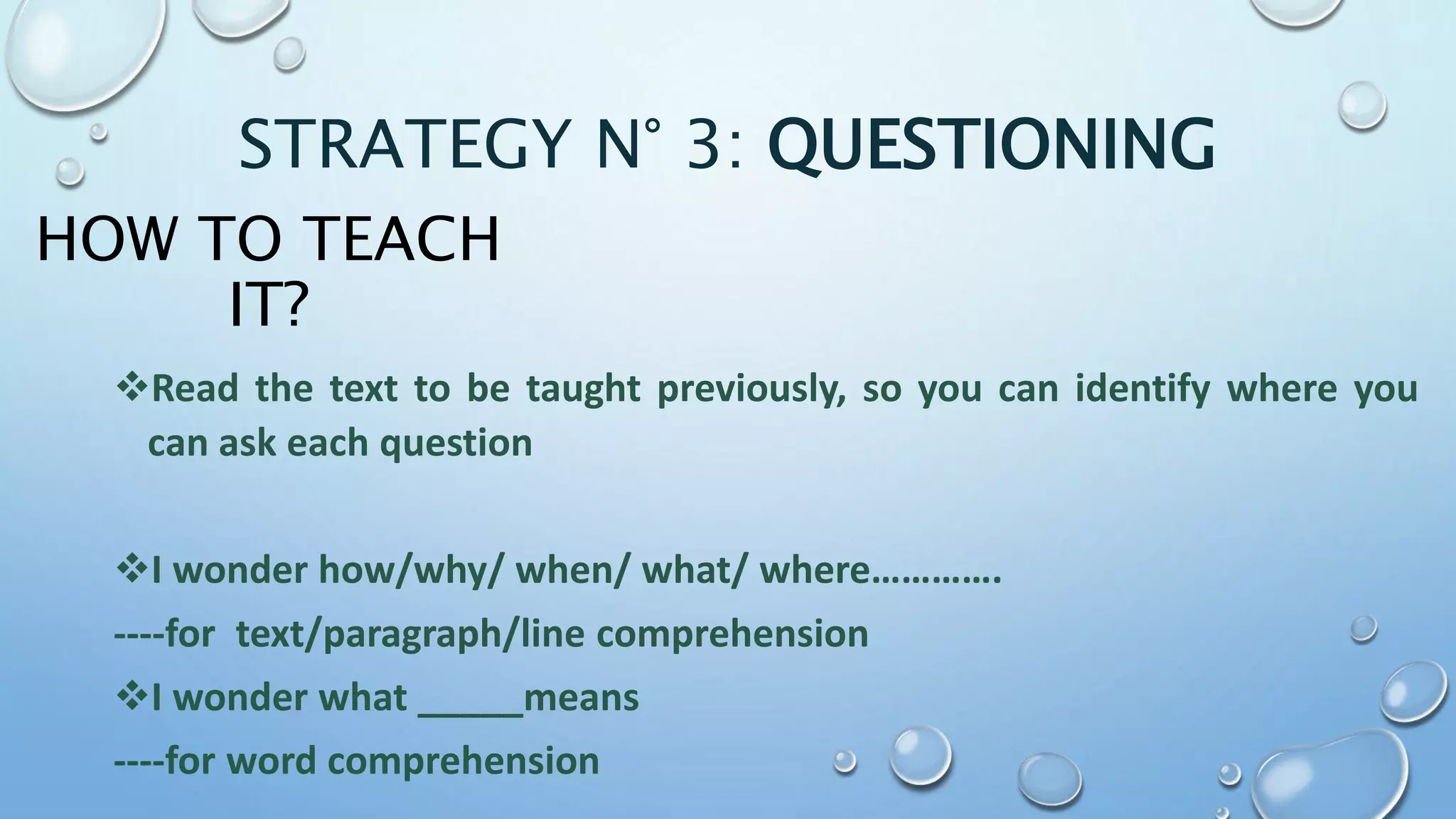
HOW TO TEACH
IT?
Read the text to be taught previously, so you can identify where you
can ask each question
I wonder how/why/ when/ what/ where………….
----for text/paragraph/line comprehension
I wonder what _____means
----for word comprehension
STRATEGY N° 3: QUESTIONING
HOW TO TEACH
IT?
 Read the text out loud. Stop in your first pause.
 Close the book and ask SS to answer your question “ I wonder….”
 Wait SS to get an answer. If they don’t…ask extra yes/no questions.
 If they can’t tell you the answer. Open the book, re-read the line or
word and get the answer.
STRATEGY N° 3: QUESTIONING
Retrieved from: World link 3rd
 Yes! Questions help interact with the author, discover what it cares and
discover what you want to know
 Yeap! Questions promote texts to make sense
 Definitely! Questioning can encourage a class debate
 Absolutely!!Some questions require more than “reading” again, so they
demand inferring and critical thinking
IS IT WORTH?
STRATEGY N° 3: QUESTIONING
IT’S TIME TO REVIEW!
FOLLOWING YOU WILL SEE INDICATORS
TO VERIFY THE STRATEGY. GUESS THE
CORRESPONDING STRATEGY
Using sensory images
Activating or building background know
Questioning
 This helps you “stick” new information with your own
information
 Your remembrances and experiences have a crucial
impact in what you are about to read
 They take you to new ideas, new perspectives and
even more questions
 The mind picture provoke emotions and feelings
 They inspire critical thinking and generate discussion
Activating or building background knowledge
Questioning
Act. or b. backg knowledge
U sensory images
Questioning
Using sensory images
Activating or building background know
Questioning
 The picture helps you develop a deeper appreciation
about what you are reading
 The questions make sense to the text
 Feeling the “text” makes it funny
 When reading you remember previous experiences,
similar texts and your world connection
Using sensory images
Questioning
Using sensory images
Act. or b. backg
knowledge
3 reading strategies to motivate students read

3 reading strategies to motivate students read

  • 1.
    3 READING STRATEGIESTO MOTIVATE STUDENTS’ READING IN CLASS By: Alberto Calvo Chamache - English teacher Segment of my Master’s degree research Based on the book: 7 keys to Comprehension – Susan Zimmermann and Cryse Hutchins
  • 2.
    JUST TO BESURE…. WHAT IS THE DIFFERENCE BETWEEN SKILLS AND STRATEGIES?
  • 3.
    STRATEGY N° 1:USING SENSORY IMAGES HTTPS://WWW.YOUTUBE.COM/WATCH?V=QW7OIYPPVEU  Understanding a text through our sense: Touch, Smell, Taste, hearing and Sight.  The first information comes from our senses  When we use the senses we help students start playing a film according to the text
  • 4.
    HOW TO TEACH IT? Sight:  -Look at the pictures  -Watch some videos  -Close the eyes and imagine what you listen  Hearing:  -Read the sentence out loud  -Play a background sound according to the text  Touch:  -Touch the pictures  -Clap when you read  Smell and taste:  -Bring food or drinks from different cultures  -Open the door or windows to feel the smell around you STRATEGY N° 1: USING SENSORY IMAGES
  • 5.
  • 6.
    STRATEGY N° 1:USING SENSORY IMAGES  Yes! Using the sense helps students deepen their comprehension while they are reading.  Of course! They boost the joy and memory from the students while reading IS IT WORTH? When lovers touch, their breathing, heartbeat syncs, pain wanes
  • 8.
    STRATEGY N° 2:ACTIVATING OR BUILDING BACKGROUND KNOWLEDGE  It reminds me that……  When we read we (should) compare the information from the text from our personal story, our adventures, our daily life, our relationships, our passions
  • 9.
    READING IS LIVINGWHAT WE COULDN’T, CAN’T OR WON’T BE ABLE TO OR REMEMBER WHAT WE DID OR WE ARE DOING WHAT IS READING? WAIT…
  • 10.
    HOW TO TEACH IT? Look at the pictures and the tittle form the text and make sure they understand them  It reminds me that……  When you read about a text about a dog or a cat, talk SS about the pets you had when you were a child! They like gossips!  And encourage them to think the same STRATEGY N° 2: ACTIVATING OR BUILDING BACKGROUND KNOWLEDGE
  • 11.
    Yes? Do you rememberthe last time you read a medical text, new laws or a new scientist project? No? How was it?. did you enjoy it? Because you didn’t enjoy it
  • 12.
  • 13.
     Yeap! Whenyou remember previous experiences it’s easier to internalize the text  It helps a faster scaffolding IS IT WORTH? STRATEGY N° 2: ACTIVATING OR BUILDING BACKGROUND KNOWLEDGE
  • 14.
  • 16.
    STRATEGY N° 3:QUESTIONING  Questioning leads readers to delve into the topic, establishing a dialogue with the author. You are interacting with the author and his/her words  Kids are great scientists because their natural curiosity to understand his/her world  I wonder…
  • 17.
  • 18.
    HOW TO TEACH IT? Readthe text to be taught previously, so you can identify where you can ask each question I wonder how/why/ when/ what/ where…………. ----for text/paragraph/line comprehension I wonder what _____means ----for word comprehension STRATEGY N° 3: QUESTIONING
  • 19.
    HOW TO TEACH IT? Read the text out loud. Stop in your first pause.  Close the book and ask SS to answer your question “ I wonder….”  Wait SS to get an answer. If they don’t…ask extra yes/no questions.  If they can’t tell you the answer. Open the book, re-read the line or word and get the answer. STRATEGY N° 3: QUESTIONING
  • 20.
  • 21.
     Yes! Questionshelp interact with the author, discover what it cares and discover what you want to know  Yeap! Questions promote texts to make sense  Definitely! Questioning can encourage a class debate  Absolutely!!Some questions require more than “reading” again, so they demand inferring and critical thinking IS IT WORTH? STRATEGY N° 3: QUESTIONING
  • 22.
    IT’S TIME TOREVIEW! FOLLOWING YOU WILL SEE INDICATORS TO VERIFY THE STRATEGY. GUESS THE CORRESPONDING STRATEGY
  • 23.
    Using sensory images Activatingor building background know Questioning  This helps you “stick” new information with your own information  Your remembrances and experiences have a crucial impact in what you are about to read  They take you to new ideas, new perspectives and even more questions  The mind picture provoke emotions and feelings  They inspire critical thinking and generate discussion Activating or building background knowledge Questioning Act. or b. backg knowledge U sensory images Questioning
  • 24.
    Using sensory images Activatingor building background know Questioning  The picture helps you develop a deeper appreciation about what you are reading  The questions make sense to the text  Feeling the “text” makes it funny  When reading you remember previous experiences, similar texts and your world connection Using sensory images Questioning Using sensory images Act. or b. backg knowledge