Environmental
Science Lesson
3
Benedict Mancilla
SCIENCE
TRIVIA
QUESTIONS
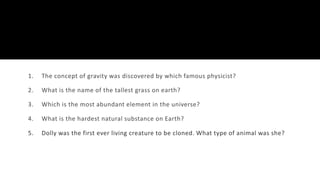
1. The concept of gravity was discovered by which famous physicist?
2. What is the name of the tallest grass on earth?
3. Which is the most abundant element in the universe?
4. What is the hardest natural substance on Earth?
5. Dolly was the first ever living creature to be cloned. What type of animal was she?
SUSTAINABILITY
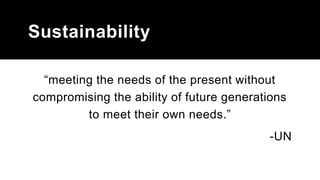
Sustainability
“meeting the needs of the present without
compromising the ability of future generations
to meet their own needs.”
-UN
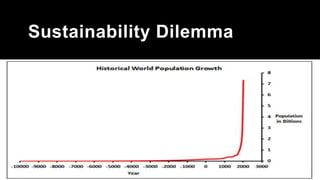
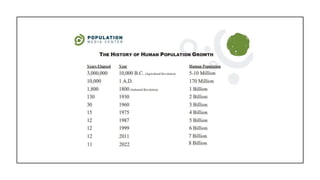
Sustainability Dilemma
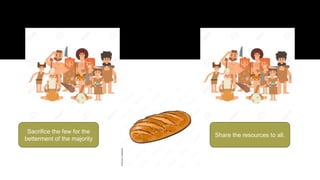
Sacrifice the few for the
betterment of the majority
Share the resources to all.
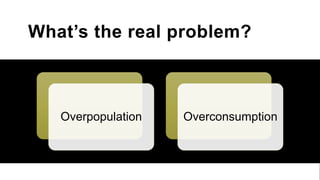
What’s the real problem?
Overpopulation Overconsumption
WHAT CAN WE
POSSIBLY DO?
TO BE HONEST
Nothing
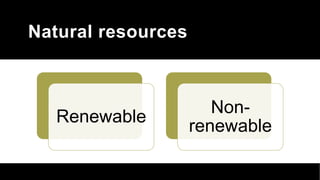
Natural resources
Renewable
Non-
renewable
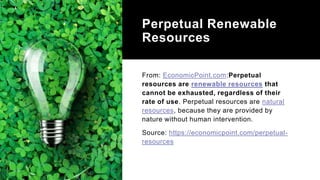
Perpetual Renewable
Resources
From: EconomicPoint.com:Perpetual
resources are renewable resources that
cannot be exhausted, regardless of their
rate of use. Perpetual resources are natural
resources, because they are provided by
nature without human intervention.
Source: https://economicpoint.com/perpetual-
resources
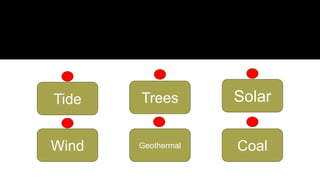
Tide
Coal
Geothermal
Wind
Trees Solar
Solar Energy
SOLAR ENERGY COMES FROM
THE SUN.
IT DOESN’T DECREASE WHEN
USED.
SOLAR ENERGY CAN BE
CONVERTED INTO ELECTRIC
POWER OR CAN BE USED AS
THERMAL ENERGY.
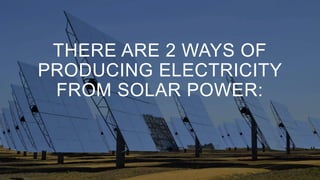
THERE ARE 2 WAYS OF
PRODUCING ELECTRICITY
FROM SOLAR POWER:
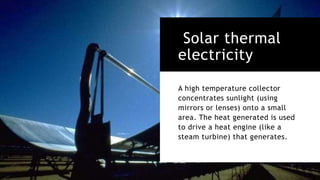
Solar thermal
electricity
A high temperature collector
concentrates sunlight (using
mirrors or lenses) onto a small
area. The heat generated is used
to drive a heat engine (like a
steam turbine) that generates.
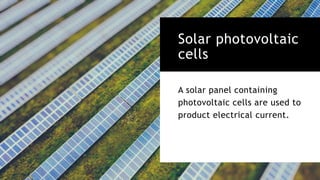
Solar photovoltaic
cells
A solar panel containing
photovoltaic cells are used to
product electrical current.
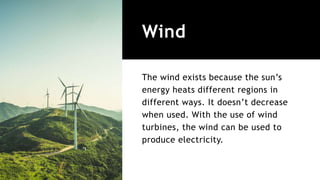
Wind
The wind exists because the sun’s
energy heats different regions in
different ways. It doesn’t decrease
when used. With the use of wind
turbines, the wind can be used to
produce electricity.
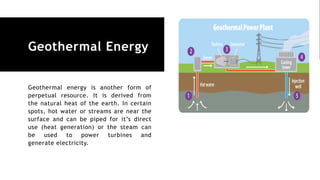
Geothermal Energy
Geothermal energy is another form of
perpetual resource. It is derived from
the natural heat of the earth. In certain
spots, hot water or streams are near the
surface and can be piped for it’s direct
use (heat generation) or the steam can
be used to power turbines and
generate electricity.
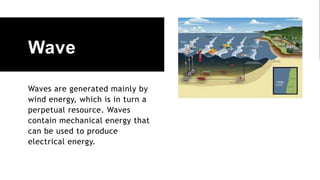
Wave
Waves are generated mainly by
wind energy, which is in turn a
perpetual resource. Waves
contain mechanical energy that
can be used to produce
electrical energy.
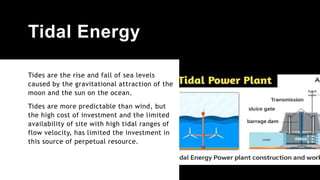
Tidal Energy
Tides are the rise and fall of sea levels
caused by the gravitational attraction of the
moon and the sun on the ocean.
Tides are more predictable than wind, but
the high cost of investment and the limited
availability of site with high tidal ranges of
flow velocity, has limited the investment in
this source of perpetual resource.
Ocean Energy
There are other forms of perpetual resources that the ocean
could provide, for example marine currents, temperature
gradients and salinity gradients. The harnessing of this forms
of perpetual resources is still uneconomical and
under development.
INTERMEDIATE
RENEWABLE ENERGY
Intermediate Renewable
Resources
If we didn’t use them, they would be perpetually renewable, but
because they require time (on human time-scales) to regenerate
or grow, we can overuse them until they are no longer available.
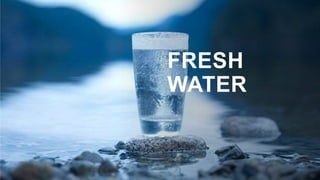
FRESH
WATER
SOIL
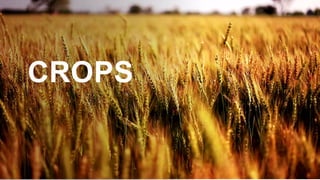
CROPS
TREES
NON-RENEWABLE
RESOURCES
This Photo by Unknown Author is licensed under CC BY-SA-NC
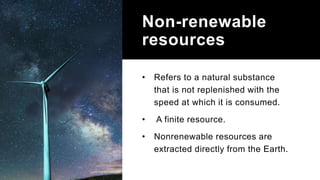
Non-renewable
resources
• Refers to a natural substance
that is not replenished with the
speed at which it is consumed.
• A finite resource.
• Nonrenewable resources are
extracted directly from the Earth.
FOUR MAJOR TYPES OF
NON-RENEWABLE
RESOURCES.
OIL
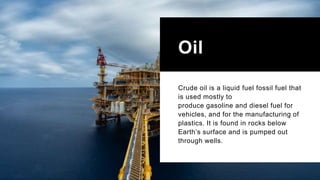
Oil
Crude oil is a liquid fuel fossil fuel that
is used mostly to
produce gasoline and diesel fuel for
vehicles, and for the manufacturing of
plastics. It is found in rocks below
Earth’s surface and is pumped out
through wells.
NATURAL GAS
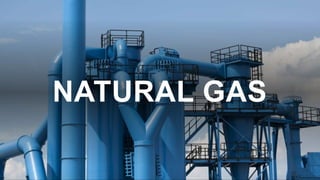
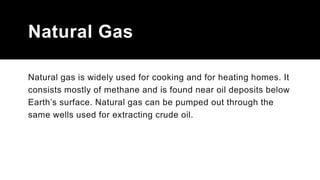
Natural Gas
Natural gas is widely used for cooking and for heating homes. It
consists mostly of methane and is found near oil deposits below
Earth’s surface. Natural gas can be pumped out through the
same wells used for extracting crude oil.
COAL
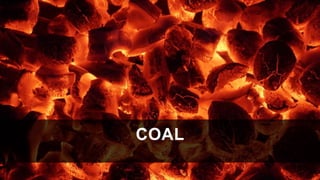
Coal
Coal is a solid fossil fuel that is used for heating homes and
generating power plants. It is found in fossilized swamps that
have been buried beneath layers of sediment. Since coal is
solid, it cannot be extracted in the same manner as crude oil or
natural gas; it must be dug up from the ground.
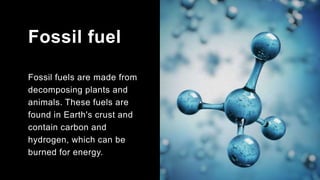
Fossil fuel
Fossil fuels are made from
decomposing plants and
animals. These fuels are
found in Earth's crust and
contain carbon and
hydrogen, which can be
burned for energy.
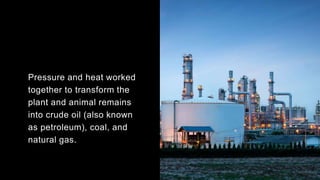
Pressure and heat worked
together to transform the
plant and animal remains
into crude oil (also known
as petroleum), coal, and
natural gas.
NUCLEAR
ENERGY
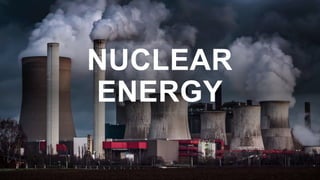
Nuclear
Energy
Nuclear energy comes
from radioactive elements,
mainly uranium, which is
extracted from
mined ore and then refined
into fuel.
?
Informal essay
Cite at least 1 way on how we can
conserve our natural resources and
discuss your plan of action.
THANK YOU

3. Environmental Science Lesson 3.pptx

  • 1.
  • 2.
  • 3.
    1. The conceptof gravity was discovered by which famous physicist? 2. What is the name of the tallest grass on earth? 3. Which is the most abundant element in the universe? 4. What is the hardest natural substance on Earth? 5. Dolly was the first ever living creature to be cloned. What type of animal was she?
  • 4.
  • 5.
    Sustainability “meeting the needsof the present without compromising the ability of future generations to meet their own needs.” -UN
  • 6.
  • 8.
    Sacrifice the fewfor the betterment of the majority Share the resources to all.
  • 9.
    What’s the realproblem? Overpopulation Overconsumption
  • 10.
  • 11.
  • 12.
  • 13.
    Perpetual Renewable Resources From: EconomicPoint.com:Perpetual resourcesare renewable resources that cannot be exhausted, regardless of their rate of use. Perpetual resources are natural resources, because they are provided by nature without human intervention. Source: https://economicpoint.com/perpetual- resources
  • 14.
  • 15.
    Solar Energy SOLAR ENERGYCOMES FROM THE SUN. IT DOESN’T DECREASE WHEN USED. SOLAR ENERGY CAN BE CONVERTED INTO ELECTRIC POWER OR CAN BE USED AS THERMAL ENERGY.
  • 16.
    THERE ARE 2WAYS OF PRODUCING ELECTRICITY FROM SOLAR POWER:
  • 17.
    Solar thermal electricity A hightemperature collector concentrates sunlight (using mirrors or lenses) onto a small area. The heat generated is used to drive a heat engine (like a steam turbine) that generates.
  • 18.
    Solar photovoltaic cells A solarpanel containing photovoltaic cells are used to product electrical current.
  • 19.
    Wind The wind existsbecause the sun’s energy heats different regions in different ways. It doesn’t decrease when used. With the use of wind turbines, the wind can be used to produce electricity.
  • 20.
    Geothermal Energy Geothermal energyis another form of perpetual resource. It is derived from the natural heat of the earth. In certain spots, hot water or streams are near the surface and can be piped for it’s direct use (heat generation) or the steam can be used to power turbines and generate electricity.
  • 21.
    Wave Waves are generatedmainly by wind energy, which is in turn a perpetual resource. Waves contain mechanical energy that can be used to produce electrical energy.
  • 22.
    Tidal Energy Tides arethe rise and fall of sea levels caused by the gravitational attraction of the moon and the sun on the ocean. Tides are more predictable than wind, but the high cost of investment and the limited availability of site with high tidal ranges of flow velocity, has limited the investment in this source of perpetual resource.
  • 23.
    Ocean Energy There areother forms of perpetual resources that the ocean could provide, for example marine currents, temperature gradients and salinity gradients. The harnessing of this forms of perpetual resources is still uneconomical and under development.
  • 24.
  • 25.
    Intermediate Renewable Resources If wedidn’t use them, they would be perpetually renewable, but because they require time (on human time-scales) to regenerate or grow, we can overuse them until they are no longer available.
  • 26.
  • 27.
  • 28.
  • 29.
  • 30.
    NON-RENEWABLE RESOURCES This Photo byUnknown Author is licensed under CC BY-SA-NC
  • 31.
    Non-renewable resources • Refers toa natural substance that is not replenished with the speed at which it is consumed. • A finite resource. • Nonrenewable resources are extracted directly from the Earth.
  • 32.
    FOUR MAJOR TYPESOF NON-RENEWABLE RESOURCES.
  • 33.
  • 34.
    Oil Crude oil isa liquid fuel fossil fuel that is used mostly to produce gasoline and diesel fuel for vehicles, and for the manufacturing of plastics. It is found in rocks below Earth’s surface and is pumped out through wells.
  • 35.
  • 36.
    Natural Gas Natural gasis widely used for cooking and for heating homes. It consists mostly of methane and is found near oil deposits below Earth’s surface. Natural gas can be pumped out through the same wells used for extracting crude oil.
  • 37.
  • 38.
    Coal Coal is asolid fossil fuel that is used for heating homes and generating power plants. It is found in fossilized swamps that have been buried beneath layers of sediment. Since coal is solid, it cannot be extracted in the same manner as crude oil or natural gas; it must be dug up from the ground.
  • 39.
    Fossil fuel Fossil fuelsare made from decomposing plants and animals. These fuels are found in Earth's crust and contain carbon and hydrogen, which can be burned for energy.
  • 40.
    Pressure and heatworked together to transform the plant and animal remains into crude oil (also known as petroleum), coal, and natural gas.
  • 41.
  • 42.
    Nuclear Energy Nuclear energy comes fromradioactive elements, mainly uranium, which is extracted from mined ore and then refined into fuel.
  • 43.
  • 44.
    Informal essay Cite atleast 1 way on how we can conserve our natural resources and discuss your plan of action.
  • 45.

Editor's Notes

  • #12 Why? Because no matter how big you will do to spread awareness, to advocate for the environment, to create a community of eco warriors. The effort will only create a small and almost unnoticeable result. You said that through our small action, then collectively we can make change. But what you know what is the flaw in that statement? There can be small action but no collective effort. Humans won’t do things that is way beyond convenience. Only when it is absolutely necessary when we decide to fix the problem. However, I make this statement today. Tomorrow is another mystery, the possibilities is endless. Yet, I do believe that all of this is our natural destiny and can quite be prophetical. Because, if we consult the bible, what is happening now! Is simply going according to the grand plan of the creator.
  • #26 The reason why this resources can be perpetual because of their life cycle.