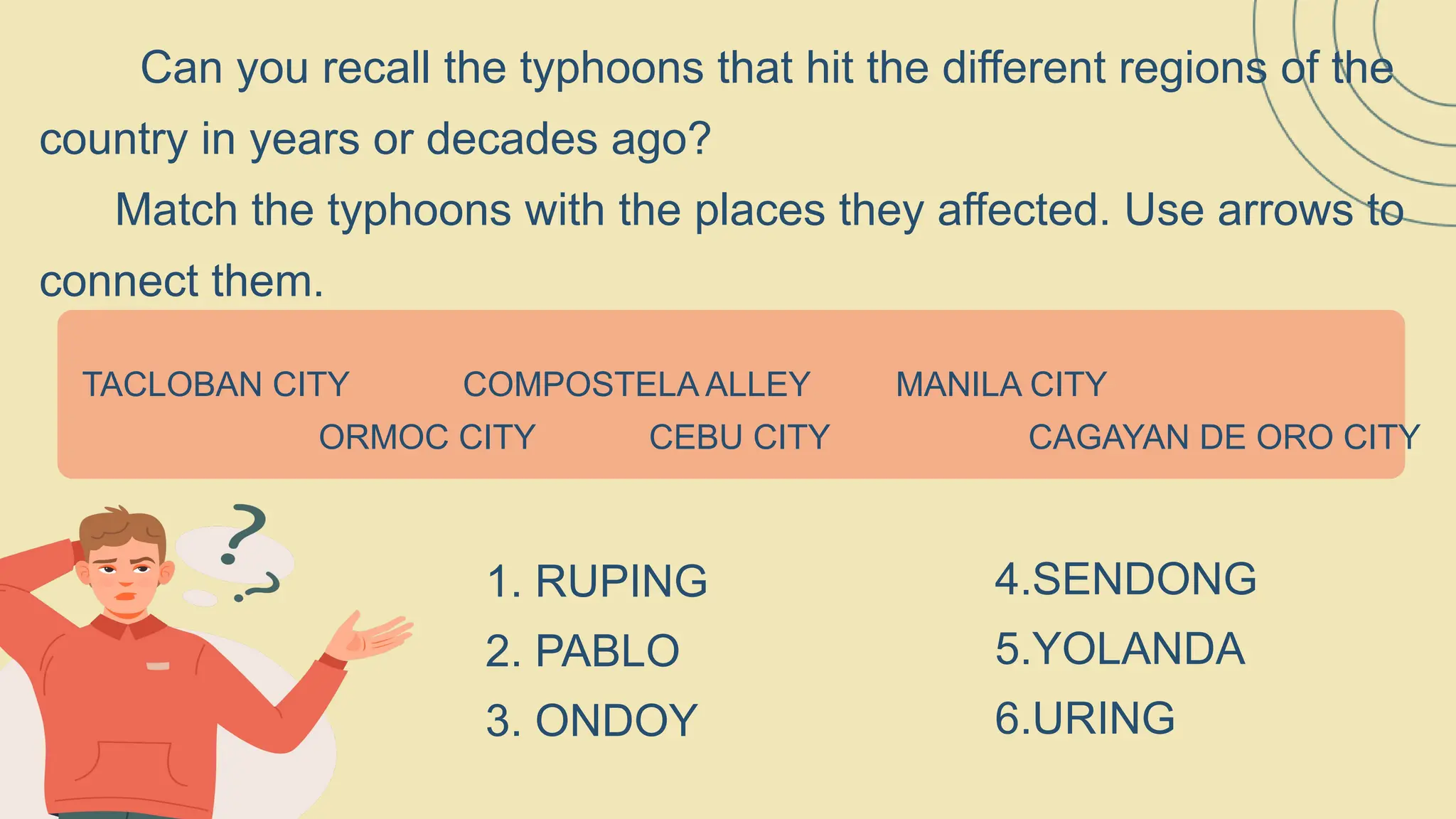
Can you recall the typhoons that hit the different regions of the
country in years or decades ago?
Match the typhoons with the places they affected. Use arrows to
connect them.
TACLOBAN CITY COMPOSTELA ALLEY MANILA CITY
ORMOC CITY CEBU CITY CAGAYAN DE ORO CITY
1. RUPING
2. PABLO
3. ONDOY
4.SENDONG
5.YOLANDA
6.URING
ENVIRONMENTAL
PROBLEMS IN THE
PHILIPPINES
HEALTH 9
MAPEH 9
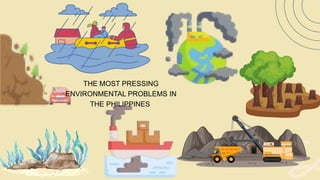
THE MOST PRESSING
ENVIRONMENTAL PROBLEMS IN
THE PHILIPPINES
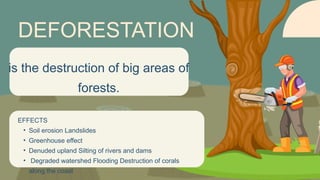
is the destruction of big areas of
forests.
DEFORESTATION
EFFECTS
• Soil erosion Landslides
• Greenhouse effect
• Denuded upland Silting of rivers and dams
• Degraded watershed Flooding Destruction of corals
along the coast
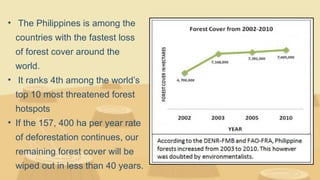
• The Philippines is among the
countries with the fastest loss
of forest cover around the
world.
• It ranks 4th among the world’s
top 10 most threatened forest
hotspots
• If the 157, 400 ha per year rate
of deforestation continues, our
remaining forest cover will be
wiped out in less than 40 years.
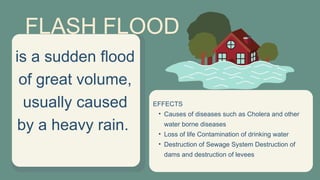
is a sudden flood
of great volume,
usually caused
by a heavy rain.
FLASH FLOOD
EFFECTS
• Causes of diseases such as Cholera and other
water borne diseases
• Loss of life Contamination of drinking water
• Destruction of Sewage System Destruction of
dams and destruction of levees
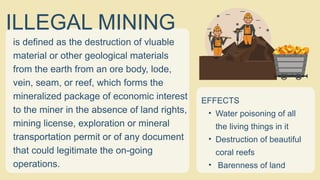
is defined as the destruction of vluable
material or other geological materials
from the earth from an ore body, lode,
vein, seam, or reef, which forms the
mineralized package of economic interest
to the miner in the absence of land rights,
mining license, exploration or mineral
transportation permit or of any document
that could legitimate the on-going
operations.
ILLEGAL MINING
EFFECTS
• Water poisoning of all
the living things in it
• Destruction of beautiful
coral reefs
• Barenness of land
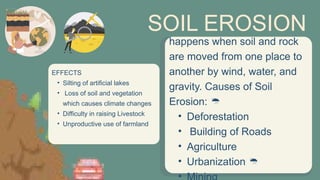
happens when soil and rock
are moved from one place to
another by wind, water, and
gravity. Causes of Soil
Erosion: 
• Deforestation
• Building of Roads
• Agriculture
• Urbanization 
•
SOIL EROSION
EFFECTS
• Silting of artificial lakes
• Loss of soil and vegetation
which causes climate changes
• Difficulty in raising Livestock
• Unproductive use of farmland
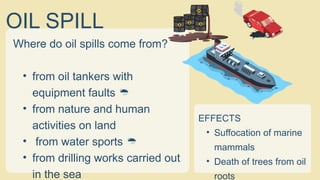
Where do oil spills come from?
• from oil tankers with
equipment faults 
• from nature and human
activities on land
• from water sports 
• from drilling works carried out
in the sea
OIL SPILL
EFFECTS
• Suffocation of marine
mammals
• Death of trees from oil
roots
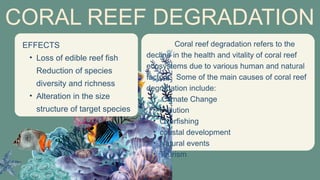
Coral reef degradation refers to the
decline in the health and vitality of coral reef
ecosystems due to various human and natural
factors. Some of the main causes of coral reef
degradation include:
• Climate Change
• Pollution
• Overfishing
• coastal development
• Natural events
• Tourism
CORAL REEF DEGRADATION
EFFECTS
• Loss of edible reef fish
Reduction of species
diversity and richness
• Alteration in the size
structure of target species
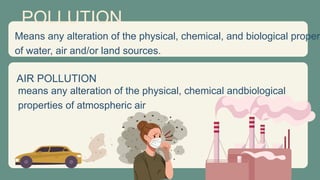
POLLUTION
AIR POLLUTION
Means any alteration of the physical, chemical, and biological propert
of water, air and/or land sources.
means any alteration of the physical, chemical andbiological
properties of atmospheric air
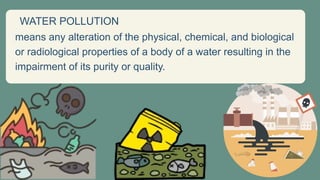
WATER POLLUTION
means any alteration of the physical, chemical, and biological
or radiological properties of a body of a water resulting in the
impairment of its purity or quality.
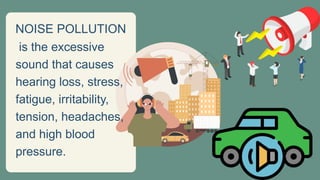
NOISE POLLUTION
is the excessive
sound that causes
hearing loss, stress,
fatigue, irritability,
tension, headaches,
and high blood
pressure.
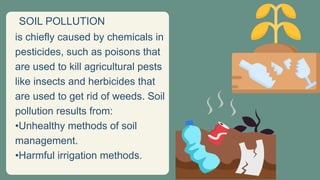
SOIL POLLUTION
is chiefly caused by chemicals in
pesticides, such as poisons that
are used to kill agricultural pests
like insects and herbicides that
are used to get rid of weeds. Soil
pollution results from:
•Unhealthy methods of soil
management.
•Harmful irrigation methods.
The following are pertinent laws adhering to environmental safety and
health protection:
P.D. 389 (P.D. 705) – The Forestry Reform Code
- codifies, updates and raises forestry laws in the country. It emphasizes the
sustainable utilization of forest resources.
P.D. 704 – Preservation of optimum productivity of fishery resources through
conservation and protection.
P.D. 1219 – Providing for the protection of coral ecosystems.
P.D. 1067 – Water Code of the Philippines
- adopts adequate measures to conserve and regulate the use of water in
commercial, industrial and residential areas. It also provides other policy guidelines
The following are pertinent laws adhering to environmental safety and
health protection:
P.D. 1251 – Imposes fines on tailings and mine wastes and the fund generated is used to
pay for the damages to land, agricultural crops, forests products, aquatic resources and
infrastructures caused by pollution for mining operations.
P.D. 984 – The Pollution Control Law
P.D. 825 – Prohibits the improper disposal of garbage
P.D. 856 – Sanitation Code - places the responsibility on the local government units for he
solid waste management in their area of production.
R.A. 8749 – Philippine Clean Air Act of 1999- provides for a comprehensive air pollution
control policy
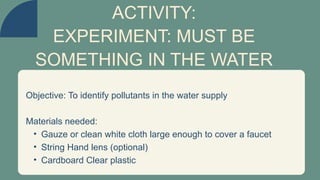
Objective: To identify pollutants in the water supply
Materials needed:
• Gauze or clean white cloth large enough to cover a faucet
• String Hand lens (optional)
• Cardboard Clear plastic
ACTIVITY:
EXPERIMENT: MUST BE
SOMETHING IN THE WATER
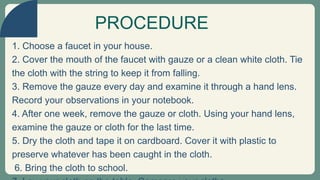
1. Choose a faucet in your house.
2. Cover the mouth of the faucet with gauze or a clean white cloth. Tie
the cloth with the string to keep it from falling.
3. Remove the gauze every day and examine it through a hand lens.
Record your observations in your notebook.
4. After one week, remove the gauze or cloth. Using your hand lens,
examine the gauze or cloth for the last time.
5. Dry the cloth and tape it on cardboard. Cover it with plastic to
preserve whatever has been caught in the cloth.
6. Bring the cloth to school.
PROCEDURE
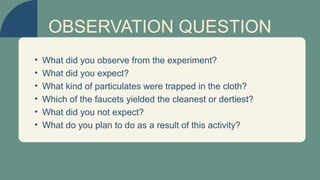
• What did you observe from the experiment?
• What did you expect?
• What kind of particulates were trapped in the cloth?
• Which of the faucets yielded the cleanest or dertiest?
• What did you not expect?
• What do you plan to do as a result of this activity?
OBSERVATION QUESTION

3.Environmental problems in the Philippines.pptx

  • 1.
    Can you recallthe typhoons that hit the different regions of the country in years or decades ago? Match the typhoons with the places they affected. Use arrows to connect them. TACLOBAN CITY COMPOSTELA ALLEY MANILA CITY ORMOC CITY CEBU CITY CAGAYAN DE ORO CITY 1. RUPING 2. PABLO 3. ONDOY 4.SENDONG 5.YOLANDA 6.URING
  • 2.
  • 3.
    THE MOST PRESSING ENVIRONMENTALPROBLEMS IN THE PHILIPPINES
  • 4.
    is the destructionof big areas of forests. DEFORESTATION EFFECTS • Soil erosion Landslides • Greenhouse effect • Denuded upland Silting of rivers and dams • Degraded watershed Flooding Destruction of corals along the coast
  • 5.
    • The Philippinesis among the countries with the fastest loss of forest cover around the world. • It ranks 4th among the world’s top 10 most threatened forest hotspots • If the 157, 400 ha per year rate of deforestation continues, our remaining forest cover will be wiped out in less than 40 years.
  • 6.
    is a suddenflood of great volume, usually caused by a heavy rain. FLASH FLOOD EFFECTS • Causes of diseases such as Cholera and other water borne diseases • Loss of life Contamination of drinking water • Destruction of Sewage System Destruction of dams and destruction of levees
  • 7.
    is defined asthe destruction of vluable material or other geological materials from the earth from an ore body, lode, vein, seam, or reef, which forms the mineralized package of economic interest to the miner in the absence of land rights, mining license, exploration or mineral transportation permit or of any document that could legitimate the on-going operations. ILLEGAL MINING EFFECTS • Water poisoning of all the living things in it • Destruction of beautiful coral reefs • Barenness of land
  • 8.
    happens when soiland rock are moved from one place to another by wind, water, and gravity. Causes of Soil Erosion:  • Deforestation • Building of Roads • Agriculture • Urbanization  • SOIL EROSION EFFECTS • Silting of artificial lakes • Loss of soil and vegetation which causes climate changes • Difficulty in raising Livestock • Unproductive use of farmland
  • 9.
    Where do oilspills come from? • from oil tankers with equipment faults  • from nature and human activities on land • from water sports  • from drilling works carried out in the sea OIL SPILL EFFECTS • Suffocation of marine mammals • Death of trees from oil roots
  • 10.
    Coral reef degradationrefers to the decline in the health and vitality of coral reef ecosystems due to various human and natural factors. Some of the main causes of coral reef degradation include: • Climate Change • Pollution • Overfishing • coastal development • Natural events • Tourism CORAL REEF DEGRADATION EFFECTS • Loss of edible reef fish Reduction of species diversity and richness • Alteration in the size structure of target species
  • 11.
    POLLUTION AIR POLLUTION Means anyalteration of the physical, chemical, and biological propert of water, air and/or land sources. means any alteration of the physical, chemical andbiological properties of atmospheric air
  • 12.
    WATER POLLUTION means anyalteration of the physical, chemical, and biological or radiological properties of a body of a water resulting in the impairment of its purity or quality.
  • 13.
    NOISE POLLUTION is theexcessive sound that causes hearing loss, stress, fatigue, irritability, tension, headaches, and high blood pressure.
  • 14.
    SOIL POLLUTION is chieflycaused by chemicals in pesticides, such as poisons that are used to kill agricultural pests like insects and herbicides that are used to get rid of weeds. Soil pollution results from: •Unhealthy methods of soil management. •Harmful irrigation methods.
  • 15.
    The following arepertinent laws adhering to environmental safety and health protection: P.D. 389 (P.D. 705) – The Forestry Reform Code - codifies, updates and raises forestry laws in the country. It emphasizes the sustainable utilization of forest resources. P.D. 704 – Preservation of optimum productivity of fishery resources through conservation and protection. P.D. 1219 – Providing for the protection of coral ecosystems. P.D. 1067 – Water Code of the Philippines - adopts adequate measures to conserve and regulate the use of water in commercial, industrial and residential areas. It also provides other policy guidelines
  • 16.
    The following arepertinent laws adhering to environmental safety and health protection: P.D. 1251 – Imposes fines on tailings and mine wastes and the fund generated is used to pay for the damages to land, agricultural crops, forests products, aquatic resources and infrastructures caused by pollution for mining operations. P.D. 984 – The Pollution Control Law P.D. 825 – Prohibits the improper disposal of garbage P.D. 856 – Sanitation Code - places the responsibility on the local government units for he solid waste management in their area of production. R.A. 8749 – Philippine Clean Air Act of 1999- provides for a comprehensive air pollution control policy
  • 17.
    Objective: To identifypollutants in the water supply Materials needed: • Gauze or clean white cloth large enough to cover a faucet • String Hand lens (optional) • Cardboard Clear plastic ACTIVITY: EXPERIMENT: MUST BE SOMETHING IN THE WATER
  • 18.
    1. Choose afaucet in your house. 2. Cover the mouth of the faucet with gauze or a clean white cloth. Tie the cloth with the string to keep it from falling. 3. Remove the gauze every day and examine it through a hand lens. Record your observations in your notebook. 4. After one week, remove the gauze or cloth. Using your hand lens, examine the gauze or cloth for the last time. 5. Dry the cloth and tape it on cardboard. Cover it with plastic to preserve whatever has been caught in the cloth. 6. Bring the cloth to school. PROCEDURE
  • 19.
    • What didyou observe from the experiment? • What did you expect? • What kind of particulates were trapped in the cloth? • Which of the faucets yielded the cleanest or dertiest? • What did you not expect? • What do you plan to do as a result of this activity? OBSERVATION QUESTION