Learning Objective
Recognise parallel and perpendicular
faces and edges on 3.D shapes
Rehearse the terms polyhedron,
tetrahedron and begin to use
dodecahedron.
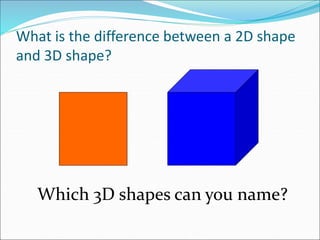
What is the difference between a 2D shape
and 3D shape?
Which 3D shapes can you name?
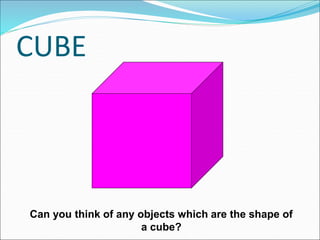
CUBE
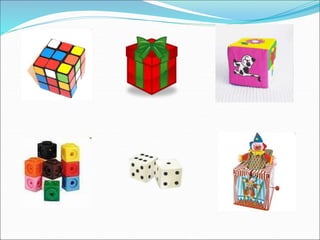
Can you think of any objects which are the shape of
a cube?
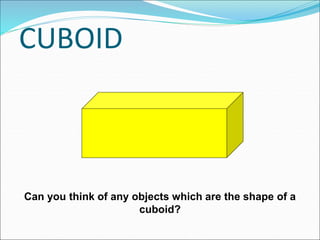
CUBOID
Can you think of any objects which are the shape of a
cuboid?
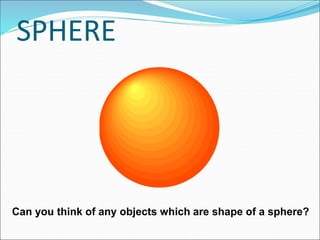
SPHERE
Can you think of any objects which are shape of a sphere?
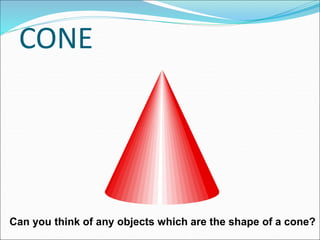
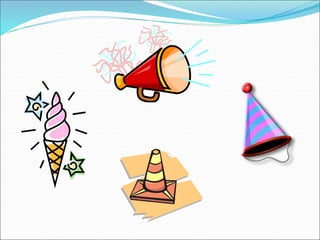
CONE
Can you think of any objects which are the shape of a cone?
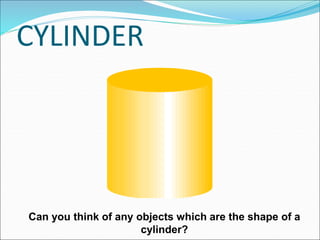
CYLINDER
Can you think of any objects which are the shape of a
cylinder?
SQUARE BASED
PYRAMID
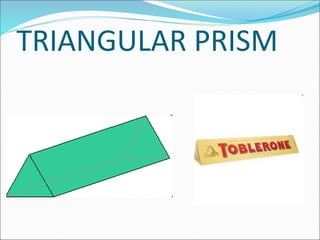
TRIANGULAR PRISM
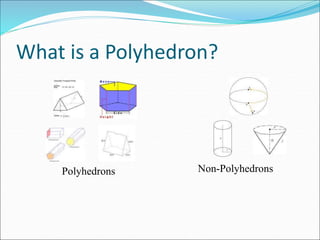
What is a Polyhedron?
Polyhedrons Non-Polyhedrons
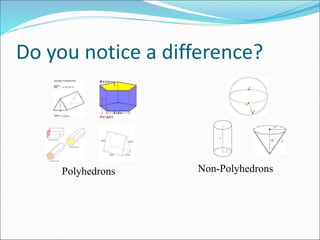
Do you notice a difference?
Polyhedrons Non-Polyhedrons
Polyhedrons
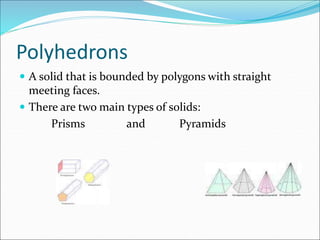
 A solid that is bounded by polygons with straight
meeting faces.
 There are two main types of solids:
Prisms and Pyramids
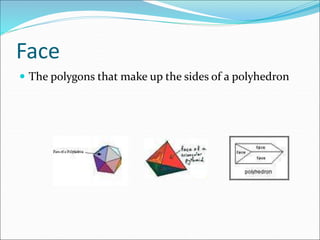
Face
 The polygons that make up the sides of a polyhedron
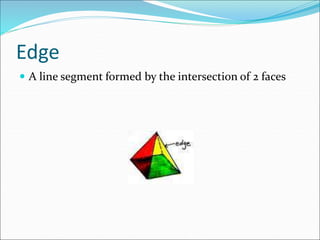
Edge
 A line segment formed by the intersection of 2 faces
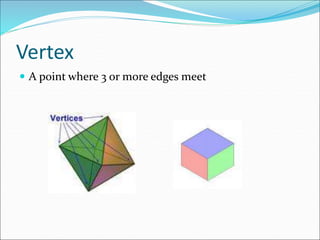
Vertex
 A point where 3 or more edges meet
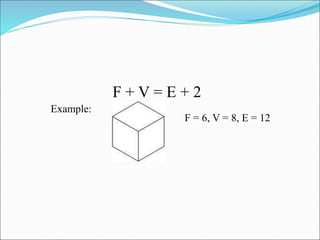
F + V = E + 2
Example:
F = 6, V = 8, E = 12
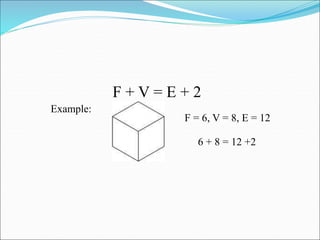
F + V = E + 2
Example:
F = 6, V = 8, E = 12
6 + 8 = 12 +2
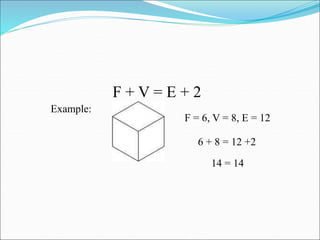
F + V = E + 2
Example:
F = 6, V = 8, E = 12
6 + 8 = 12 +2
14 = 14
Visualise 3.D shapes
from 2.D drawings and
identify different nets
for a closed cube.
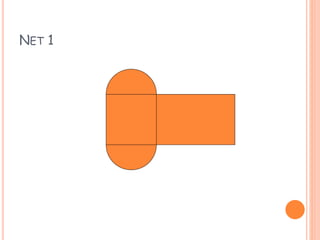
NET 1
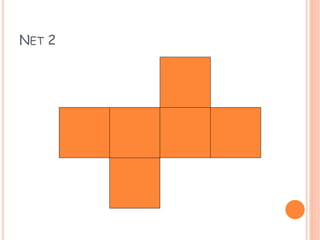
NET 2
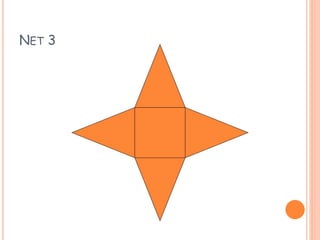
NET 3
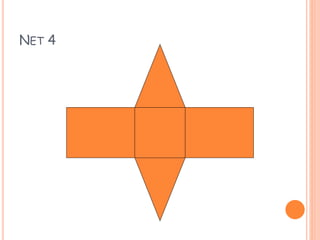
NET 4
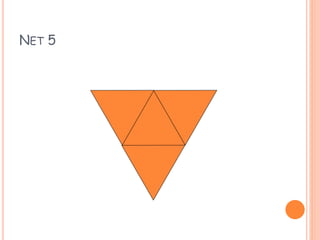
NET 5
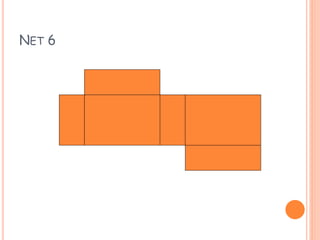
NET 6
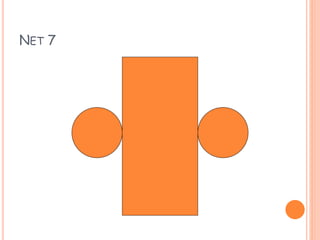
NET 7
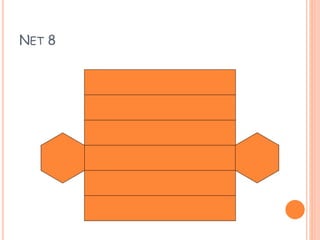
NET 8

3 d shapes and nets