AGENDA
o DEFINE RFAND REVIEW OF MOBILE
NETWORK
o DEFINE THE RF ISSUES IN 2G AND 3G
o METHODS OF FINDING FLUTY KPIS
o STRATEGIES OF OPTIMIZATION
o SUMMARY
3.
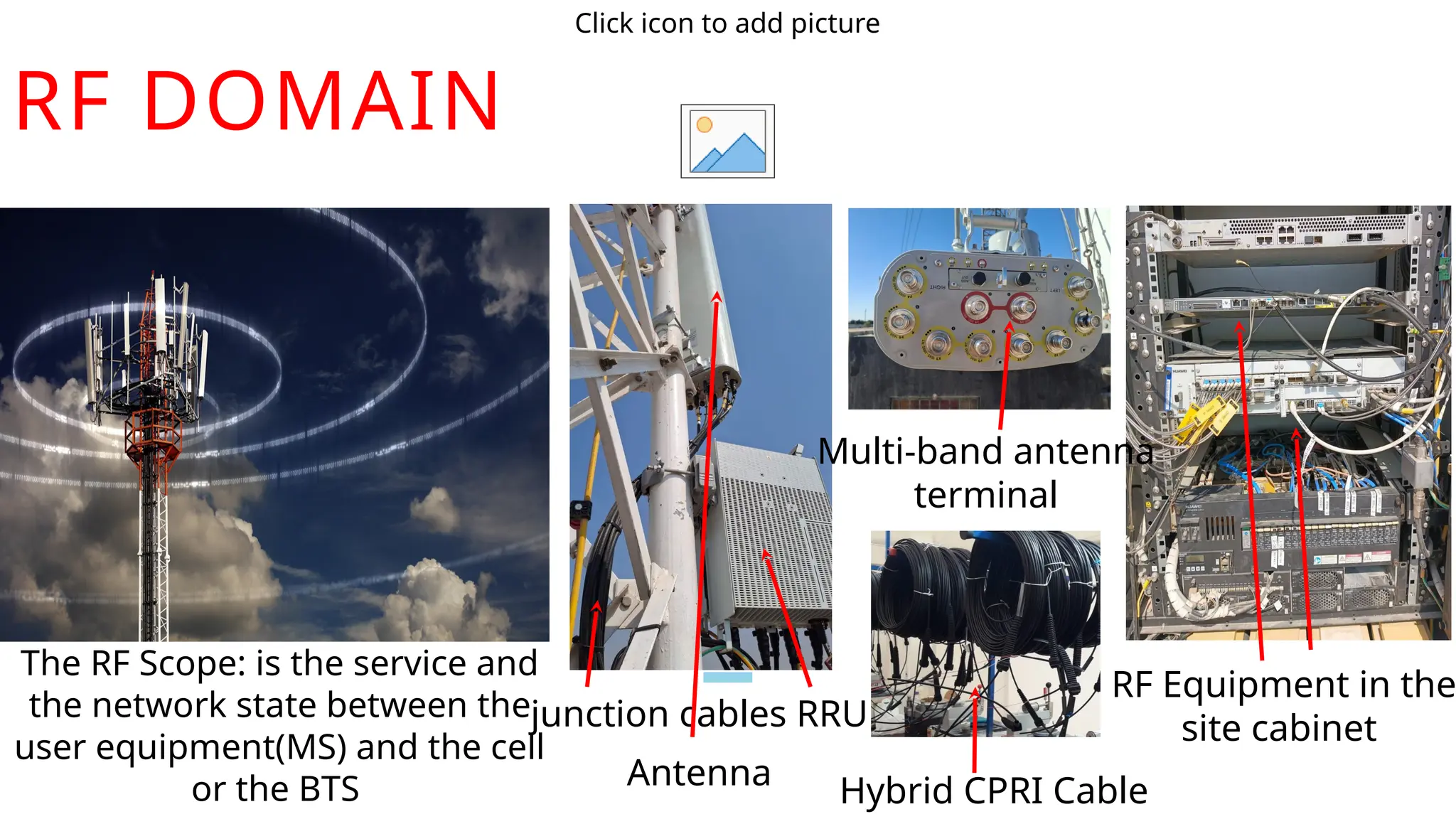
The RF Scope:is the service and
the network state between the
user equipment(MS) and the cell
or the BTS
RF DOMAIN
junction cables RRU
Antenna
Multi-band antenna
terminal
RF Equipment in the
site cabinet
Hybrid CPRI Cable
Click icon to add picture
4.
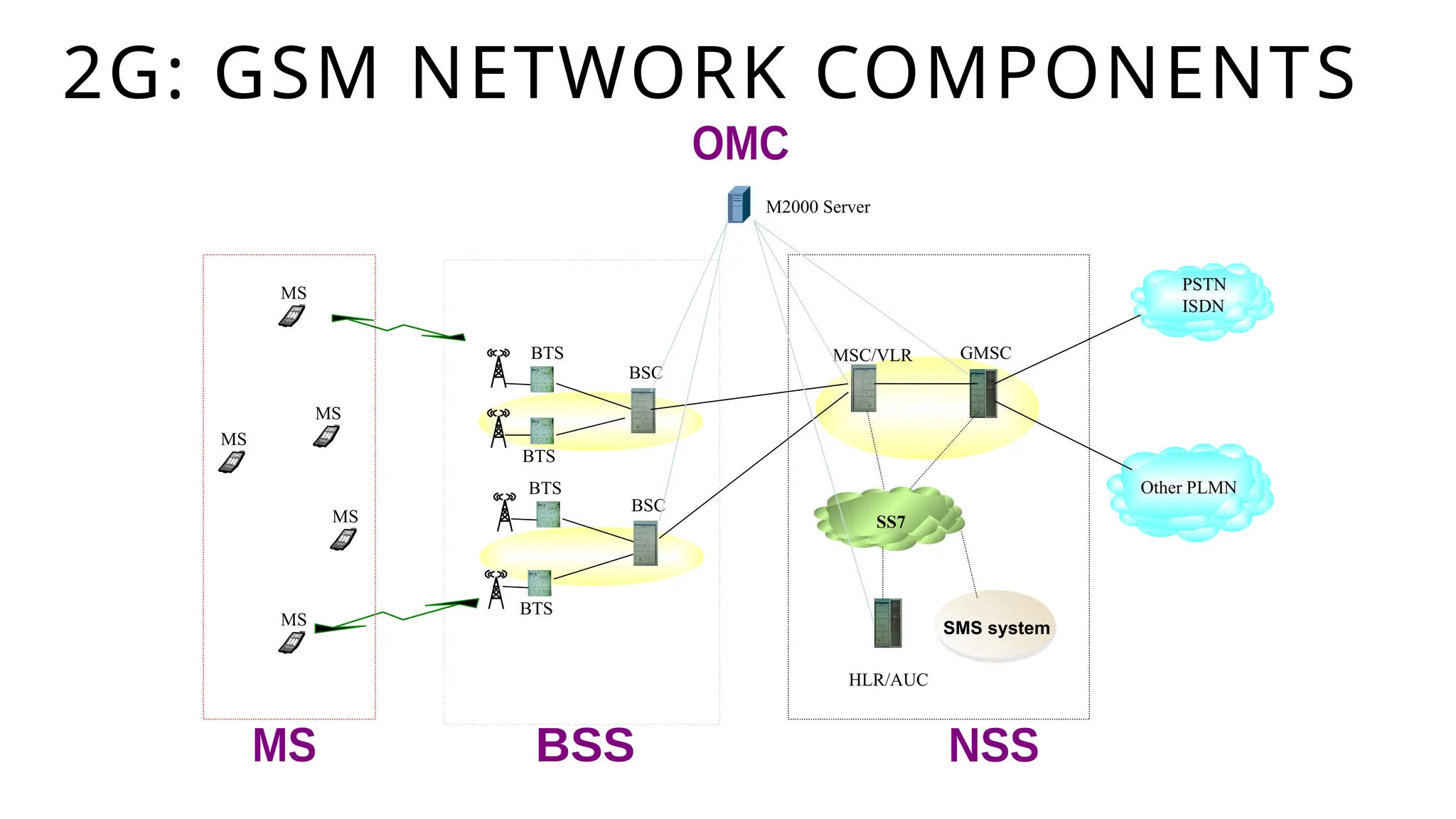
2G: GSM NETWORKCOMPONENTS
BTS
BSC
BTS
BSC
SS7
SMS system
PSTN
ISDN
MSC/VLR GMSC
HLR/AUC
Other PLMN
MS
MS
BTS
BTS
MS
MS
MS
M2000 Server
RF TARGET MAINKPI
o CSSR (CALL SETUP SUCCESSFUL RATIO)
o DCR (CALL DROP RATIO)
o INCOMING AND OUTGOING HOSR (HANDOVER
SUCCESSFUL RATIO)
o CALL BLOCKING
o THROUGHPUT (END USER INTERNET SPEED)
o CONGESTIONS (CS/PS)
12.
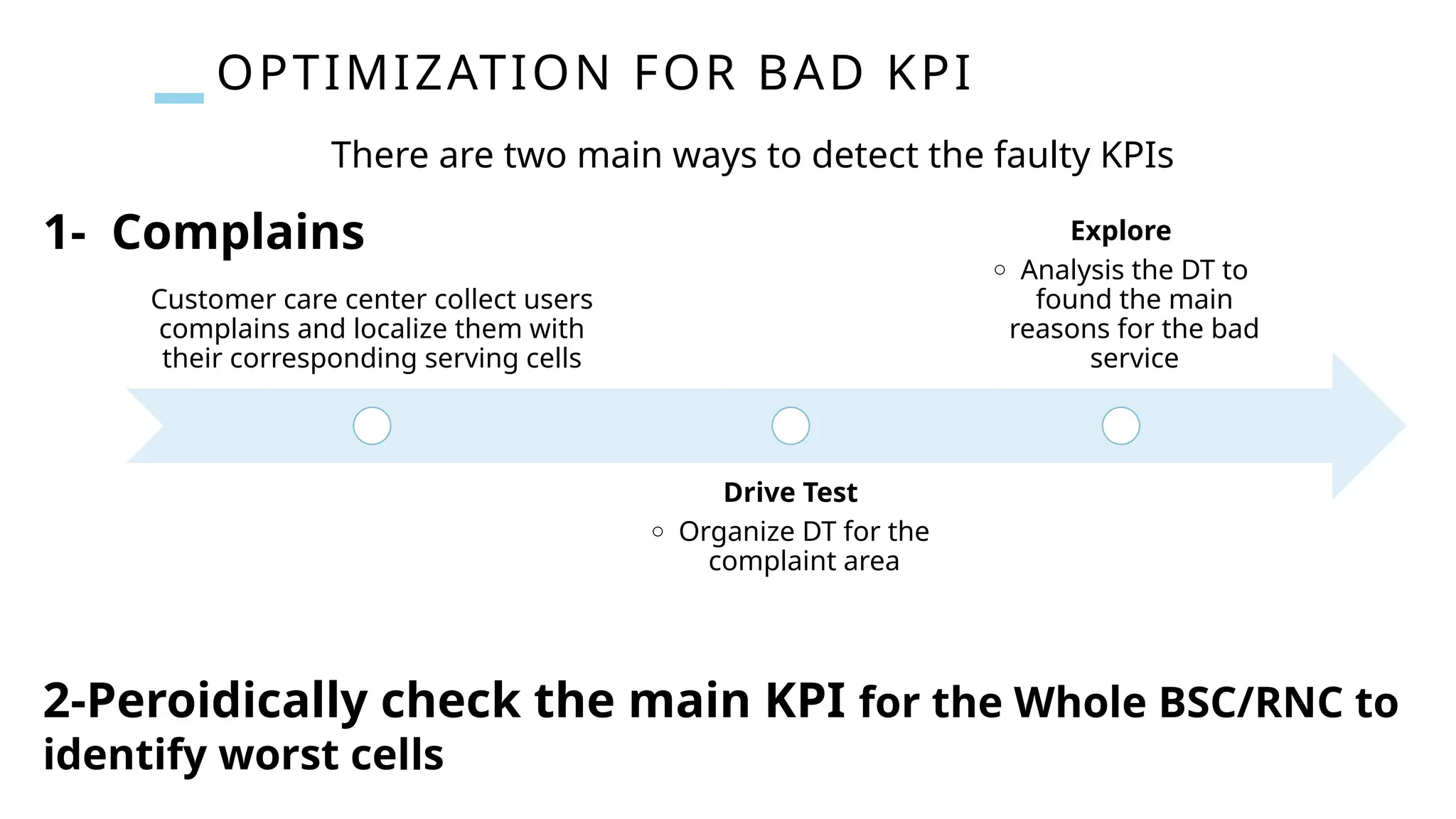
OPTIMIZATION FOR BADKPI
There are two main ways to detect the faulty KPIs
Customer care center collect users
complains and localize them with
their corresponding serving cells
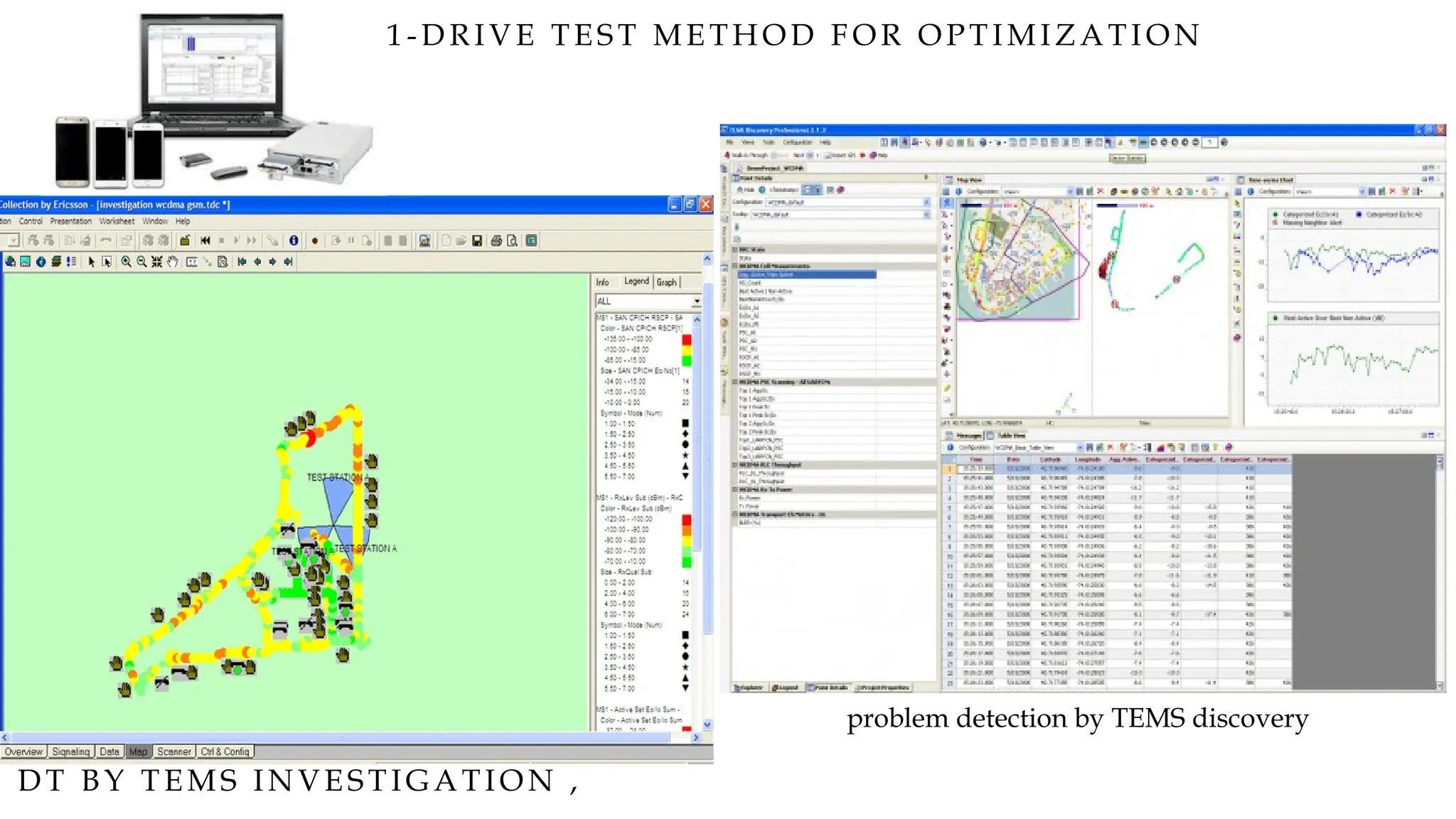
Drive Test
o Organize DT for the
complaint area
Explore
o Analysis the DT to
found the main
reasons for the bad
service
1- Complains
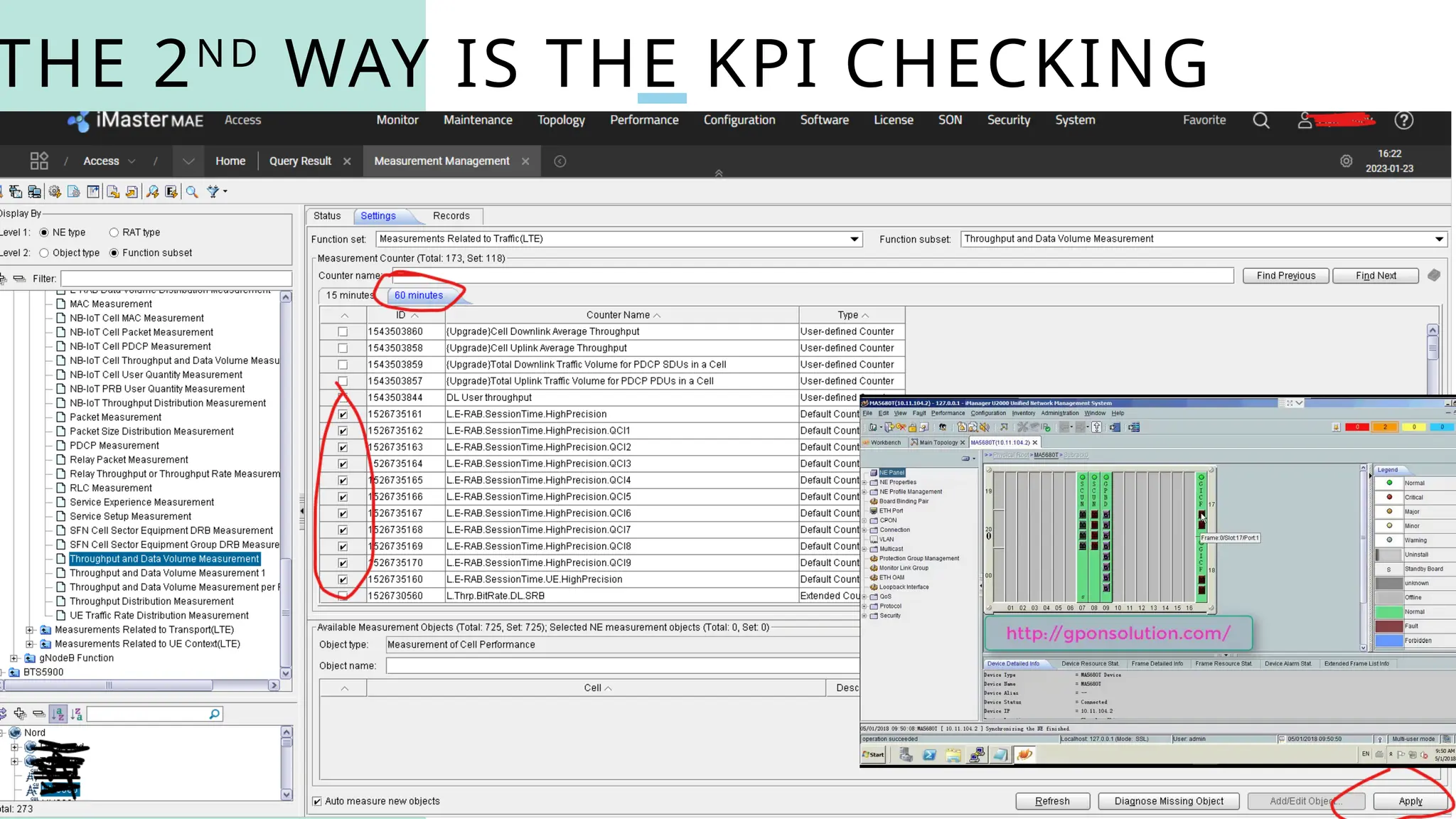
2-Peroidically check the main KPI for the Whole BSC/RNC to
identify worst cells
13.
DT B YT EM S IN V E ST IG A TIO N ,
problem detection by TEMS discovery
1 - D R IV E TES T ME TH O D F OR OPT IMI ZA TI ON
14.
HUAWEI TECHNOLOGIES CO.,LTD. Huawei Confidential Page 14
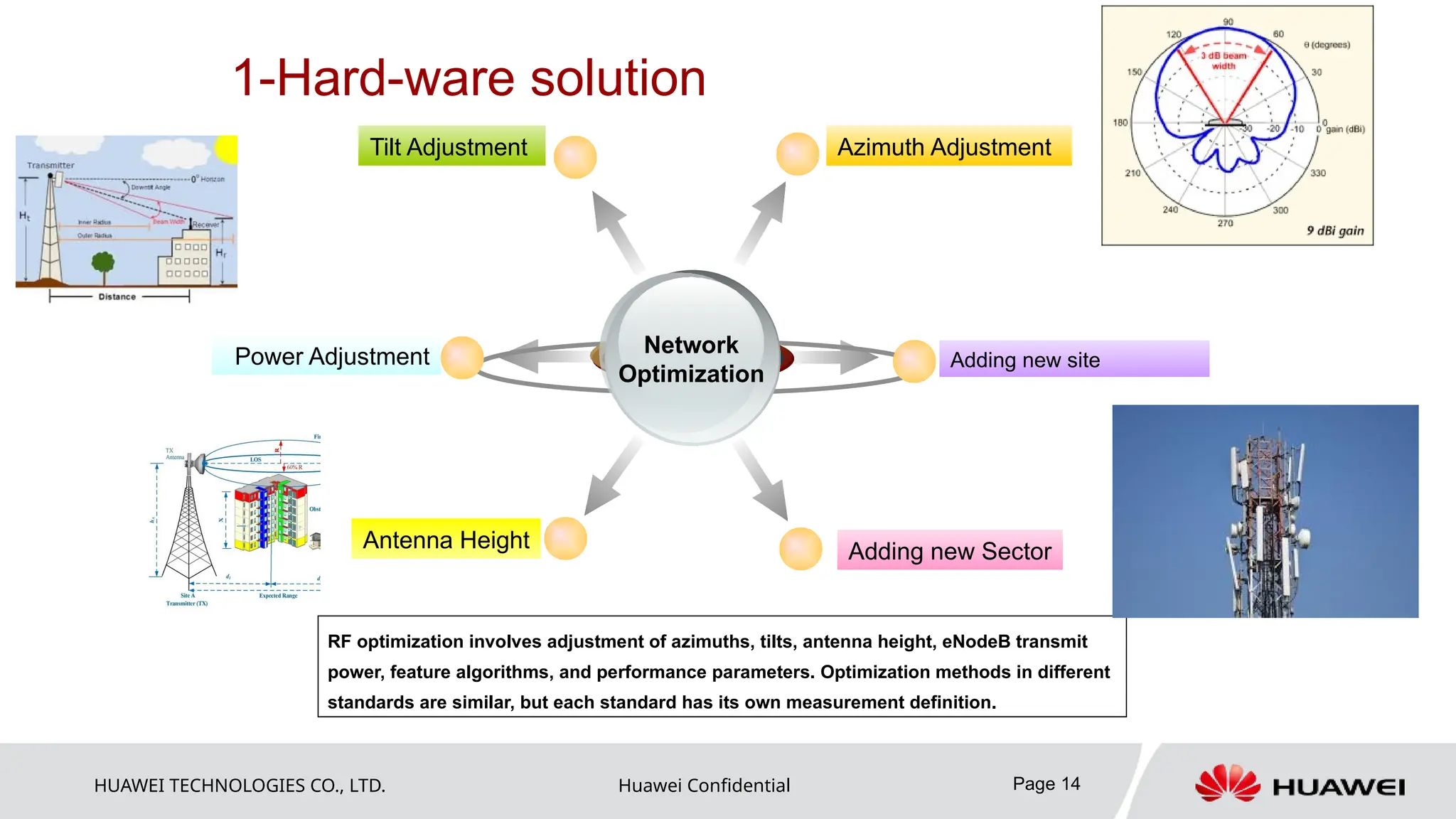
1-Hard-ware solution
RF optimization involves adjustment of azimuths, tilts, antenna height, eNodeB transmit
power, feature algorithms, and performance parameters. Optimization methods in different
standards are similar, but each standard has its own measurement definition.
Network
Optimization
Azimuth Adjustment
Tilt Adjustment
Adding new Sector
Adding new site
Power Adjustment
Antenna Height
15.
THE 2ND
WAY ISTHE KPI CHECKING
Parameter
tuning to
reduce TCH
Congestion
Rate in Huawei
System
16.
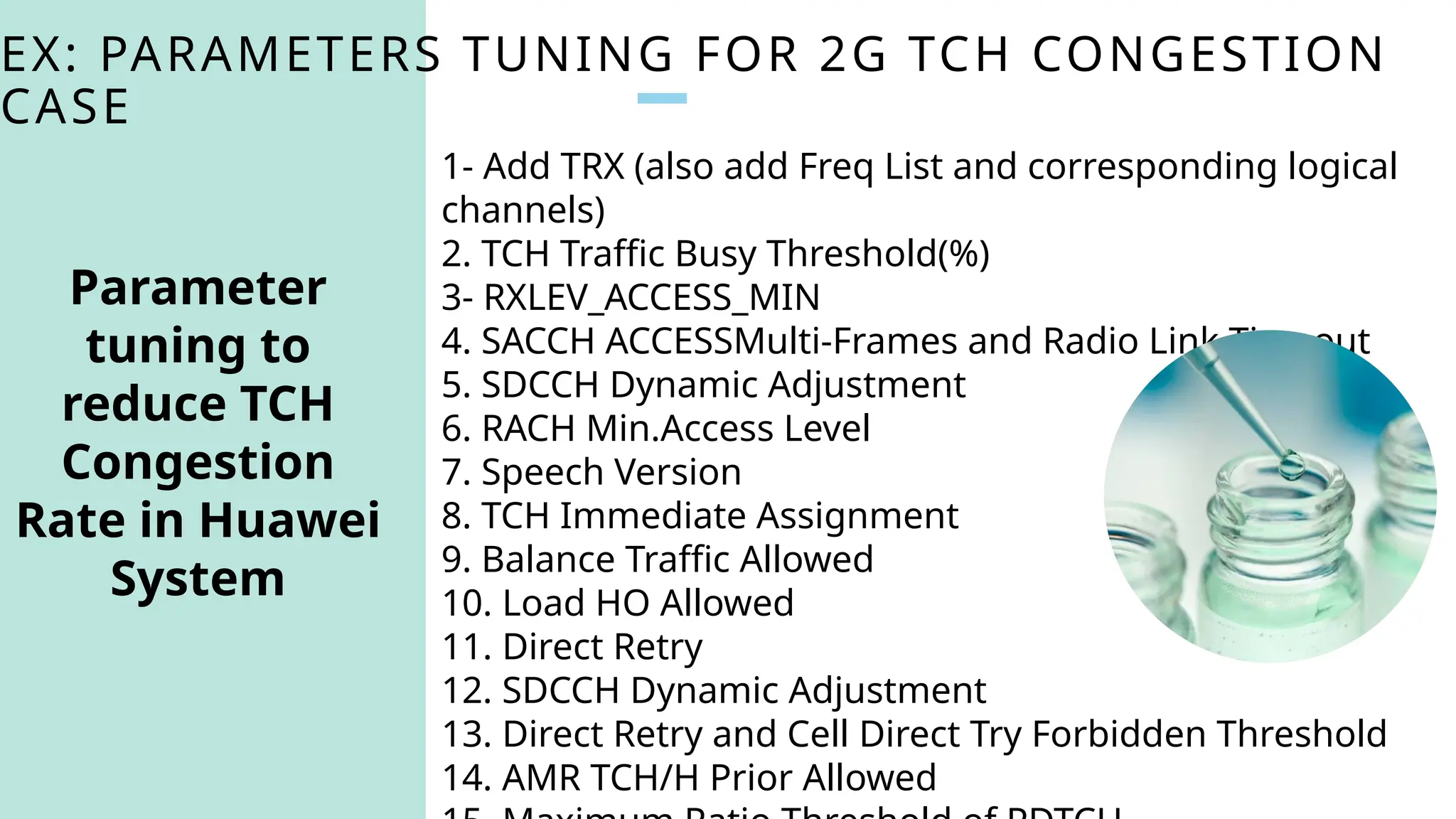
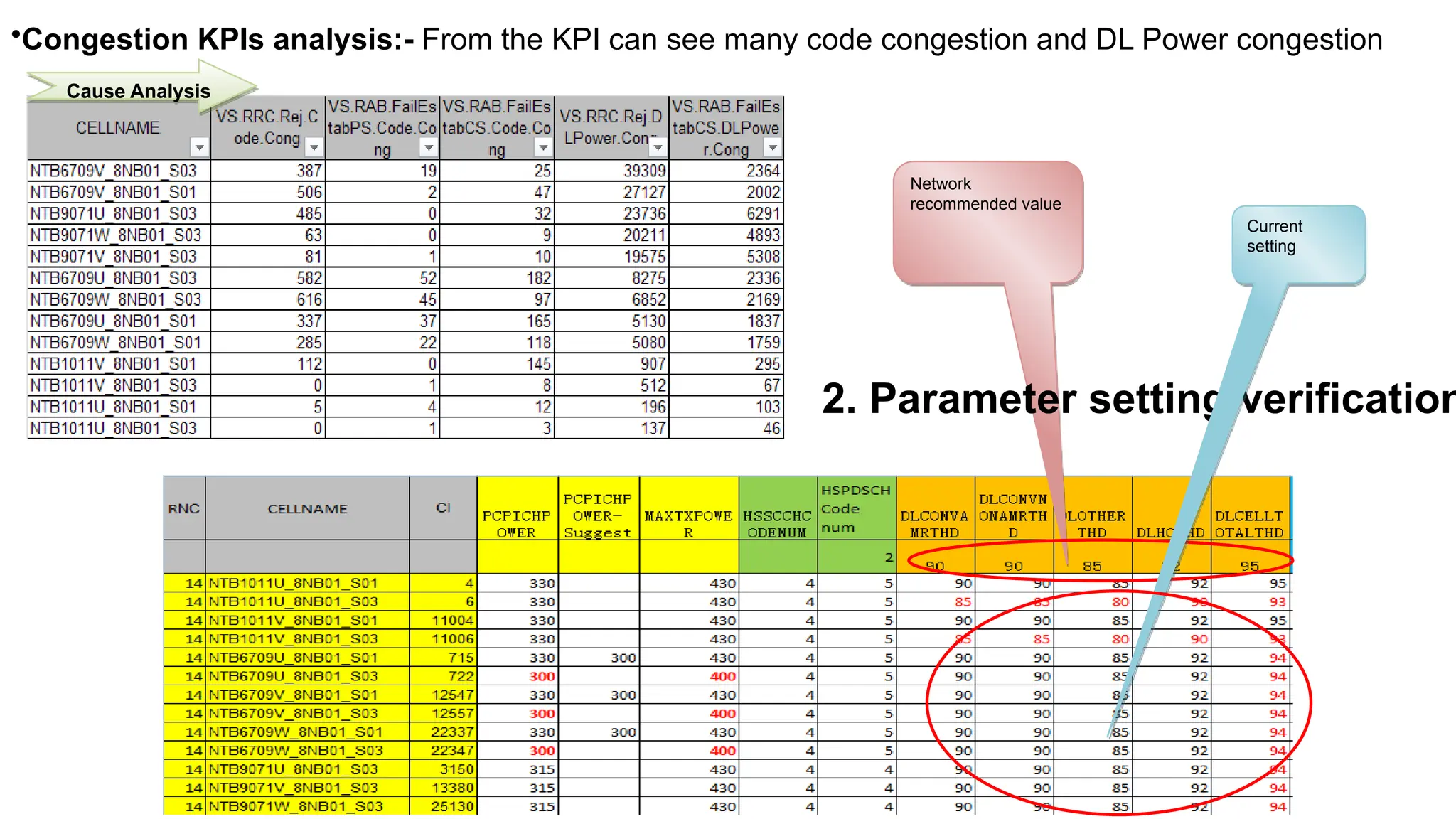
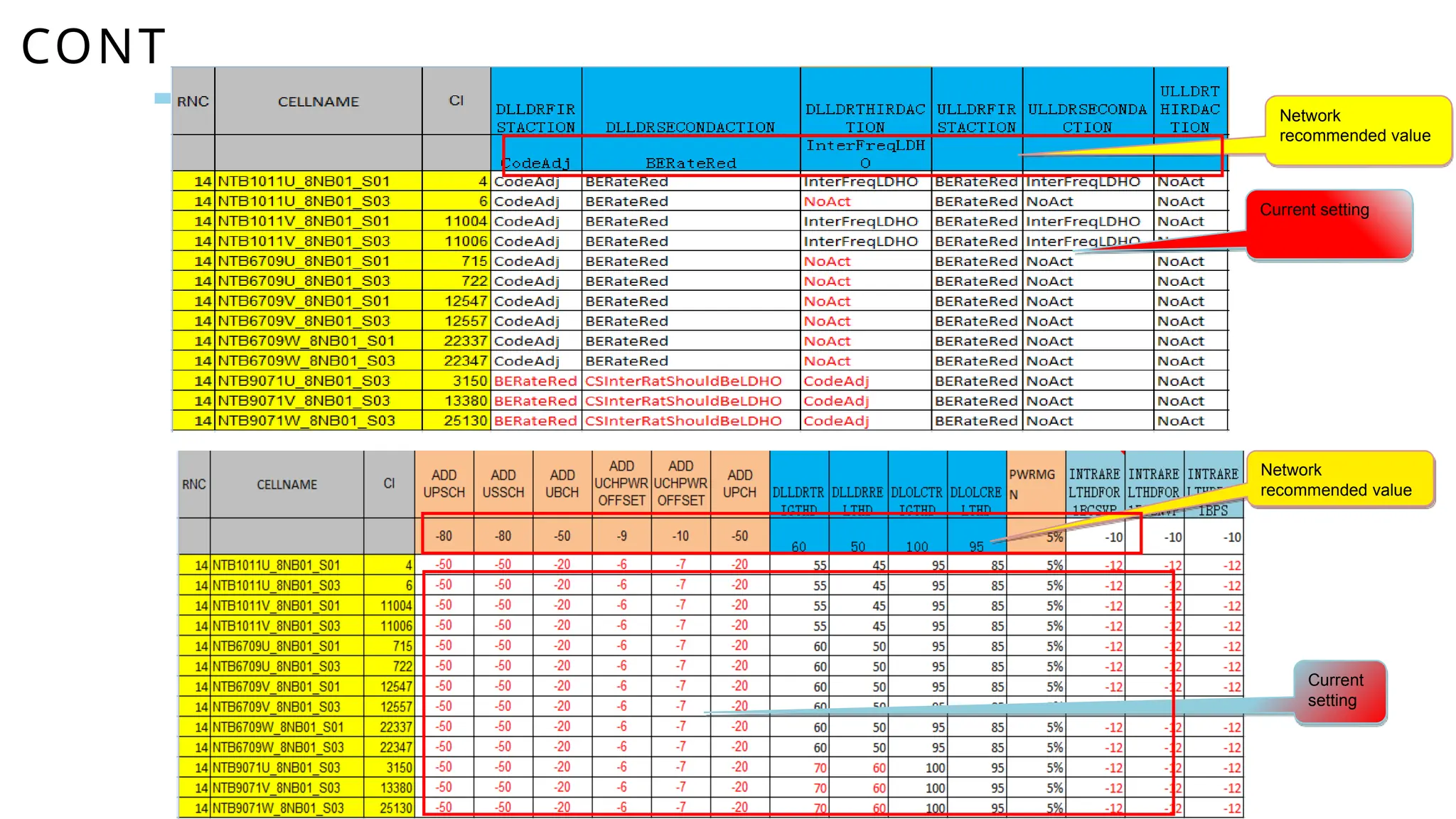
EX: PARAMETERS TUNINGFOR 2G TCH CONGESTION
CASE
1- Add TRX (also add Freq List and corresponding logical
channels)
2. TCH Traffic Busy Threshold(%)
3- RXLEV_ACCESS_MIN
4. SACCH ACCESSMulti-Frames and Radio Link Timeout
5. SDCCH Dynamic Adjustment
6. RACH Min.Access Level
7. Speech Version
8. TCH Immediate Assignment
9. Balance Traffic Allowed
10. Load HO Allowed
11. Direct Retry
12. SDCCH Dynamic Adjustment
13. Direct Retry and Cell Direct Try Forbidden Threshold
14. AMR TCH/H Prior Allowed
Parameter
tuning to
reduce TCH
Congestion
Rate in Huawei
System
17.
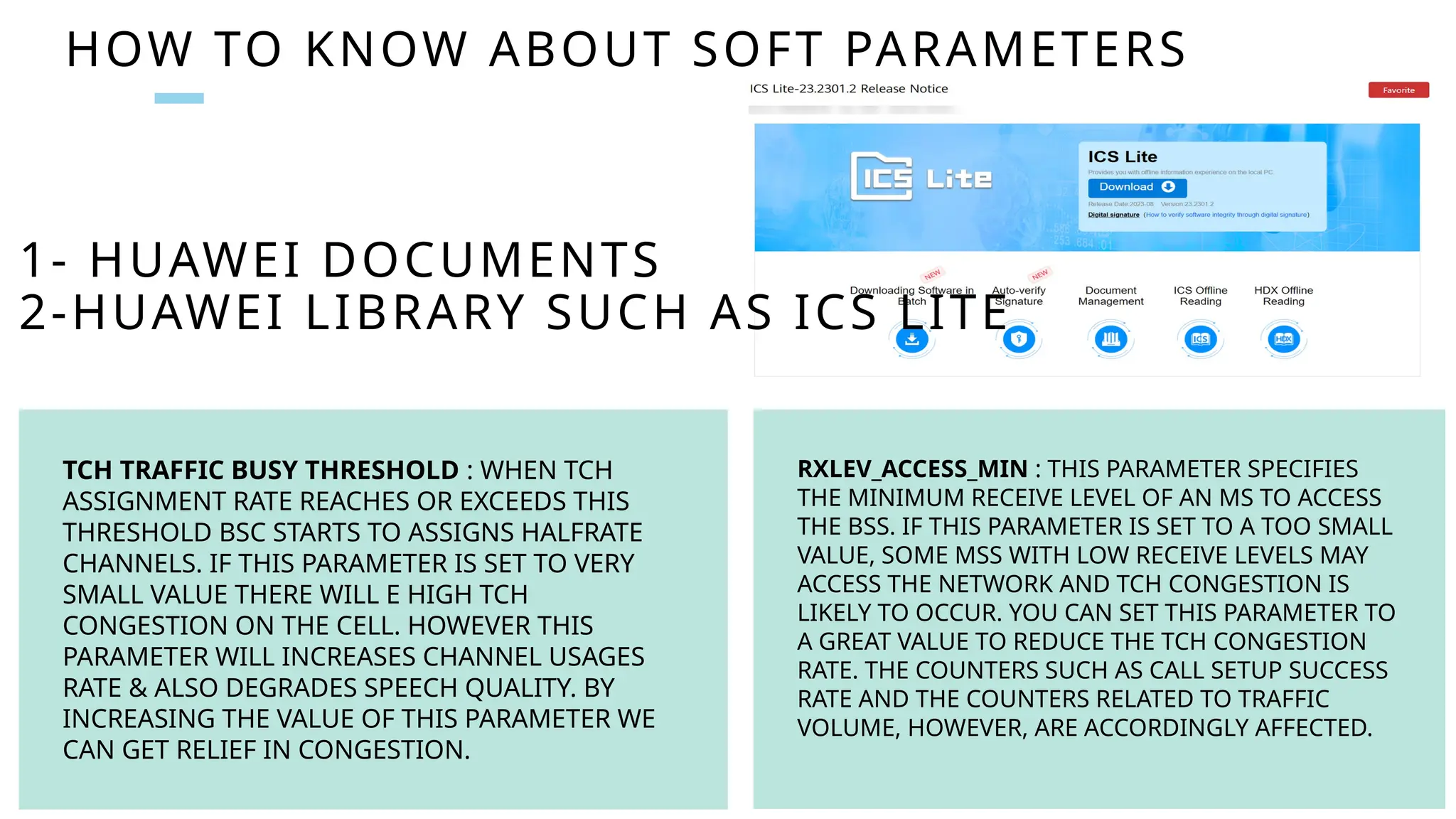
HOW TO KNOWABOUT SOFT PARAMETERS
TCH TRAFFIC BUSY THRESHOLD : WHEN TCH
ASSIGNMENT RATE REACHES OR EXCEEDS THIS
THRESHOLD BSC STARTS TO ASSIGNS HALFRATE
CHANNELS. IF THIS PARAMETER IS SET TO VERY
SMALL VALUE THERE WILL E HIGH TCH
CONGESTION ON THE CELL. HOWEVER THIS
PARAMETER WILL INCREASES CHANNEL USAGES
RATE & ALSO DEGRADES SPEECH QUALITY. BY
INCREASING THE VALUE OF THIS PARAMETER WE
CAN GET RELIEF IN CONGESTION.
RXLEV_ACCESS_MIN : THIS PARAMETER SPECIFIES
THE MINIMUM RECEIVE LEVEL OF AN MS TO ACCESS
THE BSS. IF THIS PARAMETER IS SET TO A TOO SMALL
VALUE, SOME MSS WITH LOW RECEIVE LEVELS MAY
ACCESS THE NETWORK AND TCH CONGESTION IS
LIKELY TO OCCUR. YOU CAN SET THIS PARAMETER TO
A GREAT VALUE TO REDUCE THE TCH CONGESTION
RATE. THE COUNTERS SUCH AS CALL SETUP SUCCESS
RATE AND THE COUNTERS RELATED TO TRAFFIC
VOLUME, HOWEVER, ARE ACCORDINGLY AFFECTED.
1- HUAWEI DOCUMENTS
2-HUAWEI LIBRARY SUCH AS ICS LITE
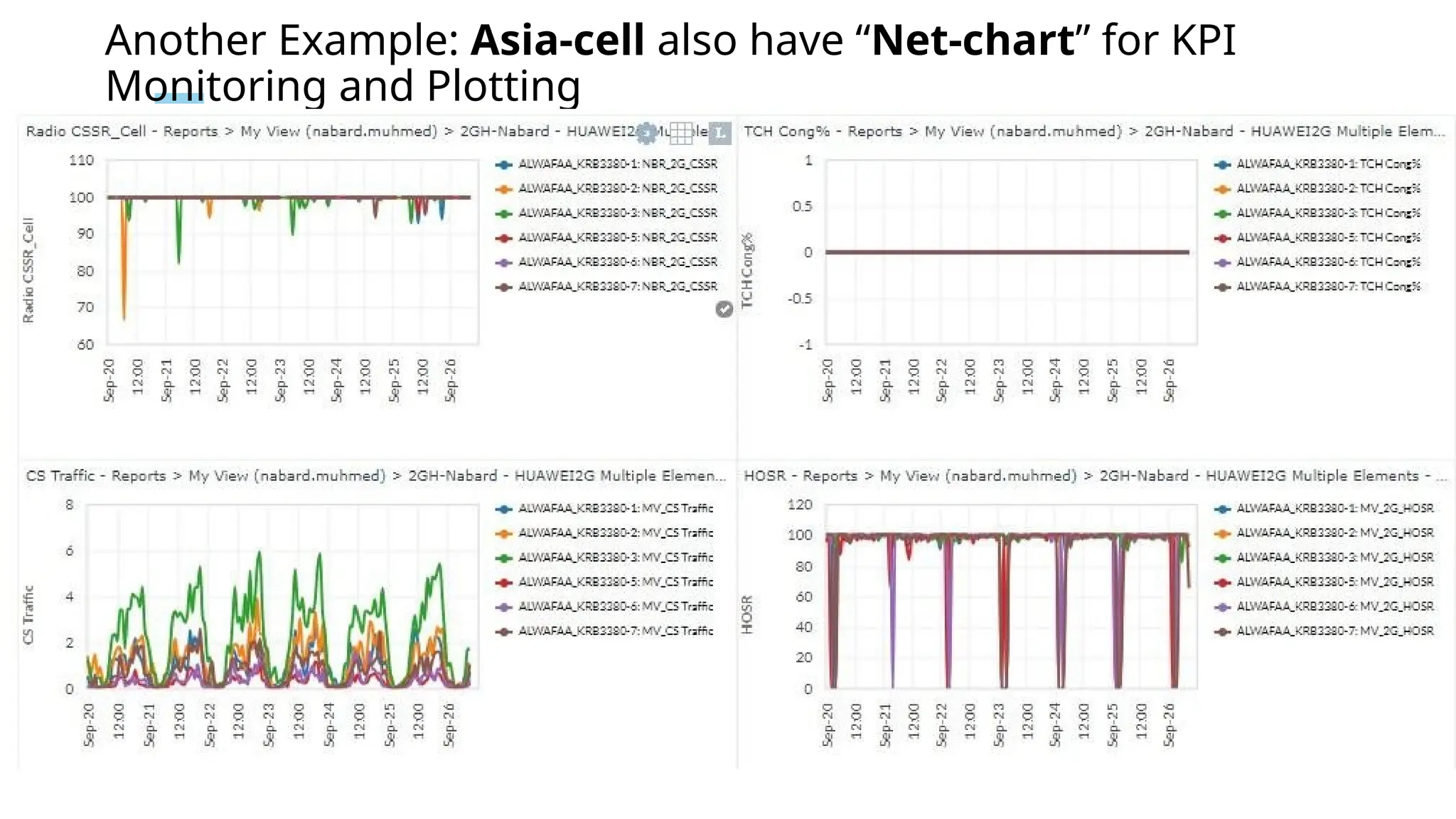
Another Example: Asia-cellalso have “Net-chart” for KPI
Monitoring and Plotting
o STRONG MARKET POSITIONING
o ROBUST GROWTH STRATEGY
o INNOVATIVE PRODUCT
DEVELOPMENT
o COMMITMENT TO USER
SATISFACTION
21.
WELL THANKS
Appreciate yourlicensing and
now we are waiting your
suggestions and questions
Mustafa J. Kutran
2 1
Click icon to add picture
Editor's Notes
#4 This diagram shows a simplified GSM network. The main components of a GSM System are: BSS, NSS and OMC
The Mobile Station (MS) is the only direct part of the network that the subscriber can see.
BSS means Base Station Subsystem. BSS is responsible for the system functions related to radio and transmission of the GSM system. BSS includes BSC and BTS. BSC means base station controller. BTS means base transceiver station.
NSS means Network Subsystem. NSS is composed of MSC/VLR, HLR/AuC/EIR. NSS is the control and switching part of the whole GSM system.
MSC means Mobile Switching Center. HLR means home location register. AuC means authentication center. EIR means equipment identification register. MSC provides the interface between GSM network and the Public Switched Telephone Network (PSTN).
OMC means operation and maintenance center. It is used to configure and maintain the network from a central location. OMC is connected to BSS and NSS through LAN or WAN.


![15 gsm bss network kpi (rx quality) optimization manual[1].doc](https://cdn.slidesharecdn.com/ss_thumbnails/15gsmbssnetworkkpirxqualityoptimizationmanual1-140618022506-phpapp01-thumbnail.jpg?width=640&height=640&fit=bounds)


