- Innovative Medicines Initiative -
Elisabetta Vaudano
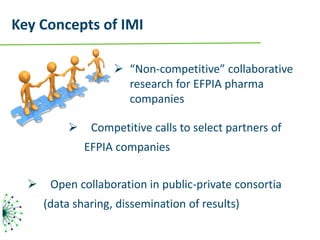
 Open collaboration in public-private consortia
(data sharing, dissemination of results)
 “Non-competitive” collaborative
research for EFPIA pharma
companies
 Competitive calls to select partners of
EFPIA companies
Key Concepts of IMI
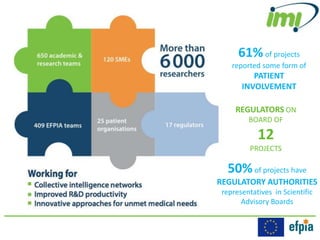
REGULATORS ON
BOARD OF
12
PROJECTS
50%of projects have
REGULATORY AUTHORITIES
representatives in Scientific
Advisory Boards
61%of projects
reported some form of
PATIENT
INVOLVEMENT
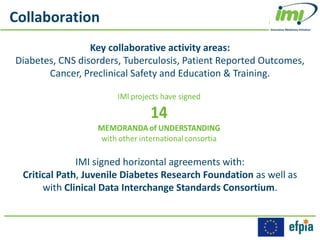
Key collaborative activity areas:
Diabetes, CNS disorders, Tuberculosis, Patient Reported Outcomes,
Cancer, Preclinical Safety and Education & Training.
IMI signed horizontal agreements with:
Critical Path, Juvenile Diabetes Research Foundation as well as
with Clinical Data Interchange Standards Consortium.
Collaboration
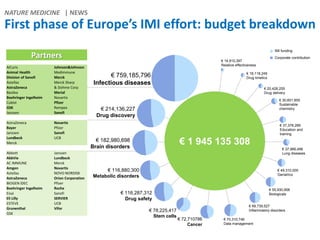
€ 1 945 135 308
€ 759,185,796
Infectious diseases
€ 214,136,227
Drug discovery
€ 182,980,698
Brain disorders
€ 116,880,300
Metabolic disorders
€ 116,287,312
Drug safety
€ 78,225,417
Stem cells
€ 72,710786
Cancer
IMI funding
Corporate contribution
€ 70,310,746
Data management
€ 69,739,527
Inflammatory disorders
€ 55,930,958
Biologicals
€ 49,310,000
Geriatrics
€ 37,966,496
Lung diseases
€ 37,378,289
Education and
training
€ 30,601,855
Sustainable
chemistry
€ 20,426,255
Drug delivery
€ 18,118,249
Drug kinetics
€ 14,910,397
Relative effectiveness
NATURE MEDICINE | NEWS
Partners
AiCuris Johnson&Johnson
Animal Health Medimmune
Division of Sanofi Merck
Astellas Merck Sharp
AstraZeneca & Dohme Corp
Basilea Merial
Boehringer Ingelheim Novartis
Cubist Pfizer
GSK Rempex
Janssen Sanofi
AstraZeneca Novartis
Bayer Pfizer
Janssen Sanofi
Lundbeck UCB
Merck
Abbott Janssen
AbbVie Lundbeck
AC IMMUNE Merck
Amgen Novartis
Astellas NOVO NORDISK
AstraZeneca Orion Corporation
BIOGEN IDEC Pfizer
Boehringer Ingelheim Roche
Eisai Sanofi
Eli Lilly SERVIER
ESTEVE UCB
Grunenthal Vifor
GSK
First phase of Europe’s IMI effort: budget breakdown
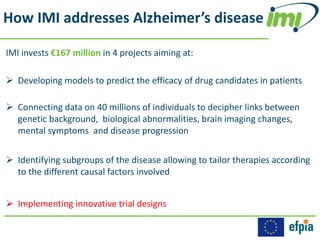
IMI invests €167 million in 4 projects aiming at:
 Developing models to predict the efficacy of drug candidates in patients
 Connecting data on 40 millions of individuals to decipher links between
genetic background, biological abnormalities, brain imaging changes,
mental symptoms and disease progression
 Identifying subgroups of the disease allowing to tailor therapies according
to the different causal factors involved
 Implementing innovative trial designs
How IMI addresses Alzheimer’s disease
January 2014
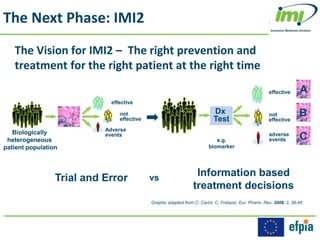
The Vision for IMI2 – The right prevention and
treatment for the right patient at the right time
Biologically
heterogeneous
patient population
Graphic adapted from C. Carini, C. Fratazzi, Eur. Pharm. Rev. 2008, 2, 39-45
effective
not
effective
Adverse
events
Trial and Error
effective
not
effective
adverse
events
Dx
Test
A
B
Ce.g.
biomarker
Information based
treatment decisions
vs
The Next Phase: IMI2
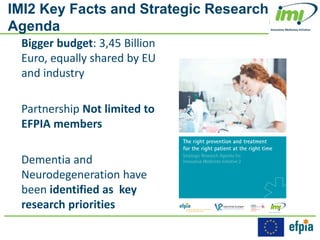
IMI2 Key Facts and Strategic Research
Agenda
Bigger budget: 3,45 Billion
Euro, equally shared by EU
and industry
Partnership Not limited to
EFPIA members
Dementia and
Neurodegeneration have
been identified as key
research priorities
Thank you
www.imi.europa.eu
@IMI_JU

Global Dementia Legacy Event: Elisabetta Vaudano DVM PhD

  • 1.
    - Innovative MedicinesInitiative - Elisabetta Vaudano
  • 2.
     Open collaborationin public-private consortia (data sharing, dissemination of results)  “Non-competitive” collaborative research for EFPIA pharma companies  Competitive calls to select partners of EFPIA companies Key Concepts of IMI
  • 3.
    REGULATORS ON BOARD OF 12 PROJECTS 50%ofprojects have REGULATORY AUTHORITIES representatives in Scientific Advisory Boards 61%of projects reported some form of PATIENT INVOLVEMENT
  • 4.
    Key collaborative activityareas: Diabetes, CNS disorders, Tuberculosis, Patient Reported Outcomes, Cancer, Preclinical Safety and Education & Training. IMI signed horizontal agreements with: Critical Path, Juvenile Diabetes Research Foundation as well as with Clinical Data Interchange Standards Consortium. Collaboration
  • 5.
    € 1 945135 308 € 759,185,796 Infectious diseases € 214,136,227 Drug discovery € 182,980,698 Brain disorders € 116,880,300 Metabolic disorders € 116,287,312 Drug safety € 78,225,417 Stem cells € 72,710786 Cancer IMI funding Corporate contribution € 70,310,746 Data management € 69,739,527 Inflammatory disorders € 55,930,958 Biologicals € 49,310,000 Geriatrics € 37,966,496 Lung diseases € 37,378,289 Education and training € 30,601,855 Sustainable chemistry € 20,426,255 Drug delivery € 18,118,249 Drug kinetics € 14,910,397 Relative effectiveness NATURE MEDICINE | NEWS Partners AiCuris Johnson&Johnson Animal Health Medimmune Division of Sanofi Merck Astellas Merck Sharp AstraZeneca & Dohme Corp Basilea Merial Boehringer Ingelheim Novartis Cubist Pfizer GSK Rempex Janssen Sanofi AstraZeneca Novartis Bayer Pfizer Janssen Sanofi Lundbeck UCB Merck Abbott Janssen AbbVie Lundbeck AC IMMUNE Merck Amgen Novartis Astellas NOVO NORDISK AstraZeneca Orion Corporation BIOGEN IDEC Pfizer Boehringer Ingelheim Roche Eisai Sanofi Eli Lilly SERVIER ESTEVE UCB Grunenthal Vifor GSK First phase of Europe’s IMI effort: budget breakdown
  • 6.
    IMI invests €167million in 4 projects aiming at:  Developing models to predict the efficacy of drug candidates in patients  Connecting data on 40 millions of individuals to decipher links between genetic background, biological abnormalities, brain imaging changes, mental symptoms and disease progression  Identifying subgroups of the disease allowing to tailor therapies according to the different causal factors involved  Implementing innovative trial designs How IMI addresses Alzheimer’s disease
  • 7.
  • 8.
    The Vision forIMI2 – The right prevention and treatment for the right patient at the right time Biologically heterogeneous patient population Graphic adapted from C. Carini, C. Fratazzi, Eur. Pharm. Rev. 2008, 2, 39-45 effective not effective Adverse events Trial and Error effective not effective adverse events Dx Test A B Ce.g. biomarker Information based treatment decisions vs The Next Phase: IMI2
  • 9.
    IMI2 Key Factsand Strategic Research Agenda Bigger budget: 3,45 Billion Euro, equally shared by EU and industry Partnership Not limited to EFPIA members Dementia and Neurodegeneration have been identified as key research priorities
  • 10.

Editor's Notes

  • #4 EMA established in 1995 Networking agency - Coordinates the existing scientific resources of the Member States to evaluate and supervise medicinal products for both human and veterinary use throughout the European Union. The EMA is primarily involved in the centralised procedure for obtaining an EU marketing authorisation. (27 MS + No/IS = 47 Agencies) The Agency also gives scientific advice to research-based companies on the development of new medicinal products and develops guidelines on quality, safety and efficacy testing requirement. Responsibility for clinical trial authorisation remains at national level