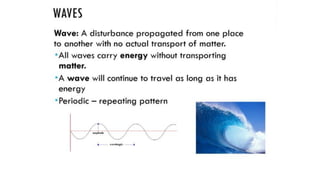
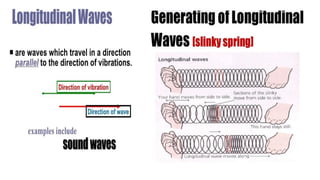
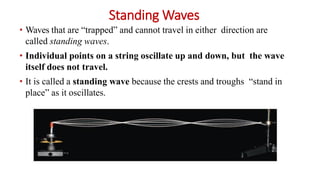
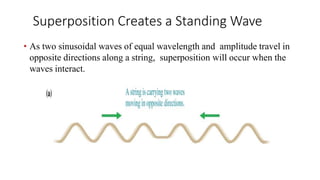
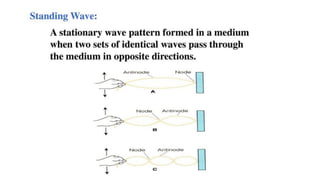
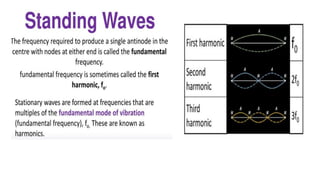
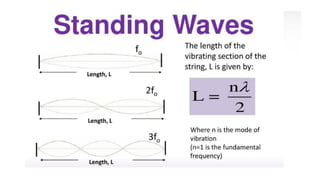
1) The document discusses different types of wave propagation including transverse waves, longitudinal waves, standing waves, interference, and the Doppler effect.
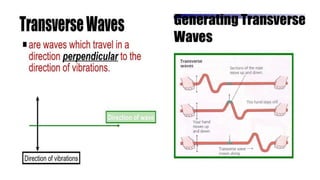
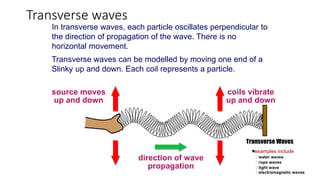
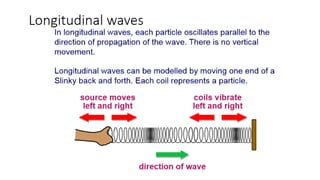
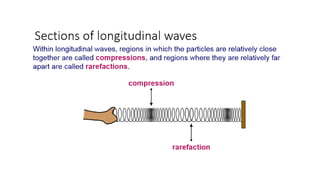
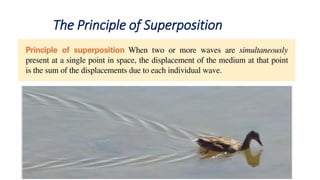
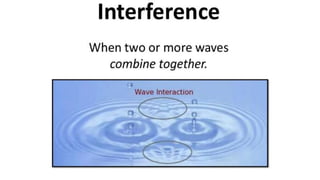
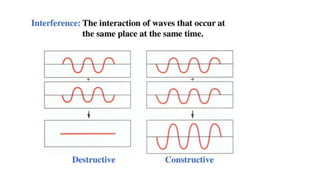
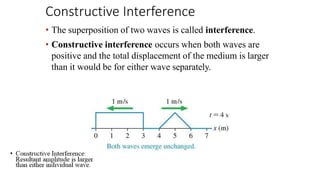
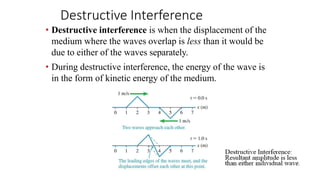
2) It provides examples of transverse wave propagation using a Slinky toy and explains concepts like constructive and destructive interference that result from the superposition of multiple waves.
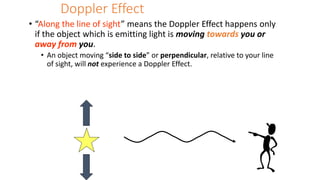
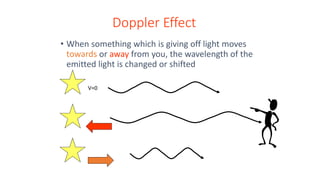
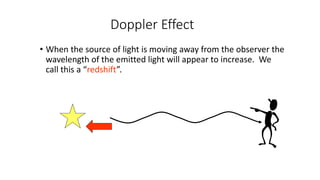
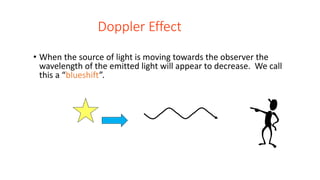
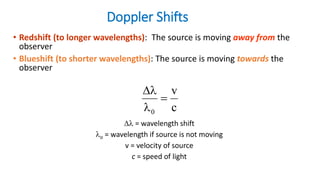
3) The Doppler effect is defined as a change in the observed wavelength of light or sound when its source and observer are in relative motion, with the wavelength shifting to longer wavelengths during a redshift and to shorter wavelengths during a blueshift.