Read this. Understand it. Check how much you have them one by one. Then let’s decide
          how to achieve these skills and sub skills. One can not succeed without these skills.

          21 Century Skills
              st

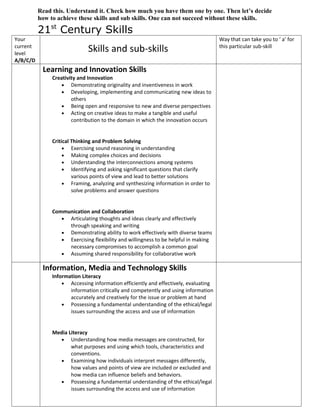
Your                                                                                 Way that can take you to ‘ a’ for
current
level
                              Skills and sub-skills                                  this particular sub-skill

A/B/C/D
           Learning and Innovation Skills
               Creativity and Innovation
                   • Demonstrating originality and inventiveness in work
                   • Developing, implementing and communicating new ideas to
                       others
                   • Being open and responsive to new and diverse perspectives
                   • Acting on creative ideas to make a tangible and useful
                       contribution to the domain in which the innovation occurs


               Critical Thinking and Problem Solving
                    • Exercising sound reasoning in understanding
                    • Making complex choices and decisions
                    • Understanding the interconnections among systems
                    • Identifying and asking significant questions that clarify
                        various points of view and lead to better solutions
                    • Framing, analyzing and synthesizing information in order to
                        solve problems and answer questions


               Communication and Collaboration
                  • Articulating thoughts and ideas clearly and effectively
                    through speaking and writing
                  • Demonstrating ability to work effectively with diverse teams
                  • Exercising flexibility and willingness to be helpful in making
                    necessary compromises to accomplish a common goal
                  • Assuming shared responsibility for collaborative work

           Information, Media and Technology Skills
               Information Literacy
                   • Accessing information efficiently and effectively, evaluating
                      information critically and competently and using information
                      accurately and creatively for the issue or problem at hand
                   • Possessing a fundamental understanding of the ethical/legal
                      issues surrounding the access and use of information


               Media Literacy
                 • Understanding how media messages are constructed, for
                      what purposes and using which tools, characteristics and
                      conventions.
                 • Examining how individuals interpret messages differently,
                      how values and points of view are included or excluded and
                      how media can influence beliefs and behaviors.
                 • Possessing a fundamental understanding of the ethical/legal
                      issues surrounding the access and use of information
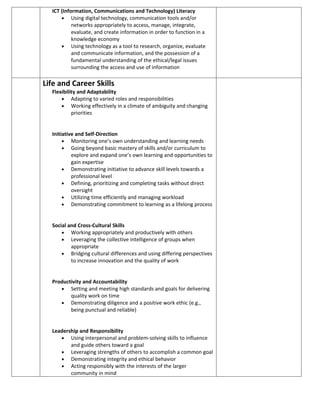
ICT (Information, Communications and Technology) Literacy
      • Using digital technology, communication tools and/or
           networks appropriately to access, manage, integrate,
           evaluate, and create information in order to function in a
           knowledge economy
      • Using technology as a tool to research, organize, evaluate
           and communicate information, and the possession of a
           fundamental understanding of the ethical/legal issues
           surrounding the access and use of information

Life and Career Skills
  Flexibility and Adaptability
      • Adapting to varied roles and responsibilities
      • Working effectively in a climate of ambiguity and changing
           priorities


  Initiative and Self-Direction
       • Monitoring one’s own understanding and learning needs
       • Going beyond basic mastery of skills and/or curriculum to
           explore and expand one’s own learning and opportunities to
           gain expertise
       • Demonstrating initiative to advance skill levels towards a
           professional level
       • Defining, prioritizing and completing tasks without direct
           oversight
       • Utilizing time efficiently and managing workload
       • Demonstrating commitment to learning as a lifelong process


  Social and Cross-Cultural Skills
      • Working appropriately and productively with others
      • Leveraging the collective intelligence of groups when
          appropriate
      • Bridging cultural differences and using differing perspectives
          to increase innovation and the quality of work


  Productivity and Accountability
     • Setting and meeting high standards and goals for delivering
         quality work on time
     • Demonstrating diligence and a positive work ethic (e.g.,
         being punctual and reliable)


  Leadership and Responsibility
     • Using interpersonal and problem-solving skills to influence
         and guide others toward a goal
     • Leveraging strengths of others to accomplish a common goal
     • Demonstrating integrity and ethical behavior
     • Acting responsibly with the interests of the larger
         community in mind

21st century skills table

  • 1.
    Read this. Understandit. Check how much you have them one by one. Then let’s decide how to achieve these skills and sub skills. One can not succeed without these skills. 21 Century Skills st Your Way that can take you to ‘ a’ for current level Skills and sub-skills this particular sub-skill A/B/C/D Learning and Innovation Skills Creativity and Innovation • Demonstrating originality and inventiveness in work • Developing, implementing and communicating new ideas to others • Being open and responsive to new and diverse perspectives • Acting on creative ideas to make a tangible and useful contribution to the domain in which the innovation occurs Critical Thinking and Problem Solving • Exercising sound reasoning in understanding • Making complex choices and decisions • Understanding the interconnections among systems • Identifying and asking significant questions that clarify various points of view and lead to better solutions • Framing, analyzing and synthesizing information in order to solve problems and answer questions Communication and Collaboration • Articulating thoughts and ideas clearly and effectively through speaking and writing • Demonstrating ability to work effectively with diverse teams • Exercising flexibility and willingness to be helpful in making necessary compromises to accomplish a common goal • Assuming shared responsibility for collaborative work Information, Media and Technology Skills Information Literacy • Accessing information efficiently and effectively, evaluating information critically and competently and using information accurately and creatively for the issue or problem at hand • Possessing a fundamental understanding of the ethical/legal issues surrounding the access and use of information Media Literacy • Understanding how media messages are constructed, for what purposes and using which tools, characteristics and conventions. • Examining how individuals interpret messages differently, how values and points of view are included or excluded and how media can influence beliefs and behaviors. • Possessing a fundamental understanding of the ethical/legal issues surrounding the access and use of information
  • 2.
    ICT (Information, Communicationsand Technology) Literacy • Using digital technology, communication tools and/or networks appropriately to access, manage, integrate, evaluate, and create information in order to function in a knowledge economy • Using technology as a tool to research, organize, evaluate and communicate information, and the possession of a fundamental understanding of the ethical/legal issues surrounding the access and use of information Life and Career Skills Flexibility and Adaptability • Adapting to varied roles and responsibilities • Working effectively in a climate of ambiguity and changing priorities Initiative and Self-Direction • Monitoring one’s own understanding and learning needs • Going beyond basic mastery of skills and/or curriculum to explore and expand one’s own learning and opportunities to gain expertise • Demonstrating initiative to advance skill levels towards a professional level • Defining, prioritizing and completing tasks without direct oversight • Utilizing time efficiently and managing workload • Demonstrating commitment to learning as a lifelong process Social and Cross-Cultural Skills • Working appropriately and productively with others • Leveraging the collective intelligence of groups when appropriate • Bridging cultural differences and using differing perspectives to increase innovation and the quality of work Productivity and Accountability • Setting and meeting high standards and goals for delivering quality work on time • Demonstrating diligence and a positive work ethic (e.g., being punctual and reliable) Leadership and Responsibility • Using interpersonal and problem-solving skills to influence and guide others toward a goal • Leveraging strengths of others to accomplish a common goal • Demonstrating integrity and ethical behavior • Acting responsibly with the interests of the larger community in mind