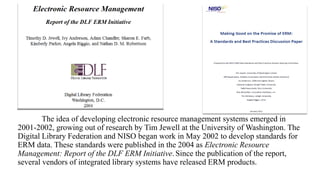
The idea of developing electronic resource management systems emerged in
2001-2002, growing out of research by Tim Jewell at the University of Washington. The
Digital Library Federation and NISO began work in May 2002 to develop standards for
ERM data. These standards were published in the 2004 as Electronic Resource
Management: Report of the DLF ERM Initiative. Since the publication of the report,
several vendors of integrated library systems have released ERM products.
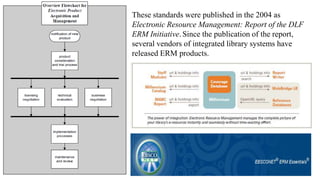
These standards were published in the 2004 as
Electronic Resource Management: Report of the DLF
ERM Initiative. Since the publication of the report,
several vendors of integrated library systems have
released ERM products.
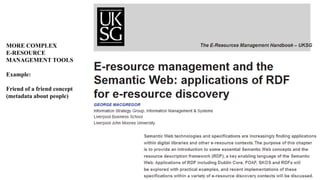
MORE COMPLEX
E-RESOURCE
MANAGEMENT TOOLS
Example:
Friend of a friend concept
(metadata about people)
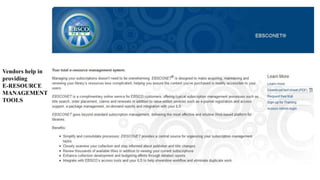
Vendors help in
providing
E-RESOURCE
MANAGEMENT
TOOLS
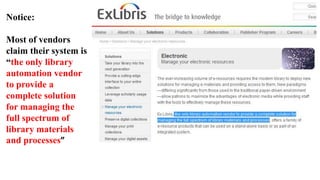
Notice:
Most of vendors
claim their system is
“the only library
automation vendor
to provide a
complete solution
for managing the
full spectrum of
library materials
and processes”
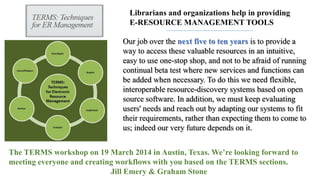
Librarians and organizations help in providing
E-RESOURCE MANAGEMENT TOOLS
Our job over the next five to ten years is to provide a
way to access these valuable resources in an intuitive,
easy to use one-stop shop, and not to be afraid of running
continual beta test where new services and functions can
be added when necessary. To do this we need flexible,
interoperable resource-discovery systems based on open
source software. In addition, we must keep evaluating
users' needs and reach out by adapting our systems to fit
their requirements, rather than expecting them to come to
us; indeed our very future depends on it.
The TERMS workshop on 19 March 2014 in Austin, Texas. We’re looking forward to
meeting everyone and creating workflows with you based on the TERMS sections.
Jill Emery & Graham Stone
No matter what we are talking about, basics of e-resources managing are:

•Licensing for all kinds of electronic resources
(individual journals, journal packages, databases, e-books, etc.)
•Using & troubleshooting access the above
•Obtaining, compiling, and analyzing usage data
While we are talking about the basics of e-resources,
some others have their vision for the future:
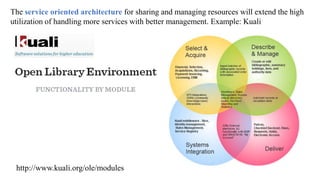
The service oriented architecture for sharing and managing resources will extend the high
utilization of handling more services with better management. Example: Kuali

http://www.kuali.org/ole/modules
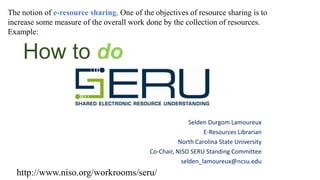
The notion of e-resource sharing. One of the objectives of resource sharing is to
increase some measure of the overall work done by the collection of resources.
Example:

How to do

Selden Durgom Lamoureux
E-Resources Librarian
North Carolina State University
Co-Chair, NISO SERU Standing Committee
selden_lamoureux@ncsu.edu

http://www.niso.org/workrooms/seru/
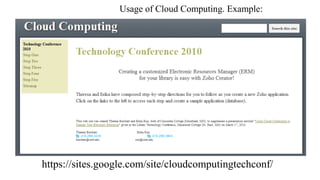
Usage of Cloud Computing. Example:

https://sites.google.com/site/cloudcomputingtechconf/
21st Century ERM Presentation

21st Century ERM Presentation

  • 2.
    The idea ofdeveloping electronic resource management systems emerged in 2001-2002, growing out of research by Tim Jewell at the University of Washington. The Digital Library Federation and NISO began work in May 2002 to develop standards for ERM data. These standards were published in the 2004 as Electronic Resource Management: Report of the DLF ERM Initiative. Since the publication of the report, several vendors of integrated library systems have released ERM products.
  • 3.
    These standards werepublished in the 2004 as Electronic Resource Management: Report of the DLF ERM Initiative. Since the publication of the report, several vendors of integrated library systems have released ERM products.
  • 4.
    MORE COMPLEX E-RESOURCE MANAGEMENT TOOLS Example: Friendof a friend concept (metadata about people)
  • 5.
  • 6.
    Notice: Most of vendors claimtheir system is “the only library automation vendor to provide a complete solution for managing the full spectrum of library materials and processes”
  • 7.
    Librarians and organizationshelp in providing E-RESOURCE MANAGEMENT TOOLS Our job over the next five to ten years is to provide a way to access these valuable resources in an intuitive, easy to use one-stop shop, and not to be afraid of running continual beta test where new services and functions can be added when necessary. To do this we need flexible, interoperable resource-discovery systems based on open source software. In addition, we must keep evaluating users' needs and reach out by adapting our systems to fit their requirements, rather than expecting them to come to us; indeed our very future depends on it. The TERMS workshop on 19 March 2014 in Austin, Texas. We’re looking forward to meeting everyone and creating workflows with you based on the TERMS sections. Jill Emery & Graham Stone
  • 8.
    No matter whatwe are talking about, basics of e-resources managing are: •Licensing for all kinds of electronic resources (individual journals, journal packages, databases, e-books, etc.) •Using & troubleshooting access the above •Obtaining, compiling, and analyzing usage data
  • 9.
    While we aretalking about the basics of e-resources, some others have their vision for the future:
  • 10.
    The service orientedarchitecture for sharing and managing resources will extend the high utilization of handling more services with better management. Example: Kuali http://www.kuali.org/ole/modules
  • 11.
    The notion ofe-resource sharing. One of the objectives of resource sharing is to increase some measure of the overall work done by the collection of resources. Example: How to do Selden Durgom Lamoureux E-Resources Librarian North Carolina State University Co-Chair, NISO SERU Standing Committee selden_lamoureux@ncsu.edu http://www.niso.org/workrooms/seru/
  • 12.
    Usage of CloudComputing. Example: https://sites.google.com/site/cloudcomputingtechconf/