Prof. Dr. Fergany A. Mohammed
Professor of Pharmaceutics
Faculty of Pharmacy
Assiut University
2024/2025
 Introduction
 Definition of Dosage form
 Functions of the pharmaceutical
additives
 What is the pharmaceutics?
 Functions of dosage forms?
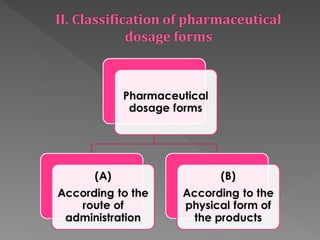
 Classification of pharmaceutical
dosage forms
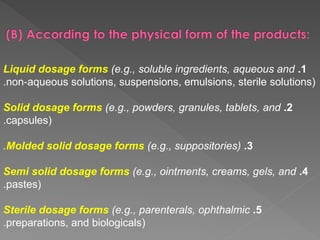
 According to the physical form of the
products
 According to the physical form of the
products
 Liquid dosage forms classified as
 Pharmaceutical solutions
 Classification of solutions?
 According to route of Administration
 They can be classified according to
vehicle (solvent) into either aqueous
solutions or non- aqueous solutions?
 Aqueous Solutions:
 Methods of preparation of aromatic
water?
 General Methods of Extraction of
Medicinal Plants
Introduction
Drug substances are seldom administered alone in their
original forms, but rather as part of a formulation in
combination with one or more non medicinal agents that serve
varied and specialized pharmaceutical functions.
Dosage forms of various types result in through the selective
use of these non‐medicinal agents, referred to as pharmaceutic
ingredients or additives.
 The pharmaceutical additives are used to :
are used to :
solubilize, suspend, thicken, emulsify, stabilize,
preserve, color, flavor, and control the release of the
medicinal agents without changing or altering their
pharmacological effects.
 The drug and the pharmaceutical additives utilized
must be compatible with one another to produce a
drug product that is stable, efficacious, attractive,
easy to administer, and safe.
 Pharmaceutics can be defined as:
The general area of study concerned with the
formulation, manufacture, stability and
effectiveness of pharmaceutical dosage forms.
Dosage form can be defined as:
“The gross physical form in which the drug is
available”. e.g. Solutions, Suspensions, emulsions,
Tablets, Capsules, Suppositories, Topicals
(Ointments, Creams, Pastes, Gels, Eye drops, Vasal
drops, Otic or ear drops etc…) Aerosols inhalations,
Transdermal Patches,
 Each type of dosage form is unique in its physical and
pharmaceutical characteristics.
 These varied preparations provide the manufacturing and
compounding pharmacist with the challenges of formulation
and the physician with the choice of drug and drug delivery
system to prescribe.
 Dosage forms are needed for the following reasons:
1. To provide a product with safe and convenient delivery form
and of accurate dose.
2. For the protection of a drug substance from destructive
influences of atmospheric oxygen, light or humidity (e.g.
coated tablets, sealed ampoules).
Give reason? Formulation of coated tablets?
3. For the protection of a drug substance from the destructive
influence of gastric acid after oral administration (e.g.
enteric coated tablets).
Give reason? Formulation of enteric coated tablets?
4
.
To conceal the bitter, or salty, or offensive taste or odor of
a drug substance
(
e.g. coated tablets, capsules, flavored syrups
.)
5
.
To provide liquid preparations of substances which are
either insoluble or unstable in the desired vehicle
(
e.g. suspensions
.)
6
.
To provide clear liquid dosage forms of substances
(
e.g. syrups, solutions, Elixirs and Spirits
.)
7
.
To provide rate controlled drug action
(
e.g. various sustained release tablets, capsules and
suspensions
)
to decrease the frequency of drug administration
.
8
.
To provide optimal drug action from topical administration
sites (e.g., ointments, creams, transdermal patches, ophthalmic,
ear, and nasal preparations)
.
9
.
To provide for the insertion of a drug into one of the body’s
orifices (e.g., rectal, or vaginal suppositories)
.
10
.
To provide for the placement of drugs directly into the
blood stream or into body tissues (e.g., injections)
.
11
.
To provide optimal drug action through inhalation therapy
especially to asthmatic patients (e.g., inhalation aerosols)
.
1. Oral dosage forms by mouth (e.g., tablets, solutions, syrups,
oral powders, capsules and suspensions).
2. Parenteral dosage forms (e.g., intravenous, intramuscular
and subcutaneous, etc….. ampoules or vials).
3. Rectal dosage forms (e.g. suppositories and enemas).
4. Topical dosage forms on skin (e.g. ointments, creams, dusting
powders, lotions, and plasters).
5. Dosage forms for ocular, nasal, lungs ..., etc administration.
1
.
Liquid dosage forms (e.g., soluble ingredients, aqueous and
non aqueous solutions, suspensions, emulsions, sterile
‐ solutions)
.
2
.
Solid dosage forms (e.g., powders, granules, tablets, and
capsules)
.
3
.
Molded solid dosage forms (e.g., suppositories)
.
4
.
Semi solid dosage forms (e.g., ointments, creams, gels, and
pastes)
.
5
.
Sterile dosage forms (e.g., parenterals, ophthalmic
preparations, and biologicals)
.
Syrups
Syrups Elixirs
Elixirs
Less sweet
Less sweet
Less viscose
Less viscose
hydro-alcoholic solution
concentrated,
concentrated, aqueous
aqueous preparations
preparations
of a sugar (usually Sucrose)
A. Liquid dosage forms (Largest Group)
 These dosage forms are those prepared by dissolving the active
ingredient(s) in an aqueous or non‐ aqueous solvent.
Pharmaceutical solutions
Classification of solutions
Types of solutions used According to route of Administration:
1. Orally: syrups, elixirs, Spirits and oral drops.
2. In mouth and throat: mouth washes, gargles, and throat sprays.
3. In body cavities: douches, enemas, ear drops, and nasal sprays.
4. On body surfaces (Topical): lotions, and paints.
5. Injection solution (Ampoules and Vials).
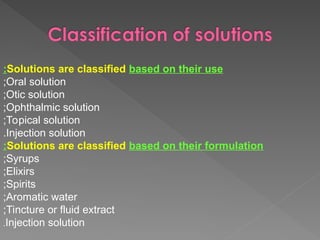
Solutions are classified based on their use
:
Oral solution
;
Otic solution
;
Ophthalmic solution
;
Topical solution
;
Injection solution
.
Solutions are classified based on their formulation
:
Syrups
;
Elixirs
;
Spirits
;
Aromatic water
;
Tincture or fluid extract
;
Injection solution
.
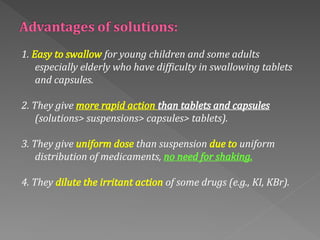
1. Easy to swallow for young children and some adults
especially elderly who have difficulty in swallowing tablets
and capsules.
2. They give more rapid action than tablets and capsules
(solutions> suspensions> capsules> tablets).
3. They give uniform dose than suspension due to uniform
distribution of medicaments, no need for shaking.
4. They dilute the irritant action of some drugs (e.g., KI, KBr).
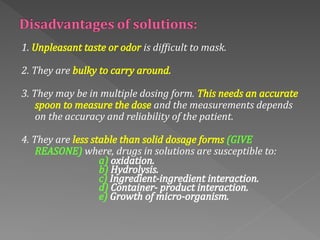
1. Unpleasant taste or odor is difficult to mask.
2. They are bulky to carry around.
3. They may be in multiple dosing form. This needs an accurate
spoon to measure the dose and the measurements depends
on the accuracy and reliability of the patient.
4. They are less stable than solid dosage forms (GIVE
REASONE) where, drugs in solutions are susceptible to:
a) oxidation.
b) Hydrolysis.
c) Ingredient-ingredient interaction.
d) Container- product interaction.
e) Growth of micro-organism.
 certain drugs like vitamins and essential oils can be
oxidized. This reaction (Oxidation) can be catalyzed by heat,
light, peroxide or heavy metals e.g., Cu, Fe in water.
 Antioxidants (reducing agents) are used to prevent
oxidation (e.g.. sodium metabisulfite, propyloctyl esters of
gallic acids).
 Light‐resistant containers are used to minimize the
photocatalyzed oxidation of some drugs.
 occurs in the presence of H+ and OH– ions (e.g.,
hydrolysis of aspirin “acetyl salicylic acid" in aqueous
solution.
 The rate of hydrolysis can be reduced by using buffer to
adjust the pH of the solution or by using another
solvent instead of water.
c) Ingredient‐ ingredient interaction:
c) Ingredient‐ ingredient interaction: This can be
confirmed by different methods of analysis.
d) Container product interaction:
d) Container product interaction: This may change
the pH of the product, which may precipitate the pH
sensitive ingredient.
 The raw materials used in preparing
pharmaceutical solutions may be a good medium
for the growth of microorganisms (e.g., sugars,
gums and flavors).
 The environments and the contaminated
equipment can cause growth of microorganisms.
 Oral solutions are tested for freedom from E‐ coli.
 Topical products are tested for freedom from
Pseudomonas aeurogenosa.
 So preservative must be used with pharmaceutical
solutions.
1. Effective against wide range of microorganisms,
2. Stable over its shelf life,
3. Compatible with the active ingredients,
4. Soluble in water or in the solvent being used,
5. Free of taste and odor, and
6. Non toxic
Examples Preservatives : such as benzoic acid, sodium
benzoate, methyl paraben and propyl paraben.
 They can be classified according to vehicle
(solvent) into either aqueous solutions or non-
aqueous solutions.
A. Aqueous solutions
 Aqueous solutions are defined as: homogeneous
mixtures that are prepared by dissolving a solid,
liquid or gas in an aqueous medium (vehicle).
 The vehicle may be water, aromatic water or
extracts.
 Water is used both as vehicle and as a solvent
for the desired medicinal or flavoring
ingredients.
 Its advantages are: tasteless, odorless, lack of
pharmacological activity, and very cheap.
 It is not permitted to use tap water for dispensing
of pharmaceutical dosage forms due to :(GIVE
REASON)
1- Its possible bacterial contamination and 2- The
presence of dissolved and un- dissolved organic
matter, as well as
3- The presence of dissolved inorganic salts such as
sodium, potassium, calcium, magnesium, iron,
chloride, sulfate, and bicarbonate that destroy the
active ingredients or enhance their decomposition.
 Boiling can destroy vegetative bacteria but on
storage spores yield vegetative microorganisms
so not used for preparation
preparation pharmaceutical
dosage forms)
)
Purified water, USP
Purified water, USP (water for preparation
(water for preparation
pharmaceutical dosage forms):
):
 It is intended for use in the preparation of aqueous
dosage form and in all tests and assays.
 Purified water is prepared by distillation, ion‐
exchange treatment or other suitable process.
 This is pyrogen free distilled water, sterilized
immediately after collection and is used for
parenteral preparations.
 Aromatic water, known also as medicated water, is
defined as clear saturated aqueous solution of volatile
oils or other aromatic or volatile substances.
 Aromatic water is used principally as flavored or
perfumed vehicles.
 Their odor and taste should be similar to those of the
drugs or volatile substances from which they are
prepared, and the preparations should be free from
empyreumatic (smoke like) and other foreign odors.
 Aromatic water may be prepared by one of two official
processes:
1. Distillation process:
 It represents the most ancient and the most satisfactory
method for making this class of preparations.
 Procedure The drug should be coarsely ground and mixed
with sufficient quantity of purified water in the distillation
unit.
 Rose Water is an example of aromatic water prepared by
distillation.
2. Solution process:
Procedure
 Aromatic water may be prepared by repeatedly shaking 2 g
or 2 ml of the volatile substance with 1000 ml of purified
water.
 The mixture is set aside for 12 hours, filtered through wetted
filter paper, and made to volume (1000 ml) by adding
purified water through the filter.
 The system must be protected from light (dark amber color
container).
 Chloroform water and peppermint water are examples of
aromatic water prepared by solution process.
 Aromatic water can be deteriorated with time;
therefore,
it should be made in small quantities and
protected from intense light and excessive heat.
 If they become cloudy or otherwise deteriorate,
they should be discarded.
 Deterioration may be due to volatilization,
decomposition or mould growth. (Three reasons
for Deterioration of Aromatic water )
 A solution is a liquid preparation that contains
one or more soluble chemical substances
dissolved in water. The solute is usually non
volatile.
 Solutions are prepared by (Methods of
preparation of solutions):
1. Simple solution
2. Solution by chemical reaction
3. Solution by extraction
 Solutions of this type are prepared by dissolving the solute
in a suitable solvent.
 The solvent may contain other ingredients, which stabilize
or solubilize the active ingredient, (e.g., Calcium hydroxide
solution "Lime water").
 Sometimes, certain chemicals are insoluble or partially
soluble in the solvent (e.g., Iodine 1: 2950 in water)
However, it dissolves in the presence of KI due to the
formation of more soluble iodate complex “KI3”.
 Example: Iodine Solution (Lugol’s solution).
 These solutions are prepared by reacting two or more
solutes with each other in a suitable solvent.
 Example: Aluminum acetate and calcium carbonate
are used to prepare aluminum subacetate solution.
3. Solution by extraction:
 Plant or animal products are prepared by suitable
extraction process (Distillation, Maceration
Percolation , decoction or Digestion and
infusion).????????????????
 Extraction, as the term is used pharmaceutically,
involves:
The separation of medicinally active portions of
plant or animal tissues from the inactive or inert
components by using selective solvents in
standard extraction procedures.
1- Maceration
In this process, the whole or coarsely powdered crude
drug is placed in a stoppered container with the solvent
and allowed to stand at room temperature for a period of
at least 3 days with frequent agitation until the soluble
matter has dissolved. The mixture then is strained, the
marc (the damp solid material or exhausted or partially
extracted plant) is pressed, and the combined liquids are
clarified by filtration or decantation after standing.
e.g. ‫كركدية‬
e.g. Large number of medicinal plant
Fresh infusions are prepared by macerating
the crude drug for a short period of time with
cold or boiling water. These are dilute
solutions of the readily soluble constituents of
crude drugs
e.g. Tea (boiling), peppermint (boiling), ‫كركدية‬
(cold or boiling)
e.g. Large number of medicinal plant
This is a form of maceration in which
gentle heat is used during the process
of extraction. The solvent efficiency of
the menstruum is thereby increased.
e.g. ‫كركدية‬
e.g. Large number of medicinal plant
In this process, the crude drug is boiled in
a specified volume of water for a defined
time; it is then cooled and strained or
filtered.
This procedure is suitable for extracting
water-soluble, heat-stable constituents.
e.g. Tea, peppermint, ‫كركدية‬ (All boiling)
e.g. Large number of medicinal plant
 This is the procedure used most frequently to extract active
ingredients in the preparation of tinctures and fluid extracts.
 The solid ingredients are moistened with an appropriate amount of
the specified menstruum and allowed to stand for approximately 4
h in a well closed container, after which the mass is packed and the
top of the percolator is closed. Additional menstruum is added to
form a shallow layer above the mass, and the mixture is allowed to
macerate in the closed percolator for 24 h.
 The marc (exhausted or partially extracted plant) is then pressed
and the expressed liquid is added to the percolate. Sufficient
menstruum is added to produce the required volume, and the mixed
liquid is clarified by filtration or by standing followed by decanting.
 e.g. Large number of medicinal plant
1. Mouth washes and gargles
2. Nasal drops
3. Sprays
4. Ear drops
5. Douches
6. Enemas
7. Syrups
 Mouth‐ wash is an aqueous solution used to clean and
refresh the buccal cavity.
 They contain antiseptics or astringents in a pleasantly
flavored vehicle.
 Gargles are aqueous solutions used to relieve soreness in
mild throat infections by forcing air from lungs through the
gargle, which is held in the throat.
 They have antiseptic, astringent, anesthetic and soothing
effects (e.g., phenol gargle which contains phenol, glycerin,
amaranth solution in chloroform water, and water).
 Mouth‐ washes and gargles are usually diluted
by the patient with equal volume of warm
water before use and are not intended to be
swallowed.
 They are considered now as one preparation.
1. Alcohol, used to enhance the flavor, to mask the unpleasant
taste of active ingredients, to solubilize the flavoring agents,
as a preservative).
2. Surfactant as solubilizing agent.
3. Glycerin, used as humectant, to increase the viscosity, and as
a sweetener).
4. Anti‐infective agent (e.g., Hexitidine).
5. Flavoring agent (e.g., peppermint and cinnamon).
6. Coloring agent (e.g., amaranth). It alerts the patient to not
swallow the preparation.
 Nasal drops are solutions of medicaments designed to be applied
to the nasal mucosa in a small volume.
 They are usually formulated to be isotonic with the nasal
secretions and buffered as nasal secretions (pH 6.5) in order to
minimize damage of nasal cilia.
 Nasal solutions are used to relieve nasal irritation and congestion
(e.g., ephedrine nasal drops) although antimicrobial substances
may be also included.
 The nasal route can be used to introduce drugs required to
produce a systemic effect (e.g., the peptide hormones of pituitary
gland, insulin).
 Sprays are solutions of drugs in aqueous vehicles
and are applied to the mucous membrane of the
nose and throat by means of atomizer or nebulizer.
 The spray device should produce relatively coarse
droplets if the action of the drug is restricted to the
upper respiratory tract.
 Fine droplets tend to penetrate farther into
respiratory tract than is desirable.
 Sprays are also formulated to be isotonic with the nasal
secretions and buffered at the same pH.
 Sprays may contain antibiotics, antihistamines,
vasoconstrictors.
 They are used for the treatment of allergy and/or
congestion (vasodilatation) that occur with common cold.
 Example of sprays is that containing chloropheniramine
maleate (antihistaminic) and phenylephrine
hydrochloride (decongestant).
 They are simple solutions of medicaments designed
to exert a local effect in the ear, to soften wax, to
treat local inflammation and infections, or to
relieve pain.
 The vehicle may be water, although glycerol and
propylene glycol may be used to increase the
viscosity of the preparations so, it remains in the
ear for a long time.
 A douche is an aqueous solution, which is directed into the
appropriate body part or into a cavity of the body by using
bulb syringe.
 It functions as a cleansing or antiseptic agent.
 They are most frequently dispensed in the form of a powder
with directions for dissolving in a specified quantity of
water, usually warm. Also, tablets for preparing solutions
are available.
 If powders or tablets are supplied, they must be free from
insoluble material, in order to produce a clear solution.
1. Eye douche: used to remove foreign particles and discharges
from the eyes. It is directed gently at an oblique angle and is
allowed to run from the inner to the outer comer of the eye.
2. Pharyngeal douches: are used to prepare the interior of the
throat (or an operation and to cleanse it in suppurative
conditions, e.g., Compound Sodium Borate Solution is used
as pharyngeal or nasal douche.
3. Vaginal or urethral douches: These solutions may have an
antiseptic, astringent, or soothing action.
 They are rectal injections that are introduced
into the rectum for evacuation, therapeutic, or
diagnostic purposes.
 Enemas are given at body temperature at
quantity up to 400 ml injected slowly with a
syringe.
1. Evacuation enemas: used to evacuate stool in
constipation or before surgery.
 They act by stimulating peristalsis.
It may be either:
a) Fleet enemas: contains 16% sodium acid phosphate and 6%
sodium phosphate and is marketed as single dose disposable
unit.
b) Evacuant soap enema: is composed of 5% soft soap.
2. Therapeutic enemas: may contain medicaments
required to exert a local effect in the large bowl
(e.g., anthelmintic enemas).
3. Diagnostic enemas: They contain radiopaque
substances for X‐ ray diagnostic investigation in the
large bowel (e.g., Barium sulfate enema that
contain barium sulfate, acacia mucilage and starch
enema as vehicle or base "3% gelatinized starch").
 Syrups are concentrated solutions of sugar such as sucrose in
water or other aqueous liquid.
 Syrup is useful for masking the taste of bitter and saline drugs.
 It is important that the concentration of sucrose approach but
not quite reach the saturation point (the nearly saturated
syrup is about 65% w/v concentration).
 If syrup is diluted, sucrose provides an excellent nutrient for
molds, yeast, and other microorganisms.
 In concentration of 65% by weight or more, the solution will
retard the growth of such microorganisms. However, a
saturated solution may lead to crystallization of a part of the
sucrose under conditions of changing the temperature.
1. Simple syrup:
 The solution is called syrup or simple syrup when water is
used alone for making the syrup.
 Other additives may be added to it such as:
a) Polyols, such as glycerin or sorbitol, may be added to
retard crystallization of sucrose or to increase the
solubility of other ingredients.
b) Alcohol may be added in concentration less than 10% to
act as preservative or to act as solvent for the flavors.
2. Medicated syrup:
 It is aqueous syrup preparation contains some added medicinal
substance.
3. Flavored syrup:
 It contains various aromatic or pleasantly flavored substances.
 It is intended to be used as a vehicle or flavor for prescriptions.
1. Solution with heat:
 This is the usual method of making syrups in the
absence of volatile agents or those injured by heat
(thermolabile) and when it is desirable to make the
syrup rapidly.
Procedure:
The sucrose is added to the purified water or
aqueous solution and heated until solution is
obtained then strained, and sufficient purified
water added to make the desired weight or volume.
 It should be noted that excessive heating in the
preparation of syrups must be avoided to
prevent inversion of sucrose, with increased
tendency for fermentation.
 If syrup is prepared by heating, an inversion of a
slight portion of the sucrose occurs.
 The specific gravity of syrup is an important
property to identify its concentration. It is
about 1.313 and can be determined by
saccharometer.
2. Agitation without heat:
This process is used in those cases where heat would
cause loss of valuable volatile constituents.
 The syrup is prepared by adding sucrose to the aqueous
solution in a bottle of about twice the size required for
the syrup. This permits active agitation and rapid
solution.
 The stoppering of the bottle is important, as it prevents
contamination and loss during the process (e.g.,
Codeine Phosphate Syrup for cough).
3. Percolation:
 In this process, purified water or an aqueous
solution is permitted to pass slowly through a bed
of crystalline sucrose, thus dissolving it and
forming syrup.
 A piece of cotton is placed in the neck of percolator
and, if necessary, a portion of the liquid is re passed
through the percolator to dissolve all the sucrose.
 The syrups must be kept at a temperature not
above 25°C.
 A higher concentration approaching the
supersaturation is also a condition favorable to
preservation.
 Preservatives such as glycerin, methyl paraben,
benzoic acid and sodium benzoate may be added to
prevent bacterial and mold growth, particularly
when the concentration of sucrose in the syrup is
low.
 These are solutions that contain minor quantities
of the toxic organic solvents.
Examples:
 External products may contain ethanol, methanol,
isopropyl alcohol, polyethylene glycols, various
ethers or esters.
 Internal products may contain ethanol, glycerol,
propylene glycol, certain oils, and liquid paraffin.
 Non‐aqueous solutions can be classified into four
groups as follows:
1. The alcoholic or hydroalcoholic solutions such as
elixirs and spirits.
2. Ethereal solutions such as collodions (keratolytic
salicylic acid collodion).
3. Glycerin solutions exemplified by the glycerites and
phenol glycerin ear drops.
4. Oleaginous solutions such as oil soluble vitamins
"vitamins A and D".
Definition: Elixirs are clear, sweetened, flavored, hydroalcoholic
solutions intended for oral use.
 The main ingredients in elixirs are ethanol and water but
glycerin, sorbitol, propylene glycol, flavoring agents,
preservatives, and syrups are often used in the preparation
of the final product.
 Each elixir requires a specific blend of alcohol and water to
maintain all of the components in solution.
 Glycerin and propylene glycol are frequently employed in
elixirs as adjunct solvents to increase the solubility of the
drug.
Sweetening:
 Elixirs are sweetened with sucrose or with
syrup. Some utilize sorbitol, glycerin and/or
artificial sweetener such as saccharin.
Preservation:
 Elixirs containing over 10% to 12% of alcohol
are usually self preserving and do not require
the addition of an antimicrobial agent for
preservation.
1. Non‐ medicated elixirs:
 They are employed as vehicles for drug substances.
 Non‐ medicated elixirs may be useful in:
a) The addition of a therapeutic agent to a pleasant tasting
vehicle, and
b) The dilution of an existing medicated elixir e.g., Aromatic
Elixir (contains 21 to 23% ethyl alcohol), and compound
Benzaldehyde Elixir (contains 3 to 5% ethyl alcohol).
2. Medicated elixirs:
 They are employed for the therapeutic benefit
of the medicinal agent they contain e.g.,
Phenobarbital sedative elixir, Acetaminophen
Analgesic elixir and Digoxin cardiotonic elixir.
 The distinction between some of medicated syrups and
medicated elixirs is not always clear. Worthwhile, some hit
points can be driven as follows:
a) Elixirs are usually less sweet and less viscous because they
contain a lower proportion of sugar and consequently are
less effective than syrups in masking the taste of medicinal
substances.
b) Because of their hydroalcoholic character, elixirs are better
able than aqueous syrups to maintain both water soluble
and alcohol soluble components in solution.
c) Because of their stable characteristics and the case which
they are prepared by simple solution, from a manufacturing
standpoint, elixirs are preferred over syrups.
 Alcohol present in elixirs precipitates tragacanth,
acacia, and agar from aqueous solutions.
 Similarly, it will precipitate many inorganic salts
from similar solutions. Therefore such substances
should be absent from the aqueous phase or should
be present in such concentrations that there is no
danger of precipitation on standing.
 Elixirs are prepared by simple solution with agitation
and/or by the admixture of two or more liquid ingredients.
 Alcohol soluble and water soluble components are generally
dissolved separately in alcohol and purified water,
respectively.
 Then the aqueous solution is added to the alcoholic solution,
rather than the reverse, in order to maintain the highest
possible alcoholic strength at all times so that minimal
separation of the alcohol soluble components occurs.

2024 NAU Liquid dosage forms الجامعة الأهليى الفرقة الثانية.ppt

  • 1.
    Prof. Dr. FerganyA. Mohammed Professor of Pharmaceutics Faculty of Pharmacy Assiut University 2024/2025
  • 2.
     Introduction  Definitionof Dosage form  Functions of the pharmaceutical additives  What is the pharmaceutics?  Functions of dosage forms?  Classification of pharmaceutical dosage forms  According to the physical form of the products  According to the physical form of the products  Liquid dosage forms classified as  Pharmaceutical solutions  Classification of solutions?  According to route of Administration  They can be classified according to vehicle (solvent) into either aqueous solutions or non- aqueous solutions?  Aqueous Solutions:  Methods of preparation of aromatic water?  General Methods of Extraction of Medicinal Plants
  • 3.
    Introduction Drug substances areseldom administered alone in their original forms, but rather as part of a formulation in combination with one or more non medicinal agents that serve varied and specialized pharmaceutical functions. Dosage forms of various types result in through the selective use of these non‐medicinal agents, referred to as pharmaceutic ingredients or additives.
  • 4.
     The pharmaceuticaladditives are used to : are used to : solubilize, suspend, thicken, emulsify, stabilize, preserve, color, flavor, and control the release of the medicinal agents without changing or altering their pharmacological effects.  The drug and the pharmaceutical additives utilized must be compatible with one another to produce a drug product that is stable, efficacious, attractive, easy to administer, and safe.
  • 5.
     Pharmaceutics canbe defined as: The general area of study concerned with the formulation, manufacture, stability and effectiveness of pharmaceutical dosage forms.
  • 6.
    Dosage form canbe defined as: “The gross physical form in which the drug is available”. e.g. Solutions, Suspensions, emulsions, Tablets, Capsules, Suppositories, Topicals (Ointments, Creams, Pastes, Gels, Eye drops, Vasal drops, Otic or ear drops etc…) Aerosols inhalations, Transdermal Patches,  Each type of dosage form is unique in its physical and pharmaceutical characteristics.  These varied preparations provide the manufacturing and compounding pharmacist with the challenges of formulation and the physician with the choice of drug and drug delivery system to prescribe.
  • 7.
     Dosage formsare needed for the following reasons: 1. To provide a product with safe and convenient delivery form and of accurate dose. 2. For the protection of a drug substance from destructive influences of atmospheric oxygen, light or humidity (e.g. coated tablets, sealed ampoules). Give reason? Formulation of coated tablets? 3. For the protection of a drug substance from the destructive influence of gastric acid after oral administration (e.g. enteric coated tablets). Give reason? Formulation of enteric coated tablets?
  • 8.
    4 . To conceal thebitter, or salty, or offensive taste or odor of a drug substance ( e.g. coated tablets, capsules, flavored syrups .) 5 . To provide liquid preparations of substances which are either insoluble or unstable in the desired vehicle ( e.g. suspensions .) 6 . To provide clear liquid dosage forms of substances ( e.g. syrups, solutions, Elixirs and Spirits .)
  • 9.
    7 . To provide ratecontrolled drug action ( e.g. various sustained release tablets, capsules and suspensions ) to decrease the frequency of drug administration . 8 . To provide optimal drug action from topical administration sites (e.g., ointments, creams, transdermal patches, ophthalmic, ear, and nasal preparations) .
  • 10.
    9 . To provide forthe insertion of a drug into one of the body’s orifices (e.g., rectal, or vaginal suppositories) . 10 . To provide for the placement of drugs directly into the blood stream or into body tissues (e.g., injections) . 11 . To provide optimal drug action through inhalation therapy especially to asthmatic patients (e.g., inhalation aerosols) .
  • 12.
    1. Oral dosageforms by mouth (e.g., tablets, solutions, syrups, oral powders, capsules and suspensions). 2. Parenteral dosage forms (e.g., intravenous, intramuscular and subcutaneous, etc….. ampoules or vials). 3. Rectal dosage forms (e.g. suppositories and enemas). 4. Topical dosage forms on skin (e.g. ointments, creams, dusting powders, lotions, and plasters). 5. Dosage forms for ocular, nasal, lungs ..., etc administration.
  • 13.
    1 . Liquid dosage forms(e.g., soluble ingredients, aqueous and non aqueous solutions, suspensions, emulsions, sterile ‐ solutions) . 2 . Solid dosage forms (e.g., powders, granules, tablets, and capsules) . 3 . Molded solid dosage forms (e.g., suppositories) . 4 . Semi solid dosage forms (e.g., ointments, creams, gels, and pastes) . 5 . Sterile dosage forms (e.g., parenterals, ophthalmic preparations, and biologicals) .
  • 14.
    Syrups Syrups Elixirs Elixirs Less sweet Lesssweet Less viscose Less viscose hydro-alcoholic solution hydro-alcoholic solution concentrated, concentrated, aqueous aqueous preparations preparations of a sugar (usually Sucrose) of a sugar (usually Sucrose)
  • 15.
    A. Liquid dosageforms (Largest Group)  These dosage forms are those prepared by dissolving the active ingredient(s) in an aqueous or non‐ aqueous solvent. Pharmaceutical solutions Classification of solutions Types of solutions used According to route of Administration: 1. Orally: syrups, elixirs, Spirits and oral drops. 2. In mouth and throat: mouth washes, gargles, and throat sprays. 3. In body cavities: douches, enemas, ear drops, and nasal sprays. 4. On body surfaces (Topical): lotions, and paints. 5. Injection solution (Ampoules and Vials).
  • 16.
    Solutions are classifiedbased on their use : Oral solution ; Otic solution ; Ophthalmic solution ; Topical solution ; Injection solution . Solutions are classified based on their formulation : Syrups ; Elixirs ; Spirits ; Aromatic water ; Tincture or fluid extract ; Injection solution .
  • 17.
    1. Easy toswallow for young children and some adults especially elderly who have difficulty in swallowing tablets and capsules. 2. They give more rapid action than tablets and capsules (solutions> suspensions> capsules> tablets). 3. They give uniform dose than suspension due to uniform distribution of medicaments, no need for shaking. 4. They dilute the irritant action of some drugs (e.g., KI, KBr).
  • 18.
    1. Unpleasant tasteor odor is difficult to mask. 2. They are bulky to carry around. 3. They may be in multiple dosing form. This needs an accurate spoon to measure the dose and the measurements depends on the accuracy and reliability of the patient. 4. They are less stable than solid dosage forms (GIVE REASONE) where, drugs in solutions are susceptible to: a) oxidation. b) Hydrolysis. c) Ingredient-ingredient interaction. d) Container- product interaction. e) Growth of micro-organism.
  • 19.
     certain drugslike vitamins and essential oils can be oxidized. This reaction (Oxidation) can be catalyzed by heat, light, peroxide or heavy metals e.g., Cu, Fe in water.  Antioxidants (reducing agents) are used to prevent oxidation (e.g.. sodium metabisulfite, propyloctyl esters of gallic acids).  Light‐resistant containers are used to minimize the photocatalyzed oxidation of some drugs.
  • 20.
     occurs inthe presence of H+ and OH– ions (e.g., hydrolysis of aspirin “acetyl salicylic acid" in aqueous solution.  The rate of hydrolysis can be reduced by using buffer to adjust the pH of the solution or by using another solvent instead of water. c) Ingredient‐ ingredient interaction: c) Ingredient‐ ingredient interaction: This can be confirmed by different methods of analysis. d) Container product interaction: d) Container product interaction: This may change the pH of the product, which may precipitate the pH sensitive ingredient.
  • 21.
     The rawmaterials used in preparing pharmaceutical solutions may be a good medium for the growth of microorganisms (e.g., sugars, gums and flavors).  The environments and the contaminated equipment can cause growth of microorganisms.  Oral solutions are tested for freedom from E‐ coli.  Topical products are tested for freedom from Pseudomonas aeurogenosa.  So preservative must be used with pharmaceutical solutions.
  • 22.
    1. Effective againstwide range of microorganisms, 2. Stable over its shelf life, 3. Compatible with the active ingredients, 4. Soluble in water or in the solvent being used, 5. Free of taste and odor, and 6. Non toxic Examples Preservatives : such as benzoic acid, sodium benzoate, methyl paraben and propyl paraben.
  • 23.
     They canbe classified according to vehicle (solvent) into either aqueous solutions or non- aqueous solutions. A. Aqueous solutions  Aqueous solutions are defined as: homogeneous mixtures that are prepared by dissolving a solid, liquid or gas in an aqueous medium (vehicle).  The vehicle may be water, aromatic water or extracts.
  • 24.
     Water isused both as vehicle and as a solvent for the desired medicinal or flavoring ingredients.  Its advantages are: tasteless, odorless, lack of pharmacological activity, and very cheap.
  • 25.
     It isnot permitted to use tap water for dispensing of pharmaceutical dosage forms due to :(GIVE REASON) 1- Its possible bacterial contamination and 2- The presence of dissolved and un- dissolved organic matter, as well as 3- The presence of dissolved inorganic salts such as sodium, potassium, calcium, magnesium, iron, chloride, sulfate, and bicarbonate that destroy the active ingredients or enhance their decomposition.
  • 26.
     Boiling candestroy vegetative bacteria but on storage spores yield vegetative microorganisms so not used for preparation preparation pharmaceutical dosage forms) ) Purified water, USP Purified water, USP (water for preparation (water for preparation pharmaceutical dosage forms): ):  It is intended for use in the preparation of aqueous dosage form and in all tests and assays.  Purified water is prepared by distillation, ion‐ exchange treatment or other suitable process.
  • 27.
     This ispyrogen free distilled water, sterilized immediately after collection and is used for parenteral preparations.
  • 28.
     Aromatic water,known also as medicated water, is defined as clear saturated aqueous solution of volatile oils or other aromatic or volatile substances.  Aromatic water is used principally as flavored or perfumed vehicles.  Their odor and taste should be similar to those of the drugs or volatile substances from which they are prepared, and the preparations should be free from empyreumatic (smoke like) and other foreign odors.
  • 29.
     Aromatic watermay be prepared by one of two official processes: 1. Distillation process:  It represents the most ancient and the most satisfactory method for making this class of preparations.  Procedure The drug should be coarsely ground and mixed with sufficient quantity of purified water in the distillation unit.  Rose Water is an example of aromatic water prepared by distillation.
  • 30.
    2. Solution process: Procedure Aromatic water may be prepared by repeatedly shaking 2 g or 2 ml of the volatile substance with 1000 ml of purified water.  The mixture is set aside for 12 hours, filtered through wetted filter paper, and made to volume (1000 ml) by adding purified water through the filter.  The system must be protected from light (dark amber color container).  Chloroform water and peppermint water are examples of aromatic water prepared by solution process.
  • 31.
     Aromatic watercan be deteriorated with time; therefore, it should be made in small quantities and protected from intense light and excessive heat.  If they become cloudy or otherwise deteriorate, they should be discarded.  Deterioration may be due to volatilization, decomposition or mould growth. (Three reasons for Deterioration of Aromatic water )
  • 32.
     A solutionis a liquid preparation that contains one or more soluble chemical substances dissolved in water. The solute is usually non volatile.  Solutions are prepared by (Methods of preparation of solutions): 1. Simple solution 2. Solution by chemical reaction 3. Solution by extraction
  • 33.
     Solutions ofthis type are prepared by dissolving the solute in a suitable solvent.  The solvent may contain other ingredients, which stabilize or solubilize the active ingredient, (e.g., Calcium hydroxide solution "Lime water").  Sometimes, certain chemicals are insoluble or partially soluble in the solvent (e.g., Iodine 1: 2950 in water) However, it dissolves in the presence of KI due to the formation of more soluble iodate complex “KI3”.  Example: Iodine Solution (Lugol’s solution).
  • 34.
     These solutionsare prepared by reacting two or more solutes with each other in a suitable solvent.  Example: Aluminum acetate and calcium carbonate are used to prepare aluminum subacetate solution. 3. Solution by extraction: 3. Solution by extraction:  Plant or animal products are prepared by suitable extraction process (Distillation, Maceration Percolation , decoction or Digestion and infusion).????????????????
  • 35.
     Extraction, asthe term is used pharmaceutically, involves: The separation of medicinally active portions of plant or animal tissues from the inactive or inert components by using selective solvents in standard extraction procedures.
  • 36.
    1- Maceration In thisprocess, the whole or coarsely powdered crude drug is placed in a stoppered container with the solvent and allowed to stand at room temperature for a period of at least 3 days with frequent agitation until the soluble matter has dissolved. The mixture then is strained, the marc (the damp solid material or exhausted or partially extracted plant) is pressed, and the combined liquids are clarified by filtration or decantation after standing. e.g. ‫كركدية‬ e.g. Large number of medicinal plant
  • 37.
    Fresh infusions areprepared by macerating the crude drug for a short period of time with cold or boiling water. These are dilute solutions of the readily soluble constituents of crude drugs e.g. Tea (boiling), peppermint (boiling), ‫كركدية‬ (cold or boiling) e.g. Large number of medicinal plant
  • 38.
    This is aform of maceration in which gentle heat is used during the process of extraction. The solvent efficiency of the menstruum is thereby increased. e.g. ‫كركدية‬ e.g. Large number of medicinal plant
  • 39.
    In this process,the crude drug is boiled in a specified volume of water for a defined time; it is then cooled and strained or filtered. This procedure is suitable for extracting water-soluble, heat-stable constituents. e.g. Tea, peppermint, ‫كركدية‬ (All boiling) e.g. Large number of medicinal plant
  • 40.
     This isthe procedure used most frequently to extract active ingredients in the preparation of tinctures and fluid extracts.  The solid ingredients are moistened with an appropriate amount of the specified menstruum and allowed to stand for approximately 4 h in a well closed container, after which the mass is packed and the top of the percolator is closed. Additional menstruum is added to form a shallow layer above the mass, and the mixture is allowed to macerate in the closed percolator for 24 h.  The marc (exhausted or partially extracted plant) is then pressed and the expressed liquid is added to the percolate. Sufficient menstruum is added to produce the required volume, and the mixed liquid is clarified by filtration or by standing followed by decanting.  e.g. Large number of medicinal plant
  • 41.
    1. Mouth washesand gargles 2. Nasal drops 3. Sprays 4. Ear drops 5. Douches 6. Enemas 7. Syrups
  • 42.
     Mouth‐ washis an aqueous solution used to clean and refresh the buccal cavity.  They contain antiseptics or astringents in a pleasantly flavored vehicle.  Gargles are aqueous solutions used to relieve soreness in mild throat infections by forcing air from lungs through the gargle, which is held in the throat.  They have antiseptic, astringent, anesthetic and soothing effects (e.g., phenol gargle which contains phenol, glycerin, amaranth solution in chloroform water, and water).
  • 43.
     Mouth‐ washesand gargles are usually diluted by the patient with equal volume of warm water before use and are not intended to be swallowed.  They are considered now as one preparation.
  • 44.
    1. Alcohol, usedto enhance the flavor, to mask the unpleasant taste of active ingredients, to solubilize the flavoring agents, as a preservative). 2. Surfactant as solubilizing agent. 3. Glycerin, used as humectant, to increase the viscosity, and as a sweetener). 4. Anti‐infective agent (e.g., Hexitidine). 5. Flavoring agent (e.g., peppermint and cinnamon). 6. Coloring agent (e.g., amaranth). It alerts the patient to not swallow the preparation.
  • 45.
     Nasal dropsare solutions of medicaments designed to be applied to the nasal mucosa in a small volume.  They are usually formulated to be isotonic with the nasal secretions and buffered as nasal secretions (pH 6.5) in order to minimize damage of nasal cilia.  Nasal solutions are used to relieve nasal irritation and congestion (e.g., ephedrine nasal drops) although antimicrobial substances may be also included.  The nasal route can be used to introduce drugs required to produce a systemic effect (e.g., the peptide hormones of pituitary gland, insulin).
  • 46.
     Sprays aresolutions of drugs in aqueous vehicles and are applied to the mucous membrane of the nose and throat by means of atomizer or nebulizer.  The spray device should produce relatively coarse droplets if the action of the drug is restricted to the upper respiratory tract.  Fine droplets tend to penetrate farther into respiratory tract than is desirable.
  • 47.
     Sprays arealso formulated to be isotonic with the nasal secretions and buffered at the same pH.  Sprays may contain antibiotics, antihistamines, vasoconstrictors.  They are used for the treatment of allergy and/or congestion (vasodilatation) that occur with common cold.  Example of sprays is that containing chloropheniramine maleate (antihistaminic) and phenylephrine hydrochloride (decongestant).
  • 48.
     They aresimple solutions of medicaments designed to exert a local effect in the ear, to soften wax, to treat local inflammation and infections, or to relieve pain.  The vehicle may be water, although glycerol and propylene glycol may be used to increase the viscosity of the preparations so, it remains in the ear for a long time.
  • 49.
     A doucheis an aqueous solution, which is directed into the appropriate body part or into a cavity of the body by using bulb syringe.  It functions as a cleansing or antiseptic agent.  They are most frequently dispensed in the form of a powder with directions for dissolving in a specified quantity of water, usually warm. Also, tablets for preparing solutions are available.  If powders or tablets are supplied, they must be free from insoluble material, in order to produce a clear solution.
  • 50.
    1. Eye douche:used to remove foreign particles and discharges from the eyes. It is directed gently at an oblique angle and is allowed to run from the inner to the outer comer of the eye. 2. Pharyngeal douches: are used to prepare the interior of the throat (or an operation and to cleanse it in suppurative conditions, e.g., Compound Sodium Borate Solution is used as pharyngeal or nasal douche. 3. Vaginal or urethral douches: These solutions may have an antiseptic, astringent, or soothing action.
  • 51.
     They arerectal injections that are introduced into the rectum for evacuation, therapeutic, or diagnostic purposes.  Enemas are given at body temperature at quantity up to 400 ml injected slowly with a syringe.
  • 52.
    1. Evacuation enemas:used to evacuate stool in constipation or before surgery.  They act by stimulating peristalsis. It may be either: a) Fleet enemas: contains 16% sodium acid phosphate and 6% sodium phosphate and is marketed as single dose disposable unit. b) Evacuant soap enema: is composed of 5% soft soap.
  • 53.
    2. Therapeutic enemas:may contain medicaments required to exert a local effect in the large bowl (e.g., anthelmintic enemas). 3. Diagnostic enemas: They contain radiopaque substances for X‐ ray diagnostic investigation in the large bowel (e.g., Barium sulfate enema that contain barium sulfate, acacia mucilage and starch enema as vehicle or base "3% gelatinized starch").
  • 54.
     Syrups areconcentrated solutions of sugar such as sucrose in water or other aqueous liquid.  Syrup is useful for masking the taste of bitter and saline drugs.  It is important that the concentration of sucrose approach but not quite reach the saturation point (the nearly saturated syrup is about 65% w/v concentration).  If syrup is diluted, sucrose provides an excellent nutrient for molds, yeast, and other microorganisms.  In concentration of 65% by weight or more, the solution will retard the growth of such microorganisms. However, a saturated solution may lead to crystallization of a part of the sucrose under conditions of changing the temperature.
  • 55.
    1. Simple syrup: The solution is called syrup or simple syrup when water is used alone for making the syrup.  Other additives may be added to it such as: a) Polyols, such as glycerin or sorbitol, may be added to retard crystallization of sucrose or to increase the solubility of other ingredients. b) Alcohol may be added in concentration less than 10% to act as preservative or to act as solvent for the flavors. 2. Medicated syrup:  It is aqueous syrup preparation contains some added medicinal substance. 3. Flavored syrup:  It contains various aromatic or pleasantly flavored substances.  It is intended to be used as a vehicle or flavor for prescriptions.
  • 56.
    1. Solution withheat:  This is the usual method of making syrups in the absence of volatile agents or those injured by heat (thermolabile) and when it is desirable to make the syrup rapidly. Procedure: The sucrose is added to the purified water or aqueous solution and heated until solution is obtained then strained, and sufficient purified water added to make the desired weight or volume.
  • 57.
     It shouldbe noted that excessive heating in the preparation of syrups must be avoided to prevent inversion of sucrose, with increased tendency for fermentation.  If syrup is prepared by heating, an inversion of a slight portion of the sucrose occurs.  The specific gravity of syrup is an important property to identify its concentration. It is about 1.313 and can be determined by saccharometer.
  • 58.
    2. Agitation withoutheat: This process is used in those cases where heat would cause loss of valuable volatile constituents.  The syrup is prepared by adding sucrose to the aqueous solution in a bottle of about twice the size required for the syrup. This permits active agitation and rapid solution.  The stoppering of the bottle is important, as it prevents contamination and loss during the process (e.g., Codeine Phosphate Syrup for cough).
  • 59.
    3. Percolation:  Inthis process, purified water or an aqueous solution is permitted to pass slowly through a bed of crystalline sucrose, thus dissolving it and forming syrup.  A piece of cotton is placed in the neck of percolator and, if necessary, a portion of the liquid is re passed through the percolator to dissolve all the sucrose.
  • 60.
     The syrupsmust be kept at a temperature not above 25°C.  A higher concentration approaching the supersaturation is also a condition favorable to preservation.  Preservatives such as glycerin, methyl paraben, benzoic acid and sodium benzoate may be added to prevent bacterial and mold growth, particularly when the concentration of sucrose in the syrup is low.
  • 61.
     These aresolutions that contain minor quantities of the toxic organic solvents. Examples:  External products may contain ethanol, methanol, isopropyl alcohol, polyethylene glycols, various ethers or esters.  Internal products may contain ethanol, glycerol, propylene glycol, certain oils, and liquid paraffin.
  • 62.
     Non‐aqueous solutionscan be classified into four groups as follows: 1. The alcoholic or hydroalcoholic solutions such as elixirs and spirits. 2. Ethereal solutions such as collodions (keratolytic salicylic acid collodion). 3. Glycerin solutions exemplified by the glycerites and phenol glycerin ear drops. 4. Oleaginous solutions such as oil soluble vitamins "vitamins A and D".
  • 63.
    Definition: Elixirs areclear, sweetened, flavored, hydroalcoholic solutions intended for oral use.  The main ingredients in elixirs are ethanol and water but glycerin, sorbitol, propylene glycol, flavoring agents, preservatives, and syrups are often used in the preparation of the final product.  Each elixir requires a specific blend of alcohol and water to maintain all of the components in solution.  Glycerin and propylene glycol are frequently employed in elixirs as adjunct solvents to increase the solubility of the drug.
  • 64.
    Sweetening:  Elixirs aresweetened with sucrose or with syrup. Some utilize sorbitol, glycerin and/or artificial sweetener such as saccharin. Preservation:  Elixirs containing over 10% to 12% of alcohol are usually self preserving and do not require the addition of an antimicrobial agent for preservation.
  • 65.
    1. Non‐ medicatedelixirs:  They are employed as vehicles for drug substances.  Non‐ medicated elixirs may be useful in: a) The addition of a therapeutic agent to a pleasant tasting vehicle, and b) The dilution of an existing medicated elixir e.g., Aromatic Elixir (contains 21 to 23% ethyl alcohol), and compound Benzaldehyde Elixir (contains 3 to 5% ethyl alcohol).
  • 66.
    2. Medicated elixirs: They are employed for the therapeutic benefit of the medicinal agent they contain e.g., Phenobarbital sedative elixir, Acetaminophen Analgesic elixir and Digoxin cardiotonic elixir.
  • 67.
     The distinctionbetween some of medicated syrups and medicated elixirs is not always clear. Worthwhile, some hit points can be driven as follows: a) Elixirs are usually less sweet and less viscous because they contain a lower proportion of sugar and consequently are less effective than syrups in masking the taste of medicinal substances. b) Because of their hydroalcoholic character, elixirs are better able than aqueous syrups to maintain both water soluble and alcohol soluble components in solution. c) Because of their stable characteristics and the case which they are prepared by simple solution, from a manufacturing standpoint, elixirs are preferred over syrups.
  • 68.
     Alcohol presentin elixirs precipitates tragacanth, acacia, and agar from aqueous solutions.  Similarly, it will precipitate many inorganic salts from similar solutions. Therefore such substances should be absent from the aqueous phase or should be present in such concentrations that there is no danger of precipitation on standing.
  • 69.
     Elixirs areprepared by simple solution with agitation and/or by the admixture of two or more liquid ingredients.  Alcohol soluble and water soluble components are generally dissolved separately in alcohol and purified water, respectively.  Then the aqueous solution is added to the alcoholic solution, rather than the reverse, in order to maintain the highest possible alcoholic strength at all times so that minimal separation of the alcohol soluble components occurs.