Scenario Development
Victoria University of Wellington
“The intuitive mind is a sacred gift and
the rational mind is a faithful servant. We
have created a society that honors the
servant and has forgotten the gift”
- Albert Einstein
McGuinness Institute 12 March 2021 1
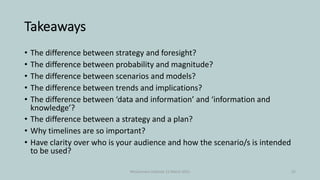
Takeaways
• The difference between strategy and foresight?
• The difference between probability and magnitude?
• The difference between scenarios and models?
• The difference between trends and implications?
• The difference between ‘data and information’ and ‘information and
knowledge’?
• The difference between a strategy and a plan?
• Why timelines are so important?
• Have clarity over who is your audience and how the scenario/s is intended
to be used?
McGuinness Institute 12 March 2021 2
McGuinness Institute 12 March 2021 3
5
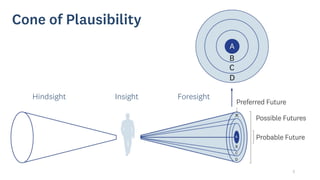
Cone of Plausibility
Hindsight Insight Foresight
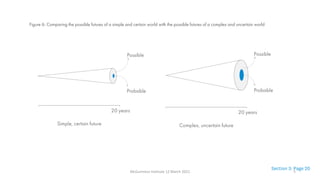
Simple, certain future
20 years
Possible
Probable
Possible
Probable
Complex, uncertain future
20 years
Figure 6: Comparing the possible futures of a simple and certain world with the possible futures of a complex and uncertain world
Section 3: Page 20
McGuinness Institute 12 March 2021 5
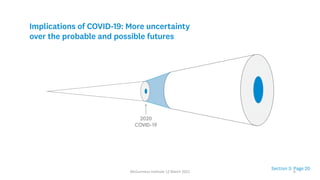
2020
COVID-19
Section 3: Page 20
Implications of COVID-19: More uncertainty
over the probable and possible futures
McGuinness Institute 12 March 2021 6
8
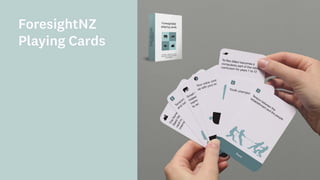
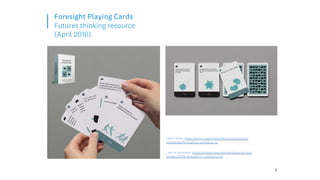
Foresight Playing Cards
Futures thinking resource
(April 2016)
Learn more: https://www.mcguinnessinstitute.org/events/
workshops/foresightnz-workshop-2/
Link to purchase: https://mcguinnessinstitute.bigcartel.com/
product/2016-foresightnz-playing-cards
3
McGuinness Institute 12 March 2021 9
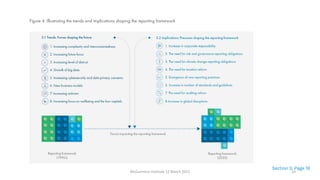
Figure 4: Illustrating the trends and implications shaping the reporting framework
Section 3: Page 18
McGuinness Institute 12 March 2021 10
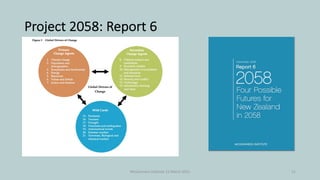
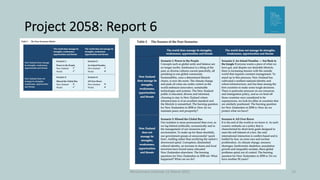
Project 2058: Report 6
McGuinness Institute 12 March 2021 11
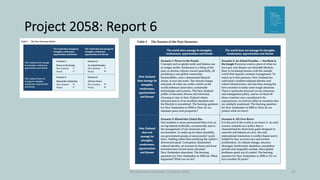
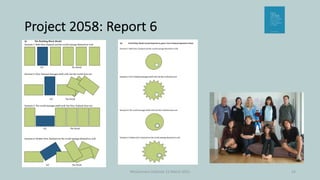
Project 2058: Report 6
McGuinness Institute 12 March 2021 12
Project 2058: Report 6
McGuinness Institute 12 March 2021 13
Project 2058: Report 6
McGuinness Institute 12 March 2021 14
Project 2058: Report 6
McGuinness Institute 12 March 2021 15
Our scenario exercise makes it clear that New Zealand needs to:
1. Be seen to deliver on all of our international agreements and legal obligations under the United
Nations and international law.
2. Design and apply indicators that measure progress in a comprehensive and integrated manner.
3. Identify, investigate, reflect and consider the implications of all available strategic options in an
open and transparent manner. Such an approach will not only deliver the best decisions, but just
as importantly, gain the commitment of New Zealanders to actively deliver on those decisions.
4. Focus more on what is ‘important’ rather than what is ‘urgent’.
5. Respond appropriately, rather than over-react, under-react or not react at all. In periods of crisis,
it will be those who understand not only the change agents, but how they interact over time,
who will be able to deliver positive change.
6. Support and engage in thinking long-term about the future.
7. Develop a dynamic, creative and effective strategy for sustainable development that not only
propels this country into an exceptional position internationally, but does so in such a way that
other countries emulate our practices.
8. In other words, New Zealand must lead by example.
Project 2058: Report 6
McGuinness Institute 12 March 2021 16
4.3 What Should We Be Looking For?
One of the difficulties in any future studies work is to identify with any certainty the current
global drivers that will shape the future. Consequently, many futurists keep careful watch,
scanning the present to assess the future. But in practice futurists can use scenarios to do
more than just explore the future; they can create a list of things to watch that indicate
which of the futures is likely to prevail.
Lessons learnt from the scenarios indicate things to watch for include:
• A fortress mentality versus a desire to work with others, both between individuals and
between countries.
• Disparities in wealth, health, education and technological adoption within societies and
between countries.
• The type of leadership style, in particular whether it is proactive and forward thinking or
complacent and reactive.
• The extent to which privacy and secrets are accepted norms in government, or whether
transparency and public accountability are the more common ethic.
Example slides
McGuinness Institute 12 March 2021 17
Section 4: Pages 39-40
McGuinness Institute 12 March 2021 18
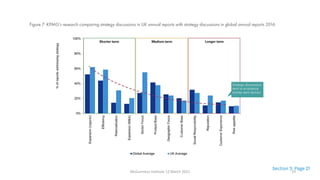
Figure 7: KPMG’s research comparing strategy discussions in UK annual reports with strategy discussions in global annual reports 2016
Section 3: Page 21
McGuinness Institute 12 March 2021 19
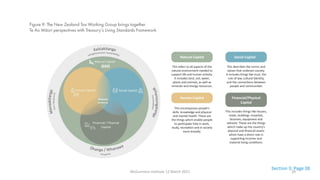
Natural Capital Social Capital
Human Capital Financial/Physical
Capital
This refers to all aspects of the
natural environment needed to
It includes land, soil, water,
plants and animals, as well as
This describes the norms and
It includes things like trust, the
This encompasses people's
the things which enable people
This includes things like houses,
roads, buildings, hospitals,
factories, equipment and
which have a direct role in
Figure 9: The New Zealand Tax Working Group brings together
Te Ao Māori perspectives with Treasury’s Living Standards Framework
Section 3: Page 28
McGuinness Institute 12 March 2021 20
McGuinness Institute 12 March 2021 21
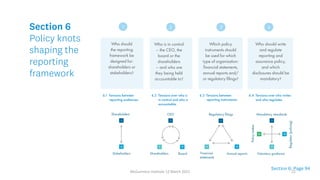
Section 6
Policy knots
shaping the
reporting
framework
Who should
the reporting
framework be
designed for:
shareholders or
stakeholders?
Which policy
instruments should
be used for which
type of organisation:
financial statements,
annual reports and/
or regulatory filings?
1 2 3 4
Who is in control
– the CEO, the
board or the
shareholders
– and who are
they being held
accountable to?
Who should write
and regulate
reporting and
assurance policy,
and which
disclosures should be
mandatory?
6.2 Tensions over who is
in control and who is
accountable:
CEO
Board
Shareholders
6.4 Tensions over who writes
and who regulates
Voluntary guidance
Mandatory standards
Regulator
(policing)
Policy
maker
6.1 Tensions between
reporting audiences:
Stakeholders
Shareholders
6.3 Tensions between
reporting instruments:
Annual reports
Regulatory filings
Financial
statements
Section 6: Page 94
McGuinness Institute 12 March 2021 22
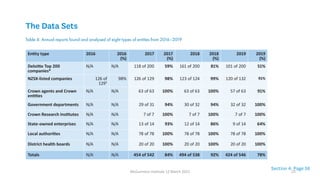
Table 4: Annual reports found and analysed of eight types of entities from 2016–2019
2016 2016
(%)
2017 2017
(%)
2018 2018
(%)
2019 2019
(%)
N/A N/A 118 of 200 59% 161 of 200 81% 101 of 200 51%
126 of
1291
98% 126 of 129 98% 123 of 124 99% 120 of 132 91%
N/A N/A 63 of 63 100% 63 of 63 100% 57 of 63 91%
N/A N/A 29 of 31 94% 30 of 32 94% 32 of 32 100%
Crown N/A N/A 7 of 7 100% 7 of 7 100% 7 of 7 100%
N/A N/A 13 of 14 93% 12 of 14 86% 9 of 14 64%
Local N/A N/A 78 of 78 100% 78 of 78 100% 78 of 78 100%
District N/A N/A 20 of 20 100% 20 of 20 100% 20 of 20 100%
N/A N/A 454 of 542 84% 494 of 538 92% 424 of 546 78%
The Data Sets
Section 4: Page 56
McGuinness Institute 12 March 2021 23
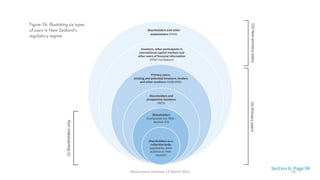
Shareholders and other
stakeholders (FMA)
Shareholders
(Companies Act 1993 –
Section 211)
Shareholders and
prospective investors
(NZX)
Primary users,
existing and potential investors, lenders
and other creditors (IASB/XRB)
Investors, other participants in
international capital markets and
other users of financial information
(IFRS Foundation)
(iii)
Non-primary
users
(ii)
Primary
users
(i)
Shareholders
only
Shareholders as a
collective body
(applied by some
auditors in their
reports)
Figure 36: Illustrating six types
of users in New Zealand’s
regulatory regime
Section 6: Page 96
McGuinness Institute 12 March 2021 24
Takeaways
• The difference between strategy and foresight?
• The difference between probability and magnitude?
• The difference between scenarios and models?
• The difference between trends and implications?
• The difference between ‘data and information’ and ‘information and
knowledge’?
• The difference between a strategy and a plan?
• Why timelines are so important?
• Have clarity over who is your audience and how the scenario/s is intended
to be used?
McGuinness Institute 12 March 2021 25
Thank you
McGuinness Institute 12 March 2021 26

20210312 Victoria University Presentation

  • 1.
    Scenario Development Victoria Universityof Wellington “The intuitive mind is a sacred gift and the rational mind is a faithful servant. We have created a society that honors the servant and has forgotten the gift” - Albert Einstein McGuinness Institute 12 March 2021 1
  • 2.
    Takeaways • The differencebetween strategy and foresight? • The difference between probability and magnitude? • The difference between scenarios and models? • The difference between trends and implications? • The difference between ‘data and information’ and ‘information and knowledge’? • The difference between a strategy and a plan? • Why timelines are so important? • Have clarity over who is your audience and how the scenario/s is intended to be used? McGuinness Institute 12 March 2021 2
  • 3.
  • 4.
  • 5.
    Simple, certain future 20years Possible Probable Possible Probable Complex, uncertain future 20 years Figure 6: Comparing the possible futures of a simple and certain world with the possible futures of a complex and uncertain world Section 3: Page 20 McGuinness Institute 12 March 2021 5
  • 6.
    2020 COVID-19 Section 3: Page20 Implications of COVID-19: More uncertainty over the probable and possible futures McGuinness Institute 12 March 2021 6
  • 7.
  • 8.
    Foresight Playing Cards Futuresthinking resource (April 2016) Learn more: https://www.mcguinnessinstitute.org/events/ workshops/foresightnz-workshop-2/ Link to purchase: https://mcguinnessinstitute.bigcartel.com/ product/2016-foresightnz-playing-cards 3
  • 9.
  • 10.
    Figure 4: Illustratingthe trends and implications shaping the reporting framework Section 3: Page 18 McGuinness Institute 12 March 2021 10
  • 11.
    Project 2058: Report6 McGuinness Institute 12 March 2021 11
  • 12.
    Project 2058: Report6 McGuinness Institute 12 March 2021 12
  • 13.
    Project 2058: Report6 McGuinness Institute 12 March 2021 13
  • 14.
    Project 2058: Report6 McGuinness Institute 12 March 2021 14
  • 15.
    Project 2058: Report6 McGuinness Institute 12 March 2021 15 Our scenario exercise makes it clear that New Zealand needs to: 1. Be seen to deliver on all of our international agreements and legal obligations under the United Nations and international law. 2. Design and apply indicators that measure progress in a comprehensive and integrated manner. 3. Identify, investigate, reflect and consider the implications of all available strategic options in an open and transparent manner. Such an approach will not only deliver the best decisions, but just as importantly, gain the commitment of New Zealanders to actively deliver on those decisions. 4. Focus more on what is ‘important’ rather than what is ‘urgent’. 5. Respond appropriately, rather than over-react, under-react or not react at all. In periods of crisis, it will be those who understand not only the change agents, but how they interact over time, who will be able to deliver positive change. 6. Support and engage in thinking long-term about the future. 7. Develop a dynamic, creative and effective strategy for sustainable development that not only propels this country into an exceptional position internationally, but does so in such a way that other countries emulate our practices. 8. In other words, New Zealand must lead by example.
  • 16.
    Project 2058: Report6 McGuinness Institute 12 March 2021 16 4.3 What Should We Be Looking For? One of the difficulties in any future studies work is to identify with any certainty the current global drivers that will shape the future. Consequently, many futurists keep careful watch, scanning the present to assess the future. But in practice futurists can use scenarios to do more than just explore the future; they can create a list of things to watch that indicate which of the futures is likely to prevail. Lessons learnt from the scenarios indicate things to watch for include: • A fortress mentality versus a desire to work with others, both between individuals and between countries. • Disparities in wealth, health, education and technological adoption within societies and between countries. • The type of leadership style, in particular whether it is proactive and forward thinking or complacent and reactive. • The extent to which privacy and secrets are accepted norms in government, or whether transparency and public accountability are the more common ethic.
  • 17.
  • 18.
    Section 4: Pages39-40 McGuinness Institute 12 March 2021 18
  • 19.
    Figure 7: KPMG’sresearch comparing strategy discussions in UK annual reports with strategy discussions in global annual reports 2016 Section 3: Page 21 McGuinness Institute 12 March 2021 19
  • 20.
    Natural Capital SocialCapital Human Capital Financial/Physical Capital This refers to all aspects of the natural environment needed to It includes land, soil, water, plants and animals, as well as This describes the norms and It includes things like trust, the This encompasses people's the things which enable people This includes things like houses, roads, buildings, hospitals, factories, equipment and which have a direct role in Figure 9: The New Zealand Tax Working Group brings together Te Ao Māori perspectives with Treasury’s Living Standards Framework Section 3: Page 28 McGuinness Institute 12 March 2021 20
  • 21.
  • 22.
    Section 6 Policy knots shapingthe reporting framework Who should the reporting framework be designed for: shareholders or stakeholders? Which policy instruments should be used for which type of organisation: financial statements, annual reports and/ or regulatory filings? 1 2 3 4 Who is in control – the CEO, the board or the shareholders – and who are they being held accountable to? Who should write and regulate reporting and assurance policy, and which disclosures should be mandatory? 6.2 Tensions over who is in control and who is accountable: CEO Board Shareholders 6.4 Tensions over who writes and who regulates Voluntary guidance Mandatory standards Regulator (policing) Policy maker 6.1 Tensions between reporting audiences: Stakeholders Shareholders 6.3 Tensions between reporting instruments: Annual reports Regulatory filings Financial statements Section 6: Page 94 McGuinness Institute 12 March 2021 22
  • 23.
    Table 4: Annualreports found and analysed of eight types of entities from 2016–2019 2016 2016 (%) 2017 2017 (%) 2018 2018 (%) 2019 2019 (%) N/A N/A 118 of 200 59% 161 of 200 81% 101 of 200 51% 126 of 1291 98% 126 of 129 98% 123 of 124 99% 120 of 132 91% N/A N/A 63 of 63 100% 63 of 63 100% 57 of 63 91% N/A N/A 29 of 31 94% 30 of 32 94% 32 of 32 100% Crown N/A N/A 7 of 7 100% 7 of 7 100% 7 of 7 100% N/A N/A 13 of 14 93% 12 of 14 86% 9 of 14 64% Local N/A N/A 78 of 78 100% 78 of 78 100% 78 of 78 100% District N/A N/A 20 of 20 100% 20 of 20 100% 20 of 20 100% N/A N/A 454 of 542 84% 494 of 538 92% 424 of 546 78% The Data Sets Section 4: Page 56 McGuinness Institute 12 March 2021 23
  • 24.
    Shareholders and other stakeholders(FMA) Shareholders (Companies Act 1993 – Section 211) Shareholders and prospective investors (NZX) Primary users, existing and potential investors, lenders and other creditors (IASB/XRB) Investors, other participants in international capital markets and other users of financial information (IFRS Foundation) (iii) Non-primary users (ii) Primary users (i) Shareholders only Shareholders as a collective body (applied by some auditors in their reports) Figure 36: Illustrating six types of users in New Zealand’s regulatory regime Section 6: Page 96 McGuinness Institute 12 March 2021 24
  • 25.
    Takeaways • The differencebetween strategy and foresight? • The difference between probability and magnitude? • The difference between scenarios and models? • The difference between trends and implications? • The difference between ‘data and information’ and ‘information and knowledge’? • The difference between a strategy and a plan? • Why timelines are so important? • Have clarity over who is your audience and how the scenario/s is intended to be used? McGuinness Institute 12 March 2021 25
  • 26.