
최윤섭 디지털헬스케어 연구소
소장 최윤섭, PhD
Global Trends of Digital Healthcare Industry
The first half of 2017
The Convergence of IT, BT and Medicine
http://www.yoonsupchoi.com
Disclaimer: Conflict of Interest
Digital Healthcare Partners (DHP) 는
국내 유일의 디지털 헬스케어 전문 스타트업 엑셀러레이터입니다.
글로벌 한국
일반
의료/
헬스케어
DHP는 디지털 헬스케어 전문 엑셀러레이터로서, 

디지털 헬스케어/의료 스타트업을 발굴, 육성, 연결하고 투자합니다.
발굴 • 세상을 바꿀 수 있는 혁신적인 헬스케어 스타트업 및 예비 창업팀을 발굴합니다.
• 발굴을 위해 DHP Office Hour, 해커톤, 자체 행사 개최 등의 다방면의 채널을 활용합니다.
육성 • 의료/헬스케어 전문가들로 이루어진 파트너 및 자문가들이 초기 스타트업을 멘토링합니다.
• 사업 개발, 아이템 검증, 임상 연구, 인허가 관련 자문 등 전방위적으로 지원합니다.
투자 • 초기 스타트업 및 예비 창업팀에게 정해진 원칙에 따라 지분 투자를 집행합니다.
• 스타트업을 성장시켜 지분 가치의 상승에 따라서 재무적 수익을 추구합니다.
연결 • 초기 스타트업을 병원, 규제기관, 보험사, VC, 대학 등 다양한 이해관계자들과 연결합니다.
• 파트너와 자문가들의 네트워크를 적극 활용하여 스타트업을 의료계 이너서클로 끌어들입니다.
DHP는 최고의 의료 전문가들이 초기 헬스케어 스타트업에
의학 자문, 의료 기관 연계, 임상 검증, 투자 유치 등을 지원합니다.
최윤섭 대표파트너 정지훈 파트너 김치원 파트너
• 성균관대학교 디지털헬스학과 교수
• 최윤섭 디지털 헬스케어 연구소 소장
• VUNO, Zikto, 녹십자홀딩스 등 자문
• 저서: ‘헬스케어 이노베이션’
• 전) 서울대학교 의과대학 암연구소 교수
• 전) 서울대학교병원 의생명연구원 교수
• 포항공대 전산생물학 이학박사
• 포항공대 컴퓨터공학/생명과학 학사
• 경희사이버대학 미디어커뮤니케이션학과 교수
• 빅뱅엔젤스 파트너
• Lunit, 매직에코, 휴레이포지티브 등 자문
• 저서: ‘제 4의 불', ‘거의 모든 IT의 역사’ 등
• 전) 명지병원 IT융합연구소장
• 한양대학교 의과대학 의학사
• 서울대학교 보건정책관리학 석사
• USC 의공학박사
• 내과전문의, 서울와이즈요양병원 원장
• 성균관대학교 디지털 헬스학과 교수
• Noom, Zikto, Future Play 등 자문
• 저서: ‘의료, 미래를 만나다’
• 전) 맥킨지 서울사무소 경영컨설턴트
• 전) 삼성서울병원 의료관리학과 교수
• 서울대학교 의과대학 졸업
• 연세대학교 보건대학원 석사
많은 언론들에서 디지털 헬스케어 파트너스를 주목해주셨습니다.
DHP는 유전체 분석 기반의 희귀질환 진단 서비스를 개발하는
3billion에 시드 투자 및 엑셀러레이션을 시작하였습니다.
• 마크로젠의 유전체 분석 전문가들이 2016년 11월 스핀오프
• 대표 이사 금창원은 유전체 분석 전문가이자 연쇄 창업가
• 유전체 분석으로 4,000여개 희귀 유전 질환을 한 번에 진단
• 해외 시장 타겟, 2,000불의 비용으로 2-3주 내 진단
• 2017년 2월 시제품 출시
• http://3billion.io
Contents
• 2017 1Q 미국 VC 투자 동향
• ‘Liquid Biopsy’: Illumina and Grail
• 23andMe의 DTC 서비스 FDA 인허가 확대
• IBM Watson for Oncology 도입 광풍(?)
• 의사를 능가하는 Deep Learning 연구 결과들
• 의학적 효용을 증명한 헬스케어 스타트업의 증가
2017 1Q 미국 VC 투자 동향
http://rockhealth.com/2015/01/digital-health-funding-tops-4-1b-2014-year-review/
https://rockhealth.com/reports/2016-year-end-funding-report-a-reality-check-for-digital-health
•2016년 디지털 헬스케어 스타트업 펀딩 규모는 $4.2b 으로 전년도에 비해서 8% 감소
•반면 투자를 받은 기업의 수는 273개에서 296개로 약 10% 증가
•총 451개 VC 및 CVC가 투자를 집행
•그 중 237개는 디지털 헬스케어 기업에 '처음' 투자한 곳 (화이자 포함)
https://rockhealth.com/reports/2016-year-end-funding-report-a-reality-check-for-digital-health
• The six largest deals of 2016 made up 19% of all digital health funding.
• Despite laying off 15% of its global workforce, Jawbone raised $165M in 2016.
• The most funded digital health company of all time at nearly a billion dollars
•펀딩을 가장 많이 받은 분야는 Genomics and Sequencing 분야
•Human Longevity ($220M), Color Genomics ($45M), Seven Bridges Genomics ($45M)
•Pathway Genomics ($40M), Emulate ($28M)
https://rockhealth.com/reports/2016-year-end-funding-report-a-reality-check-for-digital-health
https://rockhealth.com/reports/digital-health-funding-2015-year-in-review/
•총 451개 VC 및 CVC가 투자를 집행
•3개 이상의 deal 을 한 곳은 40개 투자자
•총 투자자 중 1/3 정도는 ‘하나의’ deal 만 진행
•237개는 디지털 헬스케어 기업에 '처음' 투자한 곳 (화이자 포함)
https://rockhealth.com/reports/2016-year-end-funding-report-a-reality-check-for-digital-health
•최근 3년 동안 Merk, J&J, GSK 등의 제약사들의 디지털 헬스케어 분야 투자 급증
•2015-2016년 총 22건의 deal (=2010-2014년의 5년간 투자 건수와 동일)
•Merck 가 가장 활발: 2009년부터 Global Health Innovation Fund 를 통해 24건 투자 ($5-7M)
•GSK 의 경우 2014년부터 6건 (via VC arm, SR One): including Propeller Health
•Grail: cancer diagnostic spin-off from Illumina (Liquid biopsy)
•$900m Series B, in March 2017
•가장 많은 제약사가 참여한 투자: J&J, Merck, Bristol-Myers-Squibb
•2017 1Q에 총 71건의 deal; $1B funding 으로 strong start
•트럼프 정부의 의료 및 규제 정책의 불확실성이 리스크로 보였으나, 크게 영향을 미치지는 않은 것으로 보임
•Rock Health의 경우,
•Digital Healthcare 분야의 정의가 보수적 (ie. 진단회사인 Grail은 누락)
•미국 내의 $20m 이상의 deal 만을 조사
•Startup Health의 분석
•Digital Healthcare 분야의 정의가 더 넓고 (Grail 포함), $20m 이하의 deal 도 포함
•총 124 deal 에 $2.5B 가 투자
•2011년 이후 1분기 투자 횟수는 최하이지만,
•개별 deal의 규모는 상승: $500m-900m
startuphealth.com/reports
2010 2011 2012 2013 2014 2015 2016 2017
YTD
Q1 Q2 Q3 Q4
158
300
499
668
589
526
606
124
Deal Count
$1.1B
$2.0B
$1.5B
$629M$572M$391M$192M
$8.2B
$6.0B
$7.1B
$2.9B
$2.4B
$2.0B
$1.1B
DIGITAL HEALTH FUNDING SNAPSHOT: YEAR OVER YEAR
5Source: StartUp Health Insights | startuphealth.com/insights Note: Report based on public data on seed, venture, corporate venture and private equity funding only. © 2017 StartUp Health LLC
$2.5B
$2.5B
GRAIL’s $914 million Series B may be an outlier and skewed the overall funding numbers this quarter keeping it on track
for another strong year overall, and turning an otherwise modest first quarter into a record-breaker.
While Q1 2017 had the lowest deal volume since 2011 -
with only 124 deals this quarter - we’re seeing more and
more $500-900M deals. What do less deals and more
money mean? Even though VCs are betting less, they’re
betting bigger. Also, the lines are blurring quickly as
expected between “digital” and all other categories of
health and healthcare.
“AI, virtual reality, mobile connectivity,
genomics, and analytics are coming to
change healthcare, and that is creating a
wave of innovation like we’ve never seen.”
-Unity Stoakes, President, StartUp Health
•Grail 이 $900M Series B funding으로 압도적인 1위
•이외에 상위권은 Rock Health - Startup Health 가 거의 비슷
•Alignment Healthcare: Population Health Management (병원, 보험사 대상)
•PatientsLikeMe: Patients Community (제약회사 대상)
•Nuna: Big Data Analytics (정부, 보험사 대상)
startuphealth.com/reports
Company $ Invested Subsector Notable Investor
1 $914M Big Data/Analytics
2 $115M Population Health
3 $100M Patient/Consumer Experience
4 $90M Big Data/Analytics
5 $85M EHR
6 $65M Research
7 $55M E-Commerce
8 $52M Population Health
9 $50M Medical Device
10 $41M Research
THE TOP 10 LARGEST DEALS OF 2017
8Source: StartUp Health Insights | startuphealth.com/insights Note: Report based on public data on seed, venture, corporate venture and private equity funding only. © 2017 StartUp Health LLC
The top 10 deals of Q1 2017 included companies working in sectors in which big deals have been rare. What does this
suggest? 2017 might be a breakout year in terms of funding for solutions focusing on population health, EHR innovation, and
e-commerce.
‘Liquid Biopsy’, and Grail
Tumor Heterogeneity
Meric-Bernstam F, Mills GB. Nat Rev Clin Oncol. 2012 Sep;9(9):542-8.
in the understanding of tumour heterogeneity; second,
the role of surgery as a therapeutic modality in the era of
targeted therapy; third, the use of personalized therapy
in the perioperative period and, finally, the possibilities
of personalization of surgical procedures according to
lung cancer subtypes.
VATS lobectomy showed that intraoperative blood loss
was significantly reduced in the VATS group compared
with open lobectomy in nine studies; however, no differ-
ence was observed in five studies and the values were not
reported in seven studies.12
Hospital stay was also signifi-
cantly shorter in VATS group in five studies. Park et al.,13
Heterogeneity in patients
with adenocarcinoma
of the lung according
to driver oncogenes
Heterogeneity within
patients with
EGFR mutation
Heterogeneity in
resistance mechanisms
in one patient
HER2
3%
EGFR
~40% in Asians
~15% in Caucasians
ALK
~5%
KRAS
~15% in Asians
~30% in Caucasians
RET
~1%
ROS1
~1%
BRAF
~1%
PIK3CA
~1%
NRAS
~1%
MET
<5%
Others?
Exon 19del
~50%
L858R
~40%
Sensitive
Inherent resistance
CRKL
~3%
BIM
20–40%
IκB
~30%
Inherent T790M
~2% by sequencing
~30% by sensitive
method
Further
heterogeneity
EGFR-TKI
Drug X
T790M
MET
a cb
T790M
Heterogeneity in patients
with adenocarcinoma
of the lung according
to driver oncogenes
Heterogeneity within
patients with
EGFR mutation
Heterogeneity
resistance mecha
in one patien
HER2
3%
EGFR
~40% in Asians
~15% in Caucasians
ALK
~5%
KRAS
~15% in Asians
~30% in Caucasians
RET
~1%
ROS1
~1%
BRAF
~1%
PIK3CA
~1%
NRAS
~1%
MET
<5%
Others?
Exon 19del
~50%
L858R
~40%
Sensitive
Inherent resistance
CRKL
~3%
BIM
20–40%
IκB
~30%
Inherent T790M
~2% by sequencing
~30% by sensitive
method
Further
heterogeneity
EGFR-TKI
Drug
T790M
ME
a cb
T790M
Figure 1 | Various classes of tumour heterogeneity in adenocarcinoma of the lung. a | Heterogeneity in patients with
adenocarcinoma of the lung according to driver oncogenes that are crucial for selecting targeted drugs for treatment.2,76
Number of people reflects approximate incidence.2,76
b | Heterogeneity in patients with EGFR mutations, resulting in
MitsudomiT, Suda K,YatabeY. Nat Rev Clin Oncol. 2013 Apr;10(4):235-44.
Heterogeneity in Lung Adenocarcinoma
Tumor Heterogeneity
Meric-Bernstam F, Mills GB. Nat Rev Clin Oncol. 2012 Sep;9(9):542-8.
Intratumor Heterogeneity Revealed by multiregion Sequencing
B Regional Distribution of Mutations
C Phylogenetic Relationships of Tumor Regions D Ploidy Profiling
A Biopsy Sites
R2 R4
R9 R8
R5
R1
R3
R2
PreP
PreM
R1
R2
R3
R5
R8
R9
R4
M1
M2a
M2b
C2orf85
WDR7
SUPT6H
CDH19
LAMA3
DIXDC1
HPS5
NRAP
KIAA1524
SETD2
PLCL1
BCL11A
IFNAR1
DAMTS10
C3
KIAA1267
RT4
CD44
ANKRD26
TM7SF4
SLC2A1
DACH2
MMAB
ZNF521
HMG20A
DNMT3A
RLF
MAMLD1
MAP3K6
HDAC6
PHF21B
FAM129B
RPS8
CIB2
RAB27A
SLC2A12
DUSP12
ADAMTSL4
NAP1L3
USP51
KDM5C
SBF1
TOM1
MYH8
WDR24
ITIH5
AKAP9
FBXO1
LIAS
TNIK
SETD2
C3orf20
MR1
PIAS3
DIO1
ERCC5
KL
ALKBH8
DAPK1
DDX58
SPATA21
ZNF493
NGEF
DIRAS3
LATS2
ITGB3
FLNA
SATL1
KDM5C
KDM5C
RBFOX2
NPHS1
SOX9
CENPN
PSMD7
RIMBP2
GALNT11
ABHD11
UGT2A1
MTOR
PPP6R2
ZNF780A
WSCD2
CDKN1B
PPFIA1
TH
SSNA1
CASP2
PLRG1
SETD2
CCBL2
SESN2
MAGEB16
NLRP7
IGLON5
KLK4
WDR62
KIAA0355
CYP4F3
AKAP8
ZNF519
DDX52
ZC3H18
TCF12
NUSAP1
X4
KDM2B
MRPL51
C11orf68
ANO5
EIF4G2
MSRB2
RALGDS
EXT1
ZC3HC1
PTPRZ1
INTS1
CCR6
DOPEY1
ATXN1
WHSC1
CLCN2
SSR3
KLHL18
SGOL1
VHL
C2orf21
ALS2CR12
PLB1
FCAMR
IFI16
BCAS2
IL12RB2
PrivateUbiquitous Shared primary Shared metastasis
Ubiquitous
Lung
metastases
Chest-wall
metastasis
Perinephric
metastasis
M1
10 cm
R7 (G4)
R5 (G4)
R9
R3 (G4)
R1 (G3) R2 (G3)
R4 (G1)
R6 (G1)
Hilum
R8 (G4)
Primary
tumor
Shared primary
Shared metastasis
M2b
M2a
Intratumor Heterogeneity Revealed
by Multiregion Sequencing
Gerlinger M et al. N Engl J Med. 2012 Mar 8;366(10):883-92
Nat Genet. 2014 Feb 26;46(3):214-5.
Intratumoral heterogeneity in kidney cancer
Nat Genet. 2014 Mar;46(3):225-33.
E S
226 VOLUME 46 | NUMBER 3 | MARCH 2014 NATURE G
Figure 1 Regional distribution of nonsynonymous mutations in ten ccRCC tumors. Mutations that failed validation were not included. Heat map
indicate the presence of a mutation (yellow) or its absence (blue) in each region. Category 1 high-confidence driver mutations and category 2 p
driver mutations are highlighted in magenta. The table shows the number of nonsynonymous mutations and the ratio of heterogeneous mutation
tumor. An asterisk indicates where VHL methylation was included in the analysis.
226 VOLUME 46 | NUMBER 3 | MARCH 2014 NATURE G
Figure 1 Regional distribution of nonsynonymous mutations in ten ccRCC tumors. Mutations that failed validation were not included. Heat ma
indicate the presence of a mutation (yellow) or its absence (blue) in each region. Category 1 high-confidence driver mutations and category 2 p
driver mutations are highlighted in magenta. The table shows the number of nonsynonymous mutations and the ratio of heterogeneous mutatio
tumor. An asterisk indicates where VHL methylation was included in the analysis.
Figure 1 Regional distribution of nonsynonymous mutations in ten ccRCC tumors. Mutations that failed validation were not included. Heat map
indicate the presence of a mutation (yellow) or its absence (blue) in each region. Category 1 high-confidence driver mutations and category 2 p
driver mutations are highlighted in magenta. The table shows the number of nonsynonymous mutations and the ratio of heterogeneous mutation
tumor. An asterisk indicates where VHL methylation was included in the analysis.
226 VOLUME 46 | NUMBER 3 | MARCH 2014 NATURE G
Figure 1 Regional distribution of nonsynonymous mutations in ten ccRCC tumors. Mutations that failed validation were not included. Heat ma
indicate the presence of a mutation (yellow) or its absence (blue) in each region. Category 1 high-confidence driver mutations and category 2 p
driver mutations are highlighted in magenta. The table shows the number of nonsynonymous mutations and the ratio of heterogeneous mutatio
tumor. An asterisk indicates where VHL methylation was included in the analysis.
226 VOLUME 46 | NUMBER 3 | MARCH 2014 NATURE
Figure 1 Regional distribution of nonsynonymous mutations in ten ccRCC tumors. Mutations that failed validation were not included. Heat m
indicate the presence of a mutation (yellow) or its absence (blue) in each region. Category 1 high-confidence driver mutations and category 2
driver mutations are highlighted in magenta. The table shows the number of nonsynonymous mutations and the ratio of heterogeneous mutati
tumor. An asterisk indicates where VHL methylation was included in the analysis.
Regional distribution of nonsynonymous mutations
in ten ccRCC tumors
Heat maps indicate the presence of a mutation (yellow) or its absence (blue) in each region.
Category 1 high-confidence driver mutations and category 2 probable driver mutations are highlighted in magenta.
E S
226 VOLUME 46 | NUMBER 3 | MARCH 2014 NATURE G
Figure 1 Regional distribution of nonsynonymous mutations in ten ccRCC tumors. Mutations that failed validation were not included. Heat map
indicate the presence of a mutation (yellow) or its absence (blue) in each region. Category 1 high-confidence driver mutations and category 2 p
driver mutations are highlighted in magenta. The table shows the number of nonsynonymous mutations and the ratio of heterogeneous mutation
tumor. An asterisk indicates where VHL methylation was included in the analysis.
226 VOLUME 46 | NUMBER 3 | MARCH 2014 NATURE G
Figure 1 Regional distribution of nonsynonymous mutations in ten ccRCC tumors. Mutations that failed validation were not included. Heat ma
indicate the presence of a mutation (yellow) or its absence (blue) in each region. Category 1 high-confidence driver mutations and category 2 p
driver mutations are highlighted in magenta. The table shows the number of nonsynonymous mutations and the ratio of heterogeneous mutatio
tumor. An asterisk indicates where VHL methylation was included in the analysis.
Figure 1 Regional distribution of nonsynonymous mutations in ten ccRCC tumors. Mutations that failed validation were not included. Heat map
indicate the presence of a mutation (yellow) or its absence (blue) in each region. Category 1 high-confidence driver mutations and category 2 p
driver mutations are highlighted in magenta. The table shows the number of nonsynonymous mutations and the ratio of heterogeneous mutation
tumor. An asterisk indicates where VHL methylation was included in the analysis.
226 VOLUME 46 | NUMBER 3 | MARCH 2014 NATURE G
Figure 1 Regional distribution of nonsynonymous mutations in ten ccRCC tumors. Mutations that failed validation were not included. Heat ma
indicate the presence of a mutation (yellow) or its absence (blue) in each region. Category 1 high-confidence driver mutations and category 2 p
driver mutations are highlighted in magenta. The table shows the number of nonsynonymous mutations and the ratio of heterogeneous mutatio
tumor. An asterisk indicates where VHL methylation was included in the analysis.
226 VOLUME 46 | NUMBER 3 | MARCH 2014 NATURE
Figure 1 Regional distribution of nonsynonymous mutations in ten ccRCC tumors. Mutations that failed validation were not included. Heat m
indicate the presence of a mutation (yellow) or its absence (blue) in each region. Category 1 high-confidence driver mutations and category 2
driver mutations are highlighted in magenta. The table shows the number of nonsynonymous mutations and the ratio of heterogeneous mutati
tumor. An asterisk indicates where VHL methylation was included in the analysis.
Regional distribution of nonsynonymous mutations
in ten ccRCC tumors
Heat maps indicate the presence of a mutation (yellow) or its absence (blue) in each region.
Category 1 high-confidence driver mutations and category 2 probable driver mutations are highlighted in magenta.
Nat Genet. 2014 Mar;46(3):225-33.
A RT I C L E S
We determined the regional distribution
f nonsynonymous mutations on the basis of
ata from ultra-deep amplicon sequencing.
We called a mutation as being present in a
umor region if a nucleotide substitution was
etected in 0.5% of reads or an indel was
etected in 1% of reads. We chose these
hresholds on the basis of the error rate of
he sequencing platform13. The regional
istribution of 28 mutations for which
ltra-deep sequencing data were not avail-
ble was inferred from the exome sequenc-
ng data. Exome sequencing of EV001 and
EV002 has previously been reported2 and was
ncluded in this analysis. On average, 67%
range of 28–92%) of the nonsynonymous
omatic mutations were heterogeneous and
ot detectable across all sampled regions of
n individual tumor (Fig. 1). The presence
f somatic mutational heterogeneity in all
10/10) treatment-naive or pretreated cases indicates that ITH, char-
cterized by the spatial separation of subclones, is a common feature
n stage T2–T4 ccRCCs.
To identify the optimal number of biopsies that can reliably detect
he majority of nonsynonymous somatic mutations in a tumor, we
alculated the number of mutations that would have been detected
heterogeneity specifically in EV003 and EV006. No other clinical or
pathological characteristic seemed to correlate with mutational ITH,
and larger series will be required to determine the biological basis for
the diversity in ccRCC phylogenetic structures.
Identification of intraregional subclones
R4b
GL
VHL
SETD2
SETD2
KDM5C
MTOR
R8
KDM5C
R4a
R5
R3
R2
R1
R9
M1
M2a
M2b
SETD2
EV001 EV003
R6 R7
R1
R5
GL
R9
VHL
(methylation)
PBRM1
EV005
R6dom
R7
R1R5
R3
R4, R6min
R2
GL
VHL
PBRM1
PIK3CA
PIK3CA
SF3B1
EV006 EV007 RMH002
R6
R7
R1
R2
R3
PBRM1
BAP1
TP53
RMH004
R8
R10
R2
GL
VT
R4
VHL
PBRM1
ATM
PTEN
SMARCA4
R3
MSH6
PBRM1
ARID1A
RMH008
R4min
R5, R7
R6min
R8
GL
R1
R2
R3
VHL
BAP1 TSC2
BAP1 BAP1
R6dom
R4dom
RK26
PBRM1
TP53 BAP1
R3, R4
R11
R9
GL
R1
R2
VHL
R5min
R10
R7
R5dom
R8
R6
10 non
synonymous
mutations
Trunk
Internal branch
Terminal branch
EV002
R7
R1
R3
R6
GL
R9
VHL
PBRM1
SETD2
TP53
R4
M
PTEN
PTEN
SETD2
R3
GL
GL GL
R4 R7
VHL
VHL
VHL
LN1a, LN1b
R2R6
R1
R1
R15
R9min
R9dom
R3min
BAP1
SETD2
R5,R7
R2, R3dom
R6
PIK3CA
SETD2
TP53
R4
R3R4
R2
igure 3 Phylogenetic trees generated by
maximum parsimony from M-seq data for ten
cRCC tumors. Trees for EV001 and EV002
re adapted from Gerlinger et al.2. Branch
nd trunk lengths are proportional to the
umber of nonsynonymous mutations acquired
n the corresponding branch or trunk. Driver
mutations were acquired by the indicated
enes in the branches the arrows indicate.
river mutations defining parallel evolution
vents are highlighted by color. Trees are
ooted at the germline (GL) DNA sequence,
etermined by exome sequencing of DNA from
eripheral blood.
Phylogenetic trees generated for ten ccRCC tumors
Mutational processes change during tumor evolution
ccRCCs can traverse different evolutionary routes simultaneously
Br J Cancer. 2010 Oct 12;103(8):1139-43.
resistance develops. A further obstacle for the interpretation of
large-scale somatic mutation analyses is that fitness effects of the
vast majority of mutations are unknown. The RNA interference-
based functional genomic screening approaches can experimen-
tally test the phenotypic effect of silencing large numbers of genes
individually and may support the interpretation of mutation
data sets by identifying genes that influence cellular fitness or drug
sensitivity.
cells in vitro (Duesberg et al
recurrence after drug treatmen
2010). The clinically importan
geneity could accelerate evolu
enhance biological fitness to
pressures could in turn favour t
unstable cancer cells by can
advantages conferred by genom
must be balanced against the s
result from the generation o
deleterious mutations or tumou
chromosomal instability in anim
Importantly, evolutionary mod
instability can be positively selec
advantage in environments
(e.g. during chemotherapy) in
cycle arrest after DNA damage
cells that are negatively selected
cell cycle arrest and have a lower
Wodarz, 2003).
Thus, it is conceivable that the
instability required to accelerate
of cancers and that excessive
tumour. Results from animal tu
excessive chromosomal instabili
role leads to the tantalising prop
genome instability provides
intervention (Weaver et al, 2007
EVIDENCE FOR DRUG RE
EVOLUTION
The harsh clinical reality is th
almost invariably occurs in adva
leading to disease progression an
examples highlight how Darwi
tumoural genetic heterogeneity
pressure of systemic cancer t
resistance from a Darwinian
Genetic heterogeneity
Time
Bottleneck
Drug treatment
Cancercellpopulation
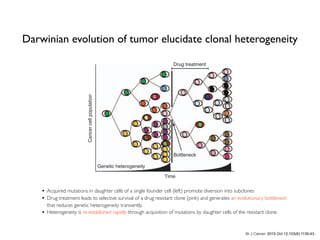
Figure 1 Schematic view of tumour heterogeneity during tumour
progression and treatment. Acquired mutations in daughter cells of a single
founder cell (left) promote diversion into subclones (different colours
reflect different clones). Some new mutations lead to accelerated growth
(for example yellow and orange clones). Fitness reducing mutations lead
to negative selection (cells with brown cytoplasm). Drug treatment leads to
selective survival of a drug resistant clone (pink) and generates an
evolutionary bottleneck that reduces genetic heterogeneity transiently.
Heterogeneity is re-established rapidly through acquisition of mutations
by daughter cells of the resistant clone.
Darwinian evolution of tumor elucidate clonal heterogeneity
• Acquired mutations in daughter cells of a single founder cell (left) promote diversion into subclones
• Drug treatment leads to selective survival of a drug resistant clone (pink) and generates an evolutionary bottleneck
that reduces genetic heterogeneity transiently.
• Heterogeneity is re-established rapidly through acquisition of mutations by daughter cells of the resistant clone.
P E R S P E C T I V E
Fig. 1. A trunk-branch model of intratumor heterogeneity. (A) The development of intratumor heterogeneity is analogous to a growing tree. The
trunk harbors the founding ubiquitous driver mutations of a cancer present in every tumor subclone and region. The sprouting branches represent
different geographically separated regions of the tumor or subclones present within single biopsies that carry heterogeneous mutations that are
not present in every tumor cell or tumor region. Such mutations may distinguish the biological behavior of subclones and harbor the potential to
become driver mutations under distinct selection pressures. Ubiquitous genetic events present in the trunk may provide more tractable biomarkers
and therapeutic targets than heterogeneous events in the branches. We describe three levels of complexity: level 1, the trunk carries driver events,
whereas the branches carry neutral mutations; level 2, the trunk carries driver events, whereas the branches carry neutral or additional driver events
that may harbor convergent phenotypes (for example, distinct mutations in SETD2 or PTEN occur in different regions of the same renal cancer and
converge on the same pathway resulting in its inactivation) (4); level 3, level 1, and level 2 events plus neutral mutations in the branches (or trunk) that
become driver events under selection pressures (11, 17–20). With level 1 complexity, one biomarker can be developed against one target; with level
2 and 3 complexity, a single biomarker is unlikely to be sufficient. The risk of drug resistance may increase with each level of complexity. (B) Clonal ar-
chitecture as a biomarker.The polygenic nature of drug resistance and intratumor heterogeneity may exacerbate difficulties in predicting therapeutic
outcome. Consideration of tumor growth within a Darwinian evolutionary tree framework may support the identification of new predictive biomark-
Level 1
complexity
Level 2
complexity
Level 3
complexity
Clonal architecture
as a biomarker
A BTrunk-branch
hypothesis
onApril4,2012stm.sciencemag.org
A trunk-branch model of intratumor heterogeneity
• The trunk harbors the founding ubiquitous driver mutations of a cancer present in every tumor subclone and region.
• The sprouting branches represent different geographically separated regions of the tumor or subclones present within
single biopsies that carry heterogeneous mutations that are not present in every tumor cell or tumor region.
Sci Transl Med. 2012 Mar 28;4(127):127
biopsy
Release and extraction of cfDNA from the blood
•cfDNA 는 건강한 세포가 사멸할 때뿐만 아니라, 암 세포가 사멸할 때도 혈액 속으로 나온다.
•Liquid biopsy (액체 생검)
•혈액 속에서 cfDNA를 추출하여 암세포에서 나온 DNA를 detection 하고 분석
•암의 재발 유무 조기 발견, 항암제의 약효 파악, 암 세포의 유전 변이 파악 등에 활용
http://www.nature.com/nrclinonc/journal/v10/n8/full/nrclinonc.2013.110.html
Monitoring tumour-specific aberrations to detect
recurrence and resistance
•a. 암이 수술 이후에 조기 재발했는지에 대한 모니터링
•b. 표적 항암제 투여 이후에 내성이 있는 새로운 암세포(clone)가 자라는지 검사
•Red: 새로운 clone 이 생성하여 재발
•blue: 기저에 줄어들었던 원래 clone이 새로운 mutation 을 얻어서 재발
Importantly, the data provided by these
tests indicate that these genotypes are
not common in the plasma of individuals
that are presumably cancer-free (Thress
et al., 2015). It is worth noting that tu-
mor-derived RNA and DNA methylation
patterns can also be detected in the
with highly conserved biology, a popula-
tion of cancer patients behaves as a het-
erogeneous collection of many diseases,
each of which carries additional heteroge-
neity in its own right. Therefore, identifying
a finite number of protein or nucleic acid
biomarkers that are highly sensitive and
ctDNA molecules to reliably measure
them in a background of mostly non-tu-
mor-derived cfDNA. We estimate that
such a broad and deep sequencing
approach could require orders of magni-
tude more sequence data than liquid bi-
opsy assays currently use (Table 1). To
Table 1. Comparison of ctDNA Liquid Biopsy Test to Potential Cancer Screening Test
Indication Tumor Liquid Biopsy (Genotyping, Monitoring) Early Cancer Detection
Target population Patients with known diagnosis of cancer Asymptomatic individuals
Tissue reference Can be informed by tissue analyses No prior knowledge of tissue
Key performance characteristics Sensitivity and specificity for specific
actionable genotypes
d Sensitivity and specificity for clinically
detectable cancer
d Premium on specificity in individuals
without detectable cancer
d Tissue of origin needed to guide workup
Clinical Endpoint for Utility Therapeutic benefit with specific therapies Net outcome improvement with early detection
and local treatment of cancer
Genes Covered 10-50 100-1000s
ctDNA Limit of Detection 0.1% <0.01%
Importance of Novel Variant Detection Low High
Amount of Sequencing 1x 100X
Study Size for Clinical Validity and Utility 100’s 10,000 - 100,000 s
Next-Generation Sequencing of Circulating Tumor DNA
for Early Cancer Detection
Cell 168, February 9, 2017
C A N C E R
Circulating tumor DNA analysis detects minimal
residual disease and predicts recurrence in patients
with stage II colon cancer
Jeanne Tie,1,2,3,4
*†
Yuxuan Wang,5†
Cristian Tomasetti,6,7
Lu Li,6
Simeon Springer,5
Isaac Kinde,8
Natalie Silliman,5
Mark Tacey,9
Hui-Li Wong,1,3,4
Michael Christie,1,3,10
Suzanne Kosmider,2
Iain Skinner,2
Rachel Wong,1,11,12
Malcolm Steel,11
Ben Tran,1,2,3,4
Jayesh Desai,1,3,4
Ian Jones,4,13
Andrew Haydon,14
Theresa Hayes,15
Tim J. Price,16
Robert L. Strausberg,17
Luis A. Diaz Jr.,5
Nickolas Papadopoulos,5
Kenneth W. Kinzler,5
Bert Vogelstein,5
*†
Peter Gibbs1,2,3,4,17
*†
Detection of circulating tumor DNA (ctDNA) after resection of stage II colon cancer may identify patients at the highest
risk of recurrence and help inform adjuvant treatment decisions. We used massively parallel sequencing–based
assays to evaluate the ability of ctDNA to detect minimal residual disease in 1046 plasma samples from a prospective
cohort of 230 patients with resected stage II colon cancer. In patients not treated with adjuvant chemotherapy, ctDNA
was detected postoperatively in 14 of 178 (7.9%) patients, 11 (79%) of whom had recurred at a median follow-up
of 27 months; recurrence occurred in only 16 (9.8 %) of 164 patients with negative ctDNA [hazard ratio (HR), 18;
95% confidence interval (CI), 7.9 to 40; P < 0.001]. In patients treated with chemotherapy, the presence of ctDNA
after completion of chemotherapy was also associated with an inferior recurrence-free survival (HR, 11; 95% CI,
1.8 to 68; P = 0.001). ctDNA detection after stage II colon cancer resection provides direct evidence of residual
disease and identifies patients at very high risk of recurrence.
INTRODUCTION
About 1.3 million cases of colorectal cancer are diagnosed annually
worldwide (1). In patients with stage II colon cancer (~25% of all
colorectal cancer), management after surgical resection remains a
clinical dilemma, with about 80% cured by surgery alone (2). The cur-
rent approach to defining recurrence risk for patients with early-
tus in the tumor defines a low-risk group in which adjuvant chemo-
therapy is not beneficial (6, 7). Most recently, multiple tissue-based
gene signatures have been shown to have prognostic significance,
but again with modest hazard ratios (HRs) of 1.4 to 3.7 (8–11).
In practice, adjuvant chemotherapy is more frequently offered
to high-risk stage II patients, with the justification that high-risk
R E S E A R C H A R T I C L E
http://stm.sciencemag.orgDownloadedfrom
Tie, J., Wang, Y., Tomasetti, C., Li, L., Springer, S. et al. (2016). Sci. Transl. Med. 8, 346ra92.
Circulating tumor DNA analysis detects minimal residual disease
and predicts recurrence in patients with stage II colon cancer
postoperative adjuvant chemotherapy 를 받지 않은 환자군에 대해서,
ctDNA 양성/음성 기반으로 RFS 을 효과적으로 구분할 수 있음
Tie, J., Wang, Y., Tomasetti, C., Li, L., Springer, S. et al. (2016). Sci. Transl. Med. 8, 346ra92.
Circulating tumor DNA analysis detects minimal residual disease
and predicts recurrence in patients with stage II colon cancer
RFS를 ctDNA 여부에 의해서 판단하는 것이 (A)
기존의 T stage, LN yield, LVI 등 기반의 (clinicopathogic) 위험군 분류(B)보다
더욱 효과적일 가능성이 있음
Tie, J., Wang, Y., Tomasetti, C., Li, L., Springer, S. et al. (2016). Sci. Transl. Med. 8, 346ra92.
Circulating tumor DNA analysis detects minimal residual disease
and predicts recurrence in patients with stage II colon cancer
기존의 위험군 분류 기준에 의해서 저위험군(C)과 고위험군(D)을 따로 나눠서 ctDNA의 검출 여부로 보게 되더라도,
그 중에서도 RFS 예후 예측을 효과적으로 할 수 있음
Tie, J., Wang, Y., Tomasetti, C., Li, L., Springer, S. et al. (2016). Sci. Transl. Med. 8, 346ra92.
Circulating tumor DNA analysis detects minimal residual disease
and predicts recurrence in patients with stage II colon cancer
postoperative adjuvant chemo therapy 를 받은 환자의
항암제 치료 도중과 이후의 ctDNA 변화와 이후 재발여부의 관계
A, B의 경우
•chemo 시작시에는 ctDNA가 positive였다가,
•chemo 받는 동안에는 negative가 되고,
•chemo 끝난 후에는 증가해서 결국 재발
•이 과정에서 기존의 표준 바이오마커인 CEA는 detection 에 실패
Tie, J., Wang, Y., Tomasetti, C., Li, L., Springer, S. et al. (2016). Sci. Transl. Med. 8, 346ra92.
Circulating tumor DNA analysis detects minimal residual disease
and predicts recurrence in patients with stage II colon cancer
C, D 환자는 chemo 받는 동안 ctDNA가 negative가 되고
이후에도 유지되어서, 이후 f/u 에서도 재발하지 않음
이 환자들의 경우에는 CEA도 결과는 동일
Tie, J., Wang, Y., Tomasetti, C., Li, L., Springer, S. et al. (2016). Sci. Transl. Med. 8, 346ra92.
Circulating tumor DNA analysis detects minimal residual disease
and predicts recurrence in patients with stage II colon cancer
E, F 환자의 경우에는 ctDNA가 각각 false negative, false polisive 결과
•E 환자: 수술 후 10개월 경에 재발하였으나, ctDNA 수치는 negative
•F 환자: ctDNA는 계속 들쭉날쭉 했는데 36개월까지 재발을 하지 않음
Tie, J., Wang, Y., Tomasetti, C., Li, L., Springer, S. et al. (2016). Sci. Transl. Med. 8, 346ra92.
Circulating tumor DNA analysis detects minimal residual disease
and predicts recurrence in patients with stage II colon cancer
Tie, J., Wang, Y., Tomasetti, C., Li, L., Springer, S. et al. (2016). Sci. Transl. Med. 8, 346ra92.
pointing to cancers th
by R (i.e., those with t
account for cancer in
seem particularly we
miologic investigation
appear unavoidable n
they will become avo
are at least four sourc
cells: quantum effects o
made by polymerase
tion of bases (32), and
produced reactive oxy
olites (33). The last o
be reduced by the
dant drugs (34). The
principle, be reduced
cient repair genes int
or through other crea
As a result of the
ulation, cancer is tod
of death in the world
the best way to reduc
of a third contributo
does not diminish t
prevention but emph
can be prevented by a
factors (Figs. 2 and 3
vention is not the on
exists or can be im
ondary prevention, i.e
vention, can also be
which all mutations a
Fig. 3. Etiology of driver gene mutations in women with cancer. For each of 18 representative
cancer types, the schematic depicts the proportion of mutations that are inherited, due to environmental
factors, or due to errors in DNA replication (i.e., not attributable to either heredity or environment).The sum
of these three proportions is 100%. The color codes for hereditary, replicative, and environmental factors
are identical and span white (0%) to brightest red (100%). The numerical values used to construct this
figure, as well as the values for 14 other cancer types not shown in the figure, are provided in table S6. B,
brain; Bl, bladder; Br, breast; C, cervical; CR, colorectal; E, esophagus; HN, head and neck; K, kidney; Li, liver;
Lk, leukemia; Lu, lung; M, melanoma; NHL, non-Hodgkin lymphoma; O, ovarian; P, pancreas; S, stomach;
RESEARCH | REPORTEtiology of driver gene mutations in women with cancer
Cristian Tomasetti , Science 2017
유전적 요인(Hereditary), 환경적 요인(Environmental)에 비해서, 

DNA replication에 의한 driver mutation (Replicative)의 비율이 암종의 구분 없이 매우 높다.
따라서, 암의 조기 발견의 중요성이 더욱 높아지고 있음.
https://www.illumina.com/content/dam/illumina-marketing/documents/company/investor-relations/investor_presentations/illumina_investor_presentation.pdf
Product MiniSeq
™
MiSeq
®
NextSeq HiSeq
®
HiSeq
®
X
4000 Five Ten
Output per run 7.5 Gb 15 Gb 120 Gb 1.5 Tb 1.8 Tb 1.8 Tb
Instrument price $49.5K $99K $275K $900K $6M1 $10M1
Utilization2 $20K–$25K $40K–$45K $100K–$150K $300K–$350K $625K–$725K
Installed base3 370 ~5,300 ~1,800 ~1,900 ~400
Sequencing Power for Every Scale
The broadest portfolio offering available
1. Based on purchase of 5 and 10 units for HiSeq X Five and HiSeq X Ten, respectively
2. Company’s projected annual instrument utilization per installed instrument; HiSeq and HiSeq X utilization to be combined later in
• 2014년 1월 출시
• 기기 하나에 약 10억원
• 10개 번들 판매로 최소 구입 단위는 100억원
• 미국의 브로드 연구소, 호주의 가반의학연구소, 한국의 마크로젠
6
Shipping
Q1 2017
$985K
Shipping
Early 2018
$850K
NovaSeq 6000NovaSeq 5000
NovaSeq 5000 Flow Cells
NovaSeq 6000 Flow Cells
1 Tb* 2 Tb 4 Tb* 6 Tb*Output/Run:
NovaSeq System
Scalable throughput to complete studies faster and more economically
*S1 and S4 flow cells expected to begin shipping in Q3 2017; S3 flow cell expected to
begin shipping in early 2018
https://www.illumina.com/content/dam/illumina-marketing/documents/company/investor-relations/investor_presentations/illumina_investor_presentation.pdf
• 2017년 1월 NovaSeq 5000, 6000 발표
• 몇년 내로 $100로 WES 를 실현하겠다고 공언
• 2일에 60명의 WES 가능 (한 명당 한 시간 이하)
http://privateoffice.investec.co.uk/research-and-insights/insights/vision_next_generation_sequencing.html
Next Generation Sequencing (NGS)
Market Share
http://privateoffice.investec.co.uk/research-and-insights/insights/vision_next_generation_sequencing.html
Next Generation Sequencing (NGS)
Market Share
• 일루미나는 현재 전세계 DNA의 90%를 생산
• 전세계 인구의 0.01% 밖에 아직 DNA 서열 분석을 하지 않았음
Value Chain of Sequencing Industry
Sequencing Analysis
Diagnosis Treatment
Consumer Service
Illumina tries to eat everything in sequencing market
Sequencing Analysis
Diagnosis Treatment
Consumer Service
개인유전정보 앱스토어$100 m funding, co-founding (2015)
NIPT(비침습 태아 산전진단)
$350m 인수 (2013)
Analysis
Liquid Biopsy (액체 생검)
Spin-off (2016.1)/ $100m
빌게이츠, 제프 베조스 등 투자
• 일루미나는 NGS 기기를 만드는 하드웨어 기업으로 시작
• 시퀀싱 시장 점유를 기반으로 value chain 후반의 진단, 소비자 서비스 시장으로 진출 중
• (via 인수, 투자, 공동 설립)

• 과거 인터넷 산업에 비유하자면,
• 초기에는 Cisco 같은 네트워크 인프라를 구축하는 기업이 수익
• 나중에는 인프라를 활용한 서비스 제공 기업이 성장 (구글, 페이스북…)
• 일루미나는 그 둘을 모두 하겠다는 것
Illumina tries to eat everything in sequencing market
Sequencing Analysis
Diagnosis Treatment
Consumer Service
개인유전정보 앱스토어$100 m funding, co-founding (2015)
NIPT(비침습 태아 산전진단)
$350m 인수 (2013)
Analysis
Liquid Biopsy (액체 생검)
Spin-off (2016.1)/ $100m
빌게이츠, 제프 베조스 등 투자
•Series A: $100m
•Series B: $900m
•Biotech funding round 사상 최고액으로 평가
•ARCH Venture Partners led the round


with participation from J&J, Amazon, BMS, Celgene, Varian, and Merck.
•Liquid Biopsy의 임상 연구에 활용할 계획
• Grail 이 발표한 최초의 대규모 임상 연구 (2016년 12월): Mayo Clinic, MSKCC 등 50여개 병원 참여
• 10,000명의 환자의 혈액을 분석으로 시작 (추후 확대 예정)
• 7,000명의 암 환자
• 3,000명의 정상인
• 정상인 혈액과 암 환자의 cell free genome profile 을 파악하기 위한 연구
• 정상인의 cf genome의 heterogeneity 역시 연구: 정상인 - 암환자 구분에 도움
• ‘high intensitiy’ sequencing: ultra-deep sequencing & ultra-wide sequencing 을 사용하게 될 것
• 2017년 4월 대규모 유방암 환자 임상시험 STRIVE를 개시한다고 공표
• 유방암 조기 발견을 위한 blood test 의 개발 목적
• 120,000명 규모
• Mayo Clinic 과 Sutter Health 에서 유방암 정기검사 (mammography)를 받는 환자들 대상
• ultra-deep sequencing & ultra-wide sequencing 을 사용하게 될 것
• 이 임상 결과를 바탕으로 pan-cancer test 의 개발에도 사용하게 될 것
Leading Edge
Commentary
Next-Generation Sequencing
of Circulating Tumor DNA
for Early Cancer Detection
Alexander M. Aravanis,1,2 Mark Lee,1,2 and Richard D. Klausner1,*
1GRAIL, Menlo Park, CA 94402, USA
2Co-first author
*Correspondence: klausner.rick@gmail.com
http://dx.doi.org/10.1016/j.cell.2017.01.030
Curative therapies are most successful when cancer is diagnosed and treated at an early stage. We
advocate that technological advances in next-generation sequencing of circulating, tumor-derived
nucleic acids hold promise for addressing the challenge of developing safe and effective cancer
screening tests.
Cancer-specific mortality from most
types of solid tumors has barely
decreased in decades, despite an expo-
nential increase in our knowledge about
cancer pathogenesis and significant in-
vestments in the development of effective
treatments. The past few years have
witnessed a dramatic success of immu-
notherapies in treating a subgroup of
patients with a variety of tumor types,
including lung, bladder, and kidney, as
well as Hodgkin’s lymphoma and mela-
noma. While such breakthroughs offer
the hope of prolonged survival for some
patients with advanced cancers, finding
cancers earlier would still afford the great-
est chance for cure, given that the survival
rates for patients with early diagnoses are
five to ten times higher compared with late
stage disease (Cho et al., 2014). By
tion algorithms that either miss a large
number of invasive cancers or make the
costly trade-off of over-diagnosing and
consequently over treating. For instance,
high false-positive rates from mammog-
raphy in breast cancer screening, low-
dose CT in lung cancer screening, and
prostate-specific antigen (PSA) screening
(Nelson et al., 2016a; Aberle et al., 2011;
Chou et al., 2011) represent a significant
cost to the healthcare system, with result-
ing mental and physical morbidity, and
even mortality in some cases (Nelson
et al., 2016b).
Even where cancer screening has pro-
duced significant stage shifts, as with
breast and prostate cancer screening,
the impact on cancer-specific mortality
has not been a predictable outcome
(Berry, 2014). Multiple explanations may
cancers are in a pre-metastatic state and
thus still curable. This kinetic aspect of
cancer progression is poorly understood,
but it is essential to informing effective
screening intervals. It is worth noting
that mammography and PSA are only sur-
rogate measures of cancer, which have
poor specificity and provide little insight
into tumor biology. We would argue that
for successful screening, we need a
platform that provides direct, sensitive,
and specific measures of cancer and its
attributes, which have bearing on clinical
behavior.
Circulating Tumor DNA
Profiling of a tumor’s somatic alterations
has become routine, and many clinical
tests are now available that interrogate
anywhere from a few genes to the whole
•국내에서도 삼성유전체연구소를 비롯한 몇몇 그룹이 Liquid Biopsy 를 연구
•삼성유전체연구소에서 LiquidScan을 개발했다고 발표 (2017.4)
•(기사 제목처럼) 피 한 방울은 아니고, 20ml 정도 필요
•현재 췌장암 및 유방암 연구 중
•췌장암의 경우 LiquidScan을 통해 기존 방식보다 2-3개월 미리 재발 여부파악 가능
23andMe의 DTC 서비스 FDA 인허가 확대
Results within 6-8 weeksA little spit is all it takes!
DTC Genetic TestingDirect-To-Consumer
• Direct-to-Consumer 방식의 서비스를 고집
• 데이터 소유권 이슈: “환자 본인에게 raw data 를 주겠다”
120 Disease Risk
21 Drug Response
49 Carrier Status
57Traits
$99
• 질병 위험도 검사: BRCA로 유방암 위험도 예측
• 보인자 검사: 부모가 블룸증후군 유전자 보인자인지 판별
• 약물 민감도 검사: 와파린 등에 대한 민감도 검사
• 일반적 특징 검사: 곱슬머리, 카페인 대사, 유당 분해 능력 등
• 조상 분석: 내 조상이 어느 대륙에서 왔는가
Tests of 23andMe
Health Risks
Health Risks
Health Risks
Drug Response
Inherited Conditions
혈색소증은 유전적 원인으로 철에 대한 체내 대사에 이상이 생겨 음식을 통
해 섭취한 철이 너무 많이 흡수되는 질환입니다. 너무 많이 흡수된 철은 우
리 몸의 여러 장기, 특히 간, 심장 및 췌장에 과다하게 축적되며 이들 장기
를 손상시킴으로써 간질환, 심장질환 및 악성종양을 유발합니다.
Traits
음주 후 얼굴이 붉어지는가
쓴 맛을 감지할 수 있나
귀지 유형
눈 색깔
곱슬머리 여부
유당 분해 능력
말라리아 저항성
대머리가 될 가능성
근육 퍼포먼스
혈액형
노로바이러스 저항성
HIV 저항성
흡연 중독 가능성
Ancestry Composition
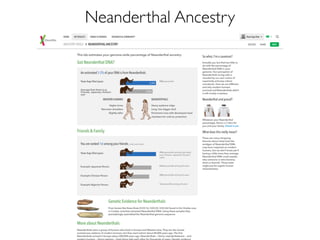
Neanderthal Ancestry
• 질병 위험도 검사: BRCA로 유방암 위험도 예측
• 보인자 검사: 부모가 블룸증후군 유전자 보인자인지 판별
• 약물 민감도 검사: 와파린 등에 대한 민감도 검사
• 일반적 특징 검사: 곱슬머리, 카페인 대사, 유당 분해 능력 등
• 조상 분석: 내 조상이 어느 대륙에서 왔는가
Tests of 23andMe
(until Nov 2013)
• 제한적 유전정보: 일부분의 유전정보 (SNP) 만을 분석
• 환경적 요인 고려 불가: 대부분의 질병은 환경+유전 요인 작용
• So What? : 유전적 위험도를 알아도 대비책이 없거나 불분명
Personal Genome Service 의 한계
1,200,000
1,000,000
900,000
850,000
650,000
500,000
400,000
300,000
250,000
180,000
100,000
2007-11
2011-06
2011-10
2012-04
2012-10
2013-04
2013-06
2013-09
2013-12
2014-10
2015-02
2015-05
2015-06
2016-02
0
Customer growth of 23andMe
by Changwon Keum (Macrogen)

http://goldbio.blogspot.kr/2014/12/pg-100.html
• 의사를 통하지 않는 DTC 방식에 대한 우려
• 이러한 서비스의 정확성 및 안정성에 대한 우려
• 결과를 받은 사용자들이 제대로 이해할 수 있을지, 오남용에 대한 우려
• 특히, BRCA 유전자에 대한 검사
• Analytic & clinical validation data 제출 지연
• 질병 위험도 검사: BRCA로 유방암 위험도 예측
• 보인자 검사: 부모가 블룸증후군 유전자 보인자인지 판별
• 약물 민감도 검사: 와파린 등에 대한 민감도 검사
• 일반적 특징 검사: 곱슬머리, 카페인 대사, 유당 분해 능력 등
• 조상 분석: 내 조상이 어느 대륙에서 왔는가
Tests of 23andMe
(Nov 2013 - Oc 2015)
2015.2.19
http://www.fastcompany.com/3051973/behind-the-brand/23andme-and-the-fda-reached-a-pivotal-genetic-testing-agreement
• 질병 위험도 검사: BRCA로 유방암 위험도 예측
• 보인자 검사: 부모가 블룸증후군 유전자 보인자인지 판별
• 약물 민감도 검사: 와파린 등에 대한 민감도 검사
• 일반적 특징 검사: 곱슬머리, 카페인 대사, 유당 분해 능력 등
• 조상 분석: 내 조상이 어느 대륙에서 왔는가
Tests of 23andMe
(Oct 2015 - April 2017)
2017년 4월 6일 FDA가 23andMe의 질병 위험도 예측 서비스의 

DTC (Direct-to-Consumer) 판매를 허가
FDA의 23andMe 질병 위험도 예측 DTC 서비스 허가
•아래와 같은 10가지 질병의 위험도 예측에 대해서 DTC 허가
•파킨슨병 (Parkinson’s disease)
•알츠하이머 (Late-onset Alzheimer’s disease)
•셀리악병(Celiac disease)
•알파-1 항트립신 결핍증 (Alpha-1 antitrypsin deficiency)
•조발성 1차성 근긴장이상증 (Early-onset primary dystonia)
•XI 혈액응고인자 결핍증 (혈우병C) (Factor XI deficiency, a blood clotting disorder)
•제 1형 고셔병 (Gaucher disease type 1)
•포도당-6-인산탈수소효소(G6PD) 결핍증 (Glucose-6-Phosphate Dehydrogenase deficiency)
•유전성 혈색소침착증(Hereditary hemochromatosis)
•유전적 혈전 기호증(Hereditary thrombophilia)
•FDA는 향후 다른 질병 위험도 예측 검사에 대해서 시장 출시 전 심사(premarket review)를 면제
FDA의 23andMe 질병 위험도 예측 DTC 서비스 허가
•임상 연구를 통하여 인허가를 위한 근거 자료 마련
•분석적 타당성(analytical validity)
•임상적 타당성(clinical validity)
•임상적 유용성(clinical utility)


•23andMe의 타액 키트를 통해서 정확하고 일관적으로 유전 변이를 발견할 수 있다는 것을 증명
•검사하는 유전적 변이가 개별 질병의 위험도에 영향을 준다는 명확한 연구 결과.
•환자의 DTC 결과 오남용에 대한 반박
•영국에서 25,000명에게 질병 위험도 예측 서비스를 DTC로 제공한 결과, 


자해 등 위험한 결과가 한 건도 발생하지 않았음
•사용자들이 질병 위험도 예측의 결과 레포트의 90% 이상을 이해
• 질병 위험도 검사
• 보인자 검사: 부모가 블룸증후군 유전자 보인자인지 판별
• 약물 민감도 검사: 와파린 등에 대한 민감도 검사
• 일반적 특징 검사: 곱슬머리, 카페인 대사, 유당 분해 능력 등
• 조상 분석: 내 조상이 어느 대륙에서 왔는가
Tests of 23andMe
(April 2017- 현재)
$115m 펀딩
100만 명 돌파
2006
23andMe 창업
20162007 2012 2013 2014 2015
구글 벤처스
360만 달러 투자
2008
$99 로
가격 인하
FDA 판매 중지 명령
영국에서
DTC 서비스 시작
FDA 블룸증후군
DTC 서비스 허가
FDA에 블룸증후군
테스트 승인 요청
FDA에 510(k) 제출
FDA 510(k) 철회
보인자 등 DTC
서비스 재개 ($199)
캐나다에서
DTC 서비스 시작
Genetech, pFizer가
23andMe 데이터 구입
자체 신약 개발
계획 발표
120만 명 돌파
$399 로
가격 인하
23andMe Chronicle
Business
Regulation
애플 리서치키트와
데이터 수집 협력
50만 명 돌파30만 명 돌파
TV 광고 시작
2017
FDA의
질병위험도 검사
DTC 서비스 허가
+
관련 규제 면제
프로세스 확립
Digital Healthcare Institute
Director,Yoon Sup Choi, PhD
yoonsup.choi@gmail.com
1,200,000
1,000,000
900,000
850,000
650,000
500,000
400,000
300,000
250,000
180,000
100,000
2007-11
2011-06
2011-10
2012-04
2012-10
2013-04
2013-06
2013-09
2013-12
2014-10
2015-02
2015-05
2015-06
2016-02
0
Customer growth of 23andMe
2017-04
2,000,000
Digital Healthcare Institute
Director,Yoon Sup Choi, PhD
yoonsup.choi@gmail.com
생명윤리법 개정안 및 DTC 허용 계획
•2015년 12월 9일, 국회에서 ‘생명윤리법 개정안’ 의결
•‘비의료기관은 보건복지부장관이 정하는 경우에만 의료기관의 의뢰 없이도 

질병 예방 목적의 유전자 검사를 제한적으로 직접할 수 있도록 허용한다'
•보건복지부 2016년 업무보고: 유전자 검사 제도 개선
•질병 예방 목적의 일부 유전자/유전체 검사를 비의료기관에서 직접 실시 (2016년 6월)
•최적 치료법에 필요한 유전자/유전체 검사의 경우 건강보험 적용 (2016년 11월)
•표적치료제 선택 검사 확대
•약물반응예측검사 추가
11
Category 분류기준
I
건강보험 요양급여 등재 혹은 신의료기술평가를 통해 안정성 및 유효성이 인정된 유전자 검사
로 임상적 사용목적(Intended use)이 동일한 경우
II
아직까지 건강보험 요양급여의 등재 혹은 신의료기술평가를 통해 안정성 및 유효성이 인정되
지 않았지만, 임상적 유효성 근거가 있는 검사로 임상적 사용 목적이 동일한 경우
III
건강보험 요양급여 등재 혹은 신의료기술평가를 통해 안정성, 유효성이 인정 받은 검사 및 임
상적 유효성의 근거가 있는 유전자 검사를 건강인에게 시행하는 경우
IV
건강보험 요양급여 등재 혹은 신의료기술평가를 통해 안정성, 유효성이 인정 받은 검사 및 임
상적 유효성의 근거가 있는 유전자 검사를 적절한 임상적 사용 목적 외에 의학적 근거가 부족
한 용도로 사용하는 경우
V
건강보험 요양급여 미등재 혹은 안정성 유효성에 관한 신의료기술평가를 받지 않은 검사로 과
학적 타당성의 입증이 불확실하거나, 검사대상자를 오도할 우려가 있는 신체 외관, 성격 등의
형질에 관한 검사
VI
건강보험 요양급여 미등재 혹은 안정성, 유효성에 관한 신의료기술평가를 받지 않은 검사로
임상적 유효성에 대한 근거가 부족한 검사
유전자 검사평가원에서 제안한 유전자 검사 분류표
한국 DTC 유전정보 분석 제한적 허용
(2016.6.30)
• 「비의료기관 직접 유전자검사 실시 허용 관련 고시 제정, 6.30일시행」
• 2015년 12월「생명윤리 및 안전에 관한 법률」개정(‘15.12.29개정, ’16.6.30시행)과
제9차 무역투자진흥회의(’16.2월) 시 발표한 규제 개선의 후속조치 일환으로 추진
• 민간 유전자검사 업체에서는 혈당, 혈압, 피부노화, 체질량지수 등 12개 검사항목과
관련된 46개 유전자를 직접 검사 가능
http://www.mohw.go.kr/m/noticeView.jsp?MENU_ID=0403&cont_seq=333112&page=1
검사항목 (유전자수) 유전자명
1 체질량지수(3) FTO, MC4R, BDNF
2 중성지방농도(8) GCKR, DOCK7, ANGPTL3, BAZ1B, TBL2, MLXIPL, LOC105375745, TRIB1
3 콜레스테롤(8) CELSR2, SORT1, HMGCR, ABO, ABCA1, MYL2, LIPG, CETP
4 혈 당(8) CDKN2A/B, G6PC2, GCK, GCKR, GLIS3, MTNR1B, DGKB-TMEM195, SLC30A8
5 혈 압(8) NPR3, ATP2B1, NT5C2, CSK, HECTD4, GUCY1A3, CYP17A1, FGF5
6 색소 침착(2) OCA2, MC1R
7 탈 모(3) chr20p11(rs1160312, rs2180439), IL2RA, HLA-DQB1
8 모발 굵기(1) EDAR
9 피부 노화(1) AGER
10 피부 탄력(1) MMP1
11 비타민C농도(1) SLC23A1(SVCT1)
12 카페인대사(2) AHR, CYP1A1-CYP1A2
DTC 유전정보 분석 서비스
미국 vs. 한국
Table 1
분석 항목 분석 항목 예시 DTC (미국) DTC (한국)
개인유전정보 분석
질병 위험도 유방암(안젤리나 졸리) O 불가
약물 민감도 와파린 민감도 X X
열성유전질환 보인자 블룸 증후군 O X
웰니스 카페인 분해, 대머리 O 12개만 가능
조상 분석 O 불명확
•미국에서 허용된 보인자 검사, 질병 위험도 예측 검사 DTC 서비스는 여전히 한국에서 불법
•더 큰 문제는 잣대 자체가 FDA 등 글로벌 규제 기조나 산업계에서 통용되는 기준과 다름. 

질병/약물/보인자/웰니스/조상 분석 등의 업계에서 받아들여지는 분류를 무시하고 있음.
•글로벌 수준에 발맞추기는 커녕, 한국에서만 통용되는 자체적인 별도 규제 분류 체계를 

갈수록 더 만들어가면서, 국내 산업의 갈라파고스화를 심화 시키고 있음
IBM Watson for Oncology 도입 광풍(?)
600,000 pieces of medical evidence
2 million pages of text from 42 medical journals and clinical trials
69 guidelines, 61,540 clinical trials
IBM Watson on Medicine
Watson learned...
+
1,500 lung cancer cases
physician notes, lab results and clinical research
+
14,700 hours of hands-on training
Empowering the Oncology Community for Cancer Care
Genomics
Oncology
Clinical
Trial
Matching
Watson Health’s oncology clients span more than 35 hospital systems
“Empowering the Oncology Community
for Cancer Care”
Andrew Norden, KOTRA Conference, March 2017, “The Future of Health is Cognitive”
IBM Watson Health
Watson for Clinical Trial Matching (CTM)
18
1. According to the National Comprehensive Cancer Network (NCCN)
2. http://csdd.tufts.edu/files/uploads/02_-_jan_15,_2013_-_recruitment-retention.pdf© 2015 International Business Machines Corporation
Searching across
eligibility criteria of clinical
trials is time consuming
and labor intensive
Current
Challenges
Fewer than 5% of
adult cancer patients
participate in clinical
trials1
37% of sites fail to meet
minimum enrollment
targets. 11% of sites fail
to enroll a single patient 2
The Watson solution
• Uses structured and unstructured
patient data to quickly check
eligibility across relevant clinical
trials
• Provides eligible trial
considerations ranked by
relevance
• Increases speed to qualify
patients
Clinical Investigators
(Opportunity)
• Trials to Patient: Perform
feasibility analysis for a trial
• Identify sites with most
potential for patient enrollment
• Optimize inclusion/exclusion
criteria in protocols
Faster, more efficient
recruitment strategies,
better designed protocols
Point of Care
(Offering)
• Patient to Trials:
Quickly find the
right trial that a
patient might be
eligible for
amongst 100s of
open trials
available
Improve patient care
quality, consistency,
increased efficiencyIBM Confidential
Watson Genomics Overview
20
Watson Genomics Content
• 20+ Content Sources Including:
• Medical Articles (23Million)
• Drug Information
• Clinical Trial Information
• Genomic Information
Case Sequenced
VCF / MAF, Log2, Dge
Encryption
Molecular Profile
Analysis
Pathway Analysis
Drug Analysis
Service Analysis, Reports, & Visualizations
At HIMSS 2017, provided Hye Jin Kam of Asan Medical Center
식약처 인공지능
가이드라인 초안
Medtronic과
혈당관리 앱 시연
2011 2012 2013 2014 2015
Jeopardy! 우승
뉴욕 MSK암센터 협력
(Lung cancer)
MD앤더슨 협력
(Leukemia)
MD앤더슨
Pilot 결과 발표
@ASCO
Watson Fund,
WellTok 에 투자
($22m)
The NewYork
Genome Center 협력
(Glioblastoma 분석)
GeneMD,
Watson Mobile Developer
Challenge의 winner 선정
Watson Fund,
Pathway Genomics 투자
Cleveland Clinic 협력
(Cancer Genome Analysis)
한국 IBM
Watson 사업부 신설
Watson Health 출범
Phytel & Explorys 인수
J&J,Apple, Medtronic 협력
Epic & Mayo Clinic 제휴
(EHR data 분석)
동경대 도입
(oncology)
14 Cancer Center 제휴
(Cancer Genome Analysis)
Mayo Clinic 협력
(clinical trail matching)
Watson Fund,
Modernizing Medicine
투자
Academia
Business
Pathway Genomics OME
closed alpha 시작
TurvenHealth
인수
Apple ResearchKit
통한 수면 연구 시작
2017
가천대 길병원
Watson 도입
(oncology)
Medtronic
Sugar.IQ 출시
제약사
Teva와 제휴
인도 Manipal Hospital
Watson 도입
태국 Bumrungrad 
International Hospital,
Watson 도입
최윤섭 디지털헬스케어 연구소, 소장
(주)디지털 헬스케어 파트너스, 대표파트너
최윤섭, Ph.D.
yoonsup.choi@gmail.com
IBM Watson in Healthcare
Merge
Healthcare
인수
2016
Under Amour
제휴
Broad 연구소 협력 발표
(유전체 분석-항암제 내성)
Manipal Hospital의
WFO 정확성 발표
대구가톨릭병원
대구동산병원
WFO 도입
건양대병원
Watson 도입
(oncology)
부산대학병원
Watson 도입
(oncology/
genomics)
식약처 인공지능
가이드라인 초안
Medtronic과
혈당관리 앱 시연
2011 2012 2013 2014 2015
Jeopardy! 우승
뉴욕 MSK암센터 협력
(Lung cancer)
MD앤더슨 협력
(Leukemia)
MD앤더슨
Pilot 결과 발표
@ASCO
Watson Fund,
WellTok 에 투자
($22m)
The NewYork
Genome Center 협력
(Glioblastoma 분석)
GeneMD,
Watson Mobile Developer
Challenge의 winner 선정
Watson Fund,
Pathway Genomics 투자
Cleveland Clinic 협력
(Cancer Genome Analysis)
한국 IBM
Watson 사업부 신설
Watson Health 출범
Phytel & Explorys 인수
J&J,Apple, Medtronic 협력
Epic & Mayo Clinic 제휴
(EHR data 분석)
동경대 도입
(oncology)
14 Cancer Center 제휴
(Cancer Genome Analysis)
Mayo Clinic 협력
(clinical trail matching)
Watson Fund,
Modernizing Medicine
투자
Academia
Business
Pathway Genomics OME
closed alpha 시작
TurvenHealth
인수
Apple ResearchKit
통한 수면 연구 시작
2017
가천대 길병원
Watson 도입
(oncology)
Medtronic
Sugar.IQ 출시
제약사
Teva와 제휴
인도 Manipal Hospital
Watson 도입
태국 Bumrungrad 
International Hospital,
Watson 도입
최윤섭 디지털헬스케어 연구소, 소장
(주)디지털 헬스케어 파트너스, 대표파트너
최윤섭, Ph.D.
yoonsup.choi@gmail.com
IBM Watson in Healthcare
Merge
Healthcare
인수
2016
Under Amour
제휴
Broad 연구소 협력 발표
(유전체 분석-항암제 내성)
Manipal Hospital의
WFO 정확성 발표
대구가톨릭병원
대구동산병원
WFO 도입
건양대병원
Watson 도입
(oncology)
부산대학병원
Watson 도입
(oncology/
genomics)
한국에서도 Watson을 볼 수 있을까?
2015.7.9. 서울대학병원
• 부산대학병원 (2017년 1월)
• Watson의 솔루션 두 가지를 도입
• Watson for Oncology
• Watson for Genomics
• 건양대학병원 Watson for Oncology 도입
• 2017년 3월
• “최원준 건양대병원장은 "지역 환자들은 수도권의
여러 병원을 찾아다닐 필요가 없어질 것"이라며 "병
원의 우수한 협진 팀과 인공지능 의료 시스템의 시
너지를 바탕으로 암 환자에게 최상의 의료 서비스를
제공하겠다"고 약속했다."
IBM Watson Health
Organizations Leveraging Watson
Watson for Oncology
Best Doctors (second opinion)
Bumrungrad International Hospital
Confidential client (Bangladesh and Nepal)
Gachon University Gil Medical Center (Korea)
Hangzhou Cognitive Care – 50+ Chinese hospitals
Jupiter Medical Center
Manipal Hospitals – 16 Indian Hospitals
MD Anderson (**Oncology Expert Advisor)
Memorial Sloan Kettering Cancer Center
MRDM - Zorg (Netherlands)
Pusan National University Hospital
Clinical Trial Matching
Best Doctors (second opinion)
Confidential – Major Academic Center
Highlands Oncology Group
Froedtert & Medical College of Wisconsin
Mayo Clinic
Multiple Life Sciences pilots
24
Watson Genomic Analytics
Ann & Robert H Lurie Children’s Hospital of Chicago
BC Cancer Agency
City of Hope
Cleveland Clinic
Columbia University, Irwing Cancer Center
Duke Cancer Institute
Fred & Pamela Buffett Cancer Center
Fleury (Brazil)
Illumina 170 Gene Panel
NIH Japan
McDonnell Institute at Washington University in St. Louis
New York Genome Center
Pusan National University Hospital
Quest Diagnostics
Stanford Health
University of Kansas Cancer Center
University of North Carolina Lineberger Cancer Center
University of Southern California
University of Washington Medical Center
University of Tokyo
Yale Cancer Center
Andrew Norden, KOTRA Conference, March 2017, “The Future of Health is Cognitive”
Watson for Oncology 는 현재 전세계 70여개 병원에 도입
• 인공지능으로 인한 인간 의사의 권위 약화
• 환자의 자기 결정권 및 권익 증대
• 의사의 진료 방식 및 교육 방식의 변화 필요
http://news.donga.com/3/all/20170320/83400087/1
• 의사와 Watson의 판단이 다른 경우?
• NCCN 가이드라인과 다른 판단을 주기는 것으로 보임
• 100 여명 중에 5 case. 

• 환자의 판단이 합리적이라고 볼 수 있는가?
• Watson의 정확도는 검증되지 않았음
• ‘제 4차 산업혁명’ 등의 buzz word의 영향으로 보임
• 임상 시험이 필요하지 않은가?
• 환자들의 선호는 인공지능의 adoption rate 에 영향
• 병원 도입에 영향을 미치는 요인들
• analytical validity
• clinical validity/utility
• 의사들의 인식/심리적 요인
• 환자들의 인식/심리적 요인
• 규제 환경 (인허가, 수가 등등)
• 결국 환자가 원하면 (그것이 의학적으로 타당한지를 떠나서)
병원 도입은 더욱 늘어날 수 밖에 없음
• Watson에 대한 환자 반응이 생각보다 매우 좋음
• 도입 2개월만에 85명 암 환자 진료
• 기존의 길병원 예측보다는 더 빠른 수치일 듯
• Big5 에서도 길병원으로 전원 문의 증가 한다는 후문
• 교수들이 더 열심히 상의하고 환자 본다고 함
• Trained by 400 cases of historical patients cases
• Assessed accuracy OEA treatment suggestions 

using MD Anderson’s physicians’ decision as benchmark
• When 200 leukemia cases were tested,
• False positive rate=2.9%
• False negative rate=0.4%
• Overall accuracy of treatment recommendation=82.6%
• Conclusion: Suggested personalized treatment option
showed reasonably high accuracy
MDAnderson’s Oncology ExpertAdvisor Powered by IBM Watson
:AWeb-Based Cognitive Clinical Decision Support Tool
Koichi Takahashi, MD (ASCO 2014)
Annals of Oncology (2016) 27 (suppl_9): ix179-ix180. 10.1093/annonc/mdw601
Validation study to assess performance of IBM cognitive
computing system Watson for oncology with Manipal
multidisciplinary tumour board for 1000 consecutive cases: 

An Indian experience
• MMDT(Manipal multidisciplinary tumour board) treatment recommendation and
data of 1000 cases of 4 different cancers breast (638), colon (126), rectum (124)
and lung (112) which were treated in last 3 years was collected.
• Of the treatment recommendations given by MMDT, WFO provided 


50% in REC, 28% in FC, 17% in NREC
• Nearly 80% of the recommendations were in WFO REC and FC group
• 5% of the treatment provided by MMDT was not available with WFO
• The degree of concordance varied depending on the type of cancer
• WFO-REC was high in Rectum (85%) and least in Lung (17.8%)
• high with TNBC (67.9%); HER2 negative (35%)

• WFO took a median of 40 sec to capture, analyze and give the treatment.


(vs MMDT took the median time of 15 min)
Sung Won Park,APFCP, 2017
Assessing the performance of Watson for Oncology using colon
cancer cases treated with surgery and adjuvant chemotherapy 

at Gachon University Gil Medical Center
• Stage II with high risk and stage III colon cancer patients (N=162)
• Retrospective study: From September 1, 2014 to August 31, 2016
• Gachon University Gil Medical Center (GMC)
• Generally accepted by GMC-recommendation in 83.3%
• Concordant with
• WFO-Rec: 53.1%
• WFO-FC: 30.2%
• WFO-NREC: 13.0%
• Not included: 3.7%
WHY?
• 국가별 가이드라인의 차이
• WFO는 기본적으로 MSKCC 기준
• 인종적 차이, 인허가 약물의 차이, 보험 제도의 차이
• NCCN 가이드라인의 업데이트
• 암종별 치료 가능한 옵션의 다양성 차이
• 폐암: 다양함 vs 직장암: 다양하지 않음
• TNBC: 다양하지 않음 vs HER2 (-): 다양함
원칙이 필요하다
•어떤 환자의 경우, 왓슨에게 의견을 물을 것인가?
•왓슨을 (암종별로) 얼마나 신뢰할 것인가?
•왓슨의 의견을 환자에게 공개할 것인가?
•왓슨과 의료진의 판단이 다른 경우 어떻게 할 것인가?
•왓슨에게 보험 급여를 매길 수 있는가?
이러한 기준에 따라 의료의 질/치료효과가 달라질 수 있으나,
현재 개별 병원이 개별적인 기준으로 활용하게 됨
의사를 능가하는 Deep Learning 연구 결과들
Deep Learning
http://theanalyticsstore.ie/deep-learning/
Detection of Diabetic Retinopathy
당뇨성 망막병증
• 당뇨병의 대표적 합병증: 당뇨병력이 30년 이상 환자 90% 발병
• 안과 전문의들이 안저(안구의 안쪽)를 사진으로 찍어서 판독
• 망막 내 미세혈관 생성, 출혈, 삼출물 정도를 파악하여 진단
Copyright 2016 American Medical Association. All rights reserved.
Development and Validation of a Deep Learning Algorithm
for Detection of Diabetic Retinopathy
in Retinal Fundus Photographs
Varun Gulshan, PhD; Lily Peng, MD, PhD; Marc Coram, PhD; Martin C. Stumpe, PhD; Derek Wu, BS; Arunachalam Narayanaswamy, PhD;
Subhashini Venugopalan, MS; Kasumi Widner, MS; Tom Madams, MEng; Jorge Cuadros, OD, PhD; Ramasamy Kim, OD, DNB;
Rajiv Raman, MS, DNB; Philip C. Nelson, BS; Jessica L. Mega, MD, MPH; Dale R. Webster, PhD
IMPORTANCE Deep learning is a family of computational methods that allow an algorithm to
program itself by learning from a large set of examples that demonstrate the desired
behavior, removing the need to specify rules explicitly. Application of these methods to
medical imaging requires further assessment and validation.
OBJECTIVE To apply deep learning to create an algorithm for automated detection of diabetic
retinopathy and diabetic macular edema in retinal fundus photographs.
DESIGN AND SETTING A specific type of neural network optimized for image classification
called a deep convolutional neural network was trained using a retrospective development
data set of 128 175 retinal images, which were graded 3 to 7 times for diabetic retinopathy,
diabetic macular edema, and image gradability by a panel of 54 US licensed ophthalmologists
and ophthalmology senior residents between May and December 2015. The resultant
algorithm was validated in January and February 2016 using 2 separate data sets, both
graded by at least 7 US board-certified ophthalmologists with high intragrader consistency.
EXPOSURE Deep learning–trained algorithm.
MAIN OUTCOMES AND MEASURES The sensitivity and specificity of the algorithm for detecting
referable diabetic retinopathy (RDR), defined as moderate and worse diabetic retinopathy,
referable diabetic macular edema, or both, were generated based on the reference standard
of the majority decision of the ophthalmologist panel. The algorithm was evaluated at 2
operating points selected from the development set, one selected for high specificity and
another for high sensitivity.
RESULTS TheEyePACS-1datasetconsistedof9963imagesfrom4997patients(meanage,54.4
years;62.2%women;prevalenceofRDR,683/8878fullygradableimages[7.8%]);the
Messidor-2datasethad1748imagesfrom874patients(meanage,57.6years;42.6%women;
prevalenceofRDR,254/1745fullygradableimages[14.6%]).FordetectingRDR,thealgorithm
hadanareaunderthereceiveroperatingcurveof0.991(95%CI,0.988-0.993)forEyePACS-1and
0.990(95%CI,0.986-0.995)forMessidor-2.Usingthefirstoperatingcutpointwithhigh
specificity,forEyePACS-1,thesensitivitywas90.3%(95%CI,87.5%-92.7%)andthespecificity
was98.1%(95%CI,97.8%-98.5%).ForMessidor-2,thesensitivitywas87.0%(95%CI,81.1%-
91.0%)andthespecificitywas98.5%(95%CI,97.7%-99.1%).Usingasecondoperatingpoint
withhighsensitivityinthedevelopmentset,forEyePACS-1thesensitivitywas97.5%and
specificitywas93.4%andforMessidor-2thesensitivitywas96.1%andspecificitywas93.9%.
CONCLUSIONS AND RELEVANCE In this evaluation of retinal fundus photographs from adults
with diabetes, an algorithm based on deep machine learning had high sensitivity and
specificity for detecting referable diabetic retinopathy. Further research is necessary to
determine the feasibility of applying this algorithm in the clinical setting and to determine
whether use of the algorithm could lead to improved care and outcomes compared with
current ophthalmologic assessment.
JAMA. doi:10.1001/jama.2016.17216
Published online November 29, 2016.
Editorial
Supplemental content
Author Affiliations: Google Inc,
Mountain View, California (Gulshan,
Peng, Coram, Stumpe, Wu,
Narayanaswamy, Venugopalan,
Widner, Madams, Nelson, Webster);
Department of Computer Science,
University of Texas, Austin
(Venugopalan); EyePACS LLC,
San Jose, California (Cuadros); School
of Optometry, Vision Science
Graduate Group, University of
California, Berkeley (Cuadros);
Aravind Medical Research
Foundation, Aravind Eye Care
System, Madurai, India (Kim); Shri
Bhagwan Mahavir Vitreoretinal
Services, Sankara Nethralaya,
Chennai, Tamil Nadu, India (Raman);
Verily Life Sciences, Mountain View,
California (Mega); Cardiovascular
Division, Department of Medicine,
Brigham and Women’s Hospital and
Harvard Medical School, Boston,
Massachusetts (Mega).
Corresponding Author: Lily Peng,
MD, PhD, Google Research, 1600
Amphitheatre Way, Mountain View,
CA 94043 (lhpeng@google.com).
Research
JAMA | Original Investigation | INNOVATIONS IN HEALTH CARE DELIVERY
(Reprinted) E1
Copyright 2016 American Medical Association. All rights reserved.
Training Set / Test Set
• CNN으로 후향적으로 128,175개의 안저 이미지 학습
• 미국의 안과전문의 54명이 3-7회 판독한 데이터
• 우수한 안과전문의들 7-8명의 판독 결과와 인공지능의 판독 결과 비교
• EyePACS-1 (9,963 개), Messidor-2 (1,748 개)a) Fullscreen mode
b) Hit reset to reload this image. This will reset all of the grading.
c) Comment box for other pathologies you see
eFigure 2. Screenshot of the Second Screen of the Grading Tool, Which Asks Graders to Assess the
Image for DR, DME and Other Notable Conditions or Findings
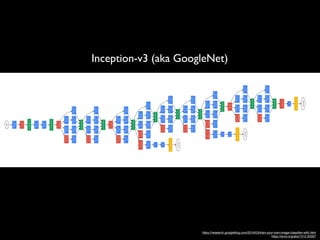
Inception-v3 (aka GoogleNet)
https://research.googleblog.com/2016/03/train-your-own-image-classifier-with.html
https://arxiv.org/abs/1512.00567
• EyePACS-1 과 Messidor-2 의 AUC = 0.991, 0.990
• 7-8명의 안과 전문의와 sensitivity, specificity 가 동일한 수준
• F-score: 0.95 (vs. 인간 의사는 0.91)
Additional sensitivity analyses were conducted for sev-
eralsubcategories:(1)detectingmoderateorworsediabeticreti-
effects of data set size on algorithm performance were exam-
ined and shown to plateau at around 60 000 images (or ap-
Figure 2. Validation Set Performance for Referable Diabetic Retinopathy
100
80
60
40
20
0
0
70
80
85
95
90
75
0 5 10 15 20 25 30
100806040
Sensitivity,%
1 – Specificity, %
20
EyePACS-1: AUC, 99.1%; 95% CI, 98.8%-99.3%A
100
High-sensitivity operating point
High-specificity operating point
100
80
60
40
20
0
0
70
80
85
95
90
75
0 5 10 15 20 25 30
100806040
Sensitivity,%
1 – Specificity, %
20
Messidor-2: AUC, 99.0%; 95% CI, 98.6%-99.5%B
100
High-specificity operating point
High-sensitivity operating point
Performance of the algorithm (black curve) and ophthalmologists (colored
circles) for the presence of referable diabetic retinopathy (moderate or worse
diabetic retinopathy or referable diabetic macular edema) on A, EyePACS-1
(8788 fully gradable images) and B, Messidor-2 (1745 fully gradable images).
The black diamonds on the graph correspond to the sensitivity and specificity of
the algorithm at the high-sensitivity and high-specificity operating points.
In A, for the high-sensitivity operating point, specificity was 93.4% (95% CI,
92.8%-94.0%) and sensitivity was 97.5% (95% CI, 95.8%-98.7%); for the
high-specificity operating point, specificity was 98.1% (95% CI, 97.8%-98.5%)
and sensitivity was 90.3% (95% CI, 87.5%-92.7%). In B, for the high-sensitivity
operating point, specificity was 93.9% (95% CI, 92.4%-95.3%) and sensitivity
was 96.1% (95% CI, 92.4%-98.3%); for the high-specificity operating point,
specificity was 98.5% (95% CI, 97.7%-99.1%) and sensitivity was 87.0% (95%
CI, 81.1%-91.0%). There were 8 ophthalmologists who graded EyePACS-1 and 7
ophthalmologists who graded Messidor-2. AUC indicates area under the
receiver operating characteristic curve.
Research Original Investigation Accuracy of a Deep Learning Algorithm for Detection of Diabetic Retinopathy
Results
Skin Cancer
ABCDE check-list
0 0 M O N T H 2 0 1 7 | V O L 0 0 0 | N A T U R E | 1
LETTER doi:10.1038/nature21056
Dermatologist-level classification of skin cancer
with deep neural networks
Andre Esteva1
*, Brett Kuprel1
*, Roberto A. Novoa2,3
, Justin Ko2
, Susan M. Swetter2,4
, Helen M. Blau5
& Sebastian Thrun6
Skin cancer, the most common human malignancy1–3
, is primarily
diagnosed visually, beginning with an initial clinical screening
and followed potentially by dermoscopic analysis, a biopsy and
histopathological examination. Automated classification of skin
lesions using images is a challenging task owing to the fine-grained
variability in the appearance of skin lesions. Deep convolutional
neural networks (CNNs)4,5
show potential for general and highly
variable tasks across many fine-grained object categories6–11
.
Here we demonstrate classification of skin lesions using a single
CNN, trained end-to-end from images directly, using only pixels
and disease labels as inputs. We train a CNN using a dataset of
129,450 clinical images—two orders of magnitude larger than
previous datasets12
—consisting of 2,032 different diseases. We
test its performance against 21 board-certified dermatologists on
biopsy-proven clinical images with two critical binary classification
use cases: keratinocyte carcinomas versus benign seborrheic
keratoses; and malignant melanomas versus benign nevi. The first
case represents the identification of the most common cancers, the
second represents the identification of the deadliest skin cancer.
The CNN achieves performance on par with all tested experts
across both tasks, demonstrating an artificial intelligence capable
of classifying skin cancer with a level of competence comparable to
dermatologists. Outfitted with deep neural networks, mobile devices
can potentially extend the reach of dermatologists outside of the
clinic. It is projected that 6.3 billion smartphone subscriptions will
exist by the year 2021 (ref. 13) and can therefore potentially provide
low-cost universal access to vital diagnostic care.
There are 5.4 million new cases of skin cancer in the United States2
every year. One in five Americans will be diagnosed with a cutaneous
malignancy in their lifetime. Although melanomas represent fewer than
5% of all skin cancers in the United States, they account for approxi-
mately 75% of all skin-cancer-related deaths, and are responsible for
over 10,000 deaths annually in the United States alone. Early detection
is critical, as the estimated 5-year survival rate for melanoma drops
from over 99% if detected in its earliest stages to about 14% if detected
in its latest stages. We developed a computational method which may
allow medical practitioners and patients to proactively track skin
lesions and detect cancer earlier. By creating a novel disease taxonomy,
and a disease-partitioning algorithm that maps individual diseases into
training classes, we are able to build a deep learning system for auto-
mated dermatology.
Previous work in dermatological computer-aided classification12,14,15
has lacked the generalization capability of medical practitioners
owing to insufficient data and a focus on standardized tasks such as
dermoscopy16–18
and histological image classification19–22
. Dermoscopy
images are acquired via a specialized instrument and histological
images are acquired via invasive biopsy and microscopy; whereby
both modalities yield highly standardized images. Photographic
images (for example, smartphone images) exhibit variability in factors
such as zoom, angle and lighting, making classification substantially
more challenging23,24
. We overcome this challenge by using a data-
driven approach—1.41 million pre-training and training images
make classification robust to photographic variability. Many previous
techniques require extensive preprocessing, lesion segmentation and
extraction of domain-specific visual features before classification. By
contrast, our system requires no hand-crafted features; it is trained
end-to-end directly from image labels and raw pixels, with a single
network for both photographic and dermoscopic images. The existing
body of work uses small datasets of typically less than a thousand
images of skin lesions16,18,19
, which, as a result, do not generalize well
to new images. We demonstrate generalizable classification with a new
dermatologist-labelled dataset of 129,450 clinical images, including
3,374 dermoscopy images.
Deep learning algorithms, powered by advances in computation
and very large datasets25
, have recently been shown to exceed human
performance in visual tasks such as playing Atari games26
, strategic
board games like Go27
and object recognition6
. In this paper we
outline the development of a CNN that matches the performance of
dermatologists at three key diagnostic tasks: melanoma classification,
melanoma classification using dermoscopy and carcinoma
classification. We restrict the comparisons to image-based classification.
We utilize a GoogleNet Inception v3 CNN architecture9
that was pre-
trained on approximately 1.28 million images (1,000 object categories)
from the 2014 ImageNet Large Scale Visual Recognition Challenge6
,
and train it on our dataset using transfer learning28
. Figure 1 shows the
working system. The CNN is trained using 757 disease classes. Our
dataset is composed of dermatologist-labelled images organized in a
tree-structured taxonomy of 2,032 diseases, in which the individual
diseases form the leaf nodes. The images come from 18 different
clinician-curated, open-access online repositories, as well as from
clinical data from Stanford University Medical Center. Figure 2a shows
a subset of the full taxonomy, which has been organized clinically and
visually by medical experts. We split our dataset into 127,463 training
and validation images and 1,942 biopsy-labelled test images.
To take advantage of fine-grained information contained within the
taxonomy structure, we develop an algorithm (Extended Data Table 1)
to partition diseases into fine-grained training classes (for example,
amelanotic melanoma and acrolentiginous melanoma). During
inference, the CNN outputs a probability distribution over these fine
classes. To recover the probabilities for coarser-level classes of interest
(for example, melanoma) we sum the probabilities of their descendants
(see Methods and Extended Data Fig. 1 for more details).
We validate the effectiveness of the algorithm in two ways, using
nine-fold cross-validation. First, we validate the algorithm using a
three-class disease partition—the first-level nodes of the taxonomy,
which represent benign lesions, malignant lesions and non-neoplastic
1
Department of Electrical Engineering, Stanford University, Stanford, California, USA. 2
Department of Dermatology, Stanford University, Stanford, California, USA. 3
Department of Pathology,
Stanford University, Stanford, California, USA. 4
Dermatology Service, Veterans Affairs Palo Alto Health Care System, Palo Alto, California, USA. 5
Baxter Laboratory for Stem Cell Biology, Department
of Microbiology and Immunology, Institute for Stem Cell Biology and Regenerative Medicine, Stanford University, Stanford, California, USA. 6
Department of Computer Science, Stanford University,
Stanford, California, USA.
*These authors contributed equally to this work.
© 2017 Macmillan Publishers Limited, part of Springer Nature. All rights reserved.
LETTERH
his task, the CNN achieves 72.1±0.9% (mean±s.d.) overall
he average of individual inference class accuracies) and two
gists attain 65.56% and 66.0% accuracy on a subset of the
set. Second, we validate the algorithm using a nine-class
rtition—the second-level nodes—so that the diseases of
have similar medical treatment plans. The CNN achieves
two trials, one using standard images and the other using
images, which reflect the two steps that a dermatologist m
to obtain a clinical impression. The same CNN is used for a
Figure 2b shows a few example images, demonstrating th
distinguishing between malignant and benign lesions, whic
visual features. Our comparison metrics are sensitivity an
Acral-lentiginous melanoma
Amelanotic melanoma
Lentigo melanoma
…
Blue nevus
Halo nevus
Mongolian spot
…
Training classes (757)Deep convolutional neural network (Inception v3) Inference classes (varies by task)
92% malignant melanocytic lesion
8% benign melanocytic lesion
Skin lesion image
Convolution
AvgPool
MaxPool
Concat
Dropout
Fully connected
Softmax
Deep CNN layout. Our classification technique is a
Data flow is from left to right: an image of a skin lesion
e, melanoma) is sequentially warped into a probability
over clinical classes of skin disease using Google Inception
hitecture pretrained on the ImageNet dataset (1.28 million
1,000 generic object classes) and fine-tuned on our own
29,450 skin lesions comprising 2,032 different diseases.
ning classes are defined using a novel taxonomy of skin disease
oning algorithm that maps diseases into training classes
(for example, acrolentiginous melanoma, amelanotic melano
melanoma). Inference classes are more general and are comp
or more training classes (for example, malignant melanocytic
class of melanomas). The probability of an inference class is c
summing the probabilities of the training classes according to
structure (see Methods). Inception v3 CNN architecture repr
from https://research.googleblog.com/2016/03/train-your-ow
classifier-with.html
GoogleNet Inception v3
• 129,450개의 피부과 병변 이미지 데이터를 자체 제작
• 미국의 피부과 전문의 18명이 데이터 curation
• CNN (Inception v3)으로 이미지를 학습
• 피부과 전문의들 21명과 인공지능의 판독 결과 비교
• 표피세포 암 (keratinocyte carcinoma)과 지루각화증(benign seborrheic keratosis)의 구분
• 악성 흑색종과 양성 병변 구분 (표준 이미지 데이터 기반)
• 악성 흑색종과 양성 병변 구분 (더마토스코프로 찍은 이미지 기반)
Skin cancer classification performance of
the CNN and dermatologists. LETT
a
b
0 1
Sensitivity
0
1
Specificity
Melanoma: 130 images
0 1
Sensitivity
0
1
Specificity
Melanoma: 225 images
Algorithm: AUC = 0.96
0 1
Sensitivity
0
1
Specificity
Melanoma: 111 dermoscopy images
0 1
Sensitivity
0
1
Specificity
Carcinoma: 707 images
Algorithm: AUC = 0.96
0 1
Sensitivity
0
1
Specificity
Melanoma: 1,010 dermoscopy images
Algorithm: AUC = 0.94
0 1
Sensitivity
0
1
Specificity
Carcinoma: 135 images
Algorithm: AUC = 0.96
Dermatologists (25)
Average dermatologist
Algorithm: AUC = 0.94
Dermatologists (22)
Average dermatologist
Algorithm: AUC = 0.91
Dermatologists (21)
Average dermatologist
cancer classification performance of the CNN and
21명 중에 인공지능보다 정확성이 떨어지는 피부과 전문의들이 상당수 있었음
피부과 전문의들의 평균 성적도 인공지능보다 좋지 않았음
Skin cancer classification performance of
the CNN and dermatologists. LETT
a
b
0 1
Sensitivity
0
1
Specificity
Melanoma: 130 images
0 1
Sensitivity
0
1
Specificity
Melanoma: 225 images
Algorithm: AUC = 0.96
0 1
Sensitivity
0
1
Specificity
Melanoma: 111 dermoscopy images
0 1
Sensitivity
0
1
Specificity
Carcinoma: 707 images
Algorithm: AUC = 0.96
0 1
Sensitivity
0
1
Specificity
Melanoma: 1,010 dermoscopy images
Algorithm: AUC = 0.94
0 1
Sensitivity
0
1
Specificity
Carcinoma: 135 images
Algorithm: AUC = 0.96
Dermatologists (25)
Average dermatologist
Algorithm: AUC = 0.94
Dermatologists (22)
Average dermatologist
Algorithm: AUC = 0.91
Dermatologists (21)
Average dermatologist
cancer classification performance of the CNN and
Digital Pathologist
Figure 4. Participating Pathologists’ Interpretations of Each of the 240 Breast Biopsy Test Cases
0 25 50 75 100
Interpretations, %
2
4
6
8
10
12
14
16
18
20
22
24
26
28
30
32
34
36
38
40
42
44
46
48
50
52
54
56
58
60
62
64
66
68
70
72
Case
Benign without atypia
72 Cases
2070 Total interpretations
A
0 25 50 75 100
Interpretations, %
218
220
222
224
226
228
230
232
234
236
238
240
Case
Invasive carcinoma
23 Cases
663 Total interpretations
D
0 25 50 75 100
Interpretations, %
147
145
149
151
153
155
157
159
161
163
165
167
169
171
173
175
177
179
181
183
185
187
189
191
193
195
197
199
201
203
205
207
209
211
213
215
217
Case
DCIS
73 Cases
2097 Total interpretations
C
0 25 50 75 100
Interpretations, %
74
76
78
80
82
84
86
88
90
92
94
96
98
100
102
104
106
108
110
112
114
116
118
120
122
124
126
128
130
132
134
136
138
140
142
144
Case
Atypia
72 Cases
2070 Total interpretations
B
Benign without atypia
Atypia
DCIS
Invasive carcinoma
Pathologist interpretation
DCIS indicates ductal carcinoma in situ.
Diagnostic Concordance in Interpreting Breast Biopsies Original Investigation Research
Elmore etl al. JAMA 2015
Diagnostic Concordance Among Pathologists
Interpreting Breast Biopsy Specimens
The overall agreement between the individual pathologists’
interpretations and the expert consensus–derived reference
diagnoses was 75.3% (total 240 cases)
Elmore etl al. JAMA 2015
Diagnostic Concordance Among Pathologists
Interpreting Breast Biopsy Specimens
• Concordance noted in 5194 of 6900 case interpretations or 75.3%.
• Reference diagnosis was obtained from consensus of 3 experienced breast pathologists.
spentonthisactivitywas16(95%CI,15-17);43participantswere
awarded the maximum 20 hours.
Pathologists’ Diagnoses Compared With Consensus-Derived
Reference Diagnoses
The 115 participants each interpreted 60 cases, providing 6900
total individual interpretations for comparison with the con-
sensus-derived reference diagnoses (Figure 3). Participants
agreed with the consensus-derived reference diagnosis for
75.3% of the interpretations (95% CI, 73.4%-77.0%). Partici-
pants (n = 94) who completed the CME activity reported that
Patient and Pathologist Characteristics Associated With
Overinterpretation and Underinterpretation
The association of breast density with overall pathologists’
concordance (as well as both overinterpretation and under-
interpretation rates) was statistically significant, as shown
in Table 3 when comparing mammographic density grouped
into 2 categories (low density vs high density). The overall
concordance estimates also decreased consistently with
increasing breast density across all 4 Breast Imaging-
Reporting and Data System (BI-RADS) density categories:
BI-RADS A, 81% (95% CI, 75%-86%); BI-RADS B, 77% (95%
Figure 3. Comparison of 115 Participating Pathologists’ Interpretations vs the Consensus-Derived Reference
Diagnosis for 6900 Total Case Interpretationsa
Participating Pathologists’ Interpretation
ConsensusReference
Diagnosisb
Benign
without atypia Atypia DCIS
Invasive
carcinoma Total
Benign without atypia 1803 200 46 21 2070
Atypia 719 990 353 8 2070
DCIS 133 146 1764 54 2097
Invasive carcinoma 3 0 23 637 663
Total 2658 1336 2186 720 6900
DCIS indicates ductal carcinoma
in situ.
a
Concordance noted in 5194 of
6900 case interpretations or
75.3%.
b
Reference diagnosis was obtained
from consensus of 3 experienced
breast pathologists.
Diagnostic Concordance in Interpreting Breast Biopsies Original Investigation Research
Comparison of 115 Participating Pathologists’ Interpretations vs 

the Consensus-Derived Reference Diagnosis for 6900 Total Case Interpretations
Constructing higher-level
contextual/relational features:
Relationships between epithelial
nuclear neighbors
Relationships between morphologically
regular and irregular nuclei
Relationships between epithelial
and stromal objects
Relationships between epithelial
nuclei and cytoplasm
Characteristics of
stromal nuclei
and stromal matrix
Characteristics of
epithelial nuclei and
epithelial cytoplasm
Building an epithelial/stromal classifier:
Epithelial vs.stroma
classifier
Epithelial vs.stroma
classifier
B
Basic image processing and feature construction:
H&E image Image broken into superpixels Nuclei identified within
each superpixel
A
Relationships of contiguous epithelial
regions with underlying nuclear objects
Learning an image-based model to predict survival
Processed images from patients Processed images from patients
C
D
onNovember17,2011stm.sciencemag.orgwnloadedfrom
TMAs contain 0.6-mm-diameter cores (median
of two cores per case) that represent only a small
sample of the full tumor. We acquired data from
two separate and independent cohorts: Nether-
lands Cancer Institute (NKI; 248 patients) and
Vancouver General Hospital (VGH; 328 patients).
Unlike previous work in cancer morphom-
etry (18–21), our image analysis pipeline was
not limited to a predefined set of morphometric
features selected by pathologists. Rather, C-Path
measures an extensive, quantitative feature set
from the breast cancer epithelium and the stro-
ma (Fig. 1). Our image processing system first
performed an automated, hierarchical scene seg-
mentation that generated thousands of measure-
ments, including both standard morphometric
descriptors of image objects and higher-level
contextual, relational, and global image features.
The pipeline consisted of three stages (Fig. 1, A
to C, and tables S8 and S9). First, we used a set of
processing steps to separate the tissue from the
background, partition the image into small regions
of coherent appearance known as superpixels,
find nuclei within the superpixels, and construct
Constructing higher-level
contextual/relational features:
Relationships between epithelial
nuclear neighbors
Relationships between morphologically
regular and irregular nuclei
Relationships between epithelial
and stromal objects
Relationships between epithelial
nuclei and cytoplasm
Characteristics of
stromal nuclei
and stromal matrix
Characteristics of
epithelial nuclei and
epithelial cytoplasm
Epithelial vs.stroma
classifier
Epithelial vs.stroma
classifier
Relationships of contiguous epithelial
regions with underlying nuclear objects
Learning an image-based model to predict survival
Processed images from patients
alive at 5 years
Processed images from patients
deceased at 5 years
L1-regularized
logisticregression
modelbuilding
5YS predictive model
Unlabeled images
Time
P(survival)
C
D
Identification of novel prognostically
important morphologic features
basic cellular morphologic properties (epithelial reg-
ular nuclei = red; epithelial atypical nuclei = pale blue;
epithelial cytoplasm = purple; stromal matrix = green;
stromal round nuclei = dark green; stromal spindled
nuclei = teal blue; unclassified regions = dark gray;
spindled nuclei in unclassified regions = yellow; round
nuclei in unclassified regions = gray; background =
white). (Left panel) After the classification of each
image object, a rich feature set is constructed. (D)
Learning an image-based model to predict survival.
Processed images from patients alive at 5 years after
surgery and from patients deceased at 5 years after
surgery were used to construct an image-based prog-
nostic model. After construction of the model, it was
applied to a test set of breast cancer images (not
used in model building) to classify patients as high
or low risk of death by 5 years.
www.ScienceTranslationalMedicine.org 9 November 2011 Vol 3 Issue 108 108ra113 2
onNovember17,2011stm.sciencemag.orgDownloadedfrom
Digital Pathologist
Sci Transl Med. 2011 Nov 9;3(108):108ra113
Digital Pathologist
Sci Transl Med. 2011 Nov 9;3(108):108ra113
Top stromal features associated with survival.
primarily characterizing epithelial nuclear characteristics, such as
size, color, and texture (21, 36). In contrast, after initial filtering of im-
ages to ensure high-quality TMA images and training of the C-Path
models using expert-derived image annotations (epithelium and
stroma labels to build the epithelial-stromal classifier and survival
time and survival status to build the prognostic model), our image
analysis system is automated with no manual steps, which greatly in-
creases its scalability. Additionally, in contrast to previous approaches,
our system measures thousands of morphologic descriptors of diverse
identification of prognostic features whose significance was not pre-
viously recognized.
Using our system, we built an image-based prognostic model on
the NKI data set and showed that in this patient cohort the model
was a strong predictor of survival and provided significant additional
prognostic information to clinical, molecular, and pathological prog-
nostic factors in a multivariate model. We also demonstrated that the
image-based prognostic model, built using the NKI data set, is a strong
prognostic factor on another, independent data set with very different
SD of the ratio of the pixel intensity SD to the mean intensity
for pixels within a ring of the center of epithelial nuclei
A
The sum of the number of unclassified objects
SD of the maximum blue pixel value for atypical epithelial nuclei
Maximum distance between atypical epithelial nuclei
B
C
D
Maximum value of the minimum green pixel intensity value in
epithelial contiguous regions
Minimum elliptic fit of epithelial contiguous regions
SD of distance between epithelial cytoplasmic and nuclear objects
Average border between epithelial cytoplasmic objects
E
F
G
H
Fig. 5. Top epithelial features. The eight panels in the figure (A to H) each
shows one of the top-ranking epithelial features from the bootstrap anal-
ysis. Left panels, improved prognosis; right panels, worse prognosis. (A) SD
of the (SD of intensity/mean intensity) for pixels within a ring of the center
of epithelial nuclei. Left, relatively consistent nuclear intensity pattern (low
score); right, great nuclear intensity diversity (high score). (B) Sum of the
number of unclassified objects. Red, epithelial regions; green, stromal re-
gions; no overlaid color, unclassified region. Left, few unclassified objects
(low score); right, higher number of unclassified objects (high score). (C) SD
of the maximum blue pixel value for atypical epithelial nuclei. Left, high
score; right, low score. (D) Maximum distance between atypical epithe-
lial nuclei. Left, high score; right, low score. (Insets) Red, atypical epithelial
nuclei; black, typical epithelial nuclei. (E) Minimum elliptic fit of epithelial
contiguous regions. Left, high score; right, low score. (F) SD of distance
between epithelial cytoplasmic and nuclear objects. Left, high score; right,
low score. (G) Average border between epithelial cytoplasmic objects. Left,
high score; right, low score. (H) Maximum value of the minimum green
pixel intensity value in epithelial contiguous regions. Left, low score indi-
cating black pixels within epithelial region; right, higher score indicating
presence of epithelial regions lacking black pixels.
onNovember17,2011stm.sciencemag.orgDownloadedfrom
and stromal matrix throughout the image, with thin cords of epithe-
lial cells infiltrating through stroma across the image, so that each
stromal matrix region borders a relatively constant proportion of ep-
ithelial and stromal regions. The stromal feature with the second
largest coefficient (Fig. 4B) was the sum of the minimum green in-
tensity value of stromal-contiguous regions. This feature received a
value of zero when stromal regions contained dark pixels (such as
inflammatory nuclei). The feature received a positive value when
stromal objects were devoid of dark pixels. This feature provided in-
formation about the relationship between stromal cellular composi-
tion and prognosis and suggested that the presence of inflammatory
cells in the stroma is associated with poor prognosis, a finding con-
sistent with previous observations (32). The third most significant
stromal feature (Fig. 4C) was a measure of the relative border between
spindled stromal nuclei to round stromal nuclei, with an increased rel-
ative border of spindled stromal nuclei to round stromal nuclei asso-
ciated with worse overall survival. Although the biological underpinning
of this morphologic feature is currently not known, this analysis sug-
gested that spatial relationships between different populations of stro-
mal cell types are associated with breast cancer progression.
Reproducibility of C-Path 5YS model predictions on
samples with multiple TMA cores
For the C-Path 5YS model (which was trained on the full NKI data
set), we assessed the intrapatient agreement of model predictions when
predictions were made separately on each image contributed by pa-
tients in the VGH data set. For the 190 VGH patients who contributed
two images with complete image data, the binary predictions (high
or low risk) on the individual images agreed with each other for 69%
(131 of 190) of the cases and agreed with the prediction on the aver-
aged data for 84% (319 of 380) of the images. Using the continuous
prediction score (which ranged from 0 to 100), the median of the ab-
solute difference in prediction score among the patients with replicate
images was 5%, and the Spearman correlation among replicates was
0.27 (P = 0.0002) (fig. S3). This degree of intrapatient agreement is
only moderate, and these findings suggest significant intrapatient tumor
heterogeneity, which is a cardinal feature of breast carcinomas (33–35).
Qualitative visual inspection of images receiving discordant scores
suggested that intrapatient variability in both the epithelial and the
stromal components is likely to contribute to discordant scores for
the individual images. These differences appeared to relate both to
the proportions of the epithelium and stroma and to the appearance
of the epithelium and stroma. Last, we sought to analyze whether sur-
vival predictions were more accurate on the VGH cases that contributed
multiple cores compared to the cases that contributed only a single
core. This analysis showed that the C-Path 5YS model showed signif-
icantly improved prognostic prediction accuracy on the VGH cases
for which we had multiple images compared to the cases that con-
tributed only a single image (Fig. 7). Together, these findings show
a significant degree of intrapatient variability and indicate that increased
tumor sampling is associated with improved model performance.
DISCUSSION
Heat map of stromal matrix
objects mean abs.diff
to neighbors
H&E image separated
into epithelial and
stromal objects
A
B
C
Worse
prognosis
Improved
prognosis
Improved
prognosis
Improved
prognosis
Worse
prognosis
Worse
prognosis
Fig. 4. Top stromal features associated with survival. (A) Variability in ab-
solute difference in intensity between stromal matrix regions and neigh-
bors. Top panel, high score (24.1); bottom panel, low score (10.5). (Insets)
Top panel, high score; bottom panel; low score. Right panels, stromal matrix
objects colored blue (low), green (medium), or white (high) according to
each object’s absolute difference in intensity to neighbors. (B) Presence
R E S E A R C H A R T I C L E
onNovember17,2011stm.sciencemag.orgDownloadedfrom
Top epithelial features.The eight panels in the figure (A to H) each
shows one of the top-ranking epithelial features from the bootstrap
anal- ysis. Left panels, improved prognosis; right panels, worse prognosis.
ISBI Grand Challenge on
Cancer Metastases Detection in Lymph Node
Camelyon16 (>200 registrants)
International Symposium on Biomedical Imaging 2016
H&E Image Processing Framework
Train
whole slide image
sample
sample
training data
normaltumor
Test
whole slide image
overlapping image
patches tumor prob. map
1.0
0.0
0.5
Convolutional Neural
Network
P(tumor)
https://blogs.nvidia.com/blog/2016/09/19/deep-learning-breast-cancer-diagnosis/
Clinical study on ISBI dataset
Error Rate
Pathologist in competition setting 3.5%
Pathologists in clinical practice (n = 12) 13% - 26%
Pathologists on micro-metastasis(small tumors) 23% - 42%
Beck Lab Deep Learning Model 0.65%
Beck Lab’s deep learning model now outperforms pathologist
Andrew Beck, Machine Learning for Healthcare, MIT 2017
Andrew Beck, Advancing medicine with intelligent pathology, AACR 2017
Detecting Cancer Metastases on
Gigapixel Pathology Images
Yun Liu1?
, Krishna Gadepalli1
, Mohammad Norouzi1
, George E. Dahl1
,
Timo Kohlberger1
, Aleksey Boyko1
, Subhashini Venugopalan2??
,
Aleksei Timofeev2
, Philip Q. Nelson2
, Greg S. Corrado1
, Jason D. Hipp3
,
Lily Peng1
, and Martin C. Stumpe1
{liuyun,mnorouzi,gdahl,lhpeng,mstumpe}@google.com
1
Google Brain, 2
Google Inc, 3
Verily Life Sciences,
Mountain View, CA, USA
Abstract. Each year, the treatment decisions for more than 230, 000
breast cancer patients in the U.S. hinge on whether the cancer has metas-
tasized away from the breast. Metastasis detection is currently performed
by pathologists reviewing large expanses of biological tissues. This pro-
cess is labor intensive and error-prone. We present a framework to au-
tomatically detect and localize tumors as small as 100⇥100 pixels in
gigapixel microscopy images sized 100, 000⇥100, 000 pixels. Our method
leverages a convolutional neural network (CNN) architecture and ob-
tains state-of-the-art results on the Camelyon16 dataset in the challeng-
ing lesion-level tumor detection task. At 8 false positives per image, we
detect 92.4% of the tumors, relative to 82.7% by the previous best au-
tomated approach. For comparison, a human pathologist attempting ex-
haustive search achieved 73.2% sensitivity. We achieve image-level AUC
scores above 97% on both the Camelyon16 test set and an independent
set of 110 slides. In addition, we discover that two slides in the Came-
lyon16 training set were erroneously labeled normal. Our approach could
considerably reduce false negative rates in metastasis detection.
Keywords: neural network, pathology, cancer, deep learning
1 Introduction
Assisting Pathologists in Detecting
Cancer with Deep Learning
6
Input & Validation Test
model size FROC @8FP AUC FROC @8FP AUC
40X 98.1 100 99.0 87.3 (83.2, 91.1) 91.1 (87.2, 94.5) 96.7 (92.6, 99.6)
40X-pretrained 99.3 100 100 85.5 (81.0, 89.5) 91.1 (86.8, 94.6) 97.5 (93.8, 99.8)
40X-small 99.3 100 100 86.4 (82.2, 90.4) 92.4 (88.8, 95.7) 97.1 (93.2, 99.8)
ensemble-of-3 - - - 88.5 (84.3, 92.2) 92.4 (88.7, 95.6) 97.7 (93.0, 100)
20X-small 94.7 100 99.6 85.5 (81.0, 89.7) 91.1 (86.9, 94.8) 98.6 (96.7, 100)
10X-small 88.7 97.2 97.7 79.3 (74.2, 84.1) 84.9 (80.0, 89.4) 96.5 (91.9, 99.7)
40X+20X-small 94.9 98.6 99.0 85.9 (81.6, 89.9) 92.9 (89.3, 96.1) 97.0 (93.1, 99.9)
40X+10X-small 93.8 98.6 100 82.2 (77.0, 86.7) 87.6 (83.2, 91.7) 98.6 (96.2, 99.9)
Pathologist [1] - - - 73.3* 73.3* 96.6
Camelyon16 winner [1, 23] - - - 80.7 82.7 99.4
Table 1. Results on Camelyon16 dataset (95% confidence intervals, CI). Bold indicates
results within the CI of the best model. “Small” models contain 300K parameters per
Inception tower instead of 20M. -: not reported. *A pathologist achieved this sensitivity
(with no FP) using 30 hours.
to 10 20% variance), and can confound evaluation of model improvements
by grouping multiple nearby tumors as one. By contrast, our non-maxima sup-
pression approach is relatively insensitive to r between 4 and 6, although less
accurate models benefited from tuning r using the validation set (e.g., 8). Fi-
nally, we achieve 100% FROC on larger tumors (macrometastasis), indicating
that most false negatives are comprised of smaller tumors.
Previous work (e.g., [24, 9]) has shown that pre-training on a di↵erent domain
Assisting Pathologists in Detecting
Cancer with Deep Learning
• The localization score(FROC) for the algorithm reached 89%, which significantly
exceeded the score of 73% for a pathologist with no time constraint.
Assisting Pathologists in Detecting
Cancer with Deep Learning
• Algorithms need to be incorporated in a way that complements the pathologist’s workflow.
• Algorithms could improve the efficiency and consistency of pathologists.
• For example, pathologists could reduce their false negative rates (percentage of 


undetected tumors) by reviewing the top ranked predicted tumor regions 


including up to 8 false positive regions per slide.
• 인공지능의 의학적 효용을 어떻게 증명할 것인가
Issues
IBM Watson Health
Data and Evidence Strategy
• Concordance
• Decision impact
• Pre-/post- assessment with focus on outcomes such as:
Ø Guidelines adherence
Ø Cost
Ø Time savings
Ø Toxicity, hospitalizations, emergency visits
Ø Physician and patient satisfaction
Ø Tumor response
Ø Survival
The new engl and jour nal of medicine
original article
Single Reading with Computer-Aided
Detection for Screening Mammography
Fiona J. Gilbert, F.R.C.R., Susan M. Astley, Ph.D., Maureen G.C. Gillan, Ph.D.,
Olorunsola F. Agbaje, Ph.D., Matthew G. Wallis, F.R.C.R.,
Jonathan James, F.R.C.R., Caroline R.M. Boggis, F.R.C.R.,
and Stephen W. Duffy, M.Sc., for the CADET II Group*
From the Aberdeen Biomedical Imaging
Centre, University of Aberdeen, Aberdeen
(F.J.G., M.G.C.G.); the Department of Im-
aging Science and Biomedical Engineer-
ing,UniversityofManchester,Manchester
(S.M.A.); the Department of Epidemiolo-
gy, Mathematics, and Statistics, Wolfson
Institute of Preventive Medicine, London
(O.F.A., S.W.D.); the Cambridge Breast
Unit, Addenbrookes Hospital, Cambridge
(M.G.W.); the Nottingham Breast Insti-
tute, Nottingham City Hospital, Notting-
ham (J.J.); and the Nightingale Breast
Screening Unit, Wythenshawe Hospital,
Manchester (C.R.M.B.) — all in the Unit-
ed Kingdom. Address reprint requests to
Dr. Gilbert at the Aberdeen Biomedical
Imaging Centre, University of Aberdeen,
Lilian Sutton Bldg., Foresterhill, Aberdeen
AB25 2ZD, Scotland, United Kingdom, or
at f.j.gilbert@abdn.ac.uk.
*The members of the Computer-Aided
Detection Evaluation Trial II (CADET II)
group are listed in the Appendix.
This article (10.1056/NEJMoa0803545)
was published at www.nejm.org on Oc-
tober 1, 2008.
N Engl J Med 2008;359:1675-84.
Copyright © 2008 Massachusetts Medical Society.
ABSTR ACT
Background
The sensitivity of screening mammography for the detection of small breast can-
cers is higher when the mammogram is read by two readers rather than by a single
reader. We conducted a trial to determine whether the performance of a single reader
using a computer-aided detection system would match the performance achieved by
two readers.
Methods
The trial was designed as an equivalence trial, with matched-pair comparisons be-
tween the cancer-detection rates achieved by single reading with computer-aided de-
tection and those achieved by double reading. We randomly assigned 31,057 women
undergoing routine screening by film mammography at three centers in England to
double reading, single reading with computer-aided detection, or both double read-
ing and single reading with computer-aided detection, at a ratio of 1:1:28. The pri-
mary outcome measures were the proportion of cancers detected according to regi-
men and the recall rates within the group receiving both reading regimens.
Results
The proportion of cancers detected was 199 of 227 (87.7%) for double reading and
198 of 227 (87.2%) for single reading with computer-aided detection (P=0.89). The
overall recall rates were 3.4% for double reading and 3.9% for single reading with
computer-aided detection; the difference between the rates was small but significant
(P<0.001). The estimated sensitivity, specificity, and positive predictive value for single
reading with computer-aided detection were 87.2%, 96.9%, and 18.0%, respectively.
The corresponding values for double reading were 87.7%, 97.4%, and 21.1%. There
were no significant differences between the pathological attributes of tumors de-
tected by single reading with computer-aided detection alone and those of tumors
detected by double reading alone.
Conclusions
Single reading with computer-aided detection could be an alternative to double read-
ing and could improve the rate of detection of cancer from screening mammograms
read by a single reader. (ClinicalTrials.gov number, NCT00450359.)
Mammography
• single reading+CAD vs. double reading
• Outcome: Cancer detection rate / Recall rate
The new engl and jour nal of medicine
original article
Single Reading with Computer-Aided
Detection for Screening Mammography
Fiona J. Gilbert, F.R.C.R., Susan M. Astley, Ph.D., Maureen G.C. Gillan, Ph.D.,
Olorunsola F. Agbaje, Ph.D., Matthew G. Wallis, F.R.C.R.,
Jonathan James, F.R.C.R., Caroline R.M. Boggis, F.R.C.R.,
and Stephen W. Duffy, M.Sc., for the CADET II Group*
From the Aberdeen Biomedical Imaging
Centre, University of Aberdeen, Aberdeen
(F.J.G., M.G.C.G.); the Department of Im-
aging Science and Biomedical Engineer-
ing,UniversityofManchester,Manchester
(S.M.A.); the Department of Epidemiolo-
gy, Mathematics, and Statistics, Wolfson
Institute of Preventive Medicine, London
(O.F.A., S.W.D.); the Cambridge Breast
Unit, Addenbrookes Hospital, Cambridge
(M.G.W.); the Nottingham Breast Insti-
tute, Nottingham City Hospital, Notting-
ham (J.J.); and the Nightingale Breast
Screening Unit, Wythenshawe Hospital,
Manchester (C.R.M.B.) — all in the Unit-
ed Kingdom. Address reprint requests to
Dr. Gilbert at the Aberdeen Biomedical
Imaging Centre, University of Aberdeen,
Lilian Sutton Bldg., Foresterhill, Aberdeen
AB25 2ZD, Scotland, United Kingdom, or
at f.j.gilbert@abdn.ac.uk.
*The members of the Computer-Aided
Detection Evaluation Trial II (CADET II)
group are listed in the Appendix.
This article (10.1056/NEJMoa0803545)
was published at www.nejm.org on Oc-
tober 1, 2008.
N Engl J Med 2008;359:1675-84.
Copyright © 2008 Massachusetts Medical Society.
ABSTR ACT
Background
The sensitivity of screening mammography for the detection of small breast can-
cers is higher when the mammogram is read by two readers rather than by a single
reader. We conducted a trial to determine whether the performance of a single reader
using a computer-aided detection system would match the performance achieved by
two readers.
Methods
The trial was designed as an equivalence trial, with matched-pair comparisons be-
tween the cancer-detection rates achieved by single reading with computer-aided de-
tection and those achieved by double reading. We randomly assigned 31,057 women
undergoing routine screening by film mammography at three centers in England to
double reading, single reading with computer-aided detection, or both double read-
ing and single reading with computer-aided detection, at a ratio of 1:1:28. The pri-
mary outcome measures were the proportion of cancers detected according to regi-
men and the recall rates within the group receiving both reading regimens.
Results
The proportion of cancers detected was 199 of 227 (87.7%) for double reading and
198 of 227 (87.2%) for single reading with computer-aided detection (P=0.89). The
overall recall rates were 3.4% for double reading and 3.9% for single reading with
computer-aided detection; the difference between the rates was small but significant
(P<0.001). The estimated sensitivity, specificity, and positive predictive value for single
reading with computer-aided detection were 87.2%, 96.9%, and 18.0%, respectively.
The corresponding values for double reading were 87.7%, 97.4%, and 21.1%. There
were no significant differences between the pathological attributes of tumors de-
tected by single reading with computer-aided detection alone and those of tumors
detected by double reading alone.
Conclusions
Single reading with computer-aided detection could be an alternative to double read-
ing and could improve the rate of detection of cancer from screening mammograms
read by a single reader. (ClinicalTrials.gov number, NCT00450359.)
Table 1
double reading single reading & CAD
proportion of cancers detected 87.7% 87.2%
overall recall rates 3.4% 3.9%
sensitivity 87.2% 87.8%
specificity 96.9% 97.7%
positive predicted value 18.0% 21.1%
Conclusion: Single reading with computer-aided detection could be an
alternative to double reading and could improve the rate of detection
of cancer from screening mammograms read by a single reader.
Copyright 2015 American Medical Association. All rights reserved.
Diagnostic Accuracy of Digital Screening Mammography
With and Without Computer-Aided Detection
Constance D. Lehman, MD, PhD; Robert D. Wellman, MS; Diana S. M. Buist, PhD; Karla Kerlikowske, MD;
Anna N. A. Tosteson, ScD; Diana L. Miglioretti, PhD; for the Breast Cancer Surveillance Consortium
IMPORTANCE After the US Food and Drug Administration (FDA) approved computer-aided
detection (CAD) for mammography in 1998, and the Centers for Medicare and Medicaid
Services (CMS) provided increased payment in 2002, CAD technology disseminated rapidly.
Despite sparse evidence that CAD improves accuracy of mammographic interpretations and
costs over $400 million a year, CAD is currently used for most screening mammograms in the
United States.
OBJECTIVE To measure performance of digital screening mammography with and without
CAD in US community practice.
DESIGN, SETTING, AND PARTICIPANTS We compared the accuracy of digital screening
mammography interpreted with (n = 495 818) vs without (n = 129 807) CAD from 2003
through 2009 in 323 973 women. Mammograms were interpreted by 271 radiologists from
66 facilities in the Breast Cancer Surveillance Consortium. Linkage with tumor registries
identified 3159 breast cancers in 323 973 women within 1 year of the screening.
MAIN OUTCOMES AND MEASURES Mammography performance (sensitivity, specificity, and
screen-detected and interval cancers per 1000 women) was modeled using logistic
regression with radiologist-specific random effects to account for correlation among
examinations interpreted by the same radiologist, adjusting for patient age, race/ethnicity,
time since prior mammogram, examination year, and registry. Conditional logistic regression
was used to compare performance among 107 radiologists who interpreted mammograms
both with and without CAD.
RESULTS Screening performance was not improved with CAD on any metric assessed.
Mammography sensitivity was 85.3% (95% CI, 83.6%-86.9%) with and 87.3% (95% CI,
84.5%-89.7%) without CAD. Specificity was 91.6% (95% CI, 91.0%-92.2%) with and 91.4%
(95% CI, 90.6%-92.0%) without CAD. There was no difference in cancer detection rate (4.1 in
1000 women screened with and without CAD). Computer-aided detection did not improve
intraradiologist performance. Sensitivity was significantly decreased for mammograms
interpreted with vs without CAD in the subset of radiologists who interpreted both with and
without CAD (odds ratio, 0.53; 95% CI, 0.29-0.97).
CONCLUSIONS AND RELEVANCE Computer-aided detection does not improve diagnostic
accuracy of mammography. These results suggest that insurers pay more for CAD with no
established benefit to women.
JAMA Intern Med. 2015;175(11):1828-1837. doi:10.1001/jamainternmed.2015.5231
Published online September 28, 2015.
Invited Commentary
page 1837
Author Affiliations: Department of
Radiology, Massachusetts General
Hospital, Boston (Lehman); Group
Health Research Institute, Seattle,
Washington (Wellman, Buist,
Miglioretti); Departments of
Medicine and Epidemiology and
Biostatistics, University of California,
San Francisco, San Francisco
(Kerlikowske); Norris Cotton Cancer
Center, Geisel School of Medicine at
Dartmouth, Dartmouth College,
Lebanon, New Hampshire (Tosteson);
Department of Public Health
Sciences, School of Medicine,
University of California, Davis
(Miglioretti).
Corresponding Author: Constance
D. Lehman, MD, PhD, Department of
Radiology, Massachusetts General
Hospital, Avon Comprehensive Breast
Evaluation Center, 55 Fruit St, WAC
240, Boston, MA 02114 (clehman
@mgh.harvard.edu).
Research
Original Investigation | LESS IS MORE
1828 (Reprinted) jamainternalmedicine.com
Copyright 2015 American Medical Association. All rights reserved.
CAD for Mammography in US
• 1998년 미국 FDA에서 승인
• 2002년 Centers for Medicare and Medicaid Services (CMS) 혜택 시작
• 연간 $400m의 비용 발생
• 2002년 Centers for Medicare and Medicaid Services (CMS) 혜택 시작
• 2012년 전체 mammogram 중 83%가 CAD를 사용cer diagnosis within the follow-up period. True-positive
examination results were defined as those with a positive
examination assessment and breast cancer diagnosis. False-
positive examination results were examinations with a posi-
Mammography performan
using logistic regression, includ
diologist-specific random effect
tion among examinations read b
dom effects were allowed to vary
the reading. Performance measu
dian of the random effects distrib
specific relative performance wa
(OR) with 95% CIs comparing C
for patient age at diagnosis, time
year of examination, and the BC
Receiver operating characte
mated from 135 radiologists wh
mogram associated with a cance
cal logistic regression model tha
accuracy parameters to depend o
ing examination interpretation.
racy among radiologists for exa
the same condition (with or wi
threshold for recall to vary acro
mally distributed, radiologist-spe
ied by whether the radiologist us
We estimated the normalized
mary ROC curves across the obs
rates from this model.26
We plo
the false-positive rate and supe
curves.
Two separate main sensitiv
in subsets of total examinations
Figure 1. Screening Mammography Patterns From 2000 to 2012
in US Community Practices in the Breast Cancer Surveillance Consortium
(BCSC)
100
80
60
40
20
0
TypeofMammography,%
Year
2000 2001 2002 2003 2004 2005 2006 2007 2008 2009 2010 2011 2012
Film Digital with CAD
Type
Digital without CAD
Data are provided from the larger BCSC population including all screening
mammograms (5.2 million mammograms) for the indicated time period.
Research Original Investigation Digital Screening Mammog
CMS 보험 혜택
5%
83%
74%
Diagnostic accuracy was not improved with CAD
on any performance metric assessed
w/ CAD w/o CAD
sensitivity 85.3% 87.3%
sensitivity for invasive cancer 82.1% 85.0%
sensitivity for DCIS 93.2% 94.3%
specificity 91.6% 91.4%
Detection Rate (Overall) 4.1 per 1000 4.1 per 1000
Detection Rate in DCIS 1.2 per 1000 0.9 per 1000
<
<
<
>
From the ROC analysis, the accuracy of mammographic
interpretations with CAD was significantly lower than for
those without CAD (P = .002). The normalized partial area
under the summary ROC curve was 0.84 for interpretations
with CAD and 0.88 for interpretations without CAD
(Figure 2). In this subset of 135 radi
at least 1 mammogram associated
sensitivity of mammography was
86.9%) with and 89.3%% (95% CI
CAD. Specificity of mammograp
90.4%-91.8%) with and 91.3% (95%
out CAD.
Differences by Age, Breast Density, Men
and Time Since Last Mammogram
We found no differences in diagnos
graphic interpretations with and w
subgroups assessed, including pat
menopausal status, and time si
(Table 3).
Intraradiologist Performance Measures f
With and Without CAD
Among 107 radiologists who interpr
with and without CAD, intraradiolog
improved with CAD, and CAD was a
sensitivity. Sensitivity of mammogr
81.0%-85.6%) with and 89.6% (95%
out CAD. Specificity of mammogra
89.8%-91.7%) with and 89.6% (95%
out CAD. The OR for specificity b
interpreted with CAD and those inte
the same radiologist was 1.02 (95% C
was significantly decreased for ma
Figure 2. Receiver Operating Characteristic Curves for Digital Screening
Mammography With and Without the Use of CAD, Estimated
From 135 Radiologists Who Interpreted at Least 1 Examination
Associated With Cancer
100
80
60
40
20
0
0 403020
True-PositiveRate,%
False-Positive Rate, %
10
No CAD use (PAUC, 0.88)
CAD use (PAUC, 0.84)
Each circle represents the true-positive or false-positive rate for a single
radiologist, for examinations interpreted with (orange) or without (blue)
computer-aided detection (CAD). Circle size is proportional to the number of
mammograms associated with cancer interpreted by that radiologist with or
without CAD. PAUC indicates partial area under the curve.
DCIS, ductal carcinoma in situ; exam, examination.
a
Odds ratio for CAD vs No CAD adjusted for site, age group, race/ethnicity, time
since prior mammogram, and calendar year of the examination using
with CAD use.
b
The 95% CIs for sensitivity and specificity are
The accuracy of mammographic interpretations with CAD
was significantly lower than for those without CAD (P = .002)
의학적 효용을 증명한 헬스케어 스타트업의 증가
보험적용임상 연구 인허가
의료기기 개발 및 사업화 단계
개발 PoC
https://theranos.com/our-lab
The Journal of Clinical Investigation C L I N I C A L M E D I C I N E
Introduction
Clinical laboratory testing plays a critical role in health care and
evidence-based medicine (1). Lab tests provide essential data
that support clinical decisions to screen, diagnose, and treat
health conditions (2). Most individuals encounter clinical testing
through their health care provider during a routine health assess-
ment or as a patient in a health care facility. However, individu-
als are increasingly playing more active roles in managing their
health, and some now seek direct access to laboratory testing for
self-guided assessment or monitoring (3–5).
IntheUSA,allclinicallaboratorytestingconductedonhumans
is regulated by Centers for Medicare & Medicaid Services (CMS)
based on guidelines outlined in Clinical Laboratory Improvement
Amendments (CLIA) (6). To ensure analytical quality of labora-
tory methods, certified laboratories are required to participate in
periodic proficiency testing using a homogeneous batch of sam-
ples that are distributed to each laboratory from a CMS-approved
proficiency testing program. These programs assess the total
allowable error (TEa) that combines method bias and total impre-
cision for each analyte. Acceptability criteria are determined by
CLIA and/or the appropriate accrediting agency (7).
Direct-to-consumer service models now provide means for
individuals to obtain laboratory testing outside traditional health
care settings (4, 5). One company implementing this new model is
Theranos, which offers a blood testing service that uses capillary
tube collection and promises several advantages over traditional
venipuncture: lower collection volumes (typically ≤150 μl versus
≥1.5 ml), convenience, and reduced cost — on average about 5-fold
less than the 2 largest testing laboratories in the USA (Quest and
LabCorp) (8). However, availability of these services varies by
state, where access to offerings may be more or less restrictive
BACKGROUND. Clinical laboratory tests are now being prescribed and made directly available to consumers through retail
outlets in the USA. Concerns with these test have been raised regarding the uncertainty of testing methods used in these
venues and a lack of open, scientific validation of the technical accuracy and clinical equivalency of results obtained through
these services.
METHODS. We conducted a cohort study of 60 healthy adults to compare the uncertainty and accuracy in 22 common clinical
lab tests between one company offering blood tests obtained from finger prick (Theranos) and 2 major clinical testing services
that require standard venipuncture draws (Quest and LabCorp). Samples were collected in Phoenix, Arizona, at an ambulatory
clinic and at retail outlets with point-of-care services.
RESULTS. Theranos flagged tests outside their normal range 1.6× more often than other testing services (P < 0.0001). Of the
22 lab measurements evaluated, 15 (68%) showed significant interservice variability (P < 0.002). We found nonequivalent
lipid panel test results between Theranos and other clinical services. Variability in testing services, sample collection times,
and subjects markedly influenced lab results.
CONCLUSION. While laboratory practice standards exist to control this variability, the disparities between testing services
we observed could potentially alter clinical interpretation and health care utilization. Greater transparency and evaluation of
testing technologies would increase their utility in personalized health management.
FUNDING. This work was supported by the Icahn Institute for Genomics and Multiscale Biology, a gift from the Harris Family
Charitable Foundation (to J.T. Dudley), and grants from the NIH (R01 DK098242 and U54 CA189201, to J.T. Dudley, and R01
AG046170 and U01 AI111598, to E.E. Schadt).
Evaluation of direct-to-consumer low-volume lab tests
in healthy adults
Brian A. Kidd,1,2,3
Gabriel Hoffman,1,2
Noah Zimmerman,3
Li Li,1,2,3
Joseph W. Morgan,3
Patricia K. Glowe,1,2,3
Gregory J. Botwin,3
Samir Parekh,4
Nikolina Babic,5
Matthew W. Doust,6
Gregory B. Stock,1,2,3
Eric E. Schadt,1,2
and Joel T. Dudley1,2,3
1
Department of Genetics and Genomic Sciences, 2
Icahn Institute for Genomics and Multiscale Biology, 3
Harris Center for Precision Wellness, 4
Department of Hematology and Medical Oncology, and
5
Department of Pathology, Icahn School of Medicine at Mount Sinai, NewYork, NewYork, USA. 6
Hope Research Institute (HRI), Phoenix, Arizona, USA.
Conflict of interest: J.T. Dudley owns equity in NuMedii Inc. and has received consulting
fees or honoraria from Janssen Pharmaceuticals, GlaxoSmithKline, AstraZeneca, and
LAM Therapeutics.
Role of funding source: Study funding provided by the Icahn Institute for Genomics
and Multiscale Biology and the Harris Center for Precision Wellness at the Icahn
School of Medicine at Mount Sinai. Salaries of B.A. Kidd, J.T. Dudley, and E.E. Schadt
Downloaded from http://www.jci.org on March 28, 2016. http://dx.doi.org/10.1172/JCI86318
•Mt Sinai 에서 내어놓은 Theranos 의 정확도에 대한 논문
•2015년 7월 경에 60명의 건강한 환자들을 대상으로 5일 간에 걸쳐서
•22가지의 검사 항목을 테라노스와 또 다른 두 군데의 검사 기관에 맡겨서 결과를 비교
•결론적으로 Theranos의 결과가 많이 부정확
•콜레스테롤 등의 경우는 의사의 진단이 바뀔 정도로 크게 부정확
•전반적인 테스트들 결과 정상 범위가 아니라고 판단하는 경우가 테라노스가 1.6배 많음
•22개의 검사 항목 중에서 15개에서 유의미하게 결과의 차이가 있었습니다.
•논문에서는 알 수 없는 또 다른 문제
•Theranos가 자체적으로 개발했다고 '주장' 했던 에디슨 기기를 정말로 썼느냐...하는 것
•WSJ 에 나온 과거 직원의 증언에 따르면, 이미 2015년 7월경이라면,
•에디슨 기기를 쓰지 않고 지멘스 등 기존 다른 기기에 혈액을 희석해서 쓰고 있을 때
•역시나(?) 이번에도 테라노스는 conflict-of-interest 가 있는 잘못된 논문이라는 반응
Examinationofthelipidpanelshowednonequivalentlabresults
for total cholesterol, HDL-C, and LDL-C (Figure 4, A and B). To test
for possible bias among testing services, we applied a Passing and
Bablok regression to compare cholesterol and lipoprotein (LDL and
lower values for wbc and hematocrit (HCT), whereas Theranos
reported consistently higher counts for neutrophils and mono-
cytes. rbc characteristics of MCHC and rbc width (RDW) dif-
fered among all 3 testing services. Of note, Theranos reported
Figure 2. Lab test values reported outside of their reference range. (A) Panel of test results displayed as a 2-dimensional heatmap. Each row represents one
of the 60 subjects, and the columns aggregate the multiple measurements collected for each subject and testing service (6 measurement for Labs 1 and 2;
2 measurements for Theranos) (Lab 1, LabCorp; Lab 2, Quest Diagnostics). The column for each lab test is ordered from left to right by LabCorp, Quest, and
Theranos. Colored squares indicate if at least one measurement is outside the normal range high (purple) or low (green). The horizontal bar chart alongside
the rows of the heatmap reflects the percent of measurements outside the normal range at the individual level. All percentages represent 100× the number
of measurements outside the normal range divided by the total number of measurements collected. (B) Comparison between percentage of tests outside the
normal range across all subjects and multiple measurements for Theranos and the other labs (average of LabCorp and Quest). (C) Ratio of the tests outside
their normal range — Theranos versus the mean value of LabCorp and Quest. Dashed horizontal line reflects a ratio of 1.6, which is the odds ratio for out-of-
range tests between Theranos and the other labs. LDL ranges evaluated using normal LDL-C ranges and individual LDL-C measures reported directly by each
provider. All comparisons made using reference ranges provided by individual testing services. Directly measured LDL values were used for Theranos.
•결론적으로 Theranos의 결과가 많이 부정확
•콜레스테롤 등의 경우는 의사의 진단이 바뀔 정도로 크게 부정확
•전반적인 테스트들 결과 정상 범위가 아니라고 판단하는 경우가 테라노스가 1.6배 많음
•22개의 검사 항목 중에서 15개에서 유의미하게 결과의 차이
•항목들 중에 특히 mean corpuscular hemoglobin concentration (MCHC), lymphocytes, HDL, UA
등 의 경우에는 Theranos와 다른 두 검사의 out-of-range ratio 가 3-5 나 될 정도로 크게 높음
•Digiceutical = digital + pharmaceutical
•"chemical 과 protein에 이어서 digital drug 이 세번째 종류의 신약이 될 것이다”
•digital drug 은 크게 두 가지 종류
•기존의 약을 아예 대체
•기존 약을 강화(augment)
RespeRate
•FDA 승인 받은 유일한 비약물 고혈압 치료법
•sessions of therapeutic breathing 을 통해서 혈압 강하 효과
•15분씩 일주일에 a few times 활용하면 significant blood pressure reduction 증명
•전세계 25만 명 이상 사용
RespeRate
부작용: 수면
2breathe
•디지털 기기 중, 수면 유도 목적으로는 2breathe가 유일
•고혈압 치료기기의 ‘부작용’으로 수면 유도 효과 발견
•안전성은 수십만 명의 환자에게 임상 시험 통해서 증명
•교감신경의 활성화를 줄임으로써 사용자의 릴렉스와 수면을 유도
2breathe
https://www.youtube.com/watch?v=u7qVC62etmI
Neofect
Effects of virtual reality-based rehabilitation on distal
upper extremity function and health-related quality of life:
a single-blinded, randomized controlled trial
ments at T2 and 23 completed the follow-up assessments
at T3. During the study, 5 and 8 participants from the SG
and CON groups, respectively, did not complete the inter-
vention programs. The sample sizes at the assessment time
points are presented in Fig. 2. There were no serious ad-
verse events, and only 1 participant from the CON group
dropped out owing to dizziness, which was unrelated to
the intervention. Thus, most of the study withdrawals were
related to uncooperativeness, and the number was higher
than that hypothesized in the study design. At baseline,
dist: F = 4.64, df = 1.38, P = 0.024).
Secondary outcomes
Jebsen–Taylor hand function test
The JTT scores of the SG and CON groups are presented
in Table 2. There were no significant differences in the
JTT-total, JTT-gross, and JTT-fine scores between the 2
groups at T0. The post-hoc test found that there were sig-
nificant improvements in the JTT-total, JTT-gross, and
JTT-fine scores in the SG group during the intervention
Fig. 2 Flowchart of the participants through the study. Abbreviations: SG, Smart Glove; CON, conventional intervention
Shin et al. Journal of NeuroEngineering and Rehabilitation (2016) 13:17
Effects of virtual reality-based rehabilitation on distal
upper extremity function and health-related quality of life:
a single-blinded, randomized controlled trial
composite SIS score (F = 5.76, df = 1.0, P = 0.021) and
the overall SIS score (F = 6.408, df = 1.0, P = 0.015).
Moreover, among individual domain scores, the Time ×
standard OT than using amount-matched conventional re-
habilitation, without any adverse events, in stroke survivors.
Additionally, this study noted improvements in the SIS-
Fig. 3 Mean and standard errors for the FM scores in the SG and
CON groups. Abbreviations: FM, Fugl–Meyer assessment, SG, Smart
Glove; CON, conventional intervention
Fig. 4 Mean and standard errors for the JTT scores in the SG and
CON groups. Abbreviations: JTT, Jebsen–Taylor hand function test;
SG, Smart Glove; CON, conventional intervention
Shin et al. Journal of NeuroEngineering and Rehabilitation (2016) 13:17 Page 7 of 10
composite SIS score (F = 5.76, df = 1.0, P = 0.021) and
the overall SIS score (F = 6.408, df = 1.0, P = 0.015).
standard OT than using amount-matched conventional re-
habilitation, without any adverse events, in stroke survivors.
Fig. 3 Mean and standard errors for the FM scores in the SG and
CON groups. Abbreviations: FM, Fugl–Meyer assessment, SG, Smart
Glove; CON, conventional intervention
Fig. 4 Mean and standard errors for the JTT scores in the SG and
CON groups. Abbreviations: JTT, Jebsen–Taylor hand function test;
SG, Smart Glove; CON, conventional intervention
Shin et al. Journal of NeuroEngineering and Rehabilitation (2016) 13:17 Page 7 of 10
Shin et al. Journal of NeuroEngineering and Rehabilitation (2016) 13:17
Weight loss efficacy of a novel mobile
Diabetes Prevention Program delivery
platform with human coaching
Andreas Michaelides, Christine Raby, Meghan Wood, Kit Farr, Tatiana Toro-Ramos
To cite: Michaelides A,
Raby C, Wood M, et al.
Weight loss efficacy of a
novel mobile Diabetes
Prevention Program delivery
platform with human
coaching. BMJ Open
Diabetes Research and Care
2016;4:e000264.
doi:10.1136/bmjdrc-2016-
000264
Received 4 May 2016
Revised 19 July 2016
Accepted 11 August 2016
Noom, Inc., New York,
New York, USA
Correspondence to
Dr Andreas Michaelides;
andreas@noom.com
ABSTRACT
Objective: To evaluate the weight loss efficacy of a
novel mobile platform delivering the Diabetes
Prevention Program.
Research Design and Methods: 43 overweight or
obese adult participants with a diagnosis of
prediabetes signed-up to receive a 24-week virtual
Diabetes Prevention Program with human coaching,
through a mobile platform. Weight loss and
engagement were the main outcomes, evaluated by
repeated measures analysis of variance, backward
regression, and mediation regression.
Results: Weight loss at 16 and 24 weeks was
significant, with 56% of starters and 64% of
completers losing over 5% body weight. Mean weight
loss at 24 weeks was 6.58% in starters and 7.5% in
completers. Participants were highly engaged, with
84% of the sample completing 9 lessons or more.
In-app actions related to self-monitoring significantly
predicted weight loss.
Conclusions: Our findings support the effectiveness
of a uniquely mobile prediabetes intervention,
producing weight loss comparable to studies with high
engagement, with potential for scalable population
health management.
INTRODUCTION
Lifestyle interventions,1
including the
National Diabetes Prevention Program
(NDPP) have proven effective in preventing
type 2 diabetes.2 3
Online delivery of an
adapted NDPP has resulted in high levels of
engagement, weight loss, and improvements
in glycated hemoglobin (HbA1c).4 5
Prechronic and chronic care efforts delivered
by other means (text and emails,6
nurse
support,7
DVDs,8
community care9
) have
also been successful in promoting behavior
change, weight loss, and glycemic control.
One study10
adapted the NDPP to deliver
the first part of the curriculum in-person
and the remaining sessions through a mobile
app, and found 6.8% weight loss at
5 months. Mobile health poses a promising
means of delivering prechronic and chronic
care,11 12
and provides a scalable,
convenient, and accessible method to deliver
the NDPP.
The weight loss efficacy of a completely
mobile delivery of a structured NDPP has not
been tested. The main aim of this pilot study
was to evaluate the weight loss efficacy of
Noom’s smartphone-based NDPP-based cur-
ricula with human coaching in a group of
overweight and obese hyperglycemic adults
receiving 16 weeks of core, plus postcore cur-
riculum. In this study, it was hypothesized
that the mobile DPP could produce trans-
formative weight loss over time.
RESEARCH DESIGN AND METHODS
A large Northeast-based insurance company
offered its employees free access to Noom
Health, a mobile-based application that deli-
vers structured curricula with human
coaches. An email or regular mail invitation
with information describing the study was
sent to potential participants based on an
elevated HbA1c status found in their medical
records, reflecting a diagnosis of prediabetes.
Interested participants were assigned to a
virtual Centers for Disease Control and
Prevention (CDC)-recognized NDPP master’s
level coach.
Key messages
▪ To the best of our knowledge, this study is the
first fully mobile translation of the Diabetes
Prevention Program.
▪ A National Diabetes Prevention Program (NDPP)
intervention delivered entirely through a smart-
phone platform showed high engagement and
6-month transformative weight loss, comparable
to the original NDPP and comparable to trad-
itional in-person programmes.
▪ This pilot shows that a novel mobile NDPP inter-
vention has the potential for scalability, and can
address the major barriers facing the widespread
translation of the NDPP into the community
setting, such as a high fixed overhead, fixed
locations, and lower levels of engagement and
weight loss.
BMJ Open Diabetes Research and Care 2016;4:e000264. doi:10.1136/bmjdrc-2016-000264 1
Open Access Research
group.bmj.comon April 27, 2017 - Published byhttp://drc.bmj.com/Downloaded from
•Noom Coach 앱이 체중 감량을 위해서 효과적임을 증명
•완전히 모바일로 이뤄진 최초의 당뇨병 예방 연구
•43명의 전당뇨단계에 있는 과체중이나 비만 환자를 대상
•24주간 Noom Coach의 앱과 모바일 코칭을 제공
•그 결과 64% 의 참가자들이 5-7% 의 체중 감량 효과
•84%에 달하는 사람들이 마지막까지 이 6개월 간의 프로그램에 참여
www.nature.com/scientificreports
Successful weight reduction
and maintenance by using a
smartphone application in those
with overweight and obesity
SangOukChin1,*
,Changwon Keum2,*
, JunghoonWoo3
, Jehwan Park2
, Hyung JinChoi4
,
Jeong-taekWoo5
& SangYoul Rhee5
A discrepancy exists with regard to the effect of smartphone applications (apps) on weight reduction
due to the several limitations of previous studies.This is a retrospective cohort study, aimed to
investigate the effectiveness of a smartphone app on weight reduction in obese or overweight
individuals, based on the complete enumeration study that utilized the clinical and logging data
entered by NoomCoach app users betweenOctober 2012 andApril 2014.A total of 35,921 participants
were included in the analysis, of whom 77.9% reported a decrease in body weight while they were using
the app (median 267 days; interquartile range=182). Dinner input frequency was the most important
factor for successful weight loss (OR=10.69; 95%CI=6.20–19.53; p<0.001), and more frequent
input of weight significantly decreased the possibility of experiencing the yo-yo effect (OR=0.59,
95%CI=0.39–0.89; p<0.001).This study demonstrated the clinical utility of an app for successful
weight reduction in the majority of the app users; the effects were more significant for individuals who
monitored their weight and diet more frequently.
Obesity is a global epidemic with a rapidly increasing prevalence worldwide1,2
. As obese individuals experience
significantly higher mortality when compared with the non-obese population3,4
, this phenomenon poses a sig-
nificant socioeconomic burden, necessitating strategies to manage overweight and prevent obesity5
. Although
numerous interventions such as life style modification including exercise6–10
, and pharmacotherapy11–13
have been
shown effective for both the prevention and treatment of obesity, some of these methods were found to have a
limitation which required substantial financial inputs and repeated time-consuming processes14,15
.
Recently, as the number of smartphone users is increasing dramatically, many investigators have attempted
to implement smartphone applications (app) for health promotion16–19
. Consequently, many smartphone apps
have demonstrated at least partial efficacy in promoting successful weight reduction according to the number
of previous studies20–24
. However, due to the limitations associated with study design such as small-scale studies
and short investigation periods, a discrepancy exists with regard to the effect of apps on weight reduction20,21,23
.
Even systemic reviews which investigated the efficacy of mobile apps for weight reduction reported more or less
inconsistent results; Flores Mateo et al. reported a significant weight loss by mobile phone app intervention when
compared with control groups25
whereas Semper et al. reported that four of the six studies included in the analysis
showed no significant difference of weight reduction between comparison groups26
. Thus, the aim of this study
was to investigate the effectiveness of a smartphone app on weight reduction in obese or overweight individuals
Recei e : 0 pri 016
Accepte : 15 eptem er 016
Pu is e : 0 o em er 016
OPEN
• 스마트폰 앱이 체중 감량에 도움을 줄 수 있는가?
• 2012년부터 2014년 까지 최소 6개월 이상 애플리케이션을 사용
• 80여 국가(미국, 독일, 한국, 영국, 일본 등)에서 모집된 35,921명의 데이터
• 애플리케이션 평균 사용기간은 267일
Chin et al. Sci Rep 2016
www.nature.com/scientificreports/
Figure 1. Distribution of weight loss among app users. Percentages (and 95% CIs) of participants achieving
<5%, 5–10%, 10–15%, 15–20% and >20% weight loss relative to baseline at the end of the 6-month trial period.
Data are reported as the mean±SD.
Univariate Linear
Regression
p-value
Multivariate Linear
Regression
p-valueβ (95% CI) β (95% CI)
Gender (male) 0.60 (0.54, 0.66) <0.001 0.71 (0.65, 0.77) <0.001
Age 0.01 (0.008, 0.013) <0.001 −0.026 (−0.03, −0.02) <0.001
Follow-up Days −0.001 (−0.001, −0.001) <0.001 0.00 (0.00, 0.00) 0.886
Baseline BMI 0.146 (0.143, 0.150) <0.001 0.165 (0.161, 0.168) <0.001
Successful	weight	reduction

and	maintenance	by	using	a	smartphone	application	
in	those	with	overweight	and	obesity	
Chin et al. Sci Rep 2016
•대상자의 약 77.9%에서 성공적인 체중감량 효과를 확인
•이 중 23%는 본인 체중의 10% 이상 감량에 성공
•앱의 사용이 약물 치료 등 다른 비만 관리 기법에 비해 체중 감량 효과가 뒤쳐지지 않음
Successful	weight	reduction

and	maintenance	by	using	a	smartphone	application	
in	those	with	overweight	and	obesity	
Chin et al. Sci Rep 2016
•체중을 자주 기록하고 저녁식사 관련 내용을 자주 입력한 사용자의 체중감량 효과가 가장 높았음
•비만 관리에서 강조되던 생활 습관의 중요성을 글로벌 스케일의 빅데이터 연구로 증명
nature.com/scientificreports/
Diabetes Prevention Program (DPP)-intensive lifestyle intervention is one such method, designed to produce
clinically significant weight reduction in adults with prediabetes, proving its effectiveness for both weight loss
and cardiometabolic outcomes8
. In addition, life style modification has been shown to be effective for reducing
body weight and cardiovascular risk6–10
; however, each of these studies had important limitations, particularly in
that some of them were resource intensive, expensive, and time-consuming14,15
. Frequent group and individual
Univariate Logistic
Regression
Wald Test
p-value
Multivariate Logistic
Regression
Wald Test
p-valueOR (95% CI) OR (95% CI)
Gender (male) 1.44 (1.29, 1.60) <0.001 2.05 (1.79, 2.36) <0.001
Age 0.99 (0.99, 1.00) 0.002 0.97 (0.95, 0.97) <0.001
Follow-up Days 1.00 (1.000, 1.00) 0.627 — —
Baseline BMI 1.10 (1.09, 1.11) <0.001 1.13 (1.12, 1.14) <0.001
Weight input frequency (n/person-day) 2.85 (2.20, 3.70) <0.001 3.0 (2.21, 4.08) <0.001
Breakfast input frequency (n/person-day) 3.15 (2.72, 3.66) <0.001 0.36 (0.22, 0.57) <0.001
Lunch input frequency (n/person-day) 3.98 (3.42, 4.64) <0.001 1.14 (0.57, 2.28) 0.718
Dinner input frequency (n/person-day) 4.86 (4.16, 5.68) <0.001 10.69 (6.20, 18.53) <0.001
Breakfast calories (kcal/person-day) 1.00 (1.00, 1.00) <0.001 1.00 (1.00, 1.00) <0.001
Lunch calories (kcal/person-day) 1.00 (1.00, 1.00) <0.001 1.00 (1.00, 1.00) <0.001
Dinner calories (kcal/person-day) 1.00 (1.00, 1.00) 0.105 1.00 (1.00, 1.00) <0.001
Exercise input frequency (n/person-day) 4.02 (3.30, 4.90) <0.001 2.49 (1.96, 3.17) <0.001
Exercise calories expenditure (kcal/person-day) 1.00 (1.00, 1.00) <0.001 1.00 (1.00, 1.00) 0.085
Table 4. Factors contributing to being a success or a partial success against stationary subgroup.
Abbreviations: BMI, body mass index; OR, odds ratio; CI, confidence interval.
•미국 CDC의 당뇨병 예방 프로그램(DPP)으로 공식 인증
•CDC에서 fully recognised 된 첫번째 ‘virtual provider’
•2018년 1월부터 CMS(Centers for Medicare&Medicaid Services)의


보험 수가를 적용
•메디케어 1인당 2년에 성취도에 따라 $630 까지 지급
•B2B 사업으로도 확대 예정


"눔은 OEM(주문자상표부착생산) 업체로서 라이선스를 사간 기업에 


모바일 플랫폼과 건강관리 코치들, 교육프로그램 등을 종합적으로 제공한다"
YBrain
우울증 치료 임상 결과
1
임상 기간 : 2014년 10월 ~ 2016년 12월
N=96, 1회 30분 자극
Severe
Moderate
Mild
10
20
30
40
Beck Depression Inventory II
6주 42회 연속 복용SSRI
Ybrain 5회 1회 1회5회
0
10
20
30
40
BASELINE 2 WEEK 4 WEEK 6 WEEK
MADRS
6주 42회 연속 복용
Ybrain
SSRI
5회 1회 1회5회
Severe
Moderate
Mild
None
Primary Outcome:
몽고메리-아스퍼그 우울평가척도(MADRS)
Secondary Outcome:
Beck 우울 척도(Beck Depression Inventory II)
Courtesy of 이기원 대표님, YBrain
•국내 96명 환자를 대상으로 2년간 double-blinded randomised 임상 연구 실시
•실험군: 가짜 약+ 진짜 자극기기
•대조군: 진짜 약 + 가짜 자극기기
•Primary Outcome인 MADRS 스케일에서 기기가 약에 조금 못 미치는 결과
우울증 치료 임상 결과
1
임상 기간 : 2014년 10월 ~ 2016년 12월
N=96, 1회 30분 자극
Severe
Moderate
Mild
10
20
30
40
Beck Depression Inventory II
6주 42회 연속 복용SSRI
Ybrain 5회 1회 1회5회
0
10
20
30
40
BASELINE 2 WEEK 4 WEEK 6 WEEK
MADRS
6주 42회 연속 복용
Ybrain
SSRI
5회 1회 1회5회
Severe
Moderate
Mild
None
Primary Outcome:
몽고메리-아스퍼그 우울평가척도(MADRS)
Secondary Outcome:
Beck 우울 척도(Beck Depression Inventory II)
Courtesy of 이기원 대표님, YBrain
•Primary Outcome인 MADRS에서 기존 약물에 비해서 약간 효능이 적게 나옴
•Secondary Outcome인 BDI 에 대해서는 기존 약물과 동등하게 나옴
•이러한 결과에 따라서 식약처에서 ‘3등급 보조의료기기’ 로 인허가
•따라서, 원칙적으로는 기존에 우울증 약을 복용하는 환자를 대상으로 사용하게 될 것임
•경두개 직류자극치료술(tDCS)
•2017년 3월 국내 최초로 식약처의 3등급 보조의료기기 허가
•7월에는 유럽 CE허가를 받을 예정
•2~3년 내 FDA 허가를 받는 것을 목표
•추가 임상 연구 예정
•우울증
•독거 노인 우울증 치료 시범 사업 진행 중
•10월부터 하버드 의대와 아시아 지역 500명 대상의 임상 예정
•경도인지장애 임상 예정
•조현병 1차 임상 마무리 + 논문 출판 예정
•신의료기술평가 진행 예정
•국내 병원에 시판 시작
•기본 패키지는 3천만원: 관리 시스템 + 2대 기본 모듈
•각 치료 모듈의 가격은 150만원
•클리닉에서 과금: 30분 1회에 3.5만원
•1주일에 1회 30분 (3.5만원) or 2주에 1회 1시간 (7만원) 으로 시행
•병원에서는 경제적인 유인이 크기 때문에 사용 빈도를 더 높이기도 하는 듯
•도입한 클리닉에서는 첫달에 월 700-1000만원 정도의 매출을 올렸다고 함
2
병원 내 환자 동시 치료
수익성 높은 의료기기
재택 치료
병원 연계 관리
재택-병원 연계 치료 플랫폼
Questions
• 이메일: yoonsup.choi@gmail.com
• 블로그: http://www.yoonsupchoi.com
• 페이스북: Yoon Sup Choi

디지털 헬스케어 글로벌 동향: 2017년 상반기

  • 1.
    최윤섭 디지털헬스케어 연구소 소장최윤섭, PhD Global Trends of Digital Healthcare Industry The first half of 2017
  • 2.
    The Convergence ofIT, BT and Medicine
  • 3.
  • 5.
  • 7.
    Digital Healthcare Partners(DHP) 는 국내 유일의 디지털 헬스케어 전문 스타트업 엑셀러레이터입니다. 글로벌 한국 일반 의료/ 헬스케어
  • 8.
    DHP는 디지털 헬스케어전문 엑셀러레이터로서, 
 디지털 헬스케어/의료 스타트업을 발굴, 육성, 연결하고 투자합니다. 발굴 • 세상을 바꿀 수 있는 혁신적인 헬스케어 스타트업 및 예비 창업팀을 발굴합니다. • 발굴을 위해 DHP Office Hour, 해커톤, 자체 행사 개최 등의 다방면의 채널을 활용합니다. 육성 • 의료/헬스케어 전문가들로 이루어진 파트너 및 자문가들이 초기 스타트업을 멘토링합니다. • 사업 개발, 아이템 검증, 임상 연구, 인허가 관련 자문 등 전방위적으로 지원합니다. 투자 • 초기 스타트업 및 예비 창업팀에게 정해진 원칙에 따라 지분 투자를 집행합니다. • 스타트업을 성장시켜 지분 가치의 상승에 따라서 재무적 수익을 추구합니다. 연결 • 초기 스타트업을 병원, 규제기관, 보험사, VC, 대학 등 다양한 이해관계자들과 연결합니다. • 파트너와 자문가들의 네트워크를 적극 활용하여 스타트업을 의료계 이너서클로 끌어들입니다.
  • 9.
    DHP는 최고의 의료전문가들이 초기 헬스케어 스타트업에 의학 자문, 의료 기관 연계, 임상 검증, 투자 유치 등을 지원합니다. 최윤섭 대표파트너 정지훈 파트너 김치원 파트너 • 성균관대학교 디지털헬스학과 교수 • 최윤섭 디지털 헬스케어 연구소 소장 • VUNO, Zikto, 녹십자홀딩스 등 자문 • 저서: ‘헬스케어 이노베이션’ • 전) 서울대학교 의과대학 암연구소 교수 • 전) 서울대학교병원 의생명연구원 교수 • 포항공대 전산생물학 이학박사 • 포항공대 컴퓨터공학/생명과학 학사 • 경희사이버대학 미디어커뮤니케이션학과 교수 • 빅뱅엔젤스 파트너 • Lunit, 매직에코, 휴레이포지티브 등 자문 • 저서: ‘제 4의 불', ‘거의 모든 IT의 역사’ 등 • 전) 명지병원 IT융합연구소장 • 한양대학교 의과대학 의학사 • 서울대학교 보건정책관리학 석사 • USC 의공학박사 • 내과전문의, 서울와이즈요양병원 원장 • 성균관대학교 디지털 헬스학과 교수 • Noom, Zikto, Future Play 등 자문 • 저서: ‘의료, 미래를 만나다’ • 전) 맥킨지 서울사무소 경영컨설턴트 • 전) 삼성서울병원 의료관리학과 교수 • 서울대학교 의과대학 졸업 • 연세대학교 보건대학원 석사
  • 10.
    많은 언론들에서 디지털헬스케어 파트너스를 주목해주셨습니다.
  • 11.
    DHP는 유전체 분석기반의 희귀질환 진단 서비스를 개발하는 3billion에 시드 투자 및 엑셀러레이션을 시작하였습니다. • 마크로젠의 유전체 분석 전문가들이 2016년 11월 스핀오프 • 대표 이사 금창원은 유전체 분석 전문가이자 연쇄 창업가 • 유전체 분석으로 4,000여개 희귀 유전 질환을 한 번에 진단 • 해외 시장 타겟, 2,000불의 비용으로 2-3주 내 진단 • 2017년 2월 시제품 출시 • http://3billion.io
  • 12.
    Contents • 2017 1Q미국 VC 투자 동향 • ‘Liquid Biopsy’: Illumina and Grail • 23andMe의 DTC 서비스 FDA 인허가 확대 • IBM Watson for Oncology 도입 광풍(?) • 의사를 능가하는 Deep Learning 연구 결과들 • 의학적 효용을 증명한 헬스케어 스타트업의 증가
  • 13.
    2017 1Q 미국VC 투자 동향
  • 14.
  • 15.
    https://rockhealth.com/reports/2016-year-end-funding-report-a-reality-check-for-digital-health •2016년 디지털 헬스케어스타트업 펀딩 규모는 $4.2b 으로 전년도에 비해서 8% 감소 •반면 투자를 받은 기업의 수는 273개에서 296개로 약 10% 증가 •총 451개 VC 및 CVC가 투자를 집행 •그 중 237개는 디지털 헬스케어 기업에 '처음' 투자한 곳 (화이자 포함)
  • 16.
    https://rockhealth.com/reports/2016-year-end-funding-report-a-reality-check-for-digital-health • The sixlargest deals of 2016 made up 19% of all digital health funding. • Despite laying off 15% of its global workforce, Jawbone raised $165M in 2016. • The most funded digital health company of all time at nearly a billion dollars
  • 18.
    •펀딩을 가장 많이받은 분야는 Genomics and Sequencing 분야 •Human Longevity ($220M), Color Genomics ($45M), Seven Bridges Genomics ($45M) •Pathway Genomics ($40M), Emulate ($28M) https://rockhealth.com/reports/2016-year-end-funding-report-a-reality-check-for-digital-health
  • 19.
  • 20.
    •총 451개 VC및 CVC가 투자를 집행 •3개 이상의 deal 을 한 곳은 40개 투자자 •총 투자자 중 1/3 정도는 ‘하나의’ deal 만 진행 •237개는 디지털 헬스케어 기업에 '처음' 투자한 곳 (화이자 포함) https://rockhealth.com/reports/2016-year-end-funding-report-a-reality-check-for-digital-health
  • 21.
    •최근 3년 동안Merk, J&J, GSK 등의 제약사들의 디지털 헬스케어 분야 투자 급증 •2015-2016년 총 22건의 deal (=2010-2014년의 5년간 투자 건수와 동일) •Merck 가 가장 활발: 2009년부터 Global Health Innovation Fund 를 통해 24건 투자 ($5-7M) •GSK 의 경우 2014년부터 6건 (via VC arm, SR One): including Propeller Health •Grail: cancer diagnostic spin-off from Illumina (Liquid biopsy) •$900m Series B, in March 2017 •가장 많은 제약사가 참여한 투자: J&J, Merck, Bristol-Myers-Squibb
  • 22.
    •2017 1Q에 총71건의 deal; $1B funding 으로 strong start •트럼프 정부의 의료 및 규제 정책의 불확실성이 리스크로 보였으나, 크게 영향을 미치지는 않은 것으로 보임 •Rock Health의 경우, •Digital Healthcare 분야의 정의가 보수적 (ie. 진단회사인 Grail은 누락) •미국 내의 $20m 이상의 deal 만을 조사
  • 23.
    •Startup Health의 분석 •DigitalHealthcare 분야의 정의가 더 넓고 (Grail 포함), $20m 이하의 deal 도 포함 •총 124 deal 에 $2.5B 가 투자 •2011년 이후 1분기 투자 횟수는 최하이지만, •개별 deal의 규모는 상승: $500m-900m startuphealth.com/reports 2010 2011 2012 2013 2014 2015 2016 2017 YTD Q1 Q2 Q3 Q4 158 300 499 668 589 526 606 124 Deal Count $1.1B $2.0B $1.5B $629M$572M$391M$192M $8.2B $6.0B $7.1B $2.9B $2.4B $2.0B $1.1B DIGITAL HEALTH FUNDING SNAPSHOT: YEAR OVER YEAR 5Source: StartUp Health Insights | startuphealth.com/insights Note: Report based on public data on seed, venture, corporate venture and private equity funding only. © 2017 StartUp Health LLC $2.5B $2.5B GRAIL’s $914 million Series B may be an outlier and skewed the overall funding numbers this quarter keeping it on track for another strong year overall, and turning an otherwise modest first quarter into a record-breaker. While Q1 2017 had the lowest deal volume since 2011 - with only 124 deals this quarter - we’re seeing more and more $500-900M deals. What do less deals and more money mean? Even though VCs are betting less, they’re betting bigger. Also, the lines are blurring quickly as expected between “digital” and all other categories of health and healthcare. “AI, virtual reality, mobile connectivity, genomics, and analytics are coming to change healthcare, and that is creating a wave of innovation like we’ve never seen.” -Unity Stoakes, President, StartUp Health
  • 24.
    •Grail 이 $900MSeries B funding으로 압도적인 1위 •이외에 상위권은 Rock Health - Startup Health 가 거의 비슷 •Alignment Healthcare: Population Health Management (병원, 보험사 대상) •PatientsLikeMe: Patients Community (제약회사 대상) •Nuna: Big Data Analytics (정부, 보험사 대상) startuphealth.com/reports Company $ Invested Subsector Notable Investor 1 $914M Big Data/Analytics 2 $115M Population Health 3 $100M Patient/Consumer Experience 4 $90M Big Data/Analytics 5 $85M EHR 6 $65M Research 7 $55M E-Commerce 8 $52M Population Health 9 $50M Medical Device 10 $41M Research THE TOP 10 LARGEST DEALS OF 2017 8Source: StartUp Health Insights | startuphealth.com/insights Note: Report based on public data on seed, venture, corporate venture and private equity funding only. © 2017 StartUp Health LLC The top 10 deals of Q1 2017 included companies working in sectors in which big deals have been rare. What does this suggest? 2017 might be a breakout year in terms of funding for solutions focusing on population health, EHR innovation, and e-commerce.
  • 25.
  • 26.
    Tumor Heterogeneity Meric-Bernstam F,Mills GB. Nat Rev Clin Oncol. 2012 Sep;9(9):542-8.
  • 27.
    in the understandingof tumour heterogeneity; second, the role of surgery as a therapeutic modality in the era of targeted therapy; third, the use of personalized therapy in the perioperative period and, finally, the possibilities of personalization of surgical procedures according to lung cancer subtypes. VATS lobectomy showed that intraoperative blood loss was significantly reduced in the VATS group compared with open lobectomy in nine studies; however, no differ- ence was observed in five studies and the values were not reported in seven studies.12 Hospital stay was also signifi- cantly shorter in VATS group in five studies. Park et al.,13 Heterogeneity in patients with adenocarcinoma of the lung according to driver oncogenes Heterogeneity within patients with EGFR mutation Heterogeneity in resistance mechanisms in one patient HER2 3% EGFR ~40% in Asians ~15% in Caucasians ALK ~5% KRAS ~15% in Asians ~30% in Caucasians RET ~1% ROS1 ~1% BRAF ~1% PIK3CA ~1% NRAS ~1% MET <5% Others? Exon 19del ~50% L858R ~40% Sensitive Inherent resistance CRKL ~3% BIM 20–40% IκB ~30% Inherent T790M ~2% by sequencing ~30% by sensitive method Further heterogeneity EGFR-TKI Drug X T790M MET a cb T790M Heterogeneity in patients with adenocarcinoma of the lung according to driver oncogenes Heterogeneity within patients with EGFR mutation Heterogeneity resistance mecha in one patien HER2 3% EGFR ~40% in Asians ~15% in Caucasians ALK ~5% KRAS ~15% in Asians ~30% in Caucasians RET ~1% ROS1 ~1% BRAF ~1% PIK3CA ~1% NRAS ~1% MET <5% Others? Exon 19del ~50% L858R ~40% Sensitive Inherent resistance CRKL ~3% BIM 20–40% IκB ~30% Inherent T790M ~2% by sequencing ~30% by sensitive method Further heterogeneity EGFR-TKI Drug T790M ME a cb T790M Figure 1 | Various classes of tumour heterogeneity in adenocarcinoma of the lung. a | Heterogeneity in patients with adenocarcinoma of the lung according to driver oncogenes that are crucial for selecting targeted drugs for treatment.2,76 Number of people reflects approximate incidence.2,76 b | Heterogeneity in patients with EGFR mutations, resulting in MitsudomiT, Suda K,YatabeY. Nat Rev Clin Oncol. 2013 Apr;10(4):235-44. Heterogeneity in Lung Adenocarcinoma
  • 28.
    Tumor Heterogeneity Meric-Bernstam F,Mills GB. Nat Rev Clin Oncol. 2012 Sep;9(9):542-8.
  • 29.
    Intratumor Heterogeneity Revealedby multiregion Sequencing B Regional Distribution of Mutations C Phylogenetic Relationships of Tumor Regions D Ploidy Profiling A Biopsy Sites R2 R4 R9 R8 R5 R1 R3 R2 PreP PreM R1 R2 R3 R5 R8 R9 R4 M1 M2a M2b C2orf85 WDR7 SUPT6H CDH19 LAMA3 DIXDC1 HPS5 NRAP KIAA1524 SETD2 PLCL1 BCL11A IFNAR1 DAMTS10 C3 KIAA1267 RT4 CD44 ANKRD26 TM7SF4 SLC2A1 DACH2 MMAB ZNF521 HMG20A DNMT3A RLF MAMLD1 MAP3K6 HDAC6 PHF21B FAM129B RPS8 CIB2 RAB27A SLC2A12 DUSP12 ADAMTSL4 NAP1L3 USP51 KDM5C SBF1 TOM1 MYH8 WDR24 ITIH5 AKAP9 FBXO1 LIAS TNIK SETD2 C3orf20 MR1 PIAS3 DIO1 ERCC5 KL ALKBH8 DAPK1 DDX58 SPATA21 ZNF493 NGEF DIRAS3 LATS2 ITGB3 FLNA SATL1 KDM5C KDM5C RBFOX2 NPHS1 SOX9 CENPN PSMD7 RIMBP2 GALNT11 ABHD11 UGT2A1 MTOR PPP6R2 ZNF780A WSCD2 CDKN1B PPFIA1 TH SSNA1 CASP2 PLRG1 SETD2 CCBL2 SESN2 MAGEB16 NLRP7 IGLON5 KLK4 WDR62 KIAA0355 CYP4F3 AKAP8 ZNF519 DDX52 ZC3H18 TCF12 NUSAP1 X4 KDM2B MRPL51 C11orf68 ANO5 EIF4G2 MSRB2 RALGDS EXT1 ZC3HC1 PTPRZ1 INTS1 CCR6 DOPEY1 ATXN1 WHSC1 CLCN2 SSR3 KLHL18 SGOL1 VHL C2orf21 ALS2CR12 PLB1 FCAMR IFI16 BCAS2 IL12RB2 PrivateUbiquitous Shared primary Shared metastasis Ubiquitous Lung metastases Chest-wall metastasis Perinephric metastasis M1 10 cm R7 (G4) R5 (G4) R9 R3 (G4) R1 (G3) R2 (G3) R4 (G1) R6 (G1) Hilum R8 (G4) Primary tumor Shared primary Shared metastasis M2b M2a Intratumor Heterogeneity Revealed by Multiregion Sequencing Gerlinger M et al. N Engl J Med. 2012 Mar 8;366(10):883-92
  • 30.
    Nat Genet. 2014Feb 26;46(3):214-5. Intratumoral heterogeneity in kidney cancer
  • 31.
    Nat Genet. 2014Mar;46(3):225-33. E S 226 VOLUME 46 | NUMBER 3 | MARCH 2014 NATURE G Figure 1 Regional distribution of nonsynonymous mutations in ten ccRCC tumors. Mutations that failed validation were not included. Heat map indicate the presence of a mutation (yellow) or its absence (blue) in each region. Category 1 high-confidence driver mutations and category 2 p driver mutations are highlighted in magenta. The table shows the number of nonsynonymous mutations and the ratio of heterogeneous mutation tumor. An asterisk indicates where VHL methylation was included in the analysis. 226 VOLUME 46 | NUMBER 3 | MARCH 2014 NATURE G Figure 1 Regional distribution of nonsynonymous mutations in ten ccRCC tumors. Mutations that failed validation were not included. Heat ma indicate the presence of a mutation (yellow) or its absence (blue) in each region. Category 1 high-confidence driver mutations and category 2 p driver mutations are highlighted in magenta. The table shows the number of nonsynonymous mutations and the ratio of heterogeneous mutatio tumor. An asterisk indicates where VHL methylation was included in the analysis. Figure 1 Regional distribution of nonsynonymous mutations in ten ccRCC tumors. Mutations that failed validation were not included. Heat map indicate the presence of a mutation (yellow) or its absence (blue) in each region. Category 1 high-confidence driver mutations and category 2 p driver mutations are highlighted in magenta. The table shows the number of nonsynonymous mutations and the ratio of heterogeneous mutation tumor. An asterisk indicates where VHL methylation was included in the analysis. 226 VOLUME 46 | NUMBER 3 | MARCH 2014 NATURE G Figure 1 Regional distribution of nonsynonymous mutations in ten ccRCC tumors. Mutations that failed validation were not included. Heat ma indicate the presence of a mutation (yellow) or its absence (blue) in each region. Category 1 high-confidence driver mutations and category 2 p driver mutations are highlighted in magenta. The table shows the number of nonsynonymous mutations and the ratio of heterogeneous mutatio tumor. An asterisk indicates where VHL methylation was included in the analysis. 226 VOLUME 46 | NUMBER 3 | MARCH 2014 NATURE Figure 1 Regional distribution of nonsynonymous mutations in ten ccRCC tumors. Mutations that failed validation were not included. Heat m indicate the presence of a mutation (yellow) or its absence (blue) in each region. Category 1 high-confidence driver mutations and category 2 driver mutations are highlighted in magenta. The table shows the number of nonsynonymous mutations and the ratio of heterogeneous mutati tumor. An asterisk indicates where VHL methylation was included in the analysis. Regional distribution of nonsynonymous mutations in ten ccRCC tumors Heat maps indicate the presence of a mutation (yellow) or its absence (blue) in each region. Category 1 high-confidence driver mutations and category 2 probable driver mutations are highlighted in magenta.
  • 32.
    E S 226 VOLUME46 | NUMBER 3 | MARCH 2014 NATURE G Figure 1 Regional distribution of nonsynonymous mutations in ten ccRCC tumors. Mutations that failed validation were not included. Heat map indicate the presence of a mutation (yellow) or its absence (blue) in each region. Category 1 high-confidence driver mutations and category 2 p driver mutations are highlighted in magenta. The table shows the number of nonsynonymous mutations and the ratio of heterogeneous mutation tumor. An asterisk indicates where VHL methylation was included in the analysis. 226 VOLUME 46 | NUMBER 3 | MARCH 2014 NATURE G Figure 1 Regional distribution of nonsynonymous mutations in ten ccRCC tumors. Mutations that failed validation were not included. Heat ma indicate the presence of a mutation (yellow) or its absence (blue) in each region. Category 1 high-confidence driver mutations and category 2 p driver mutations are highlighted in magenta. The table shows the number of nonsynonymous mutations and the ratio of heterogeneous mutatio tumor. An asterisk indicates where VHL methylation was included in the analysis. Figure 1 Regional distribution of nonsynonymous mutations in ten ccRCC tumors. Mutations that failed validation were not included. Heat map indicate the presence of a mutation (yellow) or its absence (blue) in each region. Category 1 high-confidence driver mutations and category 2 p driver mutations are highlighted in magenta. The table shows the number of nonsynonymous mutations and the ratio of heterogeneous mutation tumor. An asterisk indicates where VHL methylation was included in the analysis. 226 VOLUME 46 | NUMBER 3 | MARCH 2014 NATURE G Figure 1 Regional distribution of nonsynonymous mutations in ten ccRCC tumors. Mutations that failed validation were not included. Heat ma indicate the presence of a mutation (yellow) or its absence (blue) in each region. Category 1 high-confidence driver mutations and category 2 p driver mutations are highlighted in magenta. The table shows the number of nonsynonymous mutations and the ratio of heterogeneous mutatio tumor. An asterisk indicates where VHL methylation was included in the analysis. 226 VOLUME 46 | NUMBER 3 | MARCH 2014 NATURE Figure 1 Regional distribution of nonsynonymous mutations in ten ccRCC tumors. Mutations that failed validation were not included. Heat m indicate the presence of a mutation (yellow) or its absence (blue) in each region. Category 1 high-confidence driver mutations and category 2 driver mutations are highlighted in magenta. The table shows the number of nonsynonymous mutations and the ratio of heterogeneous mutati tumor. An asterisk indicates where VHL methylation was included in the analysis. Regional distribution of nonsynonymous mutations in ten ccRCC tumors Heat maps indicate the presence of a mutation (yellow) or its absence (blue) in each region. Category 1 high-confidence driver mutations and category 2 probable driver mutations are highlighted in magenta. Nat Genet. 2014 Mar;46(3):225-33.
  • 33.
    A RT IC L E S We determined the regional distribution f nonsynonymous mutations on the basis of ata from ultra-deep amplicon sequencing. We called a mutation as being present in a umor region if a nucleotide substitution was etected in 0.5% of reads or an indel was etected in 1% of reads. We chose these hresholds on the basis of the error rate of he sequencing platform13. The regional istribution of 28 mutations for which ltra-deep sequencing data were not avail- ble was inferred from the exome sequenc- ng data. Exome sequencing of EV001 and EV002 has previously been reported2 and was ncluded in this analysis. On average, 67% range of 28–92%) of the nonsynonymous omatic mutations were heterogeneous and ot detectable across all sampled regions of n individual tumor (Fig. 1). The presence f somatic mutational heterogeneity in all 10/10) treatment-naive or pretreated cases indicates that ITH, char- cterized by the spatial separation of subclones, is a common feature n stage T2–T4 ccRCCs. To identify the optimal number of biopsies that can reliably detect he majority of nonsynonymous somatic mutations in a tumor, we alculated the number of mutations that would have been detected heterogeneity specifically in EV003 and EV006. No other clinical or pathological characteristic seemed to correlate with mutational ITH, and larger series will be required to determine the biological basis for the diversity in ccRCC phylogenetic structures. Identification of intraregional subclones R4b GL VHL SETD2 SETD2 KDM5C MTOR R8 KDM5C R4a R5 R3 R2 R1 R9 M1 M2a M2b SETD2 EV001 EV003 R6 R7 R1 R5 GL R9 VHL (methylation) PBRM1 EV005 R6dom R7 R1R5 R3 R4, R6min R2 GL VHL PBRM1 PIK3CA PIK3CA SF3B1 EV006 EV007 RMH002 R6 R7 R1 R2 R3 PBRM1 BAP1 TP53 RMH004 R8 R10 R2 GL VT R4 VHL PBRM1 ATM PTEN SMARCA4 R3 MSH6 PBRM1 ARID1A RMH008 R4min R5, R7 R6min R8 GL R1 R2 R3 VHL BAP1 TSC2 BAP1 BAP1 R6dom R4dom RK26 PBRM1 TP53 BAP1 R3, R4 R11 R9 GL R1 R2 VHL R5min R10 R7 R5dom R8 R6 10 non synonymous mutations Trunk Internal branch Terminal branch EV002 R7 R1 R3 R6 GL R9 VHL PBRM1 SETD2 TP53 R4 M PTEN PTEN SETD2 R3 GL GL GL R4 R7 VHL VHL VHL LN1a, LN1b R2R6 R1 R1 R15 R9min R9dom R3min BAP1 SETD2 R5,R7 R2, R3dom R6 PIK3CA SETD2 TP53 R4 R3R4 R2 igure 3 Phylogenetic trees generated by maximum parsimony from M-seq data for ten cRCC tumors. Trees for EV001 and EV002 re adapted from Gerlinger et al.2. Branch nd trunk lengths are proportional to the umber of nonsynonymous mutations acquired n the corresponding branch or trunk. Driver mutations were acquired by the indicated enes in the branches the arrows indicate. river mutations defining parallel evolution vents are highlighted by color. Trees are ooted at the germline (GL) DNA sequence, etermined by exome sequencing of DNA from eripheral blood. Phylogenetic trees generated for ten ccRCC tumors Mutational processes change during tumor evolution ccRCCs can traverse different evolutionary routes simultaneously
  • 34.
    Br J Cancer.2010 Oct 12;103(8):1139-43. resistance develops. A further obstacle for the interpretation of large-scale somatic mutation analyses is that fitness effects of the vast majority of mutations are unknown. The RNA interference- based functional genomic screening approaches can experimen- tally test the phenotypic effect of silencing large numbers of genes individually and may support the interpretation of mutation data sets by identifying genes that influence cellular fitness or drug sensitivity. cells in vitro (Duesberg et al recurrence after drug treatmen 2010). The clinically importan geneity could accelerate evolu enhance biological fitness to pressures could in turn favour t unstable cancer cells by can advantages conferred by genom must be balanced against the s result from the generation o deleterious mutations or tumou chromosomal instability in anim Importantly, evolutionary mod instability can be positively selec advantage in environments (e.g. during chemotherapy) in cycle arrest after DNA damage cells that are negatively selected cell cycle arrest and have a lower Wodarz, 2003). Thus, it is conceivable that the instability required to accelerate of cancers and that excessive tumour. Results from animal tu excessive chromosomal instabili role leads to the tantalising prop genome instability provides intervention (Weaver et al, 2007 EVIDENCE FOR DRUG RE EVOLUTION The harsh clinical reality is th almost invariably occurs in adva leading to disease progression an examples highlight how Darwi tumoural genetic heterogeneity pressure of systemic cancer t resistance from a Darwinian Genetic heterogeneity Time Bottleneck Drug treatment Cancercellpopulation Figure 1 Schematic view of tumour heterogeneity during tumour progression and treatment. Acquired mutations in daughter cells of a single founder cell (left) promote diversion into subclones (different colours reflect different clones). Some new mutations lead to accelerated growth (for example yellow and orange clones). Fitness reducing mutations lead to negative selection (cells with brown cytoplasm). Drug treatment leads to selective survival of a drug resistant clone (pink) and generates an evolutionary bottleneck that reduces genetic heterogeneity transiently. Heterogeneity is re-established rapidly through acquisition of mutations by daughter cells of the resistant clone. Darwinian evolution of tumor elucidate clonal heterogeneity • Acquired mutations in daughter cells of a single founder cell (left) promote diversion into subclones • Drug treatment leads to selective survival of a drug resistant clone (pink) and generates an evolutionary bottleneck that reduces genetic heterogeneity transiently. • Heterogeneity is re-established rapidly through acquisition of mutations by daughter cells of the resistant clone.
  • 35.
    P E RS P E C T I V E Fig. 1. A trunk-branch model of intratumor heterogeneity. (A) The development of intratumor heterogeneity is analogous to a growing tree. The trunk harbors the founding ubiquitous driver mutations of a cancer present in every tumor subclone and region. The sprouting branches represent different geographically separated regions of the tumor or subclones present within single biopsies that carry heterogeneous mutations that are not present in every tumor cell or tumor region. Such mutations may distinguish the biological behavior of subclones and harbor the potential to become driver mutations under distinct selection pressures. Ubiquitous genetic events present in the trunk may provide more tractable biomarkers and therapeutic targets than heterogeneous events in the branches. We describe three levels of complexity: level 1, the trunk carries driver events, whereas the branches carry neutral mutations; level 2, the trunk carries driver events, whereas the branches carry neutral or additional driver events that may harbor convergent phenotypes (for example, distinct mutations in SETD2 or PTEN occur in different regions of the same renal cancer and converge on the same pathway resulting in its inactivation) (4); level 3, level 1, and level 2 events plus neutral mutations in the branches (or trunk) that become driver events under selection pressures (11, 17–20). With level 1 complexity, one biomarker can be developed against one target; with level 2 and 3 complexity, a single biomarker is unlikely to be sufficient. The risk of drug resistance may increase with each level of complexity. (B) Clonal ar- chitecture as a biomarker.The polygenic nature of drug resistance and intratumor heterogeneity may exacerbate difficulties in predicting therapeutic outcome. Consideration of tumor growth within a Darwinian evolutionary tree framework may support the identification of new predictive biomark- Level 1 complexity Level 2 complexity Level 3 complexity Clonal architecture as a biomarker A BTrunk-branch hypothesis onApril4,2012stm.sciencemag.org A trunk-branch model of intratumor heterogeneity • The trunk harbors the founding ubiquitous driver mutations of a cancer present in every tumor subclone and region. • The sprouting branches represent different geographically separated regions of the tumor or subclones present within single biopsies that carry heterogeneous mutations that are not present in every tumor cell or tumor region. Sci Transl Med. 2012 Mar 28;4(127):127
  • 36.
  • 38.
    Release and extractionof cfDNA from the blood •cfDNA 는 건강한 세포가 사멸할 때뿐만 아니라, 암 세포가 사멸할 때도 혈액 속으로 나온다. •Liquid biopsy (액체 생검) •혈액 속에서 cfDNA를 추출하여 암세포에서 나온 DNA를 detection 하고 분석 •암의 재발 유무 조기 발견, 항암제의 약효 파악, 암 세포의 유전 변이 파악 등에 활용 http://www.nature.com/nrclinonc/journal/v10/n8/full/nrclinonc.2013.110.html
  • 39.
    http://www.nature.com/nrclinonc/journal/v10/n8/full/nrclinonc.2013.110.html Monitoring tumour-specific aberrationsto detect recurrence and resistance •a. 암이 수술 이후에 조기 재발했는지에 대한 모니터링 •b. 표적 항암제 투여 이후에 내성이 있는 새로운 암세포(clone)가 자라는지 검사 •Red: 새로운 clone 이 생성하여 재발 •blue: 기저에 줄어들었던 원래 clone이 새로운 mutation 을 얻어서 재발
  • 40.
    Importantly, the dataprovided by these tests indicate that these genotypes are not common in the plasma of individuals that are presumably cancer-free (Thress et al., 2015). It is worth noting that tu- mor-derived RNA and DNA methylation patterns can also be detected in the with highly conserved biology, a popula- tion of cancer patients behaves as a het- erogeneous collection of many diseases, each of which carries additional heteroge- neity in its own right. Therefore, identifying a finite number of protein or nucleic acid biomarkers that are highly sensitive and ctDNA molecules to reliably measure them in a background of mostly non-tu- mor-derived cfDNA. We estimate that such a broad and deep sequencing approach could require orders of magni- tude more sequence data than liquid bi- opsy assays currently use (Table 1). To Table 1. Comparison of ctDNA Liquid Biopsy Test to Potential Cancer Screening Test Indication Tumor Liquid Biopsy (Genotyping, Monitoring) Early Cancer Detection Target population Patients with known diagnosis of cancer Asymptomatic individuals Tissue reference Can be informed by tissue analyses No prior knowledge of tissue Key performance characteristics Sensitivity and specificity for specific actionable genotypes d Sensitivity and specificity for clinically detectable cancer d Premium on specificity in individuals without detectable cancer d Tissue of origin needed to guide workup Clinical Endpoint for Utility Therapeutic benefit with specific therapies Net outcome improvement with early detection and local treatment of cancer Genes Covered 10-50 100-1000s ctDNA Limit of Detection 0.1% <0.01% Importance of Novel Variant Detection Low High Amount of Sequencing 1x 100X Study Size for Clinical Validity and Utility 100’s 10,000 - 100,000 s Next-Generation Sequencing of Circulating Tumor DNA for Early Cancer Detection Cell 168, February 9, 2017
  • 41.
    C A NC E R Circulating tumor DNA analysis detects minimal residual disease and predicts recurrence in patients with stage II colon cancer Jeanne Tie,1,2,3,4 *† Yuxuan Wang,5† Cristian Tomasetti,6,7 Lu Li,6 Simeon Springer,5 Isaac Kinde,8 Natalie Silliman,5 Mark Tacey,9 Hui-Li Wong,1,3,4 Michael Christie,1,3,10 Suzanne Kosmider,2 Iain Skinner,2 Rachel Wong,1,11,12 Malcolm Steel,11 Ben Tran,1,2,3,4 Jayesh Desai,1,3,4 Ian Jones,4,13 Andrew Haydon,14 Theresa Hayes,15 Tim J. Price,16 Robert L. Strausberg,17 Luis A. Diaz Jr.,5 Nickolas Papadopoulos,5 Kenneth W. Kinzler,5 Bert Vogelstein,5 *† Peter Gibbs1,2,3,4,17 *† Detection of circulating tumor DNA (ctDNA) after resection of stage II colon cancer may identify patients at the highest risk of recurrence and help inform adjuvant treatment decisions. We used massively parallel sequencing–based assays to evaluate the ability of ctDNA to detect minimal residual disease in 1046 plasma samples from a prospective cohort of 230 patients with resected stage II colon cancer. In patients not treated with adjuvant chemotherapy, ctDNA was detected postoperatively in 14 of 178 (7.9%) patients, 11 (79%) of whom had recurred at a median follow-up of 27 months; recurrence occurred in only 16 (9.8 %) of 164 patients with negative ctDNA [hazard ratio (HR), 18; 95% confidence interval (CI), 7.9 to 40; P < 0.001]. In patients treated with chemotherapy, the presence of ctDNA after completion of chemotherapy was also associated with an inferior recurrence-free survival (HR, 11; 95% CI, 1.8 to 68; P = 0.001). ctDNA detection after stage II colon cancer resection provides direct evidence of residual disease and identifies patients at very high risk of recurrence. INTRODUCTION About 1.3 million cases of colorectal cancer are diagnosed annually worldwide (1). In patients with stage II colon cancer (~25% of all colorectal cancer), management after surgical resection remains a clinical dilemma, with about 80% cured by surgery alone (2). The cur- rent approach to defining recurrence risk for patients with early- tus in the tumor defines a low-risk group in which adjuvant chemo- therapy is not beneficial (6, 7). Most recently, multiple tissue-based gene signatures have been shown to have prognostic significance, but again with modest hazard ratios (HRs) of 1.4 to 3.7 (8–11). In practice, adjuvant chemotherapy is more frequently offered to high-risk stage II patients, with the justification that high-risk R E S E A R C H A R T I C L E http://stm.sciencemag.orgDownloadedfrom Tie, J., Wang, Y., Tomasetti, C., Li, L., Springer, S. et al. (2016). Sci. Transl. Med. 8, 346ra92.
  • 42.
    Circulating tumor DNAanalysis detects minimal residual disease and predicts recurrence in patients with stage II colon cancer postoperative adjuvant chemotherapy 를 받지 않은 환자군에 대해서, ctDNA 양성/음성 기반으로 RFS 을 효과적으로 구분할 수 있음 Tie, J., Wang, Y., Tomasetti, C., Li, L., Springer, S. et al. (2016). Sci. Transl. Med. 8, 346ra92.
  • 43.
    Circulating tumor DNAanalysis detects minimal residual disease and predicts recurrence in patients with stage II colon cancer RFS를 ctDNA 여부에 의해서 판단하는 것이 (A) 기존의 T stage, LN yield, LVI 등 기반의 (clinicopathogic) 위험군 분류(B)보다 더욱 효과적일 가능성이 있음 Tie, J., Wang, Y., Tomasetti, C., Li, L., Springer, S. et al. (2016). Sci. Transl. Med. 8, 346ra92.
  • 44.
    Circulating tumor DNAanalysis detects minimal residual disease and predicts recurrence in patients with stage II colon cancer 기존의 위험군 분류 기준에 의해서 저위험군(C)과 고위험군(D)을 따로 나눠서 ctDNA의 검출 여부로 보게 되더라도, 그 중에서도 RFS 예후 예측을 효과적으로 할 수 있음 Tie, J., Wang, Y., Tomasetti, C., Li, L., Springer, S. et al. (2016). Sci. Transl. Med. 8, 346ra92.
  • 45.
    Circulating tumor DNAanalysis detects minimal residual disease and predicts recurrence in patients with stage II colon cancer postoperative adjuvant chemo therapy 를 받은 환자의 항암제 치료 도중과 이후의 ctDNA 변화와 이후 재발여부의 관계 A, B의 경우 •chemo 시작시에는 ctDNA가 positive였다가, •chemo 받는 동안에는 negative가 되고, •chemo 끝난 후에는 증가해서 결국 재발 •이 과정에서 기존의 표준 바이오마커인 CEA는 detection 에 실패 Tie, J., Wang, Y., Tomasetti, C., Li, L., Springer, S. et al. (2016). Sci. Transl. Med. 8, 346ra92.
  • 46.
    Circulating tumor DNAanalysis detects minimal residual disease and predicts recurrence in patients with stage II colon cancer C, D 환자는 chemo 받는 동안 ctDNA가 negative가 되고 이후에도 유지되어서, 이후 f/u 에서도 재발하지 않음 이 환자들의 경우에는 CEA도 결과는 동일 Tie, J., Wang, Y., Tomasetti, C., Li, L., Springer, S. et al. (2016). Sci. Transl. Med. 8, 346ra92.
  • 47.
    Circulating tumor DNAanalysis detects minimal residual disease and predicts recurrence in patients with stage II colon cancer E, F 환자의 경우에는 ctDNA가 각각 false negative, false polisive 결과 •E 환자: 수술 후 10개월 경에 재발하였으나, ctDNA 수치는 negative •F 환자: ctDNA는 계속 들쭉날쭉 했는데 36개월까지 재발을 하지 않음 Tie, J., Wang, Y., Tomasetti, C., Li, L., Springer, S. et al. (2016). Sci. Transl. Med. 8, 346ra92.
  • 48.
    Circulating tumor DNAanalysis detects minimal residual disease and predicts recurrence in patients with stage II colon cancer Tie, J., Wang, Y., Tomasetti, C., Li, L., Springer, S. et al. (2016). Sci. Transl. Med. 8, 346ra92.
  • 49.
    pointing to cancersth by R (i.e., those with t account for cancer in seem particularly we miologic investigation appear unavoidable n they will become avo are at least four sourc cells: quantum effects o made by polymerase tion of bases (32), and produced reactive oxy olites (33). The last o be reduced by the dant drugs (34). The principle, be reduced cient repair genes int or through other crea As a result of the ulation, cancer is tod of death in the world the best way to reduc of a third contributo does not diminish t prevention but emph can be prevented by a factors (Figs. 2 and 3 vention is not the on exists or can be im ondary prevention, i.e vention, can also be which all mutations a Fig. 3. Etiology of driver gene mutations in women with cancer. For each of 18 representative cancer types, the schematic depicts the proportion of mutations that are inherited, due to environmental factors, or due to errors in DNA replication (i.e., not attributable to either heredity or environment).The sum of these three proportions is 100%. The color codes for hereditary, replicative, and environmental factors are identical and span white (0%) to brightest red (100%). The numerical values used to construct this figure, as well as the values for 14 other cancer types not shown in the figure, are provided in table S6. B, brain; Bl, bladder; Br, breast; C, cervical; CR, colorectal; E, esophagus; HN, head and neck; K, kidney; Li, liver; Lk, leukemia; Lu, lung; M, melanoma; NHL, non-Hodgkin lymphoma; O, ovarian; P, pancreas; S, stomach; RESEARCH | REPORTEtiology of driver gene mutations in women with cancer Cristian Tomasetti , Science 2017 유전적 요인(Hereditary), 환경적 요인(Environmental)에 비해서, 
 DNA replication에 의한 driver mutation (Replicative)의 비율이 암종의 구분 없이 매우 높다. 따라서, 암의 조기 발견의 중요성이 더욱 높아지고 있음.
  • 52.
    https://www.illumina.com/content/dam/illumina-marketing/documents/company/investor-relations/investor_presentations/illumina_investor_presentation.pdf Product MiniSeq ™ MiSeq ® NextSeq HiSeq ® HiSeq ® X 4000Five Ten Output per run 7.5 Gb 15 Gb 120 Gb 1.5 Tb 1.8 Tb 1.8 Tb Instrument price $49.5K $99K $275K $900K $6M1 $10M1 Utilization2 $20K–$25K $40K–$45K $100K–$150K $300K–$350K $625K–$725K Installed base3 370 ~5,300 ~1,800 ~1,900 ~400 Sequencing Power for Every Scale The broadest portfolio offering available 1. Based on purchase of 5 and 10 units for HiSeq X Five and HiSeq X Ten, respectively 2. Company’s projected annual instrument utilization per installed instrument; HiSeq and HiSeq X utilization to be combined later in • 2014년 1월 출시 • 기기 하나에 약 10억원 • 10개 번들 판매로 최소 구입 단위는 100억원 • 미국의 브로드 연구소, 호주의 가반의학연구소, 한국의 마크로젠
  • 53.
    6 Shipping Q1 2017 $985K Shipping Early 2018 $850K NovaSeq6000NovaSeq 5000 NovaSeq 5000 Flow Cells NovaSeq 6000 Flow Cells 1 Tb* 2 Tb 4 Tb* 6 Tb*Output/Run: NovaSeq System Scalable throughput to complete studies faster and more economically *S1 and S4 flow cells expected to begin shipping in Q3 2017; S3 flow cell expected to begin shipping in early 2018 https://www.illumina.com/content/dam/illumina-marketing/documents/company/investor-relations/investor_presentations/illumina_investor_presentation.pdf
  • 54.
    • 2017년 1월NovaSeq 5000, 6000 발표 • 몇년 내로 $100로 WES 를 실현하겠다고 공언 • 2일에 60명의 WES 가능 (한 명당 한 시간 이하)
  • 55.
  • 56.
    http://privateoffice.investec.co.uk/research-and-insights/insights/vision_next_generation_sequencing.html Next Generation Sequencing(NGS) Market Share • 일루미나는 현재 전세계 DNA의 90%를 생산 • 전세계 인구의 0.01% 밖에 아직 DNA 서열 분석을 하지 않았음
  • 57.
    Value Chain ofSequencing Industry Sequencing Analysis Diagnosis Treatment Consumer Service
  • 58.
    Illumina tries toeat everything in sequencing market Sequencing Analysis Diagnosis Treatment Consumer Service 개인유전정보 앱스토어$100 m funding, co-founding (2015) NIPT(비침습 태아 산전진단) $350m 인수 (2013) Analysis Liquid Biopsy (액체 생검) Spin-off (2016.1)/ $100m 빌게이츠, 제프 베조스 등 투자
  • 59.
    • 일루미나는 NGS기기를 만드는 하드웨어 기업으로 시작 • 시퀀싱 시장 점유를 기반으로 value chain 후반의 진단, 소비자 서비스 시장으로 진출 중 • (via 인수, 투자, 공동 설립)
 • 과거 인터넷 산업에 비유하자면, • 초기에는 Cisco 같은 네트워크 인프라를 구축하는 기업이 수익 • 나중에는 인프라를 활용한 서비스 제공 기업이 성장 (구글, 페이스북…) • 일루미나는 그 둘을 모두 하겠다는 것 Illumina tries to eat everything in sequencing market Sequencing Analysis Diagnosis Treatment Consumer Service 개인유전정보 앱스토어$100 m funding, co-founding (2015) NIPT(비침습 태아 산전진단) $350m 인수 (2013) Analysis Liquid Biopsy (액체 생검) Spin-off (2016.1)/ $100m 빌게이츠, 제프 베조스 등 투자
  • 61.
    •Series A: $100m •SeriesB: $900m •Biotech funding round 사상 최고액으로 평가 •ARCH Venture Partners led the round


with participation from J&J, Amazon, BMS, Celgene, Varian, and Merck. •Liquid Biopsy의 임상 연구에 활용할 계획
  • 62.
    • Grail 이발표한 최초의 대규모 임상 연구 (2016년 12월): Mayo Clinic, MSKCC 등 50여개 병원 참여 • 10,000명의 환자의 혈액을 분석으로 시작 (추후 확대 예정) • 7,000명의 암 환자 • 3,000명의 정상인 • 정상인 혈액과 암 환자의 cell free genome profile 을 파악하기 위한 연구 • 정상인의 cf genome의 heterogeneity 역시 연구: 정상인 - 암환자 구분에 도움 • ‘high intensitiy’ sequencing: ultra-deep sequencing & ultra-wide sequencing 을 사용하게 될 것
  • 63.
    • 2017년 4월대규모 유방암 환자 임상시험 STRIVE를 개시한다고 공표 • 유방암 조기 발견을 위한 blood test 의 개발 목적 • 120,000명 규모 • Mayo Clinic 과 Sutter Health 에서 유방암 정기검사 (mammography)를 받는 환자들 대상 • ultra-deep sequencing & ultra-wide sequencing 을 사용하게 될 것 • 이 임상 결과를 바탕으로 pan-cancer test 의 개발에도 사용하게 될 것
  • 64.
    Leading Edge Commentary Next-Generation Sequencing ofCirculating Tumor DNA for Early Cancer Detection Alexander M. Aravanis,1,2 Mark Lee,1,2 and Richard D. Klausner1,* 1GRAIL, Menlo Park, CA 94402, USA 2Co-first author *Correspondence: klausner.rick@gmail.com http://dx.doi.org/10.1016/j.cell.2017.01.030 Curative therapies are most successful when cancer is diagnosed and treated at an early stage. We advocate that technological advances in next-generation sequencing of circulating, tumor-derived nucleic acids hold promise for addressing the challenge of developing safe and effective cancer screening tests. Cancer-specific mortality from most types of solid tumors has barely decreased in decades, despite an expo- nential increase in our knowledge about cancer pathogenesis and significant in- vestments in the development of effective treatments. The past few years have witnessed a dramatic success of immu- notherapies in treating a subgroup of patients with a variety of tumor types, including lung, bladder, and kidney, as well as Hodgkin’s lymphoma and mela- noma. While such breakthroughs offer the hope of prolonged survival for some patients with advanced cancers, finding cancers earlier would still afford the great- est chance for cure, given that the survival rates for patients with early diagnoses are five to ten times higher compared with late stage disease (Cho et al., 2014). By tion algorithms that either miss a large number of invasive cancers or make the costly trade-off of over-diagnosing and consequently over treating. For instance, high false-positive rates from mammog- raphy in breast cancer screening, low- dose CT in lung cancer screening, and prostate-specific antigen (PSA) screening (Nelson et al., 2016a; Aberle et al., 2011; Chou et al., 2011) represent a significant cost to the healthcare system, with result- ing mental and physical morbidity, and even mortality in some cases (Nelson et al., 2016b). Even where cancer screening has pro- duced significant stage shifts, as with breast and prostate cancer screening, the impact on cancer-specific mortality has not been a predictable outcome (Berry, 2014). Multiple explanations may cancers are in a pre-metastatic state and thus still curable. This kinetic aspect of cancer progression is poorly understood, but it is essential to informing effective screening intervals. It is worth noting that mammography and PSA are only sur- rogate measures of cancer, which have poor specificity and provide little insight into tumor biology. We would argue that for successful screening, we need a platform that provides direct, sensitive, and specific measures of cancer and its attributes, which have bearing on clinical behavior. Circulating Tumor DNA Profiling of a tumor’s somatic alterations has become routine, and many clinical tests are now available that interrogate anywhere from a few genes to the whole
  • 65.
    •국내에서도 삼성유전체연구소를 비롯한몇몇 그룹이 Liquid Biopsy 를 연구 •삼성유전체연구소에서 LiquidScan을 개발했다고 발표 (2017.4) •(기사 제목처럼) 피 한 방울은 아니고, 20ml 정도 필요 •현재 췌장암 및 유방암 연구 중 •췌장암의 경우 LiquidScan을 통해 기존 방식보다 2-3개월 미리 재발 여부파악 가능
  • 66.
    23andMe의 DTC 서비스FDA 인허가 확대
  • 68.
    Results within 6-8weeksA little spit is all it takes! DTC Genetic TestingDirect-To-Consumer
  • 69.
    • Direct-to-Consumer 방식의서비스를 고집 • 데이터 소유권 이슈: “환자 본인에게 raw data 를 주겠다”
  • 70.
    120 Disease Risk 21Drug Response 49 Carrier Status 57Traits $99
  • 71.
    • 질병 위험도검사: BRCA로 유방암 위험도 예측 • 보인자 검사: 부모가 블룸증후군 유전자 보인자인지 판별 • 약물 민감도 검사: 와파린 등에 대한 민감도 검사 • 일반적 특징 검사: 곱슬머리, 카페인 대사, 유당 분해 능력 등 • 조상 분석: 내 조상이 어느 대륙에서 왔는가 Tests of 23andMe
  • 72.
  • 73.
  • 74.
  • 75.
  • 76.
    Inherited Conditions 혈색소증은 유전적원인으로 철에 대한 체내 대사에 이상이 생겨 음식을 통 해 섭취한 철이 너무 많이 흡수되는 질환입니다. 너무 많이 흡수된 철은 우 리 몸의 여러 장기, 특히 간, 심장 및 췌장에 과다하게 축적되며 이들 장기 를 손상시킴으로써 간질환, 심장질환 및 악성종양을 유발합니다.
  • 77.
    Traits 음주 후 얼굴이붉어지는가 쓴 맛을 감지할 수 있나 귀지 유형 눈 색깔 곱슬머리 여부 유당 분해 능력 말라리아 저항성 대머리가 될 가능성 근육 퍼포먼스 혈액형 노로바이러스 저항성 HIV 저항성 흡연 중독 가능성
  • 78.
  • 79.
  • 80.
    • 질병 위험도검사: BRCA로 유방암 위험도 예측 • 보인자 검사: 부모가 블룸증후군 유전자 보인자인지 판별 • 약물 민감도 검사: 와파린 등에 대한 민감도 검사 • 일반적 특징 검사: 곱슬머리, 카페인 대사, 유당 분해 능력 등 • 조상 분석: 내 조상이 어느 대륙에서 왔는가 Tests of 23andMe (until Nov 2013)
  • 81.
    • 제한적 유전정보:일부분의 유전정보 (SNP) 만을 분석 • 환경적 요인 고려 불가: 대부분의 질병은 환경+유전 요인 작용 • So What? : 유전적 위험도를 알아도 대비책이 없거나 불분명 Personal Genome Service 의 한계
  • 82.
  • 84.
    • 의사를 통하지않는 DTC 방식에 대한 우려 • 이러한 서비스의 정확성 및 안정성에 대한 우려 • 결과를 받은 사용자들이 제대로 이해할 수 있을지, 오남용에 대한 우려 • 특히, BRCA 유전자에 대한 검사 • Analytic & clinical validation data 제출 지연
  • 85.
    • 질병 위험도검사: BRCA로 유방암 위험도 예측 • 보인자 검사: 부모가 블룸증후군 유전자 보인자인지 판별 • 약물 민감도 검사: 와파린 등에 대한 민감도 검사 • 일반적 특징 검사: 곱슬머리, 카페인 대사, 유당 분해 능력 등 • 조상 분석: 내 조상이 어느 대륙에서 왔는가 Tests of 23andMe (Nov 2013 - Oc 2015)
  • 86.
  • 87.
  • 88.
    • 질병 위험도검사: BRCA로 유방암 위험도 예측 • 보인자 검사: 부모가 블룸증후군 유전자 보인자인지 판별 • 약물 민감도 검사: 와파린 등에 대한 민감도 검사 • 일반적 특징 검사: 곱슬머리, 카페인 대사, 유당 분해 능력 등 • 조상 분석: 내 조상이 어느 대륙에서 왔는가 Tests of 23andMe (Oct 2015 - April 2017)
  • 89.
    2017년 4월 6일FDA가 23andMe의 질병 위험도 예측 서비스의 
 DTC (Direct-to-Consumer) 판매를 허가
  • 90.
    FDA의 23andMe 질병위험도 예측 DTC 서비스 허가 •아래와 같은 10가지 질병의 위험도 예측에 대해서 DTC 허가 •파킨슨병 (Parkinson’s disease) •알츠하이머 (Late-onset Alzheimer’s disease) •셀리악병(Celiac disease) •알파-1 항트립신 결핍증 (Alpha-1 antitrypsin deficiency) •조발성 1차성 근긴장이상증 (Early-onset primary dystonia) •XI 혈액응고인자 결핍증 (혈우병C) (Factor XI deficiency, a blood clotting disorder) •제 1형 고셔병 (Gaucher disease type 1) •포도당-6-인산탈수소효소(G6PD) 결핍증 (Glucose-6-Phosphate Dehydrogenase deficiency) •유전성 혈색소침착증(Hereditary hemochromatosis) •유전적 혈전 기호증(Hereditary thrombophilia) •FDA는 향후 다른 질병 위험도 예측 검사에 대해서 시장 출시 전 심사(premarket review)를 면제
  • 91.
    FDA의 23andMe 질병위험도 예측 DTC 서비스 허가 •임상 연구를 통하여 인허가를 위한 근거 자료 마련 •분석적 타당성(analytical validity) •임상적 타당성(clinical validity) •임상적 유용성(clinical utility)
 
 •23andMe의 타액 키트를 통해서 정확하고 일관적으로 유전 변이를 발견할 수 있다는 것을 증명 •검사하는 유전적 변이가 개별 질병의 위험도에 영향을 준다는 명확한 연구 결과. •환자의 DTC 결과 오남용에 대한 반박 •영국에서 25,000명에게 질병 위험도 예측 서비스를 DTC로 제공한 결과, 
 
 자해 등 위험한 결과가 한 건도 발생하지 않았음 •사용자들이 질병 위험도 예측의 결과 레포트의 90% 이상을 이해
  • 92.
    • 질병 위험도검사 • 보인자 검사: 부모가 블룸증후군 유전자 보인자인지 판별 • 약물 민감도 검사: 와파린 등에 대한 민감도 검사 • 일반적 특징 검사: 곱슬머리, 카페인 대사, 유당 분해 능력 등 • 조상 분석: 내 조상이 어느 대륙에서 왔는가 Tests of 23andMe (April 2017- 현재)
  • 93.
    $115m 펀딩 100만 명돌파 2006 23andMe 창업 20162007 2012 2013 2014 2015 구글 벤처스 360만 달러 투자 2008 $99 로 가격 인하 FDA 판매 중지 명령 영국에서 DTC 서비스 시작 FDA 블룸증후군 DTC 서비스 허가 FDA에 블룸증후군 테스트 승인 요청 FDA에 510(k) 제출 FDA 510(k) 철회 보인자 등 DTC 서비스 재개 ($199) 캐나다에서 DTC 서비스 시작 Genetech, pFizer가 23andMe 데이터 구입 자체 신약 개발 계획 발표 120만 명 돌파 $399 로 가격 인하 23andMe Chronicle Business Regulation 애플 리서치키트와 데이터 수집 협력 50만 명 돌파30만 명 돌파 TV 광고 시작 2017 FDA의 질병위험도 검사 DTC 서비스 허가 + 관련 규제 면제 프로세스 확립 Digital Healthcare Institute Director,Yoon Sup Choi, PhD yoonsup.choi@gmail.com
  • 94.
  • 95.
    생명윤리법 개정안 및DTC 허용 계획 •2015년 12월 9일, 국회에서 ‘생명윤리법 개정안’ 의결 •‘비의료기관은 보건복지부장관이 정하는 경우에만 의료기관의 의뢰 없이도 
 질병 예방 목적의 유전자 검사를 제한적으로 직접할 수 있도록 허용한다' •보건복지부 2016년 업무보고: 유전자 검사 제도 개선 •질병 예방 목적의 일부 유전자/유전체 검사를 비의료기관에서 직접 실시 (2016년 6월) •최적 치료법에 필요한 유전자/유전체 검사의 경우 건강보험 적용 (2016년 11월) •표적치료제 선택 검사 확대 •약물반응예측검사 추가
  • 96.
  • 97.
    Category 분류기준 I 건강보험 요양급여등재 혹은 신의료기술평가를 통해 안정성 및 유효성이 인정된 유전자 검사 로 임상적 사용목적(Intended use)이 동일한 경우 II 아직까지 건강보험 요양급여의 등재 혹은 신의료기술평가를 통해 안정성 및 유효성이 인정되 지 않았지만, 임상적 유효성 근거가 있는 검사로 임상적 사용 목적이 동일한 경우 III 건강보험 요양급여 등재 혹은 신의료기술평가를 통해 안정성, 유효성이 인정 받은 검사 및 임 상적 유효성의 근거가 있는 유전자 검사를 건강인에게 시행하는 경우 IV 건강보험 요양급여 등재 혹은 신의료기술평가를 통해 안정성, 유효성이 인정 받은 검사 및 임 상적 유효성의 근거가 있는 유전자 검사를 적절한 임상적 사용 목적 외에 의학적 근거가 부족 한 용도로 사용하는 경우 V 건강보험 요양급여 미등재 혹은 안정성 유효성에 관한 신의료기술평가를 받지 않은 검사로 과 학적 타당성의 입증이 불확실하거나, 검사대상자를 오도할 우려가 있는 신체 외관, 성격 등의 형질에 관한 검사 VI 건강보험 요양급여 미등재 혹은 안정성, 유효성에 관한 신의료기술평가를 받지 않은 검사로 임상적 유효성에 대한 근거가 부족한 검사 유전자 검사평가원에서 제안한 유전자 검사 분류표
  • 98.
    한국 DTC 유전정보분석 제한적 허용 (2016.6.30) • 「비의료기관 직접 유전자검사 실시 허용 관련 고시 제정, 6.30일시행」 • 2015년 12월「생명윤리 및 안전에 관한 법률」개정(‘15.12.29개정, ’16.6.30시행)과 제9차 무역투자진흥회의(’16.2월) 시 발표한 규제 개선의 후속조치 일환으로 추진 • 민간 유전자검사 업체에서는 혈당, 혈압, 피부노화, 체질량지수 등 12개 검사항목과 관련된 46개 유전자를 직접 검사 가능 http://www.mohw.go.kr/m/noticeView.jsp?MENU_ID=0403&cont_seq=333112&page=1 검사항목 (유전자수) 유전자명 1 체질량지수(3) FTO, MC4R, BDNF 2 중성지방농도(8) GCKR, DOCK7, ANGPTL3, BAZ1B, TBL2, MLXIPL, LOC105375745, TRIB1 3 콜레스테롤(8) CELSR2, SORT1, HMGCR, ABO, ABCA1, MYL2, LIPG, CETP 4 혈 당(8) CDKN2A/B, G6PC2, GCK, GCKR, GLIS3, MTNR1B, DGKB-TMEM195, SLC30A8 5 혈 압(8) NPR3, ATP2B1, NT5C2, CSK, HECTD4, GUCY1A3, CYP17A1, FGF5 6 색소 침착(2) OCA2, MC1R 7 탈 모(3) chr20p11(rs1160312, rs2180439), IL2RA, HLA-DQB1 8 모발 굵기(1) EDAR 9 피부 노화(1) AGER 10 피부 탄력(1) MMP1 11 비타민C농도(1) SLC23A1(SVCT1) 12 카페인대사(2) AHR, CYP1A1-CYP1A2
  • 99.
    DTC 유전정보 분석서비스 미국 vs. 한국 Table 1 분석 항목 분석 항목 예시 DTC (미국) DTC (한국) 개인유전정보 분석 질병 위험도 유방암(안젤리나 졸리) O 불가 약물 민감도 와파린 민감도 X X 열성유전질환 보인자 블룸 증후군 O X 웰니스 카페인 분해, 대머리 O 12개만 가능 조상 분석 O 불명확 •미국에서 허용된 보인자 검사, 질병 위험도 예측 검사 DTC 서비스는 여전히 한국에서 불법 •더 큰 문제는 잣대 자체가 FDA 등 글로벌 규제 기조나 산업계에서 통용되는 기준과 다름. 
 질병/약물/보인자/웰니스/조상 분석 등의 업계에서 받아들여지는 분류를 무시하고 있음. •글로벌 수준에 발맞추기는 커녕, 한국에서만 통용되는 자체적인 별도 규제 분류 체계를 
 갈수록 더 만들어가면서, 국내 산업의 갈라파고스화를 심화 시키고 있음
  • 100.
    IBM Watson forOncology 도입 광풍(?)
  • 102.
    600,000 pieces ofmedical evidence 2 million pages of text from 42 medical journals and clinical trials 69 guidelines, 61,540 clinical trials IBM Watson on Medicine Watson learned... + 1,500 lung cancer cases physician notes, lab results and clinical research + 14,700 hours of hands-on training
  • 106.
    Empowering the OncologyCommunity for Cancer Care Genomics Oncology Clinical Trial Matching Watson Health’s oncology clients span more than 35 hospital systems “Empowering the Oncology Community for Cancer Care” Andrew Norden, KOTRA Conference, March 2017, “The Future of Health is Cognitive”
  • 107.
    IBM Watson Health Watsonfor Clinical Trial Matching (CTM) 18 1. According to the National Comprehensive Cancer Network (NCCN) 2. http://csdd.tufts.edu/files/uploads/02_-_jan_15,_2013_-_recruitment-retention.pdf© 2015 International Business Machines Corporation Searching across eligibility criteria of clinical trials is time consuming and labor intensive Current Challenges Fewer than 5% of adult cancer patients participate in clinical trials1 37% of sites fail to meet minimum enrollment targets. 11% of sites fail to enroll a single patient 2 The Watson solution • Uses structured and unstructured patient data to quickly check eligibility across relevant clinical trials • Provides eligible trial considerations ranked by relevance • Increases speed to qualify patients Clinical Investigators (Opportunity) • Trials to Patient: Perform feasibility analysis for a trial • Identify sites with most potential for patient enrollment • Optimize inclusion/exclusion criteria in protocols Faster, more efficient recruitment strategies, better designed protocols Point of Care (Offering) • Patient to Trials: Quickly find the right trial that a patient might be eligible for amongst 100s of open trials available Improve patient care quality, consistency, increased efficiencyIBM Confidential
  • 108.
    Watson Genomics Overview 20 WatsonGenomics Content • 20+ Content Sources Including: • Medical Articles (23Million) • Drug Information • Clinical Trial Information • Genomic Information Case Sequenced VCF / MAF, Log2, Dge Encryption Molecular Profile Analysis Pathway Analysis Drug Analysis Service Analysis, Reports, & Visualizations
  • 109.
    At HIMSS 2017,provided Hye Jin Kam of Asan Medical Center
  • 110.
    At HIMSS 2017,provided Hye Jin Kam of Asan Medical Center
  • 111.
    식약처 인공지능 가이드라인 초안 Medtronic과 혈당관리앱 시연 2011 2012 2013 2014 2015 Jeopardy! 우승 뉴욕 MSK암센터 협력 (Lung cancer) MD앤더슨 협력 (Leukemia) MD앤더슨 Pilot 결과 발표 @ASCO Watson Fund, WellTok 에 투자 ($22m) The NewYork Genome Center 협력 (Glioblastoma 분석) GeneMD, Watson Mobile Developer Challenge의 winner 선정 Watson Fund, Pathway Genomics 투자 Cleveland Clinic 협력 (Cancer Genome Analysis) 한국 IBM Watson 사업부 신설 Watson Health 출범 Phytel & Explorys 인수 J&J,Apple, Medtronic 협력 Epic & Mayo Clinic 제휴 (EHR data 분석) 동경대 도입 (oncology) 14 Cancer Center 제휴 (Cancer Genome Analysis) Mayo Clinic 협력 (clinical trail matching) Watson Fund, Modernizing Medicine 투자 Academia Business Pathway Genomics OME closed alpha 시작 TurvenHealth 인수 Apple ResearchKit 통한 수면 연구 시작 2017 가천대 길병원 Watson 도입 (oncology) Medtronic Sugar.IQ 출시 제약사 Teva와 제휴 인도 Manipal Hospital Watson 도입 태국 Bumrungrad  International Hospital, Watson 도입 최윤섭 디지털헬스케어 연구소, 소장 (주)디지털 헬스케어 파트너스, 대표파트너 최윤섭, Ph.D. yoonsup.choi@gmail.com IBM Watson in Healthcare Merge Healthcare 인수 2016 Under Amour 제휴 Broad 연구소 협력 발표 (유전체 분석-항암제 내성) Manipal Hospital의 WFO 정확성 발표 대구가톨릭병원 대구동산병원 WFO 도입 건양대병원 Watson 도입 (oncology) 부산대학병원 Watson 도입 (oncology/ genomics)
  • 112.
    식약처 인공지능 가이드라인 초안 Medtronic과 혈당관리앱 시연 2011 2012 2013 2014 2015 Jeopardy! 우승 뉴욕 MSK암센터 협력 (Lung cancer) MD앤더슨 협력 (Leukemia) MD앤더슨 Pilot 결과 발표 @ASCO Watson Fund, WellTok 에 투자 ($22m) The NewYork Genome Center 협력 (Glioblastoma 분석) GeneMD, Watson Mobile Developer Challenge의 winner 선정 Watson Fund, Pathway Genomics 투자 Cleveland Clinic 협력 (Cancer Genome Analysis) 한국 IBM Watson 사업부 신설 Watson Health 출범 Phytel & Explorys 인수 J&J,Apple, Medtronic 협력 Epic & Mayo Clinic 제휴 (EHR data 분석) 동경대 도입 (oncology) 14 Cancer Center 제휴 (Cancer Genome Analysis) Mayo Clinic 협력 (clinical trail matching) Watson Fund, Modernizing Medicine 투자 Academia Business Pathway Genomics OME closed alpha 시작 TurvenHealth 인수 Apple ResearchKit 통한 수면 연구 시작 2017 가천대 길병원 Watson 도입 (oncology) Medtronic Sugar.IQ 출시 제약사 Teva와 제휴 인도 Manipal Hospital Watson 도입 태국 Bumrungrad  International Hospital, Watson 도입 최윤섭 디지털헬스케어 연구소, 소장 (주)디지털 헬스케어 파트너스, 대표파트너 최윤섭, Ph.D. yoonsup.choi@gmail.com IBM Watson in Healthcare Merge Healthcare 인수 2016 Under Amour 제휴 Broad 연구소 협력 발표 (유전체 분석-항암제 내성) Manipal Hospital의 WFO 정확성 발표 대구가톨릭병원 대구동산병원 WFO 도입 건양대병원 Watson 도입 (oncology) 부산대학병원 Watson 도입 (oncology/ genomics)
  • 113.
    한국에서도 Watson을 볼수 있을까? 2015.7.9. 서울대학병원
  • 115.
    • 부산대학병원 (2017년1월) • Watson의 솔루션 두 가지를 도입 • Watson for Oncology • Watson for Genomics
  • 116.
    • 건양대학병원 Watsonfor Oncology 도입 • 2017년 3월 • “최원준 건양대병원장은 "지역 환자들은 수도권의 여러 병원을 찾아다닐 필요가 없어질 것"이라며 "병 원의 우수한 협진 팀과 인공지능 의료 시스템의 시 너지를 바탕으로 암 환자에게 최상의 의료 서비스를 제공하겠다"고 약속했다."
  • 118.
    IBM Watson Health OrganizationsLeveraging Watson Watson for Oncology Best Doctors (second opinion) Bumrungrad International Hospital Confidential client (Bangladesh and Nepal) Gachon University Gil Medical Center (Korea) Hangzhou Cognitive Care – 50+ Chinese hospitals Jupiter Medical Center Manipal Hospitals – 16 Indian Hospitals MD Anderson (**Oncology Expert Advisor) Memorial Sloan Kettering Cancer Center MRDM - Zorg (Netherlands) Pusan National University Hospital Clinical Trial Matching Best Doctors (second opinion) Confidential – Major Academic Center Highlands Oncology Group Froedtert & Medical College of Wisconsin Mayo Clinic Multiple Life Sciences pilots 24 Watson Genomic Analytics Ann & Robert H Lurie Children’s Hospital of Chicago BC Cancer Agency City of Hope Cleveland Clinic Columbia University, Irwing Cancer Center Duke Cancer Institute Fred & Pamela Buffett Cancer Center Fleury (Brazil) Illumina 170 Gene Panel NIH Japan McDonnell Institute at Washington University in St. Louis New York Genome Center Pusan National University Hospital Quest Diagnostics Stanford Health University of Kansas Cancer Center University of North Carolina Lineberger Cancer Center University of Southern California University of Washington Medical Center University of Tokyo Yale Cancer Center Andrew Norden, KOTRA Conference, March 2017, “The Future of Health is Cognitive” Watson for Oncology 는 현재 전세계 70여개 병원에 도입
  • 119.
    • 인공지능으로 인한인간 의사의 권위 약화 • 환자의 자기 결정권 및 권익 증대 • 의사의 진료 방식 및 교육 방식의 변화 필요 http://news.donga.com/3/all/20170320/83400087/1
  • 120.
    • 의사와 Watson의판단이 다른 경우? • NCCN 가이드라인과 다른 판단을 주기는 것으로 보임 • 100 여명 중에 5 case. 
 • 환자의 판단이 합리적이라고 볼 수 있는가? • Watson의 정확도는 검증되지 않았음 • ‘제 4차 산업혁명’ 등의 buzz word의 영향으로 보임 • 임상 시험이 필요하지 않은가? • 환자들의 선호는 인공지능의 adoption rate 에 영향 • 병원 도입에 영향을 미치는 요인들 • analytical validity • clinical validity/utility • 의사들의 인식/심리적 요인 • 환자들의 인식/심리적 요인 • 규제 환경 (인허가, 수가 등등) • 결국 환자가 원하면 (그것이 의학적으로 타당한지를 떠나서) 병원 도입은 더욱 늘어날 수 밖에 없음
  • 121.
    • Watson에 대한환자 반응이 생각보다 매우 좋음 • 도입 2개월만에 85명 암 환자 진료 • 기존의 길병원 예측보다는 더 빠른 수치일 듯 • Big5 에서도 길병원으로 전원 문의 증가 한다는 후문 • 교수들이 더 열심히 상의하고 환자 본다고 함
  • 122.
    • Trained by400 cases of historical patients cases • Assessed accuracy OEA treatment suggestions 
 using MD Anderson’s physicians’ decision as benchmark • When 200 leukemia cases were tested, • False positive rate=2.9% • False negative rate=0.4% • Overall accuracy of treatment recommendation=82.6% • Conclusion: Suggested personalized treatment option showed reasonably high accuracy MDAnderson’s Oncology ExpertAdvisor Powered by IBM Watson :AWeb-Based Cognitive Clinical Decision Support Tool Koichi Takahashi, MD (ASCO 2014)
  • 123.
    Annals of Oncology(2016) 27 (suppl_9): ix179-ix180. 10.1093/annonc/mdw601 Validation study to assess performance of IBM cognitive computing system Watson for oncology with Manipal multidisciplinary tumour board for 1000 consecutive cases: 
 An Indian experience • MMDT(Manipal multidisciplinary tumour board) treatment recommendation and data of 1000 cases of 4 different cancers breast (638), colon (126), rectum (124) and lung (112) which were treated in last 3 years was collected. • Of the treatment recommendations given by MMDT, WFO provided 
 
 50% in REC, 28% in FC, 17% in NREC • Nearly 80% of the recommendations were in WFO REC and FC group • 5% of the treatment provided by MMDT was not available with WFO • The degree of concordance varied depending on the type of cancer • WFO-REC was high in Rectum (85%) and least in Lung (17.8%) • high with TNBC (67.9%); HER2 negative (35%)
 • WFO took a median of 40 sec to capture, analyze and give the treatment.
 
 (vs MMDT took the median time of 15 min)
  • 124.
    Sung Won Park,APFCP,2017 Assessing the performance of Watson for Oncology using colon cancer cases treated with surgery and adjuvant chemotherapy 
 at Gachon University Gil Medical Center • Stage II with high risk and stage III colon cancer patients (N=162) • Retrospective study: From September 1, 2014 to August 31, 2016 • Gachon University Gil Medical Center (GMC) • Generally accepted by GMC-recommendation in 83.3% • Concordant with • WFO-Rec: 53.1% • WFO-FC: 30.2% • WFO-NREC: 13.0% • Not included: 3.7%
  • 125.
    WHY? • 국가별 가이드라인의차이 • WFO는 기본적으로 MSKCC 기준 • 인종적 차이, 인허가 약물의 차이, 보험 제도의 차이 • NCCN 가이드라인의 업데이트 • 암종별 치료 가능한 옵션의 다양성 차이 • 폐암: 다양함 vs 직장암: 다양하지 않음 • TNBC: 다양하지 않음 vs HER2 (-): 다양함
  • 126.
    원칙이 필요하다 •어떤 환자의경우, 왓슨에게 의견을 물을 것인가? •왓슨을 (암종별로) 얼마나 신뢰할 것인가? •왓슨의 의견을 환자에게 공개할 것인가? •왓슨과 의료진의 판단이 다른 경우 어떻게 할 것인가? •왓슨에게 보험 급여를 매길 수 있는가? 이러한 기준에 따라 의료의 질/치료효과가 달라질 수 있으나, 현재 개별 병원이 개별적인 기준으로 활용하게 됨
  • 127.
    의사를 능가하는 DeepLearning 연구 결과들
  • 128.
  • 129.
  • 130.
    당뇨성 망막병증 • 당뇨병의대표적 합병증: 당뇨병력이 30년 이상 환자 90% 발병 • 안과 전문의들이 안저(안구의 안쪽)를 사진으로 찍어서 판독 • 망막 내 미세혈관 생성, 출혈, 삼출물 정도를 파악하여 진단
  • 131.
    Copyright 2016 AmericanMedical Association. All rights reserved. Development and Validation of a Deep Learning Algorithm for Detection of Diabetic Retinopathy in Retinal Fundus Photographs Varun Gulshan, PhD; Lily Peng, MD, PhD; Marc Coram, PhD; Martin C. Stumpe, PhD; Derek Wu, BS; Arunachalam Narayanaswamy, PhD; Subhashini Venugopalan, MS; Kasumi Widner, MS; Tom Madams, MEng; Jorge Cuadros, OD, PhD; Ramasamy Kim, OD, DNB; Rajiv Raman, MS, DNB; Philip C. Nelson, BS; Jessica L. Mega, MD, MPH; Dale R. Webster, PhD IMPORTANCE Deep learning is a family of computational methods that allow an algorithm to program itself by learning from a large set of examples that demonstrate the desired behavior, removing the need to specify rules explicitly. Application of these methods to medical imaging requires further assessment and validation. OBJECTIVE To apply deep learning to create an algorithm for automated detection of diabetic retinopathy and diabetic macular edema in retinal fundus photographs. DESIGN AND SETTING A specific type of neural network optimized for image classification called a deep convolutional neural network was trained using a retrospective development data set of 128 175 retinal images, which were graded 3 to 7 times for diabetic retinopathy, diabetic macular edema, and image gradability by a panel of 54 US licensed ophthalmologists and ophthalmology senior residents between May and December 2015. The resultant algorithm was validated in January and February 2016 using 2 separate data sets, both graded by at least 7 US board-certified ophthalmologists with high intragrader consistency. EXPOSURE Deep learning–trained algorithm. MAIN OUTCOMES AND MEASURES The sensitivity and specificity of the algorithm for detecting referable diabetic retinopathy (RDR), defined as moderate and worse diabetic retinopathy, referable diabetic macular edema, or both, were generated based on the reference standard of the majority decision of the ophthalmologist panel. The algorithm was evaluated at 2 operating points selected from the development set, one selected for high specificity and another for high sensitivity. RESULTS TheEyePACS-1datasetconsistedof9963imagesfrom4997patients(meanage,54.4 years;62.2%women;prevalenceofRDR,683/8878fullygradableimages[7.8%]);the Messidor-2datasethad1748imagesfrom874patients(meanage,57.6years;42.6%women; prevalenceofRDR,254/1745fullygradableimages[14.6%]).FordetectingRDR,thealgorithm hadanareaunderthereceiveroperatingcurveof0.991(95%CI,0.988-0.993)forEyePACS-1and 0.990(95%CI,0.986-0.995)forMessidor-2.Usingthefirstoperatingcutpointwithhigh specificity,forEyePACS-1,thesensitivitywas90.3%(95%CI,87.5%-92.7%)andthespecificity was98.1%(95%CI,97.8%-98.5%).ForMessidor-2,thesensitivitywas87.0%(95%CI,81.1%- 91.0%)andthespecificitywas98.5%(95%CI,97.7%-99.1%).Usingasecondoperatingpoint withhighsensitivityinthedevelopmentset,forEyePACS-1thesensitivitywas97.5%and specificitywas93.4%andforMessidor-2thesensitivitywas96.1%andspecificitywas93.9%. CONCLUSIONS AND RELEVANCE In this evaluation of retinal fundus photographs from adults with diabetes, an algorithm based on deep machine learning had high sensitivity and specificity for detecting referable diabetic retinopathy. Further research is necessary to determine the feasibility of applying this algorithm in the clinical setting and to determine whether use of the algorithm could lead to improved care and outcomes compared with current ophthalmologic assessment. JAMA. doi:10.1001/jama.2016.17216 Published online November 29, 2016. Editorial Supplemental content Author Affiliations: Google Inc, Mountain View, California (Gulshan, Peng, Coram, Stumpe, Wu, Narayanaswamy, Venugopalan, Widner, Madams, Nelson, Webster); Department of Computer Science, University of Texas, Austin (Venugopalan); EyePACS LLC, San Jose, California (Cuadros); School of Optometry, Vision Science Graduate Group, University of California, Berkeley (Cuadros); Aravind Medical Research Foundation, Aravind Eye Care System, Madurai, India (Kim); Shri Bhagwan Mahavir Vitreoretinal Services, Sankara Nethralaya, Chennai, Tamil Nadu, India (Raman); Verily Life Sciences, Mountain View, California (Mega); Cardiovascular Division, Department of Medicine, Brigham and Women’s Hospital and Harvard Medical School, Boston, Massachusetts (Mega). Corresponding Author: Lily Peng, MD, PhD, Google Research, 1600 Amphitheatre Way, Mountain View, CA 94043 (lhpeng@google.com). Research JAMA | Original Investigation | INNOVATIONS IN HEALTH CARE DELIVERY (Reprinted) E1 Copyright 2016 American Medical Association. All rights reserved.
  • 132.
    Training Set /Test Set • CNN으로 후향적으로 128,175개의 안저 이미지 학습 • 미국의 안과전문의 54명이 3-7회 판독한 데이터 • 우수한 안과전문의들 7-8명의 판독 결과와 인공지능의 판독 결과 비교 • EyePACS-1 (9,963 개), Messidor-2 (1,748 개)a) Fullscreen mode b) Hit reset to reload this image. This will reset all of the grading. c) Comment box for other pathologies you see eFigure 2. Screenshot of the Second Screen of the Grading Tool, Which Asks Graders to Assess the Image for DR, DME and Other Notable Conditions or Findings
  • 133.
  • 134.
    • EyePACS-1 과Messidor-2 의 AUC = 0.991, 0.990 • 7-8명의 안과 전문의와 sensitivity, specificity 가 동일한 수준 • F-score: 0.95 (vs. 인간 의사는 0.91) Additional sensitivity analyses were conducted for sev- eralsubcategories:(1)detectingmoderateorworsediabeticreti- effects of data set size on algorithm performance were exam- ined and shown to plateau at around 60 000 images (or ap- Figure 2. Validation Set Performance for Referable Diabetic Retinopathy 100 80 60 40 20 0 0 70 80 85 95 90 75 0 5 10 15 20 25 30 100806040 Sensitivity,% 1 – Specificity, % 20 EyePACS-1: AUC, 99.1%; 95% CI, 98.8%-99.3%A 100 High-sensitivity operating point High-specificity operating point 100 80 60 40 20 0 0 70 80 85 95 90 75 0 5 10 15 20 25 30 100806040 Sensitivity,% 1 – Specificity, % 20 Messidor-2: AUC, 99.0%; 95% CI, 98.6%-99.5%B 100 High-specificity operating point High-sensitivity operating point Performance of the algorithm (black curve) and ophthalmologists (colored circles) for the presence of referable diabetic retinopathy (moderate or worse diabetic retinopathy or referable diabetic macular edema) on A, EyePACS-1 (8788 fully gradable images) and B, Messidor-2 (1745 fully gradable images). The black diamonds on the graph correspond to the sensitivity and specificity of the algorithm at the high-sensitivity and high-specificity operating points. In A, for the high-sensitivity operating point, specificity was 93.4% (95% CI, 92.8%-94.0%) and sensitivity was 97.5% (95% CI, 95.8%-98.7%); for the high-specificity operating point, specificity was 98.1% (95% CI, 97.8%-98.5%) and sensitivity was 90.3% (95% CI, 87.5%-92.7%). In B, for the high-sensitivity operating point, specificity was 93.9% (95% CI, 92.4%-95.3%) and sensitivity was 96.1% (95% CI, 92.4%-98.3%); for the high-specificity operating point, specificity was 98.5% (95% CI, 97.7%-99.1%) and sensitivity was 87.0% (95% CI, 81.1%-91.0%). There were 8 ophthalmologists who graded EyePACS-1 and 7 ophthalmologists who graded Messidor-2. AUC indicates area under the receiver operating characteristic curve. Research Original Investigation Accuracy of a Deep Learning Algorithm for Detection of Diabetic Retinopathy Results
  • 135.
  • 136.
  • 137.
    0 0 MO N T H 2 0 1 7 | V O L 0 0 0 | N A T U R E | 1 LETTER doi:10.1038/nature21056 Dermatologist-level classification of skin cancer with deep neural networks Andre Esteva1 *, Brett Kuprel1 *, Roberto A. Novoa2,3 , Justin Ko2 , Susan M. Swetter2,4 , Helen M. Blau5 & Sebastian Thrun6 Skin cancer, the most common human malignancy1–3 , is primarily diagnosed visually, beginning with an initial clinical screening and followed potentially by dermoscopic analysis, a biopsy and histopathological examination. Automated classification of skin lesions using images is a challenging task owing to the fine-grained variability in the appearance of skin lesions. Deep convolutional neural networks (CNNs)4,5 show potential for general and highly variable tasks across many fine-grained object categories6–11 . Here we demonstrate classification of skin lesions using a single CNN, trained end-to-end from images directly, using only pixels and disease labels as inputs. We train a CNN using a dataset of 129,450 clinical images—two orders of magnitude larger than previous datasets12 —consisting of 2,032 different diseases. We test its performance against 21 board-certified dermatologists on biopsy-proven clinical images with two critical binary classification use cases: keratinocyte carcinomas versus benign seborrheic keratoses; and malignant melanomas versus benign nevi. The first case represents the identification of the most common cancers, the second represents the identification of the deadliest skin cancer. The CNN achieves performance on par with all tested experts across both tasks, demonstrating an artificial intelligence capable of classifying skin cancer with a level of competence comparable to dermatologists. Outfitted with deep neural networks, mobile devices can potentially extend the reach of dermatologists outside of the clinic. It is projected that 6.3 billion smartphone subscriptions will exist by the year 2021 (ref. 13) and can therefore potentially provide low-cost universal access to vital diagnostic care. There are 5.4 million new cases of skin cancer in the United States2 every year. One in five Americans will be diagnosed with a cutaneous malignancy in their lifetime. Although melanomas represent fewer than 5% of all skin cancers in the United States, they account for approxi- mately 75% of all skin-cancer-related deaths, and are responsible for over 10,000 deaths annually in the United States alone. Early detection is critical, as the estimated 5-year survival rate for melanoma drops from over 99% if detected in its earliest stages to about 14% if detected in its latest stages. We developed a computational method which may allow medical practitioners and patients to proactively track skin lesions and detect cancer earlier. By creating a novel disease taxonomy, and a disease-partitioning algorithm that maps individual diseases into training classes, we are able to build a deep learning system for auto- mated dermatology. Previous work in dermatological computer-aided classification12,14,15 has lacked the generalization capability of medical practitioners owing to insufficient data and a focus on standardized tasks such as dermoscopy16–18 and histological image classification19–22 . Dermoscopy images are acquired via a specialized instrument and histological images are acquired via invasive biopsy and microscopy; whereby both modalities yield highly standardized images. Photographic images (for example, smartphone images) exhibit variability in factors such as zoom, angle and lighting, making classification substantially more challenging23,24 . We overcome this challenge by using a data- driven approach—1.41 million pre-training and training images make classification robust to photographic variability. Many previous techniques require extensive preprocessing, lesion segmentation and extraction of domain-specific visual features before classification. By contrast, our system requires no hand-crafted features; it is trained end-to-end directly from image labels and raw pixels, with a single network for both photographic and dermoscopic images. The existing body of work uses small datasets of typically less than a thousand images of skin lesions16,18,19 , which, as a result, do not generalize well to new images. We demonstrate generalizable classification with a new dermatologist-labelled dataset of 129,450 clinical images, including 3,374 dermoscopy images. Deep learning algorithms, powered by advances in computation and very large datasets25 , have recently been shown to exceed human performance in visual tasks such as playing Atari games26 , strategic board games like Go27 and object recognition6 . In this paper we outline the development of a CNN that matches the performance of dermatologists at three key diagnostic tasks: melanoma classification, melanoma classification using dermoscopy and carcinoma classification. We restrict the comparisons to image-based classification. We utilize a GoogleNet Inception v3 CNN architecture9 that was pre- trained on approximately 1.28 million images (1,000 object categories) from the 2014 ImageNet Large Scale Visual Recognition Challenge6 , and train it on our dataset using transfer learning28 . Figure 1 shows the working system. The CNN is trained using 757 disease classes. Our dataset is composed of dermatologist-labelled images organized in a tree-structured taxonomy of 2,032 diseases, in which the individual diseases form the leaf nodes. The images come from 18 different clinician-curated, open-access online repositories, as well as from clinical data from Stanford University Medical Center. Figure 2a shows a subset of the full taxonomy, which has been organized clinically and visually by medical experts. We split our dataset into 127,463 training and validation images and 1,942 biopsy-labelled test images. To take advantage of fine-grained information contained within the taxonomy structure, we develop an algorithm (Extended Data Table 1) to partition diseases into fine-grained training classes (for example, amelanotic melanoma and acrolentiginous melanoma). During inference, the CNN outputs a probability distribution over these fine classes. To recover the probabilities for coarser-level classes of interest (for example, melanoma) we sum the probabilities of their descendants (see Methods and Extended Data Fig. 1 for more details). We validate the effectiveness of the algorithm in two ways, using nine-fold cross-validation. First, we validate the algorithm using a three-class disease partition—the first-level nodes of the taxonomy, which represent benign lesions, malignant lesions and non-neoplastic 1 Department of Electrical Engineering, Stanford University, Stanford, California, USA. 2 Department of Dermatology, Stanford University, Stanford, California, USA. 3 Department of Pathology, Stanford University, Stanford, California, USA. 4 Dermatology Service, Veterans Affairs Palo Alto Health Care System, Palo Alto, California, USA. 5 Baxter Laboratory for Stem Cell Biology, Department of Microbiology and Immunology, Institute for Stem Cell Biology and Regenerative Medicine, Stanford University, Stanford, California, USA. 6 Department of Computer Science, Stanford University, Stanford, California, USA. *These authors contributed equally to this work. © 2017 Macmillan Publishers Limited, part of Springer Nature. All rights reserved.
  • 138.
    LETTERH his task, theCNN achieves 72.1±0.9% (mean±s.d.) overall he average of individual inference class accuracies) and two gists attain 65.56% and 66.0% accuracy on a subset of the set. Second, we validate the algorithm using a nine-class rtition—the second-level nodes—so that the diseases of have similar medical treatment plans. The CNN achieves two trials, one using standard images and the other using images, which reflect the two steps that a dermatologist m to obtain a clinical impression. The same CNN is used for a Figure 2b shows a few example images, demonstrating th distinguishing between malignant and benign lesions, whic visual features. Our comparison metrics are sensitivity an Acral-lentiginous melanoma Amelanotic melanoma Lentigo melanoma … Blue nevus Halo nevus Mongolian spot … Training classes (757)Deep convolutional neural network (Inception v3) Inference classes (varies by task) 92% malignant melanocytic lesion 8% benign melanocytic lesion Skin lesion image Convolution AvgPool MaxPool Concat Dropout Fully connected Softmax Deep CNN layout. Our classification technique is a Data flow is from left to right: an image of a skin lesion e, melanoma) is sequentially warped into a probability over clinical classes of skin disease using Google Inception hitecture pretrained on the ImageNet dataset (1.28 million 1,000 generic object classes) and fine-tuned on our own 29,450 skin lesions comprising 2,032 different diseases. ning classes are defined using a novel taxonomy of skin disease oning algorithm that maps diseases into training classes (for example, acrolentiginous melanoma, amelanotic melano melanoma). Inference classes are more general and are comp or more training classes (for example, malignant melanocytic class of melanomas). The probability of an inference class is c summing the probabilities of the training classes according to structure (see Methods). Inception v3 CNN architecture repr from https://research.googleblog.com/2016/03/train-your-ow classifier-with.html GoogleNet Inception v3 • 129,450개의 피부과 병변 이미지 데이터를 자체 제작 • 미국의 피부과 전문의 18명이 데이터 curation • CNN (Inception v3)으로 이미지를 학습 • 피부과 전문의들 21명과 인공지능의 판독 결과 비교 • 표피세포 암 (keratinocyte carcinoma)과 지루각화증(benign seborrheic keratosis)의 구분 • 악성 흑색종과 양성 병변 구분 (표준 이미지 데이터 기반) • 악성 흑색종과 양성 병변 구분 (더마토스코프로 찍은 이미지 기반)
  • 139.
    Skin cancer classificationperformance of the CNN and dermatologists. LETT a b 0 1 Sensitivity 0 1 Specificity Melanoma: 130 images 0 1 Sensitivity 0 1 Specificity Melanoma: 225 images Algorithm: AUC = 0.96 0 1 Sensitivity 0 1 Specificity Melanoma: 111 dermoscopy images 0 1 Sensitivity 0 1 Specificity Carcinoma: 707 images Algorithm: AUC = 0.96 0 1 Sensitivity 0 1 Specificity Melanoma: 1,010 dermoscopy images Algorithm: AUC = 0.94 0 1 Sensitivity 0 1 Specificity Carcinoma: 135 images Algorithm: AUC = 0.96 Dermatologists (25) Average dermatologist Algorithm: AUC = 0.94 Dermatologists (22) Average dermatologist Algorithm: AUC = 0.91 Dermatologists (21) Average dermatologist cancer classification performance of the CNN and 21명 중에 인공지능보다 정확성이 떨어지는 피부과 전문의들이 상당수 있었음 피부과 전문의들의 평균 성적도 인공지능보다 좋지 않았음
  • 140.
    Skin cancer classificationperformance of the CNN and dermatologists. LETT a b 0 1 Sensitivity 0 1 Specificity Melanoma: 130 images 0 1 Sensitivity 0 1 Specificity Melanoma: 225 images Algorithm: AUC = 0.96 0 1 Sensitivity 0 1 Specificity Melanoma: 111 dermoscopy images 0 1 Sensitivity 0 1 Specificity Carcinoma: 707 images Algorithm: AUC = 0.96 0 1 Sensitivity 0 1 Specificity Melanoma: 1,010 dermoscopy images Algorithm: AUC = 0.94 0 1 Sensitivity 0 1 Specificity Carcinoma: 135 images Algorithm: AUC = 0.96 Dermatologists (25) Average dermatologist Algorithm: AUC = 0.94 Dermatologists (22) Average dermatologist Algorithm: AUC = 0.91 Dermatologists (21) Average dermatologist cancer classification performance of the CNN and
  • 141.
  • 142.
    Figure 4. ParticipatingPathologists’ Interpretations of Each of the 240 Breast Biopsy Test Cases 0 25 50 75 100 Interpretations, % 2 4 6 8 10 12 14 16 18 20 22 24 26 28 30 32 34 36 38 40 42 44 46 48 50 52 54 56 58 60 62 64 66 68 70 72 Case Benign without atypia 72 Cases 2070 Total interpretations A 0 25 50 75 100 Interpretations, % 218 220 222 224 226 228 230 232 234 236 238 240 Case Invasive carcinoma 23 Cases 663 Total interpretations D 0 25 50 75 100 Interpretations, % 147 145 149 151 153 155 157 159 161 163 165 167 169 171 173 175 177 179 181 183 185 187 189 191 193 195 197 199 201 203 205 207 209 211 213 215 217 Case DCIS 73 Cases 2097 Total interpretations C 0 25 50 75 100 Interpretations, % 74 76 78 80 82 84 86 88 90 92 94 96 98 100 102 104 106 108 110 112 114 116 118 120 122 124 126 128 130 132 134 136 138 140 142 144 Case Atypia 72 Cases 2070 Total interpretations B Benign without atypia Atypia DCIS Invasive carcinoma Pathologist interpretation DCIS indicates ductal carcinoma in situ. Diagnostic Concordance in Interpreting Breast Biopsies Original Investigation Research Elmore etl al. JAMA 2015 Diagnostic Concordance Among Pathologists Interpreting Breast Biopsy Specimens The overall agreement between the individual pathologists’ interpretations and the expert consensus–derived reference diagnoses was 75.3% (total 240 cases)
  • 143.
    Elmore etl al.JAMA 2015 Diagnostic Concordance Among Pathologists Interpreting Breast Biopsy Specimens • Concordance noted in 5194 of 6900 case interpretations or 75.3%. • Reference diagnosis was obtained from consensus of 3 experienced breast pathologists. spentonthisactivitywas16(95%CI,15-17);43participantswere awarded the maximum 20 hours. Pathologists’ Diagnoses Compared With Consensus-Derived Reference Diagnoses The 115 participants each interpreted 60 cases, providing 6900 total individual interpretations for comparison with the con- sensus-derived reference diagnoses (Figure 3). Participants agreed with the consensus-derived reference diagnosis for 75.3% of the interpretations (95% CI, 73.4%-77.0%). Partici- pants (n = 94) who completed the CME activity reported that Patient and Pathologist Characteristics Associated With Overinterpretation and Underinterpretation The association of breast density with overall pathologists’ concordance (as well as both overinterpretation and under- interpretation rates) was statistically significant, as shown in Table 3 when comparing mammographic density grouped into 2 categories (low density vs high density). The overall concordance estimates also decreased consistently with increasing breast density across all 4 Breast Imaging- Reporting and Data System (BI-RADS) density categories: BI-RADS A, 81% (95% CI, 75%-86%); BI-RADS B, 77% (95% Figure 3. Comparison of 115 Participating Pathologists’ Interpretations vs the Consensus-Derived Reference Diagnosis for 6900 Total Case Interpretationsa Participating Pathologists’ Interpretation ConsensusReference Diagnosisb Benign without atypia Atypia DCIS Invasive carcinoma Total Benign without atypia 1803 200 46 21 2070 Atypia 719 990 353 8 2070 DCIS 133 146 1764 54 2097 Invasive carcinoma 3 0 23 637 663 Total 2658 1336 2186 720 6900 DCIS indicates ductal carcinoma in situ. a Concordance noted in 5194 of 6900 case interpretations or 75.3%. b Reference diagnosis was obtained from consensus of 3 experienced breast pathologists. Diagnostic Concordance in Interpreting Breast Biopsies Original Investigation Research Comparison of 115 Participating Pathologists’ Interpretations vs 
 the Consensus-Derived Reference Diagnosis for 6900 Total Case Interpretations
  • 144.
    Constructing higher-level contextual/relational features: Relationshipsbetween epithelial nuclear neighbors Relationships between morphologically regular and irregular nuclei Relationships between epithelial and stromal objects Relationships between epithelial nuclei and cytoplasm Characteristics of stromal nuclei and stromal matrix Characteristics of epithelial nuclei and epithelial cytoplasm Building an epithelial/stromal classifier: Epithelial vs.stroma classifier Epithelial vs.stroma classifier B Basic image processing and feature construction: H&E image Image broken into superpixels Nuclei identified within each superpixel A Relationships of contiguous epithelial regions with underlying nuclear objects Learning an image-based model to predict survival Processed images from patients Processed images from patients C D onNovember17,2011stm.sciencemag.orgwnloadedfrom TMAs contain 0.6-mm-diameter cores (median of two cores per case) that represent only a small sample of the full tumor. We acquired data from two separate and independent cohorts: Nether- lands Cancer Institute (NKI; 248 patients) and Vancouver General Hospital (VGH; 328 patients). Unlike previous work in cancer morphom- etry (18–21), our image analysis pipeline was not limited to a predefined set of morphometric features selected by pathologists. Rather, C-Path measures an extensive, quantitative feature set from the breast cancer epithelium and the stro- ma (Fig. 1). Our image processing system first performed an automated, hierarchical scene seg- mentation that generated thousands of measure- ments, including both standard morphometric descriptors of image objects and higher-level contextual, relational, and global image features. The pipeline consisted of three stages (Fig. 1, A to C, and tables S8 and S9). First, we used a set of processing steps to separate the tissue from the background, partition the image into small regions of coherent appearance known as superpixels, find nuclei within the superpixels, and construct Constructing higher-level contextual/relational features: Relationships between epithelial nuclear neighbors Relationships between morphologically regular and irregular nuclei Relationships between epithelial and stromal objects Relationships between epithelial nuclei and cytoplasm Characteristics of stromal nuclei and stromal matrix Characteristics of epithelial nuclei and epithelial cytoplasm Epithelial vs.stroma classifier Epithelial vs.stroma classifier Relationships of contiguous epithelial regions with underlying nuclear objects Learning an image-based model to predict survival Processed images from patients alive at 5 years Processed images from patients deceased at 5 years L1-regularized logisticregression modelbuilding 5YS predictive model Unlabeled images Time P(survival) C D Identification of novel prognostically important morphologic features basic cellular morphologic properties (epithelial reg- ular nuclei = red; epithelial atypical nuclei = pale blue; epithelial cytoplasm = purple; stromal matrix = green; stromal round nuclei = dark green; stromal spindled nuclei = teal blue; unclassified regions = dark gray; spindled nuclei in unclassified regions = yellow; round nuclei in unclassified regions = gray; background = white). (Left panel) After the classification of each image object, a rich feature set is constructed. (D) Learning an image-based model to predict survival. Processed images from patients alive at 5 years after surgery and from patients deceased at 5 years after surgery were used to construct an image-based prog- nostic model. After construction of the model, it was applied to a test set of breast cancer images (not used in model building) to classify patients as high or low risk of death by 5 years. www.ScienceTranslationalMedicine.org 9 November 2011 Vol 3 Issue 108 108ra113 2 onNovember17,2011stm.sciencemag.orgDownloadedfrom Digital Pathologist Sci Transl Med. 2011 Nov 9;3(108):108ra113
  • 145.
    Digital Pathologist Sci TranslMed. 2011 Nov 9;3(108):108ra113 Top stromal features associated with survival. primarily characterizing epithelial nuclear characteristics, such as size, color, and texture (21, 36). In contrast, after initial filtering of im- ages to ensure high-quality TMA images and training of the C-Path models using expert-derived image annotations (epithelium and stroma labels to build the epithelial-stromal classifier and survival time and survival status to build the prognostic model), our image analysis system is automated with no manual steps, which greatly in- creases its scalability. Additionally, in contrast to previous approaches, our system measures thousands of morphologic descriptors of diverse identification of prognostic features whose significance was not pre- viously recognized. Using our system, we built an image-based prognostic model on the NKI data set and showed that in this patient cohort the model was a strong predictor of survival and provided significant additional prognostic information to clinical, molecular, and pathological prog- nostic factors in a multivariate model. We also demonstrated that the image-based prognostic model, built using the NKI data set, is a strong prognostic factor on another, independent data set with very different SD of the ratio of the pixel intensity SD to the mean intensity for pixels within a ring of the center of epithelial nuclei A The sum of the number of unclassified objects SD of the maximum blue pixel value for atypical epithelial nuclei Maximum distance between atypical epithelial nuclei B C D Maximum value of the minimum green pixel intensity value in epithelial contiguous regions Minimum elliptic fit of epithelial contiguous regions SD of distance between epithelial cytoplasmic and nuclear objects Average border between epithelial cytoplasmic objects E F G H Fig. 5. Top epithelial features. The eight panels in the figure (A to H) each shows one of the top-ranking epithelial features from the bootstrap anal- ysis. Left panels, improved prognosis; right panels, worse prognosis. (A) SD of the (SD of intensity/mean intensity) for pixels within a ring of the center of epithelial nuclei. Left, relatively consistent nuclear intensity pattern (low score); right, great nuclear intensity diversity (high score). (B) Sum of the number of unclassified objects. Red, epithelial regions; green, stromal re- gions; no overlaid color, unclassified region. Left, few unclassified objects (low score); right, higher number of unclassified objects (high score). (C) SD of the maximum blue pixel value for atypical epithelial nuclei. Left, high score; right, low score. (D) Maximum distance between atypical epithe- lial nuclei. Left, high score; right, low score. (Insets) Red, atypical epithelial nuclei; black, typical epithelial nuclei. (E) Minimum elliptic fit of epithelial contiguous regions. Left, high score; right, low score. (F) SD of distance between epithelial cytoplasmic and nuclear objects. Left, high score; right, low score. (G) Average border between epithelial cytoplasmic objects. Left, high score; right, low score. (H) Maximum value of the minimum green pixel intensity value in epithelial contiguous regions. Left, low score indi- cating black pixels within epithelial region; right, higher score indicating presence of epithelial regions lacking black pixels. onNovember17,2011stm.sciencemag.orgDownloadedfrom and stromal matrix throughout the image, with thin cords of epithe- lial cells infiltrating through stroma across the image, so that each stromal matrix region borders a relatively constant proportion of ep- ithelial and stromal regions. The stromal feature with the second largest coefficient (Fig. 4B) was the sum of the minimum green in- tensity value of stromal-contiguous regions. This feature received a value of zero when stromal regions contained dark pixels (such as inflammatory nuclei). The feature received a positive value when stromal objects were devoid of dark pixels. This feature provided in- formation about the relationship between stromal cellular composi- tion and prognosis and suggested that the presence of inflammatory cells in the stroma is associated with poor prognosis, a finding con- sistent with previous observations (32). The third most significant stromal feature (Fig. 4C) was a measure of the relative border between spindled stromal nuclei to round stromal nuclei, with an increased rel- ative border of spindled stromal nuclei to round stromal nuclei asso- ciated with worse overall survival. Although the biological underpinning of this morphologic feature is currently not known, this analysis sug- gested that spatial relationships between different populations of stro- mal cell types are associated with breast cancer progression. Reproducibility of C-Path 5YS model predictions on samples with multiple TMA cores For the C-Path 5YS model (which was trained on the full NKI data set), we assessed the intrapatient agreement of model predictions when predictions were made separately on each image contributed by pa- tients in the VGH data set. For the 190 VGH patients who contributed two images with complete image data, the binary predictions (high or low risk) on the individual images agreed with each other for 69% (131 of 190) of the cases and agreed with the prediction on the aver- aged data for 84% (319 of 380) of the images. Using the continuous prediction score (which ranged from 0 to 100), the median of the ab- solute difference in prediction score among the patients with replicate images was 5%, and the Spearman correlation among replicates was 0.27 (P = 0.0002) (fig. S3). This degree of intrapatient agreement is only moderate, and these findings suggest significant intrapatient tumor heterogeneity, which is a cardinal feature of breast carcinomas (33–35). Qualitative visual inspection of images receiving discordant scores suggested that intrapatient variability in both the epithelial and the stromal components is likely to contribute to discordant scores for the individual images. These differences appeared to relate both to the proportions of the epithelium and stroma and to the appearance of the epithelium and stroma. Last, we sought to analyze whether sur- vival predictions were more accurate on the VGH cases that contributed multiple cores compared to the cases that contributed only a single core. This analysis showed that the C-Path 5YS model showed signif- icantly improved prognostic prediction accuracy on the VGH cases for which we had multiple images compared to the cases that con- tributed only a single image (Fig. 7). Together, these findings show a significant degree of intrapatient variability and indicate that increased tumor sampling is associated with improved model performance. DISCUSSION Heat map of stromal matrix objects mean abs.diff to neighbors H&E image separated into epithelial and stromal objects A B C Worse prognosis Improved prognosis Improved prognosis Improved prognosis Worse prognosis Worse prognosis Fig. 4. Top stromal features associated with survival. (A) Variability in ab- solute difference in intensity between stromal matrix regions and neigh- bors. Top panel, high score (24.1); bottom panel, low score (10.5). (Insets) Top panel, high score; bottom panel; low score. Right panels, stromal matrix objects colored blue (low), green (medium), or white (high) according to each object’s absolute difference in intensity to neighbors. (B) Presence R E S E A R C H A R T I C L E onNovember17,2011stm.sciencemag.orgDownloadedfrom Top epithelial features.The eight panels in the figure (A to H) each shows one of the top-ranking epithelial features from the bootstrap anal- ysis. Left panels, improved prognosis; right panels, worse prognosis.
  • 146.
    ISBI Grand Challengeon Cancer Metastases Detection in Lymph Node
  • 148.
  • 149.
    International Symposium onBiomedical Imaging 2016 H&E Image Processing Framework Train whole slide image sample sample training data normaltumor Test whole slide image overlapping image patches tumor prob. map 1.0 0.0 0.5 Convolutional Neural Network P(tumor)
  • 150.
  • 151.
    Clinical study onISBI dataset Error Rate Pathologist in competition setting 3.5% Pathologists in clinical practice (n = 12) 13% - 26% Pathologists on micro-metastasis(small tumors) 23% - 42% Beck Lab Deep Learning Model 0.65% Beck Lab’s deep learning model now outperforms pathologist Andrew Beck, Machine Learning for Healthcare, MIT 2017
  • 152.
    Andrew Beck, Advancingmedicine with intelligent pathology, AACR 2017
  • 153.
    Detecting Cancer Metastaseson Gigapixel Pathology Images Yun Liu1? , Krishna Gadepalli1 , Mohammad Norouzi1 , George E. Dahl1 , Timo Kohlberger1 , Aleksey Boyko1 , Subhashini Venugopalan2?? , Aleksei Timofeev2 , Philip Q. Nelson2 , Greg S. Corrado1 , Jason D. Hipp3 , Lily Peng1 , and Martin C. Stumpe1 {liuyun,mnorouzi,gdahl,lhpeng,mstumpe}@google.com 1 Google Brain, 2 Google Inc, 3 Verily Life Sciences, Mountain View, CA, USA Abstract. Each year, the treatment decisions for more than 230, 000 breast cancer patients in the U.S. hinge on whether the cancer has metas- tasized away from the breast. Metastasis detection is currently performed by pathologists reviewing large expanses of biological tissues. This pro- cess is labor intensive and error-prone. We present a framework to au- tomatically detect and localize tumors as small as 100⇥100 pixels in gigapixel microscopy images sized 100, 000⇥100, 000 pixels. Our method leverages a convolutional neural network (CNN) architecture and ob- tains state-of-the-art results on the Camelyon16 dataset in the challeng- ing lesion-level tumor detection task. At 8 false positives per image, we detect 92.4% of the tumors, relative to 82.7% by the previous best au- tomated approach. For comparison, a human pathologist attempting ex- haustive search achieved 73.2% sensitivity. We achieve image-level AUC scores above 97% on both the Camelyon16 test set and an independent set of 110 slides. In addition, we discover that two slides in the Came- lyon16 training set were erroneously labeled normal. Our approach could considerably reduce false negative rates in metastasis detection. Keywords: neural network, pathology, cancer, deep learning 1 Introduction
  • 154.
    Assisting Pathologists inDetecting Cancer with Deep Learning 6 Input & Validation Test model size FROC @8FP AUC FROC @8FP AUC 40X 98.1 100 99.0 87.3 (83.2, 91.1) 91.1 (87.2, 94.5) 96.7 (92.6, 99.6) 40X-pretrained 99.3 100 100 85.5 (81.0, 89.5) 91.1 (86.8, 94.6) 97.5 (93.8, 99.8) 40X-small 99.3 100 100 86.4 (82.2, 90.4) 92.4 (88.8, 95.7) 97.1 (93.2, 99.8) ensemble-of-3 - - - 88.5 (84.3, 92.2) 92.4 (88.7, 95.6) 97.7 (93.0, 100) 20X-small 94.7 100 99.6 85.5 (81.0, 89.7) 91.1 (86.9, 94.8) 98.6 (96.7, 100) 10X-small 88.7 97.2 97.7 79.3 (74.2, 84.1) 84.9 (80.0, 89.4) 96.5 (91.9, 99.7) 40X+20X-small 94.9 98.6 99.0 85.9 (81.6, 89.9) 92.9 (89.3, 96.1) 97.0 (93.1, 99.9) 40X+10X-small 93.8 98.6 100 82.2 (77.0, 86.7) 87.6 (83.2, 91.7) 98.6 (96.2, 99.9) Pathologist [1] - - - 73.3* 73.3* 96.6 Camelyon16 winner [1, 23] - - - 80.7 82.7 99.4 Table 1. Results on Camelyon16 dataset (95% confidence intervals, CI). Bold indicates results within the CI of the best model. “Small” models contain 300K parameters per Inception tower instead of 20M. -: not reported. *A pathologist achieved this sensitivity (with no FP) using 30 hours. to 10 20% variance), and can confound evaluation of model improvements by grouping multiple nearby tumors as one. By contrast, our non-maxima sup- pression approach is relatively insensitive to r between 4 and 6, although less accurate models benefited from tuning r using the validation set (e.g., 8). Fi- nally, we achieve 100% FROC on larger tumors (macrometastasis), indicating that most false negatives are comprised of smaller tumors. Previous work (e.g., [24, 9]) has shown that pre-training on a di↵erent domain
  • 155.
    Assisting Pathologists inDetecting Cancer with Deep Learning • The localization score(FROC) for the algorithm reached 89%, which significantly exceeded the score of 73% for a pathologist with no time constraint.
  • 156.
    Assisting Pathologists inDetecting Cancer with Deep Learning • Algorithms need to be incorporated in a way that complements the pathologist’s workflow. • Algorithms could improve the efficiency and consistency of pathologists. • For example, pathologists could reduce their false negative rates (percentage of 
 
 undetected tumors) by reviewing the top ranked predicted tumor regions 
 
 including up to 8 false positive regions per slide.
  • 157.
    • 인공지능의 의학적효용을 어떻게 증명할 것인가 Issues
  • 158.
    IBM Watson Health Dataand Evidence Strategy • Concordance • Decision impact • Pre-/post- assessment with focus on outcomes such as: Ø Guidelines adherence Ø Cost Ø Time savings Ø Toxicity, hospitalizations, emergency visits Ø Physician and patient satisfaction Ø Tumor response Ø Survival
  • 159.
    The new england jour nal of medicine original article Single Reading with Computer-Aided Detection for Screening Mammography Fiona J. Gilbert, F.R.C.R., Susan M. Astley, Ph.D., Maureen G.C. Gillan, Ph.D., Olorunsola F. Agbaje, Ph.D., Matthew G. Wallis, F.R.C.R., Jonathan James, F.R.C.R., Caroline R.M. Boggis, F.R.C.R., and Stephen W. Duffy, M.Sc., for the CADET II Group* From the Aberdeen Biomedical Imaging Centre, University of Aberdeen, Aberdeen (F.J.G., M.G.C.G.); the Department of Im- aging Science and Biomedical Engineer- ing,UniversityofManchester,Manchester (S.M.A.); the Department of Epidemiolo- gy, Mathematics, and Statistics, Wolfson Institute of Preventive Medicine, London (O.F.A., S.W.D.); the Cambridge Breast Unit, Addenbrookes Hospital, Cambridge (M.G.W.); the Nottingham Breast Insti- tute, Nottingham City Hospital, Notting- ham (J.J.); and the Nightingale Breast Screening Unit, Wythenshawe Hospital, Manchester (C.R.M.B.) — all in the Unit- ed Kingdom. Address reprint requests to Dr. Gilbert at the Aberdeen Biomedical Imaging Centre, University of Aberdeen, Lilian Sutton Bldg., Foresterhill, Aberdeen AB25 2ZD, Scotland, United Kingdom, or at f.j.gilbert@abdn.ac.uk. *The members of the Computer-Aided Detection Evaluation Trial II (CADET II) group are listed in the Appendix. This article (10.1056/NEJMoa0803545) was published at www.nejm.org on Oc- tober 1, 2008. N Engl J Med 2008;359:1675-84. Copyright © 2008 Massachusetts Medical Society. ABSTR ACT Background The sensitivity of screening mammography for the detection of small breast can- cers is higher when the mammogram is read by two readers rather than by a single reader. We conducted a trial to determine whether the performance of a single reader using a computer-aided detection system would match the performance achieved by two readers. Methods The trial was designed as an equivalence trial, with matched-pair comparisons be- tween the cancer-detection rates achieved by single reading with computer-aided de- tection and those achieved by double reading. We randomly assigned 31,057 women undergoing routine screening by film mammography at three centers in England to double reading, single reading with computer-aided detection, or both double read- ing and single reading with computer-aided detection, at a ratio of 1:1:28. The pri- mary outcome measures were the proportion of cancers detected according to regi- men and the recall rates within the group receiving both reading regimens. Results The proportion of cancers detected was 199 of 227 (87.7%) for double reading and 198 of 227 (87.2%) for single reading with computer-aided detection (P=0.89). The overall recall rates were 3.4% for double reading and 3.9% for single reading with computer-aided detection; the difference between the rates was small but significant (P<0.001). The estimated sensitivity, specificity, and positive predictive value for single reading with computer-aided detection were 87.2%, 96.9%, and 18.0%, respectively. The corresponding values for double reading were 87.7%, 97.4%, and 21.1%. There were no significant differences between the pathological attributes of tumors de- tected by single reading with computer-aided detection alone and those of tumors detected by double reading alone. Conclusions Single reading with computer-aided detection could be an alternative to double read- ing and could improve the rate of detection of cancer from screening mammograms read by a single reader. (ClinicalTrials.gov number, NCT00450359.) Mammography • single reading+CAD vs. double reading • Outcome: Cancer detection rate / Recall rate
  • 160.
    The new england jour nal of medicine original article Single Reading with Computer-Aided Detection for Screening Mammography Fiona J. Gilbert, F.R.C.R., Susan M. Astley, Ph.D., Maureen G.C. Gillan, Ph.D., Olorunsola F. Agbaje, Ph.D., Matthew G. Wallis, F.R.C.R., Jonathan James, F.R.C.R., Caroline R.M. Boggis, F.R.C.R., and Stephen W. Duffy, M.Sc., for the CADET II Group* From the Aberdeen Biomedical Imaging Centre, University of Aberdeen, Aberdeen (F.J.G., M.G.C.G.); the Department of Im- aging Science and Biomedical Engineer- ing,UniversityofManchester,Manchester (S.M.A.); the Department of Epidemiolo- gy, Mathematics, and Statistics, Wolfson Institute of Preventive Medicine, London (O.F.A., S.W.D.); the Cambridge Breast Unit, Addenbrookes Hospital, Cambridge (M.G.W.); the Nottingham Breast Insti- tute, Nottingham City Hospital, Notting- ham (J.J.); and the Nightingale Breast Screening Unit, Wythenshawe Hospital, Manchester (C.R.M.B.) — all in the Unit- ed Kingdom. Address reprint requests to Dr. Gilbert at the Aberdeen Biomedical Imaging Centre, University of Aberdeen, Lilian Sutton Bldg., Foresterhill, Aberdeen AB25 2ZD, Scotland, United Kingdom, or at f.j.gilbert@abdn.ac.uk. *The members of the Computer-Aided Detection Evaluation Trial II (CADET II) group are listed in the Appendix. This article (10.1056/NEJMoa0803545) was published at www.nejm.org on Oc- tober 1, 2008. N Engl J Med 2008;359:1675-84. Copyright © 2008 Massachusetts Medical Society. ABSTR ACT Background The sensitivity of screening mammography for the detection of small breast can- cers is higher when the mammogram is read by two readers rather than by a single reader. We conducted a trial to determine whether the performance of a single reader using a computer-aided detection system would match the performance achieved by two readers. Methods The trial was designed as an equivalence trial, with matched-pair comparisons be- tween the cancer-detection rates achieved by single reading with computer-aided de- tection and those achieved by double reading. We randomly assigned 31,057 women undergoing routine screening by film mammography at three centers in England to double reading, single reading with computer-aided detection, or both double read- ing and single reading with computer-aided detection, at a ratio of 1:1:28. The pri- mary outcome measures were the proportion of cancers detected according to regi- men and the recall rates within the group receiving both reading regimens. Results The proportion of cancers detected was 199 of 227 (87.7%) for double reading and 198 of 227 (87.2%) for single reading with computer-aided detection (P=0.89). The overall recall rates were 3.4% for double reading and 3.9% for single reading with computer-aided detection; the difference between the rates was small but significant (P<0.001). The estimated sensitivity, specificity, and positive predictive value for single reading with computer-aided detection were 87.2%, 96.9%, and 18.0%, respectively. The corresponding values for double reading were 87.7%, 97.4%, and 21.1%. There were no significant differences between the pathological attributes of tumors de- tected by single reading with computer-aided detection alone and those of tumors detected by double reading alone. Conclusions Single reading with computer-aided detection could be an alternative to double read- ing and could improve the rate of detection of cancer from screening mammograms read by a single reader. (ClinicalTrials.gov number, NCT00450359.) Table 1 double reading single reading & CAD proportion of cancers detected 87.7% 87.2% overall recall rates 3.4% 3.9% sensitivity 87.2% 87.8% specificity 96.9% 97.7% positive predicted value 18.0% 21.1% Conclusion: Single reading with computer-aided detection could be an alternative to double reading and could improve the rate of detection of cancer from screening mammograms read by a single reader.
  • 161.
    Copyright 2015 AmericanMedical Association. All rights reserved. Diagnostic Accuracy of Digital Screening Mammography With and Without Computer-Aided Detection Constance D. Lehman, MD, PhD; Robert D. Wellman, MS; Diana S. M. Buist, PhD; Karla Kerlikowske, MD; Anna N. A. Tosteson, ScD; Diana L. Miglioretti, PhD; for the Breast Cancer Surveillance Consortium IMPORTANCE After the US Food and Drug Administration (FDA) approved computer-aided detection (CAD) for mammography in 1998, and the Centers for Medicare and Medicaid Services (CMS) provided increased payment in 2002, CAD technology disseminated rapidly. Despite sparse evidence that CAD improves accuracy of mammographic interpretations and costs over $400 million a year, CAD is currently used for most screening mammograms in the United States. OBJECTIVE To measure performance of digital screening mammography with and without CAD in US community practice. DESIGN, SETTING, AND PARTICIPANTS We compared the accuracy of digital screening mammography interpreted with (n = 495 818) vs without (n = 129 807) CAD from 2003 through 2009 in 323 973 women. Mammograms were interpreted by 271 radiologists from 66 facilities in the Breast Cancer Surveillance Consortium. Linkage with tumor registries identified 3159 breast cancers in 323 973 women within 1 year of the screening. MAIN OUTCOMES AND MEASURES Mammography performance (sensitivity, specificity, and screen-detected and interval cancers per 1000 women) was modeled using logistic regression with radiologist-specific random effects to account for correlation among examinations interpreted by the same radiologist, adjusting for patient age, race/ethnicity, time since prior mammogram, examination year, and registry. Conditional logistic regression was used to compare performance among 107 radiologists who interpreted mammograms both with and without CAD. RESULTS Screening performance was not improved with CAD on any metric assessed. Mammography sensitivity was 85.3% (95% CI, 83.6%-86.9%) with and 87.3% (95% CI, 84.5%-89.7%) without CAD. Specificity was 91.6% (95% CI, 91.0%-92.2%) with and 91.4% (95% CI, 90.6%-92.0%) without CAD. There was no difference in cancer detection rate (4.1 in 1000 women screened with and without CAD). Computer-aided detection did not improve intraradiologist performance. Sensitivity was significantly decreased for mammograms interpreted with vs without CAD in the subset of radiologists who interpreted both with and without CAD (odds ratio, 0.53; 95% CI, 0.29-0.97). CONCLUSIONS AND RELEVANCE Computer-aided detection does not improve diagnostic accuracy of mammography. These results suggest that insurers pay more for CAD with no established benefit to women. JAMA Intern Med. 2015;175(11):1828-1837. doi:10.1001/jamainternmed.2015.5231 Published online September 28, 2015. Invited Commentary page 1837 Author Affiliations: Department of Radiology, Massachusetts General Hospital, Boston (Lehman); Group Health Research Institute, Seattle, Washington (Wellman, Buist, Miglioretti); Departments of Medicine and Epidemiology and Biostatistics, University of California, San Francisco, San Francisco (Kerlikowske); Norris Cotton Cancer Center, Geisel School of Medicine at Dartmouth, Dartmouth College, Lebanon, New Hampshire (Tosteson); Department of Public Health Sciences, School of Medicine, University of California, Davis (Miglioretti). Corresponding Author: Constance D. Lehman, MD, PhD, Department of Radiology, Massachusetts General Hospital, Avon Comprehensive Breast Evaluation Center, 55 Fruit St, WAC 240, Boston, MA 02114 (clehman @mgh.harvard.edu). Research Original Investigation | LESS IS MORE 1828 (Reprinted) jamainternalmedicine.com Copyright 2015 American Medical Association. All rights reserved. CAD for Mammography in US • 1998년 미국 FDA에서 승인 • 2002년 Centers for Medicare and Medicaid Services (CMS) 혜택 시작 • 연간 $400m의 비용 발생
  • 162.
    • 2002년 Centersfor Medicare and Medicaid Services (CMS) 혜택 시작 • 2012년 전체 mammogram 중 83%가 CAD를 사용cer diagnosis within the follow-up period. True-positive examination results were defined as those with a positive examination assessment and breast cancer diagnosis. False- positive examination results were examinations with a posi- Mammography performan using logistic regression, includ diologist-specific random effect tion among examinations read b dom effects were allowed to vary the reading. Performance measu dian of the random effects distrib specific relative performance wa (OR) with 95% CIs comparing C for patient age at diagnosis, time year of examination, and the BC Receiver operating characte mated from 135 radiologists wh mogram associated with a cance cal logistic regression model tha accuracy parameters to depend o ing examination interpretation. racy among radiologists for exa the same condition (with or wi threshold for recall to vary acro mally distributed, radiologist-spe ied by whether the radiologist us We estimated the normalized mary ROC curves across the obs rates from this model.26 We plo the false-positive rate and supe curves. Two separate main sensitiv in subsets of total examinations Figure 1. Screening Mammography Patterns From 2000 to 2012 in US Community Practices in the Breast Cancer Surveillance Consortium (BCSC) 100 80 60 40 20 0 TypeofMammography,% Year 2000 2001 2002 2003 2004 2005 2006 2007 2008 2009 2010 2011 2012 Film Digital with CAD Type Digital without CAD Data are provided from the larger BCSC population including all screening mammograms (5.2 million mammograms) for the indicated time period. Research Original Investigation Digital Screening Mammog CMS 보험 혜택 5% 83% 74%
  • 163.
    Diagnostic accuracy wasnot improved with CAD on any performance metric assessed w/ CAD w/o CAD sensitivity 85.3% 87.3% sensitivity for invasive cancer 82.1% 85.0% sensitivity for DCIS 93.2% 94.3% specificity 91.6% 91.4% Detection Rate (Overall) 4.1 per 1000 4.1 per 1000 Detection Rate in DCIS 1.2 per 1000 0.9 per 1000 < < < >
  • 164.
    From the ROCanalysis, the accuracy of mammographic interpretations with CAD was significantly lower than for those without CAD (P = .002). The normalized partial area under the summary ROC curve was 0.84 for interpretations with CAD and 0.88 for interpretations without CAD (Figure 2). In this subset of 135 radi at least 1 mammogram associated sensitivity of mammography was 86.9%) with and 89.3%% (95% CI CAD. Specificity of mammograp 90.4%-91.8%) with and 91.3% (95% out CAD. Differences by Age, Breast Density, Men and Time Since Last Mammogram We found no differences in diagnos graphic interpretations with and w subgroups assessed, including pat menopausal status, and time si (Table 3). Intraradiologist Performance Measures f With and Without CAD Among 107 radiologists who interpr with and without CAD, intraradiolog improved with CAD, and CAD was a sensitivity. Sensitivity of mammogr 81.0%-85.6%) with and 89.6% (95% out CAD. Specificity of mammogra 89.8%-91.7%) with and 89.6% (95% out CAD. The OR for specificity b interpreted with CAD and those inte the same radiologist was 1.02 (95% C was significantly decreased for ma Figure 2. Receiver Operating Characteristic Curves for Digital Screening Mammography With and Without the Use of CAD, Estimated From 135 Radiologists Who Interpreted at Least 1 Examination Associated With Cancer 100 80 60 40 20 0 0 403020 True-PositiveRate,% False-Positive Rate, % 10 No CAD use (PAUC, 0.88) CAD use (PAUC, 0.84) Each circle represents the true-positive or false-positive rate for a single radiologist, for examinations interpreted with (orange) or without (blue) computer-aided detection (CAD). Circle size is proportional to the number of mammograms associated with cancer interpreted by that radiologist with or without CAD. PAUC indicates partial area under the curve. DCIS, ductal carcinoma in situ; exam, examination. a Odds ratio for CAD vs No CAD adjusted for site, age group, race/ethnicity, time since prior mammogram, and calendar year of the examination using with CAD use. b The 95% CIs for sensitivity and specificity are The accuracy of mammographic interpretations with CAD was significantly lower than for those without CAD (P = .002)
  • 165.
    의학적 효용을 증명한헬스케어 스타트업의 증가
  • 166.
    보험적용임상 연구 인허가 의료기기개발 및 사업화 단계 개발 PoC
  • 168.
  • 169.
    The Journal ofClinical Investigation C L I N I C A L M E D I C I N E Introduction Clinical laboratory testing plays a critical role in health care and evidence-based medicine (1). Lab tests provide essential data that support clinical decisions to screen, diagnose, and treat health conditions (2). Most individuals encounter clinical testing through their health care provider during a routine health assess- ment or as a patient in a health care facility. However, individu- als are increasingly playing more active roles in managing their health, and some now seek direct access to laboratory testing for self-guided assessment or monitoring (3–5). IntheUSA,allclinicallaboratorytestingconductedonhumans is regulated by Centers for Medicare & Medicaid Services (CMS) based on guidelines outlined in Clinical Laboratory Improvement Amendments (CLIA) (6). To ensure analytical quality of labora- tory methods, certified laboratories are required to participate in periodic proficiency testing using a homogeneous batch of sam- ples that are distributed to each laboratory from a CMS-approved proficiency testing program. These programs assess the total allowable error (TEa) that combines method bias and total impre- cision for each analyte. Acceptability criteria are determined by CLIA and/or the appropriate accrediting agency (7). Direct-to-consumer service models now provide means for individuals to obtain laboratory testing outside traditional health care settings (4, 5). One company implementing this new model is Theranos, which offers a blood testing service that uses capillary tube collection and promises several advantages over traditional venipuncture: lower collection volumes (typically ≤150 μl versus ≥1.5 ml), convenience, and reduced cost — on average about 5-fold less than the 2 largest testing laboratories in the USA (Quest and LabCorp) (8). However, availability of these services varies by state, where access to offerings may be more or less restrictive BACKGROUND. Clinical laboratory tests are now being prescribed and made directly available to consumers through retail outlets in the USA. Concerns with these test have been raised regarding the uncertainty of testing methods used in these venues and a lack of open, scientific validation of the technical accuracy and clinical equivalency of results obtained through these services. METHODS. We conducted a cohort study of 60 healthy adults to compare the uncertainty and accuracy in 22 common clinical lab tests between one company offering blood tests obtained from finger prick (Theranos) and 2 major clinical testing services that require standard venipuncture draws (Quest and LabCorp). Samples were collected in Phoenix, Arizona, at an ambulatory clinic and at retail outlets with point-of-care services. RESULTS. Theranos flagged tests outside their normal range 1.6× more often than other testing services (P < 0.0001). Of the 22 lab measurements evaluated, 15 (68%) showed significant interservice variability (P < 0.002). We found nonequivalent lipid panel test results between Theranos and other clinical services. Variability in testing services, sample collection times, and subjects markedly influenced lab results. CONCLUSION. While laboratory practice standards exist to control this variability, the disparities between testing services we observed could potentially alter clinical interpretation and health care utilization. Greater transparency and evaluation of testing technologies would increase their utility in personalized health management. FUNDING. This work was supported by the Icahn Institute for Genomics and Multiscale Biology, a gift from the Harris Family Charitable Foundation (to J.T. Dudley), and grants from the NIH (R01 DK098242 and U54 CA189201, to J.T. Dudley, and R01 AG046170 and U01 AI111598, to E.E. Schadt). Evaluation of direct-to-consumer low-volume lab tests in healthy adults Brian A. Kidd,1,2,3 Gabriel Hoffman,1,2 Noah Zimmerman,3 Li Li,1,2,3 Joseph W. Morgan,3 Patricia K. Glowe,1,2,3 Gregory J. Botwin,3 Samir Parekh,4 Nikolina Babic,5 Matthew W. Doust,6 Gregory B. Stock,1,2,3 Eric E. Schadt,1,2 and Joel T. Dudley1,2,3 1 Department of Genetics and Genomic Sciences, 2 Icahn Institute for Genomics and Multiscale Biology, 3 Harris Center for Precision Wellness, 4 Department of Hematology and Medical Oncology, and 5 Department of Pathology, Icahn School of Medicine at Mount Sinai, NewYork, NewYork, USA. 6 Hope Research Institute (HRI), Phoenix, Arizona, USA. Conflict of interest: J.T. Dudley owns equity in NuMedii Inc. and has received consulting fees or honoraria from Janssen Pharmaceuticals, GlaxoSmithKline, AstraZeneca, and LAM Therapeutics. Role of funding source: Study funding provided by the Icahn Institute for Genomics and Multiscale Biology and the Harris Center for Precision Wellness at the Icahn School of Medicine at Mount Sinai. Salaries of B.A. Kidd, J.T. Dudley, and E.E. Schadt Downloaded from http://www.jci.org on March 28, 2016. http://dx.doi.org/10.1172/JCI86318 •Mt Sinai 에서 내어놓은 Theranos 의 정확도에 대한 논문 •2015년 7월 경에 60명의 건강한 환자들을 대상으로 5일 간에 걸쳐서 •22가지의 검사 항목을 테라노스와 또 다른 두 군데의 검사 기관에 맡겨서 결과를 비교 •결론적으로 Theranos의 결과가 많이 부정확 •콜레스테롤 등의 경우는 의사의 진단이 바뀔 정도로 크게 부정확 •전반적인 테스트들 결과 정상 범위가 아니라고 판단하는 경우가 테라노스가 1.6배 많음 •22개의 검사 항목 중에서 15개에서 유의미하게 결과의 차이가 있었습니다. •논문에서는 알 수 없는 또 다른 문제 •Theranos가 자체적으로 개발했다고 '주장' 했던 에디슨 기기를 정말로 썼느냐...하는 것 •WSJ 에 나온 과거 직원의 증언에 따르면, 이미 2015년 7월경이라면, •에디슨 기기를 쓰지 않고 지멘스 등 기존 다른 기기에 혈액을 희석해서 쓰고 있을 때 •역시나(?) 이번에도 테라노스는 conflict-of-interest 가 있는 잘못된 논문이라는 반응
  • 170.
    Examinationofthelipidpanelshowednonequivalentlabresults for total cholesterol,HDL-C, and LDL-C (Figure 4, A and B). To test for possible bias among testing services, we applied a Passing and Bablok regression to compare cholesterol and lipoprotein (LDL and lower values for wbc and hematocrit (HCT), whereas Theranos reported consistently higher counts for neutrophils and mono- cytes. rbc characteristics of MCHC and rbc width (RDW) dif- fered among all 3 testing services. Of note, Theranos reported Figure 2. Lab test values reported outside of their reference range. (A) Panel of test results displayed as a 2-dimensional heatmap. Each row represents one of the 60 subjects, and the columns aggregate the multiple measurements collected for each subject and testing service (6 measurement for Labs 1 and 2; 2 measurements for Theranos) (Lab 1, LabCorp; Lab 2, Quest Diagnostics). The column for each lab test is ordered from left to right by LabCorp, Quest, and Theranos. Colored squares indicate if at least one measurement is outside the normal range high (purple) or low (green). The horizontal bar chart alongside the rows of the heatmap reflects the percent of measurements outside the normal range at the individual level. All percentages represent 100× the number of measurements outside the normal range divided by the total number of measurements collected. (B) Comparison between percentage of tests outside the normal range across all subjects and multiple measurements for Theranos and the other labs (average of LabCorp and Quest). (C) Ratio of the tests outside their normal range — Theranos versus the mean value of LabCorp and Quest. Dashed horizontal line reflects a ratio of 1.6, which is the odds ratio for out-of- range tests between Theranos and the other labs. LDL ranges evaluated using normal LDL-C ranges and individual LDL-C measures reported directly by each provider. All comparisons made using reference ranges provided by individual testing services. Directly measured LDL values were used for Theranos. •결론적으로 Theranos의 결과가 많이 부정확 •콜레스테롤 등의 경우는 의사의 진단이 바뀔 정도로 크게 부정확 •전반적인 테스트들 결과 정상 범위가 아니라고 판단하는 경우가 테라노스가 1.6배 많음 •22개의 검사 항목 중에서 15개에서 유의미하게 결과의 차이 •항목들 중에 특히 mean corpuscular hemoglobin concentration (MCHC), lymphocytes, HDL, UA 등 의 경우에는 Theranos와 다른 두 검사의 out-of-range ratio 가 3-5 나 될 정도로 크게 높음
  • 171.
    •Digiceutical = digital+ pharmaceutical •"chemical 과 protein에 이어서 digital drug 이 세번째 종류의 신약이 될 것이다” •digital drug 은 크게 두 가지 종류 •기존의 약을 아예 대체 •기존 약을 강화(augment)
  • 173.
    RespeRate •FDA 승인 받은유일한 비약물 고혈압 치료법 •sessions of therapeutic breathing 을 통해서 혈압 강하 효과 •15분씩 일주일에 a few times 활용하면 significant blood pressure reduction 증명 •전세계 25만 명 이상 사용
  • 174.
  • 175.
    2breathe •디지털 기기 중,수면 유도 목적으로는 2breathe가 유일 •고혈압 치료기기의 ‘부작용’으로 수면 유도 효과 발견 •안전성은 수십만 명의 환자에게 임상 시험 통해서 증명 •교감신경의 활성화를 줄임으로써 사용자의 릴렉스와 수면을 유도
  • 177.
  • 178.
  • 179.
    Effects of virtualreality-based rehabilitation on distal upper extremity function and health-related quality of life: a single-blinded, randomized controlled trial ments at T2 and 23 completed the follow-up assessments at T3. During the study, 5 and 8 participants from the SG and CON groups, respectively, did not complete the inter- vention programs. The sample sizes at the assessment time points are presented in Fig. 2. There were no serious ad- verse events, and only 1 participant from the CON group dropped out owing to dizziness, which was unrelated to the intervention. Thus, most of the study withdrawals were related to uncooperativeness, and the number was higher than that hypothesized in the study design. At baseline, dist: F = 4.64, df = 1.38, P = 0.024). Secondary outcomes Jebsen–Taylor hand function test The JTT scores of the SG and CON groups are presented in Table 2. There were no significant differences in the JTT-total, JTT-gross, and JTT-fine scores between the 2 groups at T0. The post-hoc test found that there were sig- nificant improvements in the JTT-total, JTT-gross, and JTT-fine scores in the SG group during the intervention Fig. 2 Flowchart of the participants through the study. Abbreviations: SG, Smart Glove; CON, conventional intervention Shin et al. Journal of NeuroEngineering and Rehabilitation (2016) 13:17 Shin et al. Journal of NeuroEngineering and Rehabilitation (2016) 13:17
  • 180.
    Effects of virtualreality-based rehabilitation on distal upper extremity function and health-related quality of life: a single-blinded, randomized controlled trial composite SIS score (F = 5.76, df = 1.0, P = 0.021) and the overall SIS score (F = 6.408, df = 1.0, P = 0.015). Moreover, among individual domain scores, the Time × standard OT than using amount-matched conventional re- habilitation, without any adverse events, in stroke survivors. Additionally, this study noted improvements in the SIS- Fig. 3 Mean and standard errors for the FM scores in the SG and CON groups. Abbreviations: FM, Fugl–Meyer assessment, SG, Smart Glove; CON, conventional intervention Fig. 4 Mean and standard errors for the JTT scores in the SG and CON groups. Abbreviations: JTT, Jebsen–Taylor hand function test; SG, Smart Glove; CON, conventional intervention Shin et al. Journal of NeuroEngineering and Rehabilitation (2016) 13:17 Page 7 of 10 composite SIS score (F = 5.76, df = 1.0, P = 0.021) and the overall SIS score (F = 6.408, df = 1.0, P = 0.015). standard OT than using amount-matched conventional re- habilitation, without any adverse events, in stroke survivors. Fig. 3 Mean and standard errors for the FM scores in the SG and CON groups. Abbreviations: FM, Fugl–Meyer assessment, SG, Smart Glove; CON, conventional intervention Fig. 4 Mean and standard errors for the JTT scores in the SG and CON groups. Abbreviations: JTT, Jebsen–Taylor hand function test; SG, Smart Glove; CON, conventional intervention Shin et al. Journal of NeuroEngineering and Rehabilitation (2016) 13:17 Page 7 of 10 Shin et al. Journal of NeuroEngineering and Rehabilitation (2016) 13:17
  • 183.
    Weight loss efficacyof a novel mobile Diabetes Prevention Program delivery platform with human coaching Andreas Michaelides, Christine Raby, Meghan Wood, Kit Farr, Tatiana Toro-Ramos To cite: Michaelides A, Raby C, Wood M, et al. Weight loss efficacy of a novel mobile Diabetes Prevention Program delivery platform with human coaching. BMJ Open Diabetes Research and Care 2016;4:e000264. doi:10.1136/bmjdrc-2016- 000264 Received 4 May 2016 Revised 19 July 2016 Accepted 11 August 2016 Noom, Inc., New York, New York, USA Correspondence to Dr Andreas Michaelides; andreas@noom.com ABSTRACT Objective: To evaluate the weight loss efficacy of a novel mobile platform delivering the Diabetes Prevention Program. Research Design and Methods: 43 overweight or obese adult participants with a diagnosis of prediabetes signed-up to receive a 24-week virtual Diabetes Prevention Program with human coaching, through a mobile platform. Weight loss and engagement were the main outcomes, evaluated by repeated measures analysis of variance, backward regression, and mediation regression. Results: Weight loss at 16 and 24 weeks was significant, with 56% of starters and 64% of completers losing over 5% body weight. Mean weight loss at 24 weeks was 6.58% in starters and 7.5% in completers. Participants were highly engaged, with 84% of the sample completing 9 lessons or more. In-app actions related to self-monitoring significantly predicted weight loss. Conclusions: Our findings support the effectiveness of a uniquely mobile prediabetes intervention, producing weight loss comparable to studies with high engagement, with potential for scalable population health management. INTRODUCTION Lifestyle interventions,1 including the National Diabetes Prevention Program (NDPP) have proven effective in preventing type 2 diabetes.2 3 Online delivery of an adapted NDPP has resulted in high levels of engagement, weight loss, and improvements in glycated hemoglobin (HbA1c).4 5 Prechronic and chronic care efforts delivered by other means (text and emails,6 nurse support,7 DVDs,8 community care9 ) have also been successful in promoting behavior change, weight loss, and glycemic control. One study10 adapted the NDPP to deliver the first part of the curriculum in-person and the remaining sessions through a mobile app, and found 6.8% weight loss at 5 months. Mobile health poses a promising means of delivering prechronic and chronic care,11 12 and provides a scalable, convenient, and accessible method to deliver the NDPP. The weight loss efficacy of a completely mobile delivery of a structured NDPP has not been tested. The main aim of this pilot study was to evaluate the weight loss efficacy of Noom’s smartphone-based NDPP-based cur- ricula with human coaching in a group of overweight and obese hyperglycemic adults receiving 16 weeks of core, plus postcore cur- riculum. In this study, it was hypothesized that the mobile DPP could produce trans- formative weight loss over time. RESEARCH DESIGN AND METHODS A large Northeast-based insurance company offered its employees free access to Noom Health, a mobile-based application that deli- vers structured curricula with human coaches. An email or regular mail invitation with information describing the study was sent to potential participants based on an elevated HbA1c status found in their medical records, reflecting a diagnosis of prediabetes. Interested participants were assigned to a virtual Centers for Disease Control and Prevention (CDC)-recognized NDPP master’s level coach. Key messages ▪ To the best of our knowledge, this study is the first fully mobile translation of the Diabetes Prevention Program. ▪ A National Diabetes Prevention Program (NDPP) intervention delivered entirely through a smart- phone platform showed high engagement and 6-month transformative weight loss, comparable to the original NDPP and comparable to trad- itional in-person programmes. ▪ This pilot shows that a novel mobile NDPP inter- vention has the potential for scalability, and can address the major barriers facing the widespread translation of the NDPP into the community setting, such as a high fixed overhead, fixed locations, and lower levels of engagement and weight loss. BMJ Open Diabetes Research and Care 2016;4:e000264. doi:10.1136/bmjdrc-2016-000264 1 Open Access Research group.bmj.comon April 27, 2017 - Published byhttp://drc.bmj.com/Downloaded from •Noom Coach 앱이 체중 감량을 위해서 효과적임을 증명 •완전히 모바일로 이뤄진 최초의 당뇨병 예방 연구 •43명의 전당뇨단계에 있는 과체중이나 비만 환자를 대상 •24주간 Noom Coach의 앱과 모바일 코칭을 제공 •그 결과 64% 의 참가자들이 5-7% 의 체중 감량 효과 •84%에 달하는 사람들이 마지막까지 이 6개월 간의 프로그램에 참여
  • 184.
    www.nature.com/scientificreports Successful weight reduction andmaintenance by using a smartphone application in those with overweight and obesity SangOukChin1,* ,Changwon Keum2,* , JunghoonWoo3 , Jehwan Park2 , Hyung JinChoi4 , Jeong-taekWoo5 & SangYoul Rhee5 A discrepancy exists with regard to the effect of smartphone applications (apps) on weight reduction due to the several limitations of previous studies.This is a retrospective cohort study, aimed to investigate the effectiveness of a smartphone app on weight reduction in obese or overweight individuals, based on the complete enumeration study that utilized the clinical and logging data entered by NoomCoach app users betweenOctober 2012 andApril 2014.A total of 35,921 participants were included in the analysis, of whom 77.9% reported a decrease in body weight while they were using the app (median 267 days; interquartile range=182). Dinner input frequency was the most important factor for successful weight loss (OR=10.69; 95%CI=6.20–19.53; p<0.001), and more frequent input of weight significantly decreased the possibility of experiencing the yo-yo effect (OR=0.59, 95%CI=0.39–0.89; p<0.001).This study demonstrated the clinical utility of an app for successful weight reduction in the majority of the app users; the effects were more significant for individuals who monitored their weight and diet more frequently. Obesity is a global epidemic with a rapidly increasing prevalence worldwide1,2 . As obese individuals experience significantly higher mortality when compared with the non-obese population3,4 , this phenomenon poses a sig- nificant socioeconomic burden, necessitating strategies to manage overweight and prevent obesity5 . Although numerous interventions such as life style modification including exercise6–10 , and pharmacotherapy11–13 have been shown effective for both the prevention and treatment of obesity, some of these methods were found to have a limitation which required substantial financial inputs and repeated time-consuming processes14,15 . Recently, as the number of smartphone users is increasing dramatically, many investigators have attempted to implement smartphone applications (app) for health promotion16–19 . Consequently, many smartphone apps have demonstrated at least partial efficacy in promoting successful weight reduction according to the number of previous studies20–24 . However, due to the limitations associated with study design such as small-scale studies and short investigation periods, a discrepancy exists with regard to the effect of apps on weight reduction20,21,23 . Even systemic reviews which investigated the efficacy of mobile apps for weight reduction reported more or less inconsistent results; Flores Mateo et al. reported a significant weight loss by mobile phone app intervention when compared with control groups25 whereas Semper et al. reported that four of the six studies included in the analysis showed no significant difference of weight reduction between comparison groups26 . Thus, the aim of this study was to investigate the effectiveness of a smartphone app on weight reduction in obese or overweight individuals Recei e : 0 pri 016 Accepte : 15 eptem er 016 Pu is e : 0 o em er 016 OPEN • 스마트폰 앱이 체중 감량에 도움을 줄 수 있는가? • 2012년부터 2014년 까지 최소 6개월 이상 애플리케이션을 사용 • 80여 국가(미국, 독일, 한국, 영국, 일본 등)에서 모집된 35,921명의 데이터 • 애플리케이션 평균 사용기간은 267일 Chin et al. Sci Rep 2016
  • 185.
    www.nature.com/scientificreports/ Figure 1. Distributionof weight loss among app users. Percentages (and 95% CIs) of participants achieving <5%, 5–10%, 10–15%, 15–20% and >20% weight loss relative to baseline at the end of the 6-month trial period. Data are reported as the mean±SD. Univariate Linear Regression p-value Multivariate Linear Regression p-valueβ (95% CI) β (95% CI) Gender (male) 0.60 (0.54, 0.66) <0.001 0.71 (0.65, 0.77) <0.001 Age 0.01 (0.008, 0.013) <0.001 −0.026 (−0.03, −0.02) <0.001 Follow-up Days −0.001 (−0.001, −0.001) <0.001 0.00 (0.00, 0.00) 0.886 Baseline BMI 0.146 (0.143, 0.150) <0.001 0.165 (0.161, 0.168) <0.001 Successful weight reduction
 and maintenance by using a smartphone application in those with overweight and obesity Chin et al. Sci Rep 2016 •대상자의 약 77.9%에서 성공적인 체중감량 효과를 확인 •이 중 23%는 본인 체중의 10% 이상 감량에 성공 •앱의 사용이 약물 치료 등 다른 비만 관리 기법에 비해 체중 감량 효과가 뒤쳐지지 않음
  • 186.
    Successful weight reduction
 and maintenance by using a smartphone application in those with overweight and obesity Chin et al.Sci Rep 2016 •체중을 자주 기록하고 저녁식사 관련 내용을 자주 입력한 사용자의 체중감량 효과가 가장 높았음 •비만 관리에서 강조되던 생활 습관의 중요성을 글로벌 스케일의 빅데이터 연구로 증명 nature.com/scientificreports/ Diabetes Prevention Program (DPP)-intensive lifestyle intervention is one such method, designed to produce clinically significant weight reduction in adults with prediabetes, proving its effectiveness for both weight loss and cardiometabolic outcomes8 . In addition, life style modification has been shown to be effective for reducing body weight and cardiovascular risk6–10 ; however, each of these studies had important limitations, particularly in that some of them were resource intensive, expensive, and time-consuming14,15 . Frequent group and individual Univariate Logistic Regression Wald Test p-value Multivariate Logistic Regression Wald Test p-valueOR (95% CI) OR (95% CI) Gender (male) 1.44 (1.29, 1.60) <0.001 2.05 (1.79, 2.36) <0.001 Age 0.99 (0.99, 1.00) 0.002 0.97 (0.95, 0.97) <0.001 Follow-up Days 1.00 (1.000, 1.00) 0.627 — — Baseline BMI 1.10 (1.09, 1.11) <0.001 1.13 (1.12, 1.14) <0.001 Weight input frequency (n/person-day) 2.85 (2.20, 3.70) <0.001 3.0 (2.21, 4.08) <0.001 Breakfast input frequency (n/person-day) 3.15 (2.72, 3.66) <0.001 0.36 (0.22, 0.57) <0.001 Lunch input frequency (n/person-day) 3.98 (3.42, 4.64) <0.001 1.14 (0.57, 2.28) 0.718 Dinner input frequency (n/person-day) 4.86 (4.16, 5.68) <0.001 10.69 (6.20, 18.53) <0.001 Breakfast calories (kcal/person-day) 1.00 (1.00, 1.00) <0.001 1.00 (1.00, 1.00) <0.001 Lunch calories (kcal/person-day) 1.00 (1.00, 1.00) <0.001 1.00 (1.00, 1.00) <0.001 Dinner calories (kcal/person-day) 1.00 (1.00, 1.00) 0.105 1.00 (1.00, 1.00) <0.001 Exercise input frequency (n/person-day) 4.02 (3.30, 4.90) <0.001 2.49 (1.96, 3.17) <0.001 Exercise calories expenditure (kcal/person-day) 1.00 (1.00, 1.00) <0.001 1.00 (1.00, 1.00) 0.085 Table 4. Factors contributing to being a success or a partial success against stationary subgroup. Abbreviations: BMI, body mass index; OR, odds ratio; CI, confidence interval.
  • 187.
    •미국 CDC의 당뇨병예방 프로그램(DPP)으로 공식 인증 •CDC에서 fully recognised 된 첫번째 ‘virtual provider’ •2018년 1월부터 CMS(Centers for Medicare&Medicaid Services)의
 
 
 보험 수가를 적용 •메디케어 1인당 2년에 성취도에 따라 $630 까지 지급 •B2B 사업으로도 확대 예정
 
 
 "눔은 OEM(주문자상표부착생산) 업체로서 라이선스를 사간 기업에 
 
 
 모바일 플랫폼과 건강관리 코치들, 교육프로그램 등을 종합적으로 제공한다"
  • 188.
  • 189.
    우울증 치료 임상결과 1 임상 기간 : 2014년 10월 ~ 2016년 12월 N=96, 1회 30분 자극 Severe Moderate Mild 10 20 30 40 Beck Depression Inventory II 6주 42회 연속 복용SSRI Ybrain 5회 1회 1회5회 0 10 20 30 40 BASELINE 2 WEEK 4 WEEK 6 WEEK MADRS 6주 42회 연속 복용 Ybrain SSRI 5회 1회 1회5회 Severe Moderate Mild None Primary Outcome: 몽고메리-아스퍼그 우울평가척도(MADRS) Secondary Outcome: Beck 우울 척도(Beck Depression Inventory II) Courtesy of 이기원 대표님, YBrain •국내 96명 환자를 대상으로 2년간 double-blinded randomised 임상 연구 실시 •실험군: 가짜 약+ 진짜 자극기기 •대조군: 진짜 약 + 가짜 자극기기 •Primary Outcome인 MADRS 스케일에서 기기가 약에 조금 못 미치는 결과
  • 190.
    우울증 치료 임상결과 1 임상 기간 : 2014년 10월 ~ 2016년 12월 N=96, 1회 30분 자극 Severe Moderate Mild 10 20 30 40 Beck Depression Inventory II 6주 42회 연속 복용SSRI Ybrain 5회 1회 1회5회 0 10 20 30 40 BASELINE 2 WEEK 4 WEEK 6 WEEK MADRS 6주 42회 연속 복용 Ybrain SSRI 5회 1회 1회5회 Severe Moderate Mild None Primary Outcome: 몽고메리-아스퍼그 우울평가척도(MADRS) Secondary Outcome: Beck 우울 척도(Beck Depression Inventory II) Courtesy of 이기원 대표님, YBrain •Primary Outcome인 MADRS에서 기존 약물에 비해서 약간 효능이 적게 나옴 •Secondary Outcome인 BDI 에 대해서는 기존 약물과 동등하게 나옴 •이러한 결과에 따라서 식약처에서 ‘3등급 보조의료기기’ 로 인허가 •따라서, 원칙적으로는 기존에 우울증 약을 복용하는 환자를 대상으로 사용하게 될 것임
  • 191.
    •경두개 직류자극치료술(tDCS) •2017년 3월국내 최초로 식약처의 3등급 보조의료기기 허가 •7월에는 유럽 CE허가를 받을 예정 •2~3년 내 FDA 허가를 받는 것을 목표 •추가 임상 연구 예정 •우울증 •독거 노인 우울증 치료 시범 사업 진행 중 •10월부터 하버드 의대와 아시아 지역 500명 대상의 임상 예정 •경도인지장애 임상 예정 •조현병 1차 임상 마무리 + 논문 출판 예정 •신의료기술평가 진행 예정
  • 192.
    •국내 병원에 시판시작 •기본 패키지는 3천만원: 관리 시스템 + 2대 기본 모듈 •각 치료 모듈의 가격은 150만원 •클리닉에서 과금: 30분 1회에 3.5만원 •1주일에 1회 30분 (3.5만원) or 2주에 1회 1시간 (7만원) 으로 시행 •병원에서는 경제적인 유인이 크기 때문에 사용 빈도를 더 높이기도 하는 듯 •도입한 클리닉에서는 첫달에 월 700-1000만원 정도의 매출을 올렸다고 함 2 병원 내 환자 동시 치료 수익성 높은 의료기기 재택 치료 병원 연계 관리 재택-병원 연계 치료 플랫폼
  • 195.
    Questions • 이메일: yoonsup.choi@gmail.com •블로그: http://www.yoonsupchoi.com • 페이스북: Yoon Sup Choi