2015
EDELMAN MEDIA
FORECAST
Storytelling in the
Age of Social News
Consumption
2
HOW SOCIAL
NEWS CONSUMPTION
WILL IMPACT
STORYTELLING
IN 2015
STUDY APPROACH
3
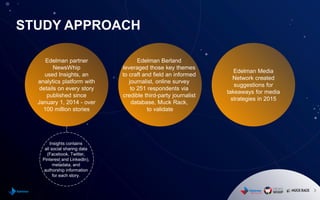
Edelman partner
NewsWhip
used Insights, an
analytics platform with
details on every story
published since
January 1, 2014 - over
100 million stories
Edelman Berland
leveraged those key themes
to craft and field an informed
journalist, online survey
to 251 respondents via
credible third-party journalist
database, Muck Rack,
to validate
Edelman Media
Network created
suggestions for
takeaways for media
strategies in 2015
Insights contains
all social sharing data
(Facebook, Twitter,
Pinterest and LinkedIn),
metadata, and
authorship information
for each story.
KEY INSIGHTS FROM NEWSWHIP DATA
4
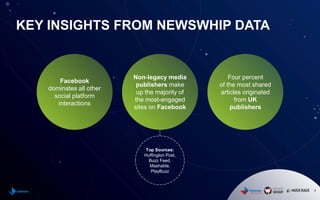
Facebook
dominates all other
social platform
interactions
Non-legacy media
publishers make
up the majority of
the most-engaged
sites on Facebook
Four percent
of the most shared
articles originated
from UK
publishers
Top Sources:
Huffington Post,
Buzz Feed,
Mashable,
PlayBuzz
KEY INSIGHTS FROM NEWSWHIP DATA
5
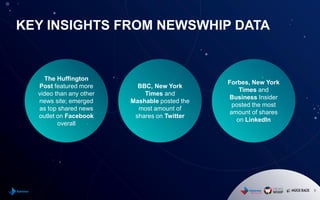
The Huffington
Post featured more
video than any other
news site; emerged
as top shared news
outlet on Facebook
overall
BBC, New York
Times and
Mashable posted the
most amount of
shares on Twitter
Forbes, New York
Times and
Business Insider
posted the most
amount of shares
on LinkedIn
KEY FINDINGS BY SECTOR
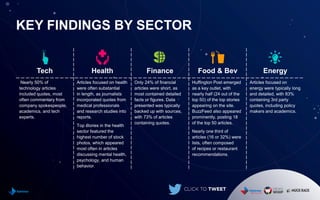
Tech Health Finance Food & Bev Energy
Nearly 50% of
technology articles
included quotes, most
often commentary from
company spokespeople,
academics, and tech
experts.
Articles focused on health
were often substantial
in length, as journalists
incorporated quotes from
medical professionals
and research studies into
reports.
Top stories in the health
sector featured the
highest number of stock
photos, which appeared
most often in articles
discussing mental health,
psychology, and human
behavior.
Only 24% of financial
articles were short, as
most contained detailed
facts or figures. Data
presented was typically
backed up with sources,
with 73% of articles
containing quotes.
Huffington Post emerged
as a key outlet, with
nearly half (24 out of the
top 50) of the top stories
appearing on the site.
BuzzFeed also appeared
prominently, posting 18
of the top 50 articles.
Nearly one third of
articles (16 or 32%) were
lists, often composed
of recipes or restaurant
recommendations.
Articles focused on
energy were typically long
and detailed, with 83%
containing 3rd party
quotes, including policy
makers and academics.
HOW JOURNALISTS
SHARE NEWS
ON SOCIAL MEDIA
Survey
Results
7
OBJECTIVES & METHODOLOGY
8
SURVEY
FACTS
HOW MANY
US Media
n = 251
WHEN
Data collection
occurred between
11/22 - 12/12 2014
HOW
Online
Survey
ACCURACY
Margin of error +/-
6.19% at 95%
confidence level
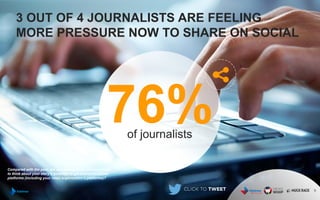
3 OUT OF 4 JOURNALISTS ARE FEELING
MORE PRESSURE NOW TO SHARE ON SOCIAL
9
Compared with the past, are you feeling more pressure now
to think about your story’s potential to get shared on social
platforms (including your news organization’s platforms)?
76%of journalists
THE INGREDIENTS FOR
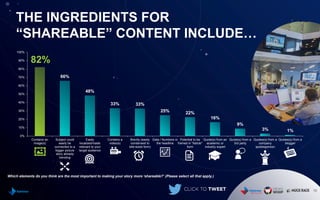
“SHAREABLE” CONTENT INCLUDE…
66%
48%
33% 33%
25% 22%
16%
9%
3% 1%
0%
10%
20%
30%
40%
50%
60%
70%
80%
90%
100%
Contains an
image(s)
Subject could
easily be
connected to a
bigger picture
story already
trending
Easily
localized/made
relevant to your
target audience
Contains a
video(s)
Brevity (easily
condensed to
bite-sized form)
Data / Numbers in
the headline
Potential to be
framed in "listicle"
form
Quote(s) from an
academic or
industry expert
Quote(s) from a
3rd party
Quotes(s) from a
company
spokesperson
Quotes(s) from a
blogger
Which elements do you think are the most important to making your story more ‘shareable?' (Please select all that apply.)
10
82%
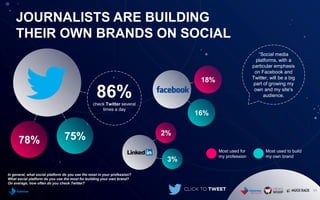
JOURNALISTS ARE BUILDING
THEIR OWN BRANDS ON SOCIAL
11
In general, what social platform do you use the most in your profession?
What social platform do you use the most for building your own brand?
On average, how often do you check Twitter?
Most used for
my profession
Most used to build
my own brand
86%check Twitter several
times a day
“Social media
platforms, with a
particular emphasis
on Facebook and
Twitter, will be a big
part of growing my
own and my site's
audience.
78% 75%
18%
16%
2%
3%
ORIGINAL, COMPANY-PROVIDED,
VIDEO IS THE MOST DESIRED
On average, what do you look for
when including video in your story?
74%
original video
created by your
company / site
14%
consumer
generated
videos
13%
a courtesy
video from a
third party
3%
a corporate
/ branded video
2%
a stock
video from a
subscription
service
12
13
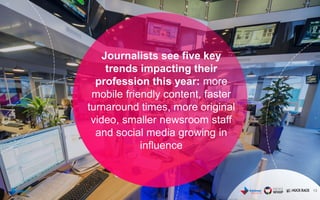
Journalists see five key
trends impacting their
profession this year: more
mobile friendly content, faster
turnaround times, more original
video, smaller newsroom staff
and social media growing in
influence
14
STORYTELLING
TAKEAWAYS
15
CRAFT AN INHERENTLY
SHARABLE STORY
16
DEEPEN RELATIONSHIPS
WITH JOURNALISTS
17
HELP NEWS
ORGANIZATIONS
CREATE ORIGINAL
CONTENT
18
SEE WHAT’S OVER
THE HORIZON
CONTACT
Mark Rogers
mark.rogers@edelmanberland.com
CONTACT
Katie Scrivano
Katie.Scrivano@edelman.com
OR
Steve Rubel
Steve.Rubel@edelman.com
for more
information

2015 Edelman Media Forecast

  • 1.
    2015 EDELMAN MEDIA FORECAST Storytelling inthe Age of Social News Consumption
  • 2.
    2 HOW SOCIAL NEWS CONSUMPTION WILLIMPACT STORYTELLING IN 2015
  • 3.
    STUDY APPROACH 3 Edelman partner NewsWhip usedInsights, an analytics platform with details on every story published since January 1, 2014 - over 100 million stories Edelman Berland leveraged those key themes to craft and field an informed journalist, online survey to 251 respondents via credible third-party journalist database, Muck Rack, to validate Edelman Media Network created suggestions for takeaways for media strategies in 2015 Insights contains all social sharing data (Facebook, Twitter, Pinterest and LinkedIn), metadata, and authorship information for each story.
  • 4.
    KEY INSIGHTS FROMNEWSWHIP DATA 4 Facebook dominates all other social platform interactions Non-legacy media publishers make up the majority of the most-engaged sites on Facebook Four percent of the most shared articles originated from UK publishers Top Sources: Huffington Post, Buzz Feed, Mashable, PlayBuzz
  • 5.
    KEY INSIGHTS FROMNEWSWHIP DATA 5 The Huffington Post featured more video than any other news site; emerged as top shared news outlet on Facebook overall BBC, New York Times and Mashable posted the most amount of shares on Twitter Forbes, New York Times and Business Insider posted the most amount of shares on LinkedIn
  • 6.
    KEY FINDINGS BYSECTOR Tech Health Finance Food & Bev Energy Nearly 50% of technology articles included quotes, most often commentary from company spokespeople, academics, and tech experts. Articles focused on health were often substantial in length, as journalists incorporated quotes from medical professionals and research studies into reports. Top stories in the health sector featured the highest number of stock photos, which appeared most often in articles discussing mental health, psychology, and human behavior. Only 24% of financial articles were short, as most contained detailed facts or figures. Data presented was typically backed up with sources, with 73% of articles containing quotes. Huffington Post emerged as a key outlet, with nearly half (24 out of the top 50) of the top stories appearing on the site. BuzzFeed also appeared prominently, posting 18 of the top 50 articles. Nearly one third of articles (16 or 32%) were lists, often composed of recipes or restaurant recommendations. Articles focused on energy were typically long and detailed, with 83% containing 3rd party quotes, including policy makers and academics.
  • 7.
    HOW JOURNALISTS SHARE NEWS ONSOCIAL MEDIA Survey Results 7
  • 8.
    OBJECTIVES & METHODOLOGY 8 SURVEY FACTS HOWMANY US Media n = 251 WHEN Data collection occurred between 11/22 - 12/12 2014 HOW Online Survey ACCURACY Margin of error +/- 6.19% at 95% confidence level
  • 9.
    3 OUT OF4 JOURNALISTS ARE FEELING MORE PRESSURE NOW TO SHARE ON SOCIAL 9 Compared with the past, are you feeling more pressure now to think about your story’s potential to get shared on social platforms (including your news organization’s platforms)? 76%of journalists
  • 10.
    THE INGREDIENTS FOR “SHAREABLE”CONTENT INCLUDE… 66% 48% 33% 33% 25% 22% 16% 9% 3% 1% 0% 10% 20% 30% 40% 50% 60% 70% 80% 90% 100% Contains an image(s) Subject could easily be connected to a bigger picture story already trending Easily localized/made relevant to your target audience Contains a video(s) Brevity (easily condensed to bite-sized form) Data / Numbers in the headline Potential to be framed in "listicle" form Quote(s) from an academic or industry expert Quote(s) from a 3rd party Quotes(s) from a company spokesperson Quotes(s) from a blogger Which elements do you think are the most important to making your story more ‘shareable?' (Please select all that apply.) 10 82%
  • 11.
    JOURNALISTS ARE BUILDING THEIROWN BRANDS ON SOCIAL 11 In general, what social platform do you use the most in your profession? What social platform do you use the most for building your own brand? On average, how often do you check Twitter? Most used for my profession Most used to build my own brand 86%check Twitter several times a day “Social media platforms, with a particular emphasis on Facebook and Twitter, will be a big part of growing my own and my site's audience. 78% 75% 18% 16% 2% 3%
  • 12.
    ORIGINAL, COMPANY-PROVIDED, VIDEO ISTHE MOST DESIRED On average, what do you look for when including video in your story? 74% original video created by your company / site 14% consumer generated videos 13% a courtesy video from a third party 3% a corporate / branded video 2% a stock video from a subscription service 12
  • 13.
    13 Journalists see fivekey trends impacting their profession this year: more mobile friendly content, faster turnaround times, more original video, smaller newsroom staff and social media growing in influence
  • 14.
  • 15.
  • 16.
  • 17.
  • 18.
  • 19.