DevOpsとcloudで達成する
再現性のあるスーパーコンピューティング
二階堂愛, Ph.D. <itoshi.nikaido@riken.jp>
ユニットリーダー. バイオインフォマティクス研究開発ユニット
理化学研究所 情報基盤センター
http://bit.accc.riken.jp/
国立遺伝学研究所スーパーコンピュータよる成果
Thanks!
METHOD Open Access
Quartz-Seq: a highly reproducible and sensitive
single-cell RNA sequencing method, reveals non-
genetic gene-expression heterogeneity
Yohei Sasagawa1,7†
, Itoshi Nikaido1,7†
, Tetsutaro Hayashi2
, Hiroki Danno3
, Kenichiro D Uno1
, Takeshi Imai4,5
and
Hiroki R Ueda1,3,6*
Abstract
Development of a highly reproducible and sensitive single-cell RNA sequencing (RNA-seq) method would facilitate
the understanding of the biological roles and underlying mechanisms of non-genetic cellular heterogeneity. In this
study, we report a novel single-cell RNA-seq method called Quartz-Seq that has a simpler protocol and higher
reproducibility and sensitivity than existing methods. We show that single-cell Quartz-Seq can quantitatively detect
various kinds of non-genetic cellular heterogeneity, and can detect different cell types and different cell-cycle
phases of a single cell type. Moreover, this method can comprehensively reveal gene-expression heterogeneity
between single cells of the same cell type in the same cell-cycle phase.
Keywords: Single cell, RNA-seq, Transcriptome, Sequencing, Bioinformatics, Cellular heterogeneity, Cell biology
Background
Non-genetic cellular heterogeneity at the mRNA and pro-
tein levels has been observed within cell populations in
diverse developmental processes and physiological condi-
tions [1-4]. However, the comprehensive and quantitative
analysis of this cellular heterogeneity and its changes in
response to perturbations has been extremely challenging.
Recently, several researchers reported quantification of
gene-expression heterogeneity within genetically identical
cell populations, and elucidation of its biological roles and
underlying mechanisms [5-8]. Although gene-expression
heterogeneities have been quantitatively measured for sev-
eral target genes using single-molecule imaging or single-
cell quantitative (q)PCR, comprehensive studies on the
quantification of gene-expression heterogeneity are limited
[9] and thus further work is required. Because global
gene-expression heterogeneity may provide biological
information (for example, on cell fate, culture environ-
ment, and drug response), the question of how to compre-
hensively and quantitatively detect the heterogeneity of
mRNA expression in single cells and how to extract biolo-
gical information from those data remains to be addressed.
Single-cell RNA sequencing (RNA-seq) analysis has
been shown to be an effective approach for the compre-
hensive quantification of gene-expression heterogeneity
that reflects the cellular heterogeneity at the single-cell
level [10,11]. To understand the biological roles and
underlying mechanisms of such heterogeneity, an ideal
single-cell transcriptome analysis method would provide
a simple, highly reproducible, and sensitive method for
measuring the gene-expression heterogeneity of cell
populations. In addition, this method should be able to
distinguish clearly the gene-expression heterogeneity
from experimental errors.
Single-cell transcriptome analyses, which can be
achieved through the use of various platforms, such as
microarrays, massively parallel sequencers and bead arrays
[12-17], are able to identify cell-type markers and/or rare
cell types in tissues. These platforms require nanogram
quantities of DNA as the starting material. However, a
typical single cell has approximately 10 pg of total RNA
and often contains only 0.1 pg of polyadenylated RNA,
hence, o obtain the amount of DNA starting material that
is required by these platforms, it is necessary to perform
whole-transcript amplification (WTA).
* Correspondence: uedah-tky@umin.ac.jp
† Contributed equally
1
Functional Genomics Unit, RIKEN Center for Developmental Biology, 2-2-3
Minatojima-minamimachi, Chuo-ku, Kobe, Hyogo 650-0047, Japan
Full list of author information is available at the end of the article
Sasagawa et al. Genome Biology 2013, 14:R31
http://genomebiology.com/2013/14/4/R31
© 2013 Sasagawa et al.; licensee BioMed Central Ltd. This is an open access article distributed under the terms of the Creative
Commons Attribution License (http://creativecommons.org/licenses/by/2.0), which permits unrestricted use, distribution, and
reproduction in any medium, provided the original work is properly cited.
Molecular Cell
Article
Context-Dependent Wiring of Sox2 Regulatory
Networks for Self-Renewal
of Embryonic and Trophoblast Stem Cells
Kenjiro Adachi,1,9,10,* Itoshi Nikaido,2,9,11 Hiroshi Ohta,3,12 Satoshi Ohtsuka,1 Hiroki Ura,1 Mitsutaka Kadota,5
Teruhiko Wakayama,3,6 Hiroki R. Ueda,2,4 and Hitoshi Niwa1,7,8,*
1Laboratory for Pluripotent Stem Cell Studies
2Functional Genomics Unit
3Laboratory for Genome Reprogramming
4Laboratory for Systems Biology
5Genome Resource and Analysis Unit
RIKEN Center for Developmental Biology, 2-2-3 Minatojima-minamimachi, Chuo-ku, Kobe 6500047, Japan
6Faculty of Life and Environmental Sciences, University of Yamanashi, Yamanashi 4008510, Japan
7Laboratory for Development and Regenerative Medicine, Kobe University Graduate School of Medicine, 7-5-1 Kusunokicho, Chuo-ku,
Kobe 6500017, Japan
8JST, CREST, Sanbancho, Chiyoda-ku, Tokyo, 1020075, Japan
9These authors contributed equally to this work
10Present address: Department of Cell and Developmental Biology, Max Planck Institute for Molecular Biomedicine, 48149 Mu¨ nster, Germany
11Present address: Bioinformatics Research Unit, Advanced Center for Computing and Communication, RIKEN, Wako,
Saitama 3510198, Japan
12Present address: Department of Anatomy and Cell Biology, Graduate School of Medicine, Kyoto University, Sakyo-ku,
Kyoto 6068501, Japan
*Correspondence: kenjiro.adachi@mpi-muenster.mpg.de (K.A.), niwa@cdb.riken.jp (H.N.)
http://dx.doi.org/10.1016/j.molcel.2013.09.002
SUMMARY
Sox2 is a transcription factor required for the mainte-
nance of pluripotency. It also plays an essential role
in different types of multipotent stem cells, raising
the possibility that Sox2 governs the common
stemness phenotype. Here we show that Sox2 is
a critical downstream target of fibroblast growth fac-
tor (FGF) signaling, which mediates self-renewal of
trophoblast stem cells (TSCs). Sustained expression
of Sox2 together with Esrrb or Tfap2c can replace
FGF dependency. By comparing genome-wide bind-
ing sites of Sox2 in embryonic stem cells (ESCs) and
TSCs combined with inducible knockout systems,
we found that, despite the common role in safe-
guarding the stem cell state, Sox2 regulates distinct
sets of genes with unique functions in these two
different yet developmentally related types of
stem cells. Our findings provide insights into the
functional versatility of transcription factors during
embryogenesis, during which they can be recur-
sively utilized in a variable manner within discrete
network structures.
INTRODUCTION
The transcriptional output of a given cell type is controlled by
unique combinations of transcription factors under the control
of extrinsic signals that can modulate the expression and activity
of transcription factors, forming a gene regulatory network that
dictates a specific cellular phenotype. Tissue-specific transcrip-
tion factors play deterministic roles in cell-type specification,
which is manifested as lineage reprogramming by forced expres-
sion of such transcription factors (Graf and Enver, 2009; Zhou
and Melton, 2008). Sox2 is one such transcription factor required
for the maintenance of pluripotent stem cells in vivo (Avilion et al.,
2003) and in vitro (Masui et al., 2007) and for the induction of
pluripotency (Takahashi and Yamanaka, 2006). However, it is
also preferentially expressed in neural, retinal, and trophoblast
stem cells (TSCs) (Avilion et al., 2003; Pevny and Nicolis,
2010), suggesting a possible role for Sox2 in governing a com-
mon stemness phenotype.
In embryonic stem cells (ESCs), Sox2 forms a heterodimer
with Oct3/4 (also known as Pou5f1) on DNA with the OCT-SOX
composite motifs, and these factors cooperatively activate
pluripotency-related target genes such as Nanog, Fgf4, Utf1,
Lefty1, and Fbxo15, as well as their own expression (Nakatake
et al., 2006, and references therein). Oct3/4-knockout ESCs
are differentiated along the trophoblast lineage in a highly homo-
geneous manner (Niwa et al., 2000). In contrast, the loss of Sox2
causes differentiation of ESCs accompanied by upregulation of
markers for trophoblast and embryonic germ layers, although
artificial maintenance of Oct3/4 from the transgene can sustain
self-renewal and pluripotency of Sox2-null ESCs (Masui et al.,
2007), suggesting that the unique function of Sox2 may be
to maintain Oct3/4 expression. These two core transcription
factors, along with Nanog, form an interconnected and hierarchi-
cal network downstream of the leukemia inhibitory factor (LIF)-
Stat3 and LIF-phosphatidylinositol 3-kinase (PI3K) signaling
380 Molecular Cell 52, 380–392, November 7, 2013 ª2013 Elsevier Inc.
世界最高精度の1細胞RNA-Seq開発 転写因子ネットワークの動的変化と分化
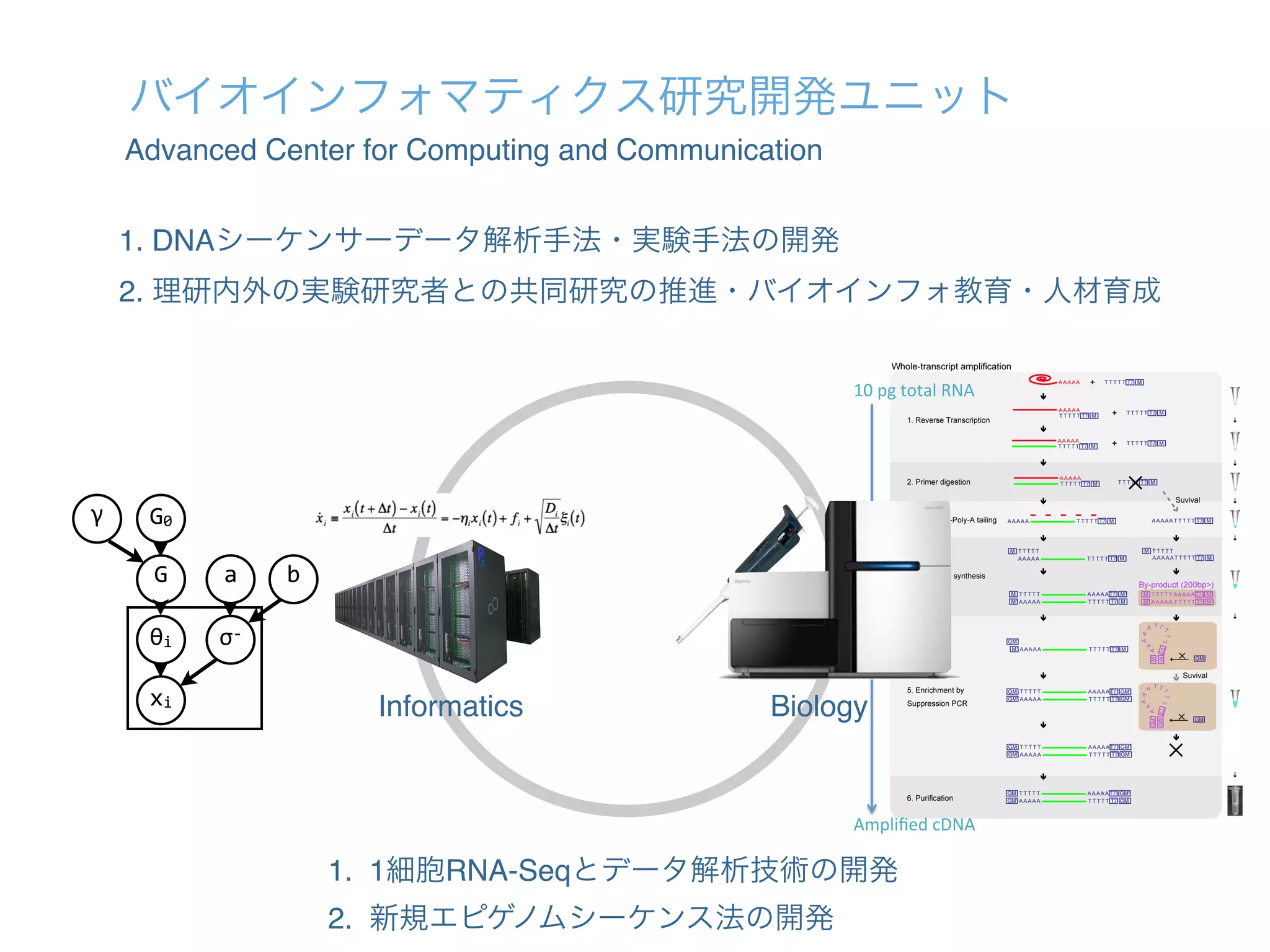
バイオインフォマティクス研究開発ユニット
Advanced Center for Computing and Communication
Informatics Biology
1. DNAシーケンサーデータ解析手法・実験手法の開発!
2. 理研内外の実験研究者との共同研究の推進・バイオインフォ教育・人材育成
xi
θi
G
G0γ
σ-­‐
a b
10#pg#total#RNA
Amplified#cDNA
1. 1細胞RNA-Seqとデータ解析技術の開発!
2. 新規エピゲノムシーケンス法の開発
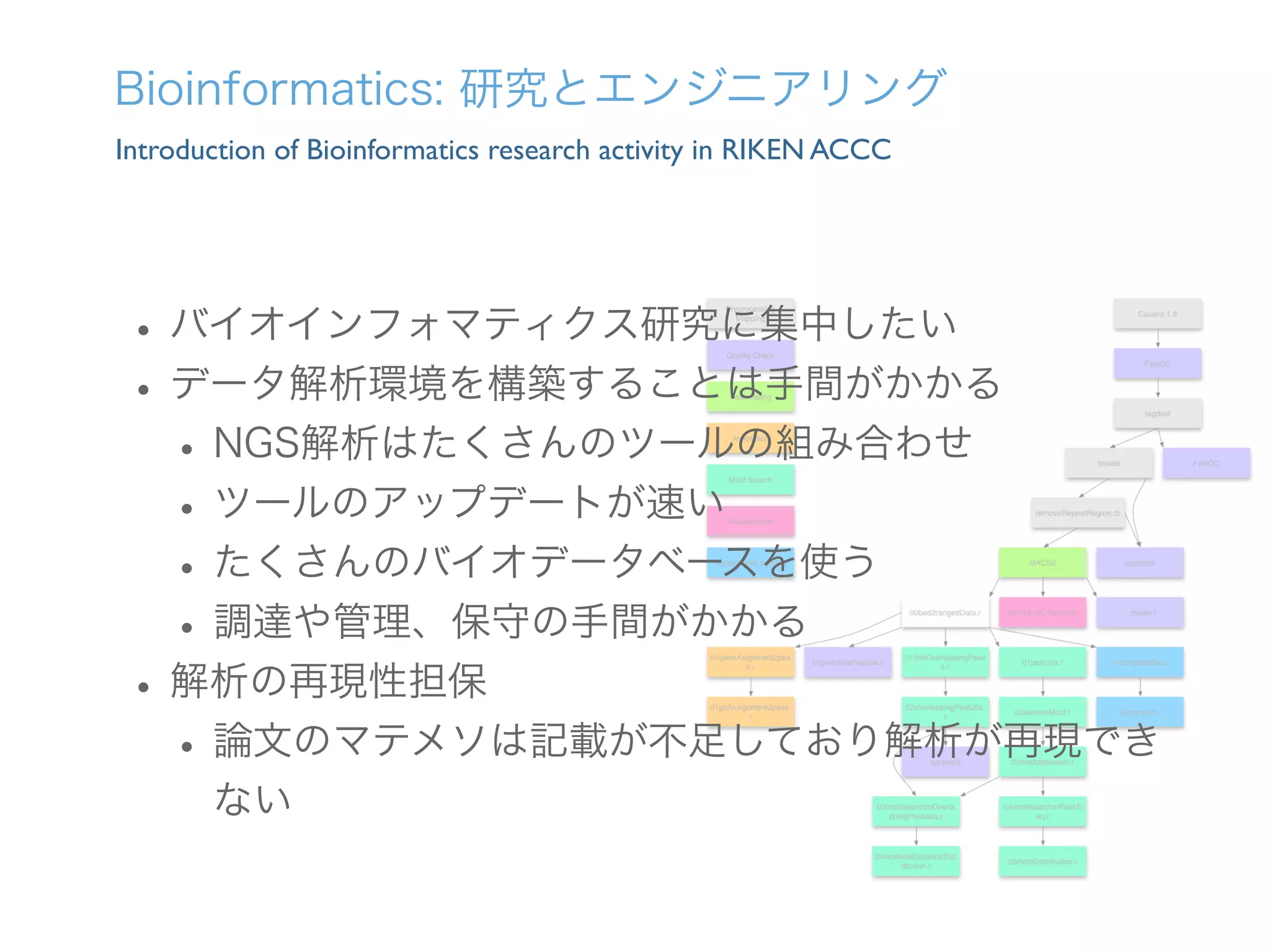
Introduction of Bioinformatics research activity in RIKEN ACCC
Bioinformatics: 研究とエンジニアリング
•バイオインフォマティクス研究に集中したい
•データ解析環境を構築することは手間がかかる
•NGS解析はたくさんのツールの組み合わせ
•ツールのアップデートが速い
•たくさんのバイオデータベースを使う
•調達や管理、保守の手間がかかる
•解析の再現性担保
•論文のマテメソは記載が不足しており解析が再現でき
ない
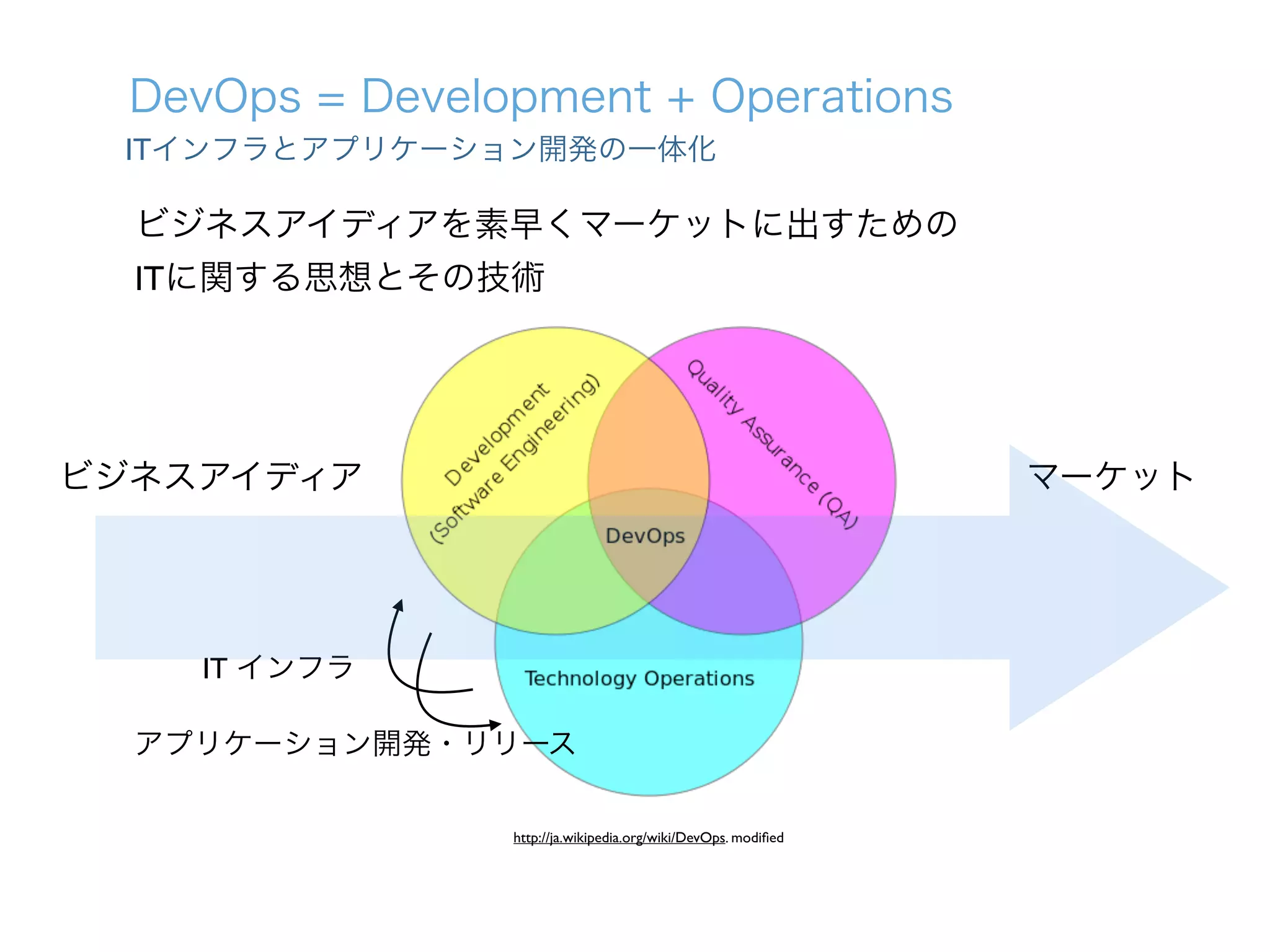
IT インフラ
アプリケーション開発・リリース
ビジネスアイディア マーケット
http://ja.wikipedia.org/wiki/DevOps. modified
DevOps = Development + Operations
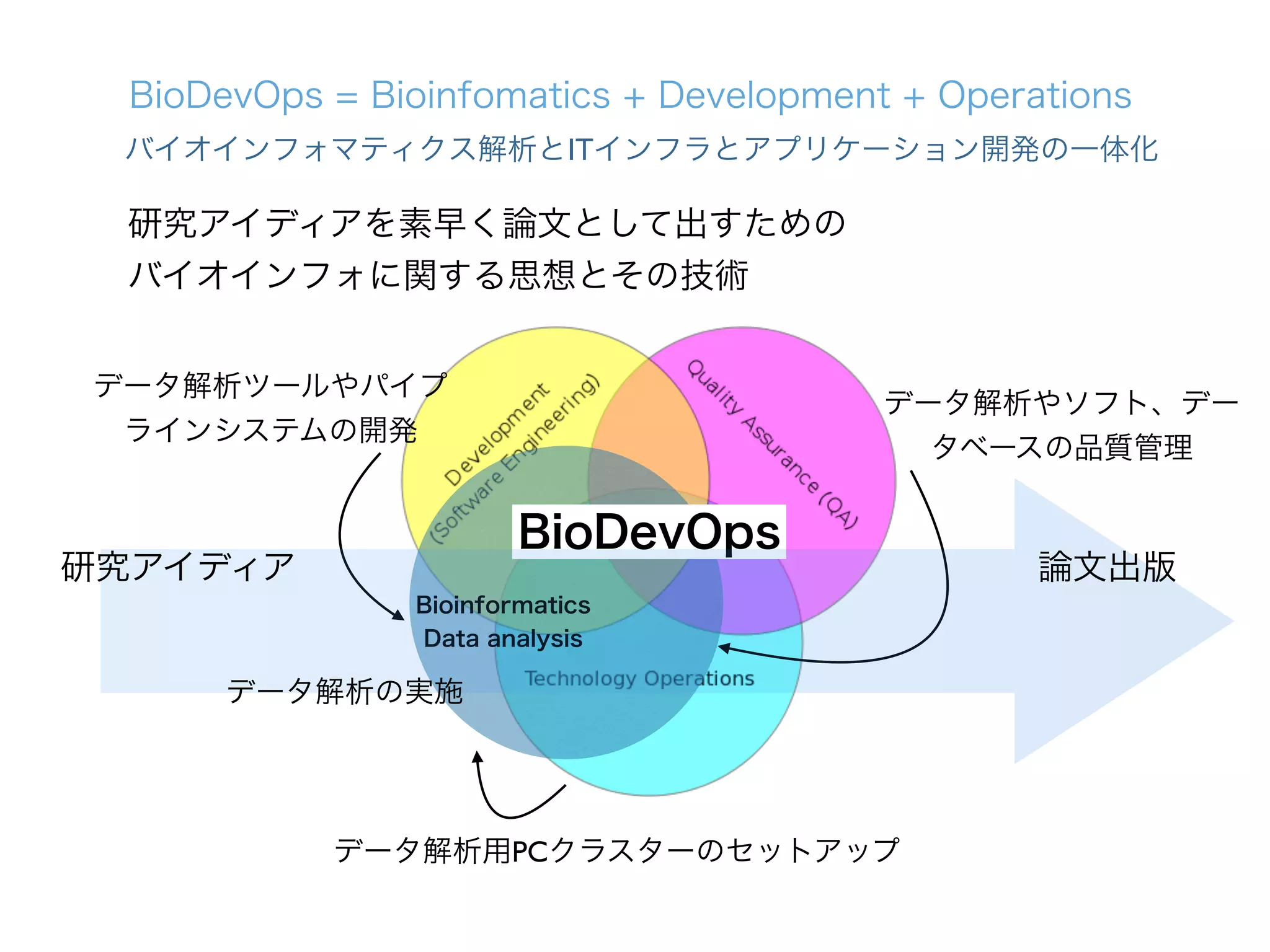
ITインフラとアプリケーション開発の一体化
ビジネスアイディアを素早くマーケットに出すための	

ITに関する思想とその技術
データ解析用PCクラスターのセットアップ
データ解析ツールやパイプ
ラインシステムの開発
Bioinformatics
Data analysis
BioDevOps
データ解析やソフト、デー
タベースの品質管理
研究アイディア 論文出版
BioDevOps = Bioinfomatics + Development + Operations
バイオインフォマティクス解析とITインフラとアプリケーション開発の一体化
データ解析の実施
研究アイディアを素早く論文として出すための	

バイオインフォに関する思想とその技術
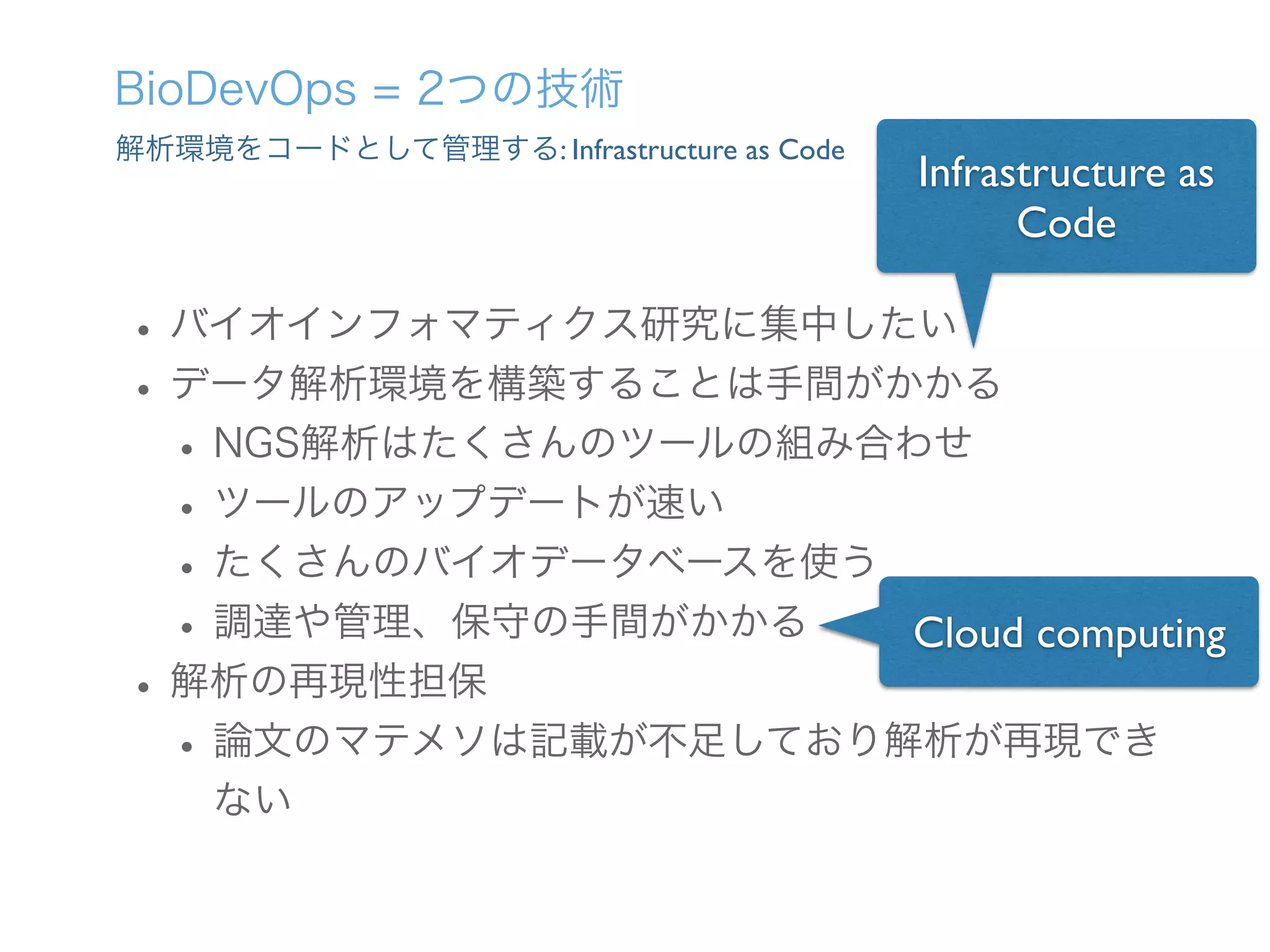
解析環境をコードとして管理する: Infrastructure as Code
BioDevOps = 2つの技術
•バイオインフォマティクス研究に集中したい
•データ解析環境を構築することは手間がかかる
•NGS解析はたくさんのツールの組み合わせ
•ツールのアップデートが速い
•たくさんのバイオデータベースを使う
•調達や管理、保守の手間がかかる
•解析の再現性担保
•論文のマテメソは記載が不足しており解析が再現でき
ない
Infrastructure as
Code
Cloud computing
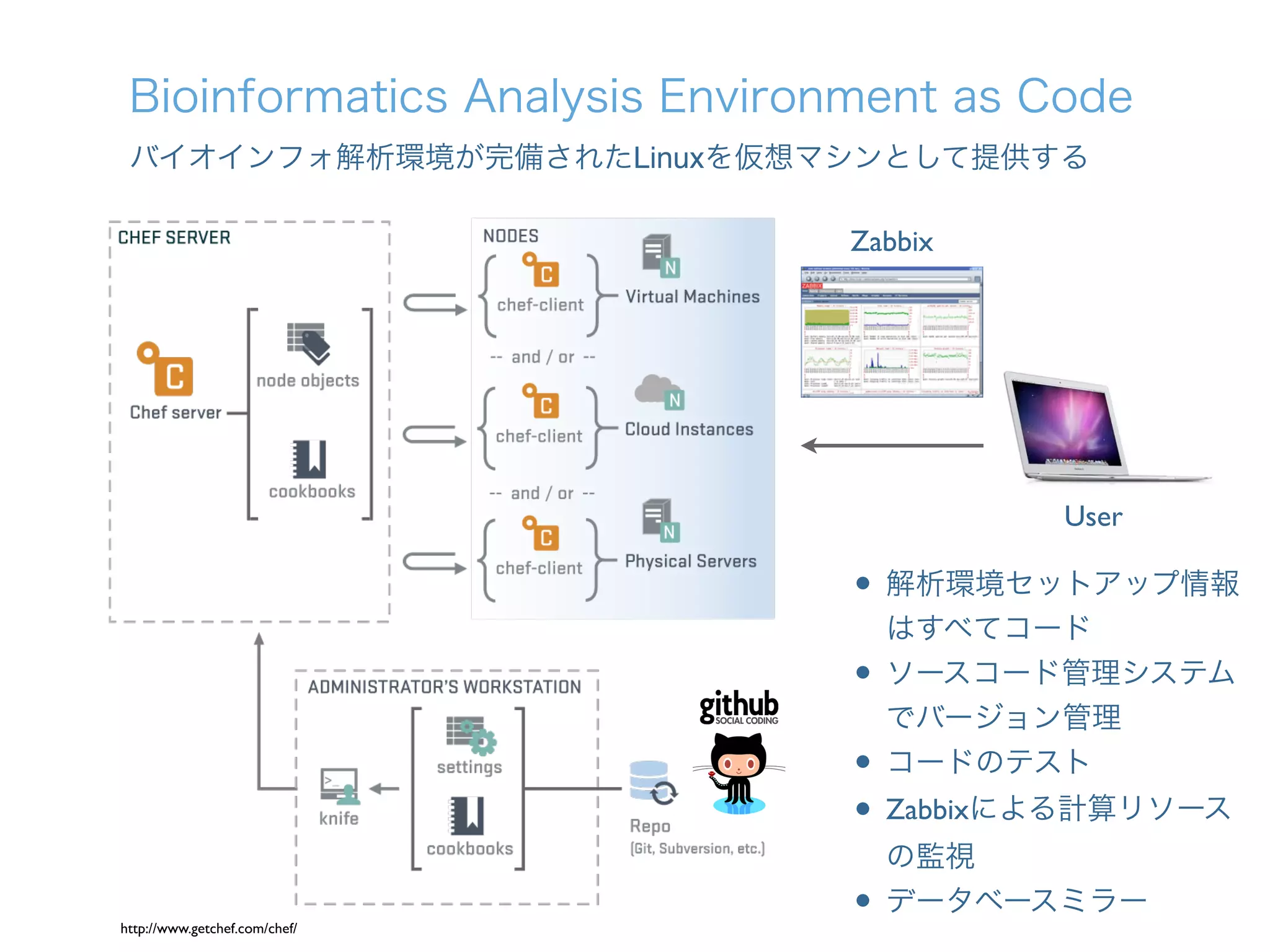
Bioinformatics Analysis Environment as Code
バイオインフォ解析環境が完備されたLinuxを仮想マシンとして提供する
http://www.getchef.com/chef/
• 解析環境セットアップ情報
はすべてコード	

• ソースコード管理システム
でバージョン管理	

• コードのテスト	

• Zabbixによる計算リソース
の監視	

• データベースミラー
User
Zabbix
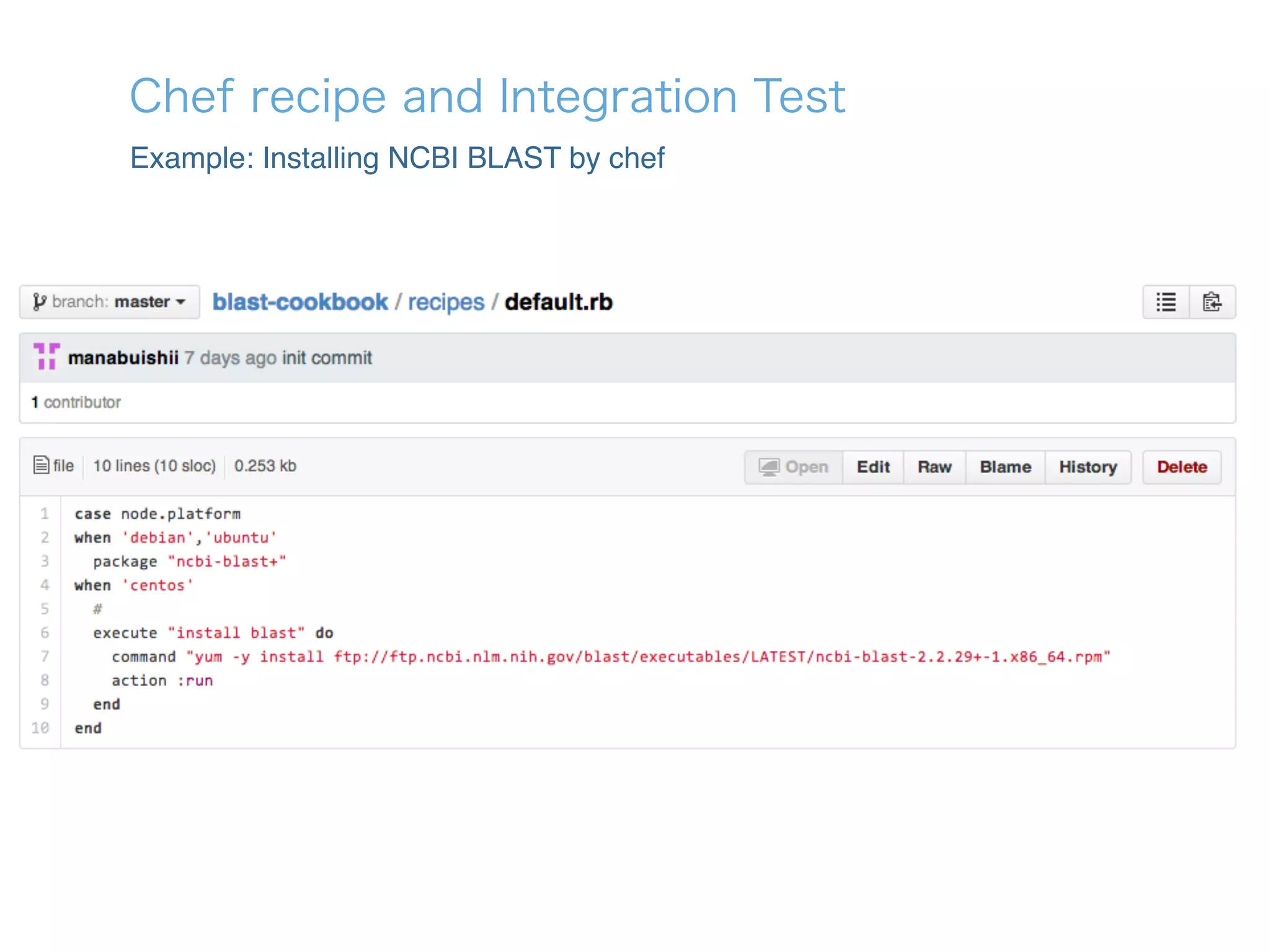
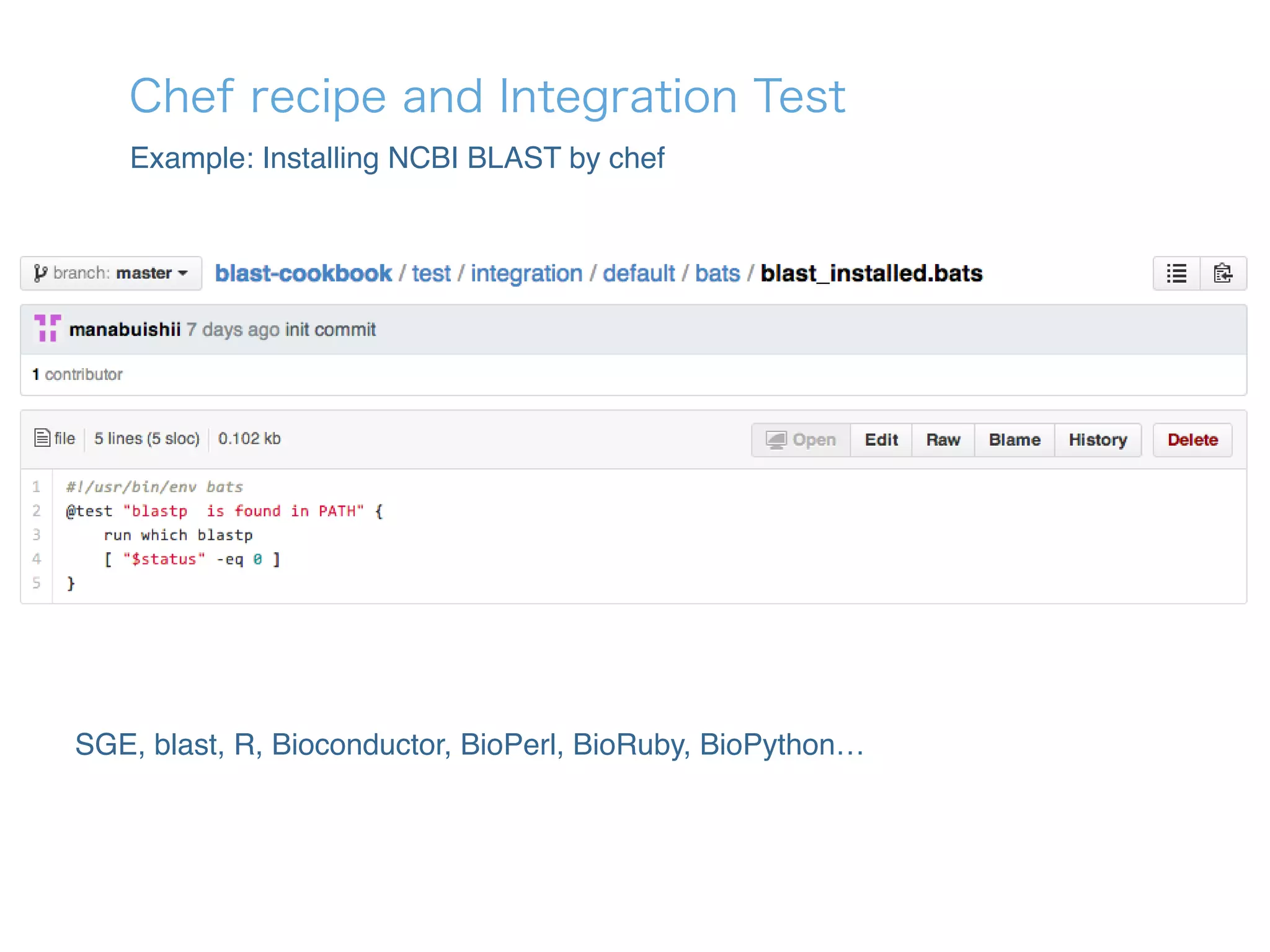
Chef recipe and Integration Test
Example: Installing NCBI BLAST by chef
Chef recipe and Integration Test
Example: Installing NCBI BLAST by chef
SGE, blast, R, Bioconductor, BioPerl, BioRuby, BioPython…
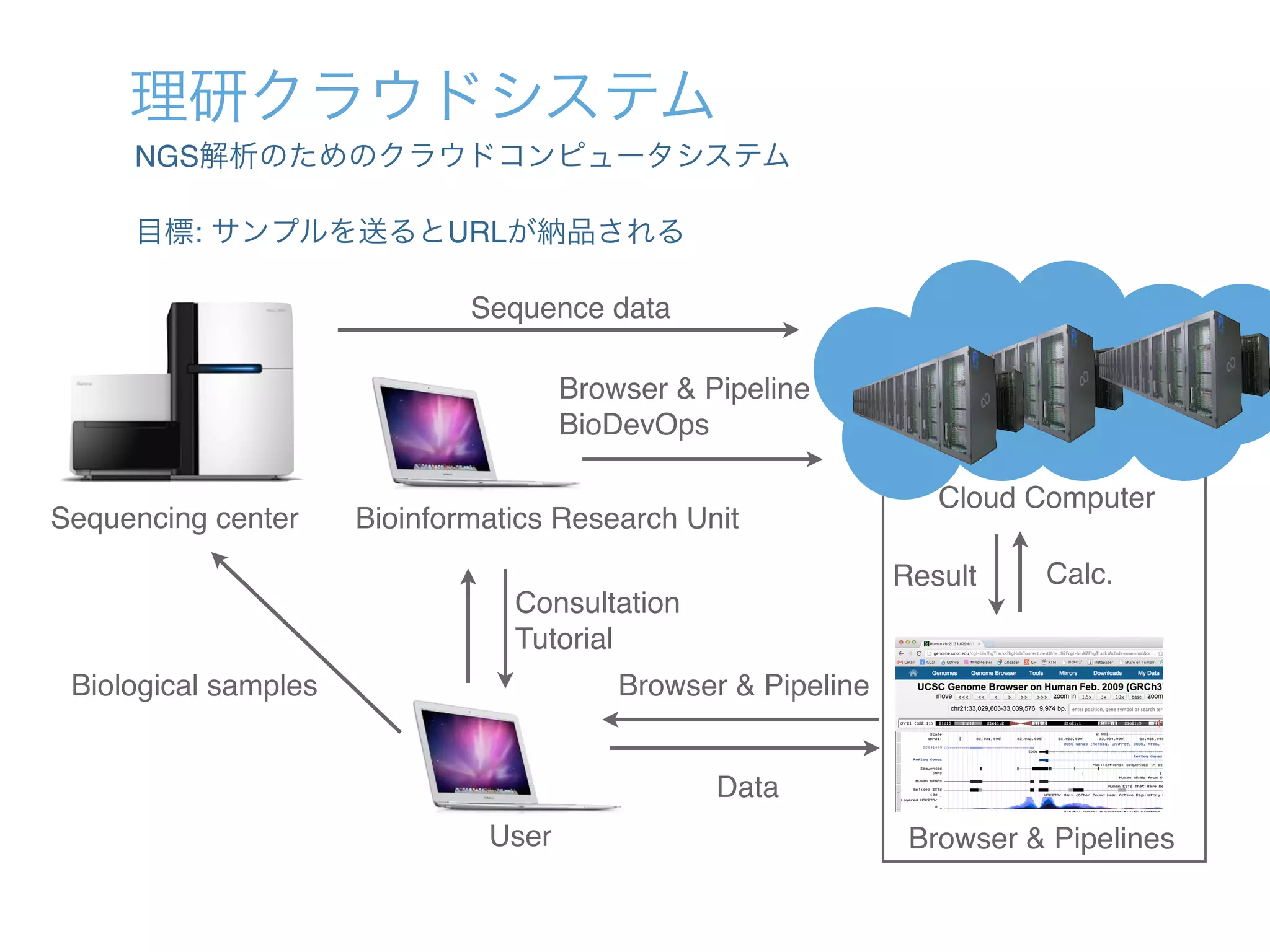
理研クラウドシステム
NGS解析のためのクラウドコンピュータシステム
Sequencing center Bioinformatics Research Unit
Cloud Computer
Sequence data
User
Browser & Pipeline!
BioDevOps
Browser & Pipelines
Data
Calc.Result
Browser & Pipeline
Consultation!
Tutorial
Biological samples
目標: サンプルを送るとURLが納品される
理研クラウドシステムの実装
NGS解析のためのクラウドコンピュータシステム
node: 15	

CPU: 2.6GHz x 16	

RAM: 512GB
NFS	

forVM images
GPFS-cNFS	

for common storage	

556TB
Apache CloudStack™	

Open Source Cloud Computing™
• レシピを増やす	

• Galaxy, GBrowse, RStudio Serverなどのウェブアプリ	

• ツール動作のテスト、継続的インテグレーション	

• RIKENバイオクラウド, AWSでの動作確認	

• PCクラスタとしてのプロビジョニング	

• Docker Index, GitHubでレシピ&VM公開予定	

• 連携	

• LPM, med-bio, BioCloudLinux, BioUno, Bioconductor, Bio*, …
http://biodevops.org/
今後の展開
Advanced Center for Computing and Communication

DevOpsとcloudで達成する再現性のあるDNAシーケンス解析とスーパーコンピューティング

  • 1.
    DevOpsとcloudで達成する 再現性のあるスーパーコンピューティング 二階堂愛, Ph.D. <itoshi.nikaido@riken.jp> ユニットリーダー.バイオインフォマティクス研究開発ユニット 理化学研究所 情報基盤センター http://bit.accc.riken.jp/
  • 2.
    国立遺伝学研究所スーパーコンピュータよる成果 Thanks! METHOD Open Access Quartz-Seq:a highly reproducible and sensitive single-cell RNA sequencing method, reveals non- genetic gene-expression heterogeneity Yohei Sasagawa1,7† , Itoshi Nikaido1,7† , Tetsutaro Hayashi2 , Hiroki Danno3 , Kenichiro D Uno1 , Takeshi Imai4,5 and Hiroki R Ueda1,3,6* Abstract Development of a highly reproducible and sensitive single-cell RNA sequencing (RNA-seq) method would facilitate the understanding of the biological roles and underlying mechanisms of non-genetic cellular heterogeneity. In this study, we report a novel single-cell RNA-seq method called Quartz-Seq that has a simpler protocol and higher reproducibility and sensitivity than existing methods. We show that single-cell Quartz-Seq can quantitatively detect various kinds of non-genetic cellular heterogeneity, and can detect different cell types and different cell-cycle phases of a single cell type. Moreover, this method can comprehensively reveal gene-expression heterogeneity between single cells of the same cell type in the same cell-cycle phase. Keywords: Single cell, RNA-seq, Transcriptome, Sequencing, Bioinformatics, Cellular heterogeneity, Cell biology Background Non-genetic cellular heterogeneity at the mRNA and pro- tein levels has been observed within cell populations in diverse developmental processes and physiological condi- tions [1-4]. However, the comprehensive and quantitative analysis of this cellular heterogeneity and its changes in response to perturbations has been extremely challenging. Recently, several researchers reported quantification of gene-expression heterogeneity within genetically identical cell populations, and elucidation of its biological roles and underlying mechanisms [5-8]. Although gene-expression heterogeneities have been quantitatively measured for sev- eral target genes using single-molecule imaging or single- cell quantitative (q)PCR, comprehensive studies on the quantification of gene-expression heterogeneity are limited [9] and thus further work is required. Because global gene-expression heterogeneity may provide biological information (for example, on cell fate, culture environ- ment, and drug response), the question of how to compre- hensively and quantitatively detect the heterogeneity of mRNA expression in single cells and how to extract biolo- gical information from those data remains to be addressed. Single-cell RNA sequencing (RNA-seq) analysis has been shown to be an effective approach for the compre- hensive quantification of gene-expression heterogeneity that reflects the cellular heterogeneity at the single-cell level [10,11]. To understand the biological roles and underlying mechanisms of such heterogeneity, an ideal single-cell transcriptome analysis method would provide a simple, highly reproducible, and sensitive method for measuring the gene-expression heterogeneity of cell populations. In addition, this method should be able to distinguish clearly the gene-expression heterogeneity from experimental errors. Single-cell transcriptome analyses, which can be achieved through the use of various platforms, such as microarrays, massively parallel sequencers and bead arrays [12-17], are able to identify cell-type markers and/or rare cell types in tissues. These platforms require nanogram quantities of DNA as the starting material. However, a typical single cell has approximately 10 pg of total RNA and often contains only 0.1 pg of polyadenylated RNA, hence, o obtain the amount of DNA starting material that is required by these platforms, it is necessary to perform whole-transcript amplification (WTA). * Correspondence: uedah-tky@umin.ac.jp † Contributed equally 1 Functional Genomics Unit, RIKEN Center for Developmental Biology, 2-2-3 Minatojima-minamimachi, Chuo-ku, Kobe, Hyogo 650-0047, Japan Full list of author information is available at the end of the article Sasagawa et al. Genome Biology 2013, 14:R31 http://genomebiology.com/2013/14/4/R31 © 2013 Sasagawa et al.; licensee BioMed Central Ltd. This is an open access article distributed under the terms of the Creative Commons Attribution License (http://creativecommons.org/licenses/by/2.0), which permits unrestricted use, distribution, and reproduction in any medium, provided the original work is properly cited. Molecular Cell Article Context-Dependent Wiring of Sox2 Regulatory Networks for Self-Renewal of Embryonic and Trophoblast Stem Cells Kenjiro Adachi,1,9,10,* Itoshi Nikaido,2,9,11 Hiroshi Ohta,3,12 Satoshi Ohtsuka,1 Hiroki Ura,1 Mitsutaka Kadota,5 Teruhiko Wakayama,3,6 Hiroki R. Ueda,2,4 and Hitoshi Niwa1,7,8,* 1Laboratory for Pluripotent Stem Cell Studies 2Functional Genomics Unit 3Laboratory for Genome Reprogramming 4Laboratory for Systems Biology 5Genome Resource and Analysis Unit RIKEN Center for Developmental Biology, 2-2-3 Minatojima-minamimachi, Chuo-ku, Kobe 6500047, Japan 6Faculty of Life and Environmental Sciences, University of Yamanashi, Yamanashi 4008510, Japan 7Laboratory for Development and Regenerative Medicine, Kobe University Graduate School of Medicine, 7-5-1 Kusunokicho, Chuo-ku, Kobe 6500017, Japan 8JST, CREST, Sanbancho, Chiyoda-ku, Tokyo, 1020075, Japan 9These authors contributed equally to this work 10Present address: Department of Cell and Developmental Biology, Max Planck Institute for Molecular Biomedicine, 48149 Mu¨ nster, Germany 11Present address: Bioinformatics Research Unit, Advanced Center for Computing and Communication, RIKEN, Wako, Saitama 3510198, Japan 12Present address: Department of Anatomy and Cell Biology, Graduate School of Medicine, Kyoto University, Sakyo-ku, Kyoto 6068501, Japan *Correspondence: kenjiro.adachi@mpi-muenster.mpg.de (K.A.), niwa@cdb.riken.jp (H.N.) http://dx.doi.org/10.1016/j.molcel.2013.09.002 SUMMARY Sox2 is a transcription factor required for the mainte- nance of pluripotency. It also plays an essential role in different types of multipotent stem cells, raising the possibility that Sox2 governs the common stemness phenotype. Here we show that Sox2 is a critical downstream target of fibroblast growth fac- tor (FGF) signaling, which mediates self-renewal of trophoblast stem cells (TSCs). Sustained expression of Sox2 together with Esrrb or Tfap2c can replace FGF dependency. By comparing genome-wide bind- ing sites of Sox2 in embryonic stem cells (ESCs) and TSCs combined with inducible knockout systems, we found that, despite the common role in safe- guarding the stem cell state, Sox2 regulates distinct sets of genes with unique functions in these two different yet developmentally related types of stem cells. Our findings provide insights into the functional versatility of transcription factors during embryogenesis, during which they can be recur- sively utilized in a variable manner within discrete network structures. INTRODUCTION The transcriptional output of a given cell type is controlled by unique combinations of transcription factors under the control of extrinsic signals that can modulate the expression and activity of transcription factors, forming a gene regulatory network that dictates a specific cellular phenotype. Tissue-specific transcrip- tion factors play deterministic roles in cell-type specification, which is manifested as lineage reprogramming by forced expres- sion of such transcription factors (Graf and Enver, 2009; Zhou and Melton, 2008). Sox2 is one such transcription factor required for the maintenance of pluripotent stem cells in vivo (Avilion et al., 2003) and in vitro (Masui et al., 2007) and for the induction of pluripotency (Takahashi and Yamanaka, 2006). However, it is also preferentially expressed in neural, retinal, and trophoblast stem cells (TSCs) (Avilion et al., 2003; Pevny and Nicolis, 2010), suggesting a possible role for Sox2 in governing a com- mon stemness phenotype. In embryonic stem cells (ESCs), Sox2 forms a heterodimer with Oct3/4 (also known as Pou5f1) on DNA with the OCT-SOX composite motifs, and these factors cooperatively activate pluripotency-related target genes such as Nanog, Fgf4, Utf1, Lefty1, and Fbxo15, as well as their own expression (Nakatake et al., 2006, and references therein). Oct3/4-knockout ESCs are differentiated along the trophoblast lineage in a highly homo- geneous manner (Niwa et al., 2000). In contrast, the loss of Sox2 causes differentiation of ESCs accompanied by upregulation of markers for trophoblast and embryonic germ layers, although artificial maintenance of Oct3/4 from the transgene can sustain self-renewal and pluripotency of Sox2-null ESCs (Masui et al., 2007), suggesting that the unique function of Sox2 may be to maintain Oct3/4 expression. These two core transcription factors, along with Nanog, form an interconnected and hierarchi- cal network downstream of the leukemia inhibitory factor (LIF)- Stat3 and LIF-phosphatidylinositol 3-kinase (PI3K) signaling 380 Molecular Cell 52, 380–392, November 7, 2013 ª2013 Elsevier Inc. 世界最高精度の1細胞RNA-Seq開発 転写因子ネットワークの動的変化と分化
  • 3.
    バイオインフォマティクス研究開発ユニット Advanced Center forComputing and Communication Informatics Biology 1. DNAシーケンサーデータ解析手法・実験手法の開発! 2. 理研内外の実験研究者との共同研究の推進・バイオインフォ教育・人材育成 xi θi G G0γ σ-­‐ a b 10#pg#total#RNA Amplified#cDNA 1. 1細胞RNA-Seqとデータ解析技術の開発! 2. 新規エピゲノムシーケンス法の開発
  • 4.
    Introduction of Bioinformaticsresearch activity in RIKEN ACCC Bioinformatics: 研究とエンジニアリング •バイオインフォマティクス研究に集中したい •データ解析環境を構築することは手間がかかる •NGS解析はたくさんのツールの組み合わせ •ツールのアップデートが速い •たくさんのバイオデータベースを使う •調達や管理、保守の手間がかかる •解析の再現性担保 •論文のマテメソは記載が不足しており解析が再現でき ない
  • 5.
    IT インフラ アプリケーション開発・リリース ビジネスアイディア マーケット http://ja.wikipedia.org/wiki/DevOps.modified DevOps = Development + Operations ITインフラとアプリケーション開発の一体化 ビジネスアイディアを素早くマーケットに出すための ITに関する思想とその技術
  • 6.
    データ解析用PCクラスターのセットアップ データ解析ツールやパイプ ラインシステムの開発 Bioinformatics Data analysis BioDevOps データ解析やソフト、デー タベースの品質管理 研究アイディア 論文出版 BioDevOps= Bioinfomatics + Development + Operations バイオインフォマティクス解析とITインフラとアプリケーション開発の一体化 データ解析の実施 研究アイディアを素早く論文として出すための バイオインフォに関する思想とその技術
  • 7.
    解析環境をコードとして管理する: Infrastructure asCode BioDevOps = 2つの技術 •バイオインフォマティクス研究に集中したい •データ解析環境を構築することは手間がかかる •NGS解析はたくさんのツールの組み合わせ •ツールのアップデートが速い •たくさんのバイオデータベースを使う •調達や管理、保守の手間がかかる •解析の再現性担保 •論文のマテメソは記載が不足しており解析が再現でき ない Infrastructure as Code Cloud computing
  • 8.
    Bioinformatics Analysis Environmentas Code バイオインフォ解析環境が完備されたLinuxを仮想マシンとして提供する http://www.getchef.com/chef/ • 解析環境セットアップ情報 はすべてコード • ソースコード管理システム でバージョン管理 • コードのテスト • Zabbixによる計算リソース の監視 • データベースミラー User Zabbix
  • 9.
    Chef recipe andIntegration Test Example: Installing NCBI BLAST by chef
  • 10.
    Chef recipe andIntegration Test Example: Installing NCBI BLAST by chef SGE, blast, R, Bioconductor, BioPerl, BioRuby, BioPython…
  • 11.
    理研クラウドシステム NGS解析のためのクラウドコンピュータシステム Sequencing center BioinformaticsResearch Unit Cloud Computer Sequence data User Browser & Pipeline! BioDevOps Browser & Pipelines Data Calc.Result Browser & Pipeline Consultation! Tutorial Biological samples 目標: サンプルを送るとURLが納品される
  • 12.
    理研クラウドシステムの実装 NGS解析のためのクラウドコンピュータシステム node: 15 CPU: 2.6GHzx 16 RAM: 512GB NFS forVM images GPFS-cNFS for common storage 556TB Apache CloudStack™ Open Source Cloud Computing™
  • 13.
    • レシピを増やす • Galaxy,GBrowse, RStudio Serverなどのウェブアプリ • ツール動作のテスト、継続的インテグレーション • RIKENバイオクラウド, AWSでの動作確認 • PCクラスタとしてのプロビジョニング • Docker Index, GitHubでレシピ&VM公開予定 • 連携 • LPM, med-bio, BioCloudLinux, BioUno, Bioconductor, Bio*, … http://biodevops.org/ 今後の展開 Advanced Center for Computing and Communication