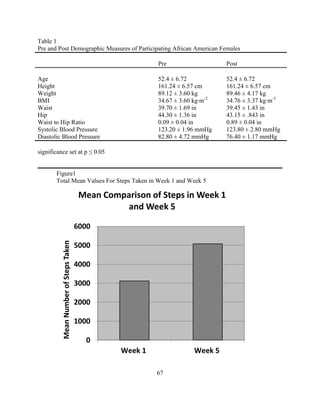
1 
April 2014 Volume 49 – Number 1
2 
April 2014 – Arkansas Journal – Volume 49 – Number 1 
CONTENTS 
News and Information 
Award Qualifications . . . . . . . 3 
Message from the President. . . . . . . 4 
ArkAHPERD Board of Directors. . . . . . 5 
Articles 
High school dropout: The reciprocal relationship between education and health 
- Kelley E. Rhoads. . . . . . . . . 6 
Factor Analysis of Psychomotor Assessments in Measurement and Evaluation Classes 
- Shelia L. Jackson, Annette Holeyfield and Rockie Pederson . . . 11 
The Challenge of Sport Entrapment 
- David Benson and Bradford Strand . . . . . . 17 
Results of an Osteoporosis Prevention Intervention for Youth 
– Kate Tokar, Sharon Hunt, Lori W. Turner and Travis Tokar . . . 23 
Effects of College Health Course Enrollment on Student Interest, Knowledge, and Behavior 
- Britney Finley and Jim Vander-Putten . . . . . . 31 
School Personnel Perceptions of Childhood Obesity in Arkansas Schools 
- Cathy D. Lirgg, Dean R. Gorman and Anthony Parish . . . . 35 
Biomechanics and Methods of Improving Throwing Velocity in Baseball Pitching 
- Kaleb Brown, J. Brian Church, Marla M. Jones, and Amanda A. Wheeler . . 43 
PETE Students’ Perceptions of Professional Preparation 
- Lance G. Bryant. . . . . . . . . 52 
Integrating Yoga into Stress-Reduction Interventions: Application of the Health Belief Model 
- Kate Hendricks, Lori Turner and Sharon Hunt . . . . . 55 
Pedometer Use and Physical Activity in African American Females 
- W.R.L. Penn, M.M. Jones, T.M. Adams II., B. Church, L. Bryant and J.L. Stillwell . 61 
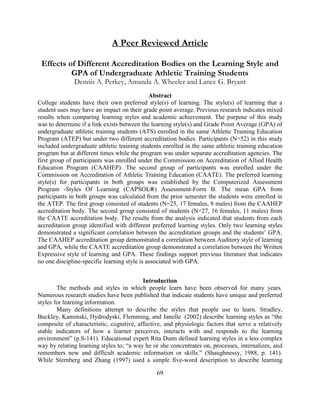
Effects of Different Accreditation Bodies on the Learning Style and GPA of Undergraduate Athletic Training Students 
- Dennis A. Perkey, Amanda A. Wheeler and Lance G. Bryant . . . 69
3 
AWARD QUALIFICATIONS 
Lifetime Achievement Award 
Candidate must meet the following qualifications: 
A. Be at least 30 years of age and have earned a Master’s degree or its equivalent. 
B. Have served the profession for at least five years prior to the nomination. 
C. Be a current member of ArkAHPERD. Former members who have retired from professional work may be exempt. 
D. Be of high moral character and personal integrity who by their leadership and industry have made outstanding and noteworthy contributions to the advancement of our profession in the state of Arkansas. 
To indicate leadership or meritorious contributions, the nominator shall present evidence of the nominee’s successful experiences in any two of the following categories of service: 
1. Service to the association. 
2. Advancement of the profession through leadership of outstanding programs. 
3. Advancement of the profession through presentation, writings, or research. 
Any ArkAHPERD member may submit nominations by sending six (6) copies of the candidate’s qualifications to Janet Forbess, jforbess@uark.edu. 
HIGHER EDUCATOR OF THE YEAR 
Candidate must meet the following qualifications: 
A. Have served the profession for at least three years prior to the nomination. 
B. Be a member of ArkAHPERD 
C. Be of high moral character and personal integrity who by their leadership and industry have made outstanding and noteworthy contributions to the advancement of teaching , research, or service in the state of Arkansas. 
D. Be employed by an institution of higher education in the state of Arkansas. 
Any ArkAHPERD member may submit nominations by sending a copy of the candidate’s qualifications to Andy Mooneyhan, amooneyh@astate.edu. 
TEACHER OF THE YEAR 
Teacher awards are presented in the areas of elementary physical education, middle school physical education, secondary physical education, dance, and health. 
Candidate must meet the following qualifications: 
A. Have served the profession for at least three years prior to the nomination. 
B. Be a member of AAHPERD & ArkAHPERD. 
C. Be of high moral character and personal integrity who by their leadership and industry have made outstanding and noteworthy contributions to the advancement of teaching in the state of Arkansas. 
D. Be employed by a public school system in the state of Arkansas. 
E. Have a full time teaching contract, and have a minimum of 60% of their total teaching responsibility in the nominated area. 
F. Have a minimum of five years teaching experience in the nominated area. 
G. Conduct a quality program. 
They must submit three letters of recommendation and agree to make complete NASPE application if selected. 
Any ArkAHPERD member may submit nominations by contacting Andy Mooneyhan, amooneyh@astate.edu. 
STUDENT 
Scholarships 
ArkAHPERD awards four scholarships annually for students majoring in HPERD. They include the Newman McGee, Past President’s, Jeff Farris Jr., and John Hosinski scholarships. Students must possess a minimum 2.5 GPA. [See your academic advisor for details.] 
Research Award 
Research awards of $100, $50, and $25 are awarded to undergraduate and graduate students who are members of ArkAHPERD. Students must submit an abstract and a complete paper to Will Torrence, torrencew@uapb.edu by October 1. Papers selected for the research awards must be presented by the student in an oral or poster format at the November convention. 
ArkAHPERD Web Site: http://www.arkahperd.com
4 
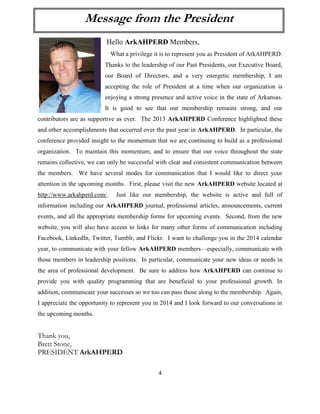
Hello ArkAHPERD Members, 
What a privilege it is to represent you as President of ArkAHPERD. Thanks to the leadership of our Past Presidents, our Executive Board, our Board of Directors, and a very energetic membership, I am accepting the role of President at a time when our organization is enjoying a strong presence and active voice in the state of Arkansas. It is good to see that our membership remains strong, and our contributors are as supportive as ever. The 2013 ArkAHPERD Conference highlighted these and other accomplishments that occurred over the past year in ArkAHPERD. In particular, the conference provided insight to the momentum that we are continuing to build as a professional organization. To maintain this momentum, and to ensure that our voice throughout the state remains collective, we can only be successful with clear and consistent communication between the members. We have several modes for communication that I would like to direct your attention in the upcoming months. First, please visit the new ArkAHPERD website located at http://www.arkahperd.com/. Just like our membership, the website is active and full of information including our ArkAHPERD journal, professional articles, announcements, current events, and all the appropriate membership forms for upcoming events. Second, from the new website, you will also have access to links for many other forms of communication including Facebook, LinkedIn, Twitter, Tumblr, and Flickr. I want to challenge you in the 2014 calendar year, to communicate with your fellow ArkAHPERD members—especially, communicate with those members in leadership positions. In particular, communicate your new ideas or needs in the area of professional development. Be sure to address how ArkAHPERD can continue to provide you with quality programming that are beneficial to your professional growth. In addition, communicate your successes so we too can pass those along to the membership. Again, I appreciate the opportunity to represent you in 2014 and I look forward to our conversations in the upcoming months. 
Thank you, 
Brett Stone, 
PRESIDENT ArkAHPERD 
Message from the President
5 
ArkAHPERD Board of Directors 
Brett Stone President bastone@ozarks.edu 
Leah Queen President-elect lqueenb@gentrypioneers.com 
Bennie Prince Past-President bfprince@ualr.edu 
Janet Forbess Program Coordinator jforbess@uark.edu 
Andy Mooneyhan Executive Director amooneyh@astate.edu 
Cathryn Gaines JRFH/HFH Coordinator cathryn.gaines@rsdmail.k12.ar.us 
Andy Mooneyhan Journal/Newsletter Editor amooneyh@astate.edu 
Mitch Parker WEB Master mparker@uca.edu 
Division Vice Presidents / VP-elects 
Leah Queen Health lqueenb@gentrypioneers.com 
Agneta Sibrava Health-elect asibrava@astate.edu 
Codie Malloy Physical Education Codie.Malloy@arkansas.gov John Kutko Physical Education-elect john.kutko@csdar.org 
Allen Mooneyhan Recreation amooneyhan@asun.edu 
Brett Stone Recreation-elect bastone@ozarks.edu 
Cathryn Gaines Dance cathryn.gaines@rsdmail.k12.ar.us 
Jan Caldwell Athletics & Sports jancaldwell@sheridanschools.org 
Shellie Hanna Exercise Science shanna@atu.edu 
Dennis Perkey Athletic Training dperkey@astate.edu 
Claudia Benavides Sports Management cbenavides@astate.edu 
Agneta Sibrava Higher Education & Research asibrava@astate.edu Haley Walker Future Professional haw005@uark.edu 
Erin Sloan Future Professional essloan@uark.edu 
District Representatives 
Vacant District I -------------------------- 
Shelia Jackson District II sjackson@atu.edu 
Vacant District II -------------------------- 
Vacant District IV -------------------------- 
Vacant District V -------------------------- 
Vacant District VI -------------------------- 
Standing Committees 
Brett Stone Executive Committee bastone@ozarks.edu 
Rockie Peterson Student Awards rpederson@atu.edu 
Andy Mooneyhan Publications amooneyh@astate.edu 
Andy Mooneyhan Constitution amooneyh@astate.edu 
Andy Mooneyhan Membership amooneyh@astate.edu 
Mitch Mathis District Organization mmathis@astate.edu 
Janet Forbess Lifetime Achievement Award jforbess@uark.edu 
A Peer Reviewed Article 
Congratulations to our 2013 Higher Educator of the Year!!! 
Allen Mooneyhan
6 
A Peer Reviewed Article 
High school dropout: The reciprocal relationship between education and health 
Kelley E. Rhoads 
Abstract 
Even though high school dropout rates have decreased in the last 20 years, disparities in high school dropout rates are evident among different races/ethnicities. Healthy People 2020 specified receiving a high school diploma four years after starting ninth grade as the leading health indicator in the topic area of social determinants of health. Student health problems and health- risk behaviors are common contributors to high school dropout. This highlights the reciprocal relationship between education and health. Education poses as an influential factor of health status, therefore, efforts made to increase high school graduation can have a direct effect on students’ lifetime health status. Intervention strategies that integrate various components of the Centers for Disease Control and Prevention’s Coordinated School Health (CSH) approach may be successful in increasing student health while simultaneously increasing high school graduation rates. 
Introduction 
One of the overarching goals of Healthy People 2020, a national health initiative aimed at promoting health and preventing disease, is to “create social and physical environments that promote good health for all” (U.S. Department of Health and Human Services (USDHHS), 2010, p. 5). More specifically, Healthy People 2020 designated graduating with a regular high school diploma within four years of starting ninth grade as the leading health indicator relative to social determinants of health (USDHHS, 2010). It has been well documented that education, education attainment, and academic success are robust predictors of health status (Centers for Disease Control and Prevention (CDC), 2011a; Cutler & Lleras-Muney, 2006; Freudenberg & Ruglish, 2007; McKenzie, Pinger, & Kotecki, 2012); however, according to Freudenberg and Ruglis (2007), health professionals rarely identify improving high school graduation rates as a prominent public health objective. The purpose of this paper is to identify: (1) the scope of high school dropout in the U.S.; (2) factors that contribute to high school dropout; (3) impact of high school graduation on health; and (4) successful intervention strategies aimed at improving health and preventing high school dropout. 
Scope of High School Dropout in the U.S. 
In the last 20 years, the high school dropout rate has decreased from 12% to 7% in the United States (U.S. Department of Education (USDE), 2012). However, disparities in high school dropout rates are prominent relating to race/ethnicity. In 2010, the high school dropout rates for Hispanics, American Indian/Alaska Native, and Blacks were 15%, 12%, and 8%, respectively (USDE, 2012). Students who comprise these race/ethnicity groups are at higher risk for dropping out of high school. Table 1 contains more information relative to national high school dropout rates and rates by race/ethnicity for years 1990-2010.
7 
Contributing Factors of High School Dropout 
Education and health have a reciprocal relationship: education can lead to better health, better health can lead to better education; conversely, a lack of education can lead to poorer health, poorer health can lead to a lack of education. For example, a student who attends school after eating a well-balanced breakfast or in a clear-minded state will likely have better academic performance as compared to a student who continually attends school hungry or in an intoxicated state. Given that education and health influence each other, factors that contribute to high school dropout are student health problems and health-risk behaviors. Common health problems experienced by high school students include malnourishment, chronic illness, mental illness, and pregnancy (CDC, 2011a; Freudenberg & Ruglis, 2007). Health-risk behaviors that contribute to high school dropout include violence, substance abuse, sexual initiation, and physical inactivity (CDC, 2011a; McKenzie et al., 2012). 
Impact of High School Graduation on Health 
Freudenberg and Ruglis (2007) posit graduation from high school improves health status through: (1) higher wages; (2) access to health information; and (3) enhanced social systems. Graduating from high school affords students with the opportunity to continue education at the collegiate level. Typically, more education equates to “better jobs” and higher financial earnings (Cutler & Lleras-Muney, 2006). Cutler and Lleras-Muney (2006) posit that individuals who have more financial resources live safer and healthier lifestyles because they are able to live in safer neighborhoods, consume better quality foods, and purchase health insurance. 
Education improves access to health information by equipping students with the necessary skills to locate and comprehend information. Critical thinking and decision-making skills are crucial when an individual is determining whether or not to participate in health behaviors. Additionally, when an individual is in need of resources (psychological counseling, addiction services, nutritional recommendations, etc.), skills, such as reading comprehension, assist the individual in processing information more effectively and efficiently (Cutler & Lleras-Muney, 2006). 
Education enhances students’ social systems by providing social support and creating social network ties. House (1981) categorized social support into the following groups: emotional support (provision of caring, trust, and love); instrumental support (provision of tangible assistance); informational support (provision of information or advice); and appraisal support (provision of feedback for self-evaluation). Students can experience all forms of social support whether it is provided directly through the education obtained at school or indirectly through peer interactions or friendships. 
Intervention Strategies 
Addressing student health problems in order to prevent high school dropout is a complex task that involves coordination across multiple disciplines. The CDC (2011b) created a Coordinated School Health (CSH) framework and described it as: 
A systematic approach to improving the health and well-being of all students so they can fully participate and be successful in school. The process involves bringing together school administrators, teachers, other staff, students, families, and community members to assess health needs; set priorities; and plan, implement, and evaluate all health-related activities. CSH typically integrates health promotion efforts across eight interrelated
8 
components that already exist to some extent in most schools. These components include health education, physical education, health services, nutrition services, counseling, psychological and social services, healthy and safe school environments, staff wellness, and family and community involvement. (para. 4) 
The framework creates a systematic approach that can reduce gaps in health initiatives and funding; create lasting partnerships between school health professionals and education professionals; increase communication among various disciplines such as education, school health, and public health; and assist student in making decisions regarding engaging in healthy behaviors and abstaining from risky behaviors (CDC, 2011a). In addition to funding select CSH programs, the CDC provides information and possible pathways to implement CSH programs at both the local and state levels. Additional strategies from Freudenberg and Ruglis (2007) include: specifically targeting high schools with high rates of dropout; develop, implement, and evaluate school health interventions; and advocate for empirical-based interventions that can improve health while reducing high school dropout rates. 
Conclusion 
Reducing the incidence of high school dropout should be a high-priority initiative for health educators and educators alike. The Healthy People initiative highlighted the importance of addressing social determinants in order to achieve quality and quantity of life, eliminate disparities, and promote good health. The reciprocal relationship between education and health allows for disparities in both areas to be addressed simultaneously. It is a necessity for health and education professionals to align goals and collaborate on efforts focused on preventing high school dropout and increasing high school graduation rates. Furthermore, all high school students deserve every opportunity to achieve lifetime health and success.
9 
REFERENCES 
Centers for Disease Control and Prevention (CDC). (2011a). Coordinated school health. Retrieved from http://www.cdc.gov/healthyyouth/cshp/index.htm 
Centers for Disease Control and Prevention (CDC). (2011b). Coordinated school health faqs. Retrieved from http://www.cdc.gov/healthyyouth/cshp/faq.htm 
Cutler, D. M., & Lleras-Muney, A. (2006). Education and health: Evaluating theories and evidence. NBER Working Paper Series, WP12352. Retrieved from http://www.nber.org/papers/w12352 
Freudenberg, N., & Ruglis, J. (2007). Reframing school dropout as a public health issue. Preventing Chronic Disease, 4(4). Retrieved from http://www.cdc.gov/pcd/issues/2007/oct/pdf/07_0063.pdf 
House, J. S. (1981). Work stress and social support. Reading, MA: Addison-Wesley. 
McKenzie, J. F., Pinger, R. R., & Kotecki, J. E. (2012). An introduction to community health (7th ed.). Sudbury, MA: Jones & Bartlett Learning. 
U.S. Department of Education (USDE), National Center for Education Statistics. (2012). The condition of education 2012 (NCES 2012-045), Table A-33-1. 
U.S. Department of Health and Human Services (USDHHS). (2010). Healthy people 2020. Washington, DC: Office of Disease Prevention and Health Promotion. Retrieved from http://www.healthypeople.gov/2020/TopicsObjectives2020/pdfs/HP2020_brochure_with _LHI_508.pdf
10 
Table 1. High School Dropout Rates in the U.S. 1990-2010 
Status dropout rates of 16- through 24-year-olds in the civilian, non- institutionalized population, by race/ethnicity: Selected years, 1990-2010 
Year 
Total 
Race/ethnicity 
White 
Black 
Hispanic 
Asian/Pacific Islander 
American Indian/ Alaska Native 
1990 
12.1 
9.0 
13.2 
32.4 
4.9 
16.4 
1995 
12.0 
8.6 
12.1 
30.0 
3.9 
13.4 
1998 
11.8 
7.7 
13.8 
29.5 
4.1 
11.8 
1999 
11.2 
7.3 
12.6 
28.6 
4.3 
Too few cases 
2000 
10.9 
6.9 
13.1 
27.8 
3.8 
14.0 
2001 
10.7 
7.3 
10.9 
27.0 
3.6 
13.1 
2002 
10.5 
6.5 
11.3 
25.7 
3.9 
16.8 
2003 
9.9 
6.3 
10.9 
23.5 
3.9 
15.0 
2004 
10.3 
6.8 
11.8 
23.8 
3.6 
17.0 
2005 
9.4 
6.0 
10.4 
22.4 
2.9 
14.0 
2006 
9.3 
5.8 
10.7 
22.1 
3.6 
14.7 
2007 
8.7 
5.3 
8.4 
21.4 
6.1 
19.3 
2008 
8.0 
4.8 
9.9 
18.3 
4.4 
14.6 
2009 
8.1 
5.2 
9.3 
17.6 
3.4 
13.2 
2010 
7.4 
5.1 
8.0 
15.1 
4.2 
12.4 
Source: U.S. Department of Education (USDE), National Center for Education Statistics. (2012). The condition of education 2012 (NCES 2012-045), Table A-33-1. 
Call for Presentations 
For anyone wanting to present at the 2014 State Convention, the proposal form is on the ArkAHPERD web page.
11 
A Peer Reviewed Article Factor Analysis of Psychomotor Assessments in Measurement and Evaluation Classes 
Shelia L. Jackson, Annette Holeyfield and Rockie Pederson 
Abstract The purpose of this study was to determine what, if any, underlying structures exist for measures taken in two college measurement and evaluation classes (N = 72; 50 males, 22 females). A factor analysis was conducted on data collected on 30 assessments given in two senior level undergraduate physical education measurement and evaluation classes. Principal components analysis was conducted utilizing a varimax rotation with Kaiser normalization. The analysis produced a six-component solution that was evaluated with the following criteria: Eigenvalue, variance, scree plot, and residuals. Criteria indicated a six-component solution was appropriate. When summed, the six components explained 71.921% of the total variance. This information could be used to develop a small battery of tests to acquire very similar information on the abilities of college age students (similar to the NFL Combine). From the results of the study, it was concluded that there are a plethora of factors that are important in psychomotor performance of college age men and women. 
Introduction In order that future teachers in health and physical education become familiar with psychomotor assessment, many physical education teacher education (PETE) programs have their majors take measurement and evaluation classes. A common assignment within such classes is for PETE candidates to administer selected psychomotor tests to their peers, analyze the data, and present the results of the tests in the form of grades. In doing so, the PETE candidates not only learn to administer psychomotor tests, but they are also exposed to a number of different types of tests used to measure health related fitness, skill related fitness, and specific sport skills. However, given the vast number of psychomotor tests available and the limited amount of class time physical educators have to administer such tests, identifying what needs to be measured and the best assessments to use becomes important. The purpose of this study was to determine what, if any, underlying structures exist for measures taken in two college measurement and evaluation classes. Methods Data were collected from the scores of two measurement and evaluation classes of senior level health and physical education majors (N = 72; 50 males, 22 females) at a Division II university. The administration of and participation in psychomotor assessment was a requirement of the class as stated on the syllabus. The Institutional Review Board approved the use of data gathered in these classes for this study. Each student in class was assigned a psychomotor test and date to administer the test to her/his peers. Psychomotor tests were selected by the instructor from two measurement and evaluation texts (Miller, 2014; Johnson & Nelson, 1986) based on their validity, administration feasibility, and purpose. For eight to ten class periods, three to five students administered their assigned tests
12 
to their peers as the instructor and graduate assistant monitored and evaluated them. Prior to testing their peers, students practiced administering the test with the instructor present to make sure the test was administered correctly and to obtain their individual data on their tests and the other students who were scheduled to test on the same day. After testing their peers, students entered the raw data into an Excel program and calculated the means and standard deviations of the tests they administered, converted the scores to T scores, and formulated a grading scale. The class following his/her test administration, the student presented to the class an overview of the test she/he presented, its purpose, how it was administered, the mean scores, standard deviation, grading scale, and gave individual score sheets (raw score, T score, letter grade) to peers. Raw data and T scores gathered from each test were sent to the instructor on Excel via an email attachment and stored on a master file. Once the course was completed, each student’s name was deleted from the master file, and henceforth data were only identified by gender. Data Analysis 
A factor analysis was conducted on data collected using the following assessments: ball- changing zig zag run (AAHPER, 1965); Bass stick test (Bass, 1939); basketball dribbling; basketball speed shooting; basketball passing (Hopkins, Shick, & Plack, 1984); body mass index (BMI); body fat; Brady Volley (Brady, 1945); crunches (Cooper Institute, 2007); four second dash (Johnson & Nelson, 1986); French badminton short serve (Scott, Carpenter, French, & Kuhl, 1941); grip strength (Winnink & Short, 1999); Hewitt’s Revision of the Dyer Backboard Tennis (Hewitt, 1965); Margaria Anaerobic Power (Margaria, Aghemo, & Rovelli, 1966); McDonald Soccer (McDonald, 1951); Nelson-Choice-Response (Nelson, 1967); PACER (Cooper Institute, 2007); pushups (Cooper Institute, 2007); quadrant jump (Johnson & Nelson, 1986); Queens College Step test (Katch & McArdle, 1977); relative strength; right boomerang run (Gates & Sheffield, 1940); SEMO (Kirby, 1971); shuttle run (AAHPERD, 1976); sit and reach (Cooper Institute, 2007); softball overhand throw for distance and accuracy (AAHPERD, 1991); standing broad jump (AAHPERD, 1976); weight; two-hand medicine putt (Clemmons, Campbell, & Jeansonne, 2010); and the vertical jump (Sargent, 1921). BMI, percent body fat, height, and weight were collected by the instructor using an Omron Fat Loss Monitor and Detecto model 339 scale. Relative strength data were calculated by dividing each student’s raw score on grip strength by his/her body weight. Results Principal components analysis was conducted utilizing a varimax rotation with Kaiser normalization. The analysis produced a six-component solution that was evaluated with the following criteria: Eigenvalue, variance, scree plot, and residuals. Criteria indicated a six- component solution was appropriate. Component One (Fitness/Accuracy) consisted of 19 of the original 30 variables and accounted for 37.637% of the total variance, while values for components two through six were as follows: Component Two (Body Size/Strength) = 14.382% of total variance, Component Three (Balance) = 6.399% of total variance; Component Four (Limb Coordination) = 5.217% of total variance; Component Five (Abdominal Endurance) = 4.360% of total variance; and Component Six (Cardiovascular/Fine Motor) = 3.926% of total variance. When summed, the six components explained 71.921% of the total variance (see Table 1).
13 
As shown in Table 2, speed, as measured by the four second dash (Johnson & Nelson, 1986) with a component loading of .913 had the highest loading in Component One (Fitness/Accuracy) followed by the standing broad jump (AAHPERD, 1976), ball-changing zigzag run (AAHPER, 1965), shuttle run (AAHPERD, 1976), vertical jump (Sargent, 1921), SEMO (Kirby, 1971), body fat, right boomerang (Gates & Sheffield, 1940), relative strength, Nelson-Choice-Response (Nelson, 1967), softball overhand throw for distance and accuracy (AAHPERD, 1991), PACER (Cooper Institute, 2007), pushups (Cooper Institute, 2007), basketball passing (Hopkins, Shick, & Plack, 1984), quadrant jump (Johnson & Nelson, 1986), basketball speed shooting (Hopkins, Shick, & Plack, 1984), McDonald Soccer (McDonald, 1951), Brady Volley (Brady, 1945), and Hewitt’s Revision of the Dyer Backboard Tennis (Hewitt, 1965). Component Two (Body Size/Strength) included weight, BMI, Margaria Anaerobic Power (Margaria, Aghemo, & Rovelli, 1966), two-hand medicine putt (Clemmons, Campbell, & Jeansonne, 2010), grip strength (Winnink & Short, 1999), and the sit and reach (Cooper Institute, 2007). Components Three, Four, and Five had one variable each, Bass stick test (Bass, 1939), basketball dribbling (Hopkins, Shick, & Plack, 1984), and crunches (Cooper Institute, 2007), respectively. The sixth component had the Queens College Step Test (Katch & McArdle, 1977) and the French badminton short serve (Scott, et al., 1941). Discussion and Conclusion There are hundreds of psychomotor tests developed and used in the fields of health and physical education. However, considering the time limitation of health and physical educators who use psychomotor testing to assess their students, it is important to identify what structures should be measured and what assessments most accurately measure them. The results of the factor analysis of the data collected using thirty psychomotor assessments identified six major components. The four second dash (Johnson & Nelson, 1986), weight, Bass stick test (Bass, 1939), basketball dribble (Hopkins, Shick, & Plack, 1984), crunches (Cooper Institute, 2007), and the Queens College step test (Katch & McArdle, 1977) had the highest loadings for their respective components and could possibly make a battery of tests that yield very similar results as the thirty. However, because men’s and women’s scores were not segregated, it is possible that Component Two (Body Size/Strength) is gender related and future studies should identify scores by gender. From the results of the study, it was concluded that there are a plethora of factors that are important in psychomotor performance of college age men and women. This information could be used to develop a small battery of tests to acquire very similar information on the abilities of college age students (similar to the NFL Combine). Recommendations 1. Compare the results of the suggested battery of six assessments with those of the thirty assessments. 2. Identify what assessment has the highest relationship with the results of the thirty assessments. 3. Join with other PETE programs which have a similar assignment to collect data using these same tests to build a norm base for assessing the psychomotor abilities of college age students. 4. Have future studies related to this topic be gender specific.
14 
REFERENCES 
American Alliance for Health, Physical Education, Recreation and Dance (AAHPERD). (1976). AAHPERD youth fitness test manual. Reston, Va. 
American Alliance for Health, Physical Education, Recreation and Dance (AAHPERD). (1991). Softball skills test manual. Reston, Va. 
American Association for Health, Physical Education and Recreation (AAHPER). (1965). Football: Skills test manual. Washington, D.C. 
Bass, R.I. (1939). An analysis of the components of tests of semi-circular canal function and of static and dynamic balance. Research Quarterly, 10(1), 33-52. 
Brady, G.F. (1945). Preliminary investigations of volleyball playing ability. Research Quarterly 16: 14-17. 
Clemmons, J. M., Campbell, B. C., & Jeansonne, C. (2010). Validity and reliability of a new test of upper body power. Journal of Strength and Conditioning Research, 24(6), 1559-1565. 
Cooper Institute. 2007. FITNESSGRAM/ACTIVITYGRAM test administration manual (4th ed.). Champaign, Ill.: Human Kinetics. 
Gates, D. P. & Sheffield, R. P. (1940). Tests of change of direction as measurement of different kinds of motor ability in boys of 7th, 8th, and 9th grades. Research Quarterly, 11(3), 136- 147. 
Hewitt, J. E. (1965). Revision of the Dyer backboard tennis test. Research Quarterly, 36(2), 153-157. 
Hopkins, D. R., Shick, J., & Plack, J. J. (1984). Basketball for boys and girls: Skills test manual. Reston, Va.: American Alliance for Health, Physical Education, Recreation and Dance. 
Johnson, B.L. & Nelson, J.K. (1986). Practical measurements for evaluation in physical education (4th ed.). New York, NY: Macmillan Publishing Company. 
Katch, F.I. & McArdle, W. D. (1977). Nutrition, weight control, and exercise. Boston: Houghton Mifflin. 
Kirby, R. F. (1971). A simple test of agility. Coach and Athlete, 25(6), 30-31. 
McDonald, L. G. (1951). The construction of a kicking test as an index of general soccer ability. Master’s thesis, Springfield College, Springfield, Mass. In Collins, D. R., and Hodges, P. B. 1978. A comprehensive guide to sports skills tests and measurement. Springfield, Ill.: Charles C Thomas. 
Miller, D. (2014). Measurement by the physical educator: Why and how (7th ed.). New York, NY: McGraw-Hill. 
Sargent, D. A. (1921). The physical test of a man. American Physical Education Review, 26(4),188-194. 
Scott, M. G., Carpenter, A., French, E., & Kuhl, L. (1941). Achievement examination in badminton. Research Quarterly, 12(2), 242-253. 
Winnick, J. P. & Short, F. X. (1999). The Brockport physical fitness test manual. Champaign, Ill.: Human Kinetics. 
Congratulations to Tracy Gist!!! 
2013 JRFH Top Coordinator
15 
Table 1 
Eigenvalues of Six Components 
Component Total % of Variance Cumulative % 
One - Fitness/Accuracy 11.291 37.637 37.636 
Two - Body Size/Strength 4.315 14.382 52.020 
Three – Balance 1.920 6.399 58.418 
Four – Limb Coordination 1.565 5.217 63.636 
Five – Abdominal Endurance 1.308 4.360 67.995 
Six – Cardiovascular/Fine Motor 1.178 3.926 71.921
16 
Table 2 
Component Matrix 
Test 
One 
Two 
Three 
Four 
Five 
Six 
Four second dash 
.912 
Standing broad jump 
.899 
Ball-changing zig zag 
-.897 
Shuttle run 
-.871 
Vertical jump 
.856 
SEMO 
-.821 
Body fat 
-.818 
Right boomerang 
-.748 
Relative strength 
.732 
Choice response 
-.697 
Throw distance/accuracy 
.648 
Pushups 
.631 
PACER 
.631 
Basketball passing 
.614 
Quadrant jump 
.596 
Basketball speed shooting 
.593 
McDonald soccer 
.515 
Brady volley 
.505 
Hewitt tennis 
.450 
.390 
Weight 
-.229 
.912 
BMI 
.828 
Margaria anaerobic 
.718 
Medicine ball putt 
.688 
Grip strength 
.616 
Sit and reach 
-.447 
.016 
Bass stick 
-.360 
.317 
.300 
Basketball dribbling 
-.331 
.651 
.300 
Crunches 
.009 
.660 
-.074 
Queens step test 
-.337 
-.739 
Badminton short serve 
.387 
Note: the component loadings prior to and following each new component are underlined and depicted so the reader can see the natural breaks. 
Call for Papers 
The Research Section of ArkAHPERD invites members to present their research at the 2014 State Convention. Submit a one page abstract with title and author(s) to Agneta Sibrava, asibrava@astate.edu
17 
A Peer Reviewed Article 
The Challenge of Sport Entrapment 
David Benson and Bradford Strand 
Abstract 
It is very difficult for parents to avoid comparing the development of their children with the development of other children who are relatively the same age. There are books, resources, teachers, professionals, and parents who are constantly reminding new parents what children should be doing at a certain age. Some of these people are correct in terms of what children should be able to do and some are so far from knowing what is right about child development that it leaves one confused. When it comes down to the development of one’s child and what should be done to develop his or her cognitive, social, emotional, and physical skills, parents often look to a doctor in the medical field as a true determiner of where their child ranks. But as one’s child grows out of infancy to childhood parents start focusing on different aspects of development and look to others whom they think know what is developmentally appropriate for children. Often what happens is that parents are left not knowing what is truly beneficial or detrimental to their child and are pressured because they do not know what is developmentally appropriate. 
The Challenge of Sport Entrapment 
As children approach Pre- Kindergarten (age 5) and sometimes before that (age 3 & 4), many parents/guardians start looking for activities or sports in which they can enroll their children. Sports organizations, clubs, and Parks & Recreation Departments realize this and are creating programs and promoting their sports to families at an alarmingly earlier and earlier age for children. According to the American Academy of Pediatrics (AAP), “the starting age for organized sports programs has also evolved to the point that infant and preschool training programs are now available for many sports” (2001, p. 1459). The selling points for many of these programs are to get the children involved so they learn new motor skills, make new friends, gain confidence, improve self-esteem, and to just have fun (Farrey, 2008). 
Although many of the goals of the organizations may be accomplished, there are many negative aspects of early sports participation. According to Farrey, (2008), early sports participation reveal the negative effects on children’s development, which put “too little emphasis on basic motor development, too much focus on the final score, and too much early specialization” (p. 21). It has been suggested that these early pressures are causing levels of participation in team sports to peak by age 11 and then decline at age 15 (Physical Activity Council, 2012). 
Much recent emphasis has been on the stress that is placed on child athletes because of competition (Anshel, M. H., & Delany, J, 2001). Apart from athlete stress, little has been done to reveal the stressors parents/guardians feel and why parents/guardians often enroll their children in youth sport programs at such a young age. Although there is little knowledge on why parents/guardians enroll their children at a young age, Farrey (2008) quoted a parent as he (the parent) attempted to explain the belief parents/guardians have:
18 
“If you don’t get your kid in (sport), and you don’t get them played, and if they’re not getting any better, they’re behind. Nobody wants to wait, so people go with it early, at 4 and 5 years old. And we’re looking for all the different places they can go” (p. 104). 
The attitude of many parents regarding youth sports participation has become a huge problem across the country. Farrey (2008) stated, “organized competition doesn’t breed success, but rather unstructured play is often more valuable” (p. 95). The attitude that the younger a child is engaged in an activity, the better that child will be at that activity is simply incorrect. Carlson (1988) stated, “early life specialization did not favor the development of elite players in tennis” (p. 252). Although Wall and Cote (2007) hypothesize that “athletes who choose to drop out of hockey will have experienced early specialization” (p. 80), many people and programs continue to promote and push youth sports, competition, and specialization at an earlier and earlier age. 
This continuous promotion of sports by leaders of sport organizations puts tremendous pressure on parents/guardians to enroll their children in youth sport programs. This in turn puts increased pressure on children as they are forced to compete and specialize at an early age before they are truly ready (Farrey, 2008). 
Sport Entrapment 
Pressure from other parents, guardians, friends, classmates, and coaches to sign up for a sport can lead to many hidden issues. As children develop in their particular sports there are pressures that the parents/guardians soon feel when they realize that their children are behind in some skills or maybe are not progressing as quickly as parents/guardians think they should be progressing. This parental questioning of their child’s development leads parents to seek other forms of skill development to further their child’s development. According to Farrey (2008), this sort of pressure where parents/guardians and children believe that they need to continue to participate in camps, clinics, in-season training, and out of season training or else they will fall behind is what is essentially “pressure through fear” (p. 104) or what might be called ‘sport entrapment’. 
When sport entrapment occurs, pressures on parents/guardians related to money, time, travel, and equipment begin to increase. Suddenly camps, clinics, and training of the one or two athletes in the family are using a majority of the family’s resources. This system is entrapping the parents/guardians and athletes to continue to participate in the camps and clinics in order to make it to the next level of participation. The financial burdens often cause parents/guardians to seek second and sometimes third jobs in order to keep up with the demands of the sport. 
The financial commitment certainly limits the number of children who might participate in organized sports. According to Lumpkin, Stoll, and Beller (2003), “the socioeconomic status of minority athletes today is probably more of a limiting factor regarding sport opportunities than is race” (p. 167). Wheeler and Green (2012) further suggested that this investment has caused an increase in the “institutionalization of youth sport” and has made youth sports programs even more competitive and expensive. Many parents/guardians are often afraid of becoming too financially invested into a child’s sport at too early of an age that they will not let their child try that sport (parent, personal communication). 
Along with financial commitment, time and travel are other pressures that are leading causes of parental/guardian or family stress in relation to youth sports. When more than one child is involved in an organized sport, it makes the sport a full-time commitment and the family priorities and values are often compromised so the children can participate. As the day of travel
19 
teams overtakes what once were Park & Recreation teams, parents/guardians find it difficult to get their sons and daughters to practices or games in towns other than their own. 
Farrey (2008) questioned, is this pressure to participate caused by the fear that one’s child will fall behind really what parents/guardians want for their children? Is it better to pressure children into an activity at an earlier age because of fear of failure and then watch those children dropout because they are not physically, mentally, or emotionally ready? Or, is it better to set an age minimum and allow children to develop skills on their own through deliberate unstructured play and then participate in organized sport when they are ready? 
These questions are difficult for parents/guardians to answer because of the lack of creditable information. What many parents/guardians must understand is that each and every sport organization operates much like a business, with bills, expenses, and overhead. The goal of many organizations is not what is best for the majority of the children, but rather to cover all expenses and push those who are exceptional athletes along to the next level. Unfortunately, these organizations are often not necessarily child-oriented (AAP, 2001). 
Before enrolling their children in sport activities, parents/guardians must understand that many coaches and administrators of athletic programs and clubs are former players or parents. According to Farrey (2008), “The hazard with recruiting untrained adults into children’s playing arenas is that adults have different needs” (p. 121). These parents and players often do not know or understand the developmental stages that many of these 4, 5, and 6-year old children are going through. The rational for athletic organizations to enroll as many young children as possible at a young age is often a fiscal responsibility to the organization. Again, a belief of the organization is that the more enrollees, the more money. However, is it right for the 4, 5, and 6-year old children to serve as fundraisers to support the activities of older children? 
Developing an Understanding 
Parents/guardians, in order to know what is really happening, must understand the goals of the organization. AAP (2001), suggested that the goals for an organization in which preadolescents participate should include: 1) acquisition of basic motor skills, 2) increasing physical activity levels, 3) learning social skills necessary to work as a team, 4) learning good sportsmanship, and 5) having fun. 
If the goals or mission statement of an organization do not match this philosophy or one’s individual philosophy, then parents/guardians should seek different organizations in which their children can participate. The following story details the struggles of a parent, his three-year old son, and swimming lessons. 
“As a parent I enrolled my three year old son into group swimming lessons. At first, I was happy because he wasn’t crying like other children when he got into the water. I was impressed that they organized the large group into smaller groups of 3-4 kids. During the 45-minute lesson, my son found himself standing on a platform in the water almost three- fourths of the time. When it was his turn he had difficulty listening and seldom followed instructions. My level of happiness went from ecstatic that he was in the water, to irritated because he wasn’t listening and participating like I thought he should have. When the swimming lessons were over, we always asked the instructor, (even though I already knew) how did swimming go today? She always said, with tongue-in- cheek, good…but he sometimes loses focus.
20 
As the lessons went on, my son’s swimming improved (not as I thought it would), but his focus and attention did not. So, I thought that maybe private lessons or a one on one lesson would be better. As the next lessons came along, we signed him up for private lessons. The setting was still in the same pool with the larger group, but this time he had his own instructor. Again, he always liked getting in the water but his focus was not at the pool. Instead of being congratulatory towards my son after the lessons, I was always a little irritated because of his lack of focus and the report from the instructor. As time went on, I vowed not to put my son into swimming lessons until he was older because of the fact it was expensive, it was time constricting and my son wasn’t ready” (parent, personal communication). 
Readiness to Play 
Many parents/guardians and their children struggle through situations similar to the swimming incident described above. Although it was just swimming lessons, the lack of development and the child’s lack of focus were stressful for his parents to watch. The big question parents/guardians must ask before placing their children in sport is, are the children ready? The readiness of a child to participate in a sport is something that many parents, guardians, coaches, and organization leaders do not know how to evaluate. According to Bell (2010), children who are ages 4, 5, and 6 should not be participating in sports because of the increased time spent away from families. Additionally, children are not ready to affiliate with a group other than their family nor are they physically ready. Bell described four different levels of development that must be examined before a child is ready to participate in sport. Those levels of development are cognitive, social, emotional, and physical and are based on Piaget’s levels of preoperational stage of development. Here is a brief description of the four levels of development for children who are 4-6 years old: 
 Cognitive Development - Children are not ready to organize or internalize games and sport. Children are on the verge of developing fluid imagination and the rules of sports and roles hinder that fluid development. 
 Social Development - Children often select small groups of 3-4 children who they want to play with while in free play. Large groups and parent model games of football or soccer of 11 children are not conducive to their development. 
 Emotional Development - Children at this age have high levels of emotion and parent and group expectations involved in sports additionally have high levels of emotion. This often leads to negative feelings of inferiority and decreased level of self-esteem. 
 Physical Development - The health benefits of children who are involved in free play are often greater because of the lack of adult involvement. Parents and coaches are often so busy explaining, stopping, or moving a child to a position that the level of physical activity decreases. Children at this stage are often not coordinated, do not have the strength to move through or around in the playing space. 
Only after children have moved beyond the preoperational stage of development into the concrete operational stage at the ages of 7, 8, and 9, should they start to become involved in organized athletics.
21 
Conclusion 
Parents/guardians must realize that the number one thing parents can give their children is time. In fact, a wise man once said, “Children spell love as T-I-M-E”. If parents/guardians want their children to learn a new skill, the parents/guardians must spend time with them (children) on skill development. If a parent/guardian want their children to learn how to swim, they should go swimming with the children, rather than watching them at swimming lessons. Similarly, if a parent/guardian likes hockey, basketball, or any sport for that matter, they should spend time with their children practicing that sport while exposing them to a variety of experiences. For example, a parent/guardian might take his or her child or children to a game or to a high school practice and then go home and see if they (the children) want to play that game or sport. Eventually, their cognitive, social, emotional, and physical skills will improve. As their skills improve, the children will become more confident and will want to try the sport on their own and eventually join an organized team. 
In our contemporary society, parents/guardians are in such a hurry to enroll their children into sports programs, often before the children are physically, socially, and/or emotionally ready. Instead of enrolling 4, 5, and 6-year old children in organized sport programs, parents/guardians should use the time spent traveling to practices by taking their children to an outdoor rink or park and engage in deliberate play (child focused activity), rather than deliberate practice (adult focused activity). When the children want to go home, simply go home, and if they want to stay, then stay and continue playing. Parents/guardians need to slow down and not be in such a rush to push organized sport participation onto their children. The less pressure parents/guardians put on their children to play sports, the longer the children will enjoy the sport, and the less stress the parents will endure (Fredricks & Eccles, 2004). This in turn will lead to a more enjoyable experience for all and for a longer period of time.
22 
REFERENCES 
Aicinena, S. (1992). Youth sport readiness: A predictive model for success. Physical Educator, 49, 58-67. 
American Academy of Pediatrics. (2001). Organized sports for children and preadolescents. Pediatrics, 107, 1459-1462. 
Anshel, M. H., & Delany, J. (2001). Sources of acute stress cognitive appraisals, and coping strategies of male and female athletes. Journal of Sport Behavior, 24, 329-353. 
Bell, M.J. (2010). Young children and organized sports. Retrieved from: http://www.youtube.com/watch?v=U-KV_kUM0GY 
Carlson, R. (1988). The socialization of elite tennis players in Sweden: an analysis of the players’ backgrounds and development. Sociology of Sport Journal, 5, 241-256 
Farrey, T. (2008). Game On: The All-American Race to Make Champions of Our Children. ESPN Books: New York, NY. 
Fredricks, J. A., & Eccles, J. S. (2004). Parental influences on youth involvement in sports. In M. R. Weiss (Ed.). Developmental Sport and exercise Psychology: A lifespan perspective. Morgantown, WV: Fitness Information Technology, Inc. 
Lumpkin, A., Stoll, S. K., & Beller, J (2003). Sport Ethics: Applications for Fair Play. McGraw Hill Higher Education: New York, NY. 
Physical Activity Council (2012). 2012 Participation Report: Physical Activity Council’s annual study tracking sports, fitness and recreation participation in the USA. Author. 
Wall, M., & Cote, J. (2007). Developmental activities that lead to dropout and investment in sport. Physical Education and Sport Pedagogy, 12, 77-87 
A Peer Reviewed Article 
Increasing Calcium Intake Among Adolescents:
23 
A Peer Reviewed Article 
Results of an Osteoporosis Prevention Intervention for Youth 
Kate Tokar, Sharon Hunt, Lori W. Turner and Travis Tokar 
Abstract 
Calcium is necessary for healthy bones and teeth and for body functions, such as blood clotting, activation of enzymes, and muscle contraction and relaxation. However, most adolescents do not consume sufficient calcium; therefore, their body is forced to rely on its calcium storage in the bones. This can lead to osteoporosis, a debilitating disease that affects over 25 million Americans. Adolescents are desperately in need of calcium education, so they can learn the importance of building an adequate bone supply before they reach their peak bone mass. Inadequate bone attainment during childhood can result in osteoporosis later in life, even without experiencing significant bone loss throughout life. 
The purpose of this study was to develop a program designed to educate adolescents concerning calcium intake, bone health, and osteoporosis prevention. The calcium education program was implemented during a camp at the University of Arkansas, with approximately 500 adolescents in attendance. These participants were divided into an experimental and a control group. Both groups answered a pre-assessment and post-assessment questionnaire, which were identical. The experimental group received the calcium education program, which included hands-on activities, following the pre-assessment. Both groups then filled out the post- assessment. The control group received the calcium education following the post-assessment, so they could benefit from the information as well. 
Results indicated participants in the experimental group who received the calcium education program achieved empowerment to increase calcium intakes, improved knowledge about osteoporosis, increased understanding of serving sizes for specific dairy foods, and developed healthy attitudes which will help them to build adequate bone mass while they are young. 
Introduction 
Osteoporosis is a disease of the bone that affects over 25 million Americans and 75 million people worldwide (South-Paul, 2001a; Turner, Faile & Tomlinson, 1999). Osteoporosis occurs when bone loss exceeds bone formation causing the bones to become frail. Weak bones result in a higher risk for fracture (Warner & Shaw, 2000). Osteoporosis results in obvious physical effects, such as pain and fracture, but it also affects other areas of life such as emotions, social aspects of life, and spirituality (Affenito & Kerstetter, 1999). Unfortunately, many people are uneducated about osteoporosis until it is too late to build an adequate and healthy bone mass. Osteoporosis has been thought of as a disease that is a natural part of aging and affects only older people; however, many studies have been conducted on bone growth and it has been discovered that peak bone mass is reached in the late twenties to early thirties (Anonymous, 2000). In fact, the director of the United States National Institute of Child Health and Human Development, Duane Alexander, characterized osteoporosis as "a pediatric disease with geriatric consequences" (Larkin, 2002). This information means that younger populations need to be reached concerning methods to build strong bones (Anonymous, 2000). 
Osteoporosis is a silent disease that has no symptoms in the early stages, and usually goes
24 
undetected until pain and fracture occur. Unless bone density tests are run early in life the disease is difficult to diagnose, until deterioration of bone occurs (Warner et al., 2000). Osteoporosis is diagnosed when the bone mineral density is 2.5 standard deviations below the mean peak bone mass. Similarly, osteopenia occurs when bone density is measured to be between 1 and 2.5 standard deviations below a determined mean peak bone mass. Osteopenia, like osteoporosis, occurs when bone formation does not occur at the same rate as bone absorption; therefore, resulting in low bone mass. Osteopenia is very common among young women and occurs in the population about 20 to 30 percent more frequently than osteoporosis (Affenito et al., 1999). Osteopenia is detrimental to the body and is a signal that preventive steps need to be taken to build new bone and prevent further loss and possible fracture (South-Paul, 2001a). Small variations in bone mass make an enormous difference because the risk of experiencing an osteoporosis-related fracture is multiplied by two to three times for every ten percent drop in bone density (Ullom-Minich, 1999). Therefore, the need to take preventive steps to increase bone mass and overall health should begin early in life because this is the optimal time to make healthy bone choices before negative, unhealthy bone habits are developed (Davis & Stegeman, 1998; Lysen & Walker, 1997). 
Several risk factors are associated with osteoporosis: being white or of Asian descent, postmenopausal, female, a heavy drinker or smoker, having a small body frame or family history of osteoporosis, old age, consuming an inadequate amount of calcium, or not exercising on a regular basis (South-Paul, 2001 a). However, this program focused mainly on calcium intake through the diet. 
Osteoporosis causes premature mortality and morbidity in both men and women, but it is more common among women. Fragile and porous bones often result in fractures. Some of the most common fractures are vertebral and hip fractures. Fifty percent of those who experience a hip fracture never recover entire mobility and 20 percent will die within one year (Turner et al., 1999). Losing an active lifestyle causes rapid deterioration of bone tissue and increases lean- tissue loss, which can reduce agility, balance and normal functions. This places patients at a higher risk to experience another fracture and a greater risk of dying (Warner et al, 2000). Hip fractures can also lead to problems such as heart attacks, strokes, or cancer (USDHHS, 2000). Fractures may also create a need for long-term care, which can be very expensive and cause frustration to an independent lifestyle. According to Healthy People 2010, one in three women will have an osteoporosis-related fracture (Turner et al., 1999; USDHHS, 2000). 
It is important to obtain as much bone mass as possible during the formative years. There are several effective methods of strengthening the bones and increasing bone mass that will help prevent osteoporosis. One example is that an individual should consume foods that are high in calcium and vitamin D (Affenito et al., 1999). 
Another effective method to increase bone mass is by performing weight-bearing exercise (South-Paul, 2001b). Sedentary lifestyles are unhealthy, not only for the heart, but also for the bones. Without the impact of weight-bearing exercise the bones will not grow and remodel at their peak performance rate (Warner et al., 2000). Bone tissue growth is induced by pressure or stress being applied to the skeletal structure (Davis & Stegeman, 1998). Exercise also strengthens muscles, which in turn provides more support for bones. The extra weight of muscle provides a greater impact during exercise. Weight- bearing exercise should be performed for thirty minutes three times a week to have the maximum impact on strengthening bones and muscles (Keen, 1999). Exercises that support bone growth are weight training, aerobics, and stair
25 
climbing. However, these exercises do not always appeal to adolescents; therefore, activities, such as basketball, volleyball, dancing, or cheerleading, should be recommended because they are healthy and fun (South-Paul, 2001b; CDC). 
Calcium Education Program 
The Health Belief Model was used as a basic guideline for the calcium education program. The model can be broken down into two major ideas: 1) value of a behavior and 2) expectation that the behavior will affect health. Barriers to increasing calcium intake were discussed, which include misinformation and myths (Strecher & Rosenstock, 1997). 
Dairy products are an excellent source of calcium and are appealing to many people. However, due to common misinformation, some people believe all dairy products are fattening. This is one of the barriers that calcium education can help overcome. Adolescents, especially girls, are very conscious of their size and tend to make efforts to be thin. In order to surmount this barrier, they will be educated about low-fat and fat free dairy product choices. Related to this is the barrier that the media presents. The media uses thin, beautiful people to advertise products; therefore, many young people try to emulate the appearance of the people in advertisements. The media also portrays that drinking soda is the only "cool" option. Presently young people consume more sodas than milk throughout their day and cola consumption continues to be on the rise (USDHHS, 2000). Adolescents need to be aware that replacing milk with soda has two unhealthy effects on bones: (1) the body does not receive the calcium needed, and (2) the caffeine and phosphorous interfere with bone formation (South-Paul, 2001a). In addition to educating participants about the harmful effects of excessive soda intake, healthy and tasteful dairy product choices were explored. Identifying the barriers and educating the participants about how to overcome them is a necessary part to facilitating a behavior change. 
Program Development and Delivery 
This program was administered during a summer camp at the University of Arkansas. The program is federally funded through Health and Human Services. Approximately 500 young people attended the five-week camp and ranged in age from 9 to 16 years. These adolescents were from mainly low- income homes in Fayetteville, Arkansas and eight surrounding towns. At the camp they were immersed in educational and entertaining activities that included health and nutrition classes. This was an ideal group to educate about calcium intake and to explore the most effective method to reach them. 
This Program was created to reach young people in an effective and fun way. In order to focus on calcium intake, specific goals and objectives for the education program were created. The hope was that after completion of this program the participants would be able to: 
Describe the importance of calcium and how the body uses it. List at least three ways to increase their calcium intake. Describe their need for at least three dairy servings per day. Discuss the risk factors associated with osteoporosis. Describe a healthy lifestyle that promotes strong bones that includes at least three healthy behaviors. Identify at least five foods rich in calcium. Develop at least three protective attitudes regarding osteoporosis as a health hazard.
26 
Recognize that their bones are constantly growing and changing. Describe accurate serving sizes for 300mg of calcium after participating in a calcium equivalents activity. To meet these goals and objectives, the program was developed, implemented, and evaluated. For the hands on serving size activity, participants were given a food containing calcium and they were instructed to place into a container the amount they believe is one serving (300mg) of calcium. Milk, yogurt, shredded cheese, cheese slices, macaroni and cheese, and a couple of non- traditional calcium containing foods and drinks, including calcium-fortified orange juice, were used in the activity. This exercise is beneficial because most people cannot imagine a serving size on their plate or in a glass. Participants showed what they believed to be one serving and then the instructor demonstrated the true serving size. 

A discussion of the effect of a calcium deficient diet on the bones was conducted. Bone models were used to show the difference between healthy bone and osteoporotic bone. In addition, handouts from the National Dairy Council and sections of a calcium curriculum, Calcium Teaching Kit, were utilized to provide information regarding calcium education for this age group. Empowering adolescents to make healthy decisions is an important part of providing a positive future. 
The participants learned about flavored milks and had the opportunity to see some examples. This helped make them aware of the different milk options that are available. Consumption of dairy products needs to be encouraged so that young people will make healthy choices, both at home and school. Another issue for this age is that the parents purchase the groceries; therefore, if dairy products are not available at home, it is difficult for young people to consume them. Participants were encouraged to choose milk at school and information was sent home for the parents about the benefits of dairy products and the risks of osteoporosis. Family-based interventions have been researched and found to be effective in increasing the consumption of dairy products among adolescents (Tilson, McBride, Albright, & Sargent, 2001). Hopefully the calcium educational information helped motivate the parents to increase their calcium intake, which in turn, has proven to encourage increased dairy product consumption in their children. 
Applying the Health Belief Model to this program helped each participant understand the severity of osteoporosis and the effects of consuming inadequate amounts of calcium. The negative outcomes of osteoporosis were explained with the hope of changing attitudes toward osteoporosis prevention. Bone models were used to demonstrate the fragility of osteoporotic bone and how easily a fracture can occur. The benefits of increasing calcium intake and maintaining healthy bones throughout their lifetime was also explained. Self-efficacy is the belief that a behavior change can be made (Strecher et al., 1997). Calcium education encouraged an increase in calcium consumption and empowered the participants to have confidence that they can choose foods and drinks high in calcium. The information sent home to parents also aided in encouraging the participants to believe that they can make this change. Handouts and other activities will act as cues to action, which hopefully encouraged healthy behaviors. Examples of food and drink choices that are high in calcium were shown in class, which aided in giving the participants a mental picture so they could easily make a calcium enriched choice when choosing foods or drinks. 
Study Design 
Participants for this study were campers at the University of Arkansas. There were 215 participants ranging in age from nine to sixteen with a mean age of 11.6 years. All of the
27 
campers were given the chance to be involved, but not all were present on both pre and post- testing days. The experimental and control groups were randomly chosen by cluster sampling. 
A questionnaire was utilized for this study to examine the relationship between the educational program and osteoporosis and calcium knowledge, attitudes, and behaviors. The assessment tool for this project was created modeling several previously used calcium intake, knowledge, and belief questionnaires. Each questionnaire was numbered, so that the participant's change could be tested on an individual basis. Participants, with written parental consent, were given a pre- assessment questionnaire at the beginning of the camp. There were twenty-one items in the form of true and false, multiple-choice, and an open-ended question about calcium intake in the last twenty-four hours on the assessment. There were eleven true and false questions related to calcium sources, risk behaviors, and osteoporosis knowledge. There were four true and false questions about attitudes toward calcium intake and osteoporosis. The final two true and false questions looked at the participants' intended behavior for calcium intake. There were three multiple-choice type questions that assessed participants' knowledge, with the first one examining sources of calcium. Each participant circled the foods they believed to contain calcium. The second multiple-choice question asked the participants how much milk must be consumed to meet the daily recommended requirement. The final multiple-choice question had each participant circle the food or drink choices he or she believed to be one serving (300mg) of calcium. The last question on the questionnaire had each participant indicate the amount of certain foods they had consumed in the last twenty-four hours. 
ResuIts and Discussion 
The participants included 124 (58%) males and 89 (42%) females. Most of the participants were Caucasian, which comprised 153 (74%) of the participants. The others included 22 (1 1%) African-Americans, 15 (7%) Asians, 12 (5%) Hispanics, and 6 (3%) other. The experimental and control groups were closely related in age, gender, and race; therefore, they were appropriate groups to compare. See Table 1 for frequencies divided by experimental and control groups. 
To examine the relationship between positive changes and this program, paired sample t- tests were conducted on the data. The first part of the questionnaire dealt with osteoporosis and calcium intake knowledge. There were eleven questions and each participant's questionnaire was scored according to the number of correct answers. The mean score of the experimental groups' pretest was 7.72 and the post score mean was 9.09. This is a significant increase in knowledge (p=.000). However, the control group began with a mean score of 7.3 and a post-test mean score of 7.45. This was not a significant increase in knowledge (p=.412). 
Knowledge was also tested in the three multiple-choice questions. The first question read, "Circle all of the foods below that are a good source of calcium." Both the experimental and the control group showed a significant change with p=.000 when paired sample t-tests were conducted. The foods that were choices were cheese, grapes, ice cream, apples, broccoli, milk, pudding, yogurt, and watermelon. 
Increasing calcium intake impacts bone formation and helps to prevent further bone loss, while vitamin D aids in the absorption of calcium in the small intestine (Affenito et al., 1999; Sampson, 1998). Calcium is found in foods such as cheese, milk, almonds, sardines with bones, and salmon with bones. Calcium is also found in foods that are perhaps more appealing to adolescents, such as yogurt, pudding, ice cream, pizza, flavored milk, and orange juice and
28 
graham crackers that have been fortified with calcium (Ali & Siktberg, 2001). If meeting calcium requirements through food is difficult, calcium supplements are available, such as 0s Cal, Tums, Viactiv, or Flintstones calcium chews. Recommendations for calcium intake differ with age. For adolescents ages 9 to 18, 1,300mg of calcium in recommended daily (USHHSD, 2000). However, according to research only 13 percent of adolescent girls and 36 percent of adolescent boys consume the recommended amount of calcium daily (Larkin, 2002). 
The final knowledge question stated for the participant to "Circle the items below that you believe equal one serving (300mg) of calcium." Analysis indicated that the experimental group changed significantly from pre to post-test (p=.015). The control group did not have a significant change, but the change they had was negative. 
Analysis was also conducted on the total knowledge of all knowledge sections added together. The experimental group showed a significantly positive increase in knowledge from pre to post-test (p=.000). The control group did not have a significant change in overall knowledge (p=.059). From these analyses, it seems that this program did aid in increasing participants knowledge about calcium intake, calcium sources, and osteoporosis prevention. 
Attitudes and Behaviors 
The questionnaire also tested attitudes toward osteoporosis and prevention. There were four questions related to attitude on the questionnaire. An overall score was given for each participant. The experimental group showed a significant change from the mean score at pre to post- test (p=.000). The control group scores were not significant (p=.727). Examining the frequency of what are considered correct or protective attitudes, the experimental group had a dramatic and significant improvement in attitude scores. 
Behaviors of the participants were examined through two true and false questions and an open- ended question about calcium intake in the previous twenty-four hours. The first question asked about the participants' intention to increase calcium intake to the recommended level. The experimental group demonstrated a significant positive change in their intention to increase their calcium intake (p=.004). The control group had a slight negative change in their intention to increase their calcium intake; however, it was not significant (p=. 195). 
Implications 
Utilizing adolescents for research projects can prove to be very helpful, but children can also cause some problems that would not necessarily be present in adult subjects due to their lack of maturity. Further research needs to be conducted on the best way to assess children's intake. One suggestion would be to individually ask each child and record the individual’s response. It would also be beneficial to have a sample of what the serving size looks like so each child can provide a more accurate answer. 
Further research should be conducted on creating and implementing calcium and osteoporosis prevention education to all ages of children. The results of this study indicated that participants achieved empowerment to increase calcium intakes, improved knowledge about osteoporosis, increased understanding of serving sizes for specific dairy foods, and developed healthy attitudes and beliefs which will help them build adequate bone mass while they are young. 
Congratulations to our 2013 Hoops Coordinator of the Year 
Amy Chambers!!!
29 
REFERENCES 
Affenito, S.G., Kerstetter, J. (1999). Position of the American Dietetic Association and Dietitians of Canada: Women's health and nutrition. Journal of the American Dietetic Association, 99(6), 738-5 1. 
Ali, N., Siktberg, L. (2001). Osteoporosis prevention in female adolescents: Calcium intake and exercise prevention. Pediatric Nursing, 27(2), 132-9. 
Anonymous (2001). Osteoporosis prevention, diagnosis, and therapy. Journal of the American Medical Association, 285(6), 785-95. 
Anonymous. (2000). Women's health notebook: Osteoporosis. Nurse Fractioned (Suppl.), 22. 
Centers for Disease Control. (2002). www.cdc.gov 
Davis, J.R., Stegeman, S.A. (1998). The Dental Hygienist's Guide to Nutritional Care. Pp 165, 171, 182-3. Philadelphia, PA: WB Saunders Co. 
Green, L.W., Kreuter, M.W. (1999). Evaluation and the accountable practitioner. In Health Promotion and Planning: An Educational and Ecological approach. (3rd ed.). (pp 8-57). 
Mayfield, CA: Mayfeild Publishing Company. Keen, R.W. (1999). Effects of lifestyle interventions on bone health. The Lancet, 354, 1923-4. 
Larkin, M. (2002). Boning up on Osteoporosis. The Lancet, 359, 271. 
Lysen, V.C., Walker, R. (1997). Osteoporosis risk factors in eighth grade students. Journal of School Health, 67(8), 3 17-22. 
Sampson, W. (1998). Alcohol's harmful effects on bone. Alcohol Health and Research World, 22(3), 190-4. 
South-Paul, J.E. (2001 a). Osteoporosis: Part I. Evaluation and assessment. American Family Physician, 63(5), 897-904. 
South-Paul, J.E. (2001b). Osteoporosis: Part 11. Nonpharmacologic and pharmacologic treatment. American Family Physician, 63(6), 1 -8. 
Strecher, V.J., Rosenstock, I.M. (1997). The health belief model. In Glanz, K., Lewis, F.M., Rimer, B.K (Eds.), Health Behavior and Health Education (2"d ed., pp 41- 57). San Francisco, CA: Jossey-Bass. 
Tilson, E.C., McBride, C.M., Albright, J.B., Sargent, J.D. (2001). Attitudes toward smoking and family-based health promotion among rural mothers and other primary caregivers who smoke. The Journal of School Health, 7, 489-94. 
Turner, L.W., Faile, P.A., Tomlinson, R. (1999). Osteoporosis diagnosis and fracture. Orthopeadic Nursing, 2, 1-7. 
Ullim-Minich, P. (1999). Prevention of osteoporosis and fractures. American Family Physician, 60(1), 194-202. 
U.S. Department of Health and Human Services. (2000). Healthy People 2010: Understanding and Improving Health (2"d ed.). Washington DC: US Gov. Printing Office. 
Warner, S.E., Shaw, J.M. (2000). Estrogen, physical activity, and bone health. Journal of Physical Education, Recreation and Dance, 71 (6), 19-23.
30 
Table 1 
Frequency of Descriptive Statistics for the Experimental and Control Groups 
Variable 
Frequency of Occurrence 
(% of sample) 
Race 
Experimental 
Caucasian 68 (71%) 
African-American 8 (9%) 
Asian 7 (8%) 
Hispanic 9 (10%) 
Other 3 (3%) 
Control 
Caucasian 87 (76%) 
African-American 14 (12%) 
Asian 8 (7%) 
Hispanic 3 (3%) 
Other 3 (3%) 
Gender 
Experimental 
Male 53 (56%) 
Female 41 (44%) 
Control 
Male 71 (60%) 
Female 48 (40%) 
Age 
Experimental 
9 2 ( 2%) 
10 25 (27%) 
11 23 (25%) 
12 25 (27%) 
13 10 (11%) 
14 4 ( 4%) 
15 4 ( 4%) 
Control 
9 3 ( 3%) 
10 23 (20%) 
11 28 (24%) 
12 34 (29%) 
13 12 (10%) 
14 10 ( 9%) 
15 6 ( 5%) 
16 2 ( 2%)
31 
A Peer Reviewed Article 
Effects of College Health Course Enrollment on Student Interest, Knowledge, and Behavior Britney Finley and Jim Vander-Putten 
Abstract 
In 1996, the CDC reported in Physical Activity and Health: A Report of the Surgeon General alarmingly low figures of Americans’ fitness levels, and findings revealed that as students 12 - 21 years old increase in age, physical activity levels decrease. This multiple-institution study investigated the influences of health courses on the health knowledge, information, and lifestyle behaviors of college students. Paired dependent t- tests and factorial analysis of variance were completed, and results indicated that students reported increases in health interest, knowledge, and behaviors, but student status and course type influenced these results. 
Proposal Narrative (1000) 
Introduction and Literature Review 
In 1996, the CDC reported alarmingly low figures of Americans’ fitness levels. Although aware of the benefits exercise can provide, less than 40% of Americans participate in regular physical activity. Findings revealed that as students 12 - 21 years old increase in age, physical activity levels decrease. The 1994 American College Health Association-National College Health Assessment reported 75% of college students claimed to be non-smokers. In February 2005, ACHA released a position statement on Tobacco on College and University Campuses and proposed an eleven step plan to enable campuses to adopt the tobacco-free environment. Despite the efforts of ACHA, college campuses continue to have high numbers of students who use tobacco. Over the last 15 years, the rate of alcohol abuse among college students has increased from 25% reported by the National College Health Risk Behavior Survey of 1995, 40% in a 2002 study completed by the National Institute on Alcohol Abuse and Alcoholism, and nearly half of the participants in a 2007 University of Michigan NIH study claimed to get drunk at least once a month (College Task Force of the NIAAA, 2002; Douglas & Collins, 1997; Johnston et al., 2007). 
The purpose of this study was to investigate the influences of college health courses on the health status of college students. Two primary research questions guided this study: 
1) What impacts do general health courses have on students’ perceived health knowledge, interest in obtaining health information, and progress in adopting healthy lifestyle behaviors? 
2) What is the relationship between students’ health knowledge, interest in obtaining health information, and actual behavior change after a general health course? 
Methods A 32-item survey collected data from undergraduate students in general health courses at four institutions in the Southeast (2 Public Doctoral-Research/Intensives, 1 Public Master’s M, 1 Private Baccalaureate College--Diverse Fields) in order to assess students’ changes in perceived
32 
health knowledge, students’ self-reported behavior change, students’ classroom engagement, and students’ interest in health information. The survey was administered at the beginning and end of the Spring Semester, 2009, and of the 784 students who completed the preliminary survey, 467 completed the post-course survey resulting in a 60% overall response rate. 
For Research question #1, a series of paired dependent t- tests were conducted on the dependent variables: health interest, perceived health knowledge, participation in positive health behaviors, and participation in negative health behaviors. For Research question #2, factorial analysis of variance was completed on the variables of student classification, gender, course type (required or elective) and student engagement level. 
Results 
In regard to research question #1, data analysis results investigating change in students’ perceived health knowledge due to the completion of a general health course indicated that pre- test knowledge (M = 3.259, SD = 0.629) was statistically significantly lower than post-test knowledge (M = 3.474, SD = 0.716), and results investigating change in students’ participation in positive health behaviors due to the completion of a general health course indicated that pre- test participation in positive behaviors (M = 2.985, SD = 0.793) was statistically significantly lower than post-test participating in positive behaviors (M = 3.105, SD = 0.790). 
Focusing on the extent of change in engaging in negative health behaviors after completing a general health course, results indicated that pre-test participation in negative behaviors (M = 1.368, SD = 0.563) was statistically significantly lower than post-test participation in negative health behaviors (M = 1.449, SD = 0.695), identifying that negative health behaviors increased during enrollment in the health course. Examining change in students’ perceived knowledge due to the completion of the health course, results revealed that pre-test knowledge (M = 3.259, SD = 0.690) was statistically significantly lower than post-test knowledge (M = 3.397, SD = 0.699). 
Additional results related to the influence of general health course type (required or elective) and student status (upper- or lower division) on student levels of interest in health topics and behaviors will be reported in the paper from this completed dissertation. 
In regard to research question #2, descriptive data analyses indicated that students enrolled in an elective health course reported a greater increase in their interest of health information (M=0.153) than participants enrolled in a required health course (M= -0.011), and slightly more of an increase in knowledge of health topics than participants enrolled in a required course. 
The results of a series of factorial ANOVAs yielded several statistically significant findings. The two-way interaction of course type and student engagement was statistically significant, F(2,299) = 4.606, p = 0.011, the three-way interaction of course type, classification, and student engagement levels was statistically significant, F(4,299) = 2.610, p = 0.036, and the three-way interaction of course type, gender, and student engagement level was also statistically significant, F(2,299) = 3.289, p = 0.039. 
Factorial ANOVA results also indicated the influence of course type, F(1,311) = 0.5.005, p = 0.026, and student engagement level, F(2,311) = 0.4.367, p = 0.013 on increases in student health interest and decreases in negative health behaviors. 
Conclusions 
Results of this study indicated that that enrollment in general health courses, regardless of course type or classification, significantly increased all students’ perceived health knowledge,
33 
that the health interest of students enrolled in elective health courses significantly increased, and that student participation in positive health behaviors (choosing healthy foods, getting regular exercise, using stress management techniques, and improving their weight) increased due to the completion of the health course. 
Higher education administrators should consider the health status of college-aged residents in their states and use the results of this study to work with health education professionals on their campuses to guide student health improvement plans. The health education courses in this study increased health knowledge for students, and relevant models and theories illustrate that knowledge is a precursor to behavior change (Becker, 1974; Velicer et al., 1998). This emphasis on student health would enable all students to become well-educated, productive members of society. 
Program Book Abstract (100) 
In 1996, the CDC reported in Physical Activity and Health: A Report of the Surgeon General alarmingly low figures of Americans’ fitness levels, and findings revealed that as students 12 - 21 years old increase in age, physical activity levels decrease. This multiple-institution study investigated the influences of health courses on the health knowledge, information, and lifestyle behaviors of college students. Paired dependent t- tests and factorial analysis of variance were completed, and results indicated that students reported increases in health interest, knowledge, and behaviors, but student status and course type influenced these results.
34 
REFERENCES 
Becker, M. (1974). The health belief model and personal health behavior. Health Education Monographs, 2(4). 
College Task Force of the NIAAA. (2002). A call to action: Changing the culture of drinking at US colleges. National Institute of Health. 
Douglas, K. A., & Collins, J. L. (1997). Results from the 1995 national college health risk.. Journal of American College Health, 46(2), 55. 
Johnston, L. D., O’Malley, P. M., Bachman, J. G., & Schulenberg, J. E. (2007). Monitoring the future: National survey results on drug use, 1975–2006: volume II, college students and adults ages 19–45 No. NIH Publication No. 07-6206). Bethesda, MD: National Institute on Drug Abuse. 
U.S. Department of Education. (2006). National Center for Education Statistics. Digest of Education Statistics, 2005 (NCES 2006-005, Chapter 3). 
Velicer, W., Prochaska, J., Fava, J., Norman, G., & Redding, C. (1998). Smoking cessation and stress management:Applications of the TMM of behavior change. Homeostasis, 38, 216- 17.
35 
A Peer Reviewed Article 
School Personnel Perceptions of Childhood Obesity in Arkansas Schools 
Cathy D. Lirgg, Dean R. Gorman and Anthony Parish 
Introduction 
Spurred by Michelle Obama, childhood obesity research has received increased attention. This research has ranged from purely descriptive to experimental, with various entities examining the worth of programs for school-aged children that attempt to combat this epidemic. Statistics provided by the Center for Disease Control (CDC) show that 17% of children ages 2- 19 are obese. This percentage has almost tripled since 1980 (CDC, 2013). While many factors are involved in this increase, a decrease in physical education (PE) in the schools certainly has played a role. While 75% of the states mandate PE, most don’t specify a time requirement and half allow for substitutions such as band and cheerleading (Institute of Medicine, 2013). The result is that only 30% of children get daily PE, despite the fact that the CDC (2013) supports quality PE and recommends daily physical activity. Furthermore, the Institute of Medicine (2013) believes strongly in an hour of physical activity a day and has asked the Education Department to include PE as a core subject. 
Other lifestyle choices have been singled out as well. The CDC (2013) reports that over half of children 6-17 have a television in their bedroom and 33% watch over 3 hours per day. Only 31% of 12-17 year old children eat meals with their families. While much emphasis has been placed recently on healthier foods in school cafeteria, half of US middle and high schools allow advertising for less healthy food items. Clearly, childhood obesity is a problem that needs to be, and has been, tackled from many angles. 
Some of these programs have highlighted the role of school nurses. One such program was developed in Massachusetts and focused on school nurse-delivered counseling to overweight and obese adolescents (Pbert et al., 2013). Although this nurse-conducted program was successful in improving selected behaviors, there was no collaboration with other school personnel, especially those concerned with physical activity. 
Jain and Langwith (2013) interviewed nurses who had been part of a comprehensive program targeting childhood obesity developed by the United Health Foundation. They found that having a wellness coordinator within the program was paramount to its success. Key aspects of their program, in addition to on-site wellness coordinators, were school wellness councils and having school nurses complete accredited School Nurse Child Obesity Prevention Education training. Also, over the course of their program, the importance of modifying school lunch programs, offering after-school cooking classes and nutritional counseling for families, and developing creative physical fitness programs in physical education became apparent (Tuckson, 2013). 
Physical educators should be in a great position to address childhood obesity through the implementation of strong fitness programs in their schools. While fitness has been part of the National Standards for Physical Education (NASPE, 1995; 2004), a mandate to tackle childhood obesity through PE has not been as clear. However, as early as 2004, Burgeson, then president
36 
of NASPE, made it clear that PE should play a critical role in reducing childhood obesity. By stressing an education of the whole child, physical education should fit nicely into coordinated school health programs (Wechsler, McKenna, Lee, & Dietz, 2004). 
Fewer programs have involved classroom teachers. One Massachusetts program that targeted classroom teachers as well as PE teachers was Planet Health (Gortmaker et al., 1999). Here, classroom teachers designed 32 Planet Health lessons over two years that were incorporated into core subjects (math, language arts, etc). Physical educators focused on 5-minute micro-units that helped 6th-8th grade children choose moderate to vigorous activity, do goal-setting, and use self- assessment. Outcomes of this program were positive for females but not males. 
Because the majority of a child’s day is spent in an educational setting outside the home, it follows that adults in the schools would be prime individuals to attack childhood obesity. In fact, a recent survey conducted by Kaiser Permanente found that most people believe that schools should take a leading role in combatting obesity (Kaiser Permanente, 2013). However, when so much needs to be done and the issue may appear complicated, responsibility for solving the problem may be unclear, especially if various groups have much different responsibilities overall. Ascertaining how the adults in a school perceive the problem may be vitally important before attempting to attack it to ensure that everyone understands their role in combatting the growing epidemic. 
One recent study examined elementary school personnel’s perceptions of the childhood obesity problem by interviewing 15 fourth grade teachers, 4 physical education teachers, 3 administrators, 4 school counselors, 3 cafeteria managers, and 2 school nurses (Odum, McKyer, Tisone, & Outley, 2013). Twenty-eight of the interviewees felt that childhood obesity was definitely a problem, although only one was able to identify the percentage of overweight students in his or her school. The authors noted that the elementary personnel appeared to be placing blame mostly on parents, although they recognized parental constraints such as working late and not recognizing weight problems. Therefore, they believed that any school-based interventions would need to incorporate the home environment to be successful, with school personnel being involved on the front end of such endeavors. 
Acknowledging that there is a problem and being committed to rectify the problem are two different things. While school personnel in the Odum et al. (2013) study were all aware of the problem, they were not asked if they felt they could, or even should, be the ones to tackle the problem. In addition, they were never asked if they thought they could make a difference. Ample past research has shown that if school personnel are confident that they can make a difference, the outcome is more likely to be positive (e.g., Gibson & Denbow, 1984; Saklofske, Michayluk & Randhawa, 1988). Furthermore, teachers who are less confident in their abilities tend to place blame on students for low performance (Ashton & Webb, 1986). Therefore, it is important that school personnel, first of all, believe that they have a stake in combatting childhood obesity and, second, believe that they have some amount of control in terms of initiating behavioral change. 
The purpose of this study was to investigate the beliefs of three groups of school personnel who have direct contact with children in schools: PE teachers, classroom teachers, and school nurses. Specifically, this study examined how similar these three important school groups were in their perceptions of personal involvement and effort into combatting childhood obesity as well as who they thought should be most responsible. In addition, this study also identified how strong certain barriers were seen as curtailing their efforts.
37 
Methods 
Participants and Procedure 
Three hundred elementary, middle, and junior high school principals from Arkansas were contacted through e-mail concerning help with soliciting respondents for this study. They were sent a letter explaining the purpose of the research and also, for their review, a survey about attitudes and perceptions concerning combatting childhood obesity. They were then asked to reply to the researchers with the email addresses of one PE teacher, one classroom teacher, and one school nurse willing to participate in the actual survey. Requested emails from principals resulted in 200 possible participants who each received an invitation to complete the survey through Survey Monkey. The total number of respondents to the survey was 105 (33 PE teachers, 28, classroom teachers, and 44 school nurses). By design, no school was represented by more than one person from each of the three groups. Although the response from the principals was low (900 email addresses were expected, 200 were received), the response rate to the survey from those emails was 53%. 
Questionnaire 
A survey was developed by the researchers and was divided into two main sections. The first section consisted of three scales: a) participants’ perceived involvement in combatting childhood obesity (Perceived Involvement), b) whether their personal efforts to deal with childhood obesity made a difference (Personal Effort), and c) how strongly they felt that childhood obesity was a problem (Problem Identification). All items utilized a Likert scale from 1 (strongly disagree) to 6 (strongly agree). All negatively worded items were reverse-scored; items for each scale were then averaged to obtain the score for each scale. Internal consistency analysis revealed an acceptable Cronbach’s alpha above .60 for each of the three scales. 
Perceived Involvement Scale. Four items asked participants to record their feelings about how involved they feel they are, or should be involved, in combatting childhood obesity. Those items were: 
I believe that part of my job should include trying to prevent and reduce childhood obesity. 
My choice of activities frequently reflects prevention and reduction of childhood obesity. 
It is not the (teacher’s/nurse’s) responsibility to prevent or reduce obesity in school-aged children. 
Others in the school setting have more influence over preventing or reducing childhood obesity than I do. 
Personal Effort Scale. The Personal Effort Scale was comprised of five items and asked participants to consider if they felt their efforts to combat childhood obesity would make a difference. Those five items were: 
Some children will just naturally be overweight. 
I feel like I have some control over whether or not my students are overweight. 
I do not feel confident that I am actually making a difference in preventing or reducing childhood obesity. 
I feel like I play a big part in preventing and reducing childhood obesity. 
I believe that no matter what I do, a student’s weight will reflect what parents allow him or her to eat.
38 
Problem Identification Scale. The third scale was comprised of items that measured how strongly participants viewed childhood obesity to be a problem. The four items in this scale were: 
Most of my students would not be considered overweight. 
I believe that childhood obesity is a big problem facing youngsters today. 
I notice a lot of overweight children in my school. 
Childhood obesity is less of a problem than authorities lead us to believe. 
Ratings. In the final section of the survey, participants were asked to consider selected people who may interact with children (stakeholders) and rate how those people’s involvement in combatting childhood obesity is perceived as well as how much they feel those people SHOULD be involved. Stakeholders included were PE teachers, cafeteria planners, school nurses, administrators, doctors, classroom teachers, and parents. 
For the first question, participants were asked “In your school, how much involvement is shown by each of these persons in trying to prevent or reduce childhood obesity?’ Participants responded to each stakeholder’s involvement by rating them on a scale of 1 (none at all) to 10 (extensive involvement). 
To examine the second question, participants were asked “How much involvement SHOULD there be by each of these persons in trying to prevent or reduce childhood obesity?” As before, they rated each stakeholder on a similar 10- point scale. 
The final section of the survey asked participants to consider seven barriers encountered in combatting childhood obesity. The seven were: small amount of time with the children, personal lack of health knowledge specific to the problem, narrow curriculum, having a philosophy that it’s not my problem, other duties I have to perform, not wanting to single out overweight children, and inadequate facilities or equipment. Participants rated each barrier on a scale of 1 (no problem) to 10 (big problem) as to how strongly those barriers affected them personally. 
Treatment of the Data 
A one-way MANOVA was conducted on the three scales (Perceived Involvement, Personal Effort, Problem Identification) to determine if there were significant differences between PE teachers, nurses, and classroom teachers. To investigate individual items in the ratings section of the survey, descriptive statistics were examined for similarities between the three groups. 
Results 
To test the hypotheses that the three groups (physical education teachers, classroom teachers, nurses) would differ in their opinions concerning Perceived Involvement, Personal Effort, and Problem Identification, a one-way MANOVA was run. The Wilks’ Lambda Multivariate F was significant, F(6, 200), p < .000 = 10.74. Follow-up univariate tests showed that all three dependent variables were significant: Perceived Involvement – F(2, 102) = 22.09, p < .000; Personal Effort – F(2, 102) = 10.92, p < .000; Problem Identification – F(2, 102) = 4.83, p = .01. Post hoc multiple comparison tests were run for each dependent variable and the following differences were shown. PE teachers rated their own Perceived Involvement significantly higher than both classroom teachers and nurses rated theirs; classroom teachers and nurses did not differ. Both PE teachers and classroom teachers rated their Personal Effort significantly higher than did nurses, although PE teachers and classroom teachers did not differ. Finally, nurses perceived childhood obesity as a bigger problem than did both PE teachers and classroom
39 
teachers. Again, there was no difference between PE teachers and classroom teachers on this scale. Table 1 shows means and standard deviations of all three groups for the three dependent variables. 
The second part of the survey asked participants to compare their perceptions involving various stakeholders concerning childhood obesity. All three groups rated PE teachers as having the most involvement in combatting childhood obesity. Interestingly, all three groups rated parents as having the lowest involvement. When asked to rate how much differing stakeholders should be involved in combatting childhood obesity, all three groups ordered the stakeholders similarly. Each group felt parents should take the most responsibility, followed by cafeteria planners, doctors, and PE teachers in that order. Classroom teachers and administrators were seen as having the least responsibility. Interestingly, none of the three groups rated their own responsibility as being in the top three. However, examination of all means showed that no group of stakeholders was considered “not responsible,” as all means were higher than 6 on a scale of 1-10. Table 2 shows the means for these two questions for the three groups. 
Lastly, participants were asked to rate perceived barriers in helping children fight obesity. Both PE teachers and nurses rated limited amount of time with the children as the greatest barrier. Classroom teachers rated that reason near the bottom. The barrier that was rated high by all three groups was “not wanting to single out individual students.” “Other duties” was a concern of nurses and classroom teachers, but was not considered much of a barrier by PE teachers. Table 3 presents each group’s ratings for all barriers. 
Discussion 
Past research has demonstrated that comprehensive programs that involve teachers, nurses, and ancillary personnel can be highly successful in reducing childhood obesity in schools. The programs that have been most effective combine training for faculty/ancillary personnel (counseling, modifying school lunch programs, cooking classes), blend a creative fitness component into the set curriculum, and designate a person in charge, e.g., wellness coordinator (Jain & Langwith, 2013). Other successful programs have included goal setting, moderate to vigorous activity choices, self-assessments, physical education micro-units along with infusing wellness concepts into core subjects throughout the school year. It is interesting to note that some of the most successful programs have been implemented by school nurses and not necessarily by either classroom or physical education teachers (Tuckson, 2013). 
The present study did not attempt to identify successful school based intervention programs but instead was designed to measure the perceived involvement, personal effort, problem identification, and barriers to success that three different groups (nurses, physical education teachers, classroom teachers) experience. No comparable research articles were found in the literature that studied the perceived involvement and personal effort of school personnel in combating childhood obesity. The present study found that physical education teachers rated their own personnel involvement significantly higher that did either classroom teachers or nurses. Furthermore, physical education teachers and classroom teachers rated their own personnel effort significantly higher that nurses. In the present study it is interesting to note that all three groups felt that they either are involved or should be involved in reducing childhood obesity in their respective schools however all three groups were less than positive about their beliefs that their efforts would make a difference.
40 
Another interesting outcome was revealed when all three groups were asked to rate their perceived involvement of various stakeholders. All three groups rated physical education teachers highest, cafeteria planners second highest and parents last. Physical education teachers and classroom teachers rated nurses as third highest even though nurses rated their own personal involvement as fourth highest which was tied with classroom teachers and behind doctors who were rated third highest. Yet, when asked to rate the expected involvement of the various stakeholders, all three groups rated parents first highest followed by cafeteria planners, doctors, physical education teachers, nurses, administrators, and classroom teachers. So, the data suggests that even though physical education teachers, nurses, and classroom teachers feel that they either are or should be at the forefront of combating childhood obesity that they conversely believe that parents, cafeteria planners, and doctors should be the most involved of all the stakeholders. 
The current study also found that all the participant groups believed that childhood obesity is a problem and that perceived barriers due seem to exist when attempting to combat the problem. These findings tend to reinforce past studies that found similar results (e.g., Odum et al., 2013). The greatest barrier to reducing the incidence of childhood obesity in schools according to both physical education teachers as identified in the present study was the limited amount of time spent with children while classroom teachers felt that the biggest hurdle to overcome was not wanting to single out kids for being obese. The authors believe that these perceived barriers can be lessened by allocating sufficient physical education in-class time, incorporating fitness concepts/activities into the classroom teachers core curriculum, by providing appropriate after school programs focusing on fitness and nutrition for students, by offering student and teacher incentives, and by making provisions for all school personnel to receive additional training to include sensitivity training. Furthermore, it is recommended that schools districts need to assign a wellness coordinator who would be ultimately responsible for the program so that all parties involved can work together. The wellness coordinators responsibility would be to work with the stakeholders, develop program and student goals, monitor activities, and evaluate outcomes. If the program is to be successful, school districts need to be totally committed to providing the necessary support system, resources, and funding to effectively deal with the problem. Positive lifestyle and behavioral change can only be accomplished if the school district, school, teachers, and auxiliary personnel buy into the program. Above all teachers need to know that their efforts will make a difference.
41 
REFERENCES 
Ashton, P. T., and Webb, R. B. 1986. Making a difference: Teachers’ sense of efficacy and student achievement. White Plains, NY: Longman, Inc. 
Burgeson, C. R. 2004. Education the whole child & reducing childhood obesity. The State Education Standard, 5: 27-32. 
Center for Disease Contro. 2013. Retrieved May 23, 2013 from http://www.cdc.gov/ 
Gibson, S., and Denbo, M. H. 1984. Teacher efficacy: A construct validation. Journal of Educational Psychology, 76; 569-582. 
Gortmaker, S. L., Peterson, K., Wiecha, J., Sobol A. M., Dixit, S., Fox, M. K., and Laird, N. 2013. Reducing obesity via a school-based interdisciplinary intervention among youth. Pediatric Adolescent Medicine, 153: 409-418. 
Institute of Medicine. 2013. Institute of Medicine: Kids need daily hour of physical activity, PE should be core subject. Retrieved May 23, 2013 from http://www.washingtonpost.com/politics 
Jain, A., and Langwith, C. 2013. Collaborative school-based obesity interventions: Lessons learned from 6 southern districts. Journal of School Health, 83: 213-222. 
Kaiser Permanente. 2013. Survey: Americans expect schools to lead in preventing childhood obesity. Retrieved June 25, 2013 from http://xnet.kp.org/newscenter/pressreleases/nat/2013/061913-schools-preventing- obesity.html 
Odum, M., McKyer, E. L., J., Tisone, C. A., and Outley, C. W. 2013. Elementary school personnel’s perceptions on childhood obesity: Pervasiveness and facilitation factors. Journal of School Health, 83: 206-212. 
Pbert, L., Druker, S., Gapinski, M. A., Gellar, L., Magner, M., Reed, G., Schneider, K., and Osganian, S. 2013. A school nurse-delivered intervention for overweight and obese adolescents. Journal of School Health, 83: 122-193. 
Saklofske, D. H., Michayluk, J. O., and Randhawa, B. S. 1988. Teachers’ efficacy and teaching behavior. Psychological Reports, 63: 407-414. 
Tuckson, R. V. 2013. America’s childhood obesity crisis and the role of schools. Journal of School Health, 83: 137-138. 
Wechsler, H., McKenns, M. L., Lee, S. M., and Dietz, W. H. (2004). The State Education Standard, 5: 5-12. 
_____________________________________________________________________________ 
Table 1 
Means and Standard Deviations for Dependent Variables by Group 
PE Teachers Classroom Teachers Nurses 
Perceived Involvement 19.70 (2.91) 15.14 (4.15) 15.05 (2.96) 
Personal Effort 13.21 (2.87) 12.43 (3.77) 10.11 (2.61) 
Problem Identification 17.24 (3.74) 17.11 (3.06) 19.16 (2.89)
42 
Table 2 
Mean ratings for Stakeholders by Group 
Perceived Involvement of Stakeholders: 
PE Teachers Classroom Teachers Nurses 
PE Teachers 8.22 8.19 7.29 
Cafeteria Planners 6.63 5.46 5.40 
Nurses 5.92 5.46 4.10 
Administration 5.61 5.35 3.93 
Doctors 5.44 4.69 4.21 
Classroom Teachers 4.94 4.88 4.10 
Parents 4.86 4.00 3.74 
Expected Involvement of Stakeholders: 
PE Teachers Classroom Teachers Nurses 
Parents 9.67 9.85 9.76 
Cafeteria Planners 9.25 9.04 9.02 
Doctors 8.94 8.88 8.90 
PE Teachers 8.92 8.45 8.69 
Nurses 8.22 7.65 6.86 
Administration 7.75 6.50 6.83 
Classroom Teachers 7.06 6.38 6.21 
_____________________________________________________________________________ 
Table 3 
Mean Ratings of Barriers by Group 
PE Teachers Classroom Teachers Nurses 
Limited time with children 7.47 (1) 4.62 (6) 7.83 (1) 
Inadequate equip/facilities 6.31 (2) 6.15 (4) 5.07 (5) 
Not wanting to single kids out 4.42 (3) 6.38 (1) 5.74 (3) 
“Not my problem” 4.11 (4) 4.65 (5) 4.36 (6) 
Lack of health knowledge 3.56 (5) 3.92 (7) 3.74 (7) 
Other duties 3.56 (6) 6.19 (3) 7.21 (2) 
Narrow curriculum 3.44 (7) 6.27 (2) 5.36 (4) 
Note: numbers in parentheses are the order of importance of the barrier for each group separately
43 
A Peer Reviewed Article 
Biomechanics and Methods of Improving Throwing Velocity in Baseball Pitching 
Kaleb Brown, J. Brian Church, Marla M. Jones, and Amanda A. Wheeler 
Introduction 
Throwing is a skill that is learned at a very early age. As boys grow older, they may be drawn to the sport of baseball and specifically the pitcher position. Pitching is a highly complex and demanding skill that requires the athlete to throw several different types of pitches with great accuracy. The major league mound is sixty feet six inches away from home plate. Players throw the ball from that spot to the catcher at speeds ranging between 60 mph to slightly over 100 mph. How hard the ball is thrown depends on the pitch type and also how strong the pitcher’s muscles are, how good his technique is, and how well he is able to transfer power from his legs up through his torso and into his arm through the baseball. 
Coleman (2009) describes a “power pitcher” in Major League Baseball as a desirable characteristic and one of the most exciting players to watch. A power pitcher is defined as one who throws at least 95 mi•hr-1, can locate his fastball, and has a fastball that moves. In addition, the four major components to becoming a power pitcher are: good pitching mechanics, mental toughness, genetics, and strength and conditioning (Coleman, 2009). The purpose of this article is to provide parents and coaches of baseball pitchers (ages 15-22) with information on the biomechanics of baseball pitching and additional methods of increasing pitching power and thus throwing velocity while decreasing the chances of injury. 
Biomechanics 
The biomechanics of throwing a baseball include the muscles needed, the timing in which each muscle works, the force used by each muscle, and the ways each muscle works to allow the force from the body to go into the ball and be released. There are six phases of the throwing motion: 1) wind-up phase, 2) stride phase, 3) arm cocking phase, 4) arm acceleration phase, 5) arm deceleration phase, and 6) follow through phase (Escamilla and Andrews, 2009). 
Fig. 1 The different phases of the wind –up performed during an overhead baseball throw (Fleisig et al., 1996).
44 
Maximum voluntary isometric contraction (MVIC) is important in helping generalize information between the phases of throwing (Escamilla and Andrews, 2009). Zero-20% MVIC is considered low muscle activity, 21-40% MVIC is considered low muscle activity, 21-40% MVIC is considered moderate muscle activity, 41-60% MVIC is considered high muscle activity, and >60% MVIC is considered very high muscle activity. For example, during arm cocking, peak rotator cuff activity is 49-99% MVIC; and during arm deceleration peak rotator cuff activity is 37-84% MVIC. Another example is peak scapular muscle activity. It is high during both arm cocking and deceleration phases. Peak serratus anterior activity is 69-106% MVIC, peak upper, middle, and lower trapezius activity is 51-78% MVIC, peak rhomboids activity 41-45% MVIC, and peak levator scapulae activity is 33-72% MVIC (Escamilla and Andrews, 2009). Below the stages of throwing are summarized and the muscles used are identified and their function explained during each phase of throwing (Digiovine, Jobe, and Pink, 1992). 
Table 1: Shoulder activity by muscle and phase during baseball pitching (Digiovine et al, 1992).
45 
I. Wind-up Phase 
The wind-up phase is defined as the initial movement to the maximum knee lift of an athlete’s stride leg. Shoulder activity is very low during this phase due to the slow movements that occur. The greatest muscle activity occurs in the upper trapezius, serratus anterior, and anterior deltoids; these muscles all work to elevate and upwardly rotate the scapula and abduct the shoulder as the arm is brought overhead by concentrically contracting. Then these muscles eccentrically contract in order to lower the hands to about chest level by controlling downward scapular rotation and shoulder adduction. The rotator cuff muscles also have their lowest activity during this phase. Very few injuries actually occur during this phase. This is because shoulder activity is low, resulting in low torques and forces on the shoulder (Escamilla and Andrews, 2009). 
II. Stride Phase 
The stride phase occurs at the end of the balance point until the lead foot of the stride leg begins to come into contact with the ground. Also during this phase, the hands separate. The deltoids, supraspinatus, infraspinatus, serratus anterior, and upper trapezius contract concentrically causing the shoulders to abduct, externally rotate, and horizontally abduct. The scapula upwardly rotates as well. The supraspinatus has its highest activity during this phase as it not only abducts the shoulder but also helps to stabilize and compress the glenohumeral joint. The deltoids have a high activity during this face as they initiate and maintain shoulder abduction. The trapezius and serratus anterior are moderately to highly active during this phase. Their function is to assist in stabilization and properly position the scapula to minimize the impingement risk as the arm abducts (Escamilla and Andrews, 2009). 
III. Arm Cocking Phase 
Arm cocking begins when the lead foot contacts the ground and ends at maximum shoulder external rotation. During this phase, energy is transferred from large muscles in the legs and trunk to the smaller muscles in the arms and shoulders. Also, the pitching arm lags behind while the trunk rotates at a very high angular velocity causing the shoulder muscles to have to have high activity. A compressive force of about 80% bodyweight is generated by the trunk onto the arm at the shoulder that resists the large centrifugal force generated as the arm rotates forward with the trunk. Glenohumeral stability is achieved from high to very high muscle activity from the supraspinatus, infraspinatus, teres minor, and subscapularis. Posterior shoulder musculature is important during arm cocking. The posterior cuff muscles, the infraspinatus and teres minor, contribute to the range of shoulder external rotation. The pectoralis major, latissimus dorsi, and subscapularis (shoulder internal rotators) contract eccentrically during this phase and are very highly activated to control the rate that the shoulder externally rotates. Muscles have multiple functions during arm cocking. For example, the pectoralis major and subscapularis contract concentrically to horizontally adduct the shoulder and eccentrically to control shoulder external rotation. A length-tension relationship is established between these two muscles as they shorten and lengthen at the same time. This means that as one of the muscles lengthens, the other muscle shortens and vice versa. This implies that they in some effect are contracting isometrically and maintaining near constant length throughout arm cocking. High activity from the scapular muscles is needed to stabilize the scapula and position the scapula in relation to the horizontally
46 
adducting and rotating shoulder. The scapular protractors contract eccentrically and isometrically during the early part of this phase resisting scapular retraction and contract concentrically during the latter part causing scapular protraction. Maximum activity of the serratus anterior is generated during this phase. Imbalances of scapular muscles may lead to abnormal scapular movement and position relative to the humerus, increasing the risk of injury. The triceps brachii (long head) and the biceps brachii (both heads) cross the shoulder; they both generate moderate activity to provide more stabilization to the shoulder. Due to elbow extensor torque peaking, throughout the initial 80% of this phase, the triceps brachii contracts eccentrically (high activity) to help control the rate of elbow flexion. High triceps activity is also needed during the final 20% of this phase to initiate and accelerate elbow extension as the shoulder continues externally rotating (Escamilla and Andrews, 2009). 
IV. Arm Acceleration Phase 
The arm acceleration phase begins at maximum shoulder external rotation and ends at ball release. High to very high activity is generated from the glenohumeral and scapular muscles during this phase in order to accelerate the arm forward. The subscapularis, pectoralis major, and latissimus dorsi (glenohumeral internal rotators) have their highest activity during this phase concentrically contracting to help generate peak internal rotation angular velocity near ball release. Very high activity from the subscapularis (115% MVIC) occurs to help generate this quick motion, and also acts as a steering muscle to maintain the humeral head in the glenoid. Proper position of the humeral head within the glenoid is due to moderate to high activity from the teres minor, infraspinatus, and supraspinatus. The scapular muscles also have high activity with all of these rapid arm movements. Poor position and movement of the scapula can increase the risk of impingement and other injuries which is why strengthening of scapular musculature is very important. It also reduces the optimal length tension relationship of scapular and glenohumeral musculature. Elbow extensor torque is very low during this phase which means little activity is generated by the triceps brachii (long head) (Escamilla and Andrews, 2009). 
V. Arm Deceleration Phase 
The arm deceleration phase begins at ball release and ends at maximum shoulder internal rotation. To help the shoulder slow down the forward acceleration of the arm large loads are generated at the shoulder. The main function of this phase is to dissipate the excess energy that was not transferred to the ball providing safety to the shoulder. The infraspinatus, teres minor and major, posterior deltoid and latissimus dorsi (posterior shoulder muscles) all eccentrically contract to decelerate horizontal adduction and internally rotate the arm, and also resist shoulder distraction and anterior subluxation forces. A 40-50% bodyweight posterior shear force is generated to resist shoulder anterior subluxation, and a shoulder compressive force slightly greater than bodyweight is generated to resist shoulder distraction. High muscle activity is generated in the posterior shoulder muscles especially the shoulder muscles due to this. One example, the teres minor, a frequent source of isolated tenderness in pitchers, generates maximum activity during this phase (84% MVIC). Scapular muscles also exhibit high activity in order to control scapular elevation, protraction, and rotation. The biceps brachii is an important muscle during arm deceleration. It generates its highest activity here (44% MVIC), and has a twofold function. First, it eccentrically contracts with the other elbow flexors helping to
47 
decelerate the rapid elbow extension. Second, it helps resist distraction and anterior subluxation at the glenohumeral joint working with the rotator cuff muscles (Escamilla and Andrews, 2009). 
Techniques for Improving Throwing Velocity 
I. Stretches 
After a dynamic warm-up is completed, static stretching should be done on the muscles to further prepare them for the throwing process. Stretching of all the muscles is important, but this will focus on stretches for the dominant arm and shoulder that is used during throwing. Stretches should be done to the hamstrings, calves, quads, hip flexors, groins, forearms, triceps, and all the shoulder muscles. Specifically, a sleeper stretch, horizontal adduction stretch, posterior capsule stretch, and wrist extension and flexion stretch. 
The wrist extension and flexion stretch can be done by holding the arm straight out in front of the body and, with the palm facing away from the body, pulling the hand down at the fingertips to flex the muscles; and, with the palm facing away from the body, pulling the hand up at the fingertips to extend the muscles. This will stretch out the primary throwing muscles in the forearm like the pronator teres, flexor carpi radialis, flexor carpi ulnaris, and flexor digitorum superficialis. The horizontal adduction stretch is done standing and taking the throwing arm and placing it straight across the body, taking the non-throwing arm and maneuvering it under the throwing arm with the hand ending up on the throwing elbow, and applying an adducting force to the elbow with the hand until a good stretch is felt in the shoulder. Bending the throwing arm at the elbow and applying an isometric contraction with the arm of the opposite arm and the elbow of the throwing arm will extend the stretch further down into the bicep. This stretch is more commonly known as the arm across stretch. Lastly, the sleeper stretch or the posterior capsule stretch can be done in several different angles. In general, a sleeper stretch is done lying on the ground on the side with the throwing arm on the ground with a force on the lateral side of the scapula. The arm is bent at the elbow at 90 degrees, and a force is applied with the non- throwing hand to the wrist of the throwing arm causing the arm to internally rotate as far as possible without the scapula coming off of the ground (Schucker, 2005). The stretch is held for 30 seconds and is slowly let rotate back to the original position. A very short break is taken and then another rep can be done. A minimum of three repetitions should be done of the sleeper stretch before throwing. The sleeper stretch can be done at two different angles: 90 degrees as explained above and 45 degrees. The 45 degree sleeper stretch is done the exact same way as the 90 degree sleeper stretch except the throwing arm is set at a different angle. In the 45 degree sleeper stretch, the throwing arm is position at 45 degrees to the body. To do this, the elbow is moved down toward the body with the arm still bent at 90 degrees at the elbow until the arm is at 45 degrees with the body and the same 30 second hold, very short break, and minimum 3 repetitions is still done. The sleeper stretch or posterior capsule stretch can also be done standing up against a wall in the same way. The throwing side is pressed against a wall and set at the appropriate angles. A force is then applied at the wrist by the non-throwing hand to internally rotate the elbow for a hold of 30 seconds with a very short break in between holds for a minimum of 3 repetitions. Another way to perform a posterior capsule stretch is by standing up and placing the back of the throwing hand on the ipsilateral hip and a force is applied at the elbow by the non-throwing hand until a stretch is felt. The stretch is held for 30 seconds for a minimum of 3 repetitions with a very short break in between repetitions. So the sleeper stretch
48 
can be performed on the ground before throwing or, if the ground may be wet, can be performed against the wall of a dugout while standing. It is recommended that at least 3 repetitions be done either all at the 90 degree mark or two repetitions at the 90 degrees mark and one rep at the 45 degree mark. 
II. Weighted Baseballs 
Weighted baseballs have been another effective method to increase throwing velocity. Throwing a heavier baseball builds arm strength through the throwing motion while throwing a lighter baseball will develop speed through the throwing motion (Watkinson, 1997). In a recent review, several studies of overweight and underweight baseball training were summarized and the results were revealed to show the effects of warming up or training with overweight and underweight baseballs. In all of the studies except one, an increase in throwing velocity was reported from throwing overweight and/or underweight baseballs (Escamilla, Fleisig, Barrentine, Andrews, and Speer, 2000). For the purpose of the studies below a regulation or normal size baseball is 5 oz. None of the below groups reported any injuries (Escamilla et al., 2000), and seven studies reviewed by DeRenne and Szymanski (2009) reported no injuries. 
In a study by Brose and Hanson (1967), 3 groups were tested. One group used only regulation size baseballs, one group used overweight baseballs (10oz), and the last group used a wall pulley attached to a baseball. Each group used regulation sized baseballs to warm-up with and would then use their respective training balls and throw 5 with moderate effort and 20 with maximum effort followed by 20 maximum velocity throws with a regular baseball. The throws were made at a target that was 35 feet away (half the distance of a normal mound) and accuracy was determined by measuring the distance from the center of the target to where the ball hit the target. From pre- and post-study, a significant increase in throwing velocity was observed in the athletes in the groups that used the overweight baseballs and the wall pulley, and no significant increase in throwing velocity was observed in the athletes in the group that only threw regulation size baseballs. 
Straub (1968) also tested the effects of throwing overweight baseballs on throwing velocity. In this study, Straub split the participants into 2 major groups, high velocity and low velocity, and then subdivided those groups into 3 smaller groups, regulation baseballs, 10oz baseballs, and 15oz baseballs. After warming up with normal baseballs, each group performed 20 maximum effort throws with their assigned test baseballs. In Straub’s study no significant velocity increases were noted. 
Another study over a 12 week period also looked at the effects of throwing overweight baseballs. The weight of the baseballs changed from 7-12 ounces over the 12 week period. The first two weeks, the 5 volunteers threw only 7 ounce baseballs, and each subsequent two week period the weight of the baseball increased by 1 ounce up to 12 ounces. After warming up with regulation baseballs, each volunteer would throw 15 throws with overweight baseballs followed by 20 throws with a regulation baseball, 10 throws with overweight baseballs, and 10 throws with a regulation baseball for a total of 25 throws with overweight baseballs and 30 throws with regulation baseballs. The overweight balls were thrown with alternating sub maximum and maximum velocity, and the regulation baseballs were thrown with maximum velocity. The balls were thrown at a target that was 60 feet 6 inches away (regulation mound distance). Accuracy was measured depending on where the ball hit the target, either in or out of the strike zone.
49 
From pre- to post-test, velocity increased 11 miles per hour on average with no significant improvement in accuracy (Litwhiler and Hamm, 1973). 
DeRenne and other colleagues did a number of studies between 1982-1988 on the effects of underweight and underweight and overweight baseball warm-up and training. In these studies, the participants would use slightly overweight and underweight baseballs (±0-20% of normal baseball weight) for a 10 week period to try and improve throwing velocity. Two groups were used, one group used only overweight baseballs and one group used only underweight baseballs During the first two weeks, the volunteers only threw regulation size baseballs, and every two week period after that the participants threw a ball that was either ±0.25% heavier or lighter than a regulation baseball depending on what group they were in. Three times per week the groups would warm-up for 10-15 minutes using regulation baseballs, and then would use underweight baseballs to throw long distance (no longer than 150 feet) for 5-10 minutes and throw a bullpen for 15 minutes at 50-75% maximum velocity. Once a week the groups would perform a 10-15 minute maximum velocity effort bullpen with the underweight or overweight baseball followed by a 1-10 minute maximum velocity effort bullpen with a regulation baseball (DeRenne, Tracy, and Dunn-Rankin, 1985). Pre- and post-test results showed that a velocity increase between 3- 7% was recorded for all of the studies. In some of the other studies, a control group was added and the participants used overweight and underweight baseballs instead of overweight or underweight (Escamilla et al., 2000). 
It can be concluded that the most beneficial overweight and underweight baseball training can be accomplished in a 10-12 week program doing the training 3 times per week using baseballs that are ±0-20% (4-6 oz) heavier or lighter than a regulation baseball for twice as many overweight or underweight throws as regulation throws progressing from 54 total throws the first couple of weeks to 78 total throws. An athlete can hope to experience a 3-7% increase in velocity from following the above training criteria with underweight and overweight baseballs (Escamilla et al., 2000). 
III. Pre-throwing 
The following are the exercises, stretches, and other things that should be done prior to throwing to ensure the shoulder, arm, and elbow are prepared for the forces and torques placed on them by the throwing motion. First a dynamic warm-up should be done to warm the body up. The dynamic warm-up should include the knee pull walk, quad pull walk, high knees, butt kicks, RDL walk, lunges (forward, side, cross, backward), straight leg kicks, backward hip rotation, arm circles (forward and backward), back claps, “serra” the sponge (hold arms at waist at 90 degree elbow flexion, then move hands straight up above head and back down to starting position), retract-90-90-90-punch (with arms straight out in front: squeeze scapula together, pull arms back to 90 degree elbow flexion, externally rotate at shoulder, internally rotate at shoulder, and punch back out), and some light sprints as well as any other dynamic movements the athlete feels the need to do. Stretches should be done to complete the warm-up for the entire body and the arm. For the arm specifically, three sets of the sleeper stretch should be done, the horizontal adduction stretch, and the wrist flexion/extension stretch should be done. Once all of this has been completed throwing can begin for either pre-game, practice, or a throwing program.
50 
IV. Post-throwing 
After a game, practice, or throwing program session, the following steps should be taken to ensure the muscles in the shoulder, arm, and elbow are properly rehabilitated to prevent and damage or injury. First, the player should re-perform some of the dynamic warm-up exercises for the arms with resistance. Either with small weights (2.5lbs), weighted balls, or a partner “serra” the sponge, overhead Y (retract the scaps and keeping the arms straight move them overhead to form a Y), forward and backward arm circles, and some short range heavy ball throws. Then, the athlete should do running. A specified number of poles or trips (running from one foul pole to the other along the outfield fence) and 40 yard sprints should be run depending on the number of throws, pitches, or innings pitched. Last, the athlete should once again perform the sleeper stretch, horizontal adduction stretch, and the wrist flexion/extension stretch. 5 sets at each of the two positions (90 degree and 45 degree) of the sleeper stretch should be done. 
Conclusion 
Pitching is a complex motor skill that goes well beyond simply throwing a ball. A thorough knowledge of the biomechanics will help the coach understand the overall demand of the skill. In addition, knowledge of stretching, use of weighted balls, pre-throwing, and post-throwing will prepare the pitcher for the repetitive nature of the skill in order to maximize performance and minimize injury. 
ArkAHPERD 2014 State Convention November 6-7 
Embassy Suites Hotel 
11301 Financial Centre Parkway Little Rock, AR 72211 
Phone: 1-501-312-9000
51 
REFERENCES 
Brose, D.E., & Hanson, D.L. (1967). Effects of overload training on velocity and accuracy of throwing. Research Quarterly, 38(4), 528-33. 
Coleman, E. (2009). Training the power pitcher. Strength and Conditioning Journal, 31, 48- 58. 
DeRenne, C., Buxton, B.P., Hetzler, R.K., & Ho, K.W. (1994).Effects of under- and overweighted implement training on pitching velocity. Journal of Strength and Conditioning Research, 8(4), 247-50.t. 
DeRenne C, House T., & Harris, T.W. (1993) Power baseball. St Paul, MN: West Educational Publishing. 
DeRenne, C., Kwok, H., Blitzblau, A. (1990). Effects of weighted implement training on throwing velocity. Journal of Applied Sport Sciences Research, 4(1), 16-9. 
DeRenne, C., Tracy, R., Dunn-Rankin, P. (1985). Increasing throwing velocity. Athletic Journal, 65(9), 36-9. 
DeRenne, C., & Szymanski, D.J. (2009). Effects of weighted baseball implement training: a brief review. Strength and Conditioning Journal, 31(2), 30-37. Digiovine, N., Jobe, F., Pink, M., & Perry, J. (1992). An electromyographic analysis of the upper extremity in pitching. Journal of Shoulder Elbow Surgery, 1(1), 15-25. Escamilla, R., Fleisig, G., Barrentine, S., Andrews, J., & Speer, K. (2000). Effects of throwing overweight and underweight baseballs on throwing velocity and accuracy. Sports Medicine, 29(4), 259-272. 
Escamilla, R.F., & Andrews J.R. (2009). Shoulder muscle recruitment patterns and related biomechanics during upper extremity sports. Sports Medicine, 39(7), 569-90. 
Litwhiler D, & Hamm L. (1973). Overload: effect on throwing velocity and accuracy. Athletic Journal, 53, 64-5. Schucker, C. (2005). Evaluation of Three on-the-Field Non-Assisted Posterior Shoulder Stretches in Collegiate Baseball Pitchers. [online] Retrieved from: http://d- scholarship.pitt.edu/7218/1/SchuckerCP_2007.pdf [Accessed: 7 Nov 2013]. 
Straub, W.F. (1968). Effect of overload training procedures upon velocity and accuracy of the overarm throw. Research Quarterly, 39(2), 370-9. Watkinson, J. (1997). A strength, speed, power approach to improving throwing velocity in baseball. Strength and Conditioning Journal, 19(5), 42-47.
52 
A Peer Reviewed Article 
PETE Students’ Perceptions of Professional Preparation 
Lance G. Bryant 
Introduction 
At colleges and universities throughout America, it’s no revelation to educators that many of today’s undergraduate students study less, pay attention less, are less disciplined, or put little effort into preparing themselves for their future careers. Yet they expect the rewards to be greater upon graduation. While postmodern America continues to nurture new generations of college students, teaching them to approach higher education with a consumerist mindset (Sacks, 1996), can these global assumptions and labels of self-entitlement also be attributed to physical education teacher education (PETE) students? Therefore, the purpose of this study was to examine the beliefs and attitudes of undergraduate PETE students as they relate to their programs, courses, and expectations of their instructors. 
Framework 
Today’s undergraduate students are seemingly not much different from their predecessors. They can tend to be somewhat rowdy at times, naïve about learning expectations, and irrepressible with their attitudes. However, many still desire limits and seek direction as it relates to their knowledge development. While educators have long been concerned with these issues, Peter Sacks (1996) might have best addressed these issues first by offering a stunning account of his personal experience at a typical college in his book entitled, Generation X Goes to College. He points to a decline in personal responsibility and the “consumer-oriented approach” that has engulfed education at all levels as major factors in the rapid destruction of American education. Greenberger, Lessard, Chen, and Farruggia (2008) were the first to investigate the phenomenon of “academic entitlement “, a construct that includes expectations of high grades for modest effort and demanding attitudes towards teachers, systematically. The authors reported that evidence suggests an increase in entitled attitudes and behaviors of undergraduate students in college settings. There remains a limited body of systematic research on PETE students’ beliefs and attitudes regarding academic entitlement. Therefore, this study was conducted in an effort to expound on the work of the aforementioned authors, by specifically addressing undergraduate students in our field. 
Method 
Participants 
The participants in the study were 84 (44 females, 40 males) PETE students from eight colleges/universities from the mid-south region of the United States. These colleges/universities were chosen because they were representative of institutions in which many of our undergraduates attend. The age range was 17 to 25 years and the vast majority of them came from middle to high income homes. 8.3% were African American, 86.9% were Caucasian, and 4.8% responded as other. The participants consented to their participation in the study in line with the author’s institutional review board policy on human subjects.
53 
Research Design 
Following the design and methods employed by Sacks (1996) and Greenberger et al. (2008), this study utilized a similar “mixed-method” design by employing both quantitative and qualitative research design techniques. 
Data Collection 
Data were collected through both (a) quantitative methods in which students completed a 15- item questionnaire requiring them to respond to various aspects of their program, their study habits and their course and instructor expectations and (b) qualitative methods in which approximately 1/3 of the participants (N = 28) were interviewed to further allow the researcher to listen to the voices of prospective physical education teachers. 
Data Analysis 
Descriptive statistics (means and standard deviations) for all 15 questions from the questionnaire were calculated for all participants’ responses, while the interview data were sorted and coded by the researcher to construct emerging themes using the constant comparative method (Glaser & Strauss, 1967). 
Results 
Results from the questionnaire indicated that while students overwhelming believe that physical education professionals should be subject matter experts (96.4%), only 42.9% spend two hours or more per day studying for their “core” physical education courses and 80.9% believe that instructors should be “easy graders”. Dominant themes from the interview data indicate that (a) students expect instructors to “not be boring” [Example: “They need to catch my attention, keep us focused, I mean I don’t want to fall asleep”], (b) that they’ll be successful (i.e. pass) in physical education courses without much effort [Example: “There are some classes you have to buckle down on, if I have a test I may study one hour the night before, but I mean it’s PE, how hard can it be?”], and (c) that they “should get what they pay for” [Example: “I’m choosing to go here and choosing to spend my money here, I feel like somebody should make sure that I know something and that I’m gonna (SIC) be good whenever I graduate”]. 
Discussion 
While mentioned previously that today’s undergraduate students are not much different from their predecessors, it can certainly be said that a “cultural paradigm shift” is occurring every semester, presenting a new era of student entitlement. Our students may expect rewards for little effort and recognition whether they are successful or not. A college or university education should be about preparing eager minds for the real world, not merely passing them through the educational system. As alarming as the findings of this study may be, they allow PETE faculty to gain a better understanding of the expectations of incoming undergraduate students and prospective physical educators.
54 
REFERENCES 
Sacks, P. (1996). Generation X goes to college: A journey into teaching in postmodern America. Peru, IL: Open Court. 
Greenberger, E., Lessard, J., Chen, C., & Farruggia, S. (2008). Self-entitled college students: Contributions of personality, parenting, and motivational factors. Journal of Youth and Adolescence, 37, 1193-1204. 
Glaser, B. G. & A. Strauss. (1967). The discovery of grounded theory: Strategies for qualitative research. Chicago, IL: Aldine. 
Thank you to our 2013 Platinum Sponsors
55 
A Peer Reviewed Article 
Integrating Yoga into Stress-Reduction Interventions: 
Application of the Health Belief Model 
Kate Hendricks, Lori Turner and Sharon Hunt 
Abstract 
Stress-related illness is a modern epidemic. According to the American Medical Association, 3 out of every 4 doctor visits involve illnesses related to chronic stress. To complement traditional treatments, the utilization of the practice of yoga offers promise. Some VA hospitals conduct yoga and meditation seminars for patients suffering from a host of maladies. Many older Vietnam veterans dealing with substance abuse, diabetes, amputations, or PTSD, have integrated yoga into their healing practices. When introducing yoga to those who have never tried it, education becomes important, and a theory-based intervention a necessity. This literature review surveys the latest and best findings using the Health Belief Model to encourage yoga practices in different communities. Some healthy, some suffering from maladies, some in recovery – all beneficiaries of yoga interventions needed to find a way to relieve stress, lower cortisol levels, and improve their overall health status. 
Integrating Yoga into Stress-Reduction Interventions: 
Application of the Health Belief Model 
The human body operates intelligently to produce appropriate reactions to life’s stressors. Upon registering some sort of threat, the brain sends hormonal signals to the adrenal glands, which secrete cortisol and adrenaline to empower the body to run or fight off the threat. In a healthy negative feedback system, the cortisol signals the hypothalamus to shut down the response, provided the threat has disappeared. This “fight or flight” response is instructive and animal, and is necessary for self-preservation and survival. Cortisol and adrenaline fire the large skeletal muscles needed for evasion, and shut down non-necessary functions like the reproductive and digestive systems. This series of chemical responses is known as the HPA Axis (Seaward, 2010). 
The problem with the human stress response does not become apparent until the stress becomes chronic. Chronic stress occurs when the hypothalamus refuses to shut off the chemical signals it is sending, because it still perceives a stressor or threat. In modern society with constantly ringing phones, troubled interpersonal relationships, and an ever-increasing pace enabled by technology, chronic stress is rampant. When the body’s HPA axis is constantly firing, cortisol levels are too high, and inflammatory proteins become more present in the bloodstream. A host of illnesses and inflammatory conditions have been related to this chemical imbalance caused by chronic stress. The body’s immune system becomes overactive and confused by the inflammatory proteins, and unsure what foreign bodies to attack, inflammatory illnesses like rheumatoid arthritis and allergies become problematic. Chronic stress has been linked to cancer, depression, and chronic pain (Burchfield, 1979).
56 
The practice of yoga has been successful for reducing the immediate and chronic effects of stress and enhancing overall health (Emerson, et al, 2009). There are many definitions and branded phrases to describe the form of therapeutic yoga used to treat patients. Typically, yoga interventions involve still, seated meditation, physical movements of varying difficulty levels, and instructional seminars on individual peace, spirituality, and stress management. (Romas & Sharma, 2010). Yoga offers physical and emotional benefits that may assist in the prevention and treatment of serious illness. 
Health educators face the challenge of designing programs to reduce chronic stress, thereby lowering incidences and complications from chronic diseases. Program planners turn to behavior theory, specifically the Health Belief Model (HBM) to assist in effective program planning. The purpose of this literature review is to present the benefits of yoga and describe the integration of yoga practice into stress management programs using the HBM. 
Benefits of Yoga 
Yoga interventions have been useful for people with stress-related illnesses. A 2007 study by Granath and Ingvarsson published in the Journal of Cognitive Behavioral Therapy charted the self-reported quality of life improvements in two groups of physical healthy participants currently participating in Cognitive Behavioral Therapy (CBT) for stress-related anxiety. The intervention group continued the therapy and participated in an intervention based on meditation and physical yoga. The control group continued their regimen of CBT. The group incorporating yoga into their routine reported significantly higher quality of life indicators (Granath & Ingvarsson, 2007). A 2007 study among nurses experiencing stress-related job performance found that yoga improved problem solving abilities and general feelings of well-being (Raingruber & Robinson, 2007). 
Chronic pain has been successfully treated with yoga in several studies. The Clinical Journal of Pain followed interventions of a complementary and alternative nature, and published in 2011 the latest results from a long-term study. Veterans with non-malignant pain undertaking a yoga practice and meditation course reported reduced severity of their pain (Smeeding et al, 2011). 
Immune function has been shown to improve with yoga-based intervention. A study among college-aged females practicing Tai Chi for 12 weeks showed immune functionality improvements at the middle and study completion testing points. Published in the Journal of Biology of Sport, results were statistically significant (Wang, et al, 2011). 
Yoga has been used as part of cancer treatment. A proven contributor to deficiencies of the immune system that allow cancer to flourish is stress, making stress reduction vital in preventing and treating cancer. Stress management stress is vital to immune functioning. Consistently- elevated cortisol levels contribute to inflammation and suppression of the immune system, which may keep the body’s natural defenses from attacking cancer cells. 
Granath & Ingvarsson (2007) compared yoga practice to cognitive behavioral therapy treatment, where patients learn to identify their stressors and process them in more relaxed manners. This study compared the psychological and physiological benefits of a yoga program to a stress management program based on cognitive behavioral therapy principles. The yoga
57 
program primarily focused on postures and breathwork, and cognitive therapy only on individual sessions with a therapist. Each program included 10 sessions over 4 months. Participants in both groups showed significant improvements in both psychological (self-rated stress and stress behavior, anger, exhaustion, quality of life) and physiological (blood pressure, heart rate, salivary cortisol) outcomes. There was no significant difference between groups, meaning that both therapies show promise in treatment populations. 
In 2006, a study published in the Journal of Oncology focused on breast cancer survivors (Culos-Reed, 2006). This study examined the physical and psychological benefits of a 7-week yoga program for post-surgical patients currently in remission. Study volunteers were randomly assigned to either the yoga intervention or to a wait-list control group with no intervention. Participants completed pre- and post-intervention assessments, including both self-report of psychosocial and physical well-being, and physiological measurements that included indicators like body weight, blood pressure, and grip strength. Results were conclusive. Following the intervention, significant improvements were seen in both psychosocial well-being (i.e., mood, quality of life, and stress) and in physical fitness (i.e., healthy weight gain and flexibility). The most profound differences between the yoga group and control groups were seen in psycho-social well-being. Participants in the yoga group showed greater improvements in this self-reported area, compared to members of the control group. Feelings of individual happiness and wellness were significantly higher in the yoga group. Both groups showed similar improvements in physical fitness. The authors point out that many participants in the control group reported beginning their own physical fitness activities when they were not assigned to the yoga intervention. The study’s authors concluded that the findings of this study supported further explanation of yoga’s benefits for survivor populations (Culos-Reed, 2006). 
The Health Belief Model 
The Health Belief Model is an individual-level behavioral change model developed in the 1950s that takes its influence from Subjective Expected Utility models. Combining the notions of personal probability and personal utility in the presence of risk, people make behavioral choices based on whether or not they see value to the behavior and expect a specific result (Seaward, 2010). Originally, HBM was used to explain and predict public participation in screenings for serious illnesses like tuberculosis. Hochbaum in 1958 ran a study trying to predict volitional chest x-ray behaviors based on their perceived susceptibility to the disease. He found that when patient believed themselves extremely at risk, they had an 82% likelihood of getting screened (Glanz, 2005). 
For an individual to adopt a new behavior, four key concepts and one modifying influence must be present. Perceived seriousness (or severity) indicates that a person must believe that a disease or condition is inconvenient or dangerous enough to warrant precaution. Susceptibility to that condition must be demonstrated, and a person must see themselves as at risk. Benefits of avoiding behaviors that could be risky or of adopting new behaviors that are health improvements must be clear. Asking a population to understand their risk from stress and then clearly linking the practice of yoga to avoidance of that risk becomes vital. Because many are
58 
unfamiliar with the benefits of a holistic yoga-based practice, education (both intellectual and experiential) is an important component of a HBM-based intervention. 
Barriers to adopting a yoga program cannot be higher than a person sees as manageable. Cost, availability, knowledge, and fear may all be barriers to participation and must be mitigated. This combination of constructs, combined with cues to action, propel behavioral change (Glanz, 2005). Reminders, marketing, social support, and outside influence can all be cues to action. 
Self-efficacy is also a modifying variable of the HBM. This construct is the confidence in one’s ability to take action. Participants in an intervention will be more likely to succeed if they already have high levels of self-efficacy. If participants with lower self-efficacy can be identified, targeted efforts to raise it may make the intervention more effective. Self-efficacy became an additional modifier to the theory when HBM became applied more consistently to complex behaviors. Rosenstock, Strecher, and Becker (1988) suggested that people generally do not try something new unless they think they can succeed, and if someone believes they cannot make a change, a new behavior may be deemed useful but not within the realm of things they can accomplish (Rosenstock et al, 1988). 
The Health Belief Model is a logical choice for integrating healthy behaviors into the routines of people who otherwise would not practice it. Research specifically using the Health Belief Model in intervention planning offers useful insight into how to make programs effective. 
A central tenet of the HBM is consciousness raising about the problem at hand. In several studies, education of the target population to increase their perceived susceptibility to a condition played a key role in the success of the program. A 2011 study of Registered Nurses primarily focused on raising the awareness of these caregivers; they spent so much time working long shifts where their focus was on the health of others, that their own stress and health were suffering. Raising their awareness about their own susceptibility was the first step towards encouraging them to adopt a meditation practice that eventually increased their cognitive capabilities (Esposito & Fitzpatrick, 2011). 
The HBM constructs of perceived barriers and benefits are important as participants weigh participating in a yoga intervention. A 2009 focus group study studied the issue of benefits vs. barriers for yoga practitioners. Among those who had never practiced, the barriers remained higher than the benefits regardless of how important they rated those benefits. (Atkinson & Permuth-Levine, 2009). Experiential learning is a vital component for yoga-based interventions, which reduces the scale at which they can be applied. Because yoga involves meditation, spiritual, and physical practice, people have to be coached as they embark upon it. Flyers and information cannot replace first-hand experience. This concept applies across demographic groups. Studies have shown perception shifts in youth practitioners and elderly patients only after participation in a program of 12 weeks or greater, that involved instructional guidance and group setting. (Kerrigan, et al, 2011). Participants need to understand yoga to bring down the barriers. Any intervention being conducted on the basis of the Health Belief Model will consider the necessity of a guided, experiential component. 
The Health Belief Model can not only guide intervention planning, it can offer a predictive foundation for existing programs. Survey data from a large sample of Korean middle school
59 
girls used the Health Belief Model to predict which would undergo weight loss programs of varying types. Girls in groups with higher rates of perceived threat (normal to overweight) were more likely to attempt unhealthy weight loss practices (Dian, et al, 2010). This highlights the importance of targeting yoga interventions carefully to individuals who likely have high levels of perceived risk. Once alerted to their condition, individuals operating at very high levels of stress (resistance and exhaustion phase) may be prone to seeking shortcuts like medication to relax their notion of perceived threat. 
Assessing which participants may be likely to respond well to a yoga-based intervention may also be helpful. A 2010 study showed that self-efficacy ratings indicated a higher likelihood to choose yoga (nontraditional) over Physical Therapy (traditional). After 6 weeks, those practicing yoga showed lowered levels of chronic pain (Dian, et al, 2010). 
Yoga for United States Veterans 
The United States military has a long and proud history and a busy present. Today’s servicemen and women have been engaged in combat operations in multiple regions for the last decade. Operational tempo in the last ten years has exceeded all previous expectations and metrics; frequent trips to Iraq and Afghanistan are commonplace for this community. 
Yoga For Vets is a non-profit organization that exists to welcome home war veterans and help them cope with stress of combat through yoga instruction. The Yoga For Vets website lists studios, teachers, and venues throughout the country that offer four or more free classes to war veterans. In the future, Yoga For Vets hopes to support veterans in yoga by offering scholarships for teacher trainings and workshops. 
The future looks promising in this area. Current treatment providers understand the need for yoga and have risen up, donated time, created nonprofits, and begun the important work of treating Wounded Warriors with the methods of yoga. 
Conclusion Yoga reduces the body’s stress response and offers benefits to patients in treatment and remission, trauma sufferers, and improves quality of life for the generally healthy. The Health Belief Model can be utilized to integrate yoga into health promotion practices.
60 
REFERENCES 
Atkinson, N. L., & Permuth-Levine, R. (2009). Benefits, barriers, and cues to action of yoga practice: A focus group approach. American Journal of Health Behavior, 33(1), 3-14. 
Burchfield, S. (1979). The stress response, A new perspective. Journal of Psychosomatic Medicine, 
Culos-Reed, S., Carlson, L. E., Daroux, L. M. and Hately-Aldous, S. (2006), A pilot study of yoga for breast cancer survivors: physical and psychological benefits. Psycho-Oncology, 15: 891–897 
Dian, D. E., Michael Carter (b), Richard Panico (c), Laura Kimble (d), Morlock, J. T., & Manjula, J. S. (2010). Original research: Characteristics and predictors of short-term outcomes in individuals self-selecting yoga or physical therapy for treatment of chronic low back pain. PM&R, 2, 1006-1015. 
Emerson, David, Sharma, Ritu. (2009). Trauma-sensitive yoga: Principles, practice, and research. International Journal of Yoga Therapy, 19, 123-128. 
Esposito, E. M., & Fitzpatrick, J. J. (2011). Registered nurses' beliefs of the benefits of exercise, their exercise behaviour and their patient teaching regarding exercise. International Journal of Nursing Practice, 17(4), 351-356. 
Glanz, K., Rimer, B. K., & National Cancer Institute (U.S.). (2005). Theory at a glance: A guide for health promotion practice. Bethesda, MD: U.S. Dept. of Health and Human Services, National Cancer Institute. 
Granath, J., & Ingvarsson, S. (2007). Stress management: A randomized study of cognitive behavioural therapy and yoga. Cognitive Behavior Therapy, 35(1) 
Kerrigan, D., Johnson, K., Stewart, M., Magyari, T., Hutton, N., &. Sibinga, S. (2011). Perceptions, experiences, and shifts in perspective occurring among urban youth participating in a mindfulness-based stress reduction program. Complementary Therapies in Clinical Practice, 17, 96-101. 
Kontos, E. Z., Emmons, K. M., Elaine Puleo , & Viswanath (b), K. (2011). Determinants and beliefs of health information mavens among a lower-socioeconomic position and minority population. Social Science & Medicine, 73, 22-32. 
Raingruber, B., & Robinson, C. (2007). The effectiveness of tai chi, yoga, meditation, and reiki healing sessions in promoting health and enhancing problem solving abilities of registered nurses. Issues in Mental Health Nursing, 28(10), 1141-1155. 
Romas, J., & Sharma, M. (2010). Practical stress management (5th ed.). San Francisco, CA: Benjamin Cummings. 
Rosenstock, Irwin; Strecher, Victor; Becker, Marshall (1988). "Social Learning Theory and the Health Belief Model." Health Education & Behavior 2(15): 175-183. 
Smeeding , Sandra, Bradshaw, D. H., Kumpfer, K. L., Susan Trevithick (§), & Stoddard, G. J. (2011). Original article: Outcome evaluation of the veterans affairs salt lake city integrative health clinic for chronic nonmalignant pain. The Clinical Journal of Pain, 27, 146-155. 
Seaward, Brian. (2010). Managing stress (7th ed.). Burlington, MA: Jones and Bartlett. 
Wang, M & An, L. -. (2011). Effects of 12 weeks' tai chi chuan practice on the immune function of female college students who lack physical exercise. Biology of Sport, 28(1), 45-49.
61 
A Peer Reviewed Article 
Pedometer Use and Physical Activity in African American Females W.R.L. Penn, M.M. Jones, T.M. Adams II., B. Church, L. Bryant and J.L. Stillwell 
Introduction As the obesity epidemic in the U.S. continues to grow, means of motiving individuals to become more active is drawing attention. It is commonly accepted that individuals will perform and are more likely to adhere to ‘home-based’ activities such as walking/jogging as opposed to ‘gym-based’ or structured exercise programs (Pal, S., Cheng, C., Egger, G., Binns, C., & Donovan, R. 2009). Pedometers are widely used to assess physical activity in a variety of populations of people. The ease of use and low cost are reasons many health professionals recommend their use (Tudor-Locke & Bassett, 2004). Tudor-Locke & Bassett (2004) recommended using pedometers to help one determine physical activity level by recording the number of steps taken. This is important because many Americans use low intensity ambulatory movements, such as walking, as a means to stay physically active. 
The recommendation for taking 10,000 steps per day has been growing in recent years. The value of 10,000 steps per day has its roots in Japanese walking clubs and a pedometer manufacturer’s (Yamasa Corporation, Toyko, Japan) slogan from the 1960’s. According to Dr. Yoshiro Hatano’s presentation at the annual meeting of the American College of Sports Medicine in 2001 this is where the concept of taking 10,000 steps per day was initiated (as cited in Tudor-Locke, Bassett, 2004). Obtaining this level of steps is approximately equal to 300-400 kcal expenditure and approximately eight kilometers or five miles (Choi, Pak, Choi, & Choi, 2007). Although this number seems relatively high, researchers found that by combining 30 minutes of moderate exercise per day along with an active lifestyle the goal of 10,000 steps per day is reachable (Tudor-Locke, Bassett, 2004). 
Numerous public health information booklets have cited that obtaining 10,000 steps a day is an adequate number of steps to maintain a healthy life (Choi, Pak, Choi, & Choi, 2007). Choi et al. (2007) found that by just living a normal non- exercise related lifestyle the average person is short 4000 to 6000 steps per day. The main focus of their review was to stress the importance of being more active, and that by being sedentary or staying at your desk all day will never reach, or even come close, to obtaining the recommended 10,000 steps per day. 
African American women are one of the most physically inactive groups of people in the United States (Tudor-Locke & Myers, 2001). This inactivity leads to increased risks for heart disease, diabetes, and obesity (Williams, Benzners, Chesbro, & Leavitt, 2005). The American Obesity Association stated that African American women have the highest prevalence of overweight (78%) and obesity (50.8%) compared to other ethnic groups. They also linked this high percentage of obesity as a contributing factor to the onset of hypertension in African American females who tend to develop earlier and have a more serve course of hypertension (as cited in Williams, Bezner, Chesbro, & Leavett, 2005). Research has shown that exercise and proper diet can decrease the risk for chronic disease, yet African American women remain one of the most inactive groups of the U.S. 
One challenge healthcare provider’s face when asking sedentary individuals to increase their physical activity is motivating them to exercise. Motivation for exercise can come in many forms
62 
and varies with each person. Bravata, et al. (2007) stated that use of a pedometer showed significant increases in physical activity of up to 2,000 steps per day or approximately a mile a day. Along with increasing physical activity, they also stated pedometers are associated to decreases in weight and blood pressure. Schnirring (2001) stated that the immediate feedback the pedometer displays allows patients to track their progress toward their daily exercise goals. 
The purpose of this study was to determine if African American females showed significant improvement in physical activity by using a pedometer along with recommendations of activities to increase their daily step counts. Studies have been conducted using pedometers as a way to (1) decrease body composition variables and (2) increase physical activity among females with sedentary lifestyles. However, little research has been done using African American females as subjects. The results from this research may help doctors, physical therapist, and personal trainers to increase the physical activity in their African American female clients by simply recommending the use of a pedometer. 
Methods 
Participants in this study were African American female volunteers recruited from St. John’s Missionary Baptist Church in Jonesboro, Arkansas. Females ages 18 years old and up, not currently enrolled in a physical activity class were the target population for this study. There was neither a minimum level of physical activity required for individuals to participate in this study, nor was there any limitation for participation based on body weight. 
At the first meeting each participant was required to read, sign, and return a consent form before participating in this study. Instructions were given on how to complete the daily logs, which were used in data collection. During the meeting participants received a pedometer and specific instructions on how to operate their pedometer. Meeting times for data collection were discussed and set. 
The instrument used in this study was the Yamax Digi Walker SW- 701 pedometer. Participants were given exact instructions on how to place the pedometer on the body, how to read the pedometer, and what to do should a problem arise with the pedometer. They were instructed on how to read and record data from the pedometer onto their daily log sheet. They were also shown how to reset the pedometer to zero steps. 
At the initial meeting demographic measures were assessed. These assessments include age, height, weight, waist measurement, hip measurement, resting blood pressure and contact information. Body mass index (BMI) and waist to hip ratio were calculated after the meeting. Participants were encouraged to maintain their current activity level. Week one of the study was used to gather baseline daily step counts per-minute of activity. After week one, weekly goals were made according to the baseline data to encourage participants to increase daily physical activity. Physical activity data, steps taken, occurred over a 4 week period, in which daily average steps were gathered and new weekly goals were given to each participant based on their physical activity level. The fifth week of the study was a retest of the initial baseline measurements. 
Statistical analyses were done using SPSS (version 17.0). A dependant t-test was conducted on the mean number of steps taken in week 1 and week 5 and the pre and post demographic data. Significance was set at p  0.05.
63 
Results 
Nineteen adult females agreed to participant in this study. All signed an informed consent form. Demographic measures including height, weight, waist circumference, hip circumference, BMI, WHR, and blood pressure were accessed and each participant was issued a Yamax Digi Walker SW- 701 pedometer. Only five women completed all parts of the study, meaning they wore their assigned pedometer continuously for five weeks. The other participants failed to wear their pedometers for the full five weeks of the study, therefore, their data could not be used in the data assessment. 
A dependent T-test was run to determine if there were significant differences between the average number of steps taken per week for each participant between week 1 and week 5. The highest mean step count for week 1 was 4,913.86 mean steps per day with the lowest being 1,408.14 mean steps per day. The highest mean step count for week 5 was 6,974.29 with the lowest being 1,699.29 mean steps per day. The mean step counts for week 1 and week 5 for each participant are shown in figure 1. A dependent T-test was performed on the mean weekly step counts of the participant’s week 1 and week 5 steps taken. The mean value for week 1 was 3,120.54±1,191.96 steps per day and week 5 mean value was 5,081.83±2529.07 steps per day. The mean values and respective standard deviations are shown in figure 2. Significance was set at p ≤ 0.05. No significant difference was found between the mean step counts taken from week 1 and week 5. Can’t have a one sentence paragraph, which is what you had below:Another dependent T-test was run to determine if there were any differences in demographic measures between weeks 1 and 5 for each of the participants that completed the study. 
The pre and post demographic measures and their respective standard deviations of the women who completed the study are represented in table 1. Significance was set at p  0.05. There were no significant differences in the pre and post demographic measures. 
Discussion 
The results of this study showed there were no significant differences found in either the mean number of steps taken in week 1 and week 5 or the pre and post demographic measures. Bravata et al. (2007) stated that using pedometers could significantly increase physical activity and significantly decrease weight and blood pressure. Results from this study show that for this sample using a pedometer to increase participants’ awareness of their physical activity and encouraging them to exercise more was not enough to significantly impact their physical activity pattern over five weeks. Although some individuals in the study increased their steps and decreased some demographic measure, this did not alter values enough to account for significant changes. 
Many studies have shown that pedometers are a good way to measure the physical activity of a certain population, but none have examined whether they are a sufficient motivator for increasing physical activity in various populations. Schmidt, Blizzard, Venn, Cachrane, & Dwyer (2007) and Strycker, Duncan, Chaumeton, Duncan, & Toobert (2007) found that a pedometer was a reliable instrument to assess physical activity in large populations. The findings in this study did support Schmidt et al. and Strycher et al. work by showing this sample was sedentary according to the mean values of steps taken. The sedentary lifestyle of this sample is also supported by the study conducted by Tudor –Locke & Bassett (2004), stating that persons with daily step counts greater than or equal to 5000 steps per day can be considered sedentary.
64 
According to the American College of Sports Medicine (2006) encouraging sedentary individuals to be more active is more successful when the target level of physical activity is moderate intensity rather than high intensity. Moderate intensity in terms of steps was defined by the American College of Sports Medicine (ACSM) as being; 3,000 steps in 30 minutes, or three daily bouts of 1,000 steps in 10 minutes. These step recommendations were barely met for some of our participants in their daily activities for the entire day. Asking this sample to include this recommendation from ACSM into their daily routine would have them doubling their normal step count, which is a significant change for a sedentary individual. 
In this study, it was shown that our baseline demographic measures of weight, BMI, waist, hip, WHR, and blood pressure did not significantly change. Some individuals did however show trends towards improving these measures in the five weeks of the study. These results were consistent with those of Hornbuckle, Bassett, & Thompson (2005). They stated there was a significant difference in the BMI, percent body fat, waist circumference, and hip circumference in the African American females that took more steps per day (≥7500) than those who took fewer steps per day (< 5000). The females in this study took fewer than 5,000 mean steps in week 5, had higher waist circumference, hip circumference, and weight than the women whose mean step count in week 5 was greater than 5000. 
This study had several limitations, with one of the most significant being the low number of participants completing this study. Initially nineteen women signed informed consents and agreed to participate; of those nineteen, five completed the study. After the first week ten participants dropped out the study stating they did not have the time, or they quit coming to the data collection meetings. After week 2, another individual dropped out stating she had been sick the last two weeks and was unable to continue the study. At the fourth data collection meeting two more women dropped out stating that they had missed a few days in recording data and had a hard time remembering to wear the pedometer and record the steps taken. They asked to be removed from the study. This significant drop out of participants could be related in part to already sedentary lifestyles of this general population. The sedentary lifestyles could be in part due to time limitations forced upon this sample. All of the women in this study had full time jobs and a family at home. Their time commitments from their jobs as well as from their families could have limited the amount of time these participants had to devote to exercise. Asking a largely sedentary group of individuals to be more active can be a challenge because they may not be ready, committed, or have the time to devote to increasing their level of daily activity. 
Although our final number of participants was small, it was similar to that of the study by Chio et al. (2007) in which they examined a four person Canadian family to find out if the recommended daily step goals of 10,000 steps per day where achievable in a real life setting. Their findings showed that obtaining 10,000 was not achievable based on daily activities at the office, home, or school. Since their sample was small, they could not make generalizations about the entire Canadian population. This study is similar in the fact that the small sample size in this study would not allow us to make generalizations about the entire African American female population. 
The time of the year was also a limitation of this study. The seasons of the year in the Jonesboro, Arkansas can limit some of the activities one may choose to do. The warmer seasons, late spring, summer, and early fall provide for more opportunities for different types of activities. During our colder seasons many types of exercise are indoor activities. We collected data from November to December in the middle of our coldest season. Collecting data on physical activity
65 
during winter months could have affected the number of daily steps taken by our participants. With colder temperatures, these individuals might have been forced indoors. If our participants didn’t have a membership to a local fitness center, their activities would have been limited to those around the home or at work. 
Over the course of this study, some ideas and areas for improvements presented themselves for better results for future studies. More meeting times would have been useful to increase retention in the study and to more closely monitor the steps taken. A biweekly meeting time would have allowed for more contact with the participants. This increased contact with the participants would allow the researcher to remind the participants of ways they could increase their daily step counts and keep them actively interested in the study. 
Another improvement would be to increase the education session about the benefits of physical activity. The importance of physical activity for any race, gender, or age cannot be stressed enough. More importantly with this specific population of African American women being at an increased risk for heart disease, diabetes, and obesity the benefits of exercise can help reduce the risk of onset of these diseases. 
Future studies looking to increase the physical activity of African American women should include some type of guided or timed exercise program that has a known number of steps to incorporate into their daily routine. This along with the use of a pedometer to record their activity away from the exercise program would allow the researcher to determine how much activity is needed beyond a structured activity class to meet the 10,000 steps. Combining an activity log along with a pedometer would also be beneficial. An activity log would allow the researcher to see exactly what types of activities or exercise modalities these women are using on a daily basis. By having access to information on the types of activities participants already do, it would allow the researcher to find ways to modify these activities to increase participants’ step counts. 
Bravata et al. (2007) recommends providing step goals and step logs as motivational factors to help participants increase their physical activity. Increasing motivation to exercise should increase retention of participants in the study. By providing realistic step goals to meet, the participants will have a goal to reach rather than to merely increase their step count. Reaching the set goal for steps each day could be enough motivation to keep participants in the study longer. 
Future studies should recruit more participants. The small sample size of this study prevents generalizability and may have impacted data analysis. By having more participants the chance of having significant results increases. Hornbuckle et al. (2005) and Hawkins, Tuff, and Dudley (2006) had 69 and 29 participants respectively, in their pedometer studies using African American females. Both studies showed significant outcomes when using the pedometer to access physical activity and body composition in the African American females. 
Conclusions 
Results from this study show that the pedometer was not a sufficient monitoring device to increase the level of physical activity of this group of African American females. The mean number of steps taken in week1 and week 5 were not significantly different. Due to the small number of participates that completed the study, it is not possible to make generalizations about prescribing the pedometer for this population as a means of increasing physical activity.
66 
REFERENCES 
Bravata, D.M., Smith-Spangler, C., Sundaram, V., Gienger, A.L., Lin, N., et al. (2007). Using pedometers to increase physical activity and increase health. American Medical Association, 298 (19), 2296-2304. 
Choi, B.C., Pak, A.W., Choi, J.C., & Choi, E.C. (2007). Achieving the daily step goal of 10,000 steps: The experience of a Canadian family attached to pedometers. Clinical & Investigative Medicine, 30, 108-113. 
Choi, B.C., Pak, A.W., Choi, J.C., & Choi, E.C. (2007). Daily step goal of 10,000 steps; A literature review. Clinical & Investigative Medicine,30, 146-151. 
Hornbuckle, L.M., Bassett, D.R., & Thompson, D.L. (2005). Pedometer-determined walking and body composition variables in african american women. Medicine & Science in Sports & Exercise, 37, 1069-1074. Pal, S., Cheng, C., Egger G., Binns, C., & Donovan, R. Using pedometers to increase physical activity in overweight and obese women: a pilot study BMC Public Health 2009, 9:309. 
Schmidt, M.D., Blizzard, C.L., Venn, A.L., Cochrane, J.A, & Dwyer, T. (2007). Practical considerations when using pedometers to assess physical activity in population studies. Research Quarterly for Exercise and Sport. 
Schnirring, L. (2001). Can Exercise gadgets motivate patients? Retrieved from http://www.hse.k12.in.us/staff/reseymour/PE_2/Gadgets_Motivate. 
Strycker, L.A., Duncan, S.C., Chaumeton, N.R., Duncan, T.E., & Toobert, D.J. (2007). Reliability of pedometer data in samples of youth and older women. International Journal of Behavioral Nutrition and Physical Activity, 4. 
Tudor-Locke, C., & Bassett, D.R. (2004). How many steps/day are enough? Preliminary peodometer indices for public health. Sports Medicine, 34, 1-8. 
Tudor-Locke, C. & Myers, A.M. (2001). Challenges and opportunities for measuring physical activity in sedentary adults. Sports Medicine, 31, 91-100. 
Williams, B.R., Benzners, J., Chesbro, S.B., & Leavitt, R. (2005). The effect of a behavioral contract on adherence to a walking program in postmenopausal African American women. Topics in Geriatric Rehabilitation, 21, 332-342.
67 
Table 1 
Pre and Post Demographic Measures of Participating African American Females 
Pre 
Post 
Age 
52.4 ± 6.72 
52.4 ± 6.72 
Height 
161.24 ± 6.57 cm 
161.24 ± 6.57 cm 
Weight 
89.12 ± 3.60 kg 
89.46 ± 4.17 kg 
BMI 
34.67 ± 3.60 kg∙m-2 
34.76 ± 3.37 kg∙m-2 
Waist 
39.70 ± 1.69 in 
39.45 ± 1.43 in 
Hip 
44.30 ± 1.36 in 
43.15 ± .843 in 
Waist to Hip Ratio 
0.09 ± 0.04 in 
0.89 ± 0.04 in 
Systolic Blood Pressure 
123.20 ± 1.96 mmHg 
123.80 ± 2.80 mmHg 
Diastolic Blood Pressure 
82.80 ± 4.72 mmHg 
76.40 ± 1.17 mmHg 
significance set at p ≤ 0.05 
Figure1 Total Mean Values For Steps Taken in Week 1 and Week 5 
0 
1000 
2000 
3000 
4000 
5000 
6000 
Week 1 
Week 5 
Mean Number of Steps Taken 
Mean Comparison of Steps in Week 1 and Week 5
68 
Figure2 Individual Step Means for Week 1 and Week 5 
0 
1000 
2000 
3000 
4000 
5000 
6000 
7000 
8000 
1 
2 
3 
4 
5 
Mean Number of Steps Taken 
Participants 
Individual Weekly Step Means 
Week 1 
Week 5
69 
A Peer Reviewed Article 
Effects of Different Accreditation Bodies on the Learning Style and GPA of Undergraduate Athletic Training Students 
Dennis A. Perkey, Amanda A. Wheeler and Lance G. Bryant 
Abstract 
College students have their own preferred style(s) of learning. The style(s) of learning that a student uses may have an impact on their grade point average. Previous research indicates mixed results when comparing learning styles and academic achievement. The purpose of this study was to determine if a link exists between the learning style(s) and Grade Point Average (GPA) of undergraduate athletic training students (ATS) enrolled in the same Athletic Training Education Program (ATEP) but under two different accreditation bodies. Participants (N=52) in this study included undergraduate athletic training students enrolled in the same athletic training education program but at different times while the program was under separate accreditation agencies. The first group of participants was enrolled under the Commission on Accreditation of Allied Health Education Program (CAAHEP). The second group of participants was enrolled under the Commission on Accreditation of Athletic Training Education (CAATE). The preferred learning style(s) for participants in both groups was established by the Computerized Assessment Program -Styles Of Learning (CAPSOL®) Assessment-Form B. The mean GPA from participants in both groups was calculated from the prior semester the students were enrolled in the ATEP. The first group consisted of students (N=25, 17 females, 8 males) from the CAAHEP accreditation body. The second group consisted of students (N=27, 16 females, 11 males) from the CAATE accreditation body. The results from the analysis indicated that students from each accreditation group identified with different preferred learning styles. Only two learning styles demonstrated a significant correlation between the accreditation groups and the students’ GPA. The CAAHEP accreditation group demonstrated a correlation between Auditory style of learning and GPA, while the CAATE accreditation group demonstrated a correlation between the Written Expressive style of learning and GPA. These findings support previous literature that indicates no one discipline-specific learning style is associated with GPA. 
Introduction 
The methods and styles in which people learn have been observed for many years. Numerous research studies have been published that indicate students have unique and preferred styles for learning information. 
Many definitions attempt to describe the styles that people use to learn. Stradley, Buckley, Kaminski, Hydrodyski, Flemming, and Janelle (2002) describe learning styles as “the composite of characteristic, cognitive, affective, and physiologic factors that serve a relatively stable indicators of how a learner perceives, interacts with and responds to the learning environment” (p.S-141). Educational expert Rita Dunn defined learning styles in a less complex way by relating learning styles to; “a way he or she concentrates on, processes, internalizes, and remembers new and difficult academic information or skills.” (Shaughnessy, 1988, p. 141). While Sternberg and Zhang (1997) used a simple five-word description to describe learning
70 
styles as, “how people prefer to learn” (p. 245). Regardless which definition is used to describe learning styles, the common characteristic of learning can be described as a person’s ability to acquire knowledge. 
Learning styles may be viewed in a number of different ways. One interpretation could be determined by how one chooses to view the approach a student takes to learning new information, while another method would be to use a tool to assess and label the students preferred way of obtaining information (Cano-Garcia & Hughes, 2000). 
As students progress through their academic career, how they obtain and process information is critical to their academic success. By the time students reach higher education they will have been exposed to many different styles of instruction. Some of these instructional styles may have been beneficial to the students’ development of new knowledge, while other instructional styles were not beneficial as measured by grade point average (GPA). 
Significance of the Problem 
Undergraduate athletic training students (ATS) do not participate in the typical undergraduate life of a college student. ATS have responsibilities that extend beyond the traditional classroom setting. These students are also required to participate in a clinical education setting where additional hands-on learning take place. During the clinical education the ATS develop a deeper understanding of the material discussed in the classroom working with patients in a live clinical setting. This additional time in a clinical setting allows the ATS to fully evolve in patient care early on in their education. 
ATS also have other opportunities outside the traditional educational setting that allow for the development of additional professional skills. These activities include but are not limited to joining professional organizations on the local, state and national level. These organizations allow the ATS to develop professional networking opportunities with current professionals, and opportunities to volunteer for various athletic training related activities. 
With these responsibilities placed on the ATS, time for learning and processing the new information becomes a critical factor for both the ATS and the instructor. It is imperative for both the ATS and instructors to maximize their efforts when presenting and learning new material. Using this research athletic training educators will be able to recognize the importance of different learning styles and the relationship of higher academic achievement and learning styles. Previous research conducted by Brower, Stemmans, Ingersoll & Langley (2001), indicated academic factors such as higher GPAs will have a higher success rate on the Board of Certification examination. 
Summary of Supporting Research 
Research on learning styles dates back many years, and there are many instruments that have been used for assessing learning styles in students. This research will primarily focus on instruments that center around the experiential learning theory (ELT). The ELT indicates that learning is based on the accumulation of life experiences. 
Kolb’s Learning Style Inventory (LSI) is a popular learning style assessment tool based on the experiential learning theory. Kolb’s LSI was originally released in 1971 but has undergone many revisions since the original release. Kolb’s LSI focuses on the belief that learning is a dynamic activity and the environment and situation determines how an individual learns best (Experience Based Learning System, 2014).
71 
Kolb’s LSI divides learning styles into four types of learning: active experimentation, abstract conceptualization, reflective observation, and concrete experience. Each learning style is paired with its counterpart on intersecting lines. This allows for the dynamic shifting of learning as the student learns new information. 
Within these two intersecting lines four quadrants develop. Kolb, Rubin, and McIntyre (1974) refer to these quadrants as the quadrants of learning. These quadrants include; 
1. Accommodators who are best at Concrete Experience and Active Experimentation. Their greatest strength lies in doing things, in carrying out plans and experiments and becoming involved in new experiences. 
2. Convergers, who’s dominant learning abilities are Abstract Conceptualization and Active Experimentation. Their greatest strength lies in the practical application of ideas. 
3. Assimilators, who’s dominant learning abilities are Abstract Conceptualization and Reflective Observation. Their greatest strength lies in the ability to create theoretical models. 
4. Divergers, who’s dominant learning abilities are Concrete Experience and Reflective Observation. Their greatest strength lies in imaginative ability. They excel in the ability to view concrete situations from many perspectives and to organize many relationships into a meaningful gestalt (p. 238). 
Combining the intersecting lines with the four quadrants allows for better understanding of how students approach new information. This model also provides educators with a logical view on how students come to solutions when presented with varying issues 
Learning style research conducted in general education classes at a community college investigated learning styles to see if students’ learning styles are discipline specific and if their learning styles changed as they switched to different subjects. Review of previous literature suggested that students’ academic success depended on their ability to change learning styles to match the current learning environment. 
Participants consisted of 105 community college students enrolled in English, mathematics, science, and social studies courses. Instrumentation used to measure the learning styles was Kolb’s Learning Style Inventory IIA (LSI). The findings indicated students in a community college have varied learning styles depending on the subject that was taught, and students were able to adjust their learning style to a style best helped them learn the information. Students in science and math courses preferred active experimentation, while students in English and social studies did not prefer this method. The results also indicated only 19% of the students continued with the same learning quadrant when changing subjects, while 81% of the students were found to use multiple learning styles and quadrants according to the Kolb LSI model. The research findings suggest that students are able to conform to different styles of learning to meet the learning demands of different courses (Jones, Reichard, and Kouider, 2003). 
The profession of athletic training has also investigated student learning styles, student academic performance and performance on the Board of Certification (BOC) Examination. The BOC Examination is the capstone examination used by the profession of Athletic Training to establish minimum competency in graduates from athletic training education programs. 
Brower, Stemmans, Ingersoll and, Langley, (2001), investigated undergraduate athletic training students’ learning styles and successful admission into an athletic training education program. The instrument used to determine the learning style of the students was the Kolb LSI
72 
IIA. Forty-seven undergraduate students from three separate academic institutions participated in the study. Two of the institutions were doctoral I institutions and the other institution was a community college. The results of the study indicated the learning styles of the students who were admitted or denied admission into the undergraduate athletic training education programs were evenly distributed across all learning styles. 
Stradley et al. (2002) investigated environmental characteristics of undergraduate athletic training students to determine if different learning styles existed between different geographic regions in the United States. Instrumentation consisted of Kolb’s LSI version 2. The LSI was randomly distributed to 50 undergraduate programs in all 10 districts of the National Athletic Trainers Association (NATA). This study hypothesized that a greater number of athletic training students would be categorized as accommodators and divergers. These two categories would describe a person that prefers hands-on-experience, not who does act until all options are considered, and who prefers to work with people over things. A total of 188 completed the LSI. Results of the study indicate that there was no difference in the distribution of styles of learning between students using the LSI in the five regions in the United States. The results of this study indicated the learning styles of the athletic training students were evenly distributed among the styles of learning described by the LSI. 
When the student has met all the minimum requirements for graduation from an approved Athletic Training Education Program, he or she will be qualified to sit for the Board of Certification (BOC) examination, previously known as the National Athletic Trainers’ Association Board of Certification (NATABOC) examination. Middlemas, Manning, Gazzillo, and Young (2001) examined the correlation of passing the National Athletic Trainers Board of Certification Examination (NATABOC) and grade point average (GPA), the number of clinical hours, GPA, or both, and the ability to predict how a student will perform on the examination coming from a curriculum and an internship program. The subjects consisted of 270 students from both curriculum and internship programs. The results indicated a significant correlation between higher GPAs and passing all three parts of the NATABOC Exam but no correlation between the performance on any part of the exam and the number of hours a student spent in the athletic training room. The authors suggest that the significance of GPA and the prediction of performance on credentialing exams could be related to the format of the exam. Generally certification exams are in a written format and tend to focus on skills that are developed in the classroom. Therefore, it can be predicted that a student with a higher GPA will perform better than a student with a lower GPA. The academic advisors of students with lower GPA’s should directed their students to services that will help the students raise their GPA along with increasing their chance of passing the certification examination. Therefore, future research should focus on identifying factors that contribute to passing the certification examination along with assessment methods on the factors that are identified (Middlemas, Manning, Gazzillo, & Young, 2001). 
Purpose of the Study 
The purpose of this study was to determine if a link exists between the learning style(s) and grade point average (GPA) of undergraduate athletic training students (ATS) enrolled in the same athletic training education program (ATEP) but under two different accreditation bodies. The study focused in answering the following questions:
73 
1. Is there a relationship between the GPA and the preferred learning style of undergraduate athletic training students while enrolled in an accredited athletic training education program accredited by the Commission of Allied Health Education Programs (CAAHEP)? 
2. Is there a relationship between the GPA and the preferred learning style of undergraduate athletic training students while enrolled in an accredited athletic training education program accredited by the Commission on the Accreditation of Athletic Training Education Programs (CAATE)? 
Methodology 
The participants for this study consisted of 52 undergraduate students form the same undergraduate athletic training education program while under different accreditation agencies. Twenty-five students (17 female and 8 male) were enrolled in the program under the Commission of the accreditation of Allied Health Education Programs (CAAHEP). Twenty- seven students (15 Female and 12 male) were enrolled in the program under the Commission on the Accreditation of Athletic Training Education (CAATE). The participants were divided into two groups. Group one consisted of the athletic training students in under the CAAHEP accreditation agency. Group two consisted of athletic training students enrolled under the CAATE accreditation agency. 
Permission to collect the data was granted by the Internal Review Board for the Protection of Human Subjects at the university where the study was conducted. Prior to the data collection the subjects received and completed a letter of informed consent that described participation in the study would be voluntary and that no individual data would be released and all data would be stored in a secured location and remain confidential. 
Following completion of the letter of informed consent the subjects completed a demographic data form. This form asked the subjects to answer general demographic information that included; gender, age, undergraduate classification, and GPA. 
The final form the subjects were asked to complete was the 45 question CAPSOL® Style of Learning Assessment-Form B. This form is a two-page carbon copy document that is used to identify the subject’s strong and weak learning preferences. The first page consists of 45 questions that address the nine styles of learning (auditory, visual, bodily-kinesthetic, individual, group, oral expressive, written expressive, sequential, and global). The participants respond to each question by circling the best answer on a 1 (never like me) to 4 (always like me) Likert Scale. The second page consists of instructions for scoring. 
The sores from the questions are calculated and strong and weak learning styles were identified. Scores that ranged from 5 to 9 were considered low preference for that particular learning style. A score range from 10 to 15 were considered to have neither a strong or weak learning preference, and scores that fall in the16 to 20 range were considered to have a high preference for that particular learning style. 
The data for this study was gathered in the athletic training laboratory located on the campus of the university where the participants were enrolled. There was a 100% return for the data collection.
74 
Results 
A One-Way Analysis of Variance (ANOVA) was calculated to identify the relationship between the participants’ preferred learning style and their GPA from each accreditation body. The analysis was calculated in the Statistical Package for the Social Sciences (SPSS) version 20. The p-value was set at <.05 for all tests. 
The ANOVA results for the first question (CAAHEP accreditation group) indicated a significant correlation between the participants GPA and the Auditory Learning style. F(8,16) = 3.36, p=0.019. The rest of the learning styles failed to show a significant correlation between GPA and the learning styles. No statistical significance was identified between the learning styles and the other demographic data from the CAAHEP accreditation group. The CAAHEP accreditation group reported a mean GPA of 3.27. 
The ANOVA results for the second question (CAATE accreditation group) indicated a significant correlation between the participants’ GPA and the Written Expressive Learning Style. F(14,10) = 3.14, p=0.037. The rest of the learning styles also failed to show a significant correlation between GPA and the learning styles. No statistical significance was identified between the learning styles and the other demographic data from the CAATE accreditation group. The CAATE accreditation group reported a mean GPA 3.33. 
Conclusion 
A consensus from this research and previous research indicates there is no one learning style that identifies with a specific profession. Past research on learning styles in students enrolled in undergraduate athletic training education programs indicate that learning styles vary among students, and that there is no one dominant learning style that is seen in student athletic trainers (Stradley et al., 2002, & Brower, Stemmans, Ingersoll & Langleys, 2001). 
Understanding that individuals do not learn information the same is important for both the educator as well as the student. It was the intent of this study to see if there was a significant link between GPA and a specific learning style as defined by the CAPSOL® Style of Learning Assessment-Form B. The results from this study indicated a possible link between the participants GPA and the Auditory Style of Learning and the Written Expressive Style of Learning. No literature was located that used the CAPSOL® Style of Learning Assessment- Form B with undergraduate athletic training students enrolled in either a CAAHEP or CAATE Accredited Athletic Training Education Program. 
This research supports previous research findings that indicate there is no one preferred style of learning associated with a profession, accreditation body, or GPA. Future research on learning styles should focus on which learning style is appropriately matched for specific educational situations. Until further research is attempted, educators should treat students as individual learners and not cater to one specific learning style, but incorporate educational methods that attempt to meet all the learning needs of the students.
75 
REFERENCES 
Brower, K., Stemmans, C., Ingersoll, C., & Langley, D. (2001). An investigation of undergraduate athletic training students’ learning styles and program admission success. Journal of Athletic Training, 36(2), 130-135. 
Cano-Garcia, F., & Hughes, E. (2000). Learning and thinking styles: An analysis of their interrelationship and influence on academic achievement. Educational Psychology, 20(4), 413-430. 
Experience Based Learning System. (C2014). Kolb learning style inventory (lsi) version 4: What's new in lsi 4?. Retrieved March 5, 2014 from http://learningfromexperience.com/tools/. 
Jones, C., Reichard, C., & Kouider, M. (2003). Are students’ learning styles discipline specific? Community College Journal of Research and Practice, 27, 363-375. 
Kolb, D., Rubin, I., & McIntyre, J. (1974). Learning styles and disciplinary differences. (2nd ed., pp. 232-255). Englewood Cliffs: Prentice-Hall. 
Middlemas, D., Manning, J., Gazzillo, L., & Young, J. (2001). Predicting performance on the national athletic trainers' association board of certification examination from grade point average and number of clinical hours. Journal of Athletic Training, 36(2), 136-140. 
Shaugnessy, M. (1998). An interview with Rita Dunn about learning styles. Clearing House, 71(3), 141-145. 
Sternberg, R., & Zhang, L. (1997). Styles of thinking as a basis of differentiated instruction. Theory into Practice, 44(3), 245-253. 
Stradley, S., Buckley, B., Kaminskis, T., Horodyski, M., Fleming, D., & Janelle, C. (2002). A nationwide learning-style assessment of undergraduate athletic training students in caahep-accredited athletic training programs. Journal of Athletic Training, 7(Supplement 4), -141 - S-146. 
Calendar 
Event Date Place 
National Coaching Conference June 18-20, 2014 Crystal City, D.C. 
National Physical Education Inst. July 28-30, 2014 Asheville, NC 
ArkAHPERD Convention November 6-7, 2014 Little Rock, AR 
Southern District Convention February 18-21, 2015 Atlanta, GA 
2015 SHAPE America Convention March 17-21, 2015 Seattle, WA
76 
Arkansas Association for Health, Physical Education, Recreation and Dance 
GUIDELINES FOR AUTHORS 
Material for publication and editorial correspondence should be address to Andy Mooneyhan, PO Box 240, State University, AR 72467 [amooneyh@astate.edu]. Deadline for the submission is March 1. Guidelines for materials submitted are those of the Publication Manual of the American Psychological Association. For manuscripts, submit 3 copies. The title should be included on a separate page with the author(s) name, position, address, phone number and email address. The title of the manuscript, without the author(s) name, should appear on the first page of the manuscript. If accepted, a final copy of the manuscript must be submitted on disk, saved in Microsoft Word or Text format. 
The Arkansas Journal is indexed in the Physical Education Index. 
The Arkansas Journal is published annually in April with a subscription cost of $10.00. The journal can be obtained by contacting Mitch Mathis at mmathis@astate.edu. 
The opinions of the contributors are their own and do not necessarily reflect those of ArkAHPERD or the journal editors. ArkAHPERD does not discriminate in this or any of its programs on the basis of race, religion, sex, national origin, or disabling condition. 
Editorial Board 
Brian Church Bennie Prince 
Teacher of the Year Awards - Congratulations!!! 
Elementary TOY 
Cathryn Gaines 
Higher Educator of the Year - Congratulations!!! 
Allen Mooneyhan 
Editorial Board 
Anyone interested in serving on the Arkansas Journal editorial board please contact Brett Stone or Andy Mooneyhan

2014 ArkAHPERD Journal

  • 1.
    1 April 2014Volume 49 – Number 1
  • 2.
    2 April 2014– Arkansas Journal – Volume 49 – Number 1 CONTENTS News and Information Award Qualifications . . . . . . . 3 Message from the President. . . . . . . 4 ArkAHPERD Board of Directors. . . . . . 5 Articles High school dropout: The reciprocal relationship between education and health - Kelley E. Rhoads. . . . . . . . . 6 Factor Analysis of Psychomotor Assessments in Measurement and Evaluation Classes - Shelia L. Jackson, Annette Holeyfield and Rockie Pederson . . . 11 The Challenge of Sport Entrapment - David Benson and Bradford Strand . . . . . . 17 Results of an Osteoporosis Prevention Intervention for Youth – Kate Tokar, Sharon Hunt, Lori W. Turner and Travis Tokar . . . 23 Effects of College Health Course Enrollment on Student Interest, Knowledge, and Behavior - Britney Finley and Jim Vander-Putten . . . . . . 31 School Personnel Perceptions of Childhood Obesity in Arkansas Schools - Cathy D. Lirgg, Dean R. Gorman and Anthony Parish . . . . 35 Biomechanics and Methods of Improving Throwing Velocity in Baseball Pitching - Kaleb Brown, J. Brian Church, Marla M. Jones, and Amanda A. Wheeler . . 43 PETE Students’ Perceptions of Professional Preparation - Lance G. Bryant. . . . . . . . . 52 Integrating Yoga into Stress-Reduction Interventions: Application of the Health Belief Model - Kate Hendricks, Lori Turner and Sharon Hunt . . . . . 55 Pedometer Use and Physical Activity in African American Females - W.R.L. Penn, M.M. Jones, T.M. Adams II., B. Church, L. Bryant and J.L. Stillwell . 61 Effects of Different Accreditation Bodies on the Learning Style and GPA of Undergraduate Athletic Training Students - Dennis A. Perkey, Amanda A. Wheeler and Lance G. Bryant . . . 69
  • 3.
    3 AWARD QUALIFICATIONS Lifetime Achievement Award Candidate must meet the following qualifications: A. Be at least 30 years of age and have earned a Master’s degree or its equivalent. B. Have served the profession for at least five years prior to the nomination. C. Be a current member of ArkAHPERD. Former members who have retired from professional work may be exempt. D. Be of high moral character and personal integrity who by their leadership and industry have made outstanding and noteworthy contributions to the advancement of our profession in the state of Arkansas. To indicate leadership or meritorious contributions, the nominator shall present evidence of the nominee’s successful experiences in any two of the following categories of service: 1. Service to the association. 2. Advancement of the profession through leadership of outstanding programs. 3. Advancement of the profession through presentation, writings, or research. Any ArkAHPERD member may submit nominations by sending six (6) copies of the candidate’s qualifications to Janet Forbess, jforbess@uark.edu. HIGHER EDUCATOR OF THE YEAR Candidate must meet the following qualifications: A. Have served the profession for at least three years prior to the nomination. B. Be a member of ArkAHPERD C. Be of high moral character and personal integrity who by their leadership and industry have made outstanding and noteworthy contributions to the advancement of teaching , research, or service in the state of Arkansas. D. Be employed by an institution of higher education in the state of Arkansas. Any ArkAHPERD member may submit nominations by sending a copy of the candidate’s qualifications to Andy Mooneyhan, amooneyh@astate.edu. TEACHER OF THE YEAR Teacher awards are presented in the areas of elementary physical education, middle school physical education, secondary physical education, dance, and health. Candidate must meet the following qualifications: A. Have served the profession for at least three years prior to the nomination. B. Be a member of AAHPERD & ArkAHPERD. C. Be of high moral character and personal integrity who by their leadership and industry have made outstanding and noteworthy contributions to the advancement of teaching in the state of Arkansas. D. Be employed by a public school system in the state of Arkansas. E. Have a full time teaching contract, and have a minimum of 60% of their total teaching responsibility in the nominated area. F. Have a minimum of five years teaching experience in the nominated area. G. Conduct a quality program. They must submit three letters of recommendation and agree to make complete NASPE application if selected. Any ArkAHPERD member may submit nominations by contacting Andy Mooneyhan, amooneyh@astate.edu. STUDENT Scholarships ArkAHPERD awards four scholarships annually for students majoring in HPERD. They include the Newman McGee, Past President’s, Jeff Farris Jr., and John Hosinski scholarships. Students must possess a minimum 2.5 GPA. [See your academic advisor for details.] Research Award Research awards of $100, $50, and $25 are awarded to undergraduate and graduate students who are members of ArkAHPERD. Students must submit an abstract and a complete paper to Will Torrence, torrencew@uapb.edu by October 1. Papers selected for the research awards must be presented by the student in an oral or poster format at the November convention. ArkAHPERD Web Site: http://www.arkahperd.com
  • 4.
    4 Hello ArkAHPERDMembers, What a privilege it is to represent you as President of ArkAHPERD. Thanks to the leadership of our Past Presidents, our Executive Board, our Board of Directors, and a very energetic membership, I am accepting the role of President at a time when our organization is enjoying a strong presence and active voice in the state of Arkansas. It is good to see that our membership remains strong, and our contributors are as supportive as ever. The 2013 ArkAHPERD Conference highlighted these and other accomplishments that occurred over the past year in ArkAHPERD. In particular, the conference provided insight to the momentum that we are continuing to build as a professional organization. To maintain this momentum, and to ensure that our voice throughout the state remains collective, we can only be successful with clear and consistent communication between the members. We have several modes for communication that I would like to direct your attention in the upcoming months. First, please visit the new ArkAHPERD website located at http://www.arkahperd.com/. Just like our membership, the website is active and full of information including our ArkAHPERD journal, professional articles, announcements, current events, and all the appropriate membership forms for upcoming events. Second, from the new website, you will also have access to links for many other forms of communication including Facebook, LinkedIn, Twitter, Tumblr, and Flickr. I want to challenge you in the 2014 calendar year, to communicate with your fellow ArkAHPERD members—especially, communicate with those members in leadership positions. In particular, communicate your new ideas or needs in the area of professional development. Be sure to address how ArkAHPERD can continue to provide you with quality programming that are beneficial to your professional growth. In addition, communicate your successes so we too can pass those along to the membership. Again, I appreciate the opportunity to represent you in 2014 and I look forward to our conversations in the upcoming months. Thank you, Brett Stone, PRESIDENT ArkAHPERD Message from the President
  • 5.
    5 ArkAHPERD Boardof Directors Brett Stone President bastone@ozarks.edu Leah Queen President-elect lqueenb@gentrypioneers.com Bennie Prince Past-President bfprince@ualr.edu Janet Forbess Program Coordinator jforbess@uark.edu Andy Mooneyhan Executive Director amooneyh@astate.edu Cathryn Gaines JRFH/HFH Coordinator cathryn.gaines@rsdmail.k12.ar.us Andy Mooneyhan Journal/Newsletter Editor amooneyh@astate.edu Mitch Parker WEB Master mparker@uca.edu Division Vice Presidents / VP-elects Leah Queen Health lqueenb@gentrypioneers.com Agneta Sibrava Health-elect asibrava@astate.edu Codie Malloy Physical Education Codie.Malloy@arkansas.gov John Kutko Physical Education-elect john.kutko@csdar.org Allen Mooneyhan Recreation amooneyhan@asun.edu Brett Stone Recreation-elect bastone@ozarks.edu Cathryn Gaines Dance cathryn.gaines@rsdmail.k12.ar.us Jan Caldwell Athletics & Sports jancaldwell@sheridanschools.org Shellie Hanna Exercise Science shanna@atu.edu Dennis Perkey Athletic Training dperkey@astate.edu Claudia Benavides Sports Management cbenavides@astate.edu Agneta Sibrava Higher Education & Research asibrava@astate.edu Haley Walker Future Professional haw005@uark.edu Erin Sloan Future Professional essloan@uark.edu District Representatives Vacant District I -------------------------- Shelia Jackson District II sjackson@atu.edu Vacant District II -------------------------- Vacant District IV -------------------------- Vacant District V -------------------------- Vacant District VI -------------------------- Standing Committees Brett Stone Executive Committee bastone@ozarks.edu Rockie Peterson Student Awards rpederson@atu.edu Andy Mooneyhan Publications amooneyh@astate.edu Andy Mooneyhan Constitution amooneyh@astate.edu Andy Mooneyhan Membership amooneyh@astate.edu Mitch Mathis District Organization mmathis@astate.edu Janet Forbess Lifetime Achievement Award jforbess@uark.edu A Peer Reviewed Article Congratulations to our 2013 Higher Educator of the Year!!! Allen Mooneyhan
  • 6.
    6 A PeerReviewed Article High school dropout: The reciprocal relationship between education and health Kelley E. Rhoads Abstract Even though high school dropout rates have decreased in the last 20 years, disparities in high school dropout rates are evident among different races/ethnicities. Healthy People 2020 specified receiving a high school diploma four years after starting ninth grade as the leading health indicator in the topic area of social determinants of health. Student health problems and health- risk behaviors are common contributors to high school dropout. This highlights the reciprocal relationship between education and health. Education poses as an influential factor of health status, therefore, efforts made to increase high school graduation can have a direct effect on students’ lifetime health status. Intervention strategies that integrate various components of the Centers for Disease Control and Prevention’s Coordinated School Health (CSH) approach may be successful in increasing student health while simultaneously increasing high school graduation rates. Introduction One of the overarching goals of Healthy People 2020, a national health initiative aimed at promoting health and preventing disease, is to “create social and physical environments that promote good health for all” (U.S. Department of Health and Human Services (USDHHS), 2010, p. 5). More specifically, Healthy People 2020 designated graduating with a regular high school diploma within four years of starting ninth grade as the leading health indicator relative to social determinants of health (USDHHS, 2010). It has been well documented that education, education attainment, and academic success are robust predictors of health status (Centers for Disease Control and Prevention (CDC), 2011a; Cutler & Lleras-Muney, 2006; Freudenberg & Ruglish, 2007; McKenzie, Pinger, & Kotecki, 2012); however, according to Freudenberg and Ruglis (2007), health professionals rarely identify improving high school graduation rates as a prominent public health objective. The purpose of this paper is to identify: (1) the scope of high school dropout in the U.S.; (2) factors that contribute to high school dropout; (3) impact of high school graduation on health; and (4) successful intervention strategies aimed at improving health and preventing high school dropout. Scope of High School Dropout in the U.S. In the last 20 years, the high school dropout rate has decreased from 12% to 7% in the United States (U.S. Department of Education (USDE), 2012). However, disparities in high school dropout rates are prominent relating to race/ethnicity. In 2010, the high school dropout rates for Hispanics, American Indian/Alaska Native, and Blacks were 15%, 12%, and 8%, respectively (USDE, 2012). Students who comprise these race/ethnicity groups are at higher risk for dropping out of high school. Table 1 contains more information relative to national high school dropout rates and rates by race/ethnicity for years 1990-2010.
  • 7.
    7 Contributing Factorsof High School Dropout Education and health have a reciprocal relationship: education can lead to better health, better health can lead to better education; conversely, a lack of education can lead to poorer health, poorer health can lead to a lack of education. For example, a student who attends school after eating a well-balanced breakfast or in a clear-minded state will likely have better academic performance as compared to a student who continually attends school hungry or in an intoxicated state. Given that education and health influence each other, factors that contribute to high school dropout are student health problems and health-risk behaviors. Common health problems experienced by high school students include malnourishment, chronic illness, mental illness, and pregnancy (CDC, 2011a; Freudenberg & Ruglis, 2007). Health-risk behaviors that contribute to high school dropout include violence, substance abuse, sexual initiation, and physical inactivity (CDC, 2011a; McKenzie et al., 2012). Impact of High School Graduation on Health Freudenberg and Ruglis (2007) posit graduation from high school improves health status through: (1) higher wages; (2) access to health information; and (3) enhanced social systems. Graduating from high school affords students with the opportunity to continue education at the collegiate level. Typically, more education equates to “better jobs” and higher financial earnings (Cutler & Lleras-Muney, 2006). Cutler and Lleras-Muney (2006) posit that individuals who have more financial resources live safer and healthier lifestyles because they are able to live in safer neighborhoods, consume better quality foods, and purchase health insurance. Education improves access to health information by equipping students with the necessary skills to locate and comprehend information. Critical thinking and decision-making skills are crucial when an individual is determining whether or not to participate in health behaviors. Additionally, when an individual is in need of resources (psychological counseling, addiction services, nutritional recommendations, etc.), skills, such as reading comprehension, assist the individual in processing information more effectively and efficiently (Cutler & Lleras-Muney, 2006). Education enhances students’ social systems by providing social support and creating social network ties. House (1981) categorized social support into the following groups: emotional support (provision of caring, trust, and love); instrumental support (provision of tangible assistance); informational support (provision of information or advice); and appraisal support (provision of feedback for self-evaluation). Students can experience all forms of social support whether it is provided directly through the education obtained at school or indirectly through peer interactions or friendships. Intervention Strategies Addressing student health problems in order to prevent high school dropout is a complex task that involves coordination across multiple disciplines. The CDC (2011b) created a Coordinated School Health (CSH) framework and described it as: A systematic approach to improving the health and well-being of all students so they can fully participate and be successful in school. The process involves bringing together school administrators, teachers, other staff, students, families, and community members to assess health needs; set priorities; and plan, implement, and evaluate all health-related activities. CSH typically integrates health promotion efforts across eight interrelated
  • 8.
    8 components thatalready exist to some extent in most schools. These components include health education, physical education, health services, nutrition services, counseling, psychological and social services, healthy and safe school environments, staff wellness, and family and community involvement. (para. 4) The framework creates a systematic approach that can reduce gaps in health initiatives and funding; create lasting partnerships between school health professionals and education professionals; increase communication among various disciplines such as education, school health, and public health; and assist student in making decisions regarding engaging in healthy behaviors and abstaining from risky behaviors (CDC, 2011a). In addition to funding select CSH programs, the CDC provides information and possible pathways to implement CSH programs at both the local and state levels. Additional strategies from Freudenberg and Ruglis (2007) include: specifically targeting high schools with high rates of dropout; develop, implement, and evaluate school health interventions; and advocate for empirical-based interventions that can improve health while reducing high school dropout rates. Conclusion Reducing the incidence of high school dropout should be a high-priority initiative for health educators and educators alike. The Healthy People initiative highlighted the importance of addressing social determinants in order to achieve quality and quantity of life, eliminate disparities, and promote good health. The reciprocal relationship between education and health allows for disparities in both areas to be addressed simultaneously. It is a necessity for health and education professionals to align goals and collaborate on efforts focused on preventing high school dropout and increasing high school graduation rates. Furthermore, all high school students deserve every opportunity to achieve lifetime health and success.
  • 9.
    9 REFERENCES Centersfor Disease Control and Prevention (CDC). (2011a). Coordinated school health. Retrieved from http://www.cdc.gov/healthyyouth/cshp/index.htm Centers for Disease Control and Prevention (CDC). (2011b). Coordinated school health faqs. Retrieved from http://www.cdc.gov/healthyyouth/cshp/faq.htm Cutler, D. M., & Lleras-Muney, A. (2006). Education and health: Evaluating theories and evidence. NBER Working Paper Series, WP12352. Retrieved from http://www.nber.org/papers/w12352 Freudenberg, N., & Ruglis, J. (2007). Reframing school dropout as a public health issue. Preventing Chronic Disease, 4(4). Retrieved from http://www.cdc.gov/pcd/issues/2007/oct/pdf/07_0063.pdf House, J. S. (1981). Work stress and social support. Reading, MA: Addison-Wesley. McKenzie, J. F., Pinger, R. R., & Kotecki, J. E. (2012). An introduction to community health (7th ed.). Sudbury, MA: Jones & Bartlett Learning. U.S. Department of Education (USDE), National Center for Education Statistics. (2012). The condition of education 2012 (NCES 2012-045), Table A-33-1. U.S. Department of Health and Human Services (USDHHS). (2010). Healthy people 2020. Washington, DC: Office of Disease Prevention and Health Promotion. Retrieved from http://www.healthypeople.gov/2020/TopicsObjectives2020/pdfs/HP2020_brochure_with _LHI_508.pdf
  • 10.
    10 Table 1.High School Dropout Rates in the U.S. 1990-2010 Status dropout rates of 16- through 24-year-olds in the civilian, non- institutionalized population, by race/ethnicity: Selected years, 1990-2010 Year Total Race/ethnicity White Black Hispanic Asian/Pacific Islander American Indian/ Alaska Native 1990 12.1 9.0 13.2 32.4 4.9 16.4 1995 12.0 8.6 12.1 30.0 3.9 13.4 1998 11.8 7.7 13.8 29.5 4.1 11.8 1999 11.2 7.3 12.6 28.6 4.3 Too few cases 2000 10.9 6.9 13.1 27.8 3.8 14.0 2001 10.7 7.3 10.9 27.0 3.6 13.1 2002 10.5 6.5 11.3 25.7 3.9 16.8 2003 9.9 6.3 10.9 23.5 3.9 15.0 2004 10.3 6.8 11.8 23.8 3.6 17.0 2005 9.4 6.0 10.4 22.4 2.9 14.0 2006 9.3 5.8 10.7 22.1 3.6 14.7 2007 8.7 5.3 8.4 21.4 6.1 19.3 2008 8.0 4.8 9.9 18.3 4.4 14.6 2009 8.1 5.2 9.3 17.6 3.4 13.2 2010 7.4 5.1 8.0 15.1 4.2 12.4 Source: U.S. Department of Education (USDE), National Center for Education Statistics. (2012). The condition of education 2012 (NCES 2012-045), Table A-33-1. Call for Presentations For anyone wanting to present at the 2014 State Convention, the proposal form is on the ArkAHPERD web page.
  • 11.
    11 A PeerReviewed Article Factor Analysis of Psychomotor Assessments in Measurement and Evaluation Classes Shelia L. Jackson, Annette Holeyfield and Rockie Pederson Abstract The purpose of this study was to determine what, if any, underlying structures exist for measures taken in two college measurement and evaluation classes (N = 72; 50 males, 22 females). A factor analysis was conducted on data collected on 30 assessments given in two senior level undergraduate physical education measurement and evaluation classes. Principal components analysis was conducted utilizing a varimax rotation with Kaiser normalization. The analysis produced a six-component solution that was evaluated with the following criteria: Eigenvalue, variance, scree plot, and residuals. Criteria indicated a six-component solution was appropriate. When summed, the six components explained 71.921% of the total variance. This information could be used to develop a small battery of tests to acquire very similar information on the abilities of college age students (similar to the NFL Combine). From the results of the study, it was concluded that there are a plethora of factors that are important in psychomotor performance of college age men and women. Introduction In order that future teachers in health and physical education become familiar with psychomotor assessment, many physical education teacher education (PETE) programs have their majors take measurement and evaluation classes. A common assignment within such classes is for PETE candidates to administer selected psychomotor tests to their peers, analyze the data, and present the results of the tests in the form of grades. In doing so, the PETE candidates not only learn to administer psychomotor tests, but they are also exposed to a number of different types of tests used to measure health related fitness, skill related fitness, and specific sport skills. However, given the vast number of psychomotor tests available and the limited amount of class time physical educators have to administer such tests, identifying what needs to be measured and the best assessments to use becomes important. The purpose of this study was to determine what, if any, underlying structures exist for measures taken in two college measurement and evaluation classes. Methods Data were collected from the scores of two measurement and evaluation classes of senior level health and physical education majors (N = 72; 50 males, 22 females) at a Division II university. The administration of and participation in psychomotor assessment was a requirement of the class as stated on the syllabus. The Institutional Review Board approved the use of data gathered in these classes for this study. Each student in class was assigned a psychomotor test and date to administer the test to her/his peers. Psychomotor tests were selected by the instructor from two measurement and evaluation texts (Miller, 2014; Johnson & Nelson, 1986) based on their validity, administration feasibility, and purpose. For eight to ten class periods, three to five students administered their assigned tests
  • 12.
    12 to theirpeers as the instructor and graduate assistant monitored and evaluated them. Prior to testing their peers, students practiced administering the test with the instructor present to make sure the test was administered correctly and to obtain their individual data on their tests and the other students who were scheduled to test on the same day. After testing their peers, students entered the raw data into an Excel program and calculated the means and standard deviations of the tests they administered, converted the scores to T scores, and formulated a grading scale. The class following his/her test administration, the student presented to the class an overview of the test she/he presented, its purpose, how it was administered, the mean scores, standard deviation, grading scale, and gave individual score sheets (raw score, T score, letter grade) to peers. Raw data and T scores gathered from each test were sent to the instructor on Excel via an email attachment and stored on a master file. Once the course was completed, each student’s name was deleted from the master file, and henceforth data were only identified by gender. Data Analysis A factor analysis was conducted on data collected using the following assessments: ball- changing zig zag run (AAHPER, 1965); Bass stick test (Bass, 1939); basketball dribbling; basketball speed shooting; basketball passing (Hopkins, Shick, & Plack, 1984); body mass index (BMI); body fat; Brady Volley (Brady, 1945); crunches (Cooper Institute, 2007); four second dash (Johnson & Nelson, 1986); French badminton short serve (Scott, Carpenter, French, & Kuhl, 1941); grip strength (Winnink & Short, 1999); Hewitt’s Revision of the Dyer Backboard Tennis (Hewitt, 1965); Margaria Anaerobic Power (Margaria, Aghemo, & Rovelli, 1966); McDonald Soccer (McDonald, 1951); Nelson-Choice-Response (Nelson, 1967); PACER (Cooper Institute, 2007); pushups (Cooper Institute, 2007); quadrant jump (Johnson & Nelson, 1986); Queens College Step test (Katch & McArdle, 1977); relative strength; right boomerang run (Gates & Sheffield, 1940); SEMO (Kirby, 1971); shuttle run (AAHPERD, 1976); sit and reach (Cooper Institute, 2007); softball overhand throw for distance and accuracy (AAHPERD, 1991); standing broad jump (AAHPERD, 1976); weight; two-hand medicine putt (Clemmons, Campbell, & Jeansonne, 2010); and the vertical jump (Sargent, 1921). BMI, percent body fat, height, and weight were collected by the instructor using an Omron Fat Loss Monitor and Detecto model 339 scale. Relative strength data were calculated by dividing each student’s raw score on grip strength by his/her body weight. Results Principal components analysis was conducted utilizing a varimax rotation with Kaiser normalization. The analysis produced a six-component solution that was evaluated with the following criteria: Eigenvalue, variance, scree plot, and residuals. Criteria indicated a six- component solution was appropriate. Component One (Fitness/Accuracy) consisted of 19 of the original 30 variables and accounted for 37.637% of the total variance, while values for components two through six were as follows: Component Two (Body Size/Strength) = 14.382% of total variance, Component Three (Balance) = 6.399% of total variance; Component Four (Limb Coordination) = 5.217% of total variance; Component Five (Abdominal Endurance) = 4.360% of total variance; and Component Six (Cardiovascular/Fine Motor) = 3.926% of total variance. When summed, the six components explained 71.921% of the total variance (see Table 1).
  • 13.
    13 As shownin Table 2, speed, as measured by the four second dash (Johnson & Nelson, 1986) with a component loading of .913 had the highest loading in Component One (Fitness/Accuracy) followed by the standing broad jump (AAHPERD, 1976), ball-changing zigzag run (AAHPER, 1965), shuttle run (AAHPERD, 1976), vertical jump (Sargent, 1921), SEMO (Kirby, 1971), body fat, right boomerang (Gates & Sheffield, 1940), relative strength, Nelson-Choice-Response (Nelson, 1967), softball overhand throw for distance and accuracy (AAHPERD, 1991), PACER (Cooper Institute, 2007), pushups (Cooper Institute, 2007), basketball passing (Hopkins, Shick, & Plack, 1984), quadrant jump (Johnson & Nelson, 1986), basketball speed shooting (Hopkins, Shick, & Plack, 1984), McDonald Soccer (McDonald, 1951), Brady Volley (Brady, 1945), and Hewitt’s Revision of the Dyer Backboard Tennis (Hewitt, 1965). Component Two (Body Size/Strength) included weight, BMI, Margaria Anaerobic Power (Margaria, Aghemo, & Rovelli, 1966), two-hand medicine putt (Clemmons, Campbell, & Jeansonne, 2010), grip strength (Winnink & Short, 1999), and the sit and reach (Cooper Institute, 2007). Components Three, Four, and Five had one variable each, Bass stick test (Bass, 1939), basketball dribbling (Hopkins, Shick, & Plack, 1984), and crunches (Cooper Institute, 2007), respectively. The sixth component had the Queens College Step Test (Katch & McArdle, 1977) and the French badminton short serve (Scott, et al., 1941). Discussion and Conclusion There are hundreds of psychomotor tests developed and used in the fields of health and physical education. However, considering the time limitation of health and physical educators who use psychomotor testing to assess their students, it is important to identify what structures should be measured and what assessments most accurately measure them. The results of the factor analysis of the data collected using thirty psychomotor assessments identified six major components. The four second dash (Johnson & Nelson, 1986), weight, Bass stick test (Bass, 1939), basketball dribble (Hopkins, Shick, & Plack, 1984), crunches (Cooper Institute, 2007), and the Queens College step test (Katch & McArdle, 1977) had the highest loadings for their respective components and could possibly make a battery of tests that yield very similar results as the thirty. However, because men’s and women’s scores were not segregated, it is possible that Component Two (Body Size/Strength) is gender related and future studies should identify scores by gender. From the results of the study, it was concluded that there are a plethora of factors that are important in psychomotor performance of college age men and women. This information could be used to develop a small battery of tests to acquire very similar information on the abilities of college age students (similar to the NFL Combine). Recommendations 1. Compare the results of the suggested battery of six assessments with those of the thirty assessments. 2. Identify what assessment has the highest relationship with the results of the thirty assessments. 3. Join with other PETE programs which have a similar assignment to collect data using these same tests to build a norm base for assessing the psychomotor abilities of college age students. 4. Have future studies related to this topic be gender specific.
  • 14.
    14 REFERENCES AmericanAlliance for Health, Physical Education, Recreation and Dance (AAHPERD). (1976). AAHPERD youth fitness test manual. Reston, Va. American Alliance for Health, Physical Education, Recreation and Dance (AAHPERD). (1991). Softball skills test manual. Reston, Va. American Association for Health, Physical Education and Recreation (AAHPER). (1965). Football: Skills test manual. Washington, D.C. Bass, R.I. (1939). An analysis of the components of tests of semi-circular canal function and of static and dynamic balance. Research Quarterly, 10(1), 33-52. Brady, G.F. (1945). Preliminary investigations of volleyball playing ability. Research Quarterly 16: 14-17. Clemmons, J. M., Campbell, B. C., & Jeansonne, C. (2010). Validity and reliability of a new test of upper body power. Journal of Strength and Conditioning Research, 24(6), 1559-1565. Cooper Institute. 2007. FITNESSGRAM/ACTIVITYGRAM test administration manual (4th ed.). Champaign, Ill.: Human Kinetics. Gates, D. P. & Sheffield, R. P. (1940). Tests of change of direction as measurement of different kinds of motor ability in boys of 7th, 8th, and 9th grades. Research Quarterly, 11(3), 136- 147. Hewitt, J. E. (1965). Revision of the Dyer backboard tennis test. Research Quarterly, 36(2), 153-157. Hopkins, D. R., Shick, J., & Plack, J. J. (1984). Basketball for boys and girls: Skills test manual. Reston, Va.: American Alliance for Health, Physical Education, Recreation and Dance. Johnson, B.L. & Nelson, J.K. (1986). Practical measurements for evaluation in physical education (4th ed.). New York, NY: Macmillan Publishing Company. Katch, F.I. & McArdle, W. D. (1977). Nutrition, weight control, and exercise. Boston: Houghton Mifflin. Kirby, R. F. (1971). A simple test of agility. Coach and Athlete, 25(6), 30-31. McDonald, L. G. (1951). The construction of a kicking test as an index of general soccer ability. Master’s thesis, Springfield College, Springfield, Mass. In Collins, D. R., and Hodges, P. B. 1978. A comprehensive guide to sports skills tests and measurement. Springfield, Ill.: Charles C Thomas. Miller, D. (2014). Measurement by the physical educator: Why and how (7th ed.). New York, NY: McGraw-Hill. Sargent, D. A. (1921). The physical test of a man. American Physical Education Review, 26(4),188-194. Scott, M. G., Carpenter, A., French, E., & Kuhl, L. (1941). Achievement examination in badminton. Research Quarterly, 12(2), 242-253. Winnick, J. P. & Short, F. X. (1999). The Brockport physical fitness test manual. Champaign, Ill.: Human Kinetics. Congratulations to Tracy Gist!!! 2013 JRFH Top Coordinator
  • 15.
    15 Table 1 Eigenvalues of Six Components Component Total % of Variance Cumulative % One - Fitness/Accuracy 11.291 37.637 37.636 Two - Body Size/Strength 4.315 14.382 52.020 Three – Balance 1.920 6.399 58.418 Four – Limb Coordination 1.565 5.217 63.636 Five – Abdominal Endurance 1.308 4.360 67.995 Six – Cardiovascular/Fine Motor 1.178 3.926 71.921
  • 16.
    16 Table 2 Component Matrix Test One Two Three Four Five Six Four second dash .912 Standing broad jump .899 Ball-changing zig zag -.897 Shuttle run -.871 Vertical jump .856 SEMO -.821 Body fat -.818 Right boomerang -.748 Relative strength .732 Choice response -.697 Throw distance/accuracy .648 Pushups .631 PACER .631 Basketball passing .614 Quadrant jump .596 Basketball speed shooting .593 McDonald soccer .515 Brady volley .505 Hewitt tennis .450 .390 Weight -.229 .912 BMI .828 Margaria anaerobic .718 Medicine ball putt .688 Grip strength .616 Sit and reach -.447 .016 Bass stick -.360 .317 .300 Basketball dribbling -.331 .651 .300 Crunches .009 .660 -.074 Queens step test -.337 -.739 Badminton short serve .387 Note: the component loadings prior to and following each new component are underlined and depicted so the reader can see the natural breaks. Call for Papers The Research Section of ArkAHPERD invites members to present their research at the 2014 State Convention. Submit a one page abstract with title and author(s) to Agneta Sibrava, asibrava@astate.edu
  • 17.
    17 A PeerReviewed Article The Challenge of Sport Entrapment David Benson and Bradford Strand Abstract It is very difficult for parents to avoid comparing the development of their children with the development of other children who are relatively the same age. There are books, resources, teachers, professionals, and parents who are constantly reminding new parents what children should be doing at a certain age. Some of these people are correct in terms of what children should be able to do and some are so far from knowing what is right about child development that it leaves one confused. When it comes down to the development of one’s child and what should be done to develop his or her cognitive, social, emotional, and physical skills, parents often look to a doctor in the medical field as a true determiner of where their child ranks. But as one’s child grows out of infancy to childhood parents start focusing on different aspects of development and look to others whom they think know what is developmentally appropriate for children. Often what happens is that parents are left not knowing what is truly beneficial or detrimental to their child and are pressured because they do not know what is developmentally appropriate. The Challenge of Sport Entrapment As children approach Pre- Kindergarten (age 5) and sometimes before that (age 3 & 4), many parents/guardians start looking for activities or sports in which they can enroll their children. Sports organizations, clubs, and Parks & Recreation Departments realize this and are creating programs and promoting their sports to families at an alarmingly earlier and earlier age for children. According to the American Academy of Pediatrics (AAP), “the starting age for organized sports programs has also evolved to the point that infant and preschool training programs are now available for many sports” (2001, p. 1459). The selling points for many of these programs are to get the children involved so they learn new motor skills, make new friends, gain confidence, improve self-esteem, and to just have fun (Farrey, 2008). Although many of the goals of the organizations may be accomplished, there are many negative aspects of early sports participation. According to Farrey, (2008), early sports participation reveal the negative effects on children’s development, which put “too little emphasis on basic motor development, too much focus on the final score, and too much early specialization” (p. 21). It has been suggested that these early pressures are causing levels of participation in team sports to peak by age 11 and then decline at age 15 (Physical Activity Council, 2012). Much recent emphasis has been on the stress that is placed on child athletes because of competition (Anshel, M. H., & Delany, J, 2001). Apart from athlete stress, little has been done to reveal the stressors parents/guardians feel and why parents/guardians often enroll their children in youth sport programs at such a young age. Although there is little knowledge on why parents/guardians enroll their children at a young age, Farrey (2008) quoted a parent as he (the parent) attempted to explain the belief parents/guardians have:
  • 18.
    18 “If youdon’t get your kid in (sport), and you don’t get them played, and if they’re not getting any better, they’re behind. Nobody wants to wait, so people go with it early, at 4 and 5 years old. And we’re looking for all the different places they can go” (p. 104). The attitude of many parents regarding youth sports participation has become a huge problem across the country. Farrey (2008) stated, “organized competition doesn’t breed success, but rather unstructured play is often more valuable” (p. 95). The attitude that the younger a child is engaged in an activity, the better that child will be at that activity is simply incorrect. Carlson (1988) stated, “early life specialization did not favor the development of elite players in tennis” (p. 252). Although Wall and Cote (2007) hypothesize that “athletes who choose to drop out of hockey will have experienced early specialization” (p. 80), many people and programs continue to promote and push youth sports, competition, and specialization at an earlier and earlier age. This continuous promotion of sports by leaders of sport organizations puts tremendous pressure on parents/guardians to enroll their children in youth sport programs. This in turn puts increased pressure on children as they are forced to compete and specialize at an early age before they are truly ready (Farrey, 2008). Sport Entrapment Pressure from other parents, guardians, friends, classmates, and coaches to sign up for a sport can lead to many hidden issues. As children develop in their particular sports there are pressures that the parents/guardians soon feel when they realize that their children are behind in some skills or maybe are not progressing as quickly as parents/guardians think they should be progressing. This parental questioning of their child’s development leads parents to seek other forms of skill development to further their child’s development. According to Farrey (2008), this sort of pressure where parents/guardians and children believe that they need to continue to participate in camps, clinics, in-season training, and out of season training or else they will fall behind is what is essentially “pressure through fear” (p. 104) or what might be called ‘sport entrapment’. When sport entrapment occurs, pressures on parents/guardians related to money, time, travel, and equipment begin to increase. Suddenly camps, clinics, and training of the one or two athletes in the family are using a majority of the family’s resources. This system is entrapping the parents/guardians and athletes to continue to participate in the camps and clinics in order to make it to the next level of participation. The financial burdens often cause parents/guardians to seek second and sometimes third jobs in order to keep up with the demands of the sport. The financial commitment certainly limits the number of children who might participate in organized sports. According to Lumpkin, Stoll, and Beller (2003), “the socioeconomic status of minority athletes today is probably more of a limiting factor regarding sport opportunities than is race” (p. 167). Wheeler and Green (2012) further suggested that this investment has caused an increase in the “institutionalization of youth sport” and has made youth sports programs even more competitive and expensive. Many parents/guardians are often afraid of becoming too financially invested into a child’s sport at too early of an age that they will not let their child try that sport (parent, personal communication). Along with financial commitment, time and travel are other pressures that are leading causes of parental/guardian or family stress in relation to youth sports. When more than one child is involved in an organized sport, it makes the sport a full-time commitment and the family priorities and values are often compromised so the children can participate. As the day of travel
  • 19.
    19 teams overtakeswhat once were Park & Recreation teams, parents/guardians find it difficult to get their sons and daughters to practices or games in towns other than their own. Farrey (2008) questioned, is this pressure to participate caused by the fear that one’s child will fall behind really what parents/guardians want for their children? Is it better to pressure children into an activity at an earlier age because of fear of failure and then watch those children dropout because they are not physically, mentally, or emotionally ready? Or, is it better to set an age minimum and allow children to develop skills on their own through deliberate unstructured play and then participate in organized sport when they are ready? These questions are difficult for parents/guardians to answer because of the lack of creditable information. What many parents/guardians must understand is that each and every sport organization operates much like a business, with bills, expenses, and overhead. The goal of many organizations is not what is best for the majority of the children, but rather to cover all expenses and push those who are exceptional athletes along to the next level. Unfortunately, these organizations are often not necessarily child-oriented (AAP, 2001). Before enrolling their children in sport activities, parents/guardians must understand that many coaches and administrators of athletic programs and clubs are former players or parents. According to Farrey (2008), “The hazard with recruiting untrained adults into children’s playing arenas is that adults have different needs” (p. 121). These parents and players often do not know or understand the developmental stages that many of these 4, 5, and 6-year old children are going through. The rational for athletic organizations to enroll as many young children as possible at a young age is often a fiscal responsibility to the organization. Again, a belief of the organization is that the more enrollees, the more money. However, is it right for the 4, 5, and 6-year old children to serve as fundraisers to support the activities of older children? Developing an Understanding Parents/guardians, in order to know what is really happening, must understand the goals of the organization. AAP (2001), suggested that the goals for an organization in which preadolescents participate should include: 1) acquisition of basic motor skills, 2) increasing physical activity levels, 3) learning social skills necessary to work as a team, 4) learning good sportsmanship, and 5) having fun. If the goals or mission statement of an organization do not match this philosophy or one’s individual philosophy, then parents/guardians should seek different organizations in which their children can participate. The following story details the struggles of a parent, his three-year old son, and swimming lessons. “As a parent I enrolled my three year old son into group swimming lessons. At first, I was happy because he wasn’t crying like other children when he got into the water. I was impressed that they organized the large group into smaller groups of 3-4 kids. During the 45-minute lesson, my son found himself standing on a platform in the water almost three- fourths of the time. When it was his turn he had difficulty listening and seldom followed instructions. My level of happiness went from ecstatic that he was in the water, to irritated because he wasn’t listening and participating like I thought he should have. When the swimming lessons were over, we always asked the instructor, (even though I already knew) how did swimming go today? She always said, with tongue-in- cheek, good…but he sometimes loses focus.
  • 20.
    20 As thelessons went on, my son’s swimming improved (not as I thought it would), but his focus and attention did not. So, I thought that maybe private lessons or a one on one lesson would be better. As the next lessons came along, we signed him up for private lessons. The setting was still in the same pool with the larger group, but this time he had his own instructor. Again, he always liked getting in the water but his focus was not at the pool. Instead of being congratulatory towards my son after the lessons, I was always a little irritated because of his lack of focus and the report from the instructor. As time went on, I vowed not to put my son into swimming lessons until he was older because of the fact it was expensive, it was time constricting and my son wasn’t ready” (parent, personal communication). Readiness to Play Many parents/guardians and their children struggle through situations similar to the swimming incident described above. Although it was just swimming lessons, the lack of development and the child’s lack of focus were stressful for his parents to watch. The big question parents/guardians must ask before placing their children in sport is, are the children ready? The readiness of a child to participate in a sport is something that many parents, guardians, coaches, and organization leaders do not know how to evaluate. According to Bell (2010), children who are ages 4, 5, and 6 should not be participating in sports because of the increased time spent away from families. Additionally, children are not ready to affiliate with a group other than their family nor are they physically ready. Bell described four different levels of development that must be examined before a child is ready to participate in sport. Those levels of development are cognitive, social, emotional, and physical and are based on Piaget’s levels of preoperational stage of development. Here is a brief description of the four levels of development for children who are 4-6 years old:  Cognitive Development - Children are not ready to organize or internalize games and sport. Children are on the verge of developing fluid imagination and the rules of sports and roles hinder that fluid development.  Social Development - Children often select small groups of 3-4 children who they want to play with while in free play. Large groups and parent model games of football or soccer of 11 children are not conducive to their development.  Emotional Development - Children at this age have high levels of emotion and parent and group expectations involved in sports additionally have high levels of emotion. This often leads to negative feelings of inferiority and decreased level of self-esteem.  Physical Development - The health benefits of children who are involved in free play are often greater because of the lack of adult involvement. Parents and coaches are often so busy explaining, stopping, or moving a child to a position that the level of physical activity decreases. Children at this stage are often not coordinated, do not have the strength to move through or around in the playing space. Only after children have moved beyond the preoperational stage of development into the concrete operational stage at the ages of 7, 8, and 9, should they start to become involved in organized athletics.
  • 21.
    21 Conclusion Parents/guardiansmust realize that the number one thing parents can give their children is time. In fact, a wise man once said, “Children spell love as T-I-M-E”. If parents/guardians want their children to learn a new skill, the parents/guardians must spend time with them (children) on skill development. If a parent/guardian want their children to learn how to swim, they should go swimming with the children, rather than watching them at swimming lessons. Similarly, if a parent/guardian likes hockey, basketball, or any sport for that matter, they should spend time with their children practicing that sport while exposing them to a variety of experiences. For example, a parent/guardian might take his or her child or children to a game or to a high school practice and then go home and see if they (the children) want to play that game or sport. Eventually, their cognitive, social, emotional, and physical skills will improve. As their skills improve, the children will become more confident and will want to try the sport on their own and eventually join an organized team. In our contemporary society, parents/guardians are in such a hurry to enroll their children into sports programs, often before the children are physically, socially, and/or emotionally ready. Instead of enrolling 4, 5, and 6-year old children in organized sport programs, parents/guardians should use the time spent traveling to practices by taking their children to an outdoor rink or park and engage in deliberate play (child focused activity), rather than deliberate practice (adult focused activity). When the children want to go home, simply go home, and if they want to stay, then stay and continue playing. Parents/guardians need to slow down and not be in such a rush to push organized sport participation onto their children. The less pressure parents/guardians put on their children to play sports, the longer the children will enjoy the sport, and the less stress the parents will endure (Fredricks & Eccles, 2004). This in turn will lead to a more enjoyable experience for all and for a longer period of time.
  • 22.
    22 REFERENCES Aicinena,S. (1992). Youth sport readiness: A predictive model for success. Physical Educator, 49, 58-67. American Academy of Pediatrics. (2001). Organized sports for children and preadolescents. Pediatrics, 107, 1459-1462. Anshel, M. H., & Delany, J. (2001). Sources of acute stress cognitive appraisals, and coping strategies of male and female athletes. Journal of Sport Behavior, 24, 329-353. Bell, M.J. (2010). Young children and organized sports. Retrieved from: http://www.youtube.com/watch?v=U-KV_kUM0GY Carlson, R. (1988). The socialization of elite tennis players in Sweden: an analysis of the players’ backgrounds and development. Sociology of Sport Journal, 5, 241-256 Farrey, T. (2008). Game On: The All-American Race to Make Champions of Our Children. ESPN Books: New York, NY. Fredricks, J. A., & Eccles, J. S. (2004). Parental influences on youth involvement in sports. In M. R. Weiss (Ed.). Developmental Sport and exercise Psychology: A lifespan perspective. Morgantown, WV: Fitness Information Technology, Inc. Lumpkin, A., Stoll, S. K., & Beller, J (2003). Sport Ethics: Applications for Fair Play. McGraw Hill Higher Education: New York, NY. Physical Activity Council (2012). 2012 Participation Report: Physical Activity Council’s annual study tracking sports, fitness and recreation participation in the USA. Author. Wall, M., & Cote, J. (2007). Developmental activities that lead to dropout and investment in sport. Physical Education and Sport Pedagogy, 12, 77-87 A Peer Reviewed Article Increasing Calcium Intake Among Adolescents:
  • 23.
    23 A PeerReviewed Article Results of an Osteoporosis Prevention Intervention for Youth Kate Tokar, Sharon Hunt, Lori W. Turner and Travis Tokar Abstract Calcium is necessary for healthy bones and teeth and for body functions, such as blood clotting, activation of enzymes, and muscle contraction and relaxation. However, most adolescents do not consume sufficient calcium; therefore, their body is forced to rely on its calcium storage in the bones. This can lead to osteoporosis, a debilitating disease that affects over 25 million Americans. Adolescents are desperately in need of calcium education, so they can learn the importance of building an adequate bone supply before they reach their peak bone mass. Inadequate bone attainment during childhood can result in osteoporosis later in life, even without experiencing significant bone loss throughout life. The purpose of this study was to develop a program designed to educate adolescents concerning calcium intake, bone health, and osteoporosis prevention. The calcium education program was implemented during a camp at the University of Arkansas, with approximately 500 adolescents in attendance. These participants were divided into an experimental and a control group. Both groups answered a pre-assessment and post-assessment questionnaire, which were identical. The experimental group received the calcium education program, which included hands-on activities, following the pre-assessment. Both groups then filled out the post- assessment. The control group received the calcium education following the post-assessment, so they could benefit from the information as well. Results indicated participants in the experimental group who received the calcium education program achieved empowerment to increase calcium intakes, improved knowledge about osteoporosis, increased understanding of serving sizes for specific dairy foods, and developed healthy attitudes which will help them to build adequate bone mass while they are young. Introduction Osteoporosis is a disease of the bone that affects over 25 million Americans and 75 million people worldwide (South-Paul, 2001a; Turner, Faile & Tomlinson, 1999). Osteoporosis occurs when bone loss exceeds bone formation causing the bones to become frail. Weak bones result in a higher risk for fracture (Warner & Shaw, 2000). Osteoporosis results in obvious physical effects, such as pain and fracture, but it also affects other areas of life such as emotions, social aspects of life, and spirituality (Affenito & Kerstetter, 1999). Unfortunately, many people are uneducated about osteoporosis until it is too late to build an adequate and healthy bone mass. Osteoporosis has been thought of as a disease that is a natural part of aging and affects only older people; however, many studies have been conducted on bone growth and it has been discovered that peak bone mass is reached in the late twenties to early thirties (Anonymous, 2000). In fact, the director of the United States National Institute of Child Health and Human Development, Duane Alexander, characterized osteoporosis as "a pediatric disease with geriatric consequences" (Larkin, 2002). This information means that younger populations need to be reached concerning methods to build strong bones (Anonymous, 2000). Osteoporosis is a silent disease that has no symptoms in the early stages, and usually goes
  • 24.
    24 undetected untilpain and fracture occur. Unless bone density tests are run early in life the disease is difficult to diagnose, until deterioration of bone occurs (Warner et al., 2000). Osteoporosis is diagnosed when the bone mineral density is 2.5 standard deviations below the mean peak bone mass. Similarly, osteopenia occurs when bone density is measured to be between 1 and 2.5 standard deviations below a determined mean peak bone mass. Osteopenia, like osteoporosis, occurs when bone formation does not occur at the same rate as bone absorption; therefore, resulting in low bone mass. Osteopenia is very common among young women and occurs in the population about 20 to 30 percent more frequently than osteoporosis (Affenito et al., 1999). Osteopenia is detrimental to the body and is a signal that preventive steps need to be taken to build new bone and prevent further loss and possible fracture (South-Paul, 2001a). Small variations in bone mass make an enormous difference because the risk of experiencing an osteoporosis-related fracture is multiplied by two to three times for every ten percent drop in bone density (Ullom-Minich, 1999). Therefore, the need to take preventive steps to increase bone mass and overall health should begin early in life because this is the optimal time to make healthy bone choices before negative, unhealthy bone habits are developed (Davis & Stegeman, 1998; Lysen & Walker, 1997). Several risk factors are associated with osteoporosis: being white or of Asian descent, postmenopausal, female, a heavy drinker or smoker, having a small body frame or family history of osteoporosis, old age, consuming an inadequate amount of calcium, or not exercising on a regular basis (South-Paul, 2001 a). However, this program focused mainly on calcium intake through the diet. Osteoporosis causes premature mortality and morbidity in both men and women, but it is more common among women. Fragile and porous bones often result in fractures. Some of the most common fractures are vertebral and hip fractures. Fifty percent of those who experience a hip fracture never recover entire mobility and 20 percent will die within one year (Turner et al., 1999). Losing an active lifestyle causes rapid deterioration of bone tissue and increases lean- tissue loss, which can reduce agility, balance and normal functions. This places patients at a higher risk to experience another fracture and a greater risk of dying (Warner et al, 2000). Hip fractures can also lead to problems such as heart attacks, strokes, or cancer (USDHHS, 2000). Fractures may also create a need for long-term care, which can be very expensive and cause frustration to an independent lifestyle. According to Healthy People 2010, one in three women will have an osteoporosis-related fracture (Turner et al., 1999; USDHHS, 2000). It is important to obtain as much bone mass as possible during the formative years. There are several effective methods of strengthening the bones and increasing bone mass that will help prevent osteoporosis. One example is that an individual should consume foods that are high in calcium and vitamin D (Affenito et al., 1999). Another effective method to increase bone mass is by performing weight-bearing exercise (South-Paul, 2001b). Sedentary lifestyles are unhealthy, not only for the heart, but also for the bones. Without the impact of weight-bearing exercise the bones will not grow and remodel at their peak performance rate (Warner et al., 2000). Bone tissue growth is induced by pressure or stress being applied to the skeletal structure (Davis & Stegeman, 1998). Exercise also strengthens muscles, which in turn provides more support for bones. The extra weight of muscle provides a greater impact during exercise. Weight- bearing exercise should be performed for thirty minutes three times a week to have the maximum impact on strengthening bones and muscles (Keen, 1999). Exercises that support bone growth are weight training, aerobics, and stair
  • 25.
    25 climbing. However,these exercises do not always appeal to adolescents; therefore, activities, such as basketball, volleyball, dancing, or cheerleading, should be recommended because they are healthy and fun (South-Paul, 2001b; CDC). Calcium Education Program The Health Belief Model was used as a basic guideline for the calcium education program. The model can be broken down into two major ideas: 1) value of a behavior and 2) expectation that the behavior will affect health. Barriers to increasing calcium intake were discussed, which include misinformation and myths (Strecher & Rosenstock, 1997). Dairy products are an excellent source of calcium and are appealing to many people. However, due to common misinformation, some people believe all dairy products are fattening. This is one of the barriers that calcium education can help overcome. Adolescents, especially girls, are very conscious of their size and tend to make efforts to be thin. In order to surmount this barrier, they will be educated about low-fat and fat free dairy product choices. Related to this is the barrier that the media presents. The media uses thin, beautiful people to advertise products; therefore, many young people try to emulate the appearance of the people in advertisements. The media also portrays that drinking soda is the only "cool" option. Presently young people consume more sodas than milk throughout their day and cola consumption continues to be on the rise (USDHHS, 2000). Adolescents need to be aware that replacing milk with soda has two unhealthy effects on bones: (1) the body does not receive the calcium needed, and (2) the caffeine and phosphorous interfere with bone formation (South-Paul, 2001a). In addition to educating participants about the harmful effects of excessive soda intake, healthy and tasteful dairy product choices were explored. Identifying the barriers and educating the participants about how to overcome them is a necessary part to facilitating a behavior change. Program Development and Delivery This program was administered during a summer camp at the University of Arkansas. The program is federally funded through Health and Human Services. Approximately 500 young people attended the five-week camp and ranged in age from 9 to 16 years. These adolescents were from mainly low- income homes in Fayetteville, Arkansas and eight surrounding towns. At the camp they were immersed in educational and entertaining activities that included health and nutrition classes. This was an ideal group to educate about calcium intake and to explore the most effective method to reach them. This Program was created to reach young people in an effective and fun way. In order to focus on calcium intake, specific goals and objectives for the education program were created. The hope was that after completion of this program the participants would be able to: Describe the importance of calcium and how the body uses it. List at least three ways to increase their calcium intake. Describe their need for at least three dairy servings per day. Discuss the risk factors associated with osteoporosis. Describe a healthy lifestyle that promotes strong bones that includes at least three healthy behaviors. Identify at least five foods rich in calcium. Develop at least three protective attitudes regarding osteoporosis as a health hazard.
  • 26.
    26 Recognize thattheir bones are constantly growing and changing. Describe accurate serving sizes for 300mg of calcium after participating in a calcium equivalents activity. To meet these goals and objectives, the program was developed, implemented, and evaluated. For the hands on serving size activity, participants were given a food containing calcium and they were instructed to place into a container the amount they believe is one serving (300mg) of calcium. Milk, yogurt, shredded cheese, cheese slices, macaroni and cheese, and a couple of non- traditional calcium containing foods and drinks, including calcium-fortified orange juice, were used in the activity. This exercise is beneficial because most people cannot imagine a serving size on their plate or in a glass. Participants showed what they believed to be one serving and then the instructor demonstrated the true serving size. A discussion of the effect of a calcium deficient diet on the bones was conducted. Bone models were used to show the difference between healthy bone and osteoporotic bone. In addition, handouts from the National Dairy Council and sections of a calcium curriculum, Calcium Teaching Kit, were utilized to provide information regarding calcium education for this age group. Empowering adolescents to make healthy decisions is an important part of providing a positive future. The participants learned about flavored milks and had the opportunity to see some examples. This helped make them aware of the different milk options that are available. Consumption of dairy products needs to be encouraged so that young people will make healthy choices, both at home and school. Another issue for this age is that the parents purchase the groceries; therefore, if dairy products are not available at home, it is difficult for young people to consume them. Participants were encouraged to choose milk at school and information was sent home for the parents about the benefits of dairy products and the risks of osteoporosis. Family-based interventions have been researched and found to be effective in increasing the consumption of dairy products among adolescents (Tilson, McBride, Albright, & Sargent, 2001). Hopefully the calcium educational information helped motivate the parents to increase their calcium intake, which in turn, has proven to encourage increased dairy product consumption in their children. Applying the Health Belief Model to this program helped each participant understand the severity of osteoporosis and the effects of consuming inadequate amounts of calcium. The negative outcomes of osteoporosis were explained with the hope of changing attitudes toward osteoporosis prevention. Bone models were used to demonstrate the fragility of osteoporotic bone and how easily a fracture can occur. The benefits of increasing calcium intake and maintaining healthy bones throughout their lifetime was also explained. Self-efficacy is the belief that a behavior change can be made (Strecher et al., 1997). Calcium education encouraged an increase in calcium consumption and empowered the participants to have confidence that they can choose foods and drinks high in calcium. The information sent home to parents also aided in encouraging the participants to believe that they can make this change. Handouts and other activities will act as cues to action, which hopefully encouraged healthy behaviors. Examples of food and drink choices that are high in calcium were shown in class, which aided in giving the participants a mental picture so they could easily make a calcium enriched choice when choosing foods or drinks. Study Design Participants for this study were campers at the University of Arkansas. There were 215 participants ranging in age from nine to sixteen with a mean age of 11.6 years. All of the
  • 27.
    27 campers weregiven the chance to be involved, but not all were present on both pre and post- testing days. The experimental and control groups were randomly chosen by cluster sampling. A questionnaire was utilized for this study to examine the relationship between the educational program and osteoporosis and calcium knowledge, attitudes, and behaviors. The assessment tool for this project was created modeling several previously used calcium intake, knowledge, and belief questionnaires. Each questionnaire was numbered, so that the participant's change could be tested on an individual basis. Participants, with written parental consent, were given a pre- assessment questionnaire at the beginning of the camp. There were twenty-one items in the form of true and false, multiple-choice, and an open-ended question about calcium intake in the last twenty-four hours on the assessment. There were eleven true and false questions related to calcium sources, risk behaviors, and osteoporosis knowledge. There were four true and false questions about attitudes toward calcium intake and osteoporosis. The final two true and false questions looked at the participants' intended behavior for calcium intake. There were three multiple-choice type questions that assessed participants' knowledge, with the first one examining sources of calcium. Each participant circled the foods they believed to contain calcium. The second multiple-choice question asked the participants how much milk must be consumed to meet the daily recommended requirement. The final multiple-choice question had each participant circle the food or drink choices he or she believed to be one serving (300mg) of calcium. The last question on the questionnaire had each participant indicate the amount of certain foods they had consumed in the last twenty-four hours. ResuIts and Discussion The participants included 124 (58%) males and 89 (42%) females. Most of the participants were Caucasian, which comprised 153 (74%) of the participants. The others included 22 (1 1%) African-Americans, 15 (7%) Asians, 12 (5%) Hispanics, and 6 (3%) other. The experimental and control groups were closely related in age, gender, and race; therefore, they were appropriate groups to compare. See Table 1 for frequencies divided by experimental and control groups. To examine the relationship between positive changes and this program, paired sample t- tests were conducted on the data. The first part of the questionnaire dealt with osteoporosis and calcium intake knowledge. There were eleven questions and each participant's questionnaire was scored according to the number of correct answers. The mean score of the experimental groups' pretest was 7.72 and the post score mean was 9.09. This is a significant increase in knowledge (p=.000). However, the control group began with a mean score of 7.3 and a post-test mean score of 7.45. This was not a significant increase in knowledge (p=.412). Knowledge was also tested in the three multiple-choice questions. The first question read, "Circle all of the foods below that are a good source of calcium." Both the experimental and the control group showed a significant change with p=.000 when paired sample t-tests were conducted. The foods that were choices were cheese, grapes, ice cream, apples, broccoli, milk, pudding, yogurt, and watermelon. Increasing calcium intake impacts bone formation and helps to prevent further bone loss, while vitamin D aids in the absorption of calcium in the small intestine (Affenito et al., 1999; Sampson, 1998). Calcium is found in foods such as cheese, milk, almonds, sardines with bones, and salmon with bones. Calcium is also found in foods that are perhaps more appealing to adolescents, such as yogurt, pudding, ice cream, pizza, flavored milk, and orange juice and
  • 28.
    28 graham crackersthat have been fortified with calcium (Ali & Siktberg, 2001). If meeting calcium requirements through food is difficult, calcium supplements are available, such as 0s Cal, Tums, Viactiv, or Flintstones calcium chews. Recommendations for calcium intake differ with age. For adolescents ages 9 to 18, 1,300mg of calcium in recommended daily (USHHSD, 2000). However, according to research only 13 percent of adolescent girls and 36 percent of adolescent boys consume the recommended amount of calcium daily (Larkin, 2002). The final knowledge question stated for the participant to "Circle the items below that you believe equal one serving (300mg) of calcium." Analysis indicated that the experimental group changed significantly from pre to post-test (p=.015). The control group did not have a significant change, but the change they had was negative. Analysis was also conducted on the total knowledge of all knowledge sections added together. The experimental group showed a significantly positive increase in knowledge from pre to post-test (p=.000). The control group did not have a significant change in overall knowledge (p=.059). From these analyses, it seems that this program did aid in increasing participants knowledge about calcium intake, calcium sources, and osteoporosis prevention. Attitudes and Behaviors The questionnaire also tested attitudes toward osteoporosis and prevention. There were four questions related to attitude on the questionnaire. An overall score was given for each participant. The experimental group showed a significant change from the mean score at pre to post- test (p=.000). The control group scores were not significant (p=.727). Examining the frequency of what are considered correct or protective attitudes, the experimental group had a dramatic and significant improvement in attitude scores. Behaviors of the participants were examined through two true and false questions and an open- ended question about calcium intake in the previous twenty-four hours. The first question asked about the participants' intention to increase calcium intake to the recommended level. The experimental group demonstrated a significant positive change in their intention to increase their calcium intake (p=.004). The control group had a slight negative change in their intention to increase their calcium intake; however, it was not significant (p=. 195). Implications Utilizing adolescents for research projects can prove to be very helpful, but children can also cause some problems that would not necessarily be present in adult subjects due to their lack of maturity. Further research needs to be conducted on the best way to assess children's intake. One suggestion would be to individually ask each child and record the individual’s response. It would also be beneficial to have a sample of what the serving size looks like so each child can provide a more accurate answer. Further research should be conducted on creating and implementing calcium and osteoporosis prevention education to all ages of children. The results of this study indicated that participants achieved empowerment to increase calcium intakes, improved knowledge about osteoporosis, increased understanding of serving sizes for specific dairy foods, and developed healthy attitudes and beliefs which will help them build adequate bone mass while they are young. Congratulations to our 2013 Hoops Coordinator of the Year Amy Chambers!!!
  • 29.
    29 REFERENCES Affenito,S.G., Kerstetter, J. (1999). Position of the American Dietetic Association and Dietitians of Canada: Women's health and nutrition. Journal of the American Dietetic Association, 99(6), 738-5 1. Ali, N., Siktberg, L. (2001). Osteoporosis prevention in female adolescents: Calcium intake and exercise prevention. Pediatric Nursing, 27(2), 132-9. Anonymous (2001). Osteoporosis prevention, diagnosis, and therapy. Journal of the American Medical Association, 285(6), 785-95. Anonymous. (2000). Women's health notebook: Osteoporosis. Nurse Fractioned (Suppl.), 22. Centers for Disease Control. (2002). www.cdc.gov Davis, J.R., Stegeman, S.A. (1998). The Dental Hygienist's Guide to Nutritional Care. Pp 165, 171, 182-3. Philadelphia, PA: WB Saunders Co. Green, L.W., Kreuter, M.W. (1999). Evaluation and the accountable practitioner. In Health Promotion and Planning: An Educational and Ecological approach. (3rd ed.). (pp 8-57). Mayfield, CA: Mayfeild Publishing Company. Keen, R.W. (1999). Effects of lifestyle interventions on bone health. The Lancet, 354, 1923-4. Larkin, M. (2002). Boning up on Osteoporosis. The Lancet, 359, 271. Lysen, V.C., Walker, R. (1997). Osteoporosis risk factors in eighth grade students. Journal of School Health, 67(8), 3 17-22. Sampson, W. (1998). Alcohol's harmful effects on bone. Alcohol Health and Research World, 22(3), 190-4. South-Paul, J.E. (2001 a). Osteoporosis: Part I. Evaluation and assessment. American Family Physician, 63(5), 897-904. South-Paul, J.E. (2001b). Osteoporosis: Part 11. Nonpharmacologic and pharmacologic treatment. American Family Physician, 63(6), 1 -8. Strecher, V.J., Rosenstock, I.M. (1997). The health belief model. In Glanz, K., Lewis, F.M., Rimer, B.K (Eds.), Health Behavior and Health Education (2"d ed., pp 41- 57). San Francisco, CA: Jossey-Bass. Tilson, E.C., McBride, C.M., Albright, J.B., Sargent, J.D. (2001). Attitudes toward smoking and family-based health promotion among rural mothers and other primary caregivers who smoke. The Journal of School Health, 7, 489-94. Turner, L.W., Faile, P.A., Tomlinson, R. (1999). Osteoporosis diagnosis and fracture. Orthopeadic Nursing, 2, 1-7. Ullim-Minich, P. (1999). Prevention of osteoporosis and fractures. American Family Physician, 60(1), 194-202. U.S. Department of Health and Human Services. (2000). Healthy People 2010: Understanding and Improving Health (2"d ed.). Washington DC: US Gov. Printing Office. Warner, S.E., Shaw, J.M. (2000). Estrogen, physical activity, and bone health. Journal of Physical Education, Recreation and Dance, 71 (6), 19-23.
  • 30.
    30 Table 1 Frequency of Descriptive Statistics for the Experimental and Control Groups Variable Frequency of Occurrence (% of sample) Race Experimental Caucasian 68 (71%) African-American 8 (9%) Asian 7 (8%) Hispanic 9 (10%) Other 3 (3%) Control Caucasian 87 (76%) African-American 14 (12%) Asian 8 (7%) Hispanic 3 (3%) Other 3 (3%) Gender Experimental Male 53 (56%) Female 41 (44%) Control Male 71 (60%) Female 48 (40%) Age Experimental 9 2 ( 2%) 10 25 (27%) 11 23 (25%) 12 25 (27%) 13 10 (11%) 14 4 ( 4%) 15 4 ( 4%) Control 9 3 ( 3%) 10 23 (20%) 11 28 (24%) 12 34 (29%) 13 12 (10%) 14 10 ( 9%) 15 6 ( 5%) 16 2 ( 2%)
  • 31.
    31 A PeerReviewed Article Effects of College Health Course Enrollment on Student Interest, Knowledge, and Behavior Britney Finley and Jim Vander-Putten Abstract In 1996, the CDC reported in Physical Activity and Health: A Report of the Surgeon General alarmingly low figures of Americans’ fitness levels, and findings revealed that as students 12 - 21 years old increase in age, physical activity levels decrease. This multiple-institution study investigated the influences of health courses on the health knowledge, information, and lifestyle behaviors of college students. Paired dependent t- tests and factorial analysis of variance were completed, and results indicated that students reported increases in health interest, knowledge, and behaviors, but student status and course type influenced these results. Proposal Narrative (1000) Introduction and Literature Review In 1996, the CDC reported alarmingly low figures of Americans’ fitness levels. Although aware of the benefits exercise can provide, less than 40% of Americans participate in regular physical activity. Findings revealed that as students 12 - 21 years old increase in age, physical activity levels decrease. The 1994 American College Health Association-National College Health Assessment reported 75% of college students claimed to be non-smokers. In February 2005, ACHA released a position statement on Tobacco on College and University Campuses and proposed an eleven step plan to enable campuses to adopt the tobacco-free environment. Despite the efforts of ACHA, college campuses continue to have high numbers of students who use tobacco. Over the last 15 years, the rate of alcohol abuse among college students has increased from 25% reported by the National College Health Risk Behavior Survey of 1995, 40% in a 2002 study completed by the National Institute on Alcohol Abuse and Alcoholism, and nearly half of the participants in a 2007 University of Michigan NIH study claimed to get drunk at least once a month (College Task Force of the NIAAA, 2002; Douglas & Collins, 1997; Johnston et al., 2007). The purpose of this study was to investigate the influences of college health courses on the health status of college students. Two primary research questions guided this study: 1) What impacts do general health courses have on students’ perceived health knowledge, interest in obtaining health information, and progress in adopting healthy lifestyle behaviors? 2) What is the relationship between students’ health knowledge, interest in obtaining health information, and actual behavior change after a general health course? Methods A 32-item survey collected data from undergraduate students in general health courses at four institutions in the Southeast (2 Public Doctoral-Research/Intensives, 1 Public Master’s M, 1 Private Baccalaureate College--Diverse Fields) in order to assess students’ changes in perceived
  • 32.
    32 health knowledge,students’ self-reported behavior change, students’ classroom engagement, and students’ interest in health information. The survey was administered at the beginning and end of the Spring Semester, 2009, and of the 784 students who completed the preliminary survey, 467 completed the post-course survey resulting in a 60% overall response rate. For Research question #1, a series of paired dependent t- tests were conducted on the dependent variables: health interest, perceived health knowledge, participation in positive health behaviors, and participation in negative health behaviors. For Research question #2, factorial analysis of variance was completed on the variables of student classification, gender, course type (required or elective) and student engagement level. Results In regard to research question #1, data analysis results investigating change in students’ perceived health knowledge due to the completion of a general health course indicated that pre- test knowledge (M = 3.259, SD = 0.629) was statistically significantly lower than post-test knowledge (M = 3.474, SD = 0.716), and results investigating change in students’ participation in positive health behaviors due to the completion of a general health course indicated that pre- test participation in positive behaviors (M = 2.985, SD = 0.793) was statistically significantly lower than post-test participating in positive behaviors (M = 3.105, SD = 0.790). Focusing on the extent of change in engaging in negative health behaviors after completing a general health course, results indicated that pre-test participation in negative behaviors (M = 1.368, SD = 0.563) was statistically significantly lower than post-test participation in negative health behaviors (M = 1.449, SD = 0.695), identifying that negative health behaviors increased during enrollment in the health course. Examining change in students’ perceived knowledge due to the completion of the health course, results revealed that pre-test knowledge (M = 3.259, SD = 0.690) was statistically significantly lower than post-test knowledge (M = 3.397, SD = 0.699). Additional results related to the influence of general health course type (required or elective) and student status (upper- or lower division) on student levels of interest in health topics and behaviors will be reported in the paper from this completed dissertation. In regard to research question #2, descriptive data analyses indicated that students enrolled in an elective health course reported a greater increase in their interest of health information (M=0.153) than participants enrolled in a required health course (M= -0.011), and slightly more of an increase in knowledge of health topics than participants enrolled in a required course. The results of a series of factorial ANOVAs yielded several statistically significant findings. The two-way interaction of course type and student engagement was statistically significant, F(2,299) = 4.606, p = 0.011, the three-way interaction of course type, classification, and student engagement levels was statistically significant, F(4,299) = 2.610, p = 0.036, and the three-way interaction of course type, gender, and student engagement level was also statistically significant, F(2,299) = 3.289, p = 0.039. Factorial ANOVA results also indicated the influence of course type, F(1,311) = 0.5.005, p = 0.026, and student engagement level, F(2,311) = 0.4.367, p = 0.013 on increases in student health interest and decreases in negative health behaviors. Conclusions Results of this study indicated that that enrollment in general health courses, regardless of course type or classification, significantly increased all students’ perceived health knowledge,
  • 33.
    33 that thehealth interest of students enrolled in elective health courses significantly increased, and that student participation in positive health behaviors (choosing healthy foods, getting regular exercise, using stress management techniques, and improving their weight) increased due to the completion of the health course. Higher education administrators should consider the health status of college-aged residents in their states and use the results of this study to work with health education professionals on their campuses to guide student health improvement plans. The health education courses in this study increased health knowledge for students, and relevant models and theories illustrate that knowledge is a precursor to behavior change (Becker, 1974; Velicer et al., 1998). This emphasis on student health would enable all students to become well-educated, productive members of society. Program Book Abstract (100) In 1996, the CDC reported in Physical Activity and Health: A Report of the Surgeon General alarmingly low figures of Americans’ fitness levels, and findings revealed that as students 12 - 21 years old increase in age, physical activity levels decrease. This multiple-institution study investigated the influences of health courses on the health knowledge, information, and lifestyle behaviors of college students. Paired dependent t- tests and factorial analysis of variance were completed, and results indicated that students reported increases in health interest, knowledge, and behaviors, but student status and course type influenced these results.
  • 34.
    34 REFERENCES Becker,M. (1974). The health belief model and personal health behavior. Health Education Monographs, 2(4). College Task Force of the NIAAA. (2002). A call to action: Changing the culture of drinking at US colleges. National Institute of Health. Douglas, K. A., & Collins, J. L. (1997). Results from the 1995 national college health risk.. Journal of American College Health, 46(2), 55. Johnston, L. D., O’Malley, P. M., Bachman, J. G., & Schulenberg, J. E. (2007). Monitoring the future: National survey results on drug use, 1975–2006: volume II, college students and adults ages 19–45 No. NIH Publication No. 07-6206). Bethesda, MD: National Institute on Drug Abuse. U.S. Department of Education. (2006). National Center for Education Statistics. Digest of Education Statistics, 2005 (NCES 2006-005, Chapter 3). Velicer, W., Prochaska, J., Fava, J., Norman, G., & Redding, C. (1998). Smoking cessation and stress management:Applications of the TMM of behavior change. Homeostasis, 38, 216- 17.
  • 35.
    35 A PeerReviewed Article School Personnel Perceptions of Childhood Obesity in Arkansas Schools Cathy D. Lirgg, Dean R. Gorman and Anthony Parish Introduction Spurred by Michelle Obama, childhood obesity research has received increased attention. This research has ranged from purely descriptive to experimental, with various entities examining the worth of programs for school-aged children that attempt to combat this epidemic. Statistics provided by the Center for Disease Control (CDC) show that 17% of children ages 2- 19 are obese. This percentage has almost tripled since 1980 (CDC, 2013). While many factors are involved in this increase, a decrease in physical education (PE) in the schools certainly has played a role. While 75% of the states mandate PE, most don’t specify a time requirement and half allow for substitutions such as band and cheerleading (Institute of Medicine, 2013). The result is that only 30% of children get daily PE, despite the fact that the CDC (2013) supports quality PE and recommends daily physical activity. Furthermore, the Institute of Medicine (2013) believes strongly in an hour of physical activity a day and has asked the Education Department to include PE as a core subject. Other lifestyle choices have been singled out as well. The CDC (2013) reports that over half of children 6-17 have a television in their bedroom and 33% watch over 3 hours per day. Only 31% of 12-17 year old children eat meals with their families. While much emphasis has been placed recently on healthier foods in school cafeteria, half of US middle and high schools allow advertising for less healthy food items. Clearly, childhood obesity is a problem that needs to be, and has been, tackled from many angles. Some of these programs have highlighted the role of school nurses. One such program was developed in Massachusetts and focused on school nurse-delivered counseling to overweight and obese adolescents (Pbert et al., 2013). Although this nurse-conducted program was successful in improving selected behaviors, there was no collaboration with other school personnel, especially those concerned with physical activity. Jain and Langwith (2013) interviewed nurses who had been part of a comprehensive program targeting childhood obesity developed by the United Health Foundation. They found that having a wellness coordinator within the program was paramount to its success. Key aspects of their program, in addition to on-site wellness coordinators, were school wellness councils and having school nurses complete accredited School Nurse Child Obesity Prevention Education training. Also, over the course of their program, the importance of modifying school lunch programs, offering after-school cooking classes and nutritional counseling for families, and developing creative physical fitness programs in physical education became apparent (Tuckson, 2013). Physical educators should be in a great position to address childhood obesity through the implementation of strong fitness programs in their schools. While fitness has been part of the National Standards for Physical Education (NASPE, 1995; 2004), a mandate to tackle childhood obesity through PE has not been as clear. However, as early as 2004, Burgeson, then president
  • 36.
    36 of NASPE,made it clear that PE should play a critical role in reducing childhood obesity. By stressing an education of the whole child, physical education should fit nicely into coordinated school health programs (Wechsler, McKenna, Lee, & Dietz, 2004). Fewer programs have involved classroom teachers. One Massachusetts program that targeted classroom teachers as well as PE teachers was Planet Health (Gortmaker et al., 1999). Here, classroom teachers designed 32 Planet Health lessons over two years that were incorporated into core subjects (math, language arts, etc). Physical educators focused on 5-minute micro-units that helped 6th-8th grade children choose moderate to vigorous activity, do goal-setting, and use self- assessment. Outcomes of this program were positive for females but not males. Because the majority of a child’s day is spent in an educational setting outside the home, it follows that adults in the schools would be prime individuals to attack childhood obesity. In fact, a recent survey conducted by Kaiser Permanente found that most people believe that schools should take a leading role in combatting obesity (Kaiser Permanente, 2013). However, when so much needs to be done and the issue may appear complicated, responsibility for solving the problem may be unclear, especially if various groups have much different responsibilities overall. Ascertaining how the adults in a school perceive the problem may be vitally important before attempting to attack it to ensure that everyone understands their role in combatting the growing epidemic. One recent study examined elementary school personnel’s perceptions of the childhood obesity problem by interviewing 15 fourth grade teachers, 4 physical education teachers, 3 administrators, 4 school counselors, 3 cafeteria managers, and 2 school nurses (Odum, McKyer, Tisone, & Outley, 2013). Twenty-eight of the interviewees felt that childhood obesity was definitely a problem, although only one was able to identify the percentage of overweight students in his or her school. The authors noted that the elementary personnel appeared to be placing blame mostly on parents, although they recognized parental constraints such as working late and not recognizing weight problems. Therefore, they believed that any school-based interventions would need to incorporate the home environment to be successful, with school personnel being involved on the front end of such endeavors. Acknowledging that there is a problem and being committed to rectify the problem are two different things. While school personnel in the Odum et al. (2013) study were all aware of the problem, they were not asked if they felt they could, or even should, be the ones to tackle the problem. In addition, they were never asked if they thought they could make a difference. Ample past research has shown that if school personnel are confident that they can make a difference, the outcome is more likely to be positive (e.g., Gibson & Denbow, 1984; Saklofske, Michayluk & Randhawa, 1988). Furthermore, teachers who are less confident in their abilities tend to place blame on students for low performance (Ashton & Webb, 1986). Therefore, it is important that school personnel, first of all, believe that they have a stake in combatting childhood obesity and, second, believe that they have some amount of control in terms of initiating behavioral change. The purpose of this study was to investigate the beliefs of three groups of school personnel who have direct contact with children in schools: PE teachers, classroom teachers, and school nurses. Specifically, this study examined how similar these three important school groups were in their perceptions of personal involvement and effort into combatting childhood obesity as well as who they thought should be most responsible. In addition, this study also identified how strong certain barriers were seen as curtailing their efforts.
  • 37.
    37 Methods Participantsand Procedure Three hundred elementary, middle, and junior high school principals from Arkansas were contacted through e-mail concerning help with soliciting respondents for this study. They were sent a letter explaining the purpose of the research and also, for their review, a survey about attitudes and perceptions concerning combatting childhood obesity. They were then asked to reply to the researchers with the email addresses of one PE teacher, one classroom teacher, and one school nurse willing to participate in the actual survey. Requested emails from principals resulted in 200 possible participants who each received an invitation to complete the survey through Survey Monkey. The total number of respondents to the survey was 105 (33 PE teachers, 28, classroom teachers, and 44 school nurses). By design, no school was represented by more than one person from each of the three groups. Although the response from the principals was low (900 email addresses were expected, 200 were received), the response rate to the survey from those emails was 53%. Questionnaire A survey was developed by the researchers and was divided into two main sections. The first section consisted of three scales: a) participants’ perceived involvement in combatting childhood obesity (Perceived Involvement), b) whether their personal efforts to deal with childhood obesity made a difference (Personal Effort), and c) how strongly they felt that childhood obesity was a problem (Problem Identification). All items utilized a Likert scale from 1 (strongly disagree) to 6 (strongly agree). All negatively worded items were reverse-scored; items for each scale were then averaged to obtain the score for each scale. Internal consistency analysis revealed an acceptable Cronbach’s alpha above .60 for each of the three scales. Perceived Involvement Scale. Four items asked participants to record their feelings about how involved they feel they are, or should be involved, in combatting childhood obesity. Those items were: I believe that part of my job should include trying to prevent and reduce childhood obesity. My choice of activities frequently reflects prevention and reduction of childhood obesity. It is not the (teacher’s/nurse’s) responsibility to prevent or reduce obesity in school-aged children. Others in the school setting have more influence over preventing or reducing childhood obesity than I do. Personal Effort Scale. The Personal Effort Scale was comprised of five items and asked participants to consider if they felt their efforts to combat childhood obesity would make a difference. Those five items were: Some children will just naturally be overweight. I feel like I have some control over whether or not my students are overweight. I do not feel confident that I am actually making a difference in preventing or reducing childhood obesity. I feel like I play a big part in preventing and reducing childhood obesity. I believe that no matter what I do, a student’s weight will reflect what parents allow him or her to eat.
  • 38.
    38 Problem IdentificationScale. The third scale was comprised of items that measured how strongly participants viewed childhood obesity to be a problem. The four items in this scale were: Most of my students would not be considered overweight. I believe that childhood obesity is a big problem facing youngsters today. I notice a lot of overweight children in my school. Childhood obesity is less of a problem than authorities lead us to believe. Ratings. In the final section of the survey, participants were asked to consider selected people who may interact with children (stakeholders) and rate how those people’s involvement in combatting childhood obesity is perceived as well as how much they feel those people SHOULD be involved. Stakeholders included were PE teachers, cafeteria planners, school nurses, administrators, doctors, classroom teachers, and parents. For the first question, participants were asked “In your school, how much involvement is shown by each of these persons in trying to prevent or reduce childhood obesity?’ Participants responded to each stakeholder’s involvement by rating them on a scale of 1 (none at all) to 10 (extensive involvement). To examine the second question, participants were asked “How much involvement SHOULD there be by each of these persons in trying to prevent or reduce childhood obesity?” As before, they rated each stakeholder on a similar 10- point scale. The final section of the survey asked participants to consider seven barriers encountered in combatting childhood obesity. The seven were: small amount of time with the children, personal lack of health knowledge specific to the problem, narrow curriculum, having a philosophy that it’s not my problem, other duties I have to perform, not wanting to single out overweight children, and inadequate facilities or equipment. Participants rated each barrier on a scale of 1 (no problem) to 10 (big problem) as to how strongly those barriers affected them personally. Treatment of the Data A one-way MANOVA was conducted on the three scales (Perceived Involvement, Personal Effort, Problem Identification) to determine if there were significant differences between PE teachers, nurses, and classroom teachers. To investigate individual items in the ratings section of the survey, descriptive statistics were examined for similarities between the three groups. Results To test the hypotheses that the three groups (physical education teachers, classroom teachers, nurses) would differ in their opinions concerning Perceived Involvement, Personal Effort, and Problem Identification, a one-way MANOVA was run. The Wilks’ Lambda Multivariate F was significant, F(6, 200), p < .000 = 10.74. Follow-up univariate tests showed that all three dependent variables were significant: Perceived Involvement – F(2, 102) = 22.09, p < .000; Personal Effort – F(2, 102) = 10.92, p < .000; Problem Identification – F(2, 102) = 4.83, p = .01. Post hoc multiple comparison tests were run for each dependent variable and the following differences were shown. PE teachers rated their own Perceived Involvement significantly higher than both classroom teachers and nurses rated theirs; classroom teachers and nurses did not differ. Both PE teachers and classroom teachers rated their Personal Effort significantly higher than did nurses, although PE teachers and classroom teachers did not differ. Finally, nurses perceived childhood obesity as a bigger problem than did both PE teachers and classroom
  • 39.
    39 teachers. Again,there was no difference between PE teachers and classroom teachers on this scale. Table 1 shows means and standard deviations of all three groups for the three dependent variables. The second part of the survey asked participants to compare their perceptions involving various stakeholders concerning childhood obesity. All three groups rated PE teachers as having the most involvement in combatting childhood obesity. Interestingly, all three groups rated parents as having the lowest involvement. When asked to rate how much differing stakeholders should be involved in combatting childhood obesity, all three groups ordered the stakeholders similarly. Each group felt parents should take the most responsibility, followed by cafeteria planners, doctors, and PE teachers in that order. Classroom teachers and administrators were seen as having the least responsibility. Interestingly, none of the three groups rated their own responsibility as being in the top three. However, examination of all means showed that no group of stakeholders was considered “not responsible,” as all means were higher than 6 on a scale of 1-10. Table 2 shows the means for these two questions for the three groups. Lastly, participants were asked to rate perceived barriers in helping children fight obesity. Both PE teachers and nurses rated limited amount of time with the children as the greatest barrier. Classroom teachers rated that reason near the bottom. The barrier that was rated high by all three groups was “not wanting to single out individual students.” “Other duties” was a concern of nurses and classroom teachers, but was not considered much of a barrier by PE teachers. Table 3 presents each group’s ratings for all barriers. Discussion Past research has demonstrated that comprehensive programs that involve teachers, nurses, and ancillary personnel can be highly successful in reducing childhood obesity in schools. The programs that have been most effective combine training for faculty/ancillary personnel (counseling, modifying school lunch programs, cooking classes), blend a creative fitness component into the set curriculum, and designate a person in charge, e.g., wellness coordinator (Jain & Langwith, 2013). Other successful programs have included goal setting, moderate to vigorous activity choices, self-assessments, physical education micro-units along with infusing wellness concepts into core subjects throughout the school year. It is interesting to note that some of the most successful programs have been implemented by school nurses and not necessarily by either classroom or physical education teachers (Tuckson, 2013). The present study did not attempt to identify successful school based intervention programs but instead was designed to measure the perceived involvement, personal effort, problem identification, and barriers to success that three different groups (nurses, physical education teachers, classroom teachers) experience. No comparable research articles were found in the literature that studied the perceived involvement and personal effort of school personnel in combating childhood obesity. The present study found that physical education teachers rated their own personnel involvement significantly higher that did either classroom teachers or nurses. Furthermore, physical education teachers and classroom teachers rated their own personnel effort significantly higher that nurses. In the present study it is interesting to note that all three groups felt that they either are involved or should be involved in reducing childhood obesity in their respective schools however all three groups were less than positive about their beliefs that their efforts would make a difference.
  • 40.
    40 Another interestingoutcome was revealed when all three groups were asked to rate their perceived involvement of various stakeholders. All three groups rated physical education teachers highest, cafeteria planners second highest and parents last. Physical education teachers and classroom teachers rated nurses as third highest even though nurses rated their own personal involvement as fourth highest which was tied with classroom teachers and behind doctors who were rated third highest. Yet, when asked to rate the expected involvement of the various stakeholders, all three groups rated parents first highest followed by cafeteria planners, doctors, physical education teachers, nurses, administrators, and classroom teachers. So, the data suggests that even though physical education teachers, nurses, and classroom teachers feel that they either are or should be at the forefront of combating childhood obesity that they conversely believe that parents, cafeteria planners, and doctors should be the most involved of all the stakeholders. The current study also found that all the participant groups believed that childhood obesity is a problem and that perceived barriers due seem to exist when attempting to combat the problem. These findings tend to reinforce past studies that found similar results (e.g., Odum et al., 2013). The greatest barrier to reducing the incidence of childhood obesity in schools according to both physical education teachers as identified in the present study was the limited amount of time spent with children while classroom teachers felt that the biggest hurdle to overcome was not wanting to single out kids for being obese. The authors believe that these perceived barriers can be lessened by allocating sufficient physical education in-class time, incorporating fitness concepts/activities into the classroom teachers core curriculum, by providing appropriate after school programs focusing on fitness and nutrition for students, by offering student and teacher incentives, and by making provisions for all school personnel to receive additional training to include sensitivity training. Furthermore, it is recommended that schools districts need to assign a wellness coordinator who would be ultimately responsible for the program so that all parties involved can work together. The wellness coordinators responsibility would be to work with the stakeholders, develop program and student goals, monitor activities, and evaluate outcomes. If the program is to be successful, school districts need to be totally committed to providing the necessary support system, resources, and funding to effectively deal with the problem. Positive lifestyle and behavioral change can only be accomplished if the school district, school, teachers, and auxiliary personnel buy into the program. Above all teachers need to know that their efforts will make a difference.
  • 41.
    41 REFERENCES Ashton,P. T., and Webb, R. B. 1986. Making a difference: Teachers’ sense of efficacy and student achievement. White Plains, NY: Longman, Inc. Burgeson, C. R. 2004. Education the whole child & reducing childhood obesity. The State Education Standard, 5: 27-32. Center for Disease Contro. 2013. Retrieved May 23, 2013 from http://www.cdc.gov/ Gibson, S., and Denbo, M. H. 1984. Teacher efficacy: A construct validation. Journal of Educational Psychology, 76; 569-582. Gortmaker, S. L., Peterson, K., Wiecha, J., Sobol A. M., Dixit, S., Fox, M. K., and Laird, N. 2013. Reducing obesity via a school-based interdisciplinary intervention among youth. Pediatric Adolescent Medicine, 153: 409-418. Institute of Medicine. 2013. Institute of Medicine: Kids need daily hour of physical activity, PE should be core subject. Retrieved May 23, 2013 from http://www.washingtonpost.com/politics Jain, A., and Langwith, C. 2013. Collaborative school-based obesity interventions: Lessons learned from 6 southern districts. Journal of School Health, 83: 213-222. Kaiser Permanente. 2013. Survey: Americans expect schools to lead in preventing childhood obesity. Retrieved June 25, 2013 from http://xnet.kp.org/newscenter/pressreleases/nat/2013/061913-schools-preventing- obesity.html Odum, M., McKyer, E. L., J., Tisone, C. A., and Outley, C. W. 2013. Elementary school personnel’s perceptions on childhood obesity: Pervasiveness and facilitation factors. Journal of School Health, 83: 206-212. Pbert, L., Druker, S., Gapinski, M. A., Gellar, L., Magner, M., Reed, G., Schneider, K., and Osganian, S. 2013. A school nurse-delivered intervention for overweight and obese adolescents. Journal of School Health, 83: 122-193. Saklofske, D. H., Michayluk, J. O., and Randhawa, B. S. 1988. Teachers’ efficacy and teaching behavior. Psychological Reports, 63: 407-414. Tuckson, R. V. 2013. America’s childhood obesity crisis and the role of schools. Journal of School Health, 83: 137-138. Wechsler, H., McKenns, M. L., Lee, S. M., and Dietz, W. H. (2004). The State Education Standard, 5: 5-12. _____________________________________________________________________________ Table 1 Means and Standard Deviations for Dependent Variables by Group PE Teachers Classroom Teachers Nurses Perceived Involvement 19.70 (2.91) 15.14 (4.15) 15.05 (2.96) Personal Effort 13.21 (2.87) 12.43 (3.77) 10.11 (2.61) Problem Identification 17.24 (3.74) 17.11 (3.06) 19.16 (2.89)
  • 42.
    42 Table 2 Mean ratings for Stakeholders by Group Perceived Involvement of Stakeholders: PE Teachers Classroom Teachers Nurses PE Teachers 8.22 8.19 7.29 Cafeteria Planners 6.63 5.46 5.40 Nurses 5.92 5.46 4.10 Administration 5.61 5.35 3.93 Doctors 5.44 4.69 4.21 Classroom Teachers 4.94 4.88 4.10 Parents 4.86 4.00 3.74 Expected Involvement of Stakeholders: PE Teachers Classroom Teachers Nurses Parents 9.67 9.85 9.76 Cafeteria Planners 9.25 9.04 9.02 Doctors 8.94 8.88 8.90 PE Teachers 8.92 8.45 8.69 Nurses 8.22 7.65 6.86 Administration 7.75 6.50 6.83 Classroom Teachers 7.06 6.38 6.21 _____________________________________________________________________________ Table 3 Mean Ratings of Barriers by Group PE Teachers Classroom Teachers Nurses Limited time with children 7.47 (1) 4.62 (6) 7.83 (1) Inadequate equip/facilities 6.31 (2) 6.15 (4) 5.07 (5) Not wanting to single kids out 4.42 (3) 6.38 (1) 5.74 (3) “Not my problem” 4.11 (4) 4.65 (5) 4.36 (6) Lack of health knowledge 3.56 (5) 3.92 (7) 3.74 (7) Other duties 3.56 (6) 6.19 (3) 7.21 (2) Narrow curriculum 3.44 (7) 6.27 (2) 5.36 (4) Note: numbers in parentheses are the order of importance of the barrier for each group separately
  • 43.
    43 A PeerReviewed Article Biomechanics and Methods of Improving Throwing Velocity in Baseball Pitching Kaleb Brown, J. Brian Church, Marla M. Jones, and Amanda A. Wheeler Introduction Throwing is a skill that is learned at a very early age. As boys grow older, they may be drawn to the sport of baseball and specifically the pitcher position. Pitching is a highly complex and demanding skill that requires the athlete to throw several different types of pitches with great accuracy. The major league mound is sixty feet six inches away from home plate. Players throw the ball from that spot to the catcher at speeds ranging between 60 mph to slightly over 100 mph. How hard the ball is thrown depends on the pitch type and also how strong the pitcher’s muscles are, how good his technique is, and how well he is able to transfer power from his legs up through his torso and into his arm through the baseball. Coleman (2009) describes a “power pitcher” in Major League Baseball as a desirable characteristic and one of the most exciting players to watch. A power pitcher is defined as one who throws at least 95 mi•hr-1, can locate his fastball, and has a fastball that moves. In addition, the four major components to becoming a power pitcher are: good pitching mechanics, mental toughness, genetics, and strength and conditioning (Coleman, 2009). The purpose of this article is to provide parents and coaches of baseball pitchers (ages 15-22) with information on the biomechanics of baseball pitching and additional methods of increasing pitching power and thus throwing velocity while decreasing the chances of injury. Biomechanics The biomechanics of throwing a baseball include the muscles needed, the timing in which each muscle works, the force used by each muscle, and the ways each muscle works to allow the force from the body to go into the ball and be released. There are six phases of the throwing motion: 1) wind-up phase, 2) stride phase, 3) arm cocking phase, 4) arm acceleration phase, 5) arm deceleration phase, and 6) follow through phase (Escamilla and Andrews, 2009). Fig. 1 The different phases of the wind –up performed during an overhead baseball throw (Fleisig et al., 1996).
  • 44.
    44 Maximum voluntaryisometric contraction (MVIC) is important in helping generalize information between the phases of throwing (Escamilla and Andrews, 2009). Zero-20% MVIC is considered low muscle activity, 21-40% MVIC is considered low muscle activity, 21-40% MVIC is considered moderate muscle activity, 41-60% MVIC is considered high muscle activity, and >60% MVIC is considered very high muscle activity. For example, during arm cocking, peak rotator cuff activity is 49-99% MVIC; and during arm deceleration peak rotator cuff activity is 37-84% MVIC. Another example is peak scapular muscle activity. It is high during both arm cocking and deceleration phases. Peak serratus anterior activity is 69-106% MVIC, peak upper, middle, and lower trapezius activity is 51-78% MVIC, peak rhomboids activity 41-45% MVIC, and peak levator scapulae activity is 33-72% MVIC (Escamilla and Andrews, 2009). Below the stages of throwing are summarized and the muscles used are identified and their function explained during each phase of throwing (Digiovine, Jobe, and Pink, 1992). Table 1: Shoulder activity by muscle and phase during baseball pitching (Digiovine et al, 1992).
  • 45.
    45 I. Wind-upPhase The wind-up phase is defined as the initial movement to the maximum knee lift of an athlete’s stride leg. Shoulder activity is very low during this phase due to the slow movements that occur. The greatest muscle activity occurs in the upper trapezius, serratus anterior, and anterior deltoids; these muscles all work to elevate and upwardly rotate the scapula and abduct the shoulder as the arm is brought overhead by concentrically contracting. Then these muscles eccentrically contract in order to lower the hands to about chest level by controlling downward scapular rotation and shoulder adduction. The rotator cuff muscles also have their lowest activity during this phase. Very few injuries actually occur during this phase. This is because shoulder activity is low, resulting in low torques and forces on the shoulder (Escamilla and Andrews, 2009). II. Stride Phase The stride phase occurs at the end of the balance point until the lead foot of the stride leg begins to come into contact with the ground. Also during this phase, the hands separate. The deltoids, supraspinatus, infraspinatus, serratus anterior, and upper trapezius contract concentrically causing the shoulders to abduct, externally rotate, and horizontally abduct. The scapula upwardly rotates as well. The supraspinatus has its highest activity during this phase as it not only abducts the shoulder but also helps to stabilize and compress the glenohumeral joint. The deltoids have a high activity during this face as they initiate and maintain shoulder abduction. The trapezius and serratus anterior are moderately to highly active during this phase. Their function is to assist in stabilization and properly position the scapula to minimize the impingement risk as the arm abducts (Escamilla and Andrews, 2009). III. Arm Cocking Phase Arm cocking begins when the lead foot contacts the ground and ends at maximum shoulder external rotation. During this phase, energy is transferred from large muscles in the legs and trunk to the smaller muscles in the arms and shoulders. Also, the pitching arm lags behind while the trunk rotates at a very high angular velocity causing the shoulder muscles to have to have high activity. A compressive force of about 80% bodyweight is generated by the trunk onto the arm at the shoulder that resists the large centrifugal force generated as the arm rotates forward with the trunk. Glenohumeral stability is achieved from high to very high muscle activity from the supraspinatus, infraspinatus, teres minor, and subscapularis. Posterior shoulder musculature is important during arm cocking. The posterior cuff muscles, the infraspinatus and teres minor, contribute to the range of shoulder external rotation. The pectoralis major, latissimus dorsi, and subscapularis (shoulder internal rotators) contract eccentrically during this phase and are very highly activated to control the rate that the shoulder externally rotates. Muscles have multiple functions during arm cocking. For example, the pectoralis major and subscapularis contract concentrically to horizontally adduct the shoulder and eccentrically to control shoulder external rotation. A length-tension relationship is established between these two muscles as they shorten and lengthen at the same time. This means that as one of the muscles lengthens, the other muscle shortens and vice versa. This implies that they in some effect are contracting isometrically and maintaining near constant length throughout arm cocking. High activity from the scapular muscles is needed to stabilize the scapula and position the scapula in relation to the horizontally
  • 46.
    46 adducting androtating shoulder. The scapular protractors contract eccentrically and isometrically during the early part of this phase resisting scapular retraction and contract concentrically during the latter part causing scapular protraction. Maximum activity of the serratus anterior is generated during this phase. Imbalances of scapular muscles may lead to abnormal scapular movement and position relative to the humerus, increasing the risk of injury. The triceps brachii (long head) and the biceps brachii (both heads) cross the shoulder; they both generate moderate activity to provide more stabilization to the shoulder. Due to elbow extensor torque peaking, throughout the initial 80% of this phase, the triceps brachii contracts eccentrically (high activity) to help control the rate of elbow flexion. High triceps activity is also needed during the final 20% of this phase to initiate and accelerate elbow extension as the shoulder continues externally rotating (Escamilla and Andrews, 2009). IV. Arm Acceleration Phase The arm acceleration phase begins at maximum shoulder external rotation and ends at ball release. High to very high activity is generated from the glenohumeral and scapular muscles during this phase in order to accelerate the arm forward. The subscapularis, pectoralis major, and latissimus dorsi (glenohumeral internal rotators) have their highest activity during this phase concentrically contracting to help generate peak internal rotation angular velocity near ball release. Very high activity from the subscapularis (115% MVIC) occurs to help generate this quick motion, and also acts as a steering muscle to maintain the humeral head in the glenoid. Proper position of the humeral head within the glenoid is due to moderate to high activity from the teres minor, infraspinatus, and supraspinatus. The scapular muscles also have high activity with all of these rapid arm movements. Poor position and movement of the scapula can increase the risk of impingement and other injuries which is why strengthening of scapular musculature is very important. It also reduces the optimal length tension relationship of scapular and glenohumeral musculature. Elbow extensor torque is very low during this phase which means little activity is generated by the triceps brachii (long head) (Escamilla and Andrews, 2009). V. Arm Deceleration Phase The arm deceleration phase begins at ball release and ends at maximum shoulder internal rotation. To help the shoulder slow down the forward acceleration of the arm large loads are generated at the shoulder. The main function of this phase is to dissipate the excess energy that was not transferred to the ball providing safety to the shoulder. The infraspinatus, teres minor and major, posterior deltoid and latissimus dorsi (posterior shoulder muscles) all eccentrically contract to decelerate horizontal adduction and internally rotate the arm, and also resist shoulder distraction and anterior subluxation forces. A 40-50% bodyweight posterior shear force is generated to resist shoulder anterior subluxation, and a shoulder compressive force slightly greater than bodyweight is generated to resist shoulder distraction. High muscle activity is generated in the posterior shoulder muscles especially the shoulder muscles due to this. One example, the teres minor, a frequent source of isolated tenderness in pitchers, generates maximum activity during this phase (84% MVIC). Scapular muscles also exhibit high activity in order to control scapular elevation, protraction, and rotation. The biceps brachii is an important muscle during arm deceleration. It generates its highest activity here (44% MVIC), and has a twofold function. First, it eccentrically contracts with the other elbow flexors helping to
  • 47.
    47 decelerate therapid elbow extension. Second, it helps resist distraction and anterior subluxation at the glenohumeral joint working with the rotator cuff muscles (Escamilla and Andrews, 2009). Techniques for Improving Throwing Velocity I. Stretches After a dynamic warm-up is completed, static stretching should be done on the muscles to further prepare them for the throwing process. Stretching of all the muscles is important, but this will focus on stretches for the dominant arm and shoulder that is used during throwing. Stretches should be done to the hamstrings, calves, quads, hip flexors, groins, forearms, triceps, and all the shoulder muscles. Specifically, a sleeper stretch, horizontal adduction stretch, posterior capsule stretch, and wrist extension and flexion stretch. The wrist extension and flexion stretch can be done by holding the arm straight out in front of the body and, with the palm facing away from the body, pulling the hand down at the fingertips to flex the muscles; and, with the palm facing away from the body, pulling the hand up at the fingertips to extend the muscles. This will stretch out the primary throwing muscles in the forearm like the pronator teres, flexor carpi radialis, flexor carpi ulnaris, and flexor digitorum superficialis. The horizontal adduction stretch is done standing and taking the throwing arm and placing it straight across the body, taking the non-throwing arm and maneuvering it under the throwing arm with the hand ending up on the throwing elbow, and applying an adducting force to the elbow with the hand until a good stretch is felt in the shoulder. Bending the throwing arm at the elbow and applying an isometric contraction with the arm of the opposite arm and the elbow of the throwing arm will extend the stretch further down into the bicep. This stretch is more commonly known as the arm across stretch. Lastly, the sleeper stretch or the posterior capsule stretch can be done in several different angles. In general, a sleeper stretch is done lying on the ground on the side with the throwing arm on the ground with a force on the lateral side of the scapula. The arm is bent at the elbow at 90 degrees, and a force is applied with the non- throwing hand to the wrist of the throwing arm causing the arm to internally rotate as far as possible without the scapula coming off of the ground (Schucker, 2005). The stretch is held for 30 seconds and is slowly let rotate back to the original position. A very short break is taken and then another rep can be done. A minimum of three repetitions should be done of the sleeper stretch before throwing. The sleeper stretch can be done at two different angles: 90 degrees as explained above and 45 degrees. The 45 degree sleeper stretch is done the exact same way as the 90 degree sleeper stretch except the throwing arm is set at a different angle. In the 45 degree sleeper stretch, the throwing arm is position at 45 degrees to the body. To do this, the elbow is moved down toward the body with the arm still bent at 90 degrees at the elbow until the arm is at 45 degrees with the body and the same 30 second hold, very short break, and minimum 3 repetitions is still done. The sleeper stretch or posterior capsule stretch can also be done standing up against a wall in the same way. The throwing side is pressed against a wall and set at the appropriate angles. A force is then applied at the wrist by the non-throwing hand to internally rotate the elbow for a hold of 30 seconds with a very short break in between holds for a minimum of 3 repetitions. Another way to perform a posterior capsule stretch is by standing up and placing the back of the throwing hand on the ipsilateral hip and a force is applied at the elbow by the non-throwing hand until a stretch is felt. The stretch is held for 30 seconds for a minimum of 3 repetitions with a very short break in between repetitions. So the sleeper stretch
  • 48.
    48 can beperformed on the ground before throwing or, if the ground may be wet, can be performed against the wall of a dugout while standing. It is recommended that at least 3 repetitions be done either all at the 90 degree mark or two repetitions at the 90 degrees mark and one rep at the 45 degree mark. II. Weighted Baseballs Weighted baseballs have been another effective method to increase throwing velocity. Throwing a heavier baseball builds arm strength through the throwing motion while throwing a lighter baseball will develop speed through the throwing motion (Watkinson, 1997). In a recent review, several studies of overweight and underweight baseball training were summarized and the results were revealed to show the effects of warming up or training with overweight and underweight baseballs. In all of the studies except one, an increase in throwing velocity was reported from throwing overweight and/or underweight baseballs (Escamilla, Fleisig, Barrentine, Andrews, and Speer, 2000). For the purpose of the studies below a regulation or normal size baseball is 5 oz. None of the below groups reported any injuries (Escamilla et al., 2000), and seven studies reviewed by DeRenne and Szymanski (2009) reported no injuries. In a study by Brose and Hanson (1967), 3 groups were tested. One group used only regulation size baseballs, one group used overweight baseballs (10oz), and the last group used a wall pulley attached to a baseball. Each group used regulation sized baseballs to warm-up with and would then use their respective training balls and throw 5 with moderate effort and 20 with maximum effort followed by 20 maximum velocity throws with a regular baseball. The throws were made at a target that was 35 feet away (half the distance of a normal mound) and accuracy was determined by measuring the distance from the center of the target to where the ball hit the target. From pre- and post-study, a significant increase in throwing velocity was observed in the athletes in the groups that used the overweight baseballs and the wall pulley, and no significant increase in throwing velocity was observed in the athletes in the group that only threw regulation size baseballs. Straub (1968) also tested the effects of throwing overweight baseballs on throwing velocity. In this study, Straub split the participants into 2 major groups, high velocity and low velocity, and then subdivided those groups into 3 smaller groups, regulation baseballs, 10oz baseballs, and 15oz baseballs. After warming up with normal baseballs, each group performed 20 maximum effort throws with their assigned test baseballs. In Straub’s study no significant velocity increases were noted. Another study over a 12 week period also looked at the effects of throwing overweight baseballs. The weight of the baseballs changed from 7-12 ounces over the 12 week period. The first two weeks, the 5 volunteers threw only 7 ounce baseballs, and each subsequent two week period the weight of the baseball increased by 1 ounce up to 12 ounces. After warming up with regulation baseballs, each volunteer would throw 15 throws with overweight baseballs followed by 20 throws with a regulation baseball, 10 throws with overweight baseballs, and 10 throws with a regulation baseball for a total of 25 throws with overweight baseballs and 30 throws with regulation baseballs. The overweight balls were thrown with alternating sub maximum and maximum velocity, and the regulation baseballs were thrown with maximum velocity. The balls were thrown at a target that was 60 feet 6 inches away (regulation mound distance). Accuracy was measured depending on where the ball hit the target, either in or out of the strike zone.
  • 49.
    49 From pre-to post-test, velocity increased 11 miles per hour on average with no significant improvement in accuracy (Litwhiler and Hamm, 1973). DeRenne and other colleagues did a number of studies between 1982-1988 on the effects of underweight and underweight and overweight baseball warm-up and training. In these studies, the participants would use slightly overweight and underweight baseballs (±0-20% of normal baseball weight) for a 10 week period to try and improve throwing velocity. Two groups were used, one group used only overweight baseballs and one group used only underweight baseballs During the first two weeks, the volunteers only threw regulation size baseballs, and every two week period after that the participants threw a ball that was either ±0.25% heavier or lighter than a regulation baseball depending on what group they were in. Three times per week the groups would warm-up for 10-15 minutes using regulation baseballs, and then would use underweight baseballs to throw long distance (no longer than 150 feet) for 5-10 minutes and throw a bullpen for 15 minutes at 50-75% maximum velocity. Once a week the groups would perform a 10-15 minute maximum velocity effort bullpen with the underweight or overweight baseball followed by a 1-10 minute maximum velocity effort bullpen with a regulation baseball (DeRenne, Tracy, and Dunn-Rankin, 1985). Pre- and post-test results showed that a velocity increase between 3- 7% was recorded for all of the studies. In some of the other studies, a control group was added and the participants used overweight and underweight baseballs instead of overweight or underweight (Escamilla et al., 2000). It can be concluded that the most beneficial overweight and underweight baseball training can be accomplished in a 10-12 week program doing the training 3 times per week using baseballs that are ±0-20% (4-6 oz) heavier or lighter than a regulation baseball for twice as many overweight or underweight throws as regulation throws progressing from 54 total throws the first couple of weeks to 78 total throws. An athlete can hope to experience a 3-7% increase in velocity from following the above training criteria with underweight and overweight baseballs (Escamilla et al., 2000). III. Pre-throwing The following are the exercises, stretches, and other things that should be done prior to throwing to ensure the shoulder, arm, and elbow are prepared for the forces and torques placed on them by the throwing motion. First a dynamic warm-up should be done to warm the body up. The dynamic warm-up should include the knee pull walk, quad pull walk, high knees, butt kicks, RDL walk, lunges (forward, side, cross, backward), straight leg kicks, backward hip rotation, arm circles (forward and backward), back claps, “serra” the sponge (hold arms at waist at 90 degree elbow flexion, then move hands straight up above head and back down to starting position), retract-90-90-90-punch (with arms straight out in front: squeeze scapula together, pull arms back to 90 degree elbow flexion, externally rotate at shoulder, internally rotate at shoulder, and punch back out), and some light sprints as well as any other dynamic movements the athlete feels the need to do. Stretches should be done to complete the warm-up for the entire body and the arm. For the arm specifically, three sets of the sleeper stretch should be done, the horizontal adduction stretch, and the wrist flexion/extension stretch should be done. Once all of this has been completed throwing can begin for either pre-game, practice, or a throwing program.
  • 50.
    50 IV. Post-throwing After a game, practice, or throwing program session, the following steps should be taken to ensure the muscles in the shoulder, arm, and elbow are properly rehabilitated to prevent and damage or injury. First, the player should re-perform some of the dynamic warm-up exercises for the arms with resistance. Either with small weights (2.5lbs), weighted balls, or a partner “serra” the sponge, overhead Y (retract the scaps and keeping the arms straight move them overhead to form a Y), forward and backward arm circles, and some short range heavy ball throws. Then, the athlete should do running. A specified number of poles or trips (running from one foul pole to the other along the outfield fence) and 40 yard sprints should be run depending on the number of throws, pitches, or innings pitched. Last, the athlete should once again perform the sleeper stretch, horizontal adduction stretch, and the wrist flexion/extension stretch. 5 sets at each of the two positions (90 degree and 45 degree) of the sleeper stretch should be done. Conclusion Pitching is a complex motor skill that goes well beyond simply throwing a ball. A thorough knowledge of the biomechanics will help the coach understand the overall demand of the skill. In addition, knowledge of stretching, use of weighted balls, pre-throwing, and post-throwing will prepare the pitcher for the repetitive nature of the skill in order to maximize performance and minimize injury. ArkAHPERD 2014 State Convention November 6-7 Embassy Suites Hotel 11301 Financial Centre Parkway Little Rock, AR 72211 Phone: 1-501-312-9000
  • 51.
    51 REFERENCES Brose,D.E., & Hanson, D.L. (1967). Effects of overload training on velocity and accuracy of throwing. Research Quarterly, 38(4), 528-33. Coleman, E. (2009). Training the power pitcher. Strength and Conditioning Journal, 31, 48- 58. DeRenne, C., Buxton, B.P., Hetzler, R.K., & Ho, K.W. (1994).Effects of under- and overweighted implement training on pitching velocity. Journal of Strength and Conditioning Research, 8(4), 247-50.t. DeRenne C, House T., & Harris, T.W. (1993) Power baseball. St Paul, MN: West Educational Publishing. DeRenne, C., Kwok, H., Blitzblau, A. (1990). Effects of weighted implement training on throwing velocity. Journal of Applied Sport Sciences Research, 4(1), 16-9. DeRenne, C., Tracy, R., Dunn-Rankin, P. (1985). Increasing throwing velocity. Athletic Journal, 65(9), 36-9. DeRenne, C., & Szymanski, D.J. (2009). Effects of weighted baseball implement training: a brief review. Strength and Conditioning Journal, 31(2), 30-37. Digiovine, N., Jobe, F., Pink, M., & Perry, J. (1992). An electromyographic analysis of the upper extremity in pitching. Journal of Shoulder Elbow Surgery, 1(1), 15-25. Escamilla, R., Fleisig, G., Barrentine, S., Andrews, J., & Speer, K. (2000). Effects of throwing overweight and underweight baseballs on throwing velocity and accuracy. Sports Medicine, 29(4), 259-272. Escamilla, R.F., & Andrews J.R. (2009). Shoulder muscle recruitment patterns and related biomechanics during upper extremity sports. Sports Medicine, 39(7), 569-90. Litwhiler D, & Hamm L. (1973). Overload: effect on throwing velocity and accuracy. Athletic Journal, 53, 64-5. Schucker, C. (2005). Evaluation of Three on-the-Field Non-Assisted Posterior Shoulder Stretches in Collegiate Baseball Pitchers. [online] Retrieved from: http://d- scholarship.pitt.edu/7218/1/SchuckerCP_2007.pdf [Accessed: 7 Nov 2013]. Straub, W.F. (1968). Effect of overload training procedures upon velocity and accuracy of the overarm throw. Research Quarterly, 39(2), 370-9. Watkinson, J. (1997). A strength, speed, power approach to improving throwing velocity in baseball. Strength and Conditioning Journal, 19(5), 42-47.
  • 52.
    52 A PeerReviewed Article PETE Students’ Perceptions of Professional Preparation Lance G. Bryant Introduction At colleges and universities throughout America, it’s no revelation to educators that many of today’s undergraduate students study less, pay attention less, are less disciplined, or put little effort into preparing themselves for their future careers. Yet they expect the rewards to be greater upon graduation. While postmodern America continues to nurture new generations of college students, teaching them to approach higher education with a consumerist mindset (Sacks, 1996), can these global assumptions and labels of self-entitlement also be attributed to physical education teacher education (PETE) students? Therefore, the purpose of this study was to examine the beliefs and attitudes of undergraduate PETE students as they relate to their programs, courses, and expectations of their instructors. Framework Today’s undergraduate students are seemingly not much different from their predecessors. They can tend to be somewhat rowdy at times, naïve about learning expectations, and irrepressible with their attitudes. However, many still desire limits and seek direction as it relates to their knowledge development. While educators have long been concerned with these issues, Peter Sacks (1996) might have best addressed these issues first by offering a stunning account of his personal experience at a typical college in his book entitled, Generation X Goes to College. He points to a decline in personal responsibility and the “consumer-oriented approach” that has engulfed education at all levels as major factors in the rapid destruction of American education. Greenberger, Lessard, Chen, and Farruggia (2008) were the first to investigate the phenomenon of “academic entitlement “, a construct that includes expectations of high grades for modest effort and demanding attitudes towards teachers, systematically. The authors reported that evidence suggests an increase in entitled attitudes and behaviors of undergraduate students in college settings. There remains a limited body of systematic research on PETE students’ beliefs and attitudes regarding academic entitlement. Therefore, this study was conducted in an effort to expound on the work of the aforementioned authors, by specifically addressing undergraduate students in our field. Method Participants The participants in the study were 84 (44 females, 40 males) PETE students from eight colleges/universities from the mid-south region of the United States. These colleges/universities were chosen because they were representative of institutions in which many of our undergraduates attend. The age range was 17 to 25 years and the vast majority of them came from middle to high income homes. 8.3% were African American, 86.9% were Caucasian, and 4.8% responded as other. The participants consented to their participation in the study in line with the author’s institutional review board policy on human subjects.
  • 53.
    53 Research Design Following the design and methods employed by Sacks (1996) and Greenberger et al. (2008), this study utilized a similar “mixed-method” design by employing both quantitative and qualitative research design techniques. Data Collection Data were collected through both (a) quantitative methods in which students completed a 15- item questionnaire requiring them to respond to various aspects of their program, their study habits and their course and instructor expectations and (b) qualitative methods in which approximately 1/3 of the participants (N = 28) were interviewed to further allow the researcher to listen to the voices of prospective physical education teachers. Data Analysis Descriptive statistics (means and standard deviations) for all 15 questions from the questionnaire were calculated for all participants’ responses, while the interview data were sorted and coded by the researcher to construct emerging themes using the constant comparative method (Glaser & Strauss, 1967). Results Results from the questionnaire indicated that while students overwhelming believe that physical education professionals should be subject matter experts (96.4%), only 42.9% spend two hours or more per day studying for their “core” physical education courses and 80.9% believe that instructors should be “easy graders”. Dominant themes from the interview data indicate that (a) students expect instructors to “not be boring” [Example: “They need to catch my attention, keep us focused, I mean I don’t want to fall asleep”], (b) that they’ll be successful (i.e. pass) in physical education courses without much effort [Example: “There are some classes you have to buckle down on, if I have a test I may study one hour the night before, but I mean it’s PE, how hard can it be?”], and (c) that they “should get what they pay for” [Example: “I’m choosing to go here and choosing to spend my money here, I feel like somebody should make sure that I know something and that I’m gonna (SIC) be good whenever I graduate”]. Discussion While mentioned previously that today’s undergraduate students are not much different from their predecessors, it can certainly be said that a “cultural paradigm shift” is occurring every semester, presenting a new era of student entitlement. Our students may expect rewards for little effort and recognition whether they are successful or not. A college or university education should be about preparing eager minds for the real world, not merely passing them through the educational system. As alarming as the findings of this study may be, they allow PETE faculty to gain a better understanding of the expectations of incoming undergraduate students and prospective physical educators.
  • 54.
    54 REFERENCES Sacks,P. (1996). Generation X goes to college: A journey into teaching in postmodern America. Peru, IL: Open Court. Greenberger, E., Lessard, J., Chen, C., & Farruggia, S. (2008). Self-entitled college students: Contributions of personality, parenting, and motivational factors. Journal of Youth and Adolescence, 37, 1193-1204. Glaser, B. G. & A. Strauss. (1967). The discovery of grounded theory: Strategies for qualitative research. Chicago, IL: Aldine. Thank you to our 2013 Platinum Sponsors
  • 55.
    55 A PeerReviewed Article Integrating Yoga into Stress-Reduction Interventions: Application of the Health Belief Model Kate Hendricks, Lori Turner and Sharon Hunt Abstract Stress-related illness is a modern epidemic. According to the American Medical Association, 3 out of every 4 doctor visits involve illnesses related to chronic stress. To complement traditional treatments, the utilization of the practice of yoga offers promise. Some VA hospitals conduct yoga and meditation seminars for patients suffering from a host of maladies. Many older Vietnam veterans dealing with substance abuse, diabetes, amputations, or PTSD, have integrated yoga into their healing practices. When introducing yoga to those who have never tried it, education becomes important, and a theory-based intervention a necessity. This literature review surveys the latest and best findings using the Health Belief Model to encourage yoga practices in different communities. Some healthy, some suffering from maladies, some in recovery – all beneficiaries of yoga interventions needed to find a way to relieve stress, lower cortisol levels, and improve their overall health status. Integrating Yoga into Stress-Reduction Interventions: Application of the Health Belief Model The human body operates intelligently to produce appropriate reactions to life’s stressors. Upon registering some sort of threat, the brain sends hormonal signals to the adrenal glands, which secrete cortisol and adrenaline to empower the body to run or fight off the threat. In a healthy negative feedback system, the cortisol signals the hypothalamus to shut down the response, provided the threat has disappeared. This “fight or flight” response is instructive and animal, and is necessary for self-preservation and survival. Cortisol and adrenaline fire the large skeletal muscles needed for evasion, and shut down non-necessary functions like the reproductive and digestive systems. This series of chemical responses is known as the HPA Axis (Seaward, 2010). The problem with the human stress response does not become apparent until the stress becomes chronic. Chronic stress occurs when the hypothalamus refuses to shut off the chemical signals it is sending, because it still perceives a stressor or threat. In modern society with constantly ringing phones, troubled interpersonal relationships, and an ever-increasing pace enabled by technology, chronic stress is rampant. When the body’s HPA axis is constantly firing, cortisol levels are too high, and inflammatory proteins become more present in the bloodstream. A host of illnesses and inflammatory conditions have been related to this chemical imbalance caused by chronic stress. The body’s immune system becomes overactive and confused by the inflammatory proteins, and unsure what foreign bodies to attack, inflammatory illnesses like rheumatoid arthritis and allergies become problematic. Chronic stress has been linked to cancer, depression, and chronic pain (Burchfield, 1979).
  • 56.
    56 The practiceof yoga has been successful for reducing the immediate and chronic effects of stress and enhancing overall health (Emerson, et al, 2009). There are many definitions and branded phrases to describe the form of therapeutic yoga used to treat patients. Typically, yoga interventions involve still, seated meditation, physical movements of varying difficulty levels, and instructional seminars on individual peace, spirituality, and stress management. (Romas & Sharma, 2010). Yoga offers physical and emotional benefits that may assist in the prevention and treatment of serious illness. Health educators face the challenge of designing programs to reduce chronic stress, thereby lowering incidences and complications from chronic diseases. Program planners turn to behavior theory, specifically the Health Belief Model (HBM) to assist in effective program planning. The purpose of this literature review is to present the benefits of yoga and describe the integration of yoga practice into stress management programs using the HBM. Benefits of Yoga Yoga interventions have been useful for people with stress-related illnesses. A 2007 study by Granath and Ingvarsson published in the Journal of Cognitive Behavioral Therapy charted the self-reported quality of life improvements in two groups of physical healthy participants currently participating in Cognitive Behavioral Therapy (CBT) for stress-related anxiety. The intervention group continued the therapy and participated in an intervention based on meditation and physical yoga. The control group continued their regimen of CBT. The group incorporating yoga into their routine reported significantly higher quality of life indicators (Granath & Ingvarsson, 2007). A 2007 study among nurses experiencing stress-related job performance found that yoga improved problem solving abilities and general feelings of well-being (Raingruber & Robinson, 2007). Chronic pain has been successfully treated with yoga in several studies. The Clinical Journal of Pain followed interventions of a complementary and alternative nature, and published in 2011 the latest results from a long-term study. Veterans with non-malignant pain undertaking a yoga practice and meditation course reported reduced severity of their pain (Smeeding et al, 2011). Immune function has been shown to improve with yoga-based intervention. A study among college-aged females practicing Tai Chi for 12 weeks showed immune functionality improvements at the middle and study completion testing points. Published in the Journal of Biology of Sport, results were statistically significant (Wang, et al, 2011). Yoga has been used as part of cancer treatment. A proven contributor to deficiencies of the immune system that allow cancer to flourish is stress, making stress reduction vital in preventing and treating cancer. Stress management stress is vital to immune functioning. Consistently- elevated cortisol levels contribute to inflammation and suppression of the immune system, which may keep the body’s natural defenses from attacking cancer cells. Granath & Ingvarsson (2007) compared yoga practice to cognitive behavioral therapy treatment, where patients learn to identify their stressors and process them in more relaxed manners. This study compared the psychological and physiological benefits of a yoga program to a stress management program based on cognitive behavioral therapy principles. The yoga
  • 57.
    57 program primarilyfocused on postures and breathwork, and cognitive therapy only on individual sessions with a therapist. Each program included 10 sessions over 4 months. Participants in both groups showed significant improvements in both psychological (self-rated stress and stress behavior, anger, exhaustion, quality of life) and physiological (blood pressure, heart rate, salivary cortisol) outcomes. There was no significant difference between groups, meaning that both therapies show promise in treatment populations. In 2006, a study published in the Journal of Oncology focused on breast cancer survivors (Culos-Reed, 2006). This study examined the physical and psychological benefits of a 7-week yoga program for post-surgical patients currently in remission. Study volunteers were randomly assigned to either the yoga intervention or to a wait-list control group with no intervention. Participants completed pre- and post-intervention assessments, including both self-report of psychosocial and physical well-being, and physiological measurements that included indicators like body weight, blood pressure, and grip strength. Results were conclusive. Following the intervention, significant improvements were seen in both psychosocial well-being (i.e., mood, quality of life, and stress) and in physical fitness (i.e., healthy weight gain and flexibility). The most profound differences between the yoga group and control groups were seen in psycho-social well-being. Participants in the yoga group showed greater improvements in this self-reported area, compared to members of the control group. Feelings of individual happiness and wellness were significantly higher in the yoga group. Both groups showed similar improvements in physical fitness. The authors point out that many participants in the control group reported beginning their own physical fitness activities when they were not assigned to the yoga intervention. The study’s authors concluded that the findings of this study supported further explanation of yoga’s benefits for survivor populations (Culos-Reed, 2006). The Health Belief Model The Health Belief Model is an individual-level behavioral change model developed in the 1950s that takes its influence from Subjective Expected Utility models. Combining the notions of personal probability and personal utility in the presence of risk, people make behavioral choices based on whether or not they see value to the behavior and expect a specific result (Seaward, 2010). Originally, HBM was used to explain and predict public participation in screenings for serious illnesses like tuberculosis. Hochbaum in 1958 ran a study trying to predict volitional chest x-ray behaviors based on their perceived susceptibility to the disease. He found that when patient believed themselves extremely at risk, they had an 82% likelihood of getting screened (Glanz, 2005). For an individual to adopt a new behavior, four key concepts and one modifying influence must be present. Perceived seriousness (or severity) indicates that a person must believe that a disease or condition is inconvenient or dangerous enough to warrant precaution. Susceptibility to that condition must be demonstrated, and a person must see themselves as at risk. Benefits of avoiding behaviors that could be risky or of adopting new behaviors that are health improvements must be clear. Asking a population to understand their risk from stress and then clearly linking the practice of yoga to avoidance of that risk becomes vital. Because many are
  • 58.
    58 unfamiliar withthe benefits of a holistic yoga-based practice, education (both intellectual and experiential) is an important component of a HBM-based intervention. Barriers to adopting a yoga program cannot be higher than a person sees as manageable. Cost, availability, knowledge, and fear may all be barriers to participation and must be mitigated. This combination of constructs, combined with cues to action, propel behavioral change (Glanz, 2005). Reminders, marketing, social support, and outside influence can all be cues to action. Self-efficacy is also a modifying variable of the HBM. This construct is the confidence in one’s ability to take action. Participants in an intervention will be more likely to succeed if they already have high levels of self-efficacy. If participants with lower self-efficacy can be identified, targeted efforts to raise it may make the intervention more effective. Self-efficacy became an additional modifier to the theory when HBM became applied more consistently to complex behaviors. Rosenstock, Strecher, and Becker (1988) suggested that people generally do not try something new unless they think they can succeed, and if someone believes they cannot make a change, a new behavior may be deemed useful but not within the realm of things they can accomplish (Rosenstock et al, 1988). The Health Belief Model is a logical choice for integrating healthy behaviors into the routines of people who otherwise would not practice it. Research specifically using the Health Belief Model in intervention planning offers useful insight into how to make programs effective. A central tenet of the HBM is consciousness raising about the problem at hand. In several studies, education of the target population to increase their perceived susceptibility to a condition played a key role in the success of the program. A 2011 study of Registered Nurses primarily focused on raising the awareness of these caregivers; they spent so much time working long shifts where their focus was on the health of others, that their own stress and health were suffering. Raising their awareness about their own susceptibility was the first step towards encouraging them to adopt a meditation practice that eventually increased their cognitive capabilities (Esposito & Fitzpatrick, 2011). The HBM constructs of perceived barriers and benefits are important as participants weigh participating in a yoga intervention. A 2009 focus group study studied the issue of benefits vs. barriers for yoga practitioners. Among those who had never practiced, the barriers remained higher than the benefits regardless of how important they rated those benefits. (Atkinson & Permuth-Levine, 2009). Experiential learning is a vital component for yoga-based interventions, which reduces the scale at which they can be applied. Because yoga involves meditation, spiritual, and physical practice, people have to be coached as they embark upon it. Flyers and information cannot replace first-hand experience. This concept applies across demographic groups. Studies have shown perception shifts in youth practitioners and elderly patients only after participation in a program of 12 weeks or greater, that involved instructional guidance and group setting. (Kerrigan, et al, 2011). Participants need to understand yoga to bring down the barriers. Any intervention being conducted on the basis of the Health Belief Model will consider the necessity of a guided, experiential component. The Health Belief Model can not only guide intervention planning, it can offer a predictive foundation for existing programs. Survey data from a large sample of Korean middle school
  • 59.
    59 girls usedthe Health Belief Model to predict which would undergo weight loss programs of varying types. Girls in groups with higher rates of perceived threat (normal to overweight) were more likely to attempt unhealthy weight loss practices (Dian, et al, 2010). This highlights the importance of targeting yoga interventions carefully to individuals who likely have high levels of perceived risk. Once alerted to their condition, individuals operating at very high levels of stress (resistance and exhaustion phase) may be prone to seeking shortcuts like medication to relax their notion of perceived threat. Assessing which participants may be likely to respond well to a yoga-based intervention may also be helpful. A 2010 study showed that self-efficacy ratings indicated a higher likelihood to choose yoga (nontraditional) over Physical Therapy (traditional). After 6 weeks, those practicing yoga showed lowered levels of chronic pain (Dian, et al, 2010). Yoga for United States Veterans The United States military has a long and proud history and a busy present. Today’s servicemen and women have been engaged in combat operations in multiple regions for the last decade. Operational tempo in the last ten years has exceeded all previous expectations and metrics; frequent trips to Iraq and Afghanistan are commonplace for this community. Yoga For Vets is a non-profit organization that exists to welcome home war veterans and help them cope with stress of combat through yoga instruction. The Yoga For Vets website lists studios, teachers, and venues throughout the country that offer four or more free classes to war veterans. In the future, Yoga For Vets hopes to support veterans in yoga by offering scholarships for teacher trainings and workshops. The future looks promising in this area. Current treatment providers understand the need for yoga and have risen up, donated time, created nonprofits, and begun the important work of treating Wounded Warriors with the methods of yoga. Conclusion Yoga reduces the body’s stress response and offers benefits to patients in treatment and remission, trauma sufferers, and improves quality of life for the generally healthy. The Health Belief Model can be utilized to integrate yoga into health promotion practices.
  • 60.
    60 REFERENCES Atkinson,N. L., & Permuth-Levine, R. (2009). Benefits, barriers, and cues to action of yoga practice: A focus group approach. American Journal of Health Behavior, 33(1), 3-14. Burchfield, S. (1979). The stress response, A new perspective. Journal of Psychosomatic Medicine, Culos-Reed, S., Carlson, L. E., Daroux, L. M. and Hately-Aldous, S. (2006), A pilot study of yoga for breast cancer survivors: physical and psychological benefits. Psycho-Oncology, 15: 891–897 Dian, D. E., Michael Carter (b), Richard Panico (c), Laura Kimble (d), Morlock, J. T., & Manjula, J. S. (2010). Original research: Characteristics and predictors of short-term outcomes in individuals self-selecting yoga or physical therapy for treatment of chronic low back pain. PM&R, 2, 1006-1015. Emerson, David, Sharma, Ritu. (2009). Trauma-sensitive yoga: Principles, practice, and research. International Journal of Yoga Therapy, 19, 123-128. Esposito, E. M., & Fitzpatrick, J. J. (2011). Registered nurses' beliefs of the benefits of exercise, their exercise behaviour and their patient teaching regarding exercise. International Journal of Nursing Practice, 17(4), 351-356. Glanz, K., Rimer, B. K., & National Cancer Institute (U.S.). (2005). Theory at a glance: A guide for health promotion practice. Bethesda, MD: U.S. Dept. of Health and Human Services, National Cancer Institute. Granath, J., & Ingvarsson, S. (2007). Stress management: A randomized study of cognitive behavioural therapy and yoga. Cognitive Behavior Therapy, 35(1) Kerrigan, D., Johnson, K., Stewart, M., Magyari, T., Hutton, N., &. Sibinga, S. (2011). Perceptions, experiences, and shifts in perspective occurring among urban youth participating in a mindfulness-based stress reduction program. Complementary Therapies in Clinical Practice, 17, 96-101. Kontos, E. Z., Emmons, K. M., Elaine Puleo , & Viswanath (b), K. (2011). Determinants and beliefs of health information mavens among a lower-socioeconomic position and minority population. Social Science & Medicine, 73, 22-32. Raingruber, B., & Robinson, C. (2007). The effectiveness of tai chi, yoga, meditation, and reiki healing sessions in promoting health and enhancing problem solving abilities of registered nurses. Issues in Mental Health Nursing, 28(10), 1141-1155. Romas, J., & Sharma, M. (2010). Practical stress management (5th ed.). San Francisco, CA: Benjamin Cummings. Rosenstock, Irwin; Strecher, Victor; Becker, Marshall (1988). "Social Learning Theory and the Health Belief Model." Health Education & Behavior 2(15): 175-183. Smeeding , Sandra, Bradshaw, D. H., Kumpfer, K. L., Susan Trevithick (§), & Stoddard, G. J. (2011). Original article: Outcome evaluation of the veterans affairs salt lake city integrative health clinic for chronic nonmalignant pain. The Clinical Journal of Pain, 27, 146-155. Seaward, Brian. (2010). Managing stress (7th ed.). Burlington, MA: Jones and Bartlett. Wang, M & An, L. -. (2011). Effects of 12 weeks' tai chi chuan practice on the immune function of female college students who lack physical exercise. Biology of Sport, 28(1), 45-49.
  • 61.
    61 A PeerReviewed Article Pedometer Use and Physical Activity in African American Females W.R.L. Penn, M.M. Jones, T.M. Adams II., B. Church, L. Bryant and J.L. Stillwell Introduction As the obesity epidemic in the U.S. continues to grow, means of motiving individuals to become more active is drawing attention. It is commonly accepted that individuals will perform and are more likely to adhere to ‘home-based’ activities such as walking/jogging as opposed to ‘gym-based’ or structured exercise programs (Pal, S., Cheng, C., Egger, G., Binns, C., & Donovan, R. 2009). Pedometers are widely used to assess physical activity in a variety of populations of people. The ease of use and low cost are reasons many health professionals recommend their use (Tudor-Locke & Bassett, 2004). Tudor-Locke & Bassett (2004) recommended using pedometers to help one determine physical activity level by recording the number of steps taken. This is important because many Americans use low intensity ambulatory movements, such as walking, as a means to stay physically active. The recommendation for taking 10,000 steps per day has been growing in recent years. The value of 10,000 steps per day has its roots in Japanese walking clubs and a pedometer manufacturer’s (Yamasa Corporation, Toyko, Japan) slogan from the 1960’s. According to Dr. Yoshiro Hatano’s presentation at the annual meeting of the American College of Sports Medicine in 2001 this is where the concept of taking 10,000 steps per day was initiated (as cited in Tudor-Locke, Bassett, 2004). Obtaining this level of steps is approximately equal to 300-400 kcal expenditure and approximately eight kilometers or five miles (Choi, Pak, Choi, & Choi, 2007). Although this number seems relatively high, researchers found that by combining 30 minutes of moderate exercise per day along with an active lifestyle the goal of 10,000 steps per day is reachable (Tudor-Locke, Bassett, 2004). Numerous public health information booklets have cited that obtaining 10,000 steps a day is an adequate number of steps to maintain a healthy life (Choi, Pak, Choi, & Choi, 2007). Choi et al. (2007) found that by just living a normal non- exercise related lifestyle the average person is short 4000 to 6000 steps per day. The main focus of their review was to stress the importance of being more active, and that by being sedentary or staying at your desk all day will never reach, or even come close, to obtaining the recommended 10,000 steps per day. African American women are one of the most physically inactive groups of people in the United States (Tudor-Locke & Myers, 2001). This inactivity leads to increased risks for heart disease, diabetes, and obesity (Williams, Benzners, Chesbro, & Leavitt, 2005). The American Obesity Association stated that African American women have the highest prevalence of overweight (78%) and obesity (50.8%) compared to other ethnic groups. They also linked this high percentage of obesity as a contributing factor to the onset of hypertension in African American females who tend to develop earlier and have a more serve course of hypertension (as cited in Williams, Bezner, Chesbro, & Leavett, 2005). Research has shown that exercise and proper diet can decrease the risk for chronic disease, yet African American women remain one of the most inactive groups of the U.S. One challenge healthcare provider’s face when asking sedentary individuals to increase their physical activity is motivating them to exercise. Motivation for exercise can come in many forms
  • 62.
    62 and varieswith each person. Bravata, et al. (2007) stated that use of a pedometer showed significant increases in physical activity of up to 2,000 steps per day or approximately a mile a day. Along with increasing physical activity, they also stated pedometers are associated to decreases in weight and blood pressure. Schnirring (2001) stated that the immediate feedback the pedometer displays allows patients to track their progress toward their daily exercise goals. The purpose of this study was to determine if African American females showed significant improvement in physical activity by using a pedometer along with recommendations of activities to increase their daily step counts. Studies have been conducted using pedometers as a way to (1) decrease body composition variables and (2) increase physical activity among females with sedentary lifestyles. However, little research has been done using African American females as subjects. The results from this research may help doctors, physical therapist, and personal trainers to increase the physical activity in their African American female clients by simply recommending the use of a pedometer. Methods Participants in this study were African American female volunteers recruited from St. John’s Missionary Baptist Church in Jonesboro, Arkansas. Females ages 18 years old and up, not currently enrolled in a physical activity class were the target population for this study. There was neither a minimum level of physical activity required for individuals to participate in this study, nor was there any limitation for participation based on body weight. At the first meeting each participant was required to read, sign, and return a consent form before participating in this study. Instructions were given on how to complete the daily logs, which were used in data collection. During the meeting participants received a pedometer and specific instructions on how to operate their pedometer. Meeting times for data collection were discussed and set. The instrument used in this study was the Yamax Digi Walker SW- 701 pedometer. Participants were given exact instructions on how to place the pedometer on the body, how to read the pedometer, and what to do should a problem arise with the pedometer. They were instructed on how to read and record data from the pedometer onto their daily log sheet. They were also shown how to reset the pedometer to zero steps. At the initial meeting demographic measures were assessed. These assessments include age, height, weight, waist measurement, hip measurement, resting blood pressure and contact information. Body mass index (BMI) and waist to hip ratio were calculated after the meeting. Participants were encouraged to maintain their current activity level. Week one of the study was used to gather baseline daily step counts per-minute of activity. After week one, weekly goals were made according to the baseline data to encourage participants to increase daily physical activity. Physical activity data, steps taken, occurred over a 4 week period, in which daily average steps were gathered and new weekly goals were given to each participant based on their physical activity level. The fifth week of the study was a retest of the initial baseline measurements. Statistical analyses were done using SPSS (version 17.0). A dependant t-test was conducted on the mean number of steps taken in week 1 and week 5 and the pre and post demographic data. Significance was set at p  0.05.
  • 63.
    63 Results Nineteenadult females agreed to participant in this study. All signed an informed consent form. Demographic measures including height, weight, waist circumference, hip circumference, BMI, WHR, and blood pressure were accessed and each participant was issued a Yamax Digi Walker SW- 701 pedometer. Only five women completed all parts of the study, meaning they wore their assigned pedometer continuously for five weeks. The other participants failed to wear their pedometers for the full five weeks of the study, therefore, their data could not be used in the data assessment. A dependent T-test was run to determine if there were significant differences between the average number of steps taken per week for each participant between week 1 and week 5. The highest mean step count for week 1 was 4,913.86 mean steps per day with the lowest being 1,408.14 mean steps per day. The highest mean step count for week 5 was 6,974.29 with the lowest being 1,699.29 mean steps per day. The mean step counts for week 1 and week 5 for each participant are shown in figure 1. A dependent T-test was performed on the mean weekly step counts of the participant’s week 1 and week 5 steps taken. The mean value for week 1 was 3,120.54±1,191.96 steps per day and week 5 mean value was 5,081.83±2529.07 steps per day. The mean values and respective standard deviations are shown in figure 2. Significance was set at p ≤ 0.05. No significant difference was found between the mean step counts taken from week 1 and week 5. Can’t have a one sentence paragraph, which is what you had below:Another dependent T-test was run to determine if there were any differences in demographic measures between weeks 1 and 5 for each of the participants that completed the study. The pre and post demographic measures and their respective standard deviations of the women who completed the study are represented in table 1. Significance was set at p  0.05. There were no significant differences in the pre and post demographic measures. Discussion The results of this study showed there were no significant differences found in either the mean number of steps taken in week 1 and week 5 or the pre and post demographic measures. Bravata et al. (2007) stated that using pedometers could significantly increase physical activity and significantly decrease weight and blood pressure. Results from this study show that for this sample using a pedometer to increase participants’ awareness of their physical activity and encouraging them to exercise more was not enough to significantly impact their physical activity pattern over five weeks. Although some individuals in the study increased their steps and decreased some demographic measure, this did not alter values enough to account for significant changes. Many studies have shown that pedometers are a good way to measure the physical activity of a certain population, but none have examined whether they are a sufficient motivator for increasing physical activity in various populations. Schmidt, Blizzard, Venn, Cachrane, & Dwyer (2007) and Strycker, Duncan, Chaumeton, Duncan, & Toobert (2007) found that a pedometer was a reliable instrument to assess physical activity in large populations. The findings in this study did support Schmidt et al. and Strycher et al. work by showing this sample was sedentary according to the mean values of steps taken. The sedentary lifestyle of this sample is also supported by the study conducted by Tudor –Locke & Bassett (2004), stating that persons with daily step counts greater than or equal to 5000 steps per day can be considered sedentary.
  • 64.
    64 According tothe American College of Sports Medicine (2006) encouraging sedentary individuals to be more active is more successful when the target level of physical activity is moderate intensity rather than high intensity. Moderate intensity in terms of steps was defined by the American College of Sports Medicine (ACSM) as being; 3,000 steps in 30 minutes, or three daily bouts of 1,000 steps in 10 minutes. These step recommendations were barely met for some of our participants in their daily activities for the entire day. Asking this sample to include this recommendation from ACSM into their daily routine would have them doubling their normal step count, which is a significant change for a sedentary individual. In this study, it was shown that our baseline demographic measures of weight, BMI, waist, hip, WHR, and blood pressure did not significantly change. Some individuals did however show trends towards improving these measures in the five weeks of the study. These results were consistent with those of Hornbuckle, Bassett, & Thompson (2005). They stated there was a significant difference in the BMI, percent body fat, waist circumference, and hip circumference in the African American females that took more steps per day (≥7500) than those who took fewer steps per day (< 5000). The females in this study took fewer than 5,000 mean steps in week 5, had higher waist circumference, hip circumference, and weight than the women whose mean step count in week 5 was greater than 5000. This study had several limitations, with one of the most significant being the low number of participants completing this study. Initially nineteen women signed informed consents and agreed to participate; of those nineteen, five completed the study. After the first week ten participants dropped out the study stating they did not have the time, or they quit coming to the data collection meetings. After week 2, another individual dropped out stating she had been sick the last two weeks and was unable to continue the study. At the fourth data collection meeting two more women dropped out stating that they had missed a few days in recording data and had a hard time remembering to wear the pedometer and record the steps taken. They asked to be removed from the study. This significant drop out of participants could be related in part to already sedentary lifestyles of this general population. The sedentary lifestyles could be in part due to time limitations forced upon this sample. All of the women in this study had full time jobs and a family at home. Their time commitments from their jobs as well as from their families could have limited the amount of time these participants had to devote to exercise. Asking a largely sedentary group of individuals to be more active can be a challenge because they may not be ready, committed, or have the time to devote to increasing their level of daily activity. Although our final number of participants was small, it was similar to that of the study by Chio et al. (2007) in which they examined a four person Canadian family to find out if the recommended daily step goals of 10,000 steps per day where achievable in a real life setting. Their findings showed that obtaining 10,000 was not achievable based on daily activities at the office, home, or school. Since their sample was small, they could not make generalizations about the entire Canadian population. This study is similar in the fact that the small sample size in this study would not allow us to make generalizations about the entire African American female population. The time of the year was also a limitation of this study. The seasons of the year in the Jonesboro, Arkansas can limit some of the activities one may choose to do. The warmer seasons, late spring, summer, and early fall provide for more opportunities for different types of activities. During our colder seasons many types of exercise are indoor activities. We collected data from November to December in the middle of our coldest season. Collecting data on physical activity
  • 65.
    65 during wintermonths could have affected the number of daily steps taken by our participants. With colder temperatures, these individuals might have been forced indoors. If our participants didn’t have a membership to a local fitness center, their activities would have been limited to those around the home or at work. Over the course of this study, some ideas and areas for improvements presented themselves for better results for future studies. More meeting times would have been useful to increase retention in the study and to more closely monitor the steps taken. A biweekly meeting time would have allowed for more contact with the participants. This increased contact with the participants would allow the researcher to remind the participants of ways they could increase their daily step counts and keep them actively interested in the study. Another improvement would be to increase the education session about the benefits of physical activity. The importance of physical activity for any race, gender, or age cannot be stressed enough. More importantly with this specific population of African American women being at an increased risk for heart disease, diabetes, and obesity the benefits of exercise can help reduce the risk of onset of these diseases. Future studies looking to increase the physical activity of African American women should include some type of guided or timed exercise program that has a known number of steps to incorporate into their daily routine. This along with the use of a pedometer to record their activity away from the exercise program would allow the researcher to determine how much activity is needed beyond a structured activity class to meet the 10,000 steps. Combining an activity log along with a pedometer would also be beneficial. An activity log would allow the researcher to see exactly what types of activities or exercise modalities these women are using on a daily basis. By having access to information on the types of activities participants already do, it would allow the researcher to find ways to modify these activities to increase participants’ step counts. Bravata et al. (2007) recommends providing step goals and step logs as motivational factors to help participants increase their physical activity. Increasing motivation to exercise should increase retention of participants in the study. By providing realistic step goals to meet, the participants will have a goal to reach rather than to merely increase their step count. Reaching the set goal for steps each day could be enough motivation to keep participants in the study longer. Future studies should recruit more participants. The small sample size of this study prevents generalizability and may have impacted data analysis. By having more participants the chance of having significant results increases. Hornbuckle et al. (2005) and Hawkins, Tuff, and Dudley (2006) had 69 and 29 participants respectively, in their pedometer studies using African American females. Both studies showed significant outcomes when using the pedometer to access physical activity and body composition in the African American females. Conclusions Results from this study show that the pedometer was not a sufficient monitoring device to increase the level of physical activity of this group of African American females. The mean number of steps taken in week1 and week 5 were not significantly different. Due to the small number of participates that completed the study, it is not possible to make generalizations about prescribing the pedometer for this population as a means of increasing physical activity.
  • 66.
    66 REFERENCES Bravata,D.M., Smith-Spangler, C., Sundaram, V., Gienger, A.L., Lin, N., et al. (2007). Using pedometers to increase physical activity and increase health. American Medical Association, 298 (19), 2296-2304. Choi, B.C., Pak, A.W., Choi, J.C., & Choi, E.C. (2007). Achieving the daily step goal of 10,000 steps: The experience of a Canadian family attached to pedometers. Clinical & Investigative Medicine, 30, 108-113. Choi, B.C., Pak, A.W., Choi, J.C., & Choi, E.C. (2007). Daily step goal of 10,000 steps; A literature review. Clinical & Investigative Medicine,30, 146-151. Hornbuckle, L.M., Bassett, D.R., & Thompson, D.L. (2005). Pedometer-determined walking and body composition variables in african american women. Medicine & Science in Sports & Exercise, 37, 1069-1074. Pal, S., Cheng, C., Egger G., Binns, C., & Donovan, R. Using pedometers to increase physical activity in overweight and obese women: a pilot study BMC Public Health 2009, 9:309. Schmidt, M.D., Blizzard, C.L., Venn, A.L., Cochrane, J.A, & Dwyer, T. (2007). Practical considerations when using pedometers to assess physical activity in population studies. Research Quarterly for Exercise and Sport. Schnirring, L. (2001). Can Exercise gadgets motivate patients? Retrieved from http://www.hse.k12.in.us/staff/reseymour/PE_2/Gadgets_Motivate. Strycker, L.A., Duncan, S.C., Chaumeton, N.R., Duncan, T.E., & Toobert, D.J. (2007). Reliability of pedometer data in samples of youth and older women. International Journal of Behavioral Nutrition and Physical Activity, 4. Tudor-Locke, C., & Bassett, D.R. (2004). How many steps/day are enough? Preliminary peodometer indices for public health. Sports Medicine, 34, 1-8. Tudor-Locke, C. & Myers, A.M. (2001). Challenges and opportunities for measuring physical activity in sedentary adults. Sports Medicine, 31, 91-100. Williams, B.R., Benzners, J., Chesbro, S.B., & Leavitt, R. (2005). The effect of a behavioral contract on adherence to a walking program in postmenopausal African American women. Topics in Geriatric Rehabilitation, 21, 332-342.
  • 67.
    67 Table 1 Pre and Post Demographic Measures of Participating African American Females Pre Post Age 52.4 ± 6.72 52.4 ± 6.72 Height 161.24 ± 6.57 cm 161.24 ± 6.57 cm Weight 89.12 ± 3.60 kg 89.46 ± 4.17 kg BMI 34.67 ± 3.60 kg∙m-2 34.76 ± 3.37 kg∙m-2 Waist 39.70 ± 1.69 in 39.45 ± 1.43 in Hip 44.30 ± 1.36 in 43.15 ± .843 in Waist to Hip Ratio 0.09 ± 0.04 in 0.89 ± 0.04 in Systolic Blood Pressure 123.20 ± 1.96 mmHg 123.80 ± 2.80 mmHg Diastolic Blood Pressure 82.80 ± 4.72 mmHg 76.40 ± 1.17 mmHg significance set at p ≤ 0.05 Figure1 Total Mean Values For Steps Taken in Week 1 and Week 5 0 1000 2000 3000 4000 5000 6000 Week 1 Week 5 Mean Number of Steps Taken Mean Comparison of Steps in Week 1 and Week 5
  • 68.
    68 Figure2 IndividualStep Means for Week 1 and Week 5 0 1000 2000 3000 4000 5000 6000 7000 8000 1 2 3 4 5 Mean Number of Steps Taken Participants Individual Weekly Step Means Week 1 Week 5
  • 69.
    69 A PeerReviewed Article Effects of Different Accreditation Bodies on the Learning Style and GPA of Undergraduate Athletic Training Students Dennis A. Perkey, Amanda A. Wheeler and Lance G. Bryant Abstract College students have their own preferred style(s) of learning. The style(s) of learning that a student uses may have an impact on their grade point average. Previous research indicates mixed results when comparing learning styles and academic achievement. The purpose of this study was to determine if a link exists between the learning style(s) and Grade Point Average (GPA) of undergraduate athletic training students (ATS) enrolled in the same Athletic Training Education Program (ATEP) but under two different accreditation bodies. Participants (N=52) in this study included undergraduate athletic training students enrolled in the same athletic training education program but at different times while the program was under separate accreditation agencies. The first group of participants was enrolled under the Commission on Accreditation of Allied Health Education Program (CAAHEP). The second group of participants was enrolled under the Commission on Accreditation of Athletic Training Education (CAATE). The preferred learning style(s) for participants in both groups was established by the Computerized Assessment Program -Styles Of Learning (CAPSOL®) Assessment-Form B. The mean GPA from participants in both groups was calculated from the prior semester the students were enrolled in the ATEP. The first group consisted of students (N=25, 17 females, 8 males) from the CAAHEP accreditation body. The second group consisted of students (N=27, 16 females, 11 males) from the CAATE accreditation body. The results from the analysis indicated that students from each accreditation group identified with different preferred learning styles. Only two learning styles demonstrated a significant correlation between the accreditation groups and the students’ GPA. The CAAHEP accreditation group demonstrated a correlation between Auditory style of learning and GPA, while the CAATE accreditation group demonstrated a correlation between the Written Expressive style of learning and GPA. These findings support previous literature that indicates no one discipline-specific learning style is associated with GPA. Introduction The methods and styles in which people learn have been observed for many years. Numerous research studies have been published that indicate students have unique and preferred styles for learning information. Many definitions attempt to describe the styles that people use to learn. Stradley, Buckley, Kaminski, Hydrodyski, Flemming, and Janelle (2002) describe learning styles as “the composite of characteristic, cognitive, affective, and physiologic factors that serve a relatively stable indicators of how a learner perceives, interacts with and responds to the learning environment” (p.S-141). Educational expert Rita Dunn defined learning styles in a less complex way by relating learning styles to; “a way he or she concentrates on, processes, internalizes, and remembers new and difficult academic information or skills.” (Shaughnessy, 1988, p. 141). While Sternberg and Zhang (1997) used a simple five-word description to describe learning
  • 70.
    70 styles as,“how people prefer to learn” (p. 245). Regardless which definition is used to describe learning styles, the common characteristic of learning can be described as a person’s ability to acquire knowledge. Learning styles may be viewed in a number of different ways. One interpretation could be determined by how one chooses to view the approach a student takes to learning new information, while another method would be to use a tool to assess and label the students preferred way of obtaining information (Cano-Garcia & Hughes, 2000). As students progress through their academic career, how they obtain and process information is critical to their academic success. By the time students reach higher education they will have been exposed to many different styles of instruction. Some of these instructional styles may have been beneficial to the students’ development of new knowledge, while other instructional styles were not beneficial as measured by grade point average (GPA). Significance of the Problem Undergraduate athletic training students (ATS) do not participate in the typical undergraduate life of a college student. ATS have responsibilities that extend beyond the traditional classroom setting. These students are also required to participate in a clinical education setting where additional hands-on learning take place. During the clinical education the ATS develop a deeper understanding of the material discussed in the classroom working with patients in a live clinical setting. This additional time in a clinical setting allows the ATS to fully evolve in patient care early on in their education. ATS also have other opportunities outside the traditional educational setting that allow for the development of additional professional skills. These activities include but are not limited to joining professional organizations on the local, state and national level. These organizations allow the ATS to develop professional networking opportunities with current professionals, and opportunities to volunteer for various athletic training related activities. With these responsibilities placed on the ATS, time for learning and processing the new information becomes a critical factor for both the ATS and the instructor. It is imperative for both the ATS and instructors to maximize their efforts when presenting and learning new material. Using this research athletic training educators will be able to recognize the importance of different learning styles and the relationship of higher academic achievement and learning styles. Previous research conducted by Brower, Stemmans, Ingersoll & Langley (2001), indicated academic factors such as higher GPAs will have a higher success rate on the Board of Certification examination. Summary of Supporting Research Research on learning styles dates back many years, and there are many instruments that have been used for assessing learning styles in students. This research will primarily focus on instruments that center around the experiential learning theory (ELT). The ELT indicates that learning is based on the accumulation of life experiences. Kolb’s Learning Style Inventory (LSI) is a popular learning style assessment tool based on the experiential learning theory. Kolb’s LSI was originally released in 1971 but has undergone many revisions since the original release. Kolb’s LSI focuses on the belief that learning is a dynamic activity and the environment and situation determines how an individual learns best (Experience Based Learning System, 2014).
  • 71.
    71 Kolb’s LSIdivides learning styles into four types of learning: active experimentation, abstract conceptualization, reflective observation, and concrete experience. Each learning style is paired with its counterpart on intersecting lines. This allows for the dynamic shifting of learning as the student learns new information. Within these two intersecting lines four quadrants develop. Kolb, Rubin, and McIntyre (1974) refer to these quadrants as the quadrants of learning. These quadrants include; 1. Accommodators who are best at Concrete Experience and Active Experimentation. Their greatest strength lies in doing things, in carrying out plans and experiments and becoming involved in new experiences. 2. Convergers, who’s dominant learning abilities are Abstract Conceptualization and Active Experimentation. Their greatest strength lies in the practical application of ideas. 3. Assimilators, who’s dominant learning abilities are Abstract Conceptualization and Reflective Observation. Their greatest strength lies in the ability to create theoretical models. 4. Divergers, who’s dominant learning abilities are Concrete Experience and Reflective Observation. Their greatest strength lies in imaginative ability. They excel in the ability to view concrete situations from many perspectives and to organize many relationships into a meaningful gestalt (p. 238). Combining the intersecting lines with the four quadrants allows for better understanding of how students approach new information. This model also provides educators with a logical view on how students come to solutions when presented with varying issues Learning style research conducted in general education classes at a community college investigated learning styles to see if students’ learning styles are discipline specific and if their learning styles changed as they switched to different subjects. Review of previous literature suggested that students’ academic success depended on their ability to change learning styles to match the current learning environment. Participants consisted of 105 community college students enrolled in English, mathematics, science, and social studies courses. Instrumentation used to measure the learning styles was Kolb’s Learning Style Inventory IIA (LSI). The findings indicated students in a community college have varied learning styles depending on the subject that was taught, and students were able to adjust their learning style to a style best helped them learn the information. Students in science and math courses preferred active experimentation, while students in English and social studies did not prefer this method. The results also indicated only 19% of the students continued with the same learning quadrant when changing subjects, while 81% of the students were found to use multiple learning styles and quadrants according to the Kolb LSI model. The research findings suggest that students are able to conform to different styles of learning to meet the learning demands of different courses (Jones, Reichard, and Kouider, 2003). The profession of athletic training has also investigated student learning styles, student academic performance and performance on the Board of Certification (BOC) Examination. The BOC Examination is the capstone examination used by the profession of Athletic Training to establish minimum competency in graduates from athletic training education programs. Brower, Stemmans, Ingersoll and, Langley, (2001), investigated undergraduate athletic training students’ learning styles and successful admission into an athletic training education program. The instrument used to determine the learning style of the students was the Kolb LSI
  • 72.
    72 IIA. Forty-sevenundergraduate students from three separate academic institutions participated in the study. Two of the institutions were doctoral I institutions and the other institution was a community college. The results of the study indicated the learning styles of the students who were admitted or denied admission into the undergraduate athletic training education programs were evenly distributed across all learning styles. Stradley et al. (2002) investigated environmental characteristics of undergraduate athletic training students to determine if different learning styles existed between different geographic regions in the United States. Instrumentation consisted of Kolb’s LSI version 2. The LSI was randomly distributed to 50 undergraduate programs in all 10 districts of the National Athletic Trainers Association (NATA). This study hypothesized that a greater number of athletic training students would be categorized as accommodators and divergers. These two categories would describe a person that prefers hands-on-experience, not who does act until all options are considered, and who prefers to work with people over things. A total of 188 completed the LSI. Results of the study indicate that there was no difference in the distribution of styles of learning between students using the LSI in the five regions in the United States. The results of this study indicated the learning styles of the athletic training students were evenly distributed among the styles of learning described by the LSI. When the student has met all the minimum requirements for graduation from an approved Athletic Training Education Program, he or she will be qualified to sit for the Board of Certification (BOC) examination, previously known as the National Athletic Trainers’ Association Board of Certification (NATABOC) examination. Middlemas, Manning, Gazzillo, and Young (2001) examined the correlation of passing the National Athletic Trainers Board of Certification Examination (NATABOC) and grade point average (GPA), the number of clinical hours, GPA, or both, and the ability to predict how a student will perform on the examination coming from a curriculum and an internship program. The subjects consisted of 270 students from both curriculum and internship programs. The results indicated a significant correlation between higher GPAs and passing all three parts of the NATABOC Exam but no correlation between the performance on any part of the exam and the number of hours a student spent in the athletic training room. The authors suggest that the significance of GPA and the prediction of performance on credentialing exams could be related to the format of the exam. Generally certification exams are in a written format and tend to focus on skills that are developed in the classroom. Therefore, it can be predicted that a student with a higher GPA will perform better than a student with a lower GPA. The academic advisors of students with lower GPA’s should directed their students to services that will help the students raise their GPA along with increasing their chance of passing the certification examination. Therefore, future research should focus on identifying factors that contribute to passing the certification examination along with assessment methods on the factors that are identified (Middlemas, Manning, Gazzillo, & Young, 2001). Purpose of the Study The purpose of this study was to determine if a link exists between the learning style(s) and grade point average (GPA) of undergraduate athletic training students (ATS) enrolled in the same athletic training education program (ATEP) but under two different accreditation bodies. The study focused in answering the following questions:
  • 73.
    73 1. Isthere a relationship between the GPA and the preferred learning style of undergraduate athletic training students while enrolled in an accredited athletic training education program accredited by the Commission of Allied Health Education Programs (CAAHEP)? 2. Is there a relationship between the GPA and the preferred learning style of undergraduate athletic training students while enrolled in an accredited athletic training education program accredited by the Commission on the Accreditation of Athletic Training Education Programs (CAATE)? Methodology The participants for this study consisted of 52 undergraduate students form the same undergraduate athletic training education program while under different accreditation agencies. Twenty-five students (17 female and 8 male) were enrolled in the program under the Commission of the accreditation of Allied Health Education Programs (CAAHEP). Twenty- seven students (15 Female and 12 male) were enrolled in the program under the Commission on the Accreditation of Athletic Training Education (CAATE). The participants were divided into two groups. Group one consisted of the athletic training students in under the CAAHEP accreditation agency. Group two consisted of athletic training students enrolled under the CAATE accreditation agency. Permission to collect the data was granted by the Internal Review Board for the Protection of Human Subjects at the university where the study was conducted. Prior to the data collection the subjects received and completed a letter of informed consent that described participation in the study would be voluntary and that no individual data would be released and all data would be stored in a secured location and remain confidential. Following completion of the letter of informed consent the subjects completed a demographic data form. This form asked the subjects to answer general demographic information that included; gender, age, undergraduate classification, and GPA. The final form the subjects were asked to complete was the 45 question CAPSOL® Style of Learning Assessment-Form B. This form is a two-page carbon copy document that is used to identify the subject’s strong and weak learning preferences. The first page consists of 45 questions that address the nine styles of learning (auditory, visual, bodily-kinesthetic, individual, group, oral expressive, written expressive, sequential, and global). The participants respond to each question by circling the best answer on a 1 (never like me) to 4 (always like me) Likert Scale. The second page consists of instructions for scoring. The sores from the questions are calculated and strong and weak learning styles were identified. Scores that ranged from 5 to 9 were considered low preference for that particular learning style. A score range from 10 to 15 were considered to have neither a strong or weak learning preference, and scores that fall in the16 to 20 range were considered to have a high preference for that particular learning style. The data for this study was gathered in the athletic training laboratory located on the campus of the university where the participants were enrolled. There was a 100% return for the data collection.
  • 74.
    74 Results AOne-Way Analysis of Variance (ANOVA) was calculated to identify the relationship between the participants’ preferred learning style and their GPA from each accreditation body. The analysis was calculated in the Statistical Package for the Social Sciences (SPSS) version 20. The p-value was set at <.05 for all tests. The ANOVA results for the first question (CAAHEP accreditation group) indicated a significant correlation between the participants GPA and the Auditory Learning style. F(8,16) = 3.36, p=0.019. The rest of the learning styles failed to show a significant correlation between GPA and the learning styles. No statistical significance was identified between the learning styles and the other demographic data from the CAAHEP accreditation group. The CAAHEP accreditation group reported a mean GPA of 3.27. The ANOVA results for the second question (CAATE accreditation group) indicated a significant correlation between the participants’ GPA and the Written Expressive Learning Style. F(14,10) = 3.14, p=0.037. The rest of the learning styles also failed to show a significant correlation between GPA and the learning styles. No statistical significance was identified between the learning styles and the other demographic data from the CAATE accreditation group. The CAATE accreditation group reported a mean GPA 3.33. Conclusion A consensus from this research and previous research indicates there is no one learning style that identifies with a specific profession. Past research on learning styles in students enrolled in undergraduate athletic training education programs indicate that learning styles vary among students, and that there is no one dominant learning style that is seen in student athletic trainers (Stradley et al., 2002, & Brower, Stemmans, Ingersoll & Langleys, 2001). Understanding that individuals do not learn information the same is important for both the educator as well as the student. It was the intent of this study to see if there was a significant link between GPA and a specific learning style as defined by the CAPSOL® Style of Learning Assessment-Form B. The results from this study indicated a possible link between the participants GPA and the Auditory Style of Learning and the Written Expressive Style of Learning. No literature was located that used the CAPSOL® Style of Learning Assessment- Form B with undergraduate athletic training students enrolled in either a CAAHEP or CAATE Accredited Athletic Training Education Program. This research supports previous research findings that indicate there is no one preferred style of learning associated with a profession, accreditation body, or GPA. Future research on learning styles should focus on which learning style is appropriately matched for specific educational situations. Until further research is attempted, educators should treat students as individual learners and not cater to one specific learning style, but incorporate educational methods that attempt to meet all the learning needs of the students.
  • 75.
    75 REFERENCES Brower,K., Stemmans, C., Ingersoll, C., & Langley, D. (2001). An investigation of undergraduate athletic training students’ learning styles and program admission success. Journal of Athletic Training, 36(2), 130-135. Cano-Garcia, F., & Hughes, E. (2000). Learning and thinking styles: An analysis of their interrelationship and influence on academic achievement. Educational Psychology, 20(4), 413-430. Experience Based Learning System. (C2014). Kolb learning style inventory (lsi) version 4: What's new in lsi 4?. Retrieved March 5, 2014 from http://learningfromexperience.com/tools/. Jones, C., Reichard, C., & Kouider, M. (2003). Are students’ learning styles discipline specific? Community College Journal of Research and Practice, 27, 363-375. Kolb, D., Rubin, I., & McIntyre, J. (1974). Learning styles and disciplinary differences. (2nd ed., pp. 232-255). Englewood Cliffs: Prentice-Hall. Middlemas, D., Manning, J., Gazzillo, L., & Young, J. (2001). Predicting performance on the national athletic trainers' association board of certification examination from grade point average and number of clinical hours. Journal of Athletic Training, 36(2), 136-140. Shaugnessy, M. (1998). An interview with Rita Dunn about learning styles. Clearing House, 71(3), 141-145. Sternberg, R., & Zhang, L. (1997). Styles of thinking as a basis of differentiated instruction. Theory into Practice, 44(3), 245-253. Stradley, S., Buckley, B., Kaminskis, T., Horodyski, M., Fleming, D., & Janelle, C. (2002). A nationwide learning-style assessment of undergraduate athletic training students in caahep-accredited athletic training programs. Journal of Athletic Training, 7(Supplement 4), -141 - S-146. Calendar Event Date Place National Coaching Conference June 18-20, 2014 Crystal City, D.C. National Physical Education Inst. July 28-30, 2014 Asheville, NC ArkAHPERD Convention November 6-7, 2014 Little Rock, AR Southern District Convention February 18-21, 2015 Atlanta, GA 2015 SHAPE America Convention March 17-21, 2015 Seattle, WA
  • 76.
    76 Arkansas Associationfor Health, Physical Education, Recreation and Dance GUIDELINES FOR AUTHORS Material for publication and editorial correspondence should be address to Andy Mooneyhan, PO Box 240, State University, AR 72467 [amooneyh@astate.edu]. Deadline for the submission is March 1. Guidelines for materials submitted are those of the Publication Manual of the American Psychological Association. For manuscripts, submit 3 copies. The title should be included on a separate page with the author(s) name, position, address, phone number and email address. The title of the manuscript, without the author(s) name, should appear on the first page of the manuscript. If accepted, a final copy of the manuscript must be submitted on disk, saved in Microsoft Word or Text format. The Arkansas Journal is indexed in the Physical Education Index. The Arkansas Journal is published annually in April with a subscription cost of $10.00. The journal can be obtained by contacting Mitch Mathis at mmathis@astate.edu. The opinions of the contributors are their own and do not necessarily reflect those of ArkAHPERD or the journal editors. ArkAHPERD does not discriminate in this or any of its programs on the basis of race, religion, sex, national origin, or disabling condition. Editorial Board Brian Church Bennie Prince Teacher of the Year Awards - Congratulations!!! Elementary TOY Cathryn Gaines Higher Educator of the Year - Congratulations!!! Allen Mooneyhan Editorial Board Anyone interested in serving on the Arkansas Journal editorial board please contact Brett Stone or Andy Mooneyhan