NW Co-op Development Center
Co-ops 101
Oregon State Bar
May 18th
, 2012
Eric Bowman, Cooperative Development Specialist
eric@nwcdc.coop
1063 S Capitol Way # 211
Olympia, WA 98501
360.943.4241
Presentation: Co-ops 101
1. Intro
2. Overview and History
3. Co-op Economy and Models
4. Ag Examples
5. Examples of NWCDC Work
6. Legal Resources
7. Q&A
NWCDC
The Center
a 501(c)3 nonprofit which provides development services
for new and existing co-ops
Our mission
to foster community economic development through the
co-op business model
We’re
a team of co-op developers with skills specific to start-up
and organizational business development
Co-ops 101
Investor owned:
Sole proprietor:
Co-ops are member:
◦ Owned
◦ Controlled
◦ Benefited
Corporate Structure
Co-op Role
U.S. Facts:
– 250 purchasing co-ops procure for 50,000 businesses
– 3,000 farmer co-ops market 30% of farmers’ products
– 8,000 housing co-ops provide 1 m homes
– 7,500 credit unions provide services to 90 m members
– 1,000 rural electrics operate ½ the nation’s distribution
– 29,000 co-ops serve 43% of the population
Top 100 co-ops’ 2010 revenues = $194 Billion!
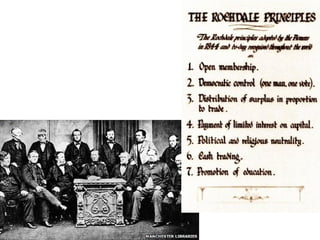
Internationally Recognized Principles
1. Voluntary and Open Membership
2. Democratic Member Control
3. Member Economic Participation
4. Autonomy and Independence
5. Education, Training and Information
6. Co-operation among Co-operatives
7. Concern for Community
Ownership
Member-Owners can be
– Consumers
– Producers/Farmers
– Workers
– Other Businesses
Distributionism
Consumer
◦ Credit Unions
◦ Housing
◦ Retail (e.g. food co-ops)
◦ Farm Supply
Two Schools
Producer
◦ Worker
◦ Farmer
◦ Artisan
Distributionism cont.
Another School…
Solidarity or Multi-Stakeholder
◦ Weaver Street Market owners:
◦ Workers
◦ Consumers
◦ Idaho’s Bounty Co-op owners:
◦ Producers
◦ Consumers
Co-op to Co-op Supply Chain
Why Cooperate?
…to access resources not individually achievable
Unique Characteristics of Co-ops
• Owned/controlled by members, not outside investors
• Exist solely to serve members
• Return surplus to members based on use, not
investment
• Pay taxes on income kept for investment/reserves;
surplus revenue returned to members who pay taxes
• Economy of scale = valued added
Co-op Development Stages
• Identify a need a co-op could
meet
• Form Steering Committee
• Research Feasibility
• Review Findings (Go/No Go)
• Membership Drive
• Planning and Financing
• Begin Operations (Go/No Go)
Project LifecycleProject Lifecycle
Co-op Development Stages
• Identify a need a co-op could
meet
• Form Steering Committee
• Research Feasibility
• Review Findings (Go/No Go)
• Membership Drive
• Planning and Financing
• Begin Operations (Go/No Go)
How We Assist
• Facilitate identifying mission and
goals
• Train founding Board members
• Market and feasibility research
• Assist with organizing
• Professional, 3rd
party perspective
• General business consulting
Project LifecycleProject Lifecycle
“The Un-Corporation”
o 1,723 members (64 in NW)
o ~ 10% of organic farm community
o Largest organic co-op
o Founded in collective bargaining
Philosophy:
o “Crafting new vision of foods/farms”
o “More than delicious”
o Adding value thru values
CROPP Cooperative
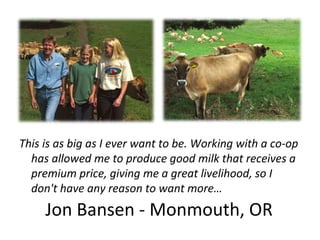
Jon Bansen - Monmouth, OR
This is as big as I ever want to be. Working with a co-op
has allowed me to produce good milk that receives a
premium price, giving me a great livelihood, so I
don't have any reason to want more…
14 farmers in Brothers, OR
“we were going broke” (1986)
o Economics: increasing interest rates, land
prices
o Social: cholesterol fears, “enviros”
Product is more than beef…
…it’s about the people
• Selling direct = value added
• Shinrai
• Consensus
Business Philosophy
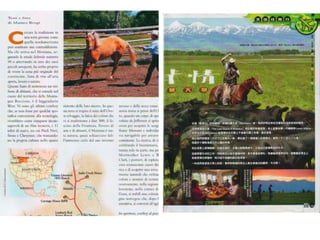
• 20 cattle ranches offering varied agri-tourism
• Co-op:
– Matchmaker
– Co-marketing
– “geo-tourism”
– Point of contact
– Commission-based
Travelers come to the ranches as guests… but they go home as
advocates for family ranching – Karen Searle, founder
Montana Bunkhouse Working Ranch
Vacations
Case Studies Review
Key Points:
1. Born out of need/adversity
2. Meeting members economic needs
3. Members are invested in success of co-op
4. Marketing values and philosophy
5. Successful innovation/reinvention
Sample NWCDC’s Clients
• Manufactured Home
• Shared services
• Small ag
• Rural food
Manufactured Home Conversion
T.A. provider and broker
• Makes an offer to investor owner
• Organizes community corporation
• Drives debt financing
• Trains founding board
“A co-op is a business model that allows a group of people (in this
case guides) to combine their resources to achieve their goals”
Mountain Community Co-op
• 2.7k population of Eatonville, WA
• 264 Members
• $170k Gross
• 6 years old
• 2 loans paid off
• 2 buildings owned
• 1 buying club
• 0 paid employees
General Resources
1. How to Start a Food Co-op; CGIN
2. How to Start a Cooperative; USDA
3. The Worker Cooperative Toolbox; NCDF
• Resources/toolboxes
– Food Co-op Initiative (e.g. legal primer)
– US Federation of Worker Co-ops
• Magazines
– Cooperative Grocer
– The Cooperator; Co-op and Condo monthly
Legal & Technical Resources
1. “Sample Legal Documents for Cooperatives”
and “Cooperative Marketing Agreements”
• USDA
1. “The Law of Cooperatives”
• ABA Business Law Section
1. “The Cooperative Accountant” journal
• National Society of Accountants for Cooperatives
1. Electric Co-op Bar Assn.
• A Professional Network within NRECA
Thank You!
Eric Bowman
eric@nwcdc.coop
Northwest Cooperative Development Center
1063 Capitol Way S # 211
Olympia, WA 98501
360.943.4241 | www.nwcdc.coop
Fostering community economic development through the
cooperative business model

2012 05 18 osb - co-ops 101

  • 1.
    NW Co-op DevelopmentCenter Co-ops 101 Oregon State Bar May 18th , 2012 Eric Bowman, Cooperative Development Specialist eric@nwcdc.coop 1063 S Capitol Way # 211 Olympia, WA 98501 360.943.4241
  • 2.
    Presentation: Co-ops 101 1.Intro 2. Overview and History 3. Co-op Economy and Models 4. Ag Examples 5. Examples of NWCDC Work 6. Legal Resources 7. Q&A
  • 3.
    NWCDC The Center a 501(c)3nonprofit which provides development services for new and existing co-ops Our mission to foster community economic development through the co-op business model We’re a team of co-op developers with skills specific to start-up and organizational business development
  • 4.
    Co-ops 101 Investor owned: Soleproprietor: Co-ops are member: ◦ Owned ◦ Controlled ◦ Benefited
  • 5.
  • 6.
    Co-op Role U.S. Facts: –250 purchasing co-ops procure for 50,000 businesses – 3,000 farmer co-ops market 30% of farmers’ products – 8,000 housing co-ops provide 1 m homes – 7,500 credit unions provide services to 90 m members – 1,000 rural electrics operate ½ the nation’s distribution – 29,000 co-ops serve 43% of the population Top 100 co-ops’ 2010 revenues = $194 Billion!
  • 8.
    Internationally Recognized Principles 1.Voluntary and Open Membership 2. Democratic Member Control 3. Member Economic Participation 4. Autonomy and Independence 5. Education, Training and Information 6. Co-operation among Co-operatives 7. Concern for Community
  • 9.
    Ownership Member-Owners can be –Consumers – Producers/Farmers – Workers – Other Businesses
  • 10.
    Distributionism Consumer ◦ Credit Unions ◦Housing ◦ Retail (e.g. food co-ops) ◦ Farm Supply Two Schools Producer ◦ Worker ◦ Farmer ◦ Artisan
  • 11.
    Distributionism cont. Another School… Solidarityor Multi-Stakeholder ◦ Weaver Street Market owners: ◦ Workers ◦ Consumers ◦ Idaho’s Bounty Co-op owners: ◦ Producers ◦ Consumers
  • 12.
    Co-op to Co-opSupply Chain
  • 13.
    Why Cooperate? …to accessresources not individually achievable
  • 15.
    Unique Characteristics ofCo-ops • Owned/controlled by members, not outside investors • Exist solely to serve members • Return surplus to members based on use, not investment • Pay taxes on income kept for investment/reserves; surplus revenue returned to members who pay taxes • Economy of scale = valued added
  • 16.
    Co-op Development Stages •Identify a need a co-op could meet • Form Steering Committee • Research Feasibility • Review Findings (Go/No Go) • Membership Drive • Planning and Financing • Begin Operations (Go/No Go) Project LifecycleProject Lifecycle
  • 17.
    Co-op Development Stages •Identify a need a co-op could meet • Form Steering Committee • Research Feasibility • Review Findings (Go/No Go) • Membership Drive • Planning and Financing • Begin Operations (Go/No Go) How We Assist • Facilitate identifying mission and goals • Train founding Board members • Market and feasibility research • Assist with organizing • Professional, 3rd party perspective • General business consulting Project LifecycleProject Lifecycle
  • 18.
    “The Un-Corporation” o 1,723members (64 in NW) o ~ 10% of organic farm community o Largest organic co-op o Founded in collective bargaining Philosophy: o “Crafting new vision of foods/farms” o “More than delicious” o Adding value thru values CROPP Cooperative
  • 19.
    Jon Bansen -Monmouth, OR This is as big as I ever want to be. Working with a co-op has allowed me to produce good milk that receives a premium price, giving me a great livelihood, so I don't have any reason to want more…
  • 20.
    14 farmers inBrothers, OR “we were going broke” (1986) o Economics: increasing interest rates, land prices o Social: cholesterol fears, “enviros” Product is more than beef…
  • 21.
    …it’s about thepeople • Selling direct = value added • Shinrai • Consensus Business Philosophy
  • 22.
    • 20 cattleranches offering varied agri-tourism • Co-op: – Matchmaker – Co-marketing – “geo-tourism” – Point of contact – Commission-based Travelers come to the ranches as guests… but they go home as advocates for family ranching – Karen Searle, founder Montana Bunkhouse Working Ranch Vacations
  • 24.
    Case Studies Review KeyPoints: 1. Born out of need/adversity 2. Meeting members economic needs 3. Members are invested in success of co-op 4. Marketing values and philosophy 5. Successful innovation/reinvention
  • 25.
    Sample NWCDC’s Clients •Manufactured Home • Shared services • Small ag • Rural food
  • 26.
    Manufactured Home Conversion T.A.provider and broker • Makes an offer to investor owner • Organizes community corporation • Drives debt financing • Trains founding board
  • 27.
    “A co-op isa business model that allows a group of people (in this case guides) to combine their resources to achieve their goals”
  • 29.
    Mountain Community Co-op •2.7k population of Eatonville, WA • 264 Members • $170k Gross • 6 years old • 2 loans paid off • 2 buildings owned • 1 buying club • 0 paid employees
  • 30.
    General Resources 1. Howto Start a Food Co-op; CGIN 2. How to Start a Cooperative; USDA 3. The Worker Cooperative Toolbox; NCDF • Resources/toolboxes – Food Co-op Initiative (e.g. legal primer) – US Federation of Worker Co-ops • Magazines – Cooperative Grocer – The Cooperator; Co-op and Condo monthly
  • 31.
    Legal & TechnicalResources 1. “Sample Legal Documents for Cooperatives” and “Cooperative Marketing Agreements” • USDA 1. “The Law of Cooperatives” • ABA Business Law Section 1. “The Cooperative Accountant” journal • National Society of Accountants for Cooperatives 1. Electric Co-op Bar Assn. • A Professional Network within NRECA
  • 32.
    Thank You! Eric Bowman eric@nwcdc.coop NorthwestCooperative Development Center 1063 Capitol Way S # 211 Olympia, WA 98501 360.943.4241 | www.nwcdc.coop Fostering community economic development through the cooperative business model

Editor's Notes

  • #2 <Remember: slooooooowwww and be natural> I appreciate the opportunity to be here… Very timely event!
  • #3 <Go slow>
  • #4 <…slowly…> Intro self and sectors
  • #5 What does this mean: the equity owners of a co-op are the same people who: - democratically govern the business thru 1-member = 1-vote - are the beneficiaries of the services provided
  • #6 Building blocks of economic cooperation Authority: - basic authority and responsibility imposed by law, in other words the incorporating statute - Bylaws and policy provide guidance and clarify authority Ultimate authority from 2 places: Comes from members and this overall system The co-op is theirs and without their desire to create and perpetuate co-op, the board wouldn’t exist Members place their needs, trust and Board of their choosing.
  • #7 <ehm, breath> Co-ops are dynamic and relevant in today’s economy
  • #10 <are you going slowly enough> Co-ops are defined by ownership In this collection of cooperative business’s logo’s, I see groups of people who had a need: - they could not meet individually and - which was unfulfilled by the traditional investor-owned private sector
  • #13 To close on the general info…
  • #14 <S.L.O.W.> Because co-op businesses are: - comprised of the community - they are representative of the community - and they are a part of the community Co-ops: - Keep profits, ownership and control local - Are less vulnerable to take-over and closure by outside decision-makers ; often stay long after others leave - Are trusted business partners; people like to deal with the producer Co-ops have an innate edge on investor-owned corporations and they have an opportunity to sell it!
  • #15 Note how co-ops can leverage producers “up” the chain This helps co-op members retain a chain of custody for members
  • #16 To close on the general info…
  • #19 - 1988 - CROPP (Coulee Region Organic Produce Pool) = 7 farms selling produce expanded into distro of fruits, veg and dairy - "CROPP" was adjusted to Co-op Regions of Organic Producer Pools The Un-Corporation In an era where corporations dominate all facets of business including government, global energy, ag and global food supply, Organic Valley serves small farmers and rural community health by combining two alternative business models - the family farm and the co-op. Our co-op was founded to nurture local communities by keeping farmers on the land, farming. We understood from the beginning that we would need to pool our product in a cooperative fashion to accomplish that goal. How it Works Farmer members establish equity thru joining: - elect national Board - regional executive committees carry opinions to Board In addition to a member-determined pay-price and equity ownership in a leading national food brand, members receive numerous benefits including support in production, certification, farm planning, feed sourcing, veterinary consultation and more. Adding Value thru values! With the customer, building a new vision Building our base of loyal customers allows us to bring more farm families into the co-op, along with the land, water, and animals that they protect.
  • #21 It’s the smell of sage after a summer thunderstorm, the cool shade of a Ponderosa Pine forest.  It’s the 80 year old weathered hands saddling a horse in the Blue Mountains,  the future of a 6 year old in a one room school on the High Desert. It’s a trout in a beaver built pond,  haystacks on an Aspen framed meadow. It’s the hardy quail running to join the cattle for a meal, the welcome ring of a dinner bell at dusk.
  • #22 Member Dick Bradbury: ..we've realized that the people part of it is much more critical than the cows. The rancher-to-consumer connection is what gives us the uniqueness of our product. Also, the idea that the consumer feels they are dealing directly with the people who actually grow their food . Mary Bradbury: The people who eat the product need to be partners Doc Hatfield, founder: Most of the ranchers are rural, conservative, Republican, heterosexual and religious. And most of the customers are urban, secular, Democratic, liberal, and you'd think they wouldn't mesh. Connie Hatfield on Berkeley, CA Customers: They have a lot of piercings, tattoos and colored hair and different things. But it's really interesting to mix our cultures and be able to stay on the land because we started to market our products. Adding value by selling more directly to consumers and thru connecting Thereby ranchers could set their price to cover the cost of production, plus a reasonable return on investment, and a reasonable profit.
  • #23 Eco-tourism uses revenue to promote conservation and geo extends ethic to culture and history
  • #28 Past project - CGC