Mao goes to Bondi:
Viticulture & Climate Change in Asia-Pacific
Dreer Award Recipient, 2008-09
Vinay Pagay
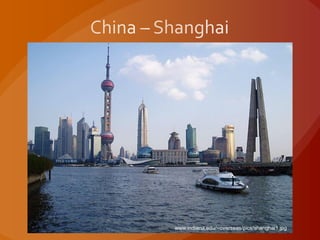
www.indiana.edu/~overseas/pics/shanghai1.jpg
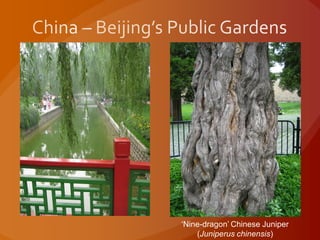
‘Nine-dragon’ Chinese Juniper
(Juniperus chinensis)
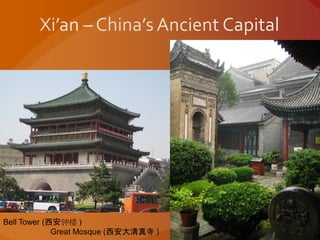
Bell Tower (西安钟楼 )
Great Mosque (西安大清真寺 )
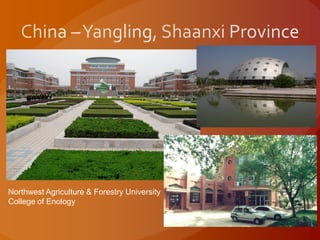
Northwest Agriculture & Forestry University
College of Enology
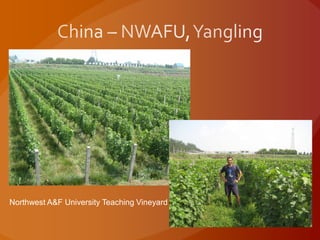
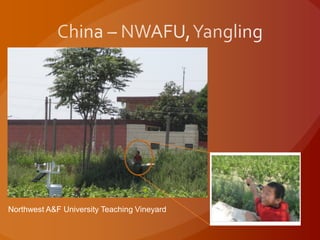
Northwest A&F University Teaching Vineyard
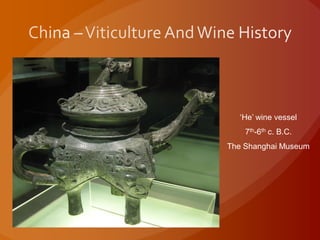
‘He’ wine vessel
7th-6th c. B.C.
The Shanghai Museum
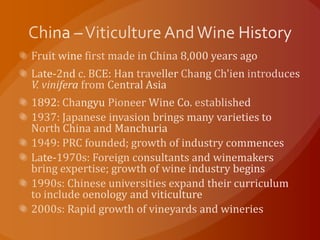
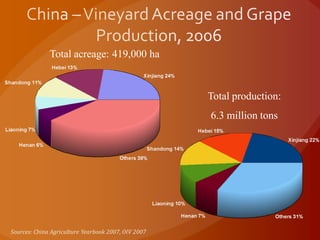
Sources: China Agriculture Yearbook 2007, OIV 2007
Total acreage: 419,000 ha
Total production:
6.3 million tons
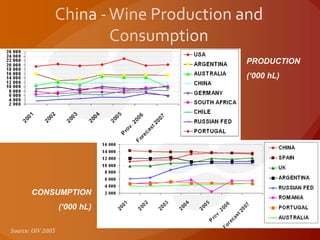
Source: OIV 2005
PRODUCTION
(‘000 hL)‫‏‬
CONSUMPTION
(‘000 hL)‫‏‬
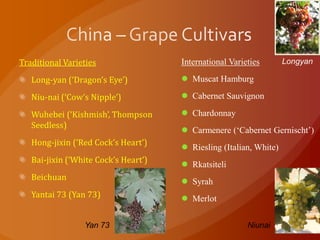
Traditional Varieties
Long-yan (‘Dragon’s Eye’)
Niu-nai (‘Cow’s Nipple’)
Wuhebei (‘Kishmish’, Thompson
Seedless)
Hong-jixin (‘Red Cock’s Heart’)
Bai-jixin (‘White Cock’s Heart’)
Beichuan
Yantai 73 (Yan 73)
International Varieties
 Muscat Hamburg
 Cabernet Sauvignon
 Chardonnay
 Carmenere (‘Cabernet Gernischt’)
 Riesling (Italian, White)
 Rkatsiteli
 Syrah
 Merlot
Yan 73 Niunai
Longyan
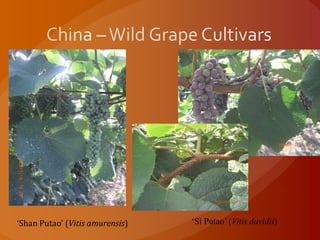
‘Shan Putao’ (Vitis amurensis) ‘Sì Putao’ (Vitis davidii)
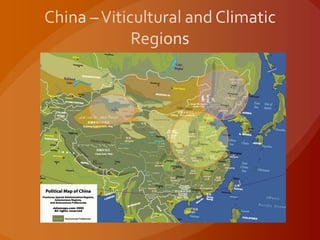
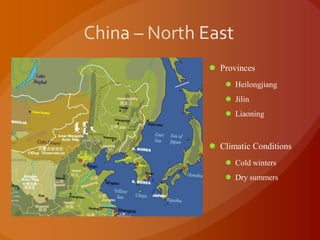
 Provinces
 Heilongjiang
 Jilin
 Liaoning
 Climatic Conditions
 Cold winters
 Dry summers
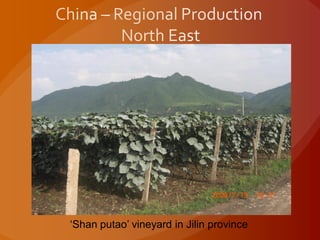
‘Shan putao’ vineyard in Jilin province
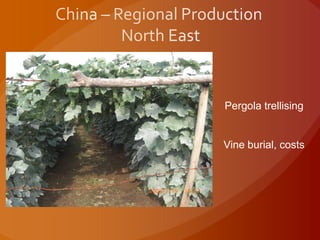
Pergola trellising
Vine burial, costs
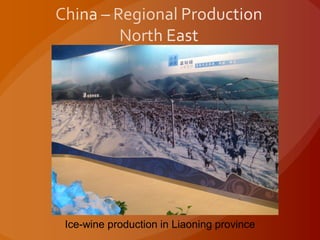
Ice-wine production in Liaoning province
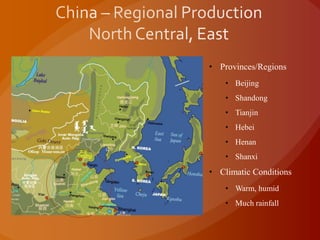
• Provinces/Regions
• Beijing
• Shandong
• Tianjin
• Hebei
• Henan
• Shanxi
• Climatic Conditions
• Warm, humid
• Much rainfall
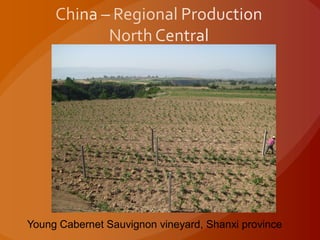
Young Cabernet Sauvignon vineyard, Shanxi province
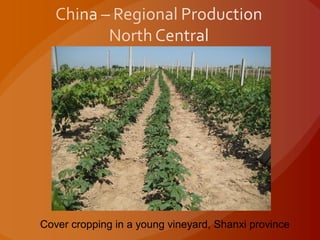
Cover cropping in a young vineyard, Shanxi province
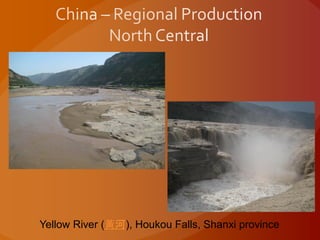
Yellow River (黃河), Houkou Falls, Shanxi province
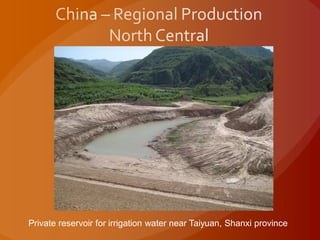
Private reservoir for irrigation water near Taiyuan, Shanxi province
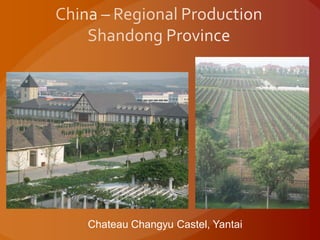
Chateau Changyu Castel, Yantai
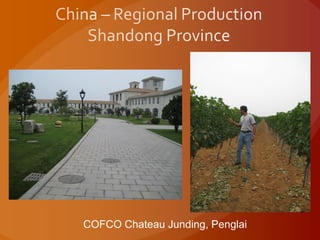
COFCO Chateau Junding, Penglai
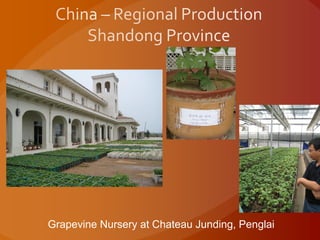
Grapevine Nursery at Chateau Junding, Penglai
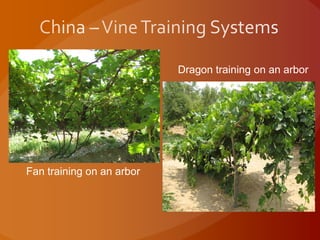
Fan training on an arbor
Dragon training on an arbor
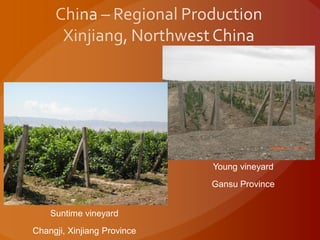
Suntime vineyard
Changji, Xinjiang Province
Young vineyard
Gansu Province
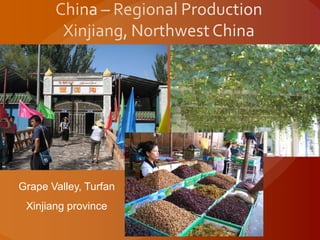
Grape Valley, Turfan
Xinjiang province
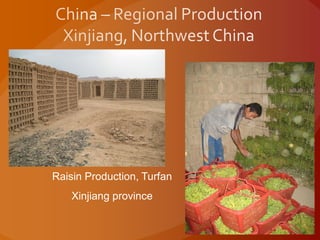
Raisin Production, Turfan
Xinjiang province
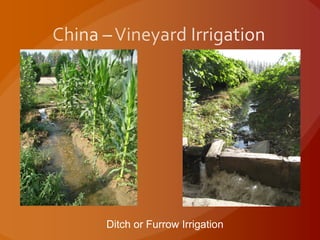
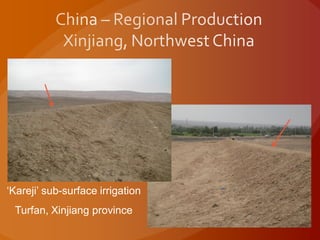
Ditch or Furrow Irrigation
‘Kareji’ sub-surface irrigation
Turfan, Xinjiang province
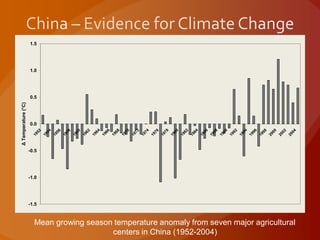
Mean growing season temperature anomaly from seven major agricultural
centers in China (1952-2004)
-1.5
-1.0
-0.5
0.0
0.5
1.0
1.5
1
9
5
2
1
9
5
4
1
9
5
6
1
9
5
8
1
9
6
0
1
9
6
2
1
9
6
4
1
9
6
6
1
9
6
8
1
9
7
0
1
9
7
2
1
9
7
4
1
9
7
6
1
9
7
8
1
9
8
0
1
9
8
2
1
9
8
4
1
9
8
6
1
9
8
8
1
9
9
0
1
9
9
2
1
9
9
4
1
9
9
6
1
9
9
8
2
0
0
0
2
0
0
2
2
0
0
4
Δ
Temperature
(°C)
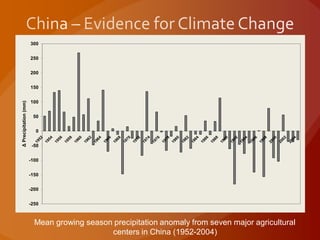
Mean growing season precipitation anomaly from seven major agricultural
centers in China (1952-2004)
-250
-200
-150
-100
-50
0
50
100
150
200
250
300
1
9
5
2
1
9
5
4
1
9
5
6
1
9
5
8
1
9
6
0
1
9
6
2
1
9
6
4
1
9
6
6
1
9
6
8
1
9
7
0
1
9
7
2
1
9
7
4
1
9
7
6
1
9
7
8
1
9
8
0
1
9
8
2
1
9
8
4
1
9
8
6
1
9
8
8
1
9
9
0
1
9
9
2
1
9
9
4
1
9
9
6
1
9
9
8
2
0
0
0
2
0
0
2
2
0
0
4
Δ
Precipitation
(mm)
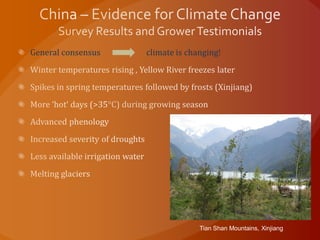
General consensus climate is changing!
Tian Shan Mountains, Xinjiang
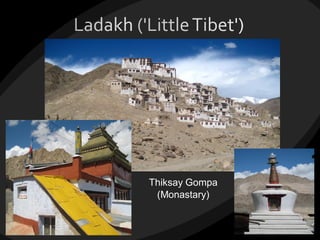
Thiksay Gompa
(Monastary)
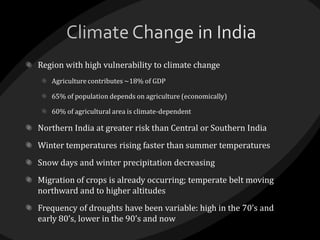
Region with high vulnerability to climate change
Agriculture contributes ~18% of GDP
65% of population depends on agriculture (economically)
60% of agricultural area is climate-dependent
Northern India at greater risk than Central or Southern India
Winter temperatures rising faster than summer temperatures
Snow days and winter precipitation decreasing
Migration of crops is already occurring; temperate belt moving
northward and to higher altitudes
Frequency of droughts have been variable: high in the 70’s and
early 80’s, lower in the 90’s and now
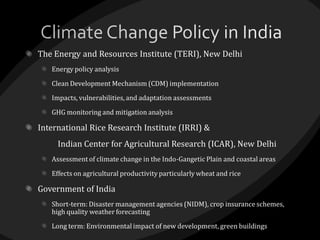
The Energy and Resources Institute (TERI), New Delhi
Energy policy analysis
Clean Development Mechanism (CDM) implementation
Impacts, vulnerabilities, and adaptation assessments
GHG monitoring and mitigation analysis
International Rice Research Institute (IRRI) &
Indian Center for Agricultural Research (ICAR), New Delhi
Assessment of climate change in the Indo-Gangetic Plain and coastal areas
Effects on agricultural productivity particularly wheat and rice
Government of India
Short-term: Disaster management agencies (NIDM), crop insurance schemes,
high quality weather forecasting
Long term: Environmental impact of new development, green buildings
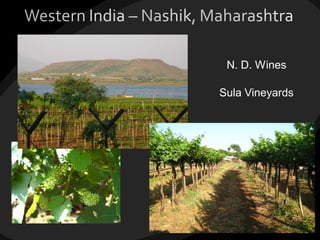
N. D. Wines
Sula Vineyards
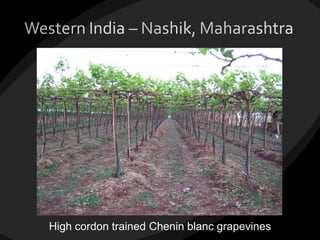
High cordon trained Chenin blanc grapevines
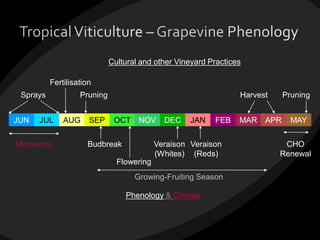
Phenology & Climate
Cultural and other Vineyard Practices
JUN JUL AUG SEP OCT NOV DEC JAN FEB MAR APR MAY
Pruning
Budbreak Veraison
(Whites)
Veraison
(Reds)
Harvest
Fertilisation
Pruning
Monsoons
Sprays
Flowering
Growing-Fruiting Season
CHO
Renewal
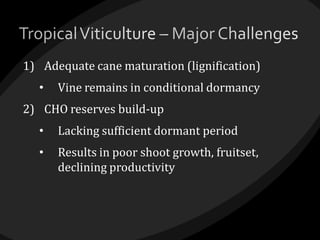
1) Adequate cane maturation (lignification)
• Vine remains in conditional dormancy
2) CHO reserves build-up
• Lacking sufficient dormant period
• Results in poor shoot growth, fruitset,
declining productivity
PART III
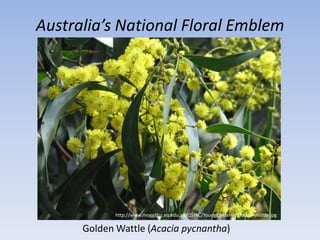
Australia’s National Floral Emblem
Golden Wattle (Acacia pycnantha)
http://www.moggillss.eq.edu.au/QSWC/YoungEinsteins/Golden-Wattle.jpg
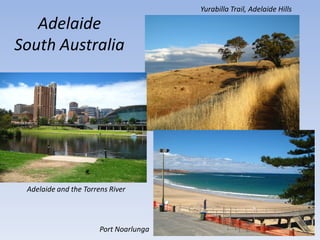
Adelaide
South Australia
Port Noarlunga
Yurabilla Trail, Adelaide Hills
Adelaide and the Torrens River
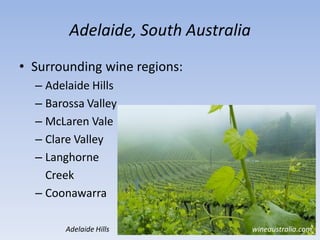
Adelaide, South Australia
• Surrounding wine regions:
– Adelaide Hills
– Barossa Valley
– McLaren Vale
– Clare Valley
– Langhorne
Creek
– Coonawarra
Adelaide Hills wineaustralia.com
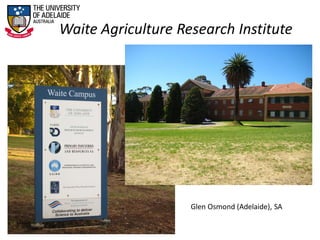
Waite Agriculture Research Institute
Glen Osmond (Adelaide), SA
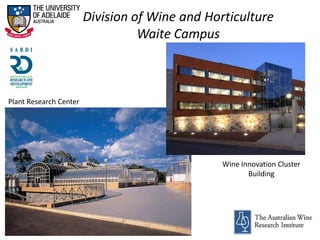
Division of Wine and Horticulture
Waite Campus
Wine Innovation Cluster
Building
Plant Research Center
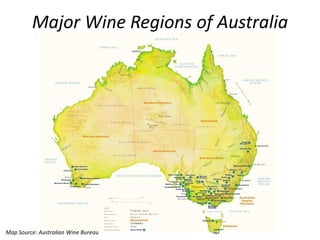
Major Wine Regions of Australia
Map Source: Australian Wine Bureau
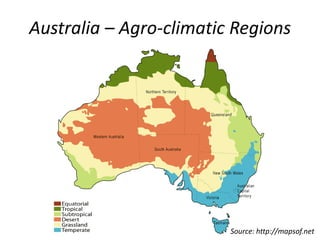
Australia – Agro-climatic Regions
Source: http://mapsof.net
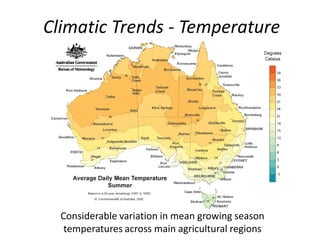
Climatic Trends - Temperature
Considerable variation in mean growing season
temperatures across main agricultural regions
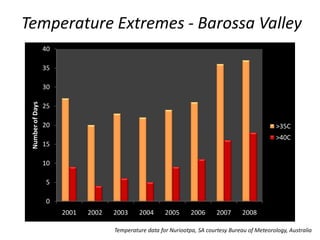
Temperature Extremes - Barossa Valley
Temperature data for Nuriootpa, SA courtesy Bureau of Meteorology, Australia
0
5
10
15
20
25
30
35
40
2001 2002 2003 2004 2005 2006 2007 2008
Number
of
Days
>35C
>40C
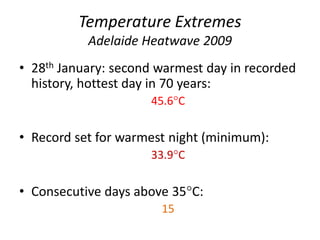
Temperature Extremes
Adelaide Heatwave 2009
• 28th January: second warmest day in recorded
history, hottest day in 70 years:
45.6C
• Record set for warmest night (minimum):
33.9C
• Consecutive days above 35C:
15
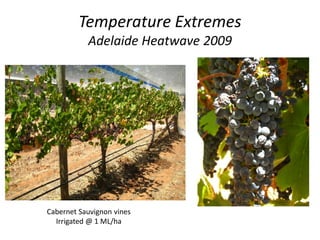
Temperature Extremes
Adelaide Heatwave 2009
Cabernet Sauvignon vines
Irrigated @ 1 ML/ha
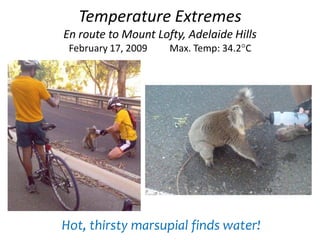
Temperature Extremes
En route to Mount Lofty, Adelaide Hills
February 17, 2009 Max. Temp: 34.2C
Hot, thirsty marsupial finds water!
Temperature Extremes
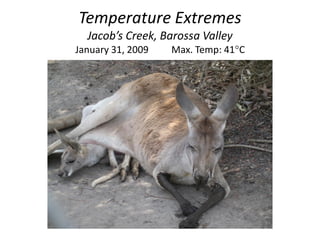
Jacob’s Creek, Barossa Valley
January 31, 2009 Max. Temp: 41C
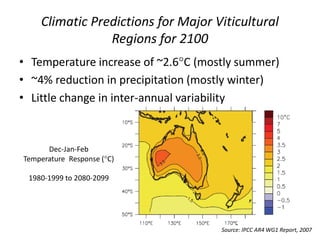
Climatic Predictions for Major Viticultural
Regions for 2100
• Temperature increase of ~2.6C (mostly summer)
• ~4% reduction in precipitation (mostly winter)
• Little change in inter-annual variability
Source: IPCC AR4 WG1 Report, 2007
Dec-Jan-Feb
Temperature Response (C)
1980-1999 to 2080-2099
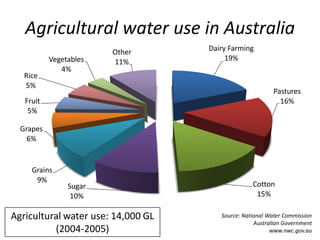
Agricultural water use in Australia
Dairy Farming
19%
Pastures
16%
Cotton
15%
Sugar
10%
Grains
9%
Grapes
6%
Fruit
5%
Rice
5%
Vegetables
4%
Other
11%
Agricultural water use: 14,000 GL
(2004-2005)
Source: National Water Commission
Australian Government
www.nwc.gov.au
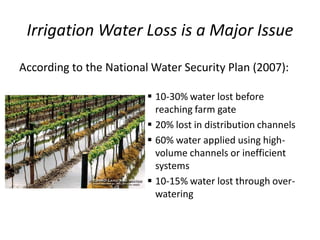
Irrigation Water Loss is a Major Issue
According to the National Water Security Plan (2007):
 10-30% water lost before
reaching farm gate
 20% lost in distribution channels
 60% water applied using high-
volume channels or inefficient
systems
 10-15% water lost through over-
watering
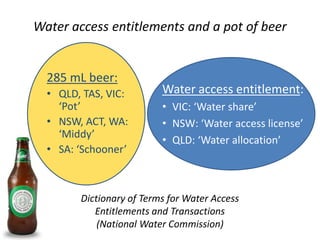
Water access entitlements and a pot of beer
285 mL beer:
• QLD, TAS, VIC:
‘Pot’
• NSW, ACT, WA:
‘Middy’
• SA: ‘Schooner’
Dictionary of Terms for Water Access
Entitlements and Transactions
(National Water Commission)
Water access entitlement:
• VIC: ‘Water share’
• NSW: ‘Water access license’
• QLD: ‘Water allocation’
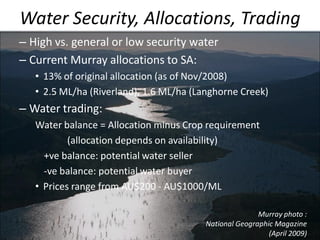
Water Security, Allocations, Trading
– High vs. general or low security water
– Current Murray allocations to SA:
• 13% of original allocation (as of Nov/2008)
• 2.5 ML/ha (Riverland), 1.6 ML/ha (Langhorne Creek)
– Water trading:
Water balance = Allocation minus Crop requirement
(allocation depends on availability)
+ve balance: potential water seller
-ve balance: potential water buyer
• Prices range from AU$200 - AU$1000/ML
Murray photo :
National Geographic Magazine
(April 2009)
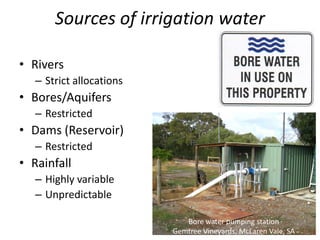
Sources of irrigation water
• Rivers
– Strict allocations
• Bores/Aquifers
– Restricted
• Dams (Reservoir)
– Restricted
• Rainfall
– Highly variable
– Unpredictable
Bore water pumping station
Gemtree Vineyards, McLaren Vale, SA
Climate change: Implications for
irrigated agriculture/viticulture
• What we already know:
– Advanced and rapid phenological progression
• Ripening and harvest will be in warmer conditions
– Cultivars already at their limits will suffer
• Cooler areas may benefit
– Well-watered vines can recover from high
temperature events without much leaf loss
• Need to investigate:
– Effects of timing and duration of heat stress and
elevated CO2 on vine physiology and crop
development
Elevated Temperature Study
Objectives
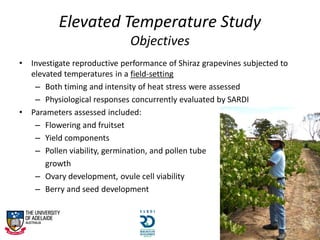
• Investigate reproductive performance of Shiraz grapevines subjected to
elevated temperatures in a field-setting
– Both timing and intensity of heat stress were assessed
– Physiological responses concurrently evaluated by SARDI
• Parameters assessed included:
– Flowering and fruitset
– Yield components
– Pollen viability, germination, and pollen tube
growth
– Ovary development, ovule cell viability
– Berry and seed development
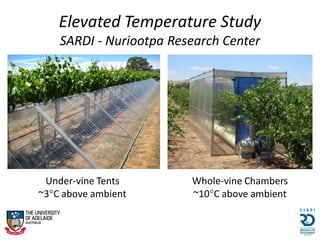
Elevated Temperature Study
SARDI - Nuriootpa Research Center
Under-vine Tents
~3C above ambient
Whole-vine Chambers
~10C above ambient
Climate Change Adaptation:
What is Australia doing?
• Government
– Ratified Kyoto Protocol (1997)
– Emissions Trading Scheme (2010)
• Climate Forecasting on a Regional Scale
– CSIRO: main research body looking at climate
change, modeling, and impacts on agriculture
– Improved prediction certainty
– Frequency and intensity of extreme climate events
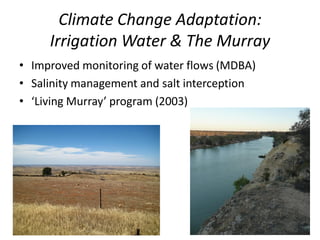
Climate Change Adaptation:
Irrigation Water & The Murray
• Improved monitoring of water flows (MDBA)
• Salinity management and salt interception
• ‘Living Murray’ program (2003)
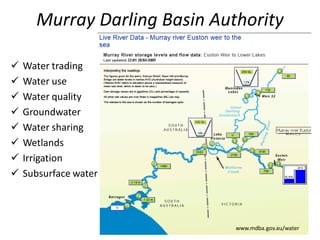
Murray Darling Basin Authority
www.mdba.gov.au/water
 Water trading
 Water use
 Water quality
 Groundwater
 Water sharing
 Wetlands
 Irrigation
 Subsurface water
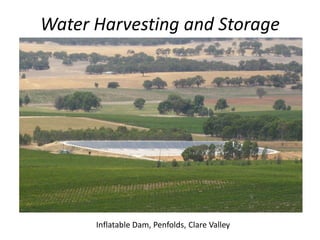
Water Harvesting and Storage
Inflatable Dam, Penfolds, Clare Valley
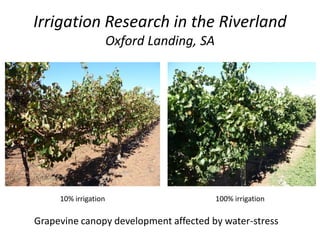
Irrigation Research in the Riverland
Oxford Landing, SA
10% irrigation 100% irrigation
Grapevine canopy development affected by water-stress
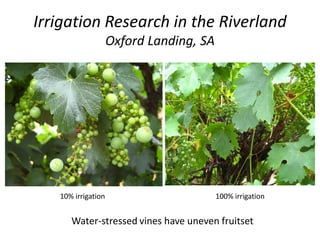
Irrigation Research in the Riverland
Oxford Landing, SA
10% irrigation 100% irrigation
Water-stressed vines have uneven fruitset
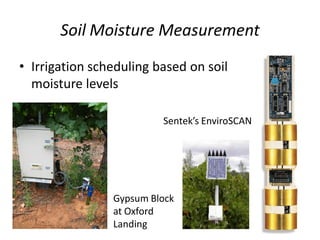
Soil Moisture Measurement
• Irrigation scheduling based on soil
moisture levels
Sentek’s EnviroSCAN
Gypsum Block
at Oxford
Landing
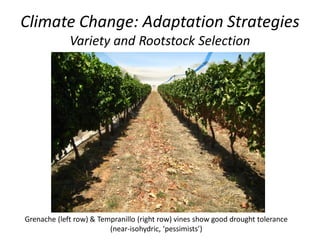
Climate Change: Adaptation Strategies
Variety and Rootstock Selection
Grenache (left row) & Tempranillo (right row) vines show good drought tolerance
(near-isohydric, ‘pessimists’)
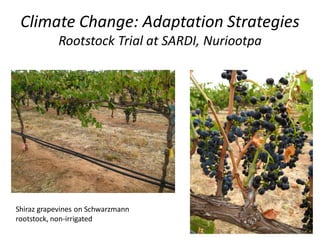
Climate Change: Adaptation Strategies
Rootstock Trial at SARDI, Nuriootpa
Shiraz grapevines on Schwarzmann
rootstock, non-irrigated
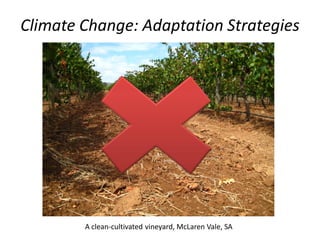
Climate Change: Adaptation Strategies
A clean-cultivated vineyard, McLaren Vale, SA
Climate Change: Adaptation Strategies
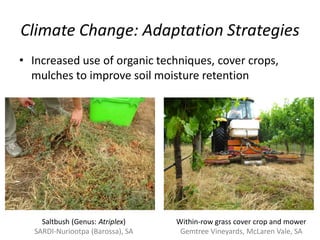
• Increased use of organic techniques, cover crops,
mulches to improve soil moisture retention
Saltbush (Genus: Atriplex)
SARDI-Nuriootpa (Barossa), SA
Within-row grass cover crop and mower
Gemtree Vineyards, McLaren Vale, SA
Climate Change: Adaptation Strategies
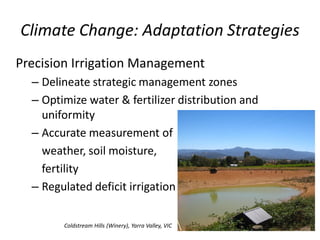
Precision Irrigation Management
– Delineate strategic management zones
– Optimize water & fertilizer distribution and
uniformity
– Accurate measurement of
weather, soil moisture,
fertility
– Regulated deficit irrigation
Coldstream Hills (Winery), Yarra Valley, VIC
Climate Change: Adaptation Strategies
• Canopy management and trellis design
– Increase leaf area and shading e.g. CA sprawl
• Artificial shading, nets
• Evaporative cooling
• Planting new varieties and rootstocks, including
GM-rootstocks for improved drought & salinity
tolerance
• Increased use of technology:
– Monitoring water application and vine water status
– Yield sensors and maps
– Plant Cell Density mapping
Acknowledgements
William Frederick Dreer & The Award Committee
Cornell University, Department of Horticulture
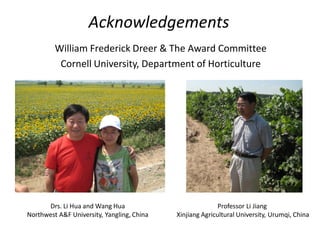
Drs. Li Hua and Wang Hua
Northwest A&F University, Yangling, China
Professor Li Jiang
Xinjiang Agricultural University, Urumqi, China
 TERI, New Delhi: Dr. Sangeet Srivastava
 IRRI, New Delhi: Drs. Himanshu Pathak & Virender Kumar
 Sula Vineyards, Nashik, India:
Dr. Niraj Agarwal & Steve Brunato
 University of Adelaide: Dr. Cassandra Collins
 AWRI, U. Adelaide: Dr. Peter Dry
 Growers (survey responses)
 Yanzi Zhang – Cornell Horticulture
 Translators (for Chinese surveys):
 Xiaohua Yang - Cornell Horticulture
 Amy Lee, Daniel Li, Chang Lee - Yangling, China
 Ruyi Li - Adelaide, Australia
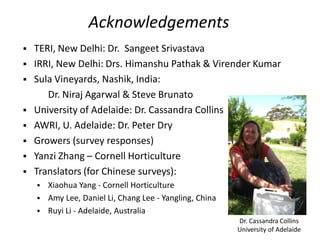
Dr. Cassandra Collins
University of Adelaide
Acknowledgements
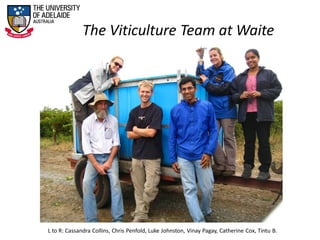
The Viticulture Team at Waite
L to R: Cassandra Collins, Chris Penfold, Luke Johnston, Vinay Pagay, Catherine Cox, Tintu B.
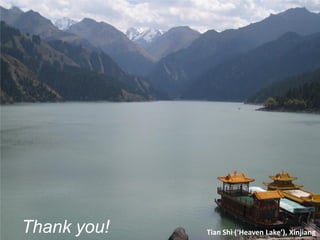
Tian Shì (‘Heaven Lake’), Xinjiang
Thank you!

20090515pagay_dreer_seminar.pdf

  • 1.
    Mao goes toBondi: Viticulture & Climate Change in Asia-Pacific Dreer Award Recipient, 2008-09 Vinay Pagay
  • 4.
  • 8.
  • 10.
    Bell Tower (西安钟楼) Great Mosque (西安大清真寺 )
  • 12.
    Northwest Agriculture &Forestry University College of Enology
  • 13.
    Northwest A&F UniversityTeaching Vineyard
  • 14.
    Northwest A&F UniversityTeaching Vineyard
  • 16.
    ‘He’ wine vessel 7th-6thc. B.C. The Shanghai Museum
  • 18.
    Sources: China AgricultureYearbook 2007, OIV 2007 Total acreage: 419,000 ha Total production: 6.3 million tons
  • 19.
    Source: OIV 2005 PRODUCTION (‘000hL)‫‏‬ CONSUMPTION (‘000 hL)‫‏‬
  • 20.
    Traditional Varieties Long-yan (‘Dragon’sEye’) Niu-nai (‘Cow’s Nipple’) Wuhebei (‘Kishmish’, Thompson Seedless) Hong-jixin (‘Red Cock’s Heart’) Bai-jixin (‘White Cock’s Heart’) Beichuan Yantai 73 (Yan 73) International Varieties  Muscat Hamburg  Cabernet Sauvignon  Chardonnay  Carmenere (‘Cabernet Gernischt’)  Riesling (Italian, White)  Rkatsiteli  Syrah  Merlot Yan 73 Niunai Longyan
  • 21.
    ‘Shan Putao’ (Vitisamurensis) ‘Sì Putao’ (Vitis davidii)
  • 22.
     Provinces  Heilongjiang Jilin  Liaoning  Climatic Conditions  Cold winters  Dry summers
  • 23.
    ‘Shan putao’ vineyardin Jilin province
  • 24.
  • 25.
    Ice-wine production inLiaoning province
  • 26.
    • Provinces/Regions • Beijing •Shandong • Tianjin • Hebei • Henan • Shanxi • Climatic Conditions • Warm, humid • Much rainfall
  • 27.
    Young Cabernet Sauvignonvineyard, Shanxi province
  • 28.
    Cover cropping ina young vineyard, Shanxi province
  • 29.
    Yellow River (黃河),Houkou Falls, Shanxi province
  • 30.
    Private reservoir forirrigation water near Taiyuan, Shanxi province
  • 31.
  • 32.
  • 33.
    Grapevine Nursery atChateau Junding, Penglai
  • 34.
    Fan training onan arbor Dragon training on an arbor
  • 36.
    Suntime vineyard Changji, XinjiangProvince Young vineyard Gansu Province
  • 37.
  • 38.
  • 39.
    Ditch or FurrowIrrigation
  • 40.
  • 41.
    Mean growing seasontemperature anomaly from seven major agricultural centers in China (1952-2004) -1.5 -1.0 -0.5 0.0 0.5 1.0 1.5 1 9 5 2 1 9 5 4 1 9 5 6 1 9 5 8 1 9 6 0 1 9 6 2 1 9 6 4 1 9 6 6 1 9 6 8 1 9 7 0 1 9 7 2 1 9 7 4 1 9 7 6 1 9 7 8 1 9 8 0 1 9 8 2 1 9 8 4 1 9 8 6 1 9 8 8 1 9 9 0 1 9 9 2 1 9 9 4 1 9 9 6 1 9 9 8 2 0 0 0 2 0 0 2 2 0 0 4 Δ Temperature (°C)
  • 42.
    Mean growing seasonprecipitation anomaly from seven major agricultural centers in China (1952-2004) -250 -200 -150 -100 -50 0 50 100 150 200 250 300 1 9 5 2 1 9 5 4 1 9 5 6 1 9 5 8 1 9 6 0 1 9 6 2 1 9 6 4 1 9 6 6 1 9 6 8 1 9 7 0 1 9 7 2 1 9 7 4 1 9 7 6 1 9 7 8 1 9 8 0 1 9 8 2 1 9 8 4 1 9 8 6 1 9 8 8 1 9 9 0 1 9 9 2 1 9 9 4 1 9 9 6 1 9 9 8 2 0 0 0 2 0 0 2 2 0 0 4 Δ Precipitation (mm)
  • 43.
    General consensus climateis changing! Tian Shan Mountains, Xinjiang
  • 46.
  • 50.
    Region with highvulnerability to climate change Agriculture contributes ~18% of GDP 65% of population depends on agriculture (economically) 60% of agricultural area is climate-dependent Northern India at greater risk than Central or Southern India Winter temperatures rising faster than summer temperatures Snow days and winter precipitation decreasing Migration of crops is already occurring; temperate belt moving northward and to higher altitudes Frequency of droughts have been variable: high in the 70’s and early 80’s, lower in the 90’s and now
  • 51.
    The Energy andResources Institute (TERI), New Delhi Energy policy analysis Clean Development Mechanism (CDM) implementation Impacts, vulnerabilities, and adaptation assessments GHG monitoring and mitigation analysis International Rice Research Institute (IRRI) & Indian Center for Agricultural Research (ICAR), New Delhi Assessment of climate change in the Indo-Gangetic Plain and coastal areas Effects on agricultural productivity particularly wheat and rice Government of India Short-term: Disaster management agencies (NIDM), crop insurance schemes, high quality weather forecasting Long term: Environmental impact of new development, green buildings
  • 53.
  • 54.
    High cordon trainedChenin blanc grapevines
  • 55.
    Phenology & Climate Culturaland other Vineyard Practices JUN JUL AUG SEP OCT NOV DEC JAN FEB MAR APR MAY Pruning Budbreak Veraison (Whites) Veraison (Reds) Harvest Fertilisation Pruning Monsoons Sprays Flowering Growing-Fruiting Season CHO Renewal
  • 56.
    1) Adequate canematuration (lignification) • Vine remains in conditional dormancy 2) CHO reserves build-up • Lacking sufficient dormant period • Results in poor shoot growth, fruitset, declining productivity
  • 57.
  • 58.
    Australia’s National FloralEmblem Golden Wattle (Acacia pycnantha) http://www.moggillss.eq.edu.au/QSWC/YoungEinsteins/Golden-Wattle.jpg
  • 59.
    Adelaide South Australia Port Noarlunga YurabillaTrail, Adelaide Hills Adelaide and the Torrens River
  • 60.
    Adelaide, South Australia •Surrounding wine regions: – Adelaide Hills – Barossa Valley – McLaren Vale – Clare Valley – Langhorne Creek – Coonawarra Adelaide Hills wineaustralia.com
  • 61.
    Waite Agriculture ResearchInstitute Glen Osmond (Adelaide), SA
  • 62.
    Division of Wineand Horticulture Waite Campus Wine Innovation Cluster Building Plant Research Center
  • 63.
    Major Wine Regionsof Australia Map Source: Australian Wine Bureau
  • 64.
    Australia – Agro-climaticRegions Source: http://mapsof.net
  • 65.
    Climatic Trends -Temperature Considerable variation in mean growing season temperatures across main agricultural regions
  • 66.
    Temperature Extremes -Barossa Valley Temperature data for Nuriootpa, SA courtesy Bureau of Meteorology, Australia 0 5 10 15 20 25 30 35 40 2001 2002 2003 2004 2005 2006 2007 2008 Number of Days >35C >40C
  • 67.
    Temperature Extremes Adelaide Heatwave2009 • 28th January: second warmest day in recorded history, hottest day in 70 years: 45.6C • Record set for warmest night (minimum): 33.9C • Consecutive days above 35C: 15
  • 68.
    Temperature Extremes Adelaide Heatwave2009 Cabernet Sauvignon vines Irrigated @ 1 ML/ha
  • 69.
    Temperature Extremes En routeto Mount Lofty, Adelaide Hills February 17, 2009 Max. Temp: 34.2C Hot, thirsty marsupial finds water!
  • 70.
    Temperature Extremes Jacob’s Creek,Barossa Valley January 31, 2009 Max. Temp: 41C
  • 71.
    Climatic Predictions forMajor Viticultural Regions for 2100 • Temperature increase of ~2.6C (mostly summer) • ~4% reduction in precipitation (mostly winter) • Little change in inter-annual variability Source: IPCC AR4 WG1 Report, 2007 Dec-Jan-Feb Temperature Response (C) 1980-1999 to 2080-2099
  • 72.
    Agricultural water usein Australia Dairy Farming 19% Pastures 16% Cotton 15% Sugar 10% Grains 9% Grapes 6% Fruit 5% Rice 5% Vegetables 4% Other 11% Agricultural water use: 14,000 GL (2004-2005) Source: National Water Commission Australian Government www.nwc.gov.au
  • 73.
    Irrigation Water Lossis a Major Issue According to the National Water Security Plan (2007):  10-30% water lost before reaching farm gate  20% lost in distribution channels  60% water applied using high- volume channels or inefficient systems  10-15% water lost through over- watering
  • 74.
    Water access entitlementsand a pot of beer 285 mL beer: • QLD, TAS, VIC: ‘Pot’ • NSW, ACT, WA: ‘Middy’ • SA: ‘Schooner’ Dictionary of Terms for Water Access Entitlements and Transactions (National Water Commission) Water access entitlement: • VIC: ‘Water share’ • NSW: ‘Water access license’ • QLD: ‘Water allocation’
  • 75.
    Water Security, Allocations,Trading – High vs. general or low security water – Current Murray allocations to SA: • 13% of original allocation (as of Nov/2008) • 2.5 ML/ha (Riverland), 1.6 ML/ha (Langhorne Creek) – Water trading: Water balance = Allocation minus Crop requirement (allocation depends on availability) +ve balance: potential water seller -ve balance: potential water buyer • Prices range from AU$200 - AU$1000/ML Murray photo : National Geographic Magazine (April 2009)
  • 76.
    Sources of irrigationwater • Rivers – Strict allocations • Bores/Aquifers – Restricted • Dams (Reservoir) – Restricted • Rainfall – Highly variable – Unpredictable Bore water pumping station Gemtree Vineyards, McLaren Vale, SA
  • 77.
    Climate change: Implicationsfor irrigated agriculture/viticulture • What we already know: – Advanced and rapid phenological progression • Ripening and harvest will be in warmer conditions – Cultivars already at their limits will suffer • Cooler areas may benefit – Well-watered vines can recover from high temperature events without much leaf loss • Need to investigate: – Effects of timing and duration of heat stress and elevated CO2 on vine physiology and crop development
  • 78.
    Elevated Temperature Study Objectives •Investigate reproductive performance of Shiraz grapevines subjected to elevated temperatures in a field-setting – Both timing and intensity of heat stress were assessed – Physiological responses concurrently evaluated by SARDI • Parameters assessed included: – Flowering and fruitset – Yield components – Pollen viability, germination, and pollen tube growth – Ovary development, ovule cell viability – Berry and seed development
  • 79.
    Elevated Temperature Study SARDI- Nuriootpa Research Center Under-vine Tents ~3C above ambient Whole-vine Chambers ~10C above ambient
  • 80.
    Climate Change Adaptation: Whatis Australia doing? • Government – Ratified Kyoto Protocol (1997) – Emissions Trading Scheme (2010) • Climate Forecasting on a Regional Scale – CSIRO: main research body looking at climate change, modeling, and impacts on agriculture – Improved prediction certainty – Frequency and intensity of extreme climate events
  • 81.
    Climate Change Adaptation: IrrigationWater & The Murray • Improved monitoring of water flows (MDBA) • Salinity management and salt interception • ‘Living Murray’ program (2003)
  • 82.
    Murray Darling BasinAuthority www.mdba.gov.au/water  Water trading  Water use  Water quality  Groundwater  Water sharing  Wetlands  Irrigation  Subsurface water
  • 83.
    Water Harvesting andStorage Inflatable Dam, Penfolds, Clare Valley
  • 84.
    Irrigation Research inthe Riverland Oxford Landing, SA 10% irrigation 100% irrigation Grapevine canopy development affected by water-stress
  • 85.
    Irrigation Research inthe Riverland Oxford Landing, SA 10% irrigation 100% irrigation Water-stressed vines have uneven fruitset
  • 86.
    Soil Moisture Measurement •Irrigation scheduling based on soil moisture levels Sentek’s EnviroSCAN Gypsum Block at Oxford Landing
  • 87.
    Climate Change: AdaptationStrategies Variety and Rootstock Selection Grenache (left row) & Tempranillo (right row) vines show good drought tolerance (near-isohydric, ‘pessimists’)
  • 88.
    Climate Change: AdaptationStrategies Rootstock Trial at SARDI, Nuriootpa Shiraz grapevines on Schwarzmann rootstock, non-irrigated
  • 89.
    Climate Change: AdaptationStrategies A clean-cultivated vineyard, McLaren Vale, SA
  • 90.
    Climate Change: AdaptationStrategies • Increased use of organic techniques, cover crops, mulches to improve soil moisture retention Saltbush (Genus: Atriplex) SARDI-Nuriootpa (Barossa), SA Within-row grass cover crop and mower Gemtree Vineyards, McLaren Vale, SA
  • 91.
    Climate Change: AdaptationStrategies Precision Irrigation Management – Delineate strategic management zones – Optimize water & fertilizer distribution and uniformity – Accurate measurement of weather, soil moisture, fertility – Regulated deficit irrigation Coldstream Hills (Winery), Yarra Valley, VIC
  • 92.
    Climate Change: AdaptationStrategies • Canopy management and trellis design – Increase leaf area and shading e.g. CA sprawl • Artificial shading, nets • Evaporative cooling • Planting new varieties and rootstocks, including GM-rootstocks for improved drought & salinity tolerance • Increased use of technology: – Monitoring water application and vine water status – Yield sensors and maps – Plant Cell Density mapping
  • 93.
    Acknowledgements William Frederick Dreer& The Award Committee Cornell University, Department of Horticulture Drs. Li Hua and Wang Hua Northwest A&F University, Yangling, China Professor Li Jiang Xinjiang Agricultural University, Urumqi, China
  • 94.
     TERI, NewDelhi: Dr. Sangeet Srivastava  IRRI, New Delhi: Drs. Himanshu Pathak & Virender Kumar  Sula Vineyards, Nashik, India: Dr. Niraj Agarwal & Steve Brunato  University of Adelaide: Dr. Cassandra Collins  AWRI, U. Adelaide: Dr. Peter Dry  Growers (survey responses)  Yanzi Zhang – Cornell Horticulture  Translators (for Chinese surveys):  Xiaohua Yang - Cornell Horticulture  Amy Lee, Daniel Li, Chang Lee - Yangling, China  Ruyi Li - Adelaide, Australia Dr. Cassandra Collins University of Adelaide Acknowledgements
  • 95.
    The Viticulture Teamat Waite L to R: Cassandra Collins, Chris Penfold, Luke Johnston, Vinay Pagay, Catherine Cox, Tintu B.
  • 96.
    Tian Shì (‘HeavenLake’), Xinjiang Thank you!