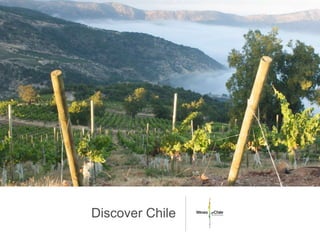
Discover Chile
• Not for Profit trade organization that
promotes Chilean wines around the
world
• Learn more about Chile!
• www.winesofchile.org
• facebook.com/WinesOfChile
• twitter.com/drinkchile
Wines of Chile
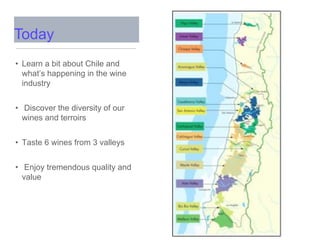
• Learn a bit about Chile and
what’s happening in the wine
industry
• Discover the diversity of our
wines and terroirs
• Taste 6 wines from 3 valleys
• Enjoy tremendous quality and
value
Today
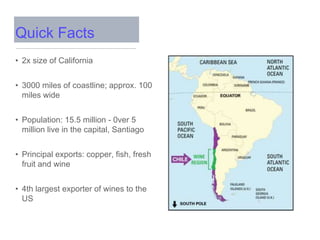
Quick Facts
• 2x size of California
• 3000 miles of coastline; approx. 100
miles wide
• Population: 15.5 million - 0ver 5
million live in the capital, Santiago
• Principal exports: copper, fish, fresh
fruit and wine
• 4th largest exporter of wines to the
US
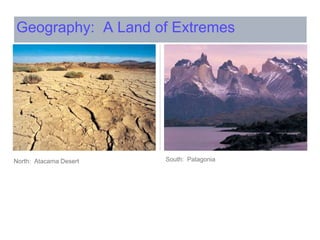
North: Atacama Desert
Geography: A Land of Extremes
South: Patagonia
West: Pacific Ocean
Geography: A Land of Extremes
East: Andes Mountains
Natural barriers protect biodiversity creating a
viticultural paradise
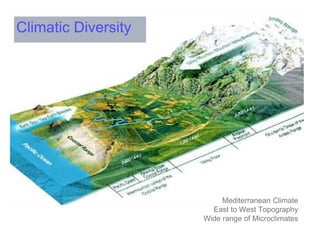
Mediterranean Climate
East to West Topography
Wide range of Microclimates
Climatic Diversity
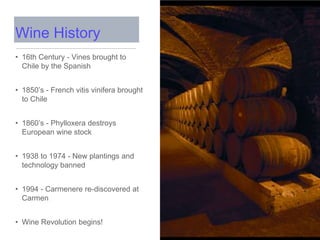
• 16th Century - Vines brought to
Chile by the Spanish
• 1850’s - French vitis vinifera brought
to Chile
• 1860’s - Phylloxera destroys
European wine stock
• 1938 to 1974 - New plantings and
technology banned
• 1994 - Carmenere re-discovered at
Carmen
• Wine Revolution begins!
Wine History
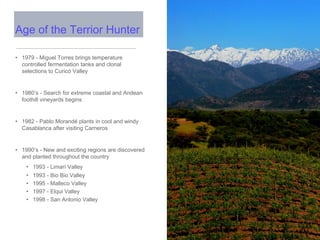
• 1979 - Miguel Torres brings temperature
controlled fermentation tanks and clonal
selections to Curicó Valley
• 1980’s - Search for extreme coastal and Andean
foothill vineyards begins
• 1982 - Pablo Morandé plants in cool and windy
Casablanca after visiting Carneros
• 1990’s - New and exciting regions are discovered
and planted throughout the country
• 1993 - Limarí Valley
• 1993 - Bio Bio Valley
• 1995 - Malleco Valley
• 1997 - Elqui Valley
• 1998 - San Antonio Valley
Age of the Terrior Hunter
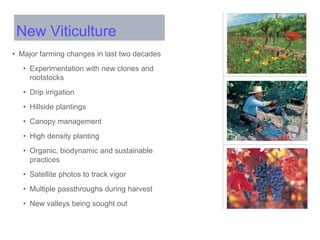
• Major farming changes in last two decades
• Experimentation with new clones and
rootstocks
• Drip irrigation
• Hillside plantings
• Canopy management
• High density planting
• Organic, biodynamic and sustainable
practices
• Satellite photos to track vigor
• Multiple passthroughs during harvest
• New valleys being sought out
New Viticulture
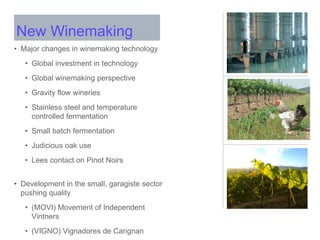
• Major changes in winemaking technology
• Global investment in technology
• Global winemaking perspective
• Gravity flow wineries
• Stainless steel and temperature
controlled fermentation
• Small batch fermentation
• Judicious oak use
• Lees contact on Pinot Noirs
• Development in the small, garagiste sector
pushing quality
• (MOVI) Movement of Independent
Vintners
• (VIGNO) Vignadores de Carignan
New Winemaking
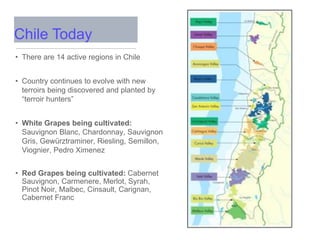
• There are 14 active regions in Chile
• Country continues to evolve with new
terroirs being discovered and planted by
“terroir hunters”
• White Grapes being cultivated:
Sauvignon Blanc, Chardonnay, Sauvignon
Gris, Gewürztraminer, Riesling, Semillon,
Viognier, Pedro Ximenez
• Red Grapes being cultivated: Cabernet
Sauvignon, Carmenere, Merlot, Syrah,
Pinot Noir, Malbec, Cinsault, Carignan,
Cabernet Franc
Chile Today
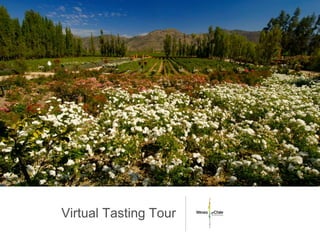
Virtual Tasting Tour
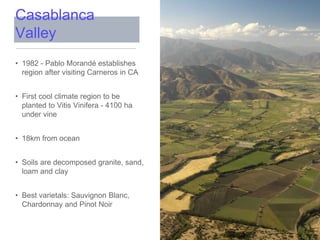
• 1982 - Pablo Morandé establishes
region after visiting Carneros in CA
• First cool climate region to be
planted to Vitis Vinifera - 4100 ha
under vine
• 18km from ocean
• Soils are decomposed granite, sand,
loam and clay
• Best varietals: Sauvignon Blanc,
Chardonnay and Pinot Noir
Casablanca
Valley
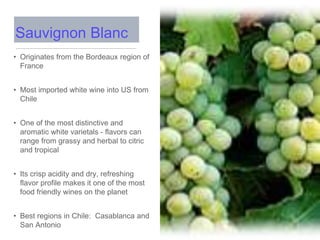
• Originates from the Bordeaux region of
France
• Most imported white wine into US from
Chile
• One of the most distinctive and
aromatic white varietals - flavors can
range from grassy and herbal to citric
and tropical
• Its crisp acidity and dry, refreshing
flavor profile makes it one of the most
food friendly wines on the planet
• Best regions in Chile: Casablanca and
San Antonio
Sauvignon Blanc
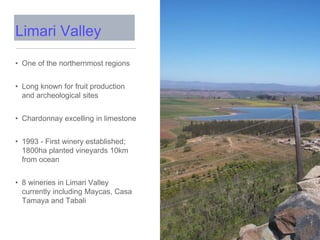
• One of the northernmost regions
• Long known for fruit production
and archeological sites
• Chardonnay excelling in limestone
• 1993 - First winery established;
1800ha planted vineyards 10km
from ocean
• 8 wineries in Limari Valley
currently including Maycas, Casa
Tamaya and Tabali
Limari Valley
• Originates in Burgundy, France
• 2nd most imported white wine in US
from Chile
• The most popular white wine in the
US, almost 25% of all wine consumed
• Evolution in farming in Chile and
Improved winemaking techniques
• Less oak and Malolactic being used
• Lees stirring and judicious oak treatment
• New terroirs discovered in Limarí in limestone
soils with Bio Bio and Malleco in the South
• Best regions in Chile: Casablanca,
San Antonio and Limari Valleys
Chardonnay
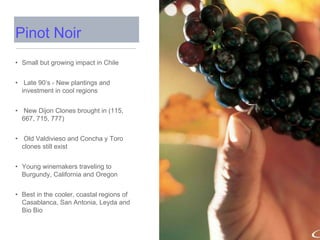
Pinot Noir
• Small but growing impact in Chile
• Late 90‘s - New plantings and
investment in cool regions
• New Dijon Clones brought in (115,
667, 715, 777)
• Old Valdivieso and Concha y Toro
clones still exist
• Young winemakers traveling to
Burgundy, California and Oregon
• Best in the cooler, coastal regions of
Casablanca, San Antonia, Leyda and
Bio Bio
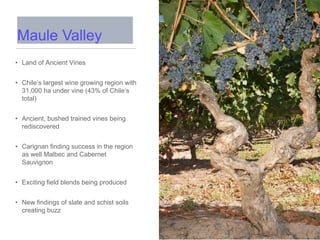
• Land of Ancient Vines
• Chile’s largest wine growing region with
31,000 ha under vine (43% of Chile’s
total)
• Ancient, bushed trained vines being
rediscovered
• Carignan finding success in the region
as well Malbec and Cabernet
Sauvignon
• Exciting field blends being produced
• New findings of slate and schist soils
creating buzz
Maule Valley
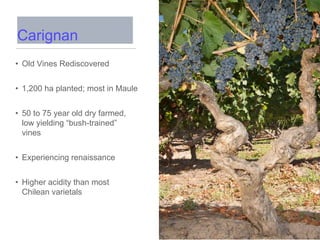
• Old Vines Rediscovered
• 1,200 ha planted; most in Maule
• 50 to 75 year old dry farmed,
low yielding “bush-trained”
vines
• Experiencing renaissance
• Higher acidity than most
Chilean varietals
Carignan
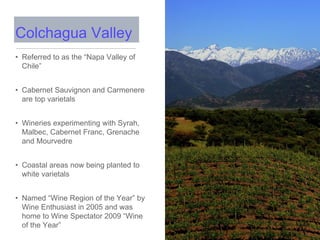
• Referred to as the “Napa Valley of
Chile”
• Cabernet Sauvignon and Carmenere
are top varietals
• Wineries experimenting with Syrah,
Malbec, Cabernet Franc, Grenache
and Mourvedre
• Coastal areas now being planted to
white varietals
• Named “Wine Region of the Year” by
Wine Enthusiast in 2005 and was
home to Wine Spectator 2009 “Wine
of the Year”
Colchagua Valley
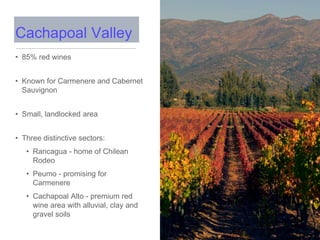
• 85% red wines
• Known for Carmenere and Cabernet
Sauvignon
• Small, landlocked area
• Three distinctive sectors:
• Rancagua - home of Chilean
Rodeo
• Peumo - promising for
Carmenere
• Cachapoal Alto - premium red
wine area with alluvial, clay and
gravel soils
Cachapoal Valley
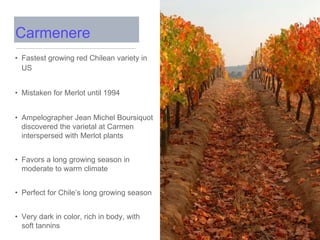
• Fastest growing red Chilean variety in
US
• Mistaken for Merlot until 1994
• Ampelographer Jean Michel Boursiquot
discovered the varietal at Carmen
interspersed with Merlot plants
• Favors a long growing season in
moderate to warm climate
• Perfect for Chile’s long growing season
• Very dark in color, rich in body, with
soft tannins
Carmenere
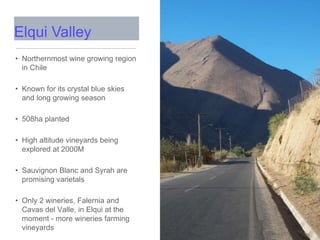
• Northernmost wine growing region
in Chile
• Known for its crystal blue skies
and long growing season
• 508ha planted
• High altitude vineyards being
explored at 2000M
• Sauvignon Blanc and Syrah are
promising varietals
• Only 2 wineries, Falernia and
Cavas del Valle, in Elqui at the
moment - more wineries farming
vineyards
Elqui Valley
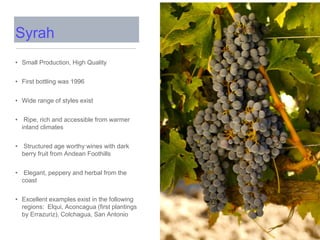
Syrah
• Small Production, High Quality
• First bottling was 1996
• Wide range of styles exist
• Ripe, rich and accessible from warmer
inland climates
• Structured age worthy wines with dark
berry fruit from Andean Foothills
• Elegant, peppery and herbal from the
coast
• Excellent examples exist in the following
regions: Elqui, Aconcagua (first plantings
by Errazuriz), Colchagua, San Antonio
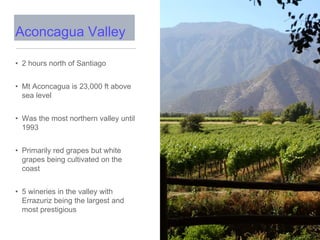
• 2 hours north of Santiago
• Mt Aconcagua is 23,000 ft above
sea level
• Was the most northern valley until
1993
• Primarily red grapes but white
grapes being cultivated on the
coast
• 5 wineries in the valley with
Errazuriz being the largest and
most prestigious
Aconcagua Valley
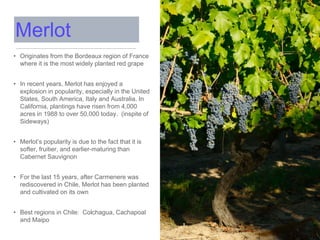
• Originates from the Bordeaux region of France
where it is the most widely planted red grape
• In recent years, Merlot has enjoyed a
explosion in popularity, especially in the United
States, South America, Italy and Australia. In
California, plantings have risen from 4,000
acres in 1988 to over 50,000 today. (inspite of
Sideways)
• Merlot’s popularity is due to the fact that it is
softer, fruitier, and earlier-maturing than
Cabernet Sauvignon
• For the last 15 years, after Carmenere was
rediscovered in Chile, Merlot has been planted
and cultivated on its own
• Best regions in Chile: Colchagua, Cachapoal
and Maipo
Merlot
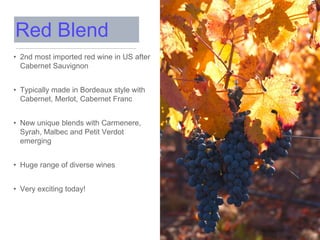
• 2nd most imported red wine in US after
Cabernet Sauvignon
• Typically made in Bordeaux style with
Cabernet, Merlot, Cabernet Franc
• New unique blends with Carmenere,
Syrah, Malbec and Petit Verdot
emerging
• Huge range of diverse wines
• Very exciting today!
Red Blend
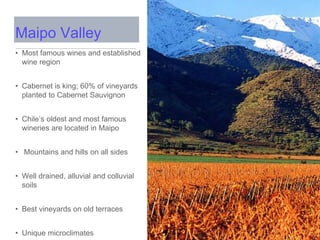
• Most famous wines and established
wine region
• Cabernet is king; 60% of vineyards
planted to Cabernet Sauvignon
• Chile’s oldest and most famous
wineries are located in Maipo
• Mountains and hills on all sides
• Well drained, alluvial and colluvial
soils
• Best vineyards on old terraces
• Unique microclimates
Maipo Valley
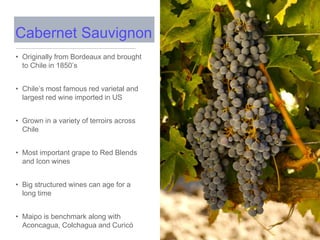
• Originally from Bordeaux and brought
to Chile in 1850’s
• Chile’s most famous red varietal and
largest red wine imported in US
• Grown in a variety of terroirs across
Chile
• Most important grape to Red Blends
and Icon wines
• Big structured wines can age for a
long time
• Maipo is benchmark along with
Aconcagua, Colchagua and Curicó
Cabernet Sauvignon
• Itata
• 11,000 ha under vine
• Muscat of Alexandria and Pais
widely planted
• Bio Bio
• 3,500 ha planted to vines
• Aromatic cool climate varieties:
Pinot Noir and Chardonnay.
Riesling, Gewürztraminer and
Sauvignon Blanc show promise
• Malleco
• 13 ha planted to vines
• Chardonnay and Pinot Noir show
excellent promise
Southern Valleys
• Learn more about Chile!
• www.winesofchile.org
• facebook.com/WinesOfChile
• twitter.com/drinkchile
Wines of Chile
Gracias!

Wo c 2012 educational deck

  • 1.
  • 2.
    • Not forProfit trade organization that promotes Chilean wines around the world • Learn more about Chile! • www.winesofchile.org • facebook.com/WinesOfChile • twitter.com/drinkchile Wines of Chile
  • 3.
    • Learn abit about Chile and what’s happening in the wine industry • Discover the diversity of our wines and terroirs • Taste 6 wines from 3 valleys • Enjoy tremendous quality and value Today
  • 4.
    Quick Facts • 2xsize of California • 3000 miles of coastline; approx. 100 miles wide • Population: 15.5 million - 0ver 5 million live in the capital, Santiago • Principal exports: copper, fish, fresh fruit and wine • 4th largest exporter of wines to the US
  • 5.
    North: Atacama Desert Geography:A Land of Extremes South: Patagonia
  • 6.
    West: Pacific Ocean Geography:A Land of Extremes East: Andes Mountains Natural barriers protect biodiversity creating a viticultural paradise
  • 7.
    Mediterranean Climate East toWest Topography Wide range of Microclimates Climatic Diversity
  • 8.
    • 16th Century- Vines brought to Chile by the Spanish • 1850’s - French vitis vinifera brought to Chile • 1860’s - Phylloxera destroys European wine stock • 1938 to 1974 - New plantings and technology banned • 1994 - Carmenere re-discovered at Carmen • Wine Revolution begins! Wine History
  • 9.
    • 1979 -Miguel Torres brings temperature controlled fermentation tanks and clonal selections to Curicó Valley • 1980’s - Search for extreme coastal and Andean foothill vineyards begins • 1982 - Pablo Morandé plants in cool and windy Casablanca after visiting Carneros • 1990’s - New and exciting regions are discovered and planted throughout the country • 1993 - Limarí Valley • 1993 - Bio Bio Valley • 1995 - Malleco Valley • 1997 - Elqui Valley • 1998 - San Antonio Valley Age of the Terrior Hunter
  • 10.
    • Major farmingchanges in last two decades • Experimentation with new clones and rootstocks • Drip irrigation • Hillside plantings • Canopy management • High density planting • Organic, biodynamic and sustainable practices • Satellite photos to track vigor • Multiple passthroughs during harvest • New valleys being sought out New Viticulture
  • 11.
    • Major changesin winemaking technology • Global investment in technology • Global winemaking perspective • Gravity flow wineries • Stainless steel and temperature controlled fermentation • Small batch fermentation • Judicious oak use • Lees contact on Pinot Noirs • Development in the small, garagiste sector pushing quality • (MOVI) Movement of Independent Vintners • (VIGNO) Vignadores de Carignan New Winemaking
  • 12.
    • There are14 active regions in Chile • Country continues to evolve with new terroirs being discovered and planted by “terroir hunters” • White Grapes being cultivated: Sauvignon Blanc, Chardonnay, Sauvignon Gris, Gewürztraminer, Riesling, Semillon, Viognier, Pedro Ximenez • Red Grapes being cultivated: Cabernet Sauvignon, Carmenere, Merlot, Syrah, Pinot Noir, Malbec, Cinsault, Carignan, Cabernet Franc Chile Today
  • 13.
  • 14.
    • 1982 -Pablo Morandé establishes region after visiting Carneros in CA • First cool climate region to be planted to Vitis Vinifera - 4100 ha under vine • 18km from ocean • Soils are decomposed granite, sand, loam and clay • Best varietals: Sauvignon Blanc, Chardonnay and Pinot Noir Casablanca Valley
  • 15.
    • Originates fromthe Bordeaux region of France • Most imported white wine into US from Chile • One of the most distinctive and aromatic white varietals - flavors can range from grassy and herbal to citric and tropical • Its crisp acidity and dry, refreshing flavor profile makes it one of the most food friendly wines on the planet • Best regions in Chile: Casablanca and San Antonio Sauvignon Blanc
  • 16.
    • One ofthe northernmost regions • Long known for fruit production and archeological sites • Chardonnay excelling in limestone • 1993 - First winery established; 1800ha planted vineyards 10km from ocean • 8 wineries in Limari Valley currently including Maycas, Casa Tamaya and Tabali Limari Valley
  • 17.
    • Originates inBurgundy, France • 2nd most imported white wine in US from Chile • The most popular white wine in the US, almost 25% of all wine consumed • Evolution in farming in Chile and Improved winemaking techniques • Less oak and Malolactic being used • Lees stirring and judicious oak treatment • New terroirs discovered in Limarí in limestone soils with Bio Bio and Malleco in the South • Best regions in Chile: Casablanca, San Antonio and Limari Valleys Chardonnay
  • 18.
    Pinot Noir • Smallbut growing impact in Chile • Late 90‘s - New plantings and investment in cool regions • New Dijon Clones brought in (115, 667, 715, 777) • Old Valdivieso and Concha y Toro clones still exist • Young winemakers traveling to Burgundy, California and Oregon • Best in the cooler, coastal regions of Casablanca, San Antonia, Leyda and Bio Bio
  • 19.
    • Land ofAncient Vines • Chile’s largest wine growing region with 31,000 ha under vine (43% of Chile’s total) • Ancient, bushed trained vines being rediscovered • Carignan finding success in the region as well Malbec and Cabernet Sauvignon • Exciting field blends being produced • New findings of slate and schist soils creating buzz Maule Valley
  • 20.
    • Old VinesRediscovered • 1,200 ha planted; most in Maule • 50 to 75 year old dry farmed, low yielding “bush-trained” vines • Experiencing renaissance • Higher acidity than most Chilean varietals Carignan
  • 21.
    • Referred toas the “Napa Valley of Chile” • Cabernet Sauvignon and Carmenere are top varietals • Wineries experimenting with Syrah, Malbec, Cabernet Franc, Grenache and Mourvedre • Coastal areas now being planted to white varietals • Named “Wine Region of the Year” by Wine Enthusiast in 2005 and was home to Wine Spectator 2009 “Wine of the Year” Colchagua Valley
  • 22.
    • 85% redwines • Known for Carmenere and Cabernet Sauvignon • Small, landlocked area • Three distinctive sectors: • Rancagua - home of Chilean Rodeo • Peumo - promising for Carmenere • Cachapoal Alto - premium red wine area with alluvial, clay and gravel soils Cachapoal Valley
  • 23.
    • Fastest growingred Chilean variety in US • Mistaken for Merlot until 1994 • Ampelographer Jean Michel Boursiquot discovered the varietal at Carmen interspersed with Merlot plants • Favors a long growing season in moderate to warm climate • Perfect for Chile’s long growing season • Very dark in color, rich in body, with soft tannins Carmenere
  • 24.
    • Northernmost winegrowing region in Chile • Known for its crystal blue skies and long growing season • 508ha planted • High altitude vineyards being explored at 2000M • Sauvignon Blanc and Syrah are promising varietals • Only 2 wineries, Falernia and Cavas del Valle, in Elqui at the moment - more wineries farming vineyards Elqui Valley
  • 25.
    Syrah • Small Production,High Quality • First bottling was 1996 • Wide range of styles exist • Ripe, rich and accessible from warmer inland climates • Structured age worthy wines with dark berry fruit from Andean Foothills • Elegant, peppery and herbal from the coast • Excellent examples exist in the following regions: Elqui, Aconcagua (first plantings by Errazuriz), Colchagua, San Antonio
  • 26.
    • 2 hoursnorth of Santiago • Mt Aconcagua is 23,000 ft above sea level • Was the most northern valley until 1993 • Primarily red grapes but white grapes being cultivated on the coast • 5 wineries in the valley with Errazuriz being the largest and most prestigious Aconcagua Valley
  • 27.
    • Originates fromthe Bordeaux region of France where it is the most widely planted red grape • In recent years, Merlot has enjoyed a explosion in popularity, especially in the United States, South America, Italy and Australia. In California, plantings have risen from 4,000 acres in 1988 to over 50,000 today. (inspite of Sideways) • Merlot’s popularity is due to the fact that it is softer, fruitier, and earlier-maturing than Cabernet Sauvignon • For the last 15 years, after Carmenere was rediscovered in Chile, Merlot has been planted and cultivated on its own • Best regions in Chile: Colchagua, Cachapoal and Maipo Merlot
  • 28.
    • 2nd mostimported red wine in US after Cabernet Sauvignon • Typically made in Bordeaux style with Cabernet, Merlot, Cabernet Franc • New unique blends with Carmenere, Syrah, Malbec and Petit Verdot emerging • Huge range of diverse wines • Very exciting today! Red Blend
  • 29.
    • Most famouswines and established wine region • Cabernet is king; 60% of vineyards planted to Cabernet Sauvignon • Chile’s oldest and most famous wineries are located in Maipo • Mountains and hills on all sides • Well drained, alluvial and colluvial soils • Best vineyards on old terraces • Unique microclimates Maipo Valley
  • 30.
    • Originally fromBordeaux and brought to Chile in 1850’s • Chile’s most famous red varietal and largest red wine imported in US • Grown in a variety of terroirs across Chile • Most important grape to Red Blends and Icon wines • Big structured wines can age for a long time • Maipo is benchmark along with Aconcagua, Colchagua and Curicó Cabernet Sauvignon
  • 31.
    • Itata • 11,000ha under vine • Muscat of Alexandria and Pais widely planted • Bio Bio • 3,500 ha planted to vines • Aromatic cool climate varieties: Pinot Noir and Chardonnay. Riesling, Gewürztraminer and Sauvignon Blanc show promise • Malleco • 13 ha planted to vines • Chardonnay and Pinot Noir show excellent promise Southern Valleys
  • 32.
    • Learn moreabout Chile! • www.winesofchile.org • facebook.com/WinesOfChile • twitter.com/drinkchile Wines of Chile
  • 33.